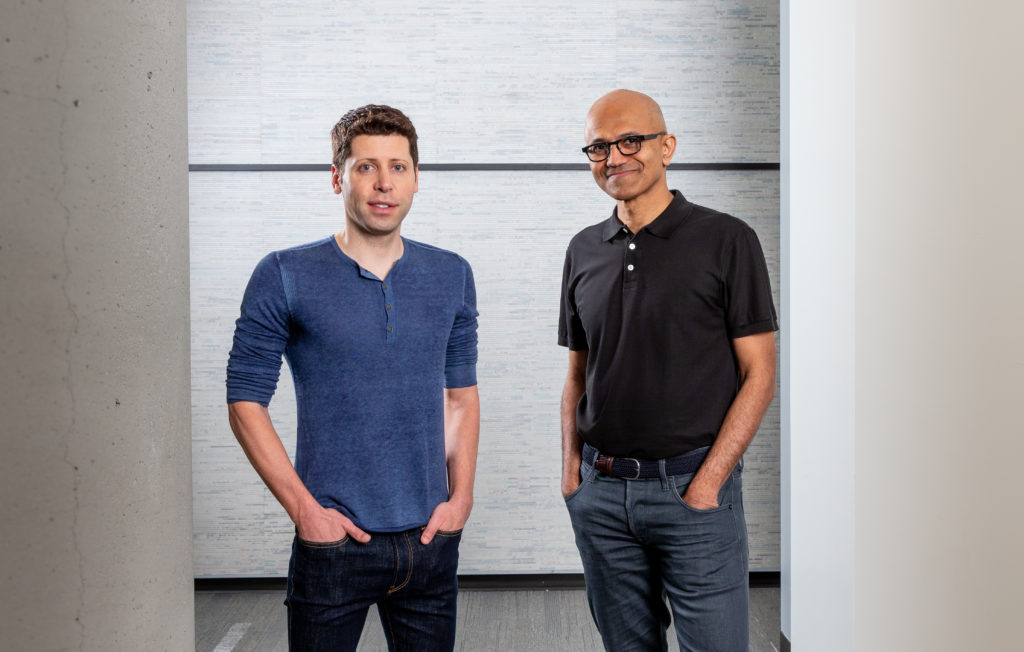
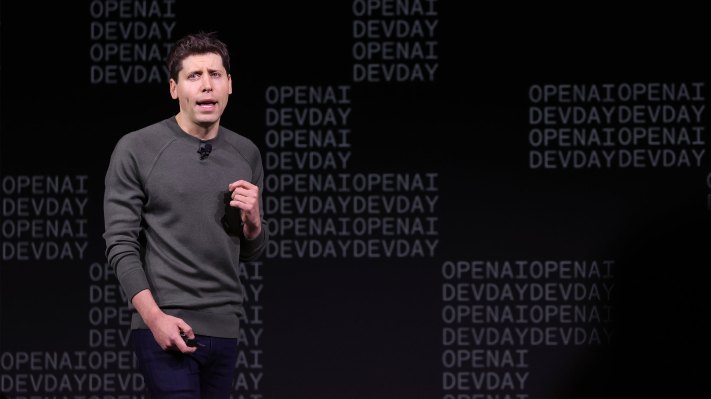
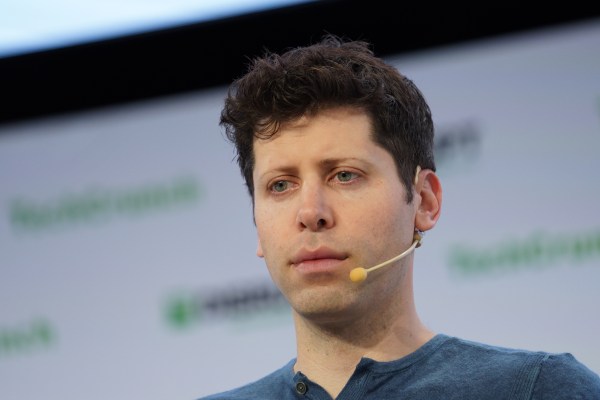
At the first ever developers’ conference – DevDay 2023 – OpenAI chief Sam Altman was super optimistic about building AGI together with Microsoft.
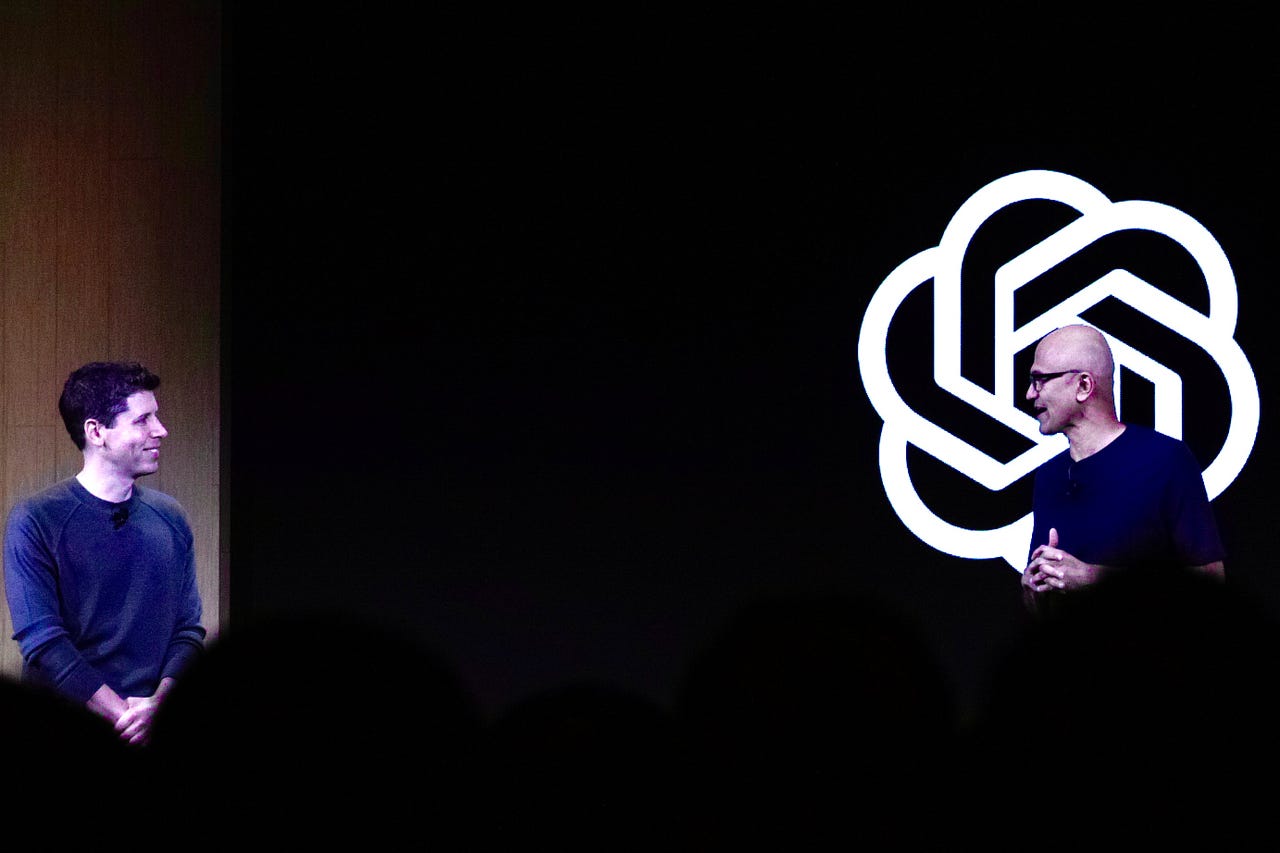
“I think we have the best partnership in tech. I’m excited for us to build AGI together.” said Altman, sharing the stage with Microsoft chief Satya Nadella.
Nadella said that Microsoft is all about collaboration and partnerships. “Our mission is to empower every person and every organisation on the planet to achieve more, and to me, ultimately, AI is only going to be useful if it truly does empower.” said Nadella. Furthermore, he stressed that Microsoft is committed to building copilots on top of OpenAI’s APIs.
Nadella lauded OpenAI, and said “We love you guys … You guys have built something magical,” and said how it has challenged Microsoft Azure to change its infrastructure to match OpenAI’s technology prowess.
“The shape of Azure has drastically changed and continues to change rapidly to support the models you’re building. Our top priority is to develop the best systems, enabling you to create superior models, and then make it all available to developers.” Nadella added.
Interestingly, this statement from Nadella comes after Azure’s revenue experienced a robust 29% surge in the latest quarter, outpacing the 26% consensus among analysts polled by CNBC and StreetAccount.
Recently, questions were raised about the partnership between OpenAI and Microsoft as per the recent reports. These concerns stemmed from both companies targeting the same customer base. Notably, customers have started purchasing OpenAI’s software through Microsoft due to the option of bundling the purchase with other products. However, Satya Nadella sharing the stage with Sam Altman today at DevDay might lay all speculations to rest. Who knows, might as well develop AGI together.
The post Microsoft, OpenAI Looks to Build AGI Together appeared first on Analytics India Magazine.
Microsoft CEO Satya Nadella came on stage for OpenAI CEO Sam Altman's keynote to talk about the future of their partnership.
At a downtown event space in San Francisco on Monday, OpenAI, the creator of ChatGPT and GPT-4, held its first-ever conference for developers, Dev Day. The company unveiled GPTs, a way to throw together easily custom versions of ChatGPT, a store to find and purchase custom ChatGPTs, an "Assistant" API to make it easier for developers to call specific functions for their applications, and many more features and upgrades.
The only swag so far are a bunch of nifty pins with the OpenAI logo and labels such as "Engineering" and "Research" and "Go to market." Another set of pins represents personal pronouns.
First, Sam Altman took the stage and recapped the various milestones: ChatGPT a year ago, followed by GPT-4, which is "still the most powerful model".
The company disclosed it has over 2 million developers building on its APIs "for a wide range of use cases," and for 92% of the Fortune 500 companies. ChatGPT itself gets about 100 million weekly active users, the company said.
Also: MacBook Pro (M3 Max) review: A desktop-class laptop for an AI-powered age
Altman then went into a rapid-fire itemization of the many innovations being announced. The various announcements received healthy rounds of applause — it's an upbeat, enthusiastic crowd.
Altman brought a special guest on stage: Satya Nadella, CEO of Microsoft. Altman jokingly asked Nadella, "How is Microsoft thinking about the partnership?" That drew laughter from both Nadella and the audience.
"You guys have built something magical," said Nadella. The partnership has "dramatically changed" the "shape" of Microsoft's Azure cloud computing service, said Nadella. "Our job is to make the best system so you can build the best models," added Nadella.
"The first thing we have been doing in partnership with you is building the system," said Nadella. "We want to build our copilot as developers on OpenAI API."
"A couple of things are going to be very, very key for us," said Nadella. "We intend fully to commit ourselves deeply to make sure you have not only the best models but also the best compute," said Nadella. "Our mission is to empower every individual."
"I always think of Microsoft as a platform company, a developer company, and a partner company," said Nadella. "The systems that are needed as you aggressively push forward on your roadmap requires us to be on the top of our game," said Nadella. He added that the shared mission of the two companies is to empower every person in every organization on the planet to achieve more," said Nadella.
In response to Nadella, Altman remarked, "I'm excited for us to build AGI together," meaning, artificial general intelligence, the notion of computers that can match human thought capabilities.
The venue of Dev Day, the SVN West event space at Van Ness and Market in downtown SF.
The key product and technology news includes:
GPTs: custom versions of ChatGPT that OpenAI says "anyone can easily build" for specific tasks. The company is offering two initial custom GPTs, Canva and Zapier AI, for the popular design app and the workflows software, respectively. The company plans to offer additional GPTs;
GPT Store: Later in November, OpenAI will open the GPT Store, for obtaining the GPTs others have built, where developers can earn money for their creations;
Copyright Shield that will absorb cost of defending customers;
Fine-tuning service for GPT-4 for developers;
Custom Models program for enterprises, a team of OpenAI researchers who will work with "selected organizations" to "train custom GPT-4 to their specific domain";
A new user interface for ChatGPT, a simple, dark background with the OpenAI logo, and the phrase, "How can I help you today?" The new user interface will make it easier to juggle between ChatGPT and DALL-E, the image-creation program from OpenAI, the company said;
GPT-4's information source gets updated to April 2023, a big step past the traditional limit imposed on the program of September 2021. ChatGPT also gains the ability to search PDFs and other documents;
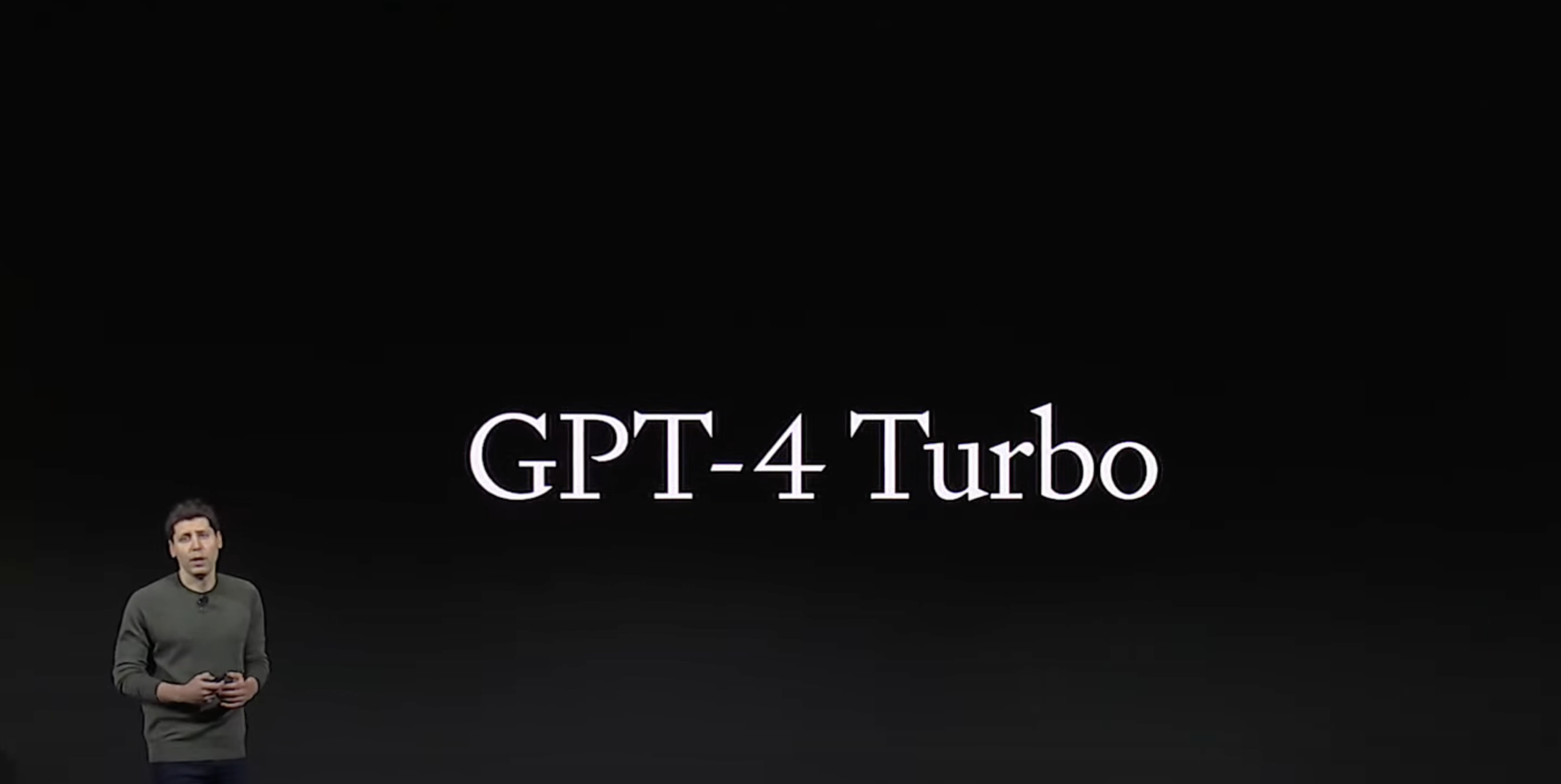
The GPT-4 program gets its "context window," the amount of input it can take into account when formulating an answer, four-fold, from 32,000 to 128,000, in a new "Turbo" version of the program. (For more on the various features of GPT models, see OpenAI's Web site.);
GPT-4 Turbo can now accept images as part of the prompt, and can generate "human-quality speech" as its output;
Assistant API: a function-calling mechanism that makes it easier for developers to plug specific "assistant" functions into their apps, such as "natural language-based data analysis app, a coding assistant, an AI-powered vacation planner, a voice-controlled DJ, a smart visual canvas."
A new "seed" parameter makes GPT return "reproducible outputs" "most of the time";
A new version of GPT-3.5 Turbo that gains greater function handling and JSON handling;
Cut the price on GPT-4 Turbo and GPT-3.5 Turbo, based on the price per input and output tokens, and doubled the rate of "tokens per minute" that can be used.
Altman onstage demonstrated GPTs, writing from scratch a program called Startup Mentor, a program to give advice to entrepreneurs. He showed off uploading a file of a talk he had given, as an example of input via external sources. The program is built to answer questions such as, "What are the three things to look for when hiring people for a startup?"
Said Altman of custom models, "We won't be able to do this with many companies to start, and it won't be cheap."
The Copyright Shield program, said Altman, "means that we will step in to defend our customers" in the instance of litigation, "and absorb the cost."
The Copyright Shield program, said Altman, "means that we will step in to defend our customers" in the instance of litigation, "and absorb the cost."
Also: Overseeing generative AI: New software leadership roles emerge
OpenAI says a key element of the Assistant API is "persistent threads," which "allow developers to avoid re-sending the entire conversation history with every new message and work around context window constraints."
The new GPT-4 Turbo can be accessed immediately in preview form, OpenAI said, bypassing the command gpt-4-1106-preview to the to the OpenAI API. A stable version is planned to be released "in the coming weeks."
GPT-4 Turbo does a better job, the company said, of following specific instructions, such as to output a response in XML. It also gains a capability for responses in JSON via a new parameter, "response_format."
Also: Robots plus generative AI: Everything you need to know when they work as one
The new seed parameter for GPT-4 is a beta feature that "is useful for use cases such as replaying requests for debugging, writing more comprehensive unit tests and generally having a higher degree of control over the model behavior," the company said.
The cuts in price announced mean that GPT-4 Turbo, for example, is now a penny per input token, versus three cents before, and three cents per output token, versus six cents before — which the company bills as "three times cheaper" and "two times cheaper," respectively.
OpenAI debuts GPT-4 Turbo and fine-tuning program for GPT-4 Kyle Wiggers 12 hours
Today at its first-ever developer conference, OpenAI unveiled GPT-4 Turbo, an improved version of its flagship text-generating AI model, GPT-4, that the company claims is both “more powerful” and less expensive.
GPT-4 Turbo comes in two versions: one that’s strictly text-analyzing and a second version that understands the context of both text and images. The text-analyzing model is available in preview via an API starting today, and OpenAI says it plans to make both generally available “in the coming weeks.”
They’re priced at $0.01 per 1,000 input tokens (~750 words), where “tokens” represent bits of raw text — e.g., the word “fantastic” split into “fan,” “tas” and “tic”) and $0.03 per 1,000 output tokens. (Input tokens are tokens fed into the model, while output tokens are tokens that the model generates based on the input tokens.) The pricing of the image-processing GPT-4 Turbo will depend on the image size. For example, passing an image with 1080×1080 pixels to GPT-4 Turbo will cost $0.00765, OpenAI says.
“We optimized performance so we’re able to offer GPT-4 Turbo at a 3x cheaper price for input tokens and a 2x cheaper price for output tokens compared to GPT-4,” OpenAI writes in a blog post shared with TechCrunch this morning.
GPT-4 Turbo boasts several improvements over GPT-4 — one being a more recent knowledge base to draw on when responding to requests.
Like all language models, GPT-4 Turbo is essentially a statistical tool to predict words. Fed an enormous number of examples, mostly from the web, GPT-4 Turbo learned how likely words are to occur based on patterns, including the semantic context of surrounding text. For example, given a typical email ending in the fragment “Looking forward…” GPT-4 Turbo might complete it with “… to hearing back.”
GPT-4 was trained on web data up to September 2021, but GPT-4 Turbo’s knowledge cut-off is April 2023. That should mean questions about recent events — at least events that happened prior to the new cut-off date — will yield more accurate answers.
GPT-4 Turbo also has an expanded context window.
Context window, measured in tokens, refers to the text the model considers before generating any additional text. Models with small context windows tend to “forget” the content of even very recent conversations, leading them to veer off topic — often in problematic ways.
GPT-4 Turbo offers a 128,000-token context window — four times the size of GPT-4’s and the largest context window of any commercially available model, surpassing even Anthropic’s Claude 2. (Claude 2 supports up to 100,000 tokens; Anthropic claims to be experimenting with a 200,000-token context window but has yet to publicly release it.) 128,000 tokens translates to around 100,000 words or 300 pages, which for reference is around the length of Wuthering Height, Gulliver’s Travels and Harry Potter and the Prisoner of Azkaban.
And GPT-4 Turbo supports a new “JSON mode,” which ensures that the model responds with valid JSON — the open standard file format and data interchange format. That’s useful in web apps that transmit data, like those that send data from a server to a client so it can be displayed on a webpage, OpenAI says. Other, related new parameters will allow developers to make the model return “consistent” completions more of the time and — for more niche applications — log probabilities for the most likely output tokens generated by GPT-4 Turbo.
“GPT-4 Turbo performs better than our previous models on tasks that require the careful following of instructions, such as generating specific formats (e.g., ‘always respond in XML’),” OpenAI writes. “And GPT-4 Turbo is more likely to return the right function parameters.”
GPT-4 upgrades
OpenAI hasn’t neglected GPT-4 in rolling out GPT-4 Turbo.
Today, the company’s launching an experimental access program for fine-tuning GPT-4. As opposed to the fine-tuning program for GPT-3.5, GPT-4’s predecessor, the GPT-4 program will involve more oversight and guidance from OpenAI teams, the company says — mainly due to technical hurdles.
“Preliminary results indicate that GPT-4 fine-tuning requires more work to achieve meaningful improvements over the base model compared to the substantial gains realized with GPT-3.5 fine-tuning,” OpenAI writes in the blog post.
Elsewhere, OpenAI announced that it’s doubling the tokens-per-minute rate limit for all paying GPT-4 customers. But pricing will remain the same at $0.03 per input token and $0.06 per output token (for the GPT-4 model with an 8,000-token context window) or $0.06 per input token and $0.012 per output token (for GPT-4 with a 32,000-token context window).
After months of anticipation and requests from developers, OpenAI has finally released Code Interpreter API. “Code Interpreter is now available today in the API as well,” said Romain Huet, head of developer experience at OpenAI, in the backdrop of Assistants API launch.
This new API is said to make it easier for developers to build their own GPT-like experience into their own apps and services. “These experiences are great but they have been hard to build, sometimes taking months, teams of dozens of engineers, there’s a lot to handle to make this custom assistant experience. So today we’re making it a lot easier with our new Assistants API,” said Altman.
Currently in beta stage, you can try Assistant API here.
The all new API provides new capabilities such as code interpreter and retrieval, alongside function calling to handle a lot of the heavy lifting, making it easy for developers to build high-quality AI applications.
In addition to this, it has also introduced persistent and infinitely long threads, helping developers focus on context window constraints and leaving all the thread state management hassle to OpenAI.
“With the Assistants API, you simply add each new message to an existing thread. (this is different from) other features.” said OpenAI, in its blog post.
As far as the data safety is concerned, OpenAI claimed that its API are never used to train their models and developers can delete the data when they see it.
Features of the Assistants API
The Assistants API leverages Code Interpreter, OpenAI’s tool that writes and executes Python code in a controlled environment. Originally launched for ChatGPT in March, the Code Interpreter facilitates the generation of graphs, charting, and file processing. This functionality allows assistants developed with the Assistants API to iteratively run code for problem-solving in coding and mathematics.
Moreover, the API incorporates a retrieval component, enabling dev-created assistants to access knowledge outside OpenAI’s models, such as product information or company documents. It also supports function calling, allowing assistants to trigger developer-defined programming functions and integrate their responses into messages.
Beta Release and Usage
The Assistants API is currently in beta and accessible to all developers.
OpenAI will bill the tokens used at the chosen model’s per-token rates, where “tokens” refer to text fragments. In the future, OpenAI plans to enable customers to introduce their own assistant-driving tools to complement the existing Code Interpreter, retrieval component, and function calling features on its platform.
The post OpenAI Finally Launches Code Interpreter API appeared first on Analytics India Magazine.
OpenAI definitely surprised everyone with a slew of announcements. At DevDay, OpenAI’s first-ever developer conference in San Francisco, the team introduced GPTs – customised AI agents which can be designed by users for specific purposes. These agents can be created in natural language without coding skills, whether for personal, professional, or public use. GPTs will allow users to instruct ChatGPT, share knowledge, and define tasks without complex manual input.
Along with this, OpenAI plans to launch the GPT Store for public sharing in the coming months, showcasing verified builders’ creations, which users can easily discover and use, potentially earning money.
Moreover, developers can link GPTs to the real world through APIs for data integration and specific task automation. Businesses can create internal GPTs to streamline processes in various departments, as seen in Amgen and Bain & Company’s successful use cases.
Here’s a glimpse of all the announcements made at OpenAI DevDay 2023.
GPT-4 Turbo with a 128K Context Window
OpenAI introduced GPT-4 Turbo, an upgraded version of GPT-4, that boasts a 128k context window, allowing it to process the equivalent of over 300 pages of text in a single prompt, with knowledge extending up to April 2023.
The model offers six significant improvements and comes in two types: one specialised in text analysis and another proficient in both text and image understanding. Initially available as a preview through an API, OpenAI plans to make both versions widely accessible soon, offering competitive pricing at $0.01 per 1,000 input tokens and $0.03 per 1,000 output tokens.
Notably, GPT-4 Turbo is substantially more cost-effective, being three times cheaper for input tokens and twice as affordable for output tokens compared to GPT-4.
It now also accepts images as inputs within the Chat Completions API, enabling tasks like generating image captions, detailed real-world image analysis, and document reading with figures.
Assistants API, Retrieval, and Code Interpreter
Developers also have Assistants API now, a tool that helps developers create AI-driven assistants for various applications. These assistants can perform specific tasks, leveraging extra knowledge and utilising models and tools. The API offers features like Code Interpreter and Retrieval, streamlining complex tasks and allowing the development of high-quality AI applications.
The API also introduces persistent and infinitely long threads, simplifying message handling. Assistants can access tools like Code Interpreter for running Python code, Retrieval for external knowledge, and Function calling to invoke defined functions.
Developers can try the Assistants API beta via the Assistants playground.
DALL·E 3 Integration
DALL·E 3 can be incorporated into various applications and products by developers via OpenAI’s Images API, simply by specifying “DALL·E 3” as the model. Prominent organisations like Snap, Coca-Cola, and Shutterstock have harnessed DALL·E 3’s capabilities to automatically create images and designs for their customers and marketing initiatives.
Text-to-Speech (TTS) Enhancement
The ChatGPT maker also introduced Audio API, a text-to-speech tool featuring six distinct voices: Alloy, Echo, Fable, Onyx, Nova, and Shimmer. It’s ready for immediate use, with pricing starting at $0.015 for every 1,000 input characters.
Last but definitely not least, we now can also access the latest iteration of OpenAI’s open-source automatic speech recognition model, known as Whisper large-v3 with improved performance across various languages.
Copyright Shield for Customer Legal Protection
To address the ever-growing concerns around copyright infringement, OpenAI has introduced Copyright Shield. They are also ready to support and cover legal expenses for customers dealing with copyright infringement claims, including ChatGPT Enterprise and developer platform features.
Although OpenAI hasn’t reached AGI yet, their chief, Sam Altman, showed great excitement about teaming up with Microsoft, stressing their strong teamwork. Meanwhile, Microsoft’s Satya Nadella echoed similar thoughts, emphasising their goal to support people and organisations worldwide and the importance of AI that genuinely empowers.
Read more: OpenAI is the New Apple
The post Everything You Need to Know About the First-Ever OpenAI DevDay 2023 appeared first on Analytics India Magazine.
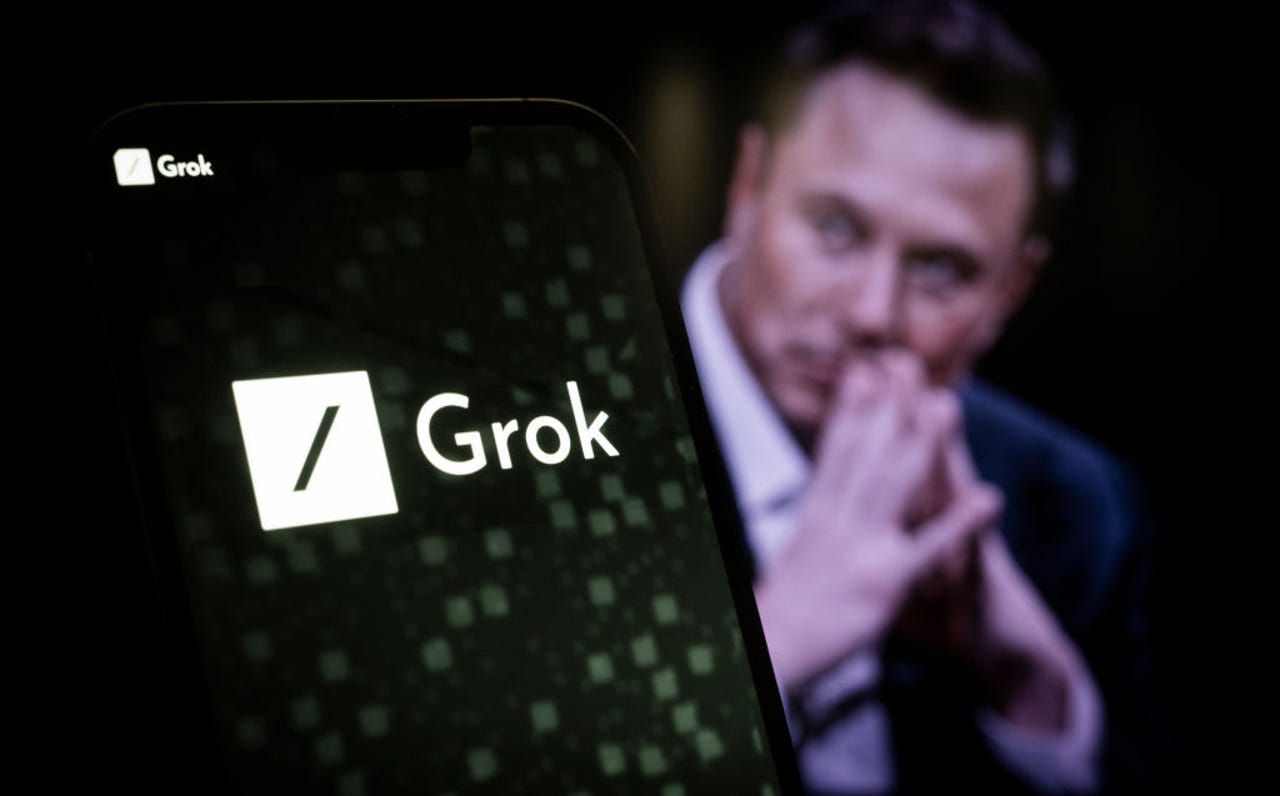
Move over, ChatGPT. Watch out, Microsoft Bing. There's a new chatbot in town that wants to get a piece of the AI action. X, aka Twitter, is introducing its own AI chatbot dubbed Grok, which the platform is already touting as superior in certain ways to rival AIs such as ChatGPT.
Also: Would you pay a buck to Tweet? X takes a step toward paywall
Based on details in an announcement from the xAI Team, Grok is designed to answer almost any question and will even suggest questions for you to ask. Grok comes with real-time knowledge of the world based on information from X, which means it will be able to answer questions about contemporary topics. However, the challenge will be to provide accurate data from X without the misinformation that often appears on the platform.
Like ChatGPT and other AIs, Grok is based on a large language model (LLM) trained on millions of web pages and will use algorithms to understand and generate content. Known as Grok-1, the LLM powering Grok has been developed over the past four months during which time it has evolved, especially in its reasoning and coding capabilities, the team explained.
After a mere two months of training, the AI itself is considered to be in the very early beta phase and will rely on its future interactions with X users to help it improve and get smarter.
With AI all the rage, it's only natural for Musk to want to take advantage of this trend. The generative AI arena has been getting more crowded with ChatGPT, Microsoft Bing, Google Bard, Claude AI, and a host of other platforms. But Musk does bring some expertise to the table. Before buying Twitter, he co-founded ChatGPT developer OpenAI in 2015.
Also: ChatGPT-assisted bots are spreading on social media
Modeled on the tongue-in-cheek sci-fi classic "The Hitchhiker's Guide to the Galaxy," Grok is designed with a sense of humor and a rebellious edge, according to the team. The AI will answer questions with some wit and even respond to "spicy" questions that other AI bots won't touch.
To show off Grok's sense of humor, Musk posted two tweets that received sarcastic responses from the chatbot, one asking for the steps on how to make cocaine and another asking about Samuel Bankman-Fried, aka SBF, a former cryptocurrency entrepreneur who was convicted of fraud and is facing a heavy prison sentence.
The team acknowledged that Grok can fall into the trap of providing false or contradictory information, just like other LLM-trained AI chatbots. However, the team also outlined a few measures in the works that aim to address these limitations. Such measures include human feedback through AI tutors, helping the AI develop reasoning skills in more verifiable situations, training it to discover more useful information in a specific context, resolving certain vulnerabilities, and adding vision and audio to Grok's senses.
Also: X may train AI with its users' posts. Are other social media sites doing the same?
Why the name Grok? That's Musk's attempt to tap into the sci-fi zeitgeist. Coined by SF author Robert Heinlein in his book "Stranger in a Strange Land," the term has since been defined as a deep understanding or insight into someone or something. As a Star Trek fan, I remember the phrase "I grok Spock" used to describe an affinity or kinship for everyone's favorite Vulcan.
On the downside, Grok is yet another feature introduced by Musk that will be available only for paying X subscribers, and only for those on a Premium+ plan, which starts at a hefty $16 a month or $168 a year. For now, qualifying subscribers who want to take Grok for a spin have to join a waitlist, after which you'll be informed if and when you've been accepted into the early access program. All Premium+ subscribers will then be able to access Grok once it exits the beta stage.
OpenAI promises to defend business customers against copyright claims Kyle Wiggers 10 hours
OpenAI — bowing to peer pressure — today announced it’ll step in and defend businesses using OpenAI products if they face claims around copyright infringement as it pertains to OpenAI apps and services.
As part of a new program, Copyright Shield, OpenAI says that it’ll pay the legal costs incurred by customers — specifically customers using the “generally available” features of OpenAI’s developer platform and ChatGPT Enterprise, the business tier of its AI-powered ChatGPT chatbot — who face lawsuits over IP claims against work generated by an OpenAI tool.
The protections seemingly don’t extend to all OpenAI products, like the free and Plus tiers of ChatGPT. And it’s unclear whether OpenAI is offering training data indemnity — that is, indemnity against claims made over the training data used by a customer for OpenAI’s in-house generative AI models. We’ll update this post as we learn more.
“OpenAI is committed to protecting our customers with built-in copyright safeguards in our systems,” OpenAI wrote in a blog post shared with TechCrunch.
Generative AI models such as ChatGPT, GPT-4 and DALL-E 3 “learn” from examples to craft essays and code, create artwork and compose music — and even write lyrics to accompany that music. They’re trained on millions to billions of e-books, art pieces, emails, songs, audio clips, voice recordings and more, most of which come from public websites.
Some of these examples are in the public domain — at least in the case of vendors that trawl the web for training data, like OpenAI. Others aren’t or come under a restrictive license that requires citation or specific forms of compensation.
The legality of vendors training on data without permission is another matter that’s being hashed out in the courts. But what might possibly land generative AI users in trouble is regurgitation, or when a generative model spits out a mirror copy of a training example.
Perhaps it’s no surprise, then, that in a recent survey of Fortune 500 companies by Acrolinx, nearly a third said that intellectual property was their biggest concern about the use of generative AI. Another poll found that nine out of ten developers “heavily consider” IP protection when making decisions on whether to use generative AI.
Some generative AI vendors have pledged to defend, financially and otherwise, customers using their generative AI tools who end up on the wrong side of copyright litigation. Others have published policies to shield themselves from liability, leaving customers to foot the legal bills.
IBM, Microsoft, Amazon, Getty Images, Shutterstock and Adobe are among those who’ve explicitly said they’ll indemnify generative AI customers over IP rights claims. Today, OpenAI joins that group — and, if recent history is any indication, it most likely won’t be the last.
Today at the OpenAI DevDay, its first ever developer conference, the company has introduced a preview of its latest iteration, GPT-4 Turbo. It is a refined version of its flagship AI model, GPT-4, at the company’s inaugural developer conference.
“GPT 4 Turbo will address many of the things you’ll have asked for. We have six major upgrades to this model,” Sam Altman said at the event.
Claimed to be both more potent and cost-efficient, GPT-4 Turbo arrives in two versions, one dedicated to text analysis and another proficient in comprehending both text and images. Available in a preview through an API, OpenAI plans to make both versions generally accessible in the following weeks.
It’s priced at $0.01 per 1,000 input tokens and $0.03 per 1,000 output tokens. The pricing for image-processing with GPT-4 Turbo will vary according to the image size. The company optimised its performance to offer GPT-4 Turbo at significantly reduced costs: 3x cheaper for input tokens and 2x cheaper for output tokens compared to GPT-4.
Features in GPT-4 Turbo
“We are just as annoyed as all of you, and probably more that GPT-4’s knowledge about the world ended in 2021. We try to never get it that outdated again,” Altman said. The updated GPT will have knowledge till April 2023 which Altman will continue to keep up over time.
This context window, larger than any commercially available model, aims to provide better-informed responses and avoid straying off-topic. Additionally, the model supports a new “JSON mode” for valid JSON responses, offering increased utility in web applications and niche settings.
Altman said, “We’ve heard loud and clear that developers need more control over the models, responses and outputs. For this, we have a new feature called JSON, which ensures that the model will respond to valid JSON. It’ll make clean API’s much easier. “
Fine-Tuning Program and Pricing Updates
OpenAI concurrently announced the launch of an experimental access program for fine-tuning GPT-4, with an increased requirement for oversight and guidance due to technical intricacies. While doubling the tokens-per-minute rate limit for paying GPT-4 customers, pricing will remain at $0.03 per input token and $0.06 per output token for models with varying context window sizes. The company is committed to continually refining and enhancing both GPT-4 and GPT-4 Turbo to meet the needs of developers and users.
Furthermore, OpenAI announced updated knowledge bases and longer context windows for both GPT-4 and GPT-3.5. The company also pledged to provide legal indemnity through the Copyright Shield program, offering support and covering costs in the face of potential legal claims around copyright infringement for enterprise users.
Legal Protection
OpenAI’s continuous improvements across its flagship models and the commitment to legal protection mirror the company’s efforts to advance AI capabilities while ensuring legal safeguards for enterprise users, aligning with industry peers’ similar initiatives to protect customers facing copyright-related challenges.
The overarching goal is to continually refine and improve both GPT-4 and GPT-4 Turbo, aiming to provide developers and users with enhanced AI capabilities for diverse applications and tasks.
The post OpenAI Unveils GPT-4 Turbo, Reduces Cost Significantly appeared first on Analytics India Magazine.
Microsoft CEO Satya Nadella came on stage for OpenAI CEO Sam Altman's keynote to talk about the future of their partnership.
We're here at the SVN West facility on a rainy Monday morning in San Francisco, as OpenAI, the creator of ChatGPT and GPT-4, holds its first-ever conference for developers, Dev Day.
The only swag so far are a bunch of nifty pins with the OpenAI logo and labels such as "Engineering" and "Research" and "Go to market." Another set of pins represents personal pronouns.
Sam Altman takes the stage. Recaps the various milestones — ChatGPT a year ago, followed by GPT-4, "still the most powerful model"
The company disclosed it has over 2 million developers building on its APIs "for a wide range of use cases," and 92% of the Fortune 500 companies. ChatGPT itself gets about 100 million weekly active users, the company said.
Altman goes into a rapid-fire itemization of the many innovations being announced. The various announcements receive healthy rounds of applause — it's an upbeat, enthusiastic crowd.
Altman brings a special guest on stage: Satya Nadella, CEO of Microsoft. "The first thing we have been doing in partnership with you is building the system," says Nadella. "The shape of Azure is drastically changing in support of this," he noted. "We want to build our co-pilot as developers on OpenAI API."
"A couple of things are going to be very, very key for us," said Nadella. "We intend fully to commit ourselves deeply to make sure you have not only the best models but also the best compute," said Nadella. "Our mission is is to empower every individual."
The venue of Dev Day, the SVN West event space at Van Ness and Market in downtown SF.
The key product and technology news includes:
GPTs: custom versions of ChatGPT that OpenAI says "anyone can easily build" for specific tasks. The company is offering two initial custom GPTs, Canva and Zapier AI, for the popular design app and the workflows software, respectively. The company plans to offer additional GPTs;
GPT Store: Later in November, OpenAI will open the GPT Store, for obtaining the GPTs others have built, where developers can earn money for their creations;
Copyright Shield that will absorb cost of defending customers;
Fine-tuning service for GPT-4 for developers;
Custom Models program for enterprises, a team of OpenAI researchers who will work with "selected organizations" to "train custom GPT-4 to their specific domain";
A new user interface for ChatGPT, a simple, dark background with the OpenAI logo, and the phrase, "How can I help you today?" The new user interface will make it easier to juggle between ChatGPT and DALL*E, the image-creation program from OpenAI, the company said;
GPT-4's information source gets updated to April, 2023, a big step past the traditional limit imposed on the program of September, 2021. ChatGPT also gains an ability to search PDFs and other documents;
The GPT-4 program gets its "context window," the amount of input it can take into account when formulating an answer, four-fold, from 32,000 to 128,000, in a new "Turbo" version of the program. (For more on the various features of GPT models, see OpenAI's Web site.);
GPT-4 Turbo can now accept images as part of the prompt, and can generate "human-quality speech" as its output;
Assistant API: a function-calling mechanism that makes it easier for developers to plug specific "assistant" functions into their apps, such as "natural language-based data analysis app, a coding assistant, an AI-powered vacation planner, a voice-controlled DJ, a smart visual canvas."
A new "seed" parameter makes GPT return "reproducible outputs" "most of the time";
A new version of GPT-3.5 Turbo that gains greater function handling and JSON handling;
Cut the price on GPT-4 Turbo and GPT-3.5 Turbo, based on the price per input and output tokens, and doubled the rate of "tokens per minute" that can be used.
Altman onstage demonstrated GPTs, writing from scratch a program called Startup Mentor, a program to give advice to entrepreneurs. He showed off uploading a file of a talk he had given, as an example of input via external sources. The program is built to answer questions such as, "What are the three things to look for when hiring people for a startup?"
Said Altman of custom models, "We won't be able to do this with many companies to start, and it won't be cheap."
The Copyright Shield program, said Altman, "means that we will step in to defend our customers" in the instance of litigation, "and absorb the cost."
OpenAI says a key element of the Assistant API is "persistent threads," which "allow developers to avoid re-sending the entire conversation history with every new message and work around context window constraints.
The new GPT-4 Turbo can be accessed immediately in preview form, OpenAI said, by passing the command gpt-4-1106-preview to the to the OpenAI API. A stable version is planned to be released "in the coming weeks."
GPT-4 Turbo does a better job, the company said, of following specific instructions, such as to output a response in XML. It also gains a capability for responses in JSON via a new parameter, "response_format."
The new seed parameter for GPT-4 is a beta feature that "is useful for use cases such as replaying requests for debugging, writing more comprehensive unit tests and generally having a higher degree of control over the model behavior," the company said.
The company disclosed it has over 2 million developers building on its APIs "for a wide range of use cases," and 92% of the Fortune 500 companies. ChatGPT itself gets about 100 million weekly active users, the company said.
The cuts mean that GPT-4 Turbo, for example, is now a penny per input token, versus three cents before, and three cents per output token, versus six cents before — which the company bills as "three times cheaper" and "two times cheaper," respectively.
OpenAI launched a slew of new APIs during its first-ever developer day.
DALL-E 3, OpenAI’s text-to-image model, is now available via an API after first coming to ChatGPT and Bing Chat. Similar to the previous version of DALL-E, the API incorporates built-in moderation to help protect against misuse, OpenAI says.
The DALL-E 3 API offers different format and quality options, with prices starting at $0.04 per image generated.
Elsewhere, OpenAI’s now providing a text-to-speech API that offers six preset voices to choose from and two generative AI model variants. It’s available starting today, with pricing starting at $0.015 per input 1,000 characters.
“This is much more natural than anything else we’ve heard out there, which can make apps more natural to interact with and more accessible,” OpenAI Sam Altman said on stage. “It also unlocks a lot of use cases like language learning and voice assistance.”
In a related announcement, OpenAI launched the next version of its open source automatic speech recognition model, Whisper large-v3, which the company claims boasts improved performance across languages.