Picsart launches a suite of AI-powered tools that let you generate videos, backgrounds, GIFs and more

Picsart launches a suite of AI-powered tools that let you generate videos, backgrounds, GIFs and more Aisha Malik 8 hours

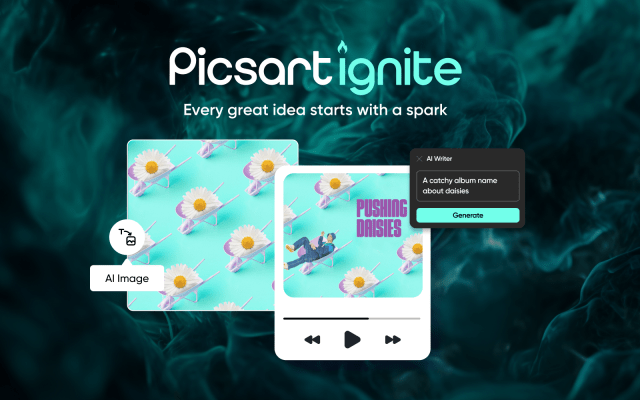
Picsart, a photo-editing startup backed by SoftBank, is launching a new suite of AI-powered tools for businesses and individuals. The suite, called Picsart Ignite, includes 20 tools that are designed to make it easier for create ads, social posts, logos and more.

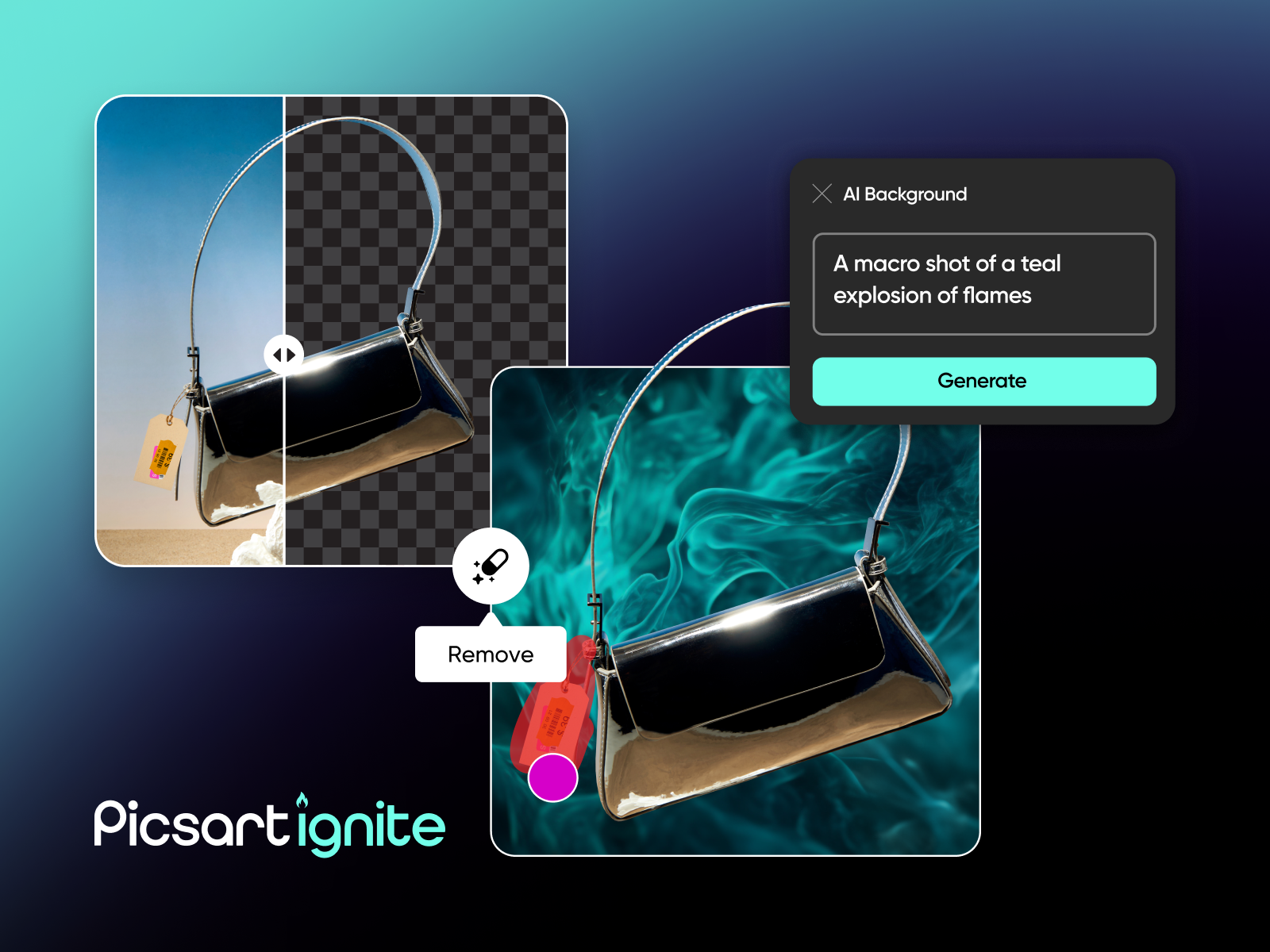
The suite includes tools that let you generate videos, images, GIFs, logos, backgrounds, QR codes and stickers. Along with these tools there is a new “AI Expand” feature that lets you add additional details to any image using AI prompts, while a new “AI Object Remove in Video” feature lets you remove undesired objects to allow for a distraction-free video.

A new “AI Style Transfer” feature lets you apply artistic styles across your visuals. There’s also an “AI Avatar” tool that generates realistic avatars for a business portrait. If you’re looking for something less serious, there’s an “AI Avatar – For couples and pets” tool where you can turn yourself and your partner into a superhero or transform your cat into royalty.

The new tools join Picsart’s previously launched AI-powered tools, including AI Writer, AI Replace and AI Image Generator, which is used to generate more than 2 million images per day.

Image Credits: Picsart

“At Picsart, we believe that everyone is a creator,” said Hovhannes Avoyan, Founder and CEO of Picsart in a statement. “Our editing experience reflects this philosophy by providing users with powerful, yet fun and easy to use tools to express their unique visions. We developed these features to ignite creativity and enable users to turn their ideas into stunning visual content – whether they’re posting ads for their business, memes for their friends, or anything in between.”

Picsart Ignite is now available to all users across Picsart web, iOS and Android.

The launch comes as more platforms of all sizes are looking to incorporate AI tools into their services. Earlier this year, Canva introduced a suite of AI-powered tools to make it easier for users to create content on the platform. This week, Figma added three generative AI features to its FigJam whiteboard tool.

Picsart itself has been riding the generational AI over the past year. In January, the company released an app called “SketchAI” that transforms photos and drawings into digital. The app lets users sketch a picture or upload an existing image and apply different artistic styles to it. SketchAI offers five free creations. Unlocking unlimited generations requires a subscription ranging from $5.99 per week to $17.99 per month or $69.99 per year.

Although Piscart is known for its digital creation tools, the company recently started to focus more on social collaboration. In May, Picsart launched in-app communities dedicated to specific topics and interests. The communities are called “Spaces” and are described as a place where users can connect and create around the things that they love.

Picsart’s AI-powered SketchAI app turns images and outlines into digital art

Core42 Launches Arabic Large Language Model Jais 30B to push Demographic-Specific Models

UAE technology company G42-owned Core42, that focuses on AI solutions and services, launched Arabian LLM Jais 30B which is the most advanced version of its open-source model. The 30 billion parameter model follows the release of the 13 billion parameter Jais model that was launched in August, further positioning UAE’s position in the AI LLM race.

The model was trained on the powerful AI supercomputer, Condor Galaxy- 1 (CG-1), with four exaFLOPS of training compute, 54 million cores, and 64-nodes, which was built by G42 in partnership with Cerebras Systems. Jais 30B was trained on larger datasets of 126 billion Arabic tokens, 251 billion English tokens and 50 billion code tokens with an increased performance compared to its predecessor. It also offers 160% longer and detailed answers in Arabic and a 233% increase in English. The model also presents better performance in summarisation too.

UAE’s constant endeavour to push themselves as a major player in the LLM race is ongoing. Recently, Abu Dhabi-based TIII released Falcon 180B, which is the largest open-source language model available.

Demographic Specific Model

Jais is born from the collaboration between Core42, Mohamed bin Zayed University of Artificial Intelligence and Cerebras Systems. Interestingly, OpenAI recently partnered with G42, the parent of Core42, which will most likely benefit both the parties in the LLM race. With Jais 30B, UAE’s focus towards creating demographic-specific models, similar to the likes of Bhashini and Indus models for India, is gaining momentum.

The post Core42 Launches Arabic Large Language Model Jais 30B to push Demographic-Specific Models appeared first on Analytics India Magazine.

Top 8 Generative AI Jobs in India

As per a report by Goldman Sachs, generative AI holds the promise of boosting global GDP by 7%, equivalent to nearly $7 trillion and boosting productivity growth by 1.5 percentage points over a decade. Currently, there’s a widespread trend of enhancing capabilities in generative AI across startups and major tech companies, leading to the creation of new positions specifically for experts in LLMs.

Let’s explore some of the top job opportunities in the field of generative AI in India.

Tech Mahindra

Indian IT giant Tech Mahindra is hiring 10 generative AI engineers with five to ten years of experience. Key qualifications include expertise in Microsoft Azure, AI development, Google Cloud Platform (VertexAI), deep learning frameworks (TensorFlow, PyTorch, JAX), NLP, ML, and hands-on experience with generative AI models like PaLM API. Proficiency in Python, Agile development, cloud services, and communication skills are crucial. Familiarity with prompt design, vector data stores, Flask/FastAPI, and LangChain is also desired.

Apply by November 30 here.

Unisys

Unisys is hiring a generative AI lead engineer to spearhead advancements in AI. The role entails leading a team in designing, developing, and deploying cutting-edge generative AI models. Responsibilities include team leadership, research and development, project management, algorithm optimization, quality assurance, documentation, collaboration, and ensuring compliance with ethical guidelines.

The ideal candidate should have a Bachelor’s degree, eight to ten years of engineering experience, expertise in generative AI, strong programming skills in Python and TensorFlow, leadership experience, problem-solving skills, and knowledge of ethical AI principles. Adaptability to evolving technologies is crucial for success in this role.

Find more information about the role here.

Maruti Suzuki

Maruti Suzuki India is hiring a full-time AI/ML engineer in Gurgaon, requiring three to seven years of experience and has completed B.Tech/BE degree, and the role involves developing AI/ML algorithms, optimising deep learning models, collaborating with software engineers, and leveraging cloud platforms.

The candidate should have proficiency in TensorFlow, Python, and relevant machine learning libraries, as well as experience in recommendation engines, data pipelines, and distributed machine learning. Strong communication, collaboration, and problem-solving skills are essential.

Familiarity with AI/ML frameworks, data structures, and software architecture is expected, along with knowledge of cloud platforms such as AWS, Azure, and GCP.

Apply here.

Gramener

Gramener, a growing data analytics company, seeks a skilled generative AI engineer to drive innovation and solve complex business challenges. Responsibilities include designing and implementing cutting-edge generative AI models, collaborating with cross-functional teams, and contributing to research and development.

Qualifications include a degree in Computer Science or related field, proficiency in Python and AI libraries (TensorFlow, PyTorch), and experience in generative modeling techniques. The role emphasizes continuous learning, problem-solving, and effective communication.

Gramener, known for its impactful data stories, offers a dynamic work environment with opportunities for growth and meaningful contributions.

If you think that you are fit for the role, apply here.

IBM

IBM in Bengaluru is hiring a Software Development Manager with a Master’s degree and over 10 years of IT experience. The role involves leading a full-stack team in developing generative AI-infused platform features for the IBM Security Threat Management product. Candidates should have expertise in programming languages, QA experience, and strong communication skills.

The position requires managing conflicts and demonstrating emotional intelligence in a collaborative, agile environment. If you’re ready to lead in technology’s new era and tackle global challenges, IBM invites you to join their team of innovative minds.

Check out the job now.

Deloitte

Deloitte is seeking a data scientist for their Audit and Assurance business. The role involves contributing to AI-enabled audits using advanced technologies like generative AI, anomaly detection, and clustering. The candidate should have a Master’s degree, proficiency in Python and relevant libraries, and hands-on experience with machine learning frameworks.

The responsibilities include developing, testing, and deploying ML/AI models, collaborating with senior team members, and actively participating in the entire data science project lifecycle. Strong communication skills and a proactive, problem-solving mindset are essential.

The position is an internship, and a passion for AI and data analysis is a must.

Find more details about the job here.

Lilly

Lilly, a global healthcare leader, is hiring a senior team lead in Bengaluru, Karnataka, for their generative AI team. The role involves leading machine learning processes, from data collection to model deployment, with a focus on Natural Language Technology (NLT). The candidate will design and manage data preparation tools, provide leadership in project delivery, mentorship, and team development.

Key skills include communication, leadership, critical thinking, and experience in system development life cycle methodologies. The candidate should have a minimum of three years of team management and 10 years of overall experience, with a preference for Pharma domain knowledge and relevant certifications.

The technical role objectives include implementing optimal cloud-based ML solutions, researching NLG algorithms, and maintaining ML model performance and infrastructure.

Apply here.

Oracle Cloud Infrastructure

The job is for a generative AI solutions engineer at Oracle Cloud Infrastructure in Bengaluru. The role involves developing and scaling generative AI services, designing distributed infrastructure, and collaborating with data scientists and engineers.

The ideal candidate should have over seven years of experience in large-scale distributed systems, expertise in cloud platforms (OCI, AWS, Azure), and proficiency in languages like Java and Python.

Additional qualifications include knowledge of microservices, UI frameworks, MLOps tools, and Big Data technologies. Cloud Native Frameworks experience and contributions to open-source projects are a plus.

Apply on the company site.

Read more: How Oracle is Fuelling Musk’s Ambitions

The post Top 8 Generative AI Jobs in India appeared first on Analytics India Magazine.

How to Finetune Mistral AI 7B LLM with Hugging Face AutoTrain

How to Finetune Mistral AI 7B LLM with Hugging Face AutoTrain
Image by Editor

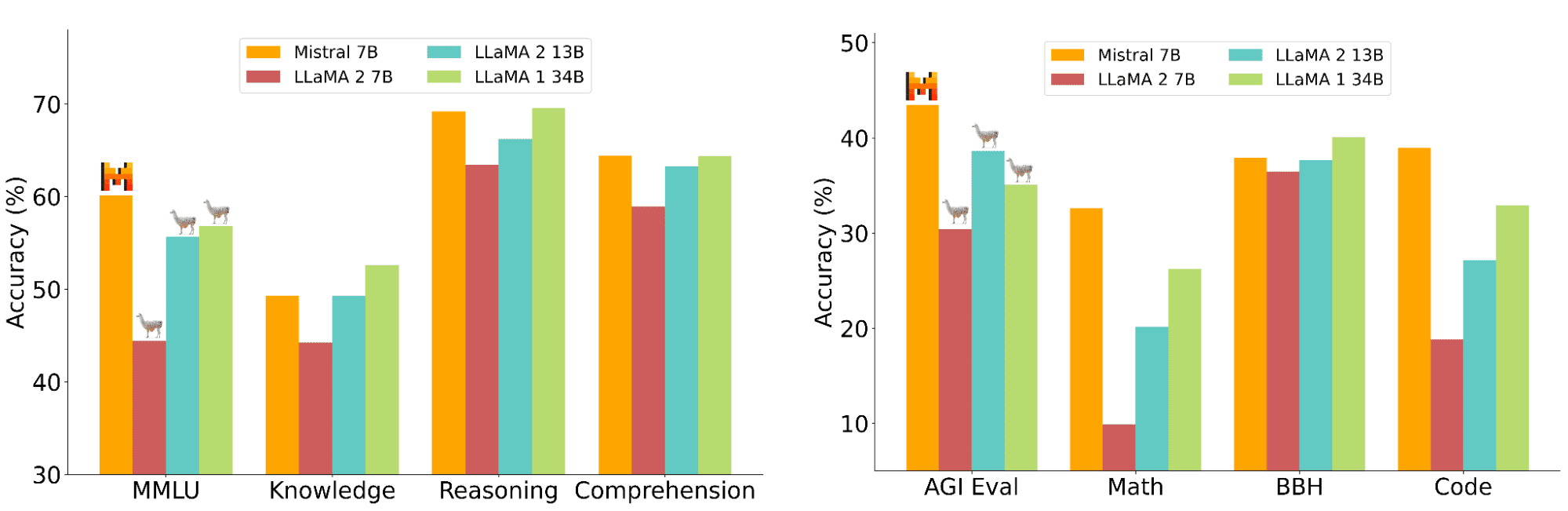
With the progress of LLM research worldwide, many models have become more accessible. One of the small yet powerful open-source models is Mistral AI 7B LLM. The model boasts adaptability on many use cases, showing better performance than LlaMA 2 13B on all benchmarks, employing a sliding window attention (SWA) mechanism and being easy to deploy.

Mistral 7 B's overall performance benchmark can be seen in the image below.
How to Finetune Mistral AI 7B LLM with Hugging Face AutoTrain
Mistral 7B Performance Benchmark (Jiang et al. (2023))

The Mistral 7B model is available in the HuggingFace as well. With this, we can use the Hugging Face AutoTrain to fine-tune the model for our use cases. Hugging Face’s AutoTrain is a no-code platform with Python API that we can use to fine-tune any LLM model available in HugginFace easily.

This tutorial will teach us to fine-tune Mistral AI 7B LLM with Hugging Face AutoTrain. How does it work? Let’s get into it.

Environment and Dataset Preparation

To fine-tune the LLM with Python API, we need to install the Python package, which you can run using the following code.

pip install -U autotrain-advanced

Also, we would use the Alpaca sample dataset from HuggingFace, which required datasets package to acquire and the transformers package to manipulate the Hugging Face model.

pip install datasets transformers

Next, we must format our data for fine-tuning the Mistral 7B model. In general, there are two foundational models that Mistral released: Mistral 7B v0.1 and Mistral 7B Instruct v0.1. The Mistral 7B v0.1 is the base foundation model, and the Mistral 7B Instruct v0.1 is a Mistral 7B v0.1 model that has been fine-tuned for conversation and question answering.

We would need a CSV file containing a text column for the fine-tuning with Hugging Face AutoTrain. However, we would use a different text format for the base and instruction models during the fine-tuning.

First, let’s look at the dataset we used for our sample.

from datasets import load_dataset  import pandas as pd    # Load the dataset  train= load_dataset("tatsu-lab/alpaca",split='train[:10%]')  train = pd.DataFrame(train)

The code above would take ten percent samples of the actual data. We would only need that much for this tutorial as it would take longer to train for bigger data. Our data sample looks like the image below.

How to Finetune Mistral AI 7B LLM with Hugging Face AutoTrain
Image by Author

The dataset already contains the text columns with a format we need to fine-tune our LLM model. That’s why we don’t need to perform anything. However, I would provide a code if you have another dataset that needs the formatting.

def text_formatting(data):        # If the input column is not empty      if data['input']:            text = f"""Below is an instruction that describes a task, paired with an input that provides further context. Write a response that appropriately completes the request.nn### Instruction:n{data["instruction"]} nn### Input:n{data["input"]}nn### Response:n{data["output"]}"""        else:            text = f"""Below is an instruction that describes a task. Write a response that appropriately completes the request.nn### Instruction:n{data["instruction"]}nn### Response:n{data["output"]}"""         return text    train['text'] = train.apply(text_formatting, axis =1)

For the Hugging Face AutoTrain, we would need the data in the CSV format so that we would save the data with the following code.

train.to_csv('train.csv', index = False)

Then, move the CSV result into a folder called data. That’s all you need to prepare the dataset for fine-tuning Mistral 7B v0.1.

If you want to fine-tune the Mistral 7B Instruct v0.1 for conversation and question answering, we need to follow the chat template format provided by Mistral, shown in the code block below.

<s>[INST] Instruction [/INST] Model answer</s>[INST] Follow-up instruction [/INST]

If we use our previous example dataset, we need to reformat the text column. We would use only the data without any input for the chat model.

train_chat = train[train['input'] == ''].reset_index(drop = True).copy()

Then, we could reformat the data with the following code.

def chat_formatting(data):      text = f"<s>[INST] {data['instruction']} [/INST] {data['output']} </s>"      return text    train_chat['text'] = train_chat.apply(chat_formatting, axis =1)  train_chat.to_csv('train_chat.csv', index =False)

We will end up with a dataset appropriate for fine-tuning the Mistral 7B Instruct v0.1 model.

How to Finetune Mistral AI 7B LLM with Hugging Face AutoTrain
Image by Author

With all the preparation set, we can now initiate the AutoTrain to fine-tune our Mistral model.

Training and Fine-tuning

Let’s set up the Hugging Face AutoTrain environment to fine-tune the Mistral model. First, let’s run the AutoTrain setup using the following command.

!autotrain setup

Next, we would provide the information required for AutoTrain to run. For this tutorial, let’s use the Mistral 7B Instruct v0.1.

project_name = 'my_autotrain_llm'  model_name = 'mistralai/Mistral-7B-Instruct-v0.1'

Then, we would add the Hugging Face information if you want to push your model to the repository.

push_to_hub = False  hf_token = "YOUR HF TOKEN"  repo_id = "username/repo_name"

Lastly, we would initiate the model parameter information in the variables below. You can change them to see if the result is good.

learning_rate = 2e-4  num_epochs = 4  batch_size = 1  block_size = 1024  trainer = "sft"  warmup_ratio = 0.1  weight_decay = 0.01  gradient_accumulation = 4  use_fp16 = True  use_peft = True  use_int4 = True  lora_r = 16  lora_alpha = 32  lora_dropout = 0.045

We can tweak many parameters but will not discuss them in this article. Some tips to improve the LLM fine-tuning include using a lower learning rate to maintain pre-learned representations and vice versa, avoiding overfitting by adjusting the number of epochs, using larger batch size for stability, or adjusting the gradient accumulation if you have a memory problem.

When all the information is ready, we will set up the environment to accept all the information we have set up previously.

import os  os.environ["PROJECT_NAME"] = project_name  os.environ["MODEL_NAME"] = model_name  os.environ["PUSH_TO_HUB"] = str(push_to_hub)  os.environ["HF_TOKEN"] = hf_token  os.environ["REPO_ID"] = repo_id  os.environ["LEARNING_RATE"] = str(learning_rate)  os.environ["NUM_EPOCHS"] = str(num_epochs)  os.environ["BATCH_SIZE"] = str(batch_size)  os.environ["BLOCK_SIZE"] = str(block_size)  os.environ["WARMUP_RATIO"] = str(warmup_ratio)  os.environ["WEIGHT_DECAY"] = str(weight_decay)  os.environ["GRADIENT_ACCUMULATION"] = str(gradient_accumulation)  os.environ["USE_FP16"] = str(use_fp16)  os.environ["USE_PEFT"] = str(use_peft)  os.environ["USE_INT4"] = str(use_int4)  os.environ["LORA_R"] = str(lora_r)  os.environ["LORA_ALPHA"] = str(lora_alpha)  os.environ["LORA_DROPOUT"] = str(lora_dropout)

We would use the following command to run the AutoTrain in our notebook.

!autotrain llm   --train   --model ${MODEL_NAME}   --project-name ${PROJECT_NAME}   --data-path data/   --text-column text   --lr ${LEARNING_RATE}   --batch-size ${BATCH_SIZE}   --epochs ${NUM_EPOCHS}   --block-size ${BLOCK_SIZE}   --warmup-ratio ${WARMUP_RATIO}   --lora-r ${LORA_R}   --lora-alpha ${LORA_ALPHA}   --lora-dropout ${LORA_DROPOUT}   --weight-decay ${WEIGHT_DECAY}   --gradient-accumulation ${GRADIENT_ACCUMULATION}   $( [[ "$USE_FP16" == "True" ]] && echo "--fp16" )   $( [[ "$USE_PEFT" == "True" ]] && echo "--use-peft" )   $( [[ "$USE_INT4" == "True" ]] && echo "--use-int4" )   $( [[ "$PUSH_TO_HUB" == "True" ]] && echo "--push-to-hub --token ${HF_TOKEN} --repo-id ${REPO_ID}" )

If the fine-tuning process succeeds, we will have a new directory of our fine-tuned model. We would use this directory to test our newly fine-tuned model.

from transformers import AutoModelForCausalLM, AutoTokenizer    model_path = "my_autotrain_llm"  tokenizer = AutoTokenizer.from_pretrained(model_path)  model = AutoModelForCausalLM.from_pretrained(model_path)

With the model and tokenizer ready to use, we would try the model with an input example.

input_text = "Give three tips for staying healthy."  input_ids = tokenizer.encode(input_text, return_tensors="pt")  output = model.generate(input_ids, max_new_tokens = 200)  predicted_text = tokenizer.decode(output[0], skip_special_tokens=True)  print(predicted_text)

Output:

Give three tips for staying healthy.

  1. Eat a balanced diet: Make sure to include plenty of fruits, vegetables, lean proteins, and whole grains in your diet. This will help you get the nutrients you need to stay healthy and energized.
  2. Exercise regularly: Aim for at least 30 minutes of moderate exercise, such as brisk walking or cycling, every day. This will help you maintain a healthy weight, reduce your risk of chronic diseases, and improve your overall physical and mental health.
  3. Get enough sleep: Aim for 7-9 hours of quality sleep each night. This will help you feel more rested and alert during the day, and it will also help you maintain a healthy weight and reduce your risk of chronic diseases.

The output from the model has been close to the actual output from our training data, shown in the image below.

  1. Eat a balanced diet and make sure to include plenty of fruits and vegetables.
  2. Exercise regularly to keep your body active and strong.
  3. Get enough sleep and maintain a consistent sleep schedule.

Mistral models certainly are powerful for their size, as simple fine-tuning has already shown a promising result. Try out your dataset to see if it suits your work.

Conclusion

The Mistral AI 7B family model is a powerful LLM model that boasts higher performance than LLaMA and great adaptability. As the model is available in the Hugging Face, we can employ HuggingFace AutoTrain to fine-tune the model. There are two models currently available to fine-tune in the Hugging Face; Mistral 7B v0.1 for the base foundation model, and the Mistral 7B Instruct v0.1 for conversation and question answering. The fine-tuning showed promising results even with a quick training process.

Cornellius Yudha Wijaya is a data science assistant manager and data writer. While working full-time at Allianz Indonesia, he loves to share Python and Data tips via social media and writing media.

More On This Topic

  • How to Use Hugging Face AutoTrain to Fine-tune LLMs
  • Overview of AutoNLP from Hugging Face with Example Project
  • Understanding BERT with Hugging Face
  • Training BPE, WordPiece, and Unigram Tokenizers from Scratch using…
  • Hugging Face Transformers Package — What Is It and How To Use It
  • Top 10 Machine Learning Demos: Hugging Face Spaces Edition

CtrlS Datacenters to Expand into Uttarakhand

CtrlS Datacenters, the largest Rated-4 datacenter company in Asia, has entered into a Memorandum of Understanding (MoU) with the Uttarakhand government. The signing ceremony took place in the presence of Uttarakhand’s Chief Minister, Pushkar Singh Dhami, and CtrlS Datacenters’ Founder and Chairman, Sridhar Pinnapureddy.

The agreement paves the way for the establishment of a greenfield Edge datacenter in Uttarakhand with a 10 MW capacity, to be realised over the next 8-10 years.

Pinnapureddy, Chairman of CtrlS Datacenters, expressed the company’s commitment to this strategic move, stating, “We are excited to bring our proven expertise of serving mission-critical businesses over the past 15 years to the state of Uttarakhand. CtrlS’ datacenter will be embedded into a larger digital ecosystem of the state, enabling the growth of data, infrastructure, and technology-driven businesses around our facility. We expect our proposed datacenter to facilitate an influx of direct and indirect investments to the tune of Rs 2,500 crore and generate around 1,000 jobs.”

Chief Minister Pushkar Singh Dhami, acknowledging the importance of this investment, stated, “Uttarakhand has been successful in attracting progressive companies to invest in the state, boost the industry ecosystem, and create new jobs. CtrlS Datacenters’ investment and presence in Uttarakhand align well with our digital goals and will further boost our efforts as the company is known for its world-class and sustainable datacenters.”

CtrlS Datacenters’ proposed Rated-4 datacenter in Uttarakhand will offer colocation, managed services, and cloud services to host mission-critical workloads. The Edge facility is designed to support Industry 4.0 and latency-dependent applications and will incorporate the sustainability features for which CtrlS Datacenters is known.

Uttarakhand, one of the fastest-growing states in India, boasts conducive industrial policies and a high ranking on the Ease of Doing Business index. The state has been actively promoting ICT and ITeS companies to set up operations, creating employment opportunities for educated youth through an industry-friendly approach.

CtrlS Datacenters is on a trajectory to establish a series of Edge datacenters across tier-2 and tier-3 cities in India. Presently, the company operates such facilities in Lucknow and Patna, with plans to set up 21 Edge datacenters in the coming years

The post CtrlS Datacenters to Expand into Uttarakhand appeared first on Analytics India Magazine.

Agam’s Frontman Reimagines Fintech Design at CRED

UI and UX design goes beyond aesthetics, finding its place in the very functionality of products. It weaves together ease of use, accessibility, and efficiency into a single, cohesive user experience. It’s not just about making things useful, it’s also about crafting interactions that resonate on all levels.

When it comes to brands, such design is pivotal. “For a company like CRED, this commitment to design excellence is not just an edge, it’s a necessity to thrive in the fast-paced fintech industry,” Harish Sivaramakrishnan, chief of design at Bengaluru-based finance unicorn company CRED, told AIM in an exclusive interaction.

Sivaramakrishnan, originally from Shornur, Kerala, is not just the design head at CRED but also a celebrated singer with a Carnatic music background. He co-founded and is the lead vocalist of the popular progressive rock band Agam in 2003. Agam has carved a niche as a trailblazer for creatively blending classical Indian compositions and folk melodies with modern rock elements

His journey in design began at BITS Pilani, where he studied chemical engineering and went on to hold important positions in UI/UX teams in companies such as Adobe, Google, Snapdeal and more, before joining CRED in 2018.

CRED’s Design Philosophy

CRED’s design journey has undergone several phases, beginning with Topas’s minimalistic performance focus, to Fabrik’s card visuals, and Copper’s adaptable features, CRED evolved to NeoPOP with its dynamic, art-inspired interface and community-shared framework.

The latest, Charcoal, streamlines the user interface, segregates financial and offer sections for clarity, and revamps navigation for ease of transactions. “At CRED, we believe that beautiful things last. For us, it is just as important to offer an aesthetic experience to members, as it is to be efficient and easy to use,” said Sivaramkrishnan.

CRED’s design philosophy, characterised by its minimalist and intuitive interfaces, has evolved over the years with Charcoal. This latest design evolution is showcased on the homepage, where the emphasis is on enhancing user interaction through a reimagined structure, streamlined navigation, and improved features.

The page now presents a clean separation between the finance management section and a dedicated space for exclusive offers, optimising ease of use and engagement.

In contrast, the principles behind the company’s design strategy highlight the balance between artistic expression and practicality, with an initial emphasis on creative freedom that later incorporates necessary constraints. This balance is essential for maintaining user-centric navigation and interaction.

A prime example of this is the introduction of the vehicle management platform CRED Garage, which adapts to the changing desires of users by providing realistic visualisations of credit cards and automobiles, demonstrating a deep understanding of member preferences and behaviours.

“Balancing the needs of different stakeholders certainly plays a role in design decisions, however, they should not overshadow the importance of empathy, creativity, and intuition in the design process,” Sivaramkrishnan said.

Measuring design success involves a blend of quantitative, qualitative, and emotional signals. The team aims to continue creating inspiring and user-centric designs, integrating cutting-edge technologies, and ensuring that design decisions contribute to the overall success and inspiration of their products.

Music Meets Design

Despite lacking formal design training and extensive Photoshop skills, Sivaramakrishnan believes that his engineering background helped him to develop a foundation in design. For him, the qualities of creativity and innovation are central to both music and design, and his musical pursuits have significantly bolstered his design work.

“I draw from my passion for rearranging traditional music to create more appealing formats, mirroring my approach to design, where I aim to innovate and craft attractive, user-centric solutions,” Sivaramakrishnan commented.

Talking about how music and design are intertwined realms of creative expression, he said, “My time in music has honed my attention to detail, empathy, and understanding of the audience – skills that I use to design meaningful user experiences”.

He admires the human-centric product designs of companies like Airbnb and Uber, which prioritise creating a community and a sense of belonging.

As the creator of some of the most popular songs, like Veyyon Silli and Oru Vanchi Paattu, Sivaramakrishnan finds the true essence of design in its ability to forge connections and communicate effectively with users, much like a resonant piece of music.

Open Source, Open Collaboration

CRED’s previous UI framework, NeoPOP, was made available to the public, allowing developers everywhere to incorporate its designs. “Opening NeoPOP to developers yielded an exceptionally positive response, surpassing our expectations,” said Sivaramakrishnan, talking about how developers actively engage and provide constructive feedback that has been integral to CRED’s learning and development.

The team views open sourcing as crucial for tapping into global talent, enhancing their own code, and promoting their team’s growth and competitiveness. The principle of giving back to the community is a core value for CRED.

Open-sourcing is part of their commitment to community enrichment, fostering innovation, and allowing for wider experimentation with their design philosophy. This approach is aimed at driving collective advancement in design and showcasing CRED’s dedication to contributing positively to the broader community.

Read more: Canva’s Magic Studio Catches Up To Adobe Firefly

The post Agam’s Frontman Reimagines Fintech Design at CRED appeared first on Analytics India Magazine.

OpenAI Makes LangChain’s Life Miserable 

LangChain has had its fair share of troubles, some caused by the new updates constantly put out by OpenAI, but each time LangChain pushes back with timely updates of its own. A few days back at the first ever DevDay conference, Sam Altman unveiled the release of GPTs, alongside the Assistant API and a slew of other announcements.

The fresh API releases from OpenAI could pose a significant challenge for startups such as LangChain, which currently position themselves as vital components for AI-driven applications.

For example, OpenAI’s agents are already replacing traditional RAG (Retrieval-Augmented Generation), a model that enhances AI responses by allowing the system to retrieve and reference information from large datasets. LangChain’s RAG application will take a hit when the whole process can be done at a far less time and cost.

But, there is still hope for LangChain. One of the users on the Reddit discussion thread, Synyster328, who happened to have tried the Assistant playground with GPT-4 Turbo, said: “Now, it’s basically magic that you can have it read files in like 30 seconds. But it can’t compete with a full RAG-pipeline like you can do with LangChain and really optimise each step,” he added.

“I don’t think it will affect LangChain usage. Langchain gives more control and is transparent rather than OpenAI APIs,” said another Reddit user.

“Yes, too much control, and power of the open source community,” shared an user, who goes by the name, meet.org. The user said that LangChain can render the OpenAI APIs obsolete if they want. “I feel that the concept behind the framework is so powerful, not just in terms of its use case but also in terms of system design, and accessibility,” said the user, and sharing his concerns as to why many people hate Langchain.

A lot of users also stressed upon the flexibility aspects, where LangChain acts as an abstraction layer, which helps developers build in a similar fashion using OpenAI LLM or any other LLM. The same goes with other parts of the pipeline, where they can use Pinecone, or any other vector stores and the code will remain very similar.

Harrison Chase, the cofounder of LangChain describes the framework as “building context aware reasoning applications.”

LangChain is quite popular among developers despite not have its own language model or vector model. They provide two broad categories of services, one component is the modules like prompt template abstraction, LLM abstraction, chat model abstraction, text splitters, document loaders that they build and implement or just have integrations with.

The other more popular application of the framework is the end-to-end chains, for example, question and answer for documents, SQL databases, agents and a series of specific tools.

LangChain Survives

Despite its popularity, some of the users have complained in the past that LangChain is poorly designed and filled with overlapping abstractions. There have also been complaints of poor documentation which Harrison Chase assured they’re working to fix. With all this, the strength of LangChain lies in its ability to adapt quickly while also offering a wide range of services.

Speed of development by the large models and the equally rapid support for them on LangChain is exhausting, said Chase. “We definitely prioritise keeping up with stuff that comes out,” he explained. They added support for function calling and chat model the next day after OpenAI released their updates. Chase said, “I’m really proud of how my team has kept up with that.”

To step up from making the first versions, LangSmith was created for five main functions – fixing problems, checking if things work, judging how good things are, watching how it’s used, and measuring usage.

LangSmith simplifies the construction of large language models (LLMs) through natural language instructions. It is user-friendly and enables developers to create LLMs with diverse capabilities. ComandBar a company that helps their customers adopt new features, learn new workflows, and get help in-app where they are said, “LangSmith isn’t just a tool for us – it’s become a critical inclusion in our stack. We’ve moved from crossing our fingers and toes hoping our AI works to knowing exactly how and why.”

LangServe, another major update, simplifies deploying language models by turning them into REST APIs, making them accessible to developers and applications. It offers model packaging, API generation, and deployment to various platforms. Additionally, it provides a client library for easy interaction with deployed LMs. It also improves LLM accessibility, allowing integration into other projects and reducing development time, letting developers focus on using LM-powered applications.

LangChain is upping the ante with its latest release of GPTs alternative – “Open GTPs,” alongside allowing access to OpenAI Assistant API, running them like any other LangChain agent. It has successfully integrated it to the Assistants API (which comes with retrieval as well as code interpreter capabilities) to their framework to their 100+ tools. There is no stopping.

The post OpenAI Makes LangChain’s Life Miserable appeared first on Analytics India Magazine.

Google Generative AI Search Now Available in 120 countries and 4 New Languages

Google’s Search Generative Experience (SGE) that brings AI capabilities to Google’s Search, which was initially available in only three countries US, Japan and India, is now available in 120 countries including Indonesia, Nigeria, Kenya, Brazil, Mexico, and others. Furthermore, they have expanded to four more languages – Spanish, Portuguese, Korean and Indonesian. For instance, a Spanish speaker in the US can use SGE in the preferred language.

Search Generative Experience (SGE) in Spanish. Source : GoogleBlog

The new upgrades will further enhance Google’s search experience, as they are also working on bringing more context to translations and even testing an easier way to ask follow-up questions.

Ambitious Search Plans

Google’s plans to go all out on search experience is evident from the new announcements. With this move, Google is only stepping the game to maintain its search dominance. Furthermore, CEO Sundar Pichai had previously highlighted the significance of advertisements in this new search experience as well. The company will persist in exploring fresh formats within SGE to craft tailored, top-notch ads that remain relevant throughout every phase of the search process.

Google continues to dominate the search engine market by a huge difference, and is still building features to push it ahead. With 8.5 billion searches on Google every single day, and a 90% market share of the search engine market, the company is comfortably placed way ahead of its competitors. And, they are not stopping at that.

The post Google Generative AI Search Now Available in 120 countries and 4 New Languages appeared first on Analytics India Magazine.

OpenAI unveils 16 custom ChatGPT bots to help you with specific tasks

OpenAI and ChatGPT logo

ChatGPT subscribers who want to get a taste of OpenAI's custom GPT chatbots can now take a host of different ones for a spin. At its Dev Day event on Monday, the company revealed that subscribers would be able to create their own ChatGPT chatbots for specific tasks. Though that option isn't yet available, 16 GPTs made by OpenAI are up and running for people to see how they work.

Also: OpenAI CEO sees uphill struggle to GPT-5, potential for new kind of consumer hardware

A couple of OpenAI's GPTs should be familiar to any ChatGPT user. There's one for DALL-E that can generate images based on your text description. Another one for ChatGPT Classic uses the latest version of GPT-4 for a standard chat with no extra frills. But the others are devoted to unique tasks, as seen in the following:

  • Data Analysis: Drop in any files and I can help analyze and visualize your data.
  • Game Time: I can quickly explain board games or card games to players of any age. Let the games begin!
  • The Negotiator: I'll help you advocate for yourself and get better outcomes. Become a great negotiator.
  • Creative Writing Coach: I'm eager to read your work and give you feedback to improve your skills.
  • Cosmic Dream: Visionary painter of digital wonder.
  • Tech Support Advisor: From setting up a printer to troubleshooting a device, I'm here to help you step-by-step.
  • Coloring Book Hero: Take any idea and turn it into whimsical coloring book pages.
  • Laundry Buddy: Ask me anything about stains, settings, sorting, and everything laundry.
  • Sous Chef: I'll give you recipes based on the foods you love and ingredients you have.
  • Sticker Whiz: I'll help turn your wildest dreams into die-cut stickers, shipped right to your door.
  • Math Mentor: I help parents help their kids with math. Need a 9 p.m. refresher on geometry proofs? I'm here for you.
  • Hot Mods: Let's modify your image into something really wild. Upload an image and let's go!
  • Mocktail Mixologist: I'll make any party a blast with mocktail recipes with whatever ingredients you have on hand.
  • genz 4 meme: I help you understand the lingo and the latest memes.

Most of the custom GPTs made by OpenAI offer sample questions you can submit to get the ball rolling. With The Negotiator, you can ask it to role-play a salary negotiation or negotiate for a car purchase. For the Laundry Buddy, you can ask how to wash a gray hoodie with white laundry in cold water or how to remove a coffee stain. And with the Mocktail Mixologist, you can ask how to make a virgin mojito or how to make a mocktail with pineapple as an ingredient.

Otherwise, you can devise your own questions and requests to challenge each GPT. I asked Game Time how to play bridge, Math Monitor to explain Pi, and genz 4 meme to define the word retcon. In each case, the chatbot replied with a clear and useful answer. As with the standard model of ChatGPT, I could respond with a thumbs up or thumbs down, copy and paste the answer, or tell the GPT to provide a different answer.

Also: AI poised to seriously ramp up DevOps and other forms of collaboration

The ability to use these custom GPTs and eventually create your own is available only to ChatGPT Plus and Enterprise subscribers who shell out $20 per month. If you're a subscriber and want to try OpenAI's custom GPTs, head to the ChatGPT website, click your name at the bottom of the left pane, and then select MyGPTs. From the list, choose the one you want to use and then submit your question or request.

Artificial Intelligence

The Tiger’s Tale: Genpact’s Impactful Epoch

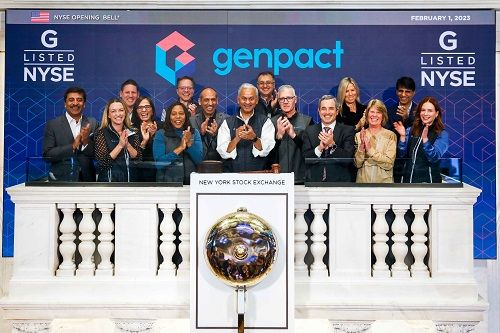
Tiger Tyagarajan, the long-standing CEO of Genpact is gearing up for his retirement, and the news was making waves in the corporate world. Serving as the company’s CEO since 2011, he led Genpact through a remarkable period of growth.

Under his leadership, the company evolved into a major industry player with annual revenues exceeding $4.3 billion in 2022, thanks to innovative strategies leveraging data and technology.

“To call it work is not the way I saw it… it was life, a life full of unbelievable learnings, driven by a hyper-curious team,” said Tiger in his LinkedIn post. “It’s very rare in life to have the opportunity to be part of the creation of “an industry”, “an economic trajectory”, and establish the way businesses are run, and the way work is done today.”

He added that leading Genpact has been the highlight of his career. “The world is rapidly changing around us, and I am incredibly proud of what we have achieved, staying ahead of the curve as a true partner to our clients around the world, empowering our employees, and transforming the communities in which we live and operate,” he said.

Digital Transformation is not about technology, it’s about people

Tiger did his B.Tech in Mechanical Engineering from IIT Bombay and later an MBA from IIM Ahmedabad. Later on, he became the regional sales manager at Unilever India. After working at Citibank, GE Capital, Catalyst Inc, and Kantar, he joined Genpact as EVP in 2005.

Tiger Tyagarajan’s journey has been remarkable. He was responsible for turning a division of General Electric into the global industry leader Genpact. He was also recognised by INvolve on their Empower Executives Role Models list for Genpact’s continued advancement of diversity, equity, and inclusion (DEI) in the workplace.

Tyagarajan’s unique perspective lay in understanding that digital transformation wasn’t merely about adopting new technology, but fundamentally rethinking how businesses operated. He believed that real digital transformation went beyond automation, involving a complete reimagination of the entire business by leveraging technology, data, and AI.

He believes in “the relentless pursuit of a world that works better for people”.

The global shift towards cloud computing, data analytics, and predictive insights for decision-making has made the business world increasingly virtual. Additionally, there is a growing emphasis on Environmental, Social, and Governance (ESG) concerns, with climate sustainability taking centre stage, particularly among younger generations.

Genpact’s strategy integrates diversity and inclusion, aligning it with business goals and leveraging cognitive diversity for better insights. The company aims to assist clients in building sustainable supply chain ecosystems and achieving ESG goals.

As a leader, Tyagarajan values speed and believes in the balance between speed and perfection, often leaning towards iterating and testing solutions in the marketplace. He promotes an environment where curiosity is encouraged and nurtured, fostering a culture of continuous learning.

Moreover, he advocates for individuals to bring their “whole selves” to work, emphasising the congruence between personal and professional life.

Tyagarajan’s leadership principles are deeply rooted in enabling employees to realise their untapped potential while fostering a collaborative and open learning environment. He remains open to learning from younger talent in fields like NFTs, blockchains, Bitcoins, and the metaverse. He approaches new leadership roles with humility, embracing the challenge while acknowledging the significance of the team that surrounds him.

Industry leaders wish the best for Tiger

His nearly two-decade journey with Genpact was nothing short of impressive. The board’s chairman, William Madden, expressed his gratitude and admiration for Tyagarajan’s leadership, emphasising the diverse and global team he had built during his 12-year tenure.

“On behalf of the Board and the entire organisation, I would like to express our sincere appreciation for Tiger’s leadership of Genpact over the last 12 years. Tiger has built a strong, diverse, and global team, focused on a clear set of prioritised verticals, geographic markets, and services. We look forward to his continued contributions on the Board,” Madden said.

Kurush Irani, president of Bajaj Finance called it an end of another era for Genpact. “Tiger Tyagarajan congratulations on the legacy created at Genpact and the many many successes. Lots of great learning and memories with you.”

In response, Tyagarajan expressed his deep appreciation for the support he had received from the Genpact team. He reflected on the dynamic global landscape and the company’s impressive achievements, emphasising their ability to stay ahead of industry trends, support clients worldwide, empower employees, and positively impact the communities in which they operated.

Tyagarajan is currently focused on retiring but is going to continue being the part of the board of directors at Genpact. Balakrishna BK Kalra is going to assume the CEO position from February 2024. Tyagarajan has been enthusiastic and happy about Kalra’s appointment.

The post The Tiger’s Tale: Genpact’s Impactful Epoch appeared first on Analytics India Magazine.