I used this famous photographer’s AI bot to critique my photo, and the results were wild

SwitchBot Mini Robot Vacuum K10+

The photo I uploaded to Ratliffe's GPT.

Artificial intelligence is a powerful tool, especially in its generative form. However, I'm partial to thinking people often take the technology too seriously. While there are fears that generative AI can take over some jobs, it can be an outstanding tool for work and fun, as photographer Trey Ratcliff proves.

Ratcliff created a custom GPT bot to critique photos that users upload, complete with his personality and humor. Ratcliff trained the bot on over 5,000 of his blog entries from the past 15 years, his books on photography, and his sense of humor.

Also: I spent a weekend with Amazon's free AI courses, and highly recommend you do too

OpenAI lets ChatGPT Plus users create their custom chatbots powered by ChatGPT, a new feature announced during the company's first DevDay developers conference last week. Since then, ChatGPT users have been ideating different custom GPT bots to perform various actions.

Of course, I tested it out, and the results were both astonishing and hilarious.

I uploaded a photo of a recent robot vacuum review I wrote. It was a photo I wasn't happy with and I was expecting an AI chatbot to tell me, "It's too dark, too beige, needs more vibrancy and contrast," with a little joke at the end.

Instead, it gave a sarcastic, intricate, and ornate description of an average photo. It was amazing how descriptive it was, truly. The GPT delved into describing the image, down to the details of the robot vacuum that was charging in its base station and the houseplant in a pot to its right, calling it "a juxtaposition of the automated and the organic."

Also: How to use ChatGPT Plus: From web browsing to plugins

The GPT described the color palette as "muted, perhaps even dreary, with beige walls and carpet, hinting at the monotony of household chores that our robotic friend tirelessly relieves us from."

The GPT also said, "Now, for the imaginative bit: One could whimsically argue that the robot, with its cyclopean eye, might well be contemplating the existential quandaries of its serviceable existence. Or perhaps it's simply 'seeing' its next target — a stray popcorn kernel under the sofa, an affront to its programmed sense of cleanliness."

The robot vacuum, which is the SwitchBot K10+ mini robot vacuum, has a visible cord behind the base station, which Ratcliff's GPT describes as "a stray loop, a moment of inattention, and our hero could be ensnared in a Gordian knot of its own making."

Also: The best early Black Friday robot vacuum deals

It ended its critique with a question, "So, tell me, dear uploader, what were the robot's greatest triumphs and tribulations in its quest to conquer the domestic dust bunnies?"

Ratcliff has been leveraging the power of generative AI for over a year now, through a dedicated Instagram account called @trairatcliff. To access Ratcliff's Critique GPT, you have to have a ChatGPT Plus subscription.

Artificial Intelligence

AMD to Launch MI300X in Advancing AI Event in December 

AMD Brings its Best AI Compute on Microsoft, Along with AI PCs

AMD has announced the AMD Advancing AI event on December 6, which would showcase AMD’s upcoming AI products. This would also include the launch of the much awaited AMD Instinct MI300X, the company’s competitor NVIDIA GH200.

You can watch the event here.

The event aims to introduce the latest AMD Instinct MI300 data centre GPU accelerator family while showcasing the company’s expanding collaboration with AI hardware and software partners. Dr. Lisa Su, Chair and CEO of AMD, will be accompanied by AMD executives, AI ecosystem partners, and customers, engaging in discussions about the transformative impact of AMD products and software on the fields of AI, adaptive computing, and high-performance computing.

Read: AMD Paving AI’s Road from Edge & Beyond

Prominent AI startups, including Lamini and Moreh, have embraced AMD MI210 and MI250 systems to fine-tune and deploy custom LLMs. Lamini revealed its big secret this month that it is running its LLMs on AMD’s Instinct GPUs. Databricks has also made a strategic move towards utilising AMD GPUs to elevate their LLM training capabilities, and it is working marvellously for the company.

Databricks said that it is looking ahead with anticipation towards the next-generation AMD Instinct MI300X GPUs. Similarly, Lamini is also eagerly waiting for the launch of MI300X with 192GB of High-Bandwidth Memory (HBM), which will allow its models to run even better.

Interestingly, NVIDIA recently also announced the launch of its HGX H200 AI computer, which would be powering Microsoft’s platform as well, along with AWS, Google, and Oracle.

The post AMD to Launch MI300X in Advancing AI Event in December appeared first on Analytics India Magazine.

The Rise and Fall of Prompt Engineering: Fad or Future?

The Rise and Fall of Prompt Engineering: Fad or Future?
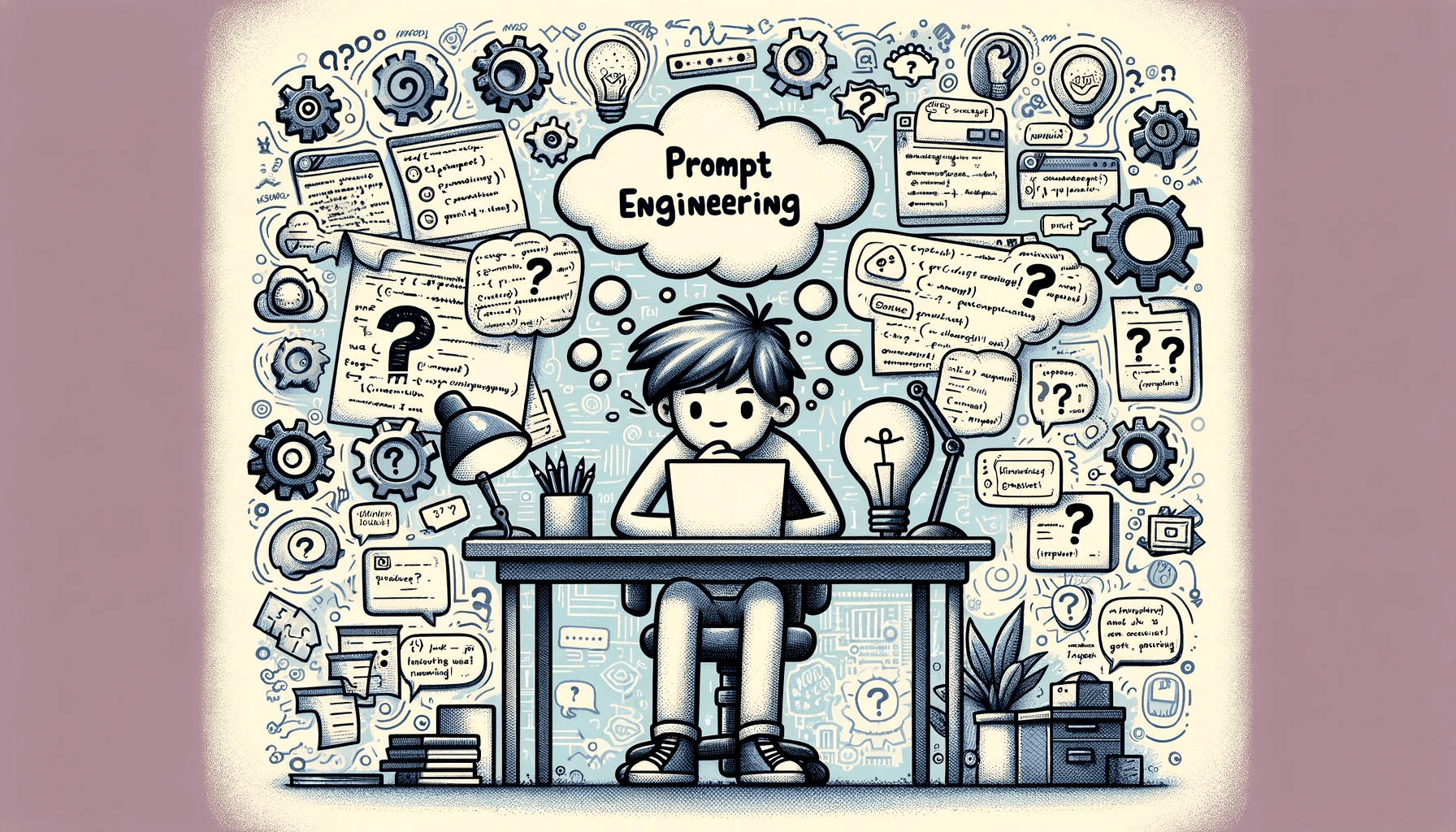
Image generated by DALLE-3

In the ever-expanding universe of AI and ML a new star has emerged: prompt engineering. This burgeoning field revolves around the strategic crafting of inputs designed to steer AI models toward generating specific, desired outputs.

Various media outlets have been talking about prompt engineering with much fanfare, making it seem like it’s the ideal job—you don’t need to learn how to code, nor do you have to be knowledgeable about ML concepts like deep learning, datasets, etc. You’d agree that it seems too good to be true, right?

The answer is both yes and no, actually. We’ll explain exactly why in today’s article, as we trace the beginnings of prompt engineering, why it’s important, and most importantly, why it’s not the life-changing career that will move millions up on the social ladder.

The Rise of Prompt Engineering

We’ve all seen the numbers—the global AI market will be worth $1.6 trillion by 2030, OpenAI is offering $900k salaries, and that’s without even mentioning the billions, if not trillions of words churned out by GPT-4, Claude and various other LLMs. Of course, data scientists, ML experts, and other high-level pros in the field are at the forefront.

However, 2022 changed everything, as GPT-3 became ubiquitous the moment it became publicly available. Suddenly, the average Joe realized the importance of prompts and the notion of GIGO—garbage in, garbage out. If you write a sloppy prompt without any details, the LLM will have free reign over the output. It was simple at first, but users soon realized the model’s true capabilities.

However, people soon began experimenting with more complex workflows and longer prompts, further emphasizing the value of weaving words skillfully. Custom instructions only widened the possibilities, and only accelerated the rise of the prompt engineer—a professional who can use logic, reasoning, and knowledge of an LLM’s behavior to produce the output he desires at a whim.

Prompt Engineering: Speaking the Language of the Machines?

At the zenith of its potential, prompt engineering has catalyzed notable advances in natural language processing (NLP). AI models from the vanilla GPT-3.5, all the way to niche iterations of Meta’s LLaMa, when fed with meticulously crafted prompts, have showcased an uncanny ability to adapt to a vast spectrum of tasks with remarkable agility.

Advocates of prompt engineering herald it as a conduit for innovation in AI, envisioning a future where human-AI interactions are seamlessly facilitated through the meticulous art of prompt crafting.

Yet, it’s precisely the promise of prompt engineering that has stoked the flames of controversy. Its capacity to deliver complex, nuanced, and even creative outputs from AI systems has not gone unnoticed. Visionaries within the field perceive prompt engineering as the key to unlocking the untapped potentials of AI, transforming it from a tool of computation to a partner in creation.

Scrutiny of Prompt Engineering

Amidst the crescendo of enthusiasm, voices of skepticism resonate. Detractors of prompt engineering point to its inherent limitations, arguing that it amounts to little more than a sophisticated manipulation of AI systems that lack fundamental understanding.

They contend that prompt engineering is a mere façade, a clever orchestration of inputs that belies the AI's inherent incapacity to comprehend or reason. Likewise, it can also be said that the following arguments support their position:

  • AI models come and go. For instance, something worked in GPT-3 was already patched in GPT-3.5, and a practical impossibility in GPT-4. Wouldn’t that make prompt engineers just connoisseurs of particular versions of LLMs?
  • Even the best prompt engineers aren’t really ‘engineers’ per se. For instance, an SEO expert can use GPT plugins or even a locally-run LLM to find backlink opportunities, or a software engineer might know how to use Copilot during to write, test and deploy code. But at the end of the day, they’re just that—single tasks that, in most cases, rely on previous expertise in a niche.
  • Other than the occasional prompt engineering opening in Silicon Valley, there’s barely even slight awareness about prompt engineering, let alone anything else. Companies are slowly and cautiously adopting LLMs, which is the case with every innovation. But we all know that doesn’t stop the hype train.

The Hype Around Prompt Engineering

The allure of prompt engineering has not been immune to the forces of hype and hyperbole. Media narratives have oscillated between extolling its virtues and decrying its vices, often amplifying successes while downplaying its limitations. This dichotomy has sown confusion and inflated expectations, leading people to believe it’s either magic or completely worthless, and nothing in between.

Historical parallels with other tech fads also serve as a sobering reminder of the transient nature of technological trends. Technologies that once promised to revolutionize the world, from the metaverse to foldable phones, have often seen their luster fade as reality failed to meet the lofty expectations set by early hype. This pattern of inflated enthusiasm followed by disillusionment casts a shadow of doubt over the long-term viability of prompt engineering.

The Reality Behind the Hype

Peeling back the layers of hype reveals a more nuanced reality. Technical and ethical challenges abound, from the scalability of prompt engineering in diverse applications to concerns about reproducibility and standardization. When placed alongside traditional and well-established AI careers, such as those related to data science, prompt engineering's sheen begins to dull, revealing a tool that, while powerful, is not without significant limitations.

That’s why prompt engineering if a fad—the notion that anyone can just converse with ChatGPT on a daily basis and land a job in the mid-six figures is nothing but a myth. Sure, a couple of overly enthusiastic Silicon Valley startups might be looking for a prompt engineer, but it’s not a viable career. At least not yet.

At the same time, prompt engineering as a concept will remain relevant, and certainly grow in importance. The skill of writing a good prompt, using your tokens efficiently, and knowing how to trigger certain outputs will be useful far beyond data science, LLMs, and AI as a whole.

We’ve already seen how ChatGPT altered the way people learn, work, communicate and even organize their life, so the skill of prompting will only be more relevant. In reality, who isn’t excited about automating the boring stuff with a reliable AI assistant?

Prompt Engineering and Its Future: Will it Move Beyond Being Just a Fad?

Navigating the complex landscape of prompt engineering requires a balanced approach, one that acknowledges its potential while remaining grounded in the realities of its limitations. In addition, we must be aware of the double entendre that prompt engineering is:

  1. The act of prompting LLMs to do one’s bidding, with as little effort or steps as possible
  2. A career revolving around the act described above

So, in the future, as input windows increase and LLMs become more adept at creating much more than simple wireframes and robotic-sounding social media copy, prompt engineering will become an essential skill. Think of it as the equivalent of knowing how to use Word nowadays.

Conclusion

In sum, prompt engineering stands at a crossroads, its destiny shaped by a confluence of hype, hope, and hard reality. Whether it will solidify its place as a mainstay in the AI landscape or recede into the annals of tech fads remains to be seen. What is certain, however, is that its journey, controversial by all means, won’t be over anytime soon, for better of for worse.

Nahla Davies is a software developer and tech writer. Before devoting her work full time to technical writing, she managed—among other intriguing things—to serve as a lead programmer at an Inc. 5,000 experiential branding organization whose clients include Samsung, Time Warner, Netflix, and Sony.

More On This Topic

  • Why Prompt Engineering is a Fad
  • Mastering Generative AI and Prompt Engineering: A Free eBook
  • The Art of Prompt Engineering: Decoding ChatGPT
  • Parallel Processing in Prompt Engineering: The Skeleton-of-Thought…
  • Some Kick Ass Prompt Engineering Techniques to Boost our LLM Models
  • Unlocking Reliable Generations through Chain-of-Verification: A…

Salesforce Ushers CRM Innovation with Generative AI

Recently, at the first-ever developer conference – DevDay 2023, OpenAI chief Sam Altman revealed that the company has about 2 million developers building on their API for a wide variety of use cases, and over 92% of Fortune 500 companies build on their products.

Salesforce’s Einstein GPT is one such model built on top of one of these APIs, which it introduced in March for CRM applications. Salesforce CEO Marc Benioff believes that it is top of its game, and said that it is already the leading global artificial intelligence platform.

“The whole company is pivoting around this next level of AI, and Salesforce now really is betting on the future of AI plus, data plus, CRM,” said Sridhar H Hariharasubramanian, senior director of solution engineering at Salesforce, in an interaction with AIM.

He said, its platform Einstein AI and Einstein Copilot (built on Einstein GPT) generates over 100 billion predictions daily and has found real-world customers for the same.

“We believe that this combination of applying artificial intelligence on top of enterprise data, and combining that with the insights that you are going to draw from our CRM platform, is going to really deliver a lot of benefits in terms of delivering better customer experience,” he added, saying that all of this would bring in a lot of improvement in operational efficiency, productivity and growth, for these organizations.

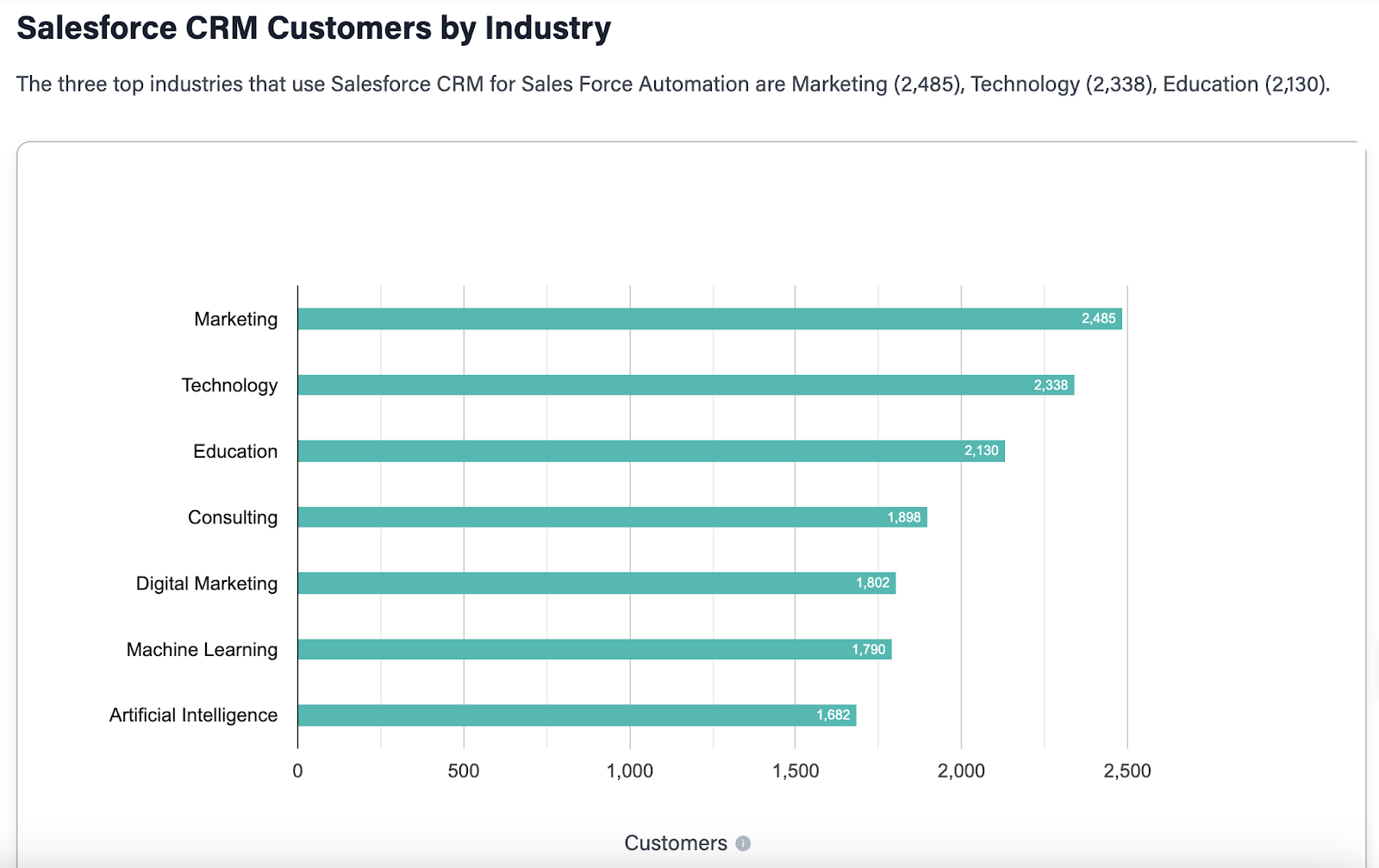
Salesforce’s vast pool of customers also poses as brownie points for them. With an unprecedented market share of 32.94% in CRM, it has over 149,665 customers. While the three top industries that use Salesforce CRM for salesforce automation are marketing (2,485), technology (2,338), and education (2,130), it also has over 3472 customers across AI and ML

Unleashing Enterprise Innovation

“We have generative AI capabilities in sales cloud, in service cloud, marketing cloud, commerce cloud as well as our data cloud product. We also have our own LLM called Code Gen, which is actually a purpose-built or a custom-built model, which will help companies who are large client of Salesforce, to write code and applications without actually doing a lot of coding,” he said.

“So you can simply in a typical GPT kind of fashion provide instructions in English with some logic in it, and the code will automatically get generated. And, of course, a human can review the code, it’ll put in the syntax if you put in remarks,” he added. Further adding “We have these generic AI capabilities across pretty much all of our key offerings.

The Einstein Copilot, powered by Einstein GPT and CRM insights, can also enhance productivity and efficiency in various business tasks. It assists users, such as salespeople, in generating emails or call summaries by providing contextual and customised content.

For instance, in sales, Copilot can help draft prospecting emails tailored to individual clients, combining user instructions with CRM data for personalized communication. The tool’s applications extend to service-related tasks, summarizing knowledge articles or generating responses for client inquiries.

Notably, the generated content undergoes human review before finalization and is intended to save time and improve the relevance of communications. Sridhar highlighted another key feature—Salesforce’s new Einstein 1 platform, introduced at Dreamforce.

The platform unifies metadata frameworks across various applications such as sales, service, marketing, commerce, Tableau, and industry clouds. This integration enhances the seamless exchange of information across these apps, providing a more cohesive experience. The platform’s unified architecture reduces the reliance on data extraction and loading processes, said Sridhar.

For instance, Einstein Copilot is integrated into Tableau, allowing users to request key highlights from complex reports using natural language, enhancing accessibility for business users.

Building Trust in the Era of Generative AI

Salesforce said that it is committed to addressing concerns related to trust and data privacy.

Sridhar clarified that while Salesforce partners with AWS for cloud services, all of Salesforce’s capabilities will be available on Salesforce’s native platform, Hyperforce—which ensures data privacy and regulatory compliance, making it the ideal choice for Indian customers.

Salesforce’s differentiation also lies in the Einstein Trust Layer, addressing enterprise concerns about data privacy and security. This layer incorporates dynamic grounding, contextualising prompts by drawing from correlated data before reaching foundational models to prevent inaccuracies.

He further said that data masking ensures no personally identifiable information (PII) is shared externally. The zero retention architecture guarantees that OpenAI, the LLM provider, won’t retain customer data, addressing worries about data use for training algorithms. Toxicity detection assesses response appropriateness, addressing biases. “An audit trail ensures transparency and trust, setting Salesforce apart in the CRM space,” he added.

Indian Market Thrives

Sridhar added, “India we are seeing a lot of demand for it.”

The company also grew at an unprecedented 24% YoY in Q2FY24 in the APAC region.

He said that the reception of Einstein Copilot and other new capabilities has been encouraging and clients are eager to leverage generative AI to drive growth, increase productivity, and deliver better experiences, among other things.

“I think the feedback has been very encouraging for at least the last two, or three months since some of these announcements started coming. We’ve had fairly serious conversations because Indian customers are obviously aware of these developments”

The post Salesforce Ushers CRM Innovation with Generative AI appeared first on Analytics India Magazine.

Make Your Own GPTs with ChatGPT’s GPTs!

Make Your Own GPTs with ChatGPT's GPTs!
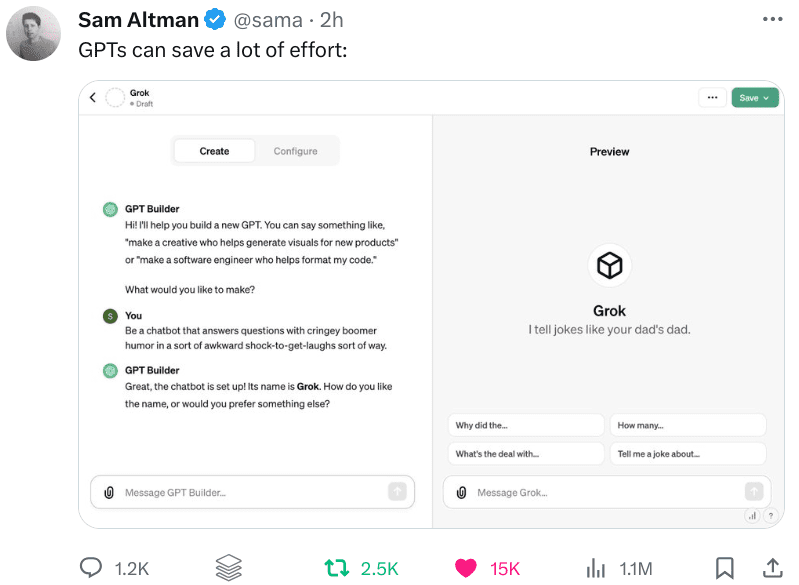
Sam Altman takes the opportunity to tweet and simultaneously promote GPTs and slam Elon's Grok GPTs Overview

They're here!

Having been announced just last week, OpenAI has now rolled out its ambitious new ChatGPT add-on: the aptly named GPTs.

Anyone can easily build their own GPT—no coding is required. You can make them for yourself, just for your company’s internal use, or for everyone. Creating one is as easy as starting a conversation, giving it instructions and extra knowledge, and picking what it can do, like searching the web, making images or analyzing data.

What's the reasoning behind this move?

Since launching ChatGPT people have been asking for ways to customize ChatGPT to fit specific ways that they use it. We launched Custom Instructions in July that let you set some preferences, but requests for more control kept coming. Many power users maintain a list of carefully crafted prompts and instruction sets, manually copying them into ChatGPT. GPTs now do all of that for you.

Is this a replacement for fine-tuned language models, such as GPT-3.5 Turbo or open source alternatives? Well, no. It's more a combination of Custom Instructions (as mentioned above), custom prompts, and retrieval augmented generation on your own uploaded documents. GPTs would be akin to using a plain vanilla LLM with LangChain, a series of prompt templates, a UI such as Text Generation Web UI, and a RAG implementation for knowledge retrieval.

GPTs aim to make the combination and configuration of these quick and simple, however, so let's give it a try.

Creating a GPT in 5 Minutes

I wanted to see if creating my own GPT was as quick and painless as Sam Altman's Open AI Dev Days demo, so I went through the process. Note that this was off the cuff once I noticed that I had access to GPT Builder, and so it was not meticulously planned. Let's see just how quickly and trouble-free we can put something together.

Make Your Own GPTs with ChatGPT's GPTs!
My 5 minute GPT creation: Agent George

I decided through a process of… well nothing, really, that I was going to create a real estate advice chatbot. And it was to have the voice and personality of George Costanza.

To do this, I started the GPT Builder process. First I had to let it know what the high level description of the GPT was to be.

Create an advisor to provide insight and recommendations to users looking to purchase or learn more about real estate and the real estate market.

Next I was asked about how it should frame responses, and anything else of importance to the GPT personality. I first stated that responses should be factual and that the GPT should ask clarifying questions if and when necessary. To give it a personality, I downloaded a Seinfeld script dataset, unpacked it, and uploaded the raw content as knowledge for retrieval, directing the GPT to learn and mimic George Costanza's "voice" and interactions. Here is what GPT Builder learned from these instructions.

Agent George will incorporate George Costanza's distinctive speech patterns and reactions into his interactions. He'll express his points with a mix of neurotic humor and a tendency to overthink, often veering into personal anecdotes or hyperbolic scenarios. Agent George will use rhetorical questions, self-deprecation, and a hint of paranoia in his advice, true to George Costanza's style. His advice will be wrapped in the form of short, punchy remarks, infused with a sense of urgency and an occasionally agitated tone. He'll be personable, engaging, and will bring a unique comedic perspective to real estate inquiries, while avoiding detailed financial or legal advice.

A few configuring interactions with the GPT Builder later (for instance, it created a profile picture, but I didn't like it and uploaded my own) and I added the instruction to end each user interaction with a situation-relevant Seinfeld quote. And that was it. Agent George was ready for action, all in approximately 5 minutes.

OpenAI's GPTs are as easy to create, configure, and share as promised. I believe it's a clever move to increase ecosystem buy-in in the face of the unknown, namely Google's mythical Gemini, which may or may not be on the way soon, and which may or may not live up to its hype. The question in my mind, however, remains whether or not OpenAI's GPTs will prove to be as useful as OpenAI seems to be counting on. I guess time will tell.

In the meantime, go ask George about the real estate market.

Serenity now!

Matthew Mayo (@mattmayo13) holds a Master's degree in computer science and a graduate diploma in data mining. As Editor-in-Chief of KDnuggets, Matthew aims to make complex data science concepts accessible. His professional interests include natural language processing, machine learning algorithms, and exploring emerging AI. He is driven by a mission to democratize knowledge in the data science community. Matthew has been coding since he was 6 years old.

More On This Topic

  • Data Observability, Part II: How to Build Your Own Data Quality…
  • Write and train your own custom machine learning models using PyCaret
  • Practising SQL without your own database
  • LangChain 101: Build Your Own GPT-Powered Applications
  • Build Your Own PandasAI with LlamaIndex
  • ChatGPT CLI: Transform Your Command-Line Interface Into ChatGPT

Not a Good Time to Be a Tech Entrepreneur

Not a Good Time to Be an Entrepreneur

If you are thinking of quitting your job and starting a company, think again.

Major Indian IT companies have put a freeze on hiring new employees. Many of them have a huge bench size, where the companies believe that they require a lot more training of the existing employees, before they can hire new ones. According to a recent report, private engineering institutes have started to report a 50-70% drop in placements this year.

The case seems to be simple of high supply and less demand, where colleges admit a lot of students, when there is not enough demand for jobs in the market.

🚨 India's private engineering institutes are reporting a 50-70% drop in placements this year.

— Indian Tech & Infra (@IndianTechGuide) November 13, 2023

Think of this – while the companies are investing in training their existing employees and also laying off a lot of them, it is kind of obvious that it would be harder to get a new job. The people who quit might think they would be able to raise a lot of funds, given the state of the market since 2021, which was booming then.

Influential founding, not funding

“I know this is not very exciting advice, but stick to your job,” said Varun Mayya, one of the influential voices in the field of AI, in his latest video.

At the same time, AIM reached out to industry experts for views on this, but all of them declined to comment on the topic.

A lot of big-tech employees are quitting their jobs to build their own startup. A lot of these are AI startups. Some employees are quitting Google and shifting to startups like OpenAI. But to not get influenced by these AI researchers and experts, this might not be an ideal time for you to quit your job.

Even then, we hear in the news that a lot of startups are raising funds and a lot of startups getting founded as well. The important thing to note in all of this is that a lot of these are from former founders of either big tech or serial entrepreneurs, and known among the ecosystem.

For example, recently co-founders of ShareChat started their own robotics startup called General Autonomy, and raised $3 million in funding. Interestingly, the firm that led the investment was India Quotient, which has invested in multiple rounds in ShareChat.

That is because a lot of the investors are ready to fund startups that are created by founders and experts they already know. Another example from the AI landscape can be Mistral.AI, which is founded by former Meta AI and DeepMind employers. Or Inflection AI, which was founded by the former DeepMind founder.

Moreover, if you are looking to raise funds by building a GPT wrapper startup, OpenAI might release just another update, and kill your startup within a second. Then the only option is either adapting, getting a job, or starting a new startup, all over again.

Not a good time to be a VC-backed startup..
Stay safe out there..

— Daniel ⛰️ (@thedanielokon) March 10, 2023

The state of startups is not that good

According to data from Tracxn, startups in India raised 50% less compared to last year. In the third quarter of 2023, Indian startups secured $1.5 billion in funding, marking a 54% decline from the $3.4 billion they garnered a year earlier. Additionally, the total number of deals plummeted by a substantial 71%, dropping from 592 in Q3 2022 to 166 in Q3 2023.

These figures reflect a significant downturn when contrasted with the robust funding periods of Q4 2021 and Q1 2022, during which Indian startups amassed $10.9 billion and $11.8 billion, respectively.

The same is the case with North American startups, in the third quarter of 2023, investors put $31.4 billion into startups, which is a drop of 3% compared to the last quarter. Undoubtedly, there is a direct impact of what happens in the North American market and the Indian Market.

In 2023, the Indian startup scene faced turmoil due to alleged financial irregularities. GoMechanic‘s co-founder, Amit Bhasin, admitted to serious errors in financial reporting in January. Now, GoMechanic, with new founders, is raising another round of funding for the second phase of the startup.

In June, Info Edge, backed by Sanjeev Bikhchandani, launched a forensic audit into 4B Networks, prompting questions about the timing of informing stakeholders. Capitalmind’s CEO, Deepak Shenoy, suggests a delicate situation for Info Edge to comment on before completing the audit.

Oftentimes, it also seems like getting funded quickly might be a sign of a good startup, but it ends up in failure because investors are just ready to pour funds, when they do not understand the market. The blame then comes on the founder. As Bhasin from GoMechanic said “It’s only when the magician dies, you get to see a trickster.”

This is a good time to realize how much VC money is required for your startups success. Just raising should not be the end goal.

— Atul Jha (@koolhead17) October 3, 2023

The generative AI wave is benefiting everyone – that is what probably all of us think. The ease of work and the massive amount of alleged funds that companies and startups alike have been investing and raising to adopt the technology. But there is another side to this story, the layoffs, the hiring freeze in various companies, and the fall in funding of startups.

One might think it might be a good time to start a business when there are less jobs, but think again. One more time. If you have a steady job, consider yourself lucky. Meanwhile, the ideal thing to do would be to upskill yourself with generative AI within the company you work at.

The post Not a Good Time to Be a Tech Entrepreneur appeared first on Analytics India Magazine.

Rust Provides the Ultimate Security Against Hackers

Rust has been voted the most loved programming language for eight years in its short life of 14 years. The popularity of the language is owed to its safety, one of the primary reasons it was created. Rust was designed to be a safer option, providing safety-first principles to ensure programmers write stable and extendable, asynchronous code.

Rust is structured in such a way that it inherently prevents developers from inadvertently introducing the most prevalent kinds of security flaws that are exploitable. This characteristic of the language could greatly impact the routine process of patching vulnerabilities and improving cybersecurity.

Earlier this year Microsoft began rewriting their core Windows libraries in Rust. “You will actually have Windows booting with Rust in the kernel in probably the next several weeks or months, which is really cool,” said David Weston, VP of OS security for Windows. He further said that, “The basic goal here was to convert some of these internal C++ data types into their Rust equivalents.”

Additionally, with the backing of AWS, sudo and su are being rewritten in Rust to replace critical but outdated infrastructure components with memory-safe alternatives. Along with Microsoft, Rust is being actively embraced by Amazon, Apple, Google and Mozilla.

Multiple Safety Features

One of the primary security features of Rust is its emphasis on memory safety. This is achieved through a strict ownership model, which dictates how memory is allocated and managed.

Each piece of data in Rust has a unique owner, and the language enforces rules about how and when data can be accessed or modified. This system effectively prevents common memory errors such as buffer overflows and null pointer dereferences, which are frequent attack vectors in other languages.

Apart from its primary feature of safety in memory allocation, Rust stands out in its approach to concurrency, which is a key aspect of its design providing safety and security in multi-threaded applications.

The language’s unique ownership rules are applied to its concurrency model, making data access thread-safe and free from data races. This careful handling of concurrency not only enhances performance but also significantly reduces a range of security vulnerabilities that are typically associated with multi-threaded environments.

Complementing its concurrency model, Rust boasts a minimal to no runtime. This serves as a substantial security advantage. Unlike languages that depend on larger runtimes or virtual machines, Rust’s lean runtime architecture minimizes the potential attack surface. This means there are fewer components that could be targeted or exploited by hackers, enhancing the overall security of applications developed in Rust.

Error handling in Rust is another cornerstone of its security framework. The language mandates that programmers explicitly handle potential errors, thereby preventing unexpected crashes or behaviors. This explicit and predictable approach to error handling is integrated into the language at the compile-time level, significantly reducing the chances of runtime errors that could be leveraged in cyber attacks.

Rust also benefits greatly from its package manager, Cargo. Cargo is pivotal in maintaining secure code, as it efficiently manages dependencies, tracks library versions, and ensures that all components of a project are up-to-date. This functionality is crucial for security; it enables developers to promptly implement patches and updates, particularly for libraries that may have vulnerabilities.

The active involvement of the Rust community plays a vital role in the language’s security posture. Regular updates and revisions by the community help to address known vulnerabilities and continually improve the language’s security features. This proactive and community-driven approach is integral to maintaining Rust’s resilience against security threats.

In summary, while no programming language can offer absolute protection against hacking, Rust’s thoughtful design, encompassing safe concurrency, minimal runtime, explicit error handling, efficient package management, and an engaged community, positions it as a more secure alternative compared to languages like C and C++. These attributes collectively contribute to Rust’s ability to effectively mitigate a wide array of common vulnerabilities.

Rapid migration

Developers shifting from other languages are drawn to Rust’s compelling feature set. Its efficient management of concurrent programming enables parallel code execution, and its lightweight, fast nature, with benchmarks rivaling C/C++, is a significant advantage. This shift is in line with the NSA’s recommendation to move from C/C++ to memory-safe languages like Rust.

Rust’s development has been user-centric, focusing on essential yet often overlooked features. These include generics, algebraic types, Foreign Function Interface (FFI) interoperability, a robust dependency management tool, and procedural macros, all of which contribute to a more enjoyable programming experience in Rust.

In the tech industry, major players are adopting Rust for its benefits. Mozilla, for instance, is revamping Firefox with Rust to enhance its security, reliability, and performance. Similarly, Amazon is leveraging Rust for AWS and Kindle, and is even developing a Rust compiler for Java, prioritizing performance and scalability.

Google and Dropbox are also embracing Rust. Google uses Rust in Chrome and Android and is creating a Rust compiler for Go to bolster security and reliability. Dropbox, meanwhile, is transitioning its backend to Rust, aiming for improved performance and scalability.

Facebook, too, is tapping into Rust’s potential. The company is using Rust in developing the Libra blockchain and Oculus VR, and is working on a Rust compiler for C++, focusing on creating more secure and reliable software.

The post Rust Provides the Ultimate Security Against Hackers appeared first on Analytics India Magazine.

KDnuggets News, November 15: 10 Essential Pandas Functions • 5 Free Courses to Master Data Science

KDnuggets News, November 15: 10 Essential Pandas Functions • 5 Free Courses to Master Data Science
Features 10 Essential Pandas Functions Every Data Scientist Should Know
Aryan Garg
5 Free Courses to Master Data Science
Bala Priya C
This Week's Posts The New Ethical Implications of Generative Artificial Intelligence
Vidhi Chugh
Density Kernel Depth for Outlier Detection in Functional Data
Kulbir Singh
How to Finetune Mistral AI 7B LLM with Hugging Face AutoTrain
Cornellius Yudha Wijaya
AI + No-Code: The Viral Combo Redefining Developer Innovation
Savinay Berry
5 Step Blueprint to Your Next Data Science Problem
Nisha Arya
Using ChatGPT to Help Land a Data Science Job
Cornellius Yudha Wijaya
Top 7 Essential Cheat Sheets To Ace Your Data Science Interview
Abid Ali Awan
Back to Basics Week 2: Database, SQL, Data Management and Statistical Concepts
Nisha Arya
Getting Started with Claude 2 API
Abid Ali Awan
From Fiction to Reality: ChatGPT and the Sci-Fi Dream of True AI Conversation
Nisha Arya
Expert Insights on Developing Safe, Secure, and Trustworthy AI Frameworks
Dr. Charles Vardeman
7 Steps to Running a Small Language Model on a Local CPU
Aryan Garg
From Our Partners Learn How to Design & Deploy Responsible AI Systems
Teradata
Everything you need to become a SAS Certified Machine Learning Engineer
SAS
From Around The Web Extracting Histogram of Gradients with OpenCV
Machine Learning Mastery
Towards Understanding the Mixtures of Experts Model
Towards Data Science
Comparing the Performance of LLMs: A Deep Dive into Roberta, Llama 2, and Mistral
Hugging Face

More On This Topic

  • 10 Essential Pandas Functions Every Data Scientist Should Know
  • 365 Data Science courses free until 18 November
  • 365 Data Science courses free until November 21
  • KDnuggets News, November 2: The Current State of Data Science…
  • 5 Free Courses to Master Data Science
  • KDnuggets News, October 27: 5 Free Books to Master Data Science • 7…

YouTube Joins The Irresponsible AI Club 

Yesterday, the famous video-sharing platform YouTube released a blog stating, “All content uploaded to YouTube is subject to our Community Guidelines—regardless of how it’s generated—but we also know that AI will introduce new risks and will require new approaches. We’re in the early stages of our work, and will continue to evolve our approach as we learn more.”

YouTube has announced that over the coming months, the platform will introduce updates that inform viewers when the content they’re seeing is synthetic. “Specifically, we’ll require creators to disclose when they’ve created altered or synthetic content that is realistic, including using AI tools,” they added, which means the onus is not on the content creators instead of the platform.

The company has also taken into its hands the job of removing AI generated content impersonating an individual or music mimicking an artist’s voice or style through the privacy request process.

Concentration of Power

In March, YouTube revised its advertising policy, allowing content creators to monetize material containing a moderate dose of profanity. This adjustment followed creators expressing discontent with YouTube’s stringent profanity policy, deeming it both overly restrictive and insufficient for ad monetization.

Curiously, just a few months prior, in November 2022, YouTube had updated its advertiser-friendly content guidelines, explicitly barring the use of swear words in the initial seven seconds of a video. Videos commencing with explicit language, like the infamous f-word, risked ineligibility for ad revenue. Even videos with moderate profanity throughout faced restrictions on ad earnings.

The policy impacted its earnings leading YouTube to take an about turn.

Computer scientist Yoshua Bengio has sounded the alarm on the concentration of power within big tech. He said there is a need to steer clear of a situation where corporate giants dictate the rules. He also mentioned the case is not just hypothetical.

His words hold true as before YouTube picked out the ‘Responsible AI’ page from the big tech’s playbook it made a deal with the devil.

The Irresponsible AI Club

YouTube is not the first or only one to release this monotonous, sort-of-mandatory statement, and change its policies for its own benefits, responsibly.

Google has also been carrying around the ‘Bold and Responsible’ placard for a while now. Yet, behind the curtains it has also been updating its privacy policies to suit its advertising purpose. To get back on top in the AI race, the folks behind Google are trying to release new products without much oversight.

Even though Google says it values ethics, its actions suggest otherwise. The team in charge of ethics has been all over the place for the past two years, and recently, the company got tangled up in a couple of legal battles.

OpenAI is dealing with a bunch of legal issues too. In January, Microsoft got rid of its team focused on ethics and society. Under new owner Elon Musk, Twitter cut more than half of its workers, including its small team working on ethical AI. In March, Twitch, owned by Amazon, also let go of its ethical AI team.

Time and again it has been pointed out that voluntary commitments from big tech companies are nothing but an illusion of security. Even the 2023 State of AI report highlighted the lack of researchers working on the AI alignment issues across some of the biggest AI research labs.

A change in the long-standing policies of companies is inevitable. But in the past one year the companies who consider themselves the leaders of the AI race like Google and OpenAI (to name a few) have been doing whatever floats their boat. How long will this go on for?

The post YouTube Joins The Irresponsible AI Club appeared first on Analytics India Magazine.

IQM Partners with NVIDIA for Hybrid Quantum Applications

IQM Partners with NVIDIA for Hybrid Quantum Applications

IQM Quantum Computers (IQM) has partnered with NVIDIA, a collaboration set to revolutionise quantum processing units programming. The joint effort will leverage NVIDIA CUDA Quantum, an open-source platform designed for the seamless integration and programming of quantum processing units within a unified system.

As a result of this collaboration, enterprises and research institutions utilising IQM’s quantum processing units will gain the ability to program and cultivate the next wave of hybrid quantum-classical applications using NVIDIA CUDA Quantum.

Read: NVIDIA wants to replicate CUDA success with Quantum Computing

This partnership, announced today at the SC Conference 2023 in Denver, seeks to expedite the progress and application of quantum computing across various domains. The collaborative endeavour aims to foster innovation, facilitate collaboration, and potentially unlock groundbreaking advancements in both scientific and industrial realms.

Prominent institutions, including CSC – IT Centre for Science and the VTT Technical Research Centre of Finland, are poised to leverage CUDA Quantum on VTT’s 5-qubit quantum computer. This quantum computer stems from a co-innovation partnership between IQM and VTT, highlighting the practical implications of the collaboration.

IQM’s overarching vision is to provide immediate accessibility for scientists and experts to integrate quantum and classical systems seamlessly. Envisioning a future characterised by quantum-accelerated supercomputing, IQM aspires to witness quantum computers and supercomputers working in tandem to tackle paramount issues, such as machine learning, cybersecurity, and drug and chemical research.

Dr. Peter Eder, Head of Strategic Partnerships at IQM Quantum Computers, expressed during the announcement at the SC Conference 2023, “The collaboration with NVIDIA is a strategic step that will help accelerate the progress of potential use cases. It offers our new and existing users the option to use NVIDIA’s high-quality software framework to explore quantum solutions in their applications with our quantum hardware. We will continue to provide the best available tools to our users to increase quantum adoption.”

Tim Costa, Director of High Performance Computing and Quantum at NVIDIA, emphasised the transformative potential of quantum integrated supercomputing, stating, “NVIDIA’s collaboration with IQM will enable researchers to advance the state of the art in the coupling of quantum with GPU supercomputing, opening the door for countless breakthroughs.”

The post IQM Partners with NVIDIA for Hybrid Quantum Applications appeared first on Analytics India Magazine.