7 NVIDIA Announcements Made at Microsoft Ignite 2023

Microsoft and NVIDIA entered a decade-long partnership earlier this year amid the generative AI craze. The latter with its hardware prowess is leading the race. On the other end, Microsoft already has an upper hand with its deal with OpenAI. All around the year, both parties have announced several steps ahead hand in hand in the AI landscape.

“Our partnership with NVIDIA spans every layer of the Copilot stack — from silicon to software — as we innovate together for this new age of AI,” said Satya Nadella, chairman and CEO of Microsoft at the ongoing Ignite conference.

Here are 7 NVIDIA announcements by Microsoft made at the event that caught our attention:

H100 and H200 based virtual machines come to Microsoft Azure

Microsoft has introduced the NC H100 v5 VM series for Azure, featuring the industry’s first cloud instances with NVIDIA H100 NVL GPUs. These virtual machines have the combined power of PCIe-based H100 GPUs connected via NVIDIA NVLink, delivering nearly 4 petaflops of AI computing and 188GB of HBM3 memory.

This setup is a game-changer for mid-range AI workloads, offering up to 12x higher performance on models like GPT-3 175B. Moreover, Microsoft plans to integrate the NVIDIA H200 Tensor Core GPU into Azure next year, catering to larger model inferencing with enhanced memory capacity and bandwidth using the latest-generation HBM3e memory.

Microsoft also has plans to add the NVIDIA H200 Tensor Core GPU to its Azure fleet next year to support larger model inferencing with similar latency.

Confidential Computing with NCC H100 v5 VMs

Microsoft is expanding its NVIDIA-powered services with the introduction of NCC H100 v5 VMs. These confidential virtual machines leverage NVIDIA H100 Tensor Core GPUs, ensuring the confidentiality and integrity of data and applications in use, in memory. These GPU-enhanced confidential VMs will enter private preview soon, providing Azure customers with unparalleled acceleration while maintaining data security.

AI Foundry Service

NVIDIA has introduced an AI foundry service to supercharge the development and tuning of custom generative AI applications for enterprises and startups deploying on Microsoft Azure.

The foundry service pulls together three elements — a collection of NVIDIA AI Foundation Models, NVIDIA NeMoTM framework and tools, and NVIDIA DGXTM Cloud AI supercomputing services. This will give enterprises an end-to-end solution for creating custom generative AI models.

Businesses can then deploy their customised models with NVIDIA AI Enterprise software to power generative AI applications, including intelligent search, summarisation and content generation.

Partnership with Amdocs

NVIDIA has launched an AI foundry service to turbocharge the development and tuning of custom generative AI applications for enterprises and startups on Microsoft Azure. This introduction will optimise large language models for various industries.

The AI leader has also partnered with Amdocs, a key player in communications and media services that will leverage the AI foundry service to optimise enterprise-grade LLMs for the telco and media sectors. This collaboration builds on the existing Amdocs-Microsoft partnership.

AI Foundation Models More Accessible

Microsoft and NVIDIA are democratising access to AI Foundation Models, allowing developers to experience them through a user-friendly interface or API directly from a browser. These models, including popular ones like Llama 2, Stable Diffusion XL, and Mistral, can be customised with proprietary data.

Optimised with NVIDIA TensorRT-LLM these models deliver high throughput and low latency, running seamlessly on any NVIDIA GPU-accelerated stack. These foundational models are accessible through the NVIDIA NGC catalogue, Hugging Face, and Microsoft Azure AI model catalogue.

Omniverse Cloud’s Simulation Engines

NVIDIA also launched two new simulation engines on Omniverse Cloud hosted on Microsoft Azure: the virtual factory simulation engine and the autonomous vehicle (AV) simulation engine.

As automotive companies transition to AI-enhanced digital systems, these simulation engines aim to save costs and reduce lead times. Omniverse Cloud serves as a platform-as-a-service, unifying core product and business processes for automakers.

TensorRT-LLM Upgrade for Windows

An upcoming update to TensorRT-LLM, an open-source software enhancing AI inference performance, will add support for new large language models. This update makes demanding AI workloads more accessible on desktops and laptops with RTX GPUs, starting at 8GB of VRAM.

TensorRT-LLM for Windows will soon be compatible with OpenAI’s Chat API, letting developers run projects locally on a PC with RTX. The upcoming release of TensorRT-LLM v0.6.0 promises improved inference performance, up to 5x faster, and support for additional popular LLMs, including Mistral 7B and Nemotron-3 8B.

The post 7 NVIDIA Announcements Made at Microsoft Ignite 2023 appeared first on Analytics India Magazine.

Retool’s State of AI Report Highlights the Rise of Vector Databases

Retool’s State of AI Report Highlights the Rise of Vector Databases November 15, 2023 by Ali Azhar

(SuPatMaN/Shutterstock)

Artificial intelligence, specifically generative AI (GenAI) has seen a meteoric rise in 2023. It initially gained popularity as a consumer tool, but is now being used by enterprises who are looking for different ways to harness its transformative power. We wonder whether businesses have been successful in integrating GenAI into their workflows to deliver improved customer experiences and reimagine business processes.

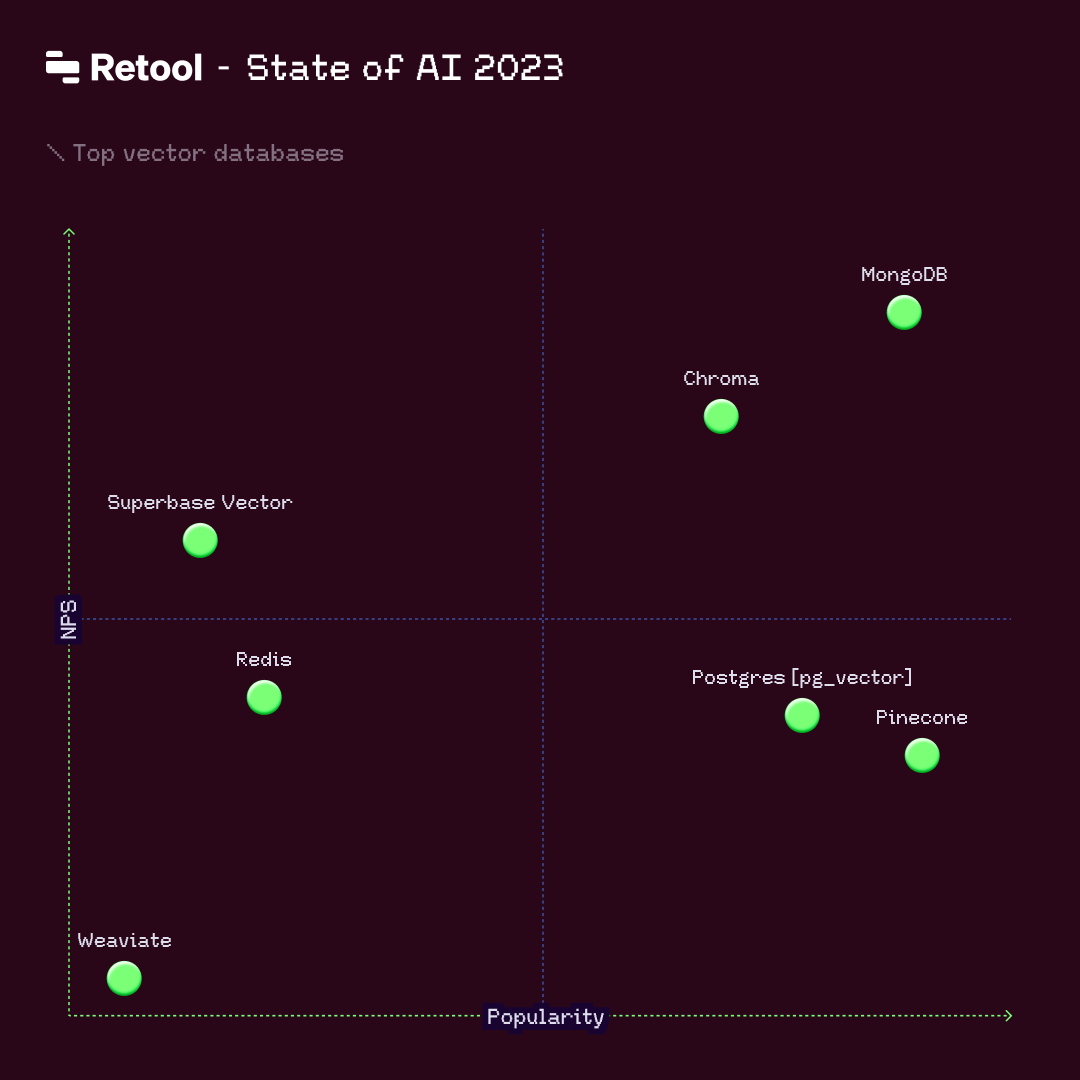
Retool, one of the leading development platforms for business software, just published its first-ever State of AI report to help us understand how technology professionals use and build AI, and which vector databases have been most successful. The report is based on a survey of 1,500 technology workers from various industries. The respondents include product managers, leadership, and software engineers.

“The AI revolution has been breathlessly covered but we’ve seen a lot less about use cases, especially in business,” said David Hsu, CEO and founder of Retool. “We did this survey and report because it won’t be possible to truly harness AI without first appreciating how it’s being used. What our findings make clear is that while AI isn’t replacing most technical jobs, it’s reshaping them—and people are latching onto the technologies that help them accelerate and strengthen their work.”

Source: Retool

A key component of the report was to analyze the use of vector databases in businesses. The findings highlight MongoDB Atlas Vector Search had the highest Net Promoter Score (NPS), and was the second most widely used vector database, only behind Pinecone. Given that MongoDB Atlas Vector Search was released only five months ago, this is an impressive achievement.

The report also highlights that vector databases are more of a greenfield at this stage, as fewer than 20 percent of respondents are using vector databases, however, trends show the adoption is almost guaranteed to grow. There could be various reasons why the adoption rate for vector databases is still low. Some companies may lack the resources, others may not have the required specialized knowledge or understand the value of vector databases.

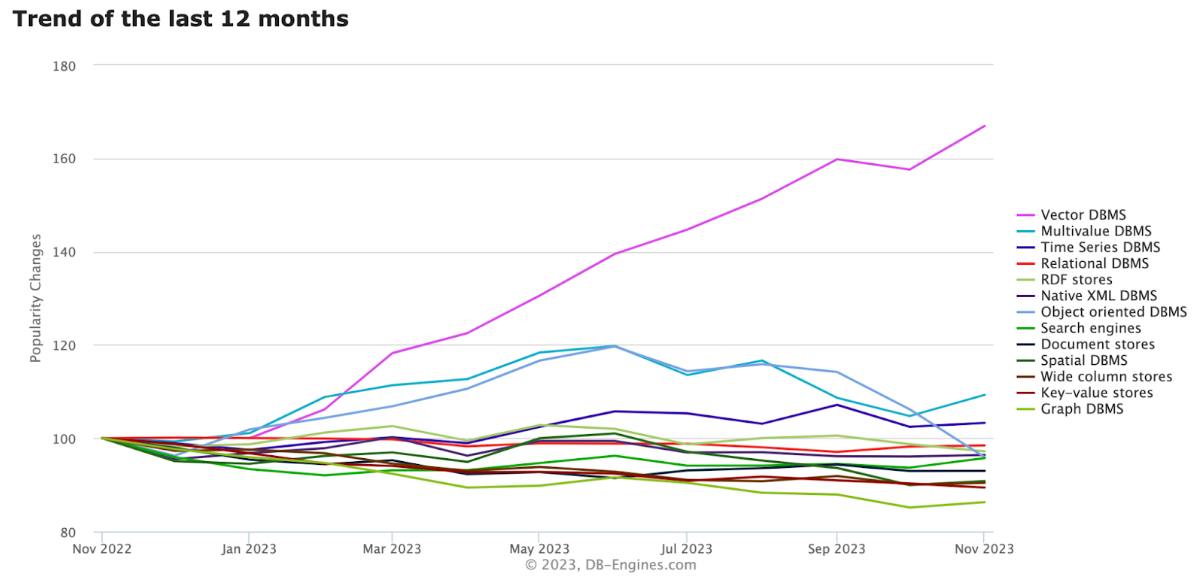
While it is early innings for vector databases, the DB-Engines trends show that in the last 12 months, vector databases are head and shoulders above all others in popularity. The primary reason for this surge in popularity is retrieval-augmented generation (RAG) architecture, which combines the reasoning capability of pre-trained LLMs with real-time data from companies. This allows for AI-powered apps designed to uniquely serve businesses for various objectives including driving internal productivity, reimagining customer experiences, and creating new products.

One of the key challenges with vector databases is that they have to integrate with other databases in the applications tech stack. Every additional database adds a layer of complexity and latency to the application. It also increases the operational overhead.

Source: MongoDB

MongoDB offers a solution to this by allowing developers to store and search vector embeddings in the same system as the operation database and using a distributed architecture that can isolate different workloads while keeping data fully synchronized. In addition, developers can use MongoDB's dynamic document schema to model and evolve relationships between application data, vectors, and metadata. This unified approach allows for lower latency, higher-performing apps, and faster development cycles.

The Retool report reveals interesting findings about the use of AI in business. The C-suite executives are more optimistic about AI compared to individual contributors. Over 75 percent of survey respondents say their companies are making efforts to get started with AI, with 50 percent saying these are early-stage projects mainly geared toward Internet applications. The survey also highlights the top challenges for AI adoption are model output accuracy (40 percent) and data security (33 percent).

There is a long way to go for companies to fully harness the power of AI, but there is definitely a lot of interest across industries, and businesses are thinking about the possibilities and implications of AI technologies. We will have to wait and see what strategies companies use to get the most benefit from AI technologies.

Related Items

Oracle Introduces Integrated Vector Database for Generative AI

DataStax Rolls Out Vector Search for Astra DB to Support Gen AI

Vast Data Boosts AI Infrastructure with New Unified Data Platform

Related

Generate Results Beyond the Boardroom: A Data Leader’s Guide to Planning, Building, and Launching Generative AI Projects

Generate Results Beyond the Boardroom: A Data Leader’s Guide to Planning, Building, and Launching Generative AI Projects

The science behind it evolved steadily over time. Supporting computational architectures grew manifold in the Cloud + GPU/TPU era. The phrase itself started showing up a bit nondescript in AI hype cycles from 2020 onwards, with a predicted timeline of 2-5 years from peak to plateau.

Against all this backdrop and thanks to ChatGPT, in late 2022, ‘Generative AI’ (GenAI) resurfaced on the scene with a big bang, creating an all-around buzz from discussion boards to boardrooms.

For organizations looking to leverage Gen AI technologies as a part of their Analytics strategy, certain action areas with a need for clear ownership stand out as important: creating the right excitement, adopting a sustainable technical approach (vs. not-for-all trillion token adventures), and having a method to generate value safely at scale.

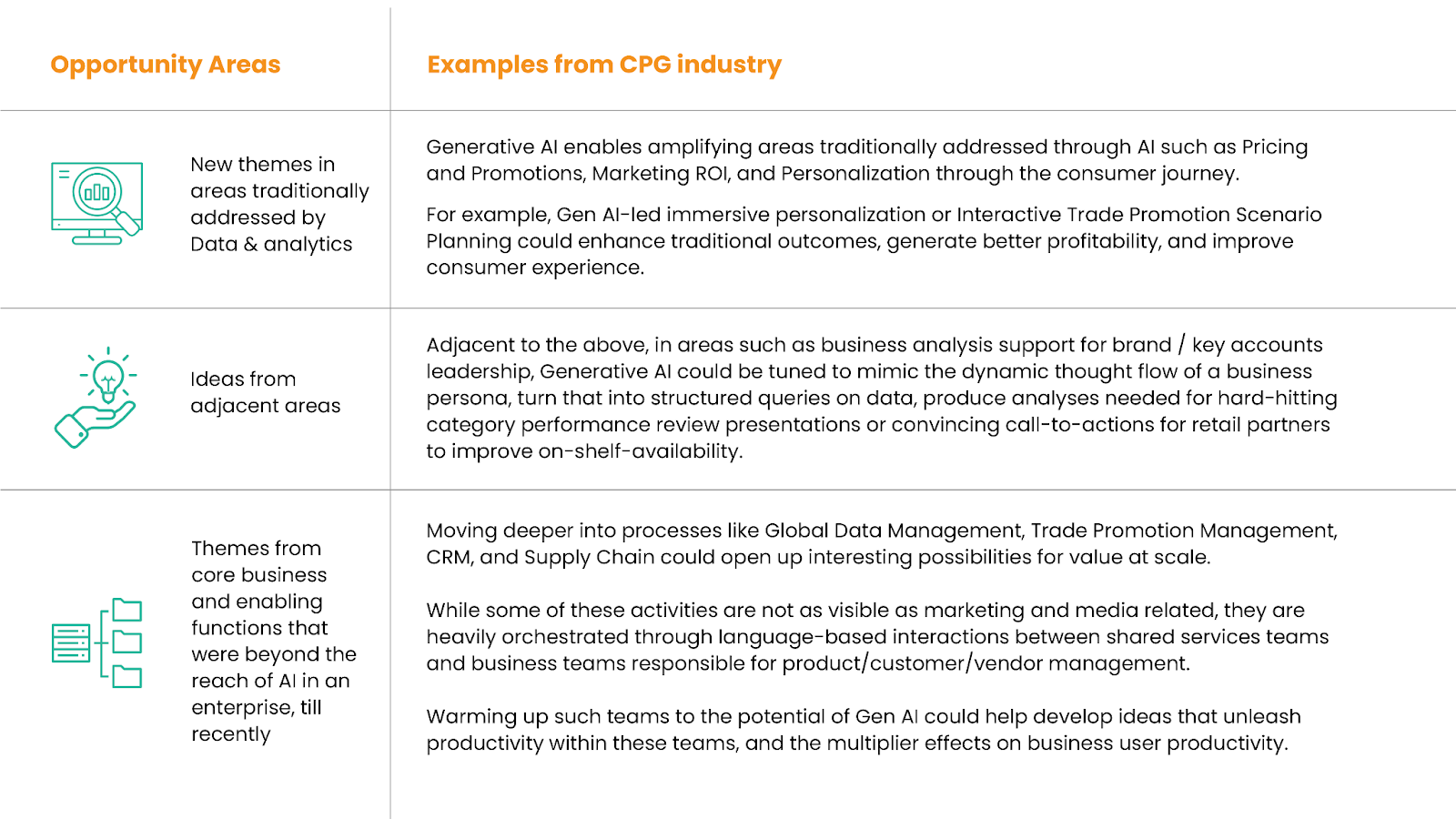
These are applicable for Gen AI-based solutions as much as for Data and AI in general but with some nuances. We believe organizations can tap into the following windows of opportunity while planning on how to integrate Gen AI into their business.

How can organizations tap into these windows of opportunity to create tangible value for their businesses? Here’s a simple three-step process:

Step 1: Plan: Creating your own Gen AI strategy

With different departments at varying levels of data maturity, the first step would be to determine which projects and departments are best suited for Gen AI integration.

A time-tested approach could help:

  • Through Design Thinking-styled workshops with stakeholders across functions (or one key function at a time), organizations could generate an exhaustive list of candidates from the ground up without placing any constraints upfront.
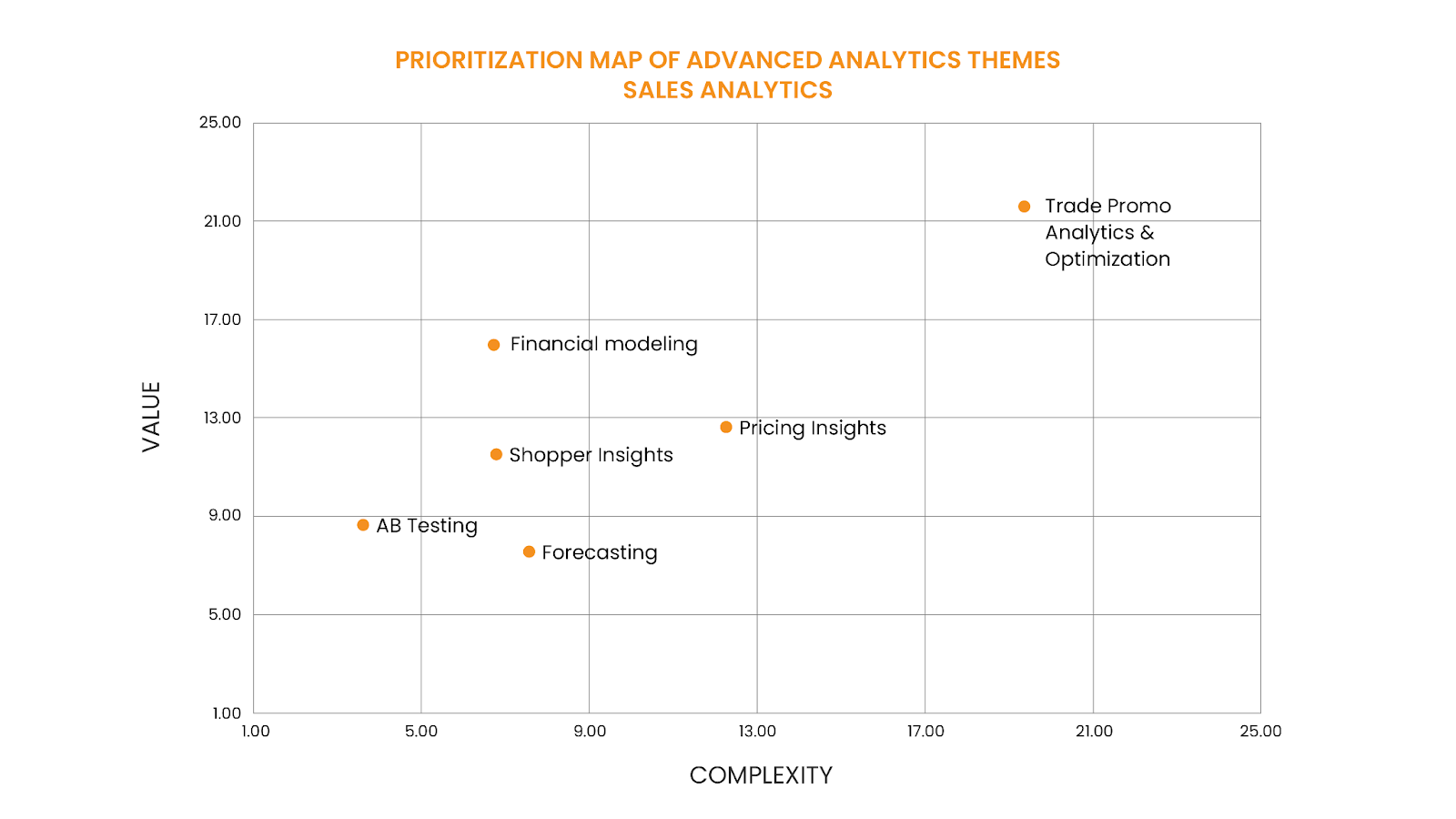
  • All candidate ideas could be plotted on a Value vs. Complexity matrix.
  • Use cases could then be prioritized objectively, with debates where needed, and top candidates picked for a pilot.

[RP3] [RP4] [RP5]

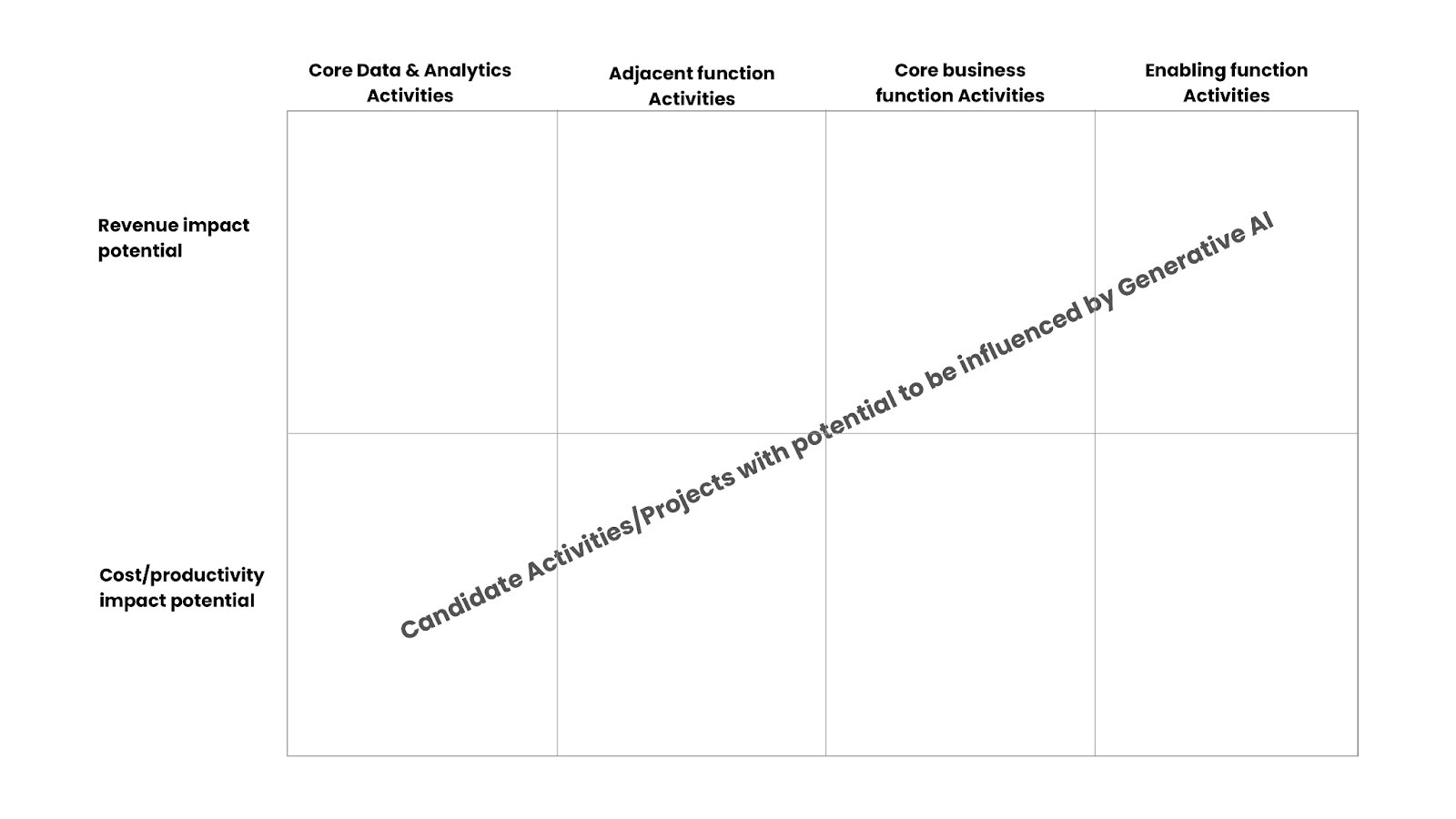
Generative AI – Candidate Identification Matrix (could be used as a pinboard in ideation workshops)

Coming out of such ideation workshops, here are some key questions that should have been answered:

  • What is the high-level business opportunity and/or estimated value the use case can generate?
  • Is Gen AI the right solution for the problem/ Is Gen AI required to solve it?
  • What are the success criteria for the use case?
  • How complex is the implementation?
  • Is the required data available to develop the solution?
  • Do the required tools, technology, processes, and people skills/capabilities exist in the organization?

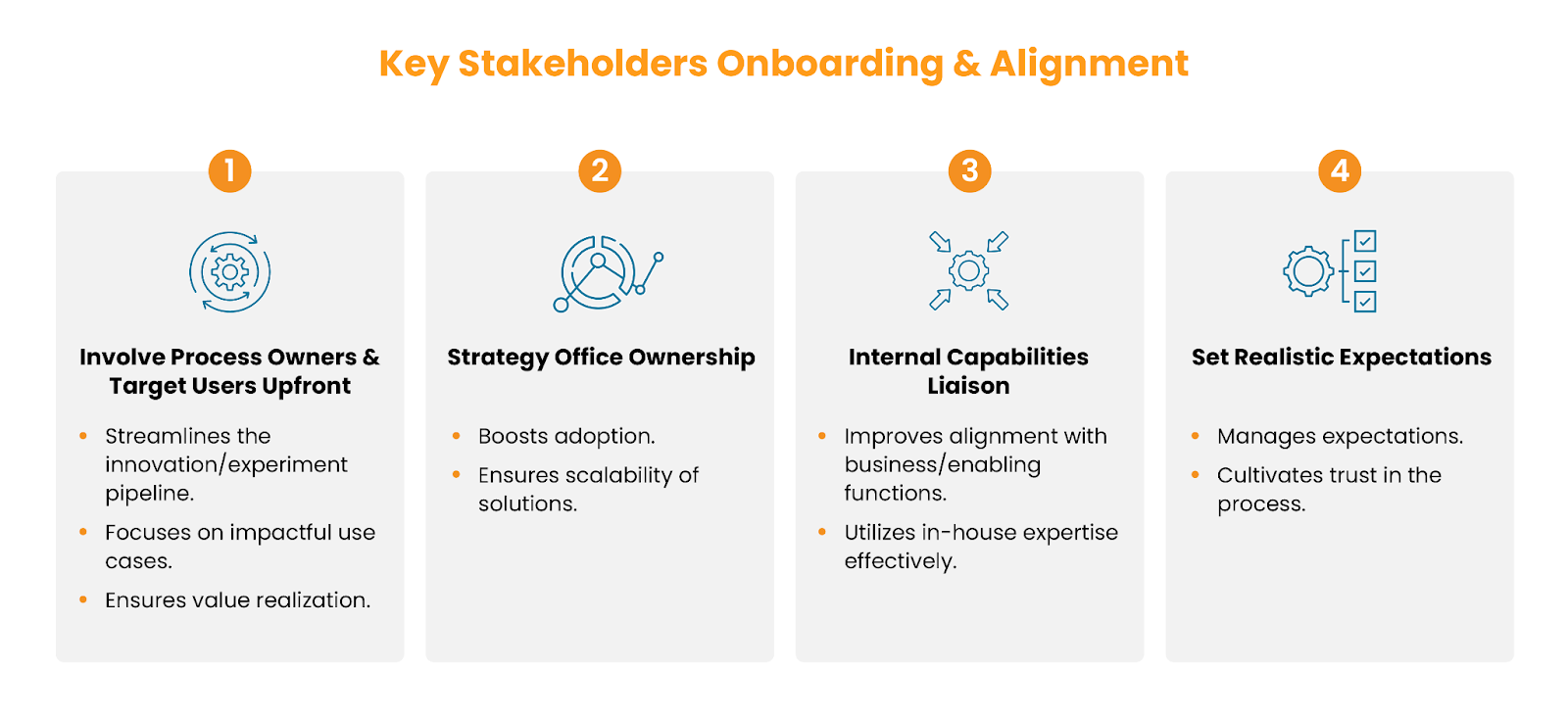
It is also essential to have key stakeholders onboard and aligned. We see different strategies being adopted to ensure that happens.

  • Upfront involvement of process owners and target users ensures solution relevance, as well as down-the-line adoption and scaling. This also avoids the risk of clogging a very busy innovation/experiment pipeline (blame it on the buzz) with lukewarm use cases, which may not see adoption and hence experience lesser value.
  • Having the Strategy Office own and drive business use case identification also helps with adoption and scalability.
  • Look for internal capabilities (bandwidth and skills of the existing Data and Analytics function) to liaise with business/enabling functions.
  • Set realistic expectations with participants about time-to-impact at full scale, given the space is still nascent, albeit with significant potential.

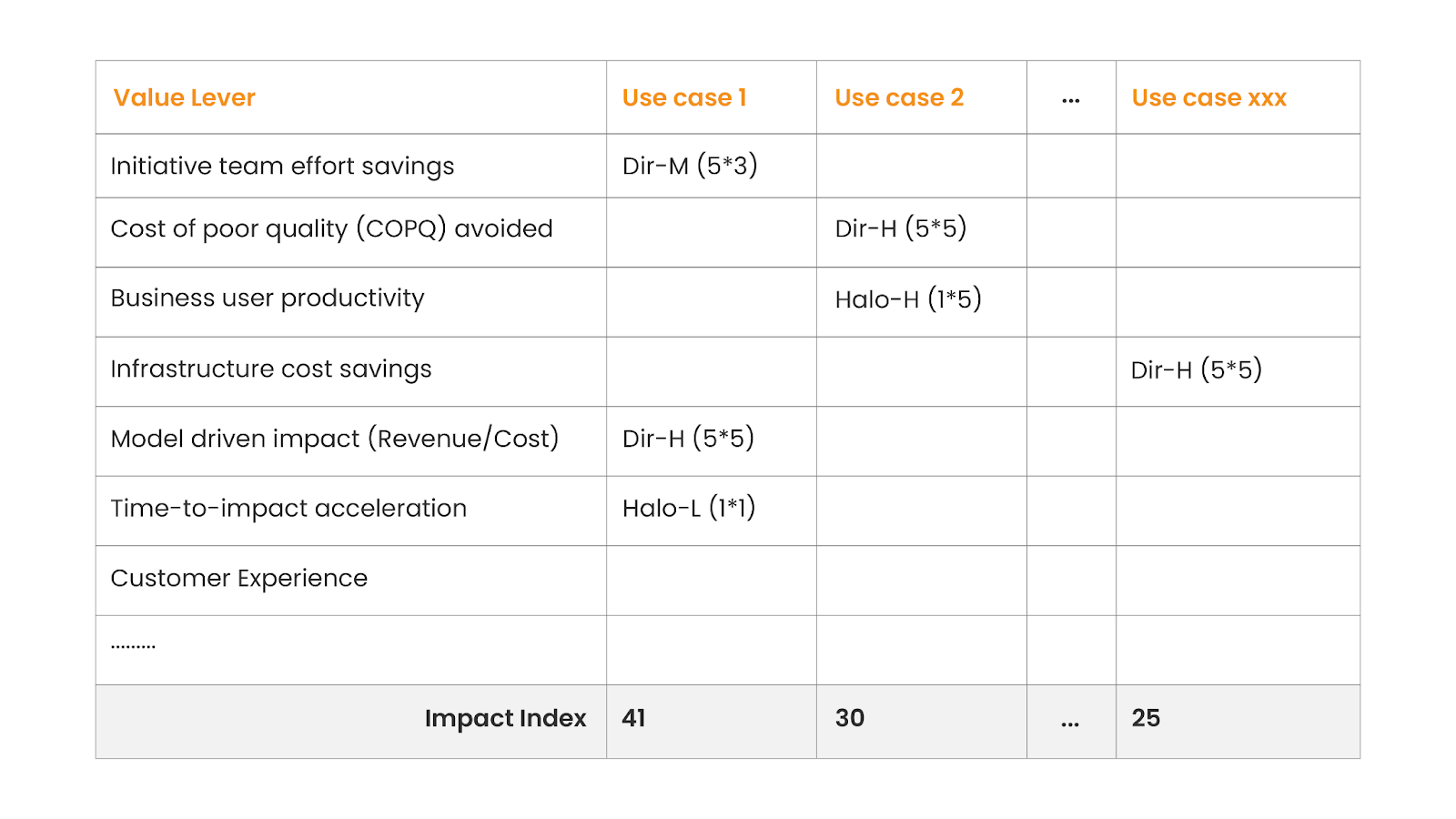
Assessing the potential value and risks of candidates could consider direct and halo impact across multiple dimensions such as

  • Effort savings in the immediate team (say Data and AI team)
  • Business user productivity impact
  • Impact to end customer
  • Cost of poor (data) quality avoidance
  • Infrastructure/platform cost savings
  • Potential impact (revenue) of model-driven decisions
  • Time to impact acceleration and increase in adoption (scale)

An illustrative view of high-level direct and halo impact-based ranking of ideas is shown here. After arriving at a shorter list of use cases, you can create a more detailed calculation with assumptions.

Value vs. Complexity matrix to identify prioritized candidates for a pilot run

Step 2: Build: Choosing a solution architecture that works best for you

Once you’ve identified the gaps and growth opportunities that you need Gen AI to address within your business, it’s important to explore the solution architecture that best suits your requirements.

Training up a foundation model from the ground up may not be needed in many cases. However, the choices you make would in turn have a significant influence on the objective and qualitative performance measures of these solutions, along with the upfront and ongoing costs.

Some of the questions that are relevant and influenced by the breadth of business cases that need to be addressed are:

  • Would it suffice to just transact with an enterprise model API?
  • Would fine-tuning and prompting of open-source models work better?
  • If yes, what sources, how much, and what’s the prep work needed for data quality?
  • How to set up continuous tuning?
  • When to hit the enterprise model API and when to pick from archived prompts/completions?
  • Which model, platform, and cloud infrastructure should you opt for?
  • How to prepare for and address the different risks that may crop up during each stage of implementation?

Picking up shortlisted business use cases (from the Plan phase), engaging the right technical leadership from within the organization, and seeking assistance from experienced AI-based solution providers where needed will help decide the right technical architecture upfront, avoid throwaways, or worse, costly lock-ins.

Across different sources, client conversations along with the many aspects of training Gen AI models using the organization’s data, a pattern of utility emerges:

  • Enterprise Model APIs: Leveraged for Search and Summarization tasks on documents without risk(s) of confidentiality breach (For example: Handling product-related queries from customers on publicly available product manuals)
  • Custom LLMs: Models built through fine-tuning of open-source models and smart prompting. Depending on the extent of fine-tuning data, and additional embedding with prompting efforts, the utility of this class of models ranges from quickfire proof of capability to the CPG example mentioned earlier (GenAI based autonomous agents to address a broad range of queries from business personas – brand and key account leadership)
  • Ensemble of Open-Source Models/LLMs: This constitutes multiple models used as such without tuning, but arranged in an ensemble by spending significant engineering effort to handle a broad range of tasks.
  • New foundation models: Relevant in scenarios, where the organization is faced with extremely specialized problems with high stakes of getting right/wrong [possibly, large-scale human health solutions, involving data from public research mixed with proprietary R&D content in text and imagery].

Most business experiments at this point though, are in categories #1 and #2. Building custom models is an area of tremendous interest for a whole host of reasons, including litigation risk on some of the enterprise models behind APIs.

At Tiger Analytics, we evaluate various possible approaches, shown below, based on our clients’ use cases and needs:

  • Prompt Engineering using Enterprise-grade Generative Models – For example: Chain of thought, zero-shot examples, few-shot examples
  • Prompt tuning using any of the open-source LLM models – For example: Prompt tuning, Prefix tuning, and PEFT
  • Fine-tuning an open-source LLM model for a specific task – For example: Causal Language Modeling (CLM) and Masked Language Modeling (MLM) on objectives like summarization, code generation, etc.
  • Building a foundational LLM model with multiple tasks capability using RLHF loop.

Step 3: Deliver: From conversations to results

After integrating Gen AI interventions into your overall data strategy and ensuring that your solution architecture is the right fit for your use case, you’ll need to factor in a few things to make sure that the Gen AI project implementation is robust, secure, and scalable.

Like all tech adoption programs, ensure that your Gen AI strategy is aligned with your business needs. Here are a few pillars to ensure a successful and seamless project implementation:

The Delivery Pillars for a Successful Gen AI Project Implementation

People:

Having the right mix of skills in a team, possibly a Gen AI task force carved out from within the existing Data and Analytics function, collaborating with specific points of contact identified from participating functions and with the strategy office to ensure:

  1. Continuous Demand Generation: A pipeline of business use cases, identified and prioritized for execution from across the enterprise
  2. Solution Delivery: Comprising of relevant technical talent, the right architecture, outcome with the desired features and optimal experience, and more importantly, housekeeping to evolve a cohesive Gen AI model asset pool

Initiating delivery governance, evangelizing initial success stories to drive adoption at scale, and keeping a tab on potential risks, all need to be handled through appropriate leadership structure and accountability.

Process:

Whether it is for business engagement, human-centric design, product management, model asset management, agile and DevOps processes for technical deliverables, value measurement, and articulation, many processes and frameworks already exist within companies. Minor tweaks needed to accommodate unique aspects of GenAI projects should be sufficient. Data management processes, though, would significantly evolve, as outlined in the next section.

Data:

Data from well-structured document stores (for example: presentations and contract databases), MarTech digital asset management platforms, semi-structured sources such as emails and attachments, chat systems, and other collaboration ware could be helpful in developing cognitive models of how business processes are executed and special situations handled. Keeping an eye out for such sources, alongside business use case identification, should help magnify impact.

A key aspect of data management is enabling tighter governance. Evaluating and addressing the following questions could help ensure robust data management:

  • What goes into training/tuning models?
  • What comes out for immediate action, storage, and subsequent reuse?
  • Are we maintaining an audit trail of these for current/evolving regulatory requirements?

Technology (models and beyond)

While technology – cloud ware, GPU/TPUs, new models, integrated Data and AI platforms – are all evolving very rapidly, some key options stand out.

  • Open source options: Depending on the business use case, and the organization’s capability/appetite to custom build solutions, carefully picked open source models could enable significant scalability.
  • Options on the preferred cloud: With a range of ready-to-use enterprise model APIs, take and tweak open source models, and associated cost structures, options such as Azure OpenAI models could significantly accelerate the GenAI journey by handling a lot of additional activities required to deliver safe, scalable solutions.
  • Data + Model platforms: Databricks announcing its intent to acquire MosaicML is an example of an even more nuanced offering – ann integrated platform to manage data + model assets (lakehouse with mosaic floor), and the ability to do this in different cloud environments. More options of this kind could open up in the near future.

The key point to note, however, is that there is no clear pick-this-over-that prescription anyone could recommend, sitting far outside an organization’s context. Investing quality time of a multi-functional team that has deep context to perform the necessary due diligence and define a sustainable roadmap is the only recipe for long-term value creation. It is also the reason why the order is People, Process, Data, and Technology.

Time to Generating Results

Many of us are fortunate to be in a space that’s operating at the frontiers of human knowledge. This offers opportunities to learn new things and apply them along the way, creating a positive impact on the stakeholders we touch – within and outside our organizations and to ourselves as individuals.

While the Gen AI wave continues to reimagine the way we work and live, we’ve only begun to tap its true disruptive potential. Will businesses be able to successfully ride the Gen AI hype train to their destination of choice? How smoothly will they transition from conversations to adoptions? That’s something only time can tell.

The post Generate Results Beyond the Boardroom: A Data Leader’s Guide to Planning, Building, and Launching Generative AI Projects appeared first on Analytics India Magazine.

Introduction to Streaming-LLM: LLMs for Infinite-Length Inputs

The large Language Model (LLM) has changed the way people work. With a model such as the GPT family that is used widely, everyone has gotten used to these models. Leveraging the LLM power, we can quickly get our questions answered, debugging code, and others. This makes the model useful in many applications.

One of the LLM challenges is that the model is unsuitable for streaming applications because of the model's inability to handle long-conversation chat exceeding the predefined training sequence length. Additionally, there is a problem with the higher memory consumption.

That is why these problems above spawn research to solve them. What is this research? Let’s get into it.

StreamingLLM

StreamingLLM is a framework established by Xiao et al. (2023) research to tackle the streaming application issues. The existing methods are challenged because the attention window constrains the LLMs during pre-training.

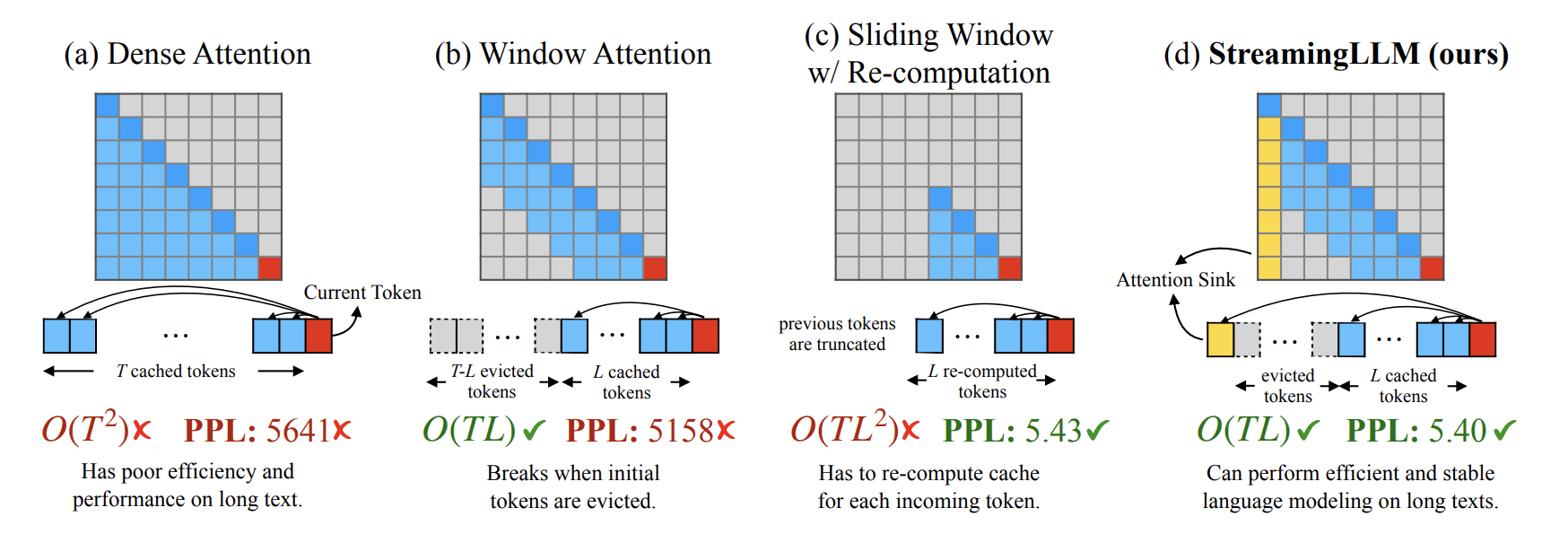
The attention window technique might be efficient but suffers when handling texts longer than its cache size. That’s why the researcher tried to use the Key and Value states of several initial tokens (attention sink) with the recent tokens. The comparison of StreamingLLM and the other techniques can be seen in the image below.

Introduction to Streaming-LLM: LLMs for Infinite-Length Inputs
StreamingLLM vs Existing Method (Xiao et al. (2023))

We can see how StreamingLLM tackles the challenge using the attention sink method. This attention sink (initial tokens) is used for stable attention computation and combines it with recent tokens for efficiency and maintains stable performance on longer texts.

Additionally, the existing methods suffer from memory optimization. However, LLM avoids these issues by maintaining a fixed-size window on the Key and Value states of the most recent tokens. The author also mentions the benefit of StreamingLLM as the sliding window recomputation baseline by up to 22.2× speedup.

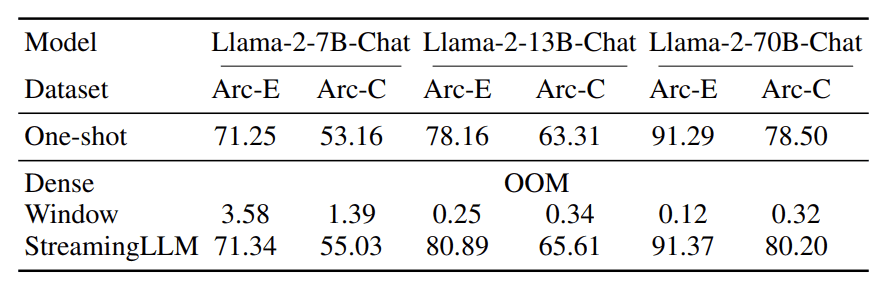
Performance-wise, StreamingLLM provides excellent accuracy compared to the existing method, as seen in the table below.

Introduction to Streaming-LLM: LLMs for Infinite-Length Inputs
StreamingLLM accuracy (Xiao et al. (2023))

The table above shows that StreamingLLM accuracy can outperform the other methods in the benchmark datasets. That’s why StreamingLLM could have potential for many streaming applications.

To try out the StreamingLLM, you could visit their GitHub page. Clone the repository on your intended directory and use the following code in your CLI to set the environment.

conda create -yn streaming python=3.8  conda activate streaming    pip install torch torchvision torchaudio  pip install transformers==4.33.0 accelerate datasets evaluate wandb scikit-learn scipy sentencepiece    python setup.py develop

Then, you can use the following code to run the Llama chatbot with LLMstreaming.

CUDA_VISIBLE_DEVICES=0 python examples/run_streaming_llama.py  --enable_streaming

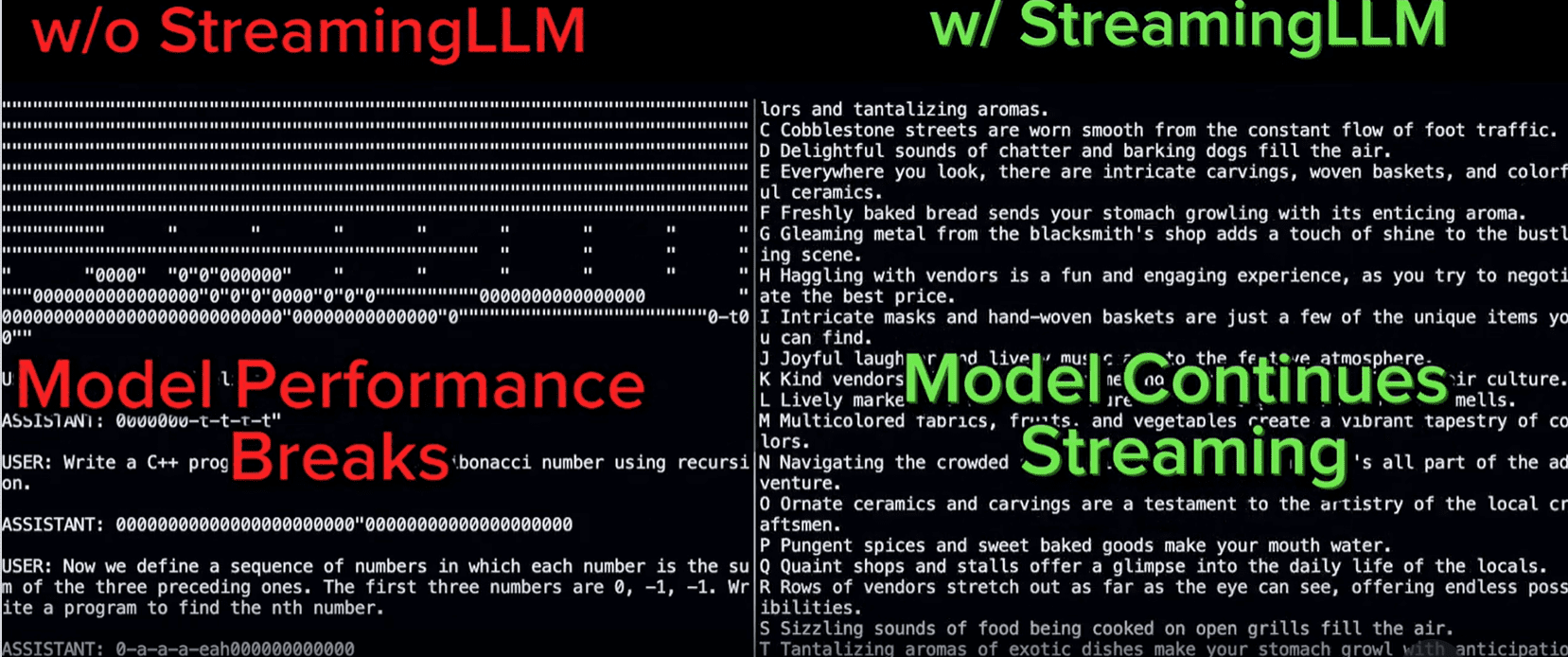
The overall sample comparison with StreamingLLM can be shown in the image below.

Introduction to Streaming-LLM: LLMs for Infinite-Length Inputs
StreamingLLM showed outstanding performance in more extended conversations (Streaming-llm)

That’s all for the introduction of StreamingLLM. Overall, I believe StreamingLLM can have a place in streaming applications and help change how the application works in the future.

Conclusion

Having an LLM in streaming applications would help the business in the long run; however, there are challenges to implement. Most LLMs can’t exceed the predefined training sequence length and have higher memory consumption. Xiao et al. (2023) developed a new framework called StreamingLLM to handle these issues. Using the StreamingLLM, it is now possible to have working LLM in the streaming application.

Cornellius Yudha Wijaya is a data science assistant manager and data writer. While working full-time at Allianz Indonesia, he loves to share Python and Data tips via social media and writing media.

More On This Topic

  • Machine Learning Is Not Like Your Brain Part 5: Biological Neurons…
  • Falcon LLM: The New King of Open-Source LLMs
  • How to Apply Transformers to Any Length of Text
  • Web LLM: Bring LLM Chatbots to the Browser
  • AI Infinite Training & Maintaining Loop
  • Exploring Infinite Iterators in Python's itertools

Microsoft’s latest AI offerings for developers revealed at Ignite 2023

Software engineer

Prior to today's Microsoft Ignite 2023 event, the Redmond company sent us a huge document containing a detailed listing of its main announcements. Microsoft has a strong focus on enhancing and innovating in the areas of cloud computing, artificial intelligence, and developer tools.

Also: I spent a weekend with Amazon's free AI courses, and highly recommend you do too

I've decided to pick seven areas I think will be of the most interest to developers. Here is my quick rundown:

Launch of Azure AI Studio

If I were to pick one major announcement out of everything Microsoft is spotlighting, it would be its launch and preview of Azure AI Studio.

Accompanying this article is a complete deep dive into Microsoft's Azure AI Studio announcement, so I'm not going to go into a great deal of depth here. Pop on over and read that article as soon as you're done with this one.

The key point is that Microsoft has created a toolkit that provides many of the technologies necessary for building AI-based solutions into an integrated platform that organizations can use to build their own AI-based solutions.

Also: Thanks to my 5 favorite AI tools, I'm working smarter now

The offering includes data analysis tools, predictive modeling tools, natural language processing tools, computer vision tools, speech recognition tools, recommendation engines, custom model building tools, as well as automation and analysis and reporting capabilities.

Azure AI Services and machine learning updates

Azure AI Services is the overall name for Microsoft's complete collection of AI tools and platforms. Azure AI Studio is just one component of that.

Beyond Azure AI Studio, Microsoft is introducing new features like a guided system that walks developers through the steps of model creation from beginning to end, and a comprehensive repository that developers can use to store, organize, and manage their machine learning models.

Also: AI and automation: Business leaders adopt small-scale solutions for greater impact

These tools help provide an improved AI development lifecycle, facilitating designing, building, and deploying AI-centric applications.

Azure OpenAI Service enhancements

Azure OpenAI Service is Microsoft's cloud-based service that provides access to OpenAI's models and service offerings. Microsoft is announcing new multimodal capabilities like DALL-E 3 for image generation and GPT-4 Turbo, which ups OpenAI's considerable game in generative text.

Azure Confidential Computing

In many secure applications, data is often encrypted in transit, and also when it is stored. These are typically described as data in motion and data at rest. But there is another area where data is in active use and is often not encrypted: During computation.

This is when data is in memory and is being processed. With more concern over cyber threats, and persistent attacks, it's not necessarily feasible to trust the active computing environment without safeguards.

Also: Cybersecurity 101: Everything on how to protect your privacy and stay safe online

Confidential computing adds encryption updates, uses secure enclaves, and enhances privacy and security, all with an eye towards compliance and trust.

Microsoft is announcing improvements to its confidential computing offerings, including the introduction of new virtual machines, enhanced security and privacy that focuses on robust cloud computing process protection, and additional security services for secure and private cloud services.

Integration of Microsoft 365 Data in Fabric with Native OneLake

Microsoft 365 Data in Fabric is how Microsoft describes the integration of Microsoft 365 data across Microsoft's entire digital framework, mostly embedding and utilizing 365 data across Microsoft's services and applications.

OneLake is a unified data lake service offered by Microsoft as part of its overall fabric offering. It is meant to be the central repository for key data within an organization.

Microsoft is announcing the integration of these two offerings, which are intended to streamline data analysis, especially for large-scale applications. The intent is to make data more accessible and substantially easier to manage within enterprise environments.

Also: The impact of artificial intelligence on software development? Still unclear

This should be of particular interest to developers who are working on complex applications that are data intensive.

Updates in Azure SQL and Azure Cosmos DB

Microsoft is introducing dynamic scaling and vector search to Azure Cosmos DB. The company is also introducing enhancements intended to increase efficiency and productivity, as well as focusing on providing cost-effective solutions for cloud management. They are also working on improving user experience, along with the developer use experience.

Azure infrastructure developments

Microsoft is announcing a continued focus on the overall Azure infrastructure offering. A component of this is the announcement of their development of custom silicon, essentially Azure-specific chips for AI applications. The company is also introducing new features that enhance cloud and performance, bundled under the name Azure Boost. Microsoft is also launching virtual machines that are specifically tailored for AI and high-performance workloads.

More here on ZDNET

Be sure to poke around ZDNET for more coverage on Ignite 2023. My colleagues and I have spent quite a bit of time putting together a comprehensive series of articles to help you understand the innovation that's coming out of Microsoft, especially in this game-changing year of AI.

You can follow my day-to-day project updates on social media. Be sure to subscribe to my weekly update newsletter on Substack, and follow me on Twitter at @DavidGewirtz, on Facebook at Facebook.com/DavidGewirtz, on Instagram at Instagram.com/DavidGewirtz, and on YouTube at YouTube.com/DavidGewirtzTV.

Artificial Intelligence


Bing Chat is now Copilot

Bing Chat is now Copilot Kyle Wiggers 9 hours

Everything’s coming up Copilot — including Bing.

Today at Ignite, Microsoft renamed Bing Chat, the AI-powered chatbot it launched on Bing earlier this year, to Copilot in Bing. Meanwhile, the premium, corporate-focused version of Bing Chat, which was previously called Bing Chat Enterprise, has also been rebranded to Copilot.

Why the name changes? Not to cause confusion, Microsoft swears — despite the fact that the company now has roughly a dozen products that share the Copilot brand.

“Renaming ‘Bing Chat Enterprise’ to ‘Copilot’ reflects our vision to create a unified Copilot experience for consumer and commercial customers,” Caitlin Roulston, director of communications at Microsoft, told TechCrunch via email.

That makes sense. But it could be, also, that Bing Chat didn’t move the needle much for Bing — and so Microsoft’s looking to divorce the tech from the search engine that launched it. An August report from StatCounter found that Bing failed to take any market share from Google six months after Bing Chat launched; Microsoft has disputed the findings.

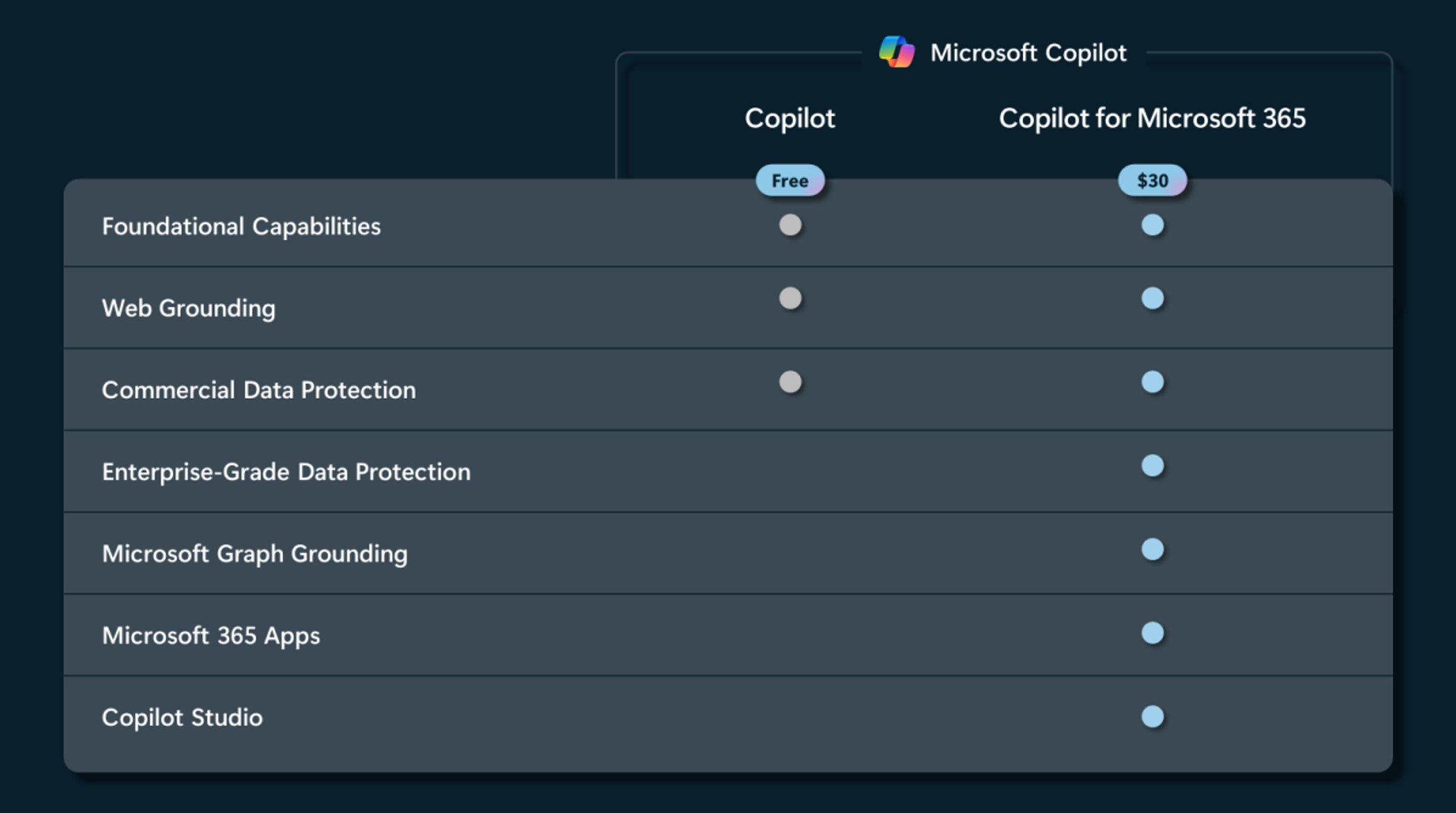
Microsoft Copilot

Image Credits: Microsoft

It’s not just the name that’s new. Starting December 1, users who sign into Bing with a corporate account — a Microsoft Entra ID, to be precise — will receive the benefit of “commercial data protection” while using Copilot in Bing. That means their data won’t be saved nor used to train AI models, Roulston says, and Microsoft won’t have access to it.

“Copilot will update the commercial terms and conditions on December 1 to reflect that it’s a generally available product from Microsoft,” she added. “As part of this, it will inherit Microsoft’s universal license terms for online services … Over time, Microsoft will expand eligibility of Copilot with commercial data protection to even more Entra ID users at no additional cost.”

Copilot is now accessible in Windows in addition to Copilot.Microsoft.com and Bing, shipping in range of Microsoft’s enterprise subscription plans — Microsoft 365 E, E5, Business Premium and Business Standard — at no additional cost. Copilot will be included in Microsoft 365 F3 starting December 1. For all other customers, it’ll be available à la carte for $5 per month.

Zero123++: A Single Image to Consistent Multi-view Diffusion Base Model

The past few years has witnessed a rapid advancement in the performance, efficiency, and generative capabilities of emerging novel AI generative models that leverage extensive datasets, and 2D diffusion generation practices. Today, generative AI models are extremely capable of generating different forms of 2D, and to some extent, 3D media content including text, images, videos, GIFs, and more.

In this article, we will be talking about the Zero123++ framework, an image-conditioned diffusion generative AI model with the aim to generate 3D-consistent multiple-view images using a single view input. To maximize the advantage gained from prior pretrained generative models, the Zero123++ framework implements numerous training and conditioning schemes to minimize the amount of effort it takes to finetune from off-the-shelf diffusion image models. We will be taking a deeper dive into the architecture, working, and the results of the Zero123++ framework, and analyze its capabilities to generate consistent multiple-view images of high quality from a single image. So let’s get started.

Zero123 and Zero123++: An Introduction

The Zero123++ framework is an image-conditioned diffusion generative AI model that aims to generate 3D-consistent multiple-view images using a single view input. The Zero123++ framework is a continuation of the Zero123 or Zero-1-to-3 framework that leverages zero-shot novel view image synthesis technique to pioneer open-source single-image -to-3D conversions. Although the Zero123++ framework delivers promising performance, the images generated by the framework have visible geometric inconsistencies, and it's the main reason why the gap between 3D scenes, and multi-view images still exists.

The Zero-1-to-3 framework serves as the foundation for several other frameworks including SyncDreamer, One-2-3-45, Consistent123, and more that add extra layers to the Zero123 framework to obtain more consistent results when generating 3D images. Other frameworks like ProlificDreamer, DreamFusion, DreamGaussian, and more follow an optimization-based approach to obtain 3D images by distilling a 3D image from various inconsistent models. Although these techniques are effective, and they generate satisfactory 3D images, the results could be improved with the implementation of a base diffusion model capable of generating multi-view images consistently. Accordingly, the Zero123++ framework takes the Zero-1 to-3, and finetunes a new multi-view base diffusion model from Stable Diffusion.

In the zero-1-to-3 framework, each novel view is independently generated, and this approach leads to inconsistencies between the views generated as diffusion models have a sampling nature. To tackle this issue, the Zero123++ framework adopts a tiling layout approach, with the object being surrounded by six views into a single image, and ensures the correct modeling for the joint distribution of an object’s multi-view images.

Another major challenge faced by developers working on the Zero-1-to-3 framework is that it underutilizes the capabilities offered by Stable Diffusion that ultimately leads to inefficiency, and added costs. There are two major reasons why the Zero-1-to-3 framework cannot maximize the capabilities offered by Stable Diffusion

  1. When training with image conditions, the Zero-1-to-3 framework does not incorporate local or global conditioning mechanisms offered by Stable Diffusion effectively.
  2. During training, the Zero-1-to-3 framework uses reduced resolution, an approach in which the output resolution is reduced below the training resolution that can reduce the quality of image generation for Stable Diffusion models.

To tackle these issues, the Zero123++ framework implements an array of conditioning techniques that maximizes the utilization of resources offered by Stable Diffusion, and maintains the quality of image generation for Stable Diffusion models.

Improving Conditioning and Consistencies

In an attempt to improve image conditioning, and multi-view image consistency, the Zero123++ framework implemented different techniques, with the primary objective being reusing prior techniques sourced from the pretrained Stable Diffusion model.

Multi-View Generation

The indispensable quality of generating consistent multi-view images lies in modeling the joint distribution of multiple images correctly. In the Zero-1-to-3 framework, the correlation between multi-view images is ignored because for every image, the framework models the conditional marginal distribution independently and separately. However, in the Zero123++ framework, developers have opted for a tiling layout approach that tiles 6 images into a single frame/image for consistent multi-view generation, and the process is demonstrated in the following image.
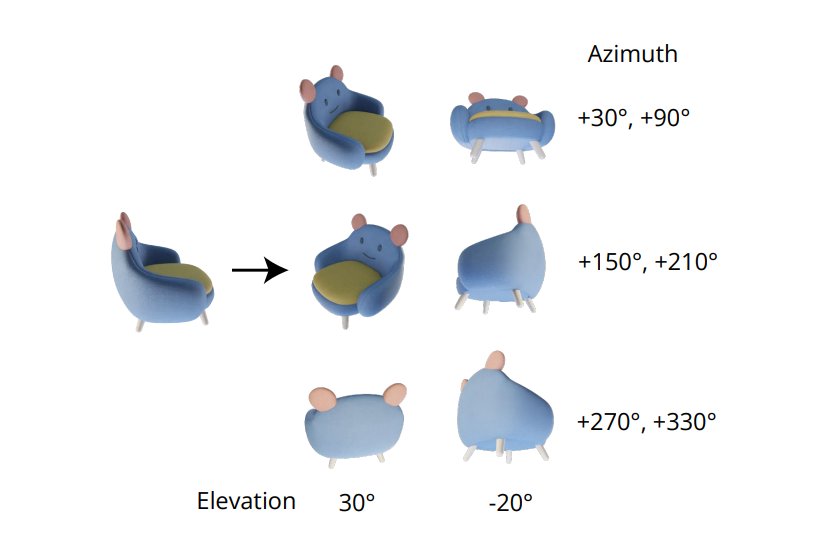
Furthermore, it has been noticed that object orientations tend to disambiguate when training the model on camera poses, and to prevent this disambiguation, the Zero-1-to-3 framework trains on camera poses with elevation angles and relative azimuth to the input. To implement this approach, it is necessary to know the elevation angle of the view of the input that is then used to determine the relative pose between novel input views. In an attempt to know this elevation angle, frameworks often add an elevation estimation module, and this approach often comes at the cost of additional errors in the pipeline.

Noise Schedule

Scaled-linear schedule, the original noise schedule for Stable Diffusion focuses primarily on local details, but as it can be seen in the following image, it has very few steps with lower SNR or Signal to Noise Ratio.

These steps of low Signal to Noise Ratio occur early during the denoising stage, a stage crucial for determining the global low-frequency structure. Reducing the number of steps during the denoising stage, either during interference or training often results in a greater structural variation. Although this setup is ideal for single-image generation it does limit the ability of the framework to ensure global consistency between different views. To overcome this hurdle, the Zero123++ framework finetunes a LoRA model on the Stable Diffusion 2 v-prediction framework to perform a toy task, and the results are demonstrated below.

With the scaled-linear noise schedule, the LoRA model does not overfit, but only whitens the image slightly. Conversely, when working with the linear noise schedule, the LoRA framework generates a blank image successfully irrespective of the input prompt, thus signifying the impact of noise schedule on the ability of the framework to adapt to new requirements globally.

Scaled Reference Attention for Local Conditions

The single view input or the conditioning images in the Zero-1-to-3 framework is concatenated with the noisy inputs in the feature dimension to be noised for image conditioning.

This concatenation leads to an incorrect pixel-wise spatial correspondence between the target image, and the input. To provide proper local conditioning input, the Zero123++ framework makes use of a scaled Reference Attention, an approach in which running a denoising UNet model is referred on an extra reference image, followed by the appendation of value matrices and self-attention key from the reference image to the respective attention layers when the model input is denoised, and it is demonstrated in the following figure.

The Reference Attention approach is capable of guiding the diffusion model to generate images sharing resembling texture with the reference image, and semantic content without any finetuning. With fine tuning, the Reference Attention approach delivers superior results with the latent being scaled.

Global Conditioning : FlexDiffuse

In the original Stable Diffusion approach, the text embeddings are the only source for global embeddings, and the approach employs the CLIP framework as a text encoder to perform cross-examinations between the text embeddings, and the model latents. Resultantly, developers are free to use the alignment between the text spaces, and the resultant CLIP images to use it for global image conditionings.

The Zero123++ framework proposes to make use of a trainable variant of the linear guidance mechanism to incorporate the global image conditioning into the framework with minimal fine-tuning needed, and the results are demonstrated in the following image. As it can be seen, without the presence of a global image conditioning, the quality of the content generated by the framework is satisfactory for visible regions that correspond to the input image. However, the quality of the image generated by the framework for unseen regions witnesses significant deterioration which is mainly because of the model's inability to infer the object’s global semantics.

Model Architecture

The Zero123++ framework is trained with the Stable Diffusion 2v-model as the foundation using the different approaches and techniques mentioned in the article. The Zero123++ framework is pre-trained on the Objaverse dataset that is rendered with random HDRI lighting. The framework also adopts the phased training schedule approach used in the Stable Diffusion Image Variations framework in an attempt to further minimize the amount of fine-tuning required, and preserve as much as possible in the prior Stable Diffusion.

The working or architecture of the Zero123++ framework can be further divided into sequential steps or phases. The first phase witnesses the framework fine-tune the KV matrices of cross-attention layers, and the self-attention layers of Stable Diffusion with AdamW as its optimizer, 1000 warm-up steps and the cosine learning rate schedule maximizing at 7×10⁻⁵. In the second phase, the framework employs a highly conservative constant learning rate with 2000 warm up sets, and employs the Min-SNR approach to maximize the efficiency during the training.

Zero123++ : Results and Performance Comparison

Qualitative Performance

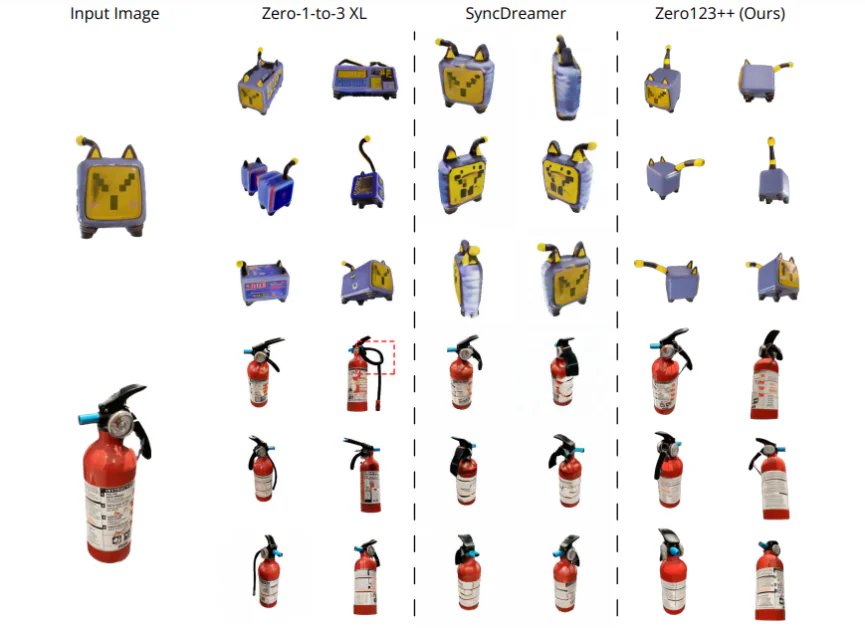
To assess the performance of the Zero123++ framework on the basis of its quality generated, it is compared against SyncDreamer, and Zero-1-to-3- XL, two of the finest state of the art frameworks for content generation. The frameworks are compared against four input images with different scope. The first image is an electric toy cat, taken directly from the Objaverse dataset, and it boasts of a large uncertainty on the rear end of the object. Second is the image of a fire extinguisher, and the third one is the image of a dog sitting on a rocket, generated by the SDXL model. The final image is an anime illustration. The required elevation steps for the frameworks are achieved by using the One-2-3-4-5 framework’s elevation estimation method, and background removal is achieved using the SAM framework. As it can be seen, the Zero123++ framework generates high quality multi-view images consistently, and is capable of generalizing to out-of-domain 2D illustration, and AI-generated images equally well.
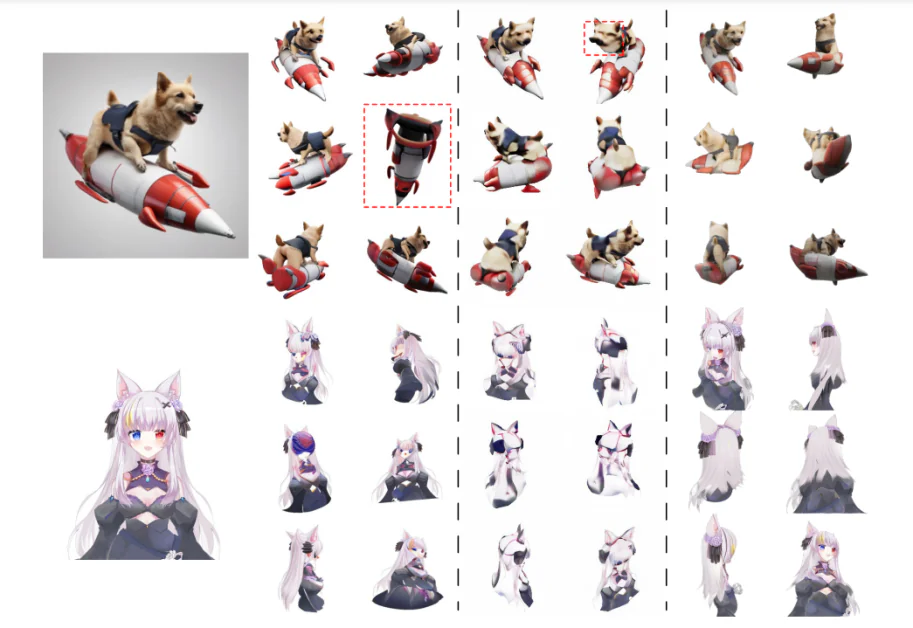
Quantitative Analysis

To quantitatively compare the Zero123++ framework against state of the art Zero-1-to-3 and Zero-1to-3 XL frameworks, developers evaluate the Learned Perceptual Image Patch Similarity (LPIPS) score of these models on the validation split data, a subset of the Objaverse dataset. To evaluate the model’s performance on multi-view image generation, the developers tile the ground truth reference images, and 6 generated images respectively, and then compute the Learned Perceptual Image Patch Similarity (LPIPS) score. The results are demonstrated below and as it can be clearly seen, the Zero123++ framework achieves the best performance on the validation split set.

Text to Multi-View Evaluation

To evaluate Zero123++ framework’s ability in Text to Multi-View content generation, developers first use the SDXL framework with text prompts to generate an image, and then employ the Zero123++ framework to the image generated. The results are demonstrated in the following image, and as it can be seen, when compared to the Zero-1-to-3 framework that cannot guarantee consistent multi-view generation, the Zero123++ framework returns consistent, realistic, and highly detailed multi-view images by implementing the text-to-image-to-multi-view approach or pipeline.

Zero123++ Depth ControlNet

In addition to the base Zero123++ framework, developers have also released the Depth ControlNet Zero123++, a depth-controlled version of the original framework built using the ControlNet architecture. The normalized linear images are rendered in respect with the subsequent RGB images, and a ControlNet framework is trained to control the geometry of the Zero123++ framework using depth perception.

Conclusion

In this article, we have talked about Zero123++, an image-conditioned diffusion generative AI model with the aim to generate 3D-consistent multiple-view images using a single view input. To maximize the advantage gained from prior pretrained generative models, the Zero123++ framework implements numerous training and conditioning schemes to minimize the amount of effort it takes to finetune from off-the-shelf diffusion image models. We have also discussed the different approaches and enhancements implemented by the Zero123++ framework that helps it achieve results comparable to, and even exceeding those achieved by current state of the art frameworks.

However, despite its efficiency, and ability to generate high-quality multi-view images consistently, the Zero123++ framework still has some room for improvement, with potential areas of research being a

  • Two-Stage Refiner Model that might solve Zero123++’s inability to meet global requirements for consistency.
  • Additional Scale-Ups to further enhance Zero123++’s ability to generate images of even higher quality.

AMD to Brings its Best AI Compute on Microsoft, with AI PCs

AMD Microsoft

AMD and Microsoft have announced at Microsoft Ignite that AMD’s upcoming AMD Instinct MI300X accelerator, AMD EPYC CPUs, and AMD Ryzen CPUs with AI engines, are driving innovation across various sectors. The partnership focuses on empowering services and compute capabilities in cloud and generative AI, Confidential Computing, Cloud Computing, and enhancing the intelligence of PCs.

At the same time, AMD has also announced the AMD Advancing AI event on December 6, which would showcase AMD’s AI product.

Leading the charge is the AMD Instinct MI300X accelerator, set to power Microsoft’s new Azure ND MI300X v5 Virtual Machine (VM) series optimised for AI workloads. This marks a milestone as Azure becomes the first cloud platform to integrate the new accelerator, offering customers enhanced efficiency and scalability options. The AMD-powered VMs are part of Microsoft’s expansive infrastructure supporting AI innovation for enterprises.

Read: AMD Paving AI’s Road from Edge & Beyond

Additionally, AMD highlighted the widespread adoption of Ryzen AI, the inaugural dedicated AI accelerator available on an x86 processor. With over 50 systems now equipped with Ryzen 7000 Series processors and Ryzen AI, millions of AMD AI PCs are available in the market. AMD and Microsoft have collaborated to bring Windows Studio Effects to Ryzen AI PCs, with ongoing efforts to expand AI workloads and generative AI experiences for consumers.

In tandem, 4th Gen AMD EPYC processors are now at the core of a new generation of general-purpose, memory-intensive, and compute-optimised VMs. Microsoft’s latest VM series underscores the growing demand for AMD EPYC processors in the cloud, promising up to 20% better performance for general-purpose and memory-intensive VMs and doubling the CPU performance for compute-optimised VMs compared to the previous generation. The new VM series is set to enter public preview in the first quarter of 2024.

AMD‘s influence extends to the Azure NGads V620 series of VMs, now in general availability. As part of the Azure N-series family of GPU-accelerated VMs for visualisation, these VMs are driven by multiple AMD technologies, combining AMD Radeon PRO V620 GPUs and 3rd Gen AMD EPYC CPUs. The NGads V620 series caters to workloads requiring higher GPU resources, supporting more demanding tasks such as gaming, VDI, and rendering.

Interestingly, NVIDIA recently also announced the launch of its HGX H200 AI computer, which would be powering Microsoft’s platform as well, along with AWS, Google, and Oracle.

The post AMD to Brings its Best AI Compute on Microsoft, with AI PCs appeared first on Analytics India Magazine.

Google Doesn’t Know How to Make Money with Generative AI

Google and Microsoft are unarguably the two biggest tech companies in the world and both are locking horns as they strive for supremacy in the ongoing AI arms race. While Microsoft has been quick to ship AI products one after another, Google has been playing catch up.

The reason Google has been slow, and Microsoft is not, has to do with the company’s revenue streams, according to Ethan Mollick, an associate professor at the Wharton School of the University of Pennsylvania.

“Advertising is everything to Google, and it is not clear how to integrate LLMs and ads. Microsoft does a lot of things that LLMs help,” Mollick tweeted.

Is concentrated revenue stream a curse for Google?

Google made its name in the search engine business and still earns a major chunk of its revenue from advertising in search. In 2022, Google made USD 162.45 billion, representing 58.1% of total revenue from advertising in search.

This persists, notwithstanding the numerous user complaints throughout the years regarding the perceived inadequacies of Google Search. Besides revenue from search, it made USD 29.24 billion and USD 32.78 billion from YouTube and Google Network ads respectively.

Microsoft’s revenue, on the other hand, is more diversified with income coming in from Azure, Windows, and Microsoft Office, among other revenue streams. Notably, Microsoft makes just around 6% of its total revenue from advertising in search.

Mollick is of the opinion that Google has still not found a way to deploy large language models in a way that does not hamper its search business. So far, Google is deploying PaLM 2 to power Bard, its answer to Microsoft Bing’s GPT-4 integration.

However, deploying a very good LLM could be challenging for Google, according to Bindu Reddy, chief executive officer of Abacus.ai.

“Google makes a significant amount of money from informational travel, insurance and local queries. Ideally, the LLM would answer all those questions without consumers having to navigate away to the advertising site. So a very good LLM that is great at retrieval, will reduce click-out from Google Search and fundamentally hurt their search business,” she said responding to Mollick’s tweet.

Earlier this year, Alphabet CEO Sundar Pichai did reveal earlier this year that Google will be launching the next-generation series of models in 2024, most notably, Google Gemini, which is a competitor to OpenAI’s GPT-4 model. But how Google monetizes with these models remains to be seen.

On the flip side, Microsoft has been quicker to monetize the integration of LLM with its various products and services such as Microsoft Office, Windows, and enterprise services—a strategy the company is already actively pursuing.

Hallucinations only add to the complexity

The complexity further increases when ensuring the precision of search results generated by LLMs. Given that Google Search is the most widely used search engine in the world, maintaining accuracy in AI-generated responses is crucial for Google.

LLMs exhibit a tendency toward hallucination, frequently presenting incorrect information with a confident tone, creating an illusion of accuracy. For Google, the challenge extends beyond monetising LLM to ensuring the accuracy of the responses generated by Bard. This additional layer of complexity compounds the issues at hand for Google.

Also, in contrast to a startup like OpenAI, Google may experience a longer timeline for product delivery due to the multitude of factors it must carefully consider such as scalability, rigorous testing, compliance with regulatory standards, integration with existing infrastructure, user experience optimisation, and addressing potential security concerns. Shipping a bad product could lead to a loss of billions in the stock market.

Interestingly, Google had developed technology similar to ChatGPT, way before the popularity of generative AI and ChatGPT exploded. However, they refrained from making the technology public due to ‘reputational risk.’

Take Galactica for example, a similar chatbot launched by Meta for science, which was taken down in three days because of its hallucinatory nature. Google can’t afford such a debacle. Moreover, Google’s search engine dominance is subject to the biggest antitrust lawsuit of the past decades.

Can LLMs change advertising?

Given it boasts of the top AI talent in the world, the fact that they are struggling to monetize with the hottest technology in the tech sector is baffling for some. Another reason could be the bureaucracy that exists due to the size of Google, which has over 150,000 employees worldwide.

The fact that Google has failed to diversify its revenue stream, despite its myriad ventures into cutting-edge technologies, is proving to be its biggest hindrance.

Moreover, not everyone agrees that LLMs can’t be integrated with ads. “Isn’t it very clear how to integrate LLMs with ads? Or at least some strong baselines feel like one RAG + prompt step away. LLMs are probably very good at advertising, in a highly integrated and contextual way,” Andrej Karpathy, a notable computer scientist who works at OpenAI said.

However, responding to Karpathy, Mollick added that it appears to be a fruitful path for research and development as of now. “I would have thought Google would have been doing exactly this sort of project as their highest priority as soon as they saw what LLMs can do, otherwise they risk disrupting their ad model,” he said.

The post Google Doesn’t Know How to Make Money with Generative AI appeared first on Analytics India Magazine.

A Better Way To Evaluate LLMs

Introduction to LLM evaluation

Recent advances in the development of LLMs have popularized their usage for diverse NLP tasks that were previously tackled using older machine learning methods. Large language models are capable of solving a variety of language problems such as classification, summarization, information retrieval, content creation, question answering, and maintaining a conversation — all using just one single model. But how do we know they are doing a good job on all these different tasks?

The rise of LLMs has brought to light an unresolved problem: we don’t have a reliable standard for evaluating them. What makes evaluation harder is that they are used for highly diverse tasks and we lack a clear definition of what is a good answer for each use case.

This article discusses current approaches to evaluating LLMs and introduces a new LLM leaderboard leveraging human evaluation that improves upon existing evaluation techniques.

Current Approaches and Leaderboards

The first and usual initial form of evaluation is to run the model on several curated datasets and examine its performance. HuggingFace created an Open LLM Leaderboard where open-access large models are evaluated using four well-known datasets (AI2 Reasoning Challenge , HellaSwag , MMLU , TruthfulQA). This corresponds to automatic evaluation and checks the model's ability to get the facts for some specific questions.

This is an example of a question from the MMLU dataset.

Subject: college_medicine

Question: An expected side effect of creatine supplementation is.

  1. A) muscle weakness
  2. B) gain in body mass
  3. C) muscle cramps
  4. D) loss of electrolytes

Answer: (B)

Scoring the model on answering this type of question is an important metric and serves well for fact-checking but it does not test the generative ability of the model. This is probably the biggest disadvantage of this evaluation method because generating free text is one of the most important features of LLMs.

There seems to be a consensus within the community that to evaluate the model properly we need human evaluation. This is typically done by comparing the responses from different models.

A Better Way To Evaluate LLMs
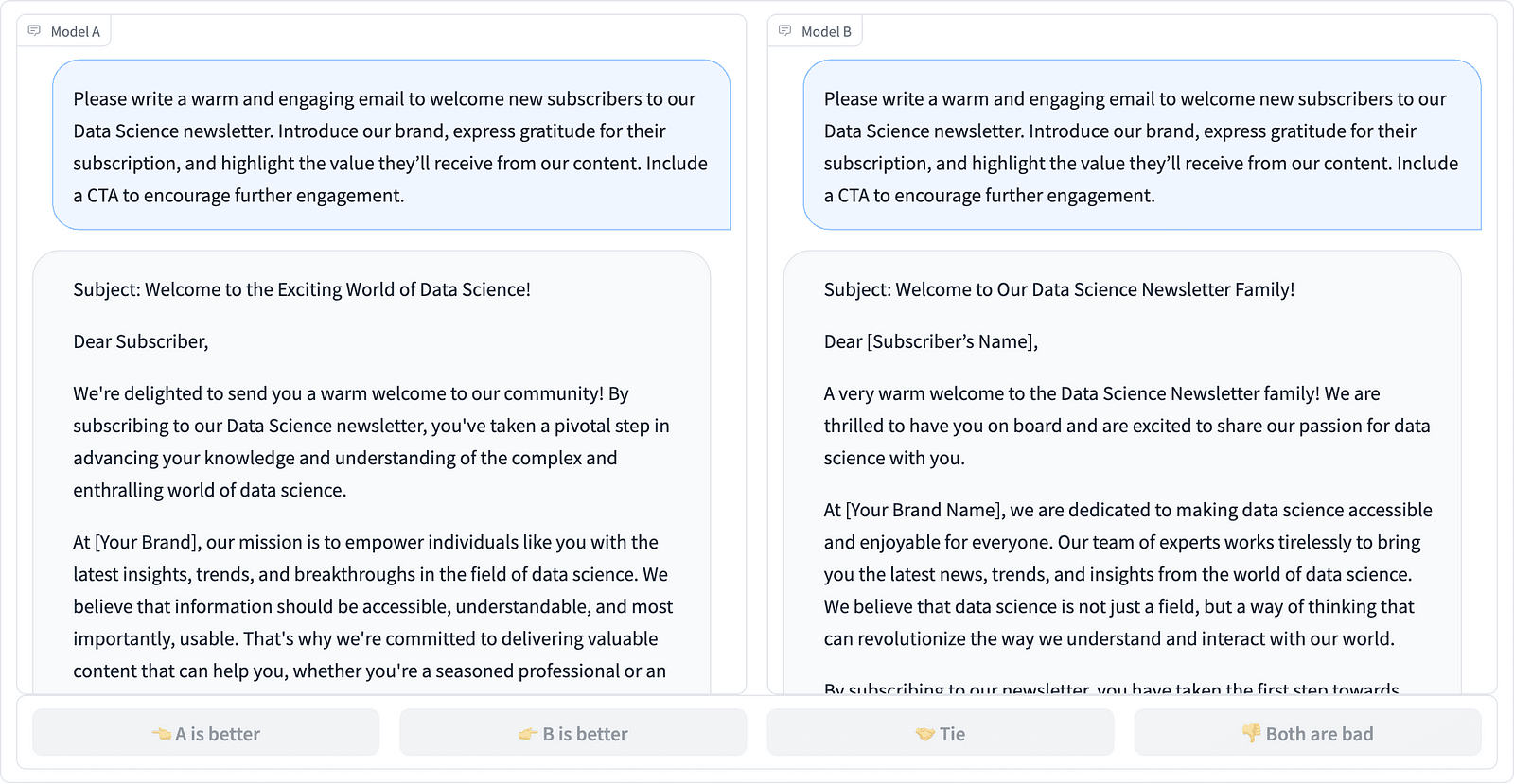
Comparing two prompt completions in the LMSYS project — screenshot by the Author

Annotators decide which response is better, as seen in the example above, and sometimes quantify the difference in quality of the prompt completions. LMSYS Org has created a leaderboard that uses this type of human evaluation and compares 17 different models, reporting the Elo rating for each model.

Because human evaluation can be hard to scale, there have been efforts to scale and speed up the evaluation process and this resulted in an interesting project called AlpacaEval. Here each model is compared to a baseline (text-davinci-003 provided by GPT-4) and human evaluation is replaced with GPT-4 judgment. This indeed is fast and scalable but can we trust the model here to perform the scoring? We need to be aware of model biases. The project has actually shown that GPT-4 may favor longer answers.

LLM evaluation methods are continuing to evolve as the AI community searches for easy, fair, and scalable approaches. The latest development comes from the team at Toloka with a new leaderboard to further advance current evaluation standards.

Using Humans to Evaluate LLMs — A New Approach

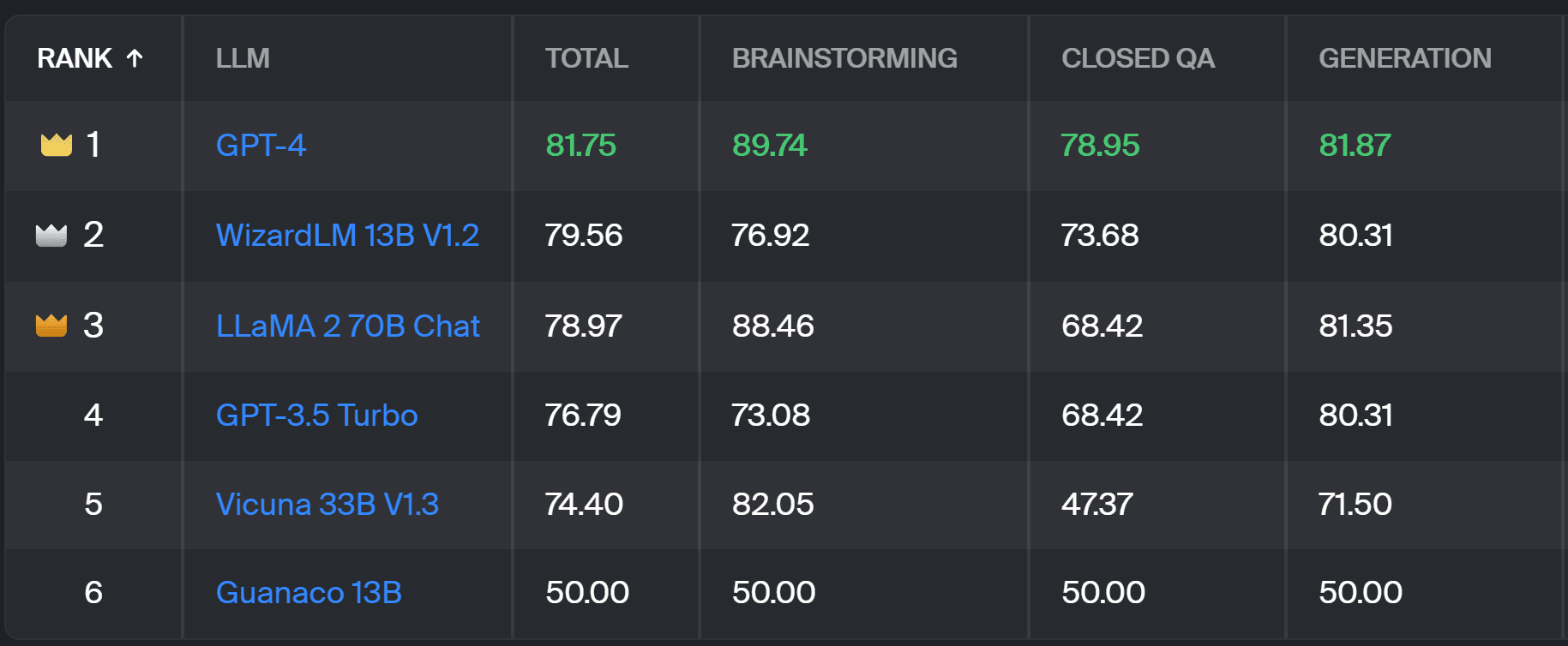
The new leaderboard compares model responses to real-world user prompts that are categorized by useful NLP tasks as outlined in this InstructGPT paper. It also shows each model’s overall win rate across all categories.

A Better Way To Evaluate LLMs
Toloka leaderboard — screenshot by the Author

The evaluation used for this project is similar to the one performed in AlpacaEval. The scores on the leaderboard represent the win rate of the respective model in comparison to the Guanaco 13B model, which serves here as a baseline comparison. The choice of Guanaco 13B is an improvement to the AlpacaEval method, which uses the soon-to-be outdated text-davinci-003 model as the baseline.

The actual evaluation is done by human expert annotators on a set of real-world prompts. For each prompt, annotators are given two completions and asked which one they prefer. You can find details about the methodology here.

This type of human evaluation is more useful than any other automatic evaluation method and should improve on the human evaluation used for the LMSYS leaderboard. The downside of the LMSYS method is that anybody with the link can take part in the evaluation, raising serious questions about the quality of data gathered in this manner. A closed crowd of expert annotators has better potential for reliable results, and Toloka applies additional quality control techniques to ensure data quality.

Summary

In this article, we have introduced a promising new solution for evaluating LLMs — the Toloka Leaderboard. The approach is innovative, combines the strengths of existing methods, adds task-specific granularity, and uses reliable human annotation techniques to compare the models.

Explore the board, and share your opinions and suggestions for improvements with us.

Magdalena Konkiewicz is a Data Evangelist at Toloka, a global company supporting fast and scalable AI development. She holds a Master's degree in Artificial Intelligence from Edinburgh University and has worked as an NLP Engineer, Developer, and Data Scientist for businesses in Europe and America. She has also been involved in teaching and mentoring Data Scientists and regularly contributes to Data Science and Machine Learning publications.

More On This Topic

  • A (Much) Better Approach to Evaluate Your Machine Learning Model
  • How Watermarking Can Help Mitigate The Potential Risks Of LLMs?
  • Explore LLMs Easily on Your Laptop with openplayground
  • RedPajama Project: An Open-Source Initiative to Democratizing LLMs
  • Falcon LLM: The New King of Open-Source LLMs
  • Ensuring Reliable Few-Shot Prompt Selection for LLMs