When it comes to generative AI, opinions are widely divided. It’s not only the tech enthusiasts who are uncertain about the future of gen AI, venture capital investors are also unsure about it and publishing contrasting reports.
A report by Menlo Ventures has been circulating on social media, stating that enterprises spent approximately $2.5 billion on generative AI in 2023. The report further added that the market remains nascent.
AI expert Gary Marcus took to X and shared the report saying ‘Perspective’. Little did he know that what he shared rather than giving perspective paints the wrong picture.
Perspective. from @MenloVentures analysis https://t.co/5SZ85CDVd8 pic.twitter.com/sy5pKlrL4r
— Gary Marcus (@GaryMarcus) November 13, 2023
Breaking it Down
Menlo’s report compares an estimated $2.5 billion spent by enterprises on generative AI in 2023, to traditional AI ($70 billion) and cloud software ($400 billion). Surprisingly, these figures are presented without a clear breakdown or context, making it challenging to assess the accuracy or relevance of the comparisons.
Moreover, it does not make sense at all, as the cloud is a crucial element of generative AI, and one cannot just segregate it like that. Interestingly, earlier this year, Menlo had said that they expect generative AI to eat into—and expand—the entirety of today’s $140 billion consumer and enterprise software markets, hence contradicting its own words.
On the other hand, investment bank Goldman Sachs says generative AI could make work much more efficient, increasing productivity by over 1% yearly after widespread use. But, for this to happen, enterprises must invest around $200 billion globally by 2025 in technology and workforce.
It seems that every investment firm, based on its own research, is coming out with numbers that fail to match each other.
What VCs think of generative AI?
Recently, more than 35 VC firms and over 15 companies have made commitments to Responsible AI, guided by ResponsibleLabs (RIL). To support these commitments, a 15-page Responsible AI Protocol has been published, providing practical guidance for both investors and startups.
While Responsible AI is not a bad idea, many in Silicon Valley believe it could slow down the pace of development. This is just one example of how VCs are entering the picture and interfering with the ecosystem.
Lux Capital recently published a blog ‘How Many Creators Will Survive Generative AI?’. The blog suggests that while AI has limitations, it may replace a significant portion of the creative work done by humans. The author argues that much of the work in fields like journalism, marketing, and social media lacks true originality and could be automated.
The Lux Capital report said, “90%, maybe even 98% of the creative class’ output can be replaced today with generative AI.” This is absolutely unnecessary and creates fear among the netizens.
Expressing similar sentiments, Vinod Khosla said, “If I were to look at 2040, 15 to 20 years from now, I believe 80% of all jobs will be done by AI better than a human.” Furthermore, he added, “I’m very much a huge optimist who realises that we will have to be very dynamic in responding to its negative consequences, which we will have.”
On the flip side, in his latest blog, ‘The Techno-Optimist Manifesto,’ Marc Andreessen stated that the idea that technology takes our jobs, reduces our wages, and increases inequality is a lie spread by pessimists.
Meanwhile, Sequoia Capital published a blog stating that generative AI is now entering its Act 2, with the aim of solving human problems end to end. The blog suggests that new applications of AI are not like the initial ones. Enterprises now use foundation models as part of a larger solution rather than the entire solution.
It seems that the entire tech ecosystem is confused and VCs are as new to generative AI as consumers. Thus, they may not be the best judge to realize the potential of new technology. Besides, there is another factor: The end goal of VCs is to make good returns, so they might manipulate the report in their favor as well.
The post Are VCs Getting Generative AI Wrong? appeared first on Analytics India Magazine.
After announcing GraphCast on Arxiv in December 2022, Google DeepMind has now finally introduced the open-source AI weather forecasting model. It claims to provide unparalleled accuracy and speed in predicting global weather conditions up to 10 days in advance.
This AI model is constructed on machine learning and Graph Neural Networks, managing over a million grid points globally to predict various atmospheric and surface variables. It is trained on decades of weather data, combining AI with traditional weather forecasting techniques. GraphCast outperforms the conventional High-Resolution Forecast system in accuracy, especially in predicting tropospheric conditions.
GraphCast’s potential for early detection of severe weather events is significant, offering better preparedness and potentially saving lives. In September this year, it accurately predicted Hurricane Lee’s landfall in Nova Scotia nine days in advance, showcasing its superiority over traditional models.
Impacting Human Life
While tech giants like OpenAI are pursuing AGI, Google is taking a different approach by actively working towards building AI models that directly impact human lives in areas such as healthcare, shopping, climate, pollution, and more.
Google, particularly through its DeepMind division, is pioneering AI in climate science with various innovative weather models. Earlier this month, Google Research and Google DeepMind launched weather forecasting model MetNet-3, for high-resolution predictions up to 24 hours ahead for a larger set of core variables, including precipitation, surface temperature, wind speed and direction, and dew point.
Notably, the team’s FourCastNet, stands out as the first open-sourced AI weather model, focusing on medium-range forecasting with enhanced accuracy due to its advanced techniques. Additionally, DGMR, developed in collaboration with the UK Met Office, is a nowcasting tool particularly effective in predicting imminent rainfall, outperforming existing methods.
However, Google is not only betting big on climate but also venturing into other areas like healthcare, shopping, designing and more.
For instance, their protein folding model AlphaFold has been addressing serious health issues by aiding the drug development process for gene therapy, malaria vaccine, liver cancer medicine, combating neglected diseases, and more.
While the original AlphaFold was pivotal for predicting single-chain protein structures, the newest version, AlphaFold-latest, released two weeks ago, is even bigger and better. It can now anticipate structures from nearly all molecules in the Protein Data Bank (PDB)—a comprehensive database for 3D biological molecule structures—and has extended its capabilities to include small molecules, proteins, nucleic acids, and molecules with post-translational modifications.
Meanwhile, Google’s medical LLM, Med-PaLM 2, accurately identified murine genes containing causative genetic factors for biomedical traits like diabetes and cataract. While in the early stages, the findings highlight the promising role of LLMs in genetic and biomedical discovery, with ongoing efforts to develop a more scalable LLM-based genetic discovery pipeline and extend the research to rare diseases and humans.
Similarly when it comes to managing traffic, Google’s “Project Green Light” launched in 2021, now uses AI-powered features to optimise the placement of traffic signals based on Google Maps data, aiming to enhance traffic flow and decrease pollution levels at intersections. Early results suggest a potential 30% reduction in pollution.
In essence, Google’s AI application in India focuses on intelligent traffic signal management to mitigate environmental and urban planning challenges.
On the other hand, Google Maps also introduced another set of features for environmental monitoring. It now includes Solar, Air Quality, and Pollen APIs. Project Sunroof uses AI to assess rooftop solar potential, while the Air Quality API consolidates data for accurate air quality information, applicable in healthcare and transportation. The Pollen API offers localised pollen count data and predictions, aiding health-conscious decisions.
Open Sourcing is the Key
Google is not only innovating solutions with real-world use cases but also making them open source for others to build upon, fostering broader use and adaptation by weather agencies and researchers worldwide.
This model is part of a broader initiative by Google DeepMind and Google Research in AI-driven weather forecasting, contributing to our understanding of climate patterns and aiding in environmental challenges.
Both FourCastNet and GraphCast are open-sourced AI weather models. Even AlphaFold is open-sourced. BERT, one of the initial Transformer-based LLMs, and EfficientNet for computer vision are also open-sourced. Meta’s RoBERTa, Baidu’s Ernie, and HuggingFace’s DistilBERT are all built on BERT.
Google also has a range of open-source AI products, including TensorFlow and Keras, which are widely used for machine learning. The company also supports critical open-source initiatives like JAX, TFX, MLIR, KubeFlow, and Kubernetes.
However, its PaLM language model is not open. If not PaLM 2, Google should at least open source the first version, PaLM, to make it available to a wider range of researchers and developers, accelerating AI research and development. Additionally, it would provide equitable access to AI, reducing the digital divide and making AI more transparent and accountable.
This move could lead to the development of new medical diagnostic tools, AI-powered educational tools, and solutions for complex global challenges like climate change, energy, and transportation, ultimately contributing to a more sustainable and equitable future.
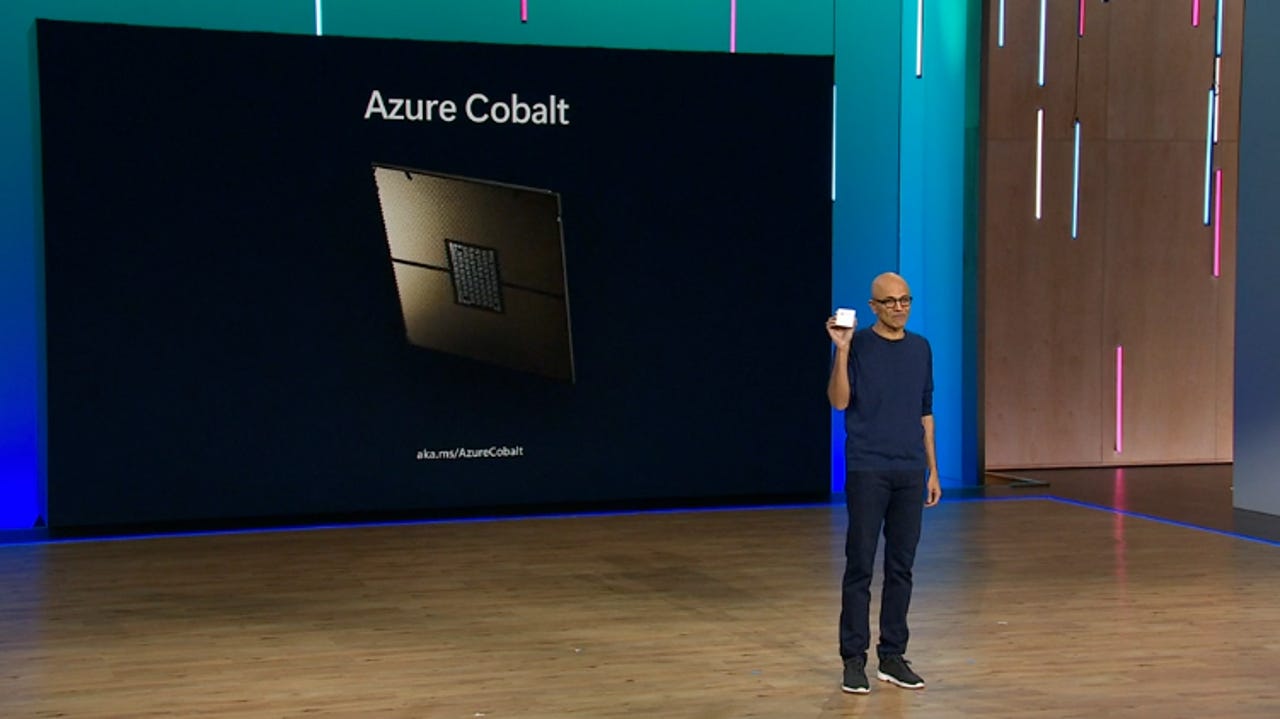
At Microsoft Ignite, Microsoft CEO Satya Nadella announced the Azure Cobalt processor.
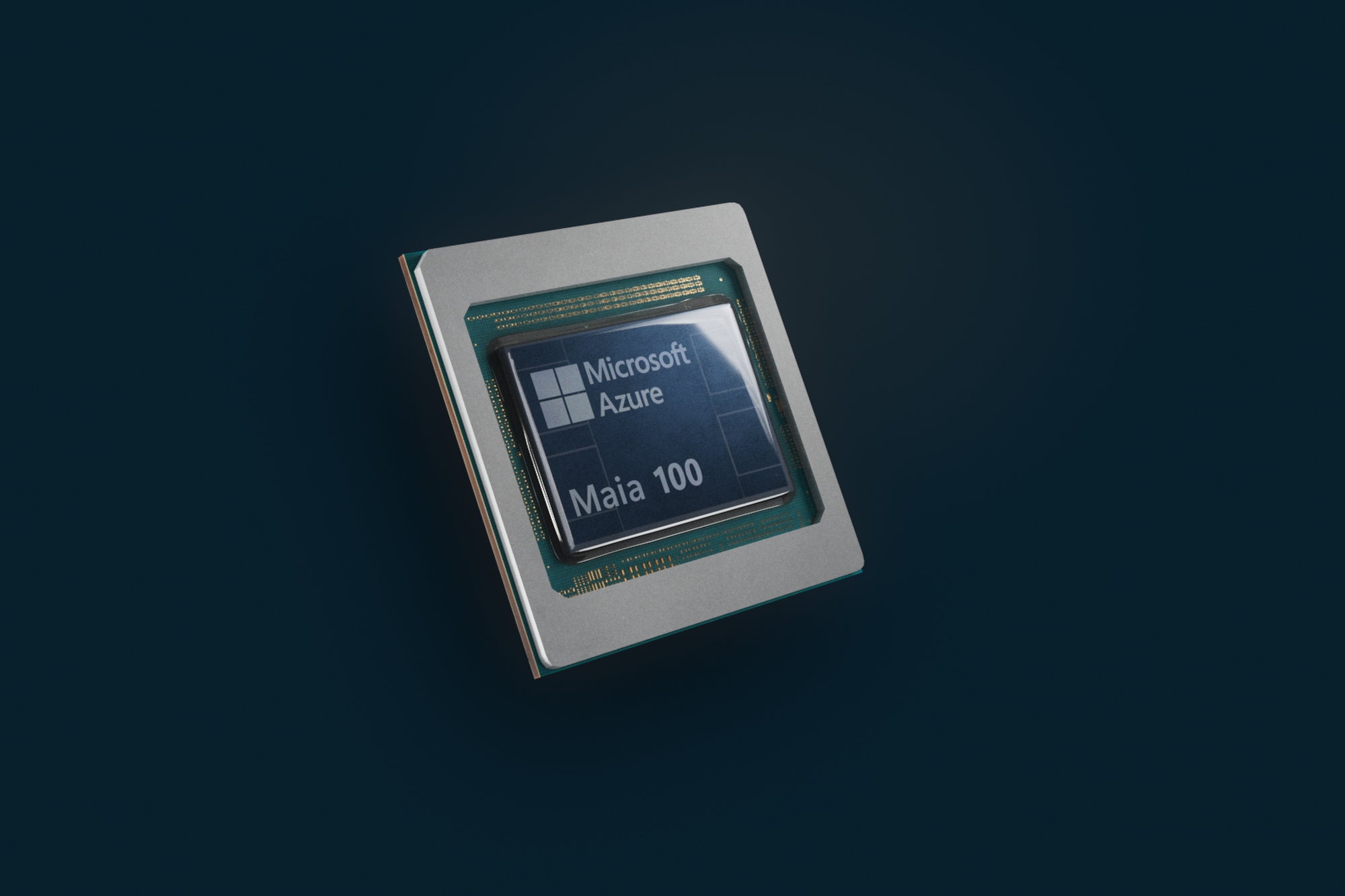
At its annual developer conference, Ignite, Microsoft on Wednesday unveiled the long-anticipated custom cloud computing chip for its Azure cloud service, called Azure Maia 100, which it said is optimized for tasks such as generative AI.
The Maia 100 is the first in a series of Maia accelerators for AI, the company said. With 105 billion transistors, it is "one of the largest chips on 5-nanometer process technology," said Microsoft, referring to the size of the smallest features of the chip, five billionths of a meter.
With 105 billion transistors, Azure Maia 100 is "one of the largest chips on 5-nanometer process technology," says Microsoft, referring to the size of the smallest features of the chip, five billionths of a meter.
Also: Microsoft's latest AI offerings for developers revealed at Ignite 2023
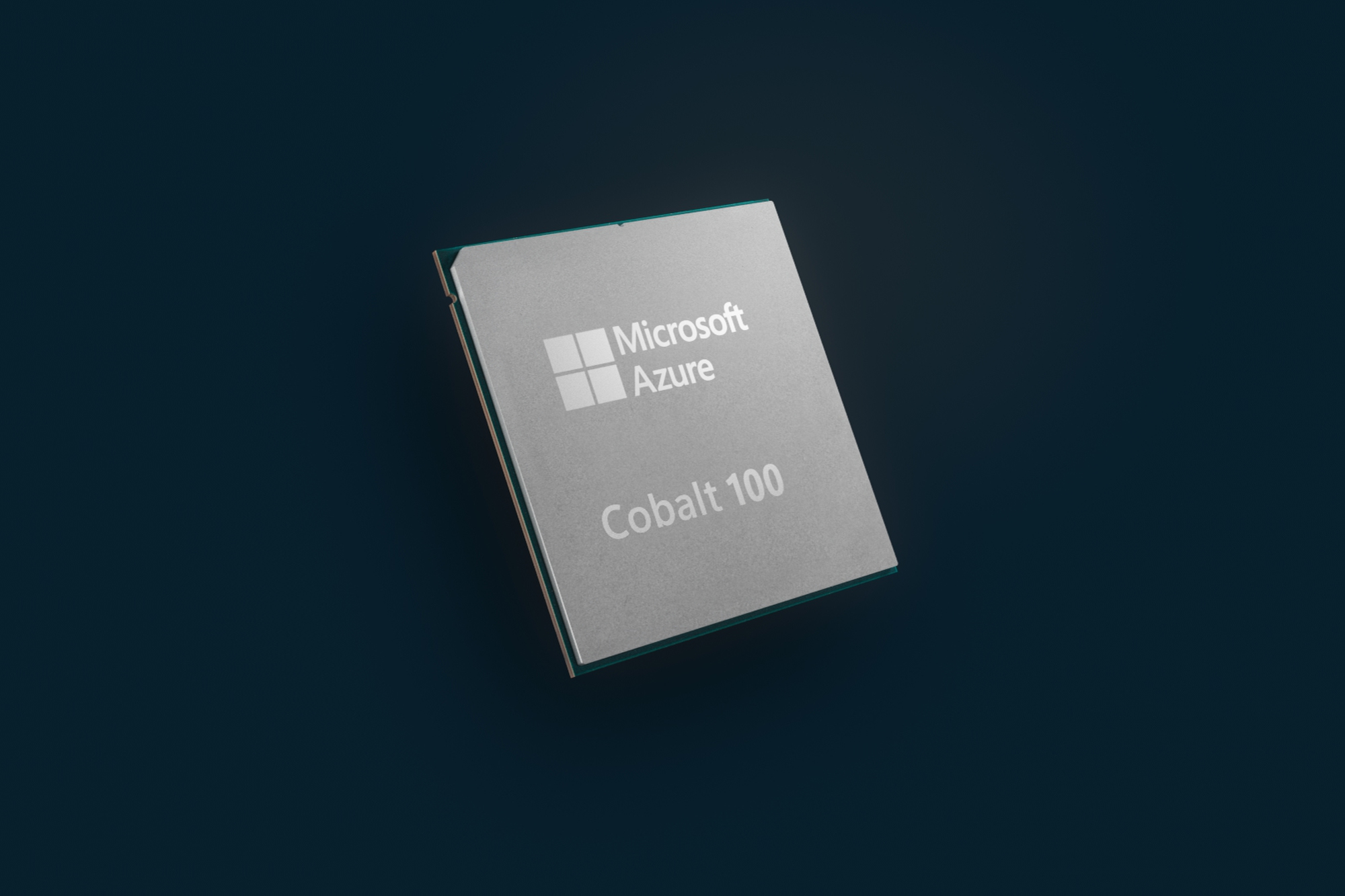
In addition, the company introduced its first microprocessor built in-house for cloud computing, the Azure Cobalt 100. Like Maia, the processor is the first in a planned series of microprocessors. It is based on the ARM instruction-set architecture from ARM Holdings that is licensed for use by numerous companies including Nvidia and Apple.
Microsoft said Cobalt 100 is a 64-bit processor that has 128 computing cores on die, and that it achieves a 40% reduction in power consumption compared to other ARM-based chips that Azure has been using. The Cobalt part is already powering programs including Microsoft Teams and Azure SQL, said the company.
The Microsoft Azure Cobalt CPU.
The two chips, Maia 100 and Cobalt 100, are fed by 200 gigabit-per-second networking, said Microsoft, and can deliver 12.5 gigabytes per second of data throughput.
Microsoft is the last of the Big Three cloud vendors to offer custom silicon for cloud and AI. Google pioneered the race to custom silicon with its Tensor Processing Unit, or TPU, in 2016. Amazon followed suit with a slew of chips including Graviton, Trainium, and Inferentia.
Rumors of Microsoft's efforts have circulated for years, fed by occasional disclosures such as last summer's leak of a planning document from the company.
Also: Azure AI Studio takes the stage at Ignite 2023: Unlock the potential of this AI toolkit
Microsoft made a point of noting that it continues to partner with both Nvidia and AMD for chips for Azure. It plans to add Nvidia's latest "Hopper" GPU chip, the H200, next year, as well as AMD's competing GPU, the MI300.
Microsoft's chips will assist with programs such as GitHub Copilot, but they will also be used to run generative AI from AI startup OpenAI, into which Microsoft has poured $11 billion in investment to secure exclusive rights to programs such as ChatGPT and GPT-4.
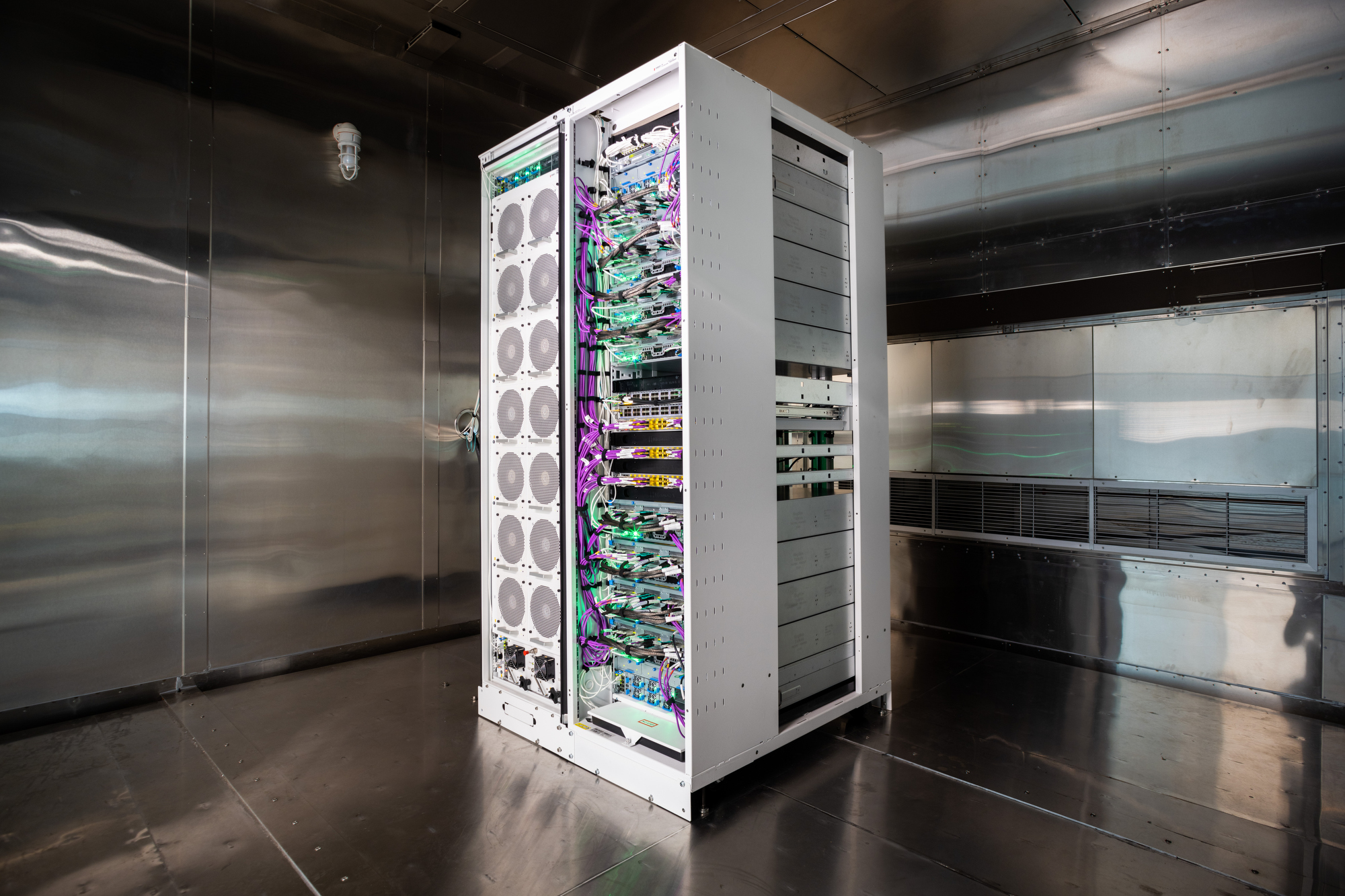
A custom-built rack for the Maia 100 AI Accelerator and its "sidekick" inside a thermal chamber at a Microsoft lab in Redmond, Washington.
At OpenAI's developer conference last week in San Francisco, Microsoft CEO Satya Nadella pledged to build "the best compute" for OpenAI "as you aggressively push forward on your roadmap."
Microsoft and OpenAI are both trying simultaneously to lure enterprises to use generative AI. Microsoft is seeing big growth in the generative AI business, Nadella told Wall Street last month. The company's paying customers for its GitHub Copilot software rose by 40% in the September quarter from the prior quarter.
"We have over 1 million paid Copilot users in more than 37,000 organizations that subscribe to Copilot for business," said Nadella, "with significant traction outside the United States."
Also at Ignite, Microsoft announced it is extending Copilot to Azure with a public preview of Copilot for Azure, a tool it said will give system administrators an "AI companion" that will "help generate deep insights instantly."
In addition to the chip innovations, Microsoft announced general availability of Oracle's database programs running on Oracle hardware in the US East Azure region. Microsoft is the only cloud operator to offer Oracle database on Oracle's own computer systems infrastructure, it said.
Other partner news included the general availability of Microsoft's edge computing service, Arc, for VMware's vSphere virtualization suite.
Microsoft looks to free itself from GPU shackles by designing custom AI chips Kyle Wiggers 22 hours
Most companies developing AI models, particularly generative AI models like ChatGPT, GPT-4 Turbo and Stable Diffusion, rely heavily on GPUs. GPUs’ ability to perform many computations in parallel make them well-suited to training — and running — today’s most capable AI.
But there simply aren’t enough GPUs to go around.
Nvidia’s best-performing AI cards are reportedly sold out until 2024. The CEO of chipmaker TSMC was less optimistic recently, suggesting that the shortage of AI GPUs from Nvidia — as well as chips from Nvidia’s rivals — could extend into 2025.
So Microsoft’s going its own way.
Today at its 2023 Ignite conference, Microsoft unveiled two custom-designed, in-house and data center-bound AI chips: the Azure Maia 100 AI Accelerator and the Azure Cobalt 100 CPU. Maia 100 can be used to train and run AI models, while Cobalt 100 is designed to run general purpose workloads.
Image Credits: Microsoft
“Microsoft is building the infrastructure to support AI innovation, and we are reimagining every aspect of our data centers to meet the needs of our customers,” Scott Guthrie, Microsoft cloud and AI group EVP, was quoted as saying in a press release provided to TechCrunch earlier this week. “At the scale we operate, it’s important for us to optimize and integrate every layer of the infrastructure stack to maximize performance, diversify our supply chain and give customers infrastructure choice.”
Both Maia 100 and Cobalt 100 will start to roll out early next year to Azure data centers, Microsoft says — initially powering Microsoft AI services like Copilot, Microsoft’s family of generative AI products, and Azure OpenAI Service, the company’s fully managed offering for OpenAI models. It might be early days, but Microsoft assures that the chips aren’t one-offs. Second-generation Maia and Cobalt hardware is already in the works.
Built from the ground up
That Microsoft created custom AI chips doesn’t come as a surprise, exactly. The wheels were set in motion some time ago — and publicized.
In April, The Information reported that Microsoft had been working on AI chips in secret since 2019 as part of a project code-named Athena. And further back, in 2020, Bloomberg revealed that Microsoft had designed a range of chips based on the ARM architecture for data centers and other devices, including consumer hardware (think the Surface Pro).
But the announcement at Ignite gives the most thorough look yet at Microsoft’s semiconductor efforts.
First up is Maia 100.
Microsoft says that Maia 100 — a 5-nanometer chip containing 105 billion transistors — was engineered “specifically for the Azure hardware stack” and to “achieve the absolute maximum utilization of the hardware.” The company promises that Maia 100 will “power some of the largest internal AI [and generative AI] workloads running on Microsoft Azure,” inclusive of workloads for Bing, Microsoft 365 and Azure OpenAI Service (but not public cloud customers — yet).
Image Credits: Microsoft
That’s a lot of jargon, though. What’s it all mean? Well, to be quite honest, it’s not totally obvious to this reporter — at least not from the details Microsoft’s provided in its press materials. In fact, it’s not even clear what sort of chip Maia 100 is; Microsoft’s chosen to keep the architecture under wraps, at least for the time being.
In another disappointing development, Microsoft didn’t submit Maia 100 to public benchmarking test suites like MLCommons, so there’s no comparing the chip’s performance to that of other AI training chips out there, such as Google’s TPU, Amazon’s Tranium and Meta’s MTIA. Now that the cat’s out of the bag, here’s hoping that’ll change in short order.
One interesting factoid that Microsoft was willing to disclose is that its close AI partner and investment target, OpenAI, provided feedback on Maia 100’s design.
It’s an evolution of the two companies’ compute infrastructure tie-ups.
In 2020, OpenAI worked with Microsoft to co-design an Azure-hosted “AI supercomputer” — a cluster containing over 285,000 processor cores and 10,000 graphics cards. Subsequently, OpenAI and Microsoft built multiple supercomputing systems powered by Azure — which OpenAI exclusively uses for its research, API and products — to train OpenAI’s models.
“Since first partnering with Microsoft, we’ve collaborated to co-design Azure’s AI infrastructure at every layer for our models and unprecedented training needs,” Altman said in a canned statement. “We were excited when Microsoft first shared their designs for the Maia chip, and we’ve worked together to refine and test it with our models. Azure’s end-to-end AI architecture, now optimized down to the silicon with Maia, paves the way for training more capable models and making those models cheaper for our customers.”
I asked Microsoft for clarification, and a spokesperson had this to say: “As OpenAI’s exclusive cloud provider, we work closely together to ensure our infrastructure meets their requirements today and in the future. They have provided valuable testing and feedback on Maia, and we will continue to consult their roadmap in the development of our Microsoft first-party AI silicon generations.”
We also know that Maia 100’s physical package is larger than a typical GPU’s.
Microsoft says that it had to build from scratch the data center server racks that house Maia 100 chips, with the goal of accommodating both the chips and the necessary power and networking cables. Maia 100 also required a unique liquid-based cooling solution since the chips consume a higher-than-average amount of power and Microsoft’s data centers weren’t designed for large liquid chillers.
Image Credits: Microsoft
“Cold liquid flows from [a ‘sidekick’] to cold plates that are attached to the surface of Maia 100 chips,” explains a Microsoft-authored post. “Each plate has channels through which liquid is circulated to absorb and transport heat. That flows to the sidekick, which removes heat from the liquid and sends it back to the rack to absorb more heat, and so on.”
As with Maia 100, Microsoft kept most of Cobalt 100’s technical details vague in its Ignite unveiling, save that Cobalt 100’s an energy-efficient, 128-core chip built on an Arm Neoverse CSS architecture and “optimized to deliver greater efficiency and performance in cloud native offerings.”
Image Credits: Microsoft
Arm-based AI inference chips were something of a trend — a trend that Microsoft’s now perpetuating. Amazon’s latest data center chip for inference, Graviton3E (which complements Inferentia, the company’s other inference chip), is built on an Arm architecture. Google is reportedly preparing custom Arm server chips of its own, meanwhile.
“The architecture and implementation is designed with power efficiency in mind,” Wes McCullough, CVP of hardware product development, said of Cobalt in a statement. “We’re making the most efficient use of the transistors on the silicon. Multiply those efficiency gains in servers across all our datacenters, it adds up to a pretty big number.”
A Microsoft spokesperson said that Cobalt 100 will power new virtual machines for customers in the coming year.
But why?
So Microsoft’s made AI chips. But why? What’s the motivation?
Well, there’s the company line — “optimizing every layer of [the Azure] technology stack,” one of the Microsoft blog posts published today reads. But the subtext is, Microsoft’s vying to remain competitive — and cost-conscious — in the relentless race for AI dominance.
The scarcity and indispensability of GPUs has left companies in the AI space large and small, including Microsoft, beholden to chip vendors. In May, Nvidia reached a market value of more than $1 trillion on AI chip and related revenue ($13.5 billion in its most recent fiscal quarter), becoming only the sixth tech company in history to do so. Even with a fraction of the install base, Nvidia’s chief rival, AMD, expects its GPU data center revenue alone to eclipse $2 billion in 2024.
Microsoft is no doubt dissatisfied with this arrangement. OpenAI certainly is — and it’s OpenAI’s tech that drives many of Microsoft’s flagship AI products, apps and services today.
In a private meeting with developers this summer, Altman admitted that GPU shortages and costs were hindering OpenAI’s progress; the company just this week was forced to pause sign-ups for ChatGPT due to capacity issues. Underlining the point, Altman said in an interview this week with the Financial Times that he “hoped” Microsoft, which has invested over $10 billion in OpenAI over the past four years, would increase its investment to help pay for “huge” imminent model training costs.
Microsoft itself warned shareholders earlier this year of potential Azure AI service disruptions if it can’t get enough chips for its data centers. The company’s been forced to take drastic measures in the interim, like incentivizing Azure customers with unused GPU reservations to give up those reservations in exchange for refunds and pledging upwards of billions of dollars to third-party cloud GPU providers like CoreWeave.
Should OpenAI design its own AI chips as rumored, it could put the two parties at odds. But Microsoft likely sees the potential cost savings arising from in-house hardware — and competitiveness in the cloud market — as worth the risk of preempting its ally.
One of Microsoft’s premiere AI products, the code-generating GitHub Copilot, has reportedly been costing the company up to $80 per user per month partially due to model inferencing costs. If the situation doesn’t turn around, investment firm UBS sees Microsoft struggling to generate AI revenue streams next year.
Of course, hardware is hard, and there’s no guarantee that Microsoft will succeed in launching AI chips where others failed.
Meta’s early custom AI chip efforts were beset with problems, leading the company to scrap some of its experimental hardware. Elsewhere, Google hasn’t been able to keep pace with demand for its TPUs, Wired reports — and ran into design issues with its newest generation of the chip.
Microsoft’s giving it the old college try, though. And it’s oozing with confidence.
“Microsoft innovation is going further down in the stack with this silicon work to ensure the future of our customers’ workloads on Azure, prioritizing performance, power efficiency and cost,” Pat Stemen, a partner program manager on Microsoft’s Azure hardware systems and infrastructure team, said in a blog post today. “We chose this innovation intentionally so that our customers are going to get the best experience they can have with Azure today and in the future …We’re trying to provide the best set of options for [customers], whether it’s for performance or cost or any other dimension they care about.”
During Microsoft Ignite, the company announced various ways in which users will be able to get more security and productivity from some of its products. Microsoft is adding more AI tools to Windows, including Copilot on Windows 11, and giving developers more tools to create AI features of their own for Windows. With Microsoft 365 and Azure Virtual Desktop, you can use those Windows AI features on any device, and that gets simpler with new unified clients for Android, iOS, Mac and browsers as well as Windows itself.
Sizing and scaling cloud PCs is also getting easier for overworked IT teams, with AI-powered tools that analyze usage and recommend what size of PC to offer users. Plus, Microsoft is offering improved tools for managing Windows updating and patching.
Jump to:
Windows AI on any device
Windows 365’s new AI-powered PC sizing
New network troubleshooting tools that reduce IT work
Fine control for personal desktops on Azure Virtual Desktop
Improved tools for managing Windows updating and patching
Windows AI on any device
Microsoft hasn’t been just “the Windows company” for many years, but it wouldn’t mind if you think of it as “the AI company” now. IT pros are focusing on AI and the shift to the cloud, and that’s increasingly integrated, Scott Manchester, vice president of product management, Windows 365 and Azure Virtual Desktop, told TechRepublic ahead of the Microsoft Ignite conference this week.
“We see Windows 365 really at the heart of that: being able to give access to AI to more people and on more devices when you’re accessing windows through the cloud. Customers can be confident in deploying AI within their organisation in a way that’s secure, in a way that empowers all of their employees to work more efficiently, to have more time for creativity and to really adopt this new way of working while still giving them the flexibility to work where they want to work, on different devices, in different ways that suit their needs.”
Running Windows 365 will also be easier for users and the IT teams who support them with a unified Windows App that’s available on Windows, web, Mac and iOS through TestFlight and coming soon to Android.
There is just one app instead of six different connection apps to choose from on Windows and two on most other devices, depending on whether you want Windows 365, Azure Virtual Desktop, Remote Desktop, Remote Desktop Services, Microsoft Dev Box, the RPA automation tool for Power Automate or a remote connection to your own PC at home.
This doesn’t mean missing features from the old clients, like being able to use an iPad as a second screen for Mac users. “We’re not losing any of the rich capabilities in each of those apps; we don’t want to regress anything,” Manchester promised, and said there will be new features and additional scenarios for connections next year.
SEE: Microsoft Copilot Announced for Azure (TechRepublic)
For now, you can see all the cloud PCs and resources you have access to across Windows 365 and Azure Virtual Desktop and pin the PCs and apps you use the most to make them easier to find (Figure A). You also get access to settings, from troubleshooting to setting up drive redirection.
Figure A
A straightforward way to resize cloud PCs. Image: Microsoft
The Windows App client also supports new security features like single-sign on and passwordless authentication, including biometrics and FIDO security keys, watermarking, tamper protection and screen capture blocking. If you need more security, you’ll soon be able to join the public preview for using your own encryption keys with Windows 365 Customer Managed Keys, while the Windows 365 Customer Lockbox, which gives organizations the same approval options for working with Microsoft support engineers they already have in Office 365, is already in public preview.
The unified client also means IT teams only have one app to work with if they need to package up custom images for how users connect within the organization.
AI-powered PC sizing
Windows 365 lets you offer a range of PC resources in the cloud, now including 16-core 1 TB PCs or GPUs in preview for more demanding users. That can get expensive if you’re allocating more powerful systems that users really need, or frustrating if they’re not getting the performance they need for work.
“With a physical PC, the mindset is ‘I’m going to fit to the biggest needs users may ever have, so I’m not recycling a machine and buying a new one,'” Manchester pointed out. You have a lot more flexibility in the cloud, but with so many different SKUs grouped under the options of light, medium and heavy users, IT admins have a lot of choices to make. Plus, software and user needs change. “You might install some new software, and suddenly now that machine’s not the right size for that.”
The new Cloud PC size recommender uses machine learning to analyze the performance of cloud PCs over a 28-day period and tells you which systems are undersized, oversized, the right size or underutilised — which means they’re not getting turned on and you can recover the licence for another user. This new recommender will be in public preview soon.
“We’re seeing customers that started with a few thousand cloud PCs moving to tens of thousands of cloud PCs, and when you’re managing them at that scale, these tools give them that power to operate this efficiently.”
As well as a dashboard that shows you which cloud PCs you need to beef up or scale back, you can also get the information through the Microsoft Graph API, which integrates with ITSM tools like ServiceNow, where you can automate this provisioning. Manchester added, “You can take all that data, feed it into ServiceNow and do much more intelligent, multiple-step actions with that data.”
“We’re also looking really carefully at what tools we can build to remove IT drudgery,” added Melissa Grant, senior director of product marketing for Windows 365. “More automation — more ability to evaluate the efficiency of their environment, and then do more proactive remediations or automatic remediations or adjustments.”
Because Windows 365 is already integrated with Intune, IT admins can use this new Cloud PC sizing tool alongside existing endpoint analytics like user productivity scores and the reports on network latency and PC performance.
New network troubleshooting tools that reduce IT work
There is also a new network troubleshooting tool built into the Windows App clients, so users can try and solve problems themselves.
“When employees moved into their home offices, IT admins inherited ownership and support of all their networking, internet connectivity — their ISPs, their connection and their routers within their house. Everything now has an impact on their ability to be productive to the work environment. When everybody started working from home, that overhead was added to IT departments, so we’ve created a whole series of self-help tools,” Manchester said.
“The network troubleshooter will validate that the router is set up, that I’ve got the right bandwidth (I need); it will even go hit the endpoints that it needs to see if it made a successful connection. And it’ll tell the user ‘Hey, go reset your router’ or ‘You don’t have Wi-Fi’ and likely cut down about 80% of the support calls that you normally have to take.”
Fine control for personal desktops on Azure Virtual Desktop
Windows 365 gives you virtual PCs as a service; if you want a lot more control, perhaps because your organization already has experience in virtual desktop infrastructure, Microsoft offers Azure Virtual Desktop. “If organizations are moving from VDI to cloud VDI, they have that in-house expertise, perhaps because they had very specific use cases needing very specific remote apps or network configurations reaching data centres or even Azure edge zones in very rural areas of the world,” Manchester explained.
He added, “You can create any type of configuration in any of our data centres, with any combination of compute and storage. You can create configurations within AVD that support remote apps, remote desktops, Windows client-based instances, Windows server-based instances and even personal desktop instances.” Instead of allocating Windows VMs from a pool, you can assign specific VMs to individual users as a personal desktop, but scaling that has been complex. “When you’re scaling a pool of generic images, you’re just looking at the collective usage across the entire organisation. But when it’s about upscaling your machine or Melissa’s machine or my machine, we have very specific usage patterns.”
Azure Virtual Desktop Personal Desktop Autoscale, now generally available, can automatically start the session host virtual machines and then deallocate or hibernate them when users log off. Personal desktops are typically used for demanding workloads, Grant pointed out, specifically “developers or high-capacity computing workers who need that very fine tuned environment.” Now IT can support those productivity needs without paying for cloud resources they don’t need to have running.
You can also deploy MSIX-installed apps on session hosts in Azure Virtual Desktop without needing to interrupt users; this is a better user experience and means fewer gold images to create. MSIX app attach is in public preview.
Improved tools for managing Windows updating and patching
Whether you’re managing physical PCs or PCs in the cloud, Windows Autopatch is proving very popular for automating updates to Windows PCs, Microsoft 365 apps, Teams and the Edge browser, and for deploying driver and firmware updates. “It took off in a way that I don’t even think we were expecting in our wildest dreams,” Grant told us. “When it’s simple, when everyone stays up to date, they are able to run a more secure environment.”
Grant noted, “We’re taking the next step by consolidating the Windows Update for Business deployment service into Autopatch.”
Having automated updates is great, until someone gets updated at the wrong time and can’t complete a crucial project. So, as part of the unification, Autopatch will be getting granular controls for firmware and driver updates (currently in private preview) and what Microsoft calls a “self-serve model” to give IT teams more control.
“This allows the IT admin to design the right patching list structure and timeframe for all of their employees and to do that in a way that they can time it to be non-disruptive,” Grant explained.
“We know that if an update or patch comes in, and you’re in the middle of something, you don’t want to stop. You might ignore it, you might postpone it — and postponing an update even for a couple of hours can put you at risk. The IT admin can look at the usage patterns of all employees and find the right time to apply this, and then nobody has to be disrupted in their work, but IT doesn’t have to go and manually apply different time schedules for every different employee,” Grant said.
Microsoft plans to have Autopatch support, updating non-Microsoft applications. That’s a common customer request, Grant said, and the applications supported will be based on what customers want to update.
All of these new options are intended to make life easier for overworked IT teams, Manchester added. “If I can automate a lot of the stuff that’s occupying the time of your IT department and give them back that time, they can focus that time on lowering COGS (cost of goods sold) and making the employees more productive, which is really what IT is intended to be — a way of reducing costs, increasing productivity and increasing profits and margins. Today, IT admins are completely overwhelmed with nation-state attacks, (criminal) gang attacks, ransomware and keeping the tools and processes that they have today just up and running. So this is about giving them back that time to focus on things that are more forward looking.”
Remember a few years back, when blockchain was going to save the world? Now, it's artificial intelligence's turn to save the world. But blockchain is coming back into vogue as the technology that may save AI.
Blockchain is finally being unchained from crypto, and many now see its potential as a foundation of support and validation for another emerging technology — AI. Blockchain — and other distributed ledger technologies — could even help solve AI's black box problem "by providing a transparent, immutable ledger to monitor model training and trace decision-making processes," according to the authors of a new report. "This gives organizations the ability to audit the data and algorithms used, enabling greater security and trust in AI systems."
Also: If AI is the future of your business, should the CIO be the one in control?
The survey of 608 global IT decision makers, published by Casper Labs, finds growing awareness of blockchain's capabilities to bring transparency to AI systems. In a similar survey a year ago, more than half of business leaders equated blockchain with crypto, but now 84% say they have a broader understanding of blockchain. Three in four even say they "feel positive and interested" in adopting blockchain to support their business — and AI.
Tellingly, 71% of executives now view blockchain and AI as "complementary technologies." More than half, 51%, are pursuing blockchain to enable their employees or partners to work more efficiently with AI. Database automation, which aligns more closely with its original mission of managing data flows, comes in second at 44%.
These were identified as the top blockchain use cases:
Working more efficiently with AI, 51%
Database automation, 44%
Ensuring security, compliance, or regulatory reporting, 41%
Supply chain management/optimization, 38%
Managing copy protection, 36%
"By leveraging AI's data-driven insights and automation capabilities alongside blockchain's transparent and secure ledger, businesses can enhance efficiency, reduce operating costs, and fortify trust," the survey report's authors state. AI is now the most popular application for blockchain among enterprises. At least 70% associate blockchain with either improved data operability or greater transparency in data sets.
Blockchain is starting to be recognized particularly as a vital tool for solving AI's black box problem and driving more responsible AI innovation. Nearly 50% of executives say they would be more likely to adopt blockchain if it ensured increased trustworthiness and reliability of their AI systems. "Ensuring trustworthiness and reliability of their AI tools is a top priority for businesses, and blockchain is the turnkey solution for addressing the risks that come with AI implementation," the Casper researchers state.
Also: Generative AI is everything, everywhere, all at once
Nearly half (48%) of executives agree that having robust data privacy and security protocols is the most important measure to increase AI-blockchain integration, with a close second being transparent and auditable AI algorithms to ensure accountability and prevent biases.
"As AI operations go mainstream — and as people raise concerns about the technology — leaders are recognizing the need for a more responsible AI that prioritizes data security and transparency," the survey's authors point out. "Ensuring trustworthiness and reliability of their AI tools is a top priority for businesses, and blockchain is the turnkey solution for addressing the risks that come with AI implementation."
Executives have developed a greater level of understanding of blockchain. Seventy-seven percent say they fully understand blockchain and can explain the value of it to their teams — up five percentage points over last year's survey. In last year's survey, conducted in December 2022, more than half of respondents saw "blockchain" and "cryptocurrency" as interchangeable terms.
Also: Here come the 'custobots': AI pervades Gartner's top 10 strategic technology trends
Major obstacles to greater blockchain adoption include a lack of developers with sufficient knowledge of blockchain technology (cited by 35%), and regulatory roadblocks to adopting blockchain technology (28%).
Enhanced accountability features (46%) and industry-wide standards (45%) are the top factors that would give business leaders more confidence in using blockchain. In addition, blockchain solutions are increasingly adopting the WebAssembly (WASM) standard to make their technology more open, accessible, and easier to use for developers who aren't necessarily specialized in blockchain.
Microsoft’s new toolkit makes running AI locally on Windows easier Kyle Wiggers 19 hours
Microsoft’s pushing generative AI experiences from the cloud to… Windows devices. Or at least, that’s what it’s signaling it hopes to achieve with the release of the new Windows AI Studio.
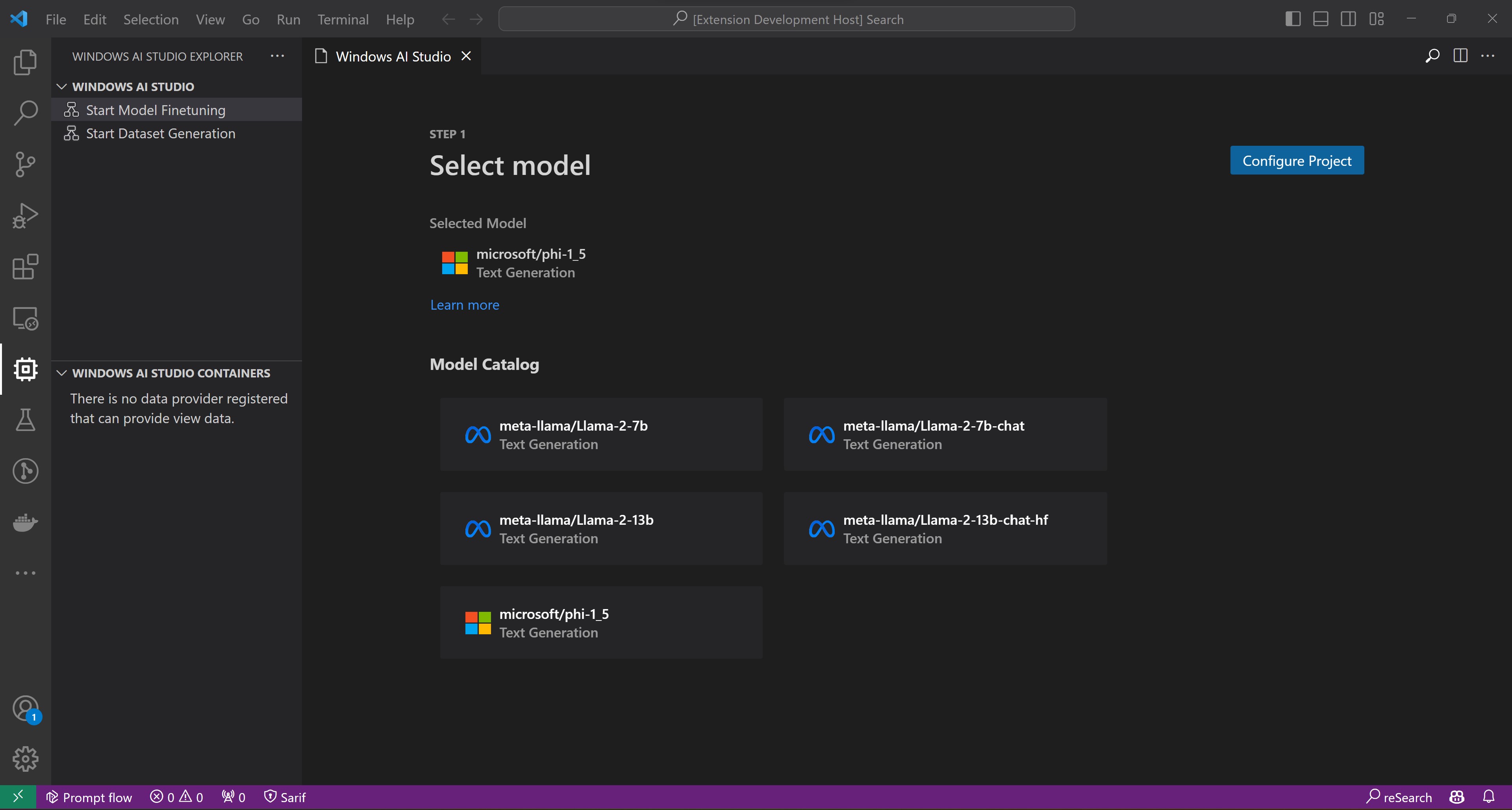
Windows AI Studio, unveiled today at Microsoft’s Ignite 2023 conference and set to launch in preview in the next few weeks, is a successor of sorts to the defunct AI Platform for Windows developers. Windows AI Studio brings together AI tools and a catalog of generative AI models that developers can fine-tune, customize and deploy for local, offline use in their Windows apps.
But Windows AI Studio doesn’t force developers to deploy models offline — or in the cloud for that matter. Rather, it gives them options to run models locally or, if need be, in remote datacenters — or in a hybrid local-cloud configuration.
“Given the pace of AI, we want to help developers quickly jumpstart AI development locally on Windows by giving them the tools and resources they need,” Logal Lyer, a distinguished engineer in Microsoft’s Windows and devices group, told TechCrunch in an email interview. “Our priority is to offer developers these tools as soon as they’re available.”
Windows AI Studio’s model catalog draws on models from Microsoft as well as third-party repositories like Hugging Face’s. Using the new experience, developers can select, configure, fine-tune and test their models for an app or project locally, using their own data sets, before deciding where to run those models.
Image Credits: Microsoft
“We’re … bringing together cutting-edge tools and a model catalog with models that we’ve tested and, in some cases, optimized for Windows so developers can jump-start AI development locally on Windows,” Lyer said. “Today, developers lack a guided step-by-step interface to fine-tune their models — which is a blocker in deploying generative AI faster in their apps. Windows AI Studio will offer this guided interface so developers can focus on coding while we do the heavy lifting and support them in deploying gen AI features into their apps.”
Soon, Windows AI Studio will be upgraded with a feature called prompt flow that’ll let developers have their apps automatically switch when necessary between smaller, faster models running on a local machine to larger, more capable cloud-hosed models. And, on supported hardware — namely hardware with either a dedicated AI accelerator chip or GPU — Windows AI Studio will gain more capable local models including Meta’s text-generating Llama 2 (thanks to a recently expanded partnership with Meta) and Stability AI’s text-to-image model Stable Diffusion XL.
Microsoft also plans to launch Windows AI Studio as an extension for VS Code, its open source code editor.
“[The goal is to give] developers greater choice to either run their models on the cloud … or on the edge locally on Windows to meet their needs,” Lyer said.
Given the challenges around securing the necessary cloud resources to run AI models at scale these days, any tool to make deploying models locally is sure to be welcome news to developers. The question is just how easy Windows AI Studio makes running a performant model locally. Absent a hands-on demo, we’ll have to wait until the public preview to see.
The centerpiece of Microsoft's business in 2023 has been the unfolding of its Copilot software in many forms, most recently with Microsoft 365 Copilot for the productivity suite and Dynamics 365 Copilot for enterprise resource planning functions.
On Wednesday at Ignite, its annual developer conference, Microsoft unveiled two new Copilots — Copilot for Service and Copilot for Sales.
Also: Microsoft's AI-driven Security Copilot unveiled at Ignite 2023
The Copilot for Service application integrates with customer relationship management (CRM) applications, and contact or call center applications — including Salesforce, ServiceNow, and Zendesk — to provide "guidance," said Microsoft. The program can be trained to retrieve answers from a company's knowledge base and from the CRM and contact center application repositories.
The results, said Microsoft, are "AI-guided answers and resources personalized for each customer issue and conversation."
Further customization of functions is made possible by Copilot Studio, a development application also unveiled at Ignite.
The Service application, expected to be available "in early 2024," is priced at $50 per user per month.
The second application, Copilot for Sales, is an "evolution" of a program unveiled for Dynamics 365 this summer called Sales Copilot. Enhancements to the program include integration with Microsoft Word.
"Sellers can prompt Copilot to create a meeting preparation brief in Microsoft Word, automatically populated with customer information such as an account and opportunity summary, names and titles of meeting participants, open tasks, highlights from recent meetings and email threads, and more," said Microsoft.
Also: Microsoft's latest AI offerings for developers revealed at Ignite 2023
Another integration is with Microsoft Teams, which "can surface action items and tasks, conversation key performance indicators (KPIs), and sales keywords."
Copilot for Sales has the same pricing and availability as Service.
Both the Service and Sales applications are included with Microsoft 365 Copilot.
In addition to Service and Sales, Microsoft announced additional features for Dynamics 365. For example, in Dynamics 365 Sales is gaining a feature for a salesperson to "use natural language or pre-built prompts to gain a quick understanding of customers, deals, meetings, forecast, and more," said Microsoft.
Also: Azure AI Studio takes the stage at Ignite 2023
An extension of Dynamics 365 Customer Insights lets a salesperson employ generative AI to create an automatic "customer profile summary," that provides "demographic, transactional, behavioral, and analytics data," said Microsoft.
Microsoft is seeing big growth in the generative AI business including GitHub Copilot, CEO Satya Nadella told Wall Street last month. The number of customers paying for its GitHub Copilot software rose by 40% in the September quarter from the prior quarter.
"We have over 1 million paid Copilot users in more than 37,000 organizations that subscribe to Copilot for business," said Nadella, "with significant traction outside the United States."
Also: OpenAI aiming to create AI as smart as humans, helped by funds from Microsoft
The Copilot programs are part of the company's partnership with AI startup OpenAI, into which Microsoft has poured $11 billion in investment to secure exclusive rights to programs such as ChatGPT and GPT-4.
Also at Ignite, Microsoft emphasized new computing infrastructure for its Azure cloud service optimized for generative AI. The company unveiled its first custom chips to run AI, Azure Maia 100, and also its first-ever custom cloud microprocessor, Azure Cobalt 100.
Microsoft launches a deepfakes creator at Ignite 2023 event Kyle Wiggers 10 hours
One of the more unexpected products to launch out of the Microsoft Ignite 2023 event is a tool that can create a photorealistic avatar of a person and animate that avatar saying things that the person didn’t necessarily say.
Called Azure AI Speech text to speech avatar, the new feature, available in public preview as of today, lets users generate videos of an avatar speaking by uploading images of a person they wish the avatar to resemble and writing a script. Microsoft’s tool trains a model to drive the animation, while a separate text-to-speech model — either prebuilt or trained on the person’s voice — “reads” the script aloud.
“With text to speech avatar, users can more efficiently create video … to build training videos, product introductions, customer testimonials [and so on] simply with text input,” writes Microsoft in a blog post. “You can use the avatar to build conversational agents, virtual assistants, chatbots and more.”
Avatars can speak in multiple languages. And, for chatbot scenarios, they can tap AI models like OpenAI’s GPT-3.5 to respond to off-script questions from customers.
Now, there are countless ways such a tool could be abused — which Microsoft to its credit realizes. (Similar avatar-generating tech from AI startup Synthesia has been misused to produce propaganda in Venezuela and false news reports promoted by pro-China social media accounts.) Most Azure subscribers will only be able to access prebuilt — not custom — avatars at launch; custom avatars are currently a “limited access” capability available by registration only and “only for certain use cases,” Microsoft says.
But the feature raises a host of uncomfortable ethical questions.
One of the major sticking points in the recent SAG-AFTRA strike was the use of AI to create digital likenesses. Studios ultimately agreed to pay actors for their AI-generated likenesses. But what about Microsoft and its customers?
I asked Microsoft its position on companies using actors’ likenesses without, in the actors’ views, proper compensation or even notification. The company didn’t respond — nor did it say whether it would require that companies label avatars as AI-generated, like YouTube and a growing number of other platforms.
Personal voice
Microsoft appears to have more guardrails around a related generative AI tool, personal voice, that’s also launching at Ignite.
Personal voice, a new capability within Microsoft’s custom neural voice service, can replicate a user’s voice in a few seconds provided a one-minute speech sample as an audio prompt. Microsoft pitches it as a way to create personalized voice assistants, dub content into different languages and generate bespoke narrations for stories, audio books and podcasts.
To ward off potential legal headaches, Microsoft’s requiring that users give “explicit consent” in the form of a recorded statement before a customer can use personal voice to synthesize their voices. Access to the feature is gated behind a registration form for the time being, and customers must agree to use personal voice only in applications “where the voice does not read user-generated or open-ended content.”
“Voice model usage must remain within an application and output must not be publishable or shareable from the application,” Microsoft writes in a blog post. “[C]ustomers who meet limited access eligibility criteria maintain sole control over the creation of, access to and use of the voice models and their output [where it concerns] dubbing for films, TV, video and audio for entertainment scenarios only.”
Microsoft didn’t answer TechCrunch’s questions about how actors might be compensated for their personal voice contributions — or whether it plans to implement any sort of watermarking tech so that AI-generated voices might be more easily identified.
For more Microsoft Ignite 2023 coverage:
Microsoft announces new AI chips
Microsoft’s three new Copilot offerings
Bing Chat’s renaming to Copilot
Microsoft launches deepfake creator
Microsoft Teams adds AI-powered home decorator
Microsoft To Do, Planner and Project consolidated in Teams
This story was originally published at 8am PT on Nov. 15 and updated at 3:30pm PT.
Microsoft’s generative AI assistant Copilot is now available in limited preview for IT teams using Azure, the company announced today during the Microsoft Ignite conference. Microsoft expects to expand Copilot for Azure to the Azure mobile app and the Azure command line interface at an unspecified time in the future.
During Microsoft Ignite, generative AI foundation model services from NVIDIA were also announced. NVIDIA AI foundation models are available from the NVIDIA NGC catalog, Hugging Face or the Microsoft Azure AI model catalog, wherever they are offered globally. Microsoft Copilot for Azure is available wherever the Azure portal can run in the public cloud.
Jump to:
Copilot comes to Microsoft Azure for IT management
Generative AI foundation model service added to Microsoft Azure
More NVIDIA news from Microsoft Ignite
Copilot comes to Microsoft Azure for IT management
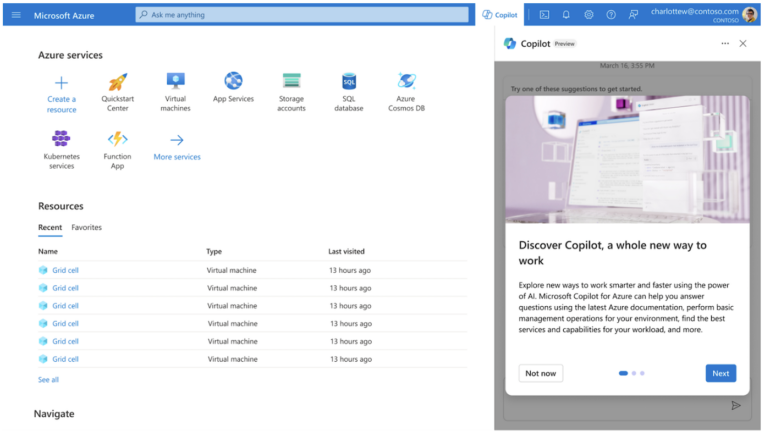
IT teams can use Copilot within Microsoft Azure (Figure A) to manage cloud infrastructure. Copilot will use the same data and interfaces as Microsoft Azure’s management tools, as well as the same policy, governance and role-based access controls.
Figure A
The Copilot generative AI assistant is a sidebar within Microsoft Azure. Image: Microsoft
Copilot for Azure can:
Assist with designing and configuring services.
Answer questions.
Author commands.
Troubleshoot problems by using data orchestrated from across Azure services.
Provide recommendations for optimizing an IT environment in terms of spending.
Answer questions about sprawling cloud environments.
Construct Kusto Query Language queries for use within Azure Resource Graph.
Write Azure command line interface scripts.
Generative AI foundation model service added to Microsoft Azure
NVIDIA AI foundation models for enterprise can now be run on Microsoft Azure, speeding up the creation and runtime of generative AI, NVIDIA announced on Nov. 15. Models including Llama 2 and Stable Diffusion can be accessed through NVIDIA’s AI Foundation Endpoints.
Every enterprise company using this service will have its own data warehouses, which are accessed through retrieval-augmented generation. Instead of writing SQL queries to connect to existing data warehouses, retrieval-augmented generation accesses data via an embedding model. Embedding stores the semantic representation of content as a vector in a vector database. When an employee searches that database, the query is converted to embedded form and searches for vector databases to find the closest semantically-linked content. Then, a large language model uses that content as a prompt to produce a curated response.
“It’s the same workflow of using a LLM to produce responses and answers, but it is now leveraging the enterprise data warehouse of an enterprise company to produce the right answers that are topical and up to date,” said Manuvir Das, vice president of enterprise computing at NVIDIA, during a prebriefing on Nov. 14 prior to the start of Microsoft Ignite.
All of the hardware and software for an end-to-end enterprise generative AI workflow are now running on Microsoft Azure, NVIDIA announced.
“What makes this use case so powerful is that no matter what industry and enterprise company is in, and no matter what job function a particular employee at that company may be in, generative AI can be used to make that employee more productive,” Das said during the prebriefing.
SEE: See how Microsoft Azure stacks up to rival enterprise cloud computing service Google Cloud. (TechRepublic)
Developers will be able to run generative AI based on NVIDIA’s new family of NeMo Megatron-LM 3 models and more on a browser with the NVIDIA AI foundation models service. NVIDIA plans to keep up an aggressive release cadence with generative AI products and platforms, Das said, and the company is planning to release larger models of NeMo, up to hundreds of billions of parameters.
The foundation model service allows developers access to community AI models such as Llama 2, Stable Diffusion XL and Mistral. NVIDIA AI foundation models are freely available on the NVIDIA NGC catalog, Hugging Face and the Microsoft Azure model catalog.
More NVIDIA news from Microsoft Ignite
Tensor RT-LLM v0.6 will be available on Windows, providing faster inference and added developer tools for local AI on NVIDIA RTX devices. Stable Diffusion, Megatron-LM and other generative AI models can be executed locally on a Windows device, Das said.
This is part of NVIDIA’s endeavor to take advantage of generative AI capabilities on client devices that have GPUs, Das said. For example, a TensorRT-LLM-powered coding assistant in VS Code could use the local Tensor RT-LLM wrapper for OpenAI Chat API in the Continue.dev plugin to reach the local LLM instead of OpenAI’s cloud and therefore provide a developer an answer to their query faster.
In addition, NVIDIA announced new capabilities for automotive manufacturers in the form of Omniverse Cloud Services on Microsoft Azure, which creates virtual factory plans and autonomous vehicle simulation for the automotive industry.