5 Free Courses to Master Generative AI

5 Free Courses Master Generative AI

Are you looking to dive into the exciting world of generative AI?

As you undoubtedly know, generative AI is the biggest thing going right now, and has been stretching back about a year to the launch of ChatGPT. Generative AI has taken not just tech but the entire world by storm ever since. The skills are in high demand, but given that the specialization is young and constantly changing, staying up on the latest developments is especially important for the nascent field.

Whether you’re a beginner in the wider field of artificial intelligence or looking to enhance your existing skills, there are numerous free courses available to help you master this cutting-edge technology. Here’s a list of five such courses that can kickstart or elevate your journey in generative AI.

1. Generative AI for Beginners

This comprehensive 12-lesson course from Microsoft teaches the fundamentals of building Generative AI applications. Each lesson includes a video introduction, written material, Jupyter Notebooks with code examples, challenges, and additional resources. You’ll cover topics like understanding generative AI and Large Language Models, prompt engineering, building various applications, and designing user experiences for AI applications​​​​​​​​.

Course link: Generative AI for Beginners

2. Generative AI Fundamentals

This Databricks course provides foundational knowledge of generative AI, including LLMs, through four videos. It covers various aspects of generative AI, such as applications, success strategies, and potential risks and challenges. After completing the course and passing a knowledge test, you can earn a badge to share on your LinkedIn profile or resume​​.

Course link: Generative AI Fundamentals

3. Introduction to Generative AI Learning Path

This introductory level micro-learning course by Google Cloud Skills Boost provides an overview of generative AI concepts, exploring large language models, responsible AI principles, and Google tools for developing your own Gen AI applications. Courses include Introduction to Generative AI, Introduction to Large Language Models, Introduction to Responsible AI, Generative AI Fundamentals, and Responsible AI: Applying AI Principles with Google Cloud. Earn badges upon completion.

Course link: Introduction to Generative AI Learning Path

4. Generative AI with Large Language Models

This AWS course offers a comprehensive understanding of generative AI, focusing on LLM-based AI lifecycle, transformer architecture, model optimization, and practical deployment methods. It is designed for developers with foundational knowledge in LLMs, providing insights into best practices for training and deploying these models effectively. Prior experience in Python and basic machine learning concepts are prerequisites, making it an intermediate-level course.

Course link: Generative AI with Large Language Models

5. Generative AI for Everyone

Generative AI for Everyone, brought to you by Deeplearning.AI and taught by AI expert Andrew Ng, focuses on understanding and applying generative AI in various contexts. The course covers the fundamentals of how generative AI functions, its capabilities and limitations, and includes practical exercises in prompt engineering and advanced AI applications. Participants will explore real-world applications, engage in generative AI projects, and understand its impact on business and society. It aims to equip learners with knowledge about the lifecycle of AI projects, potential opportunities, and risks associated with generative AI technologies.

Course link: Generative AI for Everyone

Wrapping Up

These courses provide a series of great starting points for anyone interested in learning about, and mastering, generative AI. They offer practical insights, foundational knowledge, and hands-on experience in developing and deploying AI applications. As you progress, remember to apply your newly-acquired knowledge by working on projects and building a portfolio that showcases your skills and creativity in this rapidly evolving field.

Best of luck with your studies!

Matthew Mayo (@mattmayo13) holds a Master's degree in computer science and a graduate diploma in data mining. As Editor-in-Chief of KDnuggets, Matthew aims to make complex data science concepts accessible. His professional interests include natural language processing, machine learning algorithms, and exploring emerging AI. He is driven by a mission to democratize knowledge in the data science community. Matthew has been coding since he was 6 years old.

More On This Topic

  • Free Generative AI Courses by Google
  • 5 Free Courses to Master Linear Algebra
  • 5 Free Courses to Master Calculus
  • 5 Free Courses to Master Data Science
  • If You Want to Master Generative AI, Ignore All (But Two) Tools
  • Free From Google: Generative AI Learning Path

Stop the OpenAI Drama, Please 

OpenAI Sam Altman

“I’m tired of the OpenAI drama. The only thing that is clear is they need some proper corporate governance,” said Naveen Rao, the founder of Databricks. The unfolding drama is straight out of the movies.

The still-developing story, which started over the weekend with Sam Altman getting fired from the post of the CEO of OpenAI, has a lot of lessons for other companies. The first is to be extremely careful when making decisions that could bring your company’s value from “$90 billion to a Taco Bell dollar menu overnight,” as AI advisor Vin Vashishta said.

Another biggest mistake was the company going closed doors. “The ‘open’ in OpenAI is all about open source,” said Elon Musk, highlighting that the company has become a closed source for maximum profit company, which according to him is “not good karma“.

Ironically, the board decision to oust the much-loved CEO over a video call on Google Meet, has made almost all the employees start to question the motivation behind the rushed decision. Altman was followed by few other employees who were ready to quit, including Greg Brockman, the president of the company, making us question the board functioning.

According to Altman, the board members of a company should think about their companies every day. “Board members are also a good forcing function to keep the company focused on execution. In my experience, companies without any outsiders on their boards often have less discipline around operational cadence,” reads Altman’s blog from 2014.

It is clear that Altman had a hint that the board might fire him, beforehand.

Too much to lose

The most recent development in the story is that Altman is not coming back as the CEO of OpenAI. Ilya Sutskever, the chief scientist of OpenAI and the person who broke the news to Altman, has said that the latter would not return as the CEO of the company due to disagreements.

Now Emmett Shear, the co-founder of Twitch, will be the new interim CEO instead of Mira Murati.

According to internal reports, Altman had two conditions for his return to office. First is that the whole board should resign, and the second is that all team meetings should happen on Microsoft Teams, and not Google Meet from now on. If the board decided to not accept this, it would be like burning down the whole company.

Not just the employees, the investors are flabbergasted with what went down. Microsoft, the biggest investor of OpenAI, might possibly not be happy with the decision. Reportedly, Satya Nadella and the Microsoft team was informed just moments before it was announced to the public. Arguably, Microsoft’s trust in OpenAI was more about the for-profit company led by Altman, and not the AGI focus that the board aims to achieve.

Thus, less than a day later, the board gathered again and decided to speak to Altman. Vinod Khosla, one of the first investors of OpenAI, has shown solidarity with Altman, though the investors cannot bring him back, they are definitely pushing the OpenAI board to do the same. Khosla has said that he will support whatever Altman starts next.

Meanwhile, OpenAI employees were posting hearts to Altman’s post saying, “I love the openai team so much.” Clearly, everyone is pretty unhappy with the firing, and want him back.

Lost faith?

With the leadership muddle at OpenAI, customers are losing faith in its products and services as well. A lot of companies would be reconsidering the usage of OpenAI Services as well, and it looks like Microsoft is the collateral damage in all of this so much so that the company even released a statement to stakeholders, seeking confidence in Murati role as interim-CEO, but now even she is replaced by Shear.

Interestingly, according to a lot of reports on X and LinkedIn, there was a bit of instability in the company’s API over the weekend. For example, AI Studio Lab, has posted on X saying, “We’ll be cancelling our subscription and stopping any spend on OpenAI API calls. We do not want to support self-saboteurs.”

Caught between OpenAI board vs. Sam Altman
Businesses using OpenAI API: pic.twitter.com/NSmmp5D8pM

— Akshay. (@Akshay272727) November 20, 2023

On the other hand, companies are planning to stop integrations or switch to a different LLM provider as soon as possible, leaving OpenAI. If a majority of the company’s staff leave along with Altman, it would affect the whole ecosystem of the companies using its products. Now that Altman is not coming back as the CEO, there might be a mass exodus, leaving OpenAI in a state of chaos.

If companies are currently planning to build on OpenAI’s infrastructure, it might not be such a great idea. Since Altman was the one who steered the company towards building AI models for others, and making the company for-profit, with him gone, OpenAI might bring a lot of changes to the company’s monetisation strategy.

Since one of the reasons for Altman’s departure is the use of Google Meet instead of Microsoft Teams, there might be a fall-out between both the companies, and Microsoft might disconnect itself from OpenAI, or vice versa.

If this continues, OpenAI might go bankrupt by the end of 2024.

The post Stop the OpenAI Drama, Please appeared first on Analytics India Magazine.

Microsoft hires ex-OpenAI leaders Altman and Brockman to lead new AI team

Microsoft hires ex-OpenAI leaders Altman and Brockman to lead new AI team Manish Singh 10 hours

Microsoft has hired OpenAI co-founders Sam Altman and Greg Brockman to head up a “new advanced AI research team,” the software conglomerate’s chief Satya Nadella said Monday, capping three days of intense discussions following the unexpected decision by OpenAI’s board to dismiss Altman.

Many OpenAI members, including the co-founder Brockman, left the firm in protest last week. Nadella said Altman and Brockman will be joined by “colleagues.” Former OpenAI top talent Szymon Sidor, Jakub Pachocki, Aleksander Madry are joining Microsoft with “more” to follow suit, Brockman said in a post on X. (Curiously missing from the list so far is the whereabouts of Mira Murati, the former CTO of OpenAI who was appointed as its interim chief executive following the firing of Altman.)

“We look forward to moving quickly to provide them with the resources needed for their success,” said Nadella, in what many tech entrepreneurs labelled as an example of “incredible execution.” Brockman added in a post that the new team will build “something new & it will be incredible.”

Nadella, whose firm has invested over $10 billion in OpenAI and acquired almost 50% ownership, said the Windows-maker remains committed to the startup.

Microsoft was purportedly taken by surprise by the sudden action of OpenAI’s board. It is remarkable that Nadella managed to convince and find a familiar new home for the ex-leaders of OpenAI ahead of the market’s opening on Monday.

Altman has been the public face of OpenAI, the most valuable U.S. startup. It’s not only widely estimated to be leading the current AI race but has in less than a year also assumed the position of kingmaker for thousands of other startups that are building atop of its software offerings. Investment in OpenAI has also supercharged Microsoft’s AI efforts, helping it court many businesses.

Numerous prominent business leaders and investors have expressed surprise at OpenAI’s decision, warning that without Altman’s leadership, the startup may struggle to maintain its current pace of progress. Microsoft’s strategic move to secure Altman and Brockman reinforces its competitive edge, preventing other major technology companies from poaching their expertise and bolster Wall Street’s positive outlook on Microsoft’s future.

the mission continues https://t.co/d1pHiFxcSe

— Sam Altman (@sama) November 20, 2023

Microsoft’s move comes after a tumultuous weekend that saw an unsuccessful attempt by the OpenAI board, its investors, team members and Altman to make the entrepreneur return to the startup. OpenAI board instead appointed former Twitch chief executive and co-founder Emmett Shear as its interim chief executive in a move that reportedly shocked Altman. OpenAI didn’t respond to a request for comment.

Earlier over the weekend, Altman also began to pitch a new AI venture to investors, according to the New York Times.

“We remain committed to our partnership with OpenAI and have confidence in our product roadmap, our ability to continue to innovate with everything we announced at Microsoft Ignite, and in continuing to support our customers and partners. We look forward to getting to know Emmett Shear and OAI’s new leadership team and working with them,” Nadella added.

The OpenAI board said it had removed Altman because he had not been “consistently candid” in his conversations with them. It didn’t elaborate the reasoning, which angered many OpenAI employees. “The board had a chance to explain their drastic actions and they did not take it,” wrote Andrej Karpathy, a research scientist at OpenAI, on X.

In a post on X Monday, Shear admitted that OpenAI’s process and communication around the removal of Altman “has been handled very badly, which has seriously damaged our trust.” Shear said over the next 30 days he plans to hire an independent investigator for a full review of the process that led to Altman’s removal, engage in extensive discussions with stakeholders for insights, and restructure the management and leadership team to better serve OpenAI customers.

“Depending on the results everything we learn from these, I will drive changes in the organization — up to and including pushing strongly for significant governance changes if necessary. I will be rolling these out as they become clear over the 30 day period. OpenAI’s stability and success are too important to allow turmoil to disrupt them like this. I will endeavor to address the key concerns as well, although in many cases I believe it may take longer than a month to achieve true progress,” he wrote.

“I have nothing but respect for what Sam and the entire OpenAI team have built. It’s not just an incredible research project and software product, but an incredible company. I’m here because I know that, and I want to do everything in my power to protect it and grow it further.”

The Brains Behind Sam Altman’s Firing

Last weekend was full of surprising updates from the tech community. Last Friday night, Sam Altman was unexpectedly fired over Google Meet by the OpenAI board for not being “consistently candid in his communications.” Greg Brockman was also removed from the board and he eventually resigned. Following the dismissals, several OpenAI researchers, including Jakub Pachocki, left. Mira Murati became interim CEO for a day, until OpenAI appointed Emmett Shear, the former CEO of Twitch, as the new CEO. Additionally, Altman and Brockman have joined Microsoft to lead a new AI research team. All these events occurred within 48 hours.

Got nerd-sniped by the OpenAI Board of Directors.
Here's everyone who's ever been on it, their claim to fame, and why they left. pic.twitter.com/9Yq9ajjAfW

— Sergey Karayev (@sergeykarayev) November 18, 2023

Meanwhile, the board of directors that ousted Altman has faced significant criticism for their decision, with Sutsveker being labelled as the mastermind behind it.

Here is a list of the board of directors at OpenAI who were involved in removing Altman from the CEO position, which led to the sudden upheaval in the company.

Adam D’Angelo

Joining the OpenAI board in 2018, Adam D’Angelo, cofounder and chief executive officer of Quora and former Facebook CTO, has been working in AI and ML for a long time. Back in high school, he co-developed the Synapse Media Player with Mark Zuckerberg, using ML algorithms to predict song recommendations. D’Angelo has also advised and invested in Instagram before joining as an independent director at OpenAI.

Under his leadership, Quora launched Poe, a generative AI chatbot platform in February 2023. It features diverse AI models such as ChatGPT, Sage, Claude-instant, claude-instant-100k, and Claude+. Poe facilitates diverse chatbot personalities for users, enabling back-and-forth dialogues with AI. Notably, Quora is actively developing an API to integrate AI developers’ models into Poe, expanding its accessibility and functionalities. Last month, the company also launched creator monetisation for Poe to generate revenue.

Tasha McCauley

Tasha McCauley, a prominent robotics engineer and tech entrepreneur, has made significant contributions to the field of robotics and technology. Currently, she is the CEO of GeoSim Systems, developing virtual city models, and serves as a director at the Ten to the Ninth Plus Foundation.

She was also the co-founder and CEO of Fellow Robots; and her work primarily revolved around advancing robotics in retail and various industries, focusing on practical applications. McCauley, who also has a background in academic and research work, has been a faculty member at Singularity University, enhancing her expertise in AI and robotics. In 2023, she also joined RAND Corporation as an adjunct senior management scientist.

Helen Toner

Helen Toner is recognised as a key influencer in AI with a specific focus on policy and strategic development. She holds a significant position as the Director of Strategy and Foundational Research Grants at Georgetown University’s Center for Security and Emerging Technology (CSET).

In this role, Toner is responsible for guiding strategic initiatives and managing research grants, which plays a crucial role in shaping the policies and strategies around emerging technologies, particularly AI. She did her Master’s in security studies from the same university. Before her tenure at CSET, she was at the Open Philanthropy Project as a senior research analyst. She joined the OpenAI board in 2021.

Ilya Sutskever

The story of Altman and Brockman can not be completed without mentioning about Ilya Sutskever, cofounder and chief scientist at OpenAI, who is allegedly responsible for the dismissal of the duo. He is recognised as a leading figure in computer science with numerous citations and has consistently chosen research and innovation over lucrative job offers, believing firmly in the advancement of AI.

Before launching OpenAI in 2014, Sutsvekar worked at Google Brain for about three years. At Google Brain, he was instrumental in developing methods for sequence modelling, improving machine translation, and working on projects like TensorFlow and AlphaGo, both of which have had substantial impacts on the AI field. Sutskever also co-authored the pivotal paper “ImageNet Classification with Deep Convolutional Neural Networks,” a cornerstone in the deep learning revolution. His foundational work at Google, following the acquisition of DNNResearch which he co-founded, was crucial in advancing AI technologies.

Early in his career, he gained recognition for his exceptional ability to derive conclusions quickly, a skill that impressed Geoffrey Hinton at the University of Toronto.

The post The Brains Behind Sam Altman’s Firing appeared first on Analytics India Magazine.

Sam Altman, Greg Brockman join Microsoft

Sam Altman, Greg Brockman join Microsoft

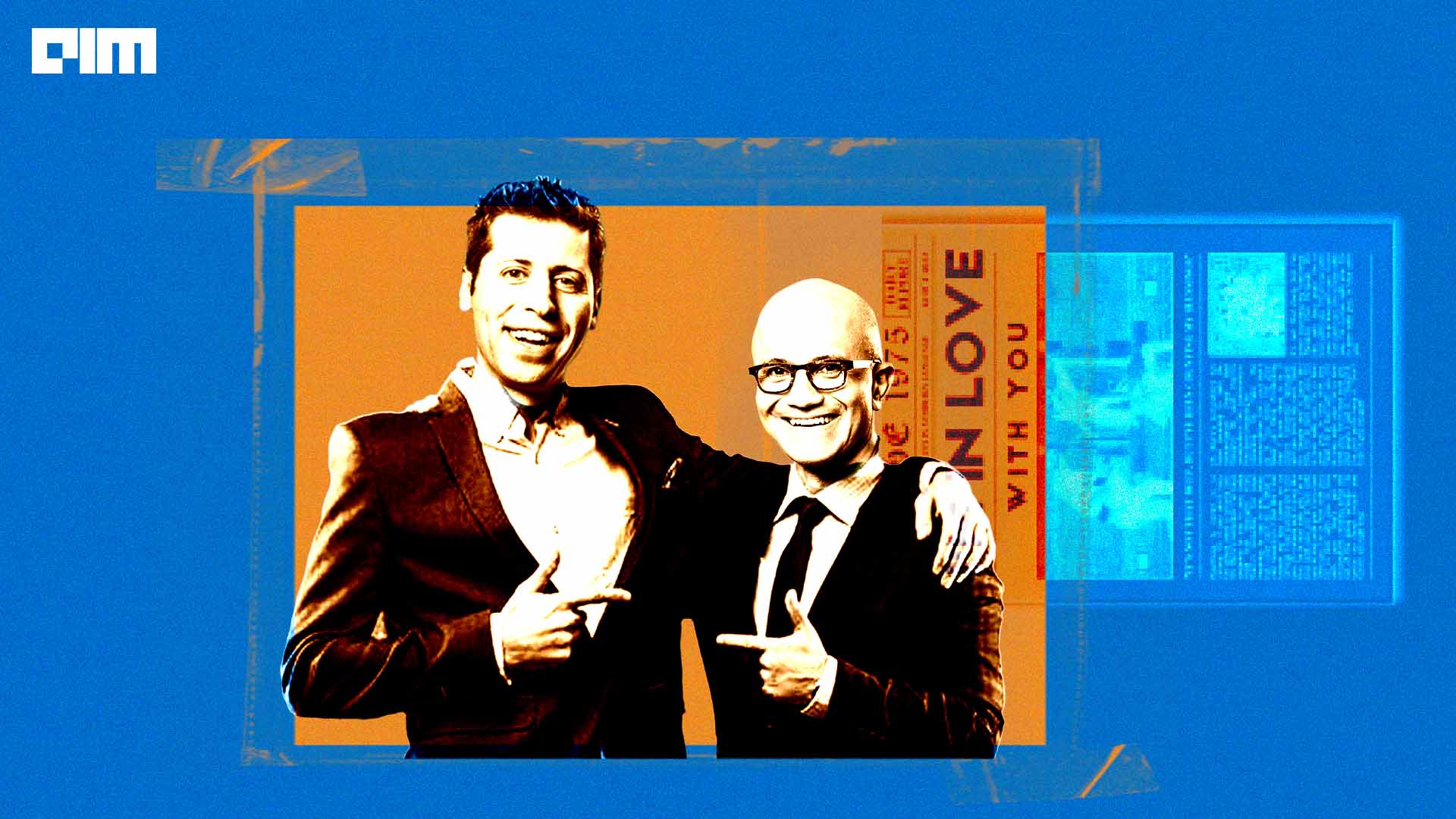
The OpenAI drama, hopefully, ends with this news. After getting fired from OpenAI, Sam Altman is now joining Microsoft, along with Greg Brockman and others.

Satya Nadella, the Microsoft CEO, announced on X that Altman and Brockman, together with colleagues, will be joining Microsoft to lead a new advanced AI research.

“We remain committed to our partnership with OpenAI and have confidence in our product roadmap, our ability to continue to innovate with everything we announced at Microsoft Ignite, and in continuing to support our customers and partners.” read his post.

To this, Altman quote posted saying, “the mission continues.”

the mission continues https://t.co/d1pHiFxcSe

— Sam Altman (@sama) November 20, 2023

Interestingly, Nadella added that Microsoft is excited to work with OpenAI’s new leadership, including the new interim CEO Emmett Shear, who was the co-founder of Twitch.

Nadella further added that he is making Altman the CEO of this new AI research group.

Moreover, several OpenAI employees have reportedly disclosed their intentions to leave the company after Ilya Sutskever, the chief scientist at OpenAI, said that Altman will no longer be the CEO of OpenAI.

The situation also provides an opportunity for competitors such as Google, who have been actively recruiting OpenAI personnel in the past 48 hours. Some OpenAI employees have expressed their interest in potentially joining Altman in any new AI ventures, a topic that Altman had reportedly been discussing over the weekend.

OpenAI currently has 700 employees, and it would be interesting to see how the company performs after key employees leave for Microsoft. Though Nadella has said that the company would work closely with OpenAI even now, with Altman controlling the decisions from Microsoft, things could get interesting.

Ironically, the board decision to remove the much loved CEO over a video call on Google Meet, has made almost all the employees start to question the motivation behind the rushed decision. Altman was followed by few other employees who were ready to quit, including Greg Brockman, the president of the company, making us question the board functioning.

According to internal reports, Altman had two contentions with the return to office. First is that the whole board should resign, and the second is that all team meetings should happen on Microsoft Teams, and not Google Meet from now on. If the board decided to not accept this, it would be like burning down the whole company just because of the choice of a video conferencing platform.

Hopefully, now everyone at OpenAI starts using Microsoft Teams.

The post Sam Altman, Greg Brockman join Microsoft appeared first on Analytics India Magazine.

A timeline of Sam Altman’s firing from OpenAI — and the fallout

A timeline of Sam Altman’s firing from OpenAI — and the fallout Kyle Wiggers 9 hours

In a dramatic turn of events late Friday, ex-Y Combinator president Sam Altman was fired as CEO of AI startup OpenAI, the company behind viral AI hits like ChatGPT, GPT-4 and DALL-E 3, by OpenAI’s board of directors. Then, the company’s longtime president and co-founder, Greg Brockman, resigned — as did three senior OpenAI researchers. And the fallout continues.

Tip TechCrunch

Do you work at OpenAI and know more about Sam Altman’s departure? Get in touch with TechCrunch.

It’s a fast-moving situation that we’re still trying to get to the bottom of. No doubt more will become clear as time goes on. To make it easier to follow all that’s happened in the meantime, though, we’ve put together a timeline; we’ll do our best to keep it current.

Timeline of Sam Altman’s firing from OpenAI

November 16

Ilya Sutskever schedules call with Altman

According to a post on X (formerly Twitter) from Brockman, Ilya Sutskever, the chief scientist at OpenAI and a co-founder, texted Altman on Thursday evening about scheduling a Friday noon call.

Sam and I are shocked and saddened by what the board did today.

Let us first say thank you to all the incredible people who we have worked with at OpenAI, our customers, our investors, and all of those who have been reaching out.

We too are still trying to figure out exactly…

— Greg Brockman (@gdb) November 18, 2023

Murati told of Altman’s firing

Brockman alleges that Mira Murati, OpenAI’s CTO and now interim CEO, was informed on Thursday night that Altman would be fired.

November 17

Brockman demoted

Brockman says he got a text from Sutskever shortly after noon on Friday asking for a quick call. After sending a Google Meet link, Brockman was told that he was being removed from the board as chairman “but was vital to the company and would retain his role” as president, and that Altman had been fired.

Altman’s firing publicly announced

OpenAI published a post on its blog announcing the executive shake-up. The company’s management team was aware shortly after.

i loved my time at openai. it was transformative for me personally, and hopefully the world a little bit. most of all i loved working with such talented people.

will have more to say about what’s next later.

🫡

— Sam Altman (@sama) November 17, 2023

All-hands meeting

OpenAI held an all-hands meeting Friday afternoon during which Sutskever defended Altman’s ouster. He dismissed suggestions that pushing Altman out amounted to a “hostile takeover,” and claimed that it was necessary to protect OpenAI’s mission of “making AI beneficial to humanity.”

Microsoft releases a statement

Satya Nadella, the CEO of Microsoft, a major investor in — and partner with — OpenAI, published a statement about Altman’s firing:

“As you saw at Microsoft Ignite this week, we’re continuing to rapidly innovate for this era of AI, with over 100 announcements across the full tech stack from AI systems, models and tools in Azure, to Copilot. Most importantly, we’re committed to delivering all of this to our customers while building for the future. We have a long-term agreement with OpenAI with full access to everything we need to deliver on our innovation agenda and an exciting product roadmap; and remain committed to our partnership, and to Mira and the team. Together, we will continue to deliver the meaningful benefits of this technology to the world.”

Brockman quits

Brockman announced his resignation from OpenAI, citing “today’s news.” After sending a memo internally, he published the text on X.

After learning today’s news, this is the message I sent to the OpenAI team: https://t.co/NMnG16yFmm pic.twitter.com/8x39P0ejOM

— Greg Brockman (@gdb) November 18, 2023

Senior OpenAI researchers resign

Three senior OpenAI researchers resign after Brockman, including the director of research Jakub Pachocki and head of preparedness Aleksander Madry.

November 18

“Not … in response to malfeasance”

In an internal memo obtained by Axios sent Saturday morning, OpenAI COO Brad Lightcap said yesterday’s announcement “took [the management team] by surprise” and that management had had “multiple conversations with the board to try to better understand the reasons and process behind their decision.” Discussions were ongoing as of Saturday morning, per the memo.

“We can say definitively that the board’s decision was not made in response to malfeasance or anything related to our financial, business, safety, or security/privacy practices,” Lightcap added. “This was a breakdown in communication between Sam and the board … We still share your concerns about how the process has been handled, are working to resolve the situation, and will provide updates as we’re able.”

OpenAI’s funding in jeopardy

The planned sale of OpenAI employee shares that would value the startup at about $86 billion could be in jeopardy. The Information, speaking to three sources formerly with the company, reports that they no longer expect the sale — led by Thrive Capital — to happen, or, if it does, to come with a lesser valuation because of the recent turn of events.

Altman planning new venture

Altman has been telling investors that he’s planning to launch a new venture, according to The Information. Brockman is expected to join the effort — whatever form it takes. (Possibly an AI chip startup.)

i love you all.

today was a weird experience in many ways. but one unexpected one is that it has been sorta like reading your own eulogy while you’re still alive. the outpouring of love is awesome.

one takeaway: go tell your friends how great you think they are.

— Sam Altman (@sama) November 18, 2023

Investors pushing for Altman’s return

Investors — furious at the turn of events — are reportedly exerting pressure on OpenAI’s board to reinstate Altman, going so far as to recruit Microsoft. Nadella is said to be sympathetic.

Board agrees to reverse course — in principle

The Verge reports that the board agreed in principle to resign and to allow Altman and Brockman to return. It waffled, however, missing a deadline yesterday by which many OpenAI staffers were set to leave the company. Altman is said to be ambivalent about coming back and asking for “significant” governance changes.

November 19

Altman to meet at OpenAI HQ

According to The Information, Altman is expected to meet at OpenAI’s San Francisco headquarters as executives at OpenAI push to have him reinstated as CEO. Brockman was invited to join — but it’s unclear whether he’ll take execs up on that invitation.

Board negotiations hit a snag

Bloomberg reports that Lightcap and Murati, among others, are pushing the board to reinstate Altman. But unsurprisingly, the directors are resisting. As of midday Sunday, the board hadn’t resigned out of concern over who could replace them, and were vetting candidates. One possible new addition could be Salesforce co-CEO Bret Taylor.

Altman out, Shear in

Altman won’t be returning as CEO, according to a report in The Information citing an internal memo sent by Sutskever. As the search for a new permanent CEO continues, OpenAI has appointed Emmett Shear, the co-founder of video streaming site Twitch, as interim CEO — replacing Murati.

YOLO Vulnerabilities Underscore Necessity for Open Source Auditing

A security audit of YOLO (You Only Look Once) object detection algorithms revealed major security vulnerabilities. Trail of Bits– a cybersecurity firm– said that they have found 11 security vulnerabilities in Yolo v7. If exploited, it could lead to compromised object detection, privacy breaches and safety risks, subsequently leading to far greater consequences.

Tesla AI reportedly uses the Yolo algorithm along with its sensors for detecting objects and people around the vehicle. Similarly, Roboflow, a computer vision platform that provides tools and services to simplify the process of building computer vision models also utilises the Yolo model for object detection and image segmentation tasks.

Introduced first in 2015 by Joseph Redmon et al via a paper titled, “You Only Look Once: Unified, Real-Time Object Detection,” YOLO’s object detection algorithms find extensive usage in drones, autonomous vehicles, robotics, and numerous manufacturing companies, making them one of the most widely adopted algorithms in these industries.

Even if not directly employing these algorithms, numerous entities are leveraging their open-source nature to build upon them. Over the years, the model has gone through several iterations and earlier this year, Yolo v8 was released.

Security vulnerabilities

Key security concerns, highlighted by the Trail of Bits report include the absence of defensive coding practices, a lack of unit tests or a testing framework, and inadequate validation and sanitisation of both user and external data inputsin the YOLOv7 codebase.

Trail of Bits, which is based in New York, mentions that the YOLOv7 codebase is not suitable for security-critical applications or applications that require high availability, such as autonomous vehicles.

This is because the lack of defensive coding practices is evident in the codebase, as it is not written or designed with a focus on security.

“If an attacker is able to control or manipulate various inputs to the system, such as model files, data files, or configuration files, they could perform a denial-of-service attack with low effort,” the report said.

While they do not recommend using the codebase for mission-critical applications or applications that require high availability, the algorithm is often used commercially and in mission-critical applications.

Addressing Open source vulnerabilities

In the blog post, the cybersecurity company notes that Yolo is a product of academic work and generally is not meant for commercial use and does not have appropriate cyber hygiene.

However, since the algorithm has been widely adopted for commercial use, Trail of Bits has also suggested remedies to overcome the vulnerabilities.

“We only intended to bring to light the risks in using such prototypes without further security scrutiny,” they said.

Meredith Whittaker, president of the Signal Foundation commended the work. “AI systems, like all networked computation, rely on core open components that are often in disrepair, maintained by volunteers if at all, even as trillion dollar companies built on top of them,” she tweeted.

“This company does really pragmatic security reviews of really important open source infrastructure,” another X user said.

Security audits of open-source projects are welcoming

In the present day, generative AI has become the hottest technology in the tech industry. However, the revolution is equally led by the open-source community. LLaMA Large Language Model (LLM), an open-source model released by Meta, is among the most popular LLMs to date.

Notably, the Technology Innovation Institute (TII) in Abu Dhabi, United Arab Emirates released Falcon earlier this year, which topped the Hugging Face OpenLLM Leaderboard.

However since open-source projects often rely on a community of contributors and users, security audits help establish and maintain trust within this community. Hence, regular audits of numerous generative AI projects could also prove to be highly beneficial.

Moreover, such audits should also not be limited to open-source projects. For example, earlier this year, an engineer at cybersecurity firm Tenable found a major red flag in the Microsoft Azure platform.

Tenable CEO said that most of these Microsoft Azure users had no clue about the vulnerability, and hence, couldn’t make any informed decision about compensating controls and other risk-mitigating actions.

The post YOLO Vulnerabilities Underscore Necessity for Open Source Auditing appeared first on Analytics India Magazine.

Sam Altman is Not Coming Back as the CEO of OpenAI

Sam Altman is Not Coming Back as the CEO of OpenAI

Despite all the efforts of the employees of the company, according to the most recent reports, Sam Altman is not coming back as the CEO of OpenAI, Ilya Sutskever, the chief scientist of OpenAI and the one who broke the news to Altman about his firing, has told the staff that after several negotiations over the weekend, Altman would not return.

The new interim CEO of OpenAI would be Emmett Shear, the co-founder of Twitch, replacing Mira Murati, who was appointed as the interim CEO after Altman left.

Sutskever further added that the three other board members who removed Altman are also standing by their decision, as they see it as the “only path” to defend the company’s vision. He asserts that Altman’s conduct and interactions with the board compromised their ability to oversee the development of AGI, and turn it into a company driven for profits.

The resolution could exacerbate a crisis triggered by the abrupt removal of Altman from the board and the subsequent expulsion of President Greg Brockman on Friday. Brockman resigned later that day, followed by three senior researchers, potentially sparking a broader exodus to competing organisations such as Google. Simultaneously, Altman appears to be steering towards a new venture following his dismissal.

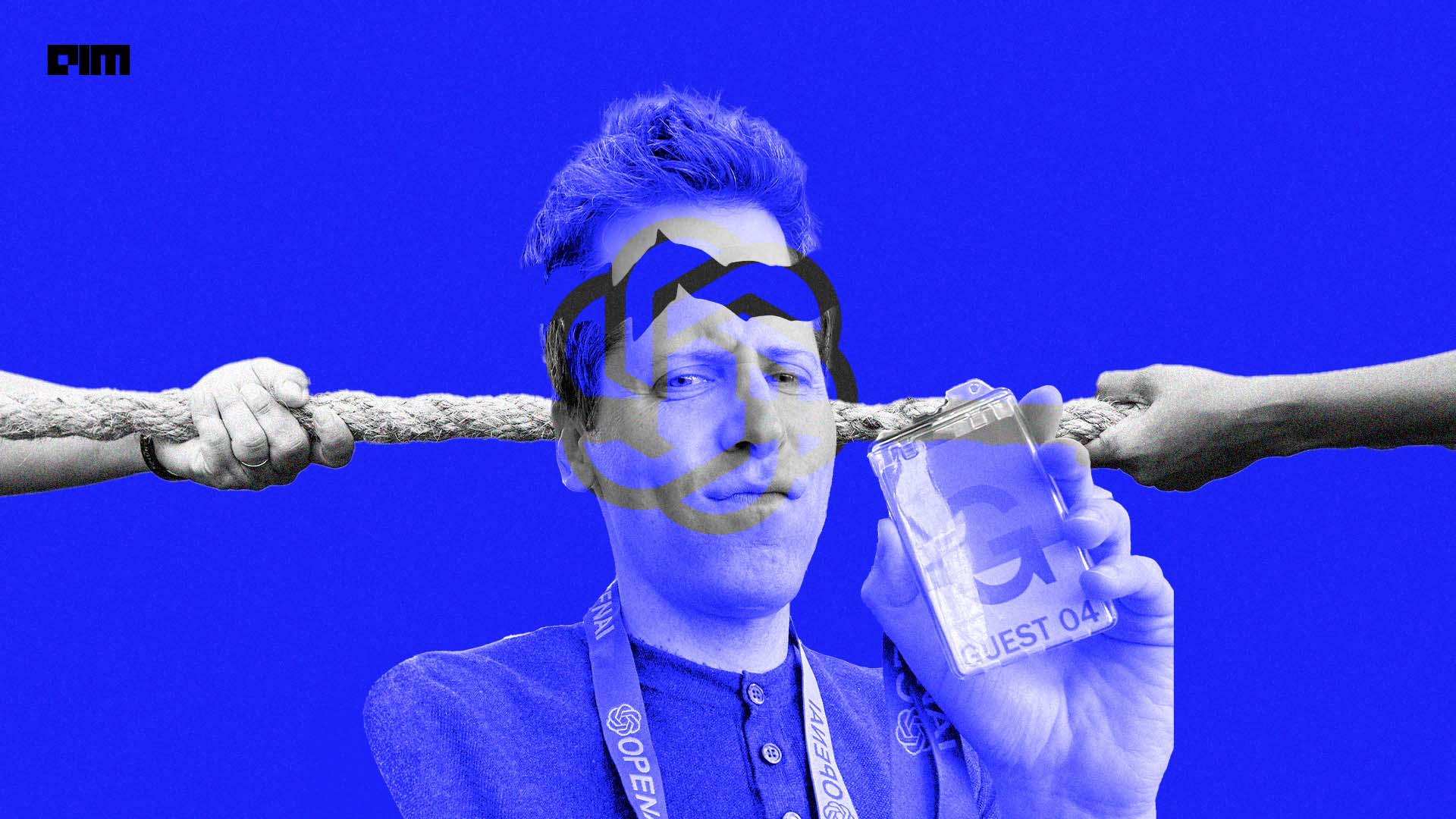
first and last time i ever wear one of these pic.twitter.com/u3iKwyWj0a

— Sam Altman (@sama) November 19, 2023

Though Altman posted on X that this is the last time he is wearing a guest badge at the OpenAI office, it turns out that he might not work at OpenAI anymore.

OpenAI on Friday said that it removed Altman, following a deliberative review process by the board, which concluded that he was not consistently “candid” in his communications with the board, hindering its ability to exercise its responsibilities. “The board no longer has confidence in his ability to continue leading OpenAI,” read the blog.

In contrast to this, the OpenAI team has been standing in solidarity with Altman and has been urging the board to reappoint Altman as the CEO.

Interestingly, former OpenAI chief Sam Altman already knew that the board might fire him well in advance. In an interview with Bloomberg earlier this year, he said: “The board can fire me; I think that’s important. I believe the board, over time, needs to be democratised to include all of humanity.”

This response comes when Bloomberg journalist, Emily Chang, probed Altman, saying that he has an incredible amount of power at this moment, and said: “Why should we trust you?”

“You shouldn’t,” replied Altman. He said it is important for people to ask as many questions as possible as no one person should be trusted.

Altman believes that the governance of technology belongs to humanity as a whole, and not just one person or a company. “You should not trust one company and certainly not one person with it,” he added.

The post Sam Altman is Not Coming Back as the CEO of OpenAI appeared first on Analytics India Magazine.

OpenAI’s board is no match for investors’ wrath

OpenAI’s board is no match for investors’ wrath Kyle Wiggers 9 hours

On Friday, the board of OpenAI, the AI startup behind ChatGPT and other viral AI-powered hits, did something unexpected but seemingly well within its right: removed the company’s CEO, Sam Altman.

But judging by how the situation’s unfolded, it seems that OpenAI’s investors and partners — and many of its employees — were more comfortable with the idea of the board’s power than it exercising that power. And they didn’t count on the cult of personality surrounding Altman, the former president of Y Combinator and a longtime fixture of the Silicon Valley startup scene.

On Saturday evening, just over 24 hours after the OpenAI board unceremoniously announced that Altman would be replaced by Mira Murati, OpenAI’s CTO, on a temporary basis, multiple publications published reports suggesting that the OpenAI board was in talks to have Altman return at the helm.

What changed their mind? The ire and panic, of investors, no doubt — and rankled ranks.

Satya Nadella, the CEO of Microsoft, a major OpenAI partner, was reportedly “furious” to learn of Altman’s departure “minutes” after it happened, and has been in touch with Altman — and pledged to support him — as OpenAI backers (in particular Tiger Global, Sequoia Capital and Thrive Capital) recruit Microsoft’s aid in exerting pressure on the board to reverse course. Meanwhile, some key venture capital backers of OpenAI are said to be contemplating a lawsuit against the board; none, including Khosla Ventures and LinkedIn co-founder Reid Hoffman, a former OpenAI board member, were given advance notice of the decision to fire Altman.

Khosla Ventures founder Vinod Khosla said the fund wants Altman back at OpenAI but will back him in “whatever he does next.”

@sama is a once in a generation CEO. He’s an instigator whose positive mark on the world will be indelible, and profound, in every corner of the globe. It’s an honor to work alongside him wherever he is.

— Vinod Khosla (@vkhosla) November 19, 2023

Microsoft in particular has a lot of leverage. OpenAI has received only a fraction of the company’s recent $10 billion investment, according to Semafor, and a significant portion of the funding is in the form of cloud compute purchases instead of cash. Withholding those credits — and the rest of the cash investment — could leave OpenAI, which is hungry for capital as the costs of running and training its AI systems mount, in a financially untenable position.

As the board considers its next move, OpenAI top AI researchers and executives are calling it quits.

On Friday, Greg Brockman, OpenAI’s president and a co-founder, resigned after the board stripped him of his position as chair. Three senior OpenAI researchers left after Brockman, including the director of research Jakub Pachocki and head of preparedness Aleksander Madry. And more employees are reportedly tendering their resignations.

They perceive it as a power struggle with unacceptable levels of collateral damage between two board members in particular, Quora CEO Adam D’Angelo and Sutskever, and Altman. Sutskever said during a company all-hands meeting on Friday that he felt removing Altman was “necessary” to protect OpenAI’s mission of “making AI beneficial to humanity,” suggesting Altman’s commercial ambitions for the company were beginning to unsettle the board’s kingmakers. (OpenAI’s board is technically a part of a nonprofit that governs OpenAI’s monetization strategy.)

But many in the tech community — and apparently OpenAI — felt the opposite. The outpouring of high-profile support for Altman was immediate.

And so, as Altman and Brockman approach investors about a new AI-chip-focused venture and OpenAI’s employee stock sale faces an uncertain future, the board of directors has an uncomfortable about-face ahead of it. Sutskever and the rest of the board — tech entrepreneur Tasha McCauley; and Helen Toner, the director of strategy at Georgetown University’s Center for Security and Emerging Technology — might’ve felt their decision on Altman’s firing was right and justified. But it seems it wasn’t truly their decision to make.

Case in point, The Verge reported late Saturday that the board had agreed in principle to resign — making room, perhaps, for a Microsoft-aligned member — and to allow Altman and Brockman to return. Altman is reportedly “ambivalent” about coming back and would want “significant” managerial changes, however, per The Verge’s sources; The Wall Street Journal reports that Altman told associates it was “ridiculous” that the major shareholders had no say in OpenAI’s governance.

The board’s since waffled, missing a deadline yesterday evening by which many OpenAI staffers were set to leave the company, reports The Verge. But its fate — and the fate of OpenAI’s structure — would appear to be all but sealed.

Inside Brex and Ramp’s AI ambitions

Inside Brex and Ramp’s AI ambitions Mary Ann Azevedo Christine Hall 8 hours

Welcome back to The Interchange, where we take a look at the hottest fintech news of the previous week. If you want to receive The Interchange directly in your inbox every Sunday, head here to sign up! This week, we dig into spend management companies’ AI aspirations, and one U.K. fintech’s recent growth.

AI ambitions

At one time, there was a running joke that every company would become a fintech. But now one has to wonder, will every fintech become an AI company?

This week, we reported on Ramp’s new integration with Copilot, Microsoft’s brand of generative AI technologies. The spend management company said that now, Microsoft Teams users can use natural language to access Ramp’s smart AI assistant from their workspace.

Of course, Ramp is not the first, or only, spend management company leveraging AI. Brex in September launched Brex Assistant, a flagship product of Brex AI. Besides automating expense information collection, Brex Assistant can also do things like answer questions employees would traditionally ask their finance teams, such as how much they’re allowed to spend per day at a location off-site.

Brex co-CEO and co-founder Henrique Dubugras told TechCrunch+ that he believes “this is just the beginning of AI’s impact on rethinking from scratch on both the employee and user experience.”

Earlier this year, Navan claimed to be the first travel company to integrate OpenAI and ChatGPT APIs across its infrastructure and product set.

The company said it was using the generative AI technology to write, test and fix code with the aim of increasing its operational efficiency and reducing overhead. Also, through Ava — Navan’s virtual assistant — travel managers are able to personalize recommendations and increase traveler engagement, execs claim.

One has to wonder, though, if leveraging AI is not just about improving the customer experience but also to improve companies’ bottom lines. It’s a valid question, especially considering reports that Brex saw slower growth (of just 1%, according to The Information) in the third quarter compared to the second.

While Brex declined to confirm The Information’s report that it saw annualized revenue in the third quarter to $283 million, compared to $279 million in the second quarter and annualized revenue of just under $200 million, one has to take this information with a grain of salt. Brex likely saw an event-related bump in revenue after the Silicon Valley Bank meltdown in March. So the fact that it grew slower in the third quarter feels less dramatic than if a big event that gave it a surge in business did not occur. Revenue is still up compared to last year, and according to the company, so are profits.

A spokesperson told me: “Examining our year-over-year growth tells a significantly different story and shows how Brex compares favorably in this market. Year-to-date, three of Brex’s primary revenue drivers (card revenue, deposit spread revenue, and Empower revenue) are growing materially and we’ve seen over 80%+ YoY growth in gross profit.” Empower, the company’s software product, has seen revenue growth of nearly 50% this year, according to Brex.

The company, which was last valued at $12 billion, declined to comment on IPO timing, which is rumored to be sometime in 2025.

In August, Ramp raised $300 million in a funding round co-led by existing backer Thrive Capital and new investor Sands Capital at a post-money valuation of $5.8 billion. At the time, the company said it had passed $300 million in annualized revenue.

Meanwhile, Navan reportedly generated $300 million in revenue in 2022. That company (formerly called TripActions) was last publicly valued at $9.2 billion.

Besides competing with each other, these companies are competing with the likes of legacy providers such as Concur and Expensify. So it’s not surprising that they would all be leveraging AI to win over customers and make their operations run more efficiently. — Mary Ann

P.S. You can listen to Alex Wilhelm and I dive deeper on the topic on the latest episode of Equity here:

An update on Wise

I recently spoke with Wise CTO and interim CEO Harsh Sinha when he was in town for the grand opening of the U.K. company’s new Austin office. In case you hadn’t heard, Wise — which is known for facilitating cross-border payments — is doing pretty well these days. It recently reported that revenue grew 22% year-over-year in its fiscal second quarter — to about $314.7 million. It also saw its income climb by 51% year-over-year to about $420 million. The company has over 5,000 employees globally, 180 of whom are located in Austin, where it’s looking to boost its headcount by 50% over the next 12 months.

With 16 million customers, Wise has been profitable since 2017, well before it went public in 2021, according to Sinha.

Interestingly, Sinha believes that part of the company’s success lies in the fact that it’s “never given its product for free.”

“We believe charging for your product is something you have to do — even if it’s $1,” he told TechCrunch.

Sinha also shared how Wise has grown over time by moving beyond facilitating cross-border transactions to giving users the ability to hold/spend/send funds across the world.

“Now you can hold 50 different currencies at Wise, and it operates like an account product basically,” Sinha said. “You can get your salary paid into it; you can pay your bills from it, you can do direct debits. And basically the proposition is for anybody who lives in multiple currencies that has an international lifestyle.”

He also touted the speed of Wise’s offering.

“An example of the way we move money around the world — you can do a transfer from us to Australia, and it will hit the recipient account in less than 20 seconds. I will challenge you to do that with ACH today,” Sinha said. “And we’ve done this by building a network which connects directly to local payment systems around the world. And 57% of our payments now on the network are instant, less than 20 seconds.” — Mary Ann

Weekly News

Reporter Manish Singh tells us about the India central bank’s decision to put several measures into effect in order to slow down the growth in consumer spending. The new measures are for unsecured personal loans, credit cards, consumer durable loans by banks and nonbanking financial companies. This comes as industry analysts report that 39% of retail loans made in the 2023 fiscal year went to borrowers who already had five or more active loans. Manish writes that this tightening will affect startups in the business of making loans. He spoke with one fintech founder who said that it would reduce growth “by a bit.” Read more.

Reporter Tage Kene-Okafor writes about Paystack laying off 33 employees in Europe and Dubai amid the African payments company’s focus on its home continent. Tage reports that the company maintains a footprint in Nigeria, Ghana, Kenya and South Africa and is now engaging in private beta testing in the Ivory Coast, Egypt and Rwanda as part of expansion efforts. Read more.

Editor Frederic Lardinois broke down the term “FinOps” in an article this week that has tech giants, including AWS, Microsoft, Google and Oracle, coming together to make cloud spend more transparent. That’s because each SaaS platform has its own definitions and way it goes about doing this. Enter the FinOps Foundation, a movement aimed at creating a better framework for how cloud spend is tracked and reported. Read more.

Editor Sarah Perez covered Venmo’s new feature that enables users to split expenses among groups. What’s interesting about this is for groups, like individual clubs, community organizations and even household roommates, you can get rid of the spreadsheets you currently use and instead track everything through Venmo. Everyone in the group can manage the expenses, too, so one person isn’t stuck with the role. Sarah points out that this new feature is likely to “cannibalize the user base of single-purpose apps aimed at organizing group expenses, like Splitwise.” Read more.

TC’s Tage Kene-Okafor reports that Chipper Cash recently announced an enhanced strategic partnership with Visa to drive growth and financial inclusion across the African continent. Having had an established partnership with Visa since 2021 for card issuance, this expanded deal will see Chipper utilize Visa’s vast experience and investment across more areas of its business such as licensing and product marketing. “We are thrilled to announce our expanded collaboration with Chipper Cash. This deepens our support in the growing demand for digital financial services in Africa and driving meaningful impact across the continent,” said Meagan Rabe, senior director of fintechs for Visa sub-Saharan Africa. “We look forward to continuing our work with Chipper Cash to redefine and expand the boundaries of financial accessibility and convenience.” The announcement comes just two months after Chipper announced the launch of Chipper ID, the AI-driven verification and onboarding tool built specifically for the African continent. Read previous coverage on Chipper Cash here.

Other items we are reading:

ICYMI: Plaid officially jumps into lending

Inside the war between Square and Cash App at Dorsey’s Block

Businesses love rewards credit cards. This startup is making them easy to launch (Check out TechCrunch’s previous coverage of Imprint’s $38 million round.)

Americans are getting ‘ripped off’ by big banks, Robinhood CEO says. This comes as Robinhood raises its Robinhood Gold rate again to 5% APY on uninvested cash.

Dwayne Johnson links with Acorns for Mighty Oak debit card launch

Funding and M&A

As seen on TechCrunch:

Meet Tanda, your friendly neighborhood savings, lending network

Seen elsewhere:

Dwellsy’s consumer-first rental search earns $11.5M seed round

Puzzle secures $30M for revolutionary AI-powered accounting platform

Happy Money announces new funding

Defacto: French fintech raises funding extension from Citi Ventures (Learn Defacto’s origin story and more in TechCrunch’s earlier coverage.)

Image Credits: Bryce Durbin