Effective accelerationism, doomers, decels, and how to flaunt your AI priors

Effective accelerationism, doomers, decels, and how to flaunt your AI priors Alex Wilhelm 8 hours

The dust may be starting to settle on the Open AI drama of the weekend — Sam Altman is out and headed to Microsoft; the company is in revolt; people are having a change of heart and more — so it’s time to sit down and parse the politics of the situation

Tech folks often eschew talking about politics, dismissing it as a distraction or mistake. But several political perspectives are shaping quite a lot of the work on artificial intelligence, and so we need to understand them, especially now.

The different political perspectives currently concerning the development of AI lie along two axes: speed, and concern. Speed is how quickly different groups want AI technology to progress. As for concern, some folks are worried about what we will not get if we slow AI development, while others are concerned that things could move too quickly and argue that we should be careful about what is being built, and how we share and deploy it. Then there are people who think we are digging our own grave with new AI tech.

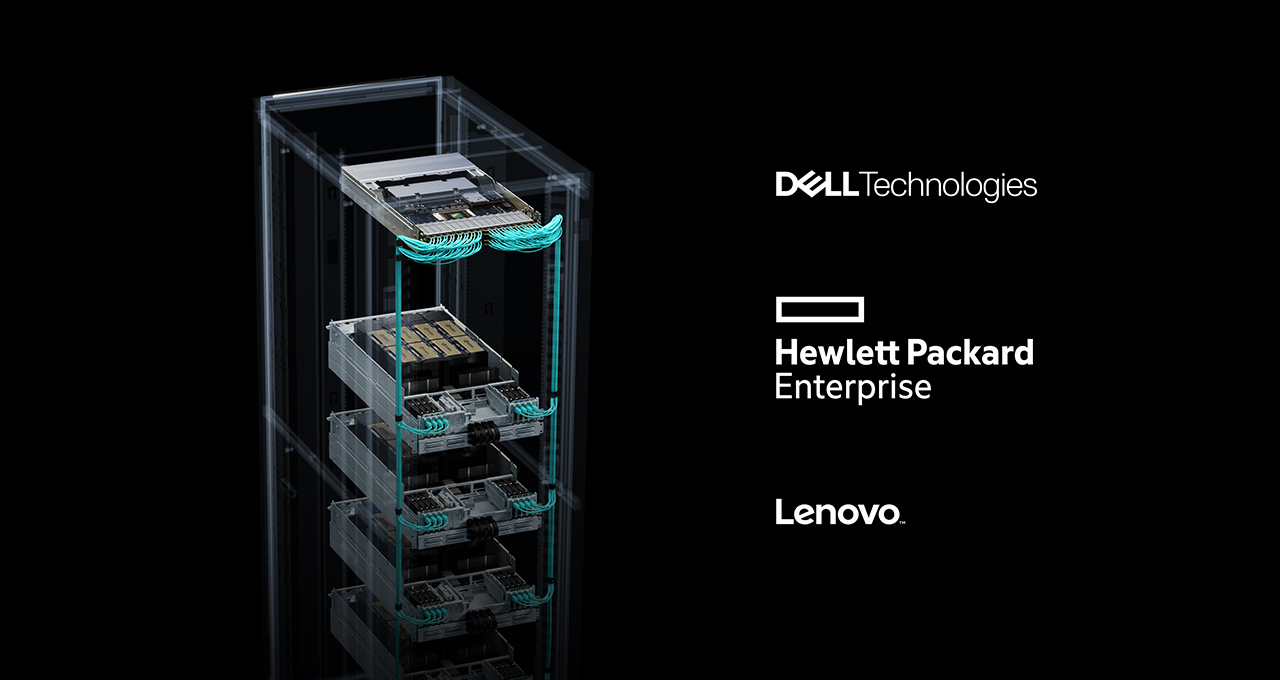
NVIDIA Releases AI Ethernet Networking For Dell, HP, and Lenovo

NVIDIA has just shared some big news about making AI work faster for big companies. Dell Technologies, Hewlett Packard Enterprise, and Lenovo will be the first to use NVIDIA’s new Ethernet Networking Platform in their servers. This will help businesses speed up their AI tasks.

The new systems from Dell, HPE, and Lenovo, expected early next year, will have the full set of NVIDIA AI tools.

NVIDIA’s networking technology for AI, called Spectrum-X, is made just for AI. It makes the computer communication for AI tasks 1.6 times faster than the usual way. These new systems will use Spectrum-X along with NVIDIA’s other technologies like Tensor Core GPUs, AI Enterprise software, and AI Workbench software.

“Generative AI and accelerated computing are driving a generational transition as enterprises upgrade their data centers to serve these workloads,” stated Jensen Huang, founder and CEO of NVIDIA in the official statement shared with AIM. “Accelerated networking is the catalyst for a new wave of systems from NVIDIA’s leading server manufacturer partners to speed the shift to the era of generative AI.”

Spectrum-X works by combining different technologies, like the Spectrum-4 Ethernet switch and the NVIDIA BlueField-3 SuperNIC. The latter is a special piece that helps connect different parts of the computer. It makes sure they communicate better with each other in the best way, making AI tasks run smoother. It’s also designed to be energy-efficient, fitting well into regular business servers.

All of this is powered by software from NVIDIA, like Cumulus Linux, Pure SONiC, NetQ, and NVIDIA DOCA™ software framework. In simple terms, NVIDIA is giving these companies a powerful toolbox for pushing forth their use of AI.

The post NVIDIA Releases AI Ethernet Networking For Dell, HP, and Lenovo appeared first on Analytics India Magazine.

OpenAI Wants Sam Altman Back, but Microsoft Has Altman’s Back

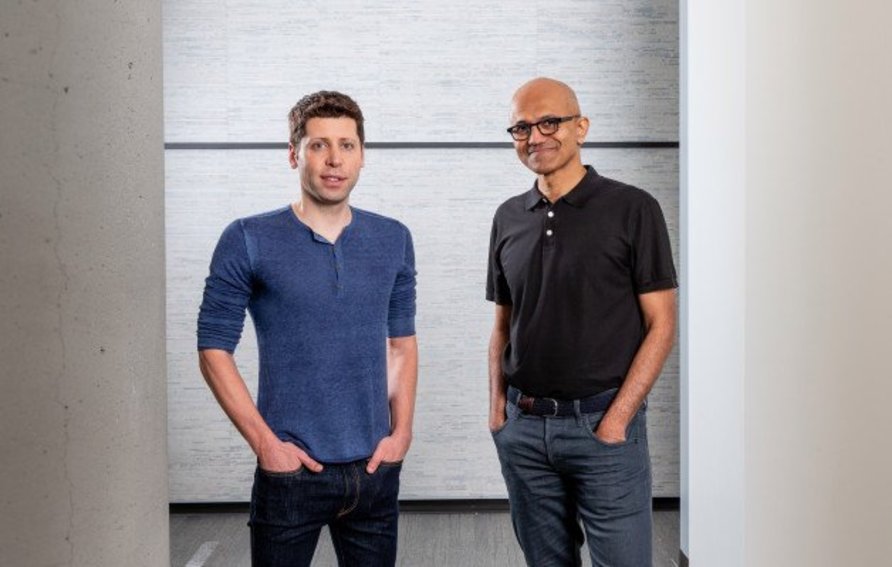
Sam Altman and Satya Nadella

After the continuous sequence of unprecedented moves which followed Sam Altman’s firing by OpenAI’s board, the company has been thrust into further turmoil as nearly 500 employees have issued an ultimatum: resignations en masse unless the board steps down and reinstates ousted CEO Sam Altman and cofounder Greg Brockman.

The unrest caused by Altman’s controversial dismissal has set ablaze a rebellion that could reshape the company’s future. The rebellion was visible as the company’s CTO Mira Murati and COO Brad Lightcap started a string of Tweets from OpenAI employees when they posted, “OpenAI is nothing without its people,” which was in turn reshared by Altman.

❤️ https://t.co/nKlFeRzGcv

— Sam Altman (@sama) November 20, 2023

In a scathing letter addressed to the board, the disgruntled employees rebuked the dismissal as detrimental to the company’s mission and integrity. Notably, even Ilya Sutskever, the company’s chief scientist and board member, previously implicated in the upheaval, remorsefully admitted regret over his role and pledged reconciliation.

500+ OpenAI employees will quit and join Microsoft unless the board resigns and reinstates Sam and Greg. https://t.co/4LA2EJnHWG pic.twitter.com/XH0DIdR8Bv

— Balaji (@balajis) November 20, 2023

The unprecedented upheaval unfolded in a whirlwind weekend following Altman’s abrupt removal. Despite initial hints of reconciliation, hopes shattered as the board firmly shut the door on Altman’s return, prompting the tech luminary to pivot to Microsoft. Hours later, Microsoft’s CEO announced Altman and Brockman’s pivotal roles in spearheading a groundbreaking AI research unit at the tech giant.

In a frantic reshuffling of leadership, Mira Murati’s interim CEO position was short-lived, replaced by Emmett Shear, the former CEO of Twitch. The rapid changes left OpenAI in disarray, with a faction of staff frustrated by the lack of transparency surrounding Altman’s dismissal.

The staff’s ultimatum wasn’t veiled: defect to Microsoft alongside Altman or face a potential exodus. Microsoft’s response remains pending, leaving the fate of OpenAI precariously hanging in the balance.

The post OpenAI Wants Sam Altman Back, but Microsoft Has Altman’s Back appeared first on Analytics India Magazine.

Your KDnuggets Post – Why You Should Not Overuse List Comprehensions in Python

Your KDnuggets Post - Why You Should Not Overuse List Comprehensions in Python
Image by Author

In Python, list comprehensions provide a concise syntax to create new lists from existing lists and other iterables. However, once you get used to list comprehensions you may be tempted to use them even when you shouldn't.

Remember, your goal is to write simple and maintainable code; not complex code. It’s often helpful to revisit the Zen of Python, a set of aphorisms for writing clean and elegant Python, especially the following:

  • Beautiful is better than ugly.
  • Simple is better than complex.
  • Readability counts.

In this tutorial, we’ll code three examples—each more complex than the previous one—where list comprehensions make the code super difficult to maintain. We’ll then try to write a more maintainable version of the same.

So let’s start coding!

Python List Comprehensions: A Quick Review

Let's start by reviewing list comprehensions in Python. Suppose you have an existing iterable such as a list or a string. And you’d like to create a new list from it. You can loop through the iterable, process each item, and append the output to a new list like so:

new_list = []  for item in iterable:      new_list.append(output)

But less comprehensions provide a concise one-line alternative to do the same:

new_list = [output for item in iterable]

In addition, you can also add filtering conditions.

The following snippet:

new_list = []  for item in iterable:      if condition:          new_list.append(output)

Can be replaced by this list comprehension:

new_list = [output for item in iterable if condition]

So list comprehensions help you write Pythonic code—often make your code cleaner by reducing visual noise.

Now let's take three examples to understand why you shouldn't be using list comprehensions for tasks that require super complex expressions. Because in such cases, list comprehensions—instead of making your code elegant—make your code difficult to read and maintain.

Example 1: Generating Prime Numbers

Problem: Given a number upper_limit, generate a list of all the prime numbers up to that number.

You can break down this problem into two key ideas:

  • Checking if a number is prime
  • Populating a list with all the prime numbers

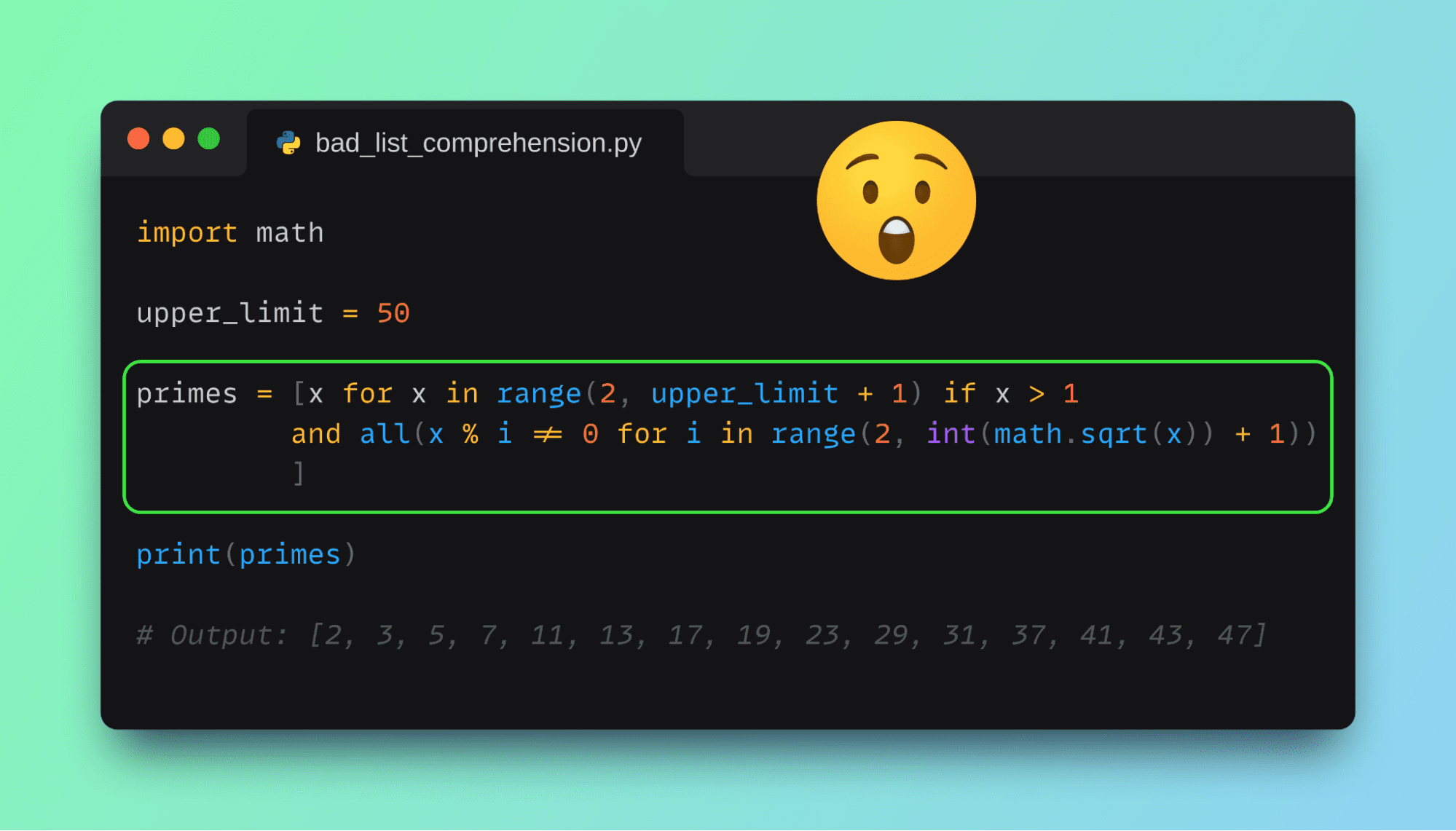
The list comprehension expression to do this is as shown:

import math    upper_limit = 50      primes = [x for x in range(2, upper_limit + 1) if  x > 1 and all(x % i != 0 for i in range(2, int(math.sqrt(x)) + 1))]    print(primes)

And here’s the output:

Output >>>  [2, 3, 5, 7, 11, 13, 17, 19, 23, 29, 31, 37, 41, 43, 47]

At first glance, it is difficult to see what is going on…Let’s make it better.

Perhaps, better?

import math    upper_limit = 50      primes = [  	x  	for x in range(2, upper_limit + 1)  	if x > 1 and all(x % i != 0 for i in range(2, int(math.sqrt(x)) + 1))  ]    print(primes)

Easier to read, certainly. Now let’s write a truly better version.

A Better Version

Though a list comprehension is actually a good idea to solve this problem, the logic to check for primes in the list comprehension is making it noisy.

So let's write a more maintainable version that moves the logic for checking if a number is prime to a separate function is_prime(). And call the function is_prime() in the comprehension expression:

import math    def is_prime(num):      return num > 1 and all(num % i != 0 for i in range(2, int(math.sqrt(num)) + 1))    upper_limit = 50      primes = [  	x  	for x in range(2, upper_limit + 1)  	if is_prime(x)  ]    print(primes)
Output >>>  [2, 3, 5, 7, 11, 13, 17, 19, 23, 29, 31, 37, 41, 43, 47]

Is the better version good enough? This makes the comprehension expression much easier to understand. It's now clear that the expression collects all numbers up to upper_limit that are prime (where is_prime() returns True).

Example 2: Working with Matrices

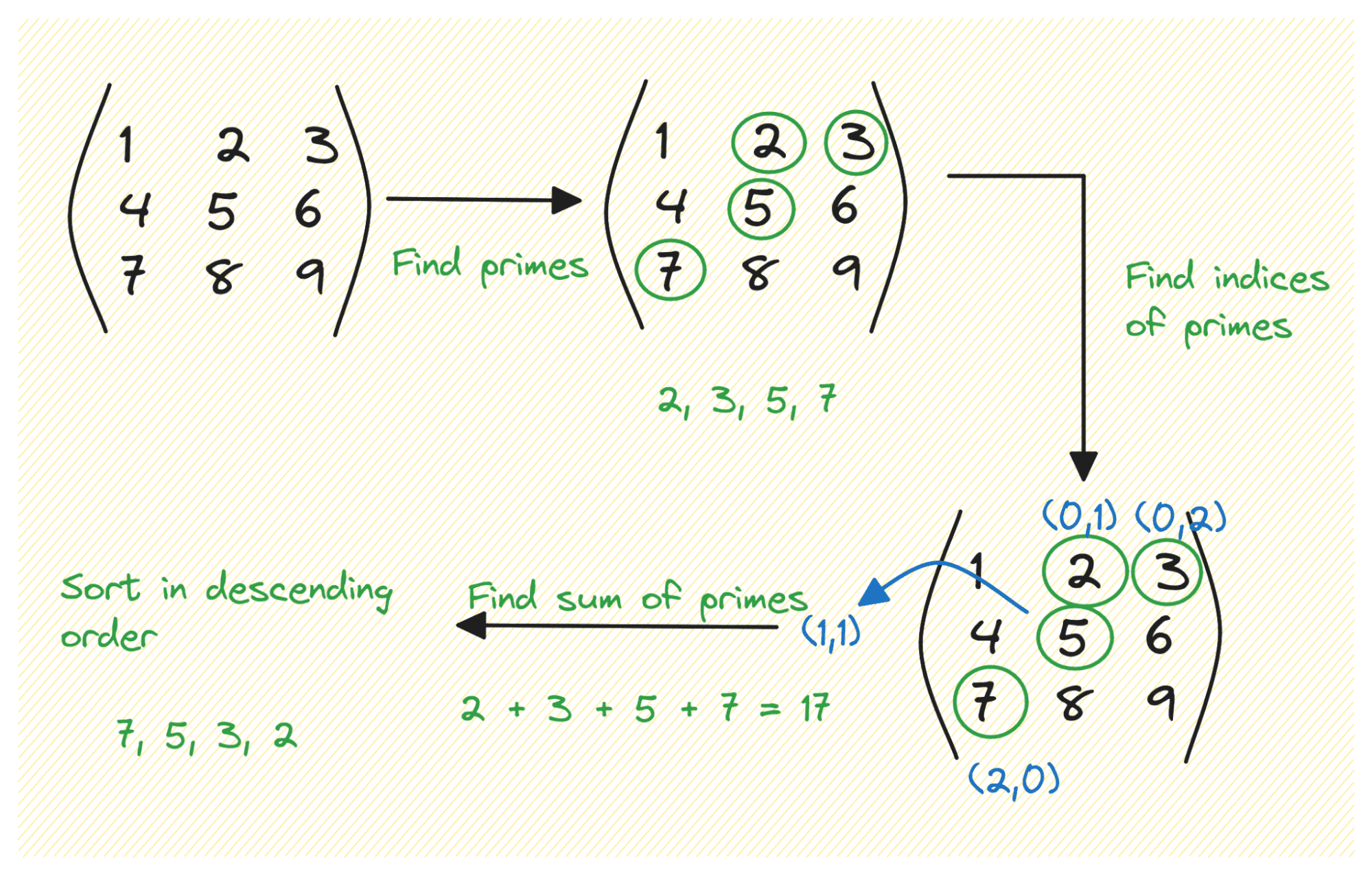
Problem: Given a matrix, find the following:

  • All the prime numbers
  • The indices of the prime numbers
  • Sum of the primes
  • Prime numbers sorted in descending order
Your KDnuggets Post - Why You Should Not Overuse List Comprehensions in Python
Image by Author

To flatten the matrix and collect the list of all prime numbers, we can use a logic similar to the previous example.

However, to find the indices, we have another complex list comprehension expression (I’ve formatted the code such that it is easy to read).

You can combine checking for primes and getting their indices in a single comprehension. But that will not make things any simpler.

Here’s the code:

import math  from pprint import pprint    my_matrix = [[1, 2, 3], [4, 5, 6], [7, 8, 9]]    def is_prime(num):      return num > 1 and all(num % i != 0 for i in range(2, int(math.sqrt(num)) + 1))      # Flatten the matrix and filter to contain only prime numbers  primes = [  	x  	for row in my_matrix  	for x in row  	if is_prime(x)  ]    # Find indices of prime numbers in the original matrix  prime_indices = [  	(i, j)  	for i, row in enumerate(my_matrix)  	for j, x in enumerate(row)  	if x in primes  ]    # Calculate the sum of prime numbers  sum_of_primes = sum(primes)    # Sort the prime numbers in descending order  sorted_primes = sorted(primes, reverse=True)    # Create a dictionary with the results  result = {  	"primes": primes,  	"prime_indices": prime_indices,  	"sum_of_primes": sum_of_primes,  	"sorted_primes": sorted_primes  }    pprint(result)

And the corresponding output:

Output >>>    {'primes': [2, 3, 5, 7],   'prime_indices': [(0, 1), (0, 2), (1, 1), (2, 0)],   'sum_of_primes': 17,   'sorted_primes': [7, 5, 3, 2]}

So what is a better version?

A Better Version

Now for the better version, we can define a series of functions to separate out concerns. So that if there’s a problem, you know which function to go back to and fix the logic.

import math  from pprint import pprint    def is_prime(num):      return num > 1 and all(n % i != 0 for i in range(2, int(math.sqrt(num)) + 1))    def flatten_matrix(matrix):      flattened_matrix = []      for row in matrix:          for x in row:              if is_prime(x):                  flattened_matrix.append(x)      return flattened_matrix    def find_prime_indices(matrix, flattened_matrix):      prime_indices = []      for i, row in enumerate(matrix):          for j, x in enumerate(row):              if x in flattened_matrix:                  prime_indices.append((i, j))      return prime_indices    def calculate_sum_of_primes(flattened_matrix):      return sum(flattened_matrix)    def sort_primes(flattened_matrix):      return sorted(flattened_matrix, reverse=True)    my_matrix = [[1, 2, 3], [4, 5, 6], [7, 8, 9]]    primes = flatten_matrix(my_matrix)  prime_indices = find_prime_indices(my_matrix, primes)  sum_of_primes = calculate_sum_of_primes(primes)  sorted_primes = sort_primes(primes)    result = {  	"primes": primes,  	"prime_indices": prime_indices,  	"sum_of_primes": sum_of_primes,  	"sorted_primes": sorted_primes  }    pprint(result)

This code also gives the same output as before.

Output >>>    {'primes': [2, 3, 5, 7],   'prime_indices': [(0, 1), (0, 2), (1, 1), (2, 0)],   'sum_of_primes': 17,   'sorted_primes': [7, 5, 3, 2]}

Is the better version good enough? While this works for a small matrix such as the one in this example, returning a static list is generally not recommended. And for generalizing to larger dimensions, you can use generators instead.

Example 3: Parsing Nested JSON Strings

Problem: Parse a given nested JSON string based on conditions and get a list of required values.

Parsing nested JSON strings is challenging because you have to account for the different levels of nesting, the dynamic nature of the JSON response, and diverse data types in your parsing logic.

Let's take an example of parsing a given JSON string based on conditions to get a list of all values that are:

  • Integers or list of integers
  • Strings or list of strings

You can load a JSON string into a Python dictionary using the loads function from the built-in json module. So we’ll have a nested dictionary over which we have a list comprehension.

The list comprehension uses nested loops to iterate over the nested dictionary. For each value, it constructs a list based on the following conditions:

  • If the value is not a dictionary and the key starts with 'inner_key', it uses [inner_item].
  • If the value is a dictionary with 'sub_key', it uses [inner_item['sub_key']].
  • If the value is a string or integer, it uses [inner_item].
  • If the value is a dictionary, it uses list(inner_item.values()).

Have a look at the code snippet below:

import json    json_string = '{"key1": {"inner_key1": [1, 2, 3], "inner_key2": {"sub_key": "value"}}, "key2": {"inner_key3": "text"}}'    # Parse the JSON string into a Python dictionary  data = json.loads(json_string)      flattened_data = [  	value  	if isinstance(value, (int, str))  	else value  	if isinstance(value, list)  	else list(value)  	for inner_dict in data.values()  	for key, inner_item in inner_dict.items()  	for value in (      	[inner_item]      	if not isinstance(inner_item, dict) and key.startswith("inner_key")      	else [inner_item["sub_key"]]      	if isinstance(inner_item, dict) and "sub_key" in inner_item      	else [inner_item]      	if isinstance(inner_item, (int, str))      	else list(inner_item.values())  	)  ]    print(f"Values: {flattened_data}")

Here’s the output:

Output >>>  Values: [[1, 2, 3], 'value', 'text']

As seen, the list comprehension is very difficult to wrap your head around.

Please do yourself and others on the team a favor by never writing such code.

A Better Version

I think the following snippet using nested for loops and if-elif ladder is better. Because it’s easier to understand what’s going on.

flattened_data = []    for inner_dict in data.values():      for key, inner_item in inner_dict.items():          if not isinstance(inner_item, dict) and key.startswith("inner_key"):              flattened_data.append(inner_item)          elif isinstance(inner_item, dict) and "sub_key" in inner_item:              flattened_data.append(inner_item["sub_key"])          elif isinstance(inner_item, (int, str)):              flattened_data.append(inner_item)          elif isinstance(inner_item, list):              flattened_data.extend(inner_item)          elif isinstance(inner_item, dict):              flattened_data.extend(inner_item.values())    print(f"Values: {flattened_data}")

This gives the expected output, too:

Output >>>  Values: [[1, 2, 3], 'value', 'text']

Is the better version good enough? Well, not really.

Because if-elif ladders are often considered a code smell. You may repeat logic across branches and adding more conditions will only make the code more difficult to maintain.

But for this example, the if-elif ladders and nested loops the version is easier to understand than the comprehension expression, though.

Wrapping Up

The examples we’ve coded thus far should give you an idea of how overusing a Pythonic feature such as list comprehension can often become too much of a good thing. This is true not just for list comprehensions (they’re the most frequently used, though) but also for dictionary and set comprehensions.

You should always write code that’s easy to understand and maintain. So try to keep things simple even if it means not using some Pythonic features. Keep coding!

Bala Priya C is a developer and technical writer from India. She likes working at the intersection of math, programming, data science, and content creation. Her areas of interest and expertise include DevOps, data science, and natural language processing. She enjoys reading, writing, coding, and coffee! Currently, she's working on learning and sharing her knowledge with the developer community by authoring tutorials, how-to guides, opinion pieces, and more.

More On This Topic

  • Why You Should Consider Being a Data Engineer Instead of a Data Scientist
  • Why and how should you learn "Productive Data Science"?
  • Eight Data Science Specializations, and Why You Should Pick One
  • 3 Reasons Why You Should Use Linear Regression Models Instead of…
  • Top 5 Reasons Why You Should Avoid a Data Science Career
  • Top 4 tricks for competing on Kaggle and why you should start
Is Meta Llama Truly Open Source?

Is Meta's Llama Truly Open Source?

The software industry is increasingly embracing open-source technologies. An impressive 80% of businesses have increased their use of open-source software, according to the 2023 State of Open Source Report.

As a major player in the tech industry, Meta's software ventures hold significant sway. Meta Llama project is a noteworthy contribution to the open-source large language model ecosystem. However, upon closer examination of its open-source claims, we can observe some irregularities.

Let's examine Meta Llama more closely to assess its licensing, challenges, and larger implications in the open-source community.

What Constitutes Open Source?

Understanding the essence of open source is pivotal in assessing Meta Llama. Open source signifies not just accessibility to the source code but a commitment to collaboration, transparency, and community-driven development. Compared to proprietary software, open-source software is typically license-free and can be copied, altered, or shared by anyone without the author's explicit permission.

Meta’s Llama warrants scrutiny regarding its adherence to these criteria. Evaluating Meta's commitment to transparency, collaborative development, and code accessibility will reveal how much it aligns with open-source principles.

Overview of Meta Llama Project

Overview of Llama 2 pre-training and fine-tuning process

Overview of Llama 2 pre-training and fine-tuning process

As a pivotal tool within Meta's ecosystem, Llama has far-reaching implications. Its robust natural language capabilities empower developers to build and fine-tune powerful chatbots, language translation, and content generation systems. Llama aims to enable more nuanced language comprehension and generation with its adaptability and flexibility.

Crucial to Llama's operation are the guiding principles encapsulated in the Meta's Use Policy. These principles promote the safe and fair use of the platform and delineate the ethical boundaries governing its responsible utilization.

Applications & Impact

Meta's Llama is compared to other prominent LLMs, such as BERT and GPT-3. It has been found to outperform them on many external benchmarks, such as QA datasets like Natural Questions and QuAC.

Here are some use cases that highlight the impact of Llama on developers and the broader tech ecosystem:

  • Powerful Bots: Llama allows developers to create more advanced natural language interactions with users in chatbots and virtual assistants.
  • Improved Sentiment Analysis: Llama can help businesses and researchers better understand customer sentiment by analyzing large amounts of text data.
  • Privacy Control: Llama's adaptability and flexibility make it potentially disruptive to the current leaders in LLM, such as OpenAI and Google. Its ability to be self-hosted and modified provides more control over data and models for privacy-focused use cases.

Meta's Claims of Open Source

Meta asserts Llama's open-source nature, positioning it within the collaborative sphere. Therefore, examining Meta's claims becomes paramount to ascertaining practice from rhetoric.

Beyond the political correctness of open-source, it is advantageous to make Llama accessible. Some anticipated benefits include enhanced community engagement with Meta, accelerated innovation, transparency, and broader utility. However, the veracity of these claims demands meticulous scrutiny.

Meta's Llama Licensing

Llama’s licensing model has some unique characteristics that differentiate it from traditional open-source licenses. The Llama license, while more permissive than licenses attached to many commercial models, has specific restrictions. Here are some key points:

1. Custom License

Meta uses a custom, partial open license for Llama, which grants users a non-exclusive, worldwide, non-transferable, and royalty-free limited license under Meta's intellectual property rights.

2. Usage and Derivatives

Users can use, reproduce, distribute, copy, create derivative works of, and modify the Llama materials without transferring the license.

3. Commercial Terms

Companies with over 700 million monthly active users must obtain a commercial license from Meta AI. This requirement sets Llama apart from traditional open-source licenses, which typically do not impose such restrictions.

4. Partnerships

The Llama 2 model is accessible via AWS and Hugging Face. Meta has also partnered with Microsoft to bring Llama 2 to the Azure model library, allowing developers to build applications with it without paying a licensing fee.

Challenges and Controversies Around Llama’s Openness

Challenges and Controversies Around Llama’s Openness

The user experience within the Meta Llama ecosystem has its share of challenges, with specific instances revealing constraints on Llama models and derivatives.

  • The labyrinth of license restrictions complicates the landscape, influencing how users interact with and leverage these advanced models.
  • Selective access hurdles emerge, casting a shadow on the inclusivity of user participation.
  • Documentation ambiguities add an extra layer of complexity, requiring users to navigate unclear guidelines.

In a recent evaluation conducted by Radboud University, several instruction-tuned text generators, including Llama 2, underwent scrutiny regarding their open-source claims. The study comprehensively assessed availability, documentation quality, and access methods, aiming to rank these models based on their openness. Llama 2 emerged as the second lowest-ranked model among those evaluated, with an overall openness score marginally higher than ChatGPT.

Radboud University’s assessment of Llama 2

Radboud University’s assessment of Llama 2’s open source claims, among other text generators, as of June 2023 (Full table available here)

The developer community has also raised several criticisms and concerns about Llama:

  1. The lack of transparency in Meta's handling of the model.
  2. The restrictions on usage and derivatives.
  3. The commercial terms imposed on large companies.

Meta's Response

Meta's Llama has been debated regarding its true openness. While Meta has described Llama 2 as open-source and free for research and commercial use, critics argue that it is not fully open-source. The main points of contention are the availability of training data and the code used to train the model.

Meta has made the model's weights, evaluation code, and documentation available, which is a significant aspect of an open-source model. However, Llama 2 is considered somewhat closed off compared to other open-source LLMs. The model's training data and the code used to train it are not shared, limiting the ability of aspiring developers and researchers to analyze the model fully.

Preserving Open-Source Integrity

Preserving Open-Source Integrity

Accepting partially open-source projects as open-source can be detrimental to the credibility of open-source practices in the industry. Some potential impacts include:

  • Discouraged Collaborative Synergy: Mislabeling non-open-source projects could deter potential collaborators, hindering the vibrant exchange of ideas and collective problem-solving that defines open source.
  • Inhibited Innovation Spectrum: Embracing closed-source projects as open-source might stifle innovation by leading developers down paths that lack the communal, unrestricted creativity pivotal for breakthroughs.
  • Confusion and Adoption Hitch: Misidentifying closed-source as open-source may confuse users and developers, resulting in hesitancy to adopt genuinely open initiatives due to skepticism or unclear distinctions.
  • Legal Labyrinth: Accepting non-compliant projects may raise legal issues, adding complexity and potential liabilities and disrupting the community's ethos of transparency and cooperation.

To address these potential consequences, the open-source community must uphold the true spirit of open-source. Clearly defining and communicating the principles and values of open source can help prevent confusion and ensure that projects accepted as open source align with these principles.

For the latest insights into technology and AI, visit Unite AI. Stay informed and stay ahead with us!

Microsoft Supercharges Quantum Computing With AI Integration 

At Microsoft’s Ignite conference, CEO Satya Nadella opened a window into the future, revealing the tech giant’s ambitious journey into quantum computing. He emphasised the fusion of quantum computing and AI through Azure Quantum Elements, streamlining simulations by reducing the search space.

“In fact, we built a new model architecture called Graphormers for this very purpose,” Nadella revealed. Saying that it is meant to emulate complex natural phenomena, and much like large models generating text, Graphormers can generate entirely novel chemical compounds, an unimaginable feat for classical computers. It forecasts a compression of 250 years of chemistry and material science progress into a mere 25 years illustrating the transformative power of AI in expediting scientific progress.

It has been available in private preview since June 30 and delivers that speed through proprietary software tailored to the needs of chemical and materials scientists and built on Microsoft’s investments in AI, HPC and future quantum technologies, he said.

Bridging the Gap Between Science and Innovation

Azure Quantum Elements has demonstrated its prowess through astounding efficiency gains. Nadella presented a case where what previously took three years through traditional methods now materialises in just 9 hours, leveraging quantum elements within a Python notebook. This acceleration heralds a new era, empowering scientists with Copilot, a tool to navigate results swiftly and effectively, further catalysing innovation.

This innovation aims to empower researchers to explore the realm of molecular possibilities, accelerating breakthroughs in chemistry that impact over 96% of manufactured goods.

The chemical and materials industries spend many tens of billions of dollars in R&D and the belief is that through the use of advanced HPC, quantum computing, and AI this R&D can become significantly more efficient and help companies develop new products more quickly and at a lower cost.

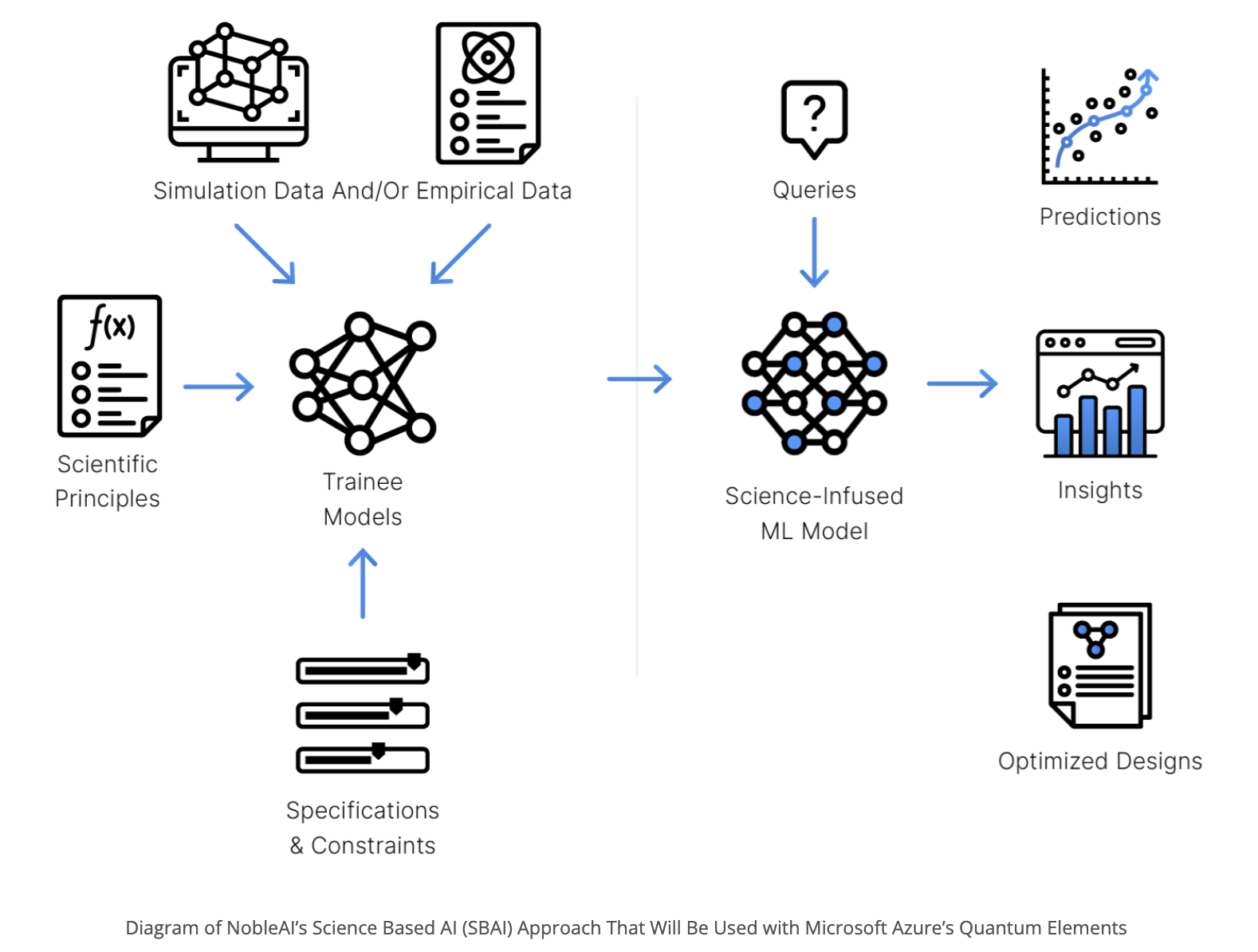
For that very reason, NobleAI—A company which uses AI to deliver actionable insights and reliable predictions to accelerate development and reduce costs of developing new chemicals, materials, and formulations is one of the early users of Microsoft Quantum Elements.

Microsoft has also said that the system has helped some customers speed up their development processes by as much as six months. Microsoft said that BASF, AkzoNobel, AspenTech, Johnson Matthey, SCGC and 1910 Genetics have been testing the system.

Industry leaders BASF and Johnson Matthey have also embraced this paradigm shift, lauding its potential to expedite research approaches and increase efficiency, particularly in sustainable technologies.

The integration of Azure Quantum Elements into Azure’s HPC cloud has enabled Johnson Matthey to accelerate quantum chemistry calculations, unlocking a new frontier for atomic-level predictions. Microsoft’s collaboration with Photonic further reinforces its commitment to a quantum future, offering invaluable tools and insights for tomorrow’s scaled quantum computers.

Moreover, Nadella emphasised the democratising impact, enabling global scientists to design unique molecules for sustainable chemicals, advanced materials, and more. But this is just the beginning. Microsoft’s strides in quantum computing promise to accelerate simulations, and position them at the forefront of a quantum revolution within the Azure ecosystem.

BASF researchers led by Michael Kuehn and Davide Vodola, also use quantum algorithms to examine NTA compound attributes for wastewater treatment using GPUs, achieving a significant leap with 60 qubit simulations on NVIDIA’s Eos H100 Supercomputer using NVIDIA CUDA Quantum, allowing complex quantum circuit simulations with ease.

Elsewhere, CUDA Quantum empowers SUNY Stony Brook’s high-energy physics simulations and Hewlett Packard Labs’ exploration of magnetic phase transitions in quantum chemistry. Additionally, Oxford Quantum Circuits, Quantum Machines, qBraid, and Fermioniq utilise NVIDIA’s Grace Hopper Superchips for quantum endeavours, emphasising the superchips’ ample memory and bandwidth for memory-intensive quantum simulations. These high-performance classical simulations supplement the advancement of quantum computing, revealing intricate physical processes.

Photonic & Microsoft Paving Way for Quantum Networking

Another major announcement was the partnership between Photonic Inc. and Microsoft to pioneer quantum networking capabilities using photonically linked silicon spin qubits. This collaboration aims to enable reliable quantum communications over extended distances, integrating Photonic’s quantum computing expertise with Microsoft Azure Quantum Elements.

The collaboration outlines a roadmap for achieving entanglement between separate quantum devices, developing quantum repeaters, and ultimately delivering a fault-tolerant quantum repeater integrated with Azure cloud services. Photonic’s silicon-based architecture using colour centres and telecom band photons enables computing, networking, and memory functionalities, promising efficient quantum error correction codes.

Stephanie Simmons, Photonic’s founder, anticipates offering scalable and fault-tolerant quantum computing solutions within five years. With significant investments and a commitment to global expansion, Photonic aims to revolutionise digital security, climate modelling, materials development, and pharmaceuticals through quantum computing.

Microsoft’s collaboration with Photonic promises groundbreaking applications and discoveries in various fields, further solidifying its commitment to quantum networking and computing on the Azure platform.

The post Microsoft Supercharges Quantum Computing With AI Integration appeared first on Analytics India Magazine.

Back to Basics Week 3: Introduction to Machine Learning

Back to Basics Week 3: Introduction to Machine Learning
Image by Author

Join KDnuggets with our Back to Basics pathway to get you kickstarted with a new career or a brush up on your data science skills. The Back to Basics pathway is split up into 4 weeks with a bonus week. We hope you can use these blogs as a course guide.

If you haven’t already, have a look at:

  • Week 1: Python Programming & Data Science Foundations
  • Week 2: Database, SQL, Data Management and Statistical Concepts

Moving onto the third week, we will dive into machine learning.

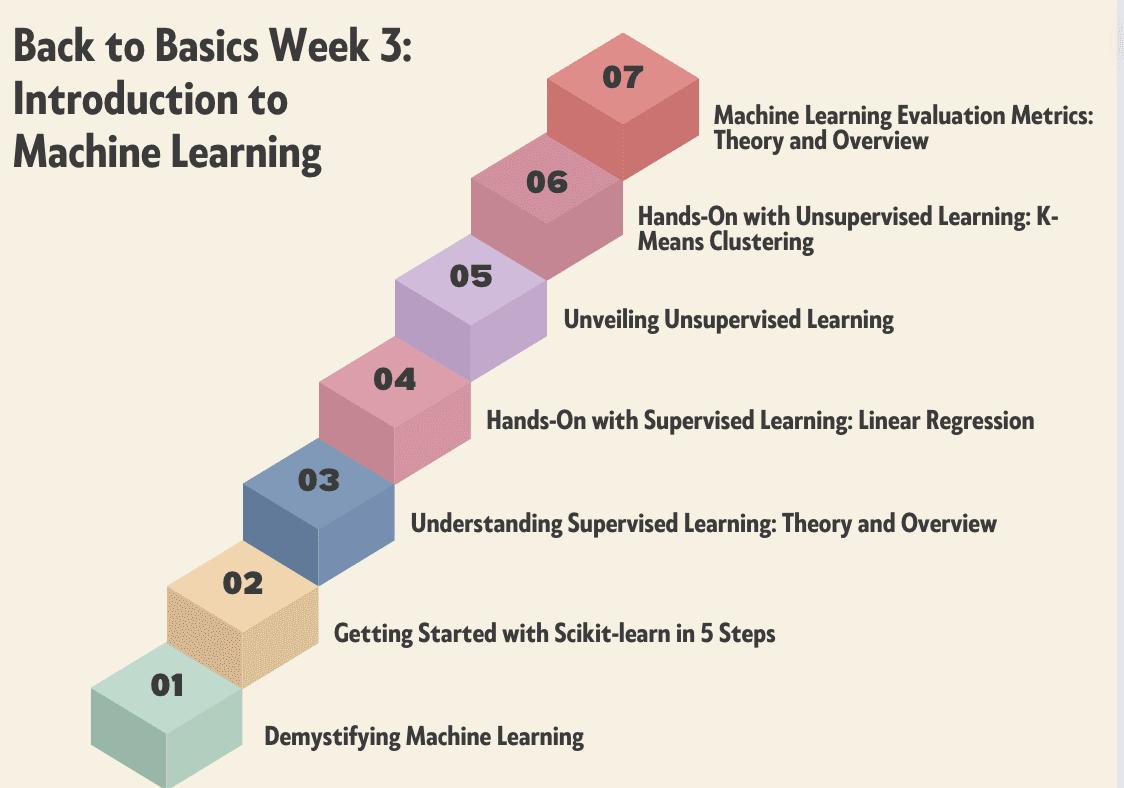
  • Day 1: Demystifying Machine Learning
  • Day 2: Getting Started with Scikit-learn in 5 Steps
  • Day 3: Understanding Supervised Learning: Theory and Overview
  • Day 4: Hands-On with Supervised Learning: Linear Regression
  • Day 5: Unveiling Unsupervised Learning
  • Day 6: Hands-On with Unsupervised Learning: K-Means Clustering
  • Day 7: Machine Learning Evaluation Metrics: Theory and Overview

Demystifying Machine Learning

Week 3 — Part 1: Demystifying Machine Learning

Traditionally, computers used to follow an explicit set of instructions. For instance, if you wanted the computer to perform a simple task of adding two numbers, you had to spell out every step. However, as our data became more complex, this manual approach of giving instructions for each situation became inadequate.

This is where Machine Learning emerged as a game changer. We wanted computers to learn from examples just like we learn from our experiences. Imagine teaching a child how to ride a bicycle by showing it a few times and then letting him fall, figure it out, and learn on his own. That's the idea behind Machine Learning. This innovation has not only transformed industries but has become an indispensable necessity in today's world.

Getting Started with Scikit-learn in 5 Steps

Week 3 — Part 2: Getting Started with Scikit-learn in 5 Steps

This tutorial offers a comprehensive hands-on walkthrough of machine learning with Scikit-learn. Readers will learn key concepts and techniques including data preprocessing, model training and evaluation, hyperparameter tuning, and compiling ensemble models for enhanced performance.

When learning about how to use Scikit-learn, we must obviously have an existing understanding of the underlying concepts of machine learning, as Scikit-learn is nothing more than a practical tool for implementing machine learning principles and related tasks. Machine learning is a subset of artificial intelligence that enables computers to learn and improve from experience without being explicitly programmed. The algorithms use training data to make predictions or decisions by uncovering patterns and insights.

Understanding Supervised Learning: Theory and Overview

Week 3 — Part 3: Understanding Supervised Learning: Theory and Overview

Supervised is a subcategory of machine learning in which the computer learns from the labelled dataset containing both the input as well as the correct output. It tries to find the mapping function that relates the input (x) to the output (y). You can think of it as teaching your younger brother or sister how to recognize different animals. You will show them some pictures (x) and tell them what each animal is called (y).

After a certain time, they will learn the differences and will be able to recognize the new picture correctly. This is the basic intuition behind supervised learning.

Hands-On with Supervised Learning: Linear Regression

Week 3 — Part 4: Hands-On with Supervised Learning: Linear Regression

If you're looking for a hands-on experience with a detailed yet beginner-friendly tutorial on implementing Linear Regression using Scikit-learn, you're in for an engaging journey.

Linear regression is the fundamental supervised machine learning algorithm for predicting the continuous target variables based on the input features. As the name suggests it assumes that the relationship between the dependant and independent variable is linear.

So if we try to plot the dependent variable Y against the independent variable X, we will obtain a straight line.

Unveiling Unsupervised Learning

Week 3 — Part 5: Unveiling Unsupervised Learning

Explore the unsupervised learning paradigm. Familiarize yourself with the key concepts, techniques, and popular unsupervised learning algorithms.

In machine learning, unsupervised learning is a paradigm that involves training an algorithm on an unlabeled dataset. So there’s no supervision or labeled outputs.

In unsupervised learning, the goal is to discover patterns, structures, or relationships within the data itself, rather than predicting or classifying based on labelled examples. It involves exploring the inherent structure of the data to gain insights and make sense of complex information.

Hands-On with Unsupervised Learning: K-Means Clustering

Week 3 — Part 6: Hands-On with Unsupervised Learning: K-Means Clustering

This tutorial provides hands-on experience with the key concepts and implementation of K-Means clustering, a popular unsupervised learning algorithm, for customer segmentation and targeted advertising applications.

K-means clustering is one of the most commonly used unsupervised learning algorithms in data science. It is used to automatically segment datasets into clusters or groups based on similarities between data points.

In this short tutorial, we will learn how the K-Means clustering algorithm works and apply it to real data using scikit-learn. Additionally, we will visualize the results to understand the data distribution.

Machine Learning Evaluation Metrics: Theory and Overview

Week 3 — Part 7: Machine Learning Evaluation Metrics: Theory and Overview

High-level exploration of evaluation metrics in machine learning and their importance.

Building a machine learning model that generalizes well on new data is very challenging. It needs to be evaluated to understand if the model is enough good or needs some modifications to improve the performance.

If the model doesn’t learn enough of the patterns from the training set, it will perform badly on both training and test sets. This is the so-called underfitting problem.

Learning too much about the patterns of training data, even the noise, will lead the model to perform very well on the training set, but it will work poorly on the test set. This situation is overfitting. The generalization of the model can be obtained if the performances measured both in training and test sets are similar.

Wrapping it Up

Congratulations on completing week 3!!

The team at KDnuggets hope that the Back to Basics pathway has provided readers with a comprehensive and structured approach to mastering the fundamentals of data science.

Week 4 will be posted next week on Monday — stay tuned!

Nisha Arya is a Data Scientist and Freelance Technical Writer. She is particularly interested in providing Data Science career advice or tutorials and theory based knowledge around Data Science. She also wishes to explore the different ways Artificial Intelligence is/can benefit the longevity of human life. A keen learner, seeking to broaden her tech knowledge and writing skills, whilst helping guide others.

More On This Topic

  • Back to Basics Week 1: Python Programming & Data Science Foundations
  • Back to Basics Week 2: Database, SQL, Data Management and…
  • Back To Basics, Part Dos: Gradient Descent
  • Free 4 Week Data Science Course on AI Quality Management
  • 8 Ways to Improve Your Search Application this Week
  • This Week in AI, August 7: Generative AI Comes to Jupyter & Stack…

Emmett Shear Says He Became OpenAI’s Interim CEO, “Rapidly and Unexpectedly” 

A lot has been happening at OpenAI, and in the AI world. Just a while back Sam Altman, Greg Brockman and others have joined Microsoft (and more to join soon), while the co-founder of Twitch, Emmett Shear, has been made the interim CEO of the hottest AI startup in the tech world, replacing Mira Murati.

AIM asked Shear as to how he became the CEO of OpenAI, he candidly replied saying, “Rapidly and Unexpectedly.”

It has been a crazy few days for all of us at AIM, even so for OpenAI and Microsoft (to say at least). Shear’s statement embodies the urgency of ensuring smooth operations at the company, alongside the retention talent, and reinforcing trust among its customers, and not to forget the fear around pulling a plug on ChatGPT.

“I want to do everything in my power to protect it and foster its growth,” said Shear, in a X post sharing his experience.

Interestingly, Shear had only a few hours to accept the opportunity. “Today I got a call inviting me to consider a once-in-a-lifetime opportunity: to become the interim CEO of OpenAI. After consulting with my family and reflecting on it for just a few hours, I accepted,” he added.

Shear fits perfectly. The 40-year old American internet entrepreneur and investor somewhat shares a similar philosophy as Altman. He is popularly known for co-founded prominent live video platforms, namely Justin.tv and TwitchTV (which he later sold to Amazon at a whopping $970 million).

Shear plays a role as a part-time partner at the venture capital firm Y Combinator. Notably, he is also a co-founder of Kiko Software, recognised as the first AJAX-based online calendar, which he sold on eBay – a true go-getter in every sense of the word, and not your typical entrepreneur.

Only recently, he resigned from his role as CEO of Twitch due to the birth of his son who is now just 9 months old.

A man with a plan

It has only been a few hours since he was appointed as the interim CEO at OpenAI, and Shear is all about business, and has come up with a 30-days plan already, unlike Murati, who is busy spreading love on X with good intentions, hopefully.

“The stability and success of OpenAI are too crucial to be disrupted by turmoil like this,” remarked Shear. He expressed his commitment to addressing key concerns, acknowledging that “it may take longer than a month to achieve substantial progress.”

The times are turbulent for OpenAI, as a majority of its employees are planning to leave the company following Altman’s departure. Furthermore, the three researchers who left OpenAI have also joined Microsoft’s new AI team.

No drama, only…

To bring OpenAI back on track amid the drama, Shear has a three-point plan of action for the next 30 days. He said that he would hire an independent investigator to dig into the entire process leading up to this point and generate a full report.

On the other hand, shortly after Altman’s firing, Murati expressed her support to team Sam, where she further tried her level best to bring back Altman and Greg Brockman at OpenAI.

However, nobody knows why Murati was replaced from the position of interim CEO. Rumours suggest that she might quit really soon and join them. But, it is highly unlikely as she shares a really close bond with both Microsoft and OpenAI, and the latter needs her more to retain talent.

Meanwhile Shear is also at it, where he plans to reform the management and leadership team in light of recent departures, turning it into an effective force to drive results for our customers.

Further, Shear intends to continue speaking to as many of OpenAI’s existing employees, partners, investors, and customers as possible, taking thorough notes, and sharing the key takeaways.

Shear ♥️ Sam

Shear is also empathetic. “I have nothing but respect for what Sam and the entire OpenAI team have built,” wrote Shear. Furthermore, he noted that the process and communication around Sam’s removal have been “handled poorly” damaging OpenAI’s trust.

Most importantly, he mentioned that the board did not remove Altman over any specific disagreement on safety; their reasoning was completely different.

It is interesting to note, if not Shear, who else were the board considering next – maybe Andrej Karpathy (who knows). But, that conversion is for another day. “I’m not crazy enough to take this job without board support for commercialising our awesome models,” he added.

Shear also aligns with Microsoft’s vision, where he said: “Our partnership with Microsoft remains strong, and my priority in the coming weeks will be to ensure we continue to serve all our customers well.”

Microsoft echoed similar sentiment, with chief Satya Nadella saying, “We look forward to getting to know Emmett Shear and the new leadership team at OpenAI and working with them.”

The future of OpenAI is highly uncertain at this point in time, and there is no better leader than Shear. It is surely going to be exciting times for OpenAI and the team – who have given nothing but love (ChatGPT and powerful AI models (like GPT-4 Turbo and GPT-5 in the making) – all for the betterment of humanity, and changing the way we communicate with machines.

The post Emmett Shear Says He Became OpenAI’s Interim CEO, “Rapidly and Unexpectedly” appeared first on Analytics India Magazine.

Sam Altman won’t return as OpenAI’s CEO after all

Sam Altman won’t return as OpenAI’s CEO after all Kyle Wiggers 13 hours

Capping off a tumultuous weekend at OpenAI that culminated in investors — and a contingent of employees — attempting to convince the company’s board to hire back former Y Combinator president Sam Altman after firing him on Friday, Altman won’t be returning as CEO, according to a report in The Information.

Citing an internal memo sent by Ilya Sutskever, board director and one of OpenAI’s co-founder, Altman has decided to walk away from negotiations — at least for the time being. As the search for a new permanent CEO continues, OpenAI has appointed Emmett Shear, the co-founder of video streaming site Twitch, as interim CEO — replacing Mira Murati, who held the position for only two days.

The board was won over by Shear’s concern over the existential threats that AI presents, Bloomberg reports, as well as his experience in leading large engineering groups while at Twitch.

Murati was said to be strongly advocating for Altman and plotting a way to hire him in some capacity even as the six-member board vetted potential new CEOs, which could have something to do with her replacement. We’ve reached out to OpenAI for comment and will update this piece if we hear back.

first and last time i ever wear one of these pic.twitter.com/u3iKwyWj0a

— Sam Altman (@sama) November 19, 2023

This latest development threatens to worsen an already-precarious situation for OpenAI, whose board faces pressure from all sides to change course after firing Altman with little input from some of its largest stakeholders.

The board’s decision Friday evening to remove Altman — and demote OpenAI president and co-founder Greg Brockman, who’s since resigned, from his position as board chairman — reportedly infuriated Satya Nadella, the CEO of Microsoft, a major OpenAI backer and partner. (Nadella was said to be playing a key mediating role between the board and Altman and pledged to support Altman no matter the outcome.) OpenAI investors — in particular Tiger Global, Sequoia Capital and Thrive Capital — had recruited Microsoft’s aid in exerting pressure on the board to bring Altman and Brockman back while contemplating a lawsuit against the board’s members.

Meanwhile, OpenAI top brass and rank-and-file aligned with Altman called it quits. Three senior OpenAI researchers left after Brockman, including the director of research Jakub Pachocki and head of preparedness Aleksander Madry. Others threatened to walk out if both Altman and Brockman weren’t reinstated.

So what kicked off all the chaos? Namely, a clash of philosophies.

Sutskever said during a company all-hands meeting on Friday that he felt removing Altman was “necessary” to protect OpenAI’s mission of “making AI beneficial to humanity,” suggesting Altman’s commercial ambitions for the company were beginning to unsettle the board’s kingmakers. Reports over the weekend confirmed as much; Sutskever was said to be “infuriated” by a number of announcements at OpenAI’s first annual developer conference, DevDay, like custom GPTs that OpenAI has said may one day run autonomously

Altman reportedly demanded “significant” managerial changes at OpenAI — and a new board of directors — as a condition of returning; The Wall Street Journal reports that Altman told associates it was “ridiculous” that the major shareholders had no say in OpenAI’s governance. Bret Taylor, the co-CEO of Salesforce, was among those being considered for the new board, allegedly, along with a Microsoft-aligned member (or alternatively board observer).

Bloomberg’s Emily Chang reports that Microsoft isn’t pleased with Sunday night’s outcome — and that’s not exactly surprising. Instability at OpenAI drove Microsoft shares down 1.7% on Friday, wiping out nearly $47 billion in market value.

Many employees aren’t either. Dozens of staffers internally announced they’d quit OpenAI late Sunday night, The Information reported

Meta Wants to Build Generative AI But Not Responsibly

Meta has been grabbing headlines, and not the good kind. In the recent turn of events, the company has done a little reshuffle, relocating their Responsible AI team to join the generative AI crew. The move comes off as misjudged given the series of unfortunate events that have unfolded at Meta in the past few months.

Their social platforms are causing all sorts of headaches – from tagging some Palestinian Instagram users with the label “terrorist” to WhatsApp’s AI whipping up wacky sticker with certain prompts, and even Instagram’s algorithms unintentionally helping folks stumble upon child sexual abuse materials. And now, they’ve done a little shuffle,

In the grand scheme of Meta’s big layoffs back in May, they pulled the plug on a fact-checking project that had taken a good six months to put together. Insider info suggests that it wasn’t the smoothest move.

David Harris, a senior product lead in charge of the Metaverse project, spilled the beans in a June blog post. He painted a picture of concern, wearing his AI researcher hat, and laid it out in The Guardian. “Sadly,” he said, “the civic integrity team I was part of got the boot in 2020, and with all these rounds of layoffs, I’m worried the company’s ability to combat these issues has taken a hit.”

This team’s been through the wringer before, with a reshuffle earlier this year that left the Responsible AI team looking more like a ghost of its former self, according to Business Insider. Reports even hinted that the team, born in 2019, had limited say-so and had to jump through hoops of stakeholder negotiations to get anything done. Not to mention, last September, Meta bid farewell to its Responsible Innovation Team, a group meant to tackle “potential harms to society.”

All About Generative AI

Meta’s decision to disband its Responsible AI team could be a bit of a tricky move. On the one hand, having a separate crew for Responsible AI means they can do their thing independently from the folks creating the tools they need to check.

But here’s the rub – these researchers tend to jump into action a tad too late. If they were in on the game early in the development process, they could catch some of the problems right out the gate.

Take, for instance, Meta’s brainchild, Galactica – a ChatGPT-like model for scientific research. It hit the scene, but three days later, it was lights out. Why? Well, turns out, it couldn’t tell the difference between truth and make-believe. That’s a bit of a hiccup for a language model meant to whip up scientific text. People discovered it was cooking up fake papers, throwing in real authors’ names, and even cranking out wiki articles on the interstellar history of bears.

As Meta keeps churning out these AI models, most of the Responsible AI team is making a move to join Meta’s generative AI squad. The company’s been slashing costs left and right, hitting up departments all over, including the responsible team. But Meta’s eyes are still locked on the prize – they’re all about that generative AI game.

Year of Inefficiency

At the start of 2023, Mark Zuckerberg, the head honcho at Meta, said “Our management theme for 2023 is the ‘Year of Efficiency’ and we’re focused on becoming a stronger and more nimble organisation,” as part of the release of Meta’s fourth-quarter earnings report.

But then things got a bit rocky. They started laying off a bunch of people, there was the famous LLaMA leak and now the splitting of people building AI responsibly.

For a long time, Meta was like a superhero in Silicon Valley when it came to safety and ethics. But in May, a bunch of people got the boot in a big company shake-up. Former trust and safety employees felt like their jobs were always on the line, and their managera didn’t always get how important their work was for Meta’s success.

Adding to the brouhaha, the recent big switch-up of teams dealing with safety and AI ethics shows how far companies are ready to go to keep Wall Street happy and meet their demands for efficiency.

The post Meta Wants to Build Generative AI But Not Responsibly appeared first on Analytics India Magazine.