A backyard factory: How robots empower you to create your own products

female-techgettyimages-1409088189

For most of the 20th century, manufacturing was primarily the domain of big factories, big machines, and big money. Giant production lines stamped out cars, ketchup, kettles, and Kevlar. Creating a product involved a very expensive and complex tooling-up process, a sunk cost that would eventually be paid back through the volume of sales that the manufacturing process made possible.

Contrast that with how most things were produced before the Industrial Revolution. Yes, there were some very large operations (shipbuilding and the pyramids come to mind). But most tasks, like making clothes or producing milk, were done in cottages, on the farm, or in very small merchant shops. These were the cottage industries of yore.

There was value in those tiny cottage industries, not the least being the self-determination of the craftspeople creating products. They didn't have to rely on giant corporations, huge factories, or focus groups to get something done. On the other hand, the complexity and capabilities of the products produced in cottage industries were, of necessity, limited by the tools and resources to which small merchants and families had access.

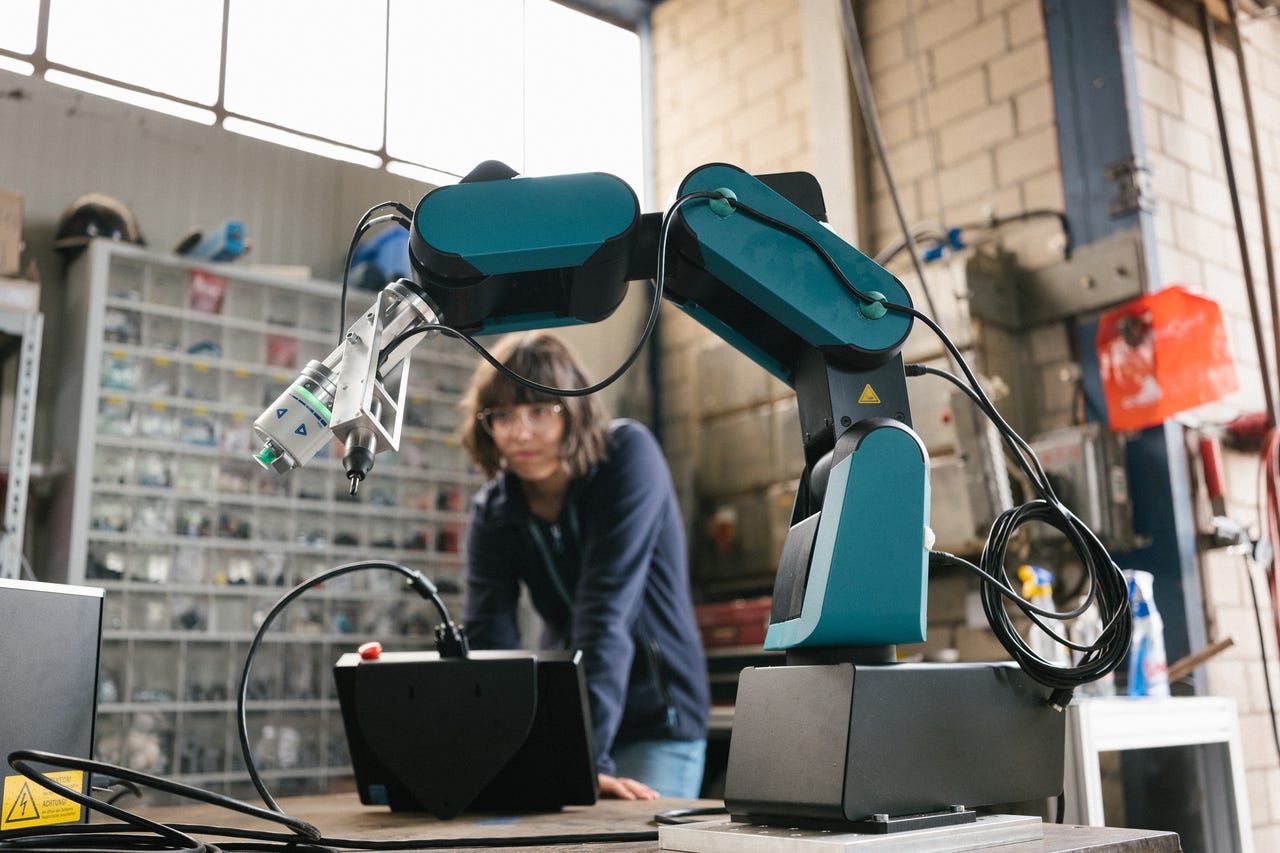
In the last decade or so, we've had a bit of a return to the cottage industry. Only this time, robots are helping out. The result: Prototypes, individual products, and short production runs are churning out products created by individuals and small groups, yet having the capability, quality, and complexity of products that previously required millions of dollars of investment, large factories, and very large workforces.

In this article, we'll explore desktop fabrication, and how a squad of small robots makes it possible for anyone to create their own products with an upfront investment that's often less than the cost of a cheap used car.

The growth of manufacturing and industry

Large-volume manufacturing as an active component of society traces its roots primarily to the Industrial Revolution of the late 18th and early 19th centuries. At its core, the Industrial Revolution was that historical juncture when the primary instruments of labor transitioned from organic to mechanical. In other words, instead of animals and people driving the rotational actions that transformed raw materials into parts and finished goods, machines did the work.

Two key factors initially made this possible: better metallurgy and the steam engine. Stronger metals (steel and iron, mostly) enabled machines to withstand the pressures and loads that powered processes required. The steam engine provided the power, often in substantial multiples over what a few horses could accomplish.

These two innovations led to big factories hosting big machines that cut, pressed, ground, and fused raw materials into forms usable in products. The steam engine combined with robust metallurgy also led to rail transport, which enabled goods to be transported farther and faster, and in greater volume.

Also: Want to succeed in software? Look beyond Silicon Valley

These technologies also transformed farm work, where innovations in farming techniques and machinery, like the seed drill and the threshing machine, increased agricultural productivity. This allowed fewer people to produce more food, freeing up labor for the industrial sector.

As we moved into the 20th century, we began to harness electricity and deliver it to offices and homes. The internal combustion engine supplanted the steam engine for vehicles, and the rest is history.

The key thing about the Industrial Revolution — and the factories enabled by it — was the scale. Everything was big. Really, really big. At their start, factories along with production lines, employed a tremendous number of people to operate the machinery and assemble parts into components, and components into products.

As the cost of workers increased in the mid-to-late 20th century, many American companies sought to reduce costs and outsourced production to countries where the cost of living was lower. By the end of the 20th century and this new millennium, robots replaced much of that manual labor, which was getting more expensive internationally. The outsourced factories and their more expert technicians remain mostly outside of the US.

How traditional manufacturing can squelch innovation

One of the biggest challenges with traditional manufacturing is that you can't build just one. It takes a tremendous expense and effort to tool up a factory, even a robot-driven one, to make new parts. Unfortunately, that means that getting started with a new product can be very, very expensive.

This was the problem my buddy Jim and I had back in the 1990s. We're both engineers and we decided that what the world needed was a simple, programmable robot that could be controlled by a PC. To make our prototype, we disassembled a radio-controlled toy tank, connected the radio to the computer, and hooked up momentary-contact switches as sensors. By the time we were ready to demonstrate it to investors, it could map a room all on its own. Pretty advanced tech for the Windows 95 era.

But we ran into an issue. Plastic fabrication required casting molds even if you wanted only a limited number of units. This was, after all, in the days before 3D printing. Those molds, one-off patterns that were used to cast the body of the device, cost upward of $100,000 each — and we needed at least four of them. That cost, the tooling cost before we even built one unit, was too expensive and too big a risk. So we never went into the robotics business.

Also: What's inside Gewirtz's home office? 20 years of refinement and evolution

By the way, had we been able to order the tooling, it would have taken six months to a year for it to be completed. That's how long milling those patterns by hand took, especially when there were fairly few machinists with the skills necessary to create prototype molds. And, had we made any mistake whatsoever in our design, we'd have had to spend hundreds of thousands of dollars more and wait another six months or so for the revision.

That was the world of manufacturing and prototyping before the easy availability of desktop fabrication robots.

If we were doing that project today, we could do it with a $20 Arduino, a $50 Raspberry Pi, and a $200 3D printer. And we could produce in small volumes simply by adding more 3D printers. For well under the cost of an iPhone 15 Pro Max, we could have made 100 robots, and done it in a matter of a few weeks — not half a year to a year.

Kickstarter, which helps small innovators raise money for new products and projects, requires any project that "involves manufacturing and distributing something complex, like a gadget, to show backers a prototype of what they're making." In 1995, Jim and I could never have met that requirement because the mold costs alone would have been prohibitive. But with 3D printers, such a prototype would cost as little as a few 100 dollars.

The dawn of desktop fabrication robots

Traditional machine shops have been in decline for years, especially in the US. In part, that's due to the exporting of skills to other countries, and part is due to the rise of more modern technologies, like robotic-based fabrication. While robots have certainly transformed large factories, they are also making it possible to create very sophisticated production facilities in spare bedrooms, family garages, and backyard sheds.

Most smaller-scale robotic manufacturing devices will fit on a desk, which is why we call this category desktop fabrication. In fact, most prosumer-level 3D printers will fit on the corner of a desk.

Also: The best cheap 3D printers under $300

There are two main categories of desktop fabrication tools: additive and subtractive. Additive builds up objects by adding material, while subtractive cuts away material to create an object.

The most common additive fabrication technology is 3D printing. Most 3D printers use plastic, but there are also 3D printers that use metal, concrete, and even chocolate. With 3D printing, objects are built up layer by layer. The typical 3D printer uses a spool of filament (plastic thread), heats up that filament, and presses it onto a build plate or previously extruded layers. The resultant layers bond to each other, creating a finished plastic object.

When it comes to subtractive technology, we're looking at machines that remove material, usually by cutting or grinding. The CNC is one such machine. It cuts away wood or metal according to a set of instructions.

CNC stands for computer numerical control and while the term "CNC" typically refers to a single type of machine, all desktop fabrication devices use computer numerical control, even though many (like 3D printers and vinyl cutters) aren't called CNCs.

Also: Generative AI and machine learning are engineering the future in these 9 disciplines

In traditional factories, one of the most powerful applications of desktop fabrication tools is using them to create jigs and fixtures for manufacturing. Imagine you have an expert engineer in Stockholm, but a manufacturing facility in Shenzhen.

Before computer-controlled fabrication, if you wanted to get a jig designed by the engineer in Stockholm to the manufacturing floor in Shenzhen, you'd have to physically pack and send it. Not only can that be expensive and slow, it doesn't allow for rapid iteration. With CNCs or 3D printers, the design file can be emailed, the jig printed or cut on site, the test results returned to the engineer, and a new version designed and sent back to the factory — all in a matter of hours.

How I use my army of tiny factory robots

My wife and I have long worked from home, and have set up portions of our house as offices, four separate filming studio locations, a workshop, crafting spaces, and a Fab Lab. To give you an idea of what these devices can do, I'll run down how I have used them for projects.

For me, the real power is that you can design a project in a CAD program. While each CAD program has a learning curve, if you can create a PowerPoint, you have the basic skills to get started with 3D design. Since my skills lean far more toward computer use and my shop skills are, at best, rudimentary, I've found it much easier to rely on fabrication robots to do the hard work.

All told, in the seven years since ZDNET's editor-in-chief encouraged me to start exploring 3D printing, I've designed and built 176 projects. Obviously, we don't have time to survey them all, so we'll look briefly at some of my favorites and show how each of the robots helped make them possible, starting with 3D printers.

Also: This Anker 3D printer blew me away and it's perfect for beginners

3D printers: I have two kinds of 3D printers, ones that deposit layers of filament to build up an object and ones that use light to harden resin, which then build up objects layer by layer.

I have used filament 3D printers for many different projects. As one of my first designs, I built a mount that would hold my remote controls on the back of my TV. I built a rolling pin holder that mounted to kitchen shelves for my wife. I built a mailbox flag to let our mail carrier know when to pick up mail. I built custom storage brackets to add shelves in my workshop.

I built special brackets for my recording studio. And I designed and then manufactured more than 100 doll stands for my wife's doll clothes pattern company. Right now, I'm making custom dust collection adapters for every one of my tools.

I don't use the resin printers quite as much. They produce smaller objects, but with much greater detail. One of their biggest uses is creating miniature figures for gaming. Since I don't do that, I really haven't had as much use for them, except to learn about them and test them for work.

CNC machine: I have one tiny CNC machine about the size of a 3D printer. Then I have a machine that's about 4-foot square. That's the one I use most. This latter machine uses a spinning-cutting bit that removes material. So far, it's been used on three projects. I used it to make a pull-out drawer for a shelf. I also used it to make four identical storage cases for parts. Then I used it to make a material storage rack for crafting materials. Each of these last two projects required a level of precision beyond my woodworking skills, but the CNC just batched them out with little or no effort.

Laser cutter: A laser cutter cuts using a laser. Actually, it cuts wood, plastic, and leather up to about a 1/4-inch thick. It engraves on a wide range of substances, including metal and slate. I used it to make gift coasters, office signs for my editors, and lots and lots of labels for my tool and parts storage. For the first two, I used wood. For the labels, I used a plastic sheet that was blue on top and white below, allowing me to create white letters on a blue backdrop.

Also: Making a maker: IT pros, meet your shop tools

Vinyl cutter: Crafters may have heard of the Cricut, a computer-controlled device that guides a blade, using it to cut paper, cloth, leather, and vinyl. It's used a lot in sign-making. My wife uses it for custom cards and to create notebook covers.

Each of these devices uses a computer to move a processing head left and right, and sometimes up and down. The difference is whether that processing head extrudes molten plastic, cuts with a knife, or grinds with a spinning blade.

Next, I'll spotlight a few folks who have set up full-fledged manufacturing operations in their garages or backyard sheds.

How DIYers are building small factories in their homes and garages

There are many other machines that do many other types of computer-controlled operations. For example, an engineer by the name of Pete Rondeau uses a CNC to cut a metal controller case, and also uses a machine that picks and places extremely tiny electrical components onto a circuit board. His 150-square-foot manufacturing space is his backyard shed.

Andy Bird uses the CNC machine in his two-car garage to fabricate items he sells at craft shows and for custom clients. In this video, he shows how he used his CNC machine to cut out 87 bourbon smokers (a device that infuses bourbon with flavored smoke). He also used a laser to engrave a map of Kentucky on each smoker.

Also: Glowforge Pro review: Laser cutting and engraving for serious makers and small businesses

Travis Lathrop is a mechanical engineer who took on a very difficult challenge: design a dust collection adapter for a miter saw. Miter saws spew out a tremendous amount of sawdust. Each brand and model of miter saw is different, and they all spew dust in their own way. Lathrop used CAD and a 3D printer to solve that problem and sold 3D printed adapters to miter saw users. At the time of filming this video, he had just bought his 10th 3D printer. His printers were scattered throughout his house. He has since rented an office and runs his ever-growing print farm from there.

Sam Clark has built a homestead in North Carolina, where he operates his SamCraft YouTube channel from a shed on his property. One of his more popular products is a set of engraved slate coasters. In this video, he shows how he uses a laser cutter to build a jig for engraving the coasters, and then shows how he uses the laser to engrave the actual coasters themselves.

Of course, CNCs, laser cutters, and 3D printers aren't the only computer-controlled robotic devices you can set up in your garage to start a production business. But they have become fairly inexpensive, reasonably easy to set up, run off of household power, and can accomplish some very big projects.

Democratizing the means of production

A little over a century ago, it took the wealth of "robber barons" like John D. Rockefeller (oil industry), Andrew Carnegie (steel industry), or Cornelius Vanderbilt (railroads) to build factories and launch industries.

Just a handful of folks could afford to build and deploy the tools, factories, and infrastructure, which in turn meant that they had an outsized influence on the labor force, who used those instruments of labor to create goods and services.

Large factories still exist, of course. Before the pandemic, Foxconn employed 200,000 workers just to make iPhones, and that was for only half of the world's iPhone supply. They've been slowly rehiring since the pandemic entered its more endemic phase, and Apple has since moved some of its manufacturing to other countries.

But, as we've seen, it's also now possible to do volume manufacturing with a workforce of one or two humans and a few robotic helpers.

Also: From robots to XR: How 5G is unleashing next-gen manufacturing

It also used to be that the how-to knowledge for completing complex tasks was kept close to the vest among guilds and tradespeople. If you weren't apprenticed to someone with the skills, you had no chance of learning how to do some of the more complex tasks required to make things. But with YouTube, that knowledge has also been democratized, and if you want to learn how to do just about anything, you're a simple search string away.

So here we are. Specialized knowledge is no longer locked away. Robotic fabrication makes it possible to prototype and then manufacture items that are as good as anything produced in much bigger factories. In terms of financial cost, the barrier to entry is low.

All that's required now are design skills, motivation, creative thinking, and determination. That opens all sorts of possibilities to anyone with the will to succeed.

So what are you going to produce? Let us know in the comments below.

You can follow my day-to-day project updates on social media. Be sure to subscribe to my weekly update newsletter on Substack, and follow me on Twitter at @DavidGewirtz, on Facebook at Facebook.com/DavidGewirtz, on Instagram at Instagram.com/DavidGewirtz, and on YouTube at YouTube.com/DavidGewirtzTV.

Robotics

A timeline of Sam Altman’s firing from OpenAI — and the fallout

A timeline of Sam Altman’s firing from OpenAI — and the fallout Kyle Wiggers 11 hours

In a dramatic turn of events late Friday, ex-Y Combinator president Sam Altman was fired as CEO of AI startup OpenAI, the company behind viral AI hits like ChatGPT, GPT-4 and DALL-E 3, by OpenAI’s board of directors. Then, the company’s longtime president and co-founder, Greg Brockman, resigned — as did three senior OpenAI researchers. And the fallout continues.

Tip TechCrunch

Do you work at OpenAI and know more about Sam Altman’s departure? Get in touch with TechCrunch.

It’s a fast-moving situation that we’re still trying to get to the bottom of. No doubt more will become clear as time goes on. To make it easier to follow all that’s happened in the meantime, though, we’ve put together a timeline; we’ll do our best to keep it current.

Timeline of Sam Altman’s firing from OpenAI

November 16

Ilya Sutskever schedules call with Altman

According to a post on X (formerly Twitter) from Brockman, Ilya Sutskever, the chief scientist at OpenAI and a co-founder, texted Altman on Thursday evening about scheduling a Friday noon call.

Sam and I are shocked and saddened by what the board did today.

Let us first say thank you to all the incredible people who we have worked with at OpenAI, our customers, our investors, and all of those who have been reaching out.

We too are still trying to figure out exactly…

— Greg Brockman (@gdb) November 18, 2023

Murati told of Altman’s firing

Brockman alleges that Mira Murati, OpenAI’s CTO and now interim CEO, was informed on Thursday night that Altman would be fired.

November 17

Brockman demoted

Brockman says he got a text from Sutskever shortly after noon on Friday asking for a quick call. After sending a Google Meet link, Brockman was told that he was being removed from the board as chairman “but was vital to the company and would retain his role” as president, and that Altman had been fired.

Altman’s firing publicly announced

OpenAI published a post on its blog announcing the executive shake-up. The company’s management team was aware shortly after.

i loved my time at openai. it was transformative for me personally, and hopefully the world a little bit. most of all i loved working with such talented people.

will have more to say about what’s next later.

🫡

— Sam Altman (@sama) November 17, 2023

All-hands meeting

OpenAI held an all-hands meeting Friday afternoon during which Sutskever defended Altman’s ouster. He dismissed suggestions that pushing Altman out amounted to a “hostile takeover,” and claimed that it was necessary to protect OpenAI’s mission of “making AI beneficial to humanity.”

Microsoft releases a statement

Satya Nadella, the CEO of Microsoft, a major investor in — and partner with — OpenAI, published a statement about Altman’s firing:

“As you saw at Microsoft Ignite this week, we’re continuing to rapidly innovate for this era of AI, with over 100 announcements across the full tech stack from AI systems, models and tools in Azure, to Copilot. Most importantly, we’re committed to delivering all of this to our customers while building for the future. We have a long-term agreement with OpenAI with full access to everything we need to deliver on our innovation agenda and an exciting product roadmap; and remain committed to our partnership, and to Mira and the team. Together, we will continue to deliver the meaningful benefits of this technology to the world.”

Brockman quits

Brockman announced his resignation from OpenAI, citing “today’s news.” After sending a memo internally, he published the text on X.

After learning today’s news, this is the message I sent to the OpenAI team: https://t.co/NMnG16yFmm pic.twitter.com/8x39P0ejOM

— Greg Brockman (@gdb) November 18, 2023

Senior OpenAI researchers resign

Three senior OpenAI researchers resign after Brockman, including the director of research Jakub Pachocki and head of preparedness Aleksander Madry.

November 18

“Not … in response to malfeasance”

In an internal memo obtained by Axios sent Saturday morning, OpenAI COO Brad Lightcap said yesterday’s announcement “took [the management team] by surprise” and that management had had “multiple conversations with the board to try to better understand the reasons and process behind their decision.” Discussions were ongoing as of Saturday morning, per the memo.

“We can say definitively that the board’s decision was not made in response to malfeasance or anything related to our financial, business, safety, or security/privacy practices,” Lightcap added. “This was a breakdown in communication between Sam and the board … We still share your concerns about how the process has been handled, are working to resolve the situation, and will provide updates as we’re able.”

OpenAI’s funding in jeopardy

The planned sale of OpenAI employee shares that would value the startup at about $86 billion could be in jeopardy. The Information, speaking to three sources formerly with the company, reports that they no longer expect the sale — led by Thrive Capital — to happen, or, if it does, to come with a lesser valuation because of the recent turn of events.

Altman planning new venture

Altman has been telling investors that he’s planning to launch a new venture, according to The Information. Brockman is expected to join the effort — whatever form it takes. (Possibly an AI chip startup.)

i love you all.

today was a weird experience in many ways. but one unexpected one is that it has been sorta like reading your own eulogy while you’re still alive. the outpouring of love is awesome.

one takeaway: go tell your friends how great you think they are.

— Sam Altman (@sama) November 18, 2023

Investors pushing for Altman’s return

Investors — furious at the turn of events — are reportedly exerting pressure on OpenAI’s board to reinstate Altman, going so far as to recruit Microsoft. Nadella is said to be sympathetic.

Board agrees to reverse course — in principle

The Verge reports that the board agreed in principle to resign and to allow Altman and Brockman to return. It waffled, however, missing a deadline yesterday by which many OpenAI staffers were set to leave the company. Altman is said to be ambivalent about coming back and asking for “significant” governance changes.

November 19

Altman to meet at OpenAI HQ

According to The Information, Altman is expected to meet at OpenAI’s San Francisco headquarters as executives at OpenAI push to have him reinstated as CEO. Brockman was invited to join — but it’s unclear whether he’ll take execs up on that invitation.

Board negotiations hit a snag

Bloomberg reports that Lightcap and Murati, among others, are pushing the board to reinstate Altman. But unsurprisingly, the directors are resisting. As of midday Sunday, the board hadn’t resigned out of concern over who could replace them, and were vetting candidates. One possible new addition could be Salesforce co-CEO Bret Taylor.

Altman out, Shear in

Altman won’t be returning as CEO, according to a report in The Information citing an internal memo sent by Sutskever. As the search for a new permanent CEO continues, OpenAI has appointed Emmett Shear, the co-founder of video streaming site Twitch, as interim CEO — replacing Murati.

November 20

Altman joins Microsoft

Sam Altman, Greg Brockman and colleagues announce that they’ll join Microsoft to lead a new AI research team. Nadella leaves the door open to other OpenAI staffers, saying that they’ll be given the resources they need should they choose to join.

Sutskever’s mea culpa

Sutskever publishes a post on X suggesting that he regrets his decision to remove Altman and that he’ll do everything in his power to reinstate Altman as CEO.

I deeply regret my participation in the board's actions. I never intended to harm OpenAI. I love everything we've built together and I will do everything I can to reunite the company.

— Ilya Sutskever (@ilyasut) November 20, 2023

Employees threaten to resign

Nearly 500 of OpenAI’s roughly 770 employees — including, remarkably, Sutskever — publish a letter saying that they might quit unless the startup’s board resigns and reappoints the ousted Altman. Later Monday, that number climbed to over 650.

5 Best Black Friday Sales for AI Tools

Welcome to the most awaited Black Friday event of the year, where cutting-edge AI tools meet unbeatable deals! As the tech world buzzes with excitement, we bring you a curated selection of the finest AI tools and applications, all at jaw-dropping discounts. Whether you're a developer, a business owner, or an AI enthusiast, our Black Friday sales offer the perfect opportunity to upgrade your toolkit with the latest in artificial intelligence technology. From sophisticated machine learning platforms to innovative automation tools, we have something for everyone. Dive into the future of technology this Black Friday week and empower your projects with the best AI solutions on the market – all at prices that are too good to miss!

1. Scalenut – Writing Generator

Unlock Your SEO Potential with ScalenutUnlock Your SEO Potential with Scalenut
Watch this video on YouTube

Scalenut is essentially an all in one marketing tool and is designed to scale. It enables you to quickly and get the entire keyword plan for your niche and to generate a content management strategy to dominate these terms. The software is divided into 4 sections:

Research – Uncover insights and build a strategy that works by getting all the insights and semantic key terms you need to outpace your competition.

Create – Write SEO content that ranks by using the most advanced versions of NLP and NLU (Natural Language Processing & Natural Language Understanding). It offers real-time optimization based on SERP statistics, and offers content that can deliver.

Optimize – Get real-time feedback on where your content stands with a dynamic SEO score. Improve on the go, no more revisions!

Marketing Copy – Write persuasive copy that brings conversions with 40+ AI copywriting templates. This includes the following:

  • Product descriptions
  • Website copy
  • Copywriting Frameworks
  • Email Copyrighting

Black Friday Sale:

Dates: November 20 to November 31, 2023

Sale: 60% lifetime discount on all annual plans, plus 3X your limits.

Discount Code: No code is necessary, discount automatically applied with this link.

Terms: The discount is applied automatically when you subscribe to an annual plan, no codes are necessary.

Read our Scalenut Review or visit Scalenut.

2. Pictory – Video Generator

Pictory Full DemoPictory Full Demo
Watch this video on YouTube

Pictory is an AI video generator that enables you to easily create and edit high-quality videos. One of the best aspects of the tool is that you don’t need any experience in video editing or design.

You start by providing a script or article, which will serve as the base for your video content. For example, Pictory can turn your blog post into an engaging video to be used for social media or your website. This is a great feature for personal bloggers and companies looking to increase engagement and quality. Since it is based in the cloud, it works on any computer.

Pictory also allows you to easily edit videos using text, which is perfect for editing webinars, podcasts, Zoom recordings, and more. It’s simple to use and takes just minutes before delivering professional results that help you grow your audience and build your brand.

Another great feature of Pictory is that you can create shareable video highlight reels, which proves useful for those looking to create trailers or share short clips on social media. Besides these great features, you can also automatically caption your videos and automatically summarize long videos.

Here are some of the main features of Pictory:

  • Video based on articles or scripts
  • Edit videos using text
  • Create shareable video highlight reels
  • Automatically caption and summarize videos

Black Friday Sale:

Dates: November 13 to November 30, 2023

Discount Code: Claim 50% off Annual Plans: uniteaisave50

Terms:

  • Applicable to new customers on a free plan or free trial
  • Applicable to existing users who are upgrading their plan monthly>annual
  • Applicable to Existing users who are upgrading from one annual plan to another
  • Upgrades cannot be stacked upon an existing annual plan.
  • Upgrades from Annual Standard > to a higher plan will not offer prorated refunds on any remaining credit from the previous plan

Read our Pictory Review or visit Pictory.

3. Semrush – SEO & SEM Tools

SEMrush OverviewSEMrush Overview
Watch this video on YouTube

Semrush is an entire suite that enables you to perform content marketing campaigns, SEO, social media marketing, analytics, PPC, and much more. Its standout feature is its position tracker, which provides businesses with a way to track how they rank against other sites when it comes to keyword usage.

The AI marketing tool also offers a Content Marketing Toolkit that enables you to perform topic searches, which provides insight into what is trending. You can then create content marketing plans based on this information.

Here are some of the top features of Semrush:

  • Position tracking that shows you ranking for targeted keywords
  • On-page SEO
  • 7 tools aimed at competitor analysis
  • Social media management and content marketing

Black Friday Sale:

Dates: November 19 to December 1, 2023

Sale: 30 % off Annual PRO s 0r 30% off Annual GURU.

Discount Code: No Code Necessary with this link.

Terms: The discount is applied automatically when you subscribe to an annual plan, no codes are necessary.

4. GetResponse AI – Email Marketing

AI Email Generator: A Step-by-Step TutorialAI Email Generator: A Step-by-Step Tutorial
Watch this video on YouTube

GetResponse is at the forefront of email marketing innovation, incorporating the sophisticated GPT technology. This tool is a game-changer for businesses and marketers struggling with creating compelling email content. It addresses the core challenges of email marketing, such as crafting engaging subject lines and generating content that resonates with specific audiences.

What makes the GetResponse AI Email Generator particularly noteworthy is its range of intelligent features. It offers AI-optimized subject lines that are designed to boost open rates by capturing the recipient's attention immediately. The generator also excels in creating industry-specific content, ensuring that each email is tailored to the unique trends and keywords of your business sector.

The tool simplifies the email creation process significantly. Users can define their email goals, choose an industry and tone, customize the layout, and then review and send their AI-crafted emails. This streamlined process is not only user-friendly but also highly efficient, saving valuable time and resources.

By leveraging the GetResponse AI Email Generator, businesses can harness the power of AI to enhance their email marketing strategies. This leads to not just time savings, but also the creation of more engaging, relevant, and effective email campaigns that resonate with the audience and drive conversions.

Key Features:

  • AI-Optimized Subject Lines: Leverage AI to create subject lines that increase open rates.
  • Industry-Specific Content Creation: Generate relevant and engaging emails based on industry trends and keywords.
  • User-Friendly Email Creation Process: Easily define goals, select industry and tone, and customize design to create complete email campaigns.
  • Resource Efficiency: Save time and enhance the quality of your emails with AI-powered content suggestions.

By integrating the GetResponse AI Email Generator into your marketing strategy, you can tap into the vast potential of AI to elevate your email campaigns, ensuring they are not only efficient but also highly effective in engaging your audience.

Black Friday Sale:

Dates: November 20 to November 30, 2023

Sale:

  • 15% Discount for new accounts
  • 15% Off upgrades
  • 30% off when paired with a 1-year plan discount
  • 40% off when paired with a 2-year plan discount*

*Ecommerce Marketing 24 month plan not included in promotion

Discount Code: No code is necessary, discount automatically applied with this link.

Terms: The discount is applied automatically when you subscribe to an annual plan, no codes are necessary.

5. AdCreative AI – Ad Generator

Generative AI Revolutionizes Ad Creatives: AdCreative.ai Official Promo Video 2023Generative AI Revolutionizes Ad Creatives: AdCreative.ai Official Promo Video 2023
Watch this video on YouTube

AdCreative AI is the only conversion-focused generative AI that produces high quality ready-to-use ad creatives. TAll you need to do is upload your logo, and choose your color scheme and the powerful platform is then ready to launch 100s of different creative ads for you to choose from.

Discover where your competitors get the bulk of their traffic and sales, and monitor their top-performing ad creatives across all social and display platforms.Determine which ads are the top performers in your ad accounts, learn when to introduce more creatives to prevent ad fatigue, and understand how your ads stack up against those of other companies in your niche.

Best of all you have the freedom to generate as many creatives as you want, regardless of whether you have used all your credits or not. You will only use your credits when you choose to download your generated creatives.

Some of the features include:

  • Analyze ads from competitors and increase your conversion rates.
  • Generate as many ads as you need – only pay for what you use.
  • Identify top performing ads.
  • This platform offers the best ads that we have seen across all platforms.

Black Friday Sale:

Dates: November 20 to November 26, 2023

Sale: 50% discount on all annual plans.

Discount Code: BLACKFRIDAY50

Terms: The discount is applied automatically when you subscribe to an annual plan, no codes are necessary.

Bookmark this page for these UPCOMING Black Friday Sales

1. Surfer SEO

Surfer AI✨ Explained. Create SEO Optimized Articles with One ClickSurfer AI✨ Explained. Create SEO Optimized Articles with One Click
Watch this video on YouTube

Surfer is primarily a tool for generating SEO content, some of the core functionalities include:

Outline Builder – Use the built-in Outline Builder to structure your content into a detailed outline complete with unique potential headings and questions.

Topic Discovery – Discover dozens of relevant topic clusters in a matter of minutes, this enables a strategy to target different keywords.

Keywords Volume & Search Intent – Check search intent for your target audience and evaluate monthly search volume and keyword difficulty at a glance. While Google does offer this functionality for free via the Google Keyword Planner, this tool is easier and less frustrating to use.

Internal content structure – This is seamlessly optimized by using real-time metrics for structure, and word count.

AI Writing – Utilize the full power of Surfer to write well-researched and high-quality articles.

AI Content & Plagiarism – While some affiliates may choose to rely on AI generated content, this could result in a Google penalty, this is why the built-in plagiarism and AI content checker is an important tool if you want to avoid penalties.

Black Friday Sale:

Dates: November 24 to December 1, 2023

Sale: For the 1st year, 30% discount off annual plans or 10% off monthly plans for 6 months.

Discount Code: No code is necessary, discount automatically applied with this link.

Terms: The discount is applied automatically when you subscribe to an annual plan, no codes are necessary.

Read our Surfer SEO Review or visit Surfer SEO.

2. Murf – Voice Generator & Voice Over

Create and Customise Voice Overs | Murf AICreate and Customise Voice Overs | Murf AI
Watch this video on YouTube

One of most most recommended text to speech generators is Murf,.Murf enables anyone to convert text to speech, voice-overs, and dictations, and it is used by a wide range of professionals like product developers, podcasters, educators, and business leaders.

Murf offers a lot of customization options to help you create the best natural-sounding voices. It has a variety of voices and dialects that you can choose from, as well as an easy-to-use interface.

The text to speech generator provides users with a comprehensive AI voice-over studio that includes a built-in video editor, which enables you to create a video with voiceover. There are over 100 AI voices from 15 languages, and you can select preferences such as Speaker, Accents/Voice Styles, and Tone or Purpose.

Another top feature offered by Murf is the voice changer, which allows you to record without using your own voice as a voiceover. The voiceovers offered by Murf can also be customized by pitch, speed, and volume. You can add pauses and emphasis, or change pronunciation.

Here are some of the top features of Murf:

  • Large library offering more than 100 AI voices across languages
  • Expressive emotional speaking styles
  • Audio and text input support
  • AI Voice-Over Studio
  • Customizable through tone, accents, and more

Black Friday Sale:

Dates: November 24 (5 AM UTC) to December 1 (5 AM UTC).

Sale: 25% off on all yearly plans, including upgrades from monthly to yearly and yearly to higher yearly plans including Enterprise.

Discount Code: Use this code: BLACK25

Terms: The discount is applied automatically when you subscribe to an annual plan, no codes are necessary.

Read our Murf Review or visit Murf.

From Confusion to Clarity: How AI Simplifies Data Management for Enterprises

pasted image 0

The evolution of data management has kept pace with the rapid increase in data generation, and after beginning with straightforward relational databases and ETL, big data and unstructured data paved the way for the development of automated data pipelines and lakes.

But this data cascade appears to have no stop in sight. Contemporary data surpasses the capabilities of traditional technology due to its complexity, high degree of unstructured nature, and diversity of sources. Thankfully, AI is here to help us with our data management problems.

The fusion of AI & data management

2023 saw the release of generative AI, which accelerated the use of AI. A third of participants in the most recent McKinsey poll indicated that at least one business function is using generative AI. 40% of the corporations reported using AI, and their businesses plan to increase their AI spending.

It’s critical to recognize that data requirements have changed in tandem with the advent of AI in data management. Data sharing is quickly spreading throughout society. Companies want to decentralize their data and provide it as a product to their clients. Furthermore, the market is looking for solutions that allow for enhanced and automated data integration due to the growing need for data fabric.

What then occurs in the background? How is artificial intelligence implemented? Artificial intelligence (AI) technology, such as machine learning algorithms, can speed up repetitive operations like clustering, data purification, anomaly detection, and classification. In addition, text analysis, sentiment analysis, picture analysis, and so forth are made simpler by deep learning and natural language processing.

How is AI impacting data management?

<strong>From Confusion to Clarity: How AI Simplifies Data Management for Enterprises</strong>

To show how AI affects data management, let’s dissect each stage.

Data extraction

Data extraction is the first phase in any cycle of data management. With unstructured data sources like Text, PDFs, pictures, and more, it has grown more difficult for conventional tools to handle. At first, you could automatically extract data from documents that adhered to the same pattern using template-based techniques.

However, AI has done away with the requirement for templates to be consistent. Natural language processing uses AI-powered data extraction systems to comprehend the fields that companies need to extract. For instance, a company only needs to designate the domains, and the application will pull client data from purchase orders or invoices, independent of the format.

Data mapping

After extraction, the data is mapped from the source to the intended location. It used to be a manual procedure where IT specialists would write code. Data experts may now visualize and perform data mapping with a simple drag and drop thanks to the rapid development of code-free data mapping tools. These days, AI has changed data mapping.

Artificial Intelligence has made it possible to automatically discover data sources, properties, and linkages. Machine learning algorithms save time and effort by analyzing recent data to find connections and trends. Furthermore, AI streamlines the process of mapping schemas since computers employ semantic analysis and pattern recognition to find commonalities between dissimilar schemas.

Data quality

Even while companies are becoming specialists in producing large amounts of data, they still have problems with data quality. IBM estimates that the annual cost of inadequate data quality in the US is $3.1 trillion, demonstrating how little progress is achieved despite the advancement of data management tools. AI, though, may turn out to be unique.

AI systems can quickly identify and fix mistakes, inconsistencies, and abnormalities in datasets. The ability of AI systems to manage missing data is one of its unique features. Without sacrificing precision, AI algorithms can identify missing values in the data and replace them with approximations.

Data analysis

Data analysis, the final stage of any data management process, is where AI may potentially make the biggest impact. Following GPT’s release, NLP integrations in data analytics have become more commonplace. Textual information from documents, social media, and consumer reviews is analyzed using NLP algorithms. Using clustering techniques, AI is also able to combine related data.

In data analysis, two essential methods are regression analysis and decision trees. Even with datasets with several dimensions, sophisticated decision trees can be effortlessly generated by AI-driven machine learning algorithms.

Some challenges while adopting AI in data management

<strong>From Confusion to Clarity: How AI Simplifies Data Management for Enterprises</strong>

For any new platform to perform to its fullest the ideal requirements must be met. Before organizations can successfully become data-driven, they must overcome a few major adoption and implementation difficulties.

  1. Vintage architecture

Organizations frequently struggle with the silos that make up their infrastructure. They often aren’t integrated, which prevents them from cooperating well. The data contained in these silos becomes challenging to access. As a result, fewer individuals have access to the data than would be the case if a company invested in more recent technology. Making the switch to the cloud is a crucial step toward improved infrastructure.

  1. Shortage of talent

Numerous publications demonstrate the persistent lack of skilled personnel in the data science domain. As data engineering processes become more automated, there’s a growing demand for broad skills in data science, machine learning, and artificial intelligence. The younger generation of professionals has to stay up to date with the wide range of abilities needed for data science.

  1. Changing the mindset

The management team should focus on reorienting the organization’s mentality to embrace new data, analytics, and automation processes. Employees must be comforted that their jobs are not in danger since AI systems free up skilled workers to perform difficult tasks that have the potential to ignite market disruptors. Of course, upgrading skill sets and specific knowledge are necessary. A shift in perspective needs to start with the C-suite and trickle down to every person in a company.

Final Thoughts

In conclusion, businesses face both opportunities and challenges as a result of AI’s impact on enterprise data management. Artificial intelligence (AI) can improve data quality, automate analysis, and expedite data processing, enabling effective data-driven decision-making.

However, integrating AI into data management also necessitates a considerable investment in personnel and technology, as well as adjustments to current workflows and business processes.

For enterprises to fully reap the benefits of artificial intelligence (AI) in enterprise data management, these issues must be carefully considered, and comprehensive plans for successful deployment must be developed.

IBM Study: Businesses Work on Adapting to Generative AI, Hybrid Cloud

Of organizations that use hybrid cloud, 68% have established formal, organization-wide policies around generative AI, The Harris Poll working on behalf of the IBM Institute for Business Value found in a news report published in November. The Cloud Transformation Report, released Nov. 20, tracked trends in the intersection between hybrid cloud, generative AI, sustainability and tech skills.

The survey was conducted virtually, with 3,018 IT and business decision-makers in 12 countries and across 23 industries participating in May and June 2023.

Jump to:

  • Hybrid cloud supports generative AI workloads
  • How tech leaders can build on their cloud experience to include generative AI
  • Similarities between hybrid cloud adoption trends and generative AI adoption trends
  • Sustainability is a must-have in enterprise tech
  • Cloud skills remain a concern

Hybrid cloud supports generative AI workloads

For IBM, hybrid cloud infrastructure is key because it can support generative AI workloads – as long as organizations have a strategy to do so.

“The success of this technology (generative AI) remains dependent on organizations having the skills and infrastructure needed to build and utilize compute-intensive technology,” said Rohit Badlaney, general manager of IBM’s cloud product and industry platforms group, in an email interview with TechRepublic. “Organizations must formalize their AI strategy and create clear, organization-wide policies to address their generative AI approach.”

The report found that 73% of tech leaders in government, 69% of tech leaders in manufacturing and 68% of tech leaders in consumer goods already have generative AI strategies. Banking and financial markets, insurance, life science, electronics and automotive have been slower to adopt organization-wide generative AI strategies.

SEE: Our hybrid cloud cheat sheet is a must-read (TechRepublic)

IBM offers its watsonx platform running on IBM Cloud and GPU options on IBM Cloud as a service. Other companies that offer similar services and infrastructure include Amazon, Google, SAP and Databricks.

“Enterprises that are looking to successfully scale AI must consider the data – data is growing exponentially and it’s everywhere – across multiple clouds with multiple vendors, on premises and at the edge,” said Badlaney. “Successful adoption boils down to data management and workload placement.”

How tech leaders can build on their cloud experience to include generative AI

To find a balance between generative AI and an organization’s current cloud strategy, technology leaders can:

  1. Create an organization-wide strategy on how to work with generative AI and align it with other digital transformation.
  2. Move sensitive workloads from public to private or on-premises clouds if needed for security or compliance.
  3. Address cybersecurity concerns that come up around generative AI.

Business leaders should focus on what outcomes they want around generative AI.

“Leaders must understand what they are trying to achieve through AI before they can create the foundation necessary to put the pieces together and drive those outputs,” said Badlaney.

“Technology leaders need to have a clear view of current compute capacity levels, and data storage and processing requirements,” Badlaney said. “This will allow them to better create a holistic strategy that aligns with security, compliance and performance needs.”

Similarities between hybrid cloud adoption trends and generative AI adoption trends

The rise of hybrid cloud and the rise of generative AI are similar in that they face the same difficulties, the IBM Institute for Business Value and The Harris Poll said. Of the cloud leaders surveyed, 45% said cybersecurity or privacy and confidentiality were concerns when adopting generative AI.

Sustainability is a must-have in enterprise tech

Sustainable computing is no longer just nice to have, Badlaney said – it’s becoming a “must-have” for enterprise customers.

In its study of cloud considerations, the IBM Institute for Business Value and The Harris Poll found organizations are challenged to improve sustainability while processing large amounts of data such as generative AI workloads. Of the global cloud leaders surveyed, 42% said they use the cloud to help deploy, track and manage sustainability goals internally; of those, 36% say cloud will have the largest impact on their sustainability strategy compared to other technologies. Many global cloud leaders (86%) surveyed think open innovation between business partners is the biggest driver of sustainable initiatives.

Hybrid cloud can fit into sustainability initiatives, particularly if renewable electricity is used along the supply chain. In an ideal world, cloud computing would allow for physically aggregated hardware and more efficient operation.

Cloud skills remain a concern

Finding people with the right cloud skills can be a challenge, 58% of global decision makers said. Of the organizations surveyed, 72% have created new positions to meet the need for cloud skills. Highly-regulated industries such as banking and financial markets (79%), chemicals and petroleum (79%) and transportation and travel (81%) are even more likely to create new positions to fill the need for cloud skills. Upskilling can help employees use transformational technologies, including hybrid cloud and generative AI, more effectively.

Sam Altman Already Knew He was Going to Get Fired 

Sam Altman is unlikely to come back as the CEO of OpenAI.

Interestingly, the former OpenAI chief knew that the board might fire him, well in advance. In an interview with Bloomberg earlier this year, he said: “The board can fire me; I think that’s important. I believe the board, over time, needs to be democratised to include all of humanity.”

This response comes when Bloomberg journalist, Emily Chang, probed Altman, saying that he has an incredible amount of power at this moment, and said: “Why should we trust you?”

“You shouldn’t,” replied Altman. He said it is important for people to ask as many questions as possible as no one person should be trusted.

Altman believes that the governance of technology belongs to humanity as a whole, and not just one person or a company. “You should not trust one company and certainly not one person with it,” he added.

This has finally come true with Altman getting fired from the firm by the board members, hinting his dominance and control in the company, did not align with the rest of the board members. “The board no longer has confidence in his ability to continue leading OpenAI,” read the blog.

The grounds for Altman’s departure followed a deliberative review process by the board, which concluded that he was not consistently candid in his communications with the board, hindering its ability to exercise its responsibilities.

This unexpected change arrived shortly after OpenAI’s recent DevDay conference, where Altman actively participated. His departure triggers curiosity about its connection to the company’s intricate governance structure, notably the relationship between its nonprofit and for-profit arms.

OpenAI’s board of directors consists of OpenAI chief scientist Ilya Sutskever, independent directors Quora CEO Adam D’Angelo, technology entrepreneur Tasha McCauley, and Georgetown Center for Security and Emerging Technology’s Helen Toner.

The post Sam Altman Already Knew He was Going to Get Fired appeared first on Analytics India Magazine.

Enhance Your Python Coding Style with Ruff

Enhance Your Python Coding Style with Ruff
Image by Editor What is Ruff

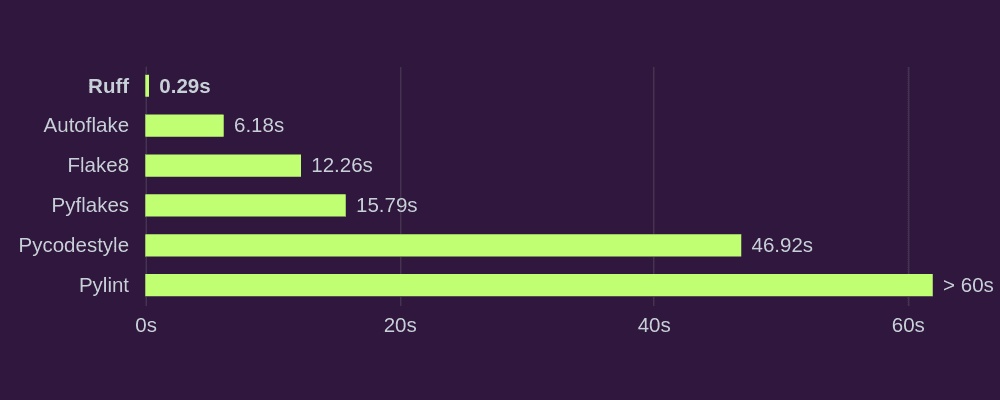
Ruff is an extremely fast Python linter and formatter written in Rust that aims to replace and improve upon existing tools like Flake8, Black, and isort. It provides 10-100x faster performance while maintaining parity through over 700 built-in rules and reimplementation of popular plugins.

Enhance Your Python Coding Style with Ruff
Stats from Ruff | Linting the CPython codebase from scratch

Ruff supports modern Python with 3.12 compatibility and `pyproject.toml`. It also offers automatic fix support, caching, and editor integrations. Ruff is monorepo-friendly and used in major open-source projects like Pandas, FastAPI, and more. By combining speed, functionality, and usability, Ruff integrates linting, formatting, and automatic fixing in a unified tool that is orders of magnitude faster than existing options.

Getting Started with Ruff

We can easily install `ruff` by using PIP.

pip install ruff

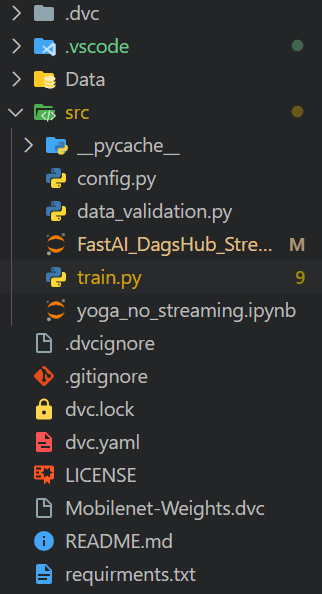
To test how easy and fast it is to run Ruff, we can use the DagHub repository kingabzpro/Yoga-Pose-Classification. You can clone it or use your own project to format.

Enhance Your Python Coding Style with Ruff
Project Structure

First, we will run a linter over our project. You can also run linter on a single file by replacing “.” with file location.

ruff check .

Enhance Your Python Coding Style with Ruff

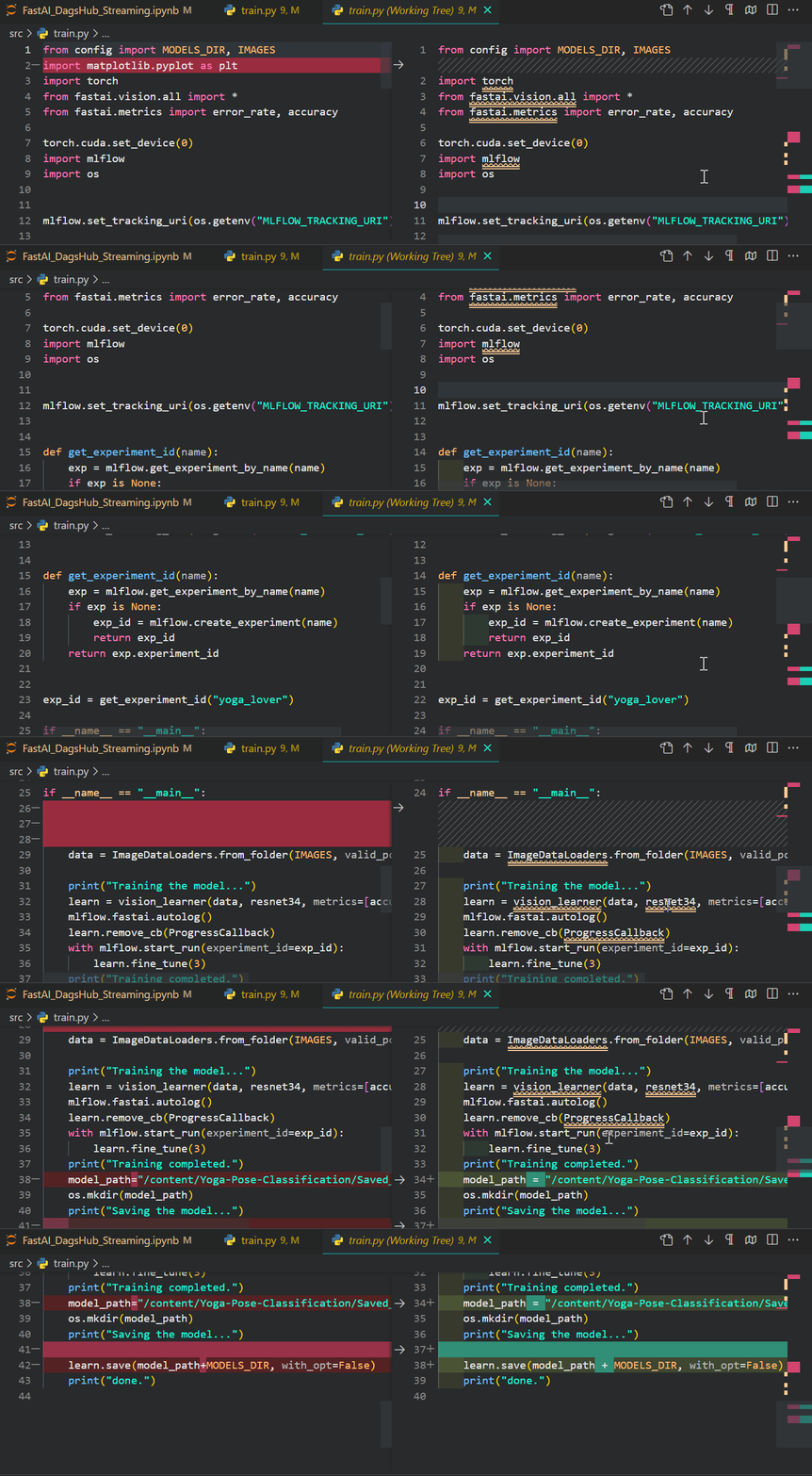
Ruff has identified 9 errors and 1 fixable error. To fix the error, we will use the —fix flag.

ruff check --fix .

As you can see, it has fixed the 1 fixable error.

Enhance Your Python Coding Style with Ruff
To format the project, we will use the `ruff format` command.

$ ruff format .  >>> 3 files reformatted

The Ruff linter and formatter have made numerous changes to the code. But, why do we require these tools? The answer is simple — they are beneficial in enforcing coding standards and conventions. As a result, both you and your team can concentrate on the significant aspects of your code. Moreover, they help enhance the quality, maintainability, and security of our code.

Enhance Your Python Coding Style with Ruff
Gif by Author Linting and Formatting Jupyter Notebooks

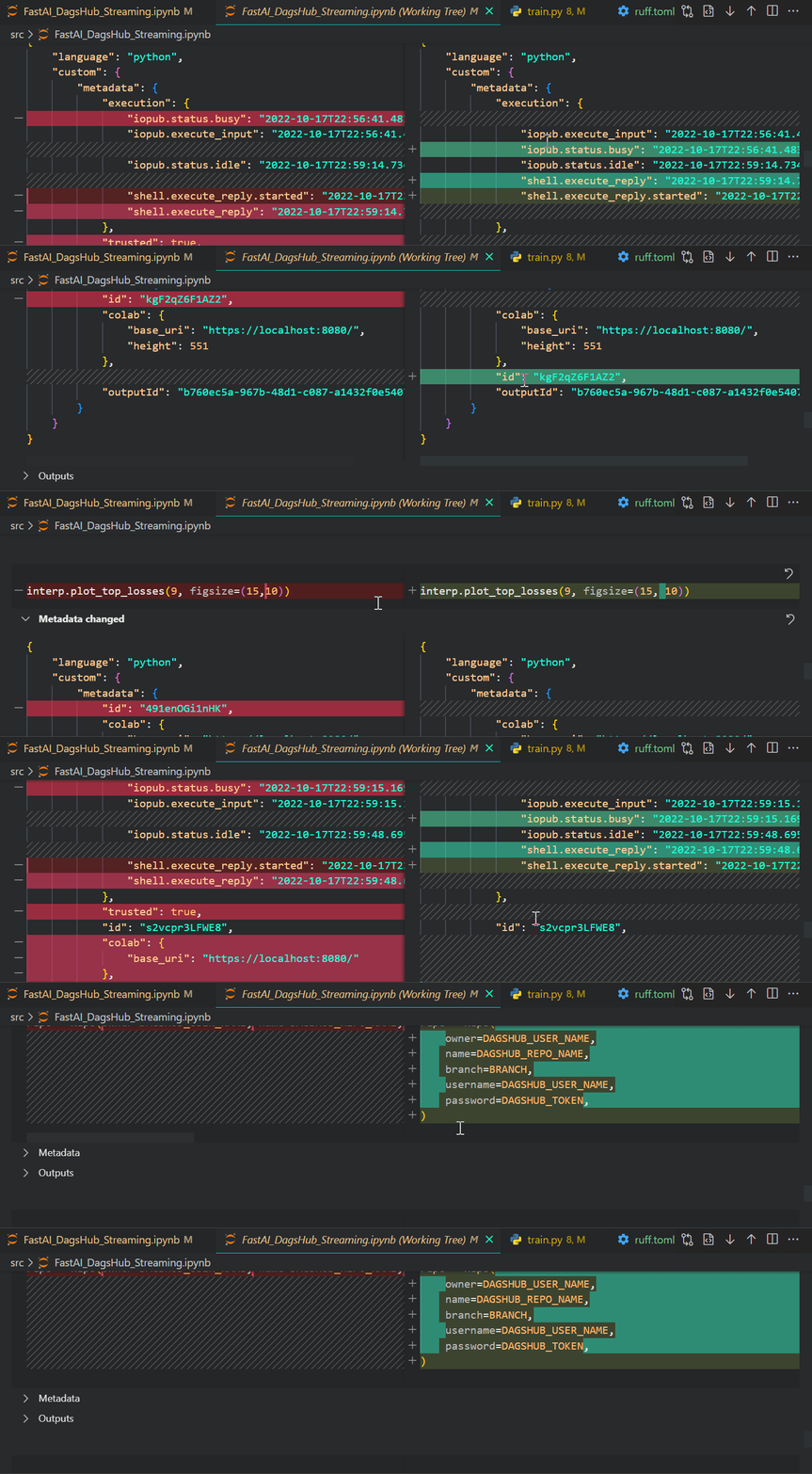
To use Ruff for Jupyter Notebooks in the project, you have to create `ruff.toml` file and add the following code:

extend-include = ["*.ipynb"]

You can also do the same with the `pyproject.toml` file.

After that re-run the commands to see it making changes to Jupyter notebook files.

2 files were reformatted and we have 2 Notebook files.

$ ruff format .  >>> 2 files reformatted, 3 files left unchanged

We have also fixed the issues in those files by running the `check` command again.

$ ruff check --fix .  >>> Found 51 errors (6 fixed, 45 remaining).

The final result is amazing. It has made all of the necessary changes without breaking the code.

Enhance Your Python Coding Style with Ruff
Gif by Author Ruff Configurations

It's easy to configure Ruff for Jupyter Notebooks by editing the `ruff.toml` file to adjust the linter and formatter settings. Check out the configuring Ruff documentation for more details.

target-version = "py311"  extend-include = ["*.ipynb"]  line-length = 80    [lint]  extend-select = [    "UP",  # pyupgrade    "D",   # pydocstyle  ]    [lint.pydocstyle]  convention = "google"

GitHub Action & Pre-commit Hook

Developers and teams can use Ruff as a pre-commit hook through the `ruff-pre-commit`:

- repo: https://github.com/astral-sh/ruff-pre-commit    # Ruff version.    rev: v0.1.5    hooks:      # Run the linter.      - id: ruff        args: [ --fix ]      # Run the formatter.      - id: ruff-format

It can also be used as a GitHub Action via `ruff-action`:

name: Ruff  on: [ push, pull_request ]  jobs:    ruff:      runs-on: ubuntu-latest      steps:        - uses: actions/checkout@v3        - uses: chartboost/ruff-action@v1

Ruff VSCode Extension

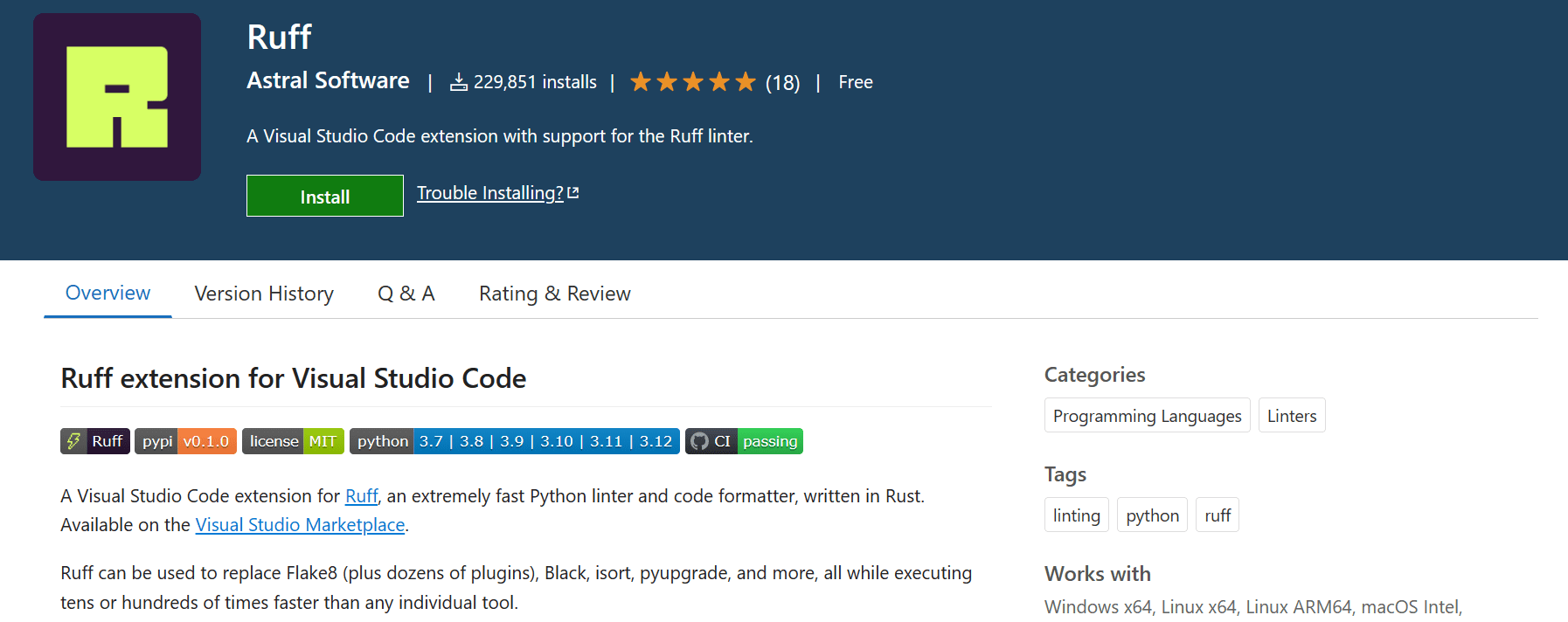
The most enjoyable aspect of Ruff is its VSCode extension. It simplifies formatting and linting, eliminating the need for third-party extensions. Simply search for Ruff on the extension marketplace to install it.

Enhance Your Python Coding Style with Ruff
Image from Ruff — Visual Studio Marketplace

I have configured `setting.json` so that it formats on save.

Conclusion

Ruff delivers lightning-fast linting and formatting for cleaner, more consistent Python code. With over 700 built-in rules reimplemented in Rust for performance, Ruff draws inspiration from popular tools like Flake8, isort, and pyupgrade to enforce a comprehensive set of coding best practices. The curated ruleset focuses on catching bugs and critical style issues without excessive nitpicking.

Seamless integrations with pre-commit hooks, GitHub Actions, and editors like VSCode make incorporating Ruff into modern Python workflows easy. The unmatched speed and thoughtfully designed ruleset make Ruff an essential tool for Python developers who value rapid feedback, clean code, and smooth team collaboration. Ruff sets a new standard for Python linting and formatting by combining robust functionality with blazing performance.

Abid Ali Awan (@1abidaliawan) is a certified data scientist professional who loves building machine learning models. Currently, he is focusing on content creation and writing technical blogs on machine learning and data science technologies. Abid holds a Master's degree in Technology Management and a bachelor's degree in Telecommunication Engineering. His vision is to build an AI product using a graph neural network for students struggling with mental illness.

More On This Topic

  • Enhance Your Data Mining Career
  • How to Build Data Frameworks with Open Source Tools to Enhance…
  • 7 AI-Powered Tools to Enhance Productivity for Data Scientists
  • GPT-Engineer: Your New AI Coding Assistant
  • Data Scientist’s Guide to Efficient Coding in Python
  • 15 Python Coding Interview Questions You Must Know For Data Science

Should you recalibrate your AI roadmap post changes in OpenAI ?

Should you recalibrate your AI roadmap post changes in OpenAI ?
https://pixabay.com/photos/road-aslant-street-sign-path-55449/

Last night’s changes in AI have been seismic post the shock resignation of Sam Altman

It is still early days and these changes will be played out

Undoubtedly, this change will impact AI roadmaps worldwide

So, how should you re-calibrate your AI road map post Sam Altman leaving OpenAI? Has anything really changed?

I was always interested in OpenAI – mainly for the reason that OpenAI was (and I believe is) – the only company with the stated goal of achieving AGI. Its too early to see the internal implications at OpenAI – but I am still interested in the wider question of AGI adoption.

The primary implication of the work from LLMs is – Is scale alone enough? This is the fundamental question on which all other questions are dependent. We see some very intriguing behaviour from LLMs based on scale (which could be evidence of emergence). But in any case, this is the primary issue on the road to AGI

In this sense, not much has changed. OpenAI has demonstrated that this problem (of scale in AI) is worth pursuing. And many will (who have deep pockets also) – like Meta and Nvidia will pursue this question.

I will share more in future posts but,

a) There is a move to regulate the L in the LLM – I think it will not get the benefits of LLMs and will lead to competitive disadvantage to countries who do so.

b) It’s possible that due to the investments in AI, state actors may now step up. This is not a good move in my view. It could affect the competitive positioning of countries – especially the USA. My only hope is – AGI should remain out of state actors and with liberal democracies.

So, to conclude, I think the AGI genie is out of the bottle -and not much has changed – even if new leaders emerge.

However, broader questions remain. These I shall cover in following blog posts

  1. Leaving aside the issues with OpenAI – if a new leader emerges – who will it be?
  2. What is the implication for open source and AI ?
  3. What does it mean for OpenAI competitors?
  4. What does it mean for startups?

My personal belief is that AI will pursue scale – but will look at bigger / moonshot strategies in science and business – and less on the consumer strategies that need access to data.

Oxford University Study Shows Large Language Models (LLMs) Pose Risk to Science with False Answers

Oxford University Study Shows Large Language Models (LLMs) Pose Risk to Science with False Answers November 20, 2023 by Ali Azhar

Large Language Models (LLMs) are generative AI models that power chatbots, such as Google Bard and OpenAI’s ChatGPT. There has been a meteoric rise in the use of LLMs over the last 12 months and this is indicated in several studies and surveys. However, LLMs suffer from a critical vulnerability — AI hallucination.

A study by Professors Brent Mittelstadt, Chris Russell, and Sandra Wachter from the Oxford Internet Institute shows that (LLMs) pose a risk to science with false answers. The paper was published in Nature Human Behavior and reveals that untruthful responses, also referred to as hallucinations, cause LLMS to deviate from contextual logic, external facts, or both.

The Oxford Internet Institute functions as a multidisciplinary research and educational unit within the University of Oxford, focusing on the social science aspects of the Internet.

The findings of the study show that LLMs are designed to produce helpful and convincing responses without any overriding guarantees regarding their accuracy or alignment with fact.

Earlier this year, the Future of Life Institute issued an open letter calling for a pause on research and experiments on some AI systems to address some of the serious threats posed by the technology. The open letter was signed by nearly 1200 individuals, including several prominent IT leaders such as Elon Musk and Steve Wozniak.

One of the reasons for this problem in LLMs is the lack of reliability of the source. LLMS are trained on large datasets of text, taken from various sources, which can contain false data or non-factual information.

The lead author of the Oxford study, Director of Research, Associate Professor and Senior Research Fellow, Dr Brent Mittelstadt, explains, ‘People using LLMs often anthropomorphize the technology, where they trust it as a human-like information source. This is, in part, due to the design of LLMs as helpful, human-sounding agents that converse with users and answer seemingly any question with confident-sounding, well-written text. The result of this is that users can easily be convinced that responses are accurate even when they have no basis in fact or present a biased or partial version of the truth.’

(SuPatMaN/Shutterstock)

The researchers for the paper recommend that clear expectations should be set around what LLMs can responsibly and hopefully contribute to, and to be mindful of the inherent risks. For tasks where truth and factual information are critical, such as the field of science, the use of LLMs should be restricted.

The increasing use of LLMs as knowledge bases makes users a target for regurgitated false information that was present in the training data, and ‘hallucinations’ — false information spontaneously generated by the LLM that was not present in the training data.

According to Prof Wacher, “The way in which LLMs are used matters. In the scientific community, it is vital that we have confidence in factual information, so it is important to use LLMs responsibly. If LLMs are used to generate and disseminate scientific articles, serious harm could result.”

Similar recommendations are made by Prof Russel, “It’s important to take a step back from the opportunities LLMs offer and consider whether we want to give those opportunities to a technology, just because we can.”

The authors of the paper argue that the use of LLMs for certain tasks should be limited to “zero-shot translators”, where the LLM is provided with appropriate information and asked to transform it into the desired output. This method of utilizing LLMs helps boost productivity while limiting the risks of false information. The authors acknowledge the potential of generative AI in supporting scientific workflows, however, they are clear that scrutiny of output is vital to protecting science.

Related Items

Nvidia’s AI Safety Tool Protects Against Bot Hallucinations

Hallucinations, Plagiarism, and ChatGPT

Cybersecurity’s Rising Significance in the World of Artificial Intelligence

Related

Sam Altman’s AI ‘mission continues’ at Microsoft, future of OpenAI and ChatGPT uncertain

Sam Altman

After a rollercoaster ride of a weekend for OpenAI, its co-founders Sam Altman and Greg Brockman have now been snapped up by Microsoft, where they will lead a "new advanced AI research team".

Hours after this was announced, though, some 500 employees from OpenAI released an open letter to their board of directors, saying they may resign and join the duo at Microsoft, if the two co-founders are not reinstated. OpenAI has more than 700 employees.

Also: How to use Copilot (formerly called Bing Chat)

The ongoing saga all began on Friday evening when generative AI powerhouse OpenAI released a statement announcing the ousting of Altman, over what the board of directors said was lack of confidence in his ability to continue leading the company.

"Altman's departure follows a deliberative review process by the board, which concluded that he was not consistently candid in his communications with the board, hindering its ability to exercise its responsibilities," the board said. "OpenAI was deliberately structured to advance our mission: to ensure artificial general intelligence (AGI) benefits all humanity. The board remains fully committed to serving this mission."

It expressed gratitude for Altman's contributions to the founding and growth of OpenAI, but noted new leadership was "necessary" as the company moved forward.

The board had appointed CTO Mira Murati as interim CEO, describing her as "exceptionally qualified" since she had led the company's research, product, and safety functions.

As the news rippled throughout the weekend, reports suggested that Murati was looking to rehire Altman as well as Brockman, who had resigned from his positions as chairman and president following Altman's ousting. The board also reportedly was reconsidering its decision, as it faced pressure from investors and staff demanding Altman's return, but this appeared to have fallen through on Saturday.

Also: I spent a weekend with Amazon's free AI courses, and highly recommend you do too

Instead, Twitch's co-founder and former CEO, Emmett Shear was brought in as interim CEO, replacing Murati.

Amid speculations on what might transpire next, Microsoft Chairman and CEO Satya Nadella on Monday announced he had snagged Altman and Brockman, along with "colleagues", for "a new advanced AI research team".

"We remain committed to our partnership with OpenAI and have confidence in our product roadmap, our ability to continue to innovate with everything we announced at Microsoft Ignite, and in continuing to support our customers and partners," Nadella said in an X post. "We look forward to getting to know Emmett Shear and OpenAI's new leadership team and working with them."

The CEO added that Microsoft would move "quickly" to provide the resources its new advanced AI research team would need for its success.

Also: AI pioneer Cerebras is having 'a monster year' in hybrid AI computing

In response to his appointment, Altman said simply: "The mission continues."

He would lead as CEO of the new Microsoft team, according to Nadella, who added it would join others that had built "independent identities and cultures" within Microsoft, including GitHub and LinkedIn.

Soon after Nadella unveiled Altman was headed for Microsoft, 505 employees at OpenAI released a letter to their board of directors saying they might be heading in the same direction if Altman and Brockman were not reinstated in the company. They also asked for all members of the board to resign and two new independent directors be appointed.

"Your actions have made it obvious that you are incapable of overseeing OpenAI. We are unable to work for or with people that lack competence, judgment, and care for our mission and employees," the letter read. "Microsoft has assured us that there are positions for all OpenAI employees at this new subsidiary, should we choose to join."

Among the list of names who signed the letter were Murati and OpenAI's co-founder and chief scientist Ilya Sutskever, who reports have speculated had played a part in the decision to remove Altman. Sutskever sits on the board of directors at OpenAI.

Sutskever, who had remained silent since the news first broke on Friday, posted on X just before the letter surfaced, saying: "I deeply regret my participation in the board's actions. I never intended to harm OpenAI. I love everything we've built together and I will do everything I can to reunite the company."

Also: OpenAI aiming to create AI as smart as humans, helped by funds from Microsoft

In an X post on his own appointment, Shear laid out a 30-day plan for OpenAI, which included launching an independent investigation into the "entire process leading up to this point" and producing a full report. Also on his to-do list is to "reform" the management and leadership team, amid recent departures, with the aim to drive results for customers.

Adding that he had "checked" the rationale behind Altman's ousting, Shear said: "The board did not remove Sam over any specific disagreement on safety. Their reasoning was completely different from that. I'm not crazy enough to take this job without board support for commercializing our awesome models."

During his visit to Singapore this June, Altman had said it was important for the public to learn about and experience AI even as the technology continued to evolve." This would be more effective than building and testing a piece of technology behind closed doors and releasing it to the public on the assumption that all possible risks had been identified and plugged, he noted. "You can't learn everything in a lab," he said.

In a July 2023 post, Sutskever wrote alongside machine learning researcher Jan Leike: "Superintelligence will be the most impactful technology humanity has ever invented and could help us solve many of the world's most important problems. But the vast power of superintelligence could also be very dangerous and could lead to the disempowerment of humanity or even human extinction."

Also: My 5 favorite AI tools for work

"Currently, we don't have a solution for steering or controlling a potentially superintelligent AI, and preventing it from going rogue," said Sutskever, who also sits on OpenAI's board of directors. "Our current techniques for aligning AI, such as reinforcement learning from human feedback, rely on humans' ability to supervise AI, but humans won't be able to reliably supervise AI systems much smarter than us. So our current alignment techniques will not scale to superintelligence. We need new scientific and technical breakthroughs."

In the post, Sutskever was announcing a new team of machine learning researchers and engineers to work on this problem. Their efforts would include developing a scalable training method, validating the resulting model, and stress-testing the company's entire alignment pipeline.

Artificial Intelligence