NeevCloud, has today announced the launch of the country’s first AI SuperCloud. The company aims to make India self-reliant on AI and Supercomputing and help users in resolving India’s core challenges by deploying AI cloud infrastructure including 40,000 GPUs and storage worth USD 1.5 billion by 2026.
The startup aims to solve fundamental customer problems in India related to accessibility, environmental impact, support, self-reliance, and fostering innovation in cloud and AI technologies within the Indian market.
NeevCloud aims to solve these challenges and democratize access to AI and supercomputing for all enterprises, and startups by introducing ‘AI Supercomputing as a Service’ model and providing the world’s lowest prices for Cloud GPUs at USD 1.69/hour reducing costs by up to 50%.
It can enable companies to leverage Generative AI and deploy Large Language Models (LLM) across various use cases capable of solving India’s unique challenges.
“At NeevCloud, we envision a future where India not only leads but empowers the world with innovative technology. Our mission is to democratize AI cloud computing, making it accessible to all enterprises and startups across India, and fostering the growth of Made in India AI.
“Our AI SuperCloud stands as a testament to Indian innovation, and we believe our journey has the potential to power not only our nation, but users across the world who need cutting-edge but affordable cloud solution,” said Narendra Sen, Founder & CEO, NeevCloud.
NeevCloud began its journey by solving a fundamental issue plaguing the data center industry when it came to AI and HPC workloads. Existing data center infrastructures are inefficient at handling demanding workloads of AI, ML, and HPC projects, which can consume up to a staggering 80KwH of power, starkly contrasting the typical 10-20KwH of power used for regular workloads.
This power-intensive environment leads to excessive heat generation, causing operational complications, and rising operating costs.
To tackle this problem, NeevCloud created an entirely indigenous patented solution: Varuna, a groundbreaking liquid immersion cooling system. Varuna’s technology efficiently addresses high rack density heat concerns by submerging servers in a coolant, resulting in a remarkable reduction of Power Usage Effectiveness (PUE) from 1.5 to 1.05, achieving exceptional sustainability.
This not only resolved the heat issue but also had a cascading effect, reducing cooling costs by an astounding 90% and overall expenses by a significant 50%.
NeevCloud can also enable confidential machine learning by creating SuperClusters that directly allocate to the BFSI, automotive, and healthcare organizations. It has the potential to assist businesses of all scales, research institutions, and diverse industries in advancing their AI strategies.
The post NeevCloud launches the country’s first Made in India AI SuperCloud appeared first on Analytics India Magazine.
Generative AI, according to research and advisory firm Forrester, is the most impactful technological advancement since the internet.
Also: What Sam Altman's move to Microsoft means for ChatGPT's future: 3 possible paths forward
Forrester's 2024 forecast is strongly linked to AI because Forrester believes that generative AI will be a change agent for all business functions and industries. "It's time to think big and move fast. 2024 will redefine business as we know it," said Sharyn Leaver, Forrester's chief research officer. "Generative AI will be the fulcrum that businesses rely on to enhance, empower, and engage employees and customers — with or without you. Embrace the misstep, and think big."
Here are the top 15 Forrester predictions for 2024:
Generative AI will seep into consumers' lives. 60% of skeptics will use (and love) generative AI — knowing it or not.
AI will spur the age of creativity. Enterprise AI initiatives will boost productivity and creative problem-solving by 50%. Current AI projects already cite improvements of up to 40% in software development tasks.
Agencies will bet big on "brand-specific" AI models. The top 10 agencies will spend $50 million in partnerships to build custom AI solutions for enterprise clients.
AI processing will hit a wall in 2024. Limited chip availability will drive common sense and tamper down irrational AI expectations.
The clouds will launch prompt engineering services to no avail. 80% of firms will add prompt engineering talent internally to accelerate value delivery. With incomplete contextual data and limited experience in natural language and prompt engineering among data scientists, cloud providers' first-gen prompt engineering services will not suffice when it comes to addressing tailored, fine-tuned needs.
Backstage will take center stage. An open-source developer portal created by Spotify and donated to the Cloud Native Computing Foundation, Backstage will be the number one framework for self-service developer portals.
GenAI will augment customer service agents' capabilities. Customer Experience (CX) will improve for the first time in three years. Improvements will be most pronounced in Europe and APAC. In North America, the US will improve, while Canada will continue to struggle.
Marketers will become privacy champions. CMOs at five large consumer brands will fund dedicated privacy resources. Yet, only 17% of privacy decision-makers say that their organization's privacy team has marketing competencies or skills. To bust this bottleneck, five large B2C brands will earmark a portion of their marketing budget specifically to fund additional headcount to the privacy team and/or upskill existing privacy colleagues.
Generational differences will alter B2B buying preferences. Two out of five millennial buyers will demand early access to B2B product experts. Forrester predicts that 40% of younger buyers will rate person-to-person meetings with product experts as their most meaningful personal interactions. Top sellers should forge effective partnerships with these experts and effectively orchestrate all person-to-person interactions. Sellers who practice this will see their time spent on direct buyer engagement rise to 25% or more of their overall work week.
An "EX Winter" will freeze employee experience investments. In 2024, many teams that drive employee experience (EX) will suffer from a lack of funding or focus. Take diversity, equity, and inclusion (DEI), for example. The percentage of companies that funded a DEI function with an endorsed strategy and personnel dropped from 33% in 2022 to 27% in 2023. Forrester predicts that this number will fall to 20% by the end of 2024 in the wake of cuts that disproportionately affect DEI teams. Tech investments won't drive EX forward, either. While 66% of technology decision-makers who work in software say that they will invest in EX/human capital management software next year, those investments won't be used to their full advantage.
Europe will lead hybrid work adoption. 40% of European employees will work from home regularly. Only 11% of European business leaders expect employees to return to the office full-time. For comparison, in 2023, 28% of all US employees' workdays are spent working from home.
Climate risk will become employee experience risk. Employee action will force adaptation accommodations at five Fortune 500 firms.
Customer trust will remain up for grabs. News organizations will have a resurgence as trusted sources of information. According to Forrester's 2023 data, social media's reputation is disintegrating across the globe: 81% of online adults in the US, the UK, Spain, and Italy agree that there is a lot of fake news and misinformation on social media. The numbers aren't much better in metro China, where 63% of online adults agree with this sentiment.
APAC firms will struggle to operationalize customer trust. 25% of APAC multinational corporations will adopt customer trust as a key mission, but only 5% will measure it. Forrester estimates that by the end of 2024, 25% of APAC's largest companies will vocalize their strategic commitment to customer trust, but only 5% will effectively codify that commitment through measurement and organizational KPIs.
Regulators will have genAI in their sights. An app using ChatGPT will be fined for its handling of personally identifiable information.
Also: How AI reshapes the IT industry will be 'fast and dramatic'
We know that most people are concerned about the implications of generative AI on data security, ethics, and bias. In fact, 81% of customers want a human to be in the loop, reviewing and validating generative AI outputs. Research also validates that every AI project begins as a data project, but it's a long, winding road. Businesses need a new operating model to compete in an AI-powered economy. If you want your business to succeed in a world of AI, you'll need to operate in a boundless manner.
To learn more about Forrester's research and 2024 predictions, you can visit here.
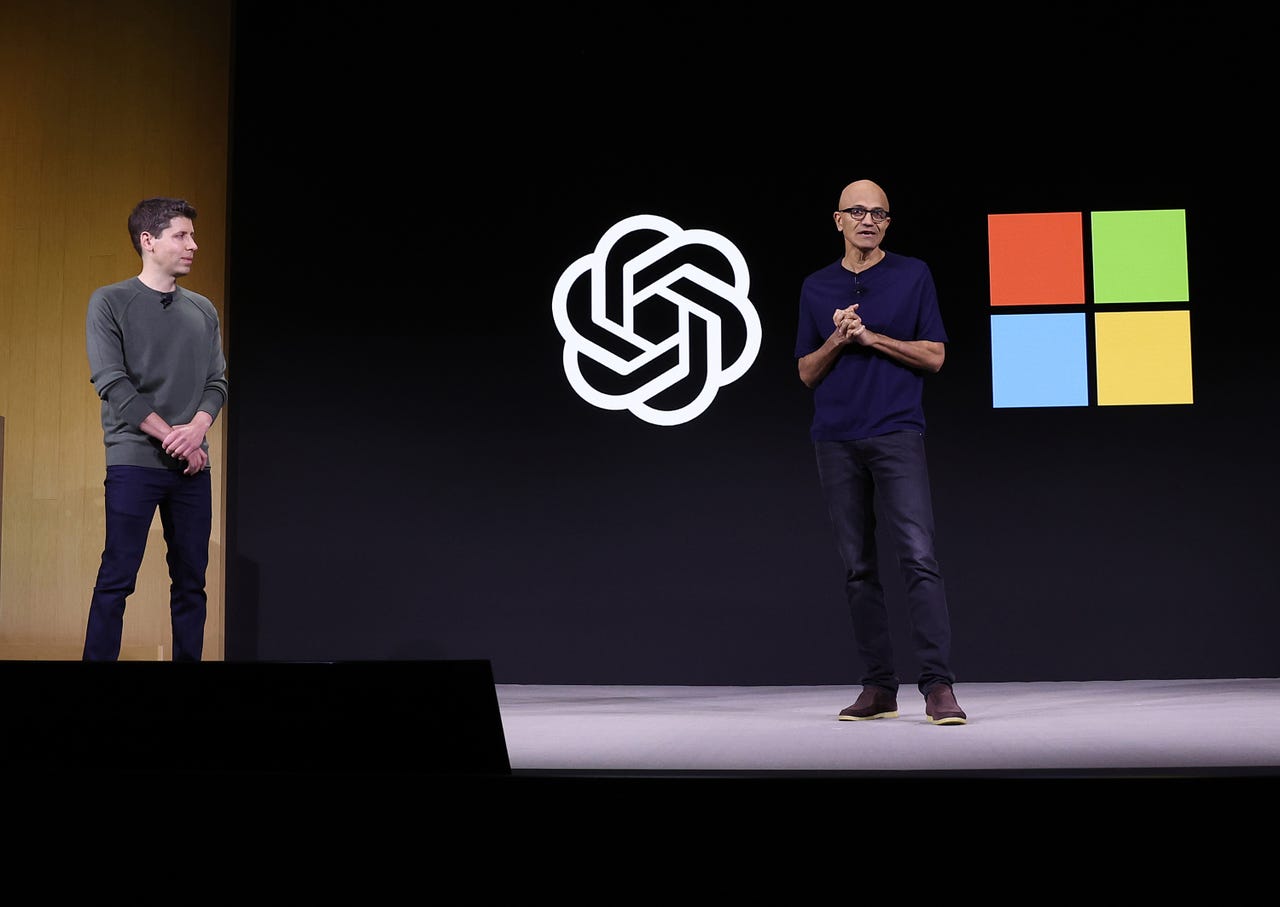
When a company invests $13 billion in a startup, as Microsoft has with OpenAI, you would expect to get at least a few minutes prior notice when its board fired its market-leading CEO. Instead, news that OpenAI was firing Sam Altman hit everyone outside the board like a thunderbolt. Microsoft CEO Satya Nadella was probably not amused. But, as things shake out, he has reason to smile.
After OpenAI's attempt to backtrack from their shocking move failed to gain traction over the weekend, Nadella decided Microsoft would hire Sam Altman and former OpenAI President Greg Brockman. At Microsoft, they will lead a "new advanced AI research team." Brockman, another OpenAI co-founder, had quit in protest of Altman's firing.
Also: Generative AI advancements will force companies to think big and move fast
It appears it won't just be Altman and Brockman who will push ChatGPT and other OpenAI-based technology at Microsoft. 505 of OpenAI's over 700 employees wrote in an open letter that unless the OpenAI board quits, they "may choose to resign from OpenAI and join the newly announced Microsoft subsidiary." Further, "Microsoft has assured us that there are positions for all OpenAI employees at this new subsidiary should we choose to join."
Even OpenAI co-founder and board member Ilya Sutskever, who voted to fire Altman, signed this letter and has had second thoughts. Sutskever wrote, "I deeply regret my participation in the board's actions. I never intended to harm OpenAI. I love everything we've built together, and I will do everything I can to reunite the company.
Since that letter was published, almost all OpenAI employees have signed it, according to Maggie Hott, head of ChatGPT Enterprise & Account Associate teams. For his part, Altman is sure "We are all going to work together some way or other, and I'm so excited. One team, one mission."
After all, as Angela Jiang, a member of the OpenAI Global Affairs Team, tweeted, "OpenAI is nothing without its people." While some people have reacted sarcastically to the idea of an AI company valuing people, Jiang is right. AI programs are no replacements for bright people, and OpenAI is its engineers, developers, and visionaries.
Also: Does your business need a chief AI officer?
Nadella has kept saying polite things about OpenAI publicly, such as, "We remain committed to our partnership with OpenAI and have confidence in our product roadmap, our ability to continue to innovate with everything we announced at Microsoft Ignite, and in continuing to support our customers and partners."
But, in the same tweet, he also said, "We're extremely excited to share the news that Sam Altman and Greg Brockman, together with colleagues, will be joining Microsoft to lead a new advanced AI research team. We look forward to moving quickly to provide them with the resources needed for their success."
Altman added, "We are committed to fully providing continuity of operations to our partners and customers. The OpenAI/Microsoft partnership makes this very doable."
What will this look like? There are reports that Altman and Brockman may yet return to OpenAI — if, and it's a big if — the board members who fired him quit.
I'm confident that Nadella will do what's best for Microsoft. I don't know exactly what this will look like. My colleague, David Gewirtz, sees three ways forward: OpenAI goes its own course with whoever's left; Microsoft competes with OpenAI; or Microsoft acquires OpenAI.
Also: What Sam Altman's move to Microsoft means for ChatGPT's future: 3 possible paths forward
I see another way forward. For all intents and purposes, if Microsoft does indeed hire essentially everyone at OpenAI, the company doesn't need to compete with OpenAI. It's game over for OpenAI. The almost three trillion dollar enterprise won't need to buy it.
Before all this broke, OpenAI was seeking a valuation of $90 billion, and it looked like it would get it.
But now, instead of paying anything, Microsoft could get all of OpenAI's engineers for the price of picking up their salaries. Talk about a deal!
As Macquarie analyst Fred Havemeyer said, "We see an opportunity where Microsoft ends up consolidating and essentially acquiring OpenAI without actually having to tender any sort of acquisition." Exactly.
The stock market agrees. Microsoft shares rose 2.1% to an all-time high close of $377.44 on Monday. That beat the previous record of $376.17 and gave the tech giant a total valuation of about 2.75 trillion dollars. Not bad!
Technically this is a big deal for Microsoft as well. The company has stated that at Microsoft, "Artificial intelligence (AI) is the defining technology of our time." As Bill Gates recently said when he saw OpenAI ChatGPT at work, "I had just seen the most important advance in technology since the graphical user interface." As you may recall, he took the idea of the GUI and turned it into the dominant desktop of the last 40 years: Windows.
Also: Will AI hurt or help workers? It's complicated
In its last quarterly earnings, Microsoft reported that the above-forecast use of AI helped drive a 29% year-over-year increase in revenue for Microsoft's cloud business. Nadella added at the time, "We are making the age of AI real for people and businesses everywhere. We are rapidly infusing AI across every layer of the tech stack and for every role and business process to drive productivity gains for our customers."
That's not just hot air. At Microsoft Ignite, Microsoft announced one AI initiative after another. This included new versions of Copilot to help people get work done beyond programming; GPT-4 Turbo with Vision, which will let GPT work with video; and Azure AI Studio, for companies that want to build their own generative AI programs.
Put it all together, and it seems crystal clear to me that not only is Microsoft hiring all of OpenAI a smart move, but really, it's a necessary one. Microsoft must have what OpenAI was delivering, and hiring Altman and others is a sure-to-win move.
On Nov. 20, Amazon revealed the “AI Ready” commitment, a set of courses, a scholarship and a collaboration with Code.org to promote generative artificial intelligence skills. Amazon wants to provide 2 million people across the globe with the skills needed for lucrative generative AI-focused careers by 2025. In addition, Amazon is offering cloud computing skills training.
“Amazon is launching AI Ready to help those with a desire to learn about AI and benefit from the tremendous opportunity ahead,” Swami Sivasubramanian, vice president of data and AI at Amazon Web Services, wrote in Amazon’s announcement.
Jump to:
Free generative AI training courses for professionals and beginners
The AWS Generative AI Scholarship assists high school and university students
Amazon and Code.org team up for Hour of Code for students
AI Ready courses add to existing library of AI and cloud resources
Free generative AI training courses for professionals and beginners
The following generative AI training courses are available for free from Amazon via AWS Skill Builder for developer and technical audiences:
Foundations of Prompt Engineering.
Low-Code Machine Learning on AWS.
Building Language Models on AWS.
Amazon Transcribe — Getting Started.
Building Generative AI Applications Using Amazon Bedrock.
The following generative AI training courses are available for free from Amazon for beginners and students:
Introduction to Generative Artificial Intelligence via AWS Educate.
Generative AI Learning Plan for Decision Makers via AWS Skill Builder.
Introduction to Amazon CodeWhisperer via AWS Educate.
Employers seek AI skills
Many employers (73%) are interested in hiring people with AI-related skills, a November survey from Amazon and Access Partnership found. However, three out of four of the same employers have trouble finding people to meet their AI talent needs.
“If we are going to unlock the full potential of AI to tackle the world’s most challenging problems, we need to make AI education accessible to anyone with a desire to learn,” Sivasubramanian wrote in the announcement post.
The AWS Generative AI Scholarship assists high school and university students
Amazon will offer a total of $12 million over 50,000 Udacity scholarships for high school and university students from underserved and underrepresented communities around the world. Scholarship recipients will gain access to free courses, hands-on projects, on-demand technical tutors, coaching industry mentors, career development resources and guidance in creating a professional portfolio.
Interested students can apply on the AWS AI & ML Scholarship program site.
Amazon and Code.org team up for Hour of Code for students
In collaboration with Code.org, Amazon will host an Hour of Code during Computer Science Education Week, Dec. 4–10, for students and teachers involved in kindergarten through 12th grade. The hour-long introduction to coding and AI will invite students to create their own dance choreography using generative AI.
Code.org runs on AWS, and Amazon has provided free AWS Cloud computing credits worth up to $8 million for the Hour of Code.
SEE: Compare Google Cloud and AWS Cloud’s capabilities as cloud hosting services.
AI Ready courses add to existing library of AI and cloud resources
These courses, scholarships and events come in addition to Amazon’s existing free cloud computing classes. Amazon has a goal of giving 29 million people the right skills for cloud computing careers by 2025.
Amazon also offers over 80 free and low cost training courses through AWS’s educational artificial intelligence and machine learning content library. Taking some of these courses alongside generative AI training could broaden one’s understanding of how different AWS and Amazon capabilities work together, as well as contextualizing their places in the larger world of AI and ML technologies.
Amazon's Black Friday sale is on and the Ecovacs Deebot X2 Omni is a whopping $407 off for a limited time.
Why this deal is ZDNET-recommended
You know that gratifying feeling of coming home to a clean house? With a family of five, that's not a feeling I often get, if at all. Enter the Ecovacs Deebot X2 Omni.
Also: Ecovacs announced a new robot vacuum that squares up to the competition
I've tested a fair share of robot vacuum and mop combinations, so I quite appreciate the experience of having a robot roaming around my home that picks up crumbs, dust, and everything in between. But the Deebot X2 Omni is the best robot vacuum and mop I've tried.
ZDNET RECOMMENDS
Ecovacs Deebot X2 Omni
This high-end robot vacuum and mop has been engineered to give users a hands-free cleaning experience.
View at Amazon
Ecovacs launched the Deebot X2 Omni today, a new flagship robot vacuum and mop combo with a clear edge. After testing it out for a couple of weeks, I've found room for improvement in some tasks — largely outweighed by its long list of strengths.
The X2 Omni checks all the specs boxes for a high-end robot vacuum and mop. It has 8,000Pa of suction power, higher than the 6,000Pa of the current market leader, the Roborock S8 Pro Ultra. Using artificial intelligence (AI), the robot can detect and avoid objects strewn about the floor, such as socks and charging cables, and has a mopping pad that automatically lifts 15mm when carpets or rugs are detected.
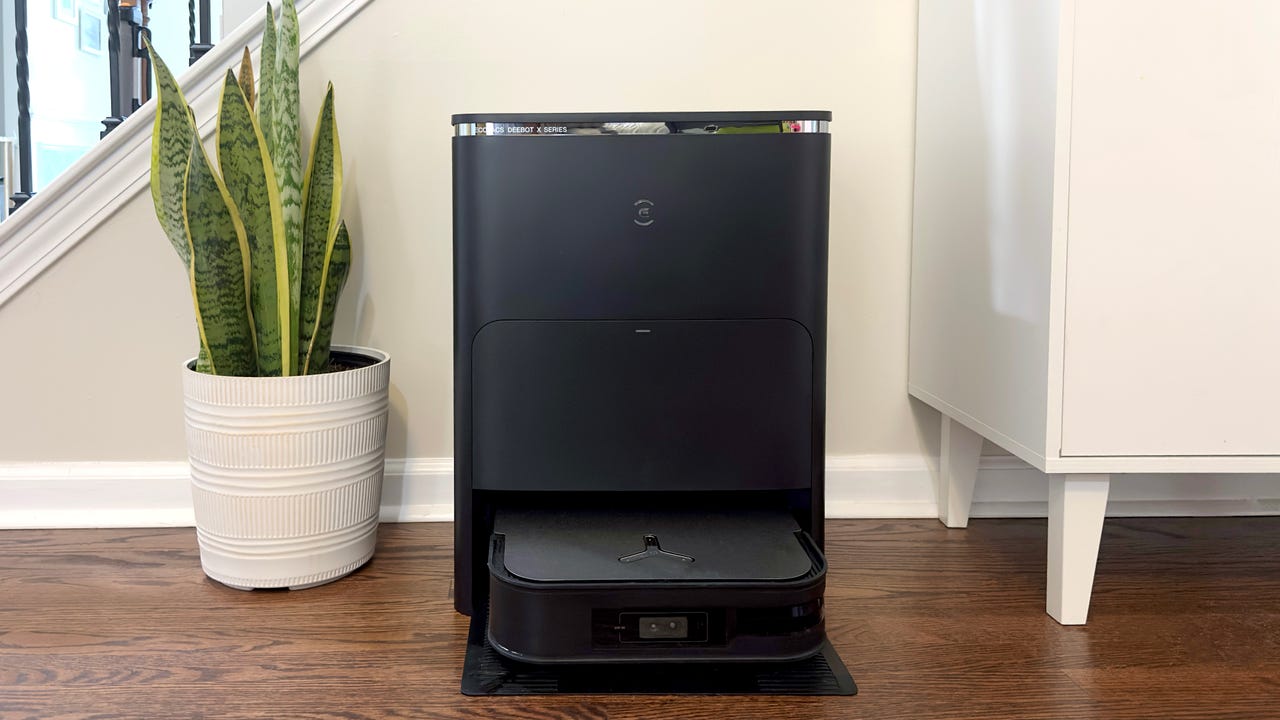
The Omni station charges the robot vacuum and mop and works as a base where it empties its dustbin and self-washes and dries its mop pads. This feature means you only have to worry about keeping the base station's clean water tank filled and its dirty water tank empty, which you must complete every few cleaning cycles.
Designed to be a hands-free experience, the base station is also self-cleaning. Running the self-cleaning option in the Ecovacs app will clean the base plate in the station — the spot where your mops are cleaned that typically sees water and dirt accumulation. This feature is a level above competitors like Yeedi, which requires users to periodically clean dirty water at the bottom of the docking station.
The dust bag holds everything the Deebot X2 sweeps from your floors and only needs emptying about once a month, although your mileage may vary.
This closure is supposed to hold four liters of clean water when you carry the clean water tank by the handle.
One of my only gripes is that the clean water tank feels awkward to hold when filled — it almost feels like it's not built to last, although I won't know for certain until I've used it for several months. It's a four-liter water tank with a handle to carry it on the lid, held shut by a plastic clip. I hold the tank from the bottom because I feel like using the handle to carry the full tank around will result in the closure failing and four liters of water going everywhere.
About the square shape
The Deebot X2 Omni has several superpowers, starting with its compact package. The squared edges stood out to me as a feature when I unpacked the device, along with how narrow and short it was. At only 12.6 inches wide, it's about 0.3 inches narrower than the Eufy X9 Pro robot vacuum mop, which had been my super mop until the X2 Omni arrived.
Although 0.3 inches sounds like a small difference in size, it's proven to be considerable when a robot has to navigate through furniture legs. Case in point: the Eufy X9 Pro uses AI to avoid objects, but whenever I sent it to clean the first floor, it'd get stuck between the kitchen barstools legs. The stools are fairly lightweight, so the robot would drag them around instead of signaling it was stuck. I'd see my kitchen barstools gliding around my floor or randomly find one hanging out by the shoe bench.
This isn't a big deal and is highly subjective, so it's not something I included in my Eufy review; it's not the robot's fault that it's the exact size as the width of the distance between my barstool's legs. But the narrower Deebot X2 Omni can clean under the barstools and figure its way back out, which means no more 'guess where the barstools are today' games.
The Ecovacs Deebot X2 Omni making its way out of the traveling barstools.
The Deebot X2 is also almost an inch shorter than my Eufy robot vacuum, at 3.7 inches in height. The lower dimensions and narrow build allow the Deebot X2 to clean in places other robots typically can't reach or navigate under.
Some AI-powered features
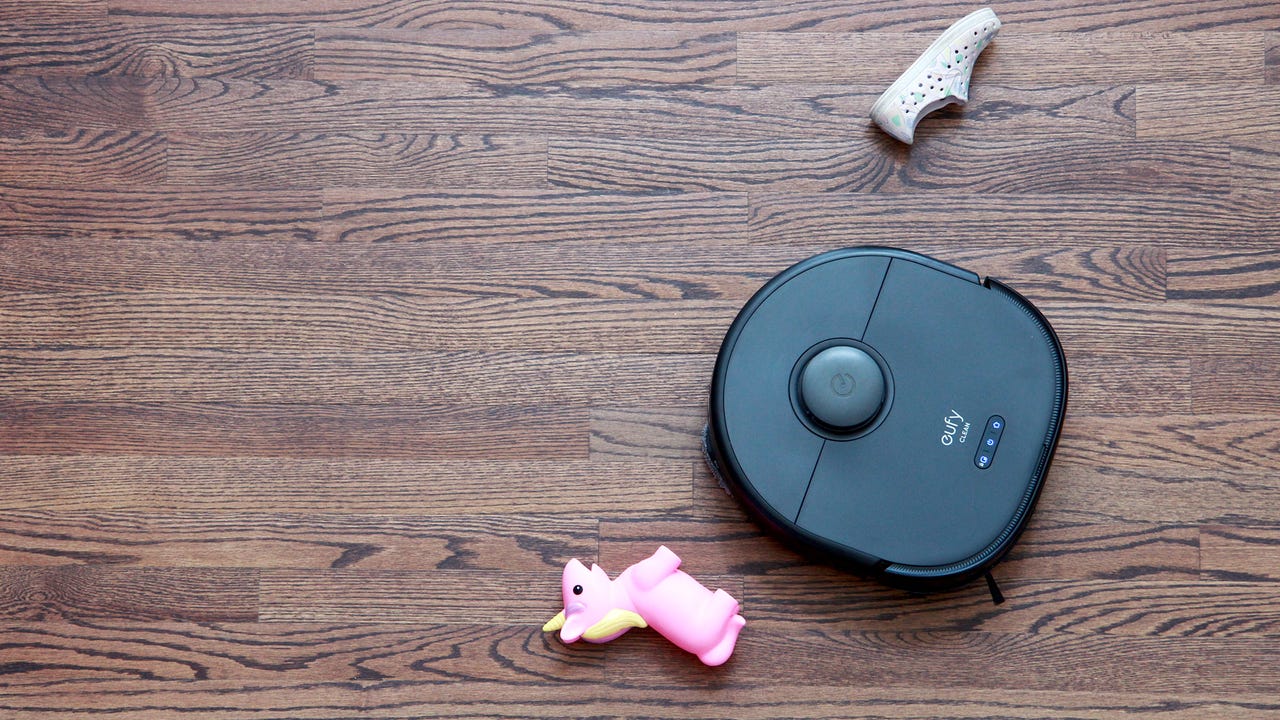
The Deebot X2 leverages Ecovacs' AIVI 3D 2.0 and combines an AI processor with 3D-structured light sensors with dual-laser LiDAR technology. The result is efficient maps that allow the robot to detect objects during navigation and clean around them intelligently. This feature set means you won't have to ensure your floors are free of charging cables, toys, or shoes before sending out the X2.
The AI-powered navigation and obstacle avoidance, backed by Ecovacs' proprietary AINA Model, uses visual recognition and reinforcement learning based on sensor information.
Also: 6 things to know about robot vacuums before you buy one
The Deebot X2's clever technology also makes for a customized cleaning process if that's your thing. The device's AI-powered visual recognition, ability to detect floor type, and historical cleaning logs let the robot infer which room it's cleaning, such as the kitchen, living room, or bedroom, and adjust its suction power and mopping mode.
A new level of voice control
Voice control makes everything in my home easier. Countless robot vacuums let you use a third-party virtual assistant for voice control, such as Amazon Alexa, Google Assistant, or Siri. Saying, "Alexa, clean the floors" in my house dispatches the Eufy X9 Pro to clean my bedroom and hallway. However, these assistants are limited in the functions they can make the robot perform.
Sure, you can dispatch your robot with Alexa or Google, but have you ever been able to tell it to "turn right, move three meters forward, turn left, and clean there"?
Also: This robot vacuum connects to your home's water supply for full automation
Ecovacs robot vacuums have a built-in voice assistant named YIKO that users can talk with to control the robot directly — and it works swimmingly. Saying "OK, YIKO" wakes up the voice assistant. If your robot is out cleaning, you can ask it to return and clean the dining room again or give it multiple commands in one sentence without pulling up the app.
ZDNET's buying advice
The Ecovacs Deebot X2 Omni is the company's new flagship robot with all the smart features and a price to match, at $1,500, though $407 off right now for Black Friday. Over the past few weeks, it's gained a top-dog position in our home, becoming the main robot to clean the downstairs floor — and that's saying a lot.
The great thing about an all-in-one, self-emptying, and self-cleaning robot vacuum and mop is that it's not best suited for some circumstances — it's suited for all. Some mid-range models might be great at mopping but suffer from not having strong or effective suction, making them best suited for homes with hard floors. Others might boast great suction power, okay mopping, and short battery life, making them best for mostly carpeted apartments or small homes.
The Deebot X2 Omni is great at all of these things. The biggest challenge in our home is downstairs because it's mostly hardwood and tile with some area rugs — it's where the dog comes in and out from the yard, where we cook, and where the toddler drops most of the crumbs.
Also: Skip the Dyson: This $150 stick vacuum is just as powerful (and can mop, too)
The X2 Omni's MSRP of $1,500 compares to $1,600 for the Roborock S8 Pro Ultra (also discounted at $400 off). Suppose I were looking for a hands-free robot vacuum and mop suitable for my home's complex needs. In that case, I'd have to choose the Deebot X2 Omni over the Roborock's flagship because the extra features, like the self-cleaning station and stronger suction, set it apart.
Chaos at OpenAI adds fuel to the AI talent poaching war
Salesforce among the first to make blanket offers
Christine Hall 8 hours
With most of OpenAI’s employees threatening to leave following Sam Altman’s ousting, company rivals might be missing the biggest opportunity of the year: poaching talent.
As chaos at OpenAI and Microsoft, where Altman is headed now, continues, companies like Anthropic, Mozilla or Patronus AI could be attractive to employees seeking stability. The upshot? OpenAI employees — a pool of highly sought-after AI experts — could scatter to other companies or follow Altman.
“That talent is the crown jewel of the organization,” Tammy Madsen, professor of management in the Leavey School of Business at Santa Clara University told TechCrunch. “This is a space where there is a wide gap in what companies are seeing that they need in terms of AI talent and applied AI, and in what they’re seeing in terms of what’s available.”
Case in point, Salesforce CEO Marc Benioff, who earlier this afternoon posted on X that “Salesforce will match any OpenAI researcher who has tendered their resignation full cash & equity OTE to immediately join our Salesforce Einstein Trusted AI research team under Silvio Savarese. Send me your cv directly to ceo@salesforce.com. Einstein is the most successful enterprise AI Platform completing 1 Trillion predictive & generative transactions this week! Join our Trusted AI Enterprise Revolution.”
Cohere co-founder and CEO Aidan Gomez also posted on X a link to his company’s career page and wrote the company was looking to hire “Machine Learning Members of Technical Staff.”
It may be difficult for just any company to court OpenAI employees even if compensation packages are eye-poppingly high. Altman has personally curated some of the company’s best talent, according to various media reports and social media posts.
Sam Altman ousted as OpenAI’s CEO
AI skills are in “critical demand”
As long as AI jobs remain in high demand, expect companies to keep those offers coming.
Madsen pointed to McKinsey tech trend statistics showing from 2021 to 2022, job postings in areas considered tech trends grew 15% amid a decline of 13% in global job postings overall. Within that year, applied AI and next-generation software development together posted nearly 1 million jobs.
All this is to say that “this particular skill base is in critical demand,” Madsen said. Which also makes this a time many of OpenAI’s major competitors “would see as an excellent opportunity to build up their AI talent force,” she added.
Frame AI CEO George Davis told TechCrunch via email that he expected “direct impact in terms of great talent coming on the market” and is also already seeing ongoing recruiting conversations.
“This weekend’s drama made clear that a lot of the talent in AI cares about both ensuring AI is safe,” Davis said.
Microsoft hires ex-OpenAI leaders Altman and Brockman to lead new AI group
Pros and cons of joining Microsoft
Some OpenAI employees will likely join Altman at Microsoft, where he and co-founder Greg Brockman will lead a “new advanced AI research team,” according to Microsoft CEO Satya Nadella.
But even those most loyal to Altman may have to weigh the downside of working at a large publicly traded corporation that while well-funded may have more bureaucracy and regulations to navigate.
“They’ve lost their champions,” she said, referring to employees losing Altman and Brockman. “They don’t trust the board to work in their best interest. They have an interim CEO now who said, ‘we need stability and success,’ but he also plans to make significant changes. So if you’re an employee sitting there, and you’re trying to decide, ‘do I move to Google? Do I move to Microsoft? Or do I stay here and wait it out?’ There’s a lot of unrest initially for them to sort of figure out what they’re going to be comfortable with.”
Madsen notes that as OpenAI employees figure out what they are doing today and will be doing tomorrow, little is known what this interruption means in terms of how much of the pace of development was disrupted or will be disrupted by these events.
Though there could be a silver lining. TechCrunch reporter Tim De Chant wrote that all of this disruption could very well “sow the seeds of the next generation of AI startups.”
OpenAI’s crisis will sow the seeds of the next generation of AI startups
Amazon dropped the price for the AI-powered Eufy X9 Pro robot vacuum and mop to only $650 as part of its Black Friday deals.
Why this deal is ZDNET-recommended
The Eufy Clean X9 Pro CleanerBot, a new 2-in-1 robot vacuum, boasts a deep cleaning, hands-free mopping experience, coupled with 5,500pa of suction power. It also uses some AI navigation features to maneuver throughout your house.
Initially, I was less than enthusiastic about trying out yet another robot mop vacuum (I'd tested a similar one recently), but once I watched the Eufy X9 Pro work its way across my home floors, my mind was changed.
ZDNET RECOMMENDS
Eufy Clean X9 Pro CleanerBot
This is the perfect robot vacuum and mop for homes with hard floors, even if there are carpets and rugs in between.
View at Amazon
The CleanerBot truly lives up to the name, outperforming my old Roborock and the Yeedi MopStation Pro in vacuum and mop functions. The suction power, 5,500pa at maximum capacity, is outstanding. And the main brush is bristle-less, made of silicone wedges instead that are just as effective at cleaning floors.
In my limited experience (as I've only tested this model for about a week), the primary silicone brush makes it less likely for the X9 Pro to get tangled, as it's easier to scoop debris up than sweep it.
The mopping function on the Eufy X9 Pro CleanerBot is one of the two features that impressed me the most. The X9 Pro has two rotating mop pads — which I love in a robot vac/mop combo — which put 2.2 lbs of downward pressure to break down tough stains, a particularly useful feat for my home of children and pets.
The other outstanding feature, and probably my favorite, is the use of AI for navigation, obstacle avoidance, and mapping. The CleanerBot has time-of-flight sensors and an AI camera system, called AI See, that helps detect and avoid objects so the vacuum doesn't suck up your kids' socks or stuffed animals.
It also uses iPath Laser Navigation to create maps of your home, which separates the rooms by color in the Eufy Clean app and even shows you the obstacles that the robot has found in each room. When you review the map after cleaning, you'll find things like power cords, shoes, and trash cans marked on the map.
Eufy isn't the first to use this technology for obstacle avoidance and mapping, but it is a great feature. I hate having to pick up every last bit of paper my kids dropped before I can start cleaning — only to have the robot vacuum get stuck anyway on a power cord somewhere.
Also: This robot vacuum has a brilliant self-cleaning feature I didn't know I needed
The Eufy Clean app lets you customize settings for charging, cleaning intensity, voice, and more. And it also enables you to choose from the rooms that the robot automatically created on the map so you can send it to clean just that area, like a muddy entryway. You can choose to clean zones as small as 1.6 ft by 1.6 ft on the map in case of spills.
The Eufy Clean X9 Pro CleanerBot easily adjusts to uneven surfaces to cross up to 2 cm barriers.
Beyond the AI See camera set, the CleanerBot has a sensor to detect floor types in case you're running the X9 Pro in vacuum and mopping mode and it reaches a carpet or a rug. Once the robot detects a rug or carpet, it raises the mop pads to keep them off the mat and only vacuums on the soft surface.
Here's another thing I was glad to see: The X9 returns dutifully to its station to wash the mop pads rather than wait until they're overdue for a cleaning. I don't want to see my robot mop dragging dry, dirty mopping pads minutes after it should've returned for a refresh, but I haven't found this to be a problem with the X9.
ZDNET's buying advice
The Eufy Clean X9 Pro CleanerBot is available for sale at $650 and is the perfect option for someone looking for a robot vacuum and mop combination for a home with a lot of hard floors, whether that's tile or hardwood, with some carpet or rugs mixed in.
It doesn't have a self-emptying dustbin, and the dustbin itself has to be emptied after each cleaning as it's pretty tiny. Still, the mopping feature and the suction power are impressive, especially as the mop can pick up stains and dirt that my Yeedi MopStation Pro left behind.
In the fast-paced, ever-evolving world of modern business, harnessing the power of data has become a game-changer, driving informed decisions and establishing a competitive advantage. The Data integration tools play a pivotal role in amalgamating data from diverse sources and populating it into centralized storage. However, for some organizations, the critical task is to extract unstructured data from various documents, minimizing the need for comprehensive data integration solutions. Instead, these businesses require an efficient, high-performing data extraction tool. So, what are the key traits that make a data extraction tool truly stand out?
Scalability and performance
Given the exponential growth of data volumes, companies must adopt a solution capable of proficiently handling large-scale extraction tasks. Look for parallel processing and load balancing attributes that optimize performance and promote scalability. The tool should effortlessly process and extract data from large datasets and documents without compromising speed or accuracy.
Security and compliance
Data security and compliance should be considered when choosing a data extraction tool. Ensure that the selected device adheres to industry-standard security protocols, encryption methods, and access controls to safeguard sensitive data consistently. Depending on your industry, You should also be guaranteed compliance with relevant laws like GDPR or HIPAA.
Artificial Intelligence (AI)
High-performing data extraction tools should be equipped with advanced techniques like artificial intelligence, optical character recognition (OCR), and machine learning to extract data from various documents. Intelligent extraction algorithms should be capable of identifying and removing relevant data elements based on predefined rules or patterns, thereby reducing the need for manual intervention.
Data source compatibility
Robust data extraction tools support various data sources, including structured and unstructured formats. Whether it’s pulling data from PDFs, Excel files, web pages, or databases, the chosen tool should seamlessly handle diverse data sources. Seek an agency that is compatible with popular file formats and can manage custom data sources.
Data quality features
Efficient data extraction relies on precise data parsing and extraction capabilities and effective data cleansing processes. Contemporary data extraction tools support deduplication, standardization, and error handling, ensuring the extracted data is accurate, consistent, and ready for subsequent analysis.
The tool should also provide data validation and quality control mechanisms to maintain data integrity. Features like data profiling, validation rules, exception handling, and data reconciliation help identify and correct data inconsistencies, thereby ensuring the reliability of the extracted information.
Data transformation and integration capabilities
Data extraction rarely operates in isolation, often followed by data transformation. An exceptional tool offers built-in mechanisms for data transformation, such as merging, splitting, filtering, and aggregating data. These capabilities drastically reduce the time spent on manual data transformations, allowing your data teams to focus on value-added tasks.
Moreover, if a data integration solution still needs to be implemented, consider a data extraction tool that offers integration capabilities with prevalent databases, data warehouses, cloud platforms, and business intelligence tools. APIs and built-in connectors should be available to enable seamless data transfer and synchronization among different systems.
Automation and scheduling
Manual data extraction can be time-consuming and error-prone. Therefore, a data extraction tool that offers automation and scheduling features should be preferred. These capabilities allow users to plan extraction tasks at specific intervals or initiate them based on predefined events. Automation not only enhances productivity but also ensures consistent, timely data extraction.
Reporting and visualization
Data extraction tools should empower users to draw valuable insights from the extracted data. Ideally, look for built-in reporting and visualization features that enable users to craft personalized reports, dashboards, and visual representations. Alternatively, consider a solution that integrates seamlessly with external BI and reporting tools like Power BI or Tableau.
Conclusion
Choosing the right data extraction tool is pivotal to unlocking the potential buried in raw data. It necessitates comprehensive research and evaluation of the key features discussed above. You should assess various data extraction tools considering their strengths and weaknesses and your business-specific requirements. This strategy will ensure an informed decision, empowering your teams with the capability to extract invaluable information from unstructured data.
For the past four years, Sam Altman has been the very visible chief executive officer of OpenAI. Due to the explosion of ChatGPT this year, he has — by extension — become the very visible face of the generative AI movement.
On Friday, the tech world was rocked by the news that Altman had been walked to the door by OpenAI's board of directors. The reason given was, "He was not consistently candid in his communications with the board."
Also: Will AI hurt or help workers? It's complicated
But the plot thickens. Microsoft, which has invested billions of dollars in OpenAI, has not only snapped up Altman, but OpenAI cofounder Greg Brockman as well. The two will head up what Microsoft chief Satya Nadella says will be a "new advanced AI research team."
This morning, the plot coagulates even more. According to a report by Wired, "Nearly 500 employees of OpenAl have signed a letter saying they may quit and join Sam Altman at Microsoft unless the startup's board resigns and reappoints the ousted CEO."
This is wild stuff. But what does it mean for the future of ChatGPT and generative AI?
Let me be clear: Most of what follows is pure speculation. I am not privy to any additional facts. First, let's review what we know:
ChatGPT requires tremendous resources to run.
Microsoft has invested billions of dollars in OpenAI.
Microsoft has baked OpenAI technology into many of its products.
ChatGPT is insanely popular.
OK, let's start with some speculation: OpenAI has to have a bonkers burn rate. There is just no way it is profitable at this point. Therefore, it has to rely on money from investors, of which Microsoft is the 800-pound gorilla.
Also: What is ChatGPT and why does it matter? Here's what you need to know
Nobody has a clear view of what Altman did to antagonize his board of directors. For now, I am going to theorize that his offenses were of a business and not personal behavior nature. That's my read based on the tone of the board's announcement.
Microsoft clearly does not find fault with Sam Altman. If it did, it would not have publicly announced a marquee role for him within days of his firing at OpenAI.
Based on the report that the employees of OpenAI signed a letter demanding Altman's return, it is fairly clear that Altman has the loyalty of his team — and OpenAI's board does not.
Given all of that, I see three possible paths forward.
1. OpenAI tries to continue business as usual
Over the weekend, the company moved former chief technology officer Mira Murati into an interim CEO slot. Since then, former Twitch CEO Emmett Shear has apparently been brought in as CEO, at least according to his Twitter/X feed.
Also: I spent a weekend with Amazon's free AI courses, and highly recommend you do too
But what happens if the bulk of the company's development team defects to Microsoft? What will Microsoft do? Will Microsoft continue to bake in ChatGPT or will this cause a complete loss of faith in OpenAI? Will OpenAI even be able to operate its current infrastructure in what is clearly going to be a diminished capacity?
In my outsider's opinion, this is the nightmare scenario. This is the "OpenAI is going to try to make it work but it will never be the same" scenario. This opens the door to a wide range of competitors, including Microsoft, and completely crashes the incredible momentum that OpenAI has had for the past few years.
This scenario would confirm the OpenAI board's actions to be an unforced error, a self-inflicted wound that could prove fatal.
2. Microsoft builds a ChatGPT competitor
This scenario has Microsoft embarking upon a Manhattan Project-scale effort to build a full-on ChatGPT competitor at warp speed. Keep in mind that Bing Chat, or Copilot, is essentially a reskinning of the core ChatGPT technology using the ChatGPT API. My guess is that Microsoft has already been working on some research in this area; by bringing in Altman and possibly more of his team, this work accelerates tremendously.
There are clearly issues with intellectual property and trade secrets, including what Altman and Brockman can and cannot bring from their former employer and give to Microsoft.
Also: How to create your own custom chatbots using ChatGPT
I don't see this scenario as being particularly effective given how much effort Microsoft has made in embedding existing OpenAI technology in its newest offerings. There is no doubt that Microsoft could build such a competitor, but it does not seem to be the best use of its time and resources when compared to Scenario 3.
3. Microsoft acquires OpenAI
Microsoft acquires what's left of OpenAI and kicks OpenAI's current board of directors to the curb. Much of OpenAI's current technology runs on Azure already, so this might make a lot of sense from an infrastructure point of view.
It also makes a lot of sense from a leadership point of view, given that Microsoft now has OpenAI's spiritual and, possibly soon, technical leadership. Plus, if OpenAI employees were already planning to defect, it makes a lot of sense for Microsoft to simply fold OpenAI into the company's gigantic portfolio.
Also: How to use Bing Image Creator (and why it's better than ever)
I think this may be the only practical way forward for OpenAI to survive. If OpenAI were to lose the bulk of its innovation team, it would be a shell operating on existing technology in a market that's running at warp speed. Competitors would rapidly outpace it.
But if it were brought into Microsoft, then it can keep moving at pace, under the guidance of leadership it is already comfortable with, and continue executing on plans it already has.
Given how much Microsoft has already poured into OpenAI, this might not be as big a buyout as would be required from any other potential purchaser.
David's final thoughts
All of this assumes that OpenAI's board of directors made a huge mistake and that Altman is not fundamentally culpable of some serious wrongdoing.
Beyond that, Microsoft's approach to innovation will be considerably different from the culture of innovation that Altman built up inside of OpenAI. It's not clear how much Microsoft's involvement will put friction on the gears of that innovation engine.
Also: I took this free AI course for developers in one weekend and highly recommend it
It's also not clear if making ChatGPT into a Microsoft product — which is essentially what Microsoft now calls Copilot and was previously Bing Chat — will put the skids on ChatGPT's tremendous growth rate.
We'll all just have to wait and see.
You can follow my day-to-day project updates on social media. Be sure to subscribe to my weekly update newsletter on Substack, and follow me on Twitter at @DavidGewirtz, on Facebook at Facebook.com/DavidGewirtz, on Instagram at Instagram.com/DavidGewirtz, and on YouTube at YouTube.com/DavidGewirtzTV.
Powder, an AI clipping tool for gaming, can detect when a creator yells during a stream Lauren Forristal 10 hours
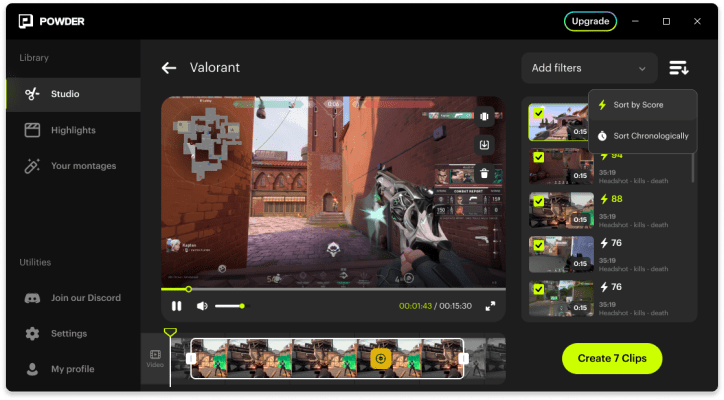
Powder, AI-powered clipping software that takes highlights from gaming streams and turns them into short-form videos, will soon be able to detect shouting for gamers to create even better montages. The platform is also working on speech-to-text software so creators can get a transcript of their entire stream and search for keywords.
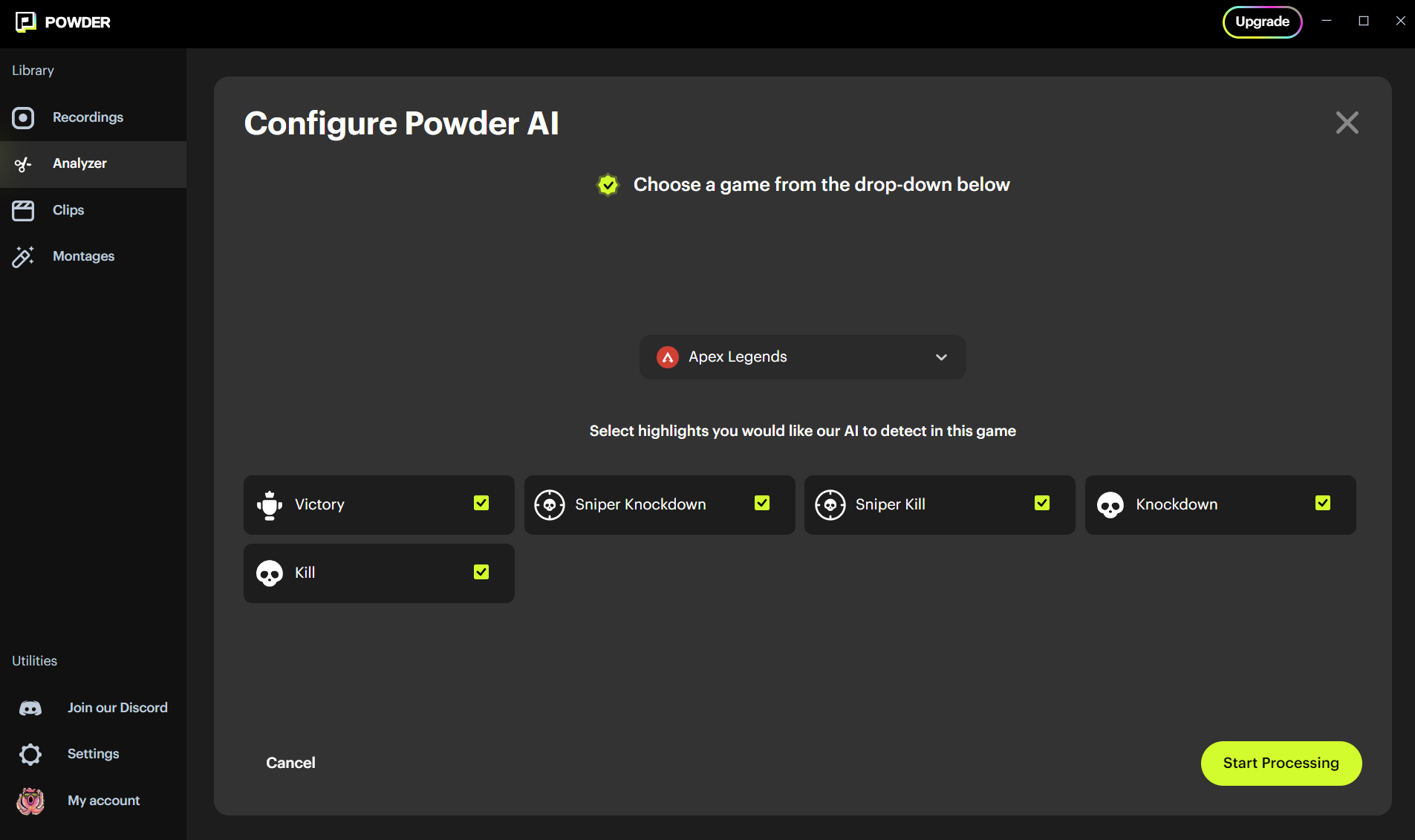
Powder has developed over 40 proprietary game-specific AI models, including audio analysis and laughter detection, as well as standalone models for popular titles like Fortnite, Valorant, Apex Legends, Call of Duty, Rocket League, Fall Guys, Elden Ring and Among Us. The company is also launching a model for Counter-Strike 2.
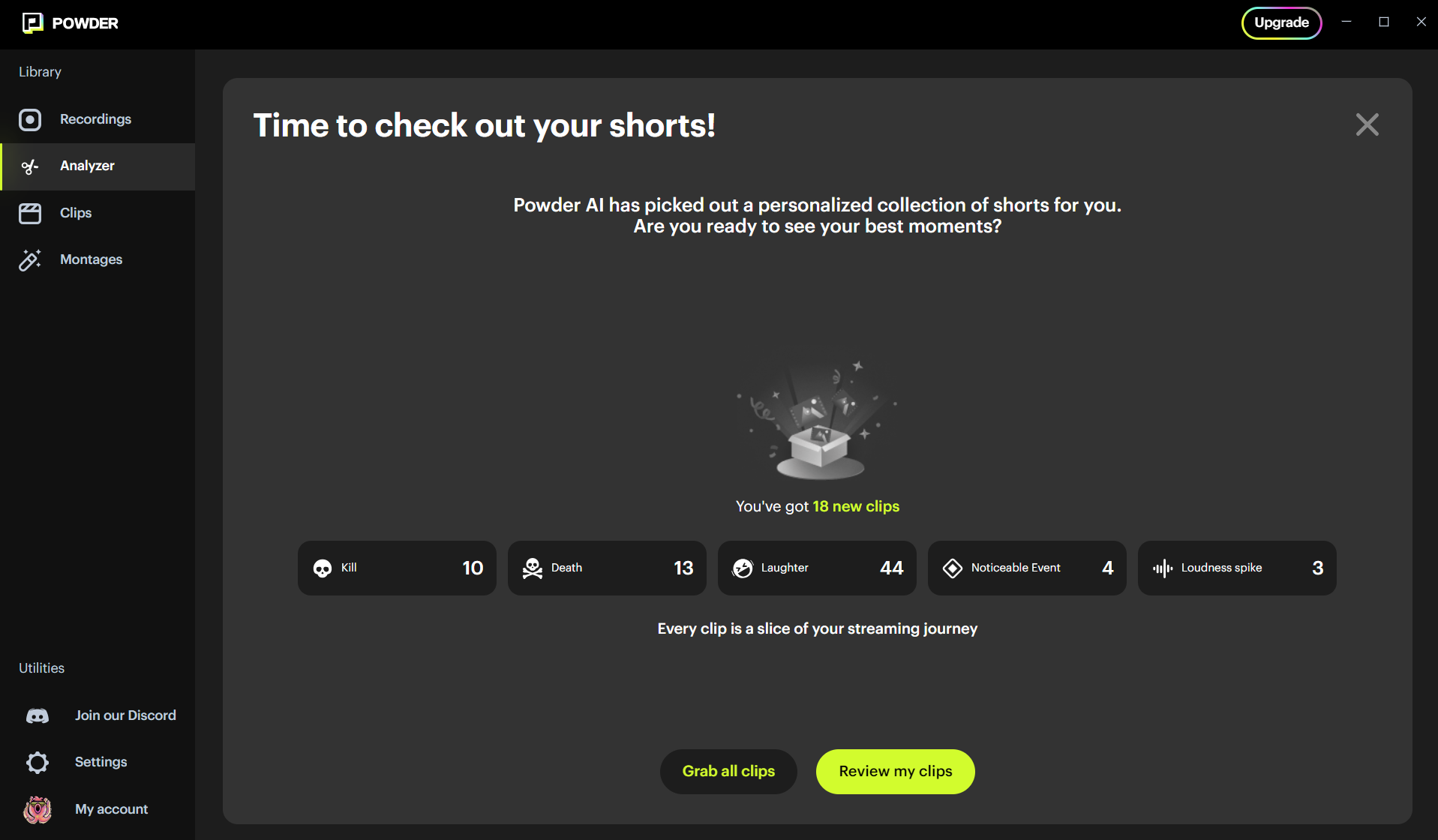
All the models work similarly; the AI scans the stream recordings – whether from Twitch, YouTube or an MP4 file — and finds spikes in activity, including victories, assists, kills and other performance-based in-game moments. Powder takes these highlights and creates short montages for creators to upload to social media.
Image Credits: Powder
Similar to its laughter recognition capability, the platform will soon launch another AI tool that recognizes fluctuations in voice so creators can generate clips of them shouting—a common reaction when playing intense ranked matches. The company anticipates a mid-December launch.
“From uncontrollable laughter and rage quits to even when there’s nothing obvious happening on-screen, the best moments when gaming is highly subjective and need to be reflected with several different perspectives that extend beyond the gameplay itself,” Powder co-founder and CEO Barthélémy Kiss told TechCrunch. “This made us certain that we needed to capture the emotion of playing games with your community. This combination of skill-based moments and deeply emotional moments is what makes gaming content creation so unique and special.”
Also coming to the platform next month is speech-to-text technology, giving creators a transcript of a stream and enabling them to quickly search specific words and pull up the best highlights. Streamers can also enter mood prompts. For instance, “Find me five funny clips where my fans go crazy.” The software is tailored with gamer lingo to help make results more accurate and precise.
“Being able to search and contextualize clips in long videos like Twitch streams with AI is the holy grail for content creators and the teams who support them, from their video editors to their agents and managers,” Kiss said.
Additionally, Powder is updating its “Community Hype” feature, which will roll out next week. The AI model launched in September and detects chat spikes. The update will recommend clips where the community “goes crazy,” Kiss said.
“The release of the second phase of Community Hype detection is to unlock another perspective weighing in on what makes a ‘highlight moment’ in a stream. One dimension of that is understanding what the community, who knows a streamer best, thinks. Communities have a great sense of what matters in a given gaming session or stream. In this latest release, when the community goes crazy and wants to remember a moment, that’s a moment that Powder AI will recommend you keep as a clip to share,” he explained.
According to Powder’s survey of over 3,200 streamers, creators spend an average of 53 hours a month or 630 hours a year looking for highlights and editing clips. Powder claims to save streamers upwards of around 10 hours per week or 520 hours a year.
The France-based startup was founded in 2018 by Kiss, Yannis Mangematin and Christian Navelot. It has raised $22 million to date.
Powder raises $14 million for its social app for game clips