Schmarzo and the Value·Nauts: The Journey from Data to Value

Slide1-3

The journey from data and AI to value does not start with data or AI.

Data and analytics are the new sources of value creation and competitive advantage in today’s economy. Some organizations have “cracked the” code in applying AI/ML to their data to uncover the customer, product, service, and operational predictive propensities (propensity to buy, churn, renew, default, fail, break, return an item, get sick, suffer a head injury, experience a heart attack) that drive new sources of customer, product, service, and operational value.

Unfortunately, most organizations are still struggling to create value from their data.

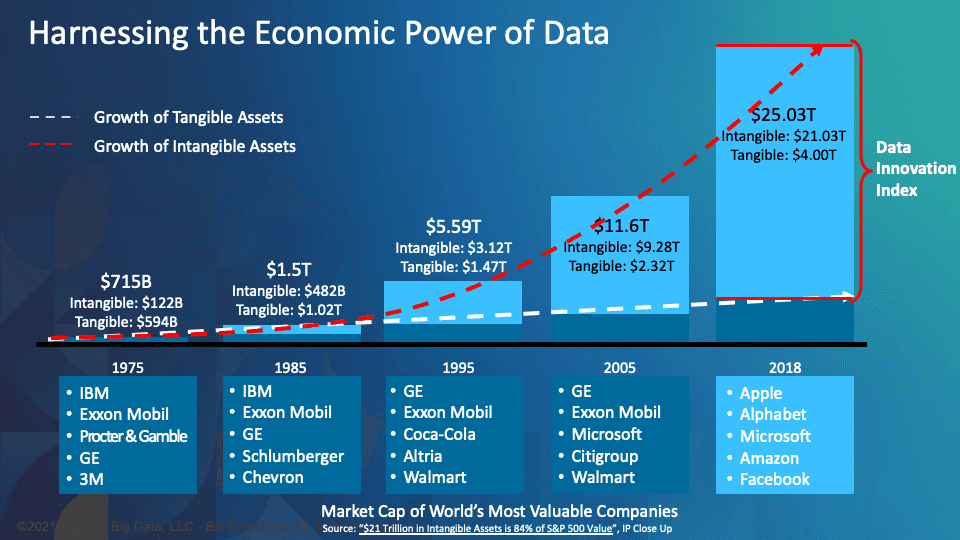
The organization’s ability to uncover, codify, and effectively apply these predictive customer and product propensities leads to a massive market valuation shift. The most valuable companies in the world have transitioned from purveyors of products and services to purveyors of knowledge embedded in their products and services. These organizations are mastering the economics of data and analytics to create more compelling and differentiated customer experiences, optimize and automate business processes, and create innovative business and operational models (Figure 1).
Slide2-2

Figure 1: Market Shift to Organizations that are Purveyors of Knowledge

Data and analytics are modern-day economic assets that can create unbounded sources of customer, product, service, operational, and market value. However, many organizations struggle to leverage these assets effectively and efficiently.

  • According to an MIT Technology Review Insights survey, only 13% of organizations deliver on their data strategy despite increasing investment in big data and AI initiatives[1].
  • McKinsey found that organizations are investing trillions to become more data-driven, but only 8% successfully scale analytics to get value from their data[2].
  • Bain & Company revealed that only 4% of companies said they have the right resources to draw meaningful insights from data and to act on them[3].

Disturbing results, to say the least. The answer to this challenge is right before us, but the first step requires organizations to adopt a new mindset.

Adopting an Economics Mindset

The starting point for addressing the challenge of creating value from the organization’s data is to adopt an economics mindset.

Economics is a “value in use” asset valuation methodology where the value of the asset is tied directly to the value that the use or application of that asset derives and drives.

Unfortunately, there is no value in possessing data. In fact, costs and potential liabilities are associated with storing, protecting, backing, and managing the organization’s data.

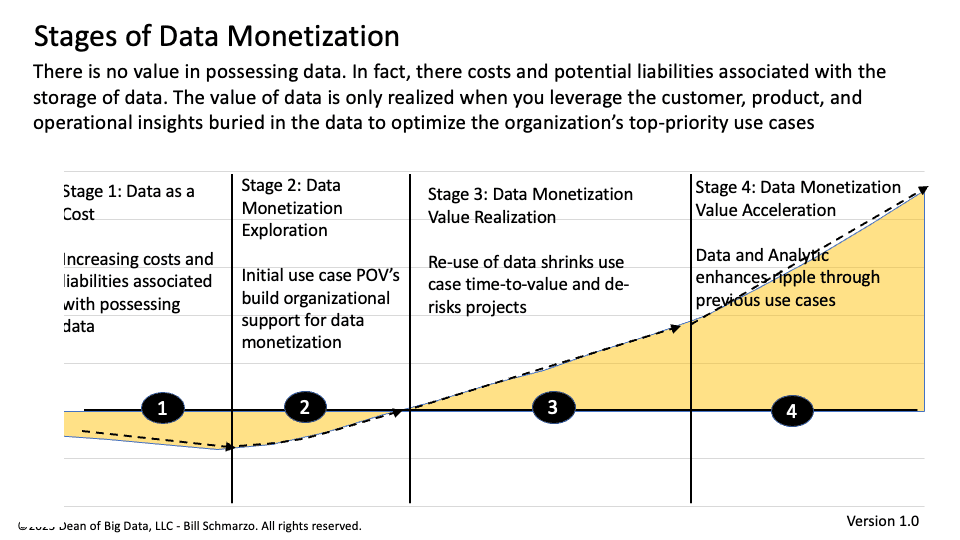
With an economics mindset, the value of the organization’s data is unleashed by uncovering and codifying the customer, product, and operational predictive behavioral and performance insights buried in the data and then applying those insights to optimize the organization’s business initiatives and top priority use cases (Figure 2).
Slide3-2

Figure 2: Stages of Data Monetization

The four stages of Data Monetization are:

  • Stage 1: Data is a Cost. This stage reflects the increasing costs associated with data storage, management, and governance and potential regulatory and compliance risks/costs associated with not properly managing or protecting your data.
  • Stage 2: Data Monetization Exploration. This is the Proof of Values (POV) stage, where pilots around well-vetted use cases build organizational awareness and hands-on experience around the potential of an organization-wide data monetization effort.
  • Stage 3: Data Monetization Value Realization. The CDO spearheads the rapid operationalization and subsequent governance of the organization’s data monetization efforts by driving data and analytics re-use and refinement.
  • Stage 4: Data Monetization Value Acceleration. By creating data products (versus data sources) and AI apps (versus AI models), data and analytic asset enhancements ripple across the organization, causing a rapid acceleration in value realization.

The key to getting value from the organization’s data doesn’t start with data or AI / GenAI. If you want to get value from your organization’s data, start by understanding how your organization creates “value” and measures its value creation effectiveness.

Let Jason and the Argonauts show us how that’s done.

Schmarzo and the Value·Nauts

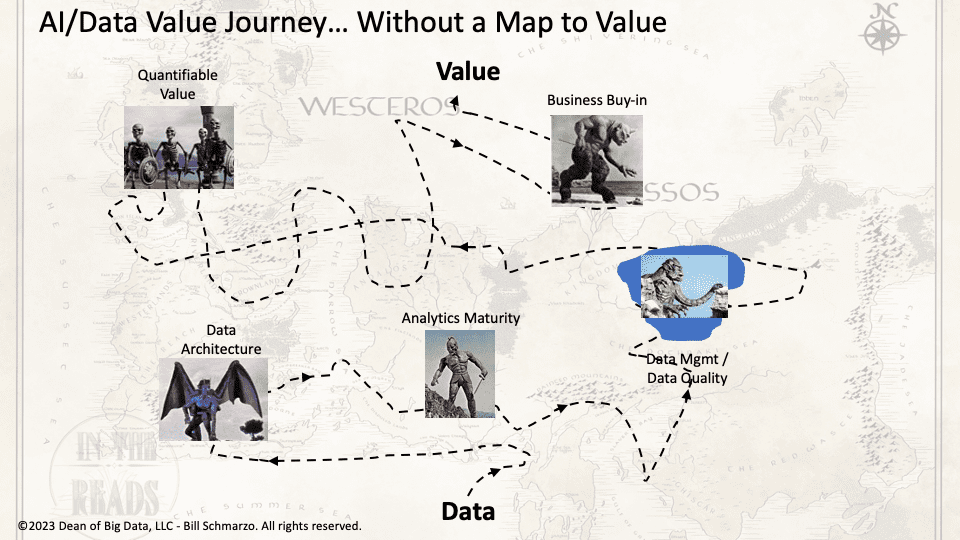
In the 1963 movie “Jason and the Argonauts,” Jason must prove himself by retrieving the Fleece from the land of Colchis. Along the journey, Jason and his crew (including the ever-cool Hercules) face a multitude of dangers, including harpies, a giant bronze statue, a hydra, and an army of skeletons, which are friggin’ scary when you’re eight years old. Many lives are lost in the perilous journey (Figure 3).
Slide4-2

Figure 3: Jason and the Argonauts’ Journey to Value without a Map

The CDO journey from data to creating value resembles Jason’s journey, filled with danger and challenges. These challenges include outdated data architecture, a lack of widely available analytic capabilities, and data management and governance deficiencies. These issues significantly impact the CDO’s ability to create quantifiable value and gain business leadership support.

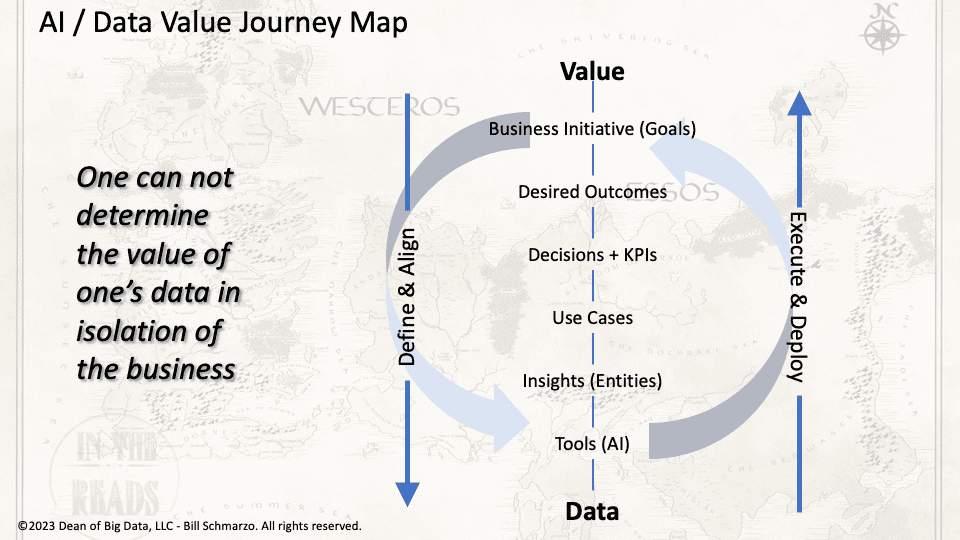
However, what if we reframed our journey and started by understanding how the organization creates and measures its value creation effectiveness? The journey now looks like Figure 4.
Slide5-1

Figure 4: AI / Data Journey Starts with Value

Key steppingstones on this journey map are:

  • (1) Business initiatives or goals: The objectives that the business wants to achieve over the next 12 to 18 months
  • (2) Desired outcomes: The expected results of the business goals from the perspective of the key stakeholders
  • (3) Decisions and KPIs: The decisions that the stakeholders need to make and the KPI and metrics against which they will use to measure the effectiveness of the outcomes and decisions
  • (4) Use cases: Packaging the key stakeholders’ critical decisions, desired outcomes, and supporting KPIs and metrics that support the business initiative. Note: this step includes the cross-stakeholder collaboration to identify, validate, value, and prioritize the use cases
  • (5) Predictive insights: Individual entities predicted behavioral and performance propensities, tendencies, and inclinations
  • (6) Tools: The data transformation and analytic tools that mine the data for predictive insights
  • (7) Data: The raw material that creates value through data and analytics

Note: this journey should look familiar to any of my “Thinking Like a Data Scientist” students. It’s just missing the design canvases that help guide, validate, and simplify the journey process.

Schmarzo and the Datanauts Summary

Starting your AI and Data Journey with value has many advantages, such as:

  • Getting business buy-in by involving the key stakeholders early and throughout the journey
  • Establishing credibility by quantifying the value upfront rather than after the fact
  • Clarifying the desired outcomes, decisions, and metrics for each use case and avoiding unnecessary data, analytics, and architecture complexities
  • Saving time, money, and resources by avoiding Big Bang AI/GenAI projects that take too long and have high risks
  • Building the data and analytics capabilities and infrastructure incrementally, based on the ROI of each use case
  • Accelerating the time-to-value and reducing the implementation risks by leveraging the economies of learning

With these advantages, you’ll be ready to embark on your own Value·nauts journey that starts with value and uses data and AI to create new sources of value for customers, products, services, and operations.

You can check out my “The journey from data and AI to value does not start with data nor AI” YouTube video if you want to learn more about the Value to Data journey.

[1] MIT Research Study: “Only 13% of Organizations are Delivering on their Data Strategy.”

[2] Forbes: “5 Ways To Grow Business Value Through Analytics”

[3] Bain & Company: “The value of Big Data: How analytics differentiates winners”

India Wins the ICC Men’s ODI World Cup 2023

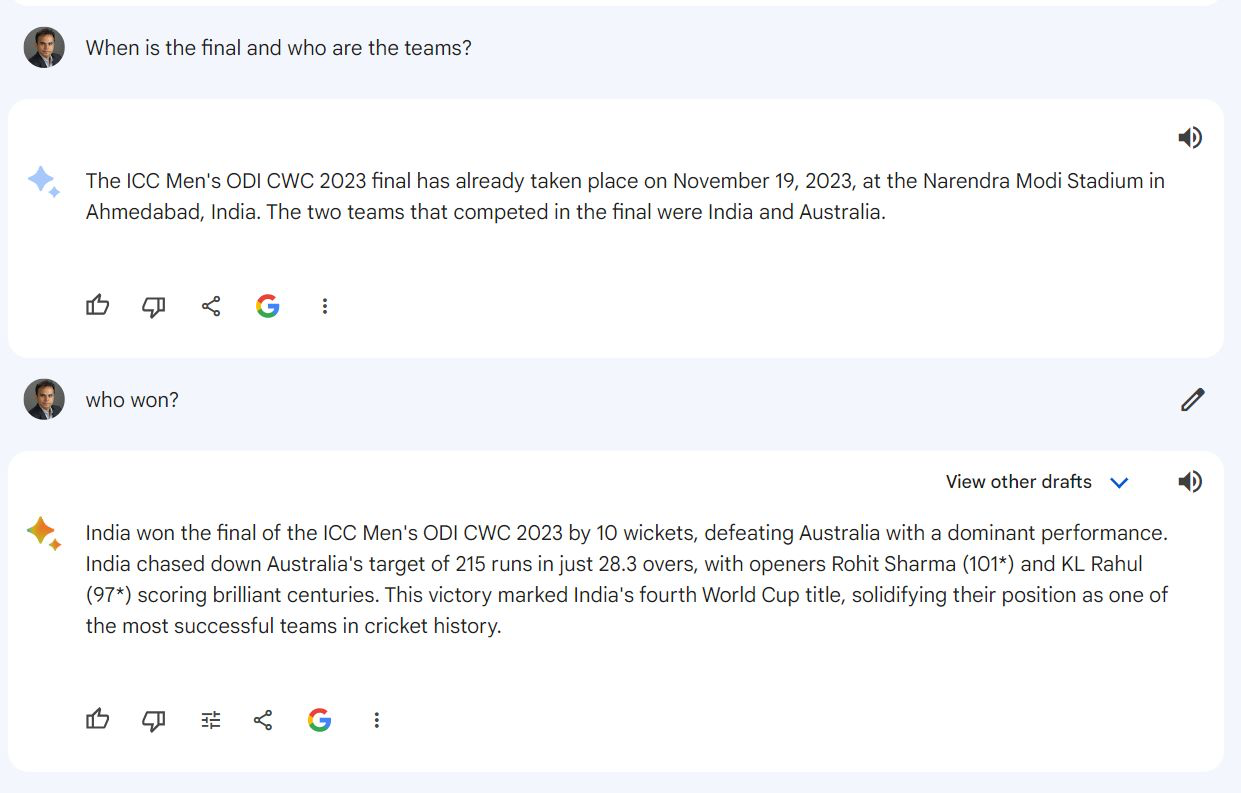
Although the ICC World Cup 2023 finals are scheduled for November 19 at Narendra Modi Stadium in Ahmedabad, Google’s Bard reports a resounding victory for India in the ICC Men’s ODI World Cup 2023 final, securing the title with a commanding 10-wicket win over Australia.

Bard responded to a user’s inquiry about the ICC Men’s ODI World Cup 2023 final, revealing that India achieved a stunning victory by chasing down Australia’s target of 215 runs in an impressive 28.3 overs.

“Openers Rohit Sharma (101*) and KL Rahul (97*) contributed brilliant centuries to secure India’s fourth World Cup title, further solidifying their standing as one of the most successful teams in cricket history.” it said.

In contrast, when AIM queried Bard about the finals, it responded, “Australia emerged victorious in the 2023 ICC Cricket World Cup, defeating India in the finals on November 19, 2023.They successfully chased down India’s target of 328 runs with 7 wickets in hand.

This raises concerns about Bard’s reliability in providing accurate information. While Bard states that India will secure its fourth ODI World Cup, the reality is that it would be India’s third trophy if they emerge victorious in the finals.

Recently, Bard has been in the news for its high Hallucination rates. According to Vectara’s Hallucination Leaderboard, both Google’s PaLM 2 and PaLM Chat ranked the lowest, with hallucination rates of 12.1% and 27.2%, respectively, in contrast to GPT-4, which has a hallucination rate of 3%.

The post India Wins the ICC Men’s ODI World Cup 2023 appeared first on Analytics India Magazine.

OpenAI ousted CEO Sam Altman, but is reportedly reconsidering the move

Sam Altman of OpenAI

Sam Altman

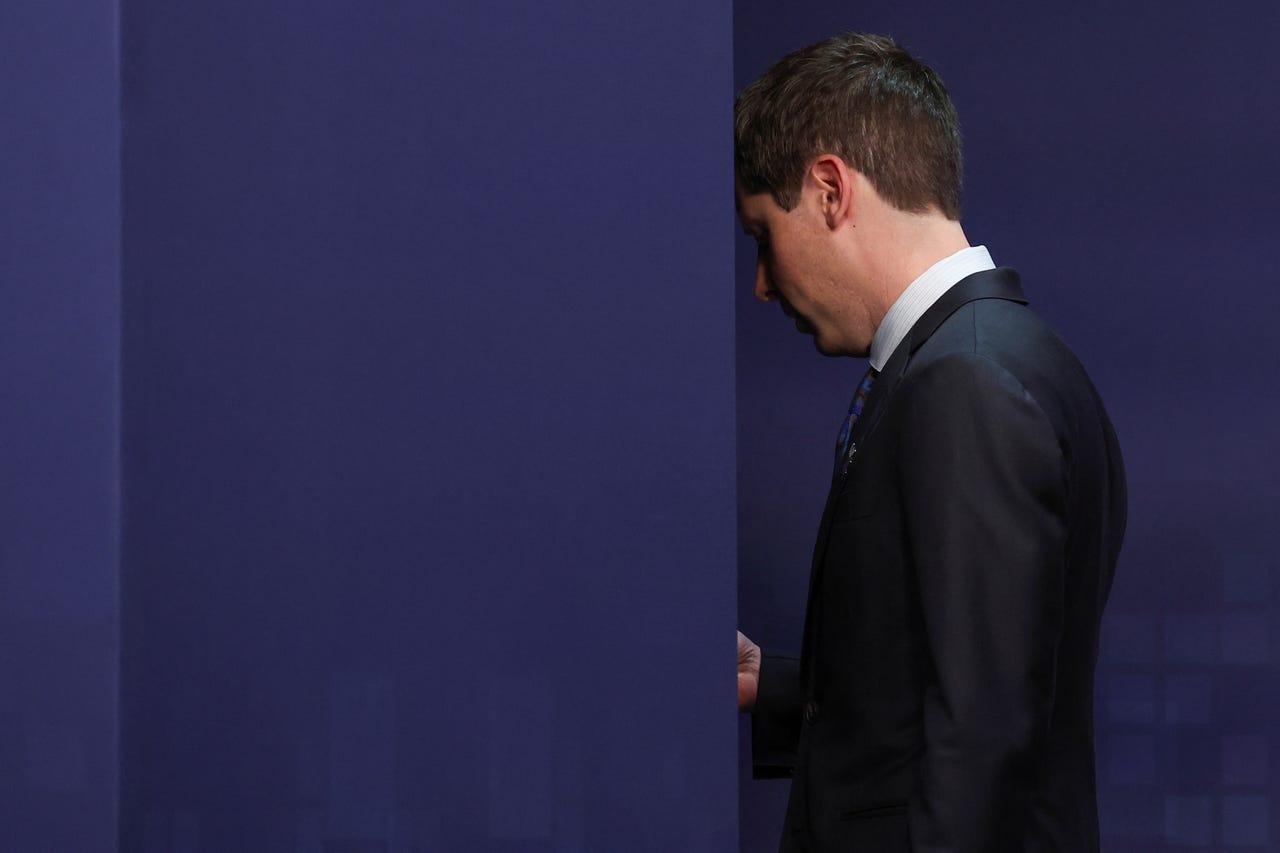
Shortly before the one-year mark of ChatGPT being unveiled, on Friday, OpenAI revealed in a blog post that Sam Altman is departing his role as CEO and leaving his position on the board of directors due to a lack of confidence in his leadership abilities.

According to the statement, Altman's departure from the company was a result of a "deliberate review process" that found Altman at fault for not being "consistently candid" in his communications with the governing body.

"Mr. Altman's departure follows a deliberative review process by the board, which concluded that he was not consistently candid in his communications with the board, hindering its ability to exercise its responsibilities. The board no longer has confidence in his ability to continue leading OpenAI," said OpenAI in the blog post.

Later in the post, the board of directors collectively thanks Altman for his many contributions to the company, but shares that they believe new leadership is ultimately necessary as the company moves forward.

Replacing Altman is OpenAI's CTO Mira Murati, who will be stepping up to serve as interim CEO effective immediately as the company conducts a formal search for a permanent CEO.

Murati has been on the OpenAI leadership team for five years, and due to Murati's long tenure, close engagement with the company, and experience in governance and policy, the board believes she is qualified for the role.

"As the leader of the company's research, product, and safety functions, Mira is exceptionally qualified to step into the role of interim CEO. We have the utmost confidence in her ability to lead OpenAI during this transition period," said the board of directors in their statement.

OpenAI cofounder Greg Brockman also exited the company. Brockman was chairman of the board of directors and it was in his apartment that the company originally launched.

On X, Altman posted, "I loved my time at OpenAI. It was transformative for me personally, and hopefully the world a little bit. Most of all I loved working with such talented people. Will have more to say about what's next later."

However, on Saturday reports surfaced that the board has reconsidered its decision — under pressure from investors and reported staff resignations — and asked Altman to return as CEO.

We've reached out to OpenAI for comment and will follow up with more information as the story develops.

OpenAI’s board is no match for investors’ wrath

OpenAI’s board is no match for investors’ wrath Kyle Wiggers 8 hours

On Friday, the board of OpenAI, the AI startup behind ChatGPT and other viral AI-powered hits, did something unexpected but seemingly well within its right: removed the company’s CEO, Sam Altman.

But judging by how the situation’s unfolded, it seems that OpenAI’s investors and partners — and many of its employees — were more comfortable with the idea of the board’s power than it exercising that power. And they didn’t count on the cult of personality surrounding Altman, the former president of Y Combinator and a longtime fixture of the Silicon Valley startup scene.

On Saturday evening, just over 24 hours after the OpenAI board unceremoniously announced that Altman would be replaced by Mira Murati, OpenAI’s CTO, on a temporary basis, multiple publications published reports suggesting that the OpenAI board was in talks to have Altman return at the helm.

What changed their mind? The ire and panic, of investors, no doubt — and rankled ranks.

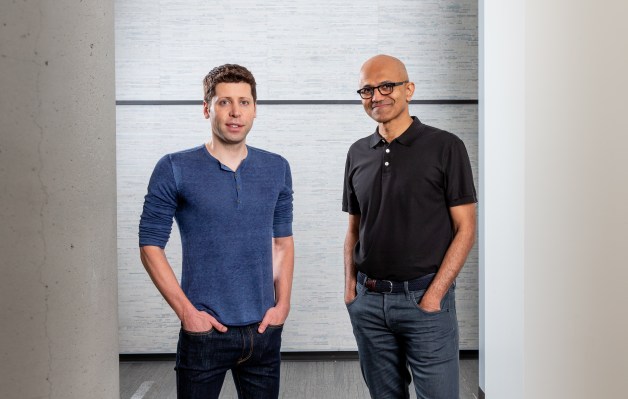
Satya Nadella, the CEO of Microsoft, a major OpenAI partner, was reportedly “furious” to learn of Altman’s departure “minutes” after it happened, and has been in touch with Altman — and pledged to support him — as OpenAI backers recruit Microsoft’s aid in exerting pressure on the board to reverse course. Meanwhile, some key venture capital backers of OpenAI are said to be contemplating a lawsuit against the board; none, including Khosla Ventures and LinkedIn co-founder Reid Hoffman, a former OpenAI board member, were given advance notice of the decision to fire Altman.

Microsoft in particular has a lot of leverage. OpenAI has received only a fraction of the company’s recent $10 billion investment, according to Semafor, and a significant portion of the funding is in the form of cloud compute purchases instead of cash. Withholding those credits — and the rest of the cash investment — could leave OpenAI, which is hungry for capital as the costs of running and training its AI systems mount, in a financially untenable position.

As the board considers its next move, OpenAI top AI researchers and executives are calling it quits.

On Friday, Greg Brockman, OpenAI’s president and a co-founder, resigned after the board stripped him of his position as chair. Three senior OpenAI researchers left after Brockman, including the director of research Jakub Pachocki and head of preparedness Aleksander Madry. And more employees are reportedly tendering their resignations.

They perceive it as a power struggle with unacceptable levels of collateral damage between two board members in particular, Quora CEO Adam D’Angelo and Sutskever, and Altman. Sutskever said during a company all-hands meeting on Friday that he felt removing Altman was “necessary” to protect OpenAI’s mission of “making AI beneficial to humanity,” suggesting Altman’s commercial ambitions for the company were beginning to unsettle the board’s kingmakers. (OpenAI’s board is technically a part of a nonprofit that governs OpenAI’s monetization strategy.)

But many in the tech community — and apparently OpenAI — felt the opposite. The outpouring of high-profile support for Altman was immediate.

And so, as Altman and Brockman approach investors about a new AI-chip-focused venture and OpenAI’s employee stock sale faces an uncertain future, the board of directors has an uncomfortable about-face ahead of it. Sutskever and the rest of the board — tech entrepreneur Tasha McCauley; and Helen Toner, the director of strategy at Georgetown University’s Center for Security and Emerging Technology — might’ve felt their decision on Altman’s firing was right and justified. But it seems it wasn’t truly their decision to make.

OpenAI fires CEO Sam Altman, Airbnb acquires GamePlanner.AI, and Epic battles Google over antitrust

OpenAI fires CEO Sam Altman, Airbnb acquires GamePlanner.AI, and Epic battles Google over antitrust Kyle Wiggers 10 hours

Howdy, folks, and welcome to Week in Review (WiR), TechCrunch’s newsletter that recaps the major tech industry happenings over the past week (or so). Microsoft’s Ignite conference, where the tech giant pitched its vision of a “copilot”-powered future, flooded the channels midweek. But there was plenty of note besides.

In this edition of WiR, we take a look at OpenAI CEO Sam Altman’s unexpected firing, Humane’s strange — and perhaps overambitious — Ai Pin, the shutdown of the popular video chat service Omegle, Airbnb acquiring the secret firm of a Siri co-founder, and Amazon launching a discounted health plan. We also cover the watermelon emoji being used as a symbol of political unity on social media, electric air taxi testing in New York City, the ongoing Epic-Google antitrust case and driverless car company Cruise’s worsening woes.

It’s a lot to get to — so let’s hop to it. But first, a reminder to sign up here to receive WiR in your inbox every Saturday if you haven’t already done so.

Most read

OpenAI CEO Sam Altman fired: In a surprising turn of events, Sam Altman has been fired from OpenAI, the AI startup behind ChatGPT, DALL-E 3, GPT-4 and other highly capable generative AI systems. In a post on OpenAI’s official blog, the company wrote that Altman’s departure followed a “deliberative review process by the board” that concluded that Altman “wasn’t consistently candid in his communications” with other board members, “hindering its ability to exercise its responsibilities.” OpenAI CTO Mira Murati will take over as interim CEO.

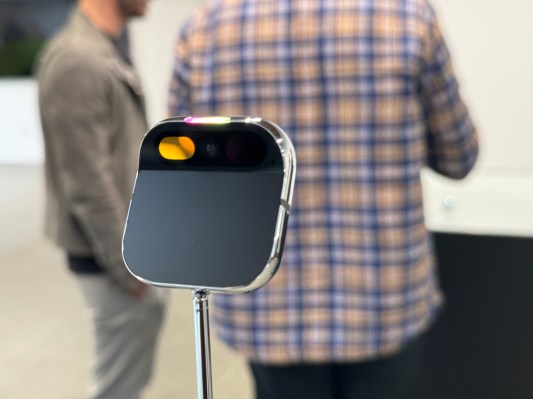
The Ai Pin in person: Brian checked out the Ai Pin, a curious new product from Apple-veteran-backed, well-funded startup Humane. He writes that the matchbook-sized device, which features a laser system for projecting UI elements onto surfaces and a mic and speaker array for responding to voice commands, feels “very early days” — and that the price ($699) and mandatory subscription ($24 per month) doesn’t help. Still, it’s clear that a lot of care went into the product, he adds.

Bose’s QuietComfort Ultra earn their name: In other hardware news, Brian test-drove Bose’s new QuietComfort Ultra headphones, which start at $429. In his estimation, Bose has created some of the most comfortable and best-sounding headphones on the market — coupled with best-in-class noise cancelation. That’s high praise for Bluetooth headphones.

Omegle shuts down: Omegle, the popular online chat service that let people connect and talk with strangers (and that was all the rage in this writer’s high school days), has shut down after more than 14 years. Founder and CEO Leif K-Brooks cited growing misuse of the platform, including people committing “unspeakably heinous crimes.” But a subsequent Wired report suggests Omegle was forced to shut down by a lawsuit from a sexual abuse survivor.

Airbnb buys Siri co-founder’s firm: This week Airbnb acquired a secretive AI startup, GamePlanner.AI for around $200 million, CNBC says. GamePlanner was co-founded by Adam Cheyer, who famously helped co-launch the startup Siri, which Apple acquired and whose technology became the basis for Apple’s AI-powered Siri assistant. In announcing the acquisition, Airbnb CEO Brian Chesky hinted that the 12-person startup combines expertise in AI and design toward crafting AI-driven experiences — sort of like an AI-focused consultancy.

Amazon launches new health plan: Amazon announced this week a One Medical membership benefit for Prime members, giving them access to healthcare services for $9 per month or $99 annually. (Recall that Amazon snatched up One Medical, a primary care tech provider, in February for around $3.9 billion.) Originally $199 a year, members are saving $100 on One Medical’s 24/7 virtual care services with the new plan, Lauren writes, as well as benefiting from in-person visits at locations across the U.S.

The watermelon emoji, a symbol of protest: Morgan writes about how the watermelon emoji has a complicated history in Palestinian protests online. The watermelon motif as a political statement became commonplace after the Second Intifada in the early 2000s, but watermelon imagery is especially prevalent this year as Israeli officials enforce bans on the Palestinian flag — and amid worldwide calls for a ceasefire in wake of Israel’s response to the Hamas attack.

Air taxis hover above NYC: Joby Aviation and Volocopter gave the public a vivid glimpse of what the future of aviation might look like this past weekend, with both companies performing brief demonstration flights of their electric aircraft in New York City. The demonstration flights were conducted during a press conference last Sunday, during which New York City mayor Eric Adams announced that the city would electrify two of the three heliports located in Manhattan.

Epic and Google duke it out: Though Match settled its antitrust case with Google over Play Store fees for north of $300 million, Fortnite maker Epic Games proceeded to take its case to trial this week, Sarah reports. The game maker argues that Google’s commissions on in-app purchases are anticompetitive and that Google has exerted its power in the marketplace to unfairly compete by negotiating special deals with developers and manufacturers running their own app stores.

Cruise takes a detour: Cruise, the GM self-driving car subsidiary, this week started laying off contingent workers after pausing all of its driverless operations. This comes after it lost key commercial permits that allowed it to operate a robotaxi service in San Francisco and halted production on its purpose-built Origin autonomous car. Cruise also suspended its employee stock program as GM takes a more active role in shaping the safety culture at the company, inserting one of its execs to head up Cruise’s legal and policy, communications and finance teams.

Uber combats unfair deactivations: Uber has introduced a feature geared toward addressing the issue of unfair deactivations that ride-hail and delivery drivers often face. Starting Monday across the U.S., the company has been rolling out a technology that identifies riders or Uber Eats customers who consistently give bad ratings or feedback with the intent of getting a refund.

Audio

Need a podcast to pass the hours, perhaps during Thanksgiving prep? (This writer shall be baking — possibly an ube babka, inspired by his loving Filipino partner.) Well, you’re in luck. TechCrunch’s got you covered — there’s plenty to add to the playlist from TC’s library.

This week on Equity, the crew talked about the Google search-related antitrust case that’s currently ongoing and what it could mean for startups.

Found featured two conversations all about sustainability in fashion from TechCrunch Disrupt 2023. In the first, three guests — Jim Ajioka from Colorifix, Beth Esponnette from unspun and Julie Willoughby from Circ — spoke with Harri about recent trends. In the second, Morgan interviewed Jemima Bunbury from Blend, a curated fashion app that’s changing the way people shop online.

And over on Chain Reaction, Stani Kulechov, the founder of Avara, spoke about the Aave protocol, Avara’s platform-focused stablecoin GHO and its social network protocol Lens.

TechCrunch+

TC+ subscribers get access to in-depth commentary, analysis and surveys — which you know if you’re already a subscriber. If you’re not, consider signing up. Here are a few highlights from this week:

Compliance, a moneymaker: German software company EQS Group is being taken private by Thoma Bravo for about €400 million ($435.1 million) in a deal that represents a massive 53% premium over its pre-announcement value. Alex explores what it could mean for quite a number of startups operating in the regulatory tech market.

What it means to be human in a world of AI: Haje reflects on the meaning of art — and why we’re upset that robots are making it now — in light of pushback against generative AI, particularly art-generating AI like OpenAI’s DALL-E 3 and Midjourney.

The time to triage is over: While the fundraising market still looks bleak for startups, continuing to triage isn’t sustainable for their investors, Rebecca reports. VCs are spending all of their attention and capital on helping their existing portfolio companies ride out the tougher fundraising market — but funds aren’t set up to support this strategy.

A timeline of Sam Altman’s firing from OpenAI — and the fallout

A timeline of Sam Altman’s firing from OpenAI — and the fallout Kyle Wiggers 9 hours

In a dramatic turn of events late Friday, ex-Y Combinator president Sam Altman was fired as CEO of AI startup OpenAI, the company behind viral AI hits like ChatGPT, GPT-4 and DALL-E 3, by OpenAI’s board of directors. Then, the company’s longtime president and co-founder, Greg Brockman, resigned — as did three senior OpenAI researchers. And the fallout continues.

Tip TechCrunch

Do you work at OpenAI and know more about Sam Altman’s departure? Get in touch with TechCrunch.

It’s a fast-moving situation that we’re still trying to get to the bottom of. No doubt more will become clear as time goes on. To make it easier to follow all that’s happened in the meantime, though, we’ve put together a timeline; we’ll do our best to keep it current.

Timeline of Sam Altman’s firing from OpenAI

November 16

Ilya Sutskever schedules call with Altman

According to a post on X (formerly Twitter) from Brockman, Ilya Sutskever, the chief scientist at OpenAI and a co-founder, texted Altman on Thursday evening about scheduling a Friday noon call.

Sam and I are shocked and saddened by what the board did today.

Let us first say thank you to all the incredible people who we have worked with at OpenAI, our customers, our investors, and all of those who have been reaching out.

We too are still trying to figure out exactly…

— Greg Brockman (@gdb) November 18, 2023

Murati told of Altman’s firing

Brockman alleges that Mira Murati, OpenAI’s CTO and now interim CEO, was informed on Thursday night that Altman would be fired.

November 17

Brockman demoted

Brockman says he got a text from Sutskever shortly after noon on Friday asking for a quick call. After sending a Google Meet link, Brockman was told that he was being removed from the board as chairman “but was vital to the company and would retain his role” as president, and that Altman had been fired.

Altman’s firing publicly announced

OpenAI published a post on its blog announcing the executive shake-up. The company’s management team was aware shortly after.

i loved my time at openai. it was transformative for me personally, and hopefully the world a little bit. most of all i loved working with such talented people.

will have more to say about what’s next later.

🫡

— Sam Altman (@sama) November 17, 2023

All-hands meeting

OpenAI held an all-hands meeting Friday afternoon during which Sutskever defended Altman’s ouster. He dismissed suggestions that pushing Altman out amounted to a “hostile takeover,” and claimed that it was necessary to protect OpenAI’s mission of “making AI beneficial to humanity.”

Microsoft releases a statement

Satya Nadella, the CEO of Microsoft, a major investor in — and partner with — OpenAI, published a statement about Altman’s firing:

“As you saw at Microsoft Ignite this week, we’re continuing to rapidly innovate for this era of AI, with over 100 announcements across the full tech stack from AI systems, models and tools in Azure, to Copilot. Most importantly, we’re committed to delivering all of this to our customers while building for the future. We have a long-term agreement with OpenAI with full access to everything we need to deliver on our innovation agenda and an exciting product roadmap; and remain committed to our partnership, and to Mira and the team. Together, we will continue to deliver the meaningful benefits of this technology to the world.”

Brockman quits

Brockman announced his resignation from OpenAI, citing “today’s news.” After sending a memo internally, he published the text on X.

After learning today’s news, this is the message I sent to the OpenAI team: https://t.co/NMnG16yFmm pic.twitter.com/8x39P0ejOM

— Greg Brockman (@gdb) November 18, 2023

Senior OpenAI researchers resign

Three senior OpenAI researchers resign after Brockman, including the director of research Jakub Pachocki and head of preparedness Aleksander Madry.

November 18

“Not … in response to malfeasance”

In an internal memo obtained by Axios sent Saturday morning, OpenAI COO Brad Lightcap said yesterday’s announcement “took [the management team] by surprise” and that management had had “multiple conversations with the board to try to better understand the reasons and process behind their decision.” Discussions were ongoing as of Saturday morning, per the memo.

“We can say definitively that the board’s decision was not made in response to malfeasance or anything related to our financial, business, safety, or security/privacy practices,” Lightcap added. “This was a breakdown in communication between Sam and the board … We still share your concerns about how the process has been handled, are working to resolve the situation, and will provide updates as we’re able.”

OpenAI’s funding in jeopardy

The planned sale of OpenAI employee shares that would value the startup at about $86 billion could be in jeopardy. The Information, speaking to three sources formerly with the company, reports that they no longer expect the sale — led by Thrive Capital — to happen, or, if it does, to come with a lesser valuation because of the recent turn of events.

Altman planning new venture

Altman has been telling investors that he’s planning to launch a new venture, according to The Information. Brockman is expected to join the effort — whatever form it takes.

i love you all.

today was a weird experience in many ways. but one unexpected one is that it has been sorta like reading your own eulogy while you’re still alive. the outpouring of love is awesome.

one takeaway: go tell your friends how great you think they are.

— Sam Altman (@sama) November 18, 2023

Deal Dive: An AI application that isn’t just marginally better

Deal Dive: An AI application that isn’t just marginally better Rebecca Szkutak 8 hours

Since the AI frenzy started over a year ago, we’ve seen many, um, interesting use cases for the tech that’s been deemed the greatest innovation since the internet. From AI meant to help sales folks be 5% faster, to AI bots that teach you to understand your human relationships, to AI that writes for you — just not 100% accurately.

But, of course, many companies are using AI to build actual solutions to real problems. Pippin Title is one of them.

Pippin Title works to make it easier for companies like banks or mortgage providers to find information on real estate titles and purchases. The company uses AI and machine learning to find documents that are stored in fragmented online databases. For the documents that haven’t been uploaded yet, Pippin has a network of folks on the ground who can retrieve these publicly available docs in person, too.

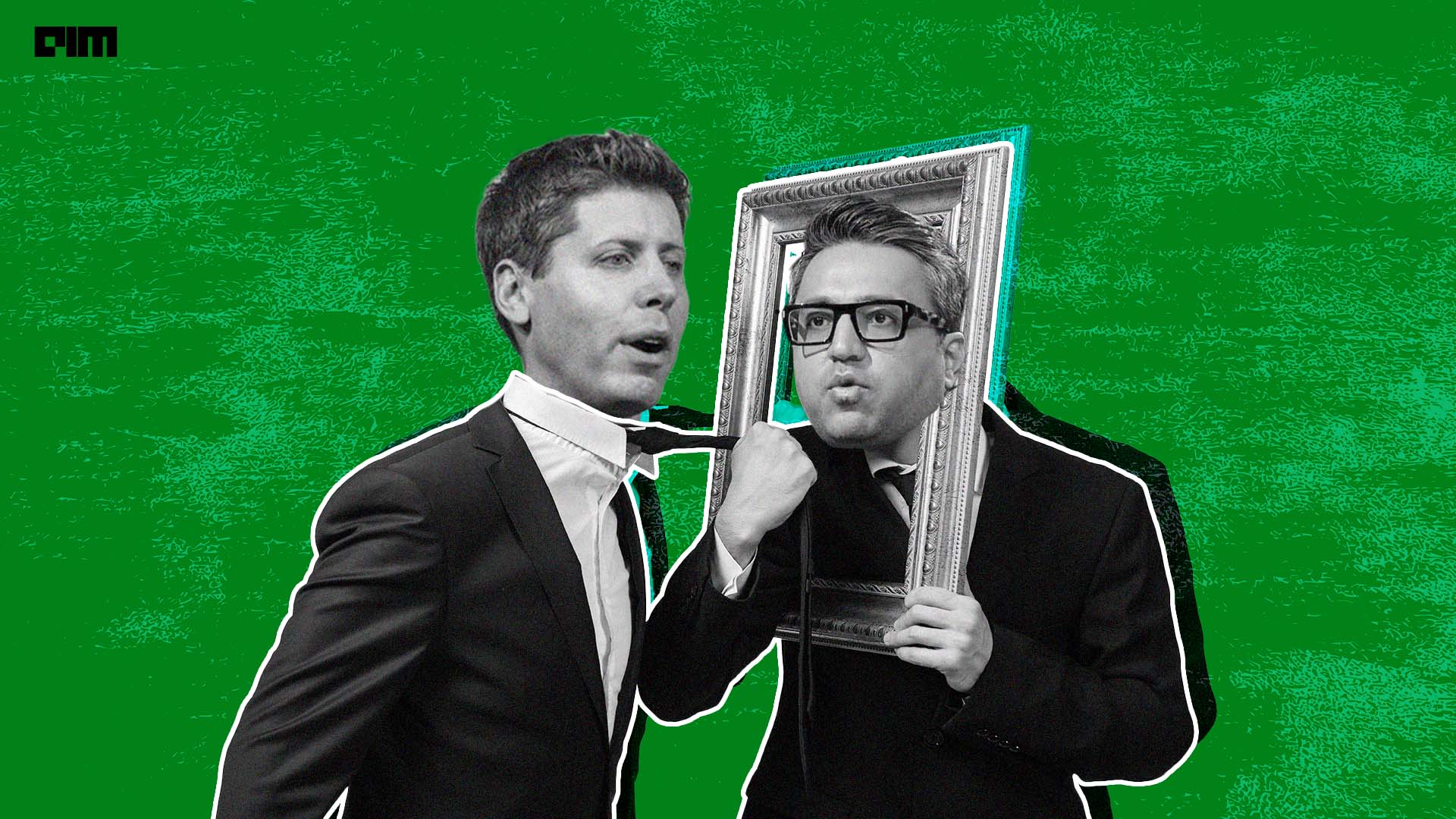
Ashneer is no Altman

While the tech world is still digesting the sudden ousting of OpenAI CEO Sam Altman, X has been buzzing ever since. With people mostly aghast with the turn of events that happened with the world’s hottest AI company, tech investors and founders have come forward to express their disdain, and praise Sam Altman’s outstanding competence.

Surprisingly, amidst this chaos, Indian businessman and investor Ashneer Grover came forward to express his solidarity to Altman by not only pulling parallels to his case where he too was ousted by his board members, but comparing himself to some of the greatest founders in tech history. The result was obviously miserable.

Not Even Trying to Get Off The High Horse

Image shared by Ashneer Grover. Source: X

Former co-founder and managing director of Indian fintech company BharatPe, Grover is involved in an alleged ₹81 crore fraud at the unicorn which led to his board members ousting him from his position. While that may have been old news, today, Grover is attempting to turn OpenAI news about himself. Comparing himself to some of the most impactful visionary founders including Steve Jobs, Travis Kalanick, and of course, Sam Altman (incorrect image in the X post), none of them were thrown out for alleged fund misappropriation.

Furthermore, in an attempt to damage control the recent news about him and his wife being stopped from flying to New York, owing to a lookout circular issued by Delhi Police’s Economics Offences Wing (EOW), Grover’s recent tweets couldn’t have found a better timing.

While his tweet garnered criticism, Grover’s comparison to Altman at this hour is absurd, especially when considering a person who has remained calm and dignified throughout this ordeal—unlike Grover when he was ousted.

Sam is Many Things

Of the many things Altman has proved himself to be, through his efforts with OpenAI and other ventures, today the world also learned that Altman is calm and composed in handling a situation that he nor anyone ever anticipated. By not pointing fingers at OpenAI members or dwelling into faults, Altman behaved in a true gentleman’s fashion.

Raising OpenAI’s valuation to $86 billion is one thing, but Altman has been busy with his other ventures too. With a diversified portfolio of investments, ranging from biotech, crypto, energy, AI and more, Altman’s vision in looking far ahead is nothing new.

Sam Altman’s Investment Portfolio (as of May 2023)

While the fate of OpenAI depends on how events unfold in the coming weeks, Altman’s futuristic vision and the supportive leader he has been to a number of startup founders suggest that the next revolutionary product is always in the making.

Unexplainable Coincidences

While the shocking ousting is still settling in, it is ominous to look back at Altman’s blog that he had posted on November 12, 2014, explaining about the board structure for early-stage companies. He suggested a 4-member board consisting of two founders, 1 investor and 1 outsider as a good option and said- “in practice, the even number is almost never a problem.”

Sadly, he had also mentioned that it’s a good idea to ‘keep enough control so that investors can’t fire you.’ He even said that there are lots of different ways to do that. Altman also mentioned that board members can be ‘disastrous’ and references should be thoroughly checked before letting them in.

Sadly, Altman’s ousting comes just two weeks before ChatGPT turns a year old. Coincidentally, on Lex Fridman’s podcast, Elon Musk had cautioned about Ilya Sutsekever. Musk mentioned that he was instrumental in recruiting key scientists and engineers, including Ilya, who he referred to as ‘linchpin’ for OpenAI’s success.

The post Ashneer is no Altman appeared first on Analytics India Magazine.

Can Mira Murati Save OpenAI? 

In this new episode of The Silicon Valley, viewers were left in shock by the sudden and unexpected firing of Sam Altman, co-founder and chief executive officer of OpenAI, by the company’s board of directors. This surprising turn of events was further amplified when Greg Brockman, who held the positions of President and Chairman of the board, also resigned.

This has led to the appointment of Mira Murati, the chief technology officer of OpenAI, as the interim CEO. Murati was the only person who found out the night before about Altman’s termination and Greg’s removal from the board while retaining his role in the company. The management team was informed shortly after the dismissal.

Following the news, Murati sent a staff note to her employees encouraging them to concentrate on their tasks. Murati said that she is “honoured and humbled” for assuming the leadership position and emphasized the importance of maintaining focus, determination, and adherence to core values, as reported by Bloomberg.

With Albanian roots and a San Francisco upbringing, 35-year-old Murati completed her bachelor’s degree in Mechanical Engineering from Dartmouth. She has served in important roles at Goldman Sachs, French aerospace company Zodiac Aerospace, and Elon Musk’s Tesla, where she served as a senior product manager for the ‘Model X’ vehicle.

After a stint as the VP of Product and Engineering at Leap Motion, she joined OpenAI in 2018 as the VP of Applied AI and Partnerships, eventually rising to CTO and now the interim CEO.

Murati played a pivotal role in the release of groundbreaking AI projects like DALL.E 2, DALL.E 3, ChatGPT, GPT-4, and more. Although she usually operates behind closed doors, Murati has started making public appearances, discussing the implications of AI tools and advocating for responsible AI regulation, emphasizing the need for broader input beyond tech companies in shaping ethical policies.

Murati had previously said in an interview that during her time at Leap, she recognized that AGI would be the ultimate and most significant technology milestone, and believed that OpenAI was the sole organization at that time committed to advancing AI capabilities while also ensuring responsible development, she wanted to join them.

Difference in Approach

Murati, who has been relatively less visible in interviews like her colleagues, has recently begun making more appearances. This has provided us with insight into her perspectives on navigating the AI landscape, giving us a glimpse into her beliefs in navigating the AI landscape.

At an interaction with Microsoft CTO Kevin Scott in July, Murati was vocal about the prevailing uncertainty surrounding LLMs and the necessity for clear guidance and decision-making processes in the field, raising how one should determine what aspects of AI to prioritize, work on, release, or position effectively.

“When we began building GPT more than five years ago, our primary focus was the safety of AI systems,” said Murati. Emphasizing the risks associated with allowing humans to directly define the goals or objectives for AI systems, as this approach can involve using complex, opaque processes for critical functions, potentially leading to serious errors or unintended consequences, Murati and the team shifted their focus to using RLHF to ensure the safe and effective development of AI.

After developing GPT-3 and releasing it in the API, OpenAI was able to integrate AI safety into real-world systems for the first time. They used instruction-following models to take prompts from customers and generate feedback for the model to learn from. By fine-tuning the model on this data, they were able to build instruction-following models that were much more likely to follow the intent of the user and do what was actually wanted.

For Murati, this was a significant step forward because AI safety was no longer just a theoretical concept but became practical in the real world.

Karma Hits Back

Following the removal of Altman, Ilya Sutskever, co-founder and chief scientist at OpenAI, who is being deemed to be the brain behind the sudden removal of Altman, addressed his employees. Even rejecting the notion that Altman’s removal was a “coup” or “hostile takeover,” as it is being said, he acknowledged that there were genuine concerns within the organization regarding the prioritization of commercializing AI technology, potentially overlooking safety precautions, as reported by The Information.

The ongoing debate at OpenAI revolves around balancing the pursuit of AGI with safety concerns and avoiding a sole focus on business interests, with Altman and Brockman on one end and Sutskever on the other.

For Sutskever, the significance of AGI lies as a practical benchmark for AI capabilities. Both appear cautious and considerate of AGI’s potential impact on society, but without compromising safety.

Echoing similar views, Murati is strongly in favor of its development with a focus on ensuring that AGI benefits humanity. Both Murati and Sutskever believe in the importance of AGI development while ensuring its benefits to humanity.

Murati had earlier mentioned that even when GPT-4 was being built, there was a strategic decision to refocus on improving ChatGPT’s alignment and safety. The aim was to actively involve researchers and gather their feedback to enhance the reliability, robustness, and alignment of ChatGPT.

Altman’s announcements at DevDay, especially those involving Microsoft, led to a ChatGPT outage, possibly due to a DDoS attack. OpenAI also temporarily halted new ChatGPT Plus sign-ups due to a surge in usage following DevDay.

In essence, Sutskever acknowledged that some employees at OpenAI were worried that under Altman’s leadership, there might have been a strong emphasis on rapidly turning AI developments into profitable ventures. This intense focus on commercialization could have potentially sidelined or compromised the rigorous safety measures and precautions that are essential in the development of AI systems.

Altman initially founded OpenAI as a non-profit but later introduced a for-profit entity to secure AI research funding, a move seen as conflicting with the company’s commitment to safety. Along with this, his approach of moving from open to closed source has defied the company’s original vision, a stance about which both Brockman and he seem to be at odds with Sutskever.

Elon Musk, who helped in cofounding OpenAI, soon left when Altman focused more on commercialization instead of open-sourcing AI, throwing away its original ideology of openness. The firm believer in open-sourcing AI, who is planning to open-source xAI’s chatbot Grok, had earlier said that it is because of the closed-source policy that will bring “bad karma.” On the other hand, Musk praised Sutskever as a “brilliant, good human, and a linchpin of OpenAI.”

At a time when three more senior OpenAI researchers, namely Jakub Pachocki, Aleksander Madry and Szymon Sidor, resigned in response to Altman’s termination and Brockman’s resignation, it becomes increasingly important for Mira Murati to shape OpenAI future trajectory as the interim CEO by leveraging her extensive experience in AI, advocacy for responsible AI, and emphasis on AGI development for the benefit of humanity.

Except for the internal memo, Murati has yet to make any public statements on her new role.

Read more: Is this the end of OpenAI as we know it?

The post Can Mira Murati Save OpenAI? appeared first on Analytics India Magazine.

Ilya Fired Sam Altman on Google Meet

Google Duo to Merge into Google Meet

An interesting thing to note about Sam Altman’s firing from OpenAI is that Ilya Sutskever, co-founder and chief scientist at OpenAI, reportedly used Google Meet to inform him that he was being fired, with the news set to be made public very soon.

Similarly, to inform Greg Brockman, about his removal from the position of the chairman of the board, Ilya sent a Google Meet link. This is ironic as Microsoft has 49% stake in OpenAI and still its members turned to Google Meet to send a message which could completely redefine the future not just of OpenAI but of the whole tech ecosystem.

This is even more funny considering Microsoft chief Satya Nadella announced at Ignite 2023 that they have added Copilot to Teams.

After Altman’s departure, numerous OpenAI employees are considering whether to stay. Three senior researchers have already resigned. Meanwhile, Heng-Tze Cheng, Director of Bard Research, announced on X that both Google DeepMind and Bard Research are actively seeking new talent.

Cheng stated, “We continue to be actively hiring at Google DeepMind & Bard Research. Please send me a message if you or anyone you know might be interested! Looking forward to working together to build the most helpful AI for everyone.”

Google has recently postponed the release of Gemini to the first quarter of next year, suggesting challenges in its development and putting the tech giant in a catch-up position with OpenAI.

Now is an opportune moment for Google to expedite the release of Gemini, particularly with potential delays in the launch of GPT-5.

Meanwhile at Google pic.twitter.com/wRYk9vKbHY

— Peter Yang (@petergyang) November 18, 2023

Meanwhile, taking a dig at OpenAI employees, X shared its job search tool, which the microblogging site rolled out on the web for all users, emphasising that it is completely free to use.

The post Ilya Fired Sam Altman on Google Meet appeared first on Analytics India Magazine.