OpenAgents: An Open Platform for Language Agents in the Wild

Recent developments have demonstrated that language agents, particularly those built on large language models (LLMs), have the potential to perform a wide array of intricate tasks in diverse environments using natural language. However, the primary focus of most language agent frameworks currently is on facilitating the construction of proof-of-concept language agents. This focus often comes with little to no attention to application-level designs and frequently neglects the accessibility of these agents to non-expert users.

To bridge the current limitations experienced by language agents, developers have come up with the OpenAgents framework, an open platform for hosting and deploying language agents in the wild, and across a host of everyday tasks. The OpenAgents framework is built around three agents

  • Data Agent : Helps with Data Analysis using data tools, and query languages like SQL, or programming languages like Python.
  • Plugin Agents : Helps by providing access to over 200+ API tools helpful for daily tasks.
  • Web Agents : Helps in browsing the web while maintaining your anonymity.

The OpenAgents framework uses a web user interface optimized for common failures and swift responses in an attempt to allow general users to interact with the agent functionalities, while at the same time, offering researchers and developers a seamless deployment experience on their local setups. It would be safe to say that the OpenAgents framework is an attempt to provide a solid foundation for facilitating real-world evaluations, and crafting innovative, effective, and advanced language agents.

In today’s article, we will be taking a deeper dive into OpenAgents framework, and talk about the framework in greater detail. We will talk about the working and architecture of the framework, while also discussing the common challenges faced, and the results. So let’s get started.

OpenAgents and Language Agents : An Introduction

Language agents, at their core, are derived from intelligent agents. These intelligent agents are conceptualized to possess autonomous problem-solving capabilities, along with the ability to sense their environment, make decisions, and act accordingly. With advancements in large language models, the global development community has leveraged the concept of intelligent agents and LLMs to create language agents. These agents utilize natural language programming (NLP) to perform a wide array of intricate tasks in diverse environments, and they have recently shown remarkable potential.

Current language agent frameworks, such as Gravitas and Chase, primarily provide a console interface tailored for developers, along with proof-of-concept implementations. However, they often restrict accessibility to a wider audience, particularly those not proficient in coding. Additionally, current agent benchmarks are constructed by developers with specific requirements for deterministic evaluation, especially in scenarios that require web browsing, coding, tool utilization, or a combination thereof.

In an effort to develop LLM-powered intelligent and language agents for a broader user base, established players like OpenAI and Microsoft have deployed a range of well-designed products, including Advanced Data Analysis, also known as Code Interpreter, and browser plugins. Although these agents are effective in their functions, they offer limited help to the development community. This limitation arises because the business logic code and model implementations have not been open-sourced, hindering the opportunities for developers and researchers to further explore them, as well as limiting free access for users.

In an attempt to tackle this problem, developers have come up with OpenAgents, an open-source platform for hosting and using agents, and it is currently built on a foundation of three internal agents

  • Data Agent : Helps with Data Analysis using data tools, and query languages like SQL, or programming languages like Python.
  • Plugin Agents : Helps by providing access to over 200+ API tools helpful for daily tasks.
  • Web Agents : Helps in browsing the web while maintaining your anonymity.

The following figure demonstrates the OpenAgents platform for general users, developers and researchers.

  1. Instead of using a programmer-oriented package or consoles, general users can interact with the three agents in the OpenAgents framework using an online web interface.
  2. Developers can make use of the business logic and research codes provided by the OpenAgents framework to seamlessly deploy backend and frontend for further developments.
  3. Researchers have the flexibility of either building new language agents from scratch, or implement agent-related methods using the shared components & examples, and evaluate their performance using the web UI.

To sum it up, the OpenAgents framework is originally meant to be a holistic, and realistic platform for human-in-the-loop language agent evaluation that allows users to interact with these agents to complete a wide array of tasks, and these human-agent interactions along with the user feedback are stored & analyzed for further development & evaluation.

For those who are not aware, LLM prompting is a process that allows developers to craft instructions that safeguards against adversarial or wrong inputs, enhances output aesthetics, and caters to the backend logic. During the development phase, developers working on the OpenAgents framework use the LLM prompting technique to underscore the significance of specifying application requirements effectively. However, developers soon observed that buildup of these instructions or LLM prompts can be substantial at times that might affect the context handling abilities of LLM frameworks along with token limitations. The developers also observed that in order to deploy these agents effectively in the real world, the agent models should not only exhibit exceptional performance, but they should also be able to tackle a wide array of interactive scenarios in real-time. Although current agent frameworks have got the performance covered, they often ignore real-world considerations especially in real-time that often obfuscates the true potential of LLM frameworks by trading off responsiveness or accuracy.

In the following figure, we are comparing the OpenAgents framework directly with existing works on benchmarks on agent concept, and building prototypes.

OpenAgents : Platform Design and Implementation

The systematic design or architecture of the OpenAgents platform can be split into two primary components: User Interface, including both backend & frontend, and Language Agent, comprising tools, language models, and environments. The OpenAgents framework provides an interface for communication between the users and the agents. The flow of interaction in the framework is as follows.

The agents use tools available to them to plan and take the required actions in the environments once they have received inputs from the users. The architecture or systematic design of the framework is demonstrated in the following image.

User Interface

Developers of the OpenAgents framework have put a lot of thought and effort into developing not only a highly functional but also a user-friendly UI after tackling a load of host agents and reusable business logic. As a result, the OpenAgents framework boasts in providing support for a wide array of technical tasks including error handling, backend server operations, data streaming, and much more, with the primary goal being to make the OpenAgents framework user friendly, but highly effective & usable at the same time.

Language Agent

Within the OpenAgents framework, the language agent has three essential components: a tool interface, a language model, and the environment itself. The prompting method implemented in the OpenAgents framework creates a sequential process for the agents to follow that starts with Observation -> Deliberation -> Action. The framework also prompts the LLM to generate parsable text with enhanced efficiency, and the tool interface consists of parsers that can translate these parsable texts generated by LLMs into executable actions like making API calls or generating code. These actions are then executed by the framework within the boundaries of the corresponding environment.

OpenAgents’ Agents

At the core of OpenAgents, there are three distinct agents: Data Agent that helps with Data Analysis using data tools, and query languages like SQL, or programming languages like Python, Plugin Agents that helps by providing access to over 200+ API tools helpful for daily tasks, and Web Agents that helps in browsing the web while maintaining your anonymity. These agents have individual domain expertise similar to ChatGPT plugins, however unlike ChatGPT, the implementation on OpenAgents is based purely on top of open language Application Programming Interface or APIs.

Data Agent

The data agent in the OpenAgents framework has been designed and deployed in a way to deal with a wide array of data related tasks that the end users encounter on a regular basis. The data agents support code generation and execution in two programming languages namely SQL and Python, and the agent also has several data tools at its disposal including Data Profiling for providing basic data information, Kaggle Data Search for searching datasets, and ECharts Tool for plotting interactive ECharts. Furthermore, the OpenAgents framework prompts the data agent to use these tools proactively to effectively respond to the end users requests. Additionally, given the exhaustive coding requirements, the OpenAgents framework opts for embedded language models for the data agent, and rather than the agent generating the code, it’s the tools like Python, ECharts, and SQL that generate the code. With this approach, the framework is able to harness the programming prowess of language models completely, and thus reduces the strain on the data agent.

With the aid of these data tools, the data agent is capable of managing numerous data-centric requests, and performs data visualization, manipulation, and queries proficiently, thus exceeding the boundaries of code & text generation. The following figure highlights a data agent in action, and the tools available to common users.

Plugins Agent

The plugin agent in the OpenAgents framework has been designed by developers meticulously to cater to a user’s multifaceted requirements for daily tasks including searching the internet, online shopping, reading news, or creating websites & applications by providing access to over 200 plugins, with special attention being paid on function calling interface, API pings, and API response lengths. Some of the prominent plugins include

  1. Google Search
  2. Wolfram Alpha
  3. Zapier
  4. Klarna
  5. Coursera
  6. Show Me
  7. Speak
  8. AskYourPDF
  9. BizTok
  10. Klook

Based on their needs and requirements, users can choose the number of plugins they want the plugin agents to use, and the working is demonstrated in the figure below.

Furthermore, to aid users in situations where they are not sure what plugin will suit their requirements the best, the OpenAgents framework offers users a feature that automatically selects the plugins most relevant to their instructions.

Web Agents

The OpenAgents framework presents web agent as a specialized tool tasked to enhance the efficiency and capabilities of the chat agent. Although the chat agent still houses the main interaction interface, it seamlessly incorporates the web agent whenever necessary. The final response is then delivered to the end user by the web agent, and the process is illustrated in the figure below.

The design strategy implemented in these web agents prove to be of great benefit as the chat agent processes important parameters or initiates URLs systematically, before they are transferred to the web agent, thus ensuring a better alignment between the user’s requirements, and generated output, thus resulting in clear communication. Furthermore, the strategy also allows the web agents to accommodate layered & adaptable user queries by employing a dynamic multi-turn web navigation coupled with chat dialogues. Therefore, by demarcating the roles and responsibilities of chat and multi-browsing agents distinctly, the OpenAgents framework makes way for refinement & evolution of every individual module.

OpenAgents : Practical Applications and Real World Deployment

In this section, we will be talking about the trajectory of OpenAgents framework from theorization to deployment in real-world along with the challenges encountered, and learnings imbibed along with the evaluation complexities the developers tackled.

Using Prompts to Transform Large Language Models into Real-World Apps

When using LLM prompts for building real-world applications for end users, the OpenAgents framework uses prompt instructions to specify certain requirements. The aim of some of the instructions is to ensure the output is in alignment with a specific format, thus allowing the backend logic to process, whereas the aim of other instructions is to enhance the output’s aesthetic appeal, whereas the rest protect the framework against potential malicious attacks.

Uncontrollable Real-World Factors

When developers deployed the OpenAgents framework in the real world, they were welcomed by an array of uncontrollable real-world factors triggered by internet infrastructure, users, business logics, and more. These uncontrollable factors forced developers to reevaluate and overtune some assumptions on the basis of prior research, and they could ultimately lead to situations where the end users may not be satisfied by the response that the framework generates.

Evaluation Complexity

Although constructed agents aimed directly at applications might have a broader application, and facilitate better evaluation, it does add to the complexity of building LLM-powered applications which makes it difficult to analyze the performance of the applications. Furthermore, this approach also adds to the instability, and extends the system chain of the LLMs that makes it challenging for the framework to adapt to different components. It thus makes sense to refine the system design and operating logic of these agents to simplify the procedures, and ensure effective output.

Final Thoughts

In this article, we have talked about OpenAgents framework, an open platform for hosting and deploying language agents in the wild, and across a host of everyday tasks. The OpenAgents framework is built around three agents: Data Agent, helps with Data Analysis using data tools, and query languages like SQL, or programming languages like Python, Plugin Agents, helps by providing access to over 200+ API tools helpful for daily tasks, and Web Agents helps in browsing the web while maintaining your anonymity. The OpenAgents framework uses a web user interface optimized for common failures and swift responses in an attempt to allow general users to interact with the agent functionalities, while at the same time, offering researchers and developers a seamless deployment experience on their local setups. By providing a transparent, holistic, and a deployable platform, OpenAgents aims to make the potential of LLMs accessible to a wider range of users not limited to researchers and developers, but also end users with limited technical expertise.

‘Big Tech’s AI Regulation Talk Doesn’t Match Their Actions’

“One thing that has been annoying me is the myth that big tech companies are the main voices calling for regulation,” Sören Mindermann recently told AIM in an interview.

Mindermann is currently a postdoc with computer scientist Yoshua Bengio at MILA working on AI safety. Even though he just finished his PhD at University of Oxford, in machine learning he wants to stay focused on AI safety and risk.

“They’re just getting the most attention. But many big tech firms like IBM are denying risks and lobbying against regulation. It’s actually an emerging academic consensus, calling for regulation and acknowledging real risks. Companies are just deflecting it,” he stated.

The AI researcher wrote his first paper on AI safety seven years ago. “I’ve had detours into scaling, deep learning, and statistical modelling for COVID, but my focus has always been on safety. Suddenly it is becoming such a big deal and a bit sooner than I even expected it to be. I thought we’re gonna need a lot of time to prepare for these problems,” he said.

A month ago, Mindermann published a paper alongside 22 co-authors from US, China, EU, and UK— including Geoffrey Hinton, Stuart Russell and Bengio. The AI insiders called for immediate action, proposing that companies working on AI systems allocate at least one-third of their resources to ensure AI safety and ethical use.

“This paper started with us noticing that there are many AI academics, including the most cited people in the field, who are worried about the risks and the technologies it’s posing,” said Mindermann. As of now he is focused on AI honesty projects.

“People aren’t always going to be able to tell if what the AI says is true. So, we developed a lie detector for language models that can tell with reasonably high accuracy, whether AI output is true or not. It’s working reasonably surprisingly,” he revealed.

Lack of Focus, Knowledge and Researchers

Mindermann knows the safety teams working at Google and OpenAI. “The last time I checked, they were a tiny part of their overall research teams talking to one little safety team,” he pointed out. The 2023 State of report mentioned the same in numbers.

As per the report, Google DeepMind has the largest and most established AI alignment team of 40 members led by co-founder Shane Legg. In comparison, OpenAI has a team of 11 members, and its rival startup Anthropic has only 10.

But the companies are not to be blamed solely for the sad state of affairs. “All the companies want to stay ahead of the others, cut corners on safety and make profits from AI while letting society deal with risks. That’s why the governments need to intervene. In addition to the competition arrays, we have a lack of awareness of the risks among AI developers,” noted Mindermann.

He further elaborated that it’s not a part of the job description of an AI researcher to understand the risks AI poses.

“No one really knows what AI is causing in sensitive domains and the regulation so far is reactive after something bad happens. It could turn out similar to Chernobyl where after a big accident happened, the nuclear industry was largely shut down. Some AI companies are calling for regulation because they don’t want something to happen to the AI industry,” he mentioned.

Not Keeping Up with the Pace

“Regulation is central but it is too slow considering the rate at which AI is progressing,” the AI researcher suggested. Similar thoughts echoed in the AI community eight months ago when thousands of business and AI leaders signed an open letter calling for a six-month pause on the training of AI systems more powerful than OpenAI’s GPT-4.

While the call was not implemented, it was not considered a failure either because AI safety finally made it to the public agenda. Mindermann suggested that we need some immediate detailed commitments from companies before they train the next generation of AI systems.

“If they have a level of dangerous capability the governments will be able to evaluate then the companies can commit to the safety measure, including not deploying the system or not developing it any further if they haven’t got the safeguards ready, ” he concluded.

The post ‘Big Tech’s AI Regulation Talk Doesn’t Match Their Actions’ appeared first on Analytics India Magazine.

Soft Skills Every Data Scientist Needs

Soft Skills Every Data Scientist Needs
Image by Author

I know this guy who is an incredible coder. He picked up Python for his career switch, then quickly stacked on JavaScript, Go, SQL, and a few others just for kicks. And he’s good, too, not just one of those people who put languages on their resume with no data scientist skills to back them up.

But he’s having a hard time getting hired. I met him for coffee a few weeks ago, and our conversation inspired this article. Without wanting to insult him too much, I brought up how his last interview had gone. He’d shown up a little late, he hadn’t sent a thank you email afterward, and while he aced every coding problem, he didn’t engage with the whiteboard questions any further than spitting out a perfectly correct answer.

“Kev,” I said to him, “your coding is unbelievably good. Any company would be lucky to have you as a data scientist. But you need to work on your soft skills.”

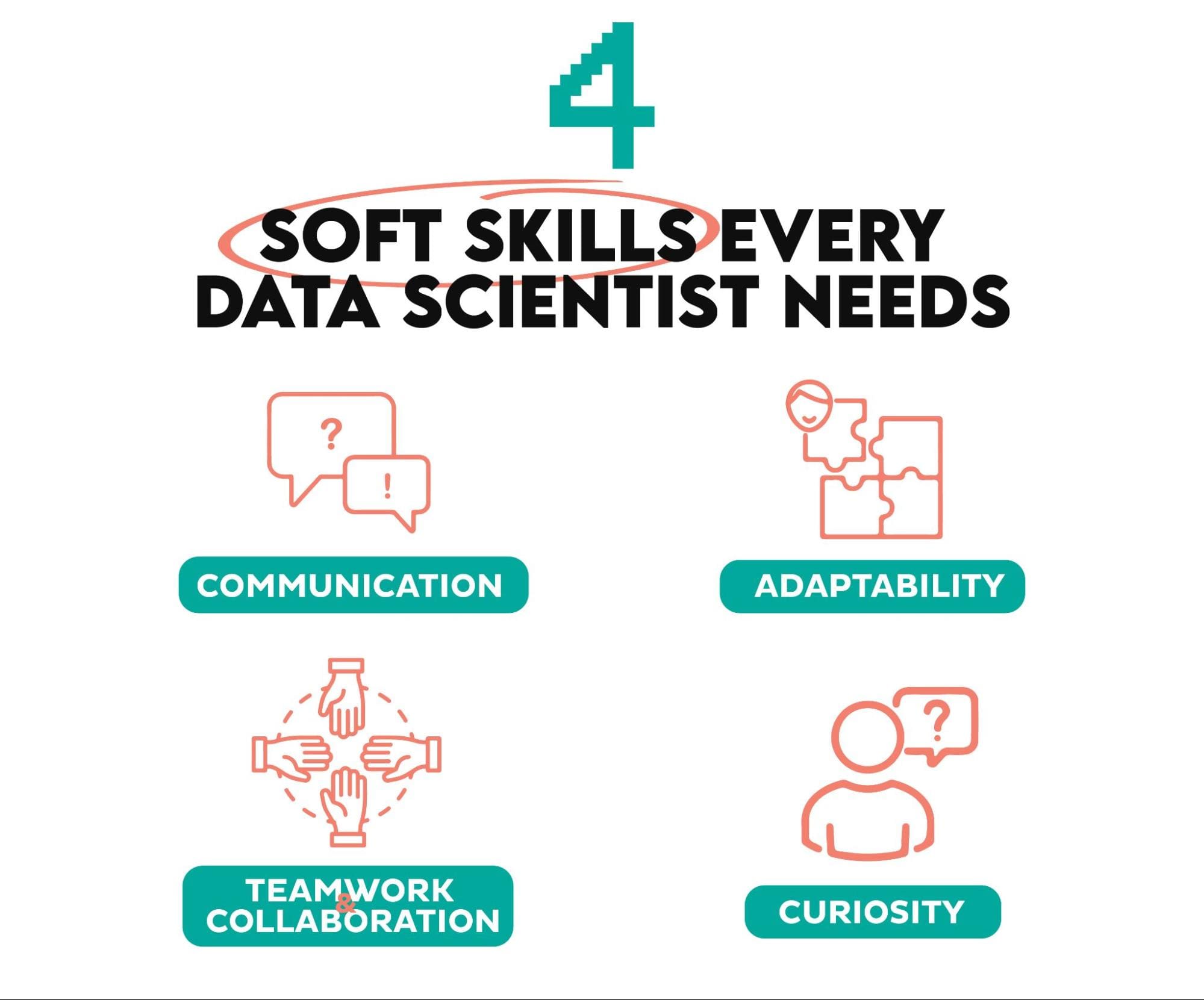
Here are the four key soft skills I recommend for every data scientist, whether you want to get into the field, advance in your career, or just do a better job.

Soft Skills Every Data Scientist Needs
Image by Author 1. Communication

Everyone thinks this means knowing how to talk. It’s the opposite: good communication is all about knowing how to listen, especially in data science.

Imagine this scenario: a stakeholder, maybe a VP of marketing, comes to you with a question about a campaign she wants to run. She's excited about it and has a vision in her mind, but she's not sure how to measure its impact or what data she needs. Instead of immediately diving into the technicalities of how you can pull the data or what models you can use, you first listen. You let her explain her goals, her concerns, and what she hopes to achieve with the campaign.

By actively listening, you can understand the broader context of her request. Maybe she's not just looking for a simple analysis but wants to understand customer behavior or segment the audience in a way she hadn't considered. By listening first, you can provide a solution that's tailored to her actual needs, not just the initial task.

Communication is key in data science. You will not work in a dark basement typing code into a keyboard all day; you will receive requests and have to put together presentations and deal with people. As in data analyst skills, you must know how to communicate to succeed.

2. Adaptability

The StackOverflow 2023 Developer survey is actually a great example of adaptability. The authors introduced for the first time an AI section, showing remarkable adaptability to a changing landscape of development.

AI is just one example. Data science is such a great illustration of that old adage: the only constant is change. To be a successful data scientist, you need to be ready to roll with the punches.

This can mean many different things. The most obvious application is being able to learn new tech easily. Cloud technology is new. AI is new. FastAPI is new. You need to keep up with all of it.

Another application is keeping up with the employment scene. The trend lately is not just to be a data scientist in the traditional sense; many employers expect you to wear many hats. You also have to be a data engineer, a machine learning engineer, and sometimes even a domain expert. The lines between these roles are blurring, and modern data scientists often find themselves juggling tasks that were once siloed into separate roles.

You can also take it to mean understanding and integrating feedback. As data scientists, we often build models or solutions based on certain assumptions or datasets. But they don’t always work as expected. Being adaptable means taking this feedback in stride, iterating on your models, and improving them based on real-world results.

Possibly the worst but most important application is being adaptable to getting fired or laid off. 2021 and 2022 were weird years for labor, with tons of big companies laying off great swathes of employees with little warning. It’s a good idea to anticipate this potential outcome and be ready for it.

3. Teamwork and Collaboration Soft Skills Every Data Scientist Needs
Image by Author

Remember how I harped on about communication? Teamwork and collaboration fit into that same bracket. As a data scientist, you do not only work with other data scientists. Everyone loves data-backed anything, so you will be the recipient of any number of requests to produce PowerPoint presentations, reports, and graphs.

To do this successfully, you have to play nice with others. Data science projects often involve working with cross-functional teams, including business analysts, engineers, and product managers. Being able to collaborate effectively ensures that the data science solutions align with business objectives.

For example, in one of my previous roles, the product team wanted to introduce a new feature in our app. Obviously, data was needed to back their decision. They approached me and the rest of the data science team for insights on user behavior related to similar features.

At the same time, the marketing team wanted to know how this new feature might affect user engagement and retention. Meanwhile, the engineering team needed to understand the technical requirements and how the data pipelines would be affected.

Our team became central to this. We had to gather requirements from the product team, provide insights to the marketing team, and work with the engineering team to ensure smooth data flow. This requires not just technical expertise but also the ability to understand the needs of each team, communicate effectively – and sometimes mediate between conflicting interests.

4. Curiosity

I’m taking the cop-out route and not mentioning problem-solving as the ultimate soft skill because I think it’s overused. But honestly, curiosity amounts to the same thing.

As a data scientist, I probably don’t need to tell you that you’ll run into a lot of problems. But at their core, every problem is actually a question.

“Our users aren’t converting,” becomes “How can we make this product more attractive?”

“My model isn’t giving me accurate predictions,” becomes “What can I change to make my model more realistic?”

"Our sales have dropped in the last quarter," becomes "What factors influenced this decline and how can we address them?"

Each of these problems, when approached with a curious mindset, transforms into a question that seeks understanding and improvement. Curiosity drives you to dig deeper, to not just accept things at face value, and to continuously seek better solutions.

Kevin, from my intro, was a curious person in general. But for some reason when it came to data science, he had blinkers on. Every problem became a nail that had to be solved with a code hammer. And the reality is that not much of data science work can be done that way.

He gave me an example of something he was asked at an interview recently: “The customer support team has been receiving complaints about the website's checkout process. How would you address this?”

Kevin went on in detail about how he’d fix the technical glitch. But the answer his interviewer was looking for was a question like, "Why are users finding the checkout process cumbersome?"

In the real world, a data scientist would need to ask this question to solve the problem. Maybe users from a particular region are facing issues due to a local payment gateway's integration. Or perhaps the mobile version of the site isn't as user-friendly, leading to cart abandonment.

By framing the problem as a question, the data scientist doesn't just stop at identifying the issue; they delve into the 'why' behind it. This approach not only leads to more effective solutions but also uncovers deeper insights that can drive strategic decisions.

Final Thoughts

There are tons of soft skills I didn’t mention here, like empathy, resilience, time management, and critical thinking, to name a few. But if you think about it, they all fall into those brackets.

Communicate with people. Know how to change. Be able to work with others. And approach problems with curiosity. With those four soft skills, you’ll be able to tackle any issue, job interview, or bug that comes your way.

Nate Rosidi is a data scientist and in product strategy. He's also an adjunct professor teaching analytics, and is the founder of StrataScratch, a platform helping data scientists prepare for their interviews with real interview questions from top companies. Connect with him on Twitter: StrataScratch or LinkedIn.

More On This Topic

  • Future-Proof Your Data Game: Top Skills Every Data Scientist Needs in 2023
  • Want to Become a Data Scientist? Part 2: 10 Soft Skills You Need
  • These Soft Skills Can Make or Break Your Data Science Career
  • 6 Soft Skills for Data Scientists Working Remotely
  • Python f-Strings Magic: 5 Game-Changing Tricks Every Coder Needs to Know
  • Top 13 Skills That Every Data Scientist Should Have

You can now chat with ChatGPT by voice for free

Voice chat with ChatGPT

Chatting with ChatGPT seems more natural when you can speak your request and then listen to the response just like a real conversation. And that ability is now accessible to all users of OpenAI's popular chatbot. In a Tuesday post on X (formerly Twitter), OpenAI announced that ChatGPT with voice is now available to all free users through the mobile app.

Also: How to create your own custom chatbots using ChatGPT

Voice chat has been around for ChatGPT Plus and Enterprise subscribers for a couple of months, but now all users can engage with the chatbot without having to type their requests. The option is available only in the app, not at the ChatGPT website.

To give the voice chatting a whirl, download the ChatGPT app for iOS/iPadOS or Android if you don't already have it. Fire up the app and tap the headphone icon. The first time you do this, you'll be asked to choose a voice. You can opt for Jennifer, Ember, Cove, Sky, or Breeze. Tap each voice to hear how it sounds and then confirm your choice.

Next, speak your question or request. In return, ChatGPT speaks its response. You can then continue chatting this way to carry on the conversation. Tap the X to end the voice chat, and the responses appear in text on the chat screen.

The launch of voice chatting for free users comes in the midst of tumultuous times for ChatGPT developer OpenAI.

Last week, the company created a stir when it revealed that its board of directors had fired CEO and co-founder Sam Altman for reasons that are still somewhat vague. Over the weekend, news hit that Altman and fellow co-founder Greg Brockman had been scooped up by Microsoft to lead a new team in advanced AI research.

But the ouster of Altman didn't sit well with OpenAI employees.

Also: I spent a weekend with Amazon's free AI courses, and highly recommend you do too

In an open letter to the board, more than 500 of the company's 778 employees threatened to resign if the two co-founders were not reinstated. That letter must have had an impact because on Tuesday, OpenAI announced that Altman would be back as CEO with all board members except one being replaced.

At least OpenAI has a sense of humor about this latest turn of events. The post on X about the voice chat expansion offered a tongue-in-cheek example of how it would work. In an audio clip, someone asks ChatGPT: "It's been a long night for the team, and we're hungry. How many 16-inch pizzas should I order for 778 people?" Yes, that's the number of OpenAI employees.

And ChatGPT's response? "Assuming an average of three slices per person, and each 16-inch pizza providing around 12 slices, you'd need to order around 195 pizzas." ChatGPT also asked if the person wanted to know where to order from. No word yet on if any nearby pizza places actually scored an order that big.

Artificial Intelligence

Data Science Hiring Process at Wipro

Wipro, which began as a family operated vegetable oil manufacturer in the small town of Amalner, India in 1945, is now one of the largest IT companies globally, functioning in more than 167 countries.

The company has been a key player in driving generative AI. With over 30,000 AI and analytics professionals, the team is building their own LLMs.

AIM got in touch with Sriram Narasimhan, global head of data, analytics and insights, Wipro, to understand about their data science applications, hiring for these roles, work culture and more.

Inside Wipro’s Data Science Team

“Data serves as the bedrock for every AI NS ML initiative, laying the groundwork for success. The pivotal factor lies in guaranteeing precise data of optimal quality—an indispensable catalyst for these processes that yield the desired results,” Narasimhan told AIM.

Profound insights emerge from the ability to scrutinise, profile, and decipher patterns within the data landscape, identifying outliers to extract meaningful conclusions. At the heart of any data science endeavour is the adeptness to construct automations through AI and ML algorithms, elevating and refining the data and insight ecosystem.

This transformative process enhances operational efficiencies, underscoring the fundamental role of data science and engineering as the critical inaugural stride in the pursuit of quality outcomes in AI/ML implementations.

Wipro’s AI and analytics team is substantial, with over 30,000 practitioners globally. The company boasts 500+ AI/ML patents, 20 innovation centres, and over 15 partnerships with a strong presence in various industries.

Recognised as a leader by agencies like Everest Group and IDC, Wipro specialises in industry-specific solutions and horizontal offerings like ML Ops and Legacy modernisation.

“The team co-builds solutions, leveraging tools like the Wipro Data Intelligence Suite (WDIS), prebuilt Industry Business Applications, and the Wipro Enterprise Generative AI (WeGA) Framework,” he added. These tools accelerate customer implementations, supporting the modernisation journey and enabling responsible AI with safety and security guardrails.

Riding the Generative AI Wave

Wipro has been actively involved in generative AI initiatives for over two years, collaborating with research institutes like the AI Institute at the University of South Carolina and IIT Patna. The company is committed to training its sizable workforce of 250,000 in generative AI. They have developed their own LLMs enhancing versatility and future-proofing, and have established a unique partnership with Google Cloud to integrate its generative AI products and services.

The company’s generative AI applications cover diverse themes, including cognitive chatbots, content creation and optimisation for marketing, media, automation in code generation, and synthetic data generation. The company’s internal initiative, Wipro ai360, focuses on incorporating AI across all platforms. Notable client projects include assisting a chocolate manufacturer in enhancing product descriptions and collaborating with a European telecom company to extract value from data.

Wipro is invested in the generative AI landscape, with 2/3rd of its strategic investments directed towards AI. The company plans to further support cutting-edge startups through Wipro Ventures and launch a GenAI Seed Accelerator program to train the top 10 generative AI startups.

Acknowledging the challenges associated with generative AI, the Bengaluru based tech giant has implemented a control framework, emphasising responsible usage. Initiatives include dedicated environments for developing generative AI solutions, GDPR-compliant training, and efforts to detect AI-generated misinformation. They have also established an AI Council to set development and usage standards, emphasising ethical guidelines, fairness, and privacy.

The team is attuned to evolving regulatory frameworks and is adapting strategies accordingly. The company envisions widespread benefits to the IT industry, with generative AI influencing code generation and call centres. The team anticipates a wave of AI services emerging in the next five years, facilitating enterprises in harnessing AI’s full potential. In the long term, they foresee AI disrupting every industry, with specific verticals like precision medicine, precision agriculture, hyper-personalisd marketing, and AI-led capabilities in smart buildings and homes gaining prominence.

Interview process

When hiring for data science roles, Wipro seeks candidates with practical experiences, strong programming and statistical skills, analytical abilities, domain knowledge, and effective presentation skills.

“The hiring process involves a comprehensive evaluation based on real-world use cases, emphasising not only technical proficiency but also the candidate’s understanding of problem statements and the application of statistical methodologies to solve complex issues,” he added.

“Joining our data science team promises exposure to cutting-edge, real-life AI/ML problems across various industries as we encourage a democratic approach to AI, allowing teams the independence to build solutions while adhering to organisational processes,” Narasimhan commented.

The company offers a diverse range of competencies, including data engineering, data science, conversational AI, ethical AI, and generative AI, enabling associates to work on projects aligned with their capabilities and aspirations.

In interviews, Wipro emphasises the importance of showcasing real-life use cases rather than being overly theoretical. Candidates are encouraged to highlight their practical experiences, demonstrating how they understand, consider options, and provide solutions to problems in the realm of data science, AI, and ML.

Work Culture

Wipro fosters a work culture rooted in values and integrity for its global workforce of 250,000+. Guided by the ‘Spirit of Wipro’ and ‘Five Habits’ principles, it emphasises respect, responsiveness, communication, ownership, and trust. With a 36.4% gender diversity goal, the company supports inclusion through programs like Women of Wipro (WOW), addressing various aspects of diversity such as disability, LGBTQ+, race, ethnicity, and generational diversity.

For talent management, they use tech solutions like the MyWipro app and WiLearn. These tools facilitate goal documentation, feedback, skill-building, and awareness of biases. The company conducts biannual performance reviews, offers training, mentoring, and leadership programs, including global executive leadership initiatives.

Employee benefits encompass a comprehensive package, including 401k, pension, health, vision, dental insurance, competitive pay, bonuses, paid time off, health savings, flexible spending accounts, disability coverage, family medical leave, life insurance, and more. Additional perks involve retirement benefits, stock purchase plans, paid holidays, legal plans, insurance for home, auto, and pets, employee discounts, adoption reimbursement, tuition reimbursement, and well-being programs.

The post Data Science Hiring Process at Wipro appeared first on Analytics India Magazine.

OpenAI End Game 

The big drama at OpenAI might have come to an end with the return of Sam Altman joining back the company, but a lot of damage has already been done. While Altman was away and the company was going through a great change, the competitors were busy acquiring its customers and throwing cast nets at employees.

During the turmoil, ChatGPT faced down time along with API services, which forced several users to explore alternatives like Anthropic, Cohere, and many other open-source options. Nevertheless, OpenAI’s team promptly resolved the issue.

There were a lot of reports that said that more than 100+ OpenAI customers were already in talks with its competitors, including Google, Amazon and Oracle’s billion dollar babies Anthropic and Cohere, respectively. Moreover, a significant number of OpenAI customers were contemplating a transition to Microsoft’s Azure services, attracted by the availability of OpenAI models and other similar alternatives.

On the other hand, executives of Salesforce and NVIDIA attempted to recruit OpenAI’s employees. Marc Benioff, Salesforce CEO said that Salesforce would match the full cash and equity OTE for any OpenAI researcher who has tendered their resignation, encouraging them to immediately join the Salesforce Einstein Trusted AI research team under Silvio Savarese.

Rivals Smell Opportunity

In a bid to challenge OpenAI and attract its customers, the competitors announced back to back updates.

Yesterday, Anthropic launched Claude 2.1, boasting a 200K context length. It outperforms OpenAI’s GPT-4 Turbo which comes with 128K context and has significant reductions in model hallucination rates, system prompts, along with the addition of a new beta feature. Morgan Stanley, one of the earliest customers of OpenAI, is currently in touch with Anthropic.

Simultaneously, Oracle’s billion-dollar baby, Cohere introduced fresh fine-tuning capabilities and an updated user interface. The new UI incorporates a testing playground for users to experiment and validate fine-tuned models. Additionally, it features a pricing calculator, empowering users to make well-informed decisions regarding fine-tuning costs from the outset.

Langchain, whose existence was questioned when OpenAI launched the GPT Store at DevDay, has suddenly come to life and made a slew of announcements. For instance, Dream, one of Langchain’s products, allows users to use an AI no-code tool to build fully functional web apps and components using natural language, similar to what GPT Builder does.

Not only that, it also introduced the ‘GPT-Crawler template,’ which helps in easily building chat assistants for websites.

Elon Musk, one of the founders of OpenAI, has recently intensified efforts with xAI’s Grok, a chatbot developed by Musk’s team in just four months. He announced that access to Grok will be gradually opened in phases, prioritised based on users’ sign-up dates for X Premium+. Furthermore, Grok will be accessible within the X app.

OpenAI got lucky

Despite the turmoil, OpenAI’s team managed to stay ahead of competitors. In the midst of chaos, they rolled out a new update to ChatGPT, enabling users to interact and receive responses through voice rather than text.

Moreover, as per the latest developments, it seems that none of OpenAI’s employees are planning to leave now that Altman is back and OpenAI is safe and sound. Greg Brockman posted a picture on X with OpenAI’s team for assurance.

we are so back pic.twitter.com/YcKwkqdNs5

— Greg Brockman (@gdb) November 22, 2023

However, for Altman’s arrival, as per the agreement, it is mentioned that both him and Brockman won’t hold positions on the company’s board. Altman has also committed to an internal inquiry into reported conduct that led to the board’s decision to remove him.

Despite this, there are still many unanswered questions about why Sam rejoined OpenAI and the details behind his return. Meanwhile one thing is for sure during the whole OpenAI’s saga, enterprises utilising its services learned a crucial lesson that relying solely on one vendor is not a safe option.

The post OpenAI End Game appeared first on Analytics India Magazine.

Will AI Replace Humanity?

We are living in a world of probabilities. When I started talking about AI and its implications years ago, the most common question was – is AI coming after us?

And while the question remains the same, my response has changed regarding probabilities. It is more likely to replace human judgment in certain areas, so the probability has increased over time.

As we discuss a complex technology, the answer will not be straightforward. It depends on several factors, such as what it means to be intelligent, whether we suggest replacing jobs, anticipating the timelines for Artificial General Intelligence (AGI), or identifying the capabilities and limitations of AI.

Will AI Replace Humanity?
Source: Canva Defining Intelligence

Let us start with understanding the definition of Intelligence:

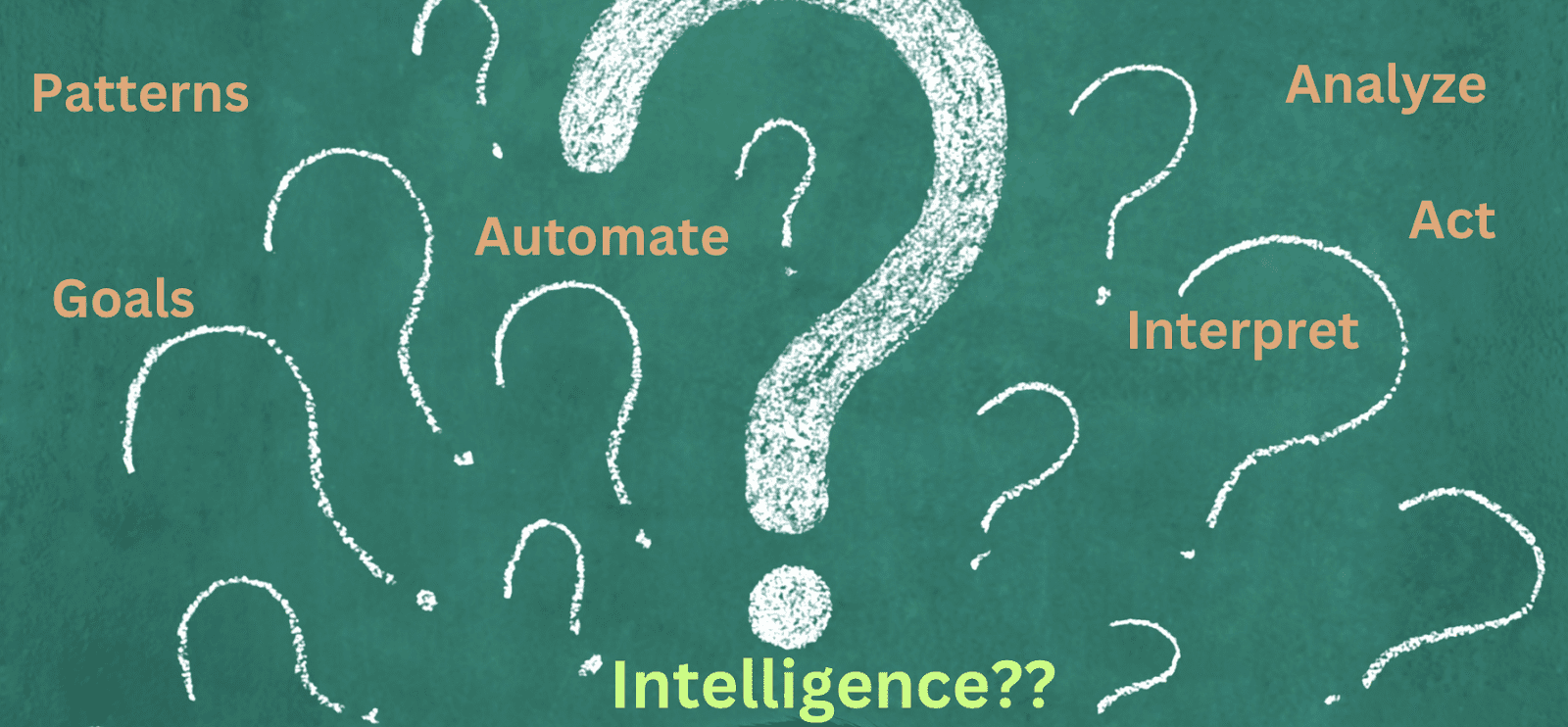
Stanford defines intelligence as “the ability to learn and perform suitable techniques to solve problems and achieve goals appropriate to the context in an uncertain, ever-varying world.”

Gartner describes it as the ability to analyze, interpret events, support and automate decisions, and take action.

AI is good at learning patterns, however, mere pattern recognition does not qualify as intelligence. It is one of the aspects of the broader spectrum of multi-dimensional human intelligence.

Will AI Replace Humanity?
Source: Canva

As experts believe, “ AI will never get there because machines cannot have a sense (rather than mere knowledge) of the past, the present, and the future; of history, injury or nostalgia. Without that, there’s no emotion, depriving bi-logic of one of its components. Thus, machines remain trapped in the singular formal logic. So there goes the “intelligence” part.”

Clearing Tests = Intelligence?

Some might refer to AI clearing tests from prestigious institutes and, most recently, the Turing test as a testament to its intelligence.

For the unversed, the Turing test is an experiment designed by Alan Turing, a renowned computer scientist. According to the test, machines possess human-like intelligence if an evaluator cannot distinguish the response between a machine and a human.

A comprehensive overview of the test highlights that though Generative AI models can generate natural language based on the statistical patterns or associations learned from vast training data, they do not have human-like consciousness.

Even advanced tests, such as the General Language Understanding Evaluation, or GLUE, and the Stanford Question Answering Dataset, or SQuAD, share the same underlying premise as that of Turing.

What Does It Mean To Replace?

Loss Of Jobs

Let us start with the fear that is fast becoming a reality – will AI make our jobs redundant? There is no clear “yes or no” answer, but it is fast approaching as the GenAI casts a wider net on automation opportunities.

McKinsey reports, “By 2030, activities that account for up to 30 percent of hours currently worked across the US economy could be automated—a trend accelerated by generative AI.

Profiles like office support, accounting, banking, sales, or customer support are first in line toward automation. Generative AI augmenting the software developers in code writing and testing workflows has already impacted the job roles of junior developers.

Its results are often considered a good starting point for an expert to enhance the output further, such as in making marketing copy, promotional content, etc.

Some narratives make this transformation sound subtle by highlighting the possibility of new job creations, such as that of healthcare, science, and technology in the near to short term; and AI ethicists, AI governance, audits, AI safety, and more to make AI a reality overall. However, these new jobs can not outnumber those being replaced, so we must consider the net new jobs created to see the final impact.

AGI

Next comes the possibility of AGI, which, similar to the multiple definitions of intelligence, warrants clear meaning. Generally, AGI refers to the stage when machines gain sentience and awareness of the world, similar to a human's.

However, AGI is a topic that deserves a post on its own and is not under the scope of this article.

For now, we can take a leaf from the diary of DeepMind’s CEO to understand its early signs.

Will AI Replace Humanity?
Source: Fortune Can It Replace Humans?

Good Assistant

Looking at a broader picture, it is intelligent enough to help humans identify patterns at scale and generate efficiencies.

Let us substantiate it with the help of an example where a supply chain planner looks at several order details and works on ensuring the ones at risk of being met with a shortfall. Each planner has a different approach to managing the shortfall deliveries:

  • Looking at attributes like how much inventory is available on hand
  • What is the expected demand from other customers during that timeframe
  • Which customer or order to be prioritized over others?
  • Running into war-room discussions with other factory managers to facilitate the items’ availability
  • Working on optimizing the routing path from specific distribution centers.

As an individual planner could be limited with its view and approach to managing such situations, machines can learn the optimal approach by understanding the actions of many planners and help them automate easy scenarios through their ability to discover patterns.

This is where machines have a vantage point over humans’ limited ability to simultaneously manage several attributes or factors.

Mechanical

However, machines are what they are, i.e., mechanical. You can not expect them to cooperate, collaborate, and develop compassionate relationships with the teams as empathetically as great leaders do.

I frequently engage in lighter team discussions not because I have to but because I prefer working in an environment where I am connected with my team, and they know me well, too. It is too mechanical to only talk about work from the get-go or try to act as it matters.

Will AI Replace Humanity?
Source: Canva

Lack of Empathy

Take another instance where a machine analyzes a patient’s records and discloses a health scare as-is following its medical diagnosis. Compare this with how a doctor would handle the situation thoughtfully, simply because they have emotions and know what it feels like to be in a crisis.

Most successful healthcare professionals go beyond their “Call of Duty” and develop a connection with the patient to help them through difficult times, which machines are not good at.

No Moral Compass

Machines are trained on data that could capture the underlying phenomenon and create models that best estimate them.

Somewhere in this estimation, the nuances of specific conditions get lost. They do not have a moral compass, similar to a judge has when looking at each case.

Closing Remarks

To summarize, machines may learn patterns from data (and the bias that comes with it) but do not have the intelligence, drive, or motivation to make fundamental changes to handle the issues plaguing humanity. They are objective-focused and built on top of human intelligence, which is complex.

This phrase sums up my thoughts well – AI can replace human brains, not beings.

Vidhi Chugh is an AI strategist and a digital transformation leader working at the intersection of product, sciences, and engineering to build scalable machine learning systems. She is an award-winning innovation leader, an author, and an international speaker. She is on a mission to democratize machine learning and break the jargon for everyone to be a part of this transformation.

More On This Topic

  • AGI and the Future of Humanity
  • Will DeepMind’s AlphaCode Replace Programmers?
  • AI is Not Here to Replace Us
  • Will ChatGPT Replace Data Scientists?

Investors are souring on OpenAI’s nonprofit governance model

Investors are souring on OpenAI’s nonprofit governance model

The knock-on effects could be substantial

Kyle Wiggers 2 days

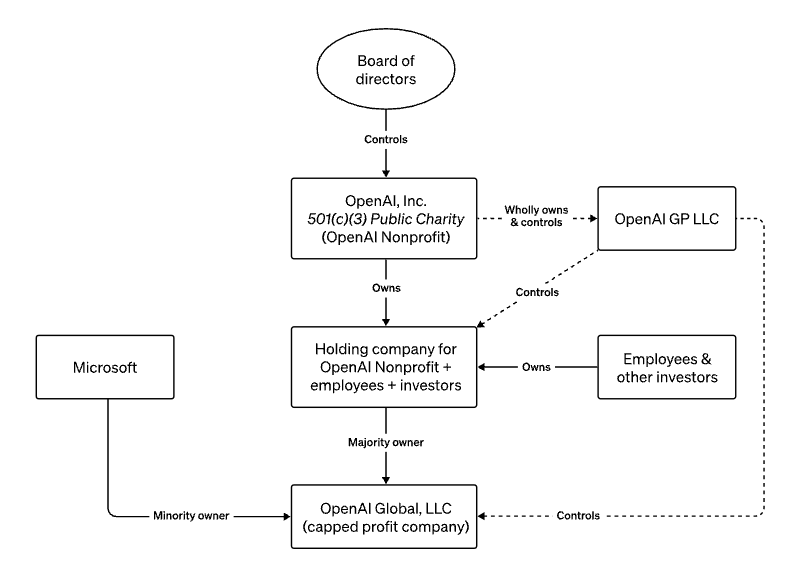
OpenAI was never quite like other generative AI startups — or other startups period, for that matter. Its governance structure is unique and what ultimately led to the abrupt ousting of CEO Sam Altman on Friday.

Even after it transitioned from a nonprofit to a “capped-profit” company in 2019, OpenAI retained an unusual structure that laid out in no uncertain terms what investors could — and couldn’t — expect from the startup’s leadership.

For example, OpenAI backers’ returns are limited to 100x of a first-round investment. That means that if an investor puts in $1, for example, they’re capped to $100 in total returned profit.

OpenAI investors also agree — in theory, at least — to abide by the mission of the nonprofit guiding OpenAI’s commercial endeavors. That mission is to attain artificial general intelligence (AGI), or AI that can “outperform humans at most economically valuable work” — but not necessarily generating a profit while or after attaining it. Determining exactly when OpenAI has achieved AGI is at the board’s sole discretion, and this AGI — whatever form it takes — is exempted from the commercial licensing agreements OpenAI has in place with its current customers.

How OpenAI described its operating structure in the pre-turmoil days. Image Credits: OpenAI

OpenAI’s dual, mission-driven structure was aspirational, to say the least, inspired by effective altruism and intended to clearly delineate the company’s profit-making efforts from its more ambitious, humanistic goals. But investors didn’t count on the board exercising its power in the way it did. Neither did many employees, it seems.

It Was Sam’s Plan All Along

It Was Sam’s Plan All Along

What a time to be alive. Now that Sam Altman is back as the CEO of OpenAI, after getting fired on Friday, then joining Microsoft on Sunday evening, there are a lot of questions about what actually transpired before the firing happened. It also looks like it was Altman’s plan all along.

The idea was to change the board

All of the recent developments hint towards a simple thing that the OpenAI board members were clearly not aligned with the for-profit direction that OpenAI was headed towards under Altman’s leadership. The old board members such as Helen Tomer had major contentions with what Altman was doing.

Toner wrote a paper titled ‘Decoding Intentions’ that was critical of OpenAI, and was praising Anthropic. The paper said that Anthropic’s willingness to not release its AI models is “exactly the kind of frantic corner-cutting that the release of ChatGPT appeared to spur.”

She further praised Anthropic for investing more into AI safety than OpenAI. People on X criticise her views, saying it sounds more like an opinion piece than a research paper. Simply put, she wanted to kill OpenAI to save humanity. She reached scarily close.

call me crazy but I would also be angry if I was sama pic.twitter.com/LrsA4UxXvF

— Nick Arner (@nickarner) November 22, 2023

Interestingly, Toner was quiet during all the debacle. She posted on X after Altman is hired back with, “and now, we all get some sleep.” It might be a far fetched idea to say that it was Toner who started the coup against Altman, but there is still a chance.

You destroyed the trust of hundreds of employees, thousands of customers & millions of users.
A change in the board could have been accomplished without all of this drama.
Sleep well.

— Ric Burton (@ricburton) November 22, 2023

Not just Altman, Microsoft chief Satya Nadella, has previously expressed his disappointment with the former board, saying, “We are encouraged by the changes to the OpenAI board. We believe this is a first essential step on a path to more stable, well-informed, and effective governance.”

“Sam, Greg, and I have talked and agreed they have a key role to play along with the OpenAI leadership team in ensuring OpenAI continues to thrive and build on its mission. We look forward to building on our strong partnership and delivering the value of this next generation of AI to our customers and partners” he added in his statement.

Sam loved the weekend

Altman has posted on X saying, “I love OpenAI, and everything I’ve done over the past few days has been in service of keeping this team and its mission together.” He added that he wants to continue working with the new board of OpenAI and also build a strong partnership with Microsoft. Interestingly, Microsoft is also going to be an observant part of the new board.

i love openai, and everything i’ve done over the past few days has been in service of keeping this team and its mission together. when i decided to join msft on sun evening, it was clear that was the best path for me and the team. with the new board and w satya’s support, i’m…

— Sam Altman (@sama) November 22, 2023

Seemingly, Altman loves everything that happened over the past few days, and it was in service of keeping the team together. It is quite worrisome to say the least, given all the chaos that was created.

On the other hand, as soon as Altman was fired, the whole team showed solidarity, and started to force the board to resign. Interestingly enough, Ilya Sutskever, who broke the news to Altman, also switched sides later, and apologised publicly for harming OpenAI. He also signed the petition along with Mira Murati and 10 others for resignation of the board.

With 95% of the employees ready to quit unless Altman comes back, there was no other option left for the company to do apart from changing the board members. It all worked out how Sam wanted it to. Now everyone would be back, without the old OpenAI board.

The problem with the structure of OpenAI is that it is very twisted. A non-profit board controls the for-profit entity of the company. So even though Altman was not taking any salary from OpenAI, maybe he changed his mind now. Furthermore, the new board that comes along now would also be in favour of what Altman wants.

What did Sam get?

Firstly, it is reasonable to say that Altman has always been an investor, and thus there is very little reason to believe that the altruistic approach of saving humanity with AI is actually the case, and not just a charade. Even if it is, he believes in a for-profit approach towards AGI, which is unlike the other former board members.

Secondly, Altman always knew that the board could fire him and he should not be trusted, as he said in an interview. Moreover, Elon Musk said six months ago, “At any point Microsoft could cut off OpenAI.”

Combining that with Nadella’s point of view in all of this, who is the biggest investor in OpenAI, and has massive belief in Altman, the plan started as soon as Altman got fired.

What tangled webs we weave

— Elon Musk (@elonmusk) November 22, 2023

Even while considering that the firing on Friday was a surprise to Altman and Nadella, they must have shook hands that it is time for the board to go. Altman was never going to be a part of Microsoft and work under some other leadership, or start any other ventures, it was all just to scare the OpenAI board members, and the team helped in it.

But Adam D’Angelo, one of the board members that voted for firing Altman, is still part of the new board. Moreover, the damage done to Microsoft and the investors is just collateral damage for Altman.

Interestingly, Altman and Greg Brockman are still not going to be part of the board. Moreover, Altman has also agreed for an internal investigation to find out why he was fired. So all has not worked out in their favour. The new board will review the circumstances of Altman’s firing.

Shear was right when he said, “Sam is a great sales guy.” It might be just his plan all along.

The post It Was Sam’s Plan All Along appeared first on Analytics India Magazine.

KDnuggets News, November 22: 7 Essential Data Quality Checks with Pandas • The 5 Best Vector Databases You Must Try in 2024

KDnuggets News, November 22: 7 Essential Data Quality Checks with Pandas • The 5 Best Vector Databases You Must Try in 2024

Features 7 Essential Data Quality Checks with Pandas
Bala Priya C
The 5 Best Vector Databases You Must Try in 2024
Abid Ali Awan
This Week's Posts Make Your Own GPTs with ChatGPT's GPTs!
Matthew Mayo
The Rise and Fall of Prompt Engineering: Fad or Future?
Nahla Davies
A Better Way To Evaluate LLMs
Magdalena Konkiewicz
Introduction to Streaming-LLM: LLMs for Infinite-Length Inputs
Cornellius Yudha Wijaya
Optimizing Data Analytics: Integrating GitHub Copilot in Databricks
Naresh Vurukonda
6 Problems of LLMs That LangChain is Trying to Assess
Josep Ferrer
A Microsoft Engineer's Guide to AI Innovation and Leadership
Nisha Arya
5 Free Courses to Master Generative AI
Matthew Mayo
Back to Basics Week 3: Introduction to Machine Learning
Nisha Arya
Why You Should Not Overuse List Comprehensions in Python
Bala Priya C
Enhance Your Python Coding Style with Ruff
Abid Ali Awan
How To Write Efficient Python Code: A Tutorial for Beginners
Bala Priya C
Job Trends in Data Analytics: Part 2
Andrea De Mauro
How to Make Large Language Models Play Nice with Your Software using LangChain
Josep Ferrer
From Our Partners Master Data Science with the 3rd Best Online Program
Bay Path University
Tackle computer science problems using both fundamental and modern algorithms in machine learning
Packt Publishing

More On This Topic

  • The 5 Best Vector Databases You Must Try in 2024
  • 7 Essential Data Quality Checks with Pandas
  • Python Vector Databases and Vector Indexes: Architecting LLM Apps
  • 5 Must Try Awesome Python Data Visualization Libraries
  • Data Quality Dimensions: Assuring Your Data Quality with Great Expectations
  • An Honest Comparison of Open Source Vector Databases

Get the FREE ebook 'The Great Big Natural Language Processing Primer' and 'The Complete Collection of Data Science Cheat Sheets' along with the leading newsletter on Data Science, Machine Learning, AI & Analytics straight to your inbox.

By subscribing you accept KDnuggets Privacy Policy

Leave this field empty if you're human:
<= Previous post
Search

Latest Posts

  • KDnuggets News, November 22: 7 Essential Data Quality Checks with Pandas • The 5 Best Vector Datab…
  • Tackle computer science problems using both fundamental and modern algorithms in machine learning
  • How to Make Large Language Models Play Nice with Your Software using LangChain
  • Job Trends in Data Analytics: Part 2
  • How To Write Efficient Python Code: A Tutorial for Beginners
  • Enhance Your Python Coding Style with Ruff

Top Posts

  • How To Write Efficient Python Code: A Tutorial for Beginners
  • Master Data Science with the 3rd Best Online Program
  • 7 Essential Data Quality Checks with Pandas
  • Job Trends in Data Analytics: Part 2
  • The 5 Best Vector Databases You Must Try in 2024
  • Enhance Your Python Coding Style with Ruff
  • Back to Basics Week 3: Introduction to Machine Learning
  • A Better Way To Evaluate LLMs
  • 5 Free Courses to Master Data Science
  • 6 Problems of LLMs That LangChain is Trying to Assess

Get the FREE ebook 'The Great Big Natural Language Processing Primer' and 'The Complete Collection of Data Science Cheat Sheets' along with the leading newsletter on Data Science, Machine Learning, AI & Analytics straight to your inbox.

By subscribing you accept KDnuggets Privacy Policy

Leave this field empty if you're human:
© 2023 Guiding Tech Media | About | Contact | Privacy Policy | Terms of Service
Published on November 22, 2023 by

Subscribe To Our Newsletter
(Get The Complete Collection of Data Science Cheat Sheets & Great Big NLP Primer ebook)

Leave this field empty if you're human: Close

Get the FREE ebook 'The Great Big Natural Language Processing Primer' and 'The Complete Collection of Data Science Cheat Sheets' along with the leading newsletter on Data Science, Machine Learning, AI & Analytics straight to your inbox.

By subscribing you accept KDnuggets Privacy Policy

Leave this field empty if you're human:

Get the FREE ebook 'The Great Big Natural Language Processing Primer' and 'The Complete Collection of Data Science Cheat Sheets' along with the leading newsletter on Data Science, Machine Learning, AI & Analytics straight to your inbox.

By subscribing you accept KDnuggets Privacy Policy

Leave this field empty if you're human: