NVIDIA TensorRT-LLM Updates Boost Inference on H200 GPUs

NVIDIA TensorRT-LLM Updates Boost Inference on H200 GPUs

NVIDIA TensorRT-LLM has introduced optimisations for peak throughput and memory efficiency, resulting in significant enhancements in LLM inference performance. The latest TensorRT-LLM improvements on NVIDIA H200 GPUs showcase a remarkable 6.7x speedup for the Llama 2 70B LLM.

Notably, these enhancements also enable the efficient operation of massive models, such as Falcon-180B, on a single GPU, a task that previously necessitated a minimum of eight NVIDIA A100 Tensor Core GPUs.

The acceleration of Llama 2 70B is attributed to the optimisation of Grouped Query Attention (GQA), an extension of multi-head attention techniques, particularly crucial in the Llama 2 70B architecture.

The evaluation of Llama 2 70B performance, considering different input and output sequence lengths, demonstrates the impressive throughput achieved by H200. As the output sequence length increases, raw throughput decreases, but the performance speedup compared to A100 increases significantly.

Additionally, software improvements in TensorRT-LLM alone contribute to a 2.4x improvement compared to the previous version running on H200.

Falcon-180B, known for its size and accuracy, historically demanded eight NVIDIA A100 Tensor Core GPUs for execution. However, the latest TensorRT-LLM advancements, incorporating a custom INT4 AWQ, empower the model to run seamlessly on a single H200 Tensor Core GPU. This GPU boasts 141 GB of cutting-edge HBM3e memory with nearly 5 TB/s of memory bandwidth.

The latest TensorRT-LLM release implements custom kernels for AWQ, performing computations in FP8 precision on NVIDIA Hopper GPUs, utilizing the latest Hopper Tensor Core technology. This enables the entire Falcon-180B model to run efficiently on a single H200 GPU with an impressive inference throughput of up to 800 tokens/second.

In terms of performance, the TensorRT-LLM software improvements alone contribute to a 2.4x enhancement compared to the previous version running on H200.

The custom implementation of Multi-Head Attention (MHA) that supports GQA, Multi-Query Attention (MQA), and standard MHA leverages NVIDIA Tensor Cores during the generation and context phases, ensuring optimal performance on NVIDIA GPUs.

Despite the reduction in memory footprint, TensorRT-LLM AWQ maintains accuracy above 95%, demonstrating its efficiency in optimizing GPU compute resources and reducing operational costs.

These advancements are set to be incorporated into upcoming releases (v0.7 and v0.8) of TensorRT-LLM.

The post NVIDIA TensorRT-LLM Updates Boost Inference on H200 GPUs appeared first on Analytics India Magazine.

Decoding the Future: The Intersection of Advanced Analytics and Fraud Prevention in Revolutionizing Digital Payments

Automation data analytic with robot and digital visualization for big data scientist

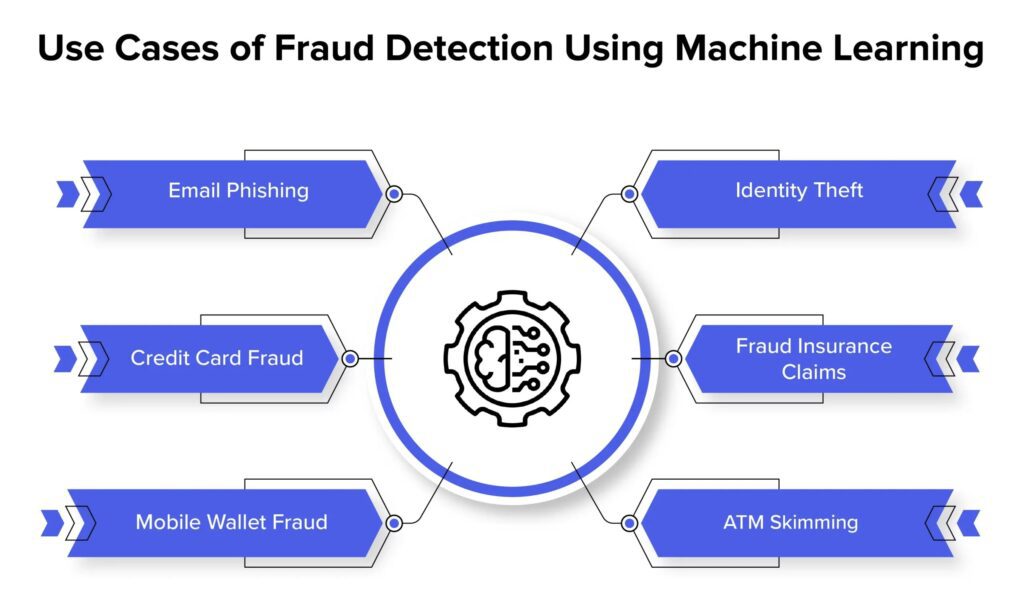
In 2023, online payment fraud cost the world US$48 billion. Businesses prioritize fighting payment fraud and minimizing its financial and reputational damage. In addition to monetary losses, payment fraud can damage a customer’s trust and loyalty, as well as increase the scrutiny from regulators and law enforcement. Organizations use machine learning to combat this growing threat.

Machine learning fights payment fraud effectively due to its power and adaptability in the field of artificial intelligence. Machine learning can identify patterns and anomalies that indicate fraud in real time using large datasets and advanced algorithms. Learning machines can assist businesses in securing their payment processes, thereby protecting their clients, revenues, and reputations.

Investigators can identify suspicious behavior that may indicate fraud by analyzing complex data networks with advanced algorithms. As technology advances, graph analytics may become more important in fighting financial fraud.

How are AI and automation used in fraud prevention?

The prevention of fraud is being revolutionized by technological advancements like AI and automation. Artificial intelligence (AI) is the practice of imitating human intelligence in machines, most notably computers. Learning, reasoning, problem-solving, perceptual processing, and language comprehension are just a few examples of this type of cognitive ability. AI can find patterns and anomalies in large data sets to prevent fraud.

Automation reduces human involvement through control systems and information technologies. Automation helps to identifying new patterns of digital payment fraud prevention by processing and analyzing massive amounts of data that would be too difficult to review manually.

The ability to detect and prevent fraud is improved by AI and automation. They detect fraud in real time, preventing fraudulent transactions. They let predictive analysis find weaknesses and threats before they can be used against you.

Decoding the Future: The Intersection of Advanced Analytics and Fraud Prevention in Revolutionizing Digital Payments

How does machine learning work for payment fraud detection and prevention?

Due to its ability to analyze large amounts of data, identify patterns, and adapt to new information, machine learning is increasingly used in fraud prevention and detection. Common machine learning fraud prevention applications include:

Anomaly detection

Machine-learning algorithms can spot abnormal transactional data patterns. Algorithms learn to distinguish between legitimate transactions and potentially fraudulent behavior by “training” themselves on historical data.

Scoring risk

According to transaction amount, location, frequency, and past behavior, machine-learning models can assign risk scores to transactions or user accounts. A higher risk score indicates that there is a greater possibility of fraud, which enables businesses to prioritize their resources and investigate particular transactions or accounts.

Network analysis

Fraudsters often work together in networks. By analyzing relationships between entities like users, accounts, and devices and identifying unusual connections or clusters, machine-learning methods like graph analysis can reveal these networks.

A text analysis

Emails, social media posts, and customer reviews can be analyzed by machine-learning algorithms to identify fraud or scam patterns or keywords.

Verifying identity

For the purpose of preventing identity theft, machine-learning models can verify the information provided by users, such as images of IDs or data on facial recognition.

Adaptive learning

Machine learning excels at adapting to new information. Machine-learning models can be retrained on new data to detect new fraud patterns as fraudsters change their methods.

Companies can improve detection, reduce false positives, and improve security and customer experience by using machine learning in fraud prevention.

How can machine learning algorithms help in fraud detection and prevention?

AI analyzes data and responds to human language. Pattern recognition and real-time prediction are their functions. Combining ML models is common in AI algorithms.

ML analyzes data and teaches systems autonomously. Over time, ML algorithms improve with more data. Supervised and unsupervised ML are the main methods. UML algorithms find hidden patterns in data, while SML algorithms predict outcomes using labeled data.

For instance, SML algorithms train supervised machine learning models using fraudulent or non-fraudulent historical transaction data. Based on features, UML would use anomaly detection algorithms to identify unusual transactions. However, UML models are less accurate than SML models despite requiring less human intervention.

Behavioral Profiling: The foundation of modern security analytics

Behavioral profiling analyzes security data using machine learning and advanced analytics to define user or computing system behavior profiles. This helps identify behavioral anomalies that may be attacker activity.

As attackers become smarter, behavioral profiling is needed. Signatures (like a malware binary file) and rules (like blocking a user for logging in more than five times in an hour) no longer work to identify all attacks. Attackers may use TTP unknown to the organization’s security. All attacker activity deviates from normal behavior.

Analytical techniques and models

A descriptive analysis

Historical data is analyzed for patterns, trends, and fraud insights using descriptive analytics. To understand fraud patterns, summary statistics, visualizations, and clustering algorithms may be used. This can help companies set benchmarks and spot suspicious behaviors that may indicate fraud.

Predictive analytics

Based on historical data and trends, predictive analytics predicts fraud using machine learning and statistical models. Using logistic regression, decision trees, and neural networks, we can identify instances of fraudulent activity. These methods can predict fraudulent transactions and customers. This helps organizations prioritize high-risk cases and optimize resources to prevent fraud.

Prescriptive analytics

Prescriptive analytics goes beyond prediction to suggest fraud prevention strategies. A combination of descriptive and predictive analytics and optimisation techniques suggests the best course of action. Based on cost-benefit analyses, a prescriptive model may suggest alert or audit thresholds for an organization. Prescriptive analytics helps businesses reduce fraud detection costs and improve pre-emptive measures.

Embracing data analytics techniques for fraud detection

Several data analytics methods are used to detect and combat fraud. These methods allow organizations to analyze massive data sets for patterns, correlations, and anomalies that may indicate suspicious activity. Key fraud detection methods:

Pattern recognition

Data is analyzed for patterns or relationships that may indicate fraudulent transactions. For fraud detection and prevention, association rule learning and sequence mining can identify common schemes or behaviors.

Machine learning algorithms

Improved fraud prediction models can be helped along by machine learning algorithms. K-means, DBSCAN, regression analysis, and neural networks (deep learning, recurrent neural networks) are examples. By using these algorithms, companies can improve their fraud detection and adapt to new fraud types.

Conclusion

In conclusion, the rise in global online payment fraud highlights the need for businesses to strengthen their defenses and adopt AI and automation. This arsenal uses machine learning for anomaly detection, risk scoring, network analysis, text analysis, and identity verification to detect fraud in real time. AI and automation efficiently process large datasets and reduce human intervention, improving fraud prevention.

Modern security analytics relies on machine learning-based behavioral profiling to identify potential attacks by analyzing behavioral anomalies. Descriptive, predictive, and prescriptive analytics help prevent fraud. Data analytics is essential for protecting financial assets, customer trust, and digital reputation as organizations navigate payment fraud. AI, machine learning, and automation must work together to secure a resilient digital payment platforms.

TC+ Roundup: Amazon is not the AI leader

TC+ Roundup: Amazon is not the AI leader Karyne Levy 9 hours

Amazon has been No. 1 in the cloud for years, ever since it invented the concept in 2006. But now the company finds itself in a spot it might not be used to: playing catch-up to Microsoft when it comes to AI.

Full TechCrunch+ articles are only available to members.
Use discount code TCPLUSROUNDUP to save 20% off a one- or two-year subscription.

Microsoft has hitched its wagon to OpenAI, and Amazon is betting on Bedrock. Not to mention what Microsoft has done with Copilot versus Amazon’s Q debut. AI is still a nascent technology, and enterprise buyers are going to shop around, avoiding vendor lock-in, just as they have in the cloud. But for now, it seems, “Microsoft seems to have won the perception battle,” writes TechCrunch’s Ron Miller.

Thanks for reading,

Karyne

Amazon finds itself in the unusual position of playing catch-up in AI

VC Office Hours: Unlocking the Farmers’ Market with Black Farmer Fund

a door to symbolize VC Plus Office Hours

Image Credits: Bryce Durbin

Investors love agtech and have been pumping money into the sector for years. But according to Crunchbase, $98.6 million out of $39.4 billion has gone to just five Black-owned agtech companies since 2018. To help combat these inequalities, Black Farmer Fund is raising its second round targeting $20 million to offer economic and social opportunity to Black farmers and agricultural and food businesses in the Northeast, reports Dominic-Madori Davis.

VC Office Hours: Unlocking the Farmers’ Market with Black Farmer Fund

Betting on beauty fads is big business

med spa, startup, RepeatMD

Image Credits: PM Images / Getty Images

Medical spas are projected to be a $30 billion business by the end of this decade, and investors and private equity firms are starting to take note. But TechCrunch+ senior reporter Rebecca Szkutak wonders: How are investors thinking about the risks?

“The success of these businesses is entirely based on the strength of underlying beauty fads and largely whatever unrealistic beauty standards consumers are currently trying to achieve,” she writes.

Deal Dive: Betting on beauty fads is big business

Pitch Deck Teardown: Scalestack’s $1M AI sales tech seed deck

Image Credits: Scalestack (opens in a new window)

Scalestack closed its $1 million round using 18 slides. And that shouldn’t come as a surprise, as it has three things going for it, writes Haje Jan Kamps: a killer team, impressive traction, and a customer testimonial to die for.

But even still, it’s missing some pretty crucial information.

Pitch Deck Teardown: Scalestack’s $1M AI sales tech seed deck

Get the TechCrunch+ Roundup newsletter in your inbox!

sign up for the TechCrunch+ roundup newsletterTo receive the TechCrunch+ Roundup as an email each Tuesday and Friday, scroll down to find the “sign up for newsletters” section on this page, select “TechCrunch+ Roundup,” enter your email, and click “subscribe.”

Click here to subscribe

The most important metrics for SaaS funding in 2024

Image of a bar chart and rising lines on a blue background to represent sales growth to developers via a coherent data strategy.

Image Credits: Ong-ad Nuseewor (opens in a new window) / Getty Images

TAM (total addressable market) and revenue growth just don’t cut it anymore when it comes to predicting the viability of a startup, says Capchase CEO and co-founder Miguel Fernandez. Companies are focusing on sustainable growth, and for SaaS companies, that means one thing: product scalability. And that’s not measured by just one metric.

The most important metrics for SaaS funding in 2024

Negotiating cross-border investments: Insights from a seasoned investor

flock of birds forming an arrow flying over a hillside

Image Credits: Tim Robberts (opens in a new window) / Getty Images

It’s easy to give away 30% or 40% of equity in early stages of fundraising, especially when desperate for funding. H2O Capital Innovation co-founder and general partner Daniel Lloreda writes that it’s often even more difficult to find reasonable terms when doing cross-border investing.

Negotiating cross-border investments: Insights from a seasoned investor

NVIDIA Unveils Enhanced NeMo Framework, Improves LLM Training on H200 GPU

NVIDIA has updated its NeMo framework and enhanced Large Language Model (LLM) training on their H200 GPU. These developments target developers and researchers in AI, particularly those working with AI Foundation Models such as Llama 2 and Nemotron-3.

The new NeMo framework, now cloud-native, supports a wider range of model architectures and utilises advanced parallelism techniques for efficient training. The H200 GPU specifically improves performance for the Llama 2 model, offering significant advancements over previous versions.

Announced on December 04 and now accessible globally, these tools serve various applications, from academic research to industry use.

The updates aim to meet the increasing demand for better training performance in complex and diverse LLMs. They focus on accelerating training processes, improving efficiency, and expanding model capabilities, crucial for models requiring extensive computation.

The enhancements include mixed-precision implementations, optimised activation functions, and improved communication efficiency. The H200 GPU achieves up to 836 TFLOPS per GPU, significantly increasing training throughput.

The introduction of Fully Sharded Data Parallelism and Mixture of Experts architecture optimizes model training and capacity. Reinforcement learning from human feedback is enhanced with TensorRT-LLM, supporting larger models and improving performance.

For those interested, NVIDIA offers the NeMo framework as an open-source library, a container on NGC, and as part of NVIDIA AI Enterprise. Additional resources such as GTC sessions, webinars, and SDKs are available for further engagement with NVIDIA’s AI tools.

The post NVIDIA Unveils Enhanced NeMo Framework, Improves LLM Training on H200 GPU appeared first on Analytics India Magazine.

DSC Weekly 5 December 2023

Announcements

  • The data security landscape is shifting as organizations embrace SaaS-based applications, public cloud services, data analytics platforms, and AI/ML workloads. Unfortunately, such progress has been met by a resurgence of ransomware attacks and a record-breaking number of data breach disclosures. In light of these revelations, new consumer privacy protection acts have imposed heavier financial penalties, leading to changes in the cybersecurity insurance marketplace and how organizations measure potential risk. Register for the free Data Security Risks and Challenges summit to learn about the latest changes in data security and explore new technologies designed to protect data and customers.
  • Ransomware attacks show no signs of slowing down. This year marked a record-breaking year for ransomware attacks, as they surged 74% by the first three months of 2023. Organizations require not only a solid prevention plan, but they need established recovery solutions to ensure they bounce back from attacks that can cause irreparable economic and reputational damage. The newer and more treacherous modern threat landscape forces organizations to take a second look at cyber insurance and the security it can ensure against fallout from an attack. Join the upcoming Ransomware Preparedness: Strategies for a Secure Future summit to hear leading experts discuss actionable strategies to prevent ransomware attacks, mitigate damage, and select the best cyber insurance option for your organization.

Top Stories

  • What’s wrong with data labels
    December 5, 2023
    by Alan Morrison
    Technical Advisor and former LinkedIn knowledge graph lead Mike Dillinger recently spoke with Juan Sequeda and Tim Gasper of data.world. During a recent edition of the Catalog & Cocktails podcast, Dillinger stated that most data labels are meaningless text strings. “The vast majority are just junk that we pay for,” he noted.
  • A Different AI Scenario: AI and Justice in a Brave New World – Part 1
    December 2, 2023
    by Bill Schmarzo
    The recent upheavals at OpenAI and OpenAI’s Chief Scientist’s apprehensions regarding the “safety” of AI have ignited a fresh wave of concerns and fears about the march towards Artificial General Intelligence (AGI) and “Super Intelligence.”
  • Towards Better GenAI: 5 Major Issues, and How to Fix Them
    November 30, 2023
    by Vincent Granville
    After playing with GPT for some time, testing GenAI vendor solutions, designing my own, and reading feedback from other users, I uncovered a number of problems. Here I share some of the most common issues, and how to address them. It impacts LLM and synthetic data generation the most, including time series generation.
Education_DSC_160x600-2

In-Depth

  • Decoding the Future: The Intersection of Advanced Analytics and Fraud Prevention in Revolutionizing Digital Payments
    December 5, 2023
    by John Lee
    In 2023, online payment fraud cost the world US$48 billion. Businesses prioritize fighting payment fraud and minimizing its financial and reputational damage. In addition to monetary losses, payment fraud can damage a customer’s trust and loyalty, as well as increase the scrutiny from regulators and law enforcement.
  • Taming generative AI for enterprise-grade automation
    December 4, 2023
    by Alan Morrison
    An interview podcast with Dave Duggal, founder of EnterpriseWeb In 2009, as the Cloud was starting to emerge, Dave Duggal founded EnterpriseWeb to address the challenges of an increasingly fragmented enterprise IT estate. He saw that siloed software stacks were becoming roadblocks to end-to-end interoperability, automation and management.
  • Transformative trends: Generative AI and the future of business
    December 4, 2023
    by Pritesh Patel
    In the rapidly evolving realm of business generation, one progressive force stands proud Generative Artificial Intelligence (AI). This transformative trend goes past traditional automation, reshaping industries globally. In this exploration, we delve into the profound impact of Generative AI on the destiny of agencies, with a unique consciousness of its integration with accounting software.
  • A few large enterprise software provider strategies for the knowledge graph market
    November 30, 2023
    by Alan Morrison
    In November 2023, MarketsandMarkets announced the publication of its Knowledge Graph Market report. In its announcement, M&M estimated the 2023 global knowledge graph market at $0.9 billion, forecasting market growth to $2.4 billion by 2028, a compound annual growth rate of 21.9 percent.
  • DSC Weekly 28 November 2023
    November 28, 2023
    by Scott Thompson
    Read more of the top articles from the Data Science Central community.

Top 7 AI Startup Fundings in 2023

Top 7 AI startup fundings 2023

The year 2023 has been a significant one in boosting rapid growth in generative AI. One of the most crucial developments witnessed by the tech industry this year, along with AI’s growth, was a wave of acquisitions by major tech companies that strategically invested in AI startups to incorporate AI innovations into their current product and service portfolios.

AI companies also experienced a strategic surge, securing substantial financing to drive innovation and transform the industry. Here is a list of the top 7 AI startup fundings that are making waves in the tech industry.

Anthropic: $1.25 billion

In 2023, Anthropic released the ChatGPT rival Claude 2 and Claude 2.1. With participation from Google, Salesforce Ventures, Zoom Ventures, Sound Ventures, and Spark Capital, it secured $450 million in Series C fundraising, among other investors backing up the ongoing research and development of beneficial, safe, and trustworthy artificial intelligence (AI) systems.

Anthropic has successfully raised an impressive total of $1.25 billion in funding, positioning itself as a formidable player in the AI landscape. In August 2023, it secured a $100 million investment from SK Telecom. The pinnacle of their funding journey came in October 2023, when Google committed $2 billion, emphasizing the tech giant’s unwavering support for Anthropic’s mission of advancing safe and beneficial AI.

Databricks: $1.05 billion

Databricks, the prominent data science and engineering platform company, raised $1.05 billion in a Series G funding round in 2023. This funding round witnessed substantial participation from an array of existing investors, including CapitalG, Coatue Management, Delta Capital, Fidelity Management & Research Company, Franklin Templeton, Goldman Sachs Asset Management, T. Rowe Price Associates, and NEA.

The investment is intended to propel Databricks’ product development and go-to-market initiatives, amplifying its global presence and fueling advancements in artificial intelligence (AI) and machine learning (ML) technologies.

Sierra Space: $290 million

This spaceflight company has also raised $290 million in funding from investors, including Boeing, Lockheed Martin, and General Catalyst. The funding journey includes a $1.4 billion Series A round in November 2021, featuring key players like BlackRock, General Atlantic, AE Industrial Partners, Coatue, and Moore Strategic Ventures.

Notably, in September 2023, Sierra Space secured an additional $290 million in a Series B round led by Japanese investors MUFG Bank, Kanematsu Corporation, and Tokio Marine Holdings, with robust participation from existing backers. Sierra Space has demonstrated a prudent approach to utilizing its funding, prioritizing investments in research and development, talent acquisition, and infrastructure.

OpenAI: $100 million

This year was a leap for OpenAI towards innovations, although the company dealt with the CEO’s firing. With the introduction of the language model GPT, it brought along GPT 4, GPT 4V, and DALL-E 2. It is working with the intention of developing GPT-5, a successor to GPT-4 that is expected to be even more powerful and versatile.

OpenAI has successfully raised a substantial $100 million in funding in 2023 from influential contributors, including technology giant Microsoft, which contributed $35 million; venture capital firms Sequoia Capital and Andreessen Horowitz, each providing $25 million; and Thrive Capital with a significant investment of $15 million.

Cohere: $100 million

Cohere secured a remarkable $100 million Series C funding round in 2023. Inovia Capital led the investment, with major participation from investors such as Google Ventures, Sequoia Capital, and Founders Fund, underscoring Cohere’s standing in the AI landscape and its potential to redefine NLP applications.

This strategic investment aims to refine CLLM-128 further, broadening its applicability across diverse NLP tasks and making it accessible to a wider user base. As Cohere charts a course for the future with its $100 million funding, the company is poised to play a central role in reshaping the landscape of NLP.

Moveworks: $100 million

Moveworks announced a significant funding milestone 2023, securing $100 million in a Series D funding round. Insight Partners led the Series D funding round, with participation from existing investors such as Kleiner Perkins and Sequoia Capital.

The funding accelerates Moveworks’ product development, expands its sales and marketing efforts, and enhances its customer support capabilities. These investments will enable Moveworks to refine its AI platform further, broaden its customer base, and provide even greater value to IT organizations.

Frame AI: $85 million

Frame AI announced its funding in 2023, securing $85 million in a Series B funding round. This substantial investment underscores the company’s growing prominence in AI and its potential to revolutionize various industries with its advanced computer vision solutions.

Tiger Global led the Series B funding round, with participation from existing investors such as Andreessen Horowitz and NEA. The funding will be primarily used to accelerate Frame AI’s product development, expand its engineering team, and enhance its infrastructure capabilities.

The post Top 7 AI Startup Fundings in 2023 appeared first on Analytics India Magazine.

EnCharge raises $22.6M to commercialize its AI-accelerating chips

EnCharge raises $22.6M to commercialize its AI-accelerating chips Kyle Wiggers 13 hours

Around a year ago, TechCrunch wrote about a little-known company developing AI-accelerating chips to face off against hardware from titans of industry — e.g. Nvidia, AMD, Microsoft, Meta, AWS and Intel. Its mission at the time sounded a little ambitious — and still does. But to its credit, the startup, EnCharge AI, is alive and kicking — and just raised $22.6 million in a new funding round.

The VentureTech Alliance, the strategic VC associated with semiconductor giant TSMC, participated in the round with RTX Ventures, ACVC Partners, Anzu Partners, S5V, Alley Corp, Scout and Silicon Catalyst Angels. Bringing EnCharge’s total raised to $45 million, the new capital will be put toward growing the company’s team of 50 employees across the U.S., Canada and Germany and bolstering the development of EnCharge’s AI chips and “full stack” AI solutions, according to co-founder and CEO Naveen Verma.

“EnCharge’s mission is to provide broader access to AI for the 99% of organizations that can’t afford to deploy today’s costly and energy-intensive AI chips,” Verma said. “Specifically, we’re enabling new AI use cases and form factors that run sustainably, from both an economical and environmental perspective, to unlock AI’s full potential.”

Verma, the director of Princeton’s Keller Center for Innovation in Engineering Education, launched EnCharge last year with Echere Iroaga and Kailash Gopalakrishnan. Gopalakrishnan was until recently an IBM fellow, having worked at the tech giant for close to 18 years. Iroaga previously led semiconductor company Macom’s connectivity business unit as VP and then GM.

EnCharge has its roots in federal grants Verma received in 2017 alongside collaborators at the University of Illinois at Urbana-Champaign. An outgrowth of DARPA’s Electronics Resurgence Initiative, which aims to advance a range of computer chip technologies, Verma led an $8.3-million effort to investigate new types of non-volatile memory devices.

In contrast to the “volatile” memory prevalent in today’s computers, non-volatile memory can retain data without a continuous power supply, making it theoretically more energy efficient.

DARPA also funded Verma’s research into in-memory computing — “in-memory,” here, referring to running calculations in RAM to reduce the latency introduced by storage devices.

EnCharge was launched to commercialize Verma’s research. Using in-memory computing, EnCharge’s hardware can accelerate AI applications in servers and “network edge” machines, Verma claims, while reducing power consumption relative to standard computer processors.

“Today’s AI compute is expensive and power-intensive; currently, only the most well-capitalized organizations are innovating in AI. For most, AI isn’t yet attainable at scale in their organizations or products,” he said. “EnCharge products can provide the processing power the market is demanding while addressing the extremely high energy requirement and cost roadblocks that organizations are facing.”

Lofty language aside, it’s worth noting that EnCharge hasn’t begun to mass produce its hardware — yet — and only has “several” customers lined up so far. In another challenge, EnCharge is going up against well-financed competition in the already saturated AI accelerator hardware market. Axelera and GigaSpaces are both developing in-memory hardware to accelerate AI workloads, and NeuroBlade has raised tens of million in VC funding for its in-memory inference chip for data centers and edge devices.

It’s tough, also, to take EnCharge’s performance claims at face value given that third parties haven’t had a chance to benchmark the startup’s chips. But EnCharge’s investors are standing behind them, for what it’s worth.

“EnCharge is solving critical issues around computing power, accessibility and costs that are both limiting AI today and inadequate for handling AI of tomorrow,” the VentureTech Alliance’s Kai Tsang said via email. “The company has developed computing beyond the limits of today’s systems with a technologically unique architecture that fits into today’s supply chain.”

Singapore To Build Multimodal Large Language Model For South East Asia

When countries are working towards building their regional LLMs, one more joins the race from the south-east side. Singapore’s Infocomm Media Development Authority (IMDA), alongside AI Singapore and the Agency for Science, Technology, and Research, has unveiled the National Multimodal LLM Program (NMLP), an AI initiative with a budget of S$70 million ($52.3 million). The program, funded by Singapore’s National Research Foundation, is set to enhance the nation’s research and engineering capabilities in multi-modal large language (LLM) models.

The NMLP aims to develop a base model with regional context. This model will not only cater to Singapore’s unique linguistic characteristics but also address the diverse culture and languages prevalent in the Southeast Asian region.

The initiative is a part of Singapore’s Research, Innovation, and Enterprise 2025 plan and will also support Singapore’s national AI strategy 2.0. The overarching goal of this initiative is to cultivate a more inclusive and regionally relevant AI landscape. This move is a first-of-its kind in South East Asia, which will help strengthen Singapore’s position in the AI research space.

Singapore is not starting from scratch to create the first Large Language Model (LLM) in the region. Instead, it will build upon the existing work of AI Singapore’s Sea-Lion model (Southeast Asian Languages In One Network), an open-source LLM that reflects the cultural nuances of Southeast Asia.

Sea-Lion is designed to be smaller, more flexible, and faster than commonly used LLMs. It also provides a cost-effective and efficient option for organizations with budget constraints and throughput limitations looking to incorporate AI into their workflows.

Demographic-Specific Models

The recent growth of regional language models has been on the rise. UAE has been on the forefront with Core 42’s Arabic language model Jais 13B and 30B. China has also followed a similar route with DeepSeek, a bilingual LLM (67 billion parameter model) which was released recently and is available in both English and Chinese.

The post Singapore To Build Multimodal Large Language Model For South East Asia appeared first on Analytics India Magazine.

7 Reasons Why You Shouldn’t Become a Data Scientist

7 Reasons Why You Shouldn't Become a Data Scientist
Image by Editor

Are you an aspiring data scientist? If so, chances are you've seen or heard of many who have successfully pivoted to a data science career. And you're hoping to make the switch someday, too.

There are several things exciting about working as a data scientist. You can:

  • Build hard and soft skills transferable across domains
  • Tell stories with data
  • Answer business questions with data
  • Build impactful solutions to business problems

And much more. As exciting as all of this sounds, being a data scientist is equally challenging if not more. But what are some of those challenges?

Let's dive in.

1. You Like Working in Silos

When you're working on your coding and technical skills, you’ll probably get comfortable working all on your own. But as a data scientist, you should prioritize collaboration and communication. Because data science is not about wrangling data and crunching numbers in isolation.

You need to collaborate with other professionals—not just on the same team but often across multiple teams. So your ability to collaborate with diverse teams and stakeholders is just as important as your technical skills.

Further, you should also be able to communicate your findings and insights to non-technical stakeholders, including business leaders.

Nisha Arya Ahmed, a data scientist and technical writer, shares:

“In a data science team, you will collaborate with other data science professionals on each task, their responsibility and how it all works hand in hand. This is important as you don’t want to repeat work that has already been done and use up more time and resources. Also, data professionals are not the only people you will have to collaborate with, you will be part of a cross-functional team including product, marketing, and also other stakeholders.”

– Nisha Arya Ahmed, Data Scientist and Technical Writer

2. You Want to Actually “Finish” Projects

If you're someone who enjoys working on projects, completing them, and shipping them to production, you may not find data science a rewarding career.

Though you start a project with a set of objectives—refined and improved iteratively—you’ll often have to change the scope of the projects as the organization's business goals change. Perhaps, stakeholders see a new promising direction.

So you’ll have to effectively reprioritize and modify the scope of projects. And in the worst case, abandon your project if required.

Also, at an early stage startup, you’ll often have to wear multiple hats. So your job doesn't end with model building. Even if you manage to deploy a machine learning model to production, you have to monitor your model’s performance, look out for drifts, regress and retrain the model as needed.

Abid Ali Awan, Writer, Editor, and Data Scientist at KDnuggets, shares:

“If you work at a company, you may often have to switch between multiple teams and work on different projects simultaneously. However, most of the projects you work on may not even make it to production.

Because the company's priorities may change or the impact of the projects may not have been significant enough. Continuously switching between teams and projects can be exhausting, and you may feel clueless as to what you are contributing towards.”

– Abid Ali Awan, Writer, Editor, and Data Scientist at KDnuggets

So working on data science projects is not a linear start-to-finish process where you finish a project and move on to the next.

3. You’re Frustrated by Role Ambiguity

A day in the life of a data scientist at two different organizations may be completely different. The roles of a data scientist, machine learning engineer, and MLOps engineer often have a lot of overlapping functionality.

Say you're a data scientist who is very much interested in building predictive models. And you’ve landed the role of a data scientist in an organization of your interest.

However, don't be surprised if you spend your whole day crunching numbers in spreadsheets and making reports. Or pulling data from databases using SQL. You may think wrangling data with SQL and finding answers to business questions will better fit the role of data analyst.

While in some other cases, you may be in charge of building and deploying models to production, monitoring drifts, and retraining the model as needed. In this case, you’re a data scientist who also wears the hat of an MLOps engineer.

Let’s hear what Abid has to say about role fluidity in a data career:

“I am always confused about being called a "Data Scientist". What does it even mean? Am I a Data Analyst, Business Intelligence Engineer, Machine Learning Engineer, MLOps Engineer, or all of the above? Your role within a company is fluid if you are working at a smaller company or startup. However, larger organizations may have a clearer distinction between roles. But that doesn’t guarantee that the role is completely defined. You might be a data scientist; but a lot of the work you do will perhaps be creating analysis reports that align with business goals.”

– Abid Ali Awan, Writer, Editor, and Data Scientist at KDnuggets

4. You Don't Care About Business Objectives

As a data scientist, you should direct efforts towards projects that have the most significant impact on the business rather than pursuing technically interesting but less relevant projects. To this end, understanding business objectives is key for the following reasons:

  • Understanding business objectives allows you to adapt and reprioritize your projects based on the changing needs of the organization.
  • The success of a data science project is often measured by its impact on the business. So a good understanding of business objectives provides a clear framework for evaluating the success of a project, linking technical aspects to tangible business outcomes.

Matthew Mayo, Editor-in-Chief and Data Scientist at KDnuggets, shares the cost of indifference to business outcomes:

“As a data scientist, if you are indifferent to business objectives you might as well be a cat chasing a laser pointer—you will find yourself overactive and aimless, likely accomplishing nothing of much value. Understanding business goals and being able to translate them from business to data speak are crucial skills, without which you could find yourself investing time in building the most sophisticated, irrelevant models. A decision tree that works beats a state-of-the-art failure every day!”

– Matthew Mayo, Editor-in-Chief and Data Scientist, KDnuggets

Here’s what Nisha has to say in this regard:

“With anything you do, you need a reason behind it. This is your intention, which comes before your action. When it comes to the world of data, understanding the business and the challenges is imperative. Without this, you will just be confused through the process. With every step you take in a data science project, you will want to refer to the objectives that motivate the project.”

– Nisha Arya Ahmed, Data Scientist and Technical Writer

Data science, therefore, is not just about crunching numbers and building complex models. It's more about leveraging data to drive business success.

Without a solid understanding of the business objectives, your projects may deviate from the business problems they are meant to solve—diminishing both their value and impact.

5. You Don't Like “Boring” Work

Building models is exciting. However, the road leading up to that may not be as interesting.

You can expect to spend large chunks of your time:

  • Collecting data
  • Identifying the most relevant subset of data to use
  • Cleaning the data to make it suitable for the analysis

Now this is work that’s not super exciting. Often, you don't even need to build the machine learning models. Once you have the data in a database, you can use SQL to answer questions. In which case you don't even need to build a machine learning model.

Here’s Abid sharing his views on how important work is often not interesting:

“It can be tedious to do the same thing repeatedly. Often, you may be assigned the task of cleaning data, which can be quite difficult, especially when working with diverse datasets. Additionally, tasks like data validation and writing unit tests may not be as exciting but are necessary.”

– Abid Ali Awan, Writer, Editor, and Data Scientist at KDnuggets

So you've got to enjoy the process of working with data—including the good, the bad, and the ugly—to have a successful data science career. Because data science is all about deriving value from data. Which often is not about building the fanciest models.

6. You Want to Stop Learning at Some Point

As a data scientist, you’ll (probably) never be able to reach a point where you can say that you have learned it all. What you need to learn and how much depends on what you’re working on.

It could be a fairly simple task like learning and using a new framework going forward. Or something more tedious such as migrating the existing codebase to a language such as Rust for enhanced security and performance. Besides being technically strong, you should be able to learn and ramp up quickly on frameworks, tools, and programming languages as needed.

In addition, you should be willing to learn more about the domain and the business if required. It’s not very likely that you'll work in a single domain throughout your data science career. For example, you may start out as a data scientist in healthcare, then move to fintech, logistics, and more.

During grad school, I had the opportunity to work on machine learning in healthcare—on a disease prognosis project. I’d never read Biology beyond high school. So the first few weeks were all about exploring the technicalities of specific biomedical signals—their properties, features, and much more. These were super important before I could even proceed to preprocessing the records.

Kanwal Mehreen, a technical writer shares her experience with us:

“You know that feeling when you finally learn a new skill and think, “Ah, this is it, I'm good”? Well, in data science, that moment never really comes. This field is ever-evolving with new technologies, tools, and methodologies emerging frequently. So if you are someone who prefers reaching a certain point where learning takes a backseat, then a data science career may not be the best match.

Moreover, data science is a beautiful blend of statistics, programming, machine learning, and domain knowledge. If the idea of exploring different domains, from healthcare to finance to marketing, doesn't excite you, you may feel lost in your career.”

– Kanwal Mehreen, Technical Writer

So as a data scientist you should never shy away from constant learning and upskilling.

7. You Don’t Enjoy Challenges

We have already outlined several challenges of being a data scientist including:

  • Going beyond the technical skills of coding and model building
  • Understanding the domain and business objectives
  • Continuously learning and upskilling to stay relevant
  • Being proactive without worrying about finishing projects in the literal sense
  • Being ready to reprioritize, regress, and make changes
  • Doing the work that is boring but necessary

Like any other tech role, the difficult part is not landing a job as a data scientist. It's building a successful data science career.

Mathew Mayo aptly summarizes how you should embrace these challenges as a data scientist:

“Looking for a laid back career, where you can quit learning the moment you start your job and never be worried about the latest tools, tricks and techniques? Well, forget about data science! Expecting a quiet career as a data professional is akin to expecting a dry stroll through a monsoon, armed only with a cocktail umbrella and an optimistic attitude.

This field is a non-stop roller coaster of technical puzzles and non-technical enigmas: one day you're deep-diving into algorithms, and the next you're trying to explain your findings to someone who thinks regression is a retreat into a child-like state of behavior. But the thrill lies in these challenges, and it's what keeps our caffeine-addled brains entertained.

If you're allergic to challenges, you might find more solace in knitting. But if you've yet to back away from a confrontation with a data deluge, data science might just be your cup of… coffee.”

– Matthew Mayo, Editor-in-Chief and Data Scientist, KDnuggets

Let's hear Kanwal's thoughts on this:

“Let's face this fact: data science isn't always a smooth sail. Data doesn't always come in neat and organized packages. Your data may look like it's been through a storm, which might be incomplete, inconsistent, or even inaccurate. Cleaning and preprocessing this data to ensure its relevance for analysis can be challenging.

While working in a multidisciplinary field, you may have to interact with non-technical stakeholders. Explaining technical concepts to them and how they align with their objectives can be really challenging.

Therefore , if you are someone who prefers a clear, straightforward career path, a data science career might be full of roadblocks to you.”

– Kanwal Mehreen, Technical Writer

Wrapping Up

So data science is not just about math and models; it's about going from data to decisions. And in the process, you should be always willing to learn and upskill, understand business objectives and market dynamics, and much more.

If you are looking for a challenging career that you’d like to navigate with resilience, data science is indeed a good career option for you. Happy exploring!

I thank Matthew, Abid, Nisha, and Kanwal for sharing their insights on several aspects of a data science career. And for making this article a much more interesting and enjoyable read!

Bala Priya C is a developer and technical writer from India. She likes working at the intersection of math, programming, data science, and content creation. Her areas of interest and expertise include DevOps, data science, and natural language processing. She enjoys reading, writing, coding, and coffee! Currently, she's working on learning and sharing her knowledge with the developer community by authoring tutorials, how-to guides, opinion pieces, and more.

More On This Topic

  • 4 Reasons Why You Shouldn’t Use Machine Learning
  • Top 5 Reasons Why You Should Avoid a Data Science Career
  • 5 Reasons Why You Need Synthetic Data
  • 3 Reasons Why You Should Use Linear Regression Models Instead of…
  • 5 Reasons Why You Should Get Certified
  • 3 Reasons Why Data Scientists Should Use LightGBM

Spotify Drops the Ax on 1,500 Jobs

Just as Instagram was drowning in those Spotify wrapped posts last week, the head honcho, Daniel Ek, over at Spotify was quietly gearing up to give the boot to 17% of his crew – that’s about 1,500 employees. It’s the third time they’re shaking things up in a big way over at the music streaming giant.

Overall, the tech world’s not exactly having a field day either. Layoffs in the industry have shot up by over 50% compared to last year. We’re talking a staggering 260,000 tech employees worldwide who’ve been handed pink slips in 2023, as per the Layoffs.fyi stats. Over 1000 tech companies have shown the door to over 260,000 employees this year. To put it in perspective, last year, 1,024 tech firms let go of a total of 154,336 workers. It’s a real upheaval in Silicon Valley.

In the employment reshuffle, major players like Google, Microsoft, and Salesforce have collectively laid off a significant workforce, with Google releasing 12,000, Microsoft shedding 10,000, and Salesforce parting ways with 8,000 employees. The layoffs hit the peak in January, with 90,000+ job losses. Although the numbers tapered off until September, a resurgence in October saw over 7,000 employees facing termination.

Notably, Spotify, amidst this industry-wide employment tumult, announced a cut of 200 jobs in its podcasting division on June 5, constituting a 2% reduction in its workforce. This decision followed a January move where the company severed ties with over 500 employees.

In response to the widespread layoffs, companies cited strategic restructuring for heightened profitability. Spotify’s CEO, Daniel Ek, articulated in a memo on the official website that economic growth slowdown and increased capital expenses prompted the need for these measures. Despite Spotify’s reported profit of $70.7 million in the third quarter, attributed to reduced spending on marketing and personnel, Ek emphasized the imperative to “rightsize” costs in light of a new economic reality.

The post Spotify Drops the Ax on 1,500 Jobs appeared first on Analytics India Magazine.