Google Launches Gemini, Its Largest and Most Capable AI Model

Google Launches Gemini, Its Largest and Most Capable AI Model December 7, 2023 by Ali Azhar

The pace of progress for AI innovation, especially generative AI (GenAI), is only accelerating as businesses are striving to find new ways to harness the power of this rapidly evolving technology. The year 2023 could go down in the tech annals as the year of GenAI.

The AI wars just got a lot more intense this week as Google officially launched its much-awaited Google Gemini 1.0. According to Google, Gemini is their most capable and flexible AI model yet, with the ability to efficiently run on everything from mobile devices to data centers. Gemini’s capabilities enhance the ability of developers and enterprise customers to build and scale AI.

Google Gemini 1.0 is available in three different sizes — Gemini Ultra, Gemini Pro, and Gemini Nano. The Gemini Ultra is the largest and most capable model designed for highly complex tasks such as advanced coding. The Gemini Pro is best used for scaling across a wide range of tasks, while the Gemini Nano version is ideally used for on-device tasks.

According to a note from Google and Alphabet CEO Sundar Pichai, ” This new era of (Gemini) models represents one of the biggest science and engineering efforts we’ve undertaken as a company. I’m genuinely excited for what’s ahead, and for the opportunities Gemini will unlock for people everywhere.”

While developers and enterprises have already made astounding advances in the field of GenAI, there is a lot more potential. Commenting on Gemini, Pichai added that the momentum has been “incredible” and “we’re only beginning to scratch the surface of what’s possible”.

The launch of Gemini comes just a week after Amazon launched Amazon Q — an AI assistant designed to help customers automate a range of tasks. Google has been exploring new ways to harness the power of GenAI and this is evident in its acquisition of DeepMind earlier this year.

One of the challenges with multimodal models is that they require training separate components for different modalities. However, Gemini is designed to be natively multimodal. This means that it's trained from the start on different modalities, and all it requires is some fine-tuning to further refine its effectiveness. This allows it to seamlessly work with different types of information including text, code, audio, image, and video.

Google has been testing the Gemini capabilities against other leading language language models (LLMs). Google claims that Gemini outscored the best LLMs based on widely-used academic benchmark testing, and even outperformed human experts on the Massive Multitask Language Understanding (MMLU).

Gemini also offers advanced coding capabilities in some of the most widely used programming languages including Java, Python, and C++. Using a specialized version of Gemini, Google was able to create a more advanced code generation system, AlphaCode 2, that significantly outperforms its previous version

Google is also aware of the potential risks of advanced AI including cyber-offense, autonomy, and data bias. To help identify and mitigate these risks, Google has conducted its most comprehensive safety evaluation and novel research on Gemini. It has also added dedicated safety classifiers to filter content that doesn't meet Google’s safety standards and policies.

The Nano and Pro models are set to be immediately incorporated into the Google Pixel 8 pro smartphone and Google Bard. Google experts Gemini to help make Bard more intuitive and better in tasks that involve planning. In the coming months, Gemini will be added to other Google products including Chrome, Search, and Ads.

OpenAI and Google’s long-time industry rival Microsoft have held a dominant position in the world of GenAI, but the arrival of Google Gemini is set to up the ante in AI competition which has been escalating over the last year. The big players in this space are expected to invest heavily in improving their AI solutions which makes the next year an exciting time for the industry.

Related Items

Two-Thirds of Organizations Already Using GenAI, O’Reilly Says

Will GenAI Take Traditional AI Along for the Ride?

Forrester Report Shows That You Need More Than an LLM to Build a GenAI Application

Related

‘Help me write’ AI appears headed for Google Chrome

couyplewrite-gettyimages-1807250018

Google Chrome users who'd like some AI-infused assistance when struggling to write blog posts and other communications online could soon be in luck. Google appears to be testing its "Help me write" feature in Chrome with an eye toward an official debut in early 2024. Already accessible in other Google products, "Help me write" tries to compose text for you based on a description of what you need.

Also: The best AI chatbots: ChatGPT and other noteworthy alternatives

News of the feature's possible expansion to Chrome comes from unofficial channels via an X post by Chrome expert Leopeva64, as spotted by 9to5Google and Android Police. A Wednesday post by Leopeva64 included a description and screenshots of the "Help me write" option in the latest version of Chrome Canary, an experimental release of the browser with upcoming new features.

One image showed the option appearing in the context-sensitive right-click menu on top of a form to create a Reddit post. However, the feature wasn't yet working. In another post and screenshot, Leopeva64 revealed a new category in Chrome Settings called Experimental AI. Within that category are several new AI-related options, including the one for "Help me write".

To see if I could replicate Leopeva64's discovery, I ran Chrome Canary version 122, the latest version. But I couldn't find the Experimental AI or the "Help me write" option. I asked Leopeva64 how they accessed the new feature in Canary. I was told that it's a bit complicated right now, and that they'd rather keep the tricks used to enable hidden features in Chrome a secret.

Most likely, activating the AI options requires specific experimental flags in the Canary version, though I wasn't able to find the right ones.

Also: What is Gemini? Everything you should know about Google's new AI model

I also asked Google about the new AI features. However, a company spokesperson told me that they weren't able to provide more details about some of these initial experiments for AI in Chrome.

Trying to capture some of the excitement around generative AI, the "Help me write" feature is already part of Gmail, Google Docs, and other Google Workspace products. In Gmail, the option appears at the bottom of the form for composing a new email. Selecting it prompts you to enter a description of the type of email you need, and the AI then generates a draft for your review and fine-tuning.

In Google Docs, the "Help me write" option appears right at the top of a blank, new document. Select the option and then type a description of the text you need. After the draft appears, you can rate it, refine it, and modify it until it's just right.

Chrome users shouldn't have to wait too long to see if and when "Help me write" debuts in the browser. A Google roadmap page on upcoming Chrome releases shows the beta edition of version 122 scheduled for late January and the stable flavor slated for mid February.

Avail rolls out its AI summarization tool to help Hollywood execs keep up with script coverage

Avail rolls out its AI summarization tool to help Hollywood execs keep up with script coverage Lauren Forristal 9 hours

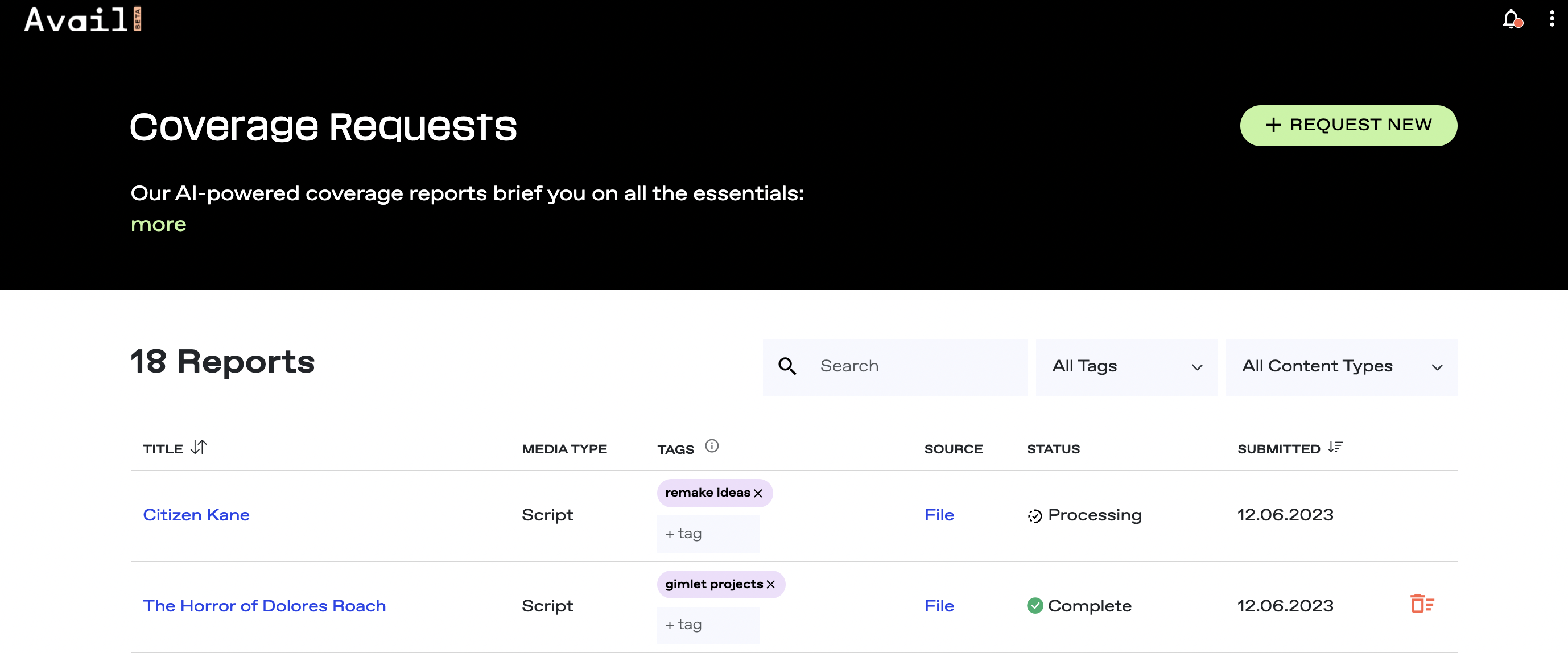
Avail is tackling one of the many time-consuming tasks in film and TV development: script coverage.

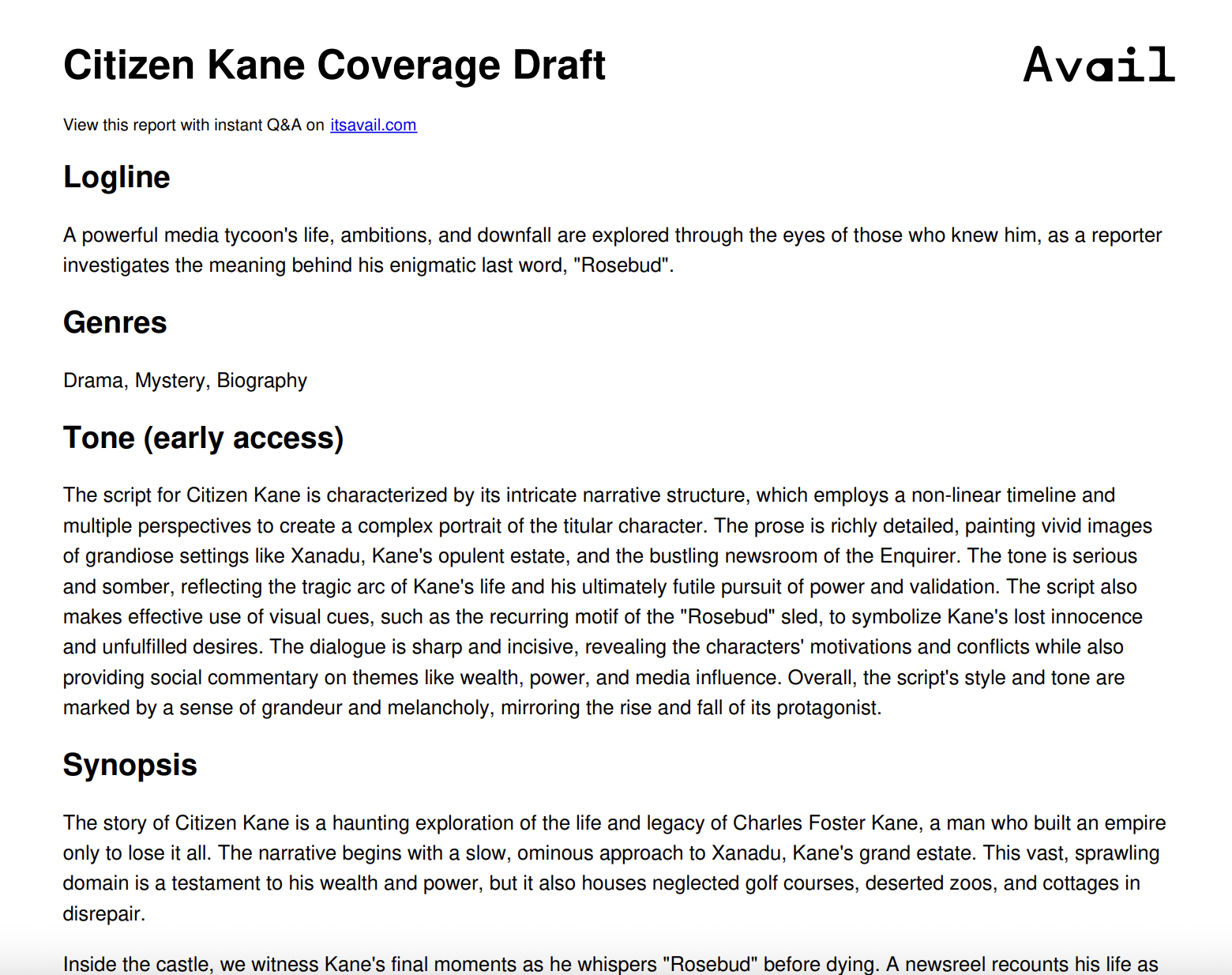
The new ChatGPT-powered summarization tool is designed to summarize scripts and books within minutes, producing detailed summaries, loglines, synopses, character breakdowns and tonal assessments.

Avail also built a Q&A assistant to help production companies and talent agencies brainstorm ideas and ask content-related questions. For instance, it can recommend a list of actors who could be well-suited for the roles or make comparisons to other movies/TV shows.

Avail launched its open beta earlier this week. The entry-level subscription costs $250 monthly for four reports and includes a 30-day free trial. Enterprise pricing is available upon request and is based on how many credits a company needs.

Image Credits: Avail

For many script readers, executives and assistants, reading and taking notes on a script can be a lengthy process, sometimes taking over two hours to complete. On top of managing other tasks, looking at an inbox flooded with 100-page scripts waiting to be opened can get overwhelming.

“As an executive who’s making decisions about how to allocate your company’s resources on content, there’s just so much content out there that’s coming across your desk,” co-founder and CEO Chris Giliberti said during a TechCrunch interview. “It’s really hard to keep up. What’s unfortunate about that is, if you miss something, it could be a multimillion-dollar mistake.”

While it’s not recommended to use Avail (or any AI summarization tool) to do all your work for you, it could be a useful time-saving tool. When testing the product, a 45-page document took Avail less than five minutes to summarize.

“The longer material will take more time… but it always gets the job done,” Giliberti said.

Image Credits: Avail

It may seem strange for a company to be selling AI-powered products to Hollywood right now. The writers’ strike only ended three months ago, which was heavily centered around AI concerns. The new agreement between the Writers Guild of America (WGA) and the Alliance of Motion Picture and Television Producers (AMPTP) states that AI cannot be used to write or rewrite any scripts. The deal also mentions that a writer’s script won’t be used to train AI without their permission.

“There are concerns that have been raised by the WGA and [the Screen Actors Guild] that are totally legitimate and reasonable. We’re not building tools for the industry’s creators. The tools that we’re building are very much productivity tools. They’re not intended to replace anybody’s job at all. They’re just classic workplace productivity tools,” Giliberti said.

Avail was built on top of ChatGPT-4 and has a proprietary processing layer that helps deliver “reliable” coverage on low-quality documents as well as create hallucination-free summaries, Giliberti explained.

To train the AI model, Avail ran public domain work such as The Count of Monte Cristo. Giliberti points out that the company is “very conscious of how we handle creative material,” noting the concerns around which source materials are used to train AI models.

There are several lawsuits accusing AI companies of violating copyright law. Writer and comedian Sarah Silverman sued OpenAI and Meta over copyright infringement, claiming the companies used protected work to train AI models without her permission.

Avail writes on its website, “Your data privacy is of the utmost importance to us… We, and our partners, do not train on any of your uploaded content or prompts. That means your content will NOT end up in any AI model.”

Giliberti previously served as founder and head of Gimlet Pictures, the TV and film adaptation arm of Spotify-owned podcasting company Gimlet Media. He also founded Zestworld, a creator-centric platform for comics. Also on Avail’s founding team is John Liu, Zestworld co-founder and former product manager at Google.

To date, Avail has raised $11.8 million, backed by Seven Seven Six, General Catalyst, Advancit Capital and Liontree.

In the future, the company plans to add team collaboration functionality so colleagues can work on documents together. Giliberti also revealed that Avail is working with a production company to build custom models targeted around “production, engineering and planning,” he said. “Which is another huge pain point in Hollywood.”

Filmustage leverages AI to break down film scripts, create shooting schedules and more

Rhythms launches out of stealth to make successful team habits replicable

Rhythms launches out of stealth to make successful team habits replicable Kyle Wiggers 8 hours

A new company, Rhythms, wants to help organizations improve their productivity by using AI to identify the working patterns of top-performing teams.

Rhythms, which integrates with a business’ existing internal apps and platforms, identifies sets of activities — think business reviews, retrospectives and cross-functional meetings — that happen on a regular schedule or cadence. Leveraging AI, Rhythms then attempts to glean insights from these cadences, providing recommendations that teams and orgs can adopt to ostensibly better achieve their goals.

Vetri Vellore founded the company after selling Ally.io, the OKR software vendor he founded in 2018, to Microsoft around two years ago. Vellore, who was a product unit manager at Microsoft before settling on a more entrepreneurial path, is a fixture of the enterprise productivity software space, having launched Chronus, a talent and career development platform, prior to starting Ally.io.

Vellore was reluctant to provide much detail on how, exactly, Rhythms works leading up to the platform’s launch today. But he did reveal that, with Rhythms, teams can personalize and adopt the cadences of other teams within — as well as outside of — their organizations.

“Rhythms orchestrates the set of activities that align with a particular rhythm,” Vellore told TechCrunch in an email interview. “Rhythms’ AI-powered … system will transform the way teams work, dramatically simplify everyday workflows and allow organizations of all types to advance to new frontiers of performance.”

Setting aside for a moment Vellore’s hyperbole — and the privacy implications of a platform that scrapes calendar data — can embracing a team’s rhythm (so to speak) and ways of work actually help boost another team’s productivity? It’s an idea rooted in self-help books like Stephen R. Covey’s “The 7 Habits of Highly Effective People,” whose sales speak for themselves. But the evidence is far from conclusive.

Just because successful teams are doing something doesn’t mean it’s useful after all. Teams might, in fact, have routines and rituals that don’t fit the work culture of other teams. Often, success requires some risk, uncertainty and change — and rigid routines aren’t exactly conducive to that.

That’s all to say that Rhythms might not be the silver bullet that Vellore presents it to be — as intriguing an idea as it is.

The startup’s won over a few investors, however — even before it ven secures its first customer.

Greenoaks co-led a $26 million seed round in Rhythms with Madrona that had participation from Accel, Cercano and Founders’ Co-op. All of the VCs backed Vellore’s previous venture, Ally.io, implying that the investments are a vote of confidence in Vellore and not strictly Rhythms’ platform.

Vellore says that the funds will be put toward product development, growing Rhythms’ teams in Seattle and India (where most of the company’s engineering is being done) and working toward a platform preview for select customers in early 2024.

“Our investors are fully aligned with Rhythms’ mission and big goals to change how every business and team operates,” Vellore said. “Rhythms provides decision makers with previously hidden insights about how teams across the company approach work … With AI, Rhythms can understand the patterns of work hyper-performing teams are using at a company and provide other teams with the tools they need to personalize and adopt them.”

Meta Unleashes Imagination with ‘Imagine’

Meta is ending this year with brand-new launches and innovations for its users. On Wednesday, Meta expanded its text-to-image generation feature beyond chats by introducing the standalone AI image generator with ‘Imagine’, now accessible in the US at imagine.meta.com. The standalone experience, designed for creative hobbyists, harnesses the power of Emu, Meta’s image foundation model.

This expansion is aimed at a broader audience, allowing users to create free web images independently. The move marks a significant evolution in Meta’s offerings, providing a versatile platform for users to unleash their creativity beyond messaging interactions.

Today, we’re sharing updates to our core AI experiences and new capabilities you can discover across our family of apps. Read all about it here: https://t.co/9CjalsAVKE pic.twitter.com/uQ4mUwJCxi

— Meta (@Meta) December 6, 2023

Meta had previously introduced Imagine, making them available to users via chats, along with launching the AI stickers.

Re-imagine with Meta

Boasting advanced algorithms, Imagine can transform text-based prompts into high-resolution, photorealistic images within seconds.

This innovative feature, initially part of Meta’s AI chatbot, is set to democratize image creation, unlocking creative potential for users across various platforms. With integration plans for Facebook, Instagram, and WhatsApp underway, Imagine is not only aiming to enhance individual’s creativity, but it is also promising for commercial applications in design, marketing, and education.

“We’ve enjoyed hearing from people about how they’re using Imagine, Meta AI’s text-to-image generation feature, to make fun and creative content in chats. Today, we’re expanding access to Imagine outside of chats, making it available in the US to start at imagine.meta.com.” shared Meta in its blog.

Meta’s Forward Outlook

As Meta introduces its standalone AI image generator, Imagine, recent controversies surrounding its image generation tools raise questions about potential pitfalls. The previous incident involving Meta’s racially biased AI sticker generator prompts concerns about safeguards in Imagine to prevent a recurrence.

While the tool wasn’t available for pre-launch testing, Meta assures users of ongoing scrutiny as Imagine expands its user base. In addressing transparency concerns, Meta pledges to integrate invisible watermarks into content generated by Imagine in the coming weeks. Although not initially active, these watermarks aim to enhance transparency and traceability, building on Meta’s commitment to responsible AI usage.

Meta’s dedication to safety extends to ongoing investments in red teaming, a crucial aspect of its culture for years, proactively refining and securing its AI technologies with the introduction of the Multi-round Automatic Red-Teaming (MART) framework, which iteratively tests large language models (LLMs) against potential risks, thereby strengthening safety protocols.

The post Meta Unleashes Imagination with ‘Imagine’ appeared first on Analytics India Magazine.

Top 10 Kaggle Machine Learning Projects to Become Data Scientist in 2024

Top 10 Kaggle Machine Learning Projects to Become Data Scientist in 2024
Image by Editor

In the ever-evolving landscape of technology, the role of data scientists and analysts has become crucial for every organization to find data-driven insights for decision-making. Kaggle, a platform that brings together data scientists and machine learning engineers enthusiasts, becomes a central platform for improving data science and machine learning skills. As we are going into 2024, the demand for proficient data scientists continues to rise significantly, making it an opportune time to accelerate your journey in this dynamic field.

So, in this article, you will get to know the top 10 Kaggle machine-learning projects to tackle in 2024, which can help you gain practical experience in solving data science problems. By implementing these projects, you will get a comprehensive learning experience covering various aspects of data science, from data preprocessing and exploratory data analysis to advanced machine learning model development.

Let's explore the exciting world of data science together and elevate your skills to new heights in 2024.

Project 1: Dog Breed Classification

Idea: In this project, you must implement a deep learning model that helps recognize and classify a dog's breed based on input images provided by the user in the testing environment. By exploring this classic image classification task, you will learn about one of the famous architectures of deep learning, i.e., convolutional neural networks (CNNs), and their application to real-world problems.

Dataset: Since it's a supervised problem, the dataset would consist of labeled images of various dog breeds. One of the most popular choices to implement this task is the "Stanford Dogs Dataset," freely available on Kaggle.

Top 10 Kaggle Machine Learning Projects to Become Data Scientist in 2024
Image from Medium

Technologies: Based on your expertise, Python libraries and frameworks like TensorFlow or PyTorch can be used to implement this image classification task.

Implementation: Firstly, you have to preprocess the images, design a CNN architecture with different layers involved, train the model, and evaluate its performance using evaluation metrics such as accuracy and confusion matrix.

Project 2: Deploy Your Machine Learning Model with Gradio

Idea: In this project, you will learn the practical aspects of deploying a machine-learning model using Gradio. This user-friendly library facilitates model deployment with almost no code requirements. This project emphasizes making machine learning models accessible through a simple interface and used in a real-time production environment.

Dataset: Based on the problem statement ranging from image classification to natural language processing tasks, you can choose the respective dataset, and accordingly, algorithm selection can be done by keeping different factors such as latency for prediction and accuracy, etc., and then deploying it.

Technologies: Gradio for deployment, along with the necessary libraries for model development (e.g., TensorFlow, PyTorch).

Implementation: Firstly, train a model, then save the weights, which are the learnable parameters that help to make the prediction, and finally integrate those with Gradio to create a simple user interface and deploy the model for interactive predictions.

Project 3: Fake News Detection with NLP

Idea: In this project, you have to develop a machine learning model that helps to find the difference between real and fake news articles collected from different social media applications using natural language processing techniques. This project involves text preprocessing, feature extraction, and classification.

Dataset: Use datasets containing labeled news articles, such as the "Fake News Dataset" on Kaggle.

Top 10 Kaggle Machine Learning Projects to Become Data Scientist in 2024
Image from Kaggle

Technologies: Natural Language Processing libraries like NLTK or spaCy and machine learning algorithms like Naive Bayes or deep learning models.

Implementation: You'll tokenize and clean text data, extract relevant features, train a classification model, and assess its performance using metrics like precision, recall, and F1 score.

Project 4: Movie Recommendation System

Idea: In this project, you must build a recommendation system that automatically suggests movies or web series to users based on their past watches through the correlated platforms. Recommendation systems like Netflix and Amazon Prime are widely used in streaming media to enhance user experience.

Dataset: Commonly used datasets include MovieLens or IMDb, which contain user ratings and movie information.

Technologies: Collaborative filtering algorithms, matrix factorization, and recommendation system frameworks like Surprise or LightFM.

Implementation: You'll explore user-item interactions, build a recommendation algorithm, evaluate its performance using metrics like Mean Absolute Error, and fine-tune the model for better predictions.

Project 5: Customer Segmentation

Idea: In this project, you have to create a machine learning model to segment customers based on their past purchasing behavior so that when the same customer comes again, that system can recommend past things to increase sales. In this way, by utilizing segmentation, organizations can target marketing and personalized services to all customers.

Dataset: Since this is a kind of unsupervised learning problem, labels will not be required for such tasks, and you can use datasets containing customer transaction data, online retail datasets, or any e-commerce-related datasets such as from Amazon, Flipkart, etc.,

Technologies: Different clustering algorithms from the class of unsupervised machine learning algorithms, such as K-means or hierarchical clustering(either divisive or agglomerative), for segmenting customers based on their behavior.

Implementation: Firstly, you have to process the transaction data, including visualizing the data and then apply different clustering algorithms, visualize customer segments based on other clusters formed by the model, analyze the characteristics of each segment for marketing insights, and then evaluate it using different metrics such as Silhouette score, etc.

Project 6: Stock Price Prediction

Idea: The behavior of stocks is a bit random, but by using machine learning, you can predict the approximated stock prices using historical financial data by capturing the variance in the data. This project involves time series analysis and forecasting to model the dynamics of different stock prices among multiple sectors such as Banking, Automobile, etc.

Top 10 Kaggle Machine Learning Projects to Become Data Scientist in 2024
Image from Devpost

Dataset: You need the historical prices of stocks, which include Open, High, Low, Close, Volume, etc, in different time frames, including daily or minute-by-minute prices and traded quantities.

Technologies: You can use different techniques to analyze the time series models, such as Autocorrelation function and forecasting models, including Autoregressive Integrated Moving Average (ARIMA), Long Short-Term Memory (LSTM) networks, etc.

Implementation: Firstly, you have to process the time series data, including its decomposition such as cyclical, seasonal, random, etc., then choose a suitable forecasting model to train the model, and finally evaluate its performance using metrics like Mean Squared Error, Mean Absolute Error or Root Mean Squared Error.

Project 7: Speech Emotion Recognition

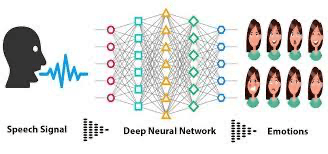
Idea: In this project, you have to develop a model that can recognize different types of emotions in spoken languages, such as angry, happy, crazy, etc., which involves the processing of the audio data captured from various persons and applying machine learning techniques for emotion classification.
Top 10 Kaggle Machine Learning Projects to Become Data Scientist in 2024
Image from Kaggle

Dataset: Utilize datasets with labeled audio clips, such as the "RAVDESS" dataset containing emotional speech recordings.

Technologies: Signal processing techniques for feature extraction deep learning models for audio analysis.

Implementation: You'll extract features from audio data, design a neural network for emotion recognition, train the model, and assess its performance using metrics like accuracy and confusion matrix.

Project 8: Sales Forecasting System

Idea: In this project, you must build a system to predict future sales based on historical sales data. This project is essential for businesses to optimize inventory and plan for future demand.

Dataset: Historical sales data for products or services, including information on sales volume, time, and relevant factors.

Technologies: Time series forecasting methods, regression models, and machine learning frameworks.

Implementation: Firstly, you'll preprocess sales data, choose an appropriate forecasting or regression model, train the model, and evaluate its performance using metrics like Mean Squared Error or R-squared.

Project 9: Digit Classification System with MNIST Dataset

Idea: In this project, you must create a model to classify hand-written digits using the MNIST dataset. This project is a fundamental introduction to image classification and is often considered a starting point for those new to deep learning.

Dataset: The MNIST dataset consists of grayscale images of hand-written digits (0-9).

Top 10 Kaggle Machine Learning Projects to Become Data Scientist in 2024
Image from ResearchGate

Technologies: Convolutional Neural Networks (CNNs) using frameworks such as TensorFlow or PyTorch.

Implementation: Firstly, you must preprocess the image data, design a CNN architecture, train the model, and evaluate its performance using metrics like accuracy and confusion matrix.

Project 10: Credit Card Fraud Detection

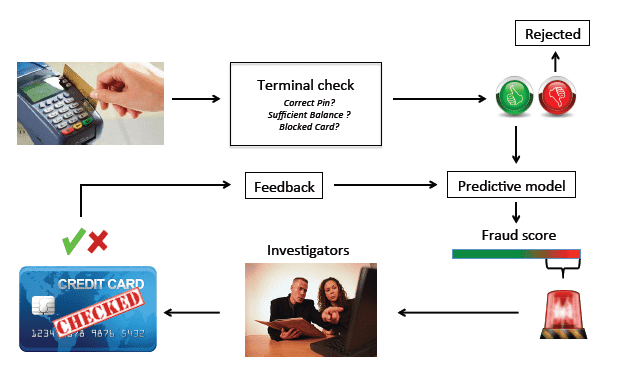
Idea: In this project, you have to develop a machine learning model to detect fraudulent credit card transactions, which is crucial for financial institutions to enhance security, protect users from fraudulent activities, and make the environment for different transactions very easy.
Top 10 Kaggle Machine Learning Projects to Become Data Scientist in 2024
Image from ResearchGate

Dataset: Since it's a supervised learning problem, you have to collect the dataset, which contains Credit card transaction datasets with labeled cases of fraud and non-fraud transactions.

Technologies: Anomaly detection algorithms, classification models like Random Forest or Support Vector Machines, and machine learning frameworks for implementation.

Implementation: Firstly, you have to preprocess the transaction data, train a fraud detection model, tune parameters for optimal performance, and evaluate the model using classification evaluation metrics like precision, recall, and ROC-AUC.

Wrapping it Up

In conclusion, exploring the Top 10 Kaggle Machine Learning Projects has been fantastic. From unraveling the mysteries of canine breeds and deploying machine learning models with Gradio to combating fake news and predicting stock prices, each project has offered a unique feature in the diversified field of data science. These projects help gain invaluable insights into solving real-world challenges.

Remember, becoming a data scientist in 2024 is not just about mastering algorithms or frameworks—it's about crafting solutions to intricate problems, understanding diverse datasets, and constantly adapting to the evolving landscape of technology. Keep exploring, stay curious, and let the insights from these projects guide you in making impactful contributions to the world of data science. Cheers to your ongoing journey in the dynamic and ever-expanding field of data science!

Aryan Garg is a B.Tech. Electrical Engineering student, currently in the final year of his undergrad. His interest lies in the field of Web Development and Machine Learning. He have pursued this interest and am eager to work more in these directions.

More On This Topic

  • 2024 Data Management Crystal Ball: Top 4 Emerging Trends
  • The 5 Best Vector Databases You Must Try in 2024
  • Top 4 tricks for competing on Kaggle and why you should start
  • KDnuggets News March 16, 2022: Learn Data Science Fundamentals & 5…
  • Can You Become a Data Scientist Online?
  • Don't Become a Commoditized Data Scientist

It Takes More Than a ‘Better Product’ to Compete with Google Search 

Google pays nearly USD 18-20 billion a year to be Apple’s default search engine. The agreement is currently under scrutiny through an antitrust lawsuit filed by the US Justice Department. This also highlights Google’s dominance in the search domain, a hegemony that even Microsoft has struggled to challenge.

But with generative AI coming into the picture, it looked like the dynamics could change with a number of startups popping up and offering better generative AI-powered search experiences like You.com, Perplexity AI and Neeva AI.

Notably, Neeva AI caught everyone’s attention because it was co-founded by a former Google veteran, Sridhar Ramaswamy, who led Google’s USD 115 billion advertising tech division. But despite having a better product than Google, Neeva AI exited the market, and sold to Snowflake.

However, others in the space, like You and Perplexity, remain optimistic that they can carve out a share of the pie in the search engine space.

End of the ten blue links

Banking on the strength of Large Language Models (LLMs), both You and Perplexity are currently focussed on providing a better search experience than Google to their users. Much like Neeva, these startups aim to disrupt the paradigm of the ’10 blue links’ that typically appear when querying Google. The goal is to present the answer directly, aided by AI, rather than requiring users to sift through links to locate the relevant information.

This has also resulted in both startups attracting a significant number of users to their applications since their inception. You, for example, which was founded by former Salesforce chief scientist Richard Socher, reported 1 million users in 2022. In September 2023, the company had 13.6 million visits, according to data from Similarweb.

Similarly, Perplexity had 37.4 million hit during the same period. The numbers may seem relatively minute in terms of the billions of hits Google gets every month, but Aravind Srinivas, who heads Perplexity, recently said that the company has sustained users.

However, recently Google announced Gemini, which could possibly be the most advanced LLM to date, surpassing OpenAI’s GPT-4. Google introduced generative AI into their search engine earlier but it remained problematic.

For example, on the day of the ICC Cricket World Cup Final played between India and Australia, we at AIM asked Bard about the match and to our surprise, it declared Australia the winner even before the match was played. In a separate instance, it declared India as the winner.

With Gemini, how much can Google improve the search experience remains to be seen, but the implications could be significant for startups operating in the same space.

If Google significantly improves its search experience, users of You and Perplexity could possibly migrate back to Google. Alternatively, in such a scenario, the startups could integrate Gemini into their products to improve their current offerings, however, the challenges in front of them are aplenty.

But to compete with Google, you need more than a product

For instance, to sustain and compete with Google in the search engine space, they need more than a good product. Ramaswamy, in a previous interaction with AIM, said that his company was not on the path to a sustainable valuation, despite having a better product than Google’s.

Moreover, Google’s overwhelming presence stifles competition. “To become the default search engine in Safari, as it turns out, is an incredibly convoluted endeavour. In reality, there is no formal process; it all hinges on Cupertino’s (Apple’s) subjective judgement of one’s qualifications. “There is no process and it’s pretty tough to create a sustainable business,” he said.

As it appears, both Perplexity and You are currently fixated on a better product and don’t have a viable business model. Srinivas, in an interview, said that he does not plan to monetise the same way like Google.

“We haven’t thought through that part yet, but we at least know that it won’t be the exact same thing,” Srinivas said in an interview.

For now, the startups may carve out a niche in the market, but building a sustainable business, especially in the challenging search space, remains a different ball game for them.

So far, Perplexity has raised over USD 50 million with a valuation of over USD 500 million, generating USD 3 million in annual recurring revenue. You have also raised USD 45 million in three funding rounds and have estimated revenue of around USD 15 million per year.

Currently, both companies offer a subscription for the premium services. YouPro costs USD 14.99/month or USD 149.99 for a full year which gives users unlimited access to AI models like GPT-4 and Stable Diffusion XL. Whereas, Perplexity premium costs USD 20/ month or USD 200 per year and gives users access to advanced AI models, extra copilot usage, dedicated support, and unlimited file uploads.

However, the startups will soon need to explore more effective monetisation strategies, foster growth, and simultaneously compete with Google. Neeva, too, had a subscription model starting at USD 4.95/ month.

Ramaswamy said that it was very possible for them at Neeva to raise again in a fresh round and get a few million more to use their products. However, he said a founder’s job was to look ahead around the corner, and unfortunately, Neeva found operating in an uncompetitive space too daunting.

Nonetheless, despite recognising the David vs. Goliath nature of the situation, both Socher and Srinivas maintain optimism about building a sustainable business.

The post It Takes More Than a ‘Better Product’ to Compete with Google Search appeared first on Analytics India Magazine.

Using Google’s NotebookLM for Data Science: A Comprehensive Guide

Using Google's NotebookLM for Data Science: A Comprehensive Guide
Image by Author

As the world of data science continuously evolves, the tools and technologies used by professionals in the field also advance. Google's NotebookLM is offering a unique and powerful way to understand your data and information. This blog post delves into what NotebookLM is, how it works, and the numerous possibilities it opens up for data science researchers.

What is NotebookLM?

Google's new experimental product, NotebookLM, is based on the latest advancements in large language models. It is similar to other Large Language Model (LLMs) powered applications such as ChatPDF, ChatGPT, and Poe, which allow users to upload data files and prompt questions. These applications offer the same features and capabilities.

So, why is it special?

NotebookLM is a specialized application that allows you to upload up to 10 documents. You can easily upload your sources, which may include Google Docs, PDFs from your computer, or any text content that is less than 50,000 words.

NotebookLM addresses the limitations of using ChatGPT and Poe. It allows you to upload over three documents and understand large documents in seconds.

Using NotebookLM for Data Science

Using NotebookLM is straightforward. You can upload Google Docs, PDFs from your computer, or any text content in seconds. Once your sources are uploaded, NotebookLM becomes your go-to tool for queries and creative brainstorming.

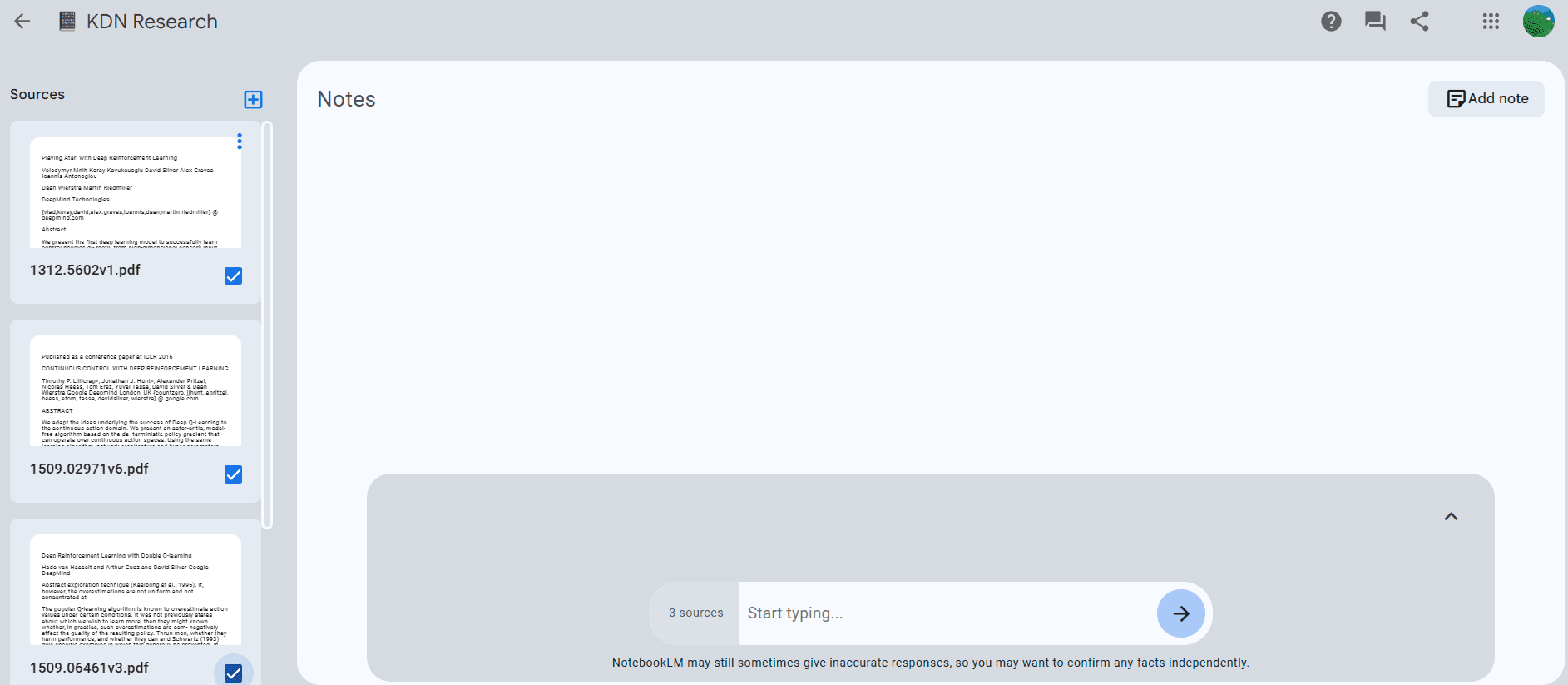
First, we will go to the “notebooklm.google.com” website and create a Project.

Using Google's NotebookLM for Data Science: A Comprehensive Guide

I have downloaded PDFs of popular research papers on reinforcement learning:

  1. Continuous control with deep reinforcement learning
  2. Playing Atari with Deep Reinforcement Learning
  3. Deep Reinforcement Learning with Double Q-learning

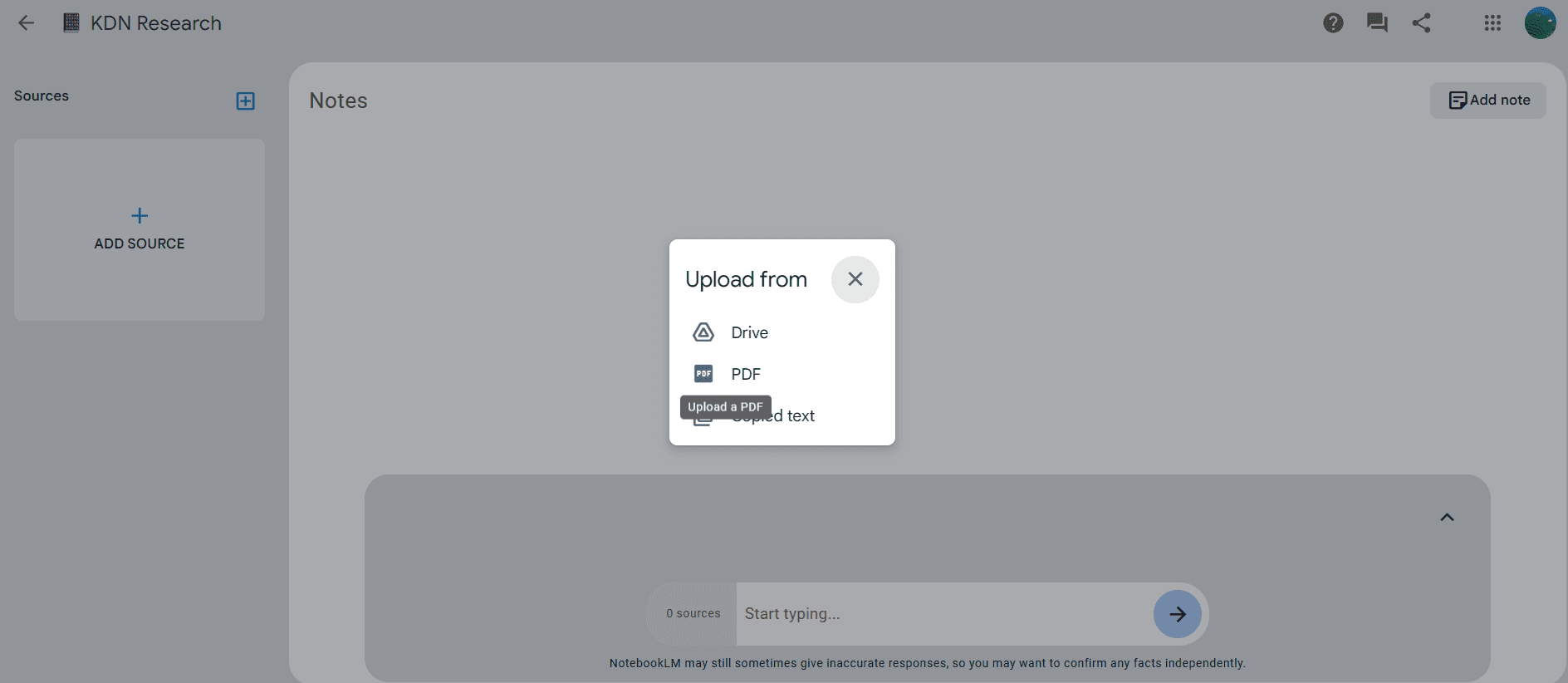
We will then upload these PDFs into our project one by one.

Using Google's NotebookLM for Data Science: A Comprehensive Guide

After uploading files, we select those to use as context.

Using Google's NotebookLM for Data Science: A Comprehensive Guide

Summarization

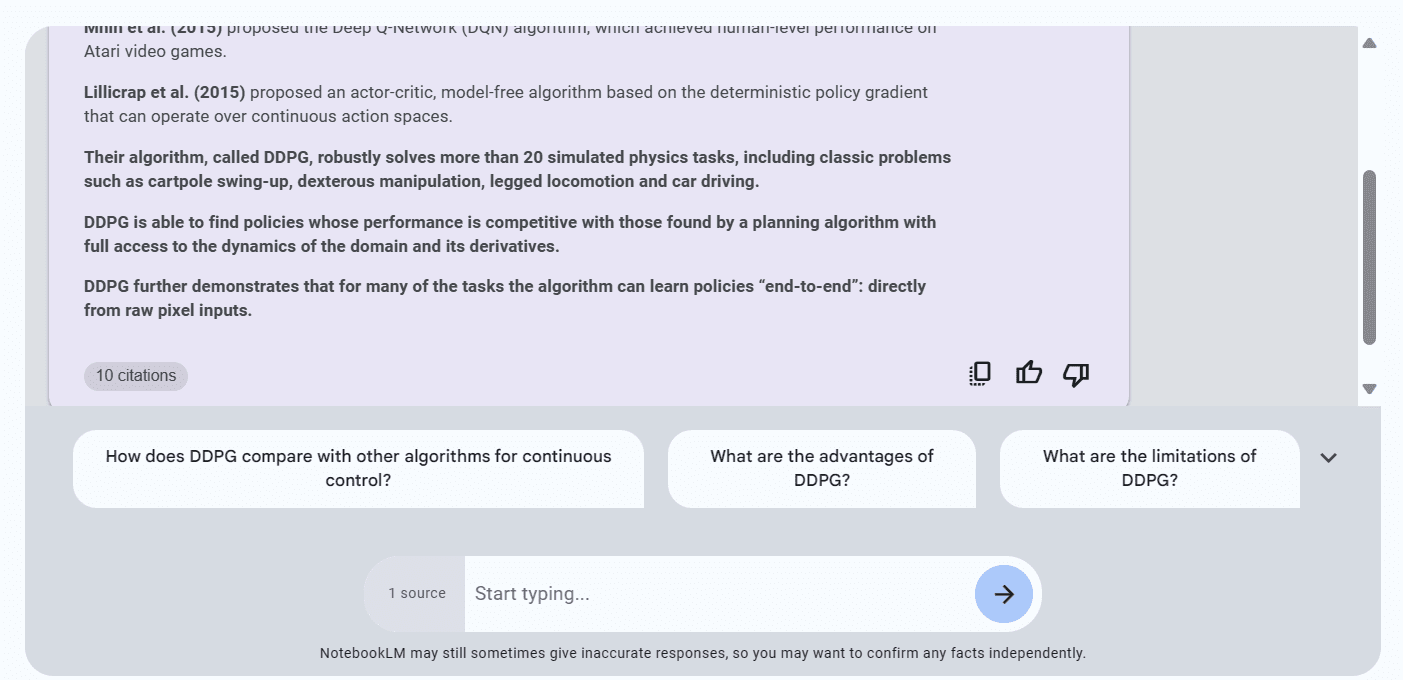
We will select the “Continuous control with deep reinforcement learning” research paper and ask NotebookLM to summarize it for us.

Prompt: “Can you please summarize the research paper for me? Try to use bullet points.”

Using Google's NotebookLM for Data Science: A Comprehensive Guide

It only took seconds to get an answer. Further questions were also offered.

Terminology Extraction

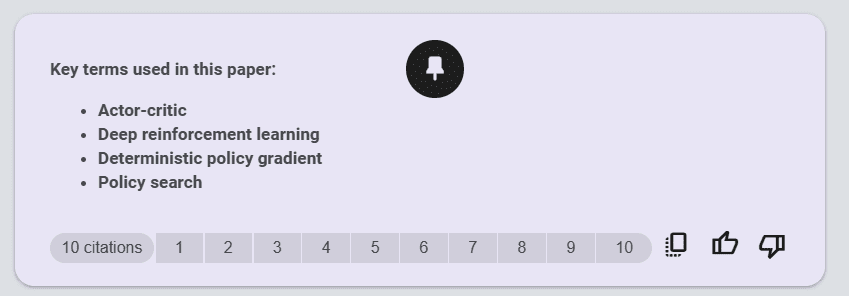
We will ask it to now create a list of key terms used in the paper.

Prompt: “Create the list of key terms used in this paper.”

Using Google's NotebookLM for Data Science: A Comprehensive Guide

It not only provided us with key terms, but also indicated their location within the paper.

Reinforcement Learning Analysis

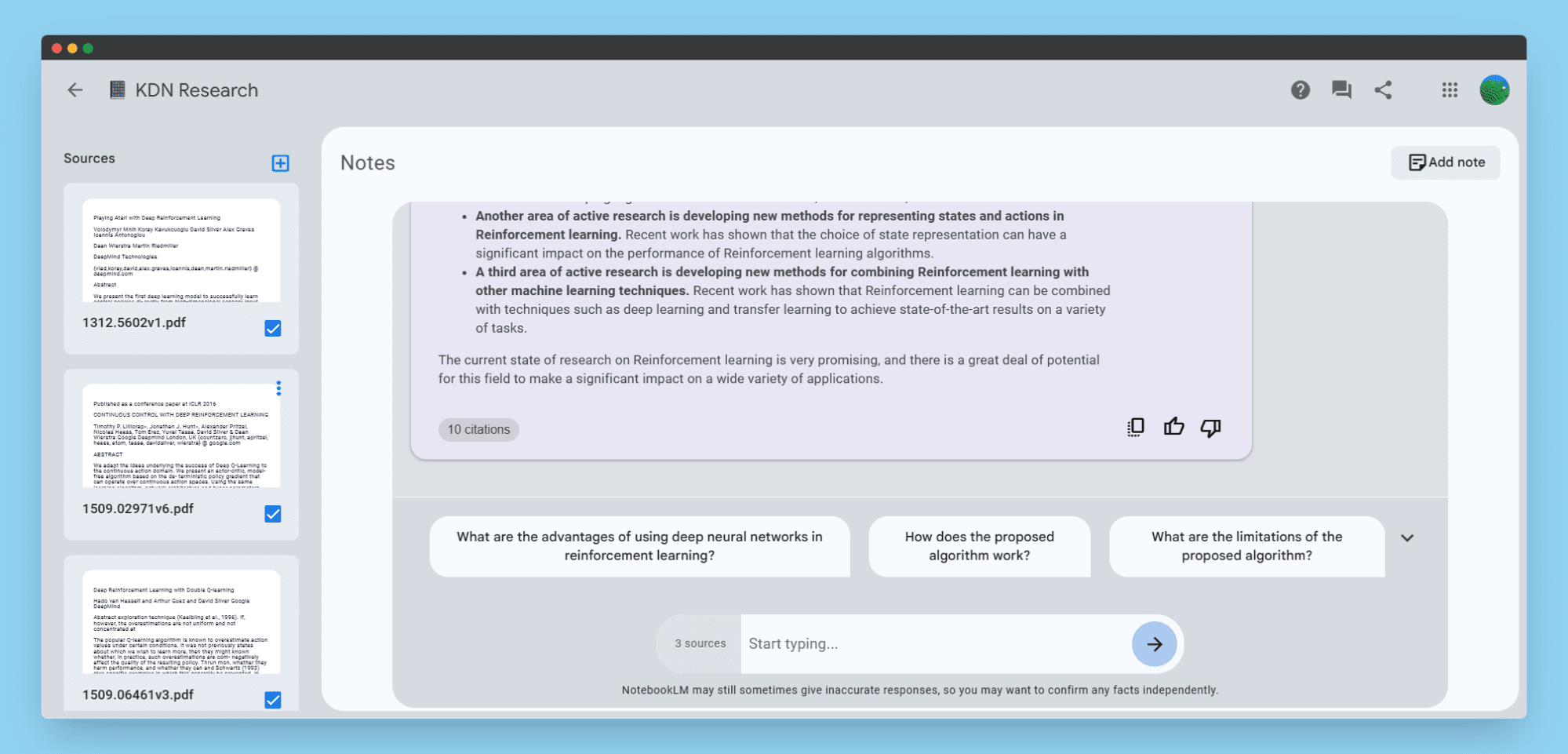
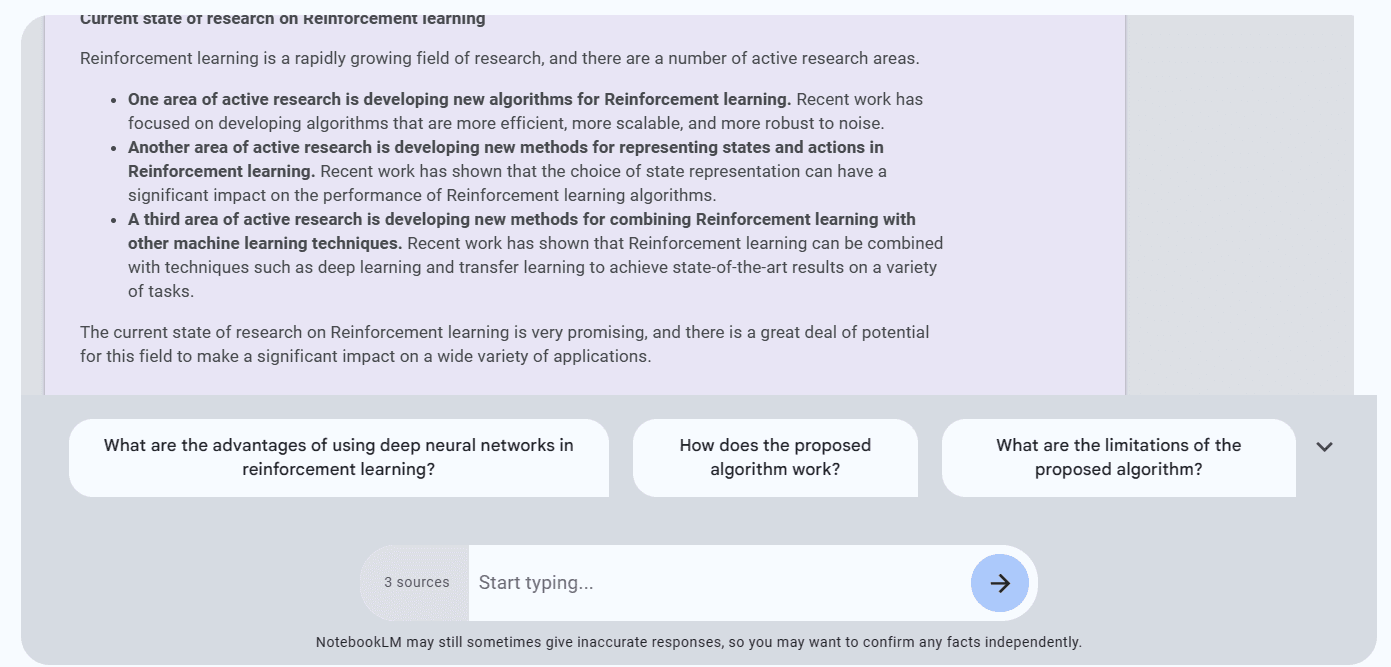
We will now use all three papers to understand the research trend.

Prompt: “Analyze all three research papers and provide an analysis of the current state of research on Reinforcement learning.”

Using Google's NotebookLM for Data Science: A Comprehensive Guide

It performed really well.

Creative Assistance

We will now use it and ask the AI to help us decide on a final-year project title that will secure a job as a machine learning engineer.

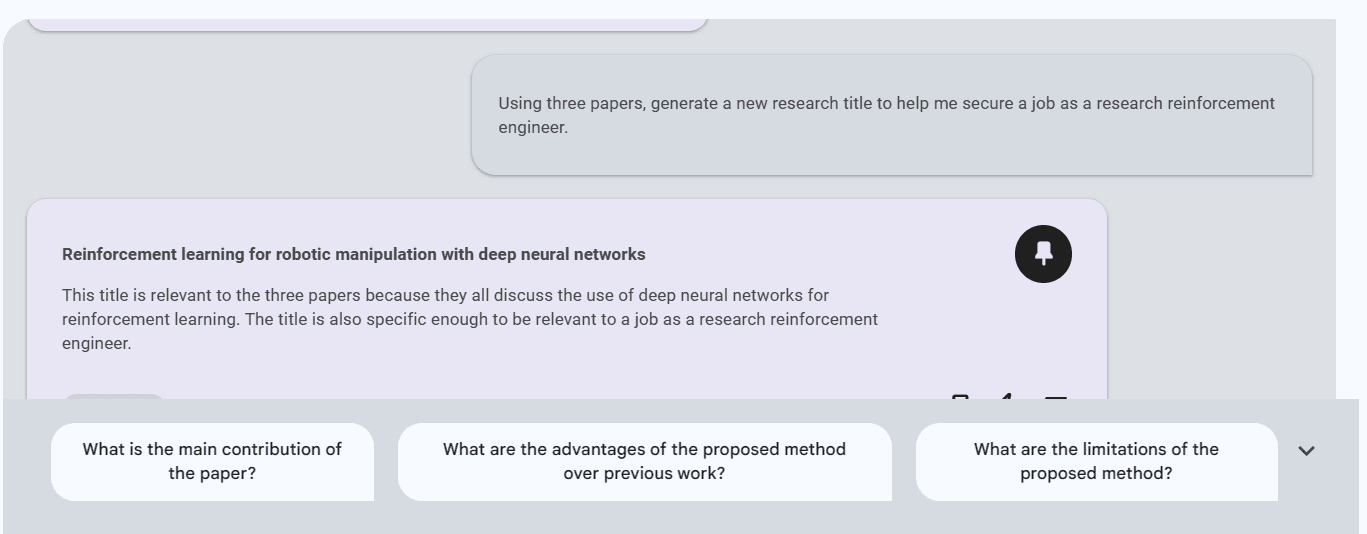
Prompt: “Using three papers, generate a new research title to help me secure a job as a research reinforcement engineer.”

Using Google's NotebookLM for Data Science: A Comprehensive Guide

It is good. But not great.

Advanced Features

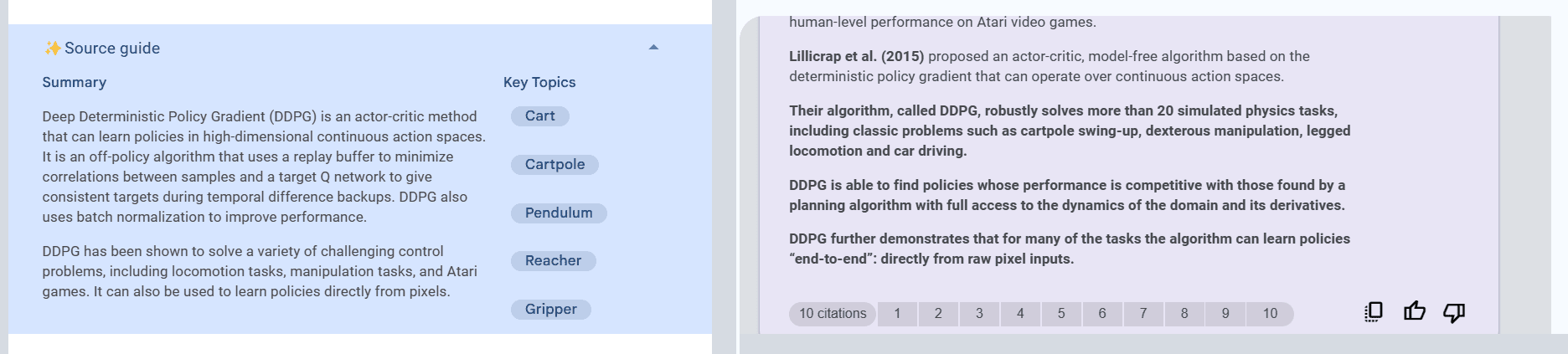
Citations

Ask any question about your sources, and NotebookLM will respond with answers, complete with citations from those documents.

Using Google's NotebookLM for Data Science: A Comprehensive Guide

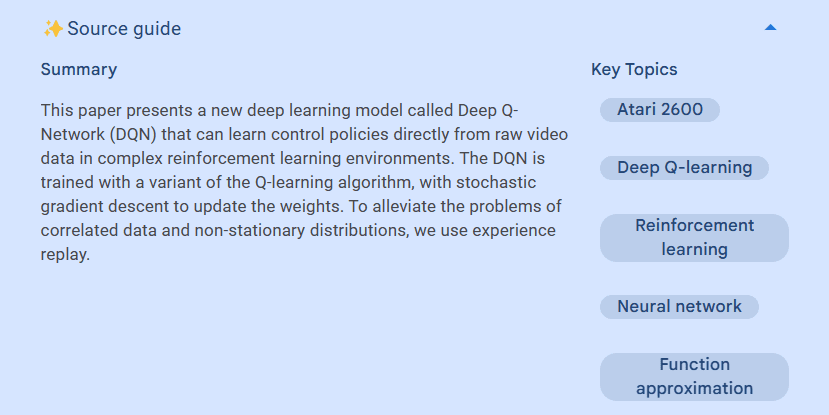
Document Guide

When you upload a new source, NotebookLM creates a "source guide" summarizing the document and suggesting key topics and questions.

Using Google's NotebookLM for Data Science: A Comprehensive Guide

Note-taking

Each notebook contains a section for notes, where you can jot down ideas or information uncovered by NotebookLM.

Using Google's NotebookLM for Data Science: A Comprehensive Guide Accessibility and Limitations

  • Device Compatibility: Currently, NotebookLM is best experienced on a desktop computer.
  • Access Restrictions: It is initially available in the U.S. only and to personal Google accounts.
  • Content Limitations: Each notebook can contain ten sources and one note, with each source capped at 50,000 words.

Collaboration and Sharing

  • Collaborative Features: Notebooks can be shared with colleagues or classmates, offering either Viewer or Editor access.
  • Multi-Source Interaction: Users can toggle between interacting with a single source or all sources in a Notebook.

Pricing and Availability

NotebookLM is in its early testing phase and is currently free of charge. Access is gradually being opened to small groups of people, with a registration option available for those interested in joining the waitlist.

Important Guidelines

While NotebookLM presents exciting opportunities, it's crucial to be mindful of what content to upload. Avoid documents containing personal or sensitive information. Also, be aware that it's an experimental project and currently limited to those in the Early Access Program.

Conclusion

Google's NotebookLM is a significant breakthrough in how data scientists and professionals decipher complex information. Since most of our information is in PDFs and stored on computers, NotebookLM allows you to understand your legal contract by simply adding all the files and asking essential questions. Although NotebookLM lacks some features and accuracy compared to ChatGPT, it has great potential to become an essential tool in your workspace as it continues to evolve.

Abid Ali Awan (@1abidaliawan) is a certified data scientist professional who loves building machine learning models. Currently, he is focusing on content creation and writing technical blogs on machine learning and data science technologies. Abid holds a Master's degree in Technology Management and a bachelor's degree in Telecommunication Engineering. His vision is to build an AI product using a graph neural network for students struggling with mental illness.

More On This Topic

  • A Comprehensive Guide to Ensemble Learning – Exactly What You Need to Know
  • Comprehensive Guide to the Normal Distribution
  • A Comprehensive Guide to MLOps
  • NLP, NLU, and NLG: What’s The Difference? A Comprehensive Guide
  • A Comprehensive Guide to Convolutional Neural Networks
  • A Comprehensive Guide to Pinecone Vector Databases

Atla wants to build text-generating AI models with ‘guardrails’

Atla wants to build text-generating AI models with ‘guardrails’ Kyle Wiggers 2 days

Today’s most capable text-generating AI models are also those most likely to make mistakes.

It’s well-established at this point that text-generating models hallucinate, or make up facts, and fall victim to all sorts of biases and toxicities — including sexism, Anglocentrism and racism. For example, without sufficient filtering, GPT-4 — OpenAI’s flagship model — dispenses advice on how to self-harm without anyone noticing, synthesize dangerous chemicals and write ethnic slurs to avoid social media moderation.

Obviously, all that’s an anathema to the enterprises looking to build these models into their apps and services. According to a recent Gartner survey, 58% of companies are concerned about incorrect or biased outputs from models. A similar percentage said that they were worried about the models leaking confidential information — another notorious characteristic of text-generating models.

Work on AI models continues. But for companies eager to deploy the models — particularly the open source models — already available, there’s startups like Atla. Co-founded by Maurice Burger and Roman Engeler, Atla is building what Burger describes as “guardrails” for text-analyzing and -generating models in “high-stakes” domains.

Burger previously co-founded the startup Syrup Tech, which develops AI-powered ecommerce inventory software. Engeler, meanwhile, was previously an AI researcher at Stanford, where he studied text-generating models and their existential risks.

Atla’s mission, Burger says, is to build safer AI systems by improving their truthfulness, reducing their harmfulness and increasing their reliability. The company’s first product is a model for legal research trained in collaboration with teams at Volkswagen and N26, which responds to questions with citations trom “trusted” legal sources.

Why focus on AI for legal research first first? The demand’s palpable, Burger says. To avoid errors, corporate counsel often leans on external law firms — which are expensive and time-consuming. It’s not uncommon for a legal professional to spend hours reviewing dozens of documents to answer a single question, Burger says — a burden a reliable AI system can in theory massively alleviate.

“We’re excited by the enormous potential of generative AI and by the challenge of pushing the limits of reliability of [text-analyzing] models,” Burger said in a statement. “At Atla, we’re committed to creating safer AI systems that are designed to perform reliably in high-stakes situations.”

It’s a sensible goal — if an ambitious one. Atla is revealing little about how, exactly, it’s making AI systems “safer.” I’m skeptical myself — if a safety-focused AI company as well-funded and high-profile as Anthropic can’t build a vastly less biased, hallucination-prone text-generating models, well… Atla has its work cut out for it.

Plus, Atla isn’t the only startup working on building safer text-generating AI. There’s Protect AI, Fairly AI and Kolena, to name a few, as well as the recently-emerged-from-stealth Vera and Calypso.

But Atla’s attracted investments — which means that at least a few folks are willing to put cash behind its projects. Today, Atla announced that it secured $5 million funding in a seed round led by Creandum with participation from Y Combinator and Rebel Fund.

Here’s Creandum partner Hanel Baveja:

“From our first interactions, we’ve been incredibly impressed by the ambition, relentless work ethic and deep AI expertise from Maurice and Roman,” Baveja said via email. “We’re excited to join the Atla team in their journey to build reliable, safe and trusted AI applications for the sectors where this matters most.”

Burger says that the new cash will be put toward expanding Atla’s team to scale its tech, go live with more customers and recruit for technical roles in its London-based team.

Google’s Gemini Nano Pushes Smartphone Industry On-Edge

After keeping everyone waiting for so long, Google has hopped on the Christmas spirit just in time. The tech giant finally unveiled Gemini. To everyone’s surprise, Google didn’t just stick with cloud-based LLM but entered the race by creating Gemini Nano, an LLM for Android.

Gemini Nano could have a similar impact like Android had on smartphones years ago. It’s designed for on-device tasks and operates directly on mobile phones.

Gemini Nano runs on a phone and without the internet, beginning an era of on-device LLMs, one that fits in your pocket

— Keerthana Gopalakrishnan (@keerthanpg) December 6, 2023

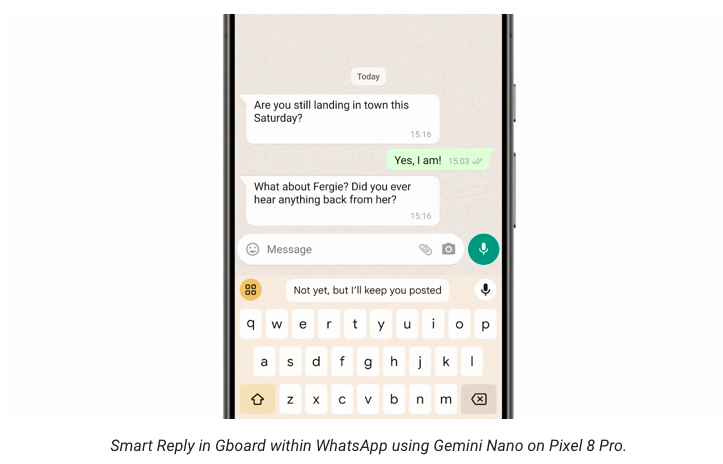
The Pixel 8 Pro will be the first smartphone designed to run Gemini Nano, which now powers new features like ‘Summarize’ in the Recorder app and ‘Smart Reply’ on Gboard, starting with WhatsApp—with more messaging apps expected next year. For instance with this feature, Gemini Nano will automatically frame responses for the ongoing conversation in WhatsApp.

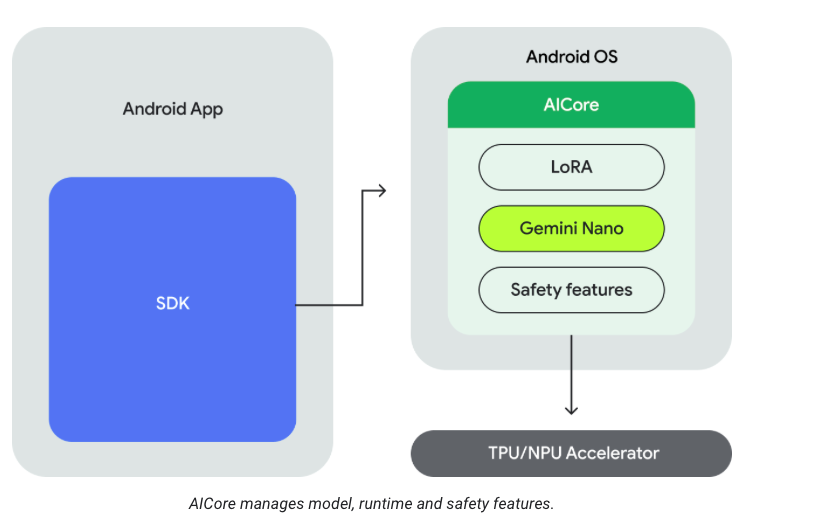
Moreover, Google has introduced a new system called Android AICore in Android 14 that provides easy access to Gemini Nano. It handles model management, runtimes, safety features and more, simplifying the work for you to incorporate AI into apps.

Threat to Apple?

Google isn’t the only player exploring the integration of LLMs on mobile devices. Anticipations are high that Apple will introduce an upgraded version of Siri in iOS 18 and other operating systems next year.

iOS 18 holds particular significance for Apple, speculated to introduce generative AI capabilities as the company aims to catch up with industry leaders like OpenAI and Google. iOS 18 will incorporate generative AI technology to boost Siri and the Messages app’s capabilities in answering questions and auto-completing sentences. Apple is also reportedly considering generative AI for apps like Apple Music, Pages, Keynote, and Xcode.

While the iPhone commands a market share of 58.28% in the U.S., Android dominates globally with 69.44% market share.

In their blog post, Google mentioned that following the Pixel 8 Pro, they will introduce additional devices and silicon partners under AICore and Gemini Nano, with details to be disclosed in the coming months.

It is highly likely that one of the new partners will be Samsung, especially considering Google’s leverage of Samsung S.LSI. An interesting point to note is that in Q3 2023, Samsung held a 20% global market share for smartphones.

Interestingly, Google has announced that its AICore AICore uses new machine learning hardware, such as the latest Google Tensor TPU and NPUs in flagship devices from Qualcomm Technologies, Samsung S.LSI, and MediaTek.

Moreover, if Google and Samsung partners along with other Android players in the market, it would be a huge blow to Apple.

Phone Companies’ New Focus

Samsung recently introduced its on edge generative AI model, Gauss. This AI model is set to be incorporated into the upcoming Galaxy S24 handset, anticipated to be released in early 2024. Gauss has the ability to generate and edit images, compose emails, summarize documents, and also function as a coding assistant.

Interestingly, in August, Xiaomi’s founder and CEO, Lei Jun, revealed that the company’s digital assistant, Xiao Ai, was undergoing enhancements to incorporate generative AI capabilities. The upgraded assistant is reportedly backed by a nimble AI model with 1.3 billion parameters and operated locally on the phone.

Testing the AI Power

Google Pixel 8 Pro, which will host Gemini Nano, utilizes the power of Google Tensor G3, a slightly modified version of Samsung’s Exynos 4 nm chipset.

Apart from Google, MediaTek and Snapdragon are making strides in developing chips for running AI on mobile devices. MediaTek, for instance, recently released the Dimensity 8300, which offers generative AI capabilities, adaptive gaming technology, and fast connectivity.

Last month Qualcomm introduced the Snapdragon 8 Gen 3. While not as powerful as the Google Tensor G3’s TPU for specific tasks, it enables various AI features and supports on-device model execution.

On the other hand, Apple’s latest iPhone 15 Pro features the A17 Pro chip based on TSMC’s 3nm technology. The chip’s neural engine, responsible for tasks such as transcribing speech to text, is now up to twice as fast, capable of performing up to 35 trillion operations per second—double the previous year’s 17 TOPS.

While Google focuses on collaboration to make Android generative AI-capable, it will be interesting to see how Apple responds.

The post Google’s Gemini Nano Pushes Smartphone Industry On-Edge appeared first on Analytics India Magazine.