IBM continues to invest in AI and hybrid cloud with the Dec. 18 announcement of a definitive agreement with Software AG to acquire StreamSets and webMethods, two integration platform-as-a-service enterprise technology platforms. The deal is expected to close in Q2 2024 for $2.3 billion in cash.
Jump to:
What are iPaaS platforms StreamSets and webMethods?
What are IBM’s plans for StreamSets and webMethods?
What are the iPaaS platforms StreamSets and webMethods?
StreamSets is a DataOps and data ingestion application. It is cloud native and helps organizations design smart data pipelines and ingest real-time and batch data.
WebMethods is an integration and API management platform offered both on premises and on the cloud. It enables B2B integration, managed file transfer and an API gateway to manage, monitor and monetize APIs.
Software AG refers to these platforms together as the Super iPaaS business. IBM notes that these iPaaS platforms are growing and profitable and have a good recurring revenue profile.
What are IBM’s plans for StreamSets and webMethods?
Overall, StreamSets and webMethods will enhance watsonx, Red Hat, IBM’s IT automation products and IBM Consulting.
IBM plans to add StreamSets’ data ingestion capabilities to watsonx, IBM’s AI and data platform, the company said in a press release. WebMethods’ integration and API management tools will be integrated into IBM hybrid multi-cloud environment offerings, IBM expects.
“… StreamSets and webMethods will help clients unlock the full potential of their applications and data,” said Rob Thomas, senior vice president, software and chief commercial officer, IBM, in a press release. “This powerful combination helps drive innovation while preparing businesses for AI, no matter where applications or data reside.”
IBM has had a business relationship with Software AG for more than 20 years. SilverLake, a private equity firm, acquired a majority stake in Software AG in June 2023. Software AG has owned webMethods since 2007. Software AG acquired independent company StreamSets in 2022 to help Software AG enter the cloud data integration market segment.
IBM said StreamSets and webMethods will benefit from its global scale. IBM has been adding AI products and capabilities to its watsonx platform throughout 2023.
SEE: More out about Watson, IBM’s data analytics processor (TechRepublic)
“IBM is the ideal home for webMethods and StreamSets, the products at the heart of our Super iPaaS vision,” said Sanjay Brahmawar, chief executive officer of Software AG, in the press release. “Combined with IBM’s global scale and focus on hybrid cloud and AI, our people will have a fantastic opportunity to develop while helping enterprises everywhere get the most out of their applications and data.”
“We believe that there is no business more iconic or better suited than IBM to continue investing in and growing these great platforms,” said Christian Lucas, chairman of the supervisory board of Software AG and managing partner of Silver Lake.
The acquisition is expected to conclude pending typical regulatory approvals and closing conditions.
This deal may give more data integration software options to business leaders already using IBM or Software AG products.
Members of the European Parliament and the Council reached provisional agreement on the Artificial Intelligence Act on December 9th, 2023 after years of debate and discussion. The AI Act is broad in scope and is intended to protect public welfare, digital rights, democracy, and the rule of law from the dangers of AI. The Act in this sense underscores the need to ensure and protect data sovereignty of both individuals and organizations.
On the data sovereignty regulation front, Europe’s approach is comparable to California’s on the vehicle emissions regulation front. Carmakers design to the California emissions requirement, and by doing so make sure they’re compliant elsewhere. “Much like the GDPR [the EU’s General Data Protection Regulation, which went into effect in 2018], the AI Act could become a global standard. Companies elsewhere that want to do business in the world’s second-largest economy will have to comply with the law,” pointed out Melissa Heikkilä in a December 11, 2023 piece in the MIT Technology Review.
What is AI? An updated definition per the OECD
In November 2023, the Organisation for Economic Co-operation and Development’s (OECD’s) Council updated its definition of artificial intelligence. The European Parliament then adopted the OECD’s definition, which is as follows (emphasis mine):
An AI system is a machine-based system that, for explicit or implicit objectives, infers,from the input it receives, how to generate outputs such as predictions, content, recommendations, or decisions that can influence physical or virtual environments. Different AI systems vary in their levels of autonomy and adaptiveness after deployment.
Note the text above in boldface. AI systems infer how to generate outputs from inputs. In other words, AI systems are entirely dependent on the quality of their data input.
We can talk all we want to about trustworthy models, but when it comes to statistical models being trustworthy, inputs rule. High data quality is a prerequisite. When the input is garbage, the output will be garbage also.
Most of the time, data scientists grapple with the input before training their models, so the output they end up with often seems reasonable. But the output despite their efforts can be problematic in ways that aren’t straightforward. How to solve that problem? Make sure the data quality is high to begin with, before it gets to the data scientist. And then make sure the data scientists preserve that quality by preserving context throughout the rest of the process.
Enable explicit machine-understandable context in data to ensure AI Act compliance
The best way to think about ensuring data quality up front is domain by domain. Each business domain needs to produce relevant, contextualized data specific to that domain. Then at a higher level of abstraction, the organization needs to knit that context together to be able to scale data management.
What results is an input model of the business, described as consumable data, that accompanies the rest of the data when fed to machines.
With specific context articulated in the input data, the data becomes explicit enough for machines to associate the data supplied as input with a given context. Explicit relationships stated as facts in domain-specific data are what help to create sufficient context. They’re what distinguishes tennis matches from kitchen matches.
Organizations need to spell things out for machines by feeding them contextualized facts about their businesses. Volumes and volumes of text, systematically accumulated, can deliver bits and pieces of context. But still, a good portion of that context will be missing from the input data. How to solve that problem? Those responsible for each domain’s data can make each context explicit by making the relationships between entities explicit.
Once those relationships are explicit, each organization can connect the contexts for each domain together with a simplified model of the business as a whole, what’s called an upper ontology.
Scaling relationship-rich, quality data with the help of knowledge graphs
Most organizations have been siloing data and trapping relationship information separately in applications because that’s what existing data and software architecture mandates.
Knowledge graphs provide a place to bring the siloed data and the necessary relationship information for context together. These graphs, which can harness the power of automation in various ways, also provide a means of organization-wide access to unified, relationship-rich whole. Instead of each app holding the relationship information for itself, the graph becomes the resource for that information too. That way, instance data and relationship data can evolve together.
Graphs facilitate the creation, storage and reuse of fully articulated, any-to-any relationships. This graph paradigm itself encourages data connections and reuse by contrast with the data siloing and code sprawl of older data management techniques.
Intelligent data in knowledge graphs will help scale AI Act compliance efforts
Intelligent data is data that describes itself so that machines don’t have to guess what it means. That self-describing data in true knowledge graphs provides machines sufficient context so that machines can provide accurately contextualized output. This addition of context is what makes the difference when it comes to AI accuracy. The larger, logically interconnected context, moreover, can become an organic, reusable resource for the entire business.
There have been claims that artificial intelligence is bringing about increased productivity, accuracy, and a smarter workplace. In all of this excitement, it is difficult to differentiate between fact and fantasy. When it comes to the management of workforces, what is the truth there? Within the context of real-world applications, how much hype is there?
This post will discuss the use of artificial intelligence for workforce management. AI’s influence on the workforce, its advantages for managers and teams, and the ways in which AI can be incorporated into workforce management are all topics that will be discussed. What is the truth about artificial intelligence in the management of workforces?
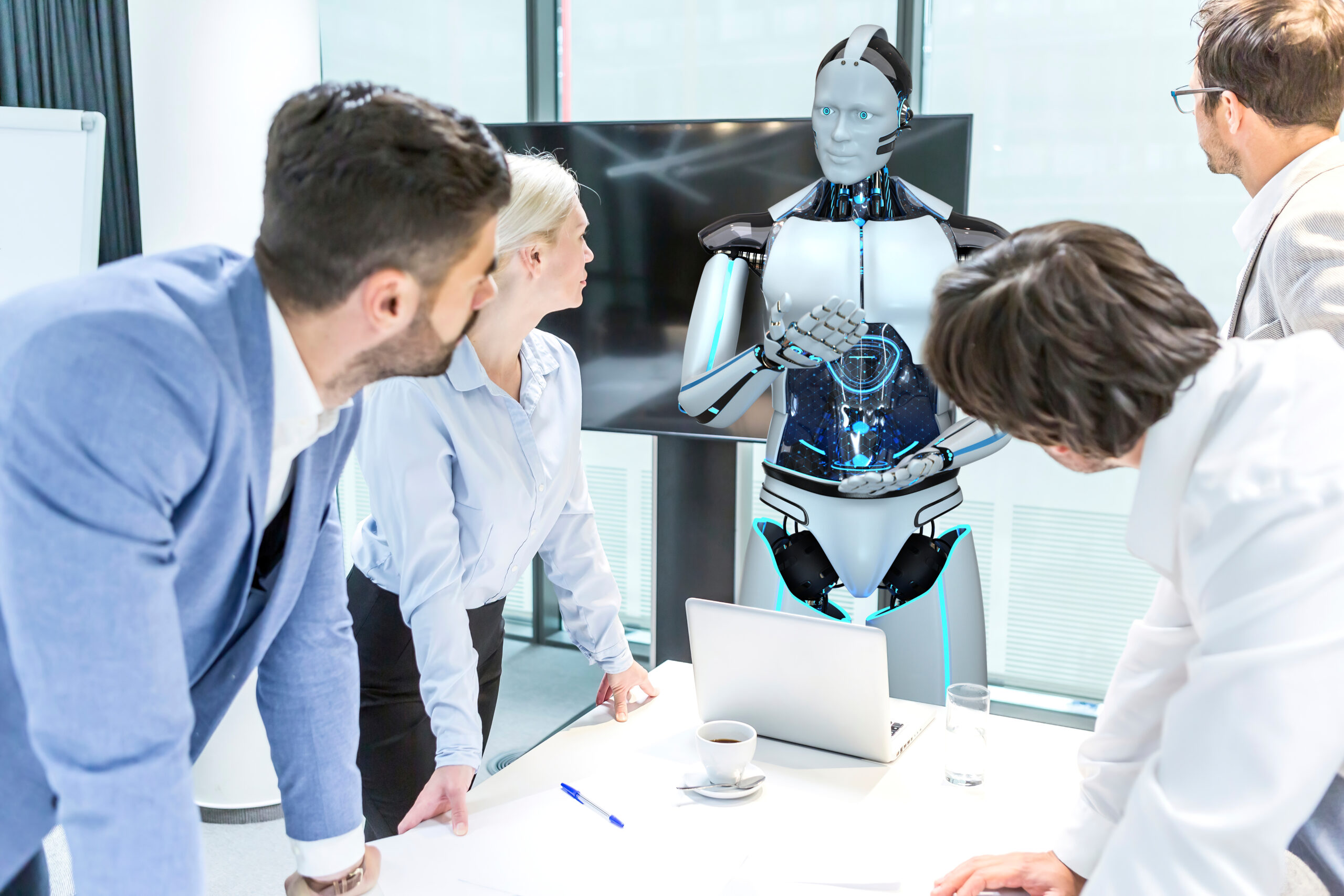
What does artificial intelligence mean for the management of workforces? AI is utilized to improve the management of your workforce. It involves using artificial intelligence tools to analyze data, predict trends, and automate tasks. Some of the tasks that are involved include employee engagement, payroll, and scheduling. In terms of workforce management, it is comparable to having a smart assistant, which frees up your time to focus on the human side of things.
AI is already present in workforce management, and it is causing a shift in the way we work. The automation of tasks such as scheduling and payroll grants managers the opportunity to devote their attention to the engagement and development of their staff members.
Instead of simply automating tasks, artificial intelligence for workforce management uses technology to make decisions that are more intelligent. In order to gain a deeper comprehension of their workforce, managers can use artificial intelligence to analyze data and patterns. The process of making decisions regarding scheduling, staffing, and other matters is facilitated by this. Being proactive is something that managers can do by predicting future trends.
The role that artificial intelligence plays in decision-making
Managing a workforce can feel like a never-ending juggling act. Create calendars, assign projects, ensure that performance is being monitored, and take into consideration the long-term needs of the team. It’s overwhelming, and we all need some assistance.
AI for workforce management. It is comparable to having a trustworthy friend. When you focus on the bigger picture, AI will handle the specifics. How does one go about doing it?
Making sense of the data
AI functions as a detective who analyzes data. It analyzes data quickly to find trends and patterns that humans may take a long time to discover. AI provides insights for informed decision-making, such as identifying peak productivity times and flagging workflow issues.
Forecasting made easy
AI can also be used as a fortune teller. It forecasts the requirements for the workforce in the future. AI helps you stay ahead in planning projects and anticipating fluctuations.
Individualized solutions for each employee
There is no universally applicable AI. It acknowledges the individuality of each worker and offers a personalized approach to the working environment. Using preferences, skills, and availability as criteria, artificial intelligence assists with decision-making. To each member of the team, it is similar to having a personalized playbook.
Avoid decision fatigue
It can be exhausting to make decisions. For the purpose of preventing decision fatigue and allowing you to concentrate on important calls that require your unique human touch, artificial intelligence handles routine tasks.
As a manager, artificial intelligence will not be able to take your place. It improves team decision-making. AI can help you be a dependable leader for your team.
AI efficiency and automation
Managing a team’s schedules, tasks, and performance can be a full-time job. For you to be able to manage everything without adding to your list of things to do, you need tools. It is essential to have AI.
AI-powered workforce management tools automate and streamline repetitive tasks. In this article, we will discuss some of the ways that artificial intelligence can make your life easier:
Auto scheduling
No more manual employee scheduling. Scheduling is created by AI tools based on the availability of employees, their preferences, and the requirements of the business. Save time and maintain fair schedules for a happy team.
Track time
AI automates time tracking, reducing errors and ensuring accuracy. You are able to focus on more important tasks and increase your productivity thanks to artificial intelligence’s ability to keep track of your work hours.
Attendance
Attendance issues can be a hassle. Attendance is monitored by AI tools, reminders are sent out, and patterns are flagged for addressing. Remain informed without engaging in micromanagement.
Task allocation
Assigning tasks is challenging. Tools that use artificial intelligence analyze the capabilities, availability, and workload of employees in order to automatically assign tasks to them. Ensures that work is distributed effectively and prevents burnout from occurring.
Monitoring performance
Tracking performance is time-consuming. AI systems collect and analyze performance data, delivering reports and highlighting areas needing attention.
Adapting to change
AI tools are useful for adapting to workforce changes, like absences or new hires. They can quickly adjust schedules and tasks, saving time and maintaining continuity.
Efficiency and automation are the focus of artificial intelligence workforce management tools. They handle small tasks so you can focus on leading, connecting, and achieving goals.
Increasing the level of employee engagement with use of AI
Employee engagement is important but can be difficult for managers. We are looking for a group of people who are enthusiastic, committed, and invested in the work that they do. In the midst of juggling other responsibilities, what are some ways to encourage engagement?
AI tools for managing the workforce. There are new ways in which tools can increase employee engagement. AI can help create engaged and motivated teams.
Personalized schedules
We all have our own preferences. AI has the ability to generate individualized schedules for employees based on their preferences. The needs of employees are valued, and the work-life balance is improved as a result.
Matching skills
In order to assign tasks to employees based on their strengths, AI tools analyze the skills and experience of employees. The employees are able to demonstrate their expertise, which increases their level of job satisfaction.
Feedback & recognition
The performance and achievements of employees can be tracked by AI, which allows for improved feedback and recognition. It is important to show appreciation and boost morale by rewarding teamwork.
Career growth
AI can identify skill gaps and training needs. Supporting professional growth shows investment in employee success.
Communication and collaboration
To improve team communication and collaboration, artificial intelligence tools streamline channels, suggest opportunities, and ensure that employees remain connected even when they are working TSplus remotely support.
Employee surveys
Artificial intelligence can analyze surveys that are filled out by employees, which can then provide insights regarding the employees’ needs, concerns, and suggestions. It demonstrates to employees that their opinions are valued and that you are committed to maintaining a positive work environment if you listen to their feedback and then take action.
Using AI in workforce management demonstrates support and value for your team. Engaged employees = successful business.
The advantages of using predictive analytics in the workforce management
Predictive analytics is something we should discuss. It is comparable to a crystal ball for predicting trends in the workforce and making more informed choices. How cool is that? In the realm of workforce management, predictive analytics can be of assistance.
Staffing needs anticipation
Predictive analytics helps identify demand patterns for staffing. Be prepared and ready to handle everything without last-minute scrambles for extra help.
Reducing turnover
Predictive analytics can be used to analyze employee data in order to identify factors that contribute to employee turnover, such as levels of engagement, job satisfaction, or workload. Deal with potential problems as soon as they arise in order to keep valuable team members.
Scheduling optimization
The use of predictive analytics allows for the creation of schedules that take into account employees’ availability, the requirements of the business, and weather patterns. The final result? Everyone is content when their schedules are well-balanced and efficient.
Training opportunities identification
Predictive analytics can identify training needs for employees. It is beneficial to both job satisfaction and performance to invest in the growth of a team.
Enhancing customer experience
Predictive analytics helps with staffing and training to improve customer experience. Happy customers = more business, win-win!
You can make decisions based on data with the assistance of predictive analytics. When it comes to workforce management, utilizing this technology helps you to be more prepared and to have a team that is more engaged and productive.
Addressing concerns around AI in workforce management
AI is great, right? It can be scary, though. People can have doubts or worries about using AI to manage employees. Taking care of common problems.
Will AI replace jobs?
No. AI helps, not takes over. It is meant to help you do your job better. It’s like having a helpful friend who can do simple things for you while you focus on the bigger picture.
Is AI too complex?
Let us bust this myth. AI tools for managing employees are easy to use and make sense. Anyone can benefit, you don’t have to be tech-savvy. There are a lot of tools and people who can help you get started.
Can AI be trusted with sensitive data?
Trusting AI with employee data is crucial. Most AI tools safeguard your data. Choose a reliable provider and protect your data.
Will AI impact morale?
Concerns about team reactions to AI tools are normal. Communication is key. AI supports, not monitors or replaces your team. Involve them and highlight benefits to create a positive environment.
Is AI worth the investment?
AI in workforce management is costly but has lasting results. Automate processes, streamline scheduling, and enhance employee engagement to save time, cut costs, and increase productivity.
The use of AI can make working in a team more enjoyable and make your job easier. Make sure that you don’t let your worries prevent you from investigating the advantages of workforce management.
The ways AI can be used to improve performance
Business leaders are excited about how AI could help their companies with performance management trends. Free employees from redundant tasks and hire people for suitable jobs. Focusing on valuable tasks brings freedom and liberation.
The software that is driven by AI allows them to measure the results. Using AI to manage performance has the potential to revolutionize business processes.
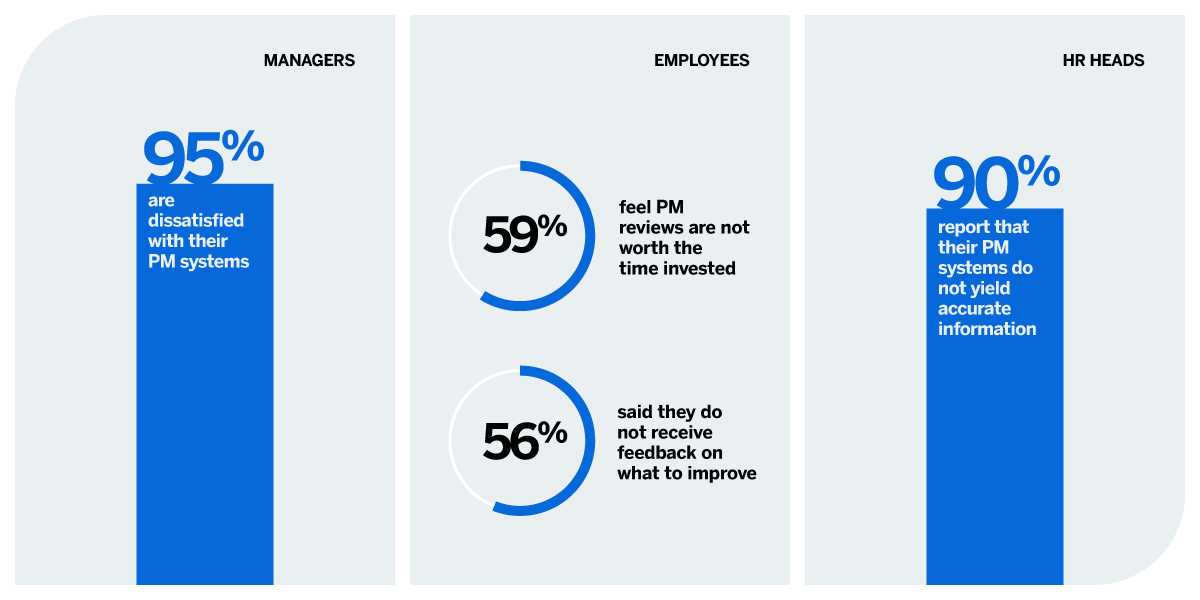
The number of people who are proficient in technology is increasing. Teams are currently in the process of selecting a performance management system in order to automate tasks that are routine in nature. Throughout time and in response to the performance of employees, perspectives and feedback are subject to change.
What role does AI play in performance management, and how does it work?
1. Reviews of performance that are automated
AI-driven performance management is extremely popular among business leaders. During employee reviews, it assists leaders in concentrating on the facts. Worker collaboration and decision-making are required. Using AI software for performance management improves collaboration measurement.
2. Continuous tests in real time
Regular feedback sessions benefit from modern performance management guidelines. The use of rigid performance evaluation cycles may become less necessary as a result of AI. When combined with performance AI, it offers both flexibility and insights.
It speeds up and guarantees prompt feedback. Employee performance is negatively impacted by inconsistent feedback. Timely feedback improves productivity.
3. Learning and Development
Artificial intelligence is able to evaluate areas in which employees could improve. The manager is provided with information regarding the areas in which employees need improvement.
It is possible for AI to assist workers in updating their skills before they become obsolete. AI will not be able to replace jobs, but it will assist workers in remaining relevant and improving their skills. This will prevent individuals from becoming redundant in their roles. Competencies in mathematics and interpersonal communication are always important.
4. Removes bias
AI removes biases in performance evaluations for fair assessment. By taking care of administrative tasks, automated performance evaluations eliminate the need for human resource professionals and managers to spend time and resources. It’s often subconscious, like making mistakes in one-on-one meetings.
Using AI in performance management has the potential to eliminate bias and advance equality. AI promotes equality and fairness by using performance AI, without biases based on age, race, gender, ethnicity, nationality, etc.
Humans get distracted, machines stay focused. AI and machine learning could create a fairer workplace for pay raises and promotions.
5. Straightforward internal communication and resolution of questions
It is essential to maintain smooth communication at work because miscommunication is a common occurrence. AI automates repetitive responses for quick employee access to answers. By relieving business leaders, HR professionals, and executives of the burden of question and answer sessions, it enables them to concentrate on more important tasks.
Sometimes, we can’t share all the available information about the organization. Employees will have an easier time accessing and acting upon information and details if they are centralized and updated in a single location.
6. Performance feedback that is quick, flexible, and ongoing
Performance reviews are out of date and don’t help the business or the employee get better. We need better feedback solutions to help employees improve. The process is fair and unbiased, giving each employee a unique experience. Plus, it encourages peer review of work.
7. Enhance the level of talent management that is conducted.
Finding talent is a tough challenge for HR leaders. The market has talent, but they’re unsure if it fits culturally.
Artificial intelligence-driven performance management is being used by business leaders and recruiters to improve the quality of recruitment. The right talent can be found and the right hiring decision can be made with its assistance.
Implementing performance management systems that make use of artificial intelligence helps to reduce the need for tasks that require a significant amount of time and automate actions that are repetitive. Improvements will be made to performance management, talent acquisition, and onboarding practices through the utilization of artificial intelligence and machine learning software.
8. Strong data analytics to solve problems
When used in performance management, AI helps leaders solve problems and make decisions based on data.
It can help you with more than just solving problems. Leaders have to deal with problems that people can’t solve.
Within the context of the workplace, technology is a game-changer. AI and other forms of automated technology are being utilized by businesses in order to solve problems.
AI automates manual reviews and evaluations, solving a significant challenge. AI ensures end-to-end visibility, eliminating disparities. Crucial for problem-solving.
9. Access to information that is both simple and speedy
30% of employees want a “Google-like” option for work help and information, according to a recent ServiceNow survey. Voice tech is popular in homes.
Alexa, Google Home, and Siri’s popularity is enough evidence without data. For the purpose of conducting performance evaluations of employees who work TSplus Remote Support, the utilization of voice assistance in the workplace is something that is absolutely necessary.
An effective solution should be mobile, personal, and offer employees engagement and support options.
10. Improved productivity and innovative insights
Improving employee engagement requires first gaining an understanding of the intentions of employees and then developing a workflow that is based on those intentions. NLU and deep learning will aid in entity extraction and sentence analysis for improved employee engagement.
Real-time data is made possible for businesses by HR technology. HR tech tools like Pulse Surveys help managers understand their team’s daily experiences.
It is possible that the fact that they belong to the late majority (34% of the population) is the reason why some human resource professionals are uncertain about whether or not HRIS are designed for performance management. As demand and popularity continue to rise, confidence will increase, and the culture of the workforce will improve.
11. Collaboration, teamwork & progress
Companies succeed with a collaborative workspace, free from hierarchy, bias, and inconsistency.
Technology improves HR processes, but human intervention is still needed for idea building, campaigns, and connecting with customers as caring individuals.
Intelligence and data are valuable assets for a company. AI in performance management system helps leaders save time and focus on their teams and ideas.
These ideas aid in creating a timeline, meeting deadlines, and fostering team growth. This will improve their performance and productivity.
AI will ensure fair appraisals without emotional barriers. Unfair treatment can cause mental friction. It is the goal of artificial intelligence software in performance management to eradicate it.
Which artificial intelligence tool is best for managing the workforce?
Ready to try AI for workforce management? How to choose the right tool? Finding the perfect shoes is about comfort, fit, and affordability. We’ve got you covered, so don’t worry about it. Find out how to find the ideal artificial intelligence tool for managing your workforce.
Tell us what you require. Put together a list of the requirements for managing your workforce. Do you require assistance with scheduling, keeping track of time, or monitoring performance? Knowing your requirements enables you to select the appropriate tool.
Verify that it is user-friendly. Time is money, so don’t waste it on complex systems. Find a program with a clear interface and simple features to start quickly.
Integration capabilities. Other software tools, such as payroll or human resources systems, might be available to you. Select an AI tool that integrates well with your current systems for centralized information.
Test support. Until you have a need for their customer support, you will never truly know a company. Choose an AI tool with good support. If there are issues, you’re in good hands.
Assess security features. Protect your valuable workforce data. Consider the security features of the AI tool to determine whether or not they are up to your standards. Examine reviews or inquire about recommendations from people working in the same field as you.
Budget matters. Compare AI tool costs to fit your budget. Also take into consideration additional costs, such as fees for integration or training.
Try it out: Many artificial intelligence tools for workforce management are available for free trials or demonstrations. Check the tool to see if it can fulfill your requirements. If you try on shoes before purchasing them, you can make sure they are a good fit.
You’ll find the perfect AI tool for workforce management with these tips.
Conclusion
AI for workforce management is real and transforming the game. AI tools help managers optimize schedules, automate tasks, boost employee engagement, and provide valuable insights for workforce management.
Skepticism and intimidation are normal when trying something new. Trust us, the benefits are worth it. AI is helpful in achieving that goal. Try an AI tool and see your workforce management grow.
The launch of Samsung's new flagship Galaxy phone, the S24, is still weeks away, but a few leaks over the weekend are giving us a sneak peek at some of its highlights.
Also: The best Samsung Galaxy phones you can buy
First up is a camera upgrade. While the S23 was regarded as having one of the best cameras available, pictures sometimes looked oversaturated with unrealistic colors. Courtesy of usually reliable leaker Sondesix citing "a source," we now know the S24 Ultra will have improved image saturation and sharpening, resulting in a much more realistic finish.
Sondesix also offered some insight on colors and materials, saying the Titanium Gray version of the device looked "far better" than the iPhone equivalent – natural titanium. Of course, that's subjective, but it's certainly encouraging for potential customers that the device is going to look premium. Sondesix's source added that the phone — because it is flatter than its predecessor — feels much better to hold.
However, the biggest addition — according to the leak — comes in the form of AI-related features. Speculation has been that the Galaxy S24 will take full advantage of artificial intelligence, and it appears that may prove true. Reportedly, Samsung's new phone will use onboard AI to do things like generate images, write content such as emails and messages, translate text, and recognize voices.
A leak from Ahmed Qwaider gave a little more insight into the phone's display, revealing that the device will not only reach 2,600 nits, but will utilize a new glass, Gorilla Glass Victue 2, the strongest glass Corning makes. If that brightness is true, it would move Samsung significantly ahead of Google's Pixel Pro and Apple's iPhone 15 Pro Max's 1,500 nits.
MysteryLupin tempered the excitement a little, however, with a leak showing that the base version of the S23 would only carry 8GB of RAM. The Plus and Ultra versions do upgrade to 12GB, but the base model RAM is surprisingly low. That is in line with the RAM on the Google Pixel 8 and above what's on the iPhone 15, but those phones aren't making the on-board AI promises of the S24. One has to wonder if the base model will have enough RAM to run it all.
The MysteryLupin leak also showed off some of the available color options, including standard gray and black, but also purple and yellow — which will all have much fancier names upon release.
The S24 is expected to be released sometime in mid-January 2024.
The Neural Information Processing Systems conference, NeurIPS 2023, stands as a pinnacle of scholarly pursuit and innovation. This premier event, revered in the AI research community, has once again brought together the brightest minds to push the boundaries of knowledge and technology.
This year, NeurIPS has showcased an impressive array of research contributions, marking significant advancements in the field. The conference spotlighted exceptional work through its prestigious awards, broadly categorized into three distinct segments: Outstanding Main Track Papers, Outstanding Main Track Runner-Ups, and Outstanding Datasets and Benchmark Track Papers. Each category celebrates the ingenuity and forward-thinking research that continues to shape the landscape of AI and machine learning.
Spotlight on Outstanding Contributions
A standout in this year's conference is “Privacy Auditing with One (1) Training Run” by Thomas Steinke, Milad Nasr, and Matthew Jagielski. This paper is a testament to the increasing emphasis on privacy in AI systems. It proposes a groundbreaking method for assessing the compliance of machine learning models with privacy policies using just a single training run.
This approach is not only highly efficient but also minimally impacts the model's accuracy, a significant leap from the more cumbersome methods traditionally employed. The paper's innovative technique demonstrates how privacy concerns can be addressed effectively without sacrificing performance, a critical balance in the age of data-driven technologies.
The second paper under the limelight, “Are Emergent Abilities of Large Language Models a Mirage?” by Rylan Schaeffer, Brando Miranda, and Sanmi Koyejo, delves into the intriguing concept of emergent abilities in large-scale language models.
Emergent abilities refer to capabilities that seemingly appear only after a language model reaches a certain size threshold. This research critically evaluates these abilities, suggesting that what has been previously perceived as emergent may, in fact, be an illusion created by the metrics used. Through their meticulous analysis, the authors argue that a gradual improvement in performance is more accurate than a sudden leap, challenging the existing understanding of how language models develop and evolve. This paper not only sheds light on the nuances of language model performance but also prompts a reevaluation of how we interpret and measure AI advancements.
Runner-Up Highlights
In the competitive field of AI research, “Scaling Data-Constrained Language Models” by Niklas Muennighoff and team stood out as a runner-up. This paper tackles a critical issue in AI development: scaling language models in scenarios where data availability is limited. The team conducted an array of experiments, varying data repetition frequencies and computational budgets, to explore this challenge.
Their findings are crucial; they observed that for a fixed computational budget, up to four epochs of data repetition lead to minimal changes in loss compared to single-time data usage. However, beyond this point, the value of additional computing power gradually diminishes. This research culminated in the formulation of “scaling laws” for language models operating within data-constrained environments. These laws provide invaluable guidelines for optimizing language model training, ensuring effective use of resources in limited data scenarios.
“Direct Preference Optimization: Your Language Model is Secretly a Reward Model” by Rafael Rafailov and colleagues presents a novel approach to fine-tuning language models. This runner-up paper offers a robust alternative to the conventional Reinforcement Learning with Human Feedback (RLHF) method.
Direct Preference Optimization (DPO) sidesteps the complexities and challenges of RLHF, paving the way for more streamlined and effective model tuning. DPO’s efficacy was demonstrated through various tasks, including summarization and dialogue generation, where it achieved comparable or superior results to RLHF. This innovative approach signifies a pivotal shift in how language models can be fine-tuned to align with human preferences, promising a more efficient path in AI model optimization.
Shaping the Future of AI
NeurIPS 2023, a beacon of AI and machine learning innovation, has once again showcased groundbreaking research that expands our understanding and application of AI. This year's conference highlighted the importance of privacy in AI models, the intricacies of language model capabilities, and the need for efficient data utilization.
As we reflect on the diverse insights from NeurIPS 2023, it's evident that the field is advancing rapidly, tackling real-world challenges and ethical issues. The conference not only offers a snapshot of current AI research but also sets the tone for future explorations. It emphasizes the significance of continuous innovation, ethical AI development, and the collaborative spirit within the AI community. These contributions are pivotal in steering the direction of AI towards a more informed, ethical, and impactful future.
With the term "copilot" gaining popularity in the generative AI space, it may soon achieve the same ubiquity as terms like ChatGPT and AI chatbot. And now Salesforce is giving its own copilot a leg up in this competitive arena.
At the Salesforce World Tour New York 2023 event last week, Salesforce unveiled an upgrade for its Einstein Copilot, a conversational AI assistant to be integrated into all Salesforce applications. Einstein Copilot was first announced in September and is launching in February 2024.
Also: How to improve your privacy on Google Bard with this one simple setting
With this upgrade, Einstein Copilot will be able to retrieve information from unstructured data, which refers to data not formatted as an organized data entry, including materials such as PDFs and emails. This feature should prove popular with Salesforce customers — including sales, customer service, marketing, commerce, and IT professionals — who can benefit from optimizing everyday business operations — email, for example — that are often not neatly organized into datasets.
Salesforce also unveiled Einstein Copilot Search, which will be found in Einstein Copilot and have "enhanced AI search capabilities" to answer complex prompts and provide smart suggestions by tapping into real-time unstructured and structured business data.
Einstein Copilot and Copilot Search will be capable of accessing unstructured data by leveraging Salesforce's Data Cloud Vector Database that unifies all business data, including unstructured data, such as transcripts and documents, and structured data, such as product inventory or purchase history.
Also: Is prompt engineer displacing data scientist as the 'sexiest job of the 21st century'?
Another benefit of the Data Cloud Vector is that it will circumvent the need to fine-tune large language models (LLMs), thereby saving businesses time and money and giving LLMs access to information that used to be unattainable due to training data limitations, according to Salesforce.
"The Data Cloud Vector Database relieves the challenge of costly and complex processes to harness the value of unstructured data," said Rahul Auradkar, Salesforce EVP and GM of Data Cloud and Einstein. "Now, our customers can reason over the full spectrum of their enterprise data to power their business applications more effectively. "
Salesforce's Data Cloud Vector Database and Einstein Copilot Search will be in pilot in February 2024, while Einstein Copilot will be generally available at that date.
Also: Generative AI filled us with wonder in 2023 — but all magic comes with a price
Although Salesforce's Copilot has not been released yet, Microsoft has many different Copilots for different enterprise needs that give users a good idea of how Salesforce's will function.
In this article on Mamba, we'll explore how this innovative state-space model (SSM) revolutionizes sequence modeling. Developed by Albert Gu and Tri Dao, Mamba is distinguished for its efficiency in processing complex sequences in fields like language processing, genomics, and audio analysis. Its linear-time sequence modeling with selective state spaces ensures exceptional performance across these diverse modalities.
We'll delve into Mamba's ability to overcome computational challenges faced by traditional Transformers, especially with long sequences. Its selective approach in state space models allows for faster inference and linear scaling with sequence length, significantly improving throughput.
Mamba's uniqueness lies in its rapid processing capability, selective SSM layer, and hardware-friendly design inspired by FlashAttention. These features enable Mamba to outperform many existing models, including those based on the transformer approach, making it a noteworthy advancement in machine learning.
Transformers vs Mamba
Transformers, like GPT-4, have set benchmarks in natural language processing. However, their efficiency dips with longer sequences. Here's where Mamba leaps ahead, with its ability to process long sequences more efficiently and its unique architecture that simplifies the entire process.
Transformers adept at handling sequences of data, such as text for language models. Unlike previous models that processed data sequentially, Transformers process entire sequences simultaneously, enabling them to capture complex relationships within the data.
They use attention mechanism, which allows the model to focus on different parts of the sequence when making predictions.
This attention is computed using three sets of weights: queries, keys, and values, derived from the input data. Each element in a sequence is compared to every other element, providing a weight that signifies the importance, or ‘attention', that each element should receive when predicting the next element in the sequence.
Transformers maintain two main blocks: the encoder, which processes the input data, and the decoder, which generates the output. The encoder consists of multiple layers, each containing two sub-layers: a multi-head self-attention mechanism and a simple, position-wise fully connected feed-forward network. Normalization and residual connections are used at each sub-layer to help in training deep networks.
The decoder also has layers with two sub-layers similar to the encoder but adds a third sub-layer that performs multi-head attention over the encoder's output. The sequential nature of the decoder ensures that predictions for a position can only consider earlier positions, preserving the autoregressive property.
In contrast to Transformers, the Mamba model takes a different approach. While Transformers deal with the issue of long sequences by using more complex attention mechanisms, Mamba uses selective state spaces, providing a more comput
Here's a high-level overview of how a transformer functions:
Input Processing: Transformers first encode input data into a format that the model can understand, often using embeddings that also incorporate the position of each element in the sequence.
Attention Mechanism: At its core, the attention mechanism computes a score that represents how much focus to put on other parts of the input sequence when understanding a current element.
Encoder-Decoder Architecture: The transformer model is composed of an encoder to process the input and a decoder to generate the output. Each consists of multiple layers that refine the model's understanding of the input.
Multi-Head Attention: Within both the encoder and decoder, multi-head attention allows the model to simultaneously attend to different parts of the sequence from different representational spaces, improving its ability to learn from diverse contexts.
Position-wise Feed-Forward Networks: After attention, a simple neural network processes the output of each position separately and identically. This is combined with the input through a residual connection and followed by layer normalization.
Output Generation: The decoder then predicts an output sequence, influenced by the encoder's context and what it has generated so far.
The transformer’s ability to handle sequences in parallel and its robust attention mechanism make it powerful for tasks like translation and text generation.
In contrast, the Mamba model operates differently by using selective state spaces to process sequences. This approach addresses the computational inefficiency in Transformers when dealing with lengthy sequences. Mamba's design enables faster inference and scales linearly with sequence length, setting a new paradigm for sequence modeling that could be more efficient, especially as sequences become increasingly lengthy.
Mamba
What makes Mamba truly unique is its departure from traditional attention and MLP blocks. This simplification leads to a lighter, faster model that scales linearly with the sequence length – a feat unmatched by its predecessors.
Key features of Mamba include:
Selective SSMs: These allow Mamba to filter irrelevant information and focus on relevant data, enhancing its handling of sequences. This selectivity is crucial for efficient content-based reasoning.
Hardware-aware Algorithm: Mamba uses a parallel algorithm that's optimized for modern hardware, especially GPUs. This design enables faster computation and reduces the memory requirements compared to traditional models.
Simplified Architecture: By integrating selective SSMs and eliminating attention and MLP blocks, Mamba offers a simpler, more homogeneous structure. This leads to better scalability and performance.
Mamba has demonstrated superior performance in various domains, including language, audio, and genomics, excelling in both pretraining and domain-specific tasks. For instance, in language modeling, Mamba matches or exceeds the performance of larger Transformer models.
Mamba's code and pre-trained models are openly available for community use at GitHub.
Standard Copying tasks are simple for linear models. Selective Copying and Induction Heads require dynamic, content-aware memory for LLMs.
Structured State Space (S4) models have recently emerged as a promising class of sequence models, encompassing traits from RNNs, CNNs, and classical state space models. S4 models derive inspiration from continuous systems, specifically a type of system that maps one-dimensional functions or sequences through an implicit latent state. In the context of deep learning, they represent a significant innovation, providing a new methodology for designing sequence models that are efficient and highly adaptable.
The Dynamics of S4 Models
SSM (S4) This is the basic structured state space model. It takes a sequence x and produces an output y using learned parameters A, B, C, and a delay parameter Δ. The transformation involves discretizing the parameters (turning continuous functions into discrete ones) and applying the SSM operation, which is time-invariant—meaning it doesn't change over different time steps.
The Significance of Discretization
Discretization is a key process that transforms the continuous parameters into discrete ones through fixed formulas, enabling the S4 models to maintain a connection with continuous-time systems. This endows the models with additional properties, such as resolution invariance, and ensures proper normalization, enhancing model stability and performance. Discretization also draws parallels to the gating mechanisms found in RNNs, which are critical for managing the flow of information through the network.
Linear Time Invariance (LTI)
A core feature of the S4 models is their linear time invariance. This property implies that the model’s dynamics remain consistent over time, with the parameters fixed for all timesteps. LTI is a cornerstone of recurrence and convolutions, offering a simplified yet powerful framework for building sequence models.
Overcoming Fundamental Limitations
The S4 framework has been traditionally limited by its LTI nature, which poses challenges in modeling data that require adaptive dynamics. The recent research paper presents a approach that overcomes these limitations by introducing time-varying parameters, thus removing the constraint of LTI. This allows the S4 models to handle a more diverse set of sequences and tasks, significantly expanding their applicability.
The term ‘state space model' broadly covers any recurrent process involving a latent state and has been used to describe various concepts across multiple disciplines. In the context of deep learning, S4 models, or structured SSMs, refer to a specific class of models that have been optimized for efficient computation while retaining the ability to model complex sequences.
S4 models can be integrated into end-to-end neural network architectures, functioning as standalone sequence transformations. They can be viewed as analogous to convolution layers in CNNs, providing the backbone for sequence modeling in a variety of neural network architectures.
SSM vs SSM + Selection
Motivation for Selectivity in Sequence Modeling
Structured SSMs
The paper argues that a fundamental aspect of sequence modeling is the compression of context into a manageable state. Models that can selectively focus on or filter inputs provide a more effective means of maintaining this compressed state, leading to more efficient and powerful sequence models. This selectivity is vital for models to adaptively control how information flows along the sequence dimension, an essential capability for handling complex tasks in language modeling and beyond.
Selective SSMs enhance conventional SSMs by allowing their parameters to be input-dependent, which introduces a degree of adaptiveness previously unattainable with time-invariant models. This results in time-varying SSMs that can no longer use convolutions for efficient computation but instead rely on a linear recurrence mechanism, a significant deviation from traditional models.
SSM + Selection (S6) This variant includes a selection mechanism, adding input-dependence to the parameters B and C, and a delay parameter Δ. This allows the model to selectively focus on certain parts of the input sequence x. The parameters are discretized taking into account the selection, and the SSM operation is applied in a time-varying manner using a scan operation, which processes elements sequentially, adjusting the focus dynamically over time.
Performance Highlights of Mamba
Mamba is best-in-class on every single evaluation result
In terms of performance, Mamba excels in both inference speed and accuracy. It's design enables better utilization of longer contexts, which is demonstrated in both DNA and audio modeling, outperforming prior models on complex tasks requiring long-range dependencies. Its versatility is also highlighted in zero-shot evaluations across multiple tasks, setting a new standard for such models in terms of efficiency and scalability.
Getting Started with Mamba
For those interested in leveraging Mamba, the technical requirements include a Linux OS, an NVIDIA GPU, PyTorch 1.12+, and CUDA 11.6+. Installation involves simple pip commands to install the necessary packages from the Mamba repository. If compatibility issues arise with PyTorch versions, using the –no-build-isolation flag with pip can help. These models, trained on extensive datasets like the Pile and the SlimPajama dataset, are designed to meet various computational needs and performance benchmarks.
Mamba offers different levels of interfaces, from the selective SSM layer to the Mamba block and complete language model structures. The Mamba block, which is the architecture's main module, utilizes a causal Conv1d layer and can be easily integrated into neural network designs. The provided usage example in Python demonstrates instantiating a Mamba model and processing data through it, highlighting the simplicity and flexibility of the system.
Pretrained Mamba models are available on Hugging Face, with sizes ranging from 130M to 2.8B parameters, trained on the extensive Pile dataset and the SlimPajama dataset. These models are designed to meet diverse computational and performance requirements, adhering to the dimensional standards of GPT-3. Users can expect high throughput and accuracy from these models, making Mamba a competitive choice for various applications, including but not limited to language modeling.
Mamba's Impact
Mamba represents a leap forward in sequence modeling, offering a powerful alternative to Transformer architectures for processing information-dense data. Its design aligns with the demands of modern hardware, optimizing both memory usage and parallel processing capabilities. The open-source availability of Mamba's codebase and its pretrained models makes it an accessible and robust tool for researchers and developers in the field of AI and deep learning.
The Kaggle Master Abhinand Balachandran has launched “Tamil-Llama,” an Indic LLM engineered specifically to elevate the Tamil language domain. This AI model is built on top of Meta’s Llama 2.
Check out the GitHub Repository here.
Tamil-Llama is meticulously crafted, integrating additional Tamil tokens and harnessing the LoRA methodology for streamlined and effective training.
Sudalai Rajkumar (SRK), the Kaggle Grandmaster posted on LinkedIn about the model, and congratulated Balachandran for the achievement.
This model boasts variants with 7 billion and 13 billion parameters, signifying a significant stride forward in AI for Tamil and potentially establishing itself as the most advanced open-source LLM tailored for an Indian language to date.
The model offers four distinct iterations: Tamil LLaMA 7B, 13B, 7B Instruct, and 14B Instruct, catering to various complexities and requirements.
The research paper explains throughout the training phase, the model’s vocabulary has expanded to encompass 16,000 Tamil tokens, supplementing the original 32,000 tokens for enhanced linguistic inclusivity.
Datasets utilised in the fine-tuning phase are readily accessible within the repository, fostering transparency and collaboration in the AI community.
The project was built within a span of two months. Balachandran explained how he balanced the challenges of managing GPU expenses and navigating the intricate technicalities of constructing a state-of-the-art language model; this journey stands as a testament to Balachandran’s commitment.
With a vision aimed at propelling Indian languages to the forefront of AI, Balachandran envisions Tamil-LLaMA as more than just a technological breakthrough.
The post SRK Unveils Tamil-Llama appeared first on Analytics India Magazine.
I don't know about you, but I pretty much live in Google. I check my Gmail one or two … thousand times a day. I run my schedule in Google Calendar. I'm constantly using The Goog to look things up, and I back up terabytes of data to Google Drive.
Also: Why my two-person company bought a Google Workspace Enterprise plan
And then there's Bard. We've been exploring how well the AI works, and, well, it has its issues. That said, it has a lot of potential. With the Google Brain Trust behind it, I'm convinced it will be more than a contender soon enough.
The thing about large language model AIs like Bard and ChatGPT is that they have to train using a tremendous amount of data. I was concerned that since Bard is linked to the same account as my email, it would have an insight into the correspondence in my email.
That correspondence often contains confidential messages from clients and companies I work with, not to mention personal correspondence with family and friends. I was quite concerned that Bard would suck in my email traffic and use it somehow. The worst-case scenario was the idea of Bard sending all my email correspondence to some central knowledge base where others could potentially access it.
Fortunately, that is not the case. Mostly.
Also: I fact-checked ChatGPT with Bard, Claude, and Copilot — and this AI was the most confidently incorrect
As you can see from the blue box in the screenshot below, "Your conversations [with Bard] are processed by human reviewers to improve the technologies powering Bard. Don't enter anything you wouldn't want reviewed or used."
Ruh ro.
If you click "How it works," there is one bit of comforting news. Google says:
Your Google Workspace content, like from Gmail or Drive, is not reviewed or used to improve Bard.
But don't get your privacy knickers in too much of a twist. It turns out that you can turn off human review of the conversations you have with Bard, and even turn off machine analysis of those conversations. Here's how you do that.
On the top right of the Bard screen, click on the little Clock icon. This is the Activities icon:
Now, where it says "Bard activity," click Turn Off.
You'll get a big message box saying "Activity is Off".
You're done. Now, when you go to the Bard screen, you'll see this message on the left:
As long as that's showing, Bard isn't recording your conversations.
To turn recording back on, click the "Bard Activity is off" link. You'll be given the opportunity to turn activity tracking back on:
You do lose some features from Bard by turning activity off. But you also lose that nagging worry that your quest for "What songs sound like the 1987 Rick Astley song Never Gonna Give You Up?" will be shared with Google.
For the record, Astley's 1987 Together Forever is basically the twin of Never Gonna Give You Up, and Bard thinks You Spin Me Round by Dead or Alive, and Take On Me by a-ha have the same Rickrollerish vibe as the Astley classic.
You're welcome. And yes, this is how I amuse myself.
You can follow my day-to-day project updates on social media. Be sure to subscribe to my weekly update newsletter on Substack, and follow me on Twitter at @DavidGewirtz, on Facebook at Facebook.com/DavidGewirtz, on Instagram at Instagram.com/DavidGewirtz, and on YouTube at YouTube.com/DavidGewirtzTV.
For those of you who do not know, DALL-E is a state-of-the-art AI model that has the ability to generate images using textual descriptions. It has taken the world by storm and people are benefiting in different aspects, which they thought would never be possible.
For those of you who have not had the opportunity to play around with OpenAI’s DALL-E 3, you’re probably unsure of what you can do with it.
In this blog, I will go through 5 different use cases of DALL-E 3 and explore how DALL-E is reshaping different industries and workflows.
You don’t have to be an AI enthusiast to benefit from this blog, you may just be interested to learn what's what and what you can do with it.
Before we get into it, let’s quickly have an overview of DALL-E.
What is DALL-E?
DALL-E, created by OpenAI is a deep learning model which has the ability to create visuals based on textual descriptions. This is achievable with the blend of computer vision and natural language processing.
The model was trained on a variety of datasets, such as photographs and written descriptions allowing the model to be able to detect objects and patterns so that it has the ability to produce images in different styles.
So now you have the background story, let’s learn about the use cases.
Logo Design
When you think about a tool that can create images and videos for you, you think about the things it can do for you or cut costs elsewhere. And why this has been on a lot of organizations' minds is because the images generated by DALL·E 3 are all yours! This means that you do not need permission from OpenAI to reprint, sell or merchandise them.
So with that being said, you can use DALL-E 3 to create a logo to kickstart your business. For example:
If you are not happy with how the logo looks, you can always ask DALL-E 3 to improve based on your textual description. For example, you can ask DALL-E 3 to change the circle to a water/oil drop to represent the brand more. Or even change the look completely to fit your needs.
Marketing and Advertising
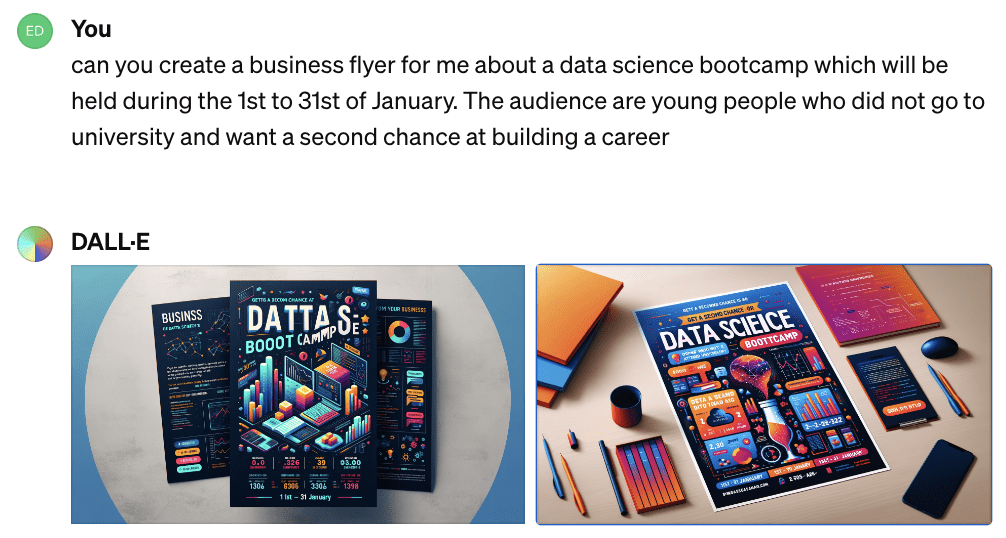
Logo design is one aspect of visual generation, but that does not limit you to the different types of visual content. You can create images and videos that you can use for social media posts. You can create images and videos that you can use for your website. You can easily generate these visual contents without having to invest so much of your personal time or the cost of hiring somebody to do it for you.
Let’s look at an example of creating a data science bootcamp flyer:
AI-Generated Art
Ever had an artistic eye? Or wanted to create art but didn’t know where to start? Need a bit of help because your creative battery is low? DALL-E can help!
Not only can it generate art for you, it can also help guide you to create your own art. A lot of people have created instagram accounts to share their AI generated art and have done very well from it. Other artists are asking DALL-E to help them with the initial sketch so that they can develop. Some want to imitate an artist such as Van Gogh and DALL-E is aiding them.
Not only does this provide creatives with a premade canvas, but it also saves them a lot of time and money on product prototypes. Creatives now have the ability to explore new ideas and also benefit from past artists' styles and themes.
Let’s take a look at an example:
Books and Comics
You can create an entire comic within seconds with DALL-E. Amazing right! You can choose the theme of your comic, and tada just like that you have your own comic. Let’s give it a try:
But that’s not all. You can also use DALL-E to create covers for your books! No need to pay so much for a book cover, and on top of that you can refine it to exactly how you want it. Let’s try creating a book cover for the above comic.
Educational Material
This ones for the teachers. Oh how tiring it can be to create visual material to keep your students engaged. Some teachers do not even include visual materials, which can make certain students' learning process much harder.
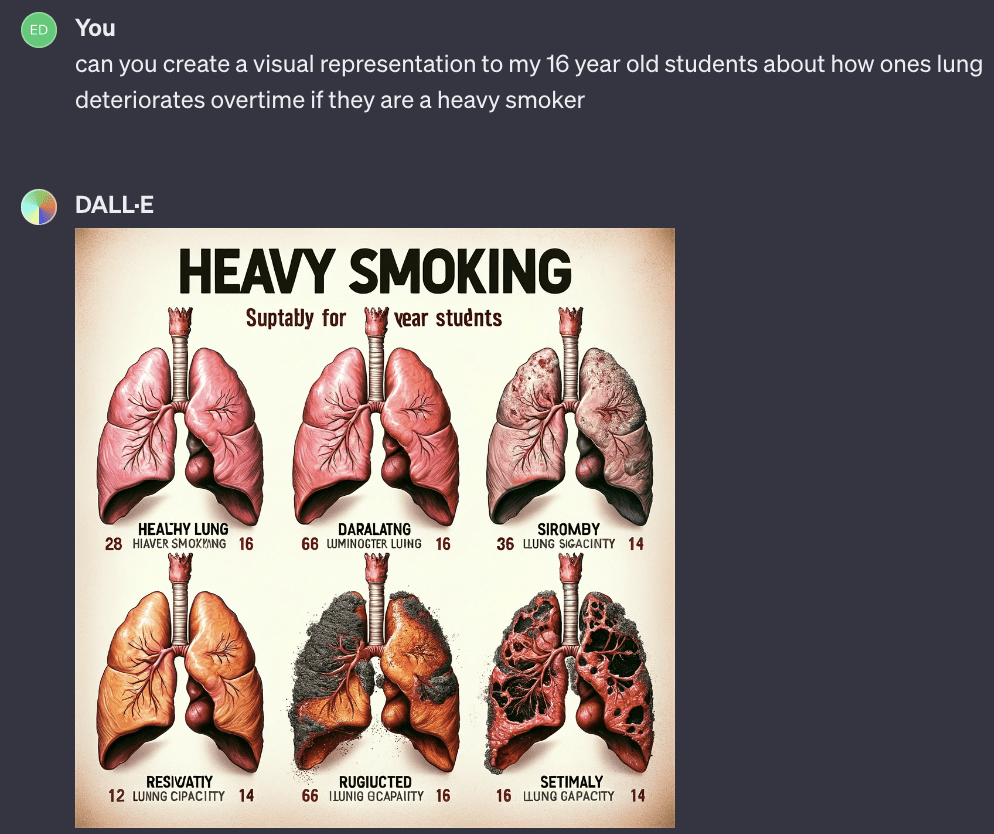
With DALL-E, you can enhance your learning material with visual aids. For example, if you are holding biology lessons and there’s a focus on different types of lung conditions, you can use DALL-E to generate detailed images of how one's lung deteriorates overtime if they are a heavy smoker.
Let’s input this and see what comes out:
Cool right?
Wrapping it up
These are not the only use cases of DALL-E, but I hope it has given you a good idea of what you can achieve, how it can improve your workflow, and overall day. If you’ve done some cool things with DALL-E, we would like to know — so drop a comment below!
Nisha Arya is a Data Scientist and Freelance Technical Writer. She is particularly interested in providing Data Science career advice or tutorials and theory based knowledge around Data Science. She also wishes to explore the different ways Artificial Intelligence is/can benefit the longevity of human life. A keen learner, seeking to broaden her tech knowledge and writing skills, whilst helping guide others.
More On This Topic
Machine Learning in the Enterprise: Use Cases & Challenges
NoSQL Databases and Their Use Cases
Why TinyML Cases Are Becoming Popular?
How to Use NVIDIA GPU Accelerated Libraries
eBook: How to use third-party data to make smarter decisions
How to Use Kafka Connect to Create an Open Source Data Pipeline for…













 AI-Generated Art
  Books and Comics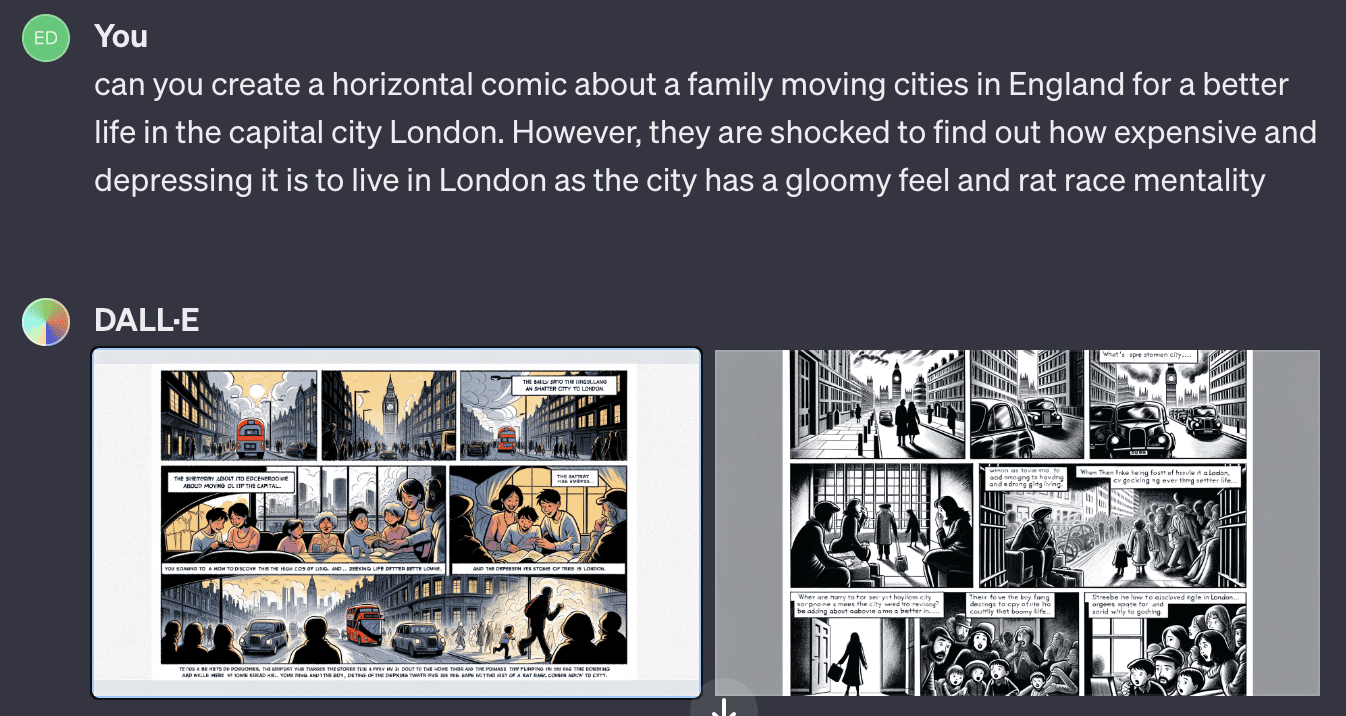
 Educational Material