GitHub released the most used programming languages on the platform. JavaScript maintains its position as the top programming language, while Python and C++ consistently remain among the top five. Typescript surprisingly overtook Java to become the third most used language in open source software (OSS) projects on GitHub, with its user base expanding by 37%.
This year, more people are using programming languages like T-SQL and TeX for data analysis and operations. Experts in data science and research are turning to free, shared resources (open source) for their work. It’s clear that now these programming languages are being used for a lot more than just traditional software; they’re being picked up in many different fields for various types of projects.
When looking at the new projects on GitHub in 2023, the usual languages are still popular. But now, languages such as Kotlin, Rust, Go, and Lua are being chosen more for new projects. This shows that the range of languages developers use is growing.
GitHub’s report also shows more developers are working with AI, or artificial intelligence. This means there’s a shift happening: developers worldwide are getting more interested in AI and starting to use it more in their projects.
Here is the list of the most used languages on GitHub!
JavaScript
This remains the most used language, holding a prominent place in web development. It is executed on the client side of web pages, allowing for the creation of dynamic content.
Companies across the globe employ JavaScript extensively for web applications, with frameworks like React and Angular facilitating the development of single-page applications. It’s the tool of choice for front-end developers, and with Node.js, it has become equally significant in back-end programming.
Python
Python has risen in popularity due to its simplicity and the vast array of libraries available for tasks such as data analysis, machine learning, and web development with frameworks like Django and Flask.
Its usage extends across sectors including finance, healthcare, and education. Python’s syntax and dynamic nature make it accessible for beginners and invaluable for rapid application development.
TypeScript
A typed superset of JavaScript developed by Microsoft, has gained traction for offering optional static typing. This feature is crucial for developing larger codebases, providing developers with tools to spot potential bugs more easily. It is used in both front-end and back-end development, with major frameworks like Angular advocating for its use.
Java
This language is synonymous with enterprise-level backend systems, Android mobile application development, and large-scale systems due to its Write Once, Run Anywhere (WORA) philosophy. Organisations worldwide adopt Java for its performance, security features, and the robustness provided by the Java Virtual Machine (JVM).
Java maintains its popularity among developers partly because it offers advanced features like automatic memory management, checks on data types during runtime, and the ability to introspect upon and manipulate the class structure at runtime.
C#
Created by Microsoft as part of the .NET framework, is primarily used for Windows desktop applications and game development using Unity. Its object-oriented design is favored for enterprise software, and it’s integral in the development of Windows-based applications.
C++
This language offers fine control over system resources and memory, which is essential for game development, high-performance applications, and systems programming. Its use is prevalent in software that requires high efficiency, such as desktop applications and servers.
C++ continues to be chosen for creating new software where speed is crucial, such as in computer-aided design/manufacturing (CAD/CAM) or server applications that require rapid processing like those used in high-frequency trading. It’s essential in building virtual machines, writing device drivers, developing runtime interpreters, and creating tools. Moreover, C++ plays a pivotal role in the development of AI applications and is a fundamental component of the infrastructure underpinning Google’s Android operating system.
PHP
PHP is a server-side scripting language that powers a significant portion of the web. It’s integral to content management systems like WordPress and Drupal, and it’s often used in conjunction with databases like MySQL to build dynamic websites.
C language
One of the oldest programming languages, remains in use for system/software development, embedded systems, and operating systems like Linux. Its portability and efficiency make it a staple language in computer science curricula and systems programming.
Ruby
Ruby is known for its elegant syntax and is primarily used in web development, underpinned by the popular Ruby on Rails framework. It supports rapid application development, which is a draw for startups and the development of Minimum Viable Products (MVPs).
Ruby language continues to be a strong choice for both front-end and back-end web development. The language is popular with
Go
Often referred to as Golang, developed by Google, is recognised for its simplicity and efficiency, especially in the context of concurrent processing and micro services architectures. It is chosen for network servers, data pipelines, and even command-line tools.
Go is not specifically object-oriented or procedural and is recognised for its speed, which comes from direct compilation to machine code.
The post Top 10 Programming Languages on GitHub in 2023 appeared first on Analytics India Magazine.
Data science is a lucrative field with many prospects in the future. With the recent advancement of AI, it should not be surprising that data science would still become one of the most sought-after occupations. However, I know that it’s not an easy field to break through.
There is a lot of learning to do if you want to break into the data science field and understand many data aspects. It also means we need good material to learn as we don’t want to waste time. This article will discuss five cheap books you can use to master data science.
What are these books? Let’s get into it.
Data Science (The MIT Press Essential Knowledge series)
To master the field, we need to understand the field we want to undertake in depth. We need to understand data science to bring value to our work and avoid not getting the job at all.
The Data Science book by John D. Kelleher and Brendan Tierney could become your first step to understanding the overall data science industry. With a price of $9, you would learn the following from the book:
Data Science History
Data Science Applications
The Tools of Data Science
Ethical Concerns in Data Science Application
Data Science Career Growth
This book is a great introductory book for anyone who wants to break into the data science field or understand the data science concept better.
Python Data Analysis
Programming skills have already become the backbone of data scientists, and every company lists them as requirements. The requirement is often the Python language, the modern data scientists' programming language. Without Python skills, there is a big chance we can’t do our job correctly.
Python Data Analysis book by Avinash Navlani, Armando Fandango and Ivan Idris (Author) would provide complete learning on navigating the data science field with the necessary Python skills. What you would learn includes:
Core Python Libraries and Data Handling
Statistical and Mathematical Foundations
Advanced Data Analysis Techniques
Specialized Data Analysis
Computational Efficiency with Dask
The book price is around $16, which is in the cheaper range compared to the other books out there. Although, the value of this book is big.
Naked Statistics: Stripping the Dread from the Data
While data scientists need to know programming language, we must also understand statistical theory. Our data analysis and machine learning algorithms were based on statistical methodology, and we needed to understand the basic statistics to understand the data activity we did.
Naked Statistics: Stripping the Dread from the Data, written by Charles Wheelan, breaks down statistical concepts in a fun way and with application examples. The book includes cases for:
Standard Error and CI applications in political polls cases.
Regression Analysis at risk of health problems in the UK.
Netflix and Target statistical inferences applications for product recommendation.
There are still many statistical concepts you would learn from this book. With the price of $8, you can easily understand why statistics is important in data science.
The Hitchhiker's Guide to Machine Learning Algorithms
After a basic understanding of data science, we should learn about the machine learning algorithm. The primary tool of data scientists is the ML model, and it’s essential to understand how each model works and why we are using them.
The Hitchhiker's Guide to Machine Learning Algorithms by Devin Schumacher, Francis La Bounty Jr., and Devanshu Mahapatra would serve as a reference to understand the machine learning algorithm further. You will learn the following concepts from this book:
Classification & Regression Techniques
Clustering Algorithms
Neural Networks and Deep Learning
Optimization and Problem Solving Algorithms
Ensemble Methods and Dimensionality Reduction Techniques
Reinforcement Learning
Each chapter is a standalone section, so we can jump into any chapter we are interested in. At $12, you would get a lot of knowledge from the theoretical to the ML applications in the real world.
Data Insights Delivered
Data science is not only about programming, machine learning, or statistics. It’s all about delivering value from the data we have. It is then crucial for any data scientist to understand how to communicate our technical results in the insight that stakeholders or non-technical persons understand.
In the Data Insights Delivered book by Mo Villagran, she explains that data professionals struggle to deliver value due to poor communication with stakeholders, unrealistic expectations fueled by marketing hype, and the underutilization of most data products. With her experience, she composes seven steps that we can take to have better communication and assess the stakeholder's needs.
At $15, you can learn all these steps quickly and improve yourself with the soft skills that are always required.
Conclusion
Data Science is a challenging field to break. That’s why these five cheap books will help you master data science. The books include:
Data Science (The MIT Press Essential Knowledge series)
Python Data Analysis
Naked Statistics: Stripping the Dread from the Data
The Hitchhiker's Guide to Machine Learning Algorithms
Data Insights Delivered
Cornellius Yudha Wijaya is a data science assistant manager and data writer. While working full-time at Allianz Indonesia, he loves to share Python and Data tips via social media and writing media.
More On This Topic
It's alive! Build your first robots with Python and some cheap,…
5 Free Books to Master Data Science
Top 15 Books to Master Data Strategy
KDnuggets News, June 22: Primary Supervised Learning Algorithms…
It seems that the number 19 holds a special charm for CP Gurnani. Embracing this lucky numeral, Gurnani recently celebrated a dual milestone: his 65th birthday (i.e., on December 19) and a fond farewell to his illustrious career, after a fulfilling 19 years at Tech Mahindra.
“I relived 19 years in just a few hours yesterday. And now, I relive those hours in just a few minutes,” said Gurnani, saying that there are no words to describe how overwhelming this is – “just like there are no words to describe how grateful I am.”
The past few days have taken Gurnani on an emotional roller coaster ride as he bids farewell to his illustrious career. Humble Gurnani shared an emotional post on X, revealing that the Tech Mahindra team had prepared 19 gifts, symbolising his 19 years with the company.
“The most special one – #TechMKiMitti – was a sand clock with mitti collected from our campuses all over, to always let me have a bit of TechM with me. Almost had me teary-eyed.
Thank you, fam!” said Gurnani.
Last month, CP Gurnani announced that he would step down from the position of MD and CEO of Tech Mahindra on December 19 as well as from the roles of non-executive, non-independent director of the IT major on December 21. Following him, Mohit Joshi who resigned from Infosys on March 11, 2023, will join Tech Mahindra as the next CEO and managing director.
What’s Next?
While Gurnani has not publicly revealed his future plans, AIM, in conversations with insiders at Tech Mahindra, indicate that he is poised to relinquish all responsibilities within the company, directing his attention towards personal life and endeavors.
Furthermore, Gurnani expresses readiness for a transition, shifting from the role of a captain to that of a ‘coach’. “I don’t think I am even close to retiring. I will be shifting gears in my life and transitioning into a new phase as a ‘coach’,” he said in a recent interview.
After dedicating a significant portion of his life in the tech industry, and attaining the position of CXO at age of 38, Gurnani is now looking to explore a different perspective. “I want to pursue endeavours that deeply resonate with my passions and values. I see it as a good time to embark on this personal journey of self-discovery after a long, fulfilling career.” he shared.
Techno Optimist
CP Gurnani has always been optimistic about the future, holding the opposite view to the prevailing opinion that AI may take away jobs. According to him, generative AI has the potential to create more jobs than it is expected to eliminate, despite widespread discussions on its potential to disrupt the job market on social media.
“The use cases of generative AI are still being defined, which means that it has the potential to create more job opportunities in the future. Undoubtedly, the possibilities are just opening, and there is more to come,” said Gurnani.
Undoubtedly, Gurnani was among the first to challenge OpenAI to create something akin to ChatGPT. In June, Gurnani and Sam Altman, the CEO of OpenAI, engaged in Twitter exchanges, during which Gurnani challenged Altman, asserting that India would create its own generative AI chatbot.
OpenAI founder Sam Altman said it’s pretty hopeless for Indian companies to try and compete with them. Dear @sama, From one CEO to another.. CHALLENGE ACCEPTED. pic.twitter.com/67FDUtLNq0
— CP Gurnani (@C_P_Gurnani) June 9, 2023
Subsequently, Tech Mahindra revealed Project Indus a few weeks later, with the objective of constructing a foundational language model with a specific focus on Indian languages, notably Hindi and various dialects. Gurnani was the one who led this project, along with Rajesh Dhuddhu and Nikhil Malhotra. With Gurnani retiring and new management taking over, it will be interesting to see how Project Indus shapes up.
Believes in Hard Work
Recently, Infosys founder Narayan Murthy’s remark about youngsters working 70 hours a week was heavily discussed, and Gurnani defended it. Gurnani said that young people should invest the 10,000 hours that it takes to become a master in their field. He said that this could involve burning the midnight oil to become an expert.
He mentioned that when Murthy talks about 70 hours, it doesn’t necessarily mean for the company. Instead, he suggested that youngsters should allocate 40 hours for the company and reserve 30 hours for their personal development.
Gurnani’s Journey
CP Gurnani graduated with a Bachelor of Engineering in Chemical Engineering from NIT – Rourkela. Subsequently, he commenced his early career as a process engineer at JK Synthetics, dedicating three years to the role.
Following this initial stint, he transitioned to the technology firm HCL, where he held various significant positions, including roles at HCL Hewlett-Packard, HCL Perot System, and Perot Systems, accumulating a substantial 18 years of service from 1986 to 2004.
By this point, CP Gurnani had already made a notable name for himself within the tech industry. In 2004, he made the pivotal move to Tech Mahindra, where he initially assumed responsibility for the company’s international operations, sales, and marketing.
At Tech Mahindra his most significant business accomplishment involved the acquisition of Satyam Computers, a feat even spotlighted in a Harvard case study. Satyam Computers, was reeling from a major scandal with an uncertain future. However, Gurnani saw Satyam’s crisis as an opportunity. He believed Satyam’s strong talent pool, global presence, and established clientele could be revitalized if paired with Mahindra’s financial stability and business expertise.
As his journey at Tech Mahindra comes to an end, CP Gurnani is overwhelmed with the love he received from his employees. “With so much love flowing in from all corners, I feel like a 5-year-old grandkid, not a 65-year-old grandfather,” he said.
The post 19 Years of CP Gurnani appeared first on Analytics India Magazine.
Online certification courses in Data Science have seen a significant rise in popularity to cater to the busy schedule of working professionals while not letting them compromise on upskilling themselves. This has become challenging in the decision-making process for students.
To aid in this, Analytics India Magazine (AIM) has conducted a comprehensive survey to rank top postgraduate (PG) online or hybrid courses in Data Science in India. This initiative has been going on for the last nine years. The rankings are segregated based on the mode of delivery—either on-campus or online/hybrid. The latest report highlights the best online or hybrid PG data science courses in India in 2023.
A well-ranked course demonstrates high and balanced scores across various parameters, guiding students in choosing the most suitable course for their needs. This report is not only beneficial for students but also provides valuable insights for institutes to gauge their standing, identify improvement areas, and guide policy decisions in both the public and private sectors.
Incase you are looking for Full Time On-Campus programs, check our 2023 ranking here.
The Methodology
The methodology employed by AIM involves evaluating data science and analytics programs across five key parameters: Certification Value, Return on Investment, Program Success, Teaching & Curriculum, and Student Engagement. Each program’s performance is assessed through an overall index, derived from the average scores across these five sub-indices. The survey methodology included uniform evaluation criteria, with scores normalized on a 0 to 1 scale, and outliers capped to ensure fairness and accuracy in the rankings. The infographic below illustrates the hierarchy of sub-indices and the final index used in this analysis.
1. Upgrad’s PGP in Data Science & AI
Affiliated to IIIT Bangalore, the PG Data Science course is comprehensive. The curriculum includes both recorded and live content delivered by highly qualified faculties and industry experts. The course is professional and industry-oriented as evident from collaboration with employers and sessions with industry speakers. It’s divided into a common curriculum covering essential Data Science skills and specialization modules in areas like Business Analytics and Natural Language Processing. The program emphasizes practical application through a capstone project and uses an external platform for examinations, ensuring a robust and inclusive learning experience without the need for prior coding experience.
Learn more about the program here.
2. REVA’s M.Sc in Business Analytics
REVA University’s MS in Business Analytics program is popular for its strong industry ties. The curriculum, updated with the latest technologies, emphasizes experiential learning, including mandatory global certifications. With a faculty boasting PhDs and industry experience, the program maintains high academic standards. Two capstone projects and a publication requirement foster practical skills and research contributions. Alumni involvement in placements, a dedicated support team, and inclusive admission criteria further contribute to its appeal, making it a top choice for data science aspirants seeking a comprehensive and globally recognized education.
Learn more about the program here.
3. Ivy Professional School’s PG Certificate in DS with ML & AI
Ivy Professional School’s collaboration with IIT Guwahati offers a sought-after data science program. The curriculum, designed with IIT Guwahati professors, includes 40+ industry projects, ensuring theoretical and practical competence. Learners benefit from industry internship projects with Fortune 500 companies fostering real-world experience. IBM and NASSCOM accreditations, low trainer-to-student ratios, and a “Learn – Apply – Assess – Re-learn” model enhances its appeal, making it a comprehensive and industry-aligned choice for data science enthusiasts.
Learn more about the program here.
4. Simplilearn’s PG Certificate Course in Data Analytics
The Professional Certificate Course in Data Analytics, offered in collaboration with IIT Kanpur, is highly sought after by data science and analytics aspirants for its comprehensive curriculum and practical focus. Emphasizing real-world experience through hands-on exercises, capstone projects, and industry internships, the program enhances employability and job readiness. Taught by experienced faculty and industry experts, it provides valuable insights and networking opportunities, potentially leading to job placements. The prestigious IIT Kanpur certification adds to the program’s appeal, ensuring a strong Return on Investment (ROI). The blended structure of theoretical and practical learning, coupled with a maximum of 80 learners per batch, makes it an attractive choice for career advancement in data analytics.
Learn more about the program here.
5. TimesPro’s PGCP in DS & ML
Affiliated to IIT Roorkee, TimesPro’s Professional Certificate Program in Data Science and Machine Learning (PGCP DSML) stands out due to its strong focus on practical learning and industry relevance, it offers a robust curriculum supported by industry expert sessions and an advisory board. The program’s career support, including personalized guidance, resume tools, and industry insights, enhances learners’ employability. A diverse faculty team with a blend of academic and industry experience contributes to a holistic learning experience. Incorporating live sessions, hackathons, campus immersion, and continuous assessments, the program ensures comprehensive skill development, making it a preferred choice for data science and analytics aspirants.
Learn more about the program here.
6. Edvancer’s Advanced Certification in AI & ML
With a strong focus on placement assistance and career mentorship, the course conducts regular workshops, and sessions by industry experts, and provides hands-on support for resume preparation and interview readiness. The collaboration with IIT Kanpur and partnerships with leading companies ensure industry relevance. Taught by full-time professors and experienced industry experts, the program’s 70% hands-on approach equips students with practical skills through assignments and industry-level capstone projects.
Learn more about the program here.
7. Upgrad’s PGP in ML & AI (Executive)
Upgrad in collaboration with IIIT, Bangalore, offers this course that not only ensures theoretical learning but also provides real-world experience along with a robust 360-degree career support system. The faculty pool consists of industry experts and accomplished academics, contributing to a comprehensive learning experience. The program is structured into common and specialization phases, covering key roles in ML Ops and Generative AI.
Learn more about the program here.
8. Simplilearn’s PGP in Data Science
The Caltech CTME Data Science program, offered through Simplilearn, distinguishes itself with a remarkable ROI. The practical orientation of the program as evident through project-based learning across various industries helps learners gain real-world experience. The IBM Partnership enriches the program with masterclasses and certificates. The comprehensive curriculum facilitated by experienced instructors not only helps students understand concepts well but the program also ensures that students get avenues to showcase their skills effectively.
Learn more about the program here.
9. Timespro’s PGCP in AI & DL
The program is affiliated to IIT Guwahati. It offers robust career support, including personalized guidance, cutting-edge resume tools, and regular industry insights. With a comprehensive Learning Management System (LMS) and over 40 case studies and projects, it ensures a holistic learning experience. Industry expert sessions featuring professionals from renowned organisations enhance practical knowledge. The program offers a unique blend of live sessions, hackathons, campus immersion, and industry mentorship. The eligibility criteria, continuous assessment model, and mandatory capstone project make it a well-rounded course.
Learn more about the program here.
10. CloudxLab’s PG Certification in AI, ML & DS
CloudxLab’s PG Certification Course offers a remarkable Return on Investment (RoI) driven by a curriculum aligned with industry needs, experienced instructors, robust placement support, and a strong alumni network due to its affiliation with IIT Roorkee. Strategic collaborations with industry giants like Google, Microsoft, and IBM provide students with real-world exposure, internships, and invaluable insights. The faculty, comprising full-time instructors, industry experts, and IIT professors, delivers a comprehensive learning experience. The program’s well-balanced structure, emphasizing both theory and hands-on skills, along with rigorous evaluation methods, positions it among the top data science programs in India.
Learn more about the program here.
11. Edvancer’s Advanced Certification in Data Analytics
The program stands out due to its holistic approach and industry collaboration. The course provides robust placement assistance, mentorship, and workshops on career guidance. Affiliation with IIT Kanpur helps students network with diverse and experienced alumni. Collaborations with renowned companies ensure real-world relevance and multiple job opportunities for students. Taught by full-time professors and industry experts, the program offers a balanced blend of theory and hands-on experience. With a 70% hands-on focus, students work on practical assignments and capstone projects, making them job-ready. A high graduate placement rate underscores the program’s effectiveness.
Learn more about the program here.
12. Timespro’s PGCP in Decision-Making Using DS
TimesPro in collaboration with IIT Roorkee conducts this program that offers extensive career support, personalized guidance, and cutting-edge tools. The comprehensive Learning Management System, industry insights, and 24/7 support contribute to a robust learning experience. The continuous assessment model ensures a thorough understanding, while the capstone project offers real-world application. Active engagement with experienced professionals and a strong focus on practicality through hackathons, campus immersion, and industry mentor sessions underscores its industrial relevance.
Learn more about the program here.
13. Ivy Professional School’s Diploma in DS, ML, AI & Big Data
Ivy Professional School’s Data Science program in collaboration with IIT Guwahati is a premier choice for data science aspirants. It offers a comprehensive learning experience with industry projects from major companies like UBER and Accenture. The partnership with IBM, NASSCOM accreditation, and Fortune 500 collaborations enhance its industry relevance. With a low trainer-to-student ratio, expert faculty, and a unique “Learn-Apply-Assess-Re-learn” model, the program ensures holistic skill development. The program is focused on practical learning through projects, internships, and assessments to groom students as proficient data professionals.
Learn more about the program here.
14. Orangetree Global’s BI & Business Analytics PG Certification
With a curriculum aligned to industry needs, small batch sizes for personalized attention, and a seasoned Placement team, the program structure and curriculum prioritizes quality interactions. The extensive network of tie-ups with leading companies, corporate training programs, and collaborations with prestigious institutions contribute to a holistic learning experience. A high faculty-to-student ratio ensures each individual gets the required and adequate attention for professional upskilling. The comprehensive curriculum that includes several real-world case studies and a stringent certification process ensures, makes it is a preferred choice among students.
Learn more about the program here.
The post AIM Top Ranked PG Data Science Programs (Online/Hybrid) – 2023 appeared first on Analytics India Magazine.
Recently, Ola unveiled “India’s first full stack AI solution,” aka Krutrim. Meanwhile, Zoho, which also envision to build much similar solution is waiting for the dust to settle, and is yet to officially announce any significant milestones of releasing its own proprietary language model or roadmap to build in-house silicon and infrastructure capabilities.
In previous interaction with AIM, Zoho’s chief Sridhar Vembu had stated that they are working developing smaller and domains-specific language models.
For now, the company has introduced Zia across 13 generative AI Zoho application extensions and integrations, powered by ChatGPT. Zia provides generative AI capabilities across Zoho CRM, Zoho Desk, and other Customer Experience (CX) solutions.
However, it is worth noting that the approach these two companies are taking are quite different.
Bootstrapped vs Funded
Krutrim, which raised $24 million from Matrix Partners in October to build AI models from scratch, has pressure from investors and stakeholders. That explains why excited Ola chief Bhavish Aggarwal announced the launch of Krutrim Pro with multi-modal capabilities, by next quarter.
Bootstrapped Zoho, on the other hand, is taking it slow, and focusing on building in-house capabilities for reducing reliance on hyperscalers. “Personally, I cannot give you a date,’ said Sridhar Vembu, in a recent interview at an AI conference in Bengaluru.
“People who work with me closely, all of our engineers, know this. When you are stuck on a very deep problem, it’s like being a scientist. You cannot predict when you’ll get out of it,” Vembu said, saying Zoho accepts that on a particular problem it might be stuck sometimes forever.
During the announcement of Krutrim AI, Aggarwal compared Krutrim with the Llama 2 7B model, claiming superior performance on various industry recognised LLM benchmarks. Additionally, he asserted that Krutrim is ‘equivalent’ to Llama 2 in terms of size.
Meanwhile, Zoho is also working on smaller models that are based on 7 billion to 20 billion parameters to solve specific domain problems for its customers according to Vembu. “We have found that the smaller models are better for domain-specific problems. That’s why we are not doing the 500 billion parameter models as of now” said Vembu, saying that it would cost more than $100 million.
“That’s not the primary reason. We are also waiting for the dust to settle a little bit so that more GPU capacity is available, and our own preference is to own the infrastructure. We won’t go to super scalers because, in the long term, it is cheaper anyway,” he added.
Addressing GPU shortage
Interestingly, throughout the Krutrim launch event, he didn’t even once mention how many GPUs Krutrim acquired to train its model. Instead, he mentioned that Krutrim is focused on building and developing the silicon and the infrastructure layers – all in-house. “We have the AI, we have the infrastructure, and with that, we have the Silicon also, which we are building for an AI-first era,” he said, while it continues to rely on cloud partners and hyperscalers in the initial days, preferably Microsoft Azure for inference.
“We have come up with a novel architecture, bringing in multiple chiplets,” said Sambit Sahu, who leads silicon hardware at Krutrim. He said that a chiplet is a small piece of silicon performing a particular functionality, like a CPU chiplet, an AI chiplet, or a scaleout chiplet, drawing parallel to Lego blocks. “We integrate all these chiplets to create a package,” he added.
On the contrary, Zoho is dependent on AMD and NVIDIA for GPUs. In an exclusive interview with AIM, Vembu said that Zoho waited for about six months to receive NVIDIA H100 GPUs. Moreover, Vembu said that now AMD has made MI300X available, the supply situation will improve.
“AMD is coming out with very good chips, and actually, we have been working on AMD chips too now. Just to let you know, we train alternative models to run on AMD, and they have very competitive silicon now. With that, I think the supply situation should resolve.” he said.
Now that India’s LLM moment is shaping up, the ecosystem has become even more competitive than ever. It is fascinating to see Ola setting a benchmark with its ambitions plans to build “India’s first full stack AI solution,” and releasing the first version of the model in just three months, while Zoho continues to play safe.
Drawing parallels in the Indian context, one might say Ola’s approach mirrors that of OpenAI’s rapid innovation, whereas Zoho’s more measured pace resembles Google’s methodical and research-focused approach.
The post India’s LLM Battle: Ola’s Krutrim vs Zoho appeared first on Analytics India Magazine.
The intro song of Dutch DJ and producer Armin Van Buuren’s annual mix album ‘A State of Trance 2023’, released earlier this month, is titled “Am I AI.” The album marks the 20th year of his trance music mix, and AI found its way into it as well. While the song is not AI-generated, a number of music artists embraced AI this year, highlighting the technology’s ubiquity in the creative field.
Interestingly, 60 percent of musicians are already using AI to make music. Here are some of the artists who leveraged AI to enhance their creative process.
David Guetta
French DJ and producer David Guetta played a song in one of his sets earlier this year that featured rapper Eminem’s voice. With the help of an AI-generating website, Guetta explains how he created the voice using AI. The track was a big hit at the show, but Guetta clarified later that it won’t be used for commercial purposes.
Let me introduce you to… Emin-AI-em pic.twitter.com/48prbMIBtv
— David Guetta (@davidguetta) February 3, 2023
Grimes
Canadian musician and producer Grimes, has been openly propagating the use of AI in music creation. Grimes launched her generative AI software Elf.tech earlier this year, and has allowed others to use her AI-generated voice. She also said that she’ll take a 50% royalty on any successful AI-generated song.
The Beatles
This year witnessed the release of iconic British band The Beatles completing their last unfinished song, ‘Now and Then’, where John Lennon’s voice was resurrected. The last song, originally a demo given to McCartney by Lennon’s widow Yoko Ono and recorded on a cassette while Lennon played the piano, has been worked on by McCartney with AI. Benefiting from AI assistance featured in the ‘Get Back’ documentary, the song was mixed by McCartney, enabling a joint performance with Lennon during his recent tour.
HYBE
Hybe, the Korean music powerhouse responsible for BTS, had employed voice AI to debut their news artist Midnatt, in various languages at the same time. The songs were launched in six languages including Korean, English, Spanish, Chinese, Japanese and Vietnamese.
Taryn Southern
Taryn Southern, an American singer-songwriter, holds the distinction of being the first pop star to create and produce a full album entirely with the assistance of AI, titled ‘I Am AI.’ Southern utilised a blend of tools such as IBM’s Watson Beat, Amper, AIVA, and Google Magenta. In each instance, AI was responsible for composing the notation, and in the case of Amper, the AI also produced the instrumentation.
Shawn Everett
Canadian music engineer and Grammy-winning producer Shawn Everett who is known for creating unique sounds for music production, has been experimenting with AI for quite some time now. He explored Open AI’s Jukebox during the creation of an unreleased song by the Killers. Everett entered a chord progression written by Brandon Flowers and directed the AI to extend it in the style of Pink Floyd.
Armin Van Buuren
Dutch DJ and trance music king, Armin Van Buuren has dabbled with various music compositions and AI too. His track, ‘Computers Take Over the World,’ had vocals that were generated by the voice assistant of a Macbook, and all the promotional assets including artwork, and the music video for the track were co-created using AI.
The post 7 Incredible Musicians and Their AI Compositions appeared first on Analytics India Magazine.
Google had witnessed the best year since the release of Gemini and the quite new features it made available this year. Breakthroughs in artificial intelligence, advancements in quantum computing, and a continued commitment to sustainability highlighted the company’s innovative endeavors.
Noteworthy strides in privacy and security, research papers released this year, and investments in healthcare technologies showcased Google’s dedication to user well-being and global impact. Overall, 2023 marked another year of transformative achievements, solidifying Google’s position as a leader in the tech industry.
Here’s a list of 7 AI features released by Google in 2023.
Gmail’s ‘Help me write’
This emerged as a transformative AI feature, streamlining the email composition process with its contextual understanding and adaptive suggestions. The AI generates diverse draft options by analysing recipient details, subject lines, and existing text, saving time and fostering clarity. The tool’s potential impact is noteworthy, democratising email writing and influencing communication patterns towards efficiency.
‘Immersive View for Routes’
Google Maps’ “Immersive View for Routes” helps with travel planning by offering a virtual helicopter tour of your upcoming journey. Available in selected cities like Amsterdam, Barcelona, and Los Angeles, this feature provides a seamless, photorealistic panorama of your route, allowing users to anticipate turns, navigate intersections, and identify landmarks with unprecedented clarity. Beyond basic navigation, Immersive View enables users to explore neighbourhoods and iconic landmarks in 3D and adjust the time of day for a comprehensive route preview.
Google Photos’ Magic Editor
As a game-changer in photo editing, Google Photos’ magic editor puts AI at users’ fingertips. With intuitive one-tap adjustments, object removal, and even sky replacement, this tool simplifies the editing process for anyone, eliminating the need for complex settings and sliders. The AI-powered enhancements, such as portrait focus, relighting, and motion control, elevate photo editing to professional levels with minimal effort.
Beyond basic features, Magic Editor enables object repositioning, creative filters, and automatic suggestions, fostering creativity and making photo editing accessible. While currently in beta and limited to specific devices, it showcases the potential of AI for creative expression and transforms ordinary photos into visual masterpieces.
Virtual try-on
Google Search’s virtual try-on feature is transforming the landscape of online shopping, offering a revolutionary and personalised experience. Users can now seamlessly try on clothes by tapping the “Try On” badge, entering body measurements, and watching the garment adapt to their virtual avatar. This eliminates size uncertainties, allowing shoppers to confidently assess fit, style, and overall appearance before purchasing. The convenience extends beyond apparel, as Google Search expands virtual try-ons to accessories like sunglasses, hats, and jewelry.
Duet AI
Google Workspace’s Duet AI is a transformative addition to collaboration tools, elevating teamwork within Google Docs, Sheets, and Slides. This suite of AI features enhances brainstorming by suggesting edits, providing document insights, and generating creative content. Facilitating seamless collaboration, Duet AI breaks down language barriers, extracts actionable insights, and automates repetitive tasks, boosting efficiency. With personalized suggestions and adaptability to user preferences, it increases productivity, sparks creativity, and improves communication.
AI test kitchen
Google’s AI Test Kitchen offers a unique opportunity for the public to engage with cutting-edge AI prototypes before their official release. The platform provides early access to experimental AI models, allowing users to interact with them and offer valuable feedback on their capabilities. This feedback loop aids Google engineers in refining and enhancing the prototypes, ensuring they align with user expectations and ethical considerations. Users, in turn, get to be part of AI innovation, explore new possibilities, and contribute to the responsible development of AI technology.
Google’s AI for Climate Change
This AI initiative signifies a commitment to addressing the pressing challenges of climate change. Using machine learning and artificial intelligence expertise, Google employs advanced models to predict and prevent extreme weather events, optimise energy usage, enhance sustainable agriculture, and foster collaboration. By engaging with various stakeholders and raising awareness through educational initiatives, Google aims to utilise AI as a force for good in building a more sustainable future.
The post Top 7 AI features released by Google in 2023 appeared first on Analytics India Magazine.
At the ‘AI Everywhere’ event, Intel was expected to announce the launch of Gaudi3, its AI accelerator to compete with NVIDIA’s H100.
Only a sneak peek, but not enough. “I like to just have one other little thing to show off here and they just bought it out of the lab,” walked in Pat Gelsinger, CEO of Intel with the first ever Gaudi3 processor, at the end of the conference. “They are not just on PowerPoints, They are real,” concluded Gelsinger and urged everyone to go do Christmas shopping.
The crowd wasn’t impressed. Given that NVIDIA and AMD have already announced their AI and HPC workload GPUs, everyone was expecting Intel to come up with an official announcement of Gaudi3, which was touted to be on par with its competitors.
Interestingly, AMD has also announced MI300X to compete with NVIDIA’s, but Intel didn’t do much.
All the tech
During Intel’s recent conference call, Gelsinger stated, “Our Gaudi roadmap remains on track with Gaudi3 out of the fab, now in packaging and expected to launch next year” Looking ahead to 2025, Falcon Shores will integrate our GPU and Gaudi capabilities into a unified product.
Gaudi3 is expected to arrive with a 5nm chip. The accelerators are set to provide a significant boost with up to 4 times the BFloat16 capabilities, double the compute power, 1.5 times the network bandwidth, and a 1.5 times increase in HBM capacities (144 GB compared to 96 GB).
Looking ahead to 2025, the successor to Gaudi3, Falcon Shores, will merge the AI capabilities of Gaudi with the powerful GPUs from Intel, all within a single package. This is something that would give Intel the edge over others.
The latest unit bears resemblance to a sizable module, likely an OAM, featuring a substantial ASIC and numerous HBM3 (or HBM3E) memory stacks. The ASIC package appears notably larger than that of the Gaudi2, suggesting the presence of eight HBM3E stacks instead of six, as seen in the case of the Gaudi2.
According to information presented in a slide by Intel, the Gaudi3 adopts a dual-chiplet design, combining two processors rather than being a monolithic processor.
Intel is also planning to onboard another version of the AI accelerator superchip, Falcon Shores 2, by 2026, which would be based on the Gaudi3 architecture. “We have a simplified roadmap as we bring together our GPU and our accelerators into a single offering,” Gelsinger said. Though this is a far out vision, the reveal at the AI Everywhere conference also gives out some hope for the company.
A lot at stake
At the event, the company announced the launch of AI PCs and Xeon processors, but when it comes to deploying generative AI models on scale, Intel only announced Gaudi2 accelerators, and how it would be used to power the upcoming AI supercomputer, similar to Intel’s Aurora supercomputers, based on open standards.
Moreover, Sandra L. Rivera, executive VP of Intel said, “Gaudi2 delivers leadership price performance compared to the most popular GPUs based on the most recent MLperf training benchmarks,” which is 40% better when compared to H100 for training GPT-3 type models.
Though it is expected to launch next year, the chip company was planning the release of its Gaudi3 chip at its event, which would be a major game changer for the company. Gelsinger believes that the supercomputer that Intel is building will be the largest in Europe, powered by Gaudi3.
On the other hand, NVIDIA and AMD’s competition has been going on for a long while. Both the companies have been going on a spat to compete with each other and have been debunking each others’ claims about who has the fastest GPU. Meanwhile, NVIDIA is already ready to come up with its next superchip, GH200.
Currently, the ball is in NVIDIA’s court. AMD compared MI300X to NVIDIA H100, not GH200, which shows that it is possibly still a generation behind NVIDIA. Meanwhile, Intel compared its latest Xeon and Core Ultra Processors to AMD’s second last generation processors. This hints that Intel is two generations behind NVIDIA.
Gelsinger has projected that the GPU market size would be around $400 billion by 2027. This definitely gives room for a lot of competitions to thrive, and thus there is a lot expected from Gaudi3. But if Gaudi3 fails to deliver for Intel, the company would be years behind its competitors.
The post Gaudi3 is Intel’s Last Hope appeared first on Analytics India Magazine.
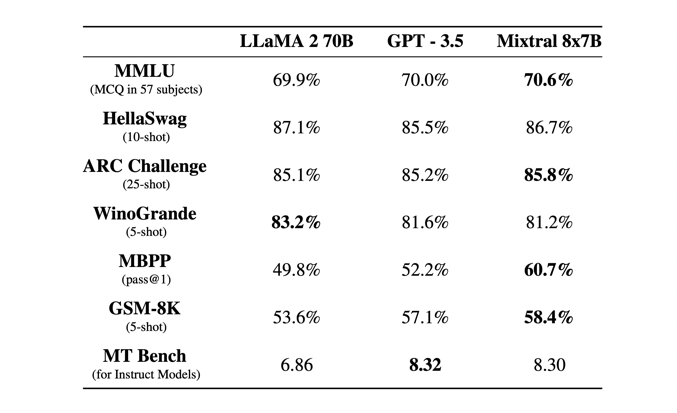
Arthur Mensch, CEO of Mistral, declared on French national radio that Mistral AI will release an open-source GPT-4 level model in 2024. Recently, Mistral released the 8X7B, based on the MoE architecture, which is comparable to other popular models such as GPT 3.5 and Llama 2 70B. Licensed under Apache 2.0, Mistral surpasses Llama 2 70B on most benchmarks with 6x faster inference.
Interesting year ahead – Arthur Mensch, CEO of Mistral declared on French national radio that mistral will release an open source Gpt4 level model in 2024https://t.co/N70xXMybnK
— Rohan Paul (@rohanpaul_ai) December 18, 2023
The Paris-based startup recently announced securing $415 million in funding with a valuation of $2 billion. Andreessen Horowitz (a16z) led the latest funding round, accompanied by a renewed investment from Lightspeed Venture Partners.
Open-Source LLM firms often find it difficult to sustain their business. To overcome this, Mistral AI recently introduced ‘La Plateforme’ where it will provide API endpoints for its available models.
I was worried how @MistralAI is going to money! If the 7B model is what they are calling as Mistral tiny, Imagine how "Mistral Medium" would be pic.twitter.com/vbUks6WRDN
— 1LittleCoder (@1littlecoder) December 11, 2023
The company has created three categories for its models- Mistral Tiny, Mistral Small and Mistral Medium. Mistral 7B Instruct v0.2 and Mixtral 8x7B, comes under Mistral Tiny and Mistral Small respectively. Interestingly, the Medium model is yet to be released.
Mistral AI has stated that it is currently developing Mistral Medium, positioned among the top-serviced models based on standard benchmarks. Proficient in English, French, Italian, German, Spanish, and code, it achieves a score of 8.6 on MT-Bench. On paper, it even beats GPT 3.5.
Meanwhile, there are rumours that OpenAI might release GPT-4.5 before the end of December.
The post Mistral AI to Open Source GPT-4 Level Model in 2024 appeared first on Analytics India Magazine.
The first-ever transformer supercomputer, a marvel etched into silicon chips, is here. Built by Etched AI, the supercomputer is embracing the revolutionary approach of burning transformer architecture directly into the core of chips.
The cutting-edge transformer supercomputer boasts impressive capabilities with NVIDIA’s 8xA100, 8xH100, and 8xSohu. The system achieves unprecedented performance metrics, notably in terms of Tokens Per Second (TPS).
Source: Etched
This architecture enables the processing of real-time voice agents that can ingest thousands of words in milliseconds, setting a new standard in computational speed and efficiency.
Beyond traditional GPU capabilities, this supercomputer empowers developers to build products previously deemed impossible. The incorporation of tree search enhances coding experiences by allowing the system to compare hundreds of responses in parallel. This not only improves efficiency but also opens up new possibilities for creating sophisticated applications.
One of the standout features of the transformer supercomputer is its multicast speculative decoding, enabling the generation of new content in real-time. This capability paves the way for dynamic and responsive applications that can adapt and generate fresh content instantaneously.
Etched’s blog says that this architecture will allow running trillion-parameter models with unparalleled efficiency. With only one core, the system accommodates a fully open-source software stack, expandable to 100T parameter models.
Incorporating beam search and MCTS decoding, the supercomputer leverages 144 GB HBM3E per chip, accommodating both Mixture of Experts (MoE) and transformer variants.
Meanwhile, there is an advent of state space models such as Mamba, which are here to replace Transformers. It would be interesting to see how both of these pan out simultaneously.
The post The World’s First Transformer Supercomputer Etched into Silicon appeared first on Analytics India Magazine.




 pic.twitter.com/48prbMIBtv



 (@1littlecoder) December 11, 2023

