What Happened to the $1.5 Billion Infosys Deal?

What Happened to the $1.5 Billion Infosys Deal?

On Saturday, Infosys reported the termination of a $1.5 billion deal by a global client. The announcement came a few months after India’s IT giant disclosed the signing of a $1.5 billion agreement with an unnamed global company in September, this year.

The deal aimed to provide an enhanced digital experience, modernisation, and business operations services over a 15-year period, leveraging Infosys platforms and AI solutions, which might be Topaz.

Infosys, in a filing to the exchanges, stated, “The global company has decided to terminate the Memorandum of Understanding, and the parties will not proceed with the Master Agreement.” The filings did not provide the reason for the deal’s cancellation.

Following the chain of events: was it Palantir?

The abrupt end to the agreement has raised eyebrows in the tech community, sparking speculations and discussions about the underlying reasons and potential players involved.

The possibility of Palantir being the undisclosed party is something which is being heavily discussed on social media platforms.

According to the chain of events, this was also possibly linked to the fact that Narayana Murthy, founder of Infosys, and Peter Thiel, the owner of Palantir, had business links. Why this matter is that Rishi Sunak, the Prime Minister of the United Kingdom, who is also the son-in-law of Murthy, was “inadvertently” selling the NHS to both the companies for no bid prices.

Palantir has been accused several times of wanting access to NHS data since COVID.

Adding another layer to the unfolding drama, Infosys announces the departure of its CFO, Nilanjan Roy. The stage is set for Jayesh Sanghrajka, an internal figure, to assume the critical CFO role. Roy’s exit introduces an element of intrigue to Infosys’ leadership dynamics, prompting speculation about potential influences on the company’s financial strategies.

To illustrate, the $1.5 billion deal, when spread over the 15-year span, equates to $100 million annually or $25 million quarterly in revenue. It’s crucial to note that revenue doesn’t directly translate to net profit, and over the years, $25 million per quarter may diminish in real value due to factors like inflation.

In essence, if Palantir is indeed the unnamed company, the impact could be minimal. A 15-year commitment in the dynamic field of generative AI may not align with Palantir’s strategy of securing favourable deals and avoiding agreements that do not justify their time and resources.

Pareekh Jain, Founder, Pareekh Consulting said, “There is so much change in the business and technology environment that such events reflect the risks associated with large deals in new technology.” He highlighted how such large investments only happen when the technology is established.

The suspected high take-rate for the consulting shop may have prompted Palantir to reassess the terms, leading to strategic recalibration. Terminating a long-term agreement may signal Palantir’s commitment to maintaining adaptability and flexibility in a fiercely competitive market.

The cancellation of this deal also underscores the uncertain economic conditions prevailing in the global economy, impacting the performance of the IT sector. In Q2 FY24, Infosys signed contracts with a total value of $7.7 billion. While the Total Contract Values (TCVs) for major IT firms have shown growth, the transformation into robust revenue growth remains less evident.

What does the cancellation entail?

Talking about Palantir’s flexibility, Infosys’ revelation reverberates through the market, with Wipro stocks experiencing a notable upswing. Market participants are quick to anticipate potential business redirection opportunities arising from the void left by Infosys’ terminated deal.

This scenario reinforces the industry adage — one company’s loss can indeed become another’s gain, highlighting the dynamic nature of the IT services sector.

But this is not the only investment Infosys made. Last week, the IT giant secured a five-year deal from LKQ Europe, an auto parts distributor. Notable among Infosys’ recent large deals is a $1.64 billion agreement with Liberty Global, based in London, spanning five years.

The involved parties have forged an initial agreement featuring the possibility of extension to eight years or more. During the initial five-year period, Infosys is set to deliver services to Liberty Global valued at $1.64 billion, with the potential to increase to $2.5 billion if the contract is prolonged to eight years.

This partnership enables Liberty Global to achieve ongoing annual savings exceeding €100 million, encompassing additional savings and investments in technology, specifically Topaz.

In July, Infosys had also said it signed a deal with another undisclosed existing client to provide AI services, with the target spend of $2B over five years.

In a parallel development earlier this year, Tata Consultancy Services (TCS) revealed the termination of a $2 billion deal by Transamerica, an insurance player. The deal, initiated in 2018, involved five-and-a-half years of collaboration by TCS. Reliance also announced its partnership with NVIDIA.

There has been an increasing pressure in Indian IT to adapt generative AI services. Which is what possibilly prompted Infosys to also make this hasty move.

The post What Happened to the $1.5 Billion Infosys Deal? appeared first on Analytics India Magazine.

2023 in Review: 10 Events that Transformed AI

In 2023, AI captivated the world with its heady progress, be it in large language models, chatbots or protein folding.

As the year comes to a close, AIM looks back at ten significant developments in AI over as many months. This year has truly been unlike any other for AI. Here are the things that made it special:

ChatGPT Gained 100 Million Weekly Users

Digital Trends/ Analytics India Magazine

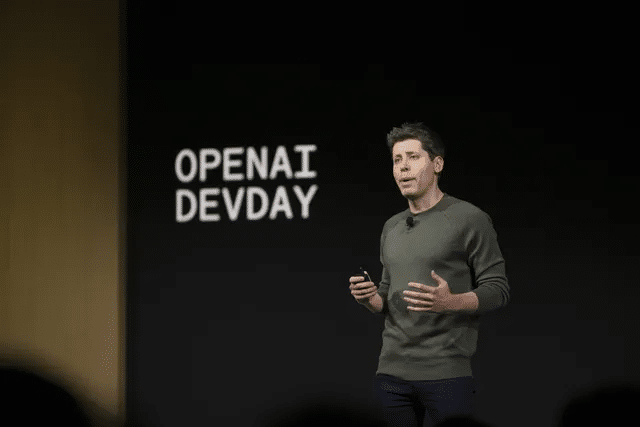
ChatGPT made a debut in November 2022 and quickly gained attention from tech leaders and the public. In January 2023, the chatbot had a monthly active user base of 100 million. According to OpenAI CEO Sam Altman, it now boasts an astounding 100 million weekly users.

Google, feeling concerned that AI could render its search business useless, responded with its AI chatbot Bard, while Microsoft launched Bing Chat.

GPT-4 makes a splash

Digital Trends/ Analytics India Magazine

Initially released in March 2023, OpenAI’s GPT-4 LLM is now accessible to the general public through OpenAI’s API and the premium chatbot application ChatGPT Plus.

GPT-4 enhances creativity, visual input, and multimodal context, allowing users to collaborate on artistic tasks like writing, music, and screenplays, surpassing previous models.

Currently behind OpenAI’s ChatGPT Plus paywall, GPT-4 has significantly impacted AI, with Google’s Gemini and others claiming to beat it at most tests a year after its launch, indicating a benchmark that the OpenAI model has set.

It was only in May that ChatGPT’s browsing capabilities were expanded when the Browsing through Bing plugin was announced at the Microsoft Build developer conference. It was a slow rollout until September when it became available to all ChatGPT Plus users.

LLaMA Leak

In March, Meta’s latest family of large language models, LLaMA, got leaked along with its weights, on 4Chan’s technology board and was available to download through torrents. This accidental unveiling of Meta’s LLM changed the whole open source game as it gave an enormous potent tool in the hands of the open source community in the AI space.

AI-generated images

Pablo Xavier

In March 2023, a picture of Pope Francis wearing a white puffer jacket, created by Pablo Xavier using AI image generator Midjourney, went viral, demonstrating the power of AI in deceiving humans.

This, along with others like Trump’s arrest, underscores the need for increased media literacy about the increasing prevalence of AI-generated images in search results.

A petition begins to sound the alarm

Apple co-founder Steve Wozniak

In March 2023, tech executives, including Elon Musk and Steve Wozniak, wrote an open letter urging AI labs to pause training for at least six months due to potential risks such as loss of civilization control, human annihilation, and job destruction.

The letter also included academics and researchers. The letter aims to provide a clearer understanding of the potential risks associated with AI.

Windows gets a new Copilot

Microsoft

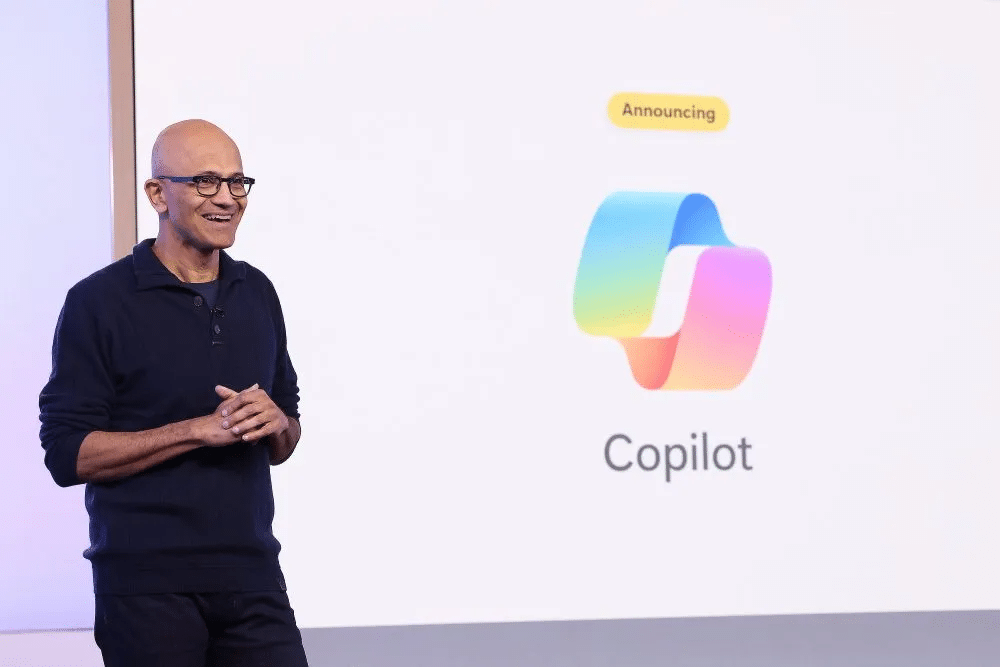
Soon after launching Bing Chat at the start of the year, Microsoft introduced Copilot in February 2023, a far more widespread application of AI in its products, initially for Microsoft 365 Copilot.

Microsoft integrated Copilot into Word, Teams, and Windows 11, automating tasks like image creation and meeting summarization, demonstrating AI commitment and setting a precedent for Apple.

Academics grapples with AI

Unsplash

In May 2023, a professor at Texas A&M University-Commerce failed an entire class due to students using ChatGPT to write papers, despite no proof. This ignorance led to serious consequences for students. Dr Jared Mumm copied and pasted students’ papers into ChatGPT, asking if it could generate the text.

ChatGPT answered affirmatively, but it cannot detect AI plagiarism. Reddit users took Dr Mumm’s letter accusing students of cheating and pasted it into ChatGPT, resulting in AI hallucinating and human confusion surrounding its abilities.

Hollywood vs AI

Paul Deetman/Pexels

Artificial intelligence is causing global anxiety, with reports suggesting it could eliminate up to 300 million jobs if left uncontrolled. Hollywood authors went on strike over the use of AI in filmmaking, in September, 2023, but won concessions from studios, including limiting AI content use for training. AI development may continue to impact the industry.

Sam’s sacking saga

OpenAI

The OpenAI board fired CEO Sam Altman in November, leading to employee resignations and Microsoft offering jobs to Altman and other OpenAI employees, causing the company to almost collapse.

Soon, Altman was reinstated and the company got fresh board members. The internet debated if Altman had discovered ethical concerns about AI development, if Project Q* was about to achieve AGI, or if he was just a bad boss.

We may never know the whole truth. But nothing else encapsulated the drama, hysteria, fascination, and conspiracy theories as much as this one did in 2023.

The rise of OpenAI alternatives

After OpenAI, there was a sudden spike in the number of platforms offering foundational models and proprietary chatbots.

Cohere AI: Cohere is a leading AI platform for enterprise, offering ease-of-use, accessibility, and data privacy. It’s cloud-agnostic, accessible through API, and can be deployed on VPC or on-site. Founded by Google Brain alumni, Cohere aims to transform enterprises and their products with AI. Cohere raised $270 million in a funding round led by Microsoft-backed OpenAI, valued at $2.2 billion in June, 2023.

Anthropic: Anthropic is an AI safety and research company working to build reliable, interpretable, and steerable AI systems. In October, 2023 Google committed to investing up to $2 billion in Anthropic, bolstering the competition among startups striving for significant technological breakthroughs.

Mistral AI: Built by a world-class team in Europe, targeting the global market, Mistral AI was founded in April, 2023. In November, 2023, it raised $385 million, in a significant investment in online chatbot technology, valued at around $2 billion, following a sevenfold increase in value in six months.

Perplexity: Perplexity is a chatbot-style search engine that allows users to ask questions in natural language. Founded in August 2022, Perplexity, has raised $500 million, a significant increase from its initial $150 million valuation. It is also in discussions to raise $50 million.

The post 2023 in Review: 10 Events that Transformed AI appeared first on Analytics India Magazine.

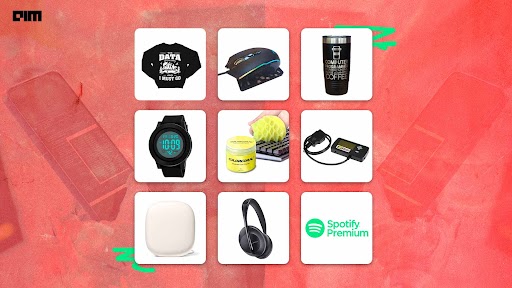
9 Gifting Ideas For Your Tech Bros 2023

Once again, it’s that time of the year when we enjoy spending time with loved ones, shopping for presents for them, and expressing our gratitude with these budget-friendly lists of gifts. Tech bros are no exceptions.

Give your tech buddy or developer friend a present from this amazing list.

The Data Is Calling, And I Must Go – Sweatshirt

Are you trying to find the ideal gift for a coder? This is the perfect option: the Standard Crew Neck Sweatshirt. For programmers who appreciate both style and usefulness, this cozy and adaptable hoodie is ideal.

Their passion for coding is evident in its straightforward and tidy design. This silky, long-lasting, and high-quality sweater will keep them warm throughout extended coding sessions. This sweatshirt is a useful and stylish present that will make any coder pleased, whether they wear it to work or on a casual stroll.

Mouse Jiggler

This Jiggler mouse should be on your present list if you want to offer a coder or developer something unique. When your loved ones receive it, they might feel inspired and happy. So let’s seize it right away.

To keep your computer running while you are away from it, the Mouse Jiggler moves the cursor across your screen. It is a standalone device that doesn’t need any additional USB connections, software, or external power. This allows you to take time off from the computer without appearing on any employee tracking program. Simply and easily operated by resting your mouse atop the apparatus.

Computer Programmer Steel Tumbler

With this tumbler etched with programming, finding a fantastic gift for a programmer is not as difficult. Let’s get it so your favorite developer or coder is surprised.

With its open port lid and dual walls, this vacuum-insulated stainless steel mug will maintain the ideal temperature for your beverages. The conventional lids have an open port drinking hole that is convenient for straws. They have sliding lids under their choices and add-ons area. The bottom of the 20- or 30-oz mugs is narrower to accommodate the majority of common cup holders.

Men’s Digital Sports Watch

Casual military outdoor design and simple minimalism fashion with a comfortable silicone rubber watch band make it a perfect present for your developer friend or coder. This waterproof watch is suitable for both indoor and outdoor sports, such as running, hiking, biking, fishing, climbing, and more. With an imported EL lamp, whether in the dark or under the sun, they can see the time clearly and find it easy to read.

Cleaning Gel Universal Dust Cleaner

For a coder or developer, a gift should be related to computer equipment, right? Then you can give your colleague this cleaning gel kit to clean the dust on the keyboard.

This universal dust cleaner is made of biodegradable gel, not sticky to hands, smells sweet with a lemon fragrance, and causes no skin irritation. Ensure your hands are dry and clean before touching this gel. The keyboard cleaning gel can be used repeatedly until the color turns dark.

Jet Performance Jet 15008 Performance Programmer

If you are searching for a practical and useful present for someone who is a coder, try to have a look at this performance programmer.

With three different performance tunes, it adjusts the correct speedometer for tire or gear changes. The JET performance programmer plus lets them take control and program their vehicle computer to match their driving style. It allows them to program for performance using lower-cost regular octane fuel or, for optimal performance gains, they can program for midgrade or premium fuels.

Google Nest Wifi Router

These make great gifts for hackers who love to grab their laptop and code from anywhere in the house.

Does a coder in your life work from home? For anyone whose house has annoying wifi “dead zones,” Nest Wifi plugs into modems to provide up to 2200 square feet of strong, reliable internet.

Bose Noise Canceling 700 Headphones

Noise-canceling headphones are among the best gifts for programmers who need peace and quiet to get work done.

These are some of the top noise-canceling headphones on the market, with 11 levels that let you decide whether to block all sound or allow ambient sounds. You’ll get up to 20 hours of battery life per charge and easy access to voice assistants like Alexa and Google Assistant.

Spotify Premium Subscription

Someone who loves both music and coding.

Background music might actually improve our performance on cognitive tasks. By giving your techie friend the gift of music to program to, you could actually help them be more productive!

The post 9 Gifting Ideas For Your Tech Bros 2023 appeared first on Analytics India Magazine.

2024 is the Year of AMD

2024 is the Year of AMD

AMD has surely taken a stance to bolster itself for 2024. Starting from its partnership with leading companies such as Microsoft, Oracle, and Meta for using MI300X; spearheading AI PC revolution with Ryzen AI; and software play with ROCm; the company is super optimistic about the future, tapping into the AI boom.

“I think what we’ve seen is the adoption rate of our AI solutions has given us confidence in not just the Q4 revenue number, but also sort of the progression as we go through 2024,” said Lisa Su, the CEO of AMD.

Su announced at a recent earnings call that AMD is expecting a revenue of $400 million from GPUs in the fourth quarter, and exceed $1 billion by the end of 2024. “This growth would make MI300 the fastest product to ramp to $1 billion in sales in AMD history,” she said.

Su expects the data centres AI market will now be around $400 billion by 2027 — a 2.7 times more than her previous estimation of $150 billion in the same time period.

Su highlighted that the market is huge and there will be multiple winners in this market. “From our standpoint – we’re playing to win and we think the MI300 is a great product, but we also have a strong road map beyond that for the next couple of generations.”

“But overall, I would say that I am encouraged with the progress that we’re making on hardware and software and certainly with the customer set,” she said.

Ryzen AI PCs

Leading OEMs such as Acer, Asus, Dell, HP, Lenovo, and Razer are set to feature the Ryzen 8040 Series processors announced at the event. This was along with Ryzen AI 1.0 software for seamless deployment of models on the hardware making it more convenient for users to harness the power of AI in various computing scenarios.

The significance of the mobile phone CPU market is likely to grow as well, especially with the presence of formidable competitors. AMD’s emphasis on Chiplet technology has proven beneficial, evident in its lower waste rate compared to Intel’s monolithic approach. Intel has also acknowledged this advantage and introduced its initial Chiplet lineup, Meteor Lake, which is still new.

In PCs, there are now more than 50 notebook designs powered by Ryzen AI in the market, said Su. “We are working closely with Microsoft on the next generation of Windows that will take advantage of our on-chip AI Engine to enable the biggest advances in the Windows user experience in more than 20 years.”

AMD still holds the upper hand due to its longer and more profound experience with this technology.

Then it’s about GPUs

“People believe that AMD GPUs are not that suited for machine learning, but the company has been increasingly proving everyone wrong,” Jungwhan Lim, head of AI group at Moreh told AIM. AMD GPUs seem to have witnessed a surge in community adoption, proving their mettle in the field of AI.

The testimonial from Moreh is just one. There are several AI companies and startups that are partnering with AMD to prove its prowess in the market. Databricks, the company giving close competition to big players in the AI race, has been testing AMD GPUs for the whole of 2023, and it revealed the secret only later. Same is the case with Lamini, another partner of AMD.

All of these companies narrate a similar story of how AMD is definitely rising up because there is a shortage of GPUs in the market. Gregory Diamos, co-founder of Lamini, said, “we have figured out how to use AMD GPUs, which gives us a relatively large supply compared to the rest of the market.”

Not just GPUs, AMD is strategically partnering with the Ultra Ethernet Consortium (UEC) to enhance its inter-chip networking technology and challenge NVIDIA’s dominance. The collaboration involves incorporating Broadcom’s next-gen PCIe switches, supporting AMD’s Infinity Fabric technology for improved data transfer speeds between CPUs.

The open software approach

Su also highlighted that Lamini is enabling enterprise customers to easily deploy production-ready LLMs fine-tuned for their specific data on Instinct MI250 GPUs with minimal code changes. Lamini co-founders claimed that they have the most competitive perf/$ on the market right now, “because we figured out how to use AMD GPUs to get software parity with CUDA, trending beyond CUDA.”

Then comes the software approach. It has been intensively discussed that NVIDIA’s real moat for AI has always been CUDA, its parallel computing framework. But AMD is closing in slowly, but surely with ROCm, and it has made its focus. “As important as the hardware is, software is what really drives innovation,” Lisa Su said, talking about the ROCm.

For this, the company has partnered with Nod.ai and Mipsology, which is helping the company build its software stack on par with NVIDIA.

“ROCm runs out of the box from day one,” said Ion Stoica, co-founder of Databricks, highlighting it was very easy to integrate it within Databricks stack after the acquisition of MosaicML, with just a little optimisation. “We have reached beyond CUDA,” said Sharon Zhou, the co-founder of Lamini, and how ROCm is production-ready.

All of this is while NVIDIA is planning to release GH200 AI accelerators starting the first quarter of 2024. Though on performance, CUDA can be touted as better than ROCm, but AMD is hell-bent on making its offering better.

The post 2024 is the Year of AMD appeared first on Analytics India Magazine.
Apple Quitely Unveils Open-Source Multimodal LLM, Ferret 

Apple

Two months back, Apple, in collaboration with Columbia University, quietly unveiled Ferret, a new multimodal large language model adept at referring and grounding.

Check out the GitHub repository here.

Ferret can refer to image regions in any free-form shape and automatically establish grounding for text deemed groundable by the model.

I somehow missed this. @Apple joined the open source AI community in October. Ferret’s introduction is a testament to Apple’s commitment to impactful AI research, solidifying its place as a leader in the multimodal AI space. Way to go @Apple – ps: I'm looking forward to the day… https://t.co/Pi1kQrsVvx

— Bart de Witte (@OpenMedFuture) December 23, 2023

The researchers have curated the GRIT dataset for model training. The dataset includes 1.1 million samples that contain rich hierarchical spatial knowledge, with 95K hard negative data to promote model robustness.

They also said that the resulting model achieved superior performance in classical referring and grounding tasks and greatly outperformed existing MLLMs in region-based and localisation-demanded multimodal chatting.

“Our evaluations also reveal a significantly improved capability of describing image details and a remarkable alleviation in object hallucination,” the researchers said that Ferret, like most MLLMs, may produce harmful and conunterfactual reponses.

Citing LISA, the researchers said they plan to enhance Ferret to output segmentation masks and bounding boxes.

The Significance of Ferret’s Stealthy Debut

Apple’s strategic move to release Ferret without a formal announcement speaks volumes about the company’s dedication to staying at the forefront of multimodal AI. The unexpected embrace of open-source development departs from Apple’s traditional closed-door approach, setting the stage for potential collaboration and community-driven advancements.

Talking about its functionality, it is elegantly simple yet powerful. Beyond identifying elements within an image, the model draws connections to formulate responses to user queries. This opens up possibilities in image search, accessibility, and other applications where nuanced contextual understanding is crucial.

Ferret’s versatility is further enhanced by a spatial-aware visual sampler capable of handling various sparsity patterns associated with different shapes. Ferret accommodates diverse regional inputs, including points, bounding boxes, and free-form shapes.

The post Apple Quitely Unveils Open-Source Multimodal LLM, Ferret appeared first on Analytics India Magazine.

8 Major Indian AI Events of 2023

In the Indian tech ecosystem, AI is finally catching up and is expected to grow stronger over the coming years. Right from military hardware to financial software packages, all of them now have AI as an element.

The ripple effects are already being felt, with companies as well as public sector organisations trying to integrate AI in every nook and corner of their resources. In 2023, the AI wave was felt hard due to ChatGPT being popularised and India becoming the second country sending most desktop traffic to the platform.

Out of all the brouhaha happened in 2023, here are 8 major AI events from India:

Ola Puts Out Krutrim

Fresh Off the Press is Ola’s Krutrim, which, as per CEO Bhavish Aggarwal, is “India’s first full-stack AI solution.” The tool translating to ‘artificial’ in Sanskrit has a UI/UX design similar to OpenAI’s ChatGPT. The company’s chief claimed that the model was trained on 2 trillion tokens, can understand over 20 Indian languages and generates content in about ten languages.

While Aggarwal proudly shared the announcement on social media platforms, he was trolled by the audience for releasing the lack of details regarding the model.

OpenAI’s Opening Inning in India

GPT designer OpenAI has announced it will host its first-ever developer gathering in Bengaluru, India, next month. Speaking at a session at the Global Partnership on AI (GPAI) Summit, Anna Makanju, vice president of global affairs at OpenAI, said this gathering will mark the beginning of OpenAI’s involvement in the Indian market.

The company recently hired former Twitter India head Rishi Jaitly as a senior advisor to facilitate talks with the government about AI policy.

A Language Model Learns Hindi

Indian AI startup Sarvam AI released OpenHathi-Hi-v0.1, the first Hindi large language model in the OpenHathi series. The model is an extension of Meta’s Llama2-7B model and performs as well as GPT-3.5 on Indic languages.

The recently set up generative AI startup collaborated with academic partners at AI4Bharat to develop OpenHathi, who provided language resources and benchmarks.

LLM for Indian Farmers is Here

A startup founded by the son of an Indian farmer, KissanAI has built Dhenu 1.0, an agriculture language model. Tailored specifically for Indian agricultural practices, this bilingual model understands English, Hindi, and Hinglish queries to cater directly to farmers’ linguistic needs.

Founder Pratik Desai disclosed that Dhenu 1.0 was trained on datasets focused on agricultural practices. The model’s uniqueness lies in processing 300,000 instruction sets in both English and Hindi.

India to Replicate UPI with AI

Indian Union Minister Rajeev Chandrasekhar, while speaking at a Financial Express event said India has the opportunity to develop something sovereign and unique and in line with the Digital Public Infrastructure (DPI) like Unified Payment Interface (UPI) and Aadhar, in which India has found success. Now, with AI, India wants to take the same DPI approach.

Air India Migrates to Cloud

The country’s flag carrier airline, Air India, has migrated to a cloud-only IT infrastructure, having closed its historic data centres in Mumbai and New Delhi.

This makes it one of the first major global airlines to have moved all computational workloads exclusively to the cloud infrastructure. The shift will result in nearly a million dollars of net savings yearly.

Crack Down on Deepfakes Begin

After the infamous Rashmika Mandana incident, the minister of state for IT, Rajeev Chandrasekhar, announced the appointment of a nodal officer to look at platforms’ safe harbour status.

He also said that the IT ministry would assist aggrieved users of social media platforms in filing FIRs if the need arose. Chandrasekhar announced this after meeting with social media companies, device manufacturers and telecom service providers in the morning.

AI Makes PM Modi Sing

The internet recently became amused at an Instagram Reel where Indian PM Narendra Modi can be heard “singing” a Bollywood song. The singing accompanies a picture of Modi sitting cross-legged, strumming a guitar. The video, made by creator @ai_whizwires using artificial intelligence, has over 3.4 million views.

“Before uploading [it], I was a little scared. But after it went live, everybody enjoyed it,” @ai_whizwires, who didn’t want to be identified by his real name over fear of political backlash (Rest of World).

The post 8 Major Indian AI Events of 2023 appeared first on Analytics India Magazine.

The KDnuggets 2023 Cheat Sheet Collection

The KDnuggets 2023 Cheat Sheet Collection
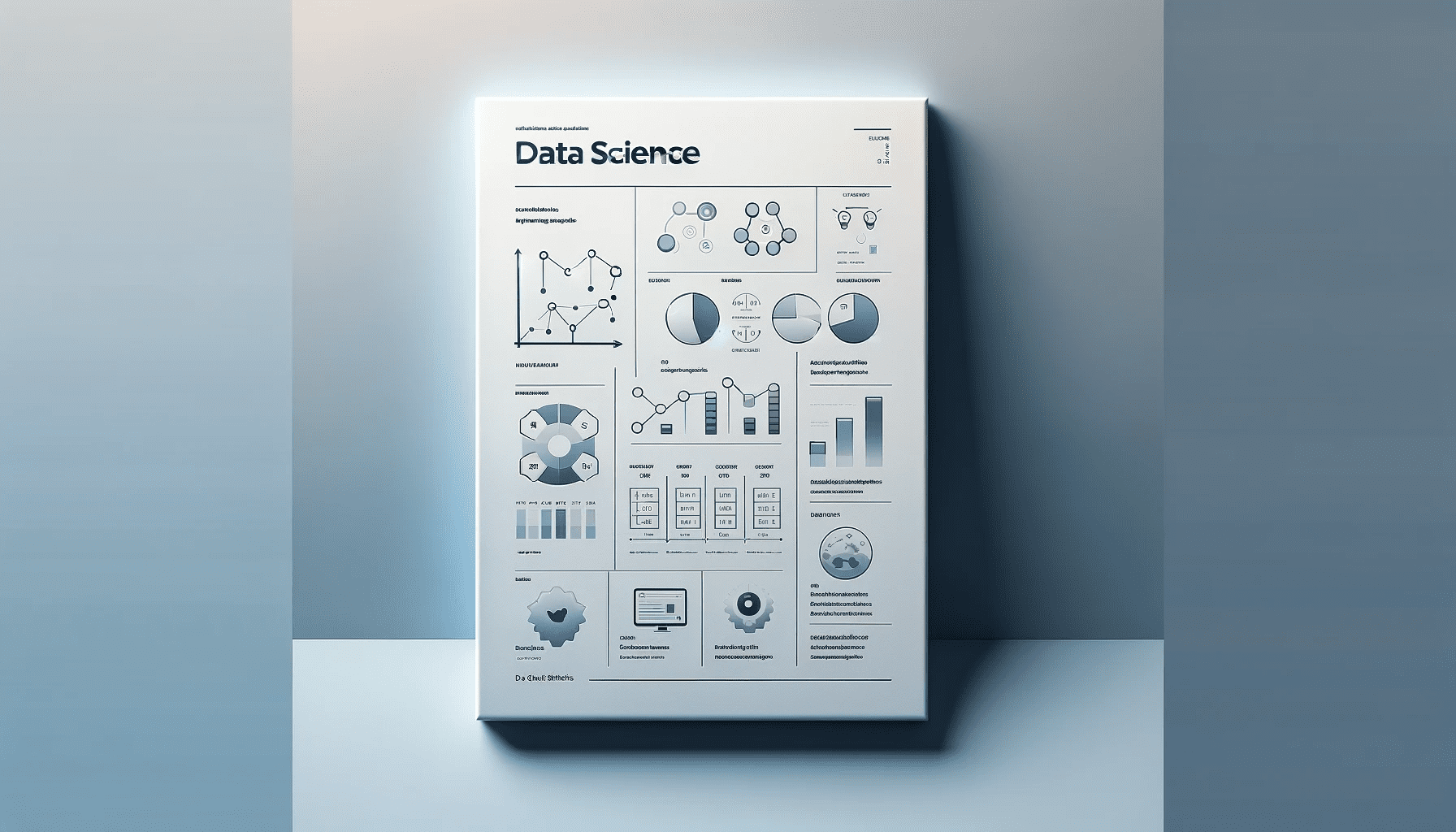
Image created by Author with DALL•E 3

Are you looking for handy quick references for a variety of topics on data science, machine learning, Python programming, data engineering, and AI? Do you want to stay updated while enhancing your skills in these areas? The collection of cheat sheets that KDnuggets has created over the course of 2023 aims to help you accomplish these goals.

You will find these cheat sheets to be valuable resources for keeping you at the forefront of some of the most useful and relevant tools, technologies and concepts of this year. Whether you're a seasoned data scientist, a budding machine learning enthusiast, or a data engineering professional, these professionally-crafted resources will undoubtedly provide nugget-sized bullet points of importance.

From the practical applications of ChatGPT in data science to mastering valuable data tools such as GitHub CLI, Plotly Express, and cuDF, each cheat sheet is designed to offer concise, actionable insights. Learn machine learning with Streamlit. Explore data cleaning with Python. Venture into the realm of AI with helpful Chrome extensions and generative AI tools. Consider this collection your gateway to mastering (and reinforcing over time) complex concepts and tools, ensuring you stay ahead in the field.

So go ahead and check out the following cheat sheets from KDnuggets and see what insights are available.

Data Science

ChatGPT for Data Science Cheat Sheet

ChatGPT (and, indeed, the most robust and latest versions of GPT3) is meant to assist (that's right… assist!) humans that decide to use it as such, and with a little help from your friends at KDnuggets you will be able to hone your prompt engineering skills to do useful things like generate code, assist in your research process, and analyze data.

GitHub CLI for Data Science Cheat Sheet

The GitHub CLI, unsurprisingly, is the GitHub tool that allows for interaction with the GitHub platform with the command line interface. Mastering the most-used commands will allow you to become a productive of a development team, be that a web app development team, or more specifically for our purposes, a data science, data engineering, or machine learning engineering team.

Plotly Express for Data Visualization Cheat Sheet

The cheat sheet first addresses getting started, such as installing the library and its basic syntax. Next, the resources covers creating common chart types with Plotly Express, including: Scatter plot, histogram, density heatmap, pie chart, box plot. Finally, you will gain some exposure to plot customization, including adjusting markers and layouts.

RAPIDS cuDF Cheat Sheet

Getting started with cuDF is straightforward, especially if you have experience using Python and libraries like Pandas. While both cuDF and Pandas offer similar APIs for data manipulation, there are specific types of problems in which cuDF can provide significant performance improvements over Pandas, including large scale datasets, data preprocessing and engineering, real-time analytics, and, of course, parallel processing. The bigger the dataset, the greater the performance benefits.

ChatGPT for Data Science Interview Cheat Sheet

Mastering data science interviews are a skill all their own, and preparing for them is the key to success. Just as I was once told that learning how to write university examinations is a skill all of its own, beyond learning the material on which you are being tested, specialized technical job interviews are very similar.

10 ChatGPT Plugins for Data Science Cheat Sheet

For an overview of what we believe to be the 10 of the best ChatGPT plugins for data science, check out our latest cheat sheet, conveniently named 10 ChatGPT Plugins for Data Science Cheat Sheet. You'll find plugins for coding, analysis, web searching, document interrogation, and more.

Machine Learning

Streamlit for Machine Learning Cheat Sheet

Putting machine learning and Streamlit together is a popular option for data scientists and other data professionals looking to experiment on data, prototype, or share results. Knowing how to quickly turn around data apps is becoming an essential skill for data folks, and this combination certainly allows for this. If you don't know how to use Streamlit, we suggest you learn now.

Machine Learning with ChatGPT Cheat Sheet

With ChatGPT, building a machine learning project has never been easier. By simply writing follow-up prompts and analyzing the results, you can quickly and easily train the model to respond to user queries and provide helpful insights. In this cheat sheet, learn how to use ChatGPT to assist with the following machine learning tasks: Project planning, feature engineering, data preprocessing, model selection, hyperparameter tuning, experiment tracking, and MLOps.

Scikit-learn for Machine Learning Cheat Sheet

Scikit-learn's unified API interface makes learning how to implement a variety of algorithms and tasks much easier than it would otherwise be. Once you learn the pattern of how to make Scikit-learn calls, you are off and running. The only thing you need after this, beyond your imagination and determination, is a handy reference. This cheat sheet covers the basics of what is needed to learn how to use Scikit-learn for machine learning, and provides a reference for moving ahead with your machine learning projects.

Data Engineering

Docker for Data Science Cheat Sheet

Docker has become an essential data science tool to assist in the building of reproducible and scalable environments. Docker allows code and dependencies to be packaged in containers, which lets data scientists distribute their models across different platforms. This assists in both development and production, and works to prevent errors and inconsistencies that can arise from different versions of software or hardware configurations.

Getting Started with Graph Database Queries Cheat Sheet

In graph queries we lose some syntax from SQL and gain other syntax. SELECT has been replaced by MATCH. FROM and JOIN have been discarded. But the WHERE and ORDER BY commands are used in the same way. Aggregate functions like SUM and AVG are all there, but the GROUP BY has been discarded. Most importantly, though, we gain the ability to query patterns in the graph using the node relationships. In the attached Cheat Sheet, you will see a list of most-commonly used query approaches.

Python Programming

Data Cleaning with Python Cheat Sheet

In this cheat sheet, we go from detecting and handling missing data, dealing with duplicates and finding solutions to duplicates, outlier detection, label encoding and one-hot-encoding of categorical features, to transformations, such as MinMax normalization and standard normalization. Moreover, this guide exploits the methods provided by three of the most popular Python libraries, Pandas, Scikit-Learn and Seaborn for displaying plots.

Python Control Flow Cheat Sheet

The state of flow control has come a long way since the days of goto. There are numerous common execution patterns that are available in the majority of modern programming languages, though their syntax differs from language to language. Python has its own, generally quite readable, set of flow controls, and that's what our latest cheat sheet focuses on. Get ready to learn flow control, and to have a handy reference moving forward as you conquer the world of coding.

Artificial Intelligence

AI Chrome Extensions for Data Scientists Cheat Sheet

The selection of tools presented on this cheat sheet includes SciSpace Copilot, an AI-powered research assistant designed to help you understand the text, math, and tables in scientific literature. Fireflies, an AI assistant powered by GPT-4, is also featured. This revolutionary tool can surf the web and summarize various types of content, including articles, YouTube videos, and emails, with human-like efficiency. And more.

Best Python Tools for Building Generative AI Applications Cheat Sheet

Some highlights covered include OpenAI for accessing models like ChatGPT, Transformers for training and fine-tuning, Gradio for quickly building UIs to demo models, LangChain for chaining multiple models together, and LlamaIndex for ingesting and managing private data. Overall, this cheat sheet packs a wealth of practical guidance into one page. Both beginners looking to get started with generative AI in Python as well as experienced practitioners can benefit from having this condensed reference to the best tools and libraries at their fingertips.

LangChain Cheat Sheet

With LangChain, developers can build capable AI language-based apps without reinventing the wheel. Its composable structure makes it easy to mix and match components like LLMs, prompt templates, external tools, and memory. This accelerates prototyping and allows seamless integration of new capabilities over time. Whether you're looking to create a chatbot, QA bot, or multi-step reasoning agent, LangChain provides the building blocks to assemble advanced AI rapidly.

10 ChatGPT Projects Cheat Sheet

The cheat sheet links to tutorials for each project, walking through step-by-step implementation leveraging ChatGPT's conversational prompts. Highlights include using ChatGPT for a loan approval classifier model, resume parser, real-time language translator, exploratory data analysis, and even integrating its capabilities into Google Sheets. Whether you're new to ChatGPT or looking to push its boundaries, this collection of projects acts as a launch pad to boost productivity and accelerate AI-assisted development.

Matthew Mayo (@mattmayo13) holds a Master's degree in computer science and a graduate diploma in data mining. As Editor-in-Chief of KDnuggets, Matthew aims to make complex data science concepts accessible. His professional interests include natural language processing, machine learning algorithms, and exploring emerging AI. He is driven by a mission to democratize knowledge in the data science community. Matthew has been coding since he was 6 years old.

More On This Topic

  • KDnuggets™ News 22:n06, Feb 9: Data Science Programming…
  • KDnuggets News, July 5: A Rotten Data Science Project • 10 AI…
  • The Complete Collection of Data Science Cheat Sheets — Part 1
  • The Complete Collection of Data Science Cheat Sheets — Part 2
  • Data Science Cheat Sheet 2.0
  • The ChatGPT Cheat Sheet

How Pratik Desai is Sowing AI Seeds in India 

KissanAI’s founder, Pratik Desai, has had a hectic few weeks, working against a tight timeline to unveil Dhenu 1.0, India’s first agricultural LLM. That too before the end of December, as he had to present the model at the GPAI Summit 2023 which took place in India from 12-14 December 2023.

“For seven days, I had 24-hour flights, and for the remaining three days, I was stranded at the airport the whole time.” he said, sharing his experience of showcasing the first version of Dhenu at GPAI Summit, in an exclusive interview with AIM.

Dhenu is an agricultural LLM specifically designed for Indian farmers to assist them with queries related to farming practices. The model is bilingual and can comprehend queries in English, Hindi, and Hinglish, a notable feature that caters directly to farmers’ linguistic needs.

Collaborates with Sarvam AI

The first version of Dhenu is built on top of Sarvam AI’s recently launched model, OpenHathi. Desai said that he tried to fine-tune Dhenu earlier on Mistral 7B, but due to the lack of time (as he had to present his model at the GPAI Summit), he collaborated with Sarvam AI.

The partnership with Sarvam AI is primarily about compute. “We were in coordination with Sarvam AI, and as soon as OpenHathi became available, we decided to use it,” said Desai. He mentioned that he knew folks at the company beforehand, so collaborating with them was easy.

Moreover, the reason for choosing OpenHathi was that it is a bilingual model, addressing KissanAI’s major problem. “The intention was also to create a Hindi LLM so that Indian farmers could easily use it.” he said.

The Art of Data Collection

Desai said, unlike general-purpose models built to answer generic queries and create witty responses, Dhenu 1.0 serves a different purpose. He mentioned that his team has collected agricultural data from various universities across India, spanning from the north to the south.

Furthermore, he highlighted that Kissan AI has recorded real conversations related to agriculture, providing genuine answers. “We have enough information to start training, and that is making it very domain-specific now,” he added.

The model’s uniqueness lies in its bilingual nature, adeptly processing 300,000 instruction sets in both English and Hindi according to Desai. “300,000 instructions contain Indian agricultural data practices, backed by Indian methods. He mentioned that the model will continue to train on more data in the coming months.

“We have also incorporated geographical information into this instruction set, indicating the origins of the questions,” said Desai. Furthermore, he said that KissanAI has a significant amount of Indic knowledge data, such as literal pictures taken by some Krishi Vigyan Kendra individuals or written documentation by professors.

Subsequently, these materials become instructions for farmers, presented in their own language. “There is a wealth of knowledge traditionally stored in pen-and-paper format, drawings, or manuals that we aim to bring online, convert into AI, and make accessible.” added Desai.

KissanAI’s Business Model

Still in the early days, Desai was quite vocal, and said he hasn’t figured out the business model yet. “I don’t know the strategy right now. I am still thinking about it. There can be an open-source version, along with a pro version,’ he said, explaining that he definitely has plans to sell APIs directly to agriculture companies aiming to build their own co-pilots for agriculture.”

Moreover, Dhenu is not yet available in the market as it is currently undergoing evaluation. “The goal is to have some RAG testing with the model. And, evaluation may take time because we are a small team,” shared Desai.

Desai told AIM that he has plans to take Dhenu outside India as well. He said that some of the companies in Brazil reached out to him to create a similar model for them.

He mentioned that it is easier to build models for other nations as they are more monolithic, unlike India, which has such diversity in terms of language and culture, alongside agricultural practices, as the majority are marginal farmers.

Lastly, when asked about the choice of the name ‘Dhenu,’ he shared “I think it started with people naming all the models with animal names like LLaMA or Hyena. So, we wanted to have a name that follows a sequence because, ultimately, we are a community building on each other’s work.” He said that naming their company Kissan and their model Dhenu makes sense, as both are closely related to agriculture.

The post How Pratik Desai is Sowing AI Seeds in India appeared first on Analytics India Magazine.
How Moreh is Making AI Software Better with AMD

How Moreh is Making AI Software Better with AMD

AMD is rising rapidly up the AI market ever since it announced its MI300X and the software updates for ROCm. It has been building partnerships with various AI companies for testing out and delivering its products. One such company led us to Korean-based Moreh.

One of the problems with AMD GPUs earlier was that the software stack was not well established, but now the company has ROCm, its alternative to CUDA. But still, it was not well suited for large GPU clusters. “Our software enables people to use AMD GPUs without any more codes, they just can run their or larger language models without any further engineering,” Junghwan Lim, head of AI group at Moreh, told AIM in an exclusive interview.

Lim has also worked as a data scientist at PUBG Corporation and has also worked with Samsung in South Korea. Currently, Lim is focused on developing better software for AI workloads at Moreh and making language models smaller for better efficiency.

AMD is being embraced way too much, and that’s good

Moreh’s flagship AI software, known as MoAI, is positioned similarly to NVIDIA’s CUDA but boasts compatibility with existing machine learning frameworks like Meta’s PyTorch and Google’s TensorFlow, and even OpenAI’s Triton. Now, the company is helping AMD boost up its ROCm performance.

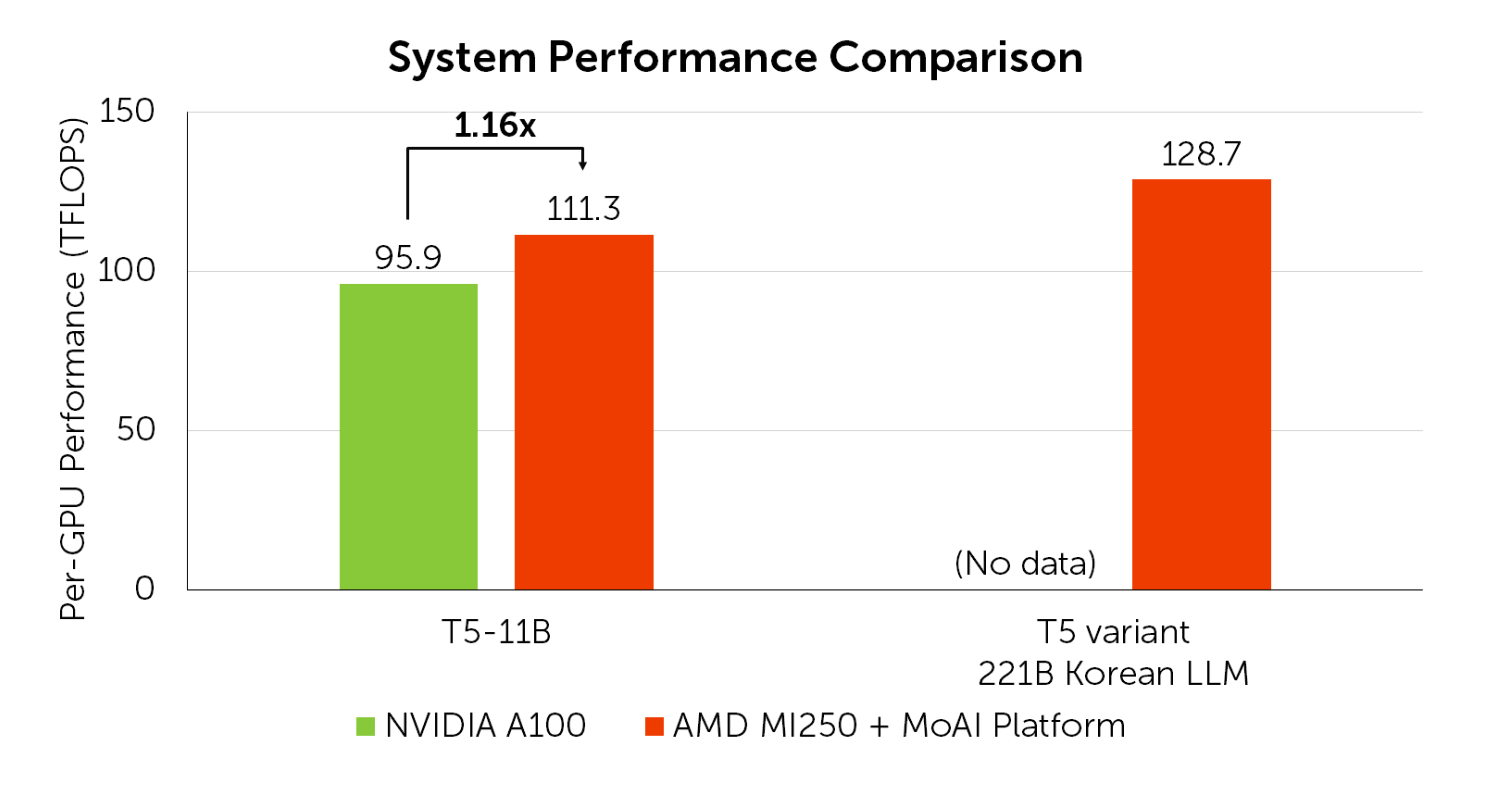
In August, Moreh announced that it has been using AMD MI250X for the longest time and it is outperforming NVIDIA. According to Moreh, AMD’s MI250 Instinct accelerator, when powered by the MoAI platform, achieved 116% higher GPU throughput than NVIDIA’s A100.

“We have been using more than 400 MI250X GPUs along with a few MI300X for training AI models,” said Lim. The company also plans to buy more MI300X from AMD in the future.

“If anyone wants to use AMD GPUs, they can come to us without any code, and just use our software to run on them,” said Lim. This is somewhat similar to what Lamini has been doing in partnership with AMD, but Lim says that there is still a difference in the requirement of codes, as companies can also use their existing GPUs to run their models.

A key aspect of Moreh’s success lies in its software being built on AMD GPU infrastructure, showcasing performance that surpasses NVIDIA GPUs in AI model development. The MoAI platform, a comprehensive software offering, is not tied to a specific hardware vendor and supports various device backends, including AMD GPUs.

“Every configuration or any technique that the customer wants to apply should be easily applied without the need of any programmer. That is what we are aiming to do, and that is what differentiates us,” Lim said.

“If you are building an AI model on a thousand GPUs, there can be issues such as a GPU malfunction because of hardware or software issues,” explained Lim. “The training suddenly stops and it takes hours, or sometimes days to start it again.” He explains that Moreh is also building software and devising techniques to reduce this by parallelising computers to different fragments.

Large language models for the win

Moreh has also finished training its own LLM for the Korean language which consists of 221 billion parameters and wishes to make it open source.

“We are developing something similar to GPT or Gemini, but it is going to be open source.” Lim says that the current model is too big to open source, so Moreh is also planning to release smaller models soon. “Our models would include the code, weights, inference code, and everything else,” Lim highlighted about the recent trend in open source models which come with some or the other restrictions.

In October, AMD and Korean telecommunications (KT) invested a $22 million series B round in Moreh, bringing the valuation of the startup to $30 million. The company also projected its revenue to reach $30 million by the end of 2023.

KT has also bought the largest AMD GPU cluster in the world and are also building AI models using them. “We are supporting all those clusters and cloud systems for KT,” said Lim. KT is starting to focus on GPU cloud provider business, also providing APIs for language models, but which would just be focused on Korean language, not English.

KT, which has been working with Moreh since 2021, claims that Moreh’s technology has demonstrated superior performance compared to NVIDIA’s DGX, specifically in terms of speed and GPU memory capacity.

“People believe that AMD GPUs are not that suited for machine learning, but the company has been increasingly proving them wrong,” concluded Lim.

The post How Moreh is Making AI Software Better with AMD appeared first on Analytics India Magazine.

Top 10 Videos of AIM in 2023: A Year of Data and Insights

Analytics India Magazine (AIM) has been at the forefront of providing valuable content and insights. As we bid farewell to 2023, let’s take a moment to reflect on the top video highlights from AIM that captured the essence of this data-centric year.

  1. Google Data Leaders Exchange | Panel Discussion: Unified, flexible, & accessible: The future of data
    • Premiered: January 6, 2023
    • Views: 28,329
    • Description: Data Leaders Exchange, in association with Google Cloud, brought together leading technology experts to discuss the future of data and best practices for data-driven businesses. Watch the discussion here.
  2. Creating Sustainable Water From Air | Uravu Labs
    • Premiered: June 5, 2023
    • Views: 25,018
    • Description: Uravu Labs, a Bengaluru-based deep-tech startup, uses data and analytics to create sustainable water from the air. Learn how they are making the world more sustainable here.
  3. MachineCon 2023 | Official Aftermovie
    • Premiered: June 28, 2023
    • Views: 24,104
    • Description: MachineCon, India’s largest gathering of analytics and AI leaders, was a grand success. Watch the aftermovie to relive the experience here.
  4. The Women of Genpact
    • Premiered: March 20, 2023
    • Views: 18,151
    • Description: Meet the inspiring women of Genpact and hear their stories of overcoming challenges and achieving success in an organization that values diversity. Watch their stories here.
  5. Meet the Data Scientists at Genpact
    • Premiered: January 16, 2023
    • Views: 11,986
    • Description: Explore the world of data science with Genpact’s top data scientists. This series provides insights into how data science can drive business impact. Watch the series here.
  6. Sureshkumar Rajasekar – We Need To Promote Data Sharing
    • Premiered: January 19, 2023
    • Views: 11,495
    • Description: Sureshkumar Rajasekar, VP Technology at Optum Global Solutions (India), discusses the importance of data sharing for harnessing the power of Machine Learning. Watch the conversation here.
  7. Data-driven Transformation | Google Cloud’s Data Leaders Exchange
    • Premiered: January 25, 2023
    • Views: 11,316
    • Description: AIM Fireside Chat with Google Cloud on “Data-driven Transformation” featuring Raja Sekhar Kommu and Kunal Mathuria. Explore how organizations can harness data for insights and value creation here.
  8. TheMathCompany is certified as a Best Firm For Data Scientists
    • Premiered: January 10, 2023
    • Views: 11,052
    • Description: TheMathCompany’s certification as a Best Firm For Data Scientists showcases their commitment to creating an outstanding employee experience. Learn more here.
  9. Women in Data Science Conference 2023 @intuit
    • Premiered: July 18, 2023
    • Views: 9,969
    • Description: Relive the impactful Women in Data Science conference organized by Intuit, where data scientists shared their expertise and empowered aspiring professionals. Watch the highlights here.
  10. How to use DragGAN AI | Demo
    • Premiered: June 12, 2023
    • Views: 8,558
    • Description: Traditional photo editing tools go as far as to manipulate existing pixels and make changes to what is already present. But with this latest AI-powered tool, it might be safe to say photo editing might go through a never seen before upgrade! Introducing DragGAN AI, the futuristic photo editor! How does it work and how is it different from conventional photo editing apps? Take a look at this video and find out more here.

These videos encapsulate the diverse and dynamic world of data, analytics, and technology. They have educated, inspired, and empowered professionals in their data journeys throughout 2023. Here’s to another year of data-driven excellence with AIM!

Stay tuned for more insights in 2024!

Watch AIM’s YouTube Channel

The post Top 10 Videos of AIM in 2023: A Year of Data and Insights appeared first on Analytics India Magazine.