How Pratik Desai is Sowing AI Seeds in India 

KissanAI’s founder, Pratik Desai, has had a hectic few weeks, working against a tight timeline to unveil Dhenu 1.0, India’s first agricultural LLM. That too before the end of December, as he had to present the model at the GPAI Summit 2023 which took place in India from 12-14 December 2023.

“For seven days, I had 24-hour flights, and for the remaining three days, I was stranded at the airport the whole time.” he said, sharing his experience of showcasing the first version of Dhenu at GPAI Summit, in an exclusive interview with AIM.

Dhenu is an agricultural LLM specifically designed for Indian farmers to assist them with queries related to farming practices. The model is bilingual and can comprehend queries in English, Hindi, and Hinglish, a notable feature that caters directly to farmers’ linguistic needs.

Collaborates with Sarvam AI

The first version of Dhenu is built on top of Sarvam AI’s recently launched model, OpenHathi. Desai said that he tried to fine-tune Dhenu earlier on Mistral 7B, but due to the lack of time (as he had to present his model at the GPAI Summit), he collaborated with Sarvam AI.
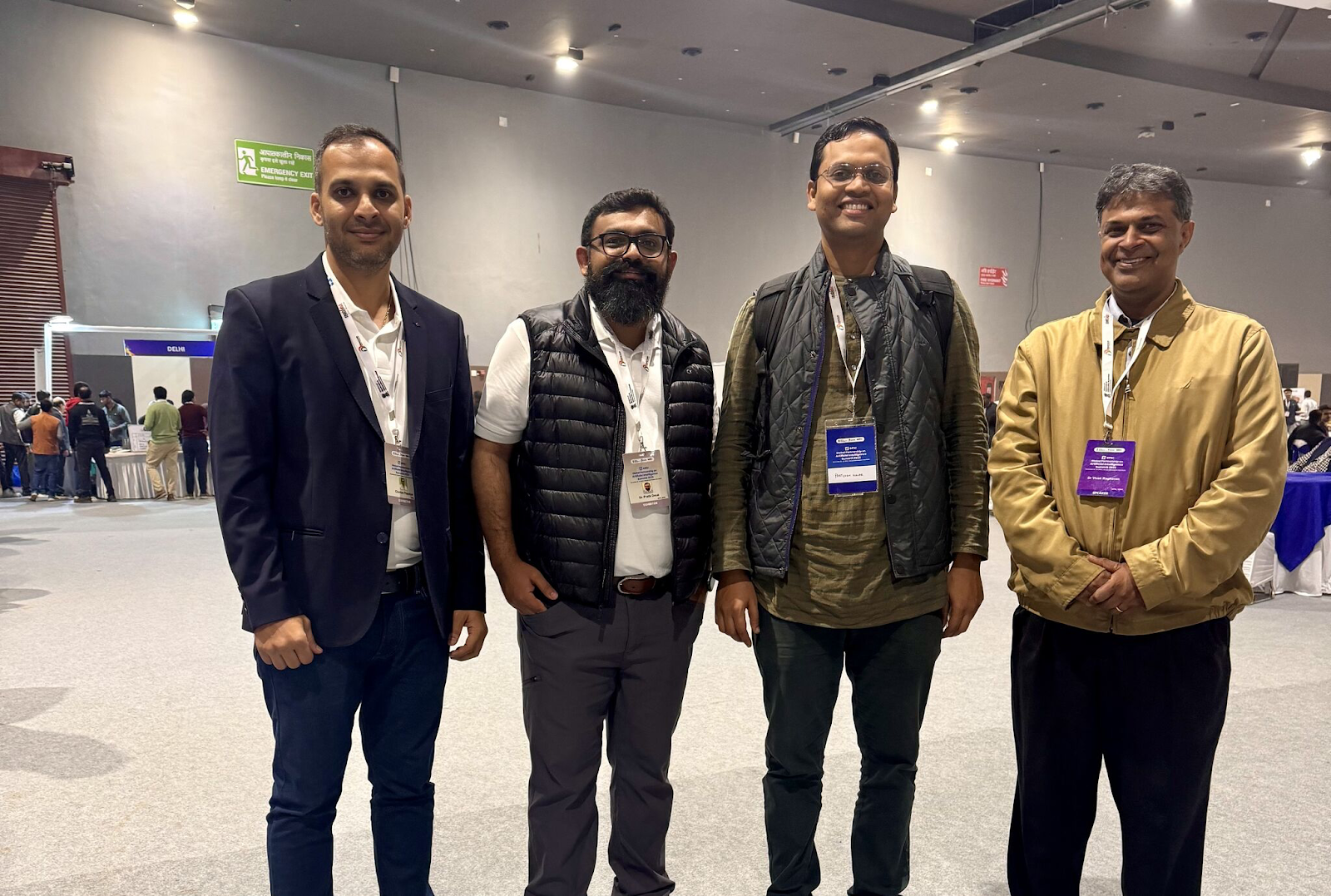
The partnership with Sarvam AI is primarily about compute. “We were in coordination with Sarvam AI, and as soon as OpenHathi became available, we decided to use it,” said Desai. He mentioned that he knew folks at the company beforehand, so collaborating with them was easy.

Moreover, the reason for choosing OpenHathi was that it is a bilingual model, addressing KissanAI’s major problem. “The intention was also to create a Hindi LLM so that Indian farmers could easily use it.” he said.

The Art of Data Collection

Desai said, unlike general-purpose models built to answer generic queries and create witty responses, Dhenu 1.0 serves a different purpose. He mentioned that his team has collected agricultural data from various universities across India, spanning from the north to the south.

Furthermore, he highlighted that Kissan AI has recorded real conversations related to agriculture, providing genuine answers. “We have enough information to start training, and that is making it very domain-specific now,” he added.

The model’s uniqueness lies in its bilingual nature, adeptly processing 300,000 instruction sets in both English and Hindi according to Desai. “300,000 instructions contain Indian agricultural data practices, backed by Indian methods. He mentioned that the model will continue to train on more data in the coming months.

“We have also incorporated geographical information into this instruction set, indicating the origins of the questions,” said Desai. Furthermore, he said that KissanAI has a significant amount of Indic knowledge data, such as literal pictures taken by some Krishi Vigyan Kendra individuals or written documentation by professors.

Subsequently, these materials become instructions for farmers, presented in their own language. “There is a wealth of knowledge traditionally stored in pen-and-paper format, drawings, or manuals that we aim to bring online, convert into AI, and make accessible.” added Desai.

KissanAI’s Business Model

Still in the early days, Desai was quite vocal, and said he hasn’t figured out the business model yet. “I don’t know the strategy right now. I am still thinking about it. There can be an open-source version, along with a pro version,’ he said, explaining that he definitely has plans to sell APIs directly to agriculture companies aiming to build their own co-pilots for agriculture.”

Moreover, Dhenu is not yet available in the market as it is currently undergoing evaluation. “The goal is to have some RAG testing with the model. And, evaluation may take time because we are a small team,” shared Desai.

Desai told AIM that he has plans to take Dhenu outside India as well. He said that some of the companies in Brazil reached out to him to create a similar model for them.

He mentioned that it is easier to build models for other nations as they are more monolithic, unlike India, which has such diversity in terms of language and culture, alongside agricultural practices, as the majority are marginal farmers.

Lastly, when asked about the choice of the name ‘Dhenu,’ he shared “I think it started with people naming all the models with animal names like LLaMA or Hyena. So, we wanted to have a name that follows a sequence because, ultimately, we are a community building on each other’s work.” He said that naming their company Kissan and their model Dhenu makes sense, as both are closely related to agriculture.

The post How Pratik Desai is Sowing AI Seeds in India appeared first on Analytics India Magazine.

8 Major Indian AI Events of 2023

In the Indian tech ecosystem, AI is finally catching up and is expected to grow stronger over the coming years. Right from military hardware to financial software packages, all of them now have AI as an element.

The ripple effects are already being felt, with companies as well as public sector organisations trying to integrate AI in every nook and corner of their resources. In 2023, the AI wave was felt hard due to ChatGPT being popularised and India becoming the second country sending most desktop traffic to the platform.

Out of all the brouhaha happened in 2023, here are 8 major AI events from India:

Ola Puts Out Krutrim

Fresh Off the Press is Ola’s Krutrim, which, as per CEO Bhavish Aggarwal, is “India’s first full-stack AI solution.” The tool translating to ‘artificial’ in Sanskrit has a UI/UX design similar to OpenAI’s ChatGPT. The company’s chief claimed that the model was trained on 2 trillion tokens, can understand over 20 Indian languages and generates content in about ten languages.

While Aggarwal proudly shared the announcement on social media platforms, he was trolled by the audience for releasing the lack of details regarding the model.

OpenAI’s Opening Inning in India

GPT designer OpenAI has announced it will host its first-ever developer gathering in Bengaluru, India, next month. Speaking at a session at the Global Partnership on AI (GPAI) Summit, Anna Makanju, vice president of global affairs at OpenAI, said this gathering will mark the beginning of OpenAI’s involvement in the Indian market.

The company recently hired former Twitter India head Rishi Jaitly as a senior advisor to facilitate talks with the government about AI policy.

A Language Model Learns Hindi

Indian AI startup Sarvam AI released OpenHathi-Hi-v0.1, the first Hindi large language model in the OpenHathi series. The model is an extension of Meta’s Llama2-7B model and performs as well as GPT-3.5 on Indic languages.

The recently set up generative AI startup collaborated with academic partners at AI4Bharat to develop OpenHathi, who provided language resources and benchmarks.

LLM for Indian Farmers is Here

A startup founded by the son of an Indian farmer, KissanAI has built Dhenu 1.0, an agriculture language model. Tailored specifically for Indian agricultural practices, this bilingual model understands English, Hindi, and Hinglish queries to cater directly to farmers’ linguistic needs.

Founder Pratik Desai disclosed that Dhenu 1.0 was trained on datasets focused on agricultural practices. The model’s uniqueness lies in processing 300,000 instruction sets in both English and Hindi.

India to Replicate UPI with AI

Indian Union Minister Rajeev Chandrasekhar, while speaking at a Financial Express event said India has the opportunity to develop something sovereign and unique and in line with the Digital Public Infrastructure (DPI) like Unified Payment Interface (UPI) and Aadhar, in which India has found success. Now, with AI, India wants to take the same DPI approach.

Air India Migrates to Cloud

The country’s flag carrier airline, Air India, has migrated to a cloud-only IT infrastructure, having closed its historic data centres in Mumbai and New Delhi.

This makes it one of the first major global airlines to have moved all computational workloads exclusively to the cloud infrastructure. The shift will result in nearly a million dollars of net savings yearly.

Crack Down on Deepfakes Begin

After the infamous Rashmika Mandana incident, the minister of state for IT, Rajeev Chandrasekhar, announced the appointment of a nodal officer to look at platforms’ safe harbour status.

He also said that the IT ministry would assist aggrieved users of social media platforms in filing FIRs if the need arose. Chandrasekhar announced this after meeting with social media companies, device manufacturers and telecom service providers in the morning.

AI Makes PM Modi Sing

The internet recently became amused at an Instagram Reel where Indian PM Narendra Modi can be heard “singing” a Bollywood song. The singing accompanies a picture of Modi sitting cross-legged, strumming a guitar. The video, made by creator @ai_whizwires using artificial intelligence, has over 3.4 million views.

“Before uploading [it], I was a little scared. But after it went live, everybody enjoyed it,” @ai_whizwires, who didn’t want to be identified by his real name over fear of political backlash (Rest of World).

The post 8 Major Indian AI Events of 2023 appeared first on Analytics India Magazine.
How I use ChatGPT in Opera for far more efficient interactions (and why you should too)

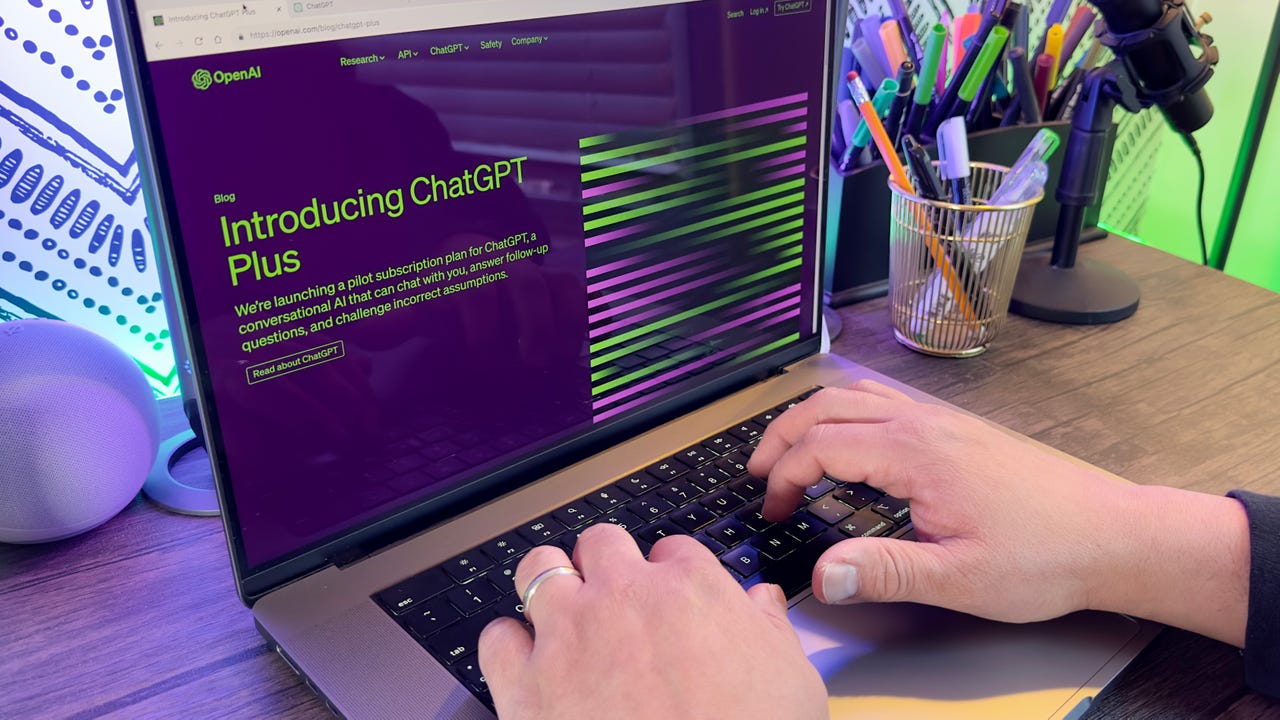
ChatGPT Plus window introduction on a laptop

Some time ago, Opera became my default web browser. The biggest reason for that shift from Firefox was Opera's Workspaces, which make for the best tab management on the market. Recently, I also started using Opera's Aria AI option as a more efficient means of researching. Although I still use Aria, I've also added ChatGPT into the mix because sometimes two voices are better than one.

Also: I replaced Google Search with Opera's Aria AI feature and I don't miss the former one bit

Before I get into this, I want to be clear about my take on AI. I only use AI for one thing and one thing only…research. I have not and will not use AI as a tool to "assist" with my writing. I'm a professional writer and would never lean on a crutch to do my job. And as far as my creative endeavors, AI will never find its way into the mix.

With that said, I want to show you how easy it is to add ChatGPT to Opera. One of the reasons why I like using Opera's take on ChatGPT is that there's no need to install an API key, or any other nonsense. In fact, using ChatGPT with Opera is about as no-brainer as it gets. Yes, you do have to sign up for an OpenAI account (they offer a few accounts), but that's it. I simply signed up with my Google account and was done with it.

If that sounds like something you could benefit from, read on.

Adding ChatGPT to opera

What you'll need: The only thing you'll need is the most recent release of Opera. And because the feature works on Linux, MacOS, and Windows, it doesn't matter which desktop operating system you use. I will demonstrate this on my default Ubuntu Budgie Linux desktop OS. One reason why I preferred to use Opera's take on ChatGPT for Linux is that even the command-line version of ChatGPT isn't reliable. After installing the app, and adding my OpenAI API key, the app failed to function. With Opera, it took me all of thirty seconds to start querying.

You can enable all the AI services you want.

You can either log in with your account or create a new one from here.

Start your interaction with ChatGPT here.

If you don't see your chats archived, click the refresh icon and they'll appear.

It takes a few clicks but you'll eventually find the share menu.

Although the Opera ChatGPT can be a bit fiddly at times, it's certainly better than a lot of other options. Between Aria and ChatGPT, the choice comes down to this: If you use the Opera browser on all of your devices, stick with Aria. If you switch between browsers, go with ChatGPT.

Why? Because if you're always using Aria, you'll have access to your chats from all your browser instances (so long as they are signed in to your Opera account). Otherwise, you can use ChatGPT and access them from the chat.openai.com address.

More on AI tools

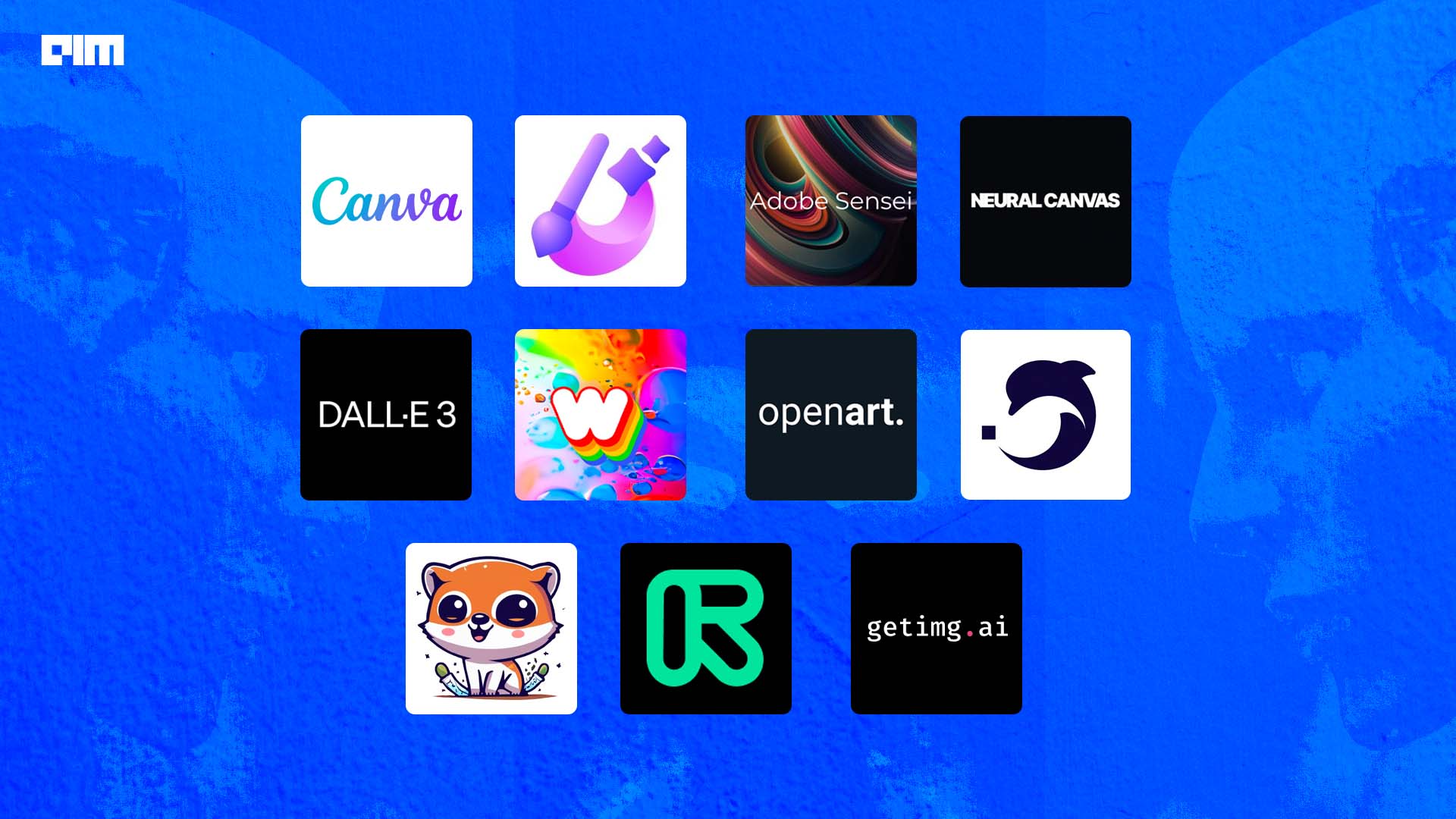
Top 11 Must-use AI Tools for Designing

In today’s rapidly evolving world of design, Artificial Intelligence (AI) tools have become indispensable catalysts for innovation. These tools are specifically designed to enhance efficiency and creativity, thereby redefining traditional design approaches. AI is revolutionizing the way designers work, from automating tasks to unlocking new realms of creativity.

Canva AI magic design

One such tool is Canva’s AI magic design, a graphic design platform that stands out from traditional software like Photoshop by focusing on ease-of-use for everyone. From social media posts to infographics and presentations, Canva’s goal is to help anyone create beautiful designs without any prior design experience.

Canva achieves this through its AI-powered Background Remover tool, which allows users to remove backgrounds with just one click, eliminating the manual process of outlining the object to keep. Some of the new AI-powered tools that Canva offers include:

  • Magic Media,
  • Magic Eraser
  • Magic Edit
  • Magic Grab
  • Magic Expand
  • Magic Morph
  • Magic Write
  • Magic Design
  • Magic Animate
  • Instant Presentations
  • Beat Sync
  • Magic Design for Video
  • Translate
  • Magic Switch

With these tools, Canva makes it easier than ever for anyone to create stunning designs.

Microsoft Designer

Microsoft Designer, also referred to as MS Designer, is an innovative tool developed by Microsoft that harnesses the power of advanced AI technology to effortlessly generate visually stunning graphics and templates for a variety of purposes. Whether you need to create engaging social media posts, eye-catching flyers, or beautiful invitations, MS Designer simplifies the process and empowers you to produce high-quality designs with ease.

With its intuitive interface and robust features, MS Designer is a must-have for anyone looking to elevate their design game.

Some of the best features are:

  • User-friendly interface
  • Customizing design
    • Pre-defined templates
    • Add your media or recommended visuals
    • Generate captions
    • Typography
  • Design navigation
    • Crop and resize images
    • Background Remove and replace
    • Various Effects like blurring the background, adjusting brightness etc.
  • Manage and download files(up to 30 images)
  • Add videos and animations
  • Share content and generate social media hashtags

Adobe Sensei

Adobe Sensei is a sophisticated Artificial Intelligence (AI) and Machine Learning (ML) technology that functions across the Adobe platform, encompassing Adobe Experience Cloud, Creative Cloud, and Document Cloud. While Adobe Sensei caters to a broad range of applications throughout Adobe’s catalog, video editors are most likely to encounter its capabilities in software applications such as Adobe Premiere Pro and After Effects.

The features of Experience Manager powered by Adobe Sensei include:

• Smart Tags

• Smart Crop

• Visual Search

• Automatic Text Summarization

• Expert Scoring

Adobe Experience Manager provides digital marketers with a powerful set of tools to implement digital designs, create and manage digital content across channels, and personalize the user experience on the fly, enabling them to reach audiences and deliver experiences that delight customers.

DALL.E 3

Compared to its previous versions, DALL-E 3 exhibits advanced nuance and detailed recognition, enabling a seamless conversion of your ideas into precise visuals. Conventional text-to-image technology often misses certain words or descriptions, necessitating users to refine the art of prompt engineering.

OpenAI claims that DALL-E 3 has a better understanding of context, and its standout feature is enhanced precision and efficient image generation. DALL-E 3 has taken significant strides in its ability to create visuals that accurately reflect and adhere to the user’s textual descriptions.

The aim was to simplify the generation of images by providing more comprehensive details that closely align with the user’s requirements.

Some of the most important features and capabilities are:

  • Ability to generate unique and creative images based on textual input.
  • Capability to understand complex and nuanced language.
  • Capacity to generate images of objects, animals, and scenes that don’t exist in the real world.
  • Ability to manipulate or combine multiple concepts to create new images.
  • Capability to generate images with varying styles and artistic techniques.
  • Capacity to recognize and adjust to the context of the given input.
  • Ability to generate images with high resolution and detail.
  • Capability to generate multiple variations of the same concept.
  • Capacity to generate images that are consistent with the input.
  • Ability to learn and improve over time through machine learning algorithms.

WOMBO Dream – AI Art Generator

Wombo Dream is a user-friendly text-to-image AI generator that converts your written description of an image into digital artwork. It is ideal for creating digital art for NFTs, social media, marketing materials, or simply for your own entertainment.

Compared to advanced GenAI image generators such as Midjourney, Wombo Dream is more beginner-friendly. With Wombo Dream, you only need to enter your prompt and choose an art style (such as realistic v2, Horror v2, anime, or Steampunk), and the tool will take care of the rest. This approach is particularly helpful if you are not well-versed in art styles from different periods.

This has some pleasing, minimal, and offers a light/dark theme switch. Some key features include:

  • “Wombo offers a free, open-source mobile app for creating frames.
  • You can choose from 90+ art styles, ranging from Buliojourney v2 to Ukiyoe.
  • Wombo has an “edit with text” feature. You can also add your own images and edit those with a text prompt.
  • Wombo offers six text prompt ideas and customizable options to create unique designs without repetition..
  • This tool offers NFT remix, minting, printing, and watermark-free downloads of images and videos.
  • It features a discord community for members.

Deep AI

Deep AI Suite is a software tool that generates images based on text prompts using machine learning. You can create a new image of a robot inspired by Cyberpunk style or other art styles by entering a prompt. However, the free version of the tool has limited capabilities, and the quality of the generated image may not be photorealistic. DeepAI is honest about this and advises users not to expect exceptional quality with the free version.

For beginners, the tool is a great way to learn about AI reinforcement learning and how it works to generate images.

Some of the most important features are:

  • Reducing data dimensionality can speed up machine learning algorithms, especially for complex or large datasets.
  • Removing noise and irrelevant details by reducing features can improve algorithm performance.
  • Overfitting can occur when a model becomes too complex with too many features and may not generalize well to new data.
  • Feature extraction simplifies the model and can help to prevent overfitting, improving its ability to generalize to new and unseen data.
  • Extracting important features can provide insights into the underlying data processes.

OpenArt

OpenArt is a revolutionary platform that utilizes cutting-edge technologies like Stable Diffusion to make the art creation process more accessible to everyone. With the help of AI-generated art, users can break the boundaries of creativity and express themselves in new and exciting ways.

The platform offers a plethora of tools and features to help users bring their artistic visions to life. Whether you’re an experienced artist or a novice, OpenArt has something for everyone. Discover the world of art like never before with OpenArt.

Some of the most important features are:

  • Openart AI offers a wide range of art styles for artists, influencers, and web designers to create AI-generated art that stands out.
  • The Openart AI’s interface is intuitive and user-friendly, eliminating the need for lengthy tutorials. Its straightforward design makes it accessible to both amateurs and professionals..
  • Openart AI offers extensive customization options, including unique colors, themes, and advanced features like stable diffusion effects, providing users with the tools to modify their artwork to the last detail.

Neural Canvas

Neural Canvas is a state-of-the-art digital illustration generator powered by artificial intelligence. This tool utilizes advanced algorithms to create unique, high-quality illustrations that can be used for a wide range of purposes. Whether you’re looking to create eye-catching visuals for your blog posts, e-books, or comics.

With its intuitive interface and powerful features, this tool makes it easy to create stunning illustrations that will captivate your audience and help you stand out in today’s crowded digital landscape.

Some key features of this are:

  • 100 different styles and characters: Choose from a variety of styles and characters to create unique illustrations.
  • Moods and styles for illustrations: Select the perfect mood and style for your illustrations to convey the right message.
  • Main character selection: Pick your main character and customize it to your liking.
  • Create AI Comics: Utilize AI technology to generate comic strips based on your inputs.
  • Publish AI written e-books: Write and publish e-books with the help of AI technology.

AI Comic Factory

If you love reading comics and manga, and enjoy coming up with new storylines, you’ve probably faced challenges when it comes to creating high-quality artwork. Maybe you struggle with getting the proportions of characters right, or find it overwhelming to design backgrounds. But there’s nothing to worry, because there’s a solution on the horizon.

The AI Comic Factory is a cutting-edge innovation that’s changing the game for modern cartoonists.

Some of the features that will make designing comics fun and easy:

  • Create your own comic book with AI assistance by describing scenes in text.
  • Choose from different comic styles and genres, customize characters, backgrounds, speech bubbles, and fonts.
  • Edit and improve the AI-generated comics by modifying text, rearranging panels, adding or deleting elements, and adjusting colors and filters.
  • Share and export your comics as PDF files and browse and rate other users’ comics in the app’s gallery.
  • AI Comic Factory is a free and open-source application designed to showcase the capabilities of AI models.

RunwayML Gen-2

Runway ML is an advanced AI system capable of generating unique videos using text, images, or video clips. In 2023, Runway announced on X that Gen-2 had received an upgrade. Although it is not considered a new major version – which will be Runway Gen-3 – it includes significant enhancements to both text-to-video and image-to-video algorithms. These improvements will improve the quality of the generated videos..

The new features are:

  • The new Motion brush works with image prompts which will turn an image into an animated version of that image.
  • Exclusive to Gen-2, now you can synthesize new videos in any style using nothing but a text prompt.
  • Generate a video in the style of an image you provide alongside a text prompt.
  • Content-guided video synthesis using just an input image.
  • Transfer the style of any image or prompt to every frame of your video.
  • Turn mockups into fully stylized and animated renders.
  • Isolate subjects in your video and modify them with simple text prompts.
  • Turn untextured renders into realistic outputs by applying an input image or prompt.
  • Unleash the full power of Gen-2 by customizing the model for even higher fidelity results.

GetIMG.AI

Getimg.ai is an amazing AI-powered tool that can help you create stunning images effortlessly. It comes packed with incredible AI art tools that enable you to generate original images, modify existing ones, and even expand them beyond their original borders.

Whether you’re a beginner or a pro, this image generator and editor can help you create visually appealing content in no time.

Some of the key features are:

  • DreamBooth will train custom AI models for more personalized results.
  • Outpainting generates new scenery or elements that blend seamlessly.
  • Inpainting will remove unwanted objects, text, watermarks, etc., from images easily.
  • Image-to-Image manipulatea existing images in different ways using text prompts.
  • ControlNet easily adjust parameters like pose and lighting for precision editing.
  • Fix Faces automatically improve facial features and expressions in portraits.

The post Top 11 Must-use AI Tools for Designing appeared first on Analytics India Magazine.

Apple Quitely Unveils Open-Source Multimodal LLM, Ferret 

Apple

Two months back, Apple, in collaboration with Columbia University, quietly unveiled Ferret, a new multimodal large language model adept at referring and grounding.

Check out the GitHub repository here.

Ferret can refer to image regions in any free-form shape and automatically establish grounding for text deemed groundable by the model.

I somehow missed this. @Apple joined the open source AI community in October. Ferret’s introduction is a testament to Apple’s commitment to impactful AI research, solidifying its place as a leader in the multimodal AI space. Way to go @Apple – ps: I'm looking forward to the day… https://t.co/Pi1kQrsVvx

— Bart de Witte (@OpenMedFuture) December 23, 2023

The researchers have curated the GRIT dataset for model training. The dataset includes 1.1 million samples that contain rich hierarchical spatial knowledge, with 95K hard negative data to promote model robustness.

They also said that the resulting model achieved superior performance in classical referring and grounding tasks and greatly outperformed existing MLLMs in region-based and localisation-demanded multimodal chatting.

“Our evaluations also reveal a significantly improved capability of describing image details and a remarkable alleviation in object hallucination,” the researchers said that Ferret, like most MLLMs, may produce harmful and conunterfactual reponses.

Citing LISA, the researchers said they plan to enhance Ferret to output segmentation masks and bounding boxes.

The Significance of Ferret’s Stealthy Debut

Apple’s strategic move to release Ferret without a formal announcement speaks volumes about the company’s dedication to staying at the forefront of multimodal AI. The unexpected embrace of open-source development departs from Apple’s traditional closed-door approach, setting the stage for potential collaboration and community-driven advancements.

Talking about its functionality, it is elegantly simple yet powerful. Beyond identifying elements within an image, the model draws connections to formulate responses to user queries. This opens up possibilities in image search, accessibility, and other applications where nuanced contextual understanding is crucial.

Ferret’s versatility is further enhanced by a spatial-aware visual sampler capable of handling various sparsity patterns associated with different shapes. Ferret accommodates diverse regional inputs, including points, bounding boxes, and free-form shapes.

The post Apple Quitely Unveils Open-Source Multimodal LLM, Ferret appeared first on Analytics India Magazine.
2024 is the Year of AMD

2024 is the Year of AMD

AMD has surely taken a stance to bolster itself for 2024. Starting from its partnership with leading companies such as Microsoft, Oracle, and Meta for using MI300X; spearheading AI PC revolution with Ryzen AI; and software play with ROCm; the company is super optimistic about the future, tapping into the AI boom.

“I think what we’ve seen is the adoption rate of our AI solutions has given us confidence in not just the Q4 revenue number, but also sort of the progression as we go through 2024,” said Lisa Su, the CEO of AMD.

Su announced at a recent earnings call that AMD is expecting a revenue of $400 million from GPUs in the fourth quarter, and exceed $1 billion by the end of 2024. “This growth would make MI300 the fastest product to ramp to $1 billion in sales in AMD history,” she said.

Su expects the data centres AI market will now be around $400 billion by 2027 — a 2.7 times more than her previous estimation of $150 billion in the same time period.

Su highlighted that the market is huge and there will be multiple winners in this market. “From our standpoint – we’re playing to win and we think the MI300 is a great product, but we also have a strong road map beyond that for the next couple of generations.”

“But overall, I would say that I am encouraged with the progress that we’re making on hardware and software and certainly with the customer set,” she said.

Ryzen AI PCs

Leading OEMs such as Acer, Asus, Dell, HP, Lenovo, and Razer are set to feature the Ryzen 8040 Series processors announced at the event. This was along with Ryzen AI 1.0 software for seamless deployment of models on the hardware making it more convenient for users to harness the power of AI in various computing scenarios.

The significance of the mobile phone CPU market is likely to grow as well, especially with the presence of formidable competitors. AMD’s emphasis on Chiplet technology has proven beneficial, evident in its lower waste rate compared to Intel’s monolithic approach. Intel has also acknowledged this advantage and introduced its initial Chiplet lineup, Meteor Lake, which is still new.

In PCs, there are now more than 50 notebook designs powered by Ryzen AI in the market, said Su. “We are working closely with Microsoft on the next generation of Windows that will take advantage of our on-chip AI Engine to enable the biggest advances in the Windows user experience in more than 20 years.”

AMD still holds the upper hand due to its longer and more profound experience with this technology.

Then it’s about GPUs

“People believe that AMD GPUs are not that suited for machine learning, but the company has been increasingly proving everyone wrong,” Jungwhan Lim, head of AI group at Moreh told AIM. AMD GPUs seem to have witnessed a surge in community adoption, proving their mettle in the field of AI.

The testimonial from Moreh is just one. There are several AI companies and startups that are partnering with AMD to prove its prowess in the market. Databricks, the company giving close competition to big players in the AI race, has been testing AMD GPUs for the whole of 2023, and it revealed the secret only later. Same is the case with Lamini, another partner of AMD.

All of these companies narrate a similar story of how AMD is definitely rising up because there is a shortage of GPUs in the market. Gregory Diamos, co-founder of Lamini, said, “we have figured out how to use AMD GPUs, which gives us a relatively large supply compared to the rest of the market.”

Not just GPUs, AMD is strategically partnering with the Ultra Ethernet Consortium (UEC) to enhance its inter-chip networking technology and challenge NVIDIA’s dominance. The collaboration involves incorporating Broadcom’s next-gen PCIe switches, supporting AMD’s Infinity Fabric technology for improved data transfer speeds between CPUs.

The open software approach

Su also highlighted that Lamini is enabling enterprise customers to easily deploy production-ready LLMs fine-tuned for their specific data on Instinct MI250 GPUs with minimal code changes. Lamini co-founders claimed that they have the most competitive perf/$ on the market right now, “because we figured out how to use AMD GPUs to get software parity with CUDA, trending beyond CUDA.”

Then comes the software approach. It has been intensively discussed that NVIDIA’s real moat for AI has always been CUDA, its parallel computing framework. But AMD is closing in slowly, but surely with ROCm, and it has made its focus. “As important as the hardware is, software is what really drives innovation,” Lisa Su said, talking about the ROCm.

For this, the company has partnered with Nod.ai and Mipsology, which is helping the company build its software stack on par with NVIDIA.

“ROCm runs out of the box from day one,” said Ion Stoica, co-founder of Databricks, highlighting it was very easy to integrate it within Databricks stack after the acquisition of MosaicML, with just a little optimisation. “We have reached beyond CUDA,” said Sharon Zhou, the co-founder of Lamini, and how ROCm is production-ready.

All of this is while NVIDIA is planning to release GH200 AI accelerators starting the first quarter of 2024. Though on performance, CUDA can be touted as better than ROCm, but AMD is hell-bent on making its offering better.

The post 2024 is the Year of AMD appeared first on Analytics India Magazine.

Anthropic Sets New Legal Standards in Generative AI

In a significant development within the generative AI landscape, Anthropic, a rising star in AI technology, has updated its terms and conditions to offer robust legal protection for its commercial clients. This move comes amid swirling rumors of a massive $750 million funding round poised to further propel the company's growth. By providing indemnification against copyright lawsuits for users of its generative AI chatbot, Claude, and other enterprise AI tools, Anthropic aligns itself with industry giants like Google and OpenAI, positioning itself as a strong contender in the competitive AI market.

This strategic decision not only offers legal cover similar to that provided by other synthetic media providers like Shutterstock and Adobe but also signals stability and reliability—a crucial factor in attracting and assuring investors.

As the generative AI industry rapidly evolves, navigating the intricate web of intellectual property rights becomes increasingly essential. Anthropic’s initiative to safeguard its paying customers reflects a deep understanding of these complexities and a commitment to fostering a secure environment for innovation and creativity in AI-driven content generation.

Anthropic’s Legal Protection for AI-Driven Content Creation

The core of Anthropic's recent policy update is a comprehensive legal protection plan for its commercial clients. This indemnification is a critical response to the burgeoning demand for services like chatbots and content generation tools, where lawful use often treads a fine line amid intellectual property debates. With this move, Anthropic steps up to defend its clients from accusations that their use of Anthropic’s services, including any synthetic media or other generative AI outputs produced on the platform, violates intellectual property rights.

The updated terms are a bold statement in the AI industry, setting Anthropic apart as a provider that not only delivers cutting-edge AI tools but also ensures its clients can use them without the looming threat of legal disputes.

“Our Commercial Terms of Service will enable our customers to retain ownership rights over any outputs they generate through their use of our services and protect them from copyright infringement claims,” Anthropic explains.

This promise of defense and coverage for settlements or judgments is a significant assurance for businesses relying on AI for content creation, fostering a sense of security and trust.

However, the protection has its boundaries, excluding misconduct violations and modifications to Anthropic’s systems. It’s also exclusive to paying API users, delineating a clear line between free and premium services. Anthropic’s decision underscores the company’s long-term commitment to its clients and the generative AI industry, even as it braces for a potential influx of investment and expansion in the near future.

Anthropic’s Expansion and Technical Advancements

Anthropic is poised for significant growth, fueled not only by its recent policy updates but also by substantial financial backing. The company's rumored $750 million funding round follows a pattern of impressive capital raises, including $100 million in August and $450 million in May.

This influx of investment suggests confidence in Anthropic's vision and capabilities, positioning the company for ambitious expansion plans. The focus on enhancing API access and introducing new features like the Messages API indicates a strategic emphasis on broadening the utility and accessibility of its AI offerings.

The technical evolution of Anthropic's AI tools, particularly the generative AI chatbot Claude 2.1, is another critical aspect of the company's growth. This latest iteration of Claude boasts significant improvements in AI comprehension and a reduction in erroneous outputs, known as ‘hallucinations.' By doubling the token context window from 100,000 in Claude 2.0 to 200,000 in Claude 2.1, Anthropic enhances the chatbot's ability to process and understand more complex user interactions. Additionally, the introduction of features like tool use for workflows via external APIs and databases, along with a new system for custom prompts, marks a leap forward in the chatbot's functionality and versatility.

Implications for the Generative AI Industry

Anthropic's recent updates and expansion have significant implications for the generative AI industry at large. By offering legal protection to its clients, Anthropic sets a new standard in the industry, potentially influencing how other AI companies approach the legal aspects of their services. This move could lead to a more secure and legally compliant environment for AI-driven content creation, benefiting both providers and users.

The company's technical advancements, particularly in its flagship chatbot Claude 2.1, also contribute to raising the bar for AI capabilities. As AI tools become more sophisticated and user-friendly, they are likely to see increased adoption across various sectors, spurring innovation and creativity. Anthropic's focus on improving comprehension and reducing errors could become a benchmark for other AI tools, driving competition and further innovation in the industry.

Furthermore, Anthropic's expansion and technical upgrades are likely to influence market dynamics and user trust in generative AI. As more businesses and creators seek AI solutions for content generation, tools that offer both advanced capabilities and legal safeguards will likely be at the forefront of choice. This trend could shape the future of AI development, with an emphasis on creating AI that is not only powerful and versatile but also legally sound and reliable.

9 Gifting Ideas For Your Tech Bros 2023

Once again, it’s that time of the year when we enjoy spending time with loved ones, shopping for presents for them, and expressing our gratitude with these budget-friendly lists of gifts. Tech bros are no exceptions.

Give your tech buddy or developer friend a present from this amazing list.

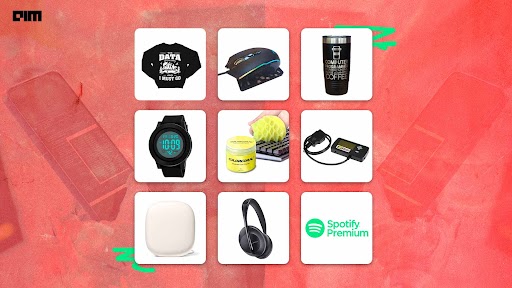
The Data Is Calling, And I Must Go – Sweatshirt

Are you trying to find the ideal gift for a coder? This is the perfect option: the Standard Crew Neck Sweatshirt. For programmers who appreciate both style and usefulness, this cozy and adaptable hoodie is ideal.

Their passion for coding is evident in its straightforward and tidy design. This silky, long-lasting, and high-quality sweater will keep them warm throughout extended coding sessions. This sweatshirt is a useful and stylish present that will make any coder pleased, whether they wear it to work or on a casual stroll.

Mouse Jiggler

This Jiggler mouse should be on your present list if you want to offer a coder or developer something unique. When your loved ones receive it, they might feel inspired and happy. So let’s seize it right away.

To keep your computer running while you are away from it, the Mouse Jiggler moves the cursor across your screen. It is a standalone device that doesn’t need any additional USB connections, software, or external power. This allows you to take time off from the computer without appearing on any employee tracking program. Simply and easily operated by resting your mouse atop the apparatus.

Computer Programmer Steel Tumbler

With this tumbler etched with programming, finding a fantastic gift for a programmer is not as difficult. Let’s get it so your favorite developer or coder is surprised.

With its open port lid and dual walls, this vacuum-insulated stainless steel mug will maintain the ideal temperature for your beverages. The conventional lids have an open port drinking hole that is convenient for straws. They have sliding lids under their choices and add-ons area. The bottom of the 20- or 30-oz mugs is narrower to accommodate the majority of common cup holders.

Men’s Digital Sports Watch

Casual military outdoor design and simple minimalism fashion with a comfortable silicone rubber watch band make it a perfect present for your developer friend or coder. This waterproof watch is suitable for both indoor and outdoor sports, such as running, hiking, biking, fishing, climbing, and more. With an imported EL lamp, whether in the dark or under the sun, they can see the time clearly and find it easy to read.

Cleaning Gel Universal Dust Cleaner

For a coder or developer, a gift should be related to computer equipment, right? Then you can give your colleague this cleaning gel kit to clean the dust on the keyboard.

This universal dust cleaner is made of biodegradable gel, not sticky to hands, smells sweet with a lemon fragrance, and causes no skin irritation. Ensure your hands are dry and clean before touching this gel. The keyboard cleaning gel can be used repeatedly until the color turns dark.

Jet Performance Jet 15008 Performance Programmer

If you are searching for a practical and useful present for someone who is a coder, try to have a look at this performance programmer.

With three different performance tunes, it adjusts the correct speedometer for tire or gear changes. The JET performance programmer plus lets them take control and program their vehicle computer to match their driving style. It allows them to program for performance using lower-cost regular octane fuel or, for optimal performance gains, they can program for midgrade or premium fuels.

Google Nest Wifi Router

These make great gifts for hackers who love to grab their laptop and code from anywhere in the house.

Does a coder in your life work from home? For anyone whose house has annoying wifi “dead zones,” Nest Wifi plugs into modems to provide up to 2200 square feet of strong, reliable internet.

Bose Noise Canceling 700 Headphones

Noise-canceling headphones are among the best gifts for programmers who need peace and quiet to get work done.

These are some of the top noise-canceling headphones on the market, with 11 levels that let you decide whether to block all sound or allow ambient sounds. You’ll get up to 20 hours of battery life per charge and easy access to voice assistants like Alexa and Google Assistant.

Spotify Premium Subscription

Someone who loves both music and coding.

Background music might actually improve our performance on cognitive tasks. By giving your techie friend the gift of music to program to, you could actually help them be more productive!

The post 9 Gifting Ideas For Your Tech Bros 2023 appeared first on Analytics India Magazine.

Data Science Hiring Process at Lendingkart

Founded in 2014 by Harshardhan Lunia, Indian digital assembly fintech lender Lendingkart utilises a data-powered credit analysis system to facilitate online loans, aiming to improve accessibility in small business lending. The company’s proprietary underwriting mechanism utilises big data and analytics to evaluate the creditworthiness of borrowers.

The company has so far disbursed over $1 billion in loans in over 1300 cities in the country, especially in Tier 2 and Tier 3 cities. The company, which recently reported its first-ever profits, a sum of Rs 118 crore, with total revenues reaching Rs 850 crore in FY23, specialises in providing unsecured business loans to micro, small, and medium-sized enterprises (MSMEs).

The fintech company is backed by Bertelsmann India Investments, Darrin Capital Management, Mayfield India, Saama Capital, India Quotient and more.

“Data science has always been at the heart and center of our operations. The AI/ML-based underwriting that this team has developed has been used to underwrite over one million MSMEs,” said Dhanesh Padmanabhan, chief data scientist, Lendingkart, in an exclusive interaction with AIM.

The 35-member data science team of the Ahmedabad headquartered firm is organised into three main groups: analytics, underwriting modelling, and ML engineering. The analytics team, with approximately 15 members, is further divided into three sub-teams focusing on revenue, portfolio (credit and risk), and collections.

“One of the key challenges addressed by our team at Lendingkart is credit risk management where we employ a combination of analytics and AI/ML models at different stages of the underwriting and collections processes to assess eligibility, determine loan amounts and interest rates, and ensure timely customer payments or settlements,” he added.

This underwriting modeling team consists of about 5 members dedicated to developing underwriting models, while the 10-member ML engineering team focuses on MLOps, feature store development, and AI applications.

Additionally, there are individual contributors like an architect and a technical program manager, along with a two-member team specializing in setting up the underwriting stack for the newly established personal loan portfolio.

The company has open positions for senior data scientist and associate director in Bengaluru.

Inside Lendingkart’s AI & Analytics Team

The team leverages AI and ML across various functions, for example, in outbound marketing to target existing customers and historical leads through pre-approved programs. Additionally, a lead prioritization framework helps loan specialists focus on leads for calling and digital engagement.

The company also employs an intelligent routing system to direct loan applications to credit analysts, and a terms gamification framework aids negotiation analysts in negotiating interest rates with borrowers. Its fraud identification framework flags potentially manipulated bank statements for further review, and a speech analytics solution is deployed to extract insights from recorded calls for monitoring operational quality.

On the other hand, collections models prioritize collections based on a customer’s likelihood of entering different delinquency levels, and computer vision models are used for KYC verification.

“We are also exploring the use of generative AI for marketing communication, chatbots, and data-to-insights applications,” said Padmanabhan. Moreover, there are plans to build transformer-based foundational models using call records and structured data sources like credit histories and bank statements for speech analytics, customer profiling, and underwriting purposes.

The tech stack comprises SQL running on Trino, Airflow, and Python. For ML tasks, they leverage scikit-learn, statsmodel, scipy, along with PyTorch and TensorFlow. Natural language processing and computer vision applications involve the use of transformers and CNNs.

The API stack is powered by fast API’s deployed on Kubernetes (k8s). In ML Engineering, the team prefers Kafka and Mongo. Additionally, there are applications built on Flask and Django, and they are currently developing interactive visualizations using the MERN stack.

Interview Process

Lendingkart’s data science hiring process includes four to five interview rounds, evaluating candidates with strong backgrounds in analytics, modelling, or ML engineering. In leadership roles such as team leads and managers, the company places emphasis not only on technical proficiency but also on crucial skills in team and stakeholder management.

During the interview process, non-managerial candidates undergo initial technical assessments in SQL, Python, or ML. Subsequent rounds explore general problem-solving and soft skills, with assessments conducted by peers, managers, and HR.

Expectations

Upon joining the team, candidates can expect to participate in a diverse range of projects encompassing revenue, risk, collections, and the development of tech and AI stacks for these applications. Collaboration with various stakeholders remains a significant aspect of the role. For example, the development of a new underwriting algorithm involves comprehensive reviews with risk and revenue teams to align with business objectives, followed by collaboration with product and ML engineering teams for successful implementation.

However, Padmanabhan notes that there is a common mistake which candidates make – they overlook the importance of thoroughly understanding the business context of the given problems.

“While they may possess knowledge of various algorithms used in different domains, they may struggle to articulate solutions or approaches when those algorithms are applied within a financial process context,” he added, highlighting the importance of connecting technical expertise with a deep understanding of the specific business challenges at hand.

Work Culture

“Our work culture is fast-paced and dynamic, characterised by group problem-solving focused on specific business goals with competitive ESOP packages and industry-standard insurance,” said Padmanabhan.

The data science team operates hands-on at all levels, adopting best practices like agile and MLOps. The “hub and spoke” approach involves data scientists taking responsibility for the entire process from conceptualization to implementation, distinguishing the work culture from competitors in the space.

At Lendingkart, you’ll collaborate closely with stakeholders on projects like developing underwriting algorithms. The company maintains a well-established agile practice led by the technical program manager and team leads, focusing on efficient planning, best practices, and clear communication to create a productive work environment. So if you think you are fit for this role, apply here.

The post Data Science Hiring Process at Lendingkart appeared first on Analytics India Magazine.

Back to Basics Pathway

Back to Basics Pathway
Image by Author

A lot has happened in the year 2023 and some of you are probably considering transitioning into a data science career. You may be wondering where to start. What course should I take? Do I need to know something beforehand?

This is where KDnuggets is here to help answer all those questions!

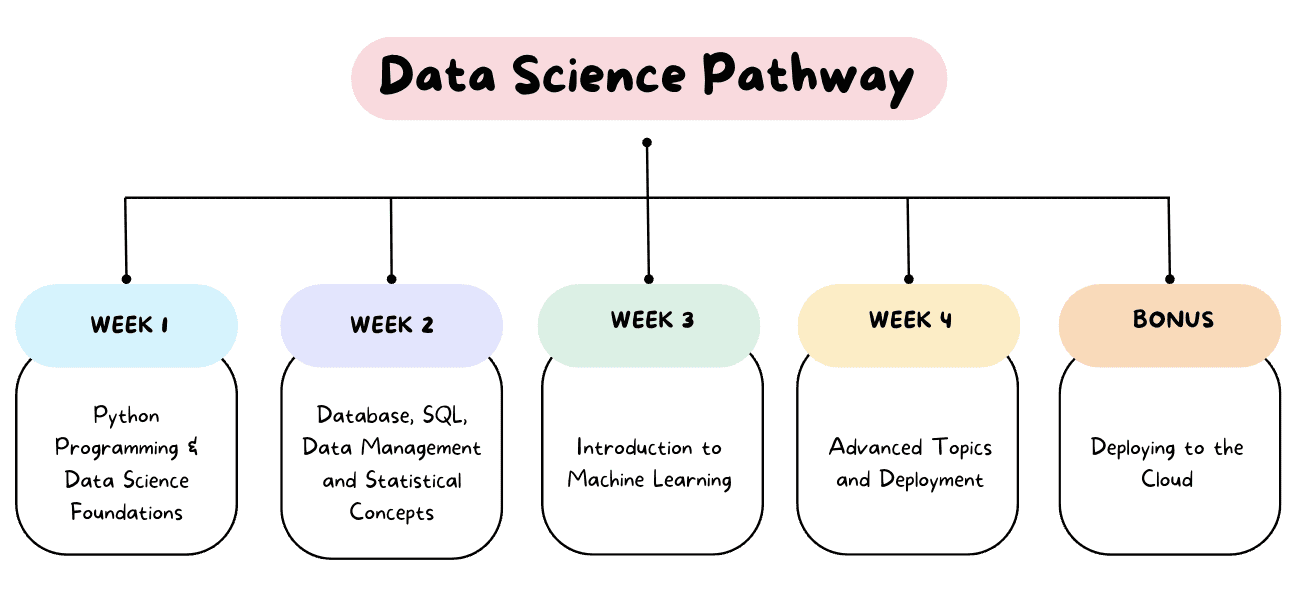
The KDnuggets team have created a data science pathway for all of our readers to benefit, regardless of their walk of life.

Want to know more?

Week 1: Python Programming & Data Science Foundations

Link: Python Programming & Data Science Foundations

In the first week, we will be learning all about Python, Data Manipulation, and Visualisation.

Day 1 to 3: Python Essentials for Aspiring Data Scientists

  • An introduction to Python's role in data science.
  • A beginner-friendly guide to Python's syntax, data types, and control structures.
  • Interactive coding exercises to solidify your understanding.

Day 4: Python Data Structures Demystified

  • Learn about Python's core data structures with our step-by-step guide. You'll learn about lists, tuples, dictionaries, and sets each with practical examples and their significance in data processing.

Day 5 to 6: Practical Numerical Computation with NumPy and Pandas

  • Discover the power of NumPy and Pandas for numerical analysis and data manipulation, including real-world applications and hands-on exercises.

Day 7: Data Cleaning Techniques with Pandas

  • Equip yourself with essential data-cleaning skills using Pandas.

Week 2: Database, SQL, Data Management and Statistical Concepts

Link: Database, SQL, Data Management and Statistical Concepts

Moving onto the second week, we will learn about Database, SQL, Data Management and Statistical Concepts.

  • Day 1: Introduction to Databases in Data Science
  • Day 2: Getting Started with SQL in 5 Steps
  • Day 3: Data Management Principles for Data Science
  • Day 4: Working with Big Data: Tools and Techniques
  • Day 5: Statistics in Data Science: Theory and Overview
  • Day 6: Applying Descriptive and Inferential Statistics in Python
  • Day 7: Hypothesis Testing and A/B Testing

Week 3: Introduction to Machine Learning

Link: Introduction to Machine Learning

Moving onto the third week, we will dive into machine learning.

  • Day 1: Demystifying Machine Learning
  • Day 2: Getting Started with Scikit-learn in 5 Steps
  • Day 3: Understanding Supervised Learning: Theory and Overview
  • Day 4: Hands-On with Supervised Learning: Linear Regression
  • Day 5: Unveiling Unsupervised Learning
  • Day 6: Hands-On with Unsupervised Learning: K-Means Clustering
  • Day 7: Machine Learning Evaluation Metrics: Theory and Overview

Week 4: Advanced Topics and Deployment

Link: Advanced Topics and Deployment

Moving onto the third week, we will dive into advanced topics and deployment.

  • Day 1: Exploring Neural Networks
  • Day 2: Introduction to Deep Learning Libraries: PyTorch and Lightening AI
  • Day 3: Getting Started with PyTorch in 5 Steps
  • Day 4: Building a Convolutional Neural Network with PyTorch
  • Day 5: Introduction to Natural Language Processing
  • Day 6: Deploying Your First Machine Learning Model
  • Day 7: Introduction to Cloud Computing for Data Science

Bonus Week: Deploying to the Cloud

Link: Deploying to the Cloud

Moving onto the bonus week:

  • Bonus 1: Getting Started with Google Platform in 5 Steps
  • Bonus 2: Deploying your Machine Learning Model to Production in the AWS Cloud

That's a wrap!

And just like that, you have gone through a 5-week pathway to kickstart your data science career! The team at KDnuggets hope we have equipped you with the knowledge and tools that you need to progress your data science career!

Let us know what you enjoyed in the comments!

Nisha Arya is a Data Scientist and Freelance Technical Writer. She is particularly interested in providing Data Science career advice or tutorials and theory based knowledge around Data Science. She also wishes to explore the different ways Artificial Intelligence is/can benefit the longevity of human life. A keen learner, seeking to broaden her tech knowledge and writing skills, whilst helping guide others.

More On This Topic

  • Back To Basics, Part Dos: Gradient Descent
  • Back to Basics Week 1: Python Programming & Data Science Foundations
  • Back to Basics Week 3: Introduction to Machine Learning
  • Back to Basics Week 4: Advanced Topics and Deployment
  • Back to Basics Bonus Week: Deploying to the Cloud
  • Back to Basics Week 2: Database, SQL, Data Management and…