Agile Intelligence: AI gives tech and business collaboration a much-needed boost

Three people talking in an office

The Agile movement — which encourages close, iterative work between technology and business teams — is taking an intriguing turn. Artificial intelligence (AI) has the promise to step in, help keep everyone in sync, and free up developers and IT professionals, so they can spend more time running the business.

The impact of AI has the potential to be the most interesting development in Agile since the practice was first outlined two decades ago. In the future, we might be talking another kind of AI — Agile Intelligence.

Also: Five ways to use AI responsibly

Importantly, the impact of AI on Agile works both ways. Just as AI is impacting Agile, you also need an Agile philosophy to build and run AI-based systems. But where AI and Agile are used in combination, there's the potential for businesses to supercharge their software design and development processes.

"Artificial intelligence brings developers, operations, and users closer together through faster access to knowledge, streamlined workflows, and automated processes," says Margaret Lee, senior vice president and general manager of digital service and operations management at BMC.

Also: The best AI chatbots: ChatGPT and other noteworthy alternatives

Perhaps the most compelling benefit of AI-boosted collaboration is the time given back to both tech teams and users. "AI can help with many administrative activities, so it automatically gives us more time for collaboration," says Keith Farley, senior vice president at Aflac.

He says AI essentially serves "as a type of superpower collaborator": "For instance, when you bring two people together, you have two people's thoughts, experiences and personalities to contribute to the discussion. If you have four people, then that's four, and so on. But when you pull up a seat for gen AI, it's like adding the thoughts and attitudes of a million diverse people to your discussion."

Bringing these varied thoughts to discussions "will allow us to look more widely and understand diverse viewpoints beyond our own biases, which can result in better products and outcomes," Farley adds.

Many IT professionals are intrigued by the potential of AI-boosted collaboration and are already experimenting, says BMC's Lee. "AI innovations and use cases, whether generative, causal, correlation, predictive — or all working together via composite AI — are currently happening," she says.

"AI-powered automation improves the developer experience by simplifying and accelerating their work with improved change management. AI automatically shares insights across teams, such as DevOps and SREs, to foster greater collaboration for new applications and process improvements."

Also: AI brings a lot more to the DevOps than meets the eye

AI can help to "drive collaboration and innovation at scale," agrees Varun Parmar, chief operating officer at Miro. "The biggest roadblocks to innovation are technological challenges, like legacy tools and organizational challenges, especially those related to cross-functional collaboration. Fear gets in the way of innovation, and companies are afraid to prioritize innovation."

An example of AI-boosted collaboration in action is "cross-team collaboration through predictive identification and auto-remediation of incidents before they occur while identifying the root-cause analysis of issues," says Lee. "AI is also improving collaboration by automating workflow management across departments, such as HR employee onboarding."

The net result of this effort is that AI is "eliminating the tedious overhead tasks that often plague teams across companies," says Miro's Parmar. "This means finding the best software to perform tasks like creating technical diagrams, interpreting code, and clustering and summarizing content."

With AI in the mix, "teams are spending less time on administrative tasks that drain momentum and concentration, and more time in the innovation and collaboration phases of a project," Parmar adds. "It helps eliminate knowledge gaps for participants during brainstorming and facilitates a deeper research dive into consumer behavior trends that shape business or product decisions. It eliminates the human research bias in just seconds, rather than hours or days."

Also: Generative AI and machine learning are engineering the future in these 9 disciplines

Lee says that one of the most important emerging tools for IT departmentsis is artificial intelligence for IT Operations (AIOps). AIOps helps to "monitor the operations environment in real time, automatically seeing and responding to incidents before they affect the enterprise," she says. As part of the process, AIOps enables root cause analysis and real-time incident correlation.

AI also promotes change management, "analyzing relevant data and processes, mitigating risk, and advancing DevOps," Lee continues. Integration with DevOps tooling, "links change requests with the software development lifecycle, and imports CI/CD pipeline stages, enabling direct communication between change managers and developers."

However, AI does bring some risks to IT operations, Lee cautions. "If you look at generative AI, it promises to automate processes that reduce the work of gathering and correlating data across industries," she says. "Organizations and customers can achieve a level of digital operational efficiency never seen before, but, in the case of enterprise use cases, AI models need to be trained on internal data sets."

While generative AI "offers significant benefits, such as customer experience and streamlining IT operations, it must be implemented thoughtfully," says Lee. "You need to understand the limits of AI and ensure proper training to avoid challenges down the road."

Also: AI in 2023: A year of breakthroughs that left no human thing unchanged

Lee is particularly concerned about the implications for data quality and integrity. "If companies apply AI and ChatGPT in the wrong use cases and with bad data, there can be severe consequences, such as misuse, flawed outputs, or leakage of sensitive data," she warns. "This can cause business disruptions, compromised data integrity, and customer dissatisfaction. There are also issues with how models are trained over time — if they feed on self-generated data, it could lead to model collapse."

However, Lee predicts most technology products and services will incorporate generative AI capabilities during the next 12 months, "introducing conversational ways of creating and communicating with technologies, leading to their democratization. AI solution technologies can provide Agile teams with clear, actionable insights, pinpoint risks, and provide recommendations to resolve problems."


Artificial Intelligence

Apple Has AI Plans, Without the Marketing Noise

Billions of dollars have been tossed on the generative AI gamble and the companies made sure the numbers were big enough to make it to media publications across the globe. Besides keeping an eye on AI developments, newsrooms have become a bigger part of the AI industry.

Tech companies like OpenAI, Google and even Apple developing these AI models are rushing to ink deals with the press moguls to exclusively access copyrighted information for their language models with insatiable appetite.

Lately, the ChatGPT maker, OpenAI has been in the news for pairing up with Axel Springer, the parent company of Politico and Business Insider. The Information has also reported that OpenAI offers between $1 million and $5 million a year to license copyrighted news articles to train its AI models. That’s one of the first indications of how much AI companies are willing to pay for licensed content.

Meanwhile, in the Cupertino orchards, Apple is also shaking the trees in search of media collaborators, dangling at least $50 million over a multiyear period for the privilege of accessing data. The list reads like a who’s who of media royalty, with Condé Nast, publishers of Vogue and The New Yorker, receiving the Cupertino call. NBC News is another news house approached along with IAC, the owner of People, The Daily Beast, and Better Homes and Gardens.

Apple’s No Noise AI

The negotiations between Apple and news publishers might seem like an early attempt to catch up in generative AI, which allows machines to work and talk like humans. But one can disagree as the iPhone maker is not relying on AI as a marketing jingle. The trillion dollar company has been silently working on its AI capabilities which has not been in the media limelight as much as the rest.

Moreover, secrecy is like a religion at Apple. It’s baked deeply into the DNA and culture of the company. It has been notoriously popular for being tight-lipped about new product announcements and launches.

For instance, in October 2023, Apple and Columbia University collaboratively released an open-source multimodal language model called Ferret. Initially the paper received little attention but the chatter increased a few weeks later due to the community’s interest in the potential for local LLMs to power small devices.

The Cupertino-based company also introduced two new research papers with new techniques for 3-D avatars and efficient language model inference, potentially enabling more immersive visual experiences and allowing complex AI systems to run on consumer devices like iPhones and iPads.

First, the research team introduced HUGS, (Human Gaussian Splats) a tool to turn videos taken from a single camera into 3D avatars. In the second paper, they figured out a way to use large language models, like GPT-4, on regular devices without using too much memory.

Existing Capabilities

The unexpected news of Apple entering open source and local ML developments comes at the time of companies focusing on their hardware capabilities. The GPT-designer, OpenAI, is likely working on a smartphone designed by famed iPhone-designer Jony Ive.

Apple’s virtual assistant, Siri which has remained largely stagnant since its release, can be next expected to be rebuilt with generative AI given its existing capabilities. Tim Cook, the company’s chief executive, has said Apple’s work related to AI is “going on” but has not elaborated anything else publicly.

As Apple is busy cozying up to media houses, they’re keeping it hush-hush about how exactly they plan to bring generative AI in the news industry. Apple has got a substantial news-loving crowd glued to their devices. Some news executives are hopeful, thinking Apple’s move might turn into a real-deal partnership. A couple of insiders are also feeling upbeat about the long-term potential of the deal.

The post Apple Has AI Plans, Without the Marketing Noise appeared first on Analytics India Magazine.

Global Democracies Brace for Deepfake Threat in 2024 Elections

Many of us have enjoyed political leaders’ entertaining reels and memes, humming to the tunes of wildly popular songs, created using the easily and cheaply available deepfake technology today. But harmless as they seem, a dangerous potential looms.

Last year, fake images depicting former US President Donald Trump’s arrest went viral on social media platforms causing a huge uproar among supporters who fell for this fake image.

Now, picture a hyper-realistic deepfake of a major political leader, circulating on social media, declaring withdrawal from elections just a day before polls. Imagine it on giant screens in global hubs like Wall Street and Indian cities, reaching the remotest corners via smartphones. The suddenness of such an event could drastically influence public opinion and election outcomes in major democracies worldwide.

Thus, safeguarding the democratic process against these threats has become crucial in 2024 as over 60 countries, representing half the world’s population—an estimated 4 billion voters worldwide in countries like India, the US, the UK, Russia, Ukraine, Indonesia, Pakistan, Bangladesh, Maldives, and Sri Lanka, go to polls this year.

It’s Already Here

Swift action and increased vigilance are needed as services like “deepfakes for $24 a month” are already being used in the lead-up to Bangladesh’s recent elections. This issue isn’t just isolated to Bangladesh.

The use of AI-generated content to discredit information has also been witnessed in India’s leaked audio incident. Recently, the head of the BJP in Tamil Nadu, K. Annamalai released audio clips allegedly featuring Palanivel Thiagarajan from the DMK party alleging corruption within his party and praising the BJP. Thiagarajan vehemently denied the authenticity of the clips, attributing them to artificial intelligence.

Additionally, a country like India with a majorly rural population which has been introduced to sophisticated technology, cannot still safeguard their interests against its perils. Many have now been able to build resilience to at least recognise fake messages over WhatsApp.

The threats become additionally real as tools like HeyGen and D-ID can generate convincing deep fakes within seconds and are available for low costs.

Indian companies producing AI-based video and audio deep fakes havealso started receiving calls from regional as well as international politicians to produce AI videos for election campaigns.

The CEO of RephraseAI voiced his concern about deep fakes’ rising use and possible application against political opponents. He narrated an instance when they received a request from Kenya offering to pay a substantial amount to create personalised deep fake videos of leaders from the opposing side as they did with the Cadbury ad starring Shah Rukh Khan.

Meanwhile, Divyendra Singh Jadoun, the founder of The Indian Deepfaker, previously hesitant to create deep fake campaign videos for state elections, is now preparing to produce them for the upcoming general election. However, these will be personalised video messages from politicians for party workers, not voters, that can be sent on WhatsApp.

“They can have an impact, because there are hundreds of thousands of party workers and they will, in turn, forward them to their friends and family,” he said, adding that they will add watermarks.

Tools for Deep Fake Detection

Given the situation, there’s an increasing need for advanced tools for detection. Many social media aggregators and tech giants are aiding this fight.

Intel’s Real-Time Deepfake Detector (FakeCatcher) stands out with a staggering 96% accuracy rate. It harnesses photoplethysmography (PPG) to scrutinise videos for subtle “blood flow” indicators, a unique approach that differentiates genuine footage from AI-generated fabrications.

WeVerify, a project dedicated to debunking falsified content, relies on a multifaceted strategy encompassing content verification, social network analysis, and a blockchain-based database to expose and contextualise fabricated media.

Microsoft’s Video Authenticator Tool is another tool which operates by meticulously examining grayscale variations, providing instant confidence scores that allow for the immediate identification of deepfakes in both images and videos.

Moreover, the Phoneme-Viseme Mismatch Detection technique, conceived by researchers from Stanford and UC, capitalises on inconsistencies between mouth movements and spoken words, serving as a telltale sign of deep fake manipulation.

Govt Takes a Note

Additionally, another positive is that leaders worldwide are taking note of the growing threat. During his address to the media PM Modi recently raised similar questions urging the media to play a role in educating the public about this phenomenon.

“There is a very big section of society which does not have a parallel verification system,” he said. adding that just as products like cigarettes come with health warnings, deep fakes should also carry disclosures.

Additionally, Union Minister Ashwini Vaishnaw emphasising the threat, unveiled a four-point plan to combat this challenge—detecting deep fakes, preventing their spread, fortifying the reporting mechanism, and fostering public awareness.

The minister highlighted the need for an effective regulatory mechanism, aiming for either new laws or amendments to existing rules. The meeting discussed technological solutions and strategies like watermarking videos, labelling, and potentially banning apps facilitating deepfake creation. The government’s stern advisory to social media platforms included warning of consequences, including the loss of immunity, for failing to swiftly remove deep fake content.

The post Global Democracies Brace for Deepfake Threat in 2024 Elections appeared first on Analytics India Magazine.

JPMorgan Releases DocGraphLM, For Visual Document Analysis

JPMorgan’s AI team has revealed another paper for document analysis. DocGraphLM is a development in Visually Rich Document Understanding (VrDU) that significantly enhances information extraction (IE) and question-answering (QA) capabilities over documents characterised by complex layouts.

Click here to read the paper.

DocGraphLM introduces a unique approach by combining pre-trained language models with graph semantics. The framework proposes a joint encoder architecture for document representation and a groundbreaking link prediction approach for reconstructing document graphs.

Notably, this link prediction method involves predicting both directions and distances between nodes, prioritising neighbourhood restoration over distant node detection.

Read: Why Are Consulting Firms Building LLMs

Experiments conducted on three state-of-the-art datasets, including FUNSD, CORD, and DocVQA, consistently demonstrate improved performance in IE and QA tasks with the incorporation of graph features. The researchers report that adopting graph features not only enhances task-specific outcomes but also accelerates the learning process during training.

The researchers outline the main contributions of their work, including:

  • Proposing a novel architecture that integrates a graph neural network with pre-trained language models to enhance document representation.
  • Introducing a link prediction approach for document graph reconstruction, emphasising restoration on nearby neighbour nodes through a joint loss function.
  • Demonstrating that the proposed graph neural features consistently improve performance and accelerate convergence in the learning process.

In the context of representing documents as graphs, DocGraphLM adopts an innovative heuristic known as Direction Line-of-sight (D-LoS) to generate edges between nodes. This approach divides the 360-degree horizon surrounding a source node into eight discrete 45-degree sectors, determining the nearest node within each sector.

This unique method avoids the issues associated with traditional approaches like K-nearest-neighbours (KNN) or 𝛽-skeleton, resulting in a more relevant and efficient representation.

Last month, JPMorgan also released DocLLM, a generative language model designed for multimodal document understanding. DocLLM stands out as a lightweight extension to LLMs for analysing enterprise documents, spanning forms, invoices, reports, contracts that carry intricate semantics at the intersection of textual and spatial modalities.

The post JPMorgan Releases DocGraphLM, For Visual Document Analysis appeared first on Analytics India Magazine.

Fractal’s Visionary Approach: Transforming the Fashion Value Chain with Vision Intelligence

In the ever-evolving world of fashion often marked by a dichotomy between ethnic styles and emerging trends, demand forecasting and sustainable sourcing, loss prevention, and inclusive sizing- the integration of cutting-edge AI technologies has always furnished valuable insights towards decision making, and has established itself as a catalyst for transformation in this industry.

Machine vision, often referred to as computer vision, stands as a paradigm of non-invasive AI technology with transformative potential across various industries. This cutting-edge field involves the development of systems that empower machines to interpret and understand visual information, mimicking human vision capabilities.

Dr. Prosenjit Banerjee, Director of Machine Vision Practice and Research, AI Team at Fractal Analytics, delves into the transformative impact of advanced Machine Vision algorithms, especially the overall progress made towards development of foundation models in vision and vision-language and Generative AI in the machine vision domain in general, and its impact across the fashion and apparel supply value chain.

“To understand how machine vision helps in the fashion field, we will have to understand the value chain of the industry,” said Prosenjit Banerjee, in an exclusive interaction with AIM as he takes us through the various stages in fashion production and design process and explains how machine vision is making a significant impact as a decision making and productivity tool.

Fabric Production Automation

The process commences with fabric production for the apparel sector. Fabric production process encompasses spinning, weaving, dyeing, and printing fabric rolls. The fabric’s quality significantly influences subsequent ‘sourcing’ process. Each garment design necessitates specific characteristics like durability, breathability, and color fastness. Rigorous evaluation, tests, and certifications ascertain the selected fabrics meet required standards.

Automatic optical inspection systems using industrial cameras have simplified the quality assurance process in fabric production by modelling the process of defect detection. Detecting fabric issues such as knots, stains, pilling, and weaving irregularities, machine vision – employing advanced image processing and machine learning, ensures a proper quality label to the produced fabric, thereby pioneering non-destructive testing standards towards Industry 4.0 and setting new industry benchmarks for flawless, high-quality fabrics.

As Prosenjit explains, these automated optical inspection systems based on machine vision approaches were in practice for a long time now. The current developments in the machine vision domain – especially foundation models have reduced the data requirement for these processes by several folds, thereby providing easier scaling and facilitating quicker automation strategies in place. The model training times have also reduced by several folds owing to the application of zero-shot and few-shot training techniques.

Fabric Sourcing – Trend and demand analysis

Comprehending fabric requirements stands as a pivotal element in garment design and manufacturing. Precise fabric estimation ensures the acquisition of an optimal quantity, preventing wastage or shortages. A successful sourcing strategy involves understanding consumption patterns, determining fabric dimensions, adhering to quality standards, and considering factors such as shrinkage and prewashing effects.

In the fiercely competitive fashion sector, the imperative of a well-defined fabric sourcing strategy is heightened by rapid competition and brief product life cycles. Brands vie for supremacy by promptly adapting to market-driven trends, while adhering to robust fashion trend analysis. This analytical approach grapples with the intricate facets of consumer preferences, presenting a challenge in modelling both visual appearance (style analysis) and temporal evolution.

Machine vision tasks, spanning object detection, recognition, and segmentation, continuously refine cloth classifications, attribute predictions, and clothing image retrievals, playing a pivotal role in shaping the industry’s response to dynamic fashion landscapes. Foundation models in vision like the Segment Anything Model (SAM) and self distillation with no labels (DINO, DINO v2) have further brought the properties of self-supervised vision transformers to this domain, thereby enabling better feature representation.

The machine vision team at Fractal Analytics analyses vast visual data, decoding emerging trends and consumer preferences and offering their developments as reusable APIs. These model API’s contribute to sentiment analysis, providing valuable insights into consumer reactions and enabling brands to make informed, data-driven decisions.

Igniting creativity in Apparel Design, Fashion Stylisations and Marketing

Apparel design and fashion technology represent the dynamic intersection of creativity and innovation in the fashion industry. Apparel design is the creative process of conceptualizing, sketching, and developing clothing and accessories. Designers draw inspiration from cultural trends, historical styles, and personal creativity to create unique and aesthetically pleasing garments.

They consider fabric choices, color palettes, and garment construction techniques. Foundation models in machine vision, along with stable diffusion and Generative AI leverages powerful algorithms and massive datasets to generate unique and innovative designs, patterns, and styles in fashion. It also allows fashion designers and brands to streamline their creative processes, reduce production times, and explore new creative ideas.

In the realm of marketing, the machine vision team at Fractal have been working on redefining content creation with vision-language models, graphic generation techniques like stable diffusion, visual prompting, and LLM based prompting techniques. Understanding the interplay between images and text, these models aid in crafting compelling brand narratives and visually stunning marketing materials. These models help in analysing social media graphical content, providing insights into consumer sentiment and preferences for more targeted marketing strategies.

Optimal Fabric Spreading and Cutting – Precision in Every Stitch

In garment manufacturing, Cut Order Planning (COP) is integral to managing material costs, which often constitute over 50% of total manufacturing expenses. Adhering to retail order details such as quantity, size, and color, COP aims to minimise manufacturing costs by creating viable cutting order plans considering materials, machinery, and labor. It constitutes two essential stages – fabric spreading and cutting.

Fabric spreading, a preliminary stage in garment production, involves meticulously arranging multiple fabric layers on a cutting table. This systematic process streamlines subsequent fabric cutting stages, optimising efficiency and ensuring uniformity in color and pattern across garment pieces. Particularly beneficial for large-scale production of garments, it enhances productivity.

Machine vision with automated inspection lines aids in optimising fabric spreading and cutting processes by employing advanced vision algorithms to analyse design template patterns thereby facilitating efficient nesting of fabric and ensuring compact pattern piece placement.

During cutting, these vision models are deployed to verify precise pattern alignment, detect deviations to prevent errors, and recognize defects in real-time, facilitating immediate corrective actions. Integrating and deploying vision models at the spreading and cutting stages enhances production efficiency, reduces material wastage, and ensures top-tier quality in garment manufacturing.

Elevating shopping experience

Product digitisation, driven by automated attribute filtering and artificial intelligence, introduces an immersive digital representation. High-quality images, 360-degree views, and augmented reality applications elevate visual exploration.

Efficient search, personalised recommendations, and data-driven insights enhance the overall customer journey. With a focus on reducing returns through automated product tags and detailed attributes like color, size, material, and style, retailers gain a competitive edge. This fusion of technology not only streamlines operations but also establishes a modern, engaging, and efficient retail landscape.

The machine vision team at Fractal Analytics are working on vision api’s that are cloud agnostic and enhance retail operations, offering smart inventory management systems. Vision and vision-language based modelling techniques enable visual search and categorisation, elevating the customer shopping experience by generating compelling product descriptions and optimising online listings, seamlessly bridging the gap between production and retail.

With more domain specific large vision models becoming the state of the art, there seems to be endless application possibilities with machine vision in the fashion domain – as stated by Dr. Banerjee.

The post Fractal’s Visionary Approach: Transforming the Fashion Value Chain with Vision Intelligence appeared first on Analytics India Magazine.

OpenAI is Slowly Turning into a Healthcare Company  

Recently, OpenAI partnered with WHOOP to introduce WHOOP Coach, a personalised health and fitness coach driven by OpenAI’s GPT-4.

GPT-4 powered WHOOP Coach provides answers to a wide range of fitness and health-related queries. For instance, it can address questions like “What was my lowest resting heart rate ever?” or “What weekly workout schedule would help me reach my goal?” — all while offering personalised guidance based on each individual’s unique body and goals.

Apart from WHOOP, OpenAI has also partnered with Summer Health, a 24/7 text-based pediatric care service, using OpenAI’s GPT-4 to assist its doctors. Summer Health has built and launched their new medical visit notes feature, which uses GPT-4 to automatically generate visit notes from a doctor’s detailed written observations.

These notes are then quickly reviewed by the pediatrician before being shared with parents. In collaboration with OpenAI, Summer Health rigorously fine-tuned the model, added a clinical review process to ensure accuracy and relevance in medical contexts, and continues to improve the model based on expert feedback.

Moreover, GPT Vision has found applications in radiology as well. Microsoft recently published a paper titled ‘Exploring the Boundaries of GPT-4 in Radiology‘, which assesses the performance of GPT-4 in text-based applications for radiology reports.

One of the primary applications of GPT-4 in radiology lies in its ability to process and comprehend medical images, ranging from X-rays to MRIs. The paper said, “The radiology report summaries created by GPT-4 are comparable, and in some cases, even preferred over those written by experienced radiologists.”

Additionally, Be My Eyes is utilising GPT-4’s multimodal capabilities, specifically the visual input feature, to enhance their app, which acts as a virtual assistant. Be My Eyes aids visually impaired users with tasks such as identifying objects, reading text, and navigating their environment.”

On the mental wellness side, numerous users have experimented with ChatGPT as a therapist. Many individuals have found ChatGPT to be helpful in providing practical advice and human-like interaction, offering a unique alternative for those who are unable or unwilling to seek professional therapy.

What Others Are Doing

Prior to OpenAI, both Google and Apple have been making significant advancements using LLMs in the healthcare industry.

Google recently introduced MedLM, a family of foundation models specifically fine-tuned for various healthcare use cases. Currently, there are two models under MedLM, both built on Med-PaLM 2, providing flexibility for healthcare organizations and addressing their diverse needs.

In contrast, Apple plans to incorporate additional health detection features in their upcoming series of watches, focusing on conditions such as hypertension and apnea, among others.

Moreover, Isomorphic Labs, the London-based, drug discovery-focused spin-out of Google AI R&D division DeepMind, has entered into strategic partnerships with two pharmaceutical giants, Eli Lilly and Novartis, to apply AI to discover new medications to treat diseases.

Last year, Oracle introduced Clinical Digital Assistant which integrates with Oracle’s EHR systems, allowing doctors to use voice commands for tasks like note-taking, scheduling appointments, and ordering medication.

Similar to Isomorphic Labs, partnering with healthcare institutions and researchers would grant OpenAI access to diverse medical data, crucial for refining their AI models and accelerating product development. Furthermore, venturing into healthcare diversifies OpenAI’s revenue streams, reducing vulnerability to fluctuations in other sectors.

The post OpenAI is Slowly Turning into a Healthcare Company appeared first on Analytics India Magazine.

Govee debuts new versions of AI Gaming Sync Box, Neon Rope Light

Govee AI Gaming Sync Box Kit 2

Govee is taking to CES 2024 to debut its new and improved Govee AI Gaming Sync Box Kit 2 and Neon Rope Light 2, as well as improved iterations of its popular smart home and gaming products.

Staying true to this year's artificial intelligence theme at CES, the Govee AI Gaming Sync Box Kit 2's value relies on what users can't see: the AI algorithm tucked inside the device.

Also: The best smart lights money can buy: Our top picks

The first version of the Govee AI Gaming Sync Box Kit wowed at CES 2023 as an AI-powered device that automatically translates in-game content to create lighting effects, giving the immersive feel that your display is being extended with light around it in real-time.

The Govee AI Gaming Sync Box Kit 2 will get Matter support via an over-the-air update in 2024 and is compatible with gaming on PCs and consoles, with support for HDMI 2.1 and up to 8K gaming resolution. Govee claimed that its AI algorithm, named CogniGlow, is more responsive than ever and has reached 99% accuracy, thanks to how it applies parallel processing to multi-tasking AI for better feedback.

The company is also launching an AI Lighting Bot to add more interactivity to its smart lighting. The company has not yet provided details on how the Lighting Bot will work, explaining only that it can adapt and respond to different scenarios. "Whether for home entertainment, public venues, or special events," the company stated, "Govee AIGC-enhanced lighting ensures a unique and engaging atmosphere." As CES gets underway, we'll learn more and update this story.

Govee also launched a new version of its Neon Rope Light with smoother color transitions and effects, improved bend clips, and black-and-white variations to adapt seamlessly to more aesthetic and home decor. The Neon Rope Light 2 is also more flexible than the previous model to give users an easier time at creating the shape they'd like to display on their wall.

Also: The best smart home devices, tested and reviewed

In discussing its independent GoveeLife line of smart home products, Govee announced a new smart Presence Sensor and Matter-certified Smart Plug coming to the market — along with the Govee Govee AI Gaming Sync Box Kit 2 and the Neon Rope Light 2 — in the first half of 2024. Pricing information has yet to be announced for these Govee and GoveeLife products.

CES 2024

Isomorphic inks deals with Eli Lilly and Novartis for drug discovery

Isomorphic inks deals with Eli Lilly and Novartis for drug discovery Kyle Wiggers 9 hours

Isomorphic Labs, the London-based, drug discovery-focused spin-out of Google AI R&D division DeepMind, today announced that it’s entered into strategic partnerships with two pharmaceutical giants, Eli Lilly and Novartis, to apply AI to discover new medications to treat diseases.

The deals have a combined value of around $3 billion. Isomorphic will receive $45 million upfront from Eli Lilly and potentially up to $1.7 billion based on performance milestones, excluding royalties. Novartis, meanwhile, will pay $37.5 million upfront in addition to funding “select” research costs and as much as $1.2 billion (once again excluding royalties) in performance-based incentives over time.

“We’re thrilled to embark on this partnership and apply our proprietary technology platform,” DeepMind co-founder and Isomorphic CEO Demis Hassabis was quote as saying in a press release. “The focus we share on advancing groundbreaking drug design approaches and appreciation of state-of-the-art science makes [these] partnership[s] particularly compelling.”

Fiona Marshall, president of biomedical research at Novartis, added in a statement: “Cutting-edge AI technologies … hold the potential to transform how we discover new drugs and accelerate our ability to deliver life-changing medicines for patients. This collaboration harnesses our companies’ unique strengths, from AI and data science to medicinal chemistry and deep disease area expertise, to realize new possibilities in AI-driven drug discovery.”

Isomorphic, which Hassabis launched in 2021 under DeepMind parent company Alphabet, draws on DeepMind’s AlphaFold 2 AI technology that can be used to predict the structure of proteins in the human body. By uncovering these structures, the hope is that researchers can identify new target pathways to deliver drugs for fighting disease.

The tech isn’t perfect. A recent article in the journal Nature pointed out that AlphaFold occasionally makes obvious mistakes and, in many cases, is more useful as a “hypothesis generator” rather than a replacement for experimental data. But the scale at which the model can generate reasonably accurate protein predictions is beyond most methods that came before.

Researchers recently used AlphaFold to design and synthesize a potential drug to treat hepatocellular carcinoma, the most common type of primary liver cancer. And DeepMind is collaborating with Geneva-based Drugs for Neglected Diseases initiative, a nonprofit pharmaceutical organization, to apply AlphaFold to formulating therapeutics for Chagas disease and Leishmaniasis, two of the most deadly diseases in the developing world.

The latest version of AlphaFold can generate predictions for nearly all molecules in the Protein Data Bank, the world’s largest open access database of biological molecules, DeepMind announced in October. The model can also accurately predict the structures of ligands — molecules that bind to “receptor” proteins and cause changes in how cells communicate — as well as nucleic acids (molecules that contain key genetic information) and post-translational modifications (chemical changes that occur after a protein’s created).

Already, Isomorphic is applying the new AlphaFold model — which it co-designed with DeepMind — to therapeutic drug design, helping to characterize different types of molecular structures important for treating disease.

The pressure’s on for Isomorphic to start generating a profit. In 2021, the company recorded a £2.4 million (~$3 million) loss as it ramped up hiring ahead of opening its second office location in Lausanne, Switzerland.

GenAI: Beware the Productivity Trap; It’s About Nanoeconomics – Part 2

Slide9

In Part 1 of the series “GenAI: Beware the Productivity Trap,” we discussed embracing an economic mindset to avoid falling into the productivity trap. We discussed some challenges with the productivity trap and then reviewed some data economic concepts that can take your organization to the next level of game-changing performance and innovation.

In Part 2, we will dive deep into the concept of nanoeconomics and how organizations can leverage nanoeconomics as a game-changing “force multiplier” to foster industry economic transformation.

A force multiplier is a factor that gives organizations the ability to generate more relevant, impactful outcomes with less effort or resources.

Let’s explore how nanoeconomics is the force multiplier for driving industry economic transformation.

Leveraging Nanoeconomics to Drive Industry Economic Transformation

In the age of Big Data (granular, individualized data) and AI, nanoeconomics is truly the game-changer. Nanoeconomics can fuel industry economic transformation by altering industry competition, disrupting traditional business models, and re-engineering an organization’s value-creation processes.

Nanoeconomics is the economic theory of individual entity (human or device) predicted behavioral and performance propensities (insights).

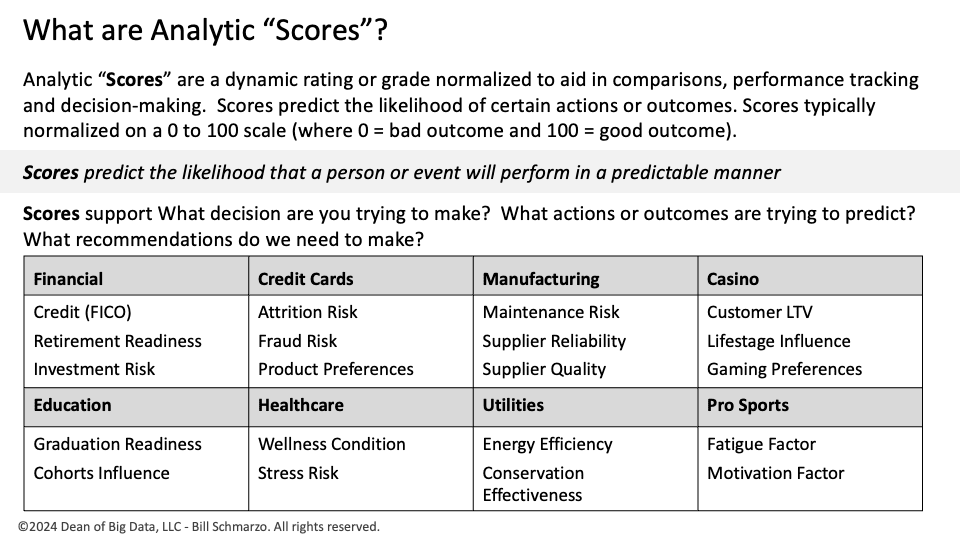
The secret sauce to nanoeconomics is the granular data and the resulting predictive behavioral and performance insights we can uncover and codify at the individual entity level. We can apply AI to the entity-level, granular data to uncover and codify human or device entity-level analytic scores that predict the likelihood of entity-level actions or behaviors (Figure 1).

Slide5

An Analytic Score is a normalized, mathematically generated number that predicts a particular outcome or action’s likelihood (or propensity) for an individual human or device entity.

Figure 1: Analytic Scores

Analytic scores are a digital economic asset that can deliver meaningful, quantifiable value to the organization by:

  • Improving decision-making with more objective, relevant, and consistent decision-making recommendations
  • Enhancing customer experience and satisfaction through the delivery of highly personalized and relevant solutions
  • Increasing operational efficiency and effectiveness by optimizing key business and operational processes and resource allocation
  • Driving innovation and growth in driving the discovery of new value-creation opportunities

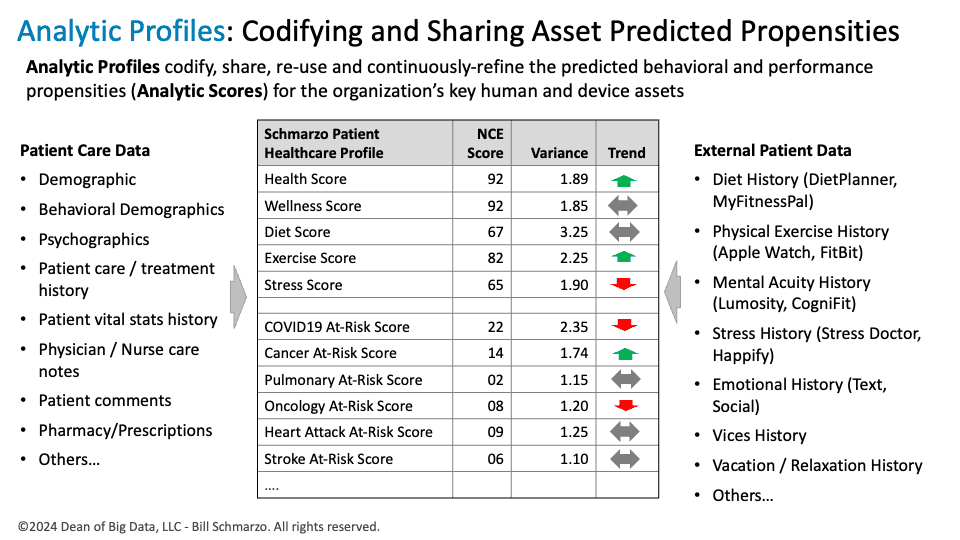
The entity-level analytic scores are stored and managed in an analytic (digital) profile or key-value data or feature store (Figure 2).

An Analytic (Digital) Profile is an asset model that captures analytic insights (propensities) about the organization’s most valuable assets, such as customers, products, or operations.

Slide6

Figure 2: Analytic (Digital) Profiles

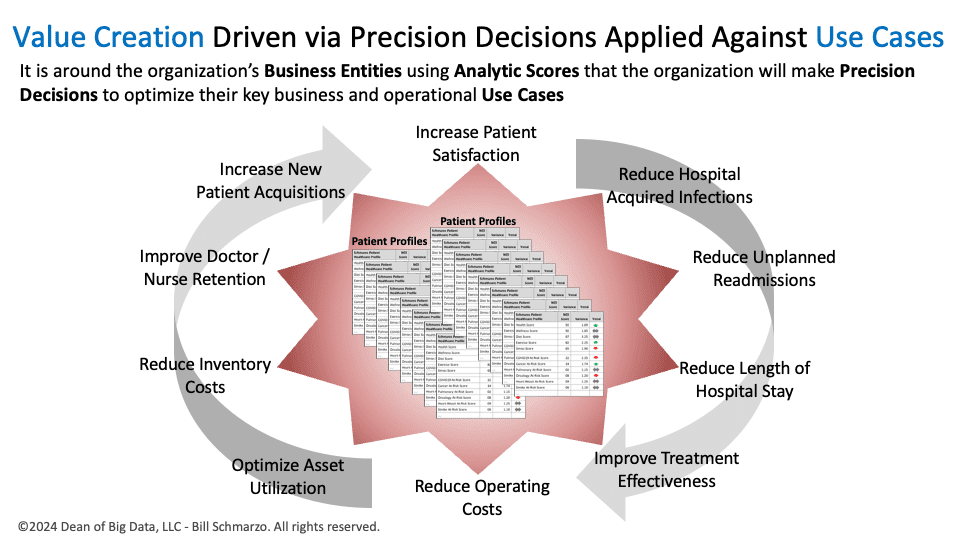
The entity-level analytic profiles facilitate the application of the analytic scores across multiple use cases, whereby each application of an analytic score not only delivers meaningful, quantifiable value but also provides the basis for the continuous monitoring and refinement of the analytic scores (Figure 3).

Slide7

Figure 3: Analytic Profiles and Analytic Scores Optimize Business and Operational Use Cases

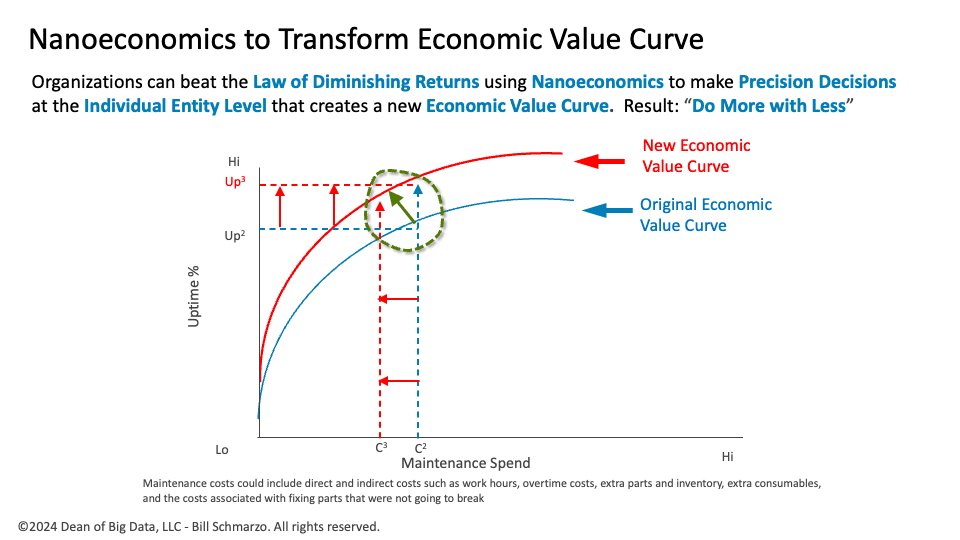
Finally, the application of nanoeconomics, analytic scores, and analytic profiles optimize critical business and operational use cases, enabling the organization to “do more with less” in optimizing the prioritization and application of the organization’s resources (at the individual human and device level) to transform an organization’s economic value curve (Figure 4).

Slide8-1

Figure 4: Transforming Your Economic Value Curve

Examples: Nanoeconomics Driving Industry Transformation

Nanoeconomics can enable more precise, more effective decisions and actions that drive economic transformation in various industries, such as:

  • Health care: Nanoeconomics can optimize the delivery and consumption of health care services by leveraging data and analytics to understand and predict the propensities of patients, providers, payers, and regulators.
  • Education: Nanoeconomics can optimize the provision and acquisition of education services by leveraging data and analytics to understand and predict the propensities of learners, educators, employers, and policymakers.
  • Energy: Nanoeconomics can optimize the production and consumption of energy services by leveraging data and analytics to understand and predict the propensities of producers, consumers, distributors, and regulators.
  • Transportation: Nanoeconomics can optimize the mobility and accessibility of transportation services by leveraging data and analytics to understand and predict the propensities of travelers, operators, providers, and regulators.
  • Retail: Nanoeconomics can optimize the supply and demand of retail services by leveraging data and analytics to understand and predict the propensities of consumers, sellers, suppliers, and marketers.
  • Manufacturing: Nanoeconomics can optimize the production and consumption of manufacturing services by leveraging data and analytics to understand and predict the propensities of producers, consumers, distributors, and innovators.

Beware the Productivity Trap; It’s About Nanoeconomics – Part 2

GenAI / AI is a powerful tool for economic transformation but requires a mindset that moves beyond productivity improvements. To fully exploit the potential of GenAI / AI requires an economic mindset focused on creating value for customers, stakeholders, and society.

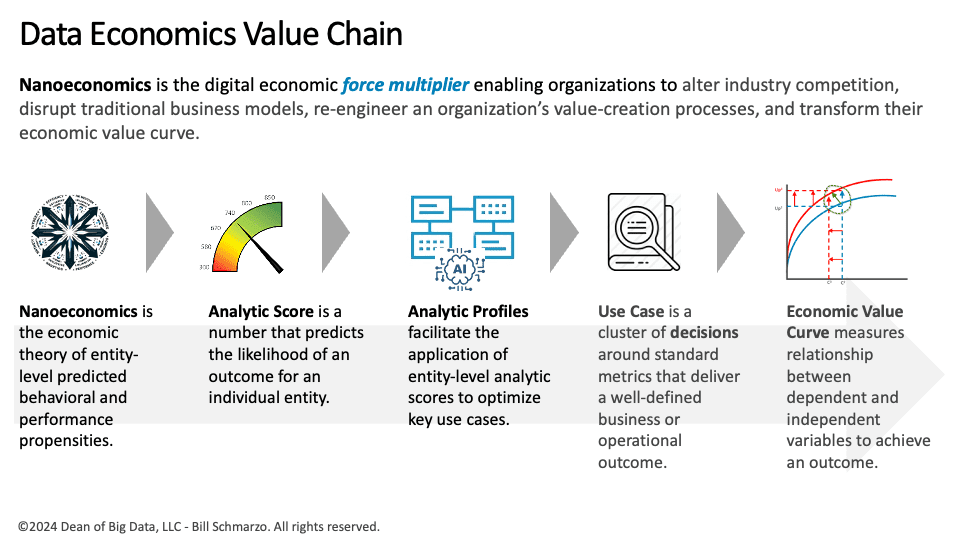
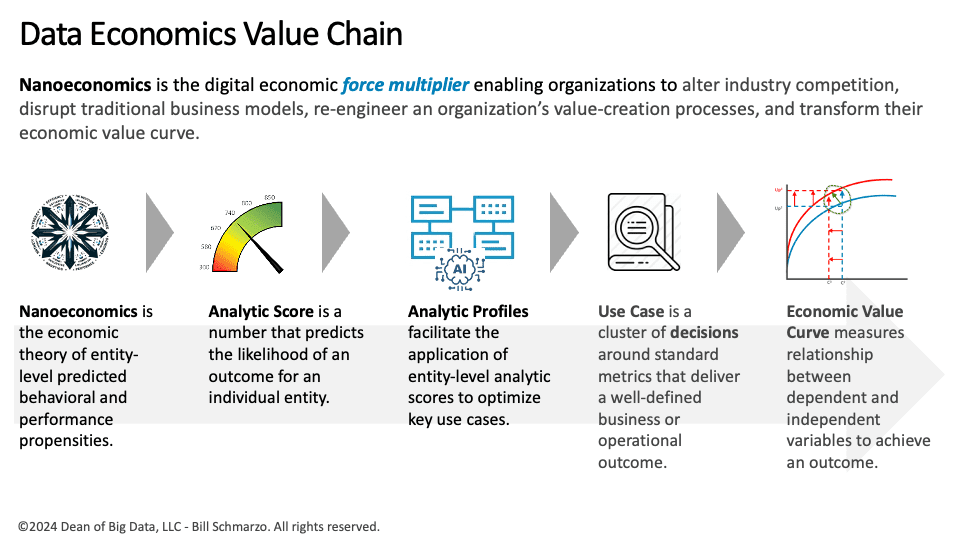
Nanoeconomics is the digital economic force multiplier enabling organizations to alter industry competition, disrupt traditional business models, re-engineer an organization’s value-creation processes, and transform their economic value curve (Figure 5).

Slide9-1

Figure 5: Data Economics Value Chain

The following blog in this series will address organizations’ second challenge in 2024 to leverage AI to get value from their data – empowering the organization to help identify where and how AI and data can be leveraged to create value.

Microsoft Veteran Dee Templeton Takes Seat on OpenAI Board as Non-Voting Observer

Microsoft executive Dee Templeton has joined OpenAI’s board as a non-voting observer as part of a broader boardroom revamp according to Bloomberg News. Templeton, with over 25 years at Microsoft, currently serves as Vice President for Technology and Research Partnerships and Operations, as per her LinkedIn profile.The report added that she has commenced attending OpenAI’s board meetings.

In the capacity of an observer, Microsoft’s representative is granted attendance at OpenAI’s board meetings and access to confidential information. Notably, Microsoft does not hold voting rights in decisions involving the election or selection of directors.

She began her career at Microsoft 25 years ago as the first female technical employee at Microsoft New Zealand and has since had the opportunity to contribute in engineering and product roles across numerous divisions and technologies.

As an advisor to CTO and EVP of AI Kevin Scott, Templeton oversees operations for the nearly 1,500 scientists and engineers comprising Microsoft’s Technology & Research group. She leads a team that develops and nurtures some of Microsoft’s most significant technical partnerships, including the cross-functional team accountable for the progress of joint work with OpenAI

The decision to grant Microsoft a non-observer board seat was announced by Sam Altman in November upon his return as CEO. The current directors at OpenAI include Bret Taylor, who previously served as co-CEO at Salesforce Inc.; Larry Summers, the former US Treasury secretary; and Adam D’Angelo, who continues from the previous board and holds the position of CEO at the question-and-answer site Quora Inc.

Meanwhile, discussions are underway to fill OpenAI’ board following the removal and subsequent reinstatement of CEO Sam Altman. Potential candidates reportedly include Alexandr Wang, CEO and co-founder of Scale AI, and Nat Friedman, former GitHub CEO and startup investor, reported The Information.

The post Microsoft Veteran Dee Templeton Takes Seat on OpenAI Board as Non-Voting Observer appeared first on Analytics India Magazine.