KDnuggets News, January 10: CS Degree Program For Free • Prompt Engineering 101 • 2023: The Crazy AI Year

Editor's Picks

Enroll in a 4-year Computer Science Degree Program For Free
Abid Ali Awan Prompt Engineering 101: Mastering Effective LLM Communication
Matthew Mayo 2023: The Crazy AI Year
Nisha Arya

More Nuggets

25 Free Books to Master SQL, Python, Data Science, Machine Learning, and Natural Language Processing
Abid Ali Awan 25 Free Courses to Master Data Science, Data Engineering, Machine Learning, MLOps, and Generative AI
Abid Ali Awan Back to Basics Pathway
Nisha Arya The KDnuggets 2023 Cheat Sheet Collection
Matthew Mayo A Simple Guide to Running LlaMA 2 Locally
Abid Ali Awan 7 Reasons Why You're Struggling to Land a Data Science Job
Bala Priya C Easily Integrate LLMs into Your Scikit-learn Workflow with Scikit-LLM
Cornellius Yudha Wijaya Evaluating Methods for Calculating Document Similarity
Poornima Muthukumar How to Access and Use Gemini API for Free
Abid Ali Awan Run an LLM Locally with LM Studio
Nisha Arya Too Many Python Versions to Manage? Pyenv to the Rescue.
Bala Priya C What Junior ML Engineers Actually Need to Know to Get Hired?
Ivan Smetannikov Level 50 Data Scientist: Python Libraries to Know
Nate Rosidi How Multimodality Makes LLM Alignment More Challenging
Magdalena Konkiewicz Using Lightning AI Studio For Free
Abid Ali Awan Data Cleaning in SQL: How To Prepare Messy Data for Analysis
Bala Priya C Survey: Machine Learning Projects Still Routinely Fail to Deploy
Eric Siegel Phi-2: Small LMs that are Doing Big Things
Nisha Arya A/B Testing: A Comprehensive Guide
Poornima Muthukumar Can Data Governance Address AI Fatigue?
Vidhi Chugh 5 Coding Tasks ChatGPT Can't Do
Nate Rosidi

More On This Topic

  • Enroll in a 4-year Computer Science Degree Program For Free
  • 2023: The Crazy AI Year
  • Prompt Engineering 101: Mastering Effective LLM Communication
  • Mastering Generative AI and Prompt Engineering: A Free eBook
  • The Art of Prompt Engineering: Decoding ChatGPT
  • Why Prompt Engineering is a Fad

Alexa just got three new generative AI skills — here’s how to try them

Alexa neon sign

With artifical intelligence (AI) a dominant theme at this year's CES, Amazon has unveiled three new Alexa skills that all come with a hefty helping of AI. Now accessible to all Echo and Alexa users, the three skills are freely available through the Alexa app as well as through the Alexa Skills website.

Also: CES 2024: What's Next in Tech

First on the list is a skill called Character.AI. Designed by the developers behind the Character.AI website, this skill lets you chat with a range of different chatbots. You can talk to historical figures, such as Socrates or Albert Einstein, and engage in conversations about philosophy or physics.

You can also use Character.AI to chat with trip planners, dating coaches, fitness coaches, and other helpers to get help and advice. And for entertainment, you can explore AI-driven alternate timelines or help an AI escape from a harrowing situation.

To use the skill, just say: "Alexa, open Character.AI." Alexa then asks whether you'd like to speak with assistants, helpers, famous people, or have fun and games. Make your choice, and Alexa lists some of the different characters waiting to chat with you.

I opted to converse with Grace Hopper, the famous computer scientist and mathematician. I naturally asked her if it was true that the term "bug" was created after she discovered a moth in her log book. But she set me straight by explaining that the story about the moth is a myth and the term bug was actually devised long before she found a real one.

Also: The best CES 2024 gadgets you can buy right now

Next on the list is a skill called Splash, which uses AI to create a song based on your description. With this one, you can tell Alexa to create any type of song or specify the genre of music you want. After playing a short excerpt, Alexa asks if you want to make any changes, such as adding lyrics. If you like the tune, you can then tell Alexa to send it to your phone for playback.

To use the skill to generate any type of song, say: "Alexa, create a song with Splash Music." To include a genre, say: "Alexa, open Splash Music," and you'll be asked what style you prefer. For this one, I asked Splash to compose a song in the style of jazz. The result certainly wouldn't win any awards at the next Grammys, but it showed promise.

Finally, the third skill is named Volley Games, an AI-driven spin on the usual 20 questions game. In this one, a friendly AI host challenges you to guess an object by asking the right 'yes' or 'no' questions. After giving you the category, you're prompted to ask each question until you hopefully guess the mystery item. Along the way, you can ask for hints if you're stumped.

Also: The best robots and AI innovations we've seen at CES 2024 so far

To try this one, say: "Alexa, open Volley Games." Your AI host reveals the category and then asks for your first question. In my case, I was given a category of household objects. After guessing that the object was something in the kitchen, I was stumped for a while, until finally I figured out that the answer was spatula.

The three new skills were all cooked up by developers using new tools introduced by Amazon last September. The tools are designed to more easily integrate generative AI into Alexa skills, allowing users to engage in conversations and access real-time data. Other abilities touted by Amazon at the time included booking reservations at a restaurant and getting a summary of a trending news story.

CES 2024

Why is Tamil Nadu Becoming a Sweet Spot for EV Investments 

The recently concluded Global Investors Meet (GIM) in Tamil Nadu, saw huge amounts of investments from tech, auto, energy, and manufacturing companies from across the globe. The state bagged a total investment of over INR 6.6 lakh crore, with a substantial amount allocated for EV development.

Already seen as a hub for auto manufacturing, with Chennai even considered as the ‘Detroit of Asia,’ Tamil Nadu is slowly becoming the EV Capital of India.

Stakes on TN

Last year alone, Tamil Nadu contributed to 40% of the country’s EV production. Out of ten lakh EVs sold, more than four lakh vehicles were manufactured in Tamil Nadu. Of all the EV two-wheelers that are sold in India, 68% of it was manufactured in the state.

Adding to the existing EV factories in the state, a number of new investments were announced this week.

Vietnamese electric car manufacturer VinFast has committed to invest $2 billion to set up a manufacturing plant in Tamil Nadu. The factory construction will begin this year with an initial investment of $500 million for the first phase of the project, and is said to generate 3500 jobs and produce 150,000 EVs annually.

To expand into key markets, VinFast’s investment commitment is also a bid to take on its biggest EV competitor Tesla. Banking on the east coast state that houses a number of auto manufacturing companies, Vinfast’s approach to start a factory in Tamil Nadu is a strategic one.

Interestingly, Elon Musk’s Tesla is also deciding to start a new manufacturing plant, however, that is set to happen in Gujarat.

Hyundai Motors has also committed to invest ₹6180 crore, to boost the EV sector in Tamil Nadu. The company is also gearing to establish a ‘Hydrogen Valley Innovation Hub’ to bolster the growth of green energy. Furthermore, Hyundai had earlier committed to invest ₹20,000 crore over the next ten years.

Last year, Ola Electric committed to investing 7600 crores and building the world’s largest EV facility at a single location spread across 2000 acres. Advanced cell and EV manufacturing facilities, vendor supplier parks and ancillary ecosystem will be part of the EV hub that will be built in the state.

EV two-wheel company Ather Energy, already has two plants in Hosur and is looking to expand further.

A Tamil Nadu – Manufacturing Affair

As per a report published last year, Tamil Nadu earns 8% of its GDP from the automobile industry. The foray into the automobile sector dates back to early 90s when the Indian economy had faced liberalisation and private companies were breaking the shackles of setting up industries. Ford Motor in a joint venture with Mahindra & Mahindra set up the first car facility closer to Chennai. Since then, TN is synonymous as an auto manufacturing hub, with a number of companies setting their base there.

With OEM and component manufacturing factories also set up in TN, the facilitation of EV factories will be simpler. Suitable government policies such as reduction of tariff for EV charging stations will allow more EV stations to come up, thereby promoting EV adoption too.

Furthermore, Tamil Nadu’s Electric Vehicles Policy 2023, looks to make Tamil Nadu the EV manufacturing hub of South-East Asia. Incentives under EV Special Manufacturing Package and tax exemptions for EV companies have been driving these companies in a big way.

While TN is already big on EV factories, another state is slowly catching up to become the next desirable stop for EV production.

Gujarat on Close Heels

The Vibrant Gujarat Summit, that is undergoing in the state, is expected to unveil huge announcements related to EV production. With Tesla already expected to set up their first manufacturing plant in the state, Tata Motors’ famed Sanand plant will also grow into a central hub for EV initiatives. Maruti Suzuki also has an EV plant in the state.

Yesterday, Gensol Engineering, operator of solar projects, committed to invest ₹2000 crore to set up an EV manufacturing plant in Gujarat. With more announcements in the pipeline, Gujarat is close behind on grabbing more EV deals.

The post Why is Tamil Nadu Becoming a Sweet Spot for EV Investments appeared first on Analytics India Magazine.

After Indigo, Air India Introduces Generative AI Chatbot 

Air India has introduced AI.g,(pronounced ‘AI dot ji’ or simply ‘AI ji’) a generative AI powered virtual travel assistant powered by ChatGPT on WhatsApp. This assistant aims to aid travelers with inquiries on a broad range of travel-related topics and offer access to various features, the airline said in a statement on Monday.

Enhance your travel experience with Air India.
From quick updates on flight statuses to detailed information on refunds, AI. g has the answer to all your travel-related queries.
Chat with AI. g on our website or on WhatsApp at +91 96670 34444#FlyAI #AirIndia pic.twitter.com/UNPF90pUJM

— Air India (@airindia) January 8, 2024

The multilingual chatbot’s seamless accessibility on WhatsApp opens up a new guest support channel for Air India, enabling travelers to ask questions across a wide spectrum of over 1300 travel-related topics and access a host of features.

Guests can engage with AI.g by connecting through the WhatsApp number +91 96670 34444. They can communicate with AI.g in their preferred language, and it will understand and respond in the same tongue. AI.g currently supports Hindi, English, French, and German. Users can switch to other languages at any time by typing in the desired language.

Through a simple WhatsApp chat, Air India guests will now be able to easily check real-time flight status and baggage information, download boarding pass or get a copy of their e-tickets, select seats, check the status of customer support requests generated online, and ask many other common questions, without having to call the airline’s customer contact centre.

Rajesh Dogra, chief customer experience officer at Air India, expressed the airline’s commitment to innovation, stating, “At Air India, we’re constantly innovating to make every touch point in the travel journey seamless and delightful for our guests.”

This is not the first instance of an airline carrier introducing a generative AI chatbot. Recently, IndiGo launched an AI chatbot named 6Eskai, powered by GPT-4 technology. It was developed entirely in-house by IndiGo’s digital team in close collaboration with Microsoft.

Similar to Ai.g, 6ESkai is capable of performing a wide range of tasks, such as booking tickets, applying promotional discounts, booking add-ons, conducting web check-ins, assisting in seat selection, planning trips, answering FAQs, and connecting customers with an agent.

Furthermore, the bot is not only capable of understanding written or typed language but also verbal instructions through speech-to-text models.

The post After Indigo, Air India Introduces Generative AI Chatbot appeared first on Analytics India Magazine.

Luma raises $43M to build AI that crafts 3D models

Luma raises $43M to build AI that crafts 3D models Kyle Wiggers 1 day

A couple of years ago, Alex Yu and Amit Jain came together to found a company that’d let people capture objects in 3D using their smartphones — no additional equipment required. At the time, Yu was an AI researcher at UC Berkeley while Jain was an Apple employee building out the Vision Pro‘s multimedia experiences.

Their company, Luma, launched a smartphone app in 2021, which quickly gained traction — going on to attract millions of users (just over two million as of publication time). But now, as generative AI tech floods the channels, Yu and Jain hope to evolve Luma into something bigger — and, with any luck, better — than they originally envisioned.

Luma today announced that it’ll begin leveraging a compute cluster of ~3,000 Nvidia A100 GPUs to train new AI models that can — in Yu’s words — “see and understand, show and explain and eventually interact with [the] world.”

Meet Genie, a research preview of an all-new kind of generative 3D foundation model #MadeWithGenie

💬 Create 3D things in seconds on Discord
⚡️ Prototype in various styles
🎨 Customize materials
🆓 Free during research preview

Try it now 👇https://t.co/NVgbsvn2XU pic.twitter.com/qm7PkdMEAp

— Luma AI (@LumaLabsAI) November 1, 2023

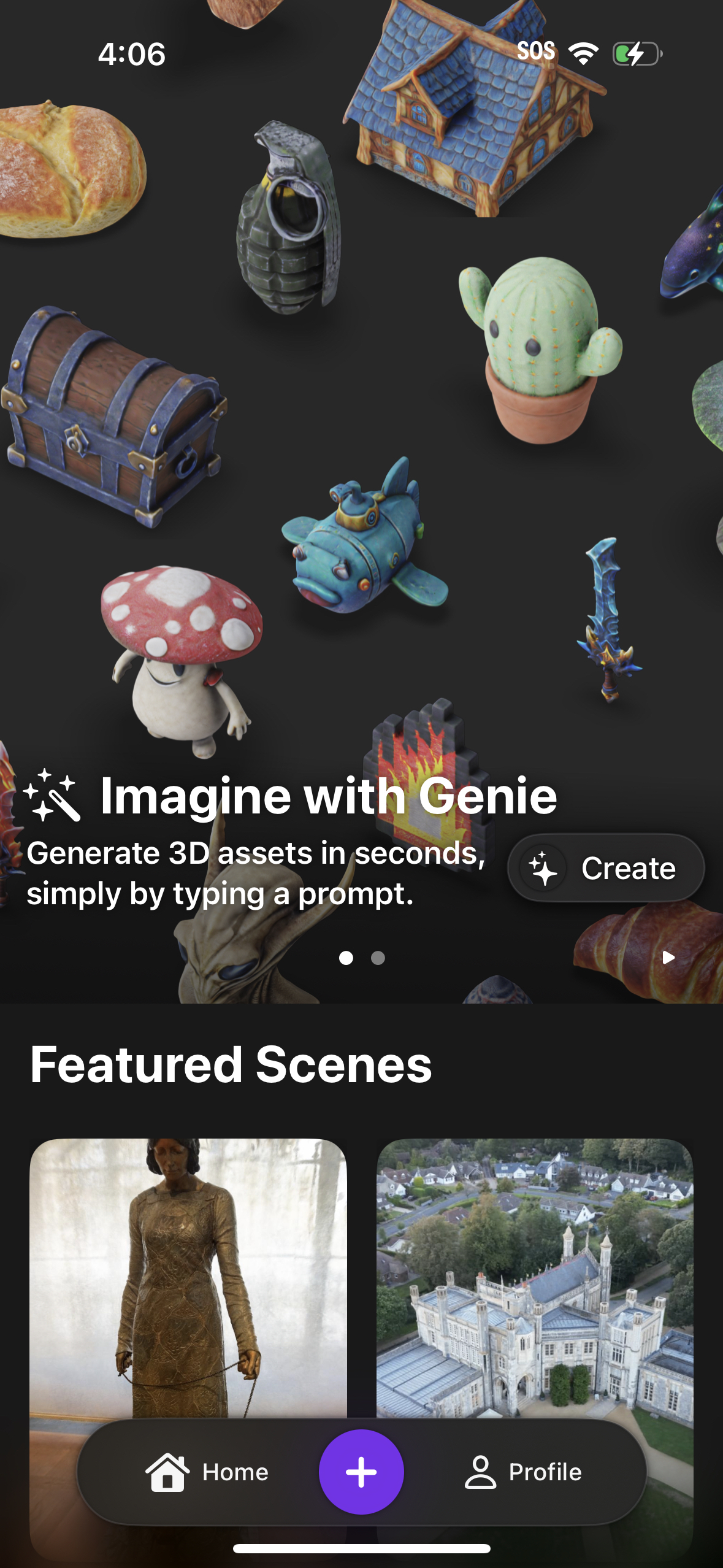
The first phase of this plan entails creating models capable of generating 3D objects from text descriptions; Luma launched one such model on its Discord server earlier this year, called Genie. The next will be developing “next gen” generative AI models that address what Yu characterizes as the “uncanny valley” problem in current-gen GenAI.

“We believe that multimodality is critical for intelligence. To go beyond language models, the next unlock will come from vision,” Yu told TechCrunch in an email interview. “[However,] AI needs to get a lot smarter to deliver the potential the world sees in it.

To realize this vision vision (pardon the pun), Luma has raised $43 million in a Series B round with participation from Andreessen Horowitz among other backers old and new. According to a source familiar with the matter, the round values Luma at between $200 million and $300 million; Luma’s war chest now stands at more than $70 million.

Luma’s current focus — launching 3D model-creating AI models — is an increasingly competitive space. There’s object-crafting platforms like 3DFY and Scenario, as well as startups such as Hypothetic, Kaedim, Auctoria and Mirage. Stability AI recently launched a 3D-model-generating standalone tool as did newer venture Atlas. Even incumbents like Autodesk and Nvidia are beginning to dip their toes in the sector with apps like Get3D, which converts images to 3D models, and ClipForge, which generates models from text descriptions.

Luma

Image Credits: Luma

So how will Luma’s tools stand apart? Fidelity mainly, Yu says.

“Current models are all being trained on two-dimensional images and, when asked to generate scenes, they mangle spaces, bodies and movements,” he said. “It’s very difficult to generate anything coherent and usable in the first few tries, limiting where you can use the outputs … [We’re bringing] about the most advanced generative photorealistic technolog[ies] in an intuitive app.”

That’s promising a lot considering it’s early in Luma’s ambitious new roadmap. An improved version of Genie launches today, but future, more capable generative AI models are a ways away.

Luma’s wasting no time though, planning to double its 24-person workforce by the end of next year while piecing together a model-running server cluster of “thousands” of GPUs. Perhaps it’ll make headway after all; time will tell.

Luma

Image Credits: Luma

“We’ve been growing the team across generative AI research, engineering, design and product in order to bring our vision to life, and plan to accelerate the pace here significantly following this round,” Jain said. “With Genie, for the first time creating 3D things at scale has become possible with AI, and that’s grown to 100,000 users in just four weeks … [But we want to] build vastly more capable, intelligent, and useful visual models for our users.”

Samsung Unveils New and Improved Home Robot Ballie

The sweet, adorable titular robot from ‘Wall-E’ may not be real, but Samsung’s round robot ‘Ballie’ is. After being released in 2020, which resembled a small yellow bowling ball, Samsung unveiled the new version of Ballie, with the most striking feature to project things onto the floor and ceiling.

The Rolling Robot

The AI home robot, Ballie, comes with multiple features where the ball can project videos, calls and other media. Serving as a personal home assistant, Ballie can autonomously navigate through the home to accomplish various tasks. Through an integrated connection with other home appliances, Ballie can offer assistance in various situations. Unlike other home assistants from Google and Amazon, Ballie’s moving feature pushes it a notch apart.

Ballie continuously learns user patterns and habits, allowing for more intelligent and personalised services. A user can interact with the robot via their phone. The launch video shows a user exercising to a workout video that is projected on the ceiling. Featuring a 1080p projector with two lenses, the projection can be automatically adjusted based on wall distance and lighting conditions.

This is probably the first of the many announcements in the field of Robotics for the year. Considering the number of announcements and developments that have been happening in the last few months, including Google DeepMind’s new research models that was announced at the start of the year, it is only obvious that 2024 will be the year of Robotics.

Major tech players in the space of robotics, such as Tesla and Figure are also on path to unveil new features in the coming months.

The post Samsung Unveils New and Improved Home Robot Ballie appeared first on Analytics India Magazine.

Vertiv Boosts India’s Data Centre Sector with New Manufacturing Facility in Pune

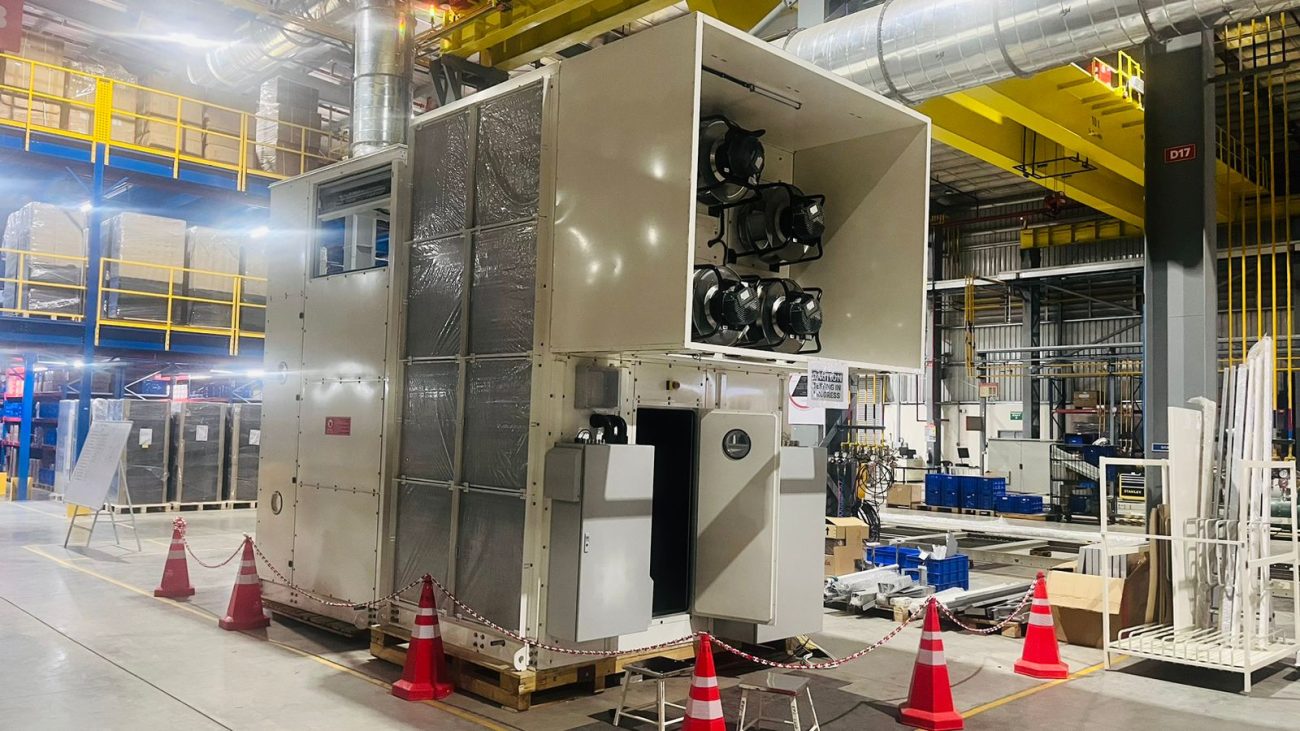
Vertiv, a global provider of critical digital infrastructure and continuity solutions, has taken a significant step to support the thriving data centre industry in India by inaugurating a cutting-edge manufacturing facility in Chakan, Pune. This facility marks Vertiv’s third manufacturing plant in the country, reinforcing its commitment to the “Make in India” initiative and catering to the growing demand for data centres and supporting infrastructure solutions.

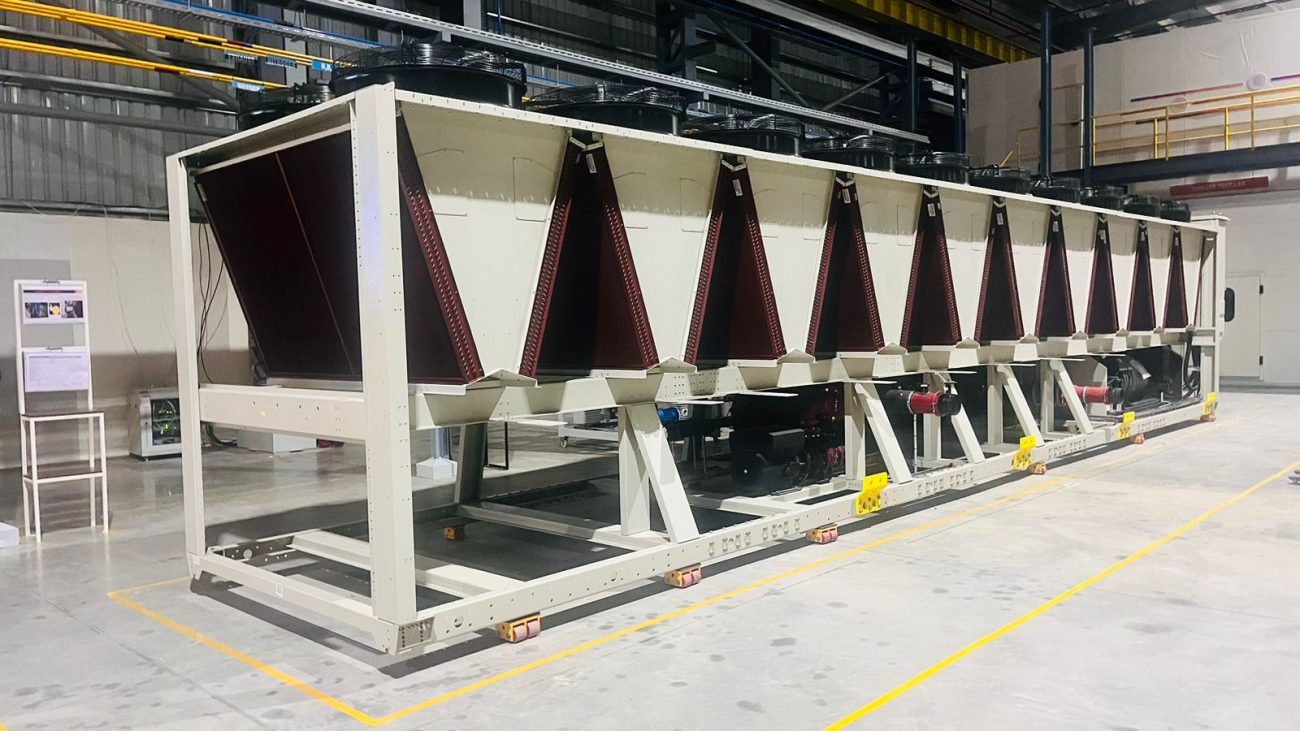
Spanning an impressive 210,000 square feet (19,510 square meters), the new facility is strategically positioned to manufacture thermal management products and solutions tailored specifically for data centres, telecommunications, commercial applications, and industrial sectors. These solutions are designed to meet the requirements of both domestic and international markets, underlining Vertiv’s global presence and local commitment.

The facility specialises in the production of a wide range of cooling solutions, ranging from 200W to 2MW+, encompassing adiabatic free cooling chillers, large custom air handling units (AHU), thermal wall units, a new range of large direct expansion (DX) units, packaged DX systems, free cooling with economiser units, a fresh lineup of in-row cooling units, wall mount units, and rack cooling systems. Moreover, the facility features state-of-the-art psychometric labs to conduct performance testing, a dedicated customer experience centre, and robust design support capabilities.

One remarkable aspect of this facility is its location within an India Green Building Council (IGBC) compliant park, highlighting Vertiv’s commitment to sustainability and environmental responsibility.

Vertiv’s CEO, Giordano Albertazzi, expressed his thoughts on the new facility, stating, that the data centre industry is growing due to global digitalisation and rapid uptake of AI, driving the need for increased capacity in thermal and power infrastructure.

“India’s emergence as a data centre hub in the APAC region is a key reason that we built this third manufacturing facility in India, and it reinforces our commitment to nurturing the country’s data centre ecosystem while also addressing global demand,” said Albertazzi.

Data Center Industry in India on the Rise

The data centre industry in India is poised for substantial expansion, with a projected 678 MW capacity increase over the next three years, reaching a total capacity of 1400 MW by 2025, positioning India as the 13th largest data centre market globally, according to a report by JLL. Furthermore, India Briefing predicts the development of 45 new data centres covering 13 million square feet with a combined capacity of 1,015 MW by 2025, indicating an industry size of $9.27 billion by 2027.

Subhasis Majumdar, Managing Director of Vertiv India, emphasised the facility’s significance, stating, “India is witnessing significant investments in the data centre industry by both domestic and global players. Our new plant with its state-of-the-art infrastructure will help us provide more thermal management capacity, improve lead times, and enhance our ability to deliver tailor-made, large, and complex solutions.”

Emphasising India-specific needs, Majumdar said, “In addition to the global offerings, Vertiv will align solutions with India’s unique environmental and infrastructural needs, enabling optimal performance and reliability. The new facility also helps Vertiv to continue our support of the Make in India initiative.”

The post Vertiv Boosts India’s Data Centre Sector with New Manufacturing Facility in Pune appeared first on Analytics India Magazine.
Apple reportedly eyeing generative AI push and Siri overhaul for the iPhone

Siri on iPhone

Trying to play catch up in the race to integrate AI, Apple is planning some major generative AI features for its next version of iOS, according to noted tech reporter and Apple watcher Mark Gurman. In his latest Power On newsletter for Bloomberg, Gurman teased a number of initiatives that Apple reportedly will unveil at its 2024 Worldwide Developers Conference, which is expected to take place in June.

Also: The best mobile accessories at CES 2024: Qi2 chargers, face-tracking phone stands, and more

First, the company is looking to add such AI features as auto-summarizing and auto-complete to its core apps and productivity programs such as Pages and Keynote. Next, Apple is striving to integrate AI into services like Apple Music. In this instance, the company wants to use AI to automate the creation of playlists. And last, but certainly not least, Apple is planning a major overhaul for Siri, Gurman said.

For developers, Apple is cooking up new versions of Xcode and other programming tools that will use generative AI to help its users complete code. And on the support front, the company is designing a new AI-powered system for AppleCare employees to better help customers troubleshoot technical problems, Gurman added.

With major players such as OpenAI, Microsoft, and Google already capitalizing on generative AI, Apple seems to be lagging far behind. Though the company has been working on integrating AI into some of its products and services, so far it has nothing to show for it. As Gurman pointed out, that's a big risk for a tech firm that typically portrays itself as an innovator in consumer technology.

Also: Apple Vision Pro in stores February 2, preorders start January 19

And now there are more competitors chomping at the AI bit. Due to be unveiled later this month, Samsung's new Galaxy S24 will reportedly pack in a bunch of AI features. Reports say the new phone will use built-in AI to generate images, compose emails and messages, translate text, and recognize voices.

Mixed in with Apple's slow uptake of AI have been long-standing complaints about Siri. As an iPhone user, I've been frustrated with Siri's lack of reliability and lack of any real development. And it's not just me. Based on interviews with more than three dozen former Apple employees, a story published last April by The Information claimed that Siri has been widely derided by staff within the company for the tool's lack of functionality and improvements.

Also: Phone makers are drooling over this 'multispectral camera' that captures colors better than your naked eye

And even if Apple does outfit this year's iOS and iPhones with major new AI innovations and a better Siri, the company will likely take until 2025 to fully transform its generative AI vision into reality, according to Gurman.

"Starting with generative AI, Apple's tools — when they launch — will come nearly two years after ChatGPT began to take the world by storm, about a year after Amazon announced its revamped Alexa and about a year and a half after Microsoft and Google debuted their new services," Gurman said. "Even for Apple, that's quite a miss."

Featured

X promises peer-to-peer payments, AI advances in 2024

X promises peer-to-peer payments, AI advances in 2024 Sarah Perez @sarahintampa / 23 hours

Elon Musk has been detailing his vision for X’s, formerly Twitter’s, transformation into an “everything app,” including payments, creator tools, shopping and more, since acquiring the social network over a year ago. Now, the company is committing to a time frame. In an announcement today, X shared its roadmap for the year ahead, which will include AI-powered experiences and the launch of peer-to-peer payments, among other initiatives.

While Musk’s time frames to launch products don’t always hold up, X has been moving forward to acquire the necessary licenses to handle payment processing over the past several months. As of December, X was licensed for payment processing in a dozen U.S. states, and today that number stands at 14, with the recent additions of Arkansas and Pennsylvania.

In Musk’s vision, X users will be able to send money to others on the platform and extract those funds to authenticated bank accounts. He also toyed with the idea of offering users high-yield money market accounts further down the line to encourage them to hold more of their cash on X.

In the X blog post published today, the company claims it will launch peer-to-peer payments this year, to unlock “more user utility and new opportunities for commerce,” suggesting a tie-in with other X products, like creator revenue sharing and online shopping. The company also promised continued investment in creators, content partnerships, original content, full-funnel ads and brand safety.

The latter has been a particular source of concern for X advertisers, who have found that despite X’s measures, their ads were placed next to toxic content or hate speech, leading many to withdraw. Musk, speaking at an event in November, told fleeing advertisers to “go f***” themselves, and X has shifted to small-to-medium-sized advertisers to fill the void. Still, the company is trying to court advertisers, as a recent post about its vertical video ad brand safety initiatives revealed earlier this week.

X’s announcement today also suggested that AI would be a part of the platform’s future, following the launch of Musk’s ChatGPT competitor, the feisty Grok chatbot. Though the post did not go into detail, it said that AI would be used to “increasingly power the X user and advertising experiences, including in areas like enhancing search, improving ads, and “fueling a new level of customer understanding,” which seems to be a vague reference to AI-powered ad tools.

xAI, Musk’s AI company, will additionally power consumer-facing features like today’s “See Similar Posts,” as well as an upcoming “See Dissimilar Posts” feature, which will encourage people to “challenge their perspectives,” the post explains. (That promise, however, could be difficult to deliver if X continues to suspend journalists from its platform.)

The company also offered an update on its progress over the past year, which included the launch of long-form video, audio and video calling, X Hiring (job search), the expansion of Communities, Grok, creator tools and more. It said that users have since watched “130 years’ worth of videos” 30 minutes or longer and engaged in calls with an average length of 10 minutes. In addition, 80,000+ creators have received payouts via X’s revenue-sharing program in less than a year’s time, but X did not provide a figure.

What to Expect from the GPT Store? 

As OpenAI is gearing up for the official launch of the much-awaited GPT Store this week, it will mark a significant milestone in customising AI agents. Initially slated for November, the launch had encountered delays due to internal restructuring at the company, including the sudden departure and reappointment of CEO Sam Altman.

The GPT Store allows users, specifically ChatGPT Plus and enterprise subscribers, to sell and share tailored AI agents based on GPT-4. This initiative follows OpenAI’s commitment to democratising access to advanced language models, enabling users to create personalised versions of ChatGPT-style chatbots.

With the capability to understand and generate human-like text, GPT models have already demonstrated their versatility in various applications, from content creation to language translation. The store is expected to use many tools to enhance productivity, creativity, and communication.

One of the key advantages of the store is its potential to democratise access to cutting-edge language models. Developers and businesses can build and deploy applications that leverage the underlying power of the LLM, making advanced language capabilities more widely available.

GPT Store Expectations

From elucidating Gen Z memes to guiding users through negotiations, the store will serve as a marketplace where these customised agents can be shared and potentially monetised. However, a large part of the execution depends on OpenAI’s commitment to safety as it will play a pivotal role in shaping the narrative of the GPT Store’s impact on our digital landscape.

The company claims that it wants to make GPT Store completely error-free and hence, the delay in launch.

The email sent to GPT Builders announces the impending launch and reminds them to adhere to brand guidelines and make their models public. This emphasis on guidelines reflects OpenAI’s commitment to maintaining the quality and appropriateness of content.

While details about the monetisation plan for GPT creators remain undisclosed, the company has expressed its intention to compensate creators based on the usage of their AI agents on the store.

The analogy of the GPT Store being more like a Spotify subscription platform than an App Store resonates with the expectation that millions of interchangeable, easily created GPTs will populate the platform. Anticipation around money-making opportunities for developers is tempered by the likelihood that the majority of GPTs will be free, with a Plus subscription providing enhanced features for $20 per month.

A few thoughts about the coming GPTs store.
(All might be wrong though.)
Because of the word “store” many people think that it’ll be like the App Store and get excited about the money making opportunity.
I have a feeling that the better analogy is a Spotify type subscription… pic.twitter.com/HzWfrhggzS

— Borriss (@_Borriss_) November 12, 2023

Like musicians on Spotify, most developers may earn modest returns, while a select few achieve significant sales. Though it offers some financial potential for developers, it might not yield substantial profits for the majority. As with musicians using streaming platforms, developers could use free GPTs as lead magnets for alternative monetisation strategies, flexing their success on social media.

Prevailing Concerns

The recent tweets have raised questions regarding the safety concerns that have cast a shadow over the otherwise bright prospects of the GPT Store. People argue that the immense language generation capabilities of the models could be exploited to produce misleading or harmful content. This has become more apparent with the OpenAI-NYU lawsuit.

Not your model, not your GPTs.
All those folks rushing to add stuff to the GPT store are writing free functions for another OpenAI llm that they will brand as “AGI”. Almost free labor extraction. I will bet, for most folks, the revenue share will be pennies. Folks who think… https://t.co/iEHqX3OJQh

— Delip Rao e/σ (@deliprao) January 8, 2024

Despite these safety measures, some argue that the potential for misuse is too great, and the safeguards may not be foolproof. Privacy concerns have also been raised, as users worry about the implications of storing and sharing sensitive information within the GPT ecosystem. Alongside, to address the privacy concerns surrounding it, the company recognises the importance of community involvement.

Unpopular Opinion (Probably):
The GPT-Store isn't going to be as big of a deal as most people make it out to be.
99.9% of GPTs that will be created will have nothing proprietary about them and anyone will be able to just make their own clone of it.
There will be a handful of…

— Matt Wolfe (@mreflow) January 5, 2024

OpenAI encourages feedback, scrutiny, and suggestions to refine its privacy measures, fostering a transparent and inclusive environment where the concerns of various stakeholders are taken into account. Through this open dialogue, the company aims to strike the right balance between innovation and privacy, making the GPT Store a responsible and trustworthy platform for users and developers.

Read: 10 GPTs for Your Daily Use

The post What to Expect from the GPT Store? appeared first on Analytics India Magazine.