CES 2024: Intel Expands Intel Core 14th Gen Line for Efficient Performance in Desktops and Laptops

Intel announced its next set of Intel Core 14th Gen processors on Jan. 8 at CES 2024 in Las Vegas. The set, known as Raptor Lake Refresh since it’s based on an enhanced version of the Raptor Lake chip, is Intel’s latest push in both desktop and mobile processors.

“Our Intel Core 14th Gen processor family is built to bring top-notch performance and platform features to enthusiast and mainstream PC users alike,” said Roger Chandler, Intel vice president and general manager of enthusiast PC and workstations​ in the client computing group, in a press release. “Enthusiasts on-the-go can now enjoy the best mobile experience available today with our HX-series processors. And mainstream desktop users can now experience the efficient performance and robust platform features available in our latest-gen 65-watt and 35-watt desktop processors.”

In addition, Intel introduced the Intel Core U mobile processor family for thin and light professional and gaming PCs.

Along with debuting new products at CES, Intel also pushed its AI PC initiative, which enables generative AI applications, features and workloads to run locally on devices featuring Intel Core Ultra processors.

Intel Core 14th Gen mobile processor family adds more cores

The Intel Core 14th Gen HX-series of mobile processors for laptops address the needs of gamers, content creators and creative professionals who need high performance in a relatively small device. The series includes eight Performance-cores (P-cores) and 16 Efficient-cores (E-cores). Intel reports it fit 50% more E-cores into the Intel Core i7-14700HX processors in the HX family compared to the previous generation.

This processor family includes up to 24 cores (eight P-cores and 16 E-cores) and 32 threads in its i9-14900HX processors. The i7-14700HX processors now have more cores, with 20 cores (eight P-cores, 12 E-cores) and 28 threads. Thunderbolt 5 connectivity in the HX series can deliver 80 gigabits per second of bi-directional bandwidth or up to 120 Gbps with bandwidth boost.

Intel Core 14th Gen HX processors are expected to come to market in partner devices in 2024.

Intel Core 14th Gen desktop processors are compatible with enterprise tools

The Intel Core 14th Gen desktop stack has 18 new processors from the top to the bottom of the stack. The current Intel desktop processors offer 37% faster multi-thread performance and up to 7% better Microsoft Office performance compared to the previous generation, Intel said. The i9-14900 processors in the Intel Core 14th Gen desktop processors can hold up to 24 cores (eight P-cores, 16 E-cores) and 32 threads.

The new desktop stack is equipped with next-generation Intel Killer Wi-Fi 7 (5 Gig) and Intel Killer Wi-Fi 6E (Gig+) connectivity.

Intel Core 14th Gen desktop processors have 192 GB of total DDR5-5600/DDR4-3200 MT/S memory for backward compatibility with Intel 600- and 700-series-based motherboards. The processors support existing in-box thermal solutions including the Intel Laminar RH1 and RM1 coolers.

SEE: Intel’s Meteor Lake Core Ultra processors with an AI coprocessor came out in December 2023 (TechRepublic)

The Intel Core 14th Gen line of desktop processors competes primarily with AMD’s Ryzen 7000 processors.

The new Intel Core 14th Gen desktop processors are available online and in stores now.

Some of the Intel Core 14th Gen desktop processors (the i9-14900, i7-14700, i5-14600 and i5-14500) are comparable with Intel’s vPro, which is a variety of hardware tools and services for enterprise-class performance, built-in security and remote monitoring of business PCs.

Intel Core U Processor Series 1 offers higher performance for laptops

The Intel Core U Processor Series 1 is the latest in the Intel Core U family of mobile processors.

Intel Core U Processor Series 1 has the following attributes:

  • Up to 5.4 GHz turbo frequency along with up to 10 cores (two P-cores, eight E-cores) and 12 threads in its Intel Core 7 processor 150U.
  • Up to 96 GB of total DDR5-5200/DDR4-3200 MT/S memory.
  • Thunderbolt 4 universal connectivity, which lets it connect to multiple 4K monitors and accessories with 40 Gbps bandwidth.
  • Supports eight PCIe Gen 4.0 and 12 PCIe Gen 3.0 lanes for the latest solid-state drive storage.
  • Connects to Bluetooth 5.4, Bluetooth 5.3 and Bluetooth Auracast.
  • Supports Intel Killer Wi-Fi 7 (5 Gig) and Intel Killer Wi-Fi 6E (Gig+).

Mobile devices using Intel Core U Processor Series 1 will be available in Q1 2024.

Intel’s plan for AI on PCs

During Intel’s keynote presentation at CES on Jan. 9, Intel CEO Pat Gelsinger spoke about his vision for AI running on PCs for years to come. Gelsinger portrayed generative AI as just starting out on a long process of integrating into more and more tech. “Domain by domain, we’re going to find the economic value,” he said. “We’re going to get past the models hallucinating and gain more and more confidence in what they do. I think we’re going to be in a 10-plus year cycle of figuring out what to do with it (generative AI) in various industries.”

Gelsinger reiterated statements he has made before about local AI workloads because of three important laws: economics, physics and “the laws of the land,” which in this case refers to data privacy regulations. “Those three laws will drive more AI use cases to the devices we use across the edge,” he said.

That’s why Intel is working on making processors that can run AI workloads locally. The company is also working on compressing large language models to be smaller and smaller while still offering effective use cases, Gelsinger said.

“We’re going to be enjoying this for many CESes to come,” he said. “We have a lot of innovation to do.”

Editor’s note: TechRepublic is covering CES 2024 remotely.

AI will unleash the next level of human potential. Here’s how it happens — and when

untitled-presentation-18

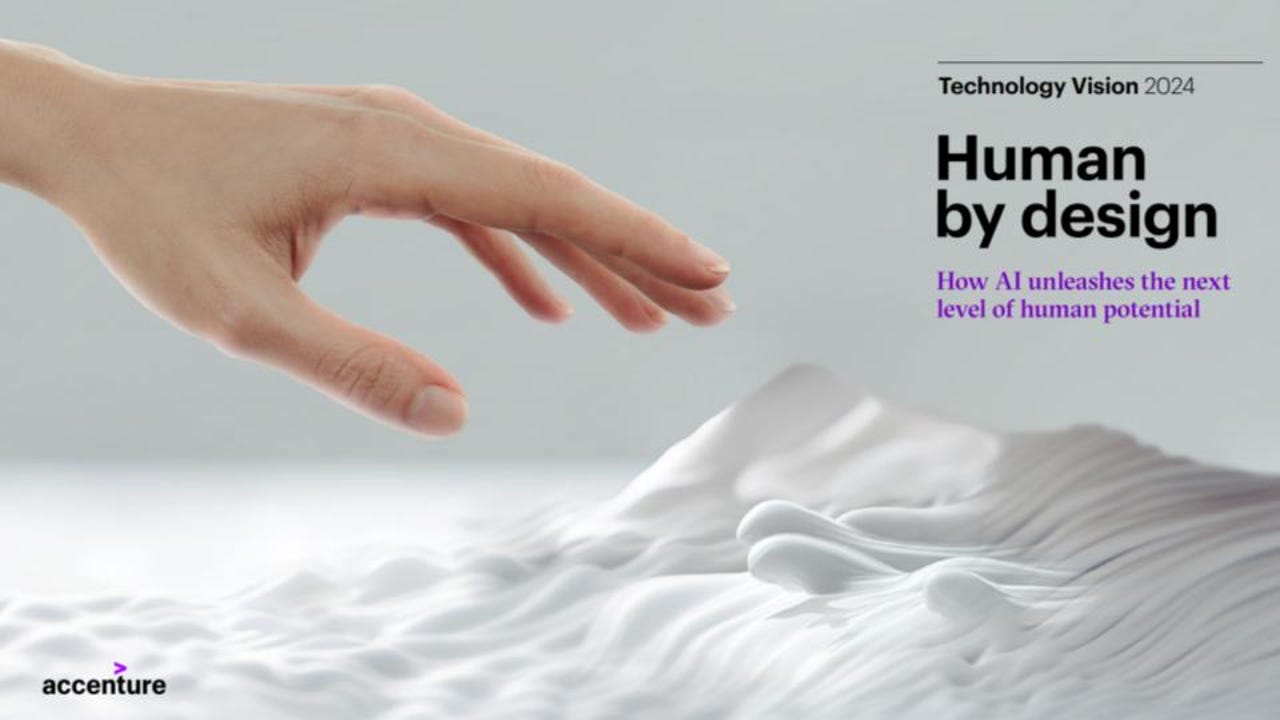
The Accenture Technology Vision Report 2024 is centered around the narrative that AI will unleash the next level of human potential as new emerging technologies will become more human. In fact, 95% of executives agree that making technology more human will massively expand the opportunities of every industry. The report begins with examples of high-impact technologies, noting that generative AI has the potential to impact much more than just the task at hand. It's also starting to profoundly reshape organizations and markets.

More human technology means more ethical questions, and many of these questions require answers before we can proceed. Accenture notes that 93% of executives agree that with rapid technological advancements, it is more important than ever for organizations to innovate with purpose.

Also: AI adds new fuel to autonomous enterprises, but don't write off humans

Accenture begins by stating that the relationship between humans and technology is at an inflection point, and that it's time to make technology human by design. The main takeaway is this: When technology is more human, it's more accessible.

"Human by design is not just a description of features," according to Accenture. "It's a mandate for what comes next. As enterprises look to reinvent their digital core, human technology will become central to the success of their efforts. Every business is beginning to see the potential emerging technologies have to reinvent the pillars of their digital efforts. Digital experiences, data and analytics, products, all stand to change as technologies like generative AI, spatial computing, and others mature and scale."

The Technology Vision Report 2024 identifies four key trends that make us human: the way we think, act, feel, and understand one another.

A Match Made in AI: Reshaping our relationship with knowledge — People are asking generative AI chatbots for information – transforming the business of search today, and the futures of software and data-driven enterprises tomorrow. Accenture explores how technology is starting to imitate the way we process information. These are not just superficial changes to the way we interact with technology; they are rooted in memory structures designed and organized similarly to people's brains. The earliest changes are starting in search and will come to disrupt the way we approach knowledge and knowledge management. Here are some predictions about "A match made in AI":

  • By 2025, a leading airline will announce that customers are just as satisfied with chatbot agents as human agents.
  • By 2027, data poisoning (adding malicious data to ML models) will be a top cybersecurity threat to enterprises.
  • By 2028, major corporations will have proprietary chatbots to assist with knowledge management, research, and task completion.
  • By 2029, AI advisors will receive more search traffic than traditional search engines.
  • By 2031, a smartphone will launch that replaces the app-based interface with an agent-based one.

Also: How LangChain turns GenAI into a genuinely useful assistant

Meet My Agent: Ecosystems for AI — AI is taking action, and soon whole ecosystems of AI agents could command major aspects of business. Appropriate human guidance and oversight is critical. In Meet My Agent, Accenture is tracking the evolution from AI that can perform singular tasks to AI agents that, with appropriate oversight, can work with one another and act as proxies for people and enterprises alike. Today we might think of it as automated assistants for individual interactions, but tomorrow the agent ecosystem has the potential to underpin the entire business-to-business landscape.

  • By 2025, a new code repository will launch for open-source code written by agents.
  • By 2026, three-fourths of knowledge workers will use copilots every day.
  • By 2028, the first truly lights-out car manufacturing plant will open.
  • By 2030, one-half of home mortgages will be approved and serviced by agents.
  • By 2032, authorities will dismantle an insider trading ring that was using intelligent agents to collect protected information.

The Space We Need: Creating value in new realities — The spatial computing technology landscape is rapidly growing, but to successfully capitalize on this new medium, enterprises will need to find its killer apps. In The Space We Need, Accenture is watching the emergence of a new spatial computing medium, and the applications taking advantage of its capabilities to pierce the physical-digital divide. The metaverse struggled under the weight of ever-expanding definitions and expectations, but the value in the technology behind it has never been in doubt.

Also: These $699 AR glasses support Vision Pro's most dramatic feature, and they're not made by Apple

Our Bodies Electronic: A new human interface — A suite of technologies – from eye-tracking to machine learning to BCI – are starting to understand people more deeply, and in more human-centric ways. Our Bodies Electronic looks at an emerging suite of technology that is starting to sidestep the unnatural technology interactions of the past to read and understand people more closely than has ever been possible.

In this article, we will take a deeper look into the first two trends, A Match Made in AI and Meet My Agent.

A Match Made in AI: Reshaping our relationship with knowledge

Our relationship with data is changing – and with it, how we think, work, and interact with technology. The entire basis of the digital enterprise is getting disrupted. A big realization in the report is this: "We're so used to it that most people don't even realize how much search has permeated their lives."

Another big takeaway in the report is the importance of data. Data is one of the most important factors shaping today's digital businesses. Companies have the chance today to reimagine how information works throughout their organization, and in doing so, invent the next generation of data-driven business. And now with generative AI, a digital butler is finally in the cards, according to Accenture.

Also: Business success and growth is dependent upon trust, data, and AI

The way we interact with data, and how we live, work, and think, is all changing. Enterprises need to be just as pliable – or a new generation of data-driven businesses will rise without them. Data silos do exist and are harmful. According to a recent Gartner survey, "47% of digital workers struggle to find information or data needed to effectively perform their jobs." This is where generative AI can help. The report notes that 95% of executives believe generative AI will compel their organization to modernize its technology architecture.

A Match Made in AI

A super insightful part of the Accenture report was the exploration of Large language models (LLM) as a new data interface. Accenture. Imagine if instead of a search bar, employees could ask questions in natural language and get clear answers – across every website and app in the enterprise. With an accessible and contextual data foundation, enterprises can start to build this – and there are a few different options to explore. Here are four LLM options:

  1. First, companies can train their own LLM from scratch, though this approach is rare given the significant resources required. Some of the leaders here are AI powerhouses, including Amazon, OpenAI, Google, Meta, AI21, and Anthropic.
  2. A second option is to fine-tune an existing LLM. Essentially, this means taking a more general LLM and adapting it to a domain by further training it on a set of domain-specific documents. OpenAI's GPT-3.5, for instance, can be fine-tuned using a business's own data, to hone it into a more custom or efficient model for certain tasks.
  3. A slight variation on this is also gaining traction. Enterprises are beginning to fine-tune smaller language models (SLMs) for specialized use cases.
  4. Lastly, one of the most popular approaches to building an LLM advisor has been to ground pre-trained LLMs by providing them with more relevant, use case-specific information, typically through retrieval augmented generation (RAG). As suggested by the name, this combines an information retrieval system with a generative model, which can be either self-trained or used out-of-the-box and accessed through an API. Grounding an LLM through in-context learning and RAG takes much less time and compute power, and requires far less expertise than training LLMs from scratch or fine-tuning. Salesforce's Einstein GPT uses this approach to ground generative AI chatbot responses too, when connected to one of OpenAI's LLMs or any other external LLM.

Also: Enterprises will need AI governance as large language models grow in number

Accenture also notes that the data going into the LLM – whether through training or the prompt – should be high-quality data. That means it should be fresh, well-labeled, and unbiased. Training data should be zero-party and proactively shared by customers, or first-party and collected directly by the company. Beyond accuracy, the outputs of the generative AI chatbot should also be explainable and align with the brand.

Accenture concludes by advising that generative AI chatbots should be subject to continuous testing and human oversight. Companies should invest in ethical AI and develop minimum standards to adhere to. And they should gather regular feedback and provide training for employees as well.

Accenture conclusion: Generative AI is a game-changer for data and software. Just as search did decades ago, LLMs are changing our relationship with information, and everything from how enterprises reach customers to how they empower employees and partners stands to transform. Leading companies are already diving in, imagining and building the next generation of data-driven business. And before long, it won't just be leaders – it'll be the new way digital business works.

Also: Generative AI filled us with wonder in 2023 — but all magic comes with a price

Meet My Agent: Ecosystems of AI

Can an AI agent launch your next product? According to Accenture, 96% of executives agree that leveraging AI agent ecosystems will be a significant opportunity for their organizations in the next three years. Accenture shares real use cases of AI adoption in businesses to launch new products and services. Today, for example, AI can detect manufacturing flaws, but agents could enable true lights-out manufacturing. AI is already processing orders, yet agents could sell your product and then get it to the customer's door. Just as the moving assembly line allowed Ford to reimagine what the automobile market could be, agent ecosystems will let companies reinvent what they offer and how they offer it.

AI assistants are maturing into proxies that can act on our behalf. As these agents emerge, the resulting business opportunities will depend on three core capabilities: access to real-time data and services; reasoning through complex chains of thought; and the creation of tools – not for human use, but for the use of the agents themselves. Along with humans to guide and oversee them, these advancements will allow agent ecosystems to complete tasks in both the physical and digital worlds, Accenture's report includes several AI breakthroughs in 2023 and industries that are leading the AI agent adoption revolution. The report notes that as assistants or copilots, agents could dramatically multiply the output of individual employees. For the enterprise processes that will always depend on humans, agents will act as collaborators.

Meet My Agent

Businesses will need to think about the human and technological approaches they need to support these agents. From the technology side, a major consideration will be how these entities identify themselves. Today, machines make up 43% of identities on enterprise networks. The most profound statement in the report regarding a machine and human future of work is this:

"In the era of agent ecosystems, your most valuable employees will be those best equipped to set the guidelines for agents."

The key success factor is your company's core values and guiding principles. Trust must be your company's #1 core value. (That's my opinion). The report reminds us that a company's level of trust in its autonomous agents will determine the value its agents can create. Your human talent is responsible for building that trust. This means as agents get access to the right information, humans must also teach agents how to reason about that information. A powerful statement from the report:

"Agents are only as valuable as the humans who teach them."

How can companies start on this agent co-creation journey? Companies can start by weaving the connective fabric between agents' predecessors, LLMs, and their support systems. By fine-tuning LLMs on your company's information, you are giving foundation models a head start at developing expertise. This is not a technology-led journey, but rather a cultural one. Accenture reminds us that every action your agents take will need to be traced back to your core values and mission, so it is never too early to operationalize your values from the top to the bottom of your organization.

Also: Organizations are fighting for the ethical adoption of AI. Here's how you can help

Meet My Agent conclusion: "Agent ecosystems have the potential to multiply enterprise productivity and innovation to a level that humans can hardly comprehend. But they will only be as valuable as the humans that guide them; human knowledge and reasoning will give one network of agents the edge over another. Today, artificial intelligence is a tool. In the future, AI agents will operate our companies. It is our job to make sure they don't run amok. Given the pace of AI evolution, the time to start onboarding your agents is now."

To learn more about Accenture's Technology Vision 2024 Report — Human by Design: How AI unleashes the next level of human potential — you can visit here.

Artificial Intelligence

Duolingo cuts 10% of its contractor workforce as the company embraces AI

Duolingo cuts 10% of its contractor workforce as the company embraces AI Lauren Forristal 19 hours

Duolingo is the latest company to cite AI as a reason for job cuts. The company confirmed it cut around 10% of its contractor workforce at the end of 2023, as it turns to AI models like OpenAI’s GPT-4 to streamline content production and translations.

The broad application of ChatGPT and other large language models could impact a wide range of job roles, including language-based tasks. According to the World Economic Forum’s 2023 Future of Jobs report, AI will transform 23% of jobs in the next five years.

Redditor No_Comb_4582 was the first to note the Duolingo layoffs, writing that they were offboarded as a contractor on December 15, with a screenshot of an email from the company attached to the post.

Image Credits: Reddit/No_Comb_4582

“The reason [Duolingo] gave is that AI can come up with content and translations, alternative translations, and pretty much anything else translators did. They kept a couple people on each team and call them content curators. They simply check the AI crap that gets produced and then push it through,” wrote No_Comb_4582.

A company spokesperson explained to us that GPT is used to translate sentences and then “human experts validate that the output quality is high enough for teaching and is in accordance with CEFR standards for what learners should be able to do at each CEFR level.” The Common European Framework of Reference for Languages (CEFR) is an international guideline for explaining language proficiency.

Duolingo also uses GPT-4 to power experiences for its premium subscription tier Duolingo Max, including AI-generated feedback and a chatbot to help users practice conversations. Duolingo also has its own proprietary AI model, “Birdbrain” that personalizes lesson content.

However, the company disputed calling the departures “layoffs,” saying that only a “small minority” of Duolingo’s contractors were let go as their projects wrapped. A spokesperson also cited various reasons that could be the case, like a contract being completed, or “improvements to content creation operations” that no longer require as many people to do the work. In a comment to Bloomberg, the company also confirmed that part of the reason it no longer needed as many people was attributable to AI.

Understandably, both the contractors and Duolingo users were upset by the job cuts, as it adds to the ever-growing fear that AI will replace human workers. It’s an especially tough blow for contractors, who already experience job insecurity going from one assignment to the next, and often struggle to find permanent jobs due to their spotty resumés.

In an X post, @bvnnyjungkook said she was a contractor for Duolingo and noted that a majority of its workforce are contractors, which is usually a sign that a company wants to save money because they don’t have to factor in insurance obligations or benefits like paid time off and sick leave.

Duolingo had 600 full-time employees in 2022, per company filings.

i was a duolingo contractor for 2 years and it was always clear to me that they love AI and that they take advantage of the fact that a majority of their workforce are contractors (ie no benefits or job security) :/ https://t.co/A9Ddx6aLMv

— jade (@bvnnyjungkook) January 8, 2024

Plus, Duolingo users worry that AI translations may take away the value of a human expert who has a deeper understanding of languages, idiomatic expressions and cultural nuances.

Duolingo laid off a huge percentage of their contract translators, and the remaining ones are simply reviewing AI translations to make sure they’re ‘acceptable’. This is the world we’re creating. Removing the humanity from how we learn to connect with humanity. pic.twitter.com/YdT6CTB3Kj

— Reid Southen (@Rahll) January 8, 2024

Duolingo launches new subscription tier with access to AI tutor powered by GPT-4

Hey Google: If AI is replacing Google Assistant, I have two questions

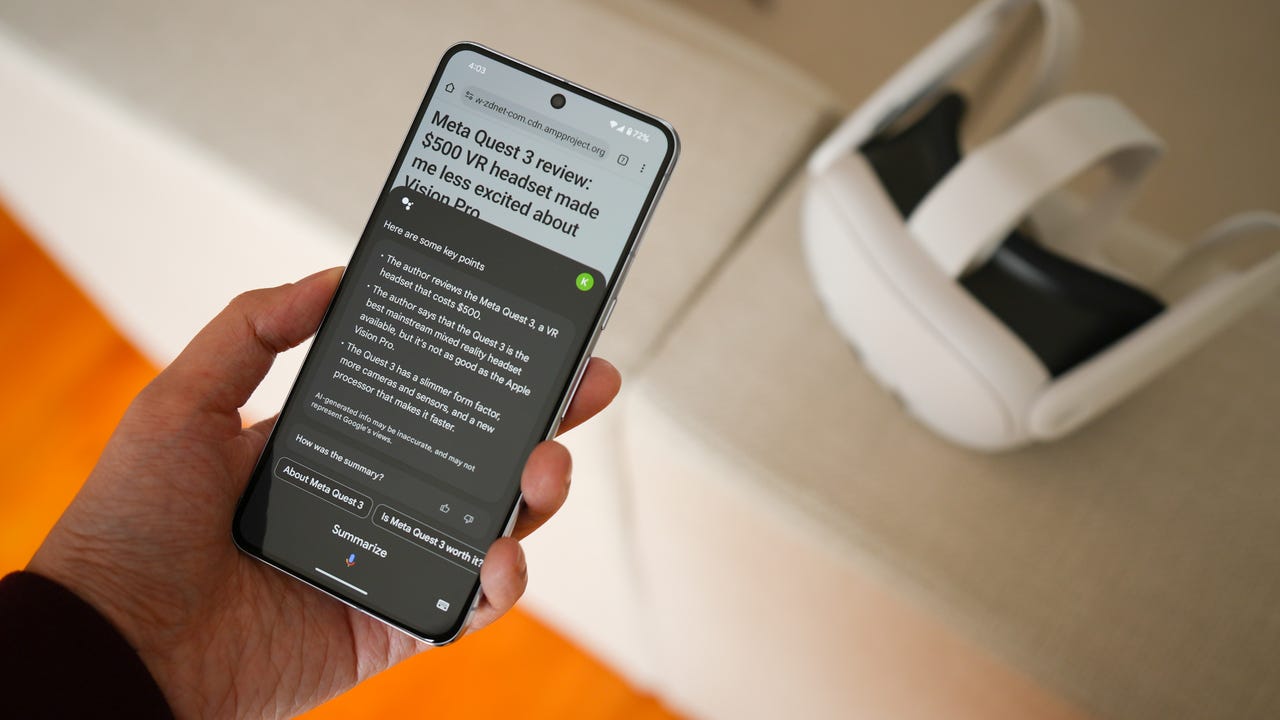
Google Pixel 8 Assistant Summarize

I've been using Google's Pixel line of phones since the first one dropped years ago. But I have a confession to make: I don't use Google Assistant all that much. I can't explain exactly why I never got into the habit of using such a useful tool, but it never happened. Don't get me wrong: Every so often I do say the magic phrase, "Hey Google…" followed by a question I just don't feel like typing.

And I believe that's the crux of the issue for me. I'm a professional writer, so I prefer to type. I don't even use speech-to-text to write messages (unlike my wife, who's a pro at it).

Also: How to drastically improve your privacy on Google Bard with this one simple setting

That being said, rumors abound that Google is considering replacing the current Assistant with its Bard AI. Another rumor is that OpenAI is going to make a ChatGPT option for Google Assistant.

All of this begs a question or two.

Question 1: What about privacy?

This should be on everyone's mind. If Google were to replace Assistant with AI, my guess is that there would be an exponential rise in users. Why? Because the feature would be far more useful than its current state.

If far more people started using an AI-powered assistant, how is Google (and Android) going to handle privacy? That's a lot of questions asked and answered. On top of that, the AI is going to learn an awful lot about people. That inspires another question: What will Google do with the information it garners from its users? Will that information be stored and, if so, where and for how long?

This could wind up being a situation where users will discover they should have opted out early on because their information is not only being saved but it's also being used to further train AI.

Also: 4 ways to overcome your biggest worries about generative AI

You see, the questions keep piling on.

Although I am vocal (and adamant) about keeping AI out of artistic, journalistic, and political endeavors (and other such endeavors that require a heart and soul), I'm not against using AI where it has practical and useful applications that would help improve quality of life or how well a piece of technology functions. But when AI crosses the line of privacy, things get dicey.

Remember, a Bard or ChatGPT assistant isn't Siri or Google Assistant — this is much, much more, and it could lead to serious breaches of privacy. If you think web browser fingerprinting can create an accurate profile of you, wait until you see what AI can do.

Question 2: Where is it all processed?

This next question is a big one and it's directly related to the first. AI takes a serious amount of computing power to do what it does; far more than what even a flagship phone can offer. With that in mind, where will those AI-powered queries be processed? Unless Google has some serious magic up its sleeve, I can't see the Pixel 9 or 10 Pro being powerful enough to handle that much CPU load. Does that mean queries will be off-loaded to the cloud, processed, and sent back?

Now, I understand that all of the current assistants use AI. However, they aren't straight-up AI. My guess is that at least some of the processing power will have to be augmented by Google's own servers. And I'm not saying that will dramatically slow down the process, but it won't be nearly as fast as it would be if it were all handled locally.

Also: Could you soon be running AI tasks right on your smartphone?

But there's another issue. If Android does have to offload some of those queries to Google's servers, that means the data will be transferred over the internet. How will Google secure this data? And will the query be used to further train the neural network (and will they require your permission to do so)?

You see, it's a big circular "What if?" at the moment and I'm not certain how comfortable I am with these questions hanging in the air.

If Google's AI-powered assistant is going to circumnavigate our privacy, then I want nothing to do with it. And, if the system resources of a phone (CPU, RAM, and internal storage) need to be seriously beefed up, will that cost be foisted onto consumers — just so that AI can be used in place of Google Assistant?

This might all be moot. Google may have discovered a way to retain our privacy and keep all queries processed locally on the phone (and encrypted). But until the company releases a statement or documentation to state those very things, we have to assume the answer to those questions might not have the best interests of the consumer in mind.

One thing is for certain: 2024 will be a rather interesting year for phone technology.

Artificial Intelligence

CES 2024: Everything revealed so far, from Nvidia to rabbit’s pocket AI to Kodiak’s autonomous semi truck

CES 2024: Everything revealed so far, from Nvidia to rabbit’s pocket AI to Kodiak’s autonomous semi truck Christine Hall 9 hours

CES 2024 is here! The TechCrunch team is in Las Vegas this week to take in all of the action and decipher what it means to you. You already know what we’re expecting, so sit back, relax and stay tuned throughout the week as we bring you the products, announcements and startup news that you need to know.

Kicking off the first day are some bigger announcements from companies, including Nvidia, LG and Samsung. Here are all the ways you can watch live.

And here’s how you can follow along with our team’s coverage.

Hyundai shows off its eVTOL, air taxi ambitions
supernal evtol hyundai

Image Credits: Kirsten Korosec

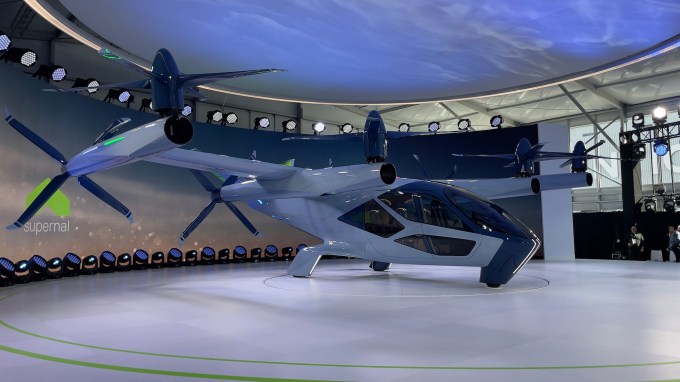
Supernal’s electric vertical takeoff and landing (eVTOL) aircraft got a showcase from its parent company Hyundai Motor Group on the ground in Las Vegas, as the so-named S-A2 moves closer to its planned 2028 launch for shuttling passengers. Head here for a full rundown on the aircraft, and the challenges in expanding airborne mobility.

This delivery bot handles stairs with ease
Mobinn delivery robot ascends stairs at CES 2024

Image Credits: Devin Coldewey / TechCrunch

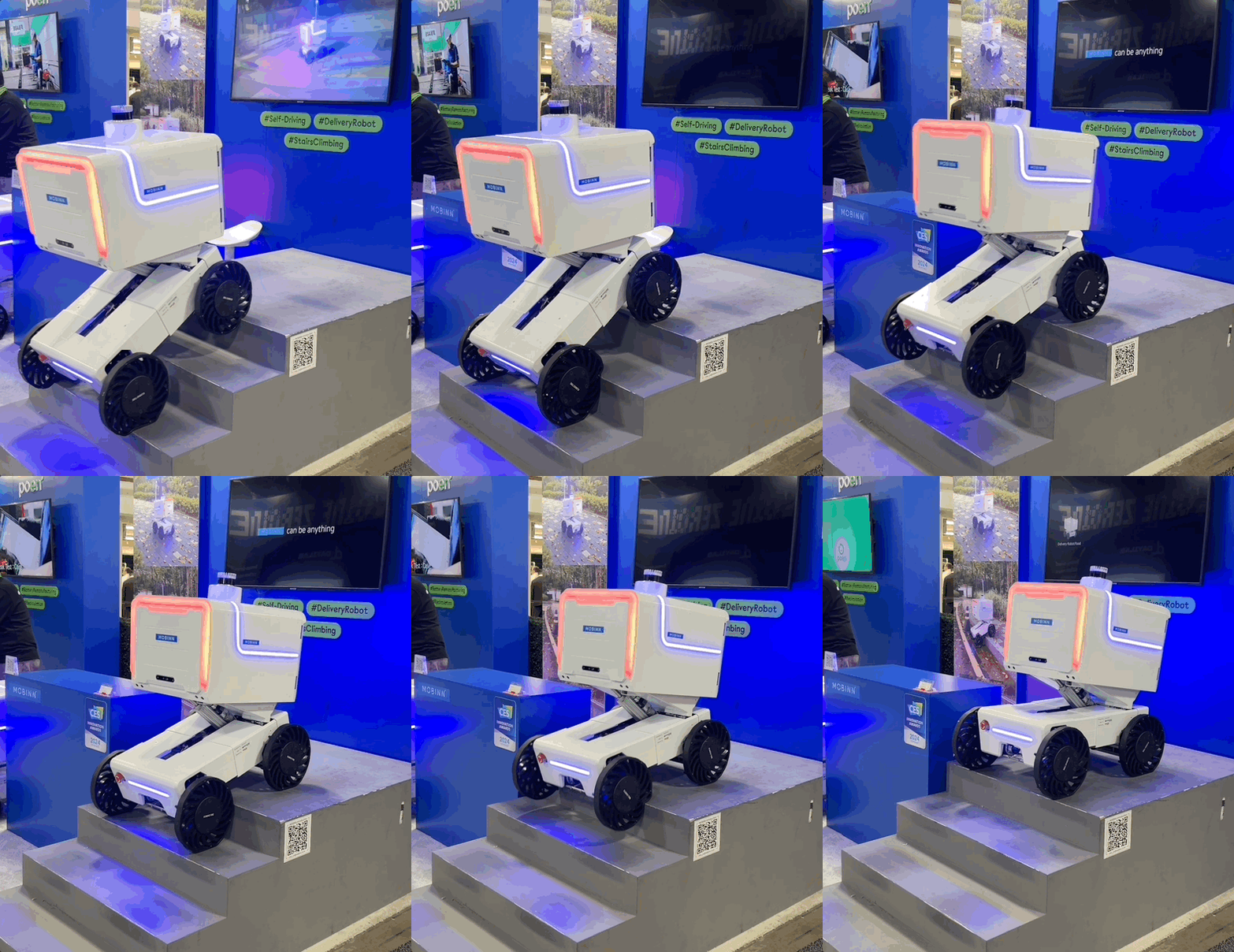
Mobinn, a new spinoff from Hyundai, is taking to CES to show off how its new delivery robot can use its flexible wheels to navigate stairs and changes in elevation to drop off deliveries, with tests already being conducted in Korea. Climb aboard the full story here.

Walmart debuts AI-powered tools, features and a drone
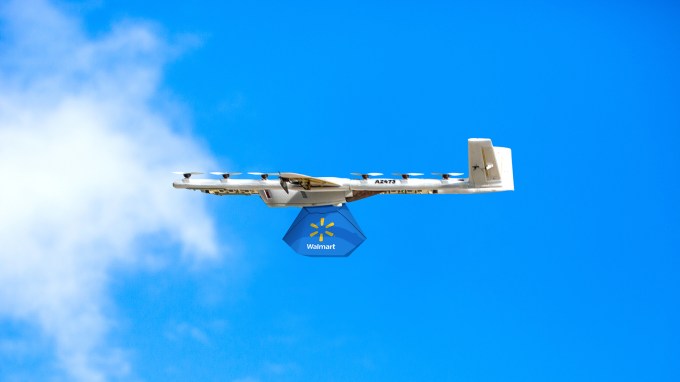
Image Credits: Walmart

Walmart president and CEO Doug McMillon shared some new technologies the retail giant has been working on, including augmented reality (AR), drones, generative artificial intelligence, and other AI tech meant to improve the shopping experience for customers. Within the presentation were some new tools for managing product search and replenishment and a new beta AR social commerce platform called “Shop with Friends.” Get the scoop on all of the new products.

OneCourt’s lets those who are blind ‘see’ the game
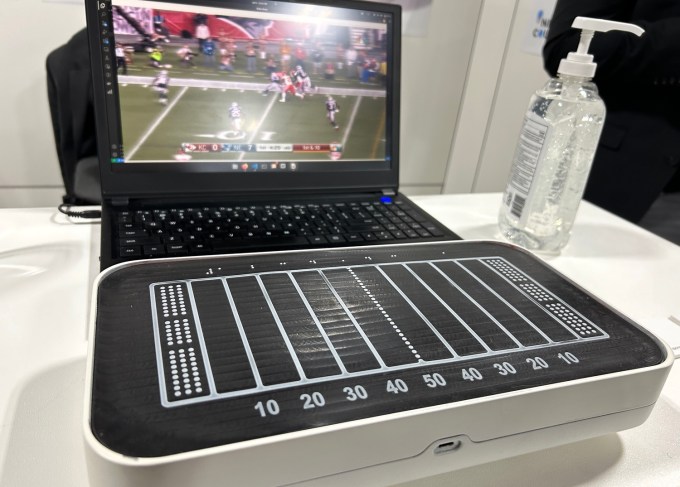
Image Credits: Devin Coldewey / TechCrunch

Put this in one in the “thoughtful” category. OneCourt, a startup founded by recent University of Washington graduates, debuted a lap-top miniature field that enables someone who is blind or with low vision feel the position of sports players and the ball in near real time. The OneCourt team takes this information and transmits it to a haptic display with a touchable cover imitating the pitch or field lines. See how it works.

rabbit jumps at the chance to explain how its r1 is different from other virtual assistants
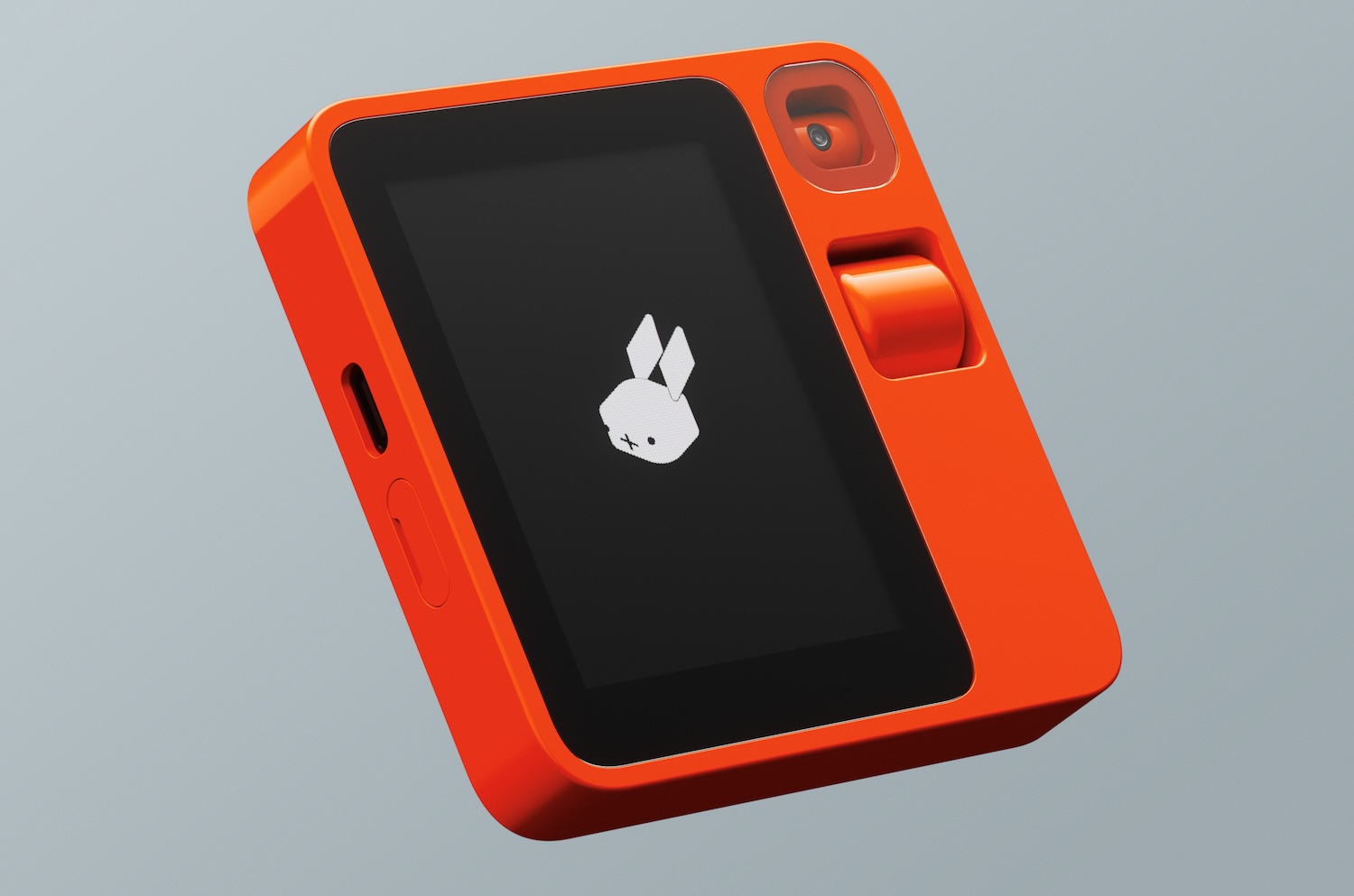
Image Credits: rabbit

Devin writes that the idea behind the $200 rabbit r1 is simple: “it lets you keep your phone in your pocket when you need to do some simple task like ordering a car to your location, looking up a few places to eat where you’re meeting friends, or finding some lodging options for a weekend on the coast. Instead of pulling out your phone, unlocking it, finding the app, opening it, and working your way through the UI (so laborious!), you pull out the r1 instead and give it a command in natural language.” Now hop over to the story for more.

Move over, Siri. The rabbit r1 is a pocket AI assistant that can navigate your apps for you, without you having to pick up your phone.

Check out our preview from #CES2024: https://t.co/R6naLv9ckH pic.twitter.com/aUbz0WW1xI

— TechCrunch (@TechCrunch) January 9, 2024

All electric vehicles, all the time – Honda, VinFast, Google Maps
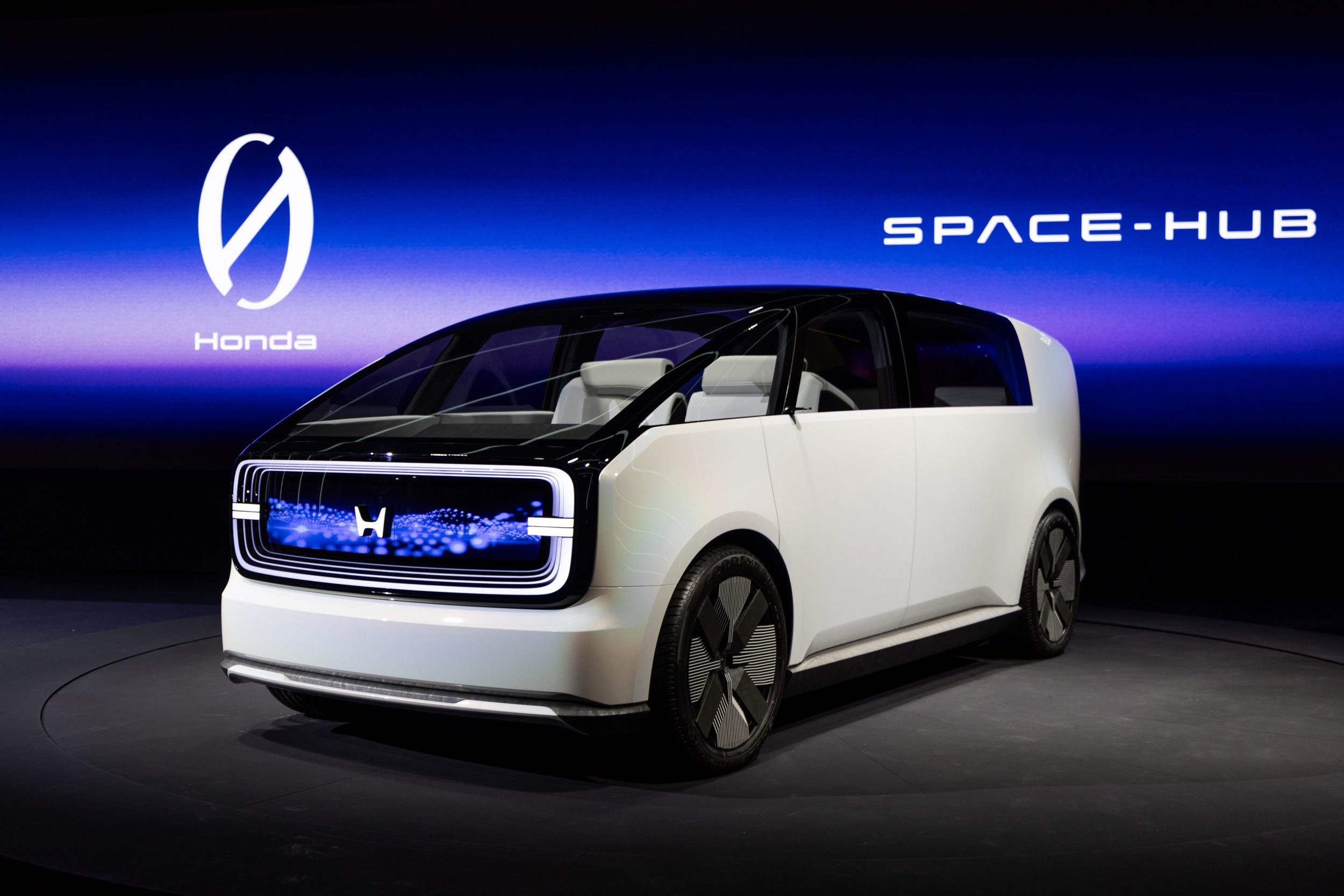
Image Credits: Honda

First, we have your look at Honda’s upcoming 0 series electric vehicles that is a thin and light take on what Harri writes has typically been a thick and heavy EV trend. The automaker teased two concept vehicles, the Saloon and Space-Hub, and said the first commercial model in its 0 series EV lineup will launch in North America in 2026. Get a look at the specs and more.

Next, Vietnamese EV startup VinFast is getting into the electric pickup truck game with the reveal of a new concept called the VF Wild. The truck will have mid-size pickup dimensions, and a folding mid-gate to allow the 5-foot bed to turn into something functionally closer to an 8-foot bed (when the rear seats are down). Not much else is known at the moment. The company also officially announced plans to start selling its smallest EV, the VF3, outside of Vietnam. Learn more.

Meanwhile, Google has a new feature for EV drivers to track and display real-time battery information in Google Maps. The feature is available in EVs with Android Auto, a secondary interface that runs on the user’s phone and wirelessly communicates and projects features like navigation, media and messaging from their Android-based smartphone to the vehicle display. From here, Android Auto shares real-time battery information with Google Maps. Find what your looking for here.

Say hello to the Honda 0 series EVs 🚗 The Saloon and Space-Hub concept models made their debut at #CES2024, along with a new H logo. What do you think of their futuristic designs? pic.twitter.com/sBaQC1UAcj

— TechCrunch (@TechCrunch) January 9, 2024

For Google and Samsung, sharing is caring

Image Credits: Google

Google and Samsung announced they are combining their sharing solutions into a singular cross-Android solution under the Quick Share name. The new offering grows the network of devices that users can share content with across the Android ecosystem, including Chromebooks. By integrating Google’s Nearby Share and Samsung’s Quick Share, the two experiences create “the best default, built-in-option for peer-to-peer content sharing” across all types of devices in the Android and Chromebook ecosystems, according to the companies. Google also announced that it is working with PC manufacturers like LG to expand Quick Share to Windows PCs as a pre-installed app. Quick Share will start rolling out to current Nearby Share enabled devices next month.

These gadgets help with health monitoring from home – Serenity, Vivoo, Tack One
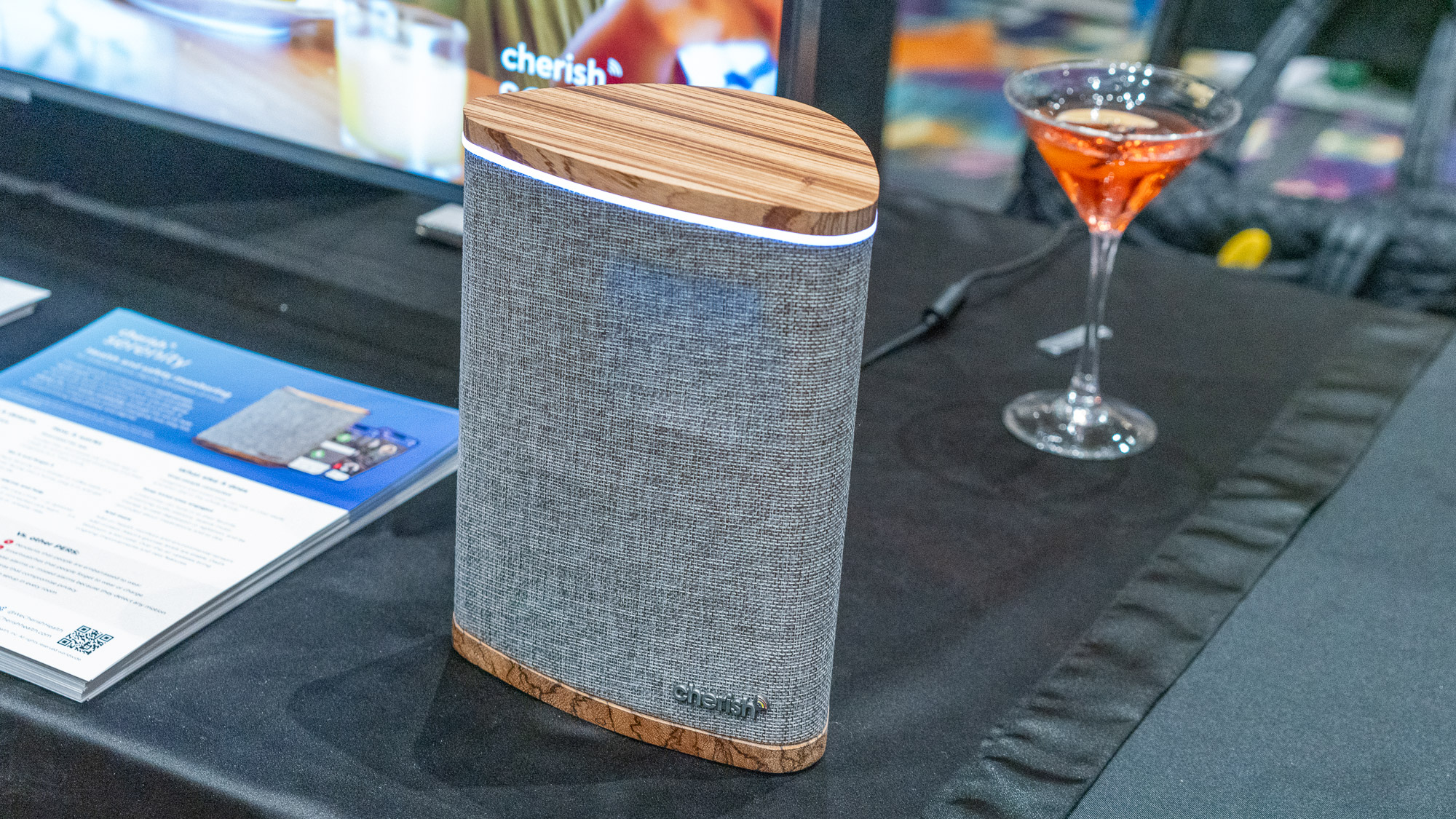
Cherish Health’s Serenity. Image Credits: Haje Kamps (opens in a new window)/ TechCrunch

First, Serenity is showing off its fall-detection system for the first time at CES. It’s easy to use, just plug it in, no app or configurations required. It utilizes advanced radar technology and AI to track up to two individuals within a 40-foot range, even through walls, and offers detailed information about someone’s activities. See how Serenity’s technology sets it apart.

Next, Vivoo, a company offering a broad range of at-home tests, launched a new test that can detect urinary tract infections (UTIs). Vivoo’s At-Home UTI Test streamlines the diagnostic process for UTIs and utilizes your phone’s camera to record and analyze the color readout of the test strips. It then gives advice and context for the readings in its free app. Learn more.

Meanwhile, Tack One, a Singapore-based startup, unveiled the new generation of its Tack GPS Plus, an AI-powered location technology device to help make sure your kids, elderly parents and pets are safe. Here’s what’s new: longer battery life, subscription fees starting from $2.95 monthly for a two-year subscription plan.

The startup launched its GPS tracker in 2021 to address the pain point of the short battery life on the market and lower the tracking service cost, making location tracking extremely affordable. Tack One’s battery lasts 30 days on a single charge and a patent-pending indoor elevation finder feature. Find out more on the specs and pricing.

Get a look at Skyted’s voice-capturing mask

Skyted’s voice capturing mask. Image Credits: Haje Kamps

You read about Skyted’s voice-capturing mask last week, now see what it looks like in real life.

“We launched a mobile application that will give you information about how big your ‘sound bubble’ is. If, for example, you’re sitting in an airplane, you don’t want the person next to you to hear what you’re saying,” says Gauthier Daridon, connectivity engineer at Skyted, in an interview with TechCrunch at CES in Las Vegas. “So our application will explain that you are ‘perceptible’ and ‘intelligible’ at certain distances.” Get more of the scoop on how it works.

Amazon’s AI-related enhancements

Image Credits: Character.AI

Amazon says it will be the first company to support Matter Casting, the video- and audio-beaming feature of the Matter smart home standard, on its smart displays and smart TVs. When it comes to Amazon’s Prime Video app for Android and iOS, users will be able to cast content to supported Amazon devices — starting with the Echo Show 15 — by tapping the new dedicated Matter Casting button. Beyond that, Amazon says that Matter Casting support will arrive on Fire TVs including smart TVs from Panasonic with Fire TV built in, and — on the app side — Plex, Pluto TV, Sling TV, Starz and ZDF later this year. Read more.

And, Amazon announced back in September that it would be coming out with some new tools to build large language model-powered experiences. Today, we got to see them in action, including new generative AI-powered Alexa experiences, including AI chatbot platform Character.AI, AI music company Splash and Voice AI game developer Volley. All three experiences are available in the Amazon Alexa Skill Store. Learn more about Alexa’s experiences.

ElliQ’s eldercare robot gets a reboot

ElliQ 3.0

Image Credits: Intuition Robotics

Intuition Robotics’ ElliQ, which went on the market last March, and found some success through partnerships with assistive care facilities. After some fresh funding, the company unveils ElliQ 3, featuring some design tweaks like a more powerful hardware, increased memory, updated core processor, a lighter apparatus and – of course – generative AI integration. Read more.

Kodiak Robotics’ take on autonomous trucking
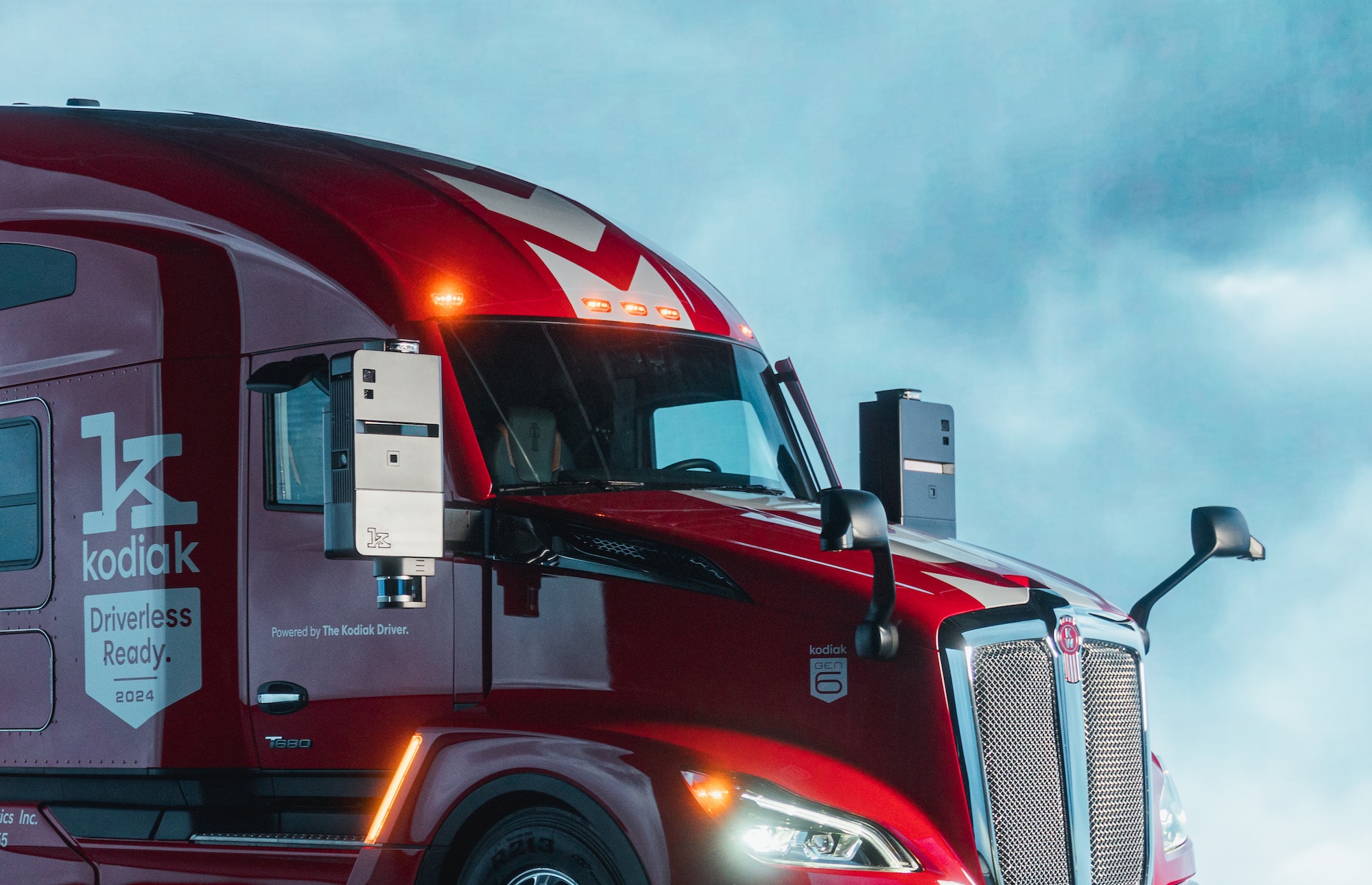
Kodiak Driverless Truck

Image Credits: Kodiak

Autonomous trucking startup Kodiak Robotics revealed a semi-truck that Kirsten reports founder Don Burnette saying “is the linchpin in its plans to launch commercial driverless operations this year.” The company specifically set out to include redundancy in its safety features so that there is a backup in case anything were to fail while on the highway with a driver behind the wheel. Get a breakdown of the mechanical components and safety systems.

Fox, Polygon Labs collaborate to defeat deepfakes

Fox has partnered with Polygon Labs, a developer of scaling networks for Ethereum, to release an open source protocol for media companies to register their articles, photographs and more. Called Verify, Fox and Polygon are pitching the protocol as a means for outlets to protect their IP while letting consumers verify the authenticity of content. Learn more about the protocol.

Ultrahuman unveils ‘home health’ tracker
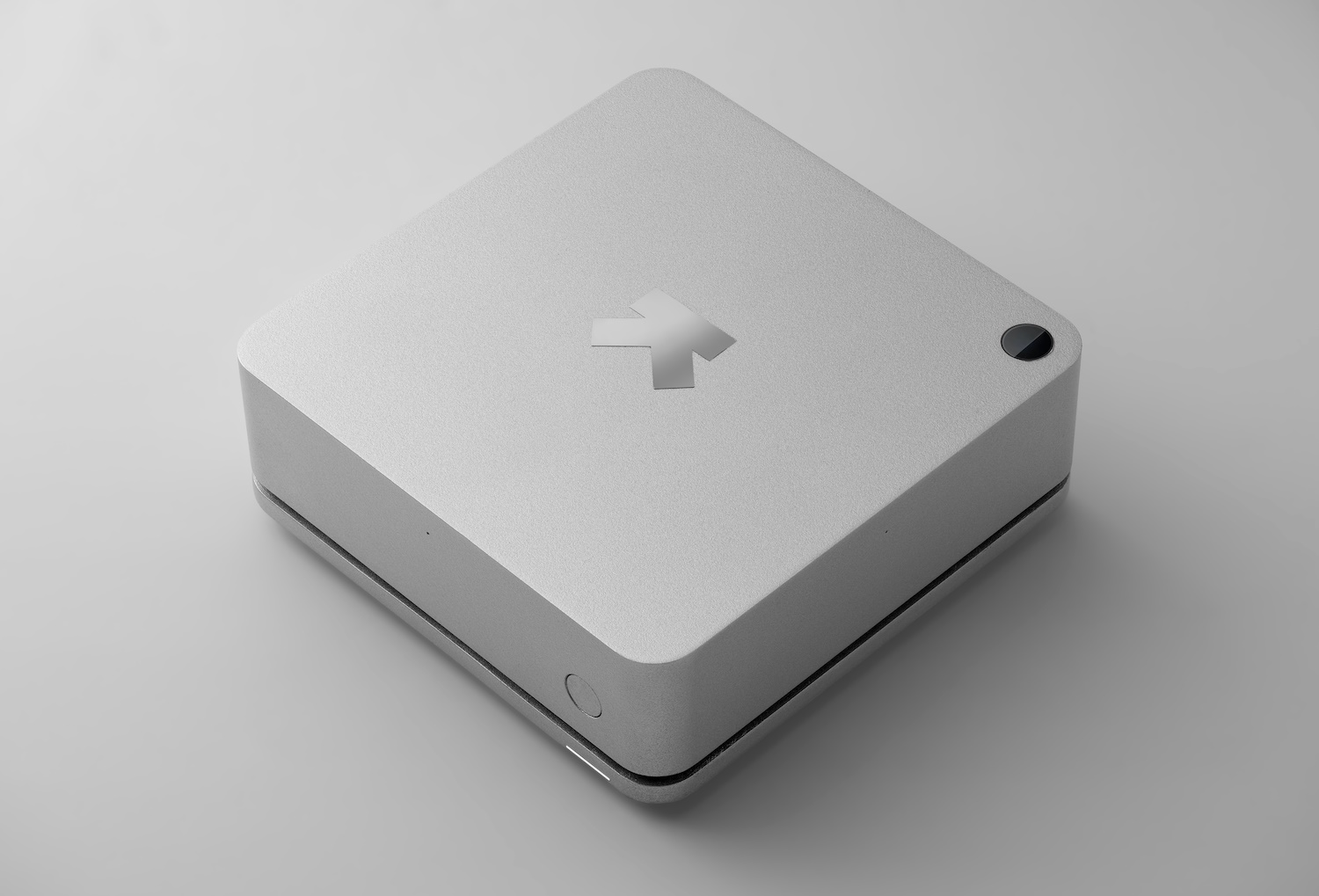
Image Credits: Ultrahuman

Indian wearable startup Ultrahuman is getting into the smart home game with the upcoming launch of connected hardware that’s designed to monitor the “health” of your home, as its marketing puts it. The device, which it’s calling the Ultrahuman Home, has a price of $349 and a shipping date slated to start in July. Check out the specs.

JAN. 8

Pivotal begins personal aircraft sales

From storage to flight in 30 minutes. A 16′ road trailer can hold everything needed to take the Helix to uncongested, Class G airspace areas. Image Credits: Pivotal

Pivotal, which is backed by Larry Page, has begun U.S. sales of its lightweight electric Helix aircraft, which notably does not require a pilot’s license to be able to fly. That doesn’t mean those paying at least the $190,000 base price will go without mandatory training, a number of rules and regulations still apply. You can get the full breakdown of their launch pricing and specs right here.

Will.i.am’s new startup mixes music as you drive
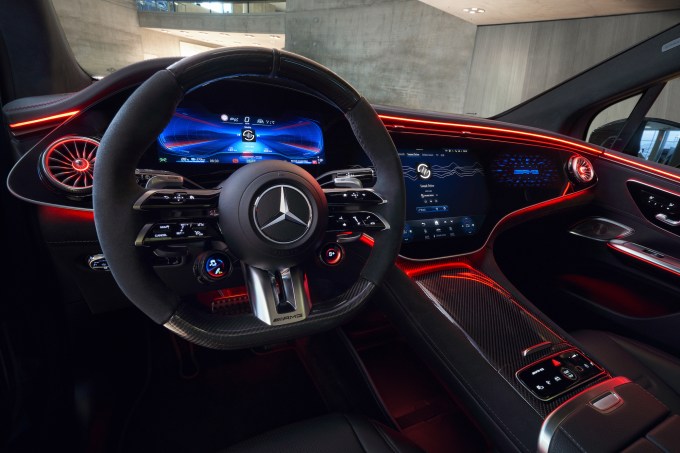
mercedes will.i.am sound drive ces

Mercedes-AMG and will.i.am launch immersive MBUX SOUND DRIVE experience at CES 2024. Image Credits: Mercedes-Benz

If you thought that sounded a little ridiculous, contributor Tim Stevens did too — at least until taking part in the startup Sound Drive’s demo at CES that left him feeling surprisingly impressed with the underlying tech. Read his full impressions of what it’s like to experience music “conducted by the road” here.

Sony highlights mobility partnerships, creators and content authenticity

Sony took the final major press conference slot on Monday, with an expected focus around creators, the success of its IP across its gaming, film and streaming studios and a focus on its partnership with Honda to imagine the mobility space as a “creativity space.” The latter of which was demonstrated in part by teasing Fortnite in its Afeela car and driving it on stage with a PlayStation 5 controller. Its “digital birth certificate” also reminded us of the brighter side of NFTs, which Haje Jan Kamps explains in detail here.

Kia’s new modular EV van lineup
Kia commercial van EV PBV lineup

Kia PBV Concept Lineup. Image Credits: Kia

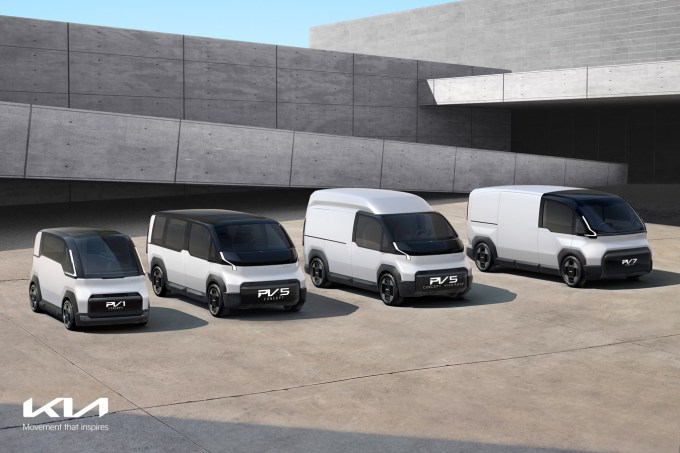
Kia’s new EV vans come with a modular twist. In addition to using a modular powertrain, the vehicles will also have modular tops that allow for many different cabin options. But they remained vague on pricing, specs and expected launch dates for this new fleet of commercial EVs. Read more.

Samsung brings back Ballie; renews green initiative

Samsung Ballie

Image Credits: Samsung

Meet the new and improved Ballie, Samsung Electronic’s home robot, which it previewed today. It’s around the size of a bowling ball with a battery designed to last two to three hours. Ballie sports a spatial lidar sensor to help it navigate rooms and obstacles, as well as 1080p projector with two lenses that allows the robot to project movies and video calls even act as a second PC monitor. Learn more.

Expanding beyond cute, rolling robots, Samsung showcased its wider initiatives for connected homes. Aside from expected UI and feature updates for its existing SmartThings home automation platform, Samsung showed off a “map view” for users, that creates an interactive home map that even includes animated avatars of residents and pets. Learn more.

Also, Samsung devoted some of its keynote speech to its commitment of sustainability. “We start by incorporating recycled materials into some of our most loved products, such as recycled fishing nets in our Galaxy,” said Inhee Chung, VP of corporate sustainability at Samsung. “Smartphones, recycled plastic in our TVs, and recycled aluminum in our bespoke refrigerators. Recycled plastic accounted for 14% of the total plastic used in our products in 2022. And we’re working towards increasing this amount.” Read more.

Remember Samsung's Ballie? The round robot first revealed in 2020 has made a comeback at #CES2024. https://t.co/CCO8T1g0lH pic.twitter.com/OkrXr8jgiE

— TechCrunch (@TechCrunch) January 8, 2024

X1 Interpreter Hub: A new real-time translator

Image Credits: Timekettle

Timekettle announced the X1 Interpreter Hub, a more robust solution, designed for meetings. Timekettle calls it “the world’s first multi-language simultaneous interpretation system.” The system works out of the box, without having to download a separate app. For in-person meetings, two devices are touched together to initiate conversation translation. The handheld devices house earbuds, similar to past Timekettle products. All told, the X1 is capable of supporting up to 20 people at once in five different languages. Read more.

LG’s transparent television

LG transparent television, CES 2024

LG Signature OLED T. Image Credits: LG

Televisions aren’t naturally pretty or used as a design feature, but LG Electronics is out to change that perception. Today, consumer technology giant unveiled what it touts is “the world’s first” wireless transparent OLED TV. The LG Signature OLED T combines a transparent 4K OLED screen with LG’s wireless video and audio transmission technology.

Breathe easy with bio-engineered houseplants
Neoplants at CES 2024.

Neoplants at CES 2024. Image Credits: Haje Kamps / TechCrunch

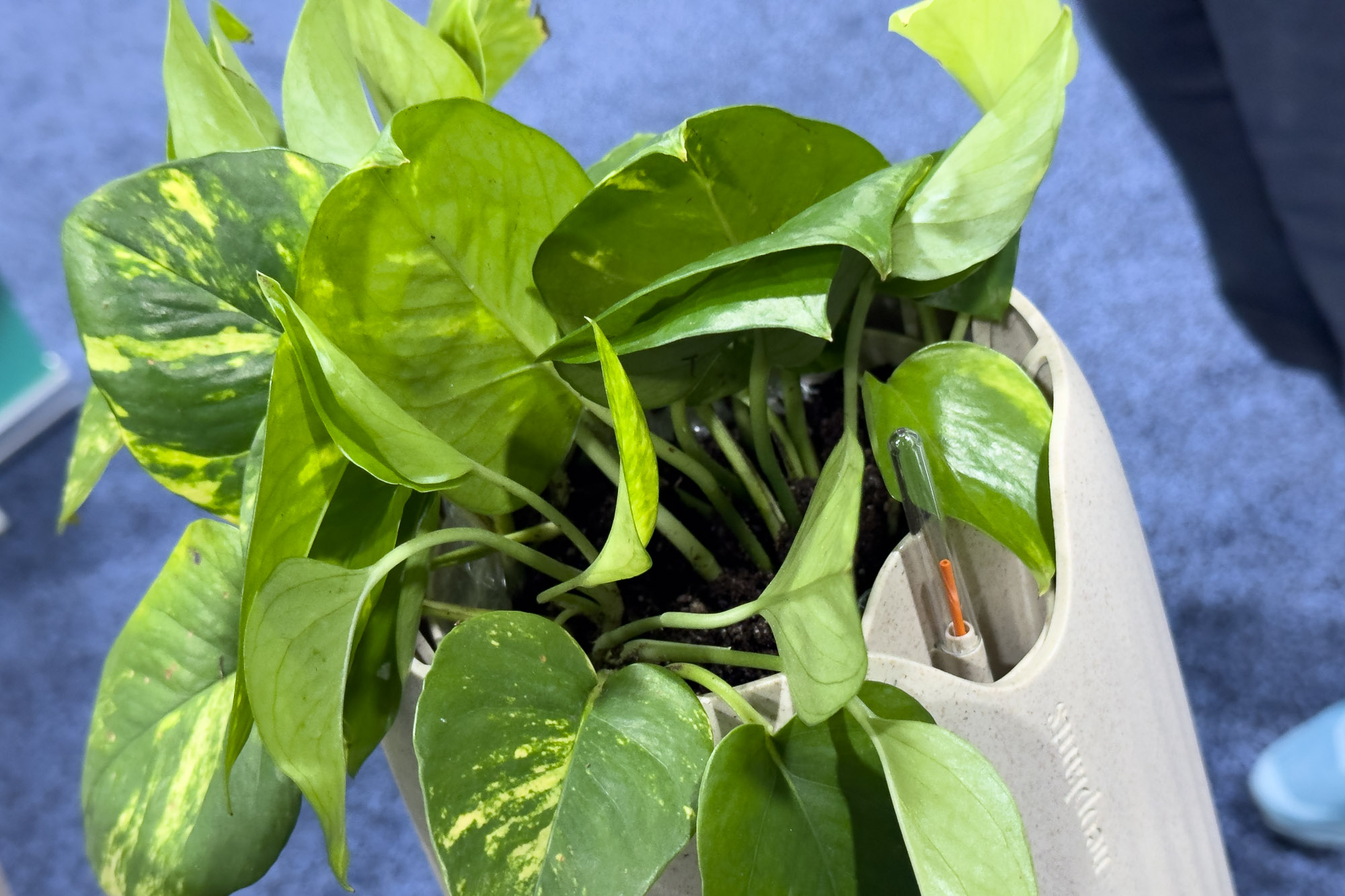
French startup Neoplants is showing off its progress with its houseplants that work as air purifiers designed for the home. The bio-engineered plants can, according to the company, replace 20 “regular” houseplants, as measured by how many pollutants the plants can remove from the air.

More from Samsung: bigger, foldier, more rollable displays

Image Credits: Samsung

Ahead of Samsung Electronics’ press conference later today, we look at some of its product plans that include a “new generation of products that can be folded inward and outward,” along with “monitor-sized” folding and sliding OLEDs. Samsung also unveiled a “Transparent MICRO LED” display for the first time.

Nvidia gets its game on
NVIDIA Jetson Platform Expansion

GeForce RTX 4080 SUPER. Image Credits: Nvidia

Today, Nvidia gets into artificial intelligence in a big way with the unveiling of its GeForce RTX, including the GeForce RTX 40 Super series of desktop graphics cards. Much of these are meant for gaming, and Nvidia said 14 titles will get the RTX upgrade treatment, including Horizon Forbidden West, Pax Dei, and Diablo IV. The RTX 4080 Super starts at $999.

Nvidia also announced that its partnership with Getty Images will include a new service for iStock customers, which can create licensable images trained on the existing iStock photo library.

Nvidia also showed off ACE, which uses AI to create unique reactions from in-game NPCs, which gives an uncanny valley sheen on top of prompt response dialog.

At #CES2024, NVIDIA demonstrated their Avatar Cloud Engine (ACE) for gaming, which aims to give NPCs AI-generated dialogue. pic.twitter.com/QKRervzvjY

— TechCrunch (@TechCrunch) January 8, 2024

More chip updates from AMD

Speaking of chips, AMD debuted its new Ryzen 8000G processors for the desktop, with a big focus on their AI capabilities.

Bosch’s in-car eye-tracking

Bosch driver monitoring system for drowsy driving

Image Credits: Bosch

Bosch is showing off two technologies this week in eye-tracking while driving: One will see that you have tired eyes and ask if you need an espresso when you arrive home. If yes, its connect technology will tell your fancy machine to have one ready. The other is a bit more complicated in that it’s developed to track what you’re looking at as you drive.

Smart cooking
smart cooking device control panel

Image Credits: Haje Kamps (opens in a new window) / TechCrunch (opens in a new window)

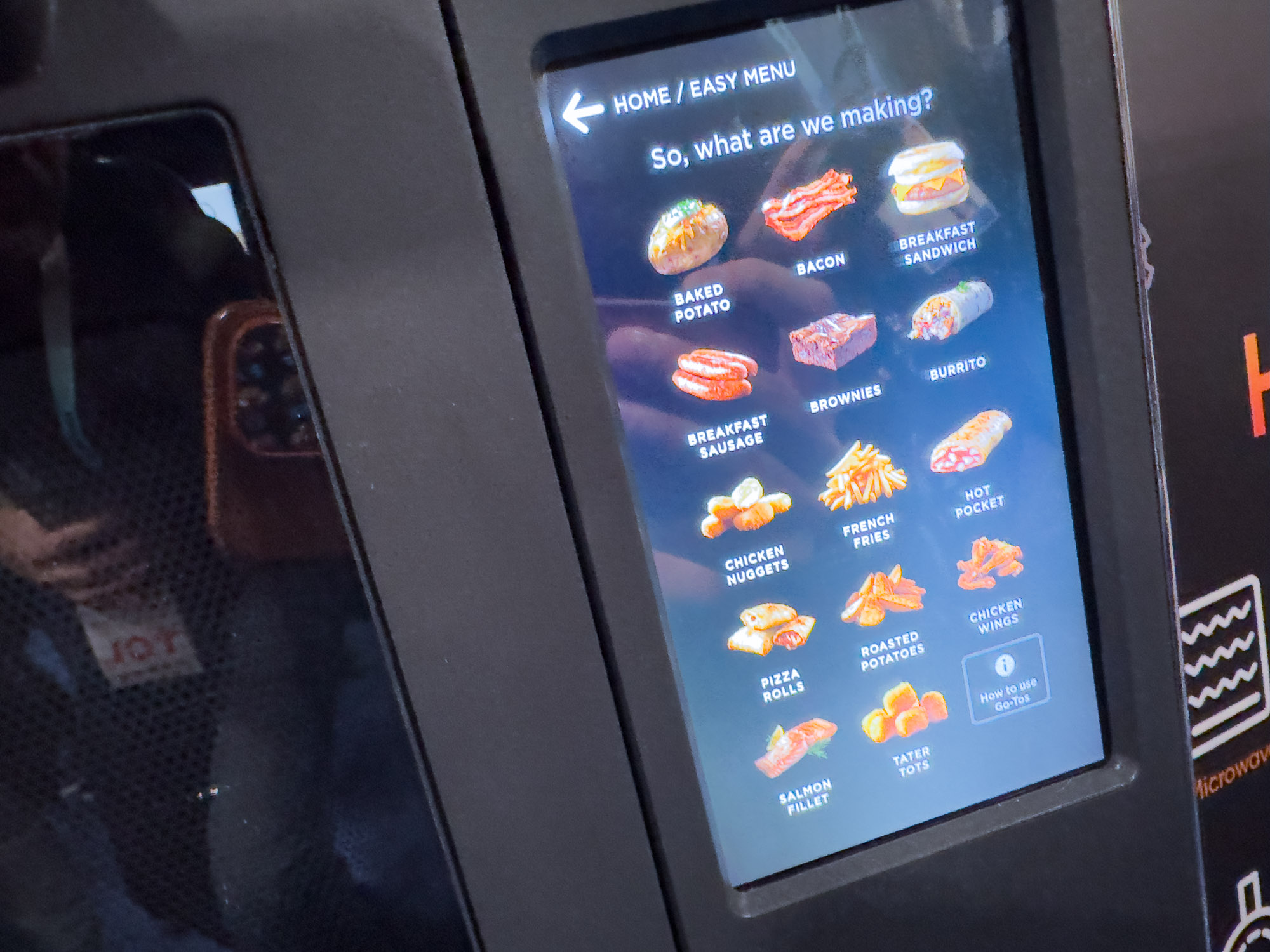
We have a collection of small home appliances for the kitchen, from grills to smart microwaves and everything in between, that is sure to get you cooking this year, if you aren’t already.

ChatGPT in Volkswagen
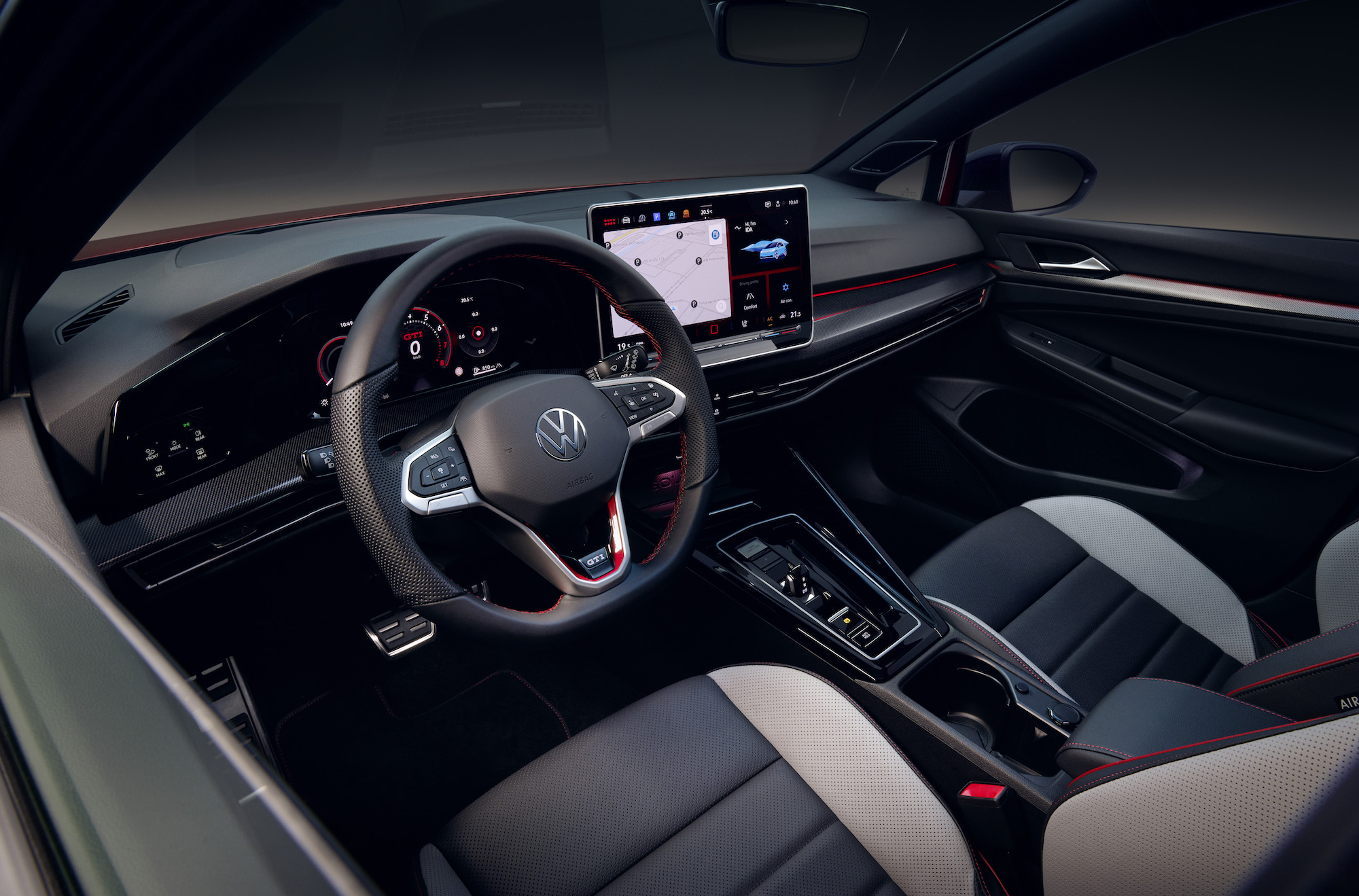
An image showing the interior of a new Volkswagen Gold including the steering wheel and touchscreen.

Image Credits: Volkswagen

The German automaker plans to add an AI-powered chatbot into all Volkswagen models equipped with its IDA voice assistant. For now, it’s not available in the U.S.

Apple Vision Pro to go on sale February 2
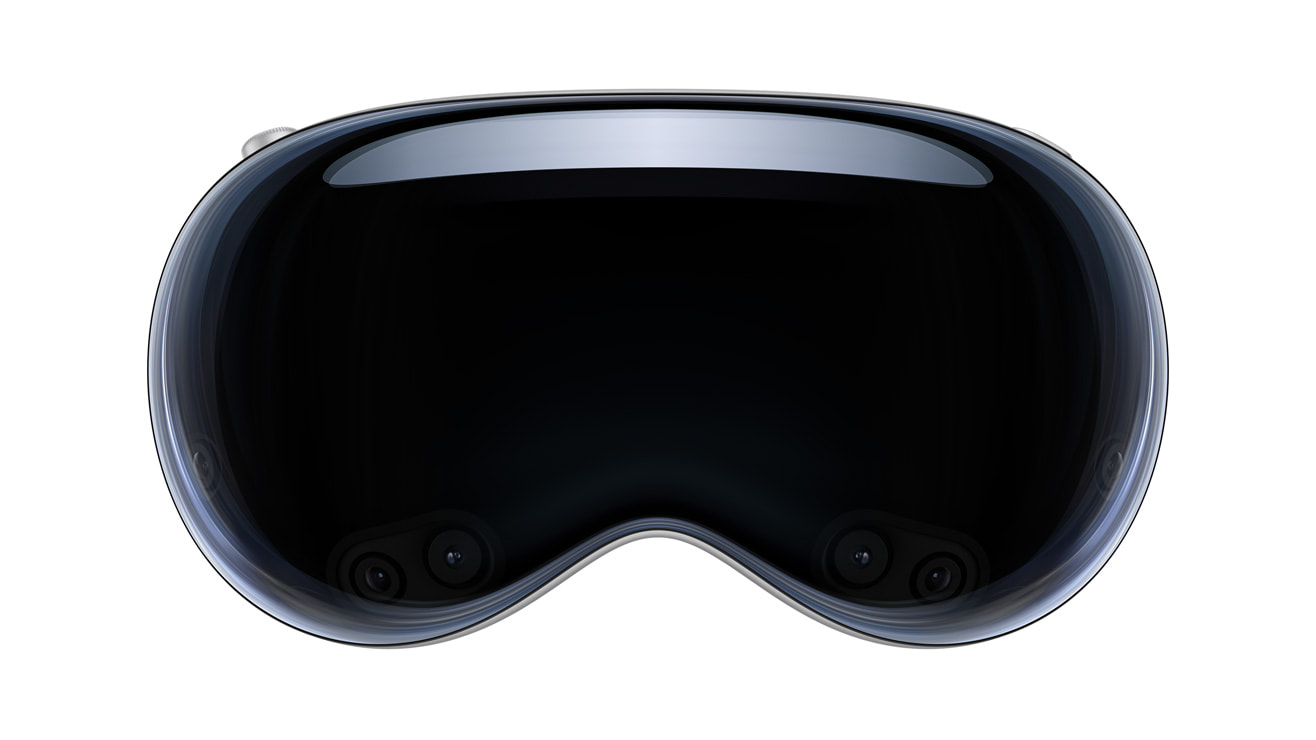
Image Credits: Apple

And Apple, in a surprise announcement preempting CES, stole some of the show’s thunder by announcing the Vision Pro will be available in the U.S. The consumer electronics giant confirmed that the Vision Pro will be available in the U.S. starting February 2. Pre-orders for the $3,500 spatial computing device open Friday, January 19.

Some companies made announcements ahead of the big event. Check out what’s already made headlines:

Withings’ new multiscope device checks vitals for telehealth visits

Invoxia has a new smart collar suitable for both cats and dogs

This app lets restaurants and coffee shops charge to use the bathroom

Aurora and Continental pass first major hurdle in commercial self-driving trucks deal

This startup is bringing a ‘voice frequency absorber’ to CES 2024

For just $139, this startup turns your iPhone into a BlackBerry-era relic

Qualcomm next-gen XR chip promises up to 4.3K resolution per eye

Urbanista integrates Powerfoyle tech with solar-powered headphones

Moonwalker robotic shoes get lighter and smarter

Read more about CES 2024 on TechCrunch

This AI startup made a $199 gadget that replaces apps with ‘rabbits’ — and it might just work

ZDNET CES 2024 cover art

As companies race to implement AI capabilities onto our most personal gadgets, one Santa Monica startup may have everyone beat by taking the road less traveled.

Also: CES 2024: What's Next in Tech

At CES today, Rabbit Inc. launched R1, a $199 consumer device powered by a natural-language operating system, with the goal of making app interactions obsolete.

"We've come to a point where we have hundreds of apps on our smartphones with complicated UX designs that don't talk to each other. As a result, end users are frustrated with their devices and are often getting lost," said Rabbit CEO, Jesse Lyu.

Lyu's not wrong. While it's become habitual for humans to interact with apps and web interfaces in a systematic way — scrolling through drop-downs, long-tapping on text to copy and paste, filtering searches, etc. — an AI that's trained to fulfill those tasks saves us time and energy.

At the core of Rabbit R1 is the company's "Large Action Model," an AI foundation that can train "rabbits" to see and learn how a user interacts with their typical apps and web experiences and then reproduce it, when asked for, on a customized cloud platform. This way, instead of requiring users to download multiple apps on their personal devices, the Large Action Model can access the services via a private web portal, dubbed "Rabbit hole," in which users can sign into their accounts, allow permissions, and more.

Also: Humane launches $699 AI-powered projector to replace your phone

"Similar to handing one's unlocked phone to a friend who will help order takeout, Rabbit OS (the device's operating system) performs tasks for users with their permission, without preemptively storing their identity information or passwords," the company explains in its press release.

The focus on security extends to the industrial design of the R1, which was made in partnership with Teenage Engineering, the firm responsible for some of the most creative designs in tech, including the Nothing Phone.

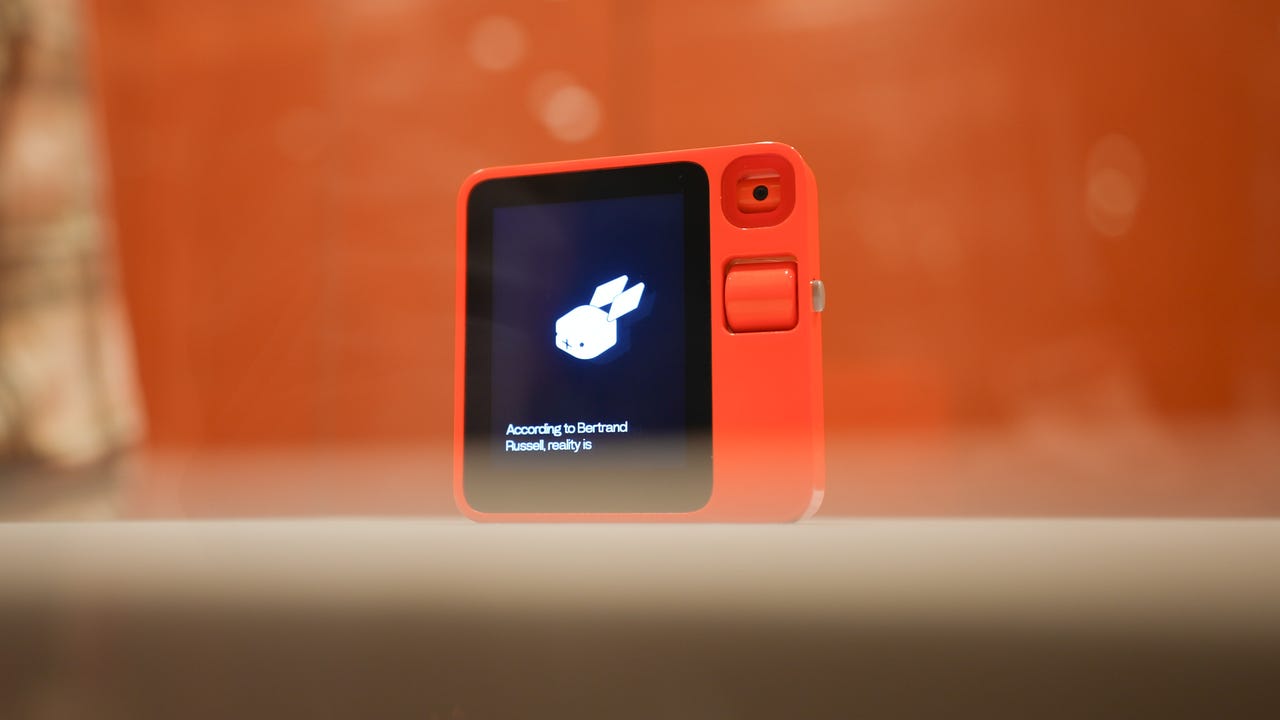
Besides the pocketable figure of the R1, there's a rotating "Rabbit eye" camera that, by default, covers its view by facing downward. The camera can be used for video calls, as well as "executing some of the most advanced computer vision applications," according to the company. I'll have a greater sense of what that chain of tech jargon implies during my CES demo.

Also: Apple reportedly eyeing generative AI push and Siri overhaul for the iPhone

Also, the microphone on the R1, mainly used for voice commands, only turns on when you press the side-mounted push-to-talk button. Other design elements include a 2.88-inch touchscreen display, a scroll wheel (pictured above) for navigating the OS, and a USB-C port for charging. The R1 is equipped with a 1,000mAh battery, 128GB of storage, and a SIM slot for mobile data.

Preorders for the Rabbit R1 begin today, with a rather accessible price (as far as CES announcements go) of $199, no monthly subscription required. By the time you're reading this, I'll be getting a hands-on demo of the Rabbit R1, seeing if one of the first standalone AI devices in 2024 can truly live up to the hype. Stay tuned for all of my initial thoughts.

Getty Images launches a new GenAI service for iStock customers

Getty Images launches a new GenAI service for iStock customers Kyle Wiggers 9 hours

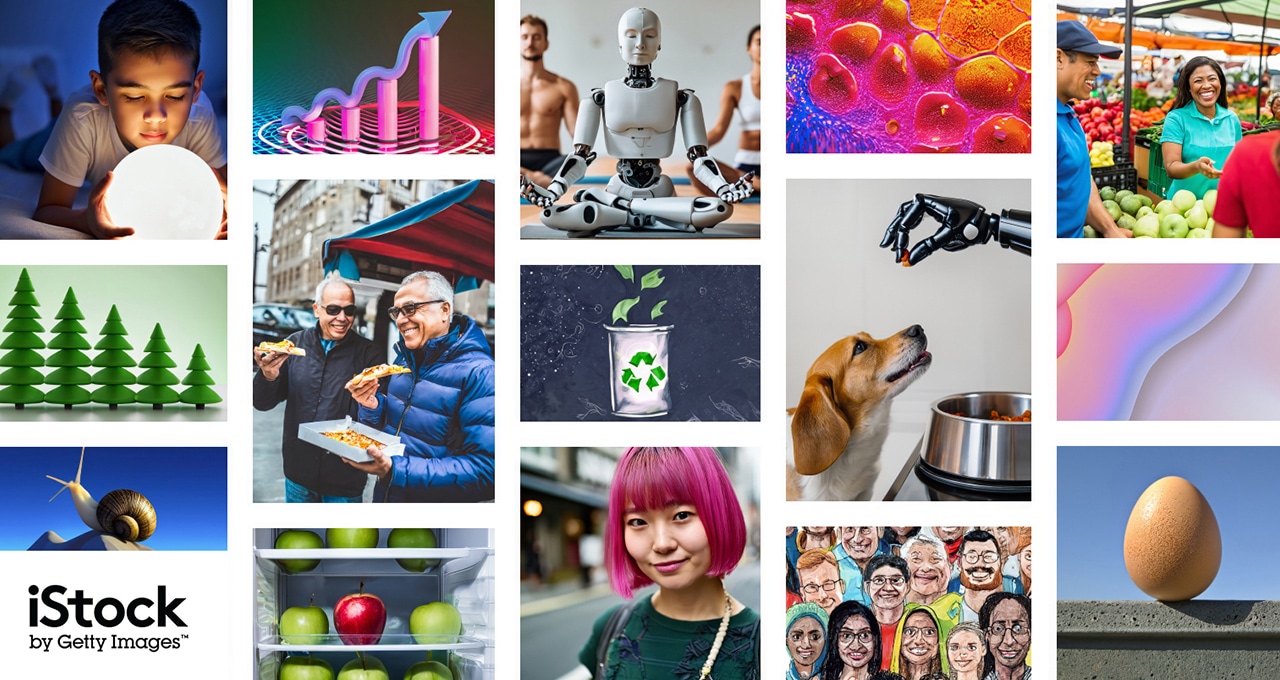
Getty Images, the stock media company, announced a new service this week at CES 2024 that leverages AI models trained on Getty’s iStock stock photography and video libraries to generate new licensable images and artwork.

Called Generative AI by iStock, the service, powered in part by tech from Nvidia, has been designed to guard against generations of known products, people, places or other copyrighted elements, Getty claims. Available in 75 languages, it can modify images as well as generate new ones and optionally be integrated with existing apps and plugins via an API.

The cost is $15 per 100 generated images.

“Our main goal with Generative AI by iStock is to provide customers with an easy and affordable option to use AI in their creative process, without fear that something that is legally protected has snuck into the data set and could end up in their work,” Grant Farhall, iStock’s chief product officer, said in a press release.

Generative AI by iStock

A range of images created with Getty’s new Generative AI by iStock.

The launch of Generative AI by iStock — Getty’s second gen AI tool — comes as the copyright debate over AI heats up.

Gen AI models, which “learn” from billions of examples of artwork, ebooks, essays and more to generate human-like text and images, tend to regurgitate those examples when prompted in particular ways. (See the fake Disney posters generated by Microsoft’s chatbot.) That’s problematic in cases where the examples are under copyright and the creator of the model didn’t obtain permission — or pay a fee — to use them.

In a piece published this week in IEEE Spectrum, noted AI critic Gary Marcus and Reid Southen, a visual effects artist, show how AI systems, including OpenAI’s DALL-E 3, regurgitate data even when not specifically prompted to do so. “[There’s] no publicly available tool or database that users could consult to determine possible infringement, nor any instruction to users as how they might possibly do so,” they write.

Some companies developing gen AI apps argue that they’re protected by fair use doctrine, at least in the U.S. But it’s a matter that’s unlikely to be settled anytime soon.

Over the past year or so, artists have filed suit against Stability AI, Midjourney and DeviantArt, arguing that models released by the companies infringe on their copyrights by training on the artists’ works and generating outputs in their styles. Separately, Getty Images has sued Stability AI for allegedly copying and processing millions of images and associated metadata owned by Getty in the U.K.

A handful of vendors have begun offering to pay the legal fees of customers implicated in copyright lawsuits arising from their use of gen AI tools. Generative AI by iStock has a policy along those lines, too — presumably as a last resort of sort. Any licensed visual that a Generative AI by iStock customer generates comes with $10,000 in legal coverage, Getty says.

Read more about CES 2024 on TechCrunch

AI Acquisitions: Who’s Leading the Charge and Why?

"Explore the dynamic world of AI acquisitions by major tech players. Dive into strategies, challenges, and impacts

Artificial Intelligence (AI) has a significant impact on various sectors like healthcare, finance, education, and entertainment. This technology is reshaping business operations, demonstrating its undeniable potential to transform various industries. However, developing AI solutions is not without its challenges. It requires a unique combination of specialized skills, substantial resources, and vast data sets.

In response to these complexities, major tech players have strategically opted for a different approach. Rather than undertaking in-house development, they have chosen to acquire AI startups. This tactical shift not only expedites their entry into the competitive AI landscape but also positions them to exploit the innovative potential present within these specialized entities.

The AI Acquisition Paradigm

From 2010 to 2023, the AI acquisition landscape has witnessed significant evolution. There was a notable rise in acquisitions until 2021, peaking at 231, followed by a decline to 189 in 2023. Potential factors contributing to this drop include the economic disruptions caused due to COVID-19 pandemic, which may have slowed down investment activities. Furthermore, the AI market has matured and saturated, with major tech companies having already absorbed many promising startups.

Leading this acquisition trend are the tech giants collectively known as FAMGA (Facebook, Apple, Microsoft, Google, and Amazon). They have consistently dominated the acquisition scene, accounting for most acquisitions. In 2023, FAMGA was responsible for 76 out of the 189 acquisitions. Similarly, in 2021, they accounted for 76 out of 231 acquisitions. Among the FAMGA members, Apple leads with 29 acquisitions, followed by Google with 15, Microsoft with 13, Facebook with 12, and Amazon with 7. Their collective spending on AI acquisitions from 2010 to 2023 amounted to a substantial $19.7 billion.

The FAMGA members pursue distinct strategies when it comes to AI acquisitions. Apple prioritizes computer vision, natural language processing, voice recognition, and healthcare to enhance its products. Google focuses on expanding AI in search, advertising, cloud, healthcare, and education, with a particular emphasis on deep learning.

Likewise, Microsoft strengthens its cloud and enterprise software through acquisitions in natural language processing, computer vision, and cybersecurity. Facebook aims to improve social media through computer vision, natural language processing, and virtual reality. Similarly, Amazon diversifies in e-commerce, cloud, healthcare, and entertainment, with an emphasis on natural language processing, computer vision, and robotics.

Despite their unique objectives, FAMGA members share common interests in technologies such as natural language processing and computer vision, which drive their AI acquisition strategies.

The Advantages of Acquiring AI Startups

Acquiring AI startups offers significant benefits to tech giants. It allows them to adopt advanced technology and gain access to valuable talent, which in turn opens doors to new markets. For instance, Apple's acquisition of Siri in 2010 enabled the integration of a voice assistant into the iPhone 4S.

Similarly, Google's acquisition of DeepMind in 2014 improved services like search and recommendations. Microsoft's 2017 acquisition of Nuance enhanced cloud and enterprise software through enhanced speech recognition.

In addition to tech benefits, these acquisitions also provide access to talent that enhances AI capabilities. Microsoft, for example, hired the co-founders of Maluuba, while Facebook brought in the co-founder of Wit.ai for natural language and speech expertise.

Moreover, these acquisitions facilitate expansion into new markets and product lines. Intel's acquisition of Nervana in 2016 strengthened its position in AI chip development, and Salesforce's acquisition of MetaMind in 2016 resulted in the creation of the AI platform Einstein.

The Challenges of Acquiring AI Startups

Acquiring AI startups also poses challenges for acquirers. These challenges include issues related to data privacy, ethics, legal disputes, regulatory hurdles, and risk aversion. For example, Facebook's acquisition of WhatsApp in 2014 raised concerns about data usage, resulting in a significant fine from the European Commission. To address ethical concerns, Google established an ethics board after acquiring DeepMind in 2014 to oversee sensitive research.

Moreover, some acquisitions have led to legal disputes and financial consequences. Uber's acquisition of Otto in 2016, for instance, resulted in a lawsuit by Waymo. Additionally, regulatory approvals may be required, as seen in IBM's acquisition of Promontory Financial Group in 2016, where regulatory clearance was needed to leverage expertise in training AI.

Acquiring AI startups can also face skepticism and implementation challenges. Amazon's acquisition of Kiva Systems in 2012, for example, encountered resistance and a prolonged implementation process for warehouse robots.

The Impact of AI Startups Acquisition

The acquisition of AI startups by big tech companies has a significant influence on the startups themselves. The outcomes of these acquisitions vary based on factors such as the preservation or loss of autonomy, culture, and innovation within the acquired company. For instance, DeepMind after being acquired by Google, has maintained its autonomy, and continued to promote innovation, exemplifying a successful integration that values creativity.

On the other hand, Siri lost its autonomy and became Apple's voice assistant. Likewise, cultural clashes, such as the case of WhatsApp with Facebook, have led to the departure of key personnel. However, some acquisitions have managed to preserve cultural alignment. Instagram, for example, remained culturally aligned with Facebook after its acquisition in 2012, and its co-founders continued to be involved until 2018.

In terms of product innovation, the outcomes of these acquisitions can vary. Some startups, like Zoox, which was acquired by Amazon in 2020, have flourished with increased resources, leading to the launch of a self-driving taxi service in 2021.

However, there are also instances where acquisitions have faced setbacks. Uber's acquisition of Otto in 2016, for example, experienced challenges and ultimately discontinued its self-driving truck project in 2018 due to legal disputes with Waymo. These examples demonstrate the diverse outcomes and impacts of acquiring AI startups, including both successes and challenges for the involved companies.

Looking at the broader impact on innovation, competition, and regulation, these acquisitions shape the AI discipline. The influence on innovation is dependent upon the preservation of autonomy and culture. For example, Google's acquisition of DeepMind in 2014 promoted innovation by maintaining cutting-edge research. In contrast, Uber's acquisition of Otto in 2016 resulted in operational shutdowns and legal disputes, hindering innovation in autonomous vehicles.

The Future Outlook and Implications of AI Acquisitions

Looking ahead, the future of AI acquisitions holds significant promise. The AI market is projected to reach $733.7 billion by 2027, driven by a compound annual growth rate of 42.2%. This growth is fueled by factors such as the increasing adoption of cloud-based services, rising demand for intelligent solutions, and advancements in AI technologies and research. With over 40 AI segments, including computer vision, natural language processing, robotics, and healthcare, the landscape is constantly expanding through new startups and innovative applications.

In addition, global inclusivity is gaining prominence, with AI startups from various regions contributing to the market. The top 10 countries with the most AI startups in 2020 were the United States, China, India, the United Kingdom, Israel, Canada, Germany, France, Japan, and South Korea, collectively representing 77% of the total number of AI startups and 88% of the total funding raised. It is worth noting that startups from countries like Brazil, Nigeria, Singapore, and Australia are also making noteworthy contributions.

The Bottom Line

The AI acquisition landscape, led by major tech players like FAMGA, has experienced a surge in the last few years. Despite challenges, there are significant benefits for tech giants, including accelerated entry, talent acquisition, and market exploration. The future of the AI market appears promising due to global inclusivity, diverse segments and projected substantial growth. The success of AI startups is influenced by the complex dynamics of data, talent, capital, innovation, and competition, while acquisitions deeply impact innovation, competition, and regulation.

How to use Google’s AI-powered NotebookLM to organize your research

Google's NotebookLM

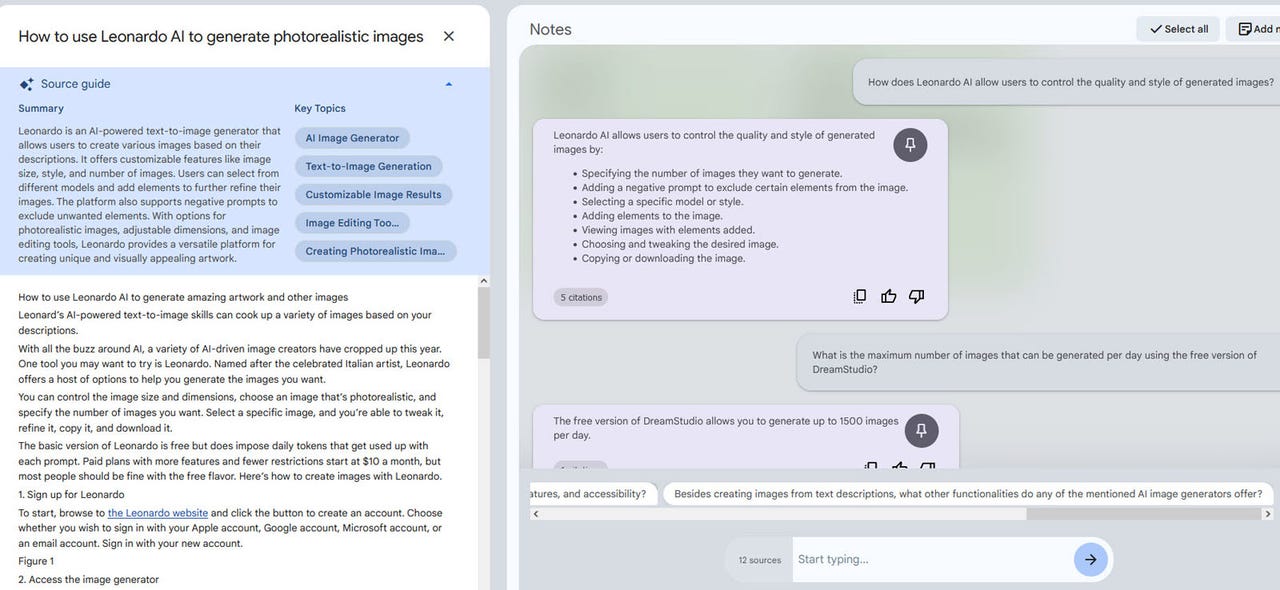
Gathering and managing research for any type of project can be a daunting task as you have to try to organize the different kinds of information you collect. One tool that aims to ease the process is Google's NotebookLM. Using AI, NotebookLM will collate the various sources of information you add, summarize the key details, and even answer any questions you ask about the research you've gathered.

Also: Have 10 hours? IBM will train you in AI fundamentals — for free

Available to anyone through Google's experimental Labs service, NotebookLM acts as part note taker, part collaborator, part data collector, and part librarian. The tool works by prompting you to create a virtual notebook designed to hold all the text, documents, and other research that you compose or collect. The goal is to provide easy access to all of the information you need as you write your paper, conduct your research, or develop your project.

For now, NotebookLM is available only in the US for people 18 and over. Here's how it works.

How to use NotebookLM

Walmart debuts generative AI search and AI replenishment features at CES

Walmart debuts generative AI search and AI replenishment features at CES Sarah Perez @sarahintampa / 8 hours

In a keynote address at the Consumer Electronics Show in Las Vegas, Walmart president and CEO Doug McMillon is offering a glimpse as to how the retail giant was putting new technologies, including augmented reality (AR), drones, generative AI, and other artificial intelligence tech to work in order improve the shopping experience for customers.

At the trade show, the company revealed a handful of new products, including two AI-powered tools for managing product search and replenishment, as well as a new beta AR social commerce platform called “Shop with Friends.” It also highlighted how it was using AI in other areas of its business, including within Sam’s Club and in apps used by store associates.

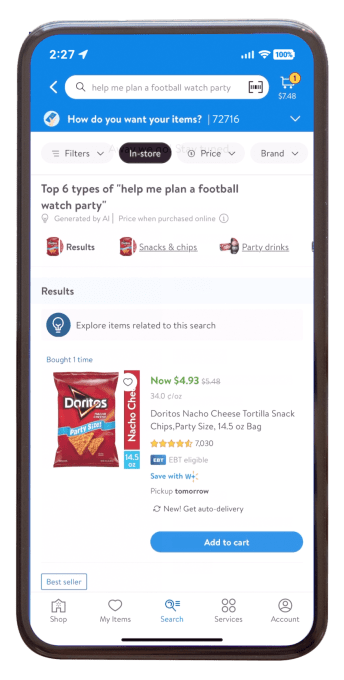
Most notably, Walmart is launching a new generative AI search feature on iOS that will allow customers to search for products by use cases, instead of by product or brand names. For example, you could ask Walmart to return search results for things needed for a “football watch party,” instead of specifically typing in searches for chips, wings, drinks, or a 90-inch TV. These enhanced search results will span categories, rivaling Google’s SGE (Search Generative Experience), which can recommend products and show various factors to consider, along with reviews, prices, images, and more.

Image Credits: Walmart

Ahead of CES, the company had demonstrated an AI shopping assistant that would let customers interact with a chatbot as they shopped, to ask questions and receive personalized product suggestions, as well. At the time, Walmart teased that a generative AI-powered search feature was also in the works. It suggested customers could ask for things like a “unicorn-themed birthday party” and get results like unicorn-themed napkins, balloons, streamers, and more. Now the feature is rolling out on mobile devices, iOS first.

Another potentially promising use of AI involves the replenishment of frequently ordered items.

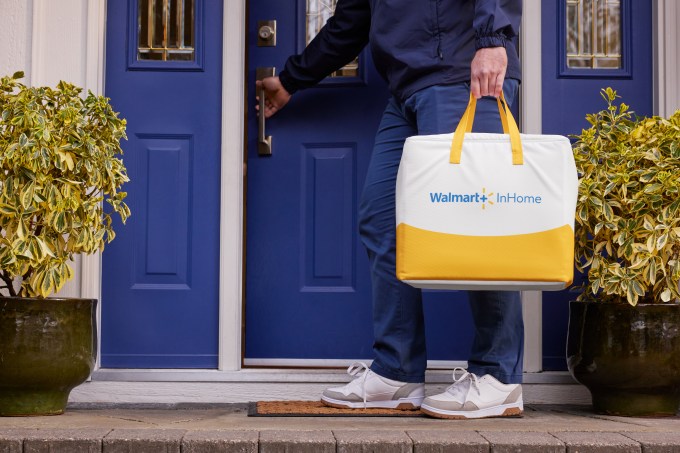
Walmart will initially test this use case with Walmart InHome Replenishment, which will use AI and its existing replenishment expertise combined to create online shopping carts for customers with items they regularly order. Because it’s only available through the InHome program, these items are then delivered to a customer’s fridge in their kitchen or garage using the smart lock-powered InHome delivery service.

Image Credits: Walmart

However, if the feature works well, it’s not hard to imagine how it could be put to use to offer replenishment of other household items as well, similar to Amazon’s Subscribe-and-Save.

Surprisingly, Amazon has not yet leveraged AI to do the same (i.e. to augment or replace Dash Replenishment). However, the online retailer has been putting AI to work in other ways, including by helping connect customers with the right product by summarizing product reviews, highlighting key attributes, or helping them find clothes that fit.

Another new Walmart product making a debut at CES is “Shop with Friends,” an AR shopping tool that lets customers share virtual outfits they create with their friends and then get feedback on their finds.

Image Credits: Walmart

CEO Doug McMillon referred to the suite of new products as something he called “adaptive retail” — that is, retail experiences that are personalized and flexible.

“While omnichannel retail has been around for decades, this new type of retail – adaptive retail – takes it a step further, said Suresh Kumar, global chief technology officer, and chief development officer, Walmart Inc., in a statement shared ahead of the CES keynote. “It’s retail that is not only e-commerce or in-store, but a single, unified retail experience that seamlessly blends the best aspects of all channels. And for Walmart, adaptive retail is rooted in a clear focus on people,” he said.

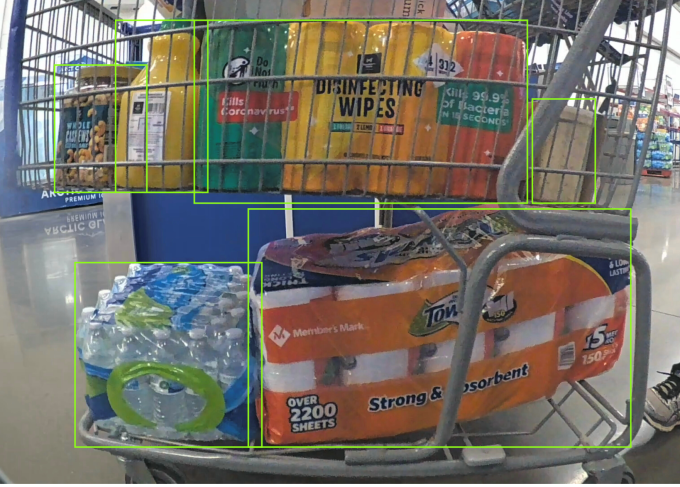
The company touched on other ways it’s employing AI, as well. Walmart’s Sam’s Club will introduce an AI and computer vision-powered technology that helps solve the problem of waiting in line for receipt verification when exiting the store. The pilot, currently running in 10 locations, will confirm members have paid for their items without requiring a store associate to check their charts. Instead, computer vision tech will capture images of customers’ carts and AI will speed the process of matching cart items to sales. Walmart expects to bring the tech to its nearly 600 clubs by year-end.

In another area, Walmart’s generative AI tool for store associates, My Assistant, will be expanded to 11 countries outside the U.S. in 2024, where it will work in employees’ native languages. Already, the tool has become available in Canada, Mexico, Chile, Costa Rica, El Salvador, Honduras, Guatemala, and Nicaragua and is on track for launches in India and South Africa. My Assistant helps employees with writing, summarizing large documents, and offering “thought starters” to spark creativity, Walmart says.

Image Credits: Walmart

On the matter of AI, McMillon stressed that the company wouldn’t prioritize the technology without considering the potential implications. Instead, Walmart’s “underlying principle is that we should use technology to serve people and not the other way around,” he said.

Still, he admitted that AI will mean some jobs will be eliminated.

” No doubt some tasks will go away and some roles will change. And some of them should, like the ones that involve lifting heavy weights or doing repetitive tasks,” the exec explained. “As that’s happening, we’re designing new roles that our associates tell us are more enjoyable and satisfying, and also often result in higher pay. So we’re investing to help our associates transition to this shared future,” McMillon added.

Outside of AI, Walmart is looking to other new technology for faster deliveries. The company announced it’s expanding its drone delivery service in the Dallas-Ft. Worth metro to 1.8 million households, or 75% of the metroplex area. The deliveries, which take place in 30 minutes or less, are powered by Wing and Zipline. Walmart also notes that 75% of the 120,000 items in a Walmart Supercenter meet the size and weight requirements for drone delivery. To date, Walmart has done over 20,000 drone deliveries in its two-year trial.

This story is developing…

Read more about CES 2024 on TechCrunch

Walmart experiments with generative AI tools that can help you plan a party or decorate