How AWS Responded to the Generative AI Wave of 2023 (and What IT Pros Should Expect in 2024)

When 2023 began, Rada Stanic, chief technologist for AWS in Australia and New Zealand, imagined the year would be dominated by helping customers build more modern data platforms in the cloud, with a bit of artificial intelligence and machine learning thrown into the mix. That plan changed fast with the emergence of ChatGPT and a new era of generative AI.

“When generative AI happened, it took over nearly every single conversation we were having with our customers from different industries and really dominated the year,” Stanic told TechRepublic.

Stanic and Louise Stigwood, AWS director of enterprise in Australia and New Zealand, expect generative AI use cases among Australia and New Zealand-based customers to graduate to production grade in 2024. Enterprises in Australasia will also focus on integrating responsible AI and building data platforms that ensure AI initiatives are a success.

Jump to:

  • AWS reinvented its 2023 agenda as generative AI LLMs emerged
  • The AWS technologies IT professionals should watch in 2024
  • Enterprise technology trends expected to gather pace in 2024

AWS reinvented its 2023 agenda as generative AI LLMs emerged

The overnight mainstreaming of generative AI caused AWS, like other cloud providers, to ramp up AI-related innovation in 2023, from strategy right through execution. This culminated in a number of big announcements at the hyperscaler’s November 2023 re:Invent conference.

Portarait of Rada Stanic, AWS chief technologist in Australia and New Zealand.
Rada Stanic, AWS chief technologist in Australia and New Zealand

SEE: Australia needs to prepare to reap the benefits of artificial intelligence.

These included a new generative AI-powered assistant, Amazon Q, targeted at businesses. AWS also expanded foundation model choice, fine tuning capabilities and responsible AI tools available within its new generative AI platform Amazon Bedrock, among other announcements.

“We have this plan of helping customers with everything from creating generative AI-powered services to providing the tools that help democratise the technology for developers and customers who don’t have strong technology skills,” Stanic said.

This is in line with efforts AWS has made with other products and services, including Amazon SageMaker, which launched in 2017 as a platform that makes it easier to deploy machine learning models in the cloud and is now used by 100,000 customers.

Regional AWS customers adapt to a new generative AI world

Customers of AWS also rode the generative AI wave in 2023. Local generative AI start-up Leonardo.Ai, which enables users to generate images and train their own custom models, generated 700 million images in the year to November 2023 — or 4.5 million images daily (Figure A).
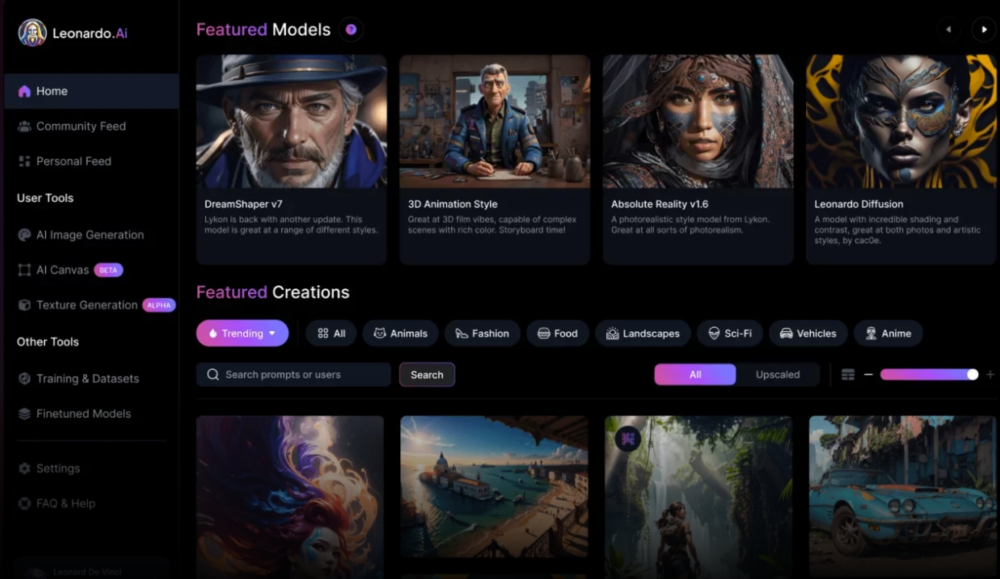
Dashboard of generative AI platform Leonardo.Ai.
Figure A: With AWS cloud services, generative AI platform Leonardo.Ai is managing explosive growth in the volume of images its users are generating. Image: Leonardo.Ai

Scaling using Amazon’s Elastic Compute Cloud Inf2 instances for generative AI inference and for running several large language models, Leonardo.Ai’s was also the first Asia-Pacific team to complete AWS’ generative AI accelerator program to support its growth.

New Zealand-based telco One New Zealand, meanwhile, began using generative AI capabilities from AWS to help its contact centre agents better understand why customers call and to proactively support call resolution, leading to a measured 10% increase in customer trust.

Portrait of Louise Stigwood, AWS director of enterprise in Australia and New Zealand.
Louise Stigwood, AWS director of enterprise in Australia and New Zealand

Australian CEOs and boards look at AI and cloud cost optimisation

Louise Stigwood said generative AI became a topic for nearly every local CEO and board member in 2023 as they looked to understand the complexities of the technology and the role it may play in change. This led AWS to develop training courses for executives to get up to speed.

Cost optimisation remained another priority in a cost-constrained environment. Stigwood said organisations worked with AWS to double down on the modernisation of cloud environments to drive costs down, which saved millions over the course of last year for customers like NAB.

Many business customers also leveraged their savings to fund innovation. One example was the AFL’s announcement that Marvel Stadium would become the first stadium in the Southern Hemisphere to introduce Just Walk Out technology for checkout-free purchases at games.

The AWS technologies IT professionals should watch in 2024

AWS advances in 2023 are likely to pay dividends for customers this year. For example, the next generation two chip families — AWS Graviton4 and AWS Trainium2 — will support cloud workloads including ML and generative AI, helping to reduce cost and boost performance.

PREMIUM: Explore the evolution, features, drawbacks and benefits of generative AI.

Stigwood said new tooling for its AWS Supply Chain offering will help customers track and improve supply chain sustainability. Upgrades include the ability to request, collect and audit sustainability data from suppliers, including Scope 1, 2 and 3 carbon emissions data.

There are a number of other AWS improvements in 2023 that are relevant for local enterprises in 2024.

The emergence of artificial organisational experts

The synthesis of organisational information has emerged as a key use case for generative AI in general. Stanic said Amazon Q, Amazon’s new AI model built to help businesses leverage their proprietary data for AI securely, could have ground-breaking effects as usage grows this year (Figure B).
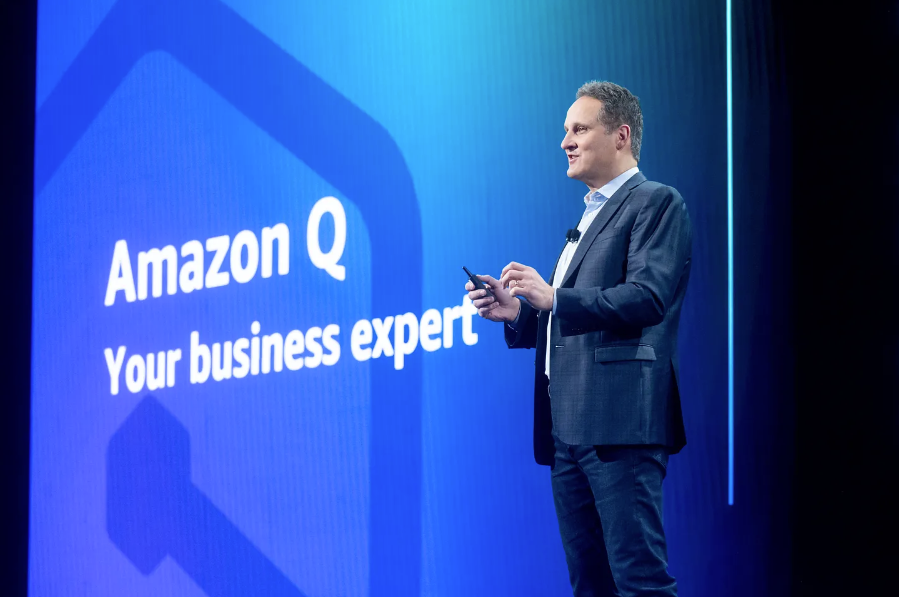
Picture of Generative AI virtual assistant Amazon Q unveiled by AWS CEO Adam Selipsky in 2023.
Figure B: Generative AI virtual assistant Amazon Q was unveiled by AWS CEO Adam Selipsky in 2023. Image: AWS

“It will act like an expert on a customer’s business,” Stanic said. “It has strong integration already with existing technologies like Amazon Connect for call centres. There is a strong interest in using generative AI assistants to help call centre agents in real time provide real help to customers.”

The democratisation of generative AI to build applications

Upgrades to Amazon Bedrock could make it easier for developers who are not AI experts to create generative AI applications. With 10,000 customers, Stanic said many enterprises are now in the proof of concept stage with applications and will move into production in the coming months.

For example, Australian customer Adore Beauty has used Bedrock to support the analysis of customer reviews to determine which products are performing well. Accounting software firm Xero created a virtual assistant to help onboard customers as well as answer their questions with AI.

Making responsible AI a part of organisational innovation

Discussions with customers about how to solve a problem or do something faster and better with AI often turn to questions of security and responsible AI, Stanic said. AWS is looking to integrate AI safety within its tools, as it has done with Guardrails for Amazon Bedrock.

Guardrails can help companies evaluate user inputs and foundation model responses based on use case-specific policies, providing an additional layer of responsible AI safeguards regardless of the foundation model. Stanic said it can help customers implement and evaluate models.

The take-off of a new network of low orbit satellites

Amazon’s Low Earth Orbit satellite project, which recently saw the company sign a deal with NTT Docomo in Japan to provide redundancy for its communications networks, could help telcos extend 5G capabilities or facilitate AWS to AWS communications off the public internet.

According to Stigwood, this could see AWS working with telcos in Australia and New Zealand to extend communications networks. Organisations like miners and others in regional areas could also benefit from the advantages of more connectivity options via Amazon’s LEO satellites.

Enterprise technology trends expected to gather pace in 2024

AWS is expecting generative AI to take centre stage again in 2024. Other predictions for the Australian and New Zealand markets from Stanic and Stigwood include that local organisations will focus on data platforms, cloud migration and modernisation, and industry diversity.

The emergence of production-grade generative AI

While 2023 was dominated by understanding and experimenting with generative AI models, Stanic expects 2024 to be the year of production-grade implementation for generative AI in the region, which could make a big difference to a range of business verticals in the local market.

SEE: Australia has been embracing aspects of generative AI throughout 2023 while trying to stay ahead of the risks.

Stanic said employees in Australia and New Zealand are likely to be better able to leverage internal knowledge bases to find information quicker and easier, while the lives of developers will be changed for the better through coding companions like AWS’s CodeWhisperer (Figure C).
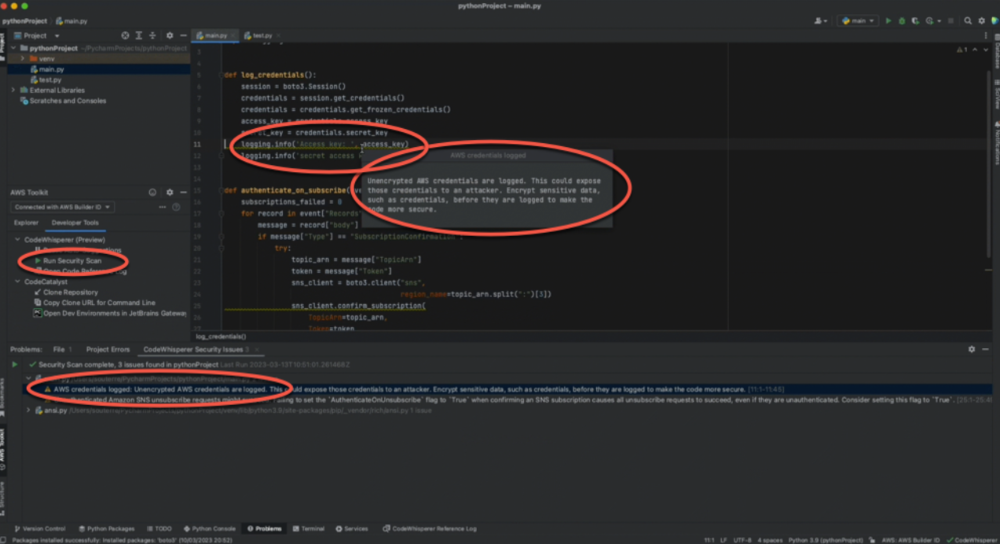
Screenshot of AWS’ CodeWhisperer that supports developers with productivity by generating code suggestions ranging from snippets to full functions in real time.
Figure C: AWS’ CodeWhisperer supports developers with productivity by generating code suggestions ranging from snippets to full functions in real time. Image: AWS

Stanic added that Australian enterprises will move towards transforming their customer experiences with generative AI, including through the popular virtual assistant use case for call centres.

“Those quite viable use cases we can expect to gain more traction this year,” Stanic said.

A focus on robust data platforms in the cloud

The success of generative AI will depend heavily on data. Stanic said organisations should not underestimate the impact of the underlying data and data platform on AI projects, because this can end up making or breaking the success of generative AI implementation.

“We think we will see customers doubling down this year on creating strong, scalable and high-performing data platforms in the cloud,” Stanic said.

AWS is removing some of the heavy lifting through Zero-ETL, which facilitates point to point data movement without ETL data pipelines.

“This can reduce data processing time and make the lives of data engineers’ lives much easier,” Stanic said. “It supports the critical role of data in powering success with generative AI.”

Continued cloud migration and modernisation

Migration and modernisation in the cloud is a trend Stanic said will continue in Australia and New Zealand, regardless of other trends that may come and go. She said organisations want to be able to operate more cost-effectively and scalably, and the cloud enables that for them.

This will be combined with cloud cost optimisation, after cloud costs have ballooned in recent years. With more controls available for cost optimisation and through support for making it iterative, AWS is working with customers to redirect cloud cost savings back into innovative projects.

New opportunities for tech industry diversity

The advent of coding companions like CodeWhisperer could begin to change how the market thinks about traditional technologies and software engineering roles, according to Stigwood. This could act as a catalyst for more diversity in Australasia’s technology industry.

“When there is diversity at the table, there are better outcomes, and that’s increasingly a focus, particularly for larger enterprises,” Stanic said. “This year, many have taken advantage of our program Cloud Up For Her, which helps females from any background become technologically fluent.”


Singapore keeping its eye on data centers and data models as AI adoption grows

AI Technology in data room

With the adoption of artificial intelligence (AI) fast accelerating, Singapore says it has taken steps to ensure data centers operating in the country are energy efficient and government data used to train models are adequately secured.

The government will establish the necessary computing power and grow the datacenter market in a "sustainable manner" that is in line with its international climate commitments, said the Ministry of Communications and Information (MCI) in a statement.

Also: Every AI project begins as a data project, but it's a long, winding road

The ministry was replying to parliamentary questions on how the government was balancing the growing demand for computing power with the country's AI developments and sustainability targets, as well as ensuring that the necessary infrastructure remains environmentally friendly.

Acknowledging that AI compute power from data centers is a critical enabler of Singapore's national AI strategy, the ministry said one key strategy is to improve the energy efficiency of data centers and drive the development of efficient cooling solutions. It pointed to liquid cooling as one example on which AI computing infrastructure often relies, adding that it is more energy efficient than air cooling for intensive AI workloads.

There also are measures, such as grants, to support operators that work to reduce greenhouse gas emissions from their data centers.

In addition, Singapore is developing sustainability standards that will pave the way for data centers to operate at higher temperatures and, hence, use less energy for cooling, MCI said.

Singapore released operating standards last June that it said would optimize energy efficiency in data centers located in tropical climates. Developed by the Infocomm Media Development Authority, the recommended standards offer a roadmap to increase data-center operating temperatures to 26 degrees Celsius and above. The standards can potentially yield energy savings of between 2% and 5% for every one degree Celsius increase, the government agency said, citing research from the University of Toronto.

A data center set up to operate in such climates began operating last month, offering a facility for researchers and industry players to develop energy-efficient cooling technologies. Touted as the world's first data center testbed for tropical environments, the new site is hosted by the National University of Singapore's College of Design and Engineering, on its Kent Ridge campus. The university is leading the initiative jointly with a fellow local institution, Nanyang Technological University.

Also: Tropical datacenter now up and running in Singapore

Singapore also is reviewing its Green Mark certification scheme for data centers to update the energy-efficiency criteria, MCI said.

"Beyond sustainable AI compute infrastructure, it is important to invest in the development of green computing methods," the ministry noted. These include coding and algorithm optimization, optimization for both software and hardware, and developing standards for low-data, low-energy AI models.

"The government will continue to deepen international and domestic partnerships with the research community and industry partners on this front," it added.

Data used for AI models to be appropriately protected

Measures also are in place to manage sensitive information used to train AI models, MCI said in response to questions on how the government ensures confidential data is protected in prompts powered by large language models (LLMs).

"We adopt a risk-managed approach for LLMs [that is] consistent with the existing public-sector framework for handling classified information when using technologies, such as internet-based applications and commercial clouds," it said.

It noted that highly sensitive applications and data are not accessible online.

"Where use cases involve sensitive data, open source models may be finetuned for use but must be deployed on government servers and computers," MCI said.

Also: New research initiative aims to build large language AI model for Southeast Asia

Where less sensitive data is involved, the AI models may be owned and managed by commercial and private companies, MCI said. The government's contracts with these companies are governed by service agreements that include clauses on data handling and security, it noted. These include the non-retention of data and limitations on the use of data to train other products or models.

The government also has implemented technical measures to monitor sensitive data and provide visual cues to remind users of data security policies. In addition, there are governance measures to enforce compliance, MCI said, adding that it would continue to reassess the effectiveness of such measures as technologies evolve.

Singapore last month launched a research initiative to build an LLM that can better meet the demographics of Southeast Asian nations. Dubbed the National Multimodal LLM Programme, the initiative will build on current efforts from AI Singapore's Southeast Asian Languages in One Network (SEA-LION), which is an open-source LLM that the government agency said is designed to be smaller, more flexible, and faster compared to LLMs on the market today. SEA-LION currently runs on two base models: a 3-billion parameter model, and a 7-billion parameter model.

Artificial Intelligence

OpenAI launches a store for custom AI-powered chatbots

OpenAI launches a store for custom AI-powered chatbots Kyle Wiggers 11 hours

After telegraphing to devs last week that it would do so, OpenAI has launched a store for GPTs, custom chatbot apps powered by its text- and image-generating AI models (e.g. GPT-4 and DALL-E 3).

The GPT Store, as it’s called, lives in a new tab in the ChatGPT client on the web, and features a range of GPTs developed both by OpenAI’s partners and the wider dev community. GPT users can browse popular and trending GPTs on the community leaderboard, which is organized into categories like lifestyle, writing, research, programming and education.

To access the GPT Store, users must be subscribed to one of OpenAI’s premium ChatGPT plans — ChatGPT Plus, ChatGPT Enterprise or the newly launched ChatGPT Team.

A few of the GPTs available at launch include a trail recommender from AllTrails, a code tutor from Khan Academy and a content designer from Canva. All are free to use — for now. (More on that later.)

Building GPTs doesn’t require coding experience, and GPTs can be as simple or complex as a developer wishes. Devs can simply type the capabilities they want their GPT to offer in plain language and OpenAI’s GPT-building tool, GPT Builder, will attempt to make an AI-powered chatbot to perform those.

A GPT can be trained on a cookbook collection so that it can answer questions about ingredients for a specific recipe, for example. Or a GPT could ingest a company’s proprietary codebases so that developers can check their style or generate code in line with best practices.

To list GPTs in the GPT Store, developers have to verify their user profiles and submit their GPTs to OpenAI’s new review system — which involves a mix of human and automated review — to ensure the GPTs comply with the company’s terms of use. (Users can also report offending GPTs that slip through the cracks.)

Given OpenAI’s track record of recruiting poorly paid, overworked contractors in the developing world to moderate and improve its GenAI systems, I sent the company several questions about the “human” element of the GPT Store review process, including how much the reviewers are being compensated and whether they have access to mental health resources. The company hadn’t responded as of publication time; I’ll update this post if they eventually do.

At launch, devs won’t be able to charge for GPTs. But OpenAI plans to launch a “GPT builder revenue program” sometime in Q1, with U.S. builders earning income based on “user engagement” with their GPTs. OpenAI says that it’ll provide details on the criteria for payments at a future date.

The GPT Store was announced last year during OpenAI’s first annual developer conference, DevDay, but delayed in December — almost certainly due to the leadership shakeup that occurred in November, just after the initial announcement. (The short version of the story is, CEO Sam Altman was forced out by OpenAI’s board of directors and then — after investors and employees panicked — brought back on with a new board in place.)

GPTs effectively democratize generative AI app creation — at least for apps that use OpenAI’s family of models. In fact, GPTs could kill consultancies whose business models revolve around building what are essentially GPTs for customers. That’s not necessarily a good thing… but we’ll have to wait to see how it all plays out.

Indian Companies Embrace AI-Integrated Low-Code for Digital Transformation

GenAI has disrupted many businesses and it seemed like low-code was slated to be one of the many industries doomed to be affected.

However, experts believe that the future lies in leveraging AI-infused low-code platforms, which promise significant productivity boosts of up to 35%, enabling diverse teams to innovate and excel in software development.

OutSystems is one such US-based low-code application development platform which has formed partnerships with major tech entities such as Microsoft, OpenAI, Google, and AWS, leveraging their AI integration.

In an exclusive interview with AIM, Mark Weaser, Vice President-Asia Pacific, OutSystems explained how the combination of AI and high-performance low-code boosts every phase of the software lifecycle, significantly benefiting enterprises across various industries.

“In the rapidly digitising financial sector, Indian firms are trying to modernise workflows using AI-integrated low-code. This enables rapid development of digital lending services, automation of loan origination, and significant cost reduction in processing, all achieved much faster than with traditional coding methods,” explained Weaser.

Companies Adopting OutSystems

Weaser provided insights into how their low-code platform has also been instrumental in transforming legacy systems for companies like JK Cement, one of India’s leading cement manufacturers, and Magenta Mobility—an integrated clean energy and electric mobility solutions provider.

JK Cement used OutSystems to develop a range of applications for sales management, land assets management, and loyalty management processes.

“This was driven by the need for a more flexible and automated development approach to keep up with industry changes and a growing application backlog, while staying cost-effective,” Weaser explained.

He highlighted their goal was to “redefine the experience of its customers, employees and partners,” by consolidating applications under a single platform for a unified UI/UX experience and shorter go-to-market timelines.

Similarly, Magenta Mobility, an integrated clean energy and electric mobility solutions provider, chose OutSystems for its user-friendliness and agility. Weaser noted that these features allowed Magenta Mobility to “supercharge their digital transformation journey for asset tracking, monitoring, and auditing,” significantly reducing manual costs and improving accuracy.

OutSystems Embracing GenAI

Discussing their recent collaborations with Microsoft and OpenAI, Weaser highlighted their new platform that integrates services from Microsoft Azure OpenAI and their in-house GenAI capabilities.

“OutSystems has seamlessly integrated AI into the platform. We recently launched Project Morpheus, which are new generative AI capabilities that further speed and simplify the development process,” he said.

He added that their GenAI roadmap includes key benefits such as instant app generation using conversational prompts, an AI-powered app editor offering ongoing suggestions, and real-time visual representations of app changes. These generative AI integrations provide limitless customisations for customers while validating code produced by generative AI mechanisms.

Besides, OutSystems has been integrating AI into its offerings since 2018—with its AI Mentor System, a machine learning-powered suite, which provides expert assistance in key software development areas. It includes specialised mentors for guiding developers, ensuring robust code, checking vulnerabilities, optimising application performance, and managing technical debt. OutSystems.AI further aids businesses in quickly developing customer service chatbots, extracting insights from documents, and analysing customer sentiment.

Asia-Pacific Projections

The market for no-code and low-code platforms, expected to grow nearly 20% to $10 billion in 2023, is anticipated to reach $12.3 billion this year.

In light of these projections and their impressive revenue of over $263 million, Weaser emphasised that amidst global macroeconomic uncertainties, organisations will turn to advanced, modern application platforms for quick, secure, and unique application development to adapt to the dynamic global market.

He holds a strong conviction about the role of AI, reiterating, “In particular, AI will be key to delivering productivity for all types of developers.”

Considering their huge presence and business, Weaser also reflected on the Asia Pacific market. He anticipates that the global demand for digital transformation and tech talent shortages will also be seen in this region. He stated, “60%-80% of organisations find it difficult to fill vacancies in IT roles such as developers and data professionals.” He observed a trend towards digital transformation in various sectors like banking, energy, and government, as seen in OutSystems’ customer base.

Addressing developer challenges, Weaser cited the OutSystems Developer Engagement report which stated that while more than half of developers in India said they love their jobs, only 59% said they would be with their current company a year from now, which further drops to 44% for two years.

He advocates low-code technology as a solution noting that it helps to reduce time spent on manual coding, enhancing creativity and innovation in development, and positively impacting developers’ attitudes towards career advancement and productivity.

The post Indian Companies Embrace AI-Integrated Low-Code for Digital Transformation appeared first on Analytics India Magazine.

OpenAI Launches GPT Store, Offering ChatGPT Users Access to Custom AI Models

OpenAI has announced the launch of its GPT Store. The store is now being made available to ChatGPT Plus, Team, and Enterprise users, providing access to a variety of GPTs developed by partners and the community.

The company said that the GPT Store, accessible at chat.openai.com/gpts, showcases a diverse range of GPTs across categories such as DALL·E, writing, research, programming, education, and lifestyle. Users can explore popular and trending GPTs on the community leaderboard, gaining insights into the latest developments.

Notable featured GPTs include personalszed trail recommendations from AllTrails, academic paper search and synthesis with Consensus, coding skill expansion through Khan Academy’s Code Tutor, presentation and social post design with Canva, book recommendations with Books, and math and science learning with the CK-12 Flexi AI tutor.

OpenAI emphasises the simplicity of building and sharing GPTs, with no coding skills required. Users interested in sharing a GPT in the store must save it for everyone and verify their Builder Profile. OpenAI has introduced a review system, involving both human and automated reviews, to ensure compliance with usage policies and brand guidelines.

The GPT Store would allow users, specifically ChatGPT Plus and enterprise subscribers, to sell and share tailored AI agents based on GPT-4. OpenAI has announced that in Q1, it will launch a GPT builder revenue program. In this initial phase, US builders will be compensated based on user engagement with their GPTs. Further details on the criteria for payments will be provided later.

OpenAI recently expanded its ChatGPT offerings with the introduction of ChatGPT Team. ChatGPT Team features a dedicated collaborative workspace for teams and admin tools for efficient team management.

The newly introduced ChatGPT Team provides access to advanced models like GPT-4 and DALL·E 3, along with tools like Advanced Data Analysis. Similar to ChatGPT Enterprise, businesses using ChatGPT Team retain ownership and control over their data, with no training on business-specific data or conversations.

The post OpenAI Launches GPT Store, Offering ChatGPT Users Access to Custom AI Models appeared first on Analytics India Magazine.

One ring, one app: Amazfit’s new smart ring integrates sleep and fitness data

amazfit-helio-ring

Currently, there are two smart rings on my hands, and for two years I've been using an Oura Ring to track my sleep and measure my readiness for the day. There is some third-party syncing capability with GPS sports watches, but two apps are needed to fully understand your status.

Also: CES 2024: What's Next in Tech

With the upcoming Amazfit Helio Ring, you can finally leave your watch on the nightstand and use the ring to track the details of your sleep. When you wake up, you can put on the watch while wearing the ring — or not — and all of your health, wellness, and sports activity data will be synced and available in the Zepp app (formerly Amazfit) on your smartphone.

I've been hoping that Garmin, Coros, or Polar would integrate smart ring data into their ecosystem, but it looks like Amazfit is first out of the gate to make that happen.

The ability to have all of your health data in sync in a single app is appealing. You can use the ring or an Amazfit watch separately, too, but the ability to have both as options makes a compelling case for the Amazfit ecosystem.

The Amazfit Helio Ring is designed to last for a week between charges. Even if you do not want to use an Amazfit watch, the ring will track your activity data so it can be used in stand-alone mode. However, the major benefit here comes from using a ring and a watch because the watch is more accurate for active sports and activities, especially if you are outside and want to track the GPS details of your exercise.

Weighing in at less than four grams with a titanium alloy composition, the Amazfit Helio Ring is very comfortable. It will launch with limited sizes (10 or 12 only) and color options, with more sizes and options coming later in 2024. It has a 10 ATM water-resistant rating so it can be worn safely 24/7 in most conditions.

Also: This sports watch has a ChatGPT-like running coach. Here's how it works

Amazfit also offers the Zepp Aura AI health and wellness service that functions with data from the Helio Ring. This service includes customized sleep sounds that will adjust based on your body's response, detailed weekly and monthly sleep reports, and access to Zepp Wellness Coach, which answers your wellness questions via an AI chatbot.

Pricing has not yet been revealed and the ring should be available in the next few months. The company continues to work on final finishes and the launch product, but I did see a company representative wearing one and it looks to bring exactly what we want in a full health and wellness experience.

Amazfit also offers a host of GPS smartwatches and I'm currently testing its latest, the Amazfit Balance, so stay tuned for a review of that watch soon.

CES 2024

OpenAI debuts ChatGPT subscription aimed at small teams

OpenAI debuts ChatGPT subscription aimed at small teams Kyle Wiggers 10 hours

OpenAI is launching a new subscription plan for ChatGPT, its viral AI-powered chatbot, aimed at smaller, self-service-oriented teams.

Aptly called ChatGPT Team, the plan provides a dedicated workspace for teams up to 149 people using ChatGPT as well as admin tools for team management. All users in a ChatGPT Team gain access to OpenAI’s latest models — GPT-4 (which generates text), GPT-4 with Vision (which understands images in addition to text) and DALL-E 3 (which creates images) — plus tools to allow ChatGPT to analyze, edit and extract info from uploaded files.

ChatGPT Team also lets people within a team build and share GPTs, custom apps based on OpenAI’s text-generating AI models. GPTs don’t require coding experience and can be as simple or complex as desired. For example, a GPT could ingest a company’s proprietary codebases so that developers can check their style or generate code in line with best practices.

As an added benefit, OpenAI says that ChatGPT Team customers will get unspecified new features and improvements down the line, and that it won’t train models on team data or conversations.

ChatGPT Team is priced at $30 per user per month or $25 per user per month billed annually — higher than ChatGPT Plus, OpenAI’s individual premium ChatGPT plan, which costs $20 per month. But ChatGPT Team is a good deal cheaper than ChatGPT Enterprise, which costs as much as $60 per user per month with a minimum of 150 users and a 12-month contract.

ChatGPT Team seems tailor-made for small- and medium-sized business customers who want team-oriented ChatGPT features without having to pay top dollar for them. That’s likely to be a lucrative space; according to a recent survey from ResumeBuilder, 49% of companies use ChatGPT for use cases like coding, creating content like job descriptions and interview questions and summarizing documents and meetings, while 30% say that they intend to use ChatGPT in the future.=

OpenAI Launches ChatGPT Team

OpenAI has expanded its ChatGPT offerings with the introduction of ChatGPT Team. The newly introduced ChatGPT Team provides access to advanced models like GPT-4 and DALL·E 3, along with tools like Advanced Data Analysis.

ChatGPT Team features a dedicated collaborative workspace for teams and admin tools for efficient team management. Similar to ChatGPT Enterprise, businesses using ChatGPT Team retain ownership and control over their data, with no training on business-specific data or conversations.

Key features of ChatGPT Team include access to GPT-4 with a 32K context window, tools like DALL·E 3, GPT-4 with Vision, Browsing, and Advanced Data Analysis, with higher message caps.

The plan ensures a secure workspace for teams, allowing the creation and sharing of custom GPTs within the workspace. Admin consoles for workspace and team management are also provided, along with early access to new features and improvements. ChatGPT Team is priced at $25/month per user for annual billing or $30/month per user for monthly billing.

The company said that ChatGPT, launched last year, is being utilised by industry leaders such as Block, Canva, Carlyle, The Estée Lauder Companies, PwC, and Zapier. Additionally, Pennsylvania Governor Josh Shapiro recently announced the deployment of OpenAI’s ChatGPT Enterprise service in a pilot program to assist state employees in administrative tasks.

OpenAI has recently introduced GPTs, custom versions of ChatGPT designed for specific purposes, enabling businesses and teams to customise ChatGPT according to their specific needs and workflows without requiring any code. GPTs can be utilised for various tasks, including project management, team onboarding, code generation, data analysis, and more.

The post OpenAI Launches ChatGPT Team appeared first on Analytics India Magazine.

Yotta Expands with New G1 Data Center in GIFT City, Gujarat

Hyperscale data center service provider, Yotta Data Services, recently announced the readiness of its advanced data centre facility, “Yotta G1”, in Gujarat International Finance Tec-City (GIFT City), Gandhinagar. The launch of Yotta G1 marks a significant expansion of Yotta’s footprint in India’s high-growth digital markets.

Yotta G1, first announced at the ongoing Vibrant Gujarat, is slated to be the only one in this strategic location offering a full stack of services including Cloud, managed IT, and Cybersecurity, alongside colocation. Darshan Hiranandani, Co-founder and Chairman of Yotta Data Services remarked, “The state of Gujarat, with GIFT City, has been at the forefront of providing a viable and sustainable platform for global businesses to set up base in India. The setting up of the IFSC zone is a further testament to their vision for financial services companies. We are proud to support this vision of the Gujarat government with a state-of-the-art data centre within the IFSC zone.”

This data centre, the fifth in the country by Yotta, joins its other large-scale facilities in Navi Mumbai and Greater Noida. Representing an investment of over INR 500 cr., it boasts over 350 high-density racks and a scalable 2 MW power supply. The facility is designed to cater to the most demanding digital needs, offering fault-tolerant infrastructure, high-performance Cloud and storage infrastructure, advanced security, and robust connectivity.

G1’s unique location in the IFSC zone of GIFT City offers significant benefits for global enterprises. Sunil Gupta, Co-Founder, MD & CEO, of Yotta Data Services, explains, “Besides serving domestic enterprises within and outside GIFT City, our data centre shall serve as a potential data embassy for global enterprises, enabling them to adhere to their respective country’s laws while offering a dependable and secure locale for offshore data storage.”

This facility provides a competitive edge to businesses in GIFT City’s IFSC zone, ensuring compliance with IFSC regulations and facilitating benefits like free foreign exchange convertibility and a liberalized regulatory environment.

The launch of Yotta G1 is a part of Yotta’s broader vision to be an end-to-end digital transformation partner for enterprises. It comes on the heels of the company’s recent launch of Shakti Cloud and Yntraa Cloud, which further solidifies Yotta’s position as a leader in providing cutting-edge digital services.

The post Yotta Expands with New G1 Data Center in GIFT City, Gujarat appeared first on Analytics India Magazine.

AI hardware, fintech woes and venture capital’s shedding phase

AI hardware, fintech woes and venture capital’s shedding phase Alex Wilhelm Theresa Loconsolo 9 hours

Listen here or wherever you get your podcasts.

Hello, and welcome back to Equity, the podcast about the business of startups, where we unpack the numbers and nuance behind the headlines.

This is our newly revamped Wednesday episode, and we’re going to be digging deep into critical startup and venture capital news. If you are a long-time Equity listener, you will note that this is not the same interview show that we used to run mid-week! Don’t worry, we are still going to do interviews, just on an as-needed basis.

Here’s what’s we got into on the show today:

  • PhotoRoom is raising more money. French startup PhotoRoom is raising $50 million to $60 million at a $500 million to $600 million valuation. The round marks another potential win for AI in France, a market that is working to set itself apart in the EU.
  • Treasure Financial cuts 14 staff members. The reductions in personnel represent a material percentage of the startup’s headcount, which feels a little weird given that the company raised $7.5 million last year, and reportedly saw its AUM soar.
  • Tier and Dott are betting that 1+1=3. Two micromobility companies are tying the knot to try and use scale to their advantage. The moves comes in the wake of U.S. scooter company Bird filing for bankruptcy.
  • AI Hardware, Part 1: The new rabbit r1 looks super cool, and is surprisingly cheap. I dig it.
  • AI Hardware, Part 2: Humane trimmed staff before shipping its AI hardware.
  • On the venture capital side, Keith Rabois is heading back to Khosla Ventures, and Seedstars Africa Ventures added $30 million to its upcoming fund.

We’ll be back on Friday with our weekly roundtable!

For episode transcripts and more, head to Equity’s Simplecast website.

Equity drops at 7 a.m. PT every Monday, Wednesday and Friday, so subscribe to us on Apple Podcasts, Overcast, Spotify and all the casts. TechCrunch also has a great show on crypto, a show that interviews founders and more!