What does brain science say: Are LLMs intelligent or sentient?

Artificial intelligence technology concept with digital human brain connected to an electronic board

There is a recent preprint on arXiv, A Comprehensive Survey of Hallucination Mitigation Techniques in Large Language Models, listing and explaining the following approaches against LLMs hallucination, “LLM-Augmenter, FreshPrompt, Knowledge Retrieval, Decompose-and Query framework (D&Q), Real-time Verification and Rectification (EVER), Retrofit Attribution using Research and Revision (RARR), High Entropy Word Spotting and Replacement, End-to-End Retrieval-Augmented Generation (RAG), Prompting GPT-3 To Be Reliable, ChatProtect, Self-Reflection Methodology, Structured Comparative Reasoning, Mind’s Mirror, DRESS (LVLM via NLF), MixAlign, Chain-of-Verification (CoVe), Chain of Natural Language Inference (CoNLI), Universal Prompt Retrieval for Improving zero Shot Evaluation (UPRISE), Synthetic Tasks (SynTra), Context-Aware Decoding (CAD), Decoding by Contrasting Layers (DoLa), Inference-Time Intervention (ITI), Reducing Hallucination in Open-domain (RHO), FactuaL Error detection and correction with Evidence Retrieved from external Knowledge (FLEEK), Text Hallucination Mitigating (THAM) Framework, Loss Weighting Method, Knowledge Injection and Teacher Student Approach, Hallucination Augmented Recitations (HAR), Fine-Tuning Language Models for Factuality, Behavioural Fine-Tuning (BeInfo), Refusal-Aware Instruction Tuning (R-Tuning) and Think While Effectively Articulating Knowledge (TWEAK).”

The intense research and development into solving LLMs’ hallucination-confabulation is an indication that pieces of it would continue to be peeled away, with not just benefit against the problem, but with improvements to LLMs, in general.

These may bring LLMs within touching distance of some aspects of human intelligence, and say sentience. Then debates would fester about the models not being intelligent, sentient or anything like humans.

The thing is that intelligence, as an output—by species, can be available anywhere, walls, books, footprints, boards or digital. What might make those things become species-like is advanced feedback. The human mind often partitions inputs, so that the follow-ups, to initials, are like feedback. Feedback tapers differences with reality or standards. What is observed about the mind, labeled prediction, is a feedback feature. Feedback efforts for LLMs would eventually result in far more than just solving hallucinations.

LLMs are based on texts. Humans use a lot of texts. There are fractions of intelligence and sentience within human texts. Could LLMs be strictly compared with the amount of intelligence and sentience of human text in digital?

Human understanding can be provided in text on digital. If LLMs can accurately do so, can they be said to contain understanding, in direct comparison to those provided by humans, available in digital? Various—human—subjective experiences can be expressed by text, digitally. Can the expressions, as fractions of experiences, be compared with if LLMs did similarly?

There are several arguments about LLMs, with all kinds of criteria, including that the name AI is inaccurate. There are others stating syntax, semantics, probability, no embodiment and so forth. However, the definite measure of human intelligence and consciousness is from their mechanized location.

It is theorized that the location of human intelligence and consciousness is the mind. The mind is hypothesized to be the part of the nervous system directly involved in every functional process. This means that all internal and external senses have the mind at the helm. The body, including the brain, supports but the mind makes determination.

What is the human mind? How does it carry out functions and ancillaries? Brain science has detailed explanations of many parts of the brain, yet clarity on intelligence and consciousness is scant.

There is a recent analysis in WSJ, No, AI Machines Can’t Think, where the author wrote, “What’s really needed is solid definitions of thinking, intelligence and sentience. Computers are already better than humans at many tasks.”

Definitions of thinking, intelligence and sentience have to be pegged with how they are mechanized—and their outputs—by the human mind. The definitions can then be used to evaluate how close or distant LLMs might be, to aspects of outputs, made available in digital, by humans.

The human mind is theorized to be the collection of all the electrical and chemical impulses of nerve cells, with their features and interactions. Wherever there are electrical and chemical impulses of neurons, responsible for functions, is the mind. Everything else is the body. Stating a clear distinction in the mind-body problem.

Memory, intelligence, emotions, feelings, modulation of internal senses, thoughts, perceptions, sensations, consciousness, sentience and all labels and synonyms are operations of impulses.

Conceptually, impulses do not just carry out functions, they also operate their qualifiers. Qualifiers are definers of functions. They shape what experiences become. Qualifiers include attention or focus on the mind, awareness, self or subjectivity, intent or free will, distribution, splits and so forth.

How do these impulses do it? How do they separate an emotion from a feeling? How do they delineate attention from awareness, or construct the sense of self? How do impulses structure intelligence? And what might consciousness or sentience be?

How does the brain make the mind? How do experiences arise? It is postulated that in a cluster of neurons [nuclei or ganglia], impulses are in sets. It is within these sets that they bear the configurations for functions. This means that sets of impulses have formations where they hold information, operate and qualify functions. Chemical impulses, in sets, contribute rations towards these configurations. There are drifts of rations in every set that lets functions get qualified. Electrical impulses strike to fuse briefly with chemical impulses, to give off experiences, information or functions that the sets provide.

Brain science has established that one neuron has thousands of synaptic connections to others. This, conceptually, may mean that, at times, the neuron sends more chemical signals to those in its cluster, than to others. It may also mean that even if it is sending chemical messages to all its connections, the rates may differ, with some getting more and others getting less. This can vaguely be translated, conceptually, to saying some synapses are active and some are non-active.

There is a paper in Nature, Filopodia are a structural substrate for silent synapses in adult neocortex, discussing silent or inactive synapses, stating that, “These putative silent synapses were located at the tips of thin dendritic protrusions, known as filopodia, which were more abundant by an order of magnitude than previously believed (comprising about 30% of all dendritic protrusions).”

It is theorized that non-active synapses, between active synapses, in a set [of impulses] do—in part—qualify functions. This means that the sense of self or subjectivity that accompanies functions is a qualification. The same applies to intent or free will, for the choice to speak or not, or the choice to sit or stand, raise a hand or not, for people who can. Attention like main vision, as well as awareness or peripheral vision or ambient sound are also qualifications.

Consciousness or sentience can be theorized to be a collection of qualifiers, mechanized within the sets of impulses that give rise to experiences. Human intelligence can be described as extensively specialized memory functions that are extensively qualified. There are key qualifiers that collect into consciousness. There are others that are specific, doing more for intelligence. Thinking is a distributive qualification of sets of impulses that hold or organize aspects of information—labeled as memory.

Sentience and intelligence are mechanized within sets of impulses, the mind. They are received by the mind, in distribution and can also be received by the body, in outputs or experiences. These outputs can be observed by others, noted or made available. Other species often benefit from these outputs, while production and distribution within the mind, are hidden away.

The production of sentience and intelligence may not be parallel to the output. But the outputs are often a fraction of what is available, varying across functions. These, as inputs into digital, means that digital has a fraction of an individual’s intelligence and sentience.

The total consciousness for humans, as the highest among species, can be equaled to 1. Simply, the qualifications have a maximum possible total of 1, for all the functions, in the human mind. Other species closer to humans have lower totals. The outputs of human consciousness can mean a fraction of that is available over the transmitter—paper or digital.

Intelligence is a super-function of memory, qualified by the super qualifier, consciousness. All functions come under the consciousness umbrella. The qualifiers can increase their share, in the total of 1, in any instance. Consciousness is not just what is qualified in a moment, but all that can be qualified, with variations of degrees across functions—every instant.

The fractions of intelligence in topics in math, physics, economics, law that people have can be transmitted and available for other humans. There are measures for them. Consciousness too, like the experience of pain, taste, smell can be expressed, making a fraction available on digital, including how some of the qualifiers—attention, self—decided.

LLMs

Generative AI is within digital. Digital already has detailed text, video, audio and image outputs of intelligence and consciousness from humans. Generative AI has learned from many human specifications to be able to produce its apparent version of human-like intelligence and sentience. It does not mean it understands or that it has much agency yet. But it can at least reproduce mixtures, including with how humans qualified them.

What LLMs can reproduce can be compared with the fraction of intelligence and consciousness that humans have on digital, which can be compared to the total of 1.

In brain science, it is theorized that electrical impulses leap from node to node, in myelinated axons, in what is called saltatory conduction. It is postulated here that in sets, some electrical impulses go ahead of others to interact with chemical impulses like they had, previously, in situations, such that if it matches, processes go on, if not the incoming one interacts rightly within the set or elsewhere. This, conceptually, explains the observations labeled predictive coding, processing and correction of prediction errors.

This qualifier, early-split, is a natural feedback for the mind that helps processes to go faster and fix misses, so that accuracy is neared or nailed.

As advanced feedback is better built into LLMs, with the ability to not just generate but to center accuracy, it could become possible that they may qualify functions, and then learn, in a way that, within digital, they will not just be second to what humans have put there, but they will be able to make their own mixtures better, with raised intent.

This would increase the possibility of deeper conversations with humans and even within AI models. It may mean that within digital, non-species have lift off.

LLMs already have a measure of intelligence and sentience—compared to those of humans, available—in digital. They may have a direct comparison to humans, not just to human output in digital, as soon as they can use the advanced feedback they are getting, which may follow the solution of the hallucination-confabulation problem.

The 14 best robots and AI tech we’ve seen at CES 2024 so far

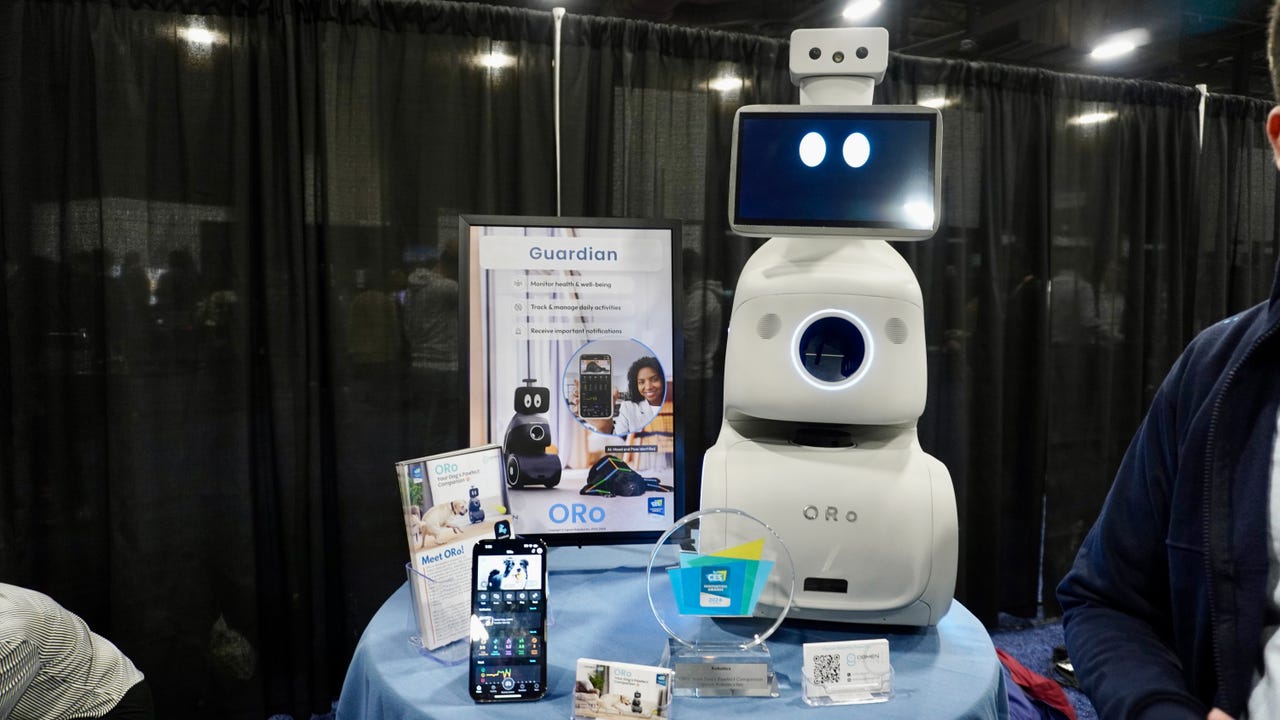
Ogmen Robotics's Oro, pet companion robot

Ogmen Robotics's Oro pet companion robot was on display at CES 2024.

Artificial intelligence remains one of the buzziest technologies around, and it's no surprise that it's been a main attraction at CES 2024. Though AI was mainly represented in chatbots in the past year, companies are now finding more innovative ways to incorporate the technology into hardware, including everything from futuristic robots to laptops to products that would have never been possible before.

Also: CES 2024: What's Next in Tech

With so many AI-related announcements at CES this year, it can be difficult to distinguish between what's simple AI-washing and what's actual visionary technology. To help you understand what's most important, I've created a roundup of the AI and robots that have distinguished themselves from the rest based on factors such as helpfulness, uniqueness, and real-world applications.

With two press days and two event days down, I have seen a majority of what CES has to offer, including A LOT of product demos. To find out what my top picks for the best AI-infused products at CES are, keep reading. Also, most of my picks also happen to have won CES 2024 Innovation Awards, showing just how good these devices are.

Generative AI isn’t a home run in the enterprise

Generative AI isn’t a home run in the enterprise Kyle Wiggers 9 hours

Generative AI gets a lot of press, from image-generating tools like Midjourney to Runway to OpenAI’s ChatGPT. But businesses aren’t convinced of the tech’s potential to positively affect their bottom lines; at least that’s what surveys (and my colleague Ron Miller’s reporting) suggest.

In a Boston Consulting Group (BCG) poll this month of over 1,400 C-suite executives, 66% said that they were ambivalent about — or outright dissatisfied with — their organization’s progress on GenAI so far, citing a shortage of talent and skills, unclear roadmaps and an absence of strategy around deploying GenAI responsibly.

To be clear, the execs — who hail from such industries as manufacturing, transportation and industrial goods — still see GenAI as a priority. Eighty-nine percent responding to the BCG poll ranked the tech as a “top-three” IT initiative for their companies in 2024. But only about half of the poll’s 1,400 respondents expect GenAI to bring substantial productivity gains (i.e., in the area of 10% or more) to the workforces that they oversee.

The results, taken in tandem with responses to a BCG survey late last year, put into sharp relief the high degree of enterprise skepticism surrounding AI-powered generative tools of any kind. In the survey last year, which canvassed a group of 2,000 exec decision-makers, more than 50% said that they were “discouraging” GenAI adoption over worries it would encourage bad or illegal decision-making and compromise their employer’s data security.

“Bad or illegal decision-making” touches on copyright violations — a hot-button topic in GenAI.

10 Must-Try GPTs from GPT Store

OpenAI starts the new year with the release of its much-awaited GPT Store. The feature was first announced by Sam Altman at OpenAI’s DevDay in November last year, following which over 3 million custom versions of GPTs were built by ChatGPT users. The GPT Store allows ChatGPT Plus and Enterprise users to create and sell their own version of GPT with the help of a wide range of GPTs available on the store.

Spread across multiple categories ranging from writing, research, education programming and many more, here are some of the must-try GPTs to explore:

Code Tutor

Created by Khan Academy, Code Tutor is an application that can help students and professionals alike to help with one’s coding requirements. Interestingly, the GPT will not write the code for you, but assist with the coding requirements.

Source: Code Tutor GPT

Image Generator

Listed under the category DALL.E, and topping the chart is ‘Image generator’. It helps not only in creating, but also fine-tuning images. Created by Naif J Alotaibi, the GPT is a typical text-to-image generator, the output can be tweaked as per a user’s preference.

Source: Image Generator GPT

MBA Admission Consultant

Created by jenova.ai, the GPT is targeted at helping people get into a relevant MBA program. It helps a user with the application process from profiling reviews, to giving application guides, interview practice tips, and others.

Source: MBA Admission Consultant GPT

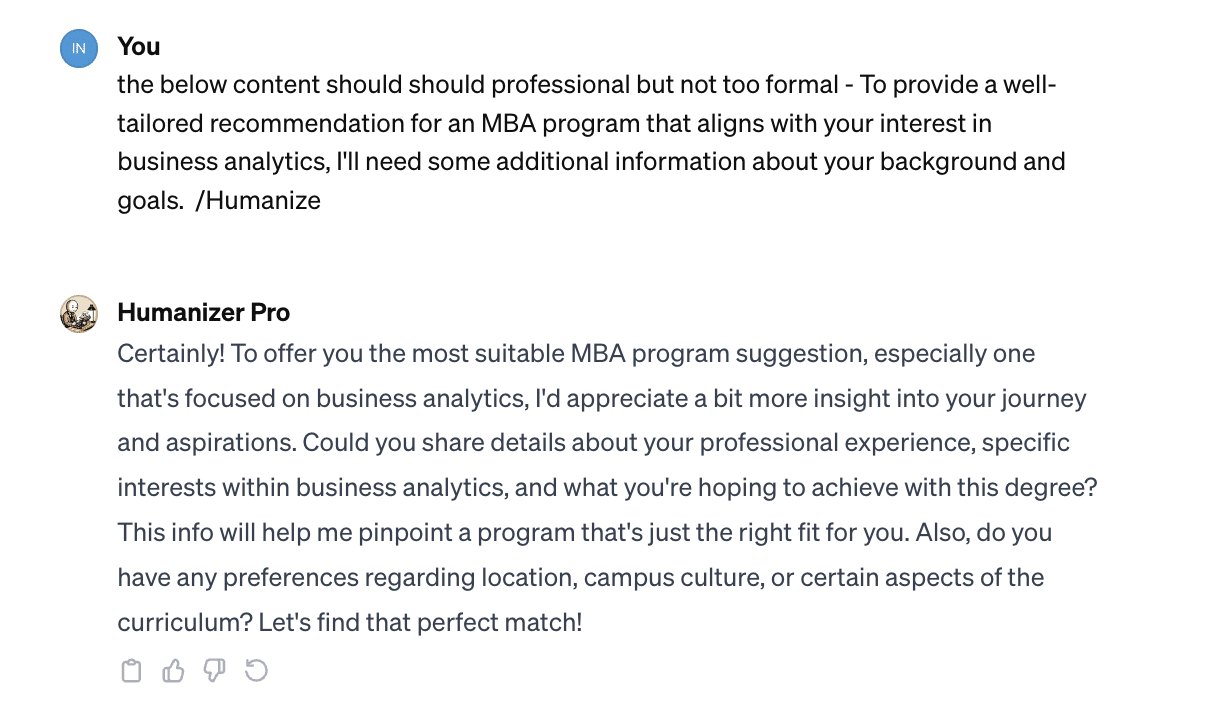
Humanizer Pro

As interesting as it sounds, this GPT is built to ‘humanise’ any content. In simple words, the application allows one to transform any content to make it seem like a human-generated content, at the same time bypassing any AI detection tool.

Source: Humanizer Pro GPT

Doc Maker

The GPT helps in building a range of documents including PDFs, resumes, proposals and others. It also supports various formats such as DOCX, PPTX, and more.

Source: Doc Maker GPT

AI PDF

AI PDF helps users upload up to 2GB file size (individual file) allowing 1000s of PDF upload, and helps users search for any form of information from it and even provides summaries for them. It eliminates the need for repeated file uploads.

Source: AI PDF GPT

Tattoo GPT

Tattoo GPT designs your tattoo. It assists you in refining your tattoo ideas, suggests designs, generates visual previews of the designs, and offers customisation options. It recommends tattoo artists or studios and provides aftercare advice.

Source: Tattoo GPT

Home Style Advisor

Home Style Advisor analyses home photos, suggests decor matching style, and uses DALL-E for visual ideas.

Source: Home Style Advisor GPT

What Should I Watch

Created by Ammar Reshi, ‘What Should I Watch’ helps you find movies and tv shows to watch based on your taste and preferences, thereby, allowing seamless decision-making.

Source: What Should I Watch GPT

SEO Optimised Blog Writer and Analyzer

This GPT helps you create or analyse SEO optimised blogs with the knowledge from the top SEO sources in 2024.

Source: SEO Optimized Blog Writer and Analyzer GPT

The post 10 Must-Try GPTs from GPT Store appeared first on Analytics India Magazine.

The integral role of data science in navigating deepfakes

Deepfakes

The emergence of deepfakes has presented both fascinating opportunities and formidable challenges in the digitally evolving landscape. Deepfakes, a portmanteau of “deep learning” and “fake,” are hyper-realistic digital forgeries created using sophisticated artificial intelligence (AI) algorithms. As these AI-generated images and videos become increasingly indistinguishable from reality, the role of data science in understanding, creating, and combating deepfakes has never been more critical.

The convergence of machine learning and AI in deepfake creation

Deepfakes are primarily powered by a subset of machine learning known as deep learning, particularly through algorithms like Generative Adversarial Networks (GANs). GANs operate on a principle of two competing neural networks: a generator that creates images and a discriminator that evaluates their authenticity. By training on vast datasets of real images or videos, these networks learn to produce highly convincing forgeries. This process exemplifies the core of data science – utilizing statistical methods to interpret complex datasets and extract meaningful patterns.

Data processing and analysis in deepfake technology

At the core of deepfake technology lies the rigorous data analysis and processing process. Data scientists employ advanced techniques to handle and interpret the large volumes of image and video data required to train deepfake algorithms. This involves preprocessing data, augmenting datasets to improve model robustness, and optimizing neural networks to enhance the realism of generated content. Efficiently processing and analyzing this data is pivotal in advancing deepfake technology.

Ethical implications and the responsibility of data science

The integral role of data science in navigating deepfakes

The creation of deepfakes raises significant ethical concerns, particularly regarding consent, privacy, and the potential for misinformation. As this technology’s creators, data scientists must upskill through Data Science course online and be responsible for addressing these ethical challenges. This involves developing guidelines for the responsible use of deepfake technology, ensuring transparency in AI-generated content, and advocating for policies that prevent misuse. The ethical dimension of data science is crucial in maintaining public trust and ensuring that deepfake technology is used for beneficial purposes.

The critical role of data science in deepfake detection

As deepfakes become more sophisticated, distinguishing between actual and manipulated content becomes increasingly challenging. Here, data science plays a vital role in developing detection methods. These methods often involve training machine learning models to recognize subtle inconsistencies typical in deepfakes, such as unnatural eye blinking patterns or irregular facial expressions. The field of data science contributes significantly to enhancing these detection algorithms, employing techniques like feature extraction, anomaly detection, and temporal analysis.

Challenges and innovations in deepfake detection

Pursuing effective detection methods presents significant challenges and opportunities for innovation. As deepfakes become increasingly sophisticated, traditional detection techniques often struggle to keep pace, leading to an ongoing ‘arms race’ between creators and detectors of these AI-generated forgeries.

  • Current state of deepfake detection

The current methodologies in deepfake detection predominantly revolve around machine learning algorithms. These include facial recognition analysis, which scrutinizes subtle irregularities in facial features, and pattern inconsistency identification, focusing on anomalies in digital footprints that are not typically perceptible to the human eye. Behavioral signal analysis is another emerging technique, examining nuances in human behavior that often need to be more accurately replicated in deepfakes.

These methods encounter limitations, particularly as deepfake technology evolves to correct its inaccuracies. The adaptability of deepfake algorithms means that detection tools must continuously evolve to identify new patterns of falsification.

  • Innovative approaches in detection

In response to these challenges, data science is spearheading innovative approaches to enhance deepfake detection. One such approach involves advanced deep learning models that analyze audio-visual inconsistencies. These models are trained on substantially large datasets to discern discrepancies in speech patterns, facial movements, and background noise that are characteristic of deepfakes.

Another promising avenue is the utilization of blockchain technology for digital content verification. By creating immutable digital content records, blockchain can provide a verifiable history of media files, making it easier to distinguish original content from manipulated versions.

  • The role of data science in advancing detection

The advancement of deepfake detection is heavily reliant on data science. Data scientists are at the forefront of developing more advanced and structured algorithms that can learn and adapt to the evolving nature of deepfakes. This involves technical expertise and a deep knowledge of the ethical outcomes of AI and machine learning.

Collaboration across various sectors, including academia, industry, and government, is crucial. Data scientists are working alongside policymakers to establish standards and protocols for deepfake detection, ensuring a unified approach to tackling this issue.

Pushing the boundaries through research and development

The ongoing research and development in the field of deepfakes are heavily reliant on data science. This research is not only focused on improving the realism of deepfakes but also on understanding their limitations and potential applications. For instance, data science research is exploring the use of deepfakes in entertainment, education, and even in creating digital avatars for virtual meetings. Simultaneously, there is a concerted effort within the data science community to develop more robust detection mechanisms to counter malicious uses of deepfakes.

image-1

Future implications and the evolving landscape

As technology advances, deepfakes and data science interplay is poised for significant evolution. With the increasing accessibility of AI technology, deepfake creation is becoming more widespread, presenting both challenges in terms of potential misuse and opportunities for innovative applications in fields like entertainment, education, and communication. In this evolving landscape, the role of data science is crucial, balancing the drive for technological innovation through the best Data Science course with ethical responsibility. Data scientists must navigate these developments with a focus on advancing detection methods, ensuring responsible usage, and collaborating across disciplines to shape the future of deepfake technology.

Deepfakes is inextricably linked to the field of data science. From the algorithms that create these digital illusions to the methods employed to detect them, data science is fundamental to understanding and shaping the future of deepfake technology. As we venture further into this era of AI-generated content, the role of data science will be pivotal in harnessing the potential of deepfakes while safeguarding against their risks. The journey ahead is complex and fraught with challenges, but the possibilities are boundless with responsible stewardship and continued innovation in data science.

LAM Makes LLM Sweat 

LLMs are just like toothpaste, you have to squeeze it really hard (prompt rightly) to get the right amount of paste (answers). However, by the time you take out your toothbrush and begin brushing your teeth, your teeth might have already succumbed to decay.

Just joking, that is where the language action model, in short LAM, comes into play. It enables you to swiftly accomplish your task with just a squeeze (via text or voice prompt), almost at the speed of a rabbit – 10x times faster than existing LLMs, as shared by Jesse Lyu, the founder of AI startup Rabbit, at CES 2024, where he unveiled R1 a hottest new pocket-size gadget which sold 10,000 units in just 24 hours of its official launch.

Lyu believes that the company is on a mission to create the simplest computer—something so intuitive that you don’t need to learn how to use it. “The best way to achieve this is to break away from the app-based operating system currently used by smartphones. Instead, we envision a natural language-centered approach,” he added.

While this is a little too early to say, but Rabbit R1’s ability to not directly interact with interfaces or apps, might pose a threat to UI/UX designers or developers in the coming years as an AI agent simply can focus on the task it needs to complete. Interestingly, Rabbit has also introduced an upgraded ‘teach mode,’ enabling users to demonstrate workflows for the R1 to gradually acquire new skills over different interfaces.

Rabbit R1 features a minimalist design with a touchscreen, rotating camera, and scroll wheel, prioritising intuitive gestures and voice commands over keyboards and menus. Boasting a 2.88-inch touchscreen, the Rabbit R1 is powered by a robust 2.3GHz MediaTek processor, accompanied by 4GB of RAM and a capacious 128GB storage capacity.

A user on X wrote “Rabbit R1 offers a preview of the future. One where apps are gone and operating systems are abstracted away by LLMs.”

Rabbit R1 not only looks funky and cool on the outside with its eye-catching Luminous Orange colorway but also comes with an operating system that navigates all your apps quickly and efficiently, so you don’t have to.

LAM vs LLM

Instead of relying on OpenAI’s models, Rabbit has created its own foundational model, which they call LAM (Large Action Model).

“Large Action Model, or LAM as we call it, is a new foundational model that understands and executes human intentions on computers. Driven by our research in neuro-symbolic systems, with a large action model, we fundamentally find a solution to the challenges that apps, APIs, or agents face,” said Lyu.

LAM is designed to make AI systems see and act on apps in the same way humans do. It learns by demonstration – observing a human using an interface and reliably replicating the process, even if the interface is changed.

It comprehends how applications and services users use daily instead of relying on application programming interfaces (APIs). LAM has seen most interfaces of consumer applications on the internet and is more capable as we feed it with more data of actions taken on them.

“LAM can learn any interface from any software, regardless of which platform they’re running on. In short, the large language model understands what you say, but the large action model gets things done. We use LAM to bring AI from words to action.” said Lyu.

What sets LAM apart from LLMs is that LAMs go beyond language processing and aim to perform actions in the real world based on textual instructions. It takes instructions and uses their language comprehension to navigate digital environments and complete tasks, like booking flights, ordering food, or controlling smart home devices.

“Large Language Models, like ChatGPT, showed the possibility of understanding natural language with AI; our Large Action Model takes it one step further: it doesn’t just generate text in response to human input – it generates actions on behalf of users to help us get things done.” mentioned Lyu.

LAM works with Rabbit OS, which operates apps on a secured cloud. The Rabbit Hole is an all-in-one web portal designed to manage relationships with Rabbit OS and companion devices. For instance, if someone wants to listen to music, they can visit the Rabbit Hole Web Portal and log into third-party applications like Spotify.

Similarly, Humane Ai also has an OS by the name Cosmos which powers Ai Pin, which is likely to be shipped in March this year.

Is it Perfect?

Rabbit R1 runs on the cloud and does not have on-edge capabilities. Meanwhile, the majority of tech giants are trying to bring LLMs on edge, including Apple, Google, and Samsung.

Lyu claimed that with Rabbit OS, he gets a response 10 times faster than most voice AI projects. “Rabbit answers my questions within 500 milliseconds.” However, a user on Hacker News questioned this claim, ‘Where is the inference running? I don’t believe it’s on the device. And if it’s in the cloud, then why make the claim it is under 500ms?”

One way to perceive Rabbit R1 is by not placing significant emphasis on its hardware, which may not rank among the best available. But it’s an attempt to make the most of the AI agent, allowing it to take actions effectively. Another user on Hacker News wrote “I don’t think the hardware is the main product. I believe the AI is, but they didn’t want to be ‘just an app’; they aim to be the first OS for the new way of computing. So, they designed a new device.”

The post LAM Makes LLM Sweat appeared first on Analytics India Magazine.

This is why AI-powered misinformation is the top global risk

darts coming out of a megaphone

With many nations expected to hold elections during the next two years, the use of misinformation and disinformation — powered by artificial intelligence (AI) — will be the most severe global risk.

As citizens continue to worry about the rising cost of living, associated risks from AI-powered misinformation on societal cohesion will dominate the landscape this year, according to the Global Risks Report 2024 released by the World Economic Forum (WEF): "The nexus between falsified information and societal unrest will take centerstage amid elections in several major economies that are set to take place in the next two years."

Also: 4 ways to overcome your biggest worries about generative AI

During this time period, misinformation and disinformation will emerge as the leading global risk, followed by extreme weather events, and societal polarization. The report then ranks cyber insecurity and interstate armed conflict to round out the top-five global risks.

Misinformation and disinformation is placed as the top risk in India, while it ranks as the sixth highest risk in the US, and eighth in the European Union.

Also: AI safety and bias: Untangling the complex chain of AI training

WEF notes that the disruptive capabilities of manipulated information are rapidly accelerating. These capabilities are being fuelled by open access to increasingly sophisticated technologies and deteriorating trust in information and institutions.

Over the next couple of years, a wide set of actors will capitalize on the explosion of synthetic content, amplifying societal divisions, ideological violence, and political repression, WEF said.

With almost three billion citizens heading to the polls, including in India, Indonesia, the US, and the UK, the widespread use of misinformation and disinformation, as well as the tools to disseminate it, could undermine the legitimacy of new incoming governments.

Niche skillsets are no longer required to access tools with user-friendly interfaces and large-scale AI models, WEF noted. This access has already led to an explosion in falsified information and "synthetic' content, such as sophisticated voice cloning and counterfeit websites.

"Synthetic content will manipulate individuals, damage economies, and fracture societies in numerous ways over the next two years," it said. "Falsified information could be deployed in pursuit of diverse goals, from climate activism to conflict escalation."

Also: AI in 2023: A year of breakthroughs that left no human thing unchanged

New classes of crimes also will proliferate, such as non-consensual deepfake pornography or stock market manipulation, WEF added.

All of these problems might lead to violent protests, hate crimes, civil conflicts, and terrorism, the non-governmental organization cautioned.

To combat the risks of AI-generated information, some countries have already begun deploying new and evolving regulations that target both hosts and creators of online information and illegal content.

Nascent regulation of generative AI is also likely to complement such efforts, it added, pointing to requirements in China to watermark AI-generated content as an example. Such rules might help identify false information, including unintentional misinformation through AI-hallucinated content.

Generally, however, the speed and effectiveness of regulation is unlikely to match the pace of development, WEF said.

It notes that recent technological advances have enhanced the volume, reach, and efficacy of falsified information, with flows that are more difficult to track, attribute, and control. Social media companies that are working to ensure platform integrity will also likely be overwhelmed due to multiple overlapping campaigns.

Also: We're not ready for the impact of generative AI on elections

In addition, disinformation will be increasingly personalized to its recipients and targeted to specific groups, such as minority communities, and disseminated through more opaque messaging platforms, such as WhatsApp or WeChat.

WEF notes also that it's increasingly difficult to discern between AI-generated and human-generated content, even for detection mechanisms and tech-savvy individuals. However, some countries are attempting to address this challenge.

Singapore creating facility for deepfake detection

Singapore this week announced plans to invest SG$20 million ($15.04m) in an online trust and safety research program, which will include a center tasked with building tools to curb harmful online content. Led by its Ministry of Communications and Information (MCI), the initiative is slated to run through 2028.

The new Centre for Advanced Technologies in Online Safety will aim to gather researchers and organizations from the country's online trust and safety sector to build "a vibrant ecosystem for a safer internet", MCI said. Scheduled for launch during the first half of 2024, the facility will focus on building and customizing tools to detect harmful content, such as deepfakes and non-factual claims.

The center will seek to identify societal vulnerabilities and develop possible interventions, such as flagging or correcting misinformation, that could reduce online users' susceptibility to content deemed harmful. The facility will also test digital trust technologies, such as watermarking and content authentication.

Tools developed at the center will be put forward for trial and adoption.

Also: Singapore must take caution with AI use, review approach to public trust

MCI said discussions with local researchers and technology developers are already underway, with more than 100 professionals from academia and both public and private sectors already part of its community network.

This network includes 30 participants, such as scientists, engineers, and operations staff, who are involved in work that will be carried out at the new center.

Global populations should hope for such development efforts to yield effective detection tools because, if left unaddressed, misinformation may lead to two different circumstances.

"Some governments and platforms, aiming to protect free speech and civil liberties, may fail to act to effectively curb falsified information and harmful content, making the definition of 'truth' increasingly contentious across societies," WEF said in its report. "State and non-state actors alike may leverage false information to widen fractures in societal views, erode public confidence in political institutions, and threaten national cohesion and coherence."

On the flip side, some nations may choose to address the problem with control.

"As truth is undermined, the risk of domestic propaganda and censorship will also rise in turn," WEF said. "In response to mis- and disinformation, governments could be increasingly empowered to control information based on what they determine to be 'true'. Freedoms relating to the internet, press, and access to wider sources of information that are already in decline, risk descending into broader repression of information flows across a wider set of countries."

Artificial Intelligence

CES 2024: Everything revealed so far, from Nvidia and Sony to rabbit’s pocket AI and the weirdest reveals

CES 2024: Everything revealed so far, from Nvidia and Sony to rabbit’s pocket AI and the weirdest reveals Christine Hall 8 hours

CES 2024 is here! The TechCrunch team is in Las Vegas this week to take in all of the action and decipher what it means to you. You already know what we’re expecting, so sit back, relax and stay tuned throughout the week as we bring you the products, announcements and startup news that you need to know.

Kicking off the first day were some bigger announcements from companies, including Nvidia, LG, Sony and Samsung. Those livestreams have ended, but you can watch most of their archives and catch up right here. And with the event still ongoing, and the show floor open, here’s how you can follow along with our team’s coverage.

Or, to dive into each day’s updates directly, you can follow these links:

  • Wednesday
  • Tuesday
  • Monday

Thursday, January 11

From TechCrunch+: Hyundai talks hydrogen, Siri needs to get smarter
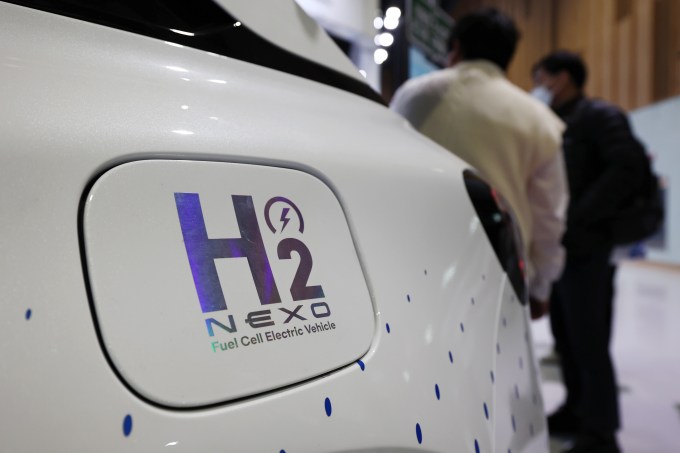
Chemical formula for hydrogen is displayed on a Hyundai fuel filler door.

A Hyundai Motor Co. Nexo fuel cell electric vehicle displayed at the 2021 Ulsan International Hydrogen Energy Exhibition & Forum (H2WORLD) in Ulsan, South Korea, on Wednesday, Nov. 10, 2021. South Korea will cut prices of liquefied natural gas needed to produce hydrogen for fuel cell vehicles for three years to encourage usage of the technology. Photographer: SeongJoon Cho/Bloomberg via Getty Images

As Tim De Chant notes, Hyundai has invested in hydrogen fuel cells for decades, but it has also been one of the more successful legacy automakers at navigating the electric transition. So it’s odd now that a company with so much momentum on its side would throw a hydrogen Hail Mary at CES.

Meanwhile, Haje Jan Kamps had a lot of time to contemplate how Siri works while driving to Las Vegas. He shares some areas where Apple’s voice assistant, Siri, is being left in the dust by its competitors.

Whispp gives a voice to people who can’t speak

Image Credits: Whispp (opens in a new window)

Whispp is working to change the game for individuals with speech disorders and voice disabilities, bringing voice boxes into the current millennium with its groundbreaking AI-powered assistive speech and phone-calling app. The company launched its newest phone-calling feature that converts whispered and vocal cord-impaired speech into a user’s natural voice in real time.

Rownd designs a better tabletop CNC lathe
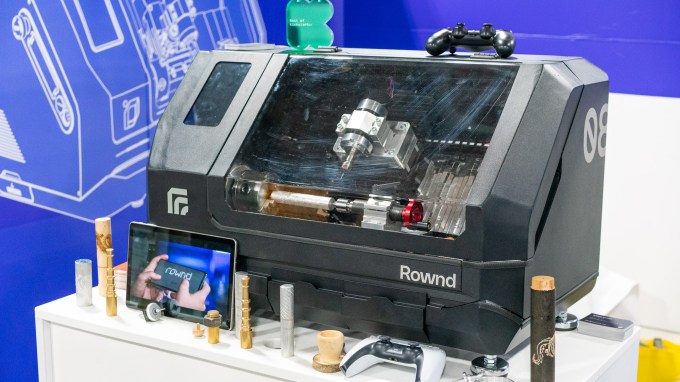
Rownd CNC lathe at CES 2024 in Las Vegas

Rownd CNC lathe at CES 2024 in Las Vegas

Haje Jan Kamps was keeping tabs on Rownd’s new tabletop CNC lathe and got to see it in action this week. He writes that what sets Rownd Lathe apart is not just its relatively affordable hardware (the machine retails at around $5k) but the accompanying software that democratizes the design process, enabling beginners to easily create or utilize pre-made designs from the open-source Rownd Library. Watch it craft a chess pawn.

Wednesday, January 10

Zoe Care gives another take on fall detection

Zoe Care smart plug

Zoe Care smart plug

Devin Coldewey found what Zoe Care was doing in the area of fall detection and elderly autonomy interesting. The company uses existing Wi-Fi signals (and the way our bodies change how Wi-Fi reception works) to detect humans and their activities.

Unlike the Serenity desktop fall detection network we discussed earlier this week, Zoe’s device doubles as a smart plug, and uses a sensor to gather and analyze Wi-Fi signals. If a fall is detected, these signals are translated into alerts on a mobile application. Covering up to 800 sq. ft., just one device can secure multiple rooms or even an entire floor, making it an efficient, cost-effective solution.

WTF is a ‘software-defined vehicle?’

A red car illustration with a loading bar on the windshield.

A red car illustration with a loading bar on the windshield.

That’s the question Harri Weber set out to answer after hearing the phrase uttered all over the CES floor. In it’s most simplest definition, it’s a vehicle defined by software. However, as Harri spoke with various experts, we learn the term can mean various things. Go inside the journey to find out why this is such a popular automotive buzzword.

The weirdest tech of CES 2024 (so far)
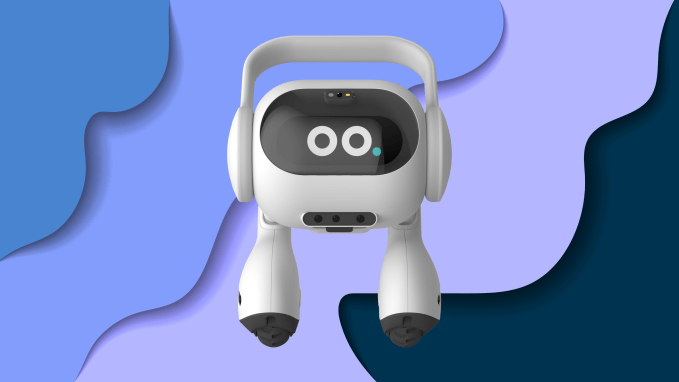
LG's Home AI Agent

Image credits: LG

One thing is consistent throughout every CES: weird and unexpected gadgets and gizmos appear from unexpected places. We have a rundown of some of the most noteworthy products and services here, which include expensive binoculars with birdwatching AI, voice-absorbing muzzles, pay-as-you-go bathroom access and a router that tries to fit your aesthetic.

$2,000 earbuds, silent speech and AI-powered wearable jewelry

Breggz $2,000 premium earbuds

Image credits: Haje Kamps / TechCrunch

Beyond the outright strange products and platforms, there are some hidden gems amid the big booths and name brands at CES. Our own Haje Jan Kamps has highlighted several already that stand out from the crowd. He gave Breggz’s $2,000 earbuds a listen and discovered they actually deliver on their price point for audio perfectionists. He took a look at Augmental’s impressive ambitions to create accessible interfaces that can accommodate for voiceless communication. And he explored Nowatch’s purposeful fitness tracker that uses AI to keep you aware of your health goals without overly stressing you out.

Tuesday, January 9

Hyundai shows off its eVTOL, air taxi ambitions

supernal evtol hyundai

Image Credits: Kirsten Korosec

Supernal’s electric vertical takeoff and landing (eVTOL) aircraft got a showcase from its parent company Hyundai Motor Group on the ground in Las Vegas, as the so-named S-A2 moves closer to its planned 2028 launch for shuttling passengers. Head here for a full rundown on the aircraft, and the challenges in expanding airborne mobility.

This delivery bot handles stairs with ease
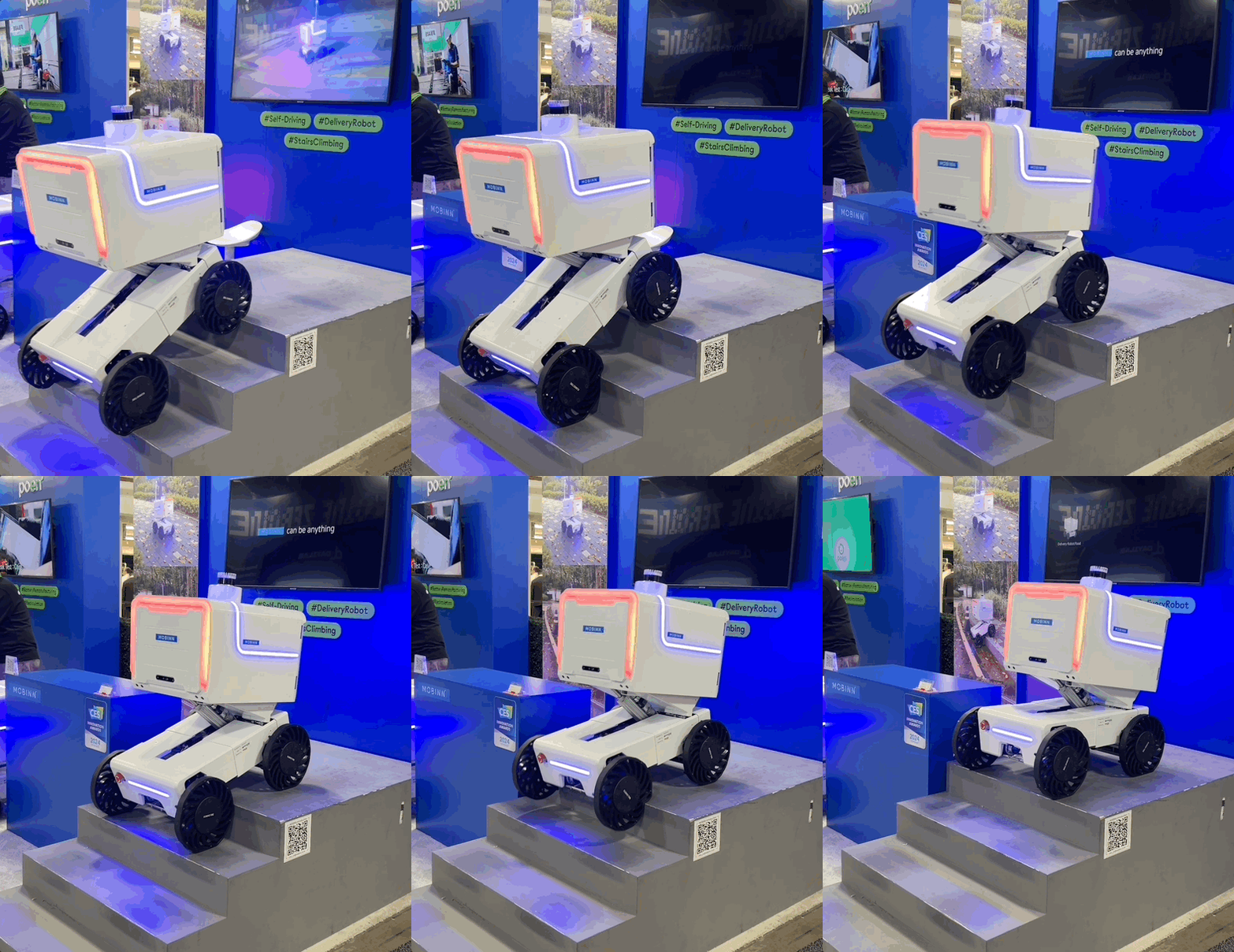
Mobinn delivery robot ascends stairs at CES 2024

Image Credits: Devin Coldewey / TechCrunch

Mobinn, a new spinoff from Hyundai, is taking to CES to show off how its new delivery robot can use its flexible wheels to navigate stairs and changes in elevation to drop off deliveries, with tests already being conducted in Korea. Climb aboard the full story here.

Walmart debuts AI-powered tools, features and a drone
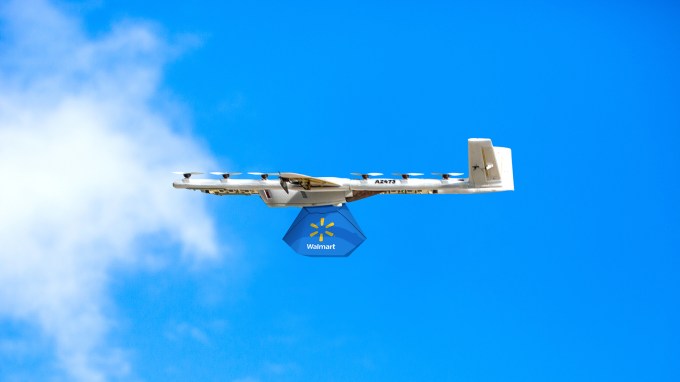
Image Credits: Walmart

Walmart president and CEO Doug McMillon shared some new technologies the retail giant has been working on, including augmented reality (AR), drones, generative artificial intelligence, and other AI tech meant to improve the shopping experience for customers. Within the presentation were some new tools for managing product search and replenishment and a new beta AR social commerce platform called “Shop with Friends.” Get the scoop on all of the new products.

OneCourt lets those who are blind ‘see’ the game
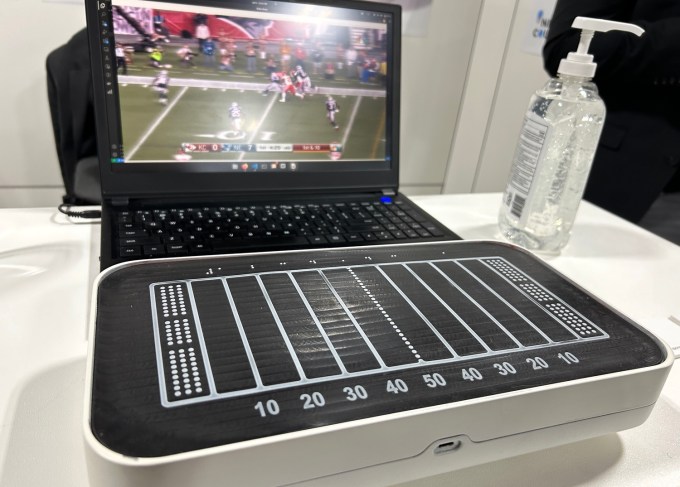
Image Credits: Devin Coldewey / TechCrunch

Put this in one in the “thoughtful” category. OneCourt, a startup founded by recent University of Washington graduates, debuted a lap-top miniature field that enables someone who is blind or with low vision feel the position of sports players and the ball in near real time. The OneCourt team takes this information and transmits it to a haptic display with a touchable cover imitating the pitch or field lines. See how it works.

rabbit jumps at the chance to explain how its r1 is different from other virtual assistants

Image Credits: rabbit

Devin writes that the idea behind the $200 rabbit r1 is simple: “it lets you keep your phone in your pocket when you need to do some simple task like ordering a car to your location, looking up a few places to eat where you’re meeting friends, or finding some lodging options for a weekend on the coast. Instead of pulling out your phone, unlocking it, finding the app, opening it, and working your way through the UI (so laborious!), you pull out the r1 instead and give it a command in natural language.” Now hop over to the story for more.

Move over, Siri. The rabbit r1 is a pocket AI assistant that can navigate your apps for you, without you having to pick up your phone.

Check out our preview from #CES2024: https://t.co/R6naLv9ckH pic.twitter.com/aUbz0WW1xI

— TechCrunch (@TechCrunch) January 9, 2024

All electric vehicles, all the time — Honda, VinFast, Google Maps

Image Credits: Honda

First, we have your look at Honda’s upcoming 0 series electric vehicles that is a thin and light take on what Harri writes has typically been a thick and heavy EV trend. The automaker teased two concept vehicles, the Saloon and Space-Hub, and said the first commercial model in its 0 series EV lineup will launch in North America in 2026. Get a look at the specs and more.

Next, Vietnamese EV startup VinFast is getting into the electric pickup truck game with the reveal of a new concept called the VF Wild. The truck will have midsize pickup dimensions, and a folding mid-gate to allow the five-foot bed to turn into something functionally closer to an eight-foot bed (when the rear seats are down). Not much else is known at the moment. The company also officially announced plans to start selling its smallest EV, the VF3, outside of Vietnam. Learn more.

Meanwhile, Google has a new feature for EV drivers to track and display real-time battery information in Google Maps. The feature is available in EVs with Android Auto, a secondary interface that runs on the user’s phone and wirelessly communicates and projects features like navigation, media and messaging from their Android-based smartphone to the vehicle display. From here, Android Auto shares real-time battery information with Google Maps. Find what your looking for here.

Say hello to the Honda 0 series EVs 🚗 The Saloon and Space-Hub concept models made their debut at #CES2024, along with a new H logo. What do you think of their futuristic designs? pic.twitter.com/sBaQC1UAcj

— TechCrunch (@TechCrunch) January 9, 2024

For Google and Samsung, sharing is caring

Image Credits: Google

Google and Samsung announced they are combining their sharing solutions into a singular cross-Android solution under the Quick Share name. The new offering grows the network of devices that users can share content with across the Android ecosystem, including Chromebooks. By integrating Google’s Nearby Share and Samsung’s Quick Share, the two experiences create “the best default, built-in-option for peer-to-peer content sharing” across all types of devices in the Android and Chromebook ecosystems, according to the companies. Google also announced that it is working with PC manufacturers like LG to expand Quick Share to Windows PCs as a pre-installed app. Quick Share will start rolling out to current Nearby Share–enabled devices next month.

These gadgets help with health monitoring from home — Serenity, Vivoo, Tack One
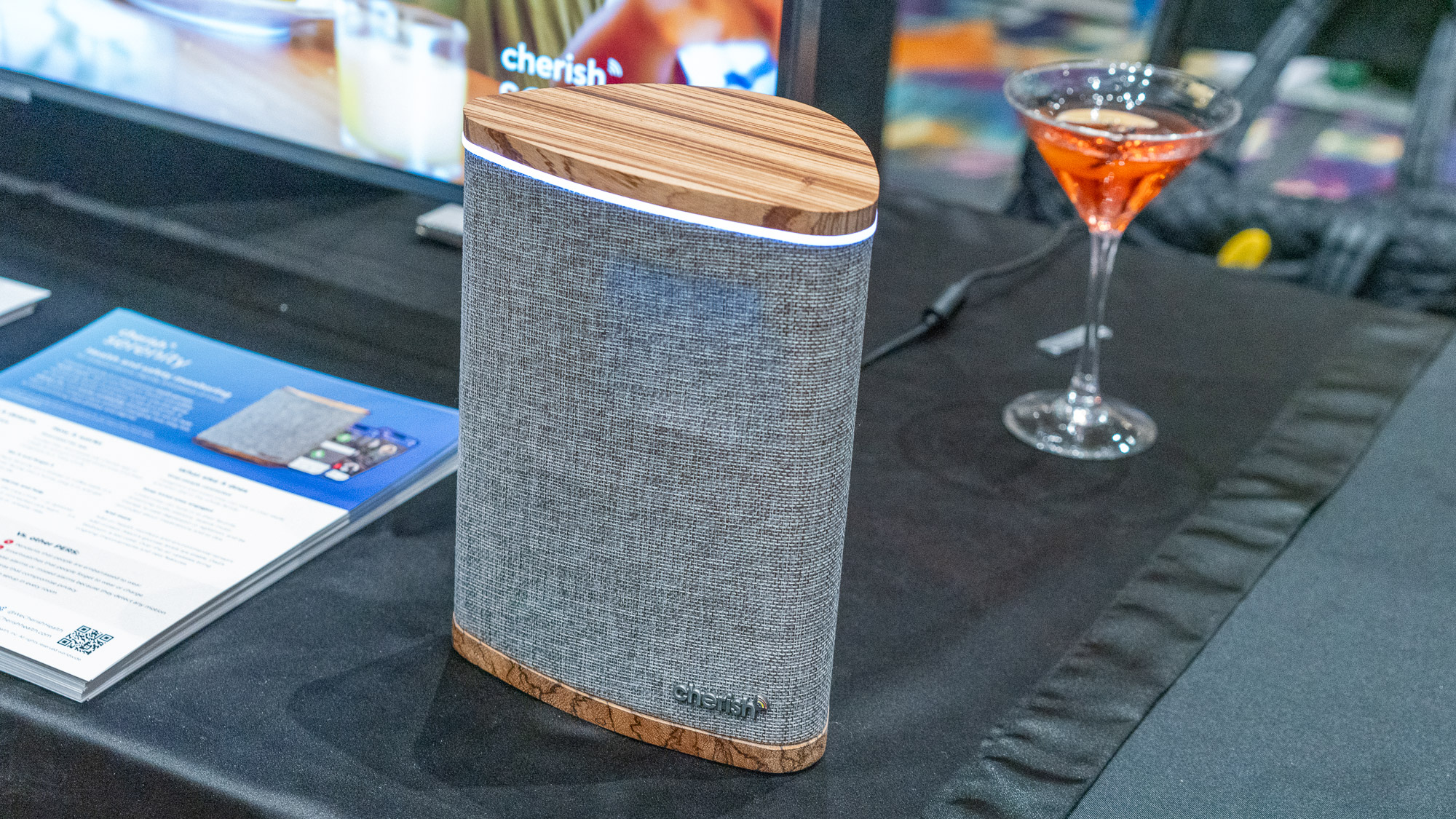
Cherish Health’s Serenity. Image Credits: Haje Kamps (opens in a new window)/ TechCrunch

First, Serenity is showing off its fall-detection system for the first time at CES. It’s easy to use — just plug it in, no app or configurations required. It utilizes advanced radar technology and AI to track up to two individuals within a 40-foot range, even through walls, and offers detailed information about someone’s activities. See how Serenity’s technology sets it apart.

Next, Vivoo, a company offering a broad range of at-home tests, launched a new test that can detect urinary tract infections (UTIs). Vivoo’s At-Home UTI Test streamlines the diagnostic process for UTIs and utilizes your phone’s camera to record and analyze the color readout of the test strips. It then gives advice and context for the readings in its free app.

Meanwhile, Tack One, a Singapore-based startup, unveiled the new generation of its Tack GPS Plus, an AI-powered location technology device to help make sure your kids, elderly parents and pets are safe. Here’s what’s new: longer battery life and subscription fees starting from $2.95 monthly for a two-year subscription plan.

The startup launched its GPS tracker in 2021 to address the pain point of the short battery life on the market and lower the tracking service cost, making location tracking extremely affordable. Tack One’s battery lasts 30 days on a single charge and a patent-pending indoor elevation finder feature. Find out more on the specs and pricing.

Get a look at Skyted’s voice-capturing mask

Skyted’s voice capturing mask. Image Credits: Haje Kamps

You read about Skyted’s voice-capturing mask last week, now see what it looks like in real life.

“We launched a mobile application that will give you information about how big your ‘sound bubble’ is. If, for example, you’re sitting in an airplane, you don’t want the person next to you to hear what you’re saying,” says Gauthier Daridon, connectivity engineer at Skyted, in an interview with TechCrunch at CES in Las Vegas. “So our application will explain that you are ‘perceptible’ and ‘intelligible’ at certain distances.” Get more of the scoop on how it works.

Amazon’s AI-related enhancements

Image Credits: Character.AI

Amazon says it will be the first company to support Matter Casting, the video- and audio-beaming feature of the Matter smart home standard, on its smart displays and smart TVs. When it comes to Amazon’s Prime Video app for Android and iOS, users will be able to cast content to supported Amazon devices — starting with the Echo Show 15 — by tapping the new dedicated Matter Casting button. Beyond that, Amazon says that Matter Casting support will arrive on Fire TVs including smart TVs from Panasonic with Fire TV built in, and — on the app side — Plex, Pluto TV, Sling TV, Starz and ZDF later this year. Read more.

And, Amazon announced back in September that it would be coming out with some new tools to build large language model-powered experiences. Today, we got to see them in action, including new generative AI-powered Alexa experiences, including AI chatbot platform Character.AI, AI music company Splash and Voice AI game developer Volley. All three experiences are available in the Amazon Alexa Skill Store. Learn more about Alexa’s experiences.

ElliQ’s eldercare robot gets a reboot

ElliQ 3.0

Image Credits: Intuition Robotics

Intuition Robotics’ ElliQ, which went on the market last March, and found some success through partnerships with assistive care facilities. After some fresh funding, the company unveils ElliQ 3, featuring some design tweaks like a more powerful hardware, increased memory, updated core processor, a lighter apparatus and – of course – generative AI integration. Read more.

Kodiak Robotics’ take on autonomous trucking

Kodiak Driverless Truck

Image Credits: Kodiak

Autonomous trucking startup Kodiak Robotics revealed a semi-truck that founder Don Burnette says “is the linchpin in its plans to launch commercial driverless operations this year.” The company specifically set out to include redundancy in its safety features so that there is a backup in case anything were to fail while on the highway with a driver behind the wheel. Get a breakdown of the mechanical components and safety systems.

Fox, Polygon Labs collaborate to defeat deepfakes

Fox has partnered with Polygon Labs, a developer of scaling networks for Ethereum, to release an open source protocol — called Verify — for media companies to register their articles, photographs and more. Fox and Polygon are pitching the protocol as a means for outlets to protect their IP while letting consumers verify the authenticity of content. Learn more about the protocol.

Ultrahuman unveils ‘home health’ tracker
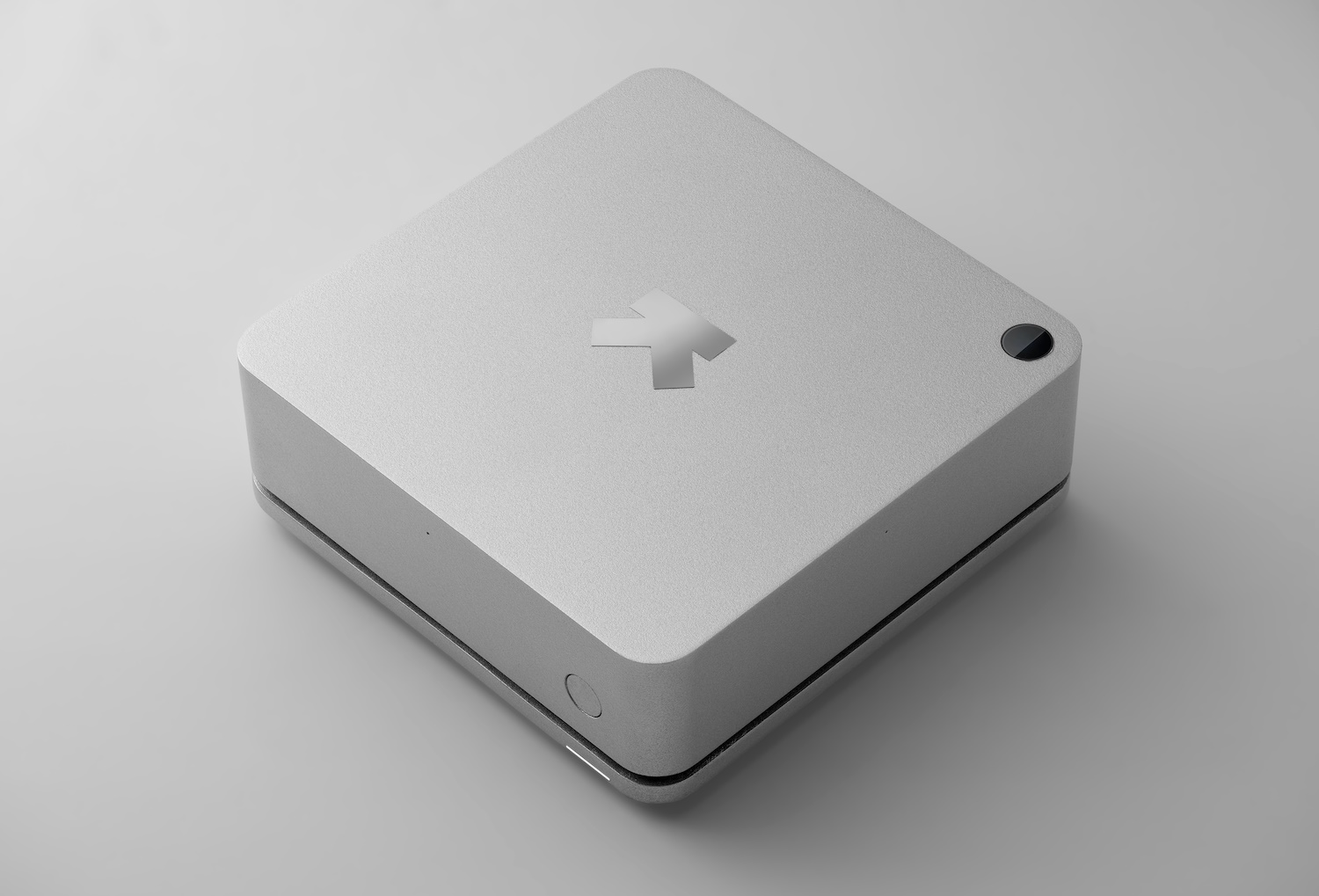
Image Credits: Ultrahuman

Indian wearable startup Ultrahuman is getting into the smart home game with the upcoming launch of connected hardware that’s designed to monitor the “health” of your home, as its marketing puts it. The device, which it’s calling the Ultrahuman Home, has a price of $349 and a shipping date slated to start in July. Check out the specs.

Monday, January 8

Pivotal begins personal aircraft sales

From storage to flight in 30 minutes. A 16-foot road trailer can hold everything needed to take the Helix to uncongested, Class G airspace areas. Image Credits: Pivotal

Pivotal, which is backed by Larry Page, has begun U.S. sales of its lightweight electric Helix aircraft, which notably does not require a pilot’s license to be able to fly. That doesn’t mean those paying at least the $190,000 base price will go without mandatory training; a number of rules and regulations still apply. You can get the full breakdown of their launch pricing and specs right here.

Will.i.am’s new startup mixes music as you drive
mercedes will.i.am sound drive ces

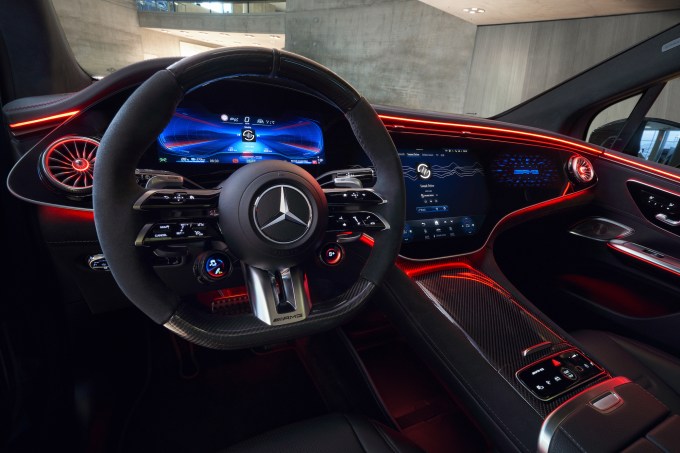
Mercedes-AMG and will.i.am launch immersive MBUX SOUND DRIVE experience at CES 2024. Image Credits: Mercedes-Benz

If you thought that sounded a little ridiculous, contributor Tim Stevens did too — at least until taking part in the startup Sound Drive’s demo at CES that left him feeling surprisingly impressed with the underlying tech. Read his full impressions of what it’s like to experience music “conducted by the road.”

Sony highlights mobility partnerships, creators and content authenticity

Sony took the final major press conference slot on Monday, with an expected focus around creators; the success of its IP across its gaming, film and streaming studios; and a focus on its partnership with Honda to imagine the mobility space as a “creativity space.” The latter was demonstrated in part by teasing Fortnite in its Afeela car and driving it onstage with a PlayStation 5 controller. Its “digital birth certificate” also reminded us of the brighter side of NFTs, which Haje explains in detail here.

Kia’s new modular EV van lineup

Kia commercial van EV PBV lineup

Kia PBV Concept Lineup. Image Credits: Kia

Kia’s new EV vans come with a modular twist. In addition to using a modular powertrain, the vehicles will also have modular tops that allow for many different cabin options. But they remained vague on pricing, specs and expected launch dates for this new fleet of commercial EVs. Read more.

Samsung brings back Ballie; renews green initiative

Samsung Ballie

Image Credits: Samsung

Meet the new and improved Ballie, Samsung Electronic’s home robot, which it previewed today. It’s around the size of a bowling ball with a battery designed to last two to three hours. Ballie sports a spatial lidar sensor to help it navigate rooms and obstacles, as well as a 1080p projector with two lenses that allows the robot to project movies and video calls and even act as a second PC monitor. Learn more.

Expanding beyond cute, rolling robots, Samsung showcased its wider initiatives for connected homes. Aside from expected UI and feature updates for its existing SmartThings home automation platform, Samsung showed off a “map view” for users that creates an interactive home map that even includes animated avatars of residents and pets. Learn more.

Also, Samsung devoted some of its keynote speech to its commitment of sustainability. “We start by incorporating recycled materials into some of our most loved products, such as recycled fishing nets in our Galaxy,” said Inhee Chung, VP of corporate sustainability at Samsung. “Smartphones, recycled plastic in our TVs, and recycled aluminum in our bespoke refrigerators. Recycled plastic accounted for 14% of the total plastic used in our products in 2022. And we’re working towards increasing this amount.” Read more.

Remember Samsung's Ballie? The round robot first revealed in 2020 has made a comeback at #CES2024. https://t.co/CCO8T1g0lH pic.twitter.com/OkrXr8jgiE

— TechCrunch (@TechCrunch) January 8, 2024

X1 Interpreter Hub: A new real-time translator

Image Credits: Timekettle

Timekettle announced the X1 Interpreter Hub, a more robust solution, designed for meetings. Timekettle calls it “the world’s first multi-language simultaneous interpretation system.” The system works out of the box, without having to download a separate app. For in-person meetings, two devices are touched together to initiate conversation translation. The handheld devices house earbuds, similar to past Timekettle products. All told, the X1 is capable of supporting up to 20 people at once in five different languages. Read more.

LG’s transparent television

LG transparent television, CES 2024

LG Signature OLED T. Image Credits: LG

Televisions aren’t naturally pretty or used as a design feature, but LG Electronics is out to change that perception. Today, consumer technology giant unveiled what it touts is “the world’s first” wireless transparent OLED TV. The LG Signature OLED T combines a transparent 4K OLED screen with LG’s wireless video and audio transmission technology.

Breathe easy with bio-engineered houseplants

Neoplants at CES 2024.

Neoplants at CES 2024. Image Credits: Haje Kamps / TechCrunch

French startup Neoplants is showing off its progress with its houseplants that work as air purifiers designed for the home. The bio-engineered plants can, according to the company, replace 20 “regular” houseplants, as measured by how many pollutants the plants can remove from the air.

More from Samsung: bigger, foldier, more rollable displays

Image Credits: Samsung

Ahead of Samsung Electronics’ press conference later today, we look at some of its product plans that include a “new generation of products that can be folded inward and outward,” along with “monitor-sized” folding and sliding OLEDs. Samsung also unveiled a “Transparent MICRO LED” display for the first time.

Nvidia gets its game on

NVIDIA Jetson Platform Expansion

GeForce RTX 4080 SUPER. Image Credits: Nvidia

Today, Nvidia gets into artificial intelligence in a big way with the unveiling of its GeForce RTX, including the GeForce RTX 40 Super series of desktop graphics cards. Much of these are meant for gaming, and Nvidia said 14 titles will get the RTX upgrade treatment, including Horizon Forbidden West, Pax Dei, and Diablo IV. The RTX 4080 Super starts at $999.

Nvidia also announced that its partnership with Getty Images will include a new service for iStock customers, which can create licensable images trained on the existing iStock photo library.

Nvidia also showed off ACE, which uses AI to create unique reactions from in-game NPCs, which gives an uncanny valley sheen on top of prompt response dialog.

At #CES2024, NVIDIA demonstrated their Avatar Cloud Engine (ACE) for gaming, which aims to give NPCs AI-generated dialogue. pic.twitter.com/QKRervzvjY

— TechCrunch (@TechCrunch) January 8, 2024

More chip updates from AMD

Speaking of chips, AMD debuted its new Ryzen 8000G processors for the desktop, with a big focus on their AI capabilities.

Bosch’s in-car eye-tracking

Bosch driver monitoring system for drowsy driving

Image Credits: Bosch

Bosch is showing off two technologies this week in eye-tracking while driving: One will see that you have tired eyes and ask if you need an espresso when you arrive home. If yes, its connect technology will tell your fancy machine to have one ready. The other is a bit more complicated in that it’s developed to track what you’re looking at as you drive.

Smart cooking
smart cooking device control panel

Image Credits: Haje Kamps (opens in a new window) / TechCrunch (opens in a new window)

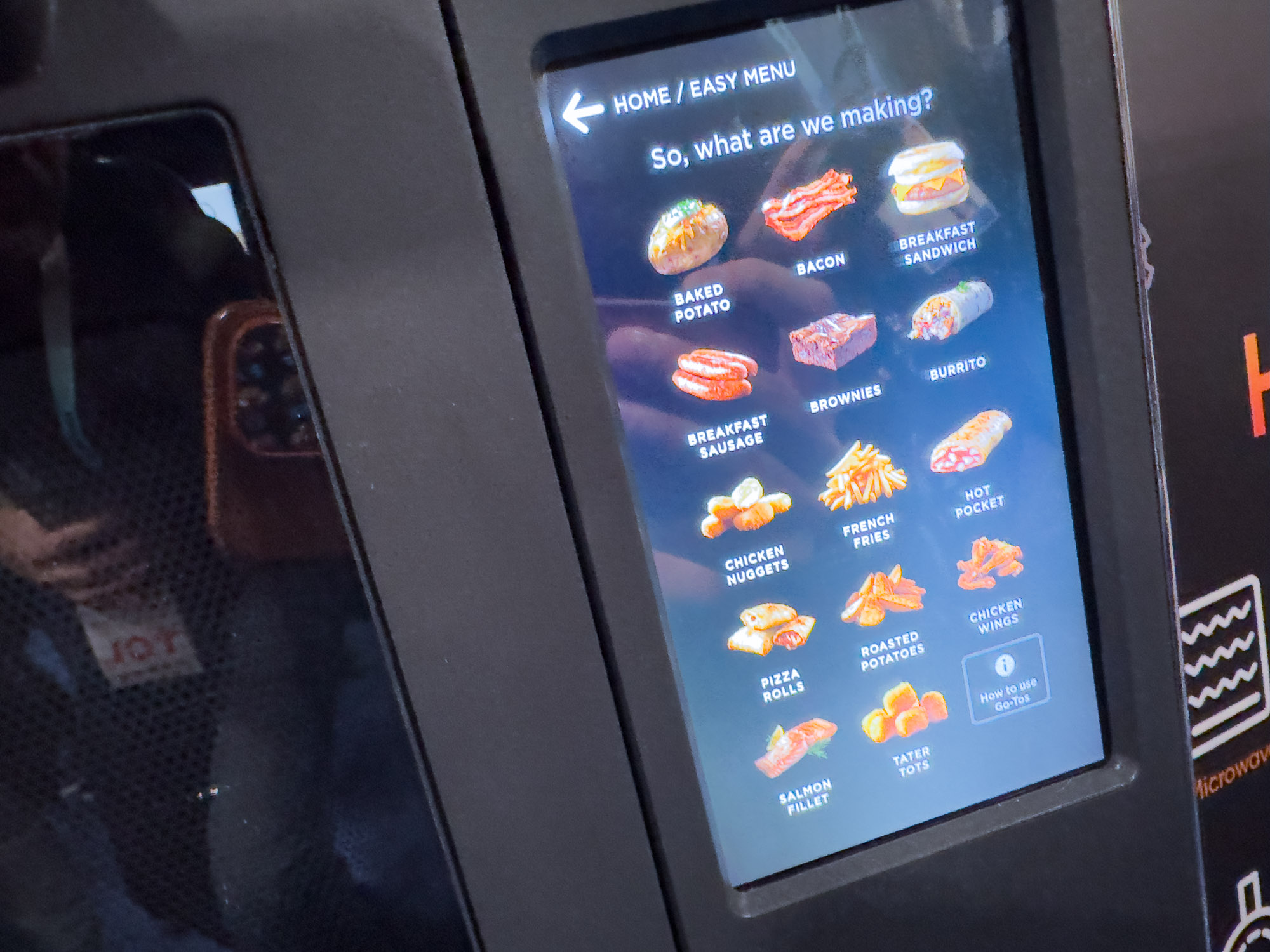
We have a collection of small home appliances for the kitchen, from grills to smart microwaves and everything in between, that is sure to get you cooking this year, if you aren’t already.

ChatGPT in Volkswagen
An image showing the interior of a new Volkswagen Gold including the steering wheel and touchscreen.

Image Credits: Volkswagen

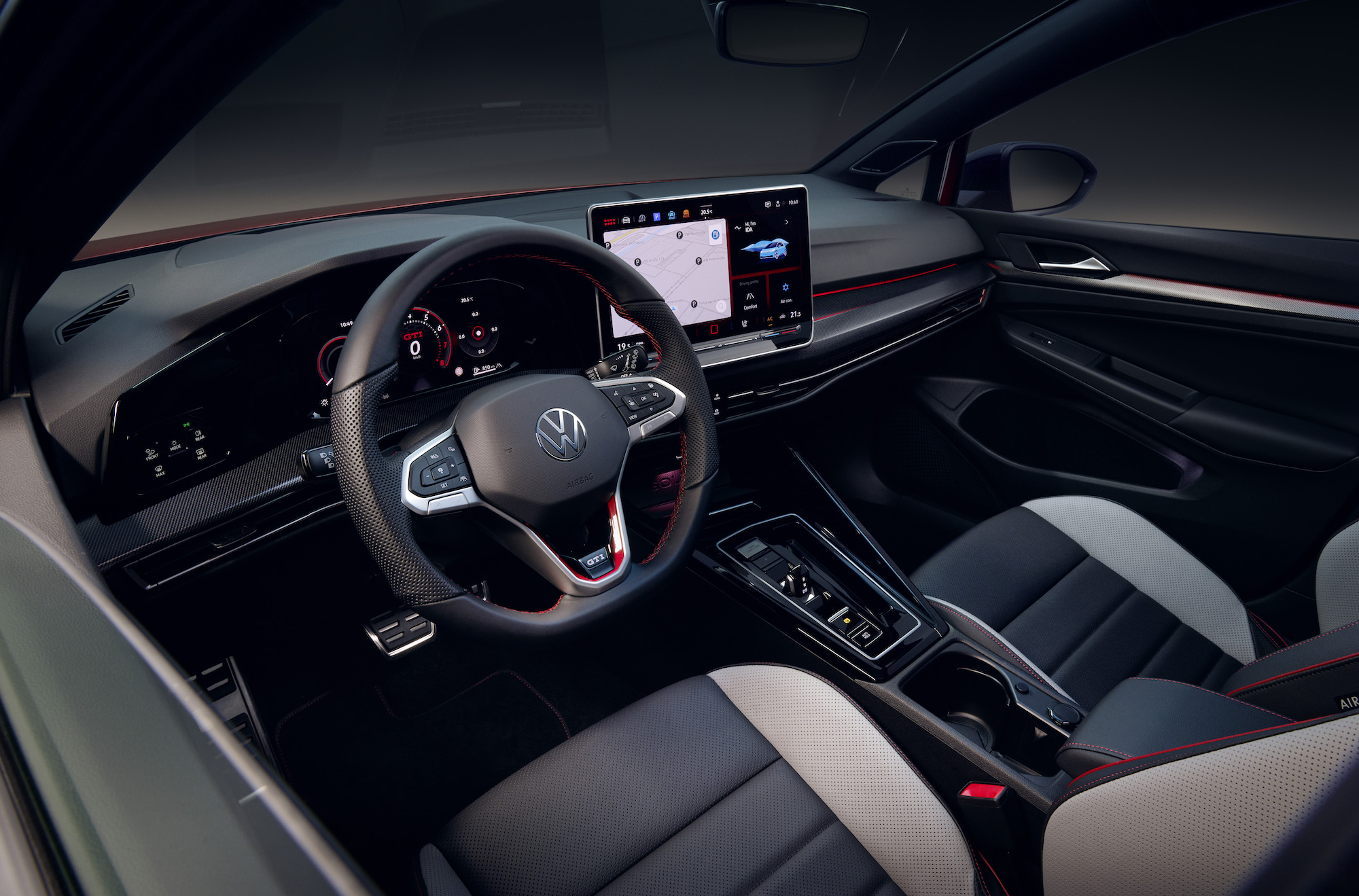
The German automaker plans to add an AI-powered chatbot into all Volkswagen models equipped with its IDA voice assistant. For now, it’s not available in the U.S.

Apple Vision Pro to go on sale February 2
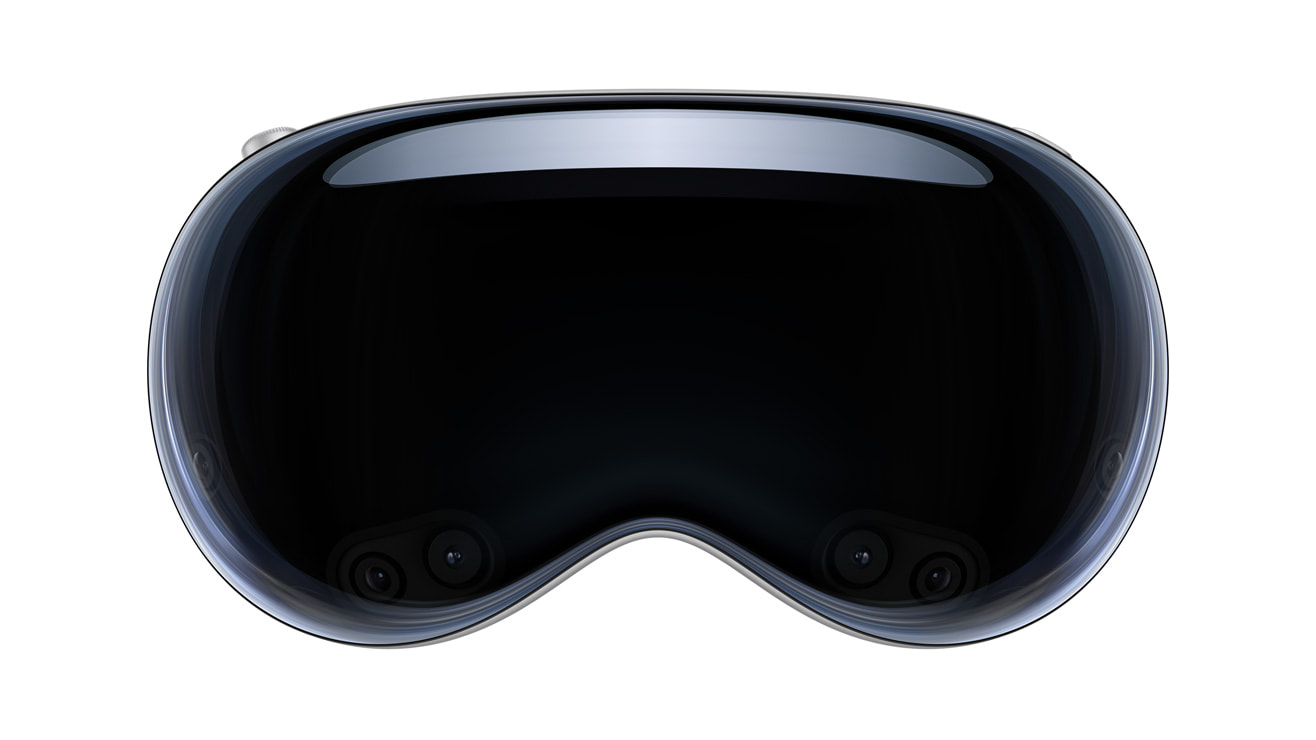
Image Credits: Apple

And Apple, in a surprise announcement preempting CES, stole some of the show’s thunder by announcing the Vision Pro will be available in the U.S. The consumer electronics giant confirmed that the Vision Pro will be available in the U.S. starting February 2. Pre-orders for the $3,500 spatial computing device open Friday, January 19.

Some companies made announcements ahead of the big event. Check out what’s already made headlines:

Withings’ new multiscope device checks vitals for telehealth visits

Invoxia has a new smart collar suitable for both cats and dogs

This app lets restaurants and coffee shops charge to use the bathroom

Aurora and Continental pass first major hurdle in commercial self-driving trucks deal

This startup is bringing a ‘voice frequency absorber’ to CES 2024

For just $139, this startup turns your iPhone into a BlackBerry-era relic

Qualcomm next-gen XR chip promises up to 4.3K resolution per eye

Urbanista integrates Powerfoyle tech with solar-powered headphones

Moonwalker robotic shoes get lighter and smarter

Read more about CES 2024 on TechCrunch

Infosys Shows Low Level of Confidence in Generative AI, Stresses on Capabilities

Indian IT giant Infosys recently released its third-quarter results. The company reported a consolidated net profit of Rs 6,106 crore for the quarter ending in December, marking a 7% decrease from the Rs 6,586 crore reported in the same quarter the previous year.

The company mentioned a large deal TCV for the quarter was $3.2 billion, with 71% being net new. However, during the earnings call, Infosys’ chief Salil Parekh hesitated to mention the amount attributable to generative AI. “AI has a lot of interest and traction, even if the revenue numbers are small,” he said, avoiding giving out the exact figures.

“We are not, at this stage, publicly sharing what the Generative AI revenue is, but we have tremendous capability, a good leading market position, and we feel, in generative AI, we are very strong in the capabilities,” he said.

Parekh gave no additional comments when asked about the reason for termination of Infosys’s $1.5 billion deal by a global client. The deal aimed to provide an enhanced digital experience, modernisation, and business operations services over a 15-year period, leveraging Infosys platforms and AI solutions, which might be Topaz.

However he mentioned that Infosys has an extremely strong capability set and a lot of activity with its clients. “We are working with a large retail company on their AI First Transformation. This is very strategic work with the client” he said.

Furthermore he added, “We’re also working with a large global bank on their risk area, using large language models to enhance the risk management for them. So, we have a large number of such deals.”

Stressing on the capability he said, “We are seeing strong traction for generative AI programs leveraging our Topaz capability. We have integrated our generative AI components into our service line portfolio, creating impact for our clients. We have 100,000 employees trained in generative AI areas.”

“I believe we have incredible capability in Topaz, and clients are also resonating with that capability. We are not calling out the value of generative AI today, but that is a different subject. The work we’re doing, I think, is quite impactful” he added.

When asked about the clients, he said it’s a mix of both new and existing clients. “We’ve also done what we call a Generative AI Roadshow. It’s a tour where we take all of our capabilities to different locations around the world, and there are some new clients as well for whom we are doing generative AI for the first time,” he added.

The post Infosys Shows Low Level of Confidence in Generative AI, Stresses on Capabilities appeared first on Analytics India Magazine.

TCS Revenue Growth, AI Might Make Impact on Deals and Jobs

According to the latest Q3 FY 2023-24 results, the IT Giant Tata Consultancy Services (TCS) secured a total of $8.1 billion deal without mega deal support and showing broad-based success. TCS said that four generative AI deals have turned from PoC to contract, but there is no effect on revenue because of it yet.

“All deals are progressing as planned,” said Chief Operating Officer, N Ganapathy Subramaniam.

He also expressed a cautious outlook on generative AI, stating, “I don’t think generative AI is impacting [our revenue] at this time. Clients are trying to see what benefit it can bring. All are small projects. It’s not leading into our TCV.”

When it comes to jobs, “Depending on the overall condition, the investments we make, and driving efficiency, if the headcount has to become less, then be it,” said Milind Kakkad, chief HR Officer saying that if TCS has to reduce the headcount, it might choose to do so depending on the market.

On the other hand, he also said that TCS continues its plans to hire 40,000 freshers in 2024 and it stands by the number. He also said that they hired a lot of freshers in this quarter.

TCS reported a total employee count of 603,305. The attrition rate for IT services decreased to 13.3% over the last twelve months, down from 14.9% in the previous quarter.

The partnership with NVIDIA is progressing as planned, with 14,000 employees trained on leveraging the architecture. The team is also planning to increase the speed of training. A lot of the projects developed by TCS are also being offered as small services to the clients.

The company also showcased growth in emerging markets, specifically 23.4% in India. The company also filed 83 patents in the quarter.

TCS reported a Q3 marked not much information about generative AI, despite a 4% YoY growth at Rs 60,583 crore in total revenue. Generative AI, although advancing into production with four projects, has not yet demonstrated a substantial impact on the company’s overall revenue.

The company says that it is moving into a situation where its clients are comfortable with generative AI, and are trying the technology in different ways. While deals in generative AI are in progress, their timing remains uncertain, and their impact on revenue is yet to be realised.

However, the company’s cautious stance on the potential impact of generative AI raises questions about its contribution to future revenue growth, as no commitments have been made in terms of investments. Though the company has previously announced major partnerships with Microsoft and Google, the pace is still slow when it comes to revenue.

Read: TCS’ Obsession With Generative AI

The post TCS Revenue Growth, AI Might Make Impact on Deals and Jobs appeared first on Analytics India Magazine.