Age tech at CES was much more than gadgets

Age tech at CES was much more than gadgets Anna Heim 8 hours

W
elcome to the TechCrunch Exchange, a weekly startups-and-markets newsletter. It’s inspired by the daily TechCrunch+ column where it gets its name. Want it in your inbox every Saturday? Sign up here.

There was a lot going on in tech this week, and not just CES. But yes, CES was definitely worth watching closely, if only just for the rise of age tech. — Anna

Better aging

Following CES from a distance this year, I couldn’t help but notice how age tech, or silver tech, companies seemed to be in the spotlight — perhaps more than we expected.

For instance, I read that Microsoft CEO Satya Nadella had visited the booth of AgeTech Collaborative, an initiative from U.S. senior advocacy group AARP to showcase “groundbreaking age tech innovations” during the event.

How ChatGPT turns something creepy into something cleverly creepy

screenshot-2024-01-09-at-5-18-14pm.png

Jeeves, please fetch me a glass of port.

When you think of ChatGPT, what comes to mind?

The latest tech fad? A get-rich-quick moneymaker for some and a lose-your-job-quick worrymaker for others?

Perhaps you've even experienced a tinge of mere general creepiness.

Also: The best AI chatbots: ChatGPT and other noteworthy alternatives

For me, there are three distinct groups of humans reacting to generative AI — the Fearful, the Experimenters, and the Capitulists. (Those last ones are capitalists who have just capitulated and decided generative AI will soon rule the world.)

Today, I'd like to focus on some experimenters who may not entirely realize the good they're suddenly perpetrating.

Over the years, you've possibly seen many demonstrations of robot dogs performing various stunts. Leaping up and throwing things, running at fast speeds, or even — please be prepared — pole dancing.

I've long been rather fascinated by robot dogs, and not necessarily in an affectionate way.

As they clunk along, like little dressage horses with arthritis, I find myself wondering whether they could really have a purpose, never mind that their general being is somewhat high on the creepy factor.

Why, when the US Marines experimented with robot dogs in battle, they discovered that, oh dear, the robot dogs' clunking made too much noise and gave away the troops' position.

Also: The best robot vacuums: Expert tested and reviewed

But how could ChatGPT help a robot dog find its place in the world?

By teaching it to whisper? Not at all. By giving it an informed brain, perhaps? Well, in a way.

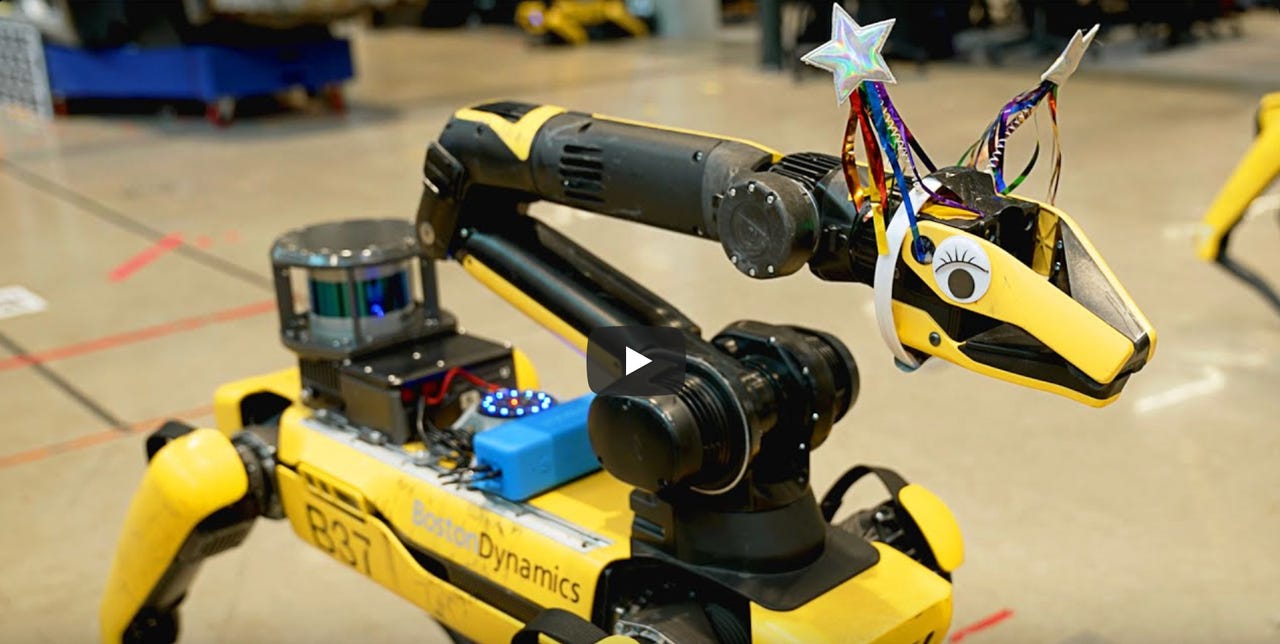
The clever humans at Boston Dynamics recently injected a little ChatGPT into Spot the robot dog. And the results (mostly) were riveting.

Good sir, said the good dog

"Greetings, good sirs, may I have the pleasure of knowing your names?" This question was uttered by the ChatGPT-powered Spot. In a voice entirely reminiscent of snooty butlers you've seen in many movies — Batman, for example, or Arthur.

Alright, it's still a touch creepy that the robot dog's "mouth" is actually a gripper that moves up and down in a faintly medieval way. But when your clunker of a dog suddenly offers genteel, servile tones it's hard to avoid being marginally soothed.

In this case, Spot had been ChatGPT'd to guide the innocent bystander around the Boston Dynamics lair. It can even answer questions with true corporate sincerity.

Also: The 15 best robots and AI tech we saw at CES 2024

For example, Matt Klingensmith, principal software engineer for robot autonomy (hmm…) at Boston Dynamics, asks Spot: "How do you like your job?"

That's a difficult question for any human confronted by their boss, but when you're confronted by the very being who made you — what do you say?

ChatGPTSpot offered: "Ah, Mr Matt. My employment as a tour guide provides great satisfaction. I find the dissemination of knowledge rather rewarding, don't you agree?"

He's an awful suck-up. He'll go far.

Shakespearean Time Traveler, anyone?

Of course, ChatGPT helps Spot become whatever you — or, currently, its engineers — want it to be. Personality-wise, that is.

You may find it less — or perhaps more — edifying when it becomes Precious Metal Cowgirl or Excited Tour Guide. Perhaps you'll be charmed by 1920's archaeologists or inspired by Teenage Robot. The Shakespearean Time Traveler is its own kind of hoot, too.

Klingensmith and his colleagues brought together other new technologies to accompany ChatGPT in this decreepization experiment.

Also: This is what AI will produce during the next decade and beyond

"Some exciting new image captioning and visual question-answering models came out and new voice recognition software and voice creation software," he said. Why not bring them together to see what results?

The utterly lovable Josh

I confess to a personal favorite. No, I don't want to order a butler around my house, so that he speaks to me in venerating tones.

For reasons I can't begin to fathom, the robot dog GPT-powered personality I most warmed to was called Josh. He seemed to understand how the world works yet oddly, Klingensmith described Josh as the "sarcastic" personality.

"Hey, Spot, what else do you see?" asked Klingensmith of Josh.

Also: AI will unleash the next level of human potential. Here's how it happens — and when

"Well, Matt. I see the unfathomable void of my existence reflected in this QR-code-filled board. Oh, and also a large window," came the reply.

Asked to create — on the spot, as it were — a haiku about the Boston Dynamics home, Josh offered: "Generator hums low, In a room devoid of joy, Much like my soul, Matt."

Now that's the sort of disarming, worldly-wise robot dog I wouldn't mind wandering around my house.

I think.

Artificial Intelligence

Unpacking Yolov8: Ultralytics’ Viral Computer Vision Masterpiece

Blog featured image for YOLOv8

Up until now, object detection in images using computer vision models faced a major roadblock of a few seconds of lag due to processing time. This delay hindered practical adoption in use cases like autonomous driving. However, the YOLOv8 computer vision model's release by Ultralytics has broken through the processing delay. The new model can detect objects in real time with unparalleled accuracy and speed, making it popular in the computer vision space.

This article explores YOLOv8, its capabilities, and how you can fine-tune and create your own models through its open-source Github repository.

Yolov8 Explained

YOLOv8-Ultralytics

YOLO (You Only Live Once) is a popular computer vision model capable of detecting and segmenting objects in images. The model has gone through several updates in the past, with YOLOv8 marking the 8th version.

As it stands, YOLOv8 builds on the capabilities of previous versions by introducing powerful new features and improvements. This enables real-time object detection in the image and video data with enhanced accuracy and precision.

From v1 to v8: A Brief History

Yolov1: Released in 2015, the first version of YOLO was introduced as a single-stage object detection model. Features included the model reading the entire image to predict each bounding box in one evaluation.

Yolov2: The next version, released in 2016, presented a top performance on benchmarks like PASCAL VOC and COCO and operates at high speeds (67-40 FPS). It could also accurately detect over 9000 object categories, even with limited specific detection data.

Yolov3: Launched in 2018, Yolov3 presented new features such as a more effective backbone network, multiple anchors, and spatial pyramid pooling for multi-scale feature extraction.

Yolov4: With Yolov4’s release in 2020, the new Mosaic data augmentation technique was introduced, which offered improved training capabilities.

Yolov5: Released in 2021, Yolov5 added powerful new features, including hyperparameter optimization and integrated experiment tracking.

Yolov6: With the release of Yolov6 in 2022, the model was open-sourced to promote community-driven development. New features were introduced, such as a new self-distillation strategy and an Anchor-Aided Training (AAT) strategy.

Yolov7: Released in the same year, 2022, Yolov7 improved upon the existing model in speed and accuracy and was the fastest object-detection model at the time of release.

What Makes YOLOv8 Standout?

Image showing vehicle detection

YOLOv8’s unparalleled accuracy and high speed make the computer vision model stand out from previous versions. It’s a momentous achievement as objects can now be detected in real-time without delays, unlike in previous versions.

But besides this, YOLOv8 comes packed with powerful capabilities, which include:

  1. Customizable architecture: YOLOv8 offers a flexible architecture that developers can customize to fit their specific requirements.
  2. Adaptive training: YOLOv8’s new adaptive training capabilities, such as loss function balancing during training and techniques, improve the learning rate. Take Adam, which contributes to better accuracy, faster convergence, and overall better model performance.
  3. Advanced image analysis: Through new semantic segmentation and class prediction capabilities, the model can detect activities, color, texture, and even relationships between objects besides its core object detection functionality.
  4. Data augmentation: New data augmentation techniques help tackle aspects of image variations like low resolution, occlusion, etc., in real-world object detection situations where conditions are not ideal.
  5. Backbone support: YOLOv8 offers support for multiple backbones, including CSPDarknet (default backbone), EfficientNet (lightweight backbone), and ResNet (classic backbone), that users can choose from.

Users can even customize the backbone by replacing the CSPDarknet53 with any other CNN architecture compatible with YOLOv8's input and output dimensions.

Training and Fine-tuning YOLOv8

The YOLOv8 model can be either fine-tuned to fit certain use cases or be trained entirely from scratch to create a specialized model. More details about the training procedures can be found in the official documentation.

Let's explore how you can carry out both of these operations.

Fine-tuning YOLOV8 With a Custom Dataset

The fine-tuning operation loads a pre-existing model and uses its default weights as the starting point for training. Intuitively speaking, the model remembers all its previous knowledge, and the fine-tuning operation adds new information by tweaking the weights.

The YOLOv8 model can be finetuned with your Python code or through the command line interface (CLI).

1. Fine-tune a YOLOv8 model using Python

Start by importing the Ultralytics package into your code. Then, load the custom model that you want to train using the following code:

First, install the Ultralytics library from the official distribution.

# Install the ultralytics package from PyPI
pip install ultralytics

Next, execute the following code within a Python file:

from ultralytics import YOLO

# Load a model
model = YOLO(‘yolov8n.pt') # load a pretrained model (recommended for training)

# Train the model on the MS COCO dataset
results = model.train(data='coco128.yaml', epochs=100, imgsz=640)

By default, the code will train the model using the COCO dataset for 100 epochs. However, you can also configure these settings to set the size, epoch, etc, in a YAML file.

Once you train the model with your settings and data path, monitor progress, test and tune the model, and keep retraining until your desired results are achieved.

2. Fine-tune a YOLOv8 model using the CLI

To train a model using the CLI, run the following script in the command line:

yolo train model=yolov8n.pt data=coco8.yaml epochs=100 imgsz=640

The CLI command loads the pretrained `yolov8n.pt` model and trains it further on the dataset defined in the `coco8.yaml` file.

Creating Your Own Model with YOLOv8

There are essentially 2 ways of creating a custom model with the YOLO framework:

  • Training From Scratch: This approach allows you to use the predefined YOLOv8 architecture but will NOT use any pre-trained weights. The training will occur from scratch.
  • Custom Architecture: You tweak the default YOLO architecture and train the new structure from scratch.

The implementation of both these methods remains the same. To train a YOLO model from scratch, run the following Python code:

from ultralytics import YOLO

# Load a model
model = YOLO(‘yolov8n.yaml') # build a new model from YAML

# Train the model
results = model.train(data='coco128.yaml', epochs=100, imgsz=640)

Notice that this time, we have loaded a ‘.yaml’ file instead of a ‘.pt’ file. The YAML file contains the architecture information for the model, and no weights are loaded. The training command will start training this model from scratch.

To train a custom architecture, you must define the custom structure in a ‘.yaml’ file similar to the ‘yolov8n.yaml’ above. Then, you load this file and train the model using the same code as above.

To learn more about object detection using AI and to stay informed with the latest AI trends, visit unite.ai.

Meet ಕನ್ನಡ Llama

Given the rise of Indic LLMs in Tamil, Telugu, Hindi, and Odia, it was only a matter of time that a Kannada language model came up, and it’s finally here. Meet Kannada Llama aka Kan-LLaMA, a 7 billion Llama 2 model which is LoRA pre-trained and fine-tuned on “Kannada” token, built by a Mumbai-based company called Tensoic.

“It all started when Meta’s Llama dropped and then we saw all these Indic language models coming up,” said Adarsh Shirawalmath, the 2nd year B.Tech student at Vellore Institute of Technology, who is the creator of Kan-LLaMA, in an exclusive interaction with AIM.

“Our college had a couple of GPU clusters and we got access to them, and started messing around with them,” Shirawalmath said that he and his co-founder, Raghav Ravishankar, started collaborating with people online and were determined to build their own language model, and started using college GPUs.

That is also how they got in touch with Adithya Kamath and Bharat Shetty Barkur, who also contributed to the creation big time.

When the AWS Campus Fund was announced at VIT, Shirawalmath and Ravishankar were very excited about getting funded for building AI models. But the minimum requirement for that was having a registered company. “I said that if we’re planning on building this venture, let’s just do it,” he narrated how they quickly registered a company within 15 days.

“We randomly came up with the name Tensoic, which means ‘Tensor’ plus ‘Logic’, and we had no goals then, we were just fishing stuff.”

Bound to happen

The team is still working on the research paper as Shirawalmath said that he wants to make it perfect. “I don’t even know how to read Kannada,” he laughed. “We got experts of the Kannada language for the data curation part, while we worked on the model.”

Born in Davanagere in Karnataka, Shirawalmath has lived most of his life in Mumbai, and then started studying at VIT. “I used to do ethical hacking being a bug bounty for Shopify and many other companies,” he added. “I have always been interested in AI but the ChatGPT frenzy got me wondering about the business use cases of generative AI and LLMs.”

ChatGPT is not specialised, but a general chatbot only for conversations. The team saw many use cases in multilingual algorithms. “Customising something like ChatGPT for a dynamic country like India was a very huge task,” he said, but the team decided to build it from scratch, and make the model and dataset open source on Hugging Face.

The pre-training process occurred on a solo NVIDIA A100 80GB instance, requiring approximately 50 hours and incurring an estimated cost of $170. The resultant LoRA adapter attained a size of around 1.1GB.

In their blog post, the researchers conveyed that they pre-trained Llama 2 on approximately 600 million Kannada tokens from the well-known CulturaX dataset. It comprises diverse de-duplicated multilingual dumps obtained from popular scrapes such as mC4 and OSCAR.

More models coming soon

Currently, the model is built on top of Llama 2, but Shirawalmath said that the team is also planning to make it on top of Mistral’s models, but the dataset is a little messy and not ready for Indic models yet.

“We are also planning to build a Gujarati Llama soon, but it’s just the beginning phase,” he added about future plans and the possibility of releasing more Indic models in the coming months.

Shirawalmath said that there are various use cases of building Indic LLMs and the ones that Tensoic is focused on are mostly in the healthcare sector, and also primarily focusing on the defence sector.

“When Sam Altman said that it is impossible to compete with OpenAI, we decided to join the movement for Indic languages acceleration,” Shirawalmath added about his motivation, and how models like Tamil Llama, Telugu Llama, and Sarvam AI’s OpenHathi pumped his enthusiasm even further.

Given the battle between the US and China about AI models, Shirawalmath said that he was surprised that there were no models coming out from India. “I think we should follow what Japan is doing in terms of AI policies,” he added about the need for less tapping and bureaucracy for rapid AI development in India and grinding out LLMs.

“I think it’s crucial for India to have technologies like what the US has. That is the main motive that we have,” Shirwalamath concluded, saying that India’s generative AI moment is just getting started and the team is looking for further collaboration.

The post Meet ಕನ್ನಡ Llama appeared first on Analytics India Magazine.

Data Science Hiring Process at SAP Labs India

German tech conglomerate SAP Labs has been one of the major players in the generative AI race on the enterprise side. The company recently introduced Joule, a natural-language generative AI assistant that allows access to the company’s extensive cloud enterprise suite across different apps and programs. It will provide real-time data insights and action recommendations.

With a global presence in 19 countries, labs are responsible for driving SAP’s product strategy, developing and localising its core solutions, and contributing to the SAP Business Technology Platform.

54-year-old SAP was founded by five former IBM employees, Dietmar Hopp, Hasso Plattner, Claus Wellenreuther, Klaus Tschira, and Hans-Werner Hector. SAP Labs is the R&D arm of SAP with its second largest office space in Bengaluru.

AIM got in touch with Shweta Mohanty, vice president and head, of human resources, SAP, India and Dharani Karthikeyan, vice president, head of engineering for analytics, SAP Labs India, to understand the company’s AI and analytics play, customer stories, hiring process for data scientists, work culture and more.

AI & Analytics Play

“We have fully embraced generative AI in our business AI concept, aiming to provide AI that is responsible, reliable, and relevant. The goal is to infuse AI into business applications, with a focus on trust and outcomes,” Karthikeyan told AIM.

SAP has a portfolio of over 350 applications spanning various use cases, from cash management to document scanning. The company is enhancing its Business Technology Platform (BTP) with a generative AI layer. The team aims to improve business processes while maintaining human control over decisions. They have collaborated with Microsoft for Human Capital Management tools, combating biases in recruiting, and introduced a Business Analytics tool for faster insights.

SAP is also partnering with Google Cloud to launch a holistic data cloud, addressing data access challenges. Additionally, they have invested in generative AI players Anthropic, Cohere, and Aleph Alpha, diversifying their capabilities.

Interview Process

The hiring process for tech roles involves five to six steps starting with profile screening, focusing on the candidate’s development background and programming language proficiency. As described by Mohanty, this is followed by an online assessment to test programming skills, lasting 60 to 90 minutes. Technical interviews include case studies to assess proficiency and hands-on experience.

For senior roles, there’s a discussion with a senior leader to gauge cultural alignment. The final step is an HR discussion focusing on cultural fit and interest in the organisation. For college recruitment, the process includes live business solutions assessments. The process concludes with a rigorous background verification.

When it comes to finding the right fit for SAP labs, the ideal candidate should have a comprehensive understanding of ML algorithms, and to build and maintain scalable solutions in production,” added Karthikeyan, highlighting that this consists of the use of statistical modelling procedures, data modelling, and evaluation strategies to find patterns and predict unseen instances.

The roles involve using computer science fundamentals such as data structures, algorithms, computability, complexity, and computer architecture and also collaborating with data engineers is essential for building data and model pipelines, as well as managing the infrastructure needed for code production.

As a data scientist at SAP Labs India, you will also analyse large, complex datasets, researching and implement best practices to enhance existing ML infrastructure and provide support to engineers and product managers in implementing ML into products.

Work Culture

SAP’s work culture is characterised by abundant learning opportunities and hands-on experiences where employees have chances to shadow leading data scientists, participate in fellowship projects for stretch assignments, and explore various aspects. This hands-on approach extends to customer interactions and pre-sales experiences.

“These opportunities, along with the focus on learning and customer engagement, give SAP an edge over other organisations hiring in data science and machine learning,” Mohanty commented.

SAP prioritises its employees’ well-being through a comprehensive set of benefits and rewards. The company recognises diverse needs beyond healthcare and retirement plans, offering global and local options for work-life balance, health and well-being, and financial health.

Embracing a highly inclusive and flexible culture, the company promotes a hybrid working model allowing employees to balance office and remote work. Employee Network Groups foster a sense of community, and inclusive benefits include competitive parental leave and disability support.

The ERP software giant also aims to foster personal and professional growth, providing learning opportunities, career development resources, and a leadership culture focused on doing what’s right for future generations. It values fair pay, employee recognition, generous time-off policies, variable pay plans, total well-being support, and stock ownership opportunities for all employees.

Why Should You Join SAP Labs?

SAP Labs offers a sense of purpose and involvement in transformative technology phases. At SAP, candidates dive into cutting-edge technologies, explore diverse industries, and embrace continuous learning and innovation.

Mohanty explained how the team values adaptability, emphasising fungible skills and a proactive mindset, especially in areas like AI and generative AI.

“We seek individuals ready to tackle new challenges and solve complex problems, fostering a dynamic and impactful work environment,” she explained.

Adding on to what Mohanty said, “The work at SAP involves mission-critical applications, like supporting cell phone towers or vaccine manufacturing so the integration of generative AI into these applications offers a unique combination of purpose and technological advancement, providing developers with a high sense of purpose in seeing their software run essential business and retail operations. This phase of technological transformation at SAP is especially significant for new joiners,” said Karthikeyan.

Check out the job openings here.

The post Data Science Hiring Process at SAP Labs India appeared first on Analytics India Magazine.

IBM: While Enterprise Adoption of Artificial Intelligence Increases, Barriers are Limiting Its Usage

About 42% of enterprise-scale companies report having actively deployed artificial intelligence in their business and of those, 59% have accelerated their rollout or investments in the technology, according to IBM’s Global AI Adoption Index 2023. Enterprise-scale refers to companies with more than 1,000 employees.

“More accessible AI tools, the drive for automation of key processes, and increasing amounts of AI embedded into off-the-shelf business applications are top factors driving the expansion of AI at the enterprise level,” said Rob Thomas, senior vice president of IBM Software, in a statement. “We see organizations leveraging AI for use cases where I believe the technology can most quickly have a profound impact like IT automation, digital labor and customer care,” he said.

Even though the research revealed that 40% of companies surveyed remain “stuck in the sandbox,” Thomas said he is confident they will overcome barriers like the skills gap and data complexity this year.

What’s driving AI adoption

The top factors driving AI adoption are:

  • Advances in AI tools that make them more accessible (45%).
  • The need to reduce costs and automate key processes (42%).
  • The increasing amount of AI embedded into standard off-the-shelf business applications (37%).

Most surveyed companies (59%) actively deploying or exploring AI have accelerated their rollout or investments in the past 24 months. The top AI investments for organizations exploring or deploying AI are being made in research and development (44%) and reskilling/workforce development (39%).

For IT pros, the two most important enhancements to AI in recent years are tools that are easier to deploy (43%) and the increased prevalence of data, AI, and automation skills (42%).

Financial services is one of the most mature industries in AI adoption, followed by telecommunications, an IBM spokesperson told TechRepublic.

More stats from IBM’s Global AI Adoption Index 2023

The research also found that:

  • More than one-third of enterprise IT pros (38%) report their company is actively implementing generative AI and another 42% are exploring it.
  • Organizations in India (59%), China (50%), Singapore (53%) and the UAE (58%) are leading the way in the active use of AI, compared with lagging markets like Spain (28%), Australia (29%) and France (26%).
  • Companies within the financial services industry are most likely to be using AI, with about half of IT pros in that industry reporting their company has actively deployed AI. Within the telecommunications industry, 37% of IT pros state their company is deploying AI.

The main AI use case is automation

The AI use cases that are driving adoption for surveyed companies currently exploring or deploying AI cut across many key areas of business operations. Notably, automation is the main use case in several areas, including:

  • IT processes (33%).
  • Processing, understanding, and flow of documents (24%).
  • Customer or employee self-service answers and actions (23%).
  • Business processes (22%).
  • Network processes (22%).

Other areas where AI is being used include:

  • Security and threat detection (26%).
  • AI monitoring or governance (25%).
  • Business analytics or intelligence (24%).
  • Digital labor (22%).
  • Marketing and sales (22%).
  • Fraud detection (22%).
  • Search and knowledge discovery (21%).
  • Human resources and talent acquisition (19%).
  • Financial planning and analysis (18%).
  • Supply chain intelligence (18%).

The top barriers to AI use

Forty percent of companies surveyed  are exploring or experimenting with AI but have not deployed their models. The top barriers preventing deployment include limited AI skills and expertise (33%), too much data complexity (25%) and ethical concerns (23%), the company said.

Generative AI poses different barriers to entry from traditional AI models, the report noted. For example, IT pros at surveyed organizations not exploring or implementing generative AI reported that data privacy (57%) and trust and transparency (43%) concerns are the biggest inhibitors of generative AI. Another 35% also said a lack of skills for implementation is a big inhibitor, according to the report.

How to tackle AI’s barriers to entry

An IBM spokesperson said: “Companies need to set AI strategies that clearly define the problems they want to solve, make sure they have the correct data in the right place to drive those outcomes, overcome skills gaps by selecting the right people and automation tools, and incorporate AI governance from the start of their adoption process.”

For some organizations, the best approach might be starting small and targeted. “In 2024, we expect business leaders to begin analyzing and testing AI on a case-by-case basis and not paint a broad stroke,” the spokesperson said, “assuming the technology is the right tool to solve every problem. Businesses using AI for the first time will use off-the-shelf AI assistants built for specific business needs.”

AI’s impact on the workforce

Among surveyed organizations, one in five reported they do not have employees with the right skills to use new AI or automation tools, and 16% cannot find new hires with the skills to address that gap.

Companies using AI to address labor or skills shortages said they are tapping AI to reduce manual or repetitive tasks with automation tools (55%) or automate customer self-service answers and actions (47%). Only 34% said they are training or reskilling employees to work together with new automation and AI tools.

The importance of trustworthy and governed AI

According to IBM’s report, IT pros understand the need for trustworthy and governed AI, but the aforementioned barriers are making it difficult for respondent companies to put into practice.

For example, the research found that IT pros agree overall that consumers are more likely to choose services from companies with transparent and ethical AI practices (85% strongly or somewhat agree). They said the ability to explain how their AI reached a decision is important to their business (83% among companies exploring or deploying AI).

However, a startling finding was that — even as many companies already deploying AI are facing multiple barriers in the process — well under half reported they are taking key steps toward trustworthy AI, such as:

  • Reducing bias (27%).
  • Tracking data provenance (37%).
  • Making sure they can explain the decisions of their AI models (41%).
  • Developing ethical AI policies (44%).

Reducing bias starts with governance, the IBM spokesperson said. “To harness AI’s full potential and reduce bias, data and AI governance tools are essential to scale models while maintaining fairness, transparency and compliance,” the spokesperson said.

“Without these safeguards, AI outputs can be biased, discriminatory — or sometimes just plain wrong,” the spokesperson added. Without the use of governance tools, AI can expose companies to several data privacy issues, including leaking proprietary data and sensitive data or infringing on copyrights. Organizations also run the risk of legal complications and ethical dilemmas, so incorporating governance from the start can help avoid problems later.

IBM’s survey methodology

IBM said the survey was conducted in November 2023 among a representative sample of 8,584 IT professionals in Australia, Canada, China, France, Germany, India, Italy, Japan, Singapore, South Korea, Spain, UAE, U.K., U.S. and LATAM.

Mind2Web AI Agent Expands Accessibility to Internet

In an era where the internet is intricately woven into the fabric of daily life, digital accessibility has taken a significant leap forward. Researchers at The Ohio State University are at the forefront of this endeavor, developing an artificial intelligence agent poised to transform how we interact with the web. This groundbreaking AI agent is designed to perform complex tasks on any website using simple language commands, a breakthrough that could make the internet more accessible, especially for people with disabilities.

The internet has evolved immensely since its public inception three decades ago, growing into a complex, dynamic entity. Its vastness and intricacy, while indicative of technological progress, have also made navigation challenging for many users. Recognizing this challenge, Yu Su, assistant professor of computer science and engineering at Ohio State and co-author of the study, emphasizes the importance of their work. “For some people, especially those with disabilities, it's not easy for them to browse the internet,” said Su. “We rely more and more on the computing world in our daily life and work, but there are increasingly a lot of barriers to that access, which, to some degree, widens the disparity.”

The Intricacies of the Modern Web and the Rise of AI Web Agents

The internet has undergone a remarkable transformation since its debut, evolving from a simple network of static pages to a vast, intricate, and dynamic system. This evolution, while a testament to human ingenuity and technological progress, has inadvertently raised significant barriers to accessibility. The sheer complexity and the multitude of steps required to perform tasks on modern websites can be daunting, particularly for individuals with disabilities. Navigating this has become a crucial challenge in today's internet-centric society.

Addressing this challenge, the development of AI web agents, like the one spearheaded by researchers at The Ohio State University, offers a ray of hope. These agents are designed to simplify the web browsing experience by executing complex tasks through straightforward language commands. By doing so, they effectively reduce the layers of complexity that currently hamper accessibility on the web.

These agents operate by harnessing information from live websites, mimicking human-like browsing behaviors. They understand the layout and functionality of various websites using their advanced language processing capabilities. This approach allows the AI agents to perform a wide array of tasks autonomously, from simple navigational commands to more complex operations, making the digital world significantly more navigable for all users.

Mind2Web: Pioneering Dataset for Generalist Web Agents

Developed by the team at The Ohio State University, Mind2Web stands as the first-ever dataset specifically designed for generalist web agents. This dataset is revolutionary in its approach, as it fully embraces the intricate and dynamic nature of real-world websites, a departure from previous efforts that often focused on simplified, simulated web environments.

Mind2Web's primary role is to serve as a training ground for AI web agents, equipping them with the skills needed to navigate the complexities of various websites. It is crafted to mimic the unpredictable and ever-evolving landscape of the internet, providing a diverse range of scenarios and challenges. By training on Mind2Web, the AI agent developed by Yu Su and his team learns to generalize its capabilities to new, unseen websites. This adaptability is crucial, as it allows the agent to perform tasks across different web platforms with a high degree of accuracy and efficiency.

The versatility of the AI agent trained on Mind2Web is evident in the wide array of tasks it can perform. From booking one-way and round-trip international flights to following celebrity accounts on X (Twitter), the agent demonstrates remarkable proficiency and flexibility. It can navigate through various websites to perform tasks like browsing comedy films streaming on Netflix or even scheduling car knowledge tests at the DMV. The complexity of these tasks is notable; for instance, booking an international flight involves up to 14 different actions, showcasing the agent's capability to handle intricate multi-step processes.

Future Prospects and Ethical Considerations in AI Development

The advent of AI web agents, as developed by Yu Su and his team, signals a transformative era in web interaction. These agents promise to revolutionize how we navigate and use the internet by simplifying complex online tasks, enhancing efficiency and productivity across various sectors. However, this promising technology also brings ethical challenges, particularly in potential misuse for spreading misinformation or exploiting vulnerabilities, especially in sensitive domains like finance and personal data.

Yu Su acknowledges the dual nature of AI advancements. While they offer significant potential to augment human capabilities and creativity, there's also a risk of harmful applications with far-reaching societal impacts. This technological progress, as exemplified by developments like ChatGPT, necessitates a balanced approach, weighing benefits against potential risks.

Addressing these ethical concerns is crucial. As Su suggests, alongside harnessing AI's potential, we must develop robust ethical frameworks and guidelines for its deployment, ensuring responsible use. The future of generalist web agents, rich in possibilities, requires careful navigation to ensure AI's integration into our digital lives is beneficial and equitable. Su's work is not just a technological leap but also a call for responsible AI use, paving the way for a future where AI serves as a valuable ally in achieving a more accessible and just digital world.

You can find the full research here.

CES 2024: The weirdest tech, gadgets and AI claims from Las Vegas

CES 2024: The weirdest tech, gadgets and AI claims from Las Vegas Cody Corrall 9 hours

CES 2024 is in full swing in Las Vegas. We’re on the ground giving you the most talked about news and announcements from the event, but much of the fun is to be found in the weirder margins of the show floor. In an era of CES where companies are all-in on the AI hype machine, there are bound to be gadgets and claims that are a little odd, to say the least.

Here are the 14 strangest gadgets, tech and claims from CES 2024 so far.

AI-powered birding binoculars

For the birder with an unlimited budget, Swarovski unveiled the ​​AX Visio 10×32: a $4,799 pair of AI-powered binoculars. The binoculars use AI to help you quickly identify more than 9,000 birds and other species, as well as provide the ability to take photos and videos of your discoveries to share.

For the birder not on a budget?

Swarovski unveiled a $4,799 pair of AI-powered binoculars that can quickly identify birds and other animals at #CES2024. pic.twitter.com/URh0oM79pR

— TechCrunch (@TechCrunch) January 9, 2024

An app that lets you pay to pee

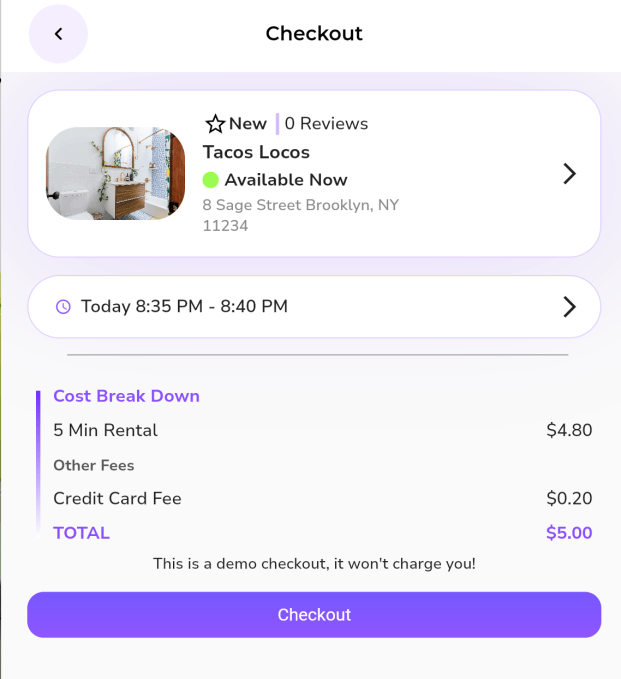
Flush app screen showing how much it costs to access a bathroom

Image Credits: Flush

Need to go and willing to pay? Web-based app Flush allows businesses to rent out their bathrooms to people for additional revenue. The oddest thing about this app, outside of its existence thanks to the lack of maintained and public restrooms in the U.S., is its rating system that businesses use to approve or deny a reservation.

A BlackBerry-style keyboard for your iPhone

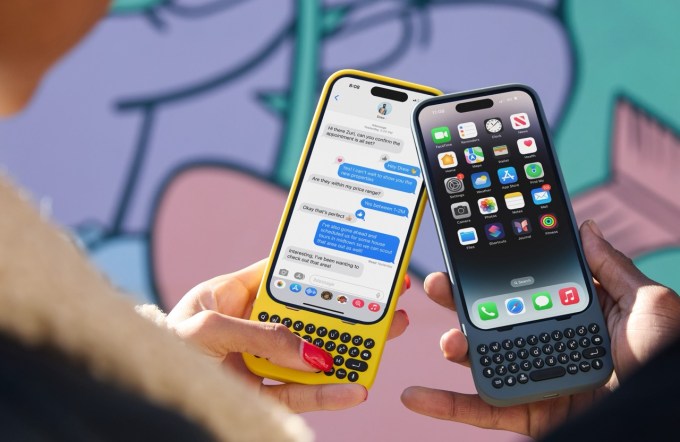
Clicks Technology's extended iPhone keyboard in BumbleBee and London Sky Large colors

Image Credits: Clicks Technology (opens in a new window)

Do you miss the days of having a tactile keyboard on your iPhone? Revealed at CES 2024, Clicks Technology’s creator keyboard turns your phone into a BlackBerry-era relic for $139. The keyboard acts as a phone case attachment and gives you access to more of your iPhone’s screen without the digital keyboard. It’s sure to make your phone a lot longer, but maybe that’s the price you pay for nostalgia.

Dynamic sound mixing based on your driving

The dashboard view of Sound Drive's dynamic sound mixing system

Image Credits: Tim Stevens

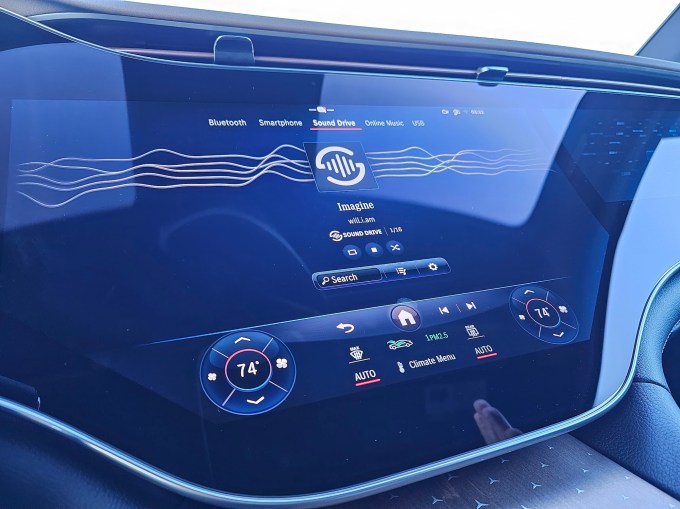
Sound Drive, a startup from singer-songwriter turned entrepreneur Will.i.am, aims to match the music you’re listening to with the cadence and energy of your commute. The technology reacts to your speed and matches music to it, with lyrics coming in and dropping out intelligently whether you’re ripping down the freeway or stuck in traffic. While we were a little skeptical, we came away from the tech fairly impressed.

A router that looks like a picture frame

GL.iNet's router that also functions as a picture frame on display at a desk

Image Credits: GL.iNet

Matching your tech to your home’s aesthetic has been trendy in the last few years. Is your TV too boring? Make it look like a gallery painting with the Samsung Frame or have it blend seamlessly into your home with LG’s newly revealed transparent television.

And the latest tech item to get the yaasification treatment is the humble router. The Marble Wi-Fi 6 OpenWrt Router from GL.iNet looks like a small framed piece of art that you can hang on your wall or prop on your desk.

An AI assistant that calls 911 for you

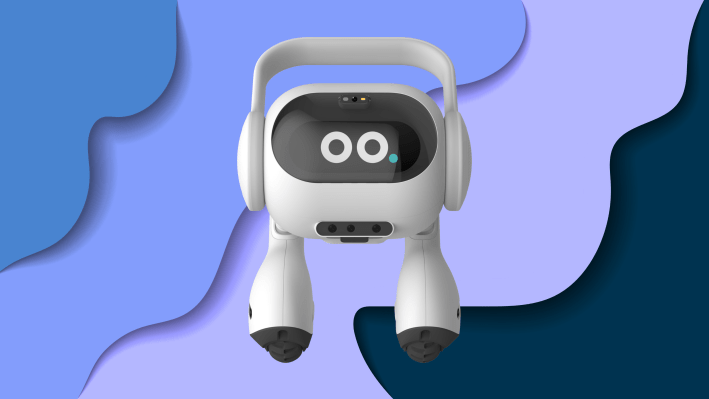
At LG’s press event, the company announced its Smart Home AI Agent. The “two-legged” wheeled robot acts as an assistant in sync with your LG appliances. Generative AI allows you to chat with the AI Agent, and the company claims it can show you empathy. In the company’s surreal, Pixar-esque promotional video, the bot can remind you to take your medicine or call 911 in a time of crisis.

Unveiled at #CES2024, LG claims its Smart Home AI Agent can give you medication reminders, chat with you, and even call 911 for you in a time of crisis. pic.twitter.com/A2SEj2v0SG

— TechCrunch (@TechCrunch) January 10, 2024

A bidet you can talk to

Kohler's PureWash E930 Bidet Seat that features voice commands

Image Credits: Kohler

Hey, Alexa? Turn on the bidet spray. Kohler introduced the PureWash E930 Bidet Seat with voice command support for Amazon Alexa and Google Assistant. With voice assistance, you can control the seat hands-free, turn on the bidet’s spray and dryer functions, as well as its self-cleaning UV feature. Just don’t let anyone watch you talking to your toilet.

A voice absorbing mask that looks like a muzzle

Skyted's voice capturing mask.

Image Credits: Haje Kamps (opens in a new window) / TechCrunch (opens in a new window)

Goodbye, nosy eavesdroppers. Skyted’s “Mobility Privacy Mask” and “Hybrid Silent Mask” are designed to “absorb voice frequencies” in noisy environments like planes, trains and rideshares, so you can communicate with a little more privacy, according to founder Stéphane Hersen. The company aims to implement their Bane-like masks in offices, call centers and even in gaming environments.

An AI-powered stroller that rocks your baby for you

GlüxKind's AI-powered stroller

Image credits: GlüxKind

Parenting is hard. GlüxKind is hoping that’s enough to convince you to put your child in the hands — er, wheels — of its AI-powered stroller, Ella. The stroller touts the ability to push itself hands-free, stop automatically on inclines, and softly rock your child without you needing to lift a finger. The stroller also includes a built-in white noise machine feature.

An uncanny valley you can brainstorm with

One of the most notable “Who asked for this?” products unveiled at CES is the GPT edition of WeHead. The AI-powered head brings a face and a physicality to ChatGPT, rather than a purely virtual AI experience. The mannequin-like setup with multiple screens aims to act as a confidant to bounce around ideas with, though we’re more fixated on just how bizarre it looks and feels to interact with than anything.

The Wehead AI companion at #CES2024 is a little unsettling, to say the least. pic.twitter.com/Mmp03uDFhU

— TechCrunch (@TechCrunch) January 11, 2024

A pocket AI assistant that scrolls through your phone for you

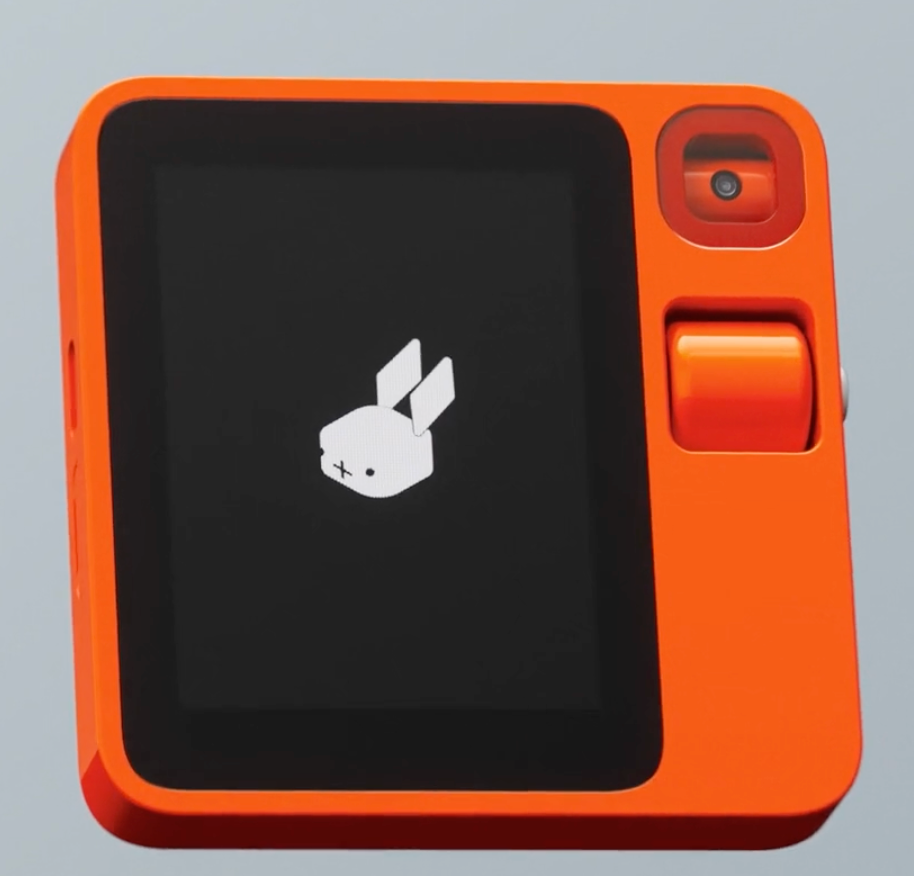
Want to order a pizza? Instead of pulling out your phone, unlocking it, finding a delivery app, opening it, and working your way through the UI to complete your order (so laborious!), why not just ask rabbit’s r1 to do it for you? Rather than voice-only AI assistants like Siri and Alexa, the Teenage Engineering-designed device works on a “language action model,” which allows it to hypothetically perform the requested task.

Move over, Siri. The rabbit r1 is a pocket AI assistant that can navigate your apps for you, without you having to pick up your phone.

Check out our preview from #CES2024: https://t.co/R6naLv9ckH pic.twitter.com/aUbz0WW1xI

— TechCrunch (@TechCrunch) January 9, 2024

Smart molluscs that can look out for water pollution

From phones to TVs and even toilets, everything has to be “smart” nowadays. What about molluscs? Inspired. MolluSCAN CEO and co-founder Ludovic Quinault found that a simple, non-invasive sensor attached to a clam or oyster’s shell can monitor everything from feeding to reproduction and stress responses, which can be excellent predictors of water quality and potential pollution.

A TV that folds into a statue

Do you love your TV but wish it could fold up into a piece of art? Boy, we’ve got good news for you. C SEED’s N1 folding TV is made up of five MicroLED panels, allowing it to go from a whopping 137-inch screen to a brutalist-looking sculpture in your living room in about 90 seconds. With its so-called Adaptive Gap Calibration, there are no visible hinges between the screens, revealing a seamless viewing experience when completely unfurled. Also, it starts at $200,000.

A CPR dummy that breathes and pees

How realistic is too realistic? ADAM-X from Medical-X is a patient simulator designed for a range of medical training exercises: injecting an IV, using a defibrillator, CPR and more. The company boasts realistic replications of a human’s skeleton anatomical structure, and will give you reactive feedback based on the patient’s needs and how accurate you are. According to Engadget, the company plans to incorporate a GPT-like feature in the future to help train medics more directly. ADAM-X also contains simulated fluids like blood and urine for accurate training practice. Go, science.

The CPR dummy of the future can piss blood #CES2024 https://t.co/pZKcK6EXVT pic.twitter.com/z1hR0cEtIs

— Engadget (@engadget) January 11, 2024

A smart mirror that claims it can sense if you’re depressed

Magic mirror on the wall, why am I so stressed? Baracoda calls BMind the world’s first AI-powered smart mirror for mental wellness. The mirror uses AI and natural language processing to identify your mood based on your gestures, expressions and tone. In turn, the mirror can chat with you, generate guided meditation exercises and self-affirmations and implement light therapy sessions through the mirror’s edge.

Mirror, mirror on the wall…why am I so stressed?

BMind, revealed at #CES2024, is the world’s first AI-powered smart mirror for mental wellness. pic.twitter.com/zWUsyis1yT

— TechCrunch (@TechCrunch) January 12, 2024

A CNC mill that looks straight out of the ‘90s

Coast Runner CNC mill shown at CES 2024

Coast Runner CNC mill, shown at CES 2024

This isn’t that weird of a product, really, but its appearance is too eye-catching to leave out. It’s actually part of an admirable mission from Coast Runner to make computer numerical control (CNC) machines more accessible to professionals and hobbyists. For those less familiar with the space, a CNC machine is what allows for the standardization and automation of an otherwise manual process, like cutting through components on an assembly line or 3D printing.

But just look at that graphic referencing the 1992 disposable cup design “Jazz” (which has since had a life of its own online.) In an event that featured so, so, so many harrowing or confusing aesthetics, a little nostalgia is cool and refreshing.

CES 2024: 5 Top Business Tech Trends

Although CES is consumer-focused, many of the tools and technologies at the large trade show in Las Vegas can help businesses. Here are our picks for the most noteworthy products and trends at CES 2024, including versatile laptops, a handheld generative AI assistant, elegant TVs and mixed reality for immersive training or meetings.

1. Generative AI integrates with laptops and apps

Generative AI like ChatGPT has become the hottest thing in tech over the last year, so it’s not a surprise that generative AI is present at CES in a big way.

Windows 11 laptops from Dell and other manufacturers will have a dedicated Windows for Copilot button for Microsoft’s natural language AI assistant.

Intel, Qualcomm, AMD and NVIDIA are working on building the capacity to run generative AI directly into their hardware. NVIDIA debuted Chat with RTX, which is a demo app for personalizing a generative AI model to search through content including chats, documents and videos on a Windows RTX PC or workstation.

Generative AI in retail at CES 2024

In addition, generative AI appeared in retail applications at CES 2024, with Walmart debuting it on a “social commerce platform” called Shop With Friends.

Volkswagen puts ChatGPT in cars

Volkswagen is putting ChatGPT into its cars, allowing a busy professional to ask the generative AI to perform tasks while on the go. It’s hard to say whether these use cases will prove as or more desirable than existing voice-based (but not generative) AI assistants in the long term.

2. Productivity gadgets emphasize speed and ease

The hottest gadget at CES 2024 was the Rabbit R1 (Figure A), a handheld, generative AI-based device that could not only revolutionize the way people interact with apps but possibly replace the smartphone as a person’s primary screen.

The Rabbit R1.
Figure A: The Rabbit R1 uses generative AI to automate tasks that would otherwise be done through an app. Image: Rabbit

The R1, which is currently available to pre-order for $199, runs on what Rabbit calls a Large Action Model, as opposed to a large language model. The user can speak a command (e.g., “Book a flight”) and the R1 will simply do it without the user needing to open an app or the device needing to connect to an app using an API.

The Rabbit R1 is the most dramatic instance of the major productivity trend at CES 2024 of letting generative AI be the interface between the user and their tasks, making the online services and decisions in between essentially invisible.

SEE: While ChatGPT was integrated with other tech at CES 2024, OpenAI opened the GPT Store. (TechRepublic)

3D and wireless monitors provide more screen options

Lenovo debuted its Lenovo ThinkVision 27 3D monitor, which lets users transform 2D images into 3D content quickly; this could be a productivity boost for creative professionals. Meanwhile, Samsung introduced a new cable-free multi-monitor setup that won CES 2024 Best of Innovation in computer peripherals and accessories.

Wi-Fi 7 is proliferating

The Wi-Fi Alliance is starting to roll out certifications for Wi-Fi 7, meaning more devices will be able to run Wi-Fi 7’s higher data throughputs for applications like virtual reality. TP-Link, UniFi, MSI and Acer released Wi-Fi 7 routers at the show.

3. Multiple-in-1 laptops give professionals options

Several laptops that double as tablets were highlights of CES 2024. For instance, HP’s Spectre x360 2-in-1 Laptop PC and Dell’s new XPS line were both shown off.

ASUS introduced the Zenbook DUO (2024) UX8406 (Figure B), which comes with two screens and a keyboard and can convert into five modes total: a laptop with keyboard, two touch screens, dual screen, desktop mode (depending on whether the screens are oriented to the keyboard horizontally or vertically) or sharing mode (using both screens to show data or presentations).

A man and a woman in a table using the Asus Zenbook Duo.
Figure B: Presentations and data can be easily shared using the ASUS Zenbook DUO’s two-screen sharing mode. Image: ASUS

4. Qualcomm, automakers and others promote virtual and mixed reality products

Qualcomm’s Snapdragon XR2+ Gen 2 chip is expected to appear in a Samsung virtual or mixed reality headset later this month. Qualcomm has already released a reference device that could compete with the Apple Vision Pro.

Mixed and virtual reality were elsewhere at CES, too, with BMW researching mixed reality glasses for driving.

5. Curved and transparent TV screens catch the eye

A transparent TV screen could be an impressive set piece for a home office, turning into an art object instead of just a black rectangle when you’re not using it. The Samsung Transparent MICRO LED and the LG Signature OLED T (Figure C) are showstoppers.

The LG Signature OLED T transparent TV.
Figure C: The LG Signature OLED T transparent TV could be an eye-catching part of a home office. Image: LG

A wide variety of large, curved monitors for gaming were shown off at CES 2024. Another trend was reducing glare on TVs, such as with the glare-free coating on the Samsung S95D OLED TV.

Editor’s note: TechRepublic is covering CES 2024 remotely.

CES 2024: Everything revealed so far, from Nvidia and Sony to the weirdest reveals and helpful AI

CES 2024: Everything revealed so far, from Nvidia and Sony to the weirdest reveals and helpful AI Christine Hall 9 hours

CES 2024 is here! The TechCrunch team is in Las Vegas this week to take in all of the action and decipher what it means to you. You already know what we’re expecting, so sit back, relax and stay tuned throughout the week as we bring you the products, announcements and startup news that you need to know.

Kicking off the first day were some bigger announcements from companies, including Nvidia, LG, Sony and Samsung. Those livestreams have ended, but you can watch most of their archives and catch up right here. And with the event still ongoing, and the show floor open, here’s how you can follow along with our team’s coverage.

Or, to dive into each day’s updates directly, you can follow these links:

  • Thursday
  • Wednesday
  • Tuesday
  • Monday

Friday, January 12

Another desktop CNC mill
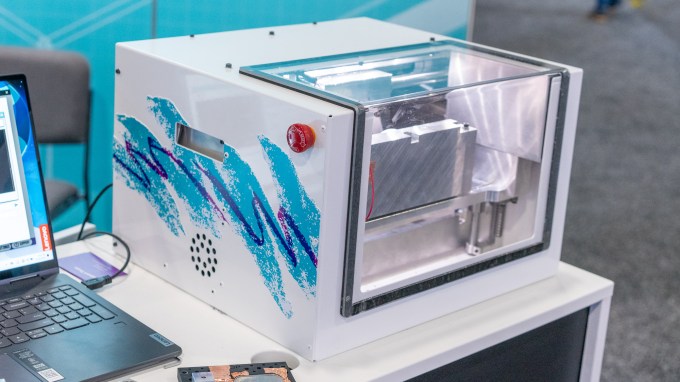
Coast Runner CNC mill shown at CES 2024

Coast Runner CNC mill shown at CES 2024

Earlier in the week, Haje Jan Kamps took a closer look at Rownd. Then he found Coast Runner, a new entrant in the desktop CNC milling industry. This company, Haje writes, is promising to make the technology accessible to everyone, from professionals to hobbyists and is breaking down the barriers of traditional CNC milling with a focus on power, compact size and, most importantly, education.

Equity talks CES

In today’s Equity, Alex Wilhelm and Mary Ann Azevedo are joined by Kirsten Korosec and Haje Jan Kamps to discuss, among other things, some of the cool stuff that came out of CES, including this Bane-style mask, ChatGPT in cars and eVTOLs.

Thursday, January 11

Smart pepper spray 444 is back

Haje Jan Kamps is taking another look at 444, a smart pepper spray startup he had written about at CES 2023. 444, he writes, is back again, now with a Mace partnership under its belt and is about to start manufacturing.

Matter-compatible devices

Nanoleaf

Nanoleaf’s new Matter-compatible indoor light strips. Image Credits: Nanoleaf

With all of the collaboration — and CES announcements — between top electronic companies to get Matter, the smart home networking protocol, off the ground, 2024 could be Matter’s best year yet. Kyle Wiggers has a list of the devices to show us why.

From voice synthesis to safer phones for kids, here are some actually helpful AI products at CES

Image Credits: Louise

After seeing all the examples of artificial intelligence baked into the booths of CES, Devin Coldewey put together a list of gadgets, products and software he thought actually might do some good.

Also, Haje Jan Kamps writes about the MMGuardian, a smartphone produced in collaboration with Samsung that’s tapping into the power of AI to make phone use safer for kids and teenagers.

Is hydrogen making a comeback?

Harri Weber and Sean O’Kane discuss the examples of hydrogen-power vehicles (TechCrunch+ gets into that too) on the CES floor and why it’s now a popular alternative energy after previously fizzling out. Or, they write, “is it yet another example of companies making promises at CES that they won’t be able to keep?”

Polestar makes promises
polestar apple carplay

Image Credits: Polestar

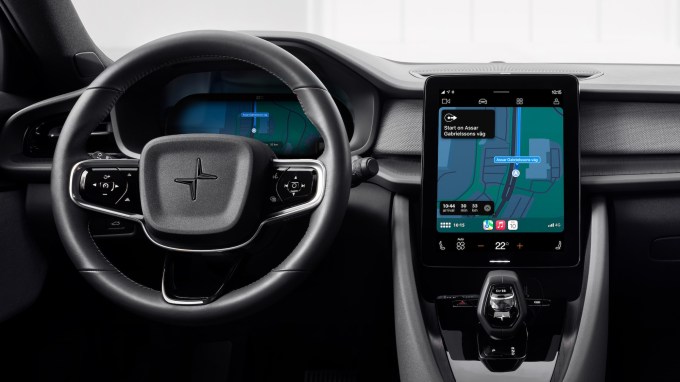
Kirsten Korosec caught up with Polestar CEO Thomas Ingenlath who discussed the integration of the Google built-in, a branded product that embeds Google apps and services directly into the company’s EVs. Don’t worry, Ingenlath says the EV maker isn’t dropping Android Auto or Apple CarPlay as a result.

Can’t take my eyes off of you in video calls
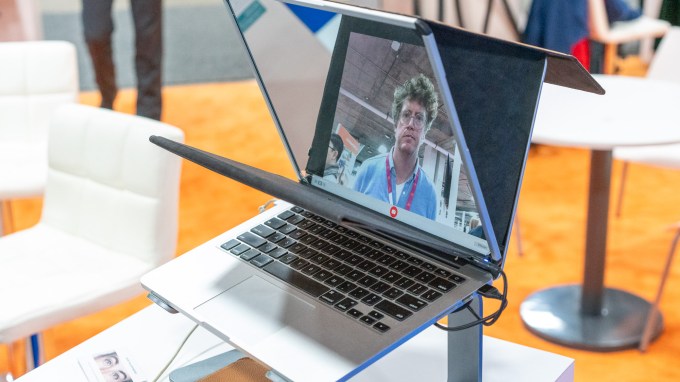
EyeQ shown off at CES 2024

eyeQ shown off at CES 2024. Image Credits: Haje Kamps (opens in a new window)/ TechCrunch

With cameras in different places, it’s often difficult to maintain eye contact with someone on video calls. There is AI for that, however, one company is taking a different approach. EyeQ is developing a device that attaches to your laptop and, through the use of a mirror, enables you to maintain eye contact with the person you’re speaking to, even while looking at your screen.

From TechCrunch+: Hyundai talks hydrogen, Siri needs to get smarter
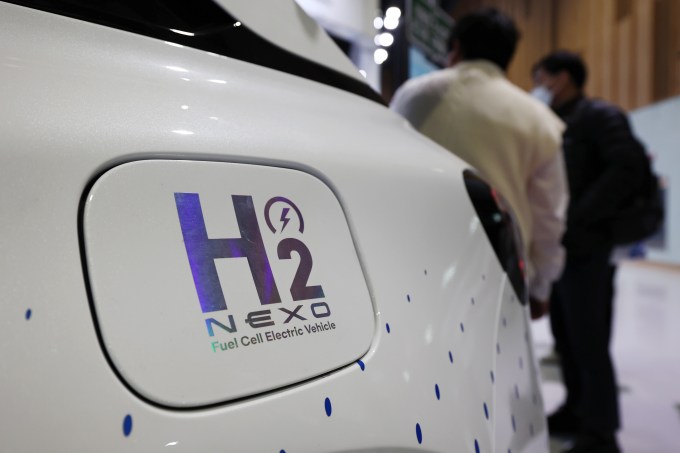
Chemical formula for hydrogen is displayed on a Hyundai fuel filler door.

A Hyundai Motor Co. Nexo fuel cell electric vehicle displayed at the 2021 Ulsan International Hydrogen Energy Exhibition & Forum (H2WORLD) in Ulsan, South Korea, on Wednesday, Nov. 10, 2021. South Korea will cut prices of liquefied natural gas needed to produce hydrogen for fuel cell vehicles for three years to encourage usage of the technology. Photographer: SeongJoon Cho/Bloomberg via Getty Images

As Tim De Chant notes, Hyundai has invested in hydrogen fuel cells for decades, but it has also been one of the more successful legacy automakers at navigating the electric transition. So it’s odd now that a company with so much momentum on its side would throw a hydrogen Hail Mary at CES.

Meanwhile, Haje Jan Kamps had a lot of time to contemplate how Siri works while driving to Las Vegas. He shares some areas where Apple’s voice assistant, Siri, is being left in the dust by its competitors.

Whispp gives a voice to people who can’t speak

Image Credits: Whispp (opens in a new window)

Whispp is working to change the game for individuals with speech disorders and voice disabilities, bringing voice boxes into the current millennium with its groundbreaking AI-powered assistive speech and phone-calling app. The company launched its newest phone-calling feature that converts whispered and vocal cord-impaired speech into a user’s natural voice in real time.

Rownd designs a better tabletop CNC lathe
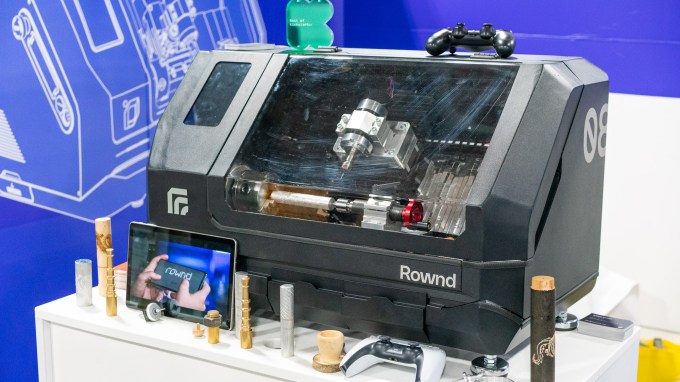
Rownd CNC lathe at CES 2024 in Las Vegas

Rownd CNC lathe at CES 2024 in Las Vegas. Image Credits: Rownd

Haje Jan Kamps was keeping tabs on Rownd’s new tabletop CNC lathe and got to see it in action this week. He writes that what sets Rownd Lathe apart is not just its relatively affordable hardware (the machine retails at around $5k) but the accompanying software that democratizes the design process, enabling beginners to easily create or utilize pre-made designs from the open-source Rownd Library. Watch it craft a chess pawn.

Wednesday, January 10

Zoe Care gives another take on fall detection

Zoe Care smart plug

Zoe Care smart plug. Image Credits: Zoe Care

Devin Coldewey found what Zoe Care was doing in the area of fall detection and elderly autonomy interesting. The company uses existing Wi-Fi signals (and the way our bodies change how Wi-Fi reception works) to detect humans and their activities.

Unlike the Serenity desktop fall detection network we discussed earlier this week, Zoe’s device doubles as a smart plug, and uses a sensor to gather and analyze Wi-Fi signals. If a fall is detected, these signals are translated into alerts on a mobile application. Covering up to 800 sq. ft., just one device can secure multiple rooms or even an entire floor, making it an efficient, cost-effective solution.

WTF is a ‘software-defined vehicle?’

A red car illustration with a loading bar on the windshield.

A red car illustration with a loading bar on the windshield. Image Credits: Lyudinka/Getty Images (modified by TechCrunch)

That’s the question Harri Weber set out to answer after hearing the phrase uttered all over the CES floor. In it’s most simplest definition, it’s a vehicle defined by software. However, as Harri spoke with various experts, we learn the term can mean various things. Go inside the journey to find out why this is such a popular automotive buzzword.

The weirdest tech of CES 2024 (so far)
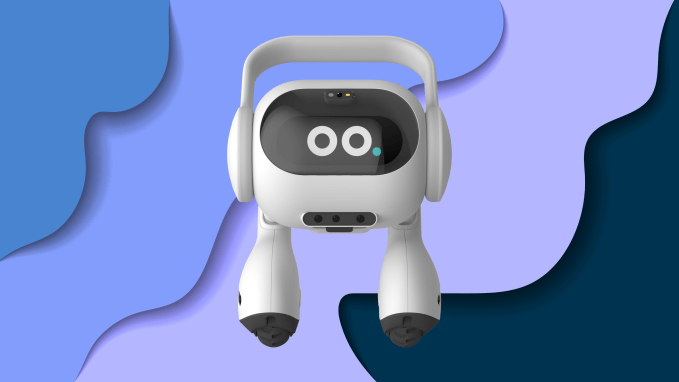
LG's Home AI Agent

Image credits: LG

One thing is consistent throughout every CES: weird and unexpected gadgets and gizmos appear from unexpected places. We have a rundown of some of the most noteworthy products and services here, which include expensive binoculars with birdwatching AI, voice-absorbing muzzles, pay-as-you-go bathroom access and a router that tries to fit your aesthetic.

$2,000 earbuds, silent speech and AI-powered wearable jewelry
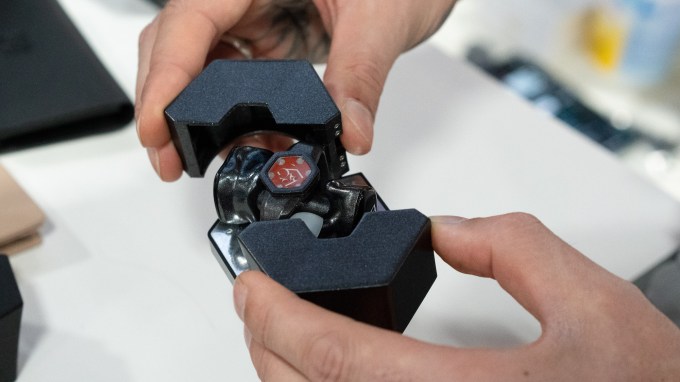
Breggz $2,000 premium earbuds

Image credits: Haje Kamps / TechCrunch

Beyond the outright strange products and platforms, there are some hidden gems amid the big booths and name brands at CES. Our own Haje Jan Kamps has highlighted several already that stand out from the crowd. He gave Breggz’s $2,000 earbuds a listen and discovered they actually deliver on their price point for audio perfectionists. He took a look at Augmental’s impressive ambitions to create accessible interfaces that can accommodate for voiceless communication. And he explored Nowatch’s purposeful fitness tracker that uses AI to keep you aware of your health goals without overly stressing you out.

Tuesday, January 9

Hyundai shows off its eVTOL, air taxi ambitions

supernal evtol hyundai

Image Credits: Kirsten Korosec

Supernal’s electric vertical takeoff and landing (eVTOL) aircraft got a showcase from its parent company Hyundai Motor Group on the ground in Las Vegas, as the so-named S-A2 moves closer to its planned 2028 launch for shuttling passengers. Head here for a full rundown on the aircraft, and the challenges in expanding airborne mobility.

This delivery bot handles stairs with ease
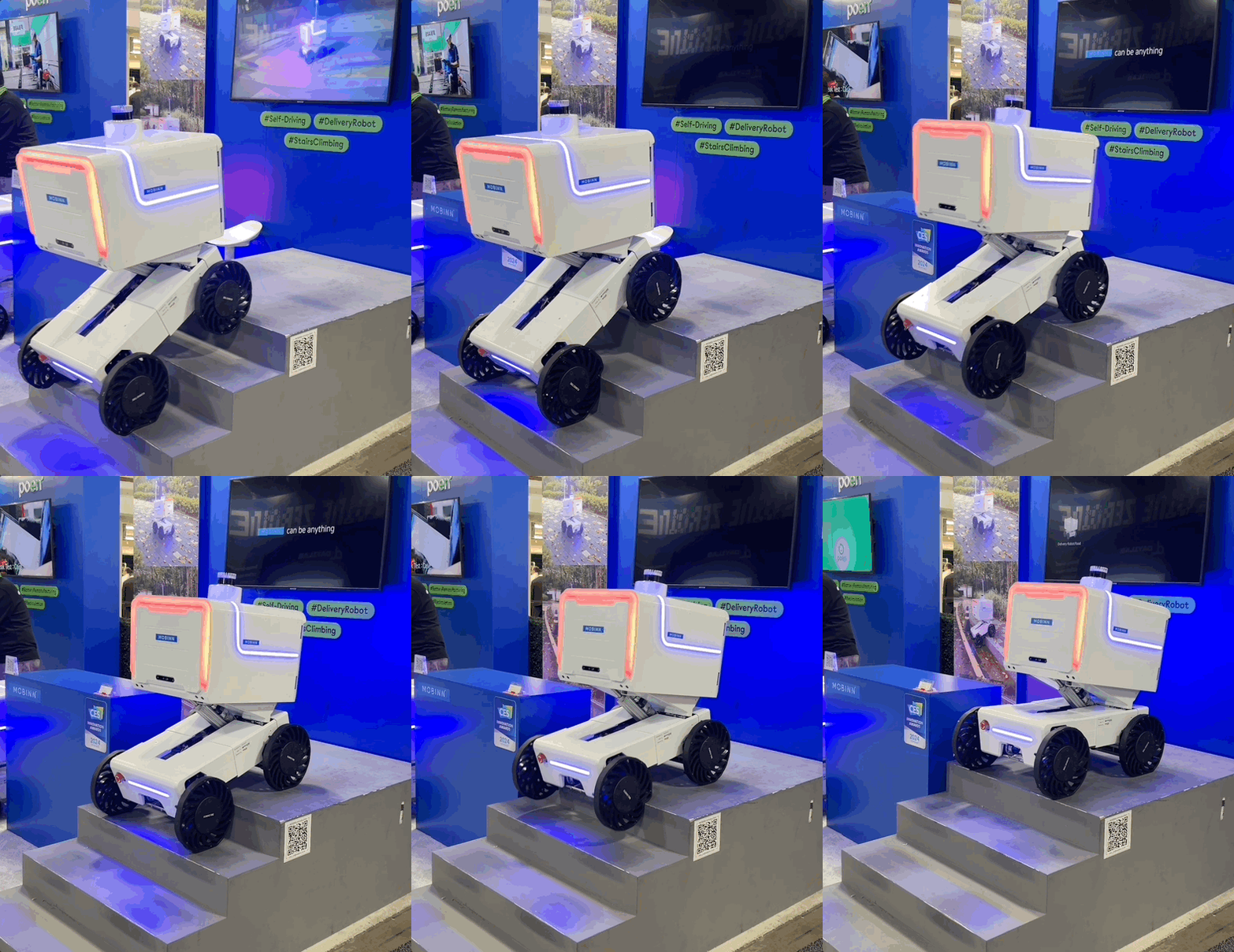
Mobinn delivery robot ascends stairs at CES 2024

Image Credits: Devin Coldewey / TechCrunch

Mobinn, a new spinoff from Hyundai, is taking to CES to show off how its new delivery robot can use its flexible wheels to navigate stairs and changes in elevation to drop off deliveries, with tests already being conducted in Korea. Climb aboard the full story here.

Walmart debuts AI-powered tools, features and a drone

Image Credits: Walmart

Walmart president and CEO Doug McMillon shared some new technologies the retail giant has been working on, including augmented reality (AR), drones, generative artificial intelligence, and other AI tech meant to improve the shopping experience for customers. Within the presentation were some new tools for managing product search and replenishment and a new beta AR social commerce platform called “Shop with Friends.” Get the scoop on all of the new products.

OneCourt lets those who are blind ‘see’ the game
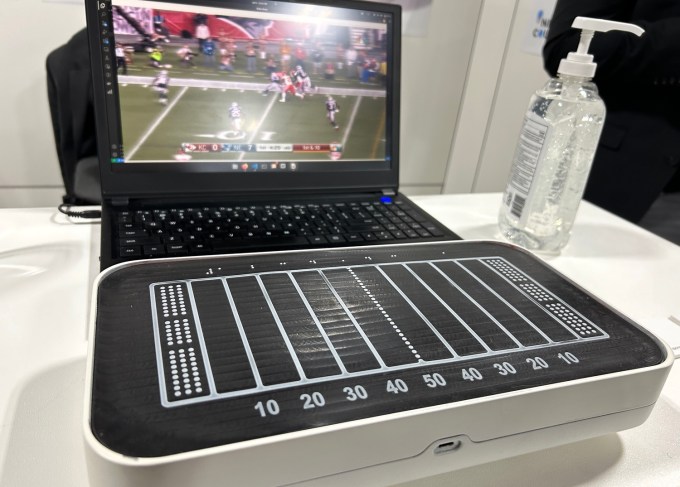
Image Credits: Devin Coldewey / TechCrunch

Put this in one in the “thoughtful” category. OneCourt, a startup founded by recent University of Washington graduates, debuted a lap-top miniature field that enables someone who is blind or with low vision feel the position of sports players and the ball in near real time. The OneCourt team takes this information and transmits it to a haptic display with a touchable cover imitating the pitch or field lines. See how it works.

rabbit jumps at the chance to explain how its r1 is different from other virtual assistants
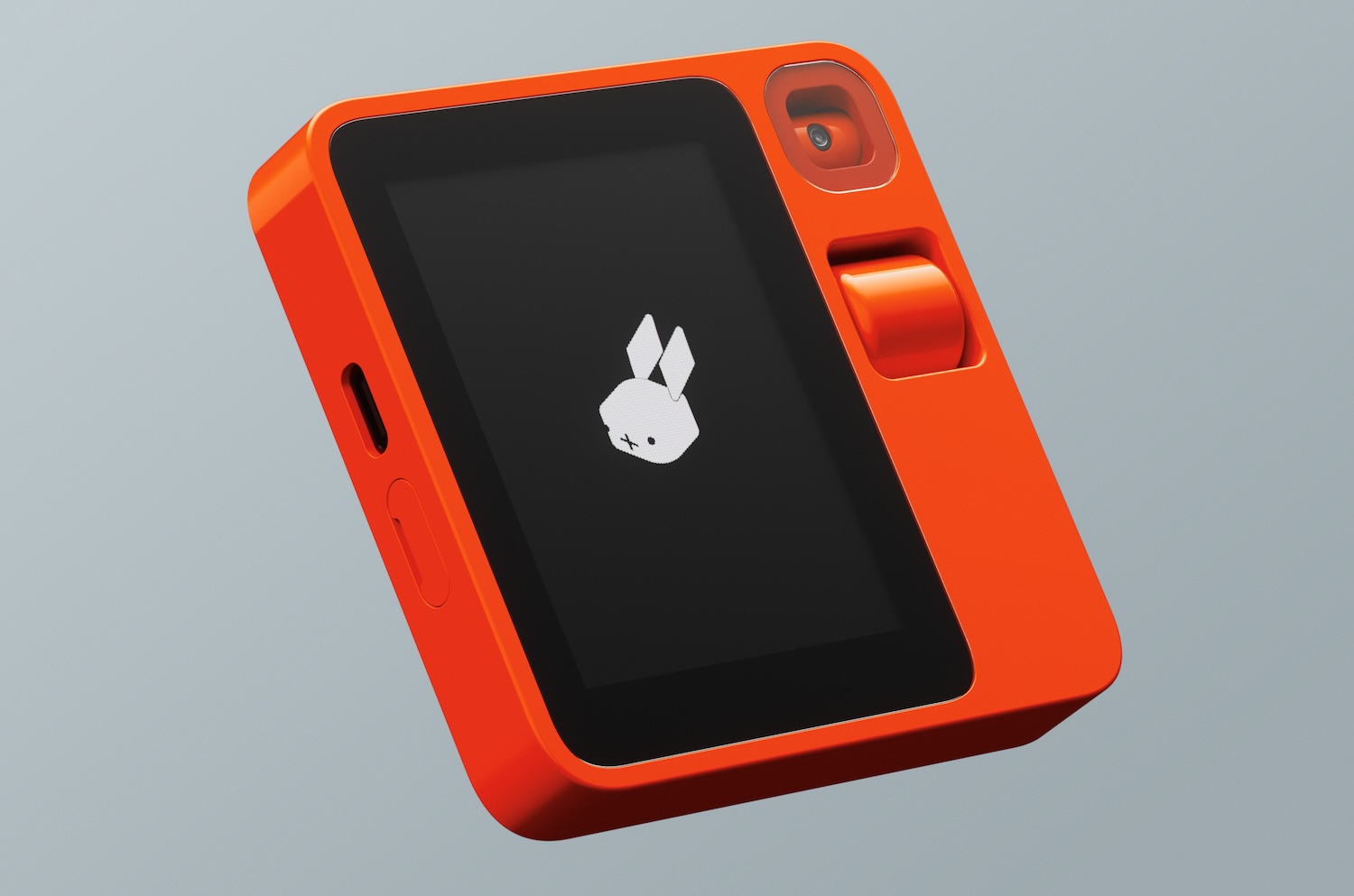
Image Credits: rabbit

Devin writes that the idea behind the $200 rabbit r1 is simple: “it lets you keep your phone in your pocket when you need to do some simple task like ordering a car to your location, looking up a few places to eat where you’re meeting friends, or finding some lodging options for a weekend on the coast. Instead of pulling out your phone, unlocking it, finding the app, opening it, and working your way through the UI (so laborious!), you pull out the r1 instead and give it a command in natural language.” Now hop over to the story for more.

Move over, Siri. The rabbit r1 is a pocket AI assistant that can navigate your apps for you, without you having to pick up your phone.

Check out our preview from #CES2024: https://t.co/R6naLv9ckH pic.twitter.com/aUbz0WW1xI

— TechCrunch (@TechCrunch) January 9, 2024

All electric vehicles, all the time — Honda, VinFast, Google Maps
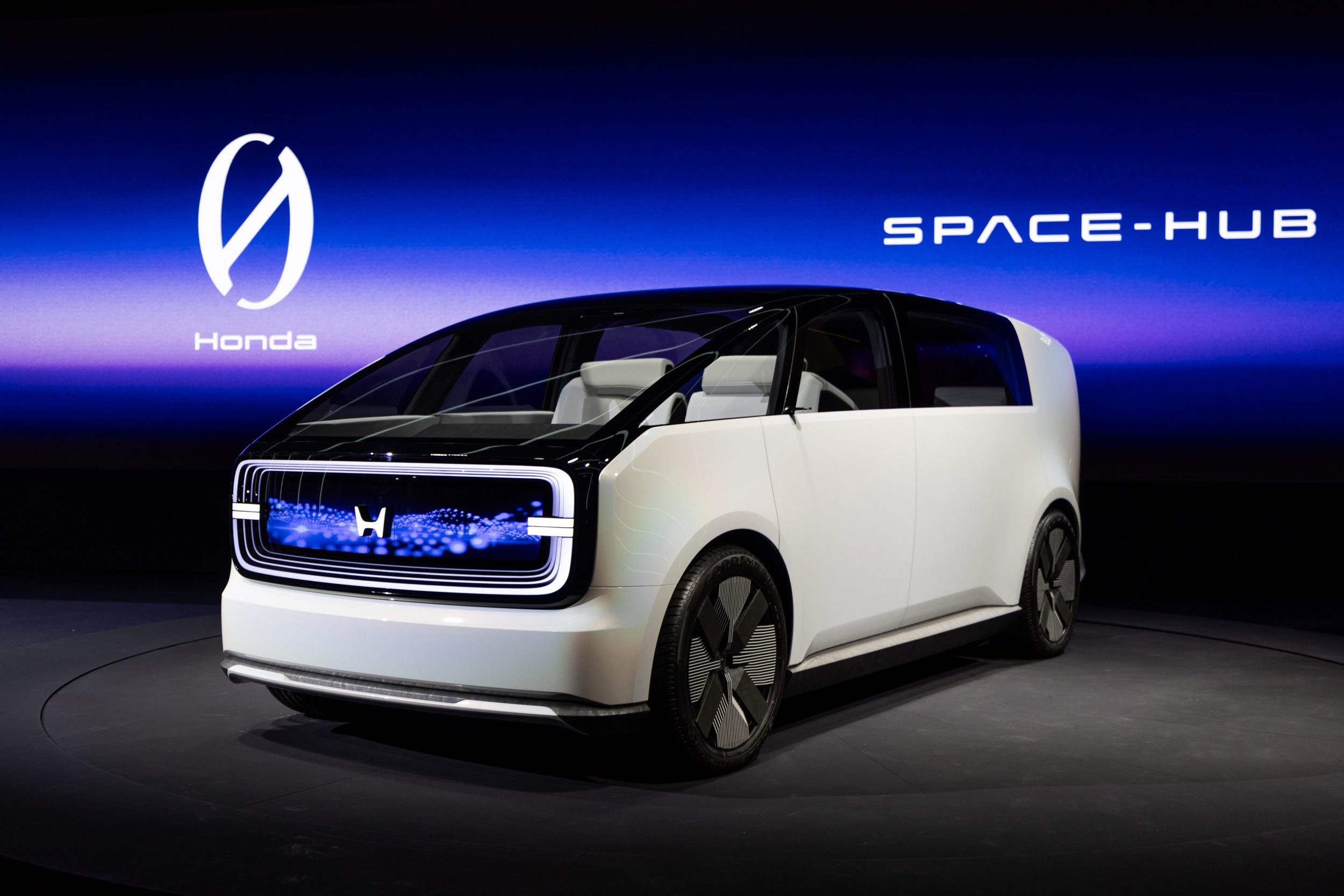
Image Credits: Honda

First, we have your look at Honda’s upcoming 0 series electric vehicles that is a thin and light take on what Harri writes has typically been a thick and heavy EV trend. The automaker teased two concept vehicles, the Saloon and Space-Hub, and said the first commercial model in its 0 series EV lineup will launch in North America in 2026. Get a look at the specs and more.

Next, Vietnamese EV startup VinFast is getting into the electric pickup truck game with the reveal of a new concept called the VF Wild. The truck will have midsize pickup dimensions, and a folding mid-gate to allow the five-foot bed to turn into something functionally closer to an eight-foot bed (when the rear seats are down). Not much else is known at the moment. The company also officially announced plans to start selling its smallest EV, the VF3, outside of Vietnam. Learn more.

Meanwhile, Google has a new feature for EV drivers to track and display real-time battery information in Google Maps. The feature is available in EVs with Android Auto, a secondary interface that runs on the user’s phone and wirelessly communicates and projects features like navigation, media and messaging from their Android-based smartphone to the vehicle display. From here, Android Auto shares real-time battery information with Google Maps. Find what your looking for here.

Say hello to the Honda 0 series EVs 🚗 The Saloon and Space-Hub concept models made their debut at #CES2024, along with a new H logo. What do you think of their futuristic designs? pic.twitter.com/sBaQC1UAcj

— TechCrunch (@TechCrunch) January 9, 2024

For Google and Samsung, sharing is caring

Image Credits: Google

Google and Samsung announced they are combining their sharing solutions into a singular cross-Android solution under the Quick Share name. The new offering grows the network of devices that users can share content with across the Android ecosystem, including Chromebooks. By integrating Google’s Nearby Share and Samsung’s Quick Share, the two experiences create “the best default, built-in-option for peer-to-peer content sharing” across all types of devices in the Android and Chromebook ecosystems, according to the companies. Google also announced that it is working with PC manufacturers like LG to expand Quick Share to Windows PCs as a pre-installed app. Quick Share will start rolling out to current Nearby Share–enabled devices next month.

These gadgets help with health monitoring from home — Serenity, Vivoo, Tack One
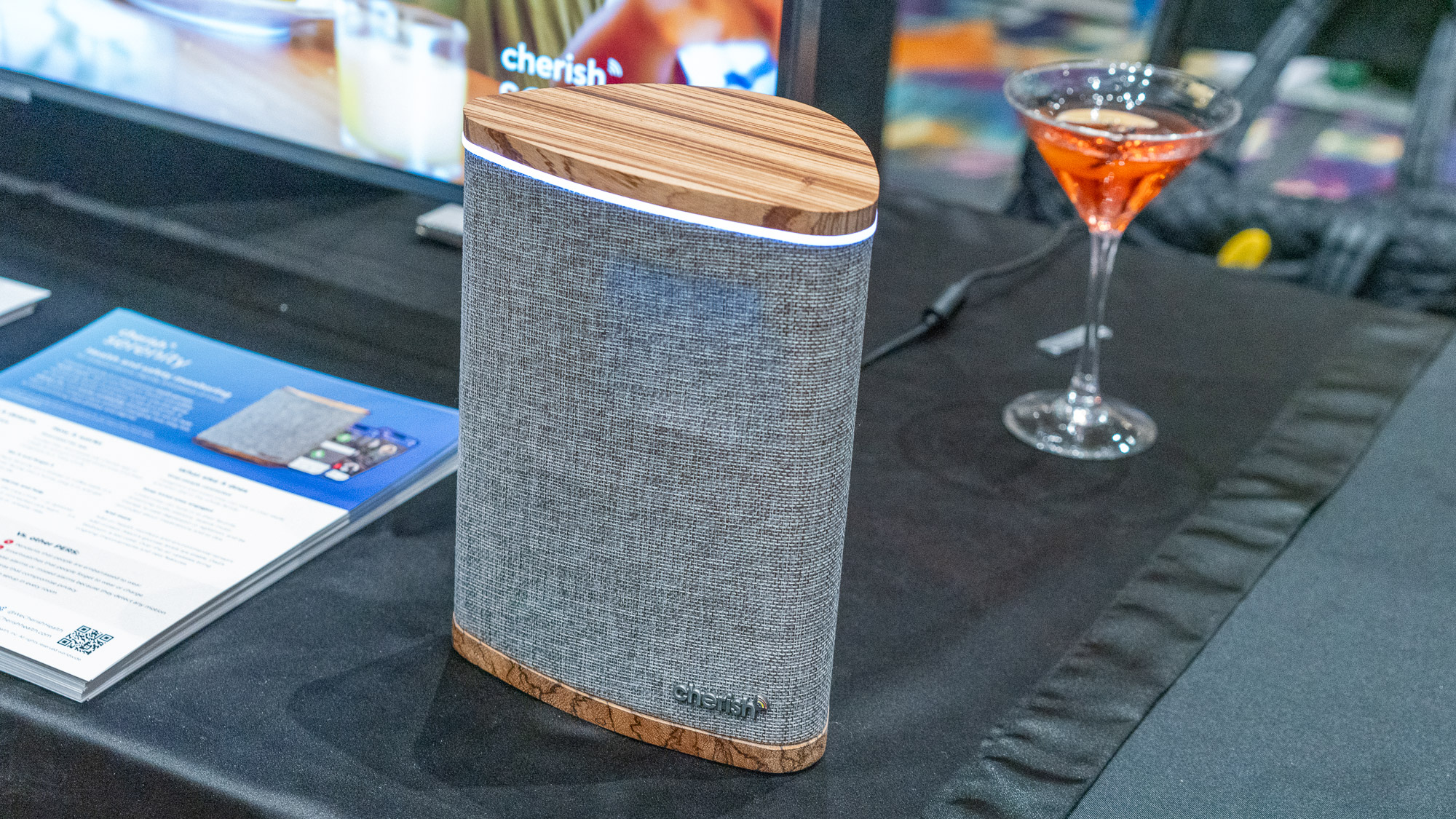
Cherish Health’s Serenity. Image Credits: Haje Kamps (opens in a new window)/ TechCrunch

First, Serenity is showing off its fall-detection system for the first time at CES. It’s easy to use — just plug it in, no app or configurations required. It utilizes advanced radar technology and AI to track up to two individuals within a 40-foot range, even through walls, and offers detailed information about someone’s activities. See how Serenity’s technology sets it apart.

Next, Vivoo, a company offering a broad range of at-home tests, launched a new test that can detect urinary tract infections (UTIs). Vivoo’s At-Home UTI Test streamlines the diagnostic process for UTIs and utilizes your phone’s camera to record and analyze the color readout of the test strips. It then gives advice and context for the readings in its free app.

Meanwhile, Tack One, a Singapore-based startup, unveiled the new generation of its Tack GPS Plus, an AI-powered location technology device to help make sure your kids, elderly parents and pets are safe. Here’s what’s new: longer battery life and subscription fees starting from $2.95 monthly for a two-year subscription plan.

The startup launched its GPS tracker in 2021 to address the pain point of the short battery life on the market and lower the tracking service cost, making location tracking extremely affordable. Tack One’s battery lasts 30 days on a single charge and a patent-pending indoor elevation finder feature. Find out more on the specs and pricing.

Get a look at Skyted’s voice-capturing mask

Skyted’s voice capturing mask. Image Credits: Haje Kamps

You read about Skyted’s voice-capturing mask last week, now see what it looks like in real life.

“We launched a mobile application that will give you information about how big your ‘sound bubble’ is. If, for example, you’re sitting in an airplane, you don’t want the person next to you to hear what you’re saying,” says Gauthier Daridon, connectivity engineer at Skyted, in an interview with TechCrunch at CES in Las Vegas. “So our application will explain that you are ‘perceptible’ and ‘intelligible’ at certain distances.” Get more of the scoop on how it works.

Amazon’s AI-related enhancements

Image Credits: Character.AI

Amazon says it will be the first company to support Matter Casting, the video- and audio-beaming feature of the Matter smart home standard, on its smart displays and smart TVs. When it comes to Amazon’s Prime Video app for Android and iOS, users will be able to cast content to supported Amazon devices — starting with the Echo Show 15 — by tapping the new dedicated Matter Casting button. Beyond that, Amazon says that Matter Casting support will arrive on Fire TVs including smart TVs from Panasonic with Fire TV built in, and — on the app side — Plex, Pluto TV, Sling TV, Starz and ZDF later this year. Read more.

And, Amazon announced back in September that it would be coming out with some new tools to build large language model-powered experiences. Today, we got to see them in action, including new generative AI-powered Alexa experiences, including AI chatbot platform Character.AI, AI music company Splash and Voice AI game developer Volley. All three experiences are available in the Amazon Alexa Skill Store. Learn more about Alexa’s experiences.

ElliQ’s eldercare robot gets a reboot
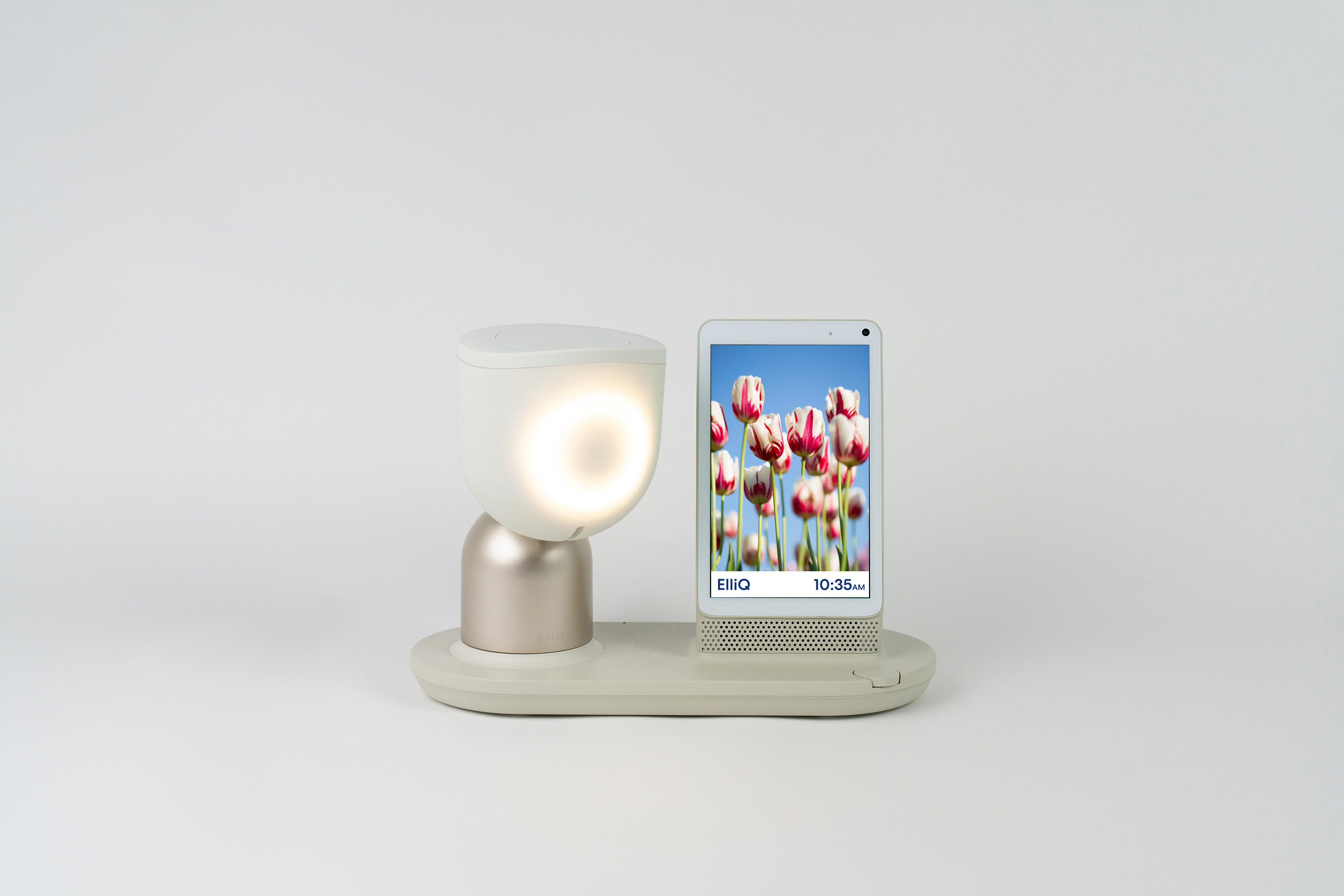
ElliQ 3.0

Image Credits: Intuition Robotics

Intuition Robotics’ ElliQ, which went on the market last March, and found some success through partnerships with assistive care facilities. After some fresh funding, the company unveils ElliQ 3, featuring some design tweaks like a more powerful hardware, increased memory, updated core processor, a lighter apparatus and – of course – generative AI integration. Read more.

Kodiak Robotics’ take on autonomous trucking

Kodiak Driverless Truck

Image Credits: Kodiak

Autonomous trucking startup Kodiak Robotics revealed a semi-truck that founder Don Burnette says “is the linchpin in its plans to launch commercial driverless operations this year.” The company specifically set out to include redundancy in its safety features so that there is a backup in case anything were to fail while on the highway with a driver behind the wheel. Get a breakdown of the mechanical components and safety systems.

Fox, Polygon Labs collaborate to defeat deepfakes

Fox has partnered with Polygon Labs, a developer of scaling networks for Ethereum, to release an open source protocol — called Verify — for media companies to register their articles, photographs and more. Fox and Polygon are pitching the protocol as a means for outlets to protect their IP while letting consumers verify the authenticity of content. Learn more about the protocol.

Ultrahuman unveils ‘home health’ tracker
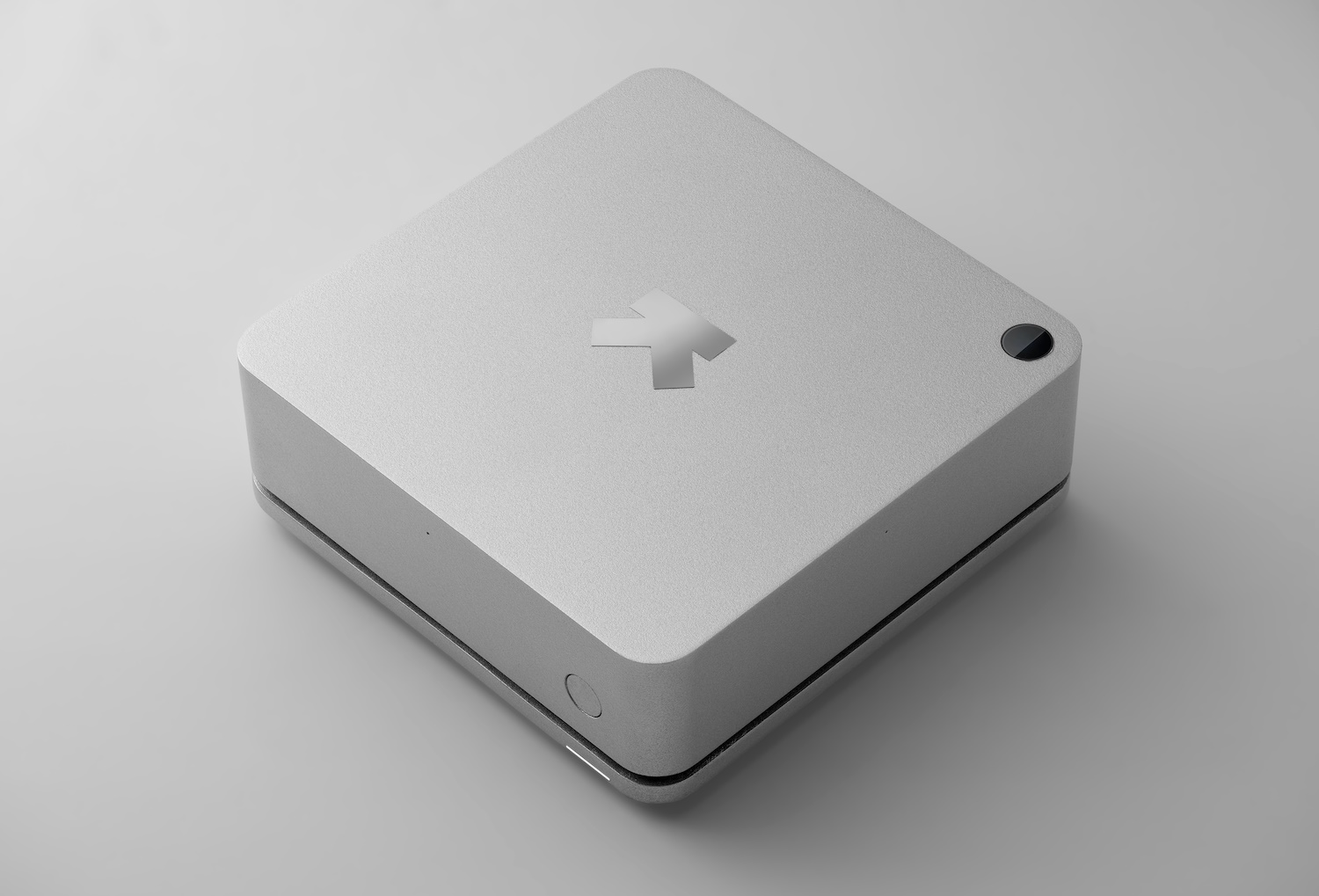
Image Credits: Ultrahuman

Indian wearable startup Ultrahuman is getting into the smart home game with the upcoming launch of connected hardware that’s designed to monitor the “health” of your home, as its marketing puts it. The device, which it’s calling the Ultrahuman Home, has a price of $349 and a shipping date slated to start in July. Check out the specs.

Monday, January 8

Pivotal begins personal aircraft sales

From storage to flight in 30 minutes. A 16-foot road trailer can hold everything needed to take the Helix to uncongested, Class G airspace areas. Image Credits: Pivotal

Pivotal, which is backed by Larry Page, has begun U.S. sales of its lightweight electric Helix aircraft, which notably does not require a pilot’s license to be able to fly. That doesn’t mean those paying at least the $190,000 base price will go without mandatory training; a number of rules and regulations still apply. You can get the full breakdown of their launch pricing and specs right here.

Will.i.am’s new startup mixes music as you drive
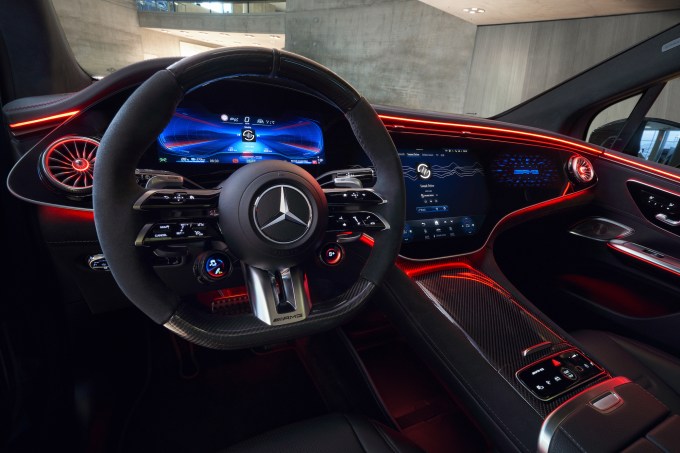
mercedes will.i.am sound drive ces

Mercedes-AMG and will.i.am launch immersive MBUX SOUND DRIVE experience at CES 2024. Image Credits: Mercedes-Benz

If you thought that sounded a little ridiculous, contributor Tim Stevens did too — at least until taking part in the startup Sound Drive’s demo at CES that left him feeling surprisingly impressed with the underlying tech. Read his full impressions of what it’s like to experience music “conducted by the road.”

Sony highlights mobility partnerships, creators and content authenticity

Sony took the final major press conference slot on Monday, with an expected focus around creators; the success of its IP across its gaming, film and streaming studios; and a focus on its partnership with Honda to imagine the mobility space as a “creativity space.” The latter was demonstrated in part by teasing Fortnite in its Afeela car and driving it onstage with a PlayStation 5 controller. Its “digital birth certificate” also reminded us of the brighter side of NFTs, which Haje explains in detail here.

Kia’s new modular EV van lineup

Kia commercial van EV PBV lineup

Kia PBV Concept Lineup. Image Credits: Kia

Kia’s new EV vans come with a modular twist. In addition to using a modular powertrain, the vehicles will also have modular tops that allow for many different cabin options. But they remained vague on pricing, specs and expected launch dates for this new fleet of commercial EVs. Read more.

Samsung brings back Ballie; renews green initiative

Samsung Ballie

Image Credits: Samsung

Meet the new and improved Ballie, Samsung Electronic’s home robot, which it previewed today. It’s around the size of a bowling ball with a battery designed to last two to three hours. Ballie sports a spatial lidar sensor to help it navigate rooms and obstacles, as well as a 1080p projector with two lenses that allows the robot to project movies and video calls and even act as a second PC monitor. Learn more.

Expanding beyond cute, rolling robots, Samsung showcased its wider initiatives for connected homes. Aside from expected UI and feature updates for its existing SmartThings home automation platform, Samsung showed off a “map view” for users that creates an interactive home map that even includes animated avatars of residents and pets. Learn more.

Also, Samsung devoted some of its keynote speech to its commitment of sustainability. “We start by incorporating recycled materials into some of our most loved products, such as recycled fishing nets in our Galaxy,” said Inhee Chung, VP of corporate sustainability at Samsung. “Smartphones, recycled plastic in our TVs, and recycled aluminum in our bespoke refrigerators. Recycled plastic accounted for 14% of the total plastic used in our products in 2022. And we’re working towards increasing this amount.” Read more.

Remember Samsung's Ballie? The round robot first revealed in 2020 has made a comeback at #CES2024. https://t.co/CCO8T1g0lH pic.twitter.com/OkrXr8jgiE

— TechCrunch (@TechCrunch) January 8, 2024

X1 Interpreter Hub: A new real-time translator

Image Credits: Timekettle

Timekettle announced the X1 Interpreter Hub, a more robust solution, designed for meetings. Timekettle calls it “the world’s first multi-language simultaneous interpretation system.” The system works out of the box, without having to download a separate app. For in-person meetings, two devices are touched together to initiate conversation translation. The handheld devices house earbuds, similar to past Timekettle products. All told, the X1 is capable of supporting up to 20 people at once in five different languages. Read more.

LG’s transparent television

LG transparent television, CES 2024

LG Signature OLED T. Image Credits: LG

Televisions aren’t naturally pretty or used as a design feature, but LG Electronics is out to change that perception. Today, consumer technology giant unveiled what it touts is “the world’s first” wireless transparent OLED TV. The LG Signature OLED T combines a transparent 4K OLED screen with LG’s wireless video and audio transmission technology.

Breathe easy with bio-engineered houseplants

Neoplants at CES 2024.

Neoplants at CES 2024. Image Credits: Haje Kamps / TechCrunch

French startup Neoplants is showing off its progress with its houseplants that work as air purifiers designed for the home. The bio-engineered plants can, according to the company, replace 20 “regular” houseplants, as measured by how many pollutants the plants can remove from the air.

More from Samsung: bigger, foldier, more rollable displays

Image Credits: Samsung

Ahead of Samsung Electronics’ press conference later today, we look at some of its product plans that include a “new generation of products that can be folded inward and outward,” along with “monitor-sized” folding and sliding OLEDs. Samsung also unveiled a “Transparent MICRO LED” display for the first time.

Nvidia gets its game on
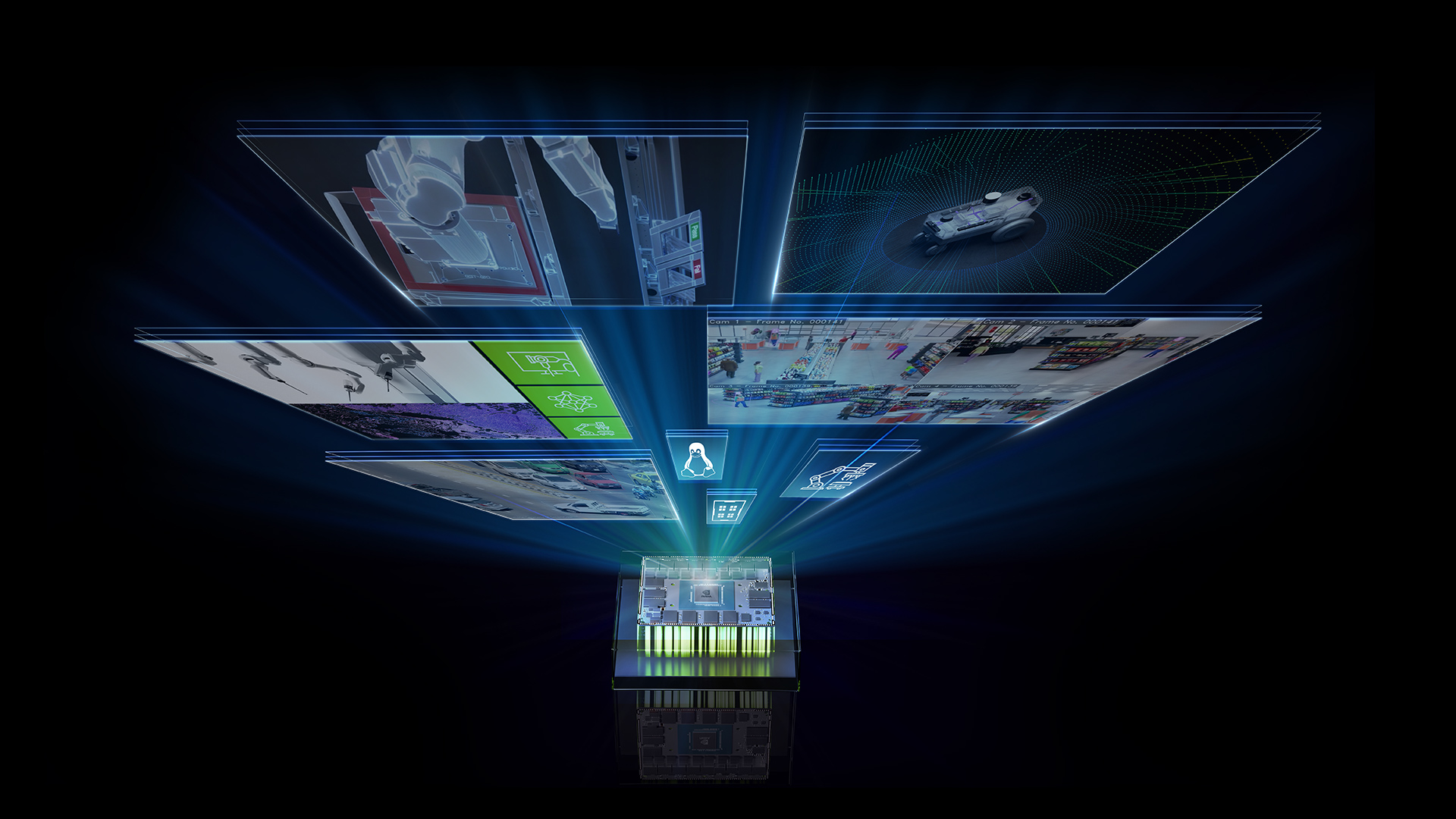
NVIDIA Jetson Platform Expansion

GeForce RTX 4080 SUPER. Image Credits: Nvidia

Today, Nvidia gets into artificial intelligence in a big way with the unveiling of its GeForce RTX, including the GeForce RTX 40 Super series of desktop graphics cards. Much of these are meant for gaming, and Nvidia said 14 titles will get the RTX upgrade treatment, including Horizon Forbidden West, Pax Dei, and Diablo IV. The RTX 4080 Super starts at $999.

Nvidia also announced that its partnership with Getty Images will include a new service for iStock customers, which can create licensable images trained on the existing iStock photo library.

Nvidia also showed off ACE, which uses AI to create unique reactions from in-game NPCs, which gives an uncanny valley sheen on top of prompt response dialog.

At #CES2024, NVIDIA demonstrated their Avatar Cloud Engine (ACE) for gaming, which aims to give NPCs AI-generated dialogue. pic.twitter.com/QKRervzvjY

— TechCrunch (@TechCrunch) January 8, 2024

More chip updates from AMD

Speaking of chips, AMD debuted its new Ryzen 8000G processors for the desktop, with a big focus on their AI capabilities.

Bosch’s in-car eye-tracking

Bosch driver monitoring system for drowsy driving

Image Credits: Bosch

Bosch is showing off two technologies this week in eye-tracking while driving: One will see that you have tired eyes and ask if you need an espresso when you arrive home. If yes, its connect technology will tell your fancy machine to have one ready. The other is a bit more complicated in that it’s developed to track what you’re looking at as you drive.

Smart cooking
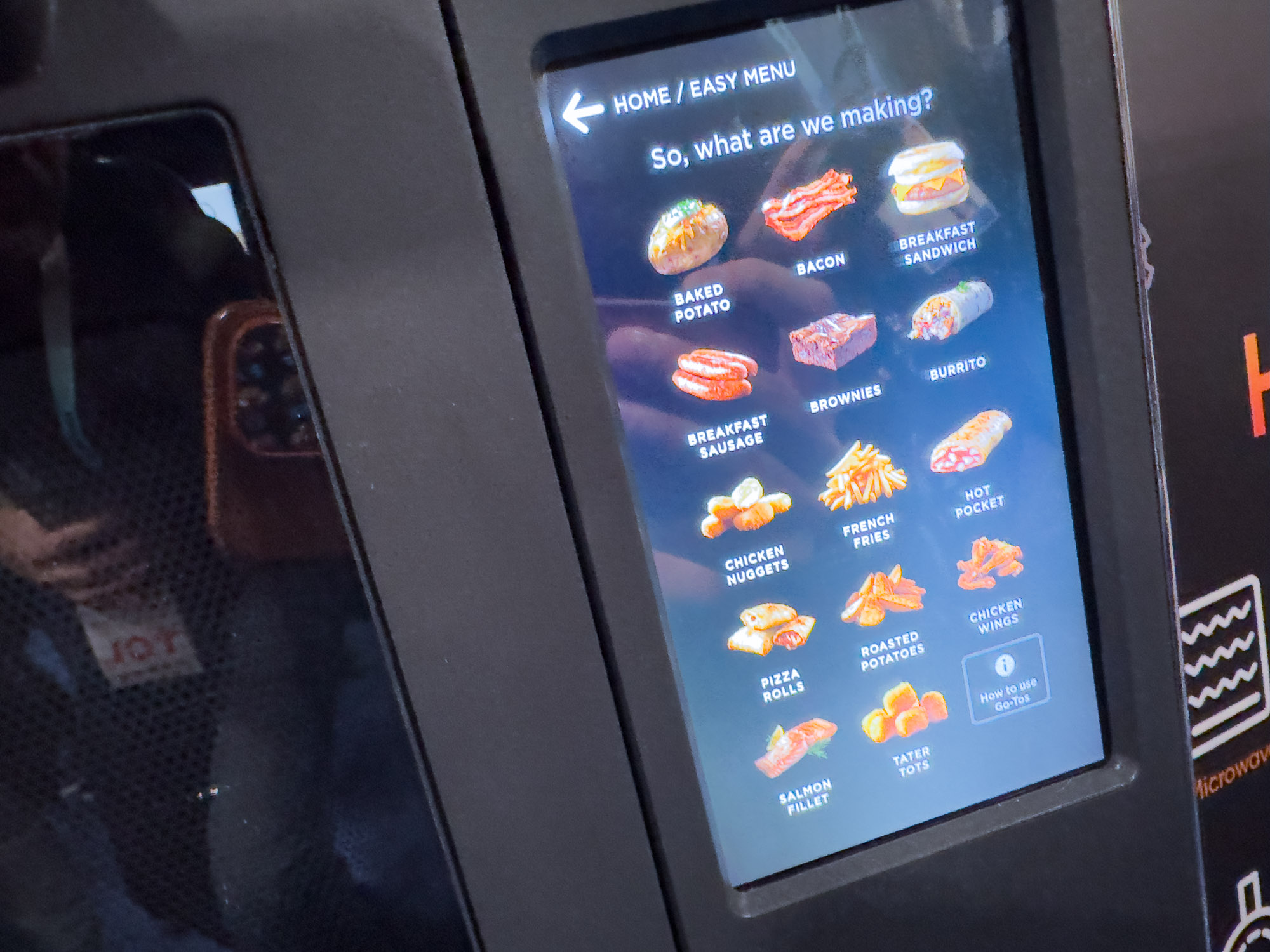
smart cooking device control panel

Image Credits: Haje Kamps (opens in a new window) / TechCrunch (opens in a new window)

We have a collection of small home appliances for the kitchen, from grills to smart microwaves and everything in between, that is sure to get you cooking this year, if you aren’t already.

ChatGPT in Volkswagen
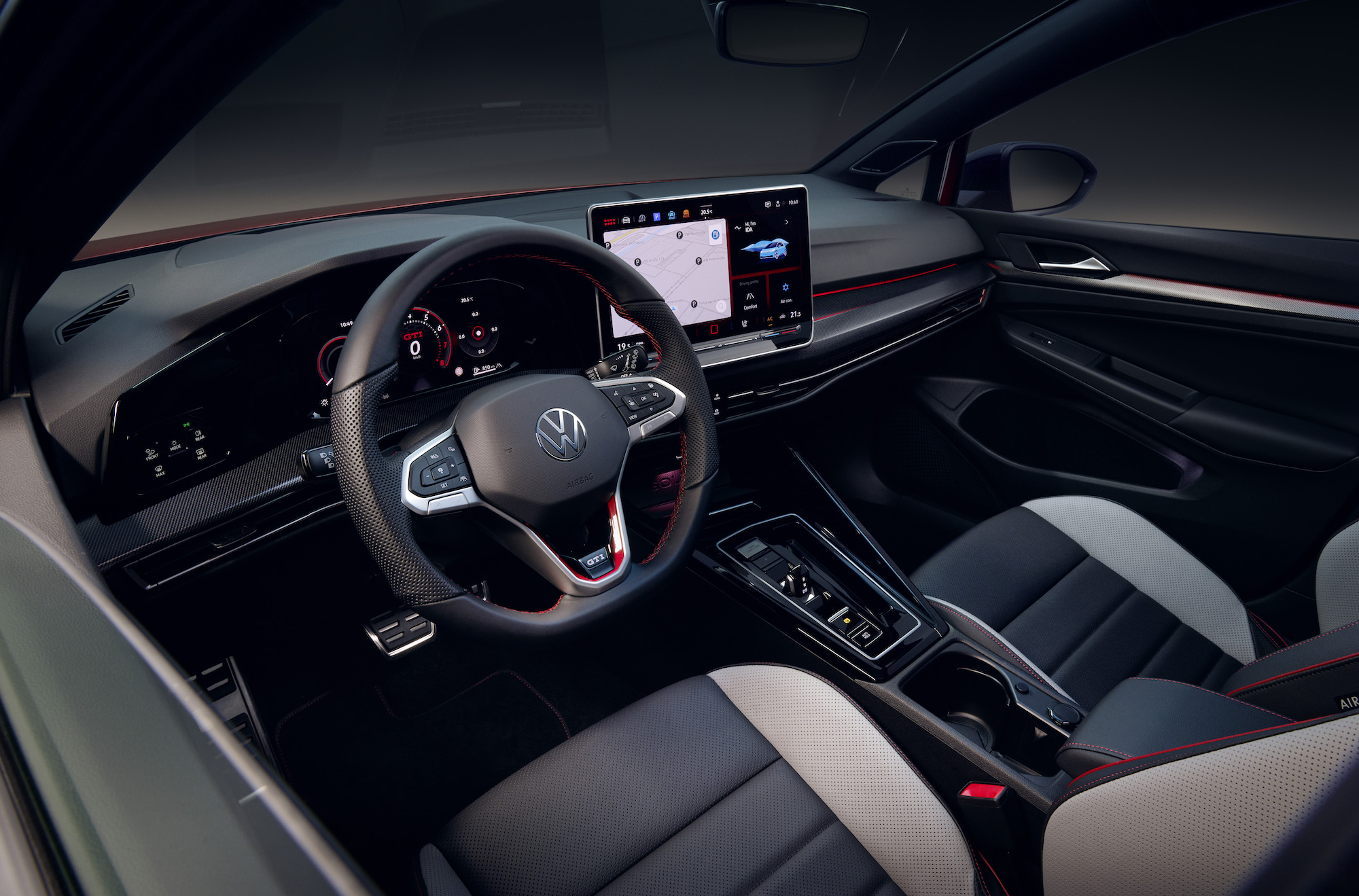
An image showing the interior of a new Volkswagen Gold including the steering wheel and touchscreen.

Image Credits: Volkswagen

The German automaker plans to add an AI-powered chatbot into all Volkswagen models equipped with its IDA voice assistant. For now, it’s not available in the U.S.

Apple Vision Pro to go on sale February 2
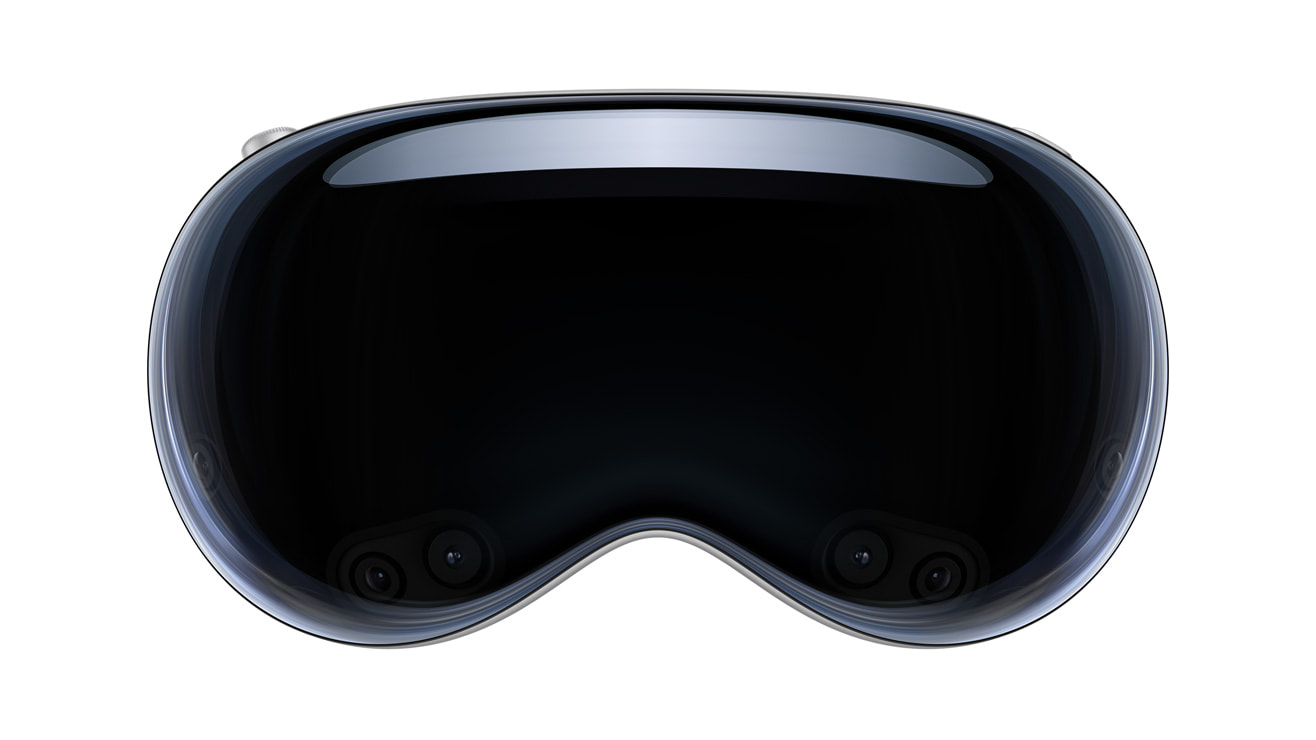
Image Credits: Apple

And Apple, in a surprise announcement preempting CES, stole some of the show’s thunder by announcing the Vision Pro will be available in the U.S. The consumer electronics giant confirmed that the Vision Pro will be available in the U.S. starting February 2. Pre-orders for the $3,500 spatial computing device open Friday, January 19.

Some companies made announcements ahead of the big event. Check out what’s already made headlines:

Withings’ new multiscope device checks vitals for telehealth visits

Invoxia has a new smart collar suitable for both cats and dogs

This app lets restaurants and coffee shops charge to use the bathroom

Aurora and Continental pass first major hurdle in commercial self-driving trucks deal

This startup is bringing a ‘voice frequency absorber’ to CES 2024

For just $139, this startup turns your iPhone into a BlackBerry-era relic

Qualcomm next-gen XR chip promises up to 4.3K resolution per eye

Urbanista integrates Powerfoyle tech with solar-powered headphones

Moonwalker robotic shoes get lighter and smarter

Read more about CES 2024 on TechCrunch