Top 9 Graph Database Picks for 2024

Graph databases are crucial for GenAI and ML due to their proven efficiency in managing highly connected data structures. Unlike traditional relational databases, they excel in storing and querying complex relationships, making them essential for AI and machine learning tasks.

The associativity of nodes in a graph enhances feature extraction and accelerates data retrieval, which is vital for training ML models on expensive GPUs. Graph databases also contribute to more precise AI and machine learning application results, surpassing standard datasets.

Their visualisation capabilities are highly valued for data analysis, making them suitable for leveraging generative AI and handling interconnected data.

The increasing prevalence of graph databases in GenAI and ML is attributed to their efficiency, focus on relationships, visualisation capabilities, and seamless integration with AI and machine learning processes.

Here is a list of the top graph databases in 2024.

Amazon Neptune

Amazon Neptune stands out as a fully managed graph database service, offering a purpose-built, high-performance engine optimised for storing vast relationships. It supports graph models like Property Graph and W3C’s RDF and their respective query languages.

Recommended for fraud detection and network security applications, Amazon Neptune provides a robust foundation for building and running applications that work with highly connected datasets.

IBM Graph

IBM Graph is an enterprise-grade property graph as a service built on open-source technologies. It allows organisations to store, query, and visualise data points, connections, and properties in a property graph.

With a focus on always-on service, IBM Graph is designed to scale on-demand as data complexity increases. This scalability makes it suitable for enterprises dealing with evolving and expanding datasets.

Azure Cosmos DB

Azure Cosmos DB is a fully managed NoSQL database service by Microsoft that offers automatic scalability and open-source APIs for MongoDB and Cassandra. It enables near real-time analytics and AI on operational data within existing SQL databases.

Ideal for modern application development with varying workloads, Azure Cosmos DB provides users with flexibility and performance backed by SLAs and serverless options for cost-effective scalability.

Neo4j

Neo4j provides a graph database facilitating understanding of data relationships, especially regarding people, processes, and systems. Natively storing interconnected data, Neo4j supports high-performance graph queries on large datasets.

Its property graph model makes it easier for organisations to evolve machine learning and AI models, making Neo4j a valuable asset for those seeking insights from intricate relationships within their data.

Oracle Spatial and Graph

Part of Oracle’s converged database offering, Oracle Spatial and Graph, includes Graph Studio for easy provisioning and integrated tooling. It automates graph data management and simplifies lifecycle modelling, analysis, and visualisation.

Supporting both property and RDF knowledge graphs, Oracle’s solution is integrated into the broader Oracle Autonomous Database, providing users with comprehensive support for diverse graph data use cases.

Redis Enterprise

Redis Enterprise by Redis Labs leverages modern in-memory technologies for deployment over cloud and on-prem data centres. It supports native data structures, offering data modelling techniques for graphs, documents, and machine learning.

Known for strategic partnerships with vendors such as Pivotal and Red Hat, Redis Enterprise caters to organisations seeking real-time capabilities and efficient data handling.

TigerGraph

TigerGraph offers a graph database platform for enterprise applications, supporting real-time deep link analytics. Finding applications in IoT, AI, and machine learning for making sense of large data volumes, TigerGraph provides personalised recommendations, fraud prevention, supply-chain logistics, and company knowledge graph.

Its focus on real-time analytics positions it as a valuable tool for organisations dealing with dynamic and fast-changing data.

AnzoGraph DB

AnzoGraph DB is a massively parallel processing graph database designed to hasten data integration analytics. It includes various functions for line-of-business analytics and graph and data science algorithms.

Enabling in-graph feature engineering and transformations, AnzoGraph DB is tailored for organisations seeking advanced capabilities for analytics within their graph data.

DataStax Enterprise

DataStax offers a distributed hybrid cloud database built on Apache Cassandra. DataStax Enterprise eliminates the complexity of deploying applications across multiple on-prem data centres or public clouds.

Powering mission-critical applications, DataStax Enterprise eliminates data silos and cloud vendor lock-in, providing enterprises with a scalable and robust solution for their diverse data management needs.

As organisations navigate the intricate web of interconnected data, these graph databases emerge as essential tools, each offering unique features and capabilities catering to diverse needs in data management.

The post Top 9 Graph Database Picks for 2024 appeared first on Analytics India Magazine.

Five CES 2024 products I’d buy as soon as they’d take my money

In recent years, CES has gained a reputation for being a show of splashy introductions of products that will never come to market — even though the roots of CES are based in retail stores previewing the year's upcoming products to decide what to stock on their shelves. Thankfully, CES 2024 had no shortage of real product launches along with strong pitches for recently released tech gadgets.

Also: CES 2024: What's Next in Tech

ZDNET has posted its editor's pick for best of show. I thought I'd also share my personal list of products that I would pay good money for as soon as they are available to buy. These five products are at the top of my queue.

1. Roborock Flexi Pro

I've been very impressed with the quality of Roborock's robot vacuums for the past couple years, because even though they weren't first to market they have out-innovated the industry to create 2-in-1 robots that vacuum, mop, and work more reliably than their competitors. I was even more impressed after talking to Roborock's president Quan Gang at CES, where he told me that the first two products that Roborock ever made they scrapped because they weren't happy with the quality and the third product had to succeed because they were out of money. It was an instant hit and now they are one of the top-selling robovac makers globally.

Also: EcoFlow Delta Pro Ultra and Smart Home Panel 2 just launched at CES 2024 and ZDNET tested it

But the product I loved from CES wasn't a robovac. It's a smart, upright, wet/dry vacuum called the Roborock Flexi Pro (because sometimes a robovac can't get everywhere or you just need a quick cleanup). The Flexi Pro has a beautiful, minimalist design, works as both a vacuum and a mop, is self-cleaning, and has 17,000Pa of suction power (twice the power of most robovacs). The price and release date haven't been announced yet, and I can't wait to learn more.

Roborock Flexi Lite (left) and Flexi Pro (right)

2. Ecobee Smart Doorbell Camera

When Ecobee launched its Smart Doorbell Camera in Q4 2023, most of the industry shrugged and thought it was an odd late entrance into a market that has a ton of entrenched competitors from the likes of Ring, Google, Logitech, and Eufy and low-cost stalwarts like Blink, Wyze, and Arlo. But after getting a demo of the Ecobee Smart Doorbell Camera and talking to Ecobee CEO Greg Fyke at CES, I came away very impressed with the fact that the Ecobee team got into smart doorbells because there were specific issues with the existing products on the market and they were confident they could improve on them and deliver a better product.

Also: The best smart home tech at CES 2024

The biggest improvement is the field of view. Most doorbell cameras are great for seeing someone coming to the door, but they can't see a package that's set right in front of the door. The Ecobee doorbell has a 175-degree field of view so that it can see something that's set flush against the door. I tried this in my CES demo and it works great. I have this problem today and so I have a second camera on my porch to see packages. And since I already have an Ecobee thermostat and have been very happy with the quality, features, and usability, another nice feature of the Ecobee doorbell is that it can use the screen on your Ecobee thermostat to view the doorbell camera. It also previews on Apple Watch. You can also use the Ecobee thermostat as your doorbell chime. Keep in mind that it's wired only, so it won't work for everyone. Still, the Ecobee Smart Doorbell Camera retails for $160, is available today, and I'd love to use it to replace my current two-camera setup.

Ecobee Smart Doorbell Camera

3. Samsung S95D OLED TV

Okay, I should preface this by saying I would LIKE to buy this TV as soon as it's released — whether I can afford to buy it will be a different matter. (We'll see when it comes out this spring.) Nevertheless, I've already called the S95D "the best TV of CES 2024" and the TV with the best picture quality in the world right now. Last year's model (S95C) was already among the consensus top three TVs in the world based on picture quality — the other two being the LG G3 and the Sony A95L — at least among TVs consumers can buy at retail.

Also: I saw Samsung's CES 2024 deluge of new TV tech and these 4 products impressed me

And then Samsung announced a new feature at CES 2024 that changed the game. The S95D now has a glare-free screen and in my time with the product at CES I was blown away by how effective it is. Glare is one of the biggest drawbacks on virtually all OLED TVs. They have amazing dynamic range, intense colors, and impressive black levels, but it's hard to use them in bright rooms because they don't have the strong backlight of LCD and QLED TVs and because they become mirrors for windows and lamp lights. The S95D overcomes this with its new anti-reflective display. We tested it with a bright flashlight on a smartphone camera and was amazed at how well it dispersed the intense light and turned it into a soft glow that the TV's picture could overwhelm. That's why I consider it the TV with the best picture quality a consumer can buy, and why I'd like to get one. Pricing won't be announced until spring, but I expect it will start around $2,500 for a 55-inch model before it gets discounted during the fall shopping season.

Samsung S95D OLED TV with glare-free display

4. Vasco Translator E1

One of the most impressive demos I had at CES 2024 was with the team of the Vasco Translator E1, an earpiece that uses AI and an app to translate 49 languages in real time. We tested it with a member of the Vasco team speaking a Polish, my ZDNET colleague Sabrina Ortiz speaking in Spanish, and me speaking in English and the E1 earpiece automatically translated between the three languages in our ear as well as displaying the translations in text on the phone app. There was a slight delay and the translations were about 80-90 percent accurate, but it was remarkable how well it let us communicate across the barrier of three different languages. The product will be released in Q2 2024 and pricing isn't available yet.

Also: The 12 best mobile accessories at CES 2024: iPhone call recorder, Qi2 chargers, and more

The team already has a product available, the Vasco Translator V4, a handheld mobile device that translates 108 languages and has a built-in SIM card that works in roughly 200 countries and includes connectivity for the lifetime of the device. The V4 costs $389 and it will work with the E1 earpiece when it's released. My colleagues Kerry Wan and Sabrina Ortiz also demoed a competing product, the TimeKettle X1 Interpreter Hub, and found it to be a little more accurate than Vasco's products and it worked better in loud spaces. However, in the volunteer work I do in community building and with a youth literacy program, I regularly collaborate with immigrants who speak less common languages that are covered by Vasco (such as Swahili and Persian) and are not covered by TimeKettle, and that's why I'm more interested in Vasco's product. Oh, and the fact that the TimeKettle device costs $700 — although it does include two earpieces similar to the E1 as well.

Vasco Translator E1 (black earpieces) and Translator V4 device (middle)

5. Oclean X Ultra S smart toothbrush

Smart toothbrushes have a long and interesting history at CES. I've lost count of how many I've demoed over the years. But none of them ever convinced me to put aside my old school Philips Sonicare toothbrush that I've been using for almost a decade (while regularly replacing the brush heads, of course). This year I think I might have found the one I've been waiting for, though. The Oclean X Ultra S has a built-in display to give you instant feedback on any spots you missed and a brushing score, WiFi and Bluetooth connectivity, a bone-conducting speaker that tells you if you're brushing too fast or applying too much pressure, Apple Health integration, and 4-6 months of battery life.

The Oclean X Ultra S will come to the US market in Q3 and will cost $130. Considering that high-end smart toothbrushes from market leaders Philips and Oral-B cost $300 to $350, the Oclean X Ultra S can bring tech-enabled brushing to a lot more people. The Oclean app is currently not rated nearly as well as Philips, Oral-B, Colgate, and other smart toothbrush apps on the Apple App Store, so Oclean may still have some work to do to improve usability and the overall digital experience. But based on what I saw at CES 2024, this product has a lot going for it and is coming in at a price that I finally feel comfortable paying for a smart toothbrush.

Oclean X Ultra S smart toothbrush and carrying case

CES 2024

What Annoys Subbarao?

The AI field is one crowded place these days, with almost everyone donning the hat of an ‘AI expert’. In order to separate the wheat from the chaff and get some clarity, AIM got in touch with Subbarao Kambhampati, professor of AI at Arizona State University for the past 32 years, and asked him what are the things that he loves, and what gets his goat.

Kambhampati’s views on LLMs align with Meta AI chief Yann LeCun. “We both feel that there is no reason to believe that these n-gram models would be able to reason beyond what they actually do,” he said. “They are just not made and meant to do that.” He gave an example of how LLM-based chatbots are still very weak at maths problems.

This brought up Q*, the OpenAI’s leaked model that was able to solve unseen maths problems. “It has stored an entire world in itself and is just able to retrieve information, that’s all. That’s pretty much the way to use LLMs, but that is a very dumb way to learn multiplication for humans; it’s the same for AI models.”

Talking about Perplexity AI, Kambhampati says that these are the classic cases of misunderstanding what LLMs are. “They are just retrieving information and summarising it, but they still hallucinate.”

He is interested in working with LLMs where they become the guessers. Kambhampati calls this LLM modulo fashion. Similar to LeCun’s vision of autonomous machine intelligence, he also proposes a world model, with different models connected together to a larger model, for bringing out information. “LLMs can only guess, they cannot verify.”

Kambhampati’s views on LLMs do not end here. “Another thing that has changed is that instead of calling hallucinations a bug, people have started calling it a feature,” he added that most people are just getting impressed with what LLMs can do, and forget that the most important thing is to focus on accuracy, instead of just creativity, giving the example of calculators – “we want them to be perfect”.

So-called “AI Experts”

The problem that Kambhampati pointed out is that everybody thinks that they are an AI expert as the barrier to entry to become an AI ethicist, or voice for responsible AI has been lowered. “I open my LinkedIn and everyone is talking about LLMs and touting responsible AI as the focus point,” Kambhampati laughed.

“Many people have come into AI only after 2013 – and some after ChatGPT – and often end up rediscovering the things that are already discovered.”

“Biology has become the refuge for people who want to do science but do not know maths,” he laughed, giving an analogy for people who talk about responsible AI, with the knowledge of neither AI, nor ethics.

He also highlighted a conference that had 40 people discussing AI, with only one person who had actually written a research paper in their entire lives. “That’s definitely not just annoying, but worrisome,” he added that X and LinkedIn are just filled with cheerleaders of LLMs.

Recalling Mark Twain’s quote, “A classic is something that everybody wants to have read and nobody wants to read,” Kambhampati said that AI is the new classic as everybody wishes to know it, but they don’t really have the background to talk about it. “I don’t think you can get away with that just by speaking with confidence.”

He emphasised that people should learn the full spectrum of AI techniques and then use what you know is the right way to combine them. “But the problem is people do not even take an introductory course to AI, they just start working on deep learning projects.”

He also feels that education in AI is important, but only the basics are enough. “You can overdo AI education. You don’t need it, just like you don’t need to teach about electricity to everyone, but everyone uses it …using calculators is different from understanding how it works.”

Not a fan of “UN of AI”

“As much as I hate the analogy, AI is becoming like electricity. But we do not have a global electrical policy. We do not need that for AI as well,” Kambhampati said. Moreover, he is also not a fan of making one organisation narrate all the rules around AI, as it would be ineffective. “Countries should be allowed to experiment with AI for their own use cases,” highlighting that advisory is acceptable, but it should be a mix of technology and policy experts.

Being passionate about open source, he said that the rise of Llama and Mistral, and then the rise of Indic LLMs such as Kannada and Tamil, has taken the baton away from OpenAI, which is very important. He highlighted that a lot of open source smaller models are performing better than models like GPT-4 that are much bigger in size on specific tasks.

“I hate the word foundational model,” Kambhampati added. “Just because there are different modalities coming up such as videos and images, that does not mean that LLMs are starting to reason better.”

When it comes to India, Kambhampati points out that the problem with Indic LLMs is that there is more data from exam papers such as JEE and UPSC. “You can train an LLM to pass JEE, but not write something coherent in Indic languages,” he added, pointing out that this problem exists because most of the data in the Indic language is not yet digitised.

Most of the training data available today is in English, not in other languages, which Kambhampati believes is a very big problem for building large foundational models. “I said this in 2018, that data capture and digitisation would be a very big issue, but no one wants to take them up as they are unsexy.”

The Real Star of AI

“I kid around with my students that I was doing AI before it was cool,” said the self-proclaimed stand-up comic for his students.

Born in Peddapuram, Andhra Pradesh, Kambhampati went on to do his bachelor’s in electrical engineering at IIT Madras, and did his project on speech recognition that eventually got him into AI. “People would be sad that I am doing AI, when there are more exciting things like databases.”

Kambhampati admitted that his interest in LLMs started with all the hype around LLMs, as he believes that they are not just n-gram models, but can also do reasoning and planning. “But the claims that LLMs can do everything that an AI system should do, and it is complete, is not actually the case,” he explained. “They can do planning and reasoning, but not idea generation from scratch.”

Kambhampati is currently interested in working with the human-AI interaction field, which deals with AI systems that should be able to explain the decisions to humans, instead of “silly saliency regions approaches where humans try to make sense of what machines are doing.”

The post What Annoys Subbarao? appeared first on Analytics India Magazine.
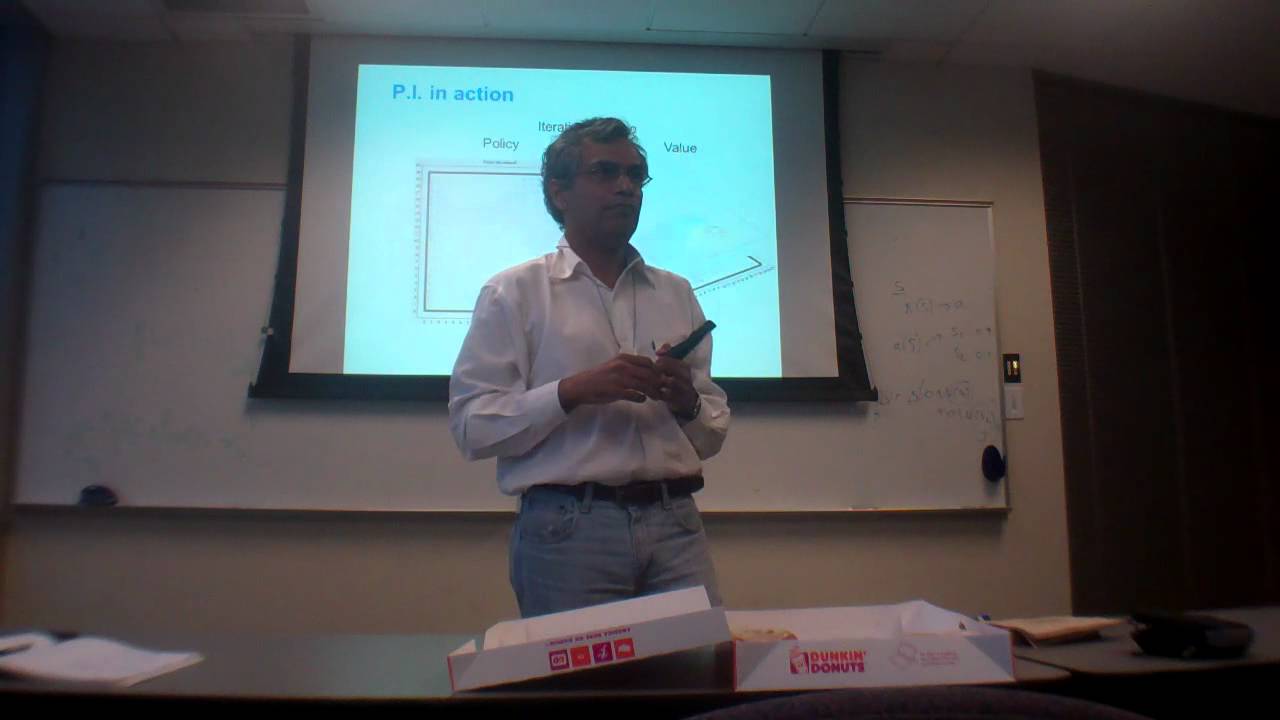
3 reasons why the Samsung Galaxy S24 Ultra is worth it (even after the price bump)

Samsung Galaxy S24 Ultra with S Pen

At Samsung Unpacked, the company unveiled its newest line of Galaxy phones, the Galaxy S24, Galaxy S24+, and Galaxy S24 Ultra. One difference with the Ultra model that many are immediately noticing (or have learned from reading this headline) is a new, higher price point.

Also: Every product Samsung announced at Unpacked 2024

The Samsung Galaxy S24 Ultra now starts at $1,299, up $100 from the previous year's Galaxy S23 Ultra model. While Samsung has been fairly consistent with pricing its phones, this year's model sees upgrades that are arguably more significant than usual, with a noticeable change to display brightness, performance, durability, camera hardware, and more.

So, how is Samsung justifying the price bump? Here are some potential reasons.

Samsung Unpacked

Samsung’s Galaxy S24 Unpacked unveil: How to watch and what to expect

Samsung’s Galaxy S24 Unpacked unveil: How to watch and what to expect Brian Heater @bheater / 18 hours

I can’t recall if there was ever a true lull in the weeks between CES and MWC, or whether this is the sort of thing we tell ourselves to cushion the blow of a hardware season that now spans 11.5 months of the year. Whatever the case, the days of big companies saving big news for big events appear to be mostly done.

Once upon a time, Samsung split its big top-of-year announcements between CES (TVs, monitors, appliances) and Mobile World Congress (phones, tablets, maybe a wearable). Several years ago, however, the company moved its big mobile flagship news to a standalone event — albeit one that was more closely tied to MWC.

This year’s first Samsung Unpacked, on the other hand, returns to the West Coast of the U.S. less than a week after CES. Thankfully, some things are a bit more predictable than the company’s event schedule — namely the devices set to be announced at said event. Today at 10 a.m. PT/1 p.m. ET, Samsung will unveil its latest flagship, the Galaxy S24. This much we can say we know with near absolute certainly.

Because this is Samsung we’re talking about, we also think we know plenty about the device itself, courtesy of a steady drip of releases. As ever, the Ultra will be the (high price tag) centerpiece of the line. Here’s some of what we think we know:

  • New flatter display
  • Another four-camera array, though the 10x telephoto has been halved
  • A titanium frame à la the iPhone 15

AI will, unsurprisingly, take center stage today. The company is expecting to incorporate some form of third-party generative AI on-device. By the end of 2024, I’d anticipate that pretty much every major Android handset will offer some version of this, but points to Samsung for being ahead of the curve on this one.

One specific AI tidbit we’ve heard about is the new “Circle to Search” feature from Google, which aims to make search engine access even more accessible.

Samsung will most likely also announce the standard S24 and S24+ options. Additional hardware could be on the docket, as well.

You can follow along with the announcements here.

Some Fire TV users can now simply ask Alexa to create AI-generated images

Amazon Fire TV Omni QLED

An Amazon Fire TV Omni QLED displaying an image created by the prompt, "Alexa, create a picture of a hidden temple in a rainbow jungle."

Companies big and small are adding generative AI features to different technologies and devices to give them an extra boost. But even though these AI features are spreading like pollen in April, one company stands out for how they're using it: a voice-to-image generator built into a smart TV.

Amazon is finally rolling out its AI Art feature for Fire TVs in public preview, which lets users ask Alexa for an image and then watch as their imagination comes to life and fills the TV screen. Users can then add this image to their Amazon Photos account, display it as the background for their Fire TV, or discard it.

Also: Alexa just got three new generative AI skills — here's how to try them

The caveat? The AI Art feature is only available in the latest-generation Fire TV Stick 4K Max and the Fire TV Omni QLED series as part of Amazon's Ambient Experience, which is only available on these devices.

Users that have either of these devices can activate the AI Art feature by enabling the Ambient Experience on their TV and agreeing to the AI Art public preview. Then, it's just a matter of asking Alexa for an image and choosing from the four generated outputs.

Like other AI image generators, users can give prompts that are as detailed as they'd like, even including the artwork style they're looking for, like a cartoon, painting, photo, 3D render, watercolor, and more. Users can also add art movements to their prompts, like impressionism, Cubism, or Pop Art.

Also: 'Generative AI by iStock' lets users create images without copyright-infringement worries

The idea behind the AI Art feature is for consumers to create their artwork for their Fire TVs using just their voice. This generative AI feature is powered by both Alexa for voice prompts and Amazon's Titan Image generator to create the images using AI.

Amazon's Titan Image Generator is a proprietary vision-language model that generates images from text prompts, such as spoken text. The generative AI model is still in preview and has been trained on carefully curated photos and captions to produce realistic images.

Also: Windows 11 Paint has its own AI image generator tool — here's how to use it

Regarding copyright concerns for AI-generated art, an Amazon spokesperson told me, "Titan models are trained on data from a variety of sources, including licensed data, open source datasets, and publicly available data where appropriate."

While this doesn't ensure the generation of commercially safe images, the Titan Image Generator does add a digital watermark to its images to flag them as synthetic content. This doesn't speak to copyright concerns directly but suggests an awareness of the need to distinguish AI-generated images from human creations.

Artificial Intelligence

Samsung’s Galaxy S24 will feature Google Gemini-powered AI features

Samsung’s Galaxy S24 will feature Google Gemini-powered AI features Kyle Wiggers 15 hours

Gemini, Google’s cutting-edge generative AI model family, is coming to Samsung’s new flagship smartphone — the Galaxy S24. Google and Samsung made the announcement to coincide with the Galaxy S24’s unveiling this afternoon.

On Galaxy S24 phones, Gemini — specifically Gemini Pro, a mid-range model designed for a range of tasks — will power components of Samsung’s Notes, Voice Recorder and Keyboard apps, delivering what Google describes as “better summarization features.” Users will be able to, for instance, record a lecture using Voice Recorder and get a summary of the key parts of the lesson.

Meanwhile, Gemini Nano — a more efficient, compacter Gemini model — will enable a new feature in Google Messages, Magic Compose, which can craft messages in styles like “excited,” “formal” and “lyrical” on-device and without the need for an internet connection.

Worth noting is the fact that the Galaxy S24 is only the second Android device to run a Gemini Nano model after Google’s own Pixel 8 Pro. On the Pixel 8 Pro, Nano drives capabilities including an AI summarizer feature in the Recorder app and suggested replies in Google’s keyboard app Gboard.

Beyond Gemini, the Galaxy S24 will benefit from Google’s Imagen 2 text-to-image model, which will underpin photo editing features in the Galaxy S24 Gallery app. (Imagen 2 was unveiled at Google I/O last May and recently launched in preview on the web.) One, Generative Edit, can automatically fill in parts of images based on the surrounding context.

Google also said that Samsung will be one of the first partners to test Gemini Ultra, the largest and most capable Gemini model, before it’s made broadly available to developers and enterprises sometime this year. Neither company said exactly how Ultra might be used on the Galaxy S24, however — or any other Samsung devices for that matter.

Late last year, Google said that Android users would be able to tap into Gemini via Bard and that Google Assistant, Google’s intelligent assistant, would gain an integration with Bard on Pixel devices. Mum’s the word on whether Galaxy S24 users can expect the same Assistant and Bard upgrades; hopefully we’ll learn more during today’s Galaxy S24 press conference.

Consumer Watchdog Report: Wall Street AI Could Cause Financial Crisis

Consumer Watchdog Report: Wall Street AI Could Cause Financial Crisis January 17, 2024 by Ali Azhar

The impact of AI has rippled through virtually every aspect of the business world, and the financial industry is no exception. Organizations in the financial sector are expected to experience seismic shifts from the transformative forces of AI. Wall Street, regarded as the global hub for finance and economics, has long relied on legacy technology but is now taking a keen interest in AI technology, especially generative artificial intelligence (GenAI).

While Wall Street has poured billions into AI research, development, and patents, they might have progressed without adequate safeguards. A recent investigation by Consumer Watchdog suggests that Wall Street AI could cause algorithmic complexity, a lack of transparency, and biased or false information, that could result in the next financial crisis.

The Consumer Watchdog investigation included analysis of AI-related patent applications at the United States Patent and Trademark Office (USPTO). Wall Street banks are seeking patents and trademarks for various applications. Goldman Sachs, JPMorgan Chase, and Morgan Stanley are seeking artificial intelligence for analyzing securities, and investments and predicting stock prices and portfolios.

Almost every bank on Wall Street is developing its own version of ChatGPT to provide financial advice to its customers and employees. This is concerning because the risk of “AI hallucination” is one of the biggest threats to using GenAI as it can lead to biased or misleading output, which in the financial sector can spell disaster.

"Absent proper regulation, the next financial crisis could be caused by AI," said Justin Kloczko, tech advocate for Consumer Watchdog. "A recession could ignite in the housing or equity market due to a handful of powerful banks relying on a couple of biased algorithms."

According to Consumer Watchdog, the use of AI can create complex new derivatives that can allow investors to gamble with billions of dollars in junk bonds. This can lead to an economic crash as big as the 2008 financial crisis.

"The more these companies use automation, and they start to use it on bigger markets, then there is some systemic risk," Gerard Hoberg, a University of Southern California professor of finance who studies artificial intelligence, told Consumer Watchdog.

(Phongphan/Shutterstock)

In their report, Consumer Watchdog called for strong oversight by state and federal authorities. It recommends more sophisticated monitoring and regular audits to protect against systemic risks and “herding”, which refers to the systemic bias where investors tend to follow and copy what other investors are doing.

The report also recommends AI investment systems to held to the same standards as human investment advisors and mandate the external review of black box data of AI investment algorithms.

The Consumer Watchdog report highlights the efforts of the California government to tackle this issue. The draft rules developed by the California Privacy Protection Agency (CPPA) allow people to opt out of AI-automated technology for any financial decision-making. The rules set by the California government offer protection against AI risks and biases and provide a model for the rest of the states to follow.

AI-related patent applications have skyrocketed with over 80,000 applications at USPTO since 2020. Interestingly, over 90 percent of the AI patent applications are filed by only five investment banks, which also control half of all AI investment deals and more than two-thirds of all research papers. If no action is taken by regulators, the global economy could suffer the next financial meltdown because the top banks on Wall Street decided to use biased or unreliable AI models.

Related Items

Watsonx Brings AI Visibility to Banking Systems

AI Researchers Issue Warning: Treat AI Risks as Global Priority

AI Startup Anthropic Pursues $5B Investment for OpenAI Showdown — Report

Related

Samsung Unpacked 2024: Galaxy S24 Includes Google’s Generative AI

At the Samsung Unpacked event on Wednesday, the mobile phone giant showed the Samsung Galaxy S24 series’ generative AI-powered note-taking tools and real-time translation. Samsung’s newest smartphone series will support Google’s Gemini Nano and Gemini Pro generative AI, and the Imagen 2 image maker, on Google’s Vertex AI through the cloud.

Google brings Gemini Pro and other AI capabilities to Samsung Galaxy S24

Along with the other Google-powered generative AI features, Google’s Gemini Nano runs generative AI on-device.

Real-time language translation could smooth out international business trips

Samsung showed off real-time translations between languages on texts or phone calls with Live Translate; the Live Translate feature could be used for catching a ride during a business trip or talking with international colleagues.

Samsung adds generative AI features for meetings and image editing

Gemini Pro on Vertex AI for Samsung offers generative AI features for business use, such as summarizing meeting notes and automatically classifying voice recordings (Figure A).

Figure A

Business people using the Samsung Galaxy S24 to transcribe a meeting.
The voice recorder on the Samsung Galaxy S24 includes Transcript Assist with AI. Image: Samsung Electronics

These services are one of Google’s first implementations of the Gemini Ultra large language model. Meanwhile, Imagen 2 on Vertex AI provides photo editing capabilities for personal or business social media and marketing use.

SEE: Here’s everything you need to know about artificial intelligence. (TechRepublic)

In the Samsung Galaxy S24 series, Google enables the Circle to Search function, which lets you circle an image or word on the screen to see Google Search results for that topic without leaving your current app.

Samsung knows there are concerns about the privacy of data exposed to generative AI, especially if it’s proprietary business data. Samsung Galaxy S24 users can use the Advanced Intelligence settings to turn off online processing of data for generative AI features.

Samsung Galaxy S24 series: Availability, pricing and security

The Galaxy S24 Ultra, Galaxy S24+ and Galaxy S24 will be available globally on January 31 at Samsung.com, at Samsung Experience Stores and from major mobile carriers and retailers.All three versions run on the Snapdragon 8 Gen 3 Mobile Platform for Galaxy from Qualcomm.

The phones in the series are differentiated as follows:

  • Galaxy S24 starts at $799.99 and comes with options of either 128 GB or 256 GB of storage.
  • Galaxy S24+ starts at $999.99 and comes in 256 GB or 512 GB storage options.
  • Galaxy S24 Ultra starts at $1,299.99 with storage capacity options of 256 GB, 512G B or 1 TB. The Galaxy S24 Ultra has extra thermal control, with a larger vapor chamber compared to the Galaxy S23 Ultra.

Samsung guarantees seven generations of OS upgrades and seven years of security updates for devices in the Galaxy S24 series.

The series is secured by Samsung’s Knox security.

Samsung increases use of recycled materials

Samsung took the following environmental measures in the manufacturing of the Galaxy S24 series, which were not applied to the Galaxy S23 series:

  • Used a minimum of 50% recycled cobalt in the battery of the Galaxy S24 Ultra.
  • Used a minimum of 10% pre-consumer recycled TPU in the side and volume keys of the Galaxy S24 Ultra.
  • Used 100% recycled rare earth elements and a minimum of 40% recycled steel in the speakers of the Galaxy S24 Ultra.
  • Used recycled steel and Thermoplastic Polyurethane in the Galaxy S24 series.
  • Created the packaging for the Galaxy S24 line out of 100% recycled paper.

Competitors to the Samsung Galaxy S24

The Samsung Galaxy S24 competes with Apple’s current generation iPhone 15 and iPhone 15 Pro. Google included AI image editing in its Pixel 8 and Pixel 8 Pro, which compete to deliver contemporary smartphone features. However, Google’s phones didn’t make the top five in global smartphone sales in 2023, according to IDC.

Five AI features that make Samsung’s Galaxy S24 phones worth the upgrade

Samsung Galaxy S24 Ultra

AI has arrived, in full force, on phones for the biggest players on the market, and, with the Galaxy S24, Samsung is coming to prove it can stand toe-to-toe with Google and Apple. The new Galaxy phones are available for preorders starting today, in sync with the company's Unpacked event.

Also: Every product Samsung announced at Unpacked 2024

This year, we're seeing some serious upgrades (a new Qualcomm chip, a brighter screen, and an even further refined design). But as far as the new capabilities for the phones, AI takes the spotlight, thanks to Galaxy AI.

Samsung Unpacked