Leveraging AI to Design Fair and Equitable EV Charging Grids

By: Ankur Gupta & Swagata Ashwani

Leveraging AI to Design Fair and Equitable EV Charging Grids
Image by Editor

Artificial intelligence holds immense promise for revolutionizing the accessibility and availability of electric vehicle charging. The demand for EV charging is exploding as the transportation industry undergoes a massive shift towards electric vehicles. Over 6.5 million EVs were sold worldwide in 2021, accounting for 9% of passenger car sales. That number should exceed 25% by 2030. A recent analysis estimated that the number of charging stations required to to satisfy the charging demand would need to grow 10x by 2040 [1].

Leveraging AI to Design Fair and Equitable EV Charging Grids
Figure 1: Projected demand for EV charging stations by type

AI algorithms can help create a smarter, more responsive charging infrastructure. However, as we welcome the benefits, we must also navigate the rapid deployment, we also need to ensure that it aligns with values such as fairness, transparency, and accountability.

The datasets that feed into AI models would base their recommendations on current EV adoption in those areas, EV demand and expected charger utilization. However, we need to control for bias based on socio-economic factors to ensure that new stations that are placed on the grid enable fair and equitable access.

The Power of AI in EV Charging Grid Design

There are also myriad scientific studies [2,3] that discuss how AI and machine learning can be used to help planners decide where to locate EV chargers and what type of chargers to install. Designing an EV charging grid is a complex problem and various factors are at play including

charger location, pricing, type of charging standard, charging speed, energy grid balancing as well as predicting the demand. Let’s dive deeper into the key aspects where AI can help guide us in making a better decision.

1. Optimal Charging Station Placement

AI excels in processing vast datasets and extracting meaningful insights. This capability becomes particularly valuable when determining the optimal locations for charging stations. By analyzing factors such as traffic patterns, population density, and geographic data, AI algorithms can strategically place charging stations to maximize accessibility and user convenience.

For example, EV charging stations might be needed along busy commuting routes, near major highways, or in areas with high concentrations of EVs. High-density residential and commercial areas are likely to have a higher demand for EV charging stations. AI can analyze demographic data and population density maps to pinpoint these areas. For the analysis, the datasets need to incorporate future trends in EV sales, population growth and urban development.

The Best Site for Charging Stations:

AI algorithms are superb at analyzing big data. They can help to determine the best areas for EV charging stations. Various aspects are considered in this assessment including:

  • Traffic Patterns: AI looks at traffic flows and congestion levels so as to identify areas with high usage.
  • Population Density: The priority is given to places with high population densities thus ensuring that there is maximum accessibility.
  • Geographic Data: This involves examining the physical terrain and constraints of urban planning to judge their appropriateness.
  • Existing Charging Station Locations: In order not to saturate any area and maintain an even spread.
  • Predictive Analysis for Future Expansion: AI uses trends in electric vehicle sales, demographic shifts and urban development to project future requirements that guide long-term planning.

Leveraging AI to Design Fair and Equitable EV Charging Grids
Figure 2: Heat map showcasing distribution of EV charging station in the US

2. Demand Prediction

An effective demand prediction strategy is crucial for optimizing the placement and operation of charging stations and is essential for several critical reasons. Firstly, accurate demand prediction allows for the strategic placement of charging stations. By forecasting when and where charging needs will be highest, AI-driven systems can optimize the geographic distribution of charging infrastructure. This ensures that charging stations are conveniently located in areas with anticipated high demand, promoting accessibility for a diverse range of users across urban and rural landscapes.

Secondly, demand prediction contributes to effective capacity planning. By analyzing historical data and incorporating factors such as seasonal variations, time-of-day patterns, and user behaviors, AI can help determine the optimal capacity for each charging station. This ensures that the infrastructure is designed to meet demand without causing overloads or inefficiencies in the power grid. Listed below are factors that feed into demand prediction.

  • EV Charging Transaction Data:
    • Details about each charging session (time, duration, location)
    • Energy consumed per charging session
    • Type of charging (fast charging, slow charging)
  • Traffic and Mobility Data:
    • GPS data from vehicles to understand travel patterns
    • Traffic flow data in different areas and at different times of the day
  • User Demographics:
    • Age, gender, and residential location of EV users
  • Weather:
    • Weather conditions can affect driving patterns
  • Socioeconomic Data:
    • Income levels
    • Urban versus rural areas

Predicting demand is crucial for user satisfaction. Users benefit from a charging infrastructure that aligns with their needs, minimizing wait times and providing a seamless experience. AI's ability to analyze diverse datasets, including user behavior and preferences, allows for personalized and user-centric demand prediction, enhancing the overall satisfaction of EV owners

3. Dynamic Charging Pricing Models

Traditional fixed pricing models may not harness the full potential of a dynamic and responsive charging grid. AI can analyze real-time data, including energy demand, grid load, and user behavior, to implement dynamic pricing models. This not only optimizes the utilization of the charging infrastructure but also encourages users to charge during off-peak hours, promoting a more balanced and sustainable energy distribution. A research study [4] on dynamic pricing scheme based on the Stackelberg game for EV charging stations led to the conclusion that a well crafted pricing scheme can lead to reduction in the selling price of charging station while increasing the station’s profit; a win-win for both the consumer and the provider.

Components that feed into a pricing model:

  • Energy Demand and Grid Load: AI algorithms can utilize real-time electricity demand and grid load data. During high demand, prices can be increased, and vice versa.
  • User Behavior and Patterns: Analysis of historical charging data, including frequency, duration, and preferred times for charging, helps predict future behavior and adjust prices accordingly.
  • Time of Day/Week and Seasonality: Prices can vary based on the time of day, day of the week, or season, considering typical usage patterns during these periods.
  • Type of Charging (Fast vs. Slow Charging): Different rates can be set for different types of charging.

Leveraging AI to Design Fair and Equitable EV Charging Grids
Figure 4: Pricing for EV charging stations in the US

Dynamic pricing models play a role in affordability and accessibility. By offering lower prices during off-peak hours or when renewable energy sources are abundant, AI-driven systems make electric charging more economically viable for a diverse range of users. This approach aligns with principles of fairness, ensuring that the benefits of electric mobility are accessible to individuals across different income brackets.

Ensuring Algorithmic Fairness in AI-Driven Charging

The adoption of AI-driven solutions in electric vehicle (EV) charging is rapidly advancing, offering potential benefits in efficiency, user experience, and grid management.

However, this technological advancement also raises important considerations around algorithmic fairness. Ensuring that AI systems in EV charging are fair and unbiased is critical to promoting equitable access to charging infrastructure.

Diverse and Representative Data

To mitigate biases, it's crucial to ensure that training data is diverse and representative of the entire user base. This involves collecting data from a broad range of geographic locations, demographic groups, and charging scenarios. Within each dataset biases present in the training data need to be identified and rectified. Below are the various aspects that need to be considered when picking the datasets:

  • Geographic Diversity:
    • Urban and Rural Areas: Incorporating data from both urban and rural environments ensures that charging grid designs are inclusive and cater to the needs of diverse communities.
    • Different Climates: Climate variations impact charging behaviors and energy consumption. Datasets reflecting diverse climate conditions contribute to robust AI models.
  • Demographic Diversity:
    • Socioeconomic Factors: Including data from various socioeconomic backgrounds helps avoid biases and ensures that charging infrastructure is accessible to users across different income levels.
    • Cultural Considerations: Cultural preferences and lifestyle differences influence charging habits. Diverse datasets encompassing cultural nuances contribute to more inclusive charging grid designs.
  • Vehicle Diversity:
    • Various EV Models: Different electric vehicle models have distinct charging requirements. Incorporating data from a variety of EVs ensures that the charging infrastructure caters to the specifications of various vehicles.
    • Charging Technologies: Datasets should account for different charging technologies, including fast charging, standard charging, and emerging technologies, to optimize grid designs accordingly.
  • Temporal Diversity:
    • Seasonal Variations: Charging behaviors can vary seasonally. Datasets covering different seasons enable AI systems to adapt charging grid designs to changing weather conditions.
    • Time-of-Day Patterns: Understanding variations in charging demand throughout the day aids in optimizing charging infrastructure for different timeframes.

While building an AI model for demand prediction- let’s say predicting where to place the next EV charging station, it is crucial to ensure a diverse dataset including all the above features is curated.

Once the features are curated, is it important to access the balance of the dataset. An imbalanced dataset can lead to skewed and biased results. The graphs show balanced data for some of the pivoted features such as Age and Vehicle type preference.

Leveraging AI to Design Fair and Equitable EV Charging Grids
Figure 5: Balanced features for EV charging station placement model by age

Leveraging AI to Design Fair and Equitable EV Charging Grids
Figure 6: Balanced features for EV charging station placement model by vehicle type

Algorithmic Transparency

Transparency is a cornerstone of addressing bias in AI. Charging algorithms should be designed to be transparent, providing users with insights into how decisions are made regarding charging rates, optimal times, and other critical factors. Understanding the algorithm's decision-making process fosters trust and allows users to hold charging providers accountable.

LIME (Local Interpretable Model-agnostic Explanations) plays a crucial role in enhancing the explainability of AI predictions. By creating interpretable models that approximate the predictions of complex machine learning models, LIME provides insights into how different features influence these predictions. For instance, in the context of EV charging station placement, LIME can help reveal the reasons behind a model's recommendation to place a charging station- in the below explainer plot- the features that contribute positively to the prediction(placing an EV charging station at location x) is highly impacted by the socio-economic status. Traffic and population density negatively impact the prediction. This is just a hypothetical dataset and analysis, and real life predictions could deeply vary. The purpose of this plot is to show how powerful LIME can be to explain how a particular prediction is made- what features carry more importance vs the others.

Leveraging AI to Design Fair and Equitable EV Charging Grids
Figure 7: Explainable AI for a EV Charging Station prediction using LIME

The EVI-Equity: Electric Vehicle Infrastructure for Equity Model developed by NREL [5] is a fantastic tool for measuring the equity of the nationwide electric vehicle (EV) charging infrastructure using comprehensive, high-resolution analysis. It provides a visualization map to allow stakeholders to examine equity characteristics of EV charging infrastructure making it easy to inspect and understand the results. For eg. when applied to the greater Chicago region, the graph below illustrates the disparate charging access and associated EV adoption based on income and race.

Leveraging AI to Design Fair and Equitable EV Charging Grids
Figure 8: EVI-Equity model results for the greater Chicago region

Protecting User Privacy

With the rapid rise of Connected Vehicles, there is an increasing amount of data being streamed from vehicles to the cloud. This not only includes vehicle metrics such as battery capacity, remaining range, user settings such as climate control, but also driver behavior metrics such as rate of acceleration/braking, video and audio feeds, anti-braking/lane departure sensor activation. These metrics, if used unfairly, can be used to create a behavioral profile for the driver and in-turn add bias into decision making.

As AI processes this vast amount of user data to optimize charging grid placement, privacy becomes a paramount concern. Implementing privacy-by-design principles ensures that AI-driven charging infrastructure respects user privacy and complies with data protection regulations.

Privacy Techniques for Responsible Data Handling:

  • Anonymization: Anonymization involves the removal or encryption of personally identifiable information from the data stream. By dissociating the data from specific individuals, it becomes significantly harder to trace metrics back to a particular driver.
  • Aggregation: Aggregation involves combining multiple data points to form generalized summaries. Instead of processing individual driver behavior metrics, AI can analyze aggregated patterns across a larger dataset. This not only safeguards the privacy of individual drivers but also ensures that charging grid decisions are based on collective trends rather than specific user profiles.
  • Differential Privacy: Differential privacy adds noise or randomness to individual data points, making it challenging to determine the contribution of a single user to the dataset. This technique strikes a balance between data utility and privacy protection, enabling AI to generate accurate charging grid optimizations without compromising the individual privacy of drivers.
  • Homomorphic Encryption: Homomorphic encryption enables computations on encrypted data without decrypting it. This technique allows AI to analyze encrypted driver behavior metrics, ensuring that the privacy of individual users is maintained throughout the optimization process. It's a powerful tool for striking a balance between data-driven insights and privacy protection.

Conclusion

As the global adoption of electric vehicles (EVs) gains momentum, charging networks infused with AI face both promising opportunities and significant responsibilities. Their mission involves providing drivers with convenience and reliability while ensuring the resilience of local grids, all while prioritizing equity and accountability. Although the challenges are intricate, the potential future benefits are immense, ranging from cleaner air and climate change mitigation to achieving energy independence and fostering the development of next-generation skills.

The pivotal role of AI and machine learning in bringing this vision to fruition cannot be overstated. These technologies hold the promise of orchestrating serialized, personalized charging on a massive scale, catering to millions of users. However, to secure public trust, the algorithms driving these systems must center on principles of fairness and transparency, all while enhancing accessibility and reliability.

References

[1] US electric vehicle charging market growth: PwC

[2] The role of artificial intelligence in the mass adoption of electric vehicles

[3] Data-driven smart charging for heterogeneous electric vehicle fleets — ScienceDirect

[4] A dynamic pricing scheme for electric vehicle in photovoltaic charging station based on Stackelberg game considering user satisfaction — ScienceDirect

[5] EVI-Equity: Electric Vehicle Infrastructure for Equity Model | Transportation and Mobility Research | NREL

Swagata Ashwani is a seasoned data scientist with a rich background in analytics and big data. Currently serving as the Principal Data Scientist at Boomi, Swagata plays a crucial role in harnessing the power of data to drive innovation and efficiency. In her role, she plays a crucial role in leading generative AI initiatives for the company. She is also Chapter Lead at SF Women in Data, where she fosters building a rich community for women to celebrate women in varied data roles.

Ankur Gupta is an engineering leader with a decade of experience spanning sustainability, transportation, telecommunication and infrastructure domains; currently holds the position of Engineering Manager at Uber. In this role, he plays a pivotal role in driving the advancement of Uber's Vehicles Platform, leading the charge towards a zero-emissions future through the integration of cutting-edge electric and connected vehicles.

More On This Topic

  • Using Data Science to Make Clean Energy More Equitable
  • SQL For Data Science: Understanding and Leveraging Joins
  • Learn how to design, measure and implement trustworthy A/B tests…
  • In-Database Analytics: Leveraging SQL's Analytic Functions
  • Leveraging XGBoost for Time-Series Forecasting
  • Leveraging Geospatial Data in Python with GeoPandas

AI4Bharat Releases Airavata: An Instruction-tuned Hindi LLM

AI4Bharat, an AI research lab incubated at IIT Madras, has released Airavata, an instruction-tuned model for Hindi. The model has been built by fine-tuning Sarvam AI’s OpenHathi, with diverse, instruction-tuning Hindi datasets to make it better suited for assistive tasks, it said in a blog post.

Along with Airavata, AI4Bharat has also released the instruction tuning datasets used for the model to enable more innovation in the IndicLLM space.

“We rely on human-curated, license-friendly instruction-tuned datasets to build ‘Airavata’. We do not use data generated from proprietary models like GPT-4 etc. We think this is a more sustainable way of building instruction-tuned models at scale for most Indic languages, where relying on distilled data from commercial models would increase costs and restrict their free usage in downstream applications due to licensing restrictions,” it said.

Effective performance of LLMs relies significantly on high-quality instruction tuning datasets. Unfortunately, there is a scarcity of diverse datasets available for Hindi.

AI4Bharat’s approach in developing Airavata involves translating well-constructed English-supervised instruction-tuning datasets into Hindi. For this translation task, we leverage IndicTrans2, a state-of-the-art open-source machine translation model specifically designed for Indian languages, it added.

Previously, AI4Bharat introduced Chitralekha, an open-source AI-powered video transcreation platform developed in partnership with EkStep.

It has an integrated workforce management system, which enables end-to-end transcreation of a video from one language to another through the stages of transcription, translation and voice-over for the translated language.

Earlier this month, AI4Bharat announced the hiring process for its AI resident (and associates) programme for 2024-25. This year-long, pre-doctoral programme focuses on intensive work in NLP, speech, and vision projects.

The post AI4Bharat Releases Airavata: An Instruction-tuned Hindi LLM appeared first on Analytics India Magazine.

Top 6 Recent Updates that Will Transform the Course of AI

The past two weeks have been exceptionally crazy in terms of the new AI updates pouring in. We decided to curate the top seven frameworks and models that were released recently.

ActAnywhere: Subject-Aware Video Background Generation

Adobe Research and Stanford University have introduced Act Anywhere, a generative model addressing the challenge of aligning video backgrounds with foreground subject motion in the film industry and visual effects field. This model automates the typically labour-intensive process by leveraging large-scale video diffusion models.

It takes a sequence of foreground subject segmentation and a condition frame describing the desired scene as input, producing a realistic video with coherent foreground-background interactions.

Trained on a large-scale dataset of human-scene interaction videos, results show that ActAnywhere performs well compared to baselines and proves its ability to handle diverse out-of-distribution samples, including non-human subjects.

GALA

Meta has always tried to make its avatars better across its different platforms like Facebook, Instagram and WhatsApp. So, Codec Avatars Lab of Meta collaborated with Seoul National University to introduce GALA, a framework that converts a single-layer clothed 3D human mesh into fully-layered 3D assets, allowing the creation of diverse clothed human avatars in various poses.

Unlike existing methods that treat clothed humans as a single-layer geometry, GALA is based on the compositionality of humans with hairstyles, clothing, and accessories, enhancing downstream applications. Decomposing the mesh into separate layers is challenging due to occlusions, and even with successful decomposition, the poses and body shapes are often not real-life-like.

To overcome this, the researchers used a pre-trained 2D diffusion model as a prior for geometry and appearance. The process involves segmenting the input mesh using 3D surface segmentation from multi-view 2D segmentations, synthesising missing geometry in both posed and canonical spaces with a new pose-guided Score Distillation Sampling (SDS) loss, and applying the same SDS loss to texture for complete appearance. This results in multiple layers of 3D assets in a shared canonical space, normalised for poses and human shapes, facilitating easy composition of novel identities and poses.

Lumiere

In an effort to address the challenge of creating realistic, diverse, and coherent motion in synthesised videos, Google has come up with Lumiere, a text-to-video model, made in partnership with Weizmann Institute, Tel-Aviv University and Technion. The training involved a Space-Time U-Net architecture, which generates the entire video duration in one go, unlike existing models that use distant keyframes and temporal super-resolution.

By combining spatial and temporal processing and leveraging a pre-trained text-to-image model, the system directly produces full-frame-rate, low-resolution videos. It excels in text-to-video tasks, like image-to-video and stylised generation. The model demonstrates state-of-the-art text-to-video results and is versatile for tasks like image-to-video, video inpainting, and stylised generation.

However, it currently cannot handle videos with multiple shots or scene transitions, and further research is needed in those areas. Despite some limitations, the focus of this project is on empowering users to creatively and flexibly generate visual content.

Meta-Prompting

In yet another interesting research paper, OpenAI and Stanford University teamed up to present meta-prompting, an effective scaffolding technique to enhance language models (LMs) performance in a task-agnostic manner. This is done by turning them into versatile conductors that can manage multiple independent queries. Meta-prompting is task-agnostic, simplifying user interaction without requiring detailed instructions.

Experiments with GPT-4 show the superiority of meta-prompting over traditional methods, achieving a 17.1% improvement over standard prompting, 17.3% over dynamic prompting, and 15.2% over multi-persona prompting across tasks like the Game of 24, Checkmate-in-One, and Python Programming Puzzles.

Using clear instructions, meta-prompting guides the LM to break down complex tasks into smaller subtasks which are then handled by specialised instances of the same LM, each following tailored instructions. The LM acts as a conductor, ensuring smooth communication and effective integration of outputs. It also leverages critical thinking and verification processes to refine the results. This collaborative prompting allows a single LM to act as an orchestrator and a panel of experts, improving performance across various tasks.

Self-Rewarding Language Models

In a recent research paper by Meta and NYU, self-rewarding language models have been introduced which do not rely on reward models derived from human preferences, which may be limited by human performance and cannot improve during training. These models can align themselves by evaluating and training on their outputs and use the language model itself to generate rewards through LLM-as-a-Judge prompting.

The method involves iterative training, where the model generates its preference-based instruction data by assigning rewards to its own outputs using LLM-as-a-Judge prompting. The results show that this training improves the model’s ability to follow instructions and improves its reward-modelling across iterations.

Gaussian Adaptive Attention is All You Need

This study introduces the Multi-Head Gaussian Adaptive Attention Mechanism (GAAM) and the Gaussian Adaptive Transformer (GAT) to improve model performance and contextual representation, especially with highly variable data. GAAM incorporates learnable mean and variance into its attention mechanism, structured within a Multi-Headed framework. This setup allows GAAM to collectively represent any Probability Distribution, enabling the ongoing adjustment of the importance of features as needed.

The study also introduces the Importance Factor (IF) for enhanced model explainability. GAAM, a new probabilistic attention framework, and GAT are proposed to facilitate information compilation across speech, text, and vision modalities. It surpasses state-of-the-art attention techniques in model performance by identifying key elements within the feature space.

The paper has been published by the James Silberrad Brown Center for Artificial Intelligence, Carnegie Mellon University, Stanford University and Amazon.

The post Top 6 Recent Updates that Will Transform the Course of AI appeared first on Analytics India Magazine.

10 Advanced Git Techniques

10 Advanced Git Techniques
Image from Author

Ever wonder what you could do to look like a pro in front of your manager when using Git? In this post, we'll learn about 10 advanced Git techniques and shortcuts that will make you more efficient at versioning, maintaining, and sharing code.

You likely already know the basics of committing, pushing, pulling, and branching with Git. But there are many lesser-known commands and features that can level up your skills. After reading this, you'll have a few slick tricks up your sleeve to impress coworkers with your Git proficiency.

1. Add & Commit

You have added and committed the files this way multiple times, but what if I tell you it can be done in one line with the `-am` flag?

$ git add .  $ git commit -m "new project"

Try this instead, and it will add the file changes and create the commit using the message.

$ git commit -am "new project"
[master 17d7675] new project  4 files changed, 2 insertions(+), 1 deletion(-)

2. Amend

You can rename your current commit message using the `—amend` flag and write the new message. This will help you with accidental messages.

$ git commit --amend -m "Love"
[master 7b7f891] Love  Date: Mon Jan 22 17:57:58 2024 +0500  4 files changed, 2 insertions(+), 1 deletion(-)

You can include additional changes to the current commit before pushing it to the remote repository. To do so, you need to add the file changes and then commit using the `—amend` flag. To retain the previous commit message, simply use the `—no-edit` flag.

$ git add .   $ git commit --amend --no-edit
[master f425059] Love  Date: Mon Jan 22 17:57:58 2024 +0500  6 files changed, 2 insertions(+), 34 deletions(-)

3. Override Remote History

If you want to push a local commit and override the remote history without dealing with resolving issues, you can use the `—force` flag. However, it's important to note that using the force flag is not recommended and should only be used when you're absolutely sure of what you're doing. Keep in mind that using the force flag will rewrite the remote history.

$ git push origin master --force
Enumerating objects: 7, done.  Counting objects: 100% (7/7), done.  Delta compression using up to 16 threads  Compressing objects: 100% (4/4), done.  Writing objects: 100% (4/4), 357 bytes | 357.00 KiB/s, done.  Total 4 (delta 2), reused 0 (delta 0), pack-reused 0  remote: Resolving deltas: 100% (2/2), completed with 2 local objects.  To https://github.com/kingabzpro/VSCode-DataCamp.git  8f184d5..f425059  master -> master

4. Revert

To undo a commit in Git, you can use the `revert` command. However, this command does not remove any commits. Instead, it creates a new commit that undoes the changes made by the original commit.

We will use the `log` with `—oneline` flag to view commit history in a shorter form.

$ git log --oneline
f425059 (HEAD -> master, origin/master) Love  8f184d5 first commit

To revert to a previous commit, we use the `git revert` command followed by the commit ID. This creates a new commit with the changes from the previous commit.

$ git revert 8f184d5

5. Codespace

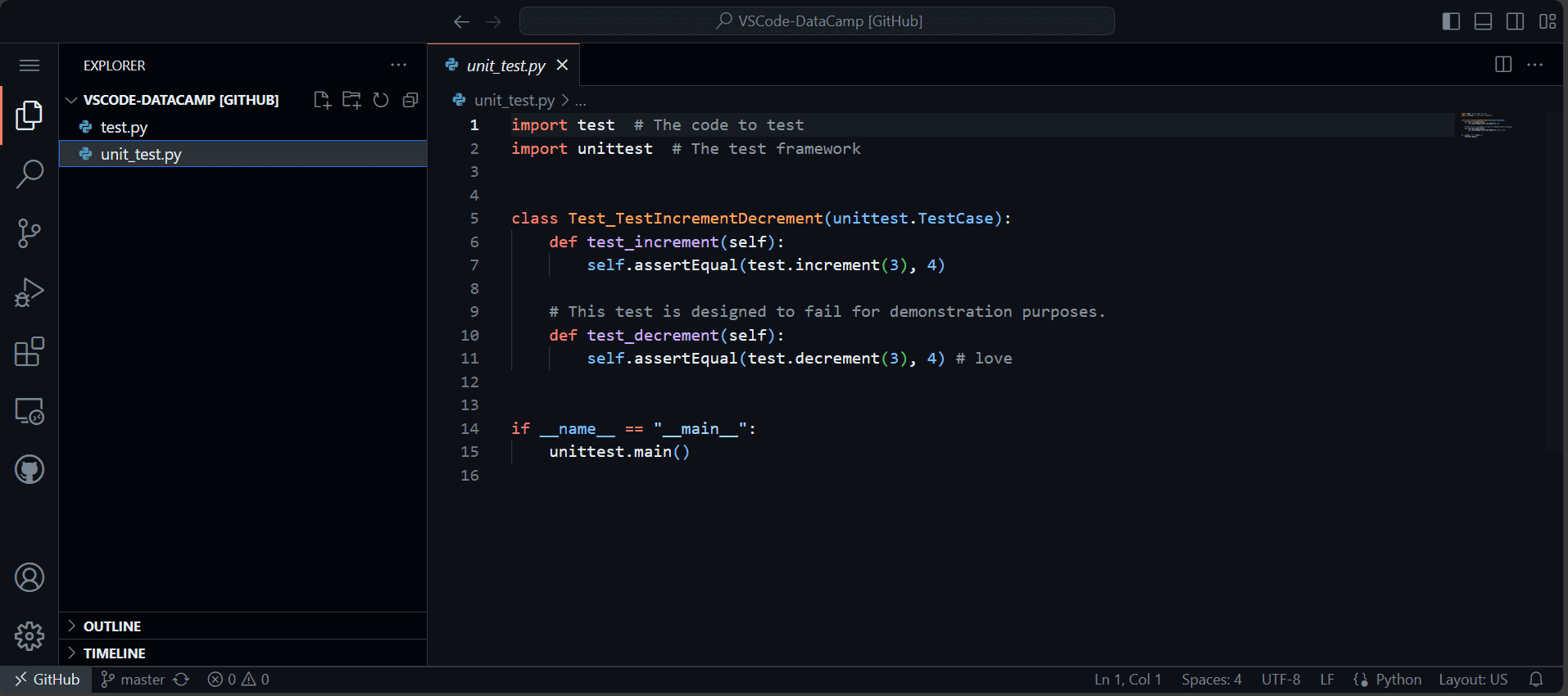
Do you want to increase your productivity on GitHub? With GitHub Code Spaces, you can now edit and run your code directly in your browser.

To access this feature, simply navigate to your favorite repository, press the period key (".") on your keyboard, and it will redirect you to the VSCode UI.

10 Advanced Git Techniques
Image from Author

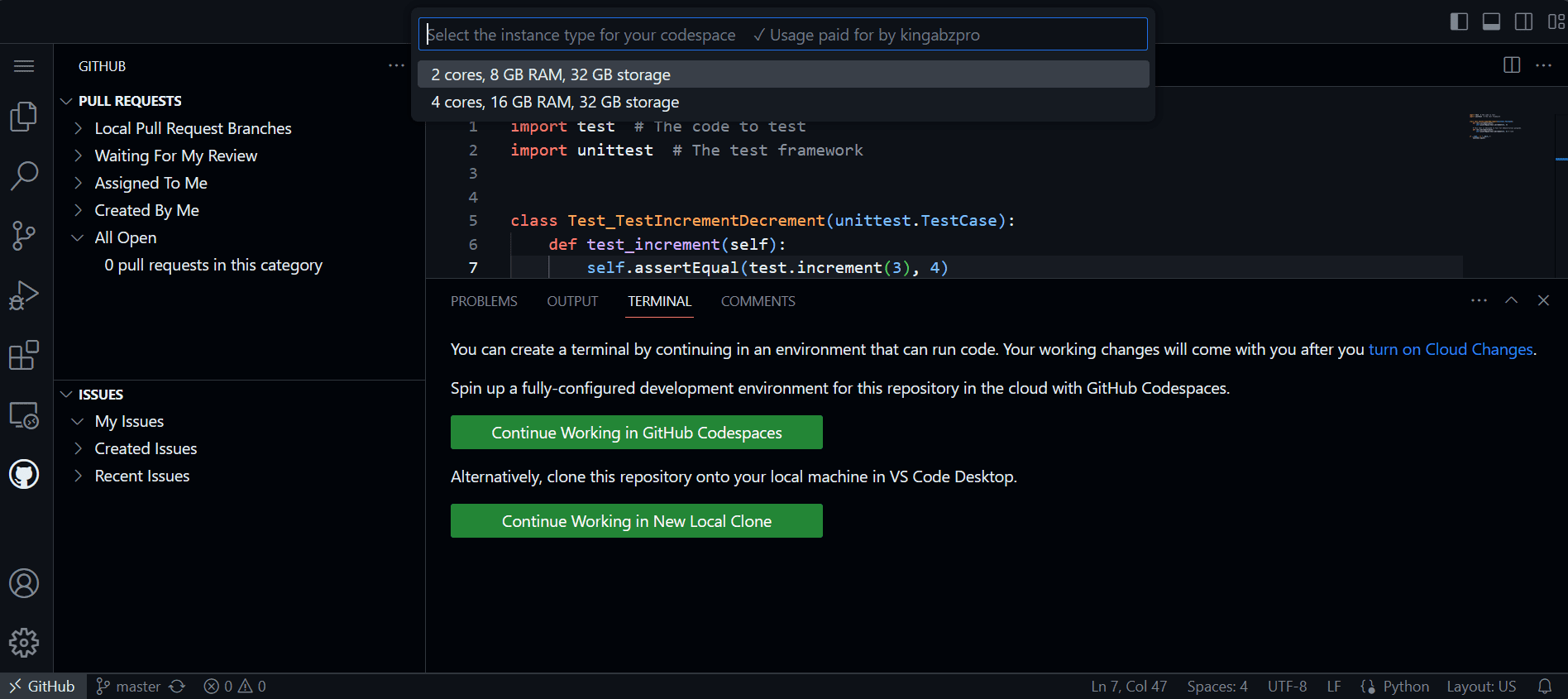
You can make changes to the code and push them to your remote repository. However, if you want to run the code in the terminal, you need to run the Codespace in the cloud. The free version offers an excellent option for running your Python code in your browser. Isn't that awesome? I just found out about it today.

10 Advanced Git Techniques
Image from Author 6. Stash

When working on a project, you can add files to a staging area and then commit them to save your current progress. However, there is another way to save your work easily using the `stash` command. When you use `stash`, you save your current progress without adding it to the staging area or committing it. This allows you to save your progress and restore it whenever you need to.

We will save our current progress by providing a name and stashing it.

$ git stash save new-idea
Saved working directory and index state On master: new-idea

You can view your stash list and note the corresponding index to retrieve it.

$ git stash list
stash@{0}: On master: new-idea

Our stash of "new ideas" is saved at index 0. To retrieve it, use this command:

$ git stash apply 0
On branch master  Your branch is up to date with 'origin/master'.

7. Rename Branch

You have the option to rename your default branch name to something more appropriate. In this case, we will rename "master" to "main".

$ git branch -M main

10 Advanced Git Techniques

You can verify the changes using the following command:

$ git status
On branch main  Your branch is up to date with 'origin/master'.

8. Decorate the Logs

If you want to view a detailed history of all the commits made in the current repository, you can use the `git log` command. However, the output can be difficult to read. To make it more readable, you can use the `graph`, `decorate`, and `oneline` flags. This will display the changes made in multiple branches and how they merge.

$ git log --graph --decorate --oneline

10 Advanced Git Techniques 9. Switch Back Branch

On several occasions, I have switched to a new branch and forgotten the name of the previous branch. Consequently, I had to use the `git branch -a` command to view the list of branch names. However, there is a simpler way to return to the original branch by using the dash “-” after the `git checkout` command.

We will first create the new Git branch “neo”.

$ git branch neo

We will switch to the “neo” branch.

$ git checkout neo
Switched to branch 'neo'

To go back to the original branch, we will use the following command:

$ git checkout -
Switched to branch 'main'

10. Copy Remote Changes

We have learned about overriding the remote repository. Let's learn how to override the local repository using the remote repository.

We will use the `fetch` command to get the latest changes from the remote repository.

$ git fetch origin

Then, we will use the 'reset' command with the 'hard' flag to override any local changes with the remote version. Please note that this will permanently discard any local changes.

$ git reset --hard origin/master
HEAD is now at f425059 Love

If there are still untracked files, they can be removed using the following command:

$ git clean -df

Conclusion

I was inspired to write this article after watching a YouTube video by Fireship. I admire the creator for his ability to explain complex topics in a simple way. By following his method, I have learned a lot about Git features.

In this article, we have covered advanced Git techniques that are crucial for data scientists and software engineers who are working on a collaborative data project. Knowing these techniques can help you avoid accidents and resolve issues much faster.

I hope you found this blog useful. Please let me know if you would like to read more posts with byte-sized information about commonly used tools in the data science world.

Abid Ali Awan (@1abidaliawan) is a certified data scientist professional who loves building machine learning models. Currently, he is focusing on content creation and writing technical blogs on machine learning and data science technologies. Abid holds a Master's degree in Technology Management and a bachelor's degree in Telecommunication Engineering. His vision is to build an AI product using a graph neural network for students struggling with mental illness.

More On This Topic

  • Advanced Feature Selection Techniques for Machine Learning Models
  • 8 Must-Have Git Commands for Data Scientists
  • 14 Essential Git Commands for Data Scientists
  • KDnuggets News, October 5: Top Free Git GUI Clients for Beginners •…
  • Git for Data Science Cheatsheet
  • Top Free Git GUI Clients for Beginners

Indian States Vie with Each Other to Win Semicon Deal

Electronics manufacturing company Kaynes Technology was set to invest INR3,750 crore to build an outsourced assembly and testing (OSAT) facility in Mysuru, Karnataka, creating 3,200 jobs. However, within a few months, Kaynes shifted location to Telangana and will build the OSAT facility at a relatively lower cost of INR 2800 crore.

The Karnataka government was bombarded with criticism for letting Kaynes slip away from its hands to a neighbouring state. At the same time, the Telangana government was praised for convincing the homegrown electronics manufacturers to shift base.

This incident underscores the fact that Indian states are currently engaged in a competition to draw leading semiconductor companies to their respective regions. Setting up a fabrication unit brings numerous economic benefits — it can spur local employment opportunities and bring economic growth for the region. It also leads to enhanced export potential and the stimulation of allied industries, contributing to overall economic development.

State governments are enticing semiconductor companies with propositions like providing electricity and water, two important resources to run a fabrication unit, at subsidised rates. Numerous states are even offering additional incentives on top of those already declared by the central government.

States like Gujarat, Karnataka, Tamil Nadu, Odisha, and Assam have come up with their semiconductor policies. For instance, in July 2023, the state government of Gujarat unveiled a dedicated policy which includes incentives and subsidies to encourage semiconductor production within the state.

Gujarat is building a Semiconductor city

Gujarat is in the process of creating a ‘Semicon city’ in Dholera. Encompassing approximately 10,000 acres within the Dholera Special Investment Region (SIR), the development of the Dholera Smart City is anticipated to play a pivotal role in positioning Gujarat as a national hub for semiconductor industries.

The government is trying to attract not just fabrication companies, but also display fabrication units, silicon photonics, and semiconductor assembly, testing and packaging facilities to the state.

Bhupendrabhai Patel’s government also plans a 75% subsidy on the purchase of the first 200 acre land and an additional 50% capital subsidy to companies deciding to set up camp in the state as per the Gujarat Semiconductor Policy 2022-27.

The semiconductor projects will be supplied water at Rs. 12 per cubic metre for the initial five years, with a subsequent annual increment of 10% for the following five years. Moreover, the production unit qualifies for a Rs. 2 per unit power tariff subsidy for the initial ten years. Additionally, it will be exempted from paying electricity duty under the provisions of the Gujarat Electricity Duty Act, 1958.

So far, US-based semiconductor company Micron Technology has announced its plan to set up an outsourced semiconductor assembly and testing (OSAT) plant at Sanand in Gujarat. However, Gujarat is not the only state competing to attract semiconductor companies.

Moreover, at the 10th Vibrant Gujarat Global Summit, Tata Sons Chairman N Chandrasekaran revealed that Tata Group will build a semiconductor factory at Dholera.

Karnataka banking on the existing semiconductor R&D hub

Giving tough competition to Gujarat, Karnataka too, has identified 4 semiconductor clusters within the state. Interestingly, Karnataka was the first state to draft a semiconductor policy in 2010. In 2017, the state launched the Karnataka Electronics System Design & Manufacturing (EDSM)Policy 2017-2022.

State IT minister Priyank Kharge has revealed that his government is already talking to a few companies. Moreover, the minister even said that his government is even willing to tweak incentive and labour policies to attract major players along with their supply chains.

Karnataka would also bank upon the fact that many semiconductor companies already have their Research and Development (R&D) units in the state. Last year, AMD, an American multinational semiconductor company based in Santa Clara, California, announced its largest design centre in Bengaluru.

Other companies such as Analog Devices, NXP Semiconductors, NVIDIA and Intel, among others have established their R&D centre in Karnataka. Interestingly, Texas Instruments has had a presence in Bengaluru since 1985.

“We already have a fabless ecosystem and are slowly metamorphosing into a fab ecosystem. A lot of people are talking to us. Earlier, the talks were more speculative, and now there is a sense of urgency,” Kharge said in an interview.

Previously, ISMC, a joint venture between Abu Dhabi-based Next Orbit Ventures and Israel’s Tower Semiconductor, proposed a 65-nanometer analog semiconductor fabrication unit in Mysuru’s Kochanahalli Industrial area.

Now, reports suggest Krypton Solutions could invest INR 832 crore (USD 100 million) to set up a Printed Circuit Board (PCB) fabrication unit in Karnataka. Foxconn, along with Telangana and Tamil Nadu, are also considering the state to set up an OSAT unit in partnership with HCL.

Other states are catching up

Other states in Southern India, such as Tamil Nadu and Telangana, are also trying to lure semiconductor companies. At the Global Investors Meet (GIM), the Tamil Nadu government unveiled its ‘Semiconductor and Advanced Electronics Policy 2024’.

With the policy, the TN government aims to foster a semiconductor design ecosystem by offering incentives and financial support and promoting collaboration between the industry and academia. Companies selected under the India Semiconductor Mission (ISM) will receive an additional 50% financial incentive from the TN government.

Moreover, the youngest Indian state, Telangana, is also trying to attract semiconductor companies. Kaynes Technology has already started work on its OSAT facility in Kongara Kalan near Hyderabad.

Other states like Maharashtra, Odisha and Assam are also trying to woo semiconductor companies. The Eknath Shinde-led Shiv Sena-BJP government in Maharashtra offered INR 39,000 crore incentives to Vedanta-Foxconn JV, which chose Gujarat, before disbanding.

Assam, which has tabled a semiconductor policy, has managed to attract the Tata Group to set up an INR 40,000 crore semiconductor processing plant.

In Odisha, RIR Power Electronics Ltd, a global semiconductor company, plans to invest INR 510 crore to set up a fabrication and packaging facility for SiC devices at Info Valley, Khurda.

The post Indian States Vie with Each Other to Win Semicon Deal appeared first on Analytics India Magazine.

Google to Likely Kill ChatGPT Soon

Google Chrome News

Recently, Google integrated generative AI features into Google Chrome. In the upcoming Chrome release next month, a new experimental AI-powered feature will enhance your writing confidence on the web.

Google is also introducing the “Help me Write” feature across all websites. By right-clicking on any text box, users can access the feature, prompting Google’s AI to inquire about their writing requirements and subsequently generate an initial draft.

Whether you are crafting a well-articulated restaurant review, creating a friendly RSVP for an event, or making a formal inquiry about renting an apartment, this feature is designed to assist you.

If this feature is integrated into Google Chrome, it would significantly reduce the need for users to draft content on ChatGPT. Many of us work directly on the web, whether it’s sending emails, or drafting an article, or creating presentations.

“Google Chrome’s new generative AI features make it easier to get things done on the web: keep your tabs organized, get help when you’re writing something online, and customise your Chrome background with AI-based prompts,” said Sundar Pichai.

This move by Google is a strategic one, considering search is Google’s forte, and Chrome Is currently used by 3.22 billion internet users as compared to 100 million ChatGPT users. Google further said that it will be bringing AI and ML into Chrome this year, including integrating new AI model Gemini, to help users browse even easier and faster.

Recently Microsoft chief Satya Nadella testified that Google’s power in online search was so ubiquitous that even his company found it difficult to compete on the internet. The internet is really the “Google web,” said Nadella.

A user on X wrote, “Congrats on the launch! This brings some parity for Chrome with Bing that launched this a year ago.” Another user wrote, “It’s amazing to think about all the possibilities that could come from having AI assist us in our everyday online activities. Can’t wait to see how these features evolve in the future!”

Moreover, we have all faced the issue of opening multiple tabs in Chrome while surfing the internet. Worry not, Google might have solved that as well. With Tab Organizer, Chrome will automatically suggest and create tab groups based on your open tabs. This can be particularly helpful if you’re working on several tasks in Chrome simultaneously, such as planning a trip, researching a topic, and shopping.

To use this feature, right-click on a tab and select “Organize Similar Tabs” or click the drop-down arrow to the left of your tabs. Chrome will even suggest names and emoji for these new groups so you can easily find them again when you need them next.

The Chrome theme store is receiving an AI enhancement. Users will have the ability to select an image, a style, a color, and other preferences, and Chrome will autonomously create a browser theme to align with the chosen elements. To get started, visit the “Customize Chrome” side panel, click “Change theme” and then “Create with AI.”

Google is Two Steps Ahead of OpenAI

Apart from the text generation, Google is racing ahead in terms of multimodality as well. Google recently introduced Lumiere, a text-to-video diffusion model designed to synthesise videos, creating realistic, diverse, and coherent motion.

Unlike existing models, Lumiere generates entire videos in a single, consistent pass, thanks to its cutting-edge Space-Time U-Net architecture.

It is designed to empower users to create visual content creatively, allowing the generation of realistic or surrealistic video clips up to five seconds in length.

As of today, OpenAI does not have a publicly available video generation model on their API. However, they are actively researching and developing technology in this area, and there are hints that something might be in the works with the release of GPT-5.

In 2024, several companies, including Google, Anthropic, Mistral, and Meta are poised to match the capabilities of GPT-4. OpenAI is only as good as its next model.

The post Google to Likely Kill ChatGPT Soon appeared first on Analytics India Magazine.

Former NVIDIA Exec-led RagaAI Aims to Fix Failing AI Models

Years ago in San Francisco, Gaurav Agarwal escaped a near-death experience while driving a semi-autonomous vehicle. At the last moment, Agarwal had to intervene to override the system, as the car failed to apply brakes at a crucial juncture. This incident got him thinking about how such failures can be avoided. He found that it is extremely difficult to detect, diagnose, and fix these failures. These efforts eventually led to him building RagaAI.

Coming out of stealth mode with a $4.7million funding, is the AI-focused startup RagaAI. Building the world’s first automated platform for detecting AI issues, diagnosing and fixing them, RagaAI looks to remove human interventions for continuous improvements.

“At RagaAI, we are addressing one of the most important problem statements of the AI industry, which is AI failures,” said Gaurav Agarwal, founder and CEO of RagaAI, in an exclusive interaction with AIM. “If AI from the leading companies of the world, OpenAI’s of the world, are failing, then you can think about the thousands of companies that are building and deploying AI.”

The Need For Fix

Over the years, Agarwal has witnessed the struggles of teams building AI. “As a data scientist, one wants to spend a lot of time building AI, rather than testing, which comes as an afterthought. And, this becomes a big issue,” said Agarwal.

“We have been working heads down to build the core technology which is a foundation model that we call RagaAI DNA. We have tested the technology and have proven the technology with our customers, and now we believe it’s time for us to start scaling,” said Agarwal. “I believe that Gen AI and AI is magical, and the impact it has on our lives and society is profound, but the failures are also very detrimental.”

AI Failures Are Imminent

Broadly categorised into three buckets, the kind of failures occur at data level, AI model/architecture level, and the operational and environmental conditions level. “For example, when we train AI on large GPUs, we usually end up deploying it on a different GPU. So, the environment has changed, which can lead to performance, accuracy, latency and cost change,” said Agarwal.

‘RagaAI’ simply translates to ‘tuning of AI,’ referencing the company’s mission of finding and fixing errors in AI models. The platform is built on their foundational model RagaAI DNA, where over 300 tests are built in order to look at all types of AI failures.

RagaAI Flow Diagram. Source: RagaAI

Robust Model For All

Speaking about the evolution of AI, Agarwal highlighted the adoption of AI models over the years. “If you go back to 20 years ago, it was regression models or simplistic statistical models. 10 years ago, it was deep learning models which became very important in 2015, and now in the past two to three years, it’s been generative models,” he said.

RagaAI is built on top of open-source and proprietary models. “We have basically done a lot of fine tuning and customization on top of that,” said Agarwal.

Interestingly, the platform supports testing for all kinds of models. Agarwal explains the types that can be broadly bucketed into four categories: large language models used in chatbots, image/video in computer vision models where customers in video surveillance, retail, aerospace, and others use it, structure of tabular data where customers in finance, insurance are benefited, and NLP speech/audio where call centres use for monitoring sales calls of customers.

“Obviously, you have to do customisation for different domains, but we are one platform which caters to all different elements,” said Agarwal.

RagaAI has customers from Fortune 200 and Fortune 500 companies from US, Europe and India. He also confirmed that their customers have witnessed over a 90% reduction of failures with RagaAI. The company has strategic partnerships with tech giants Nvidia, Qualcomm, and AWS.

With respect to the competitive landscape, there are other platforms that are building on similar lines, however, not to the extensive limit to RagaAI’s testing modules. “We have seen other companies offering some of this, but they provide up to 10% of what we are offering, maybe 20 or 30 tests. We offer 300+ tests, and also address different kinds of modalities.”

Powerful Team Expertise

Agarwal, who comes with a vast experience in the field of AI for over 20 years, has built a robust team at RagaAI. Having worked with Texas Instruments on the business and product team, followed by heading autonomous mobility segments at NVIDIA and Ola, Agarwal believes that his interactions with customers and third-party users has brought a lot of experience

said that it has built a lot of personal experience, which “has been a real motivator for me to start RagaAI.”

The company has large teams in the US and India. There are around 40 people here with a leadership team comprising five members. They come with experience from big tech companies such as Amazon, and premier graduate schools including Harvard, IIT and IIM. The company is looking to hire in Europe as well.

The post Former NVIDIA Exec-led RagaAI Aims to Fix Failing AI Models appeared first on Analytics India Magazine.

DXwand raises $4M to scale its conversational AI platform for enterprises in MENA

DXwand raises $4M to scale its conversational AI platform for enterprises in MENA Tage Kene-Okafor 8 hours

DXwand, a Cairo- and Dubai-based startup that leverages conversational AI to help businesses in the Middle East automate customer service and employee assistance, has raised $4 million in a Series A round.

UAE-based Shorooq Partners and Cairo-headquartered firm Algebra Ventures led the investment, with existing investor Dubai Future District Fund also participating. The Series A investment will assist DXwand in expanding further in the MENA region and accelerate its research and development efforts in generative AI, knowledge mining, and omnichannel conversational AI within the region.

Before founding DXwand, CEO Ahmed Mahmoud was employed at Microsoft, where he led their data and artificial intelligence enterprise sales in the Gulf region and the Middle East. His professional journey began with an engineering background and working on software and AI technology within development teams. Transitioning to the industry’s business side, Mahmoud worked at Vodafone and then Microsoft; in these roles, he engaged with clients to explore ways AI could enhance productivity and overall user experience.

At Microsoft, he identified something obvious: Conversational AI and broader AI technologies were not fully matured and developed in the Middle East, as solutions from Silicon Valley didn’t cater to Arabic or other languages in the region. “At that time, I tried to validate if we could build AI models for spoken dialects in the region, but we encountered some challenges. The realization of a business opportunity prompted me to resign from Microsoft and establish DXwand to address this gap.”

After going through an accelerator in 2018, Mahmoud launched DXwand to provide small businesses with a customer-centric chatbot tailored for sales over social media platforms. The firm initially secured seed funding of $150,000 from angels in Qatar and Egypt. However, the team soon realized it needed to switch business models to find product-market fit and become profitable.

“Our primary focus was building an AI solution that works for Arabic dialects, which are very complex and sophisticated — even Egypt had more than seven or eight spoken dialects. And that helped us to work well in this region, for the areas we support,” the Microsoft alum said in the interview. “Yet, this value by itself gets more sophistication wherever we go to more clients because those businesses require not just to have something to understand the language, but they also wanted something easier to onboard, and at that time, the natural language understanding solutions required a lot of efforts in labeling the data and working on labeling such data is a huge set of time and efforts that required businesses for us to do.”

Generative AI isn’t a home run in the enterprise

In 2021, the Egypt-born AI startup embarked on a pivot, targeting corporates and enterprises instead of small businesses as it directed its efforts toward knowledge mining and retrieval augmented generation (RAG) domains. Back then, the buzz around large language models hadn’t yet taken off as they have now — and DXwand aimed to create a knowledge graph that eliminated the need for customers to label data manually. This approach allows it to pre-label data, facilitating faster onboarding of more clients and supporting sophisticated use cases, ultimately aiding enterprises in adoption.

Consider a scenario where an enterprise deals with a vast repository of policies and data, enough to fill a room with PDFs. The challenge arises when they aim to automate customer service or sales over their digital channels — a task that typically involves manually labeling all that data. Realistically, achieving this is no easy feat; many might find it impractical. This is where knowledge mining comes into play. With this capability, such enterprises can input their raw data — and DXwand’s system takes care of the labeling by creating a pre-labeled set and streamlining their processes to implement conversational experiences for their customers or staff without the painstaking task of manual data labeling.

In a nutshell, DXwand’s AI-powered software automates text and voice conversations between businesses, their customers, employees, and citizen-facing government services. This functionality spans various platforms, including call centers, Facebook Messenger, WhatsApp, SMS, and websites. The platform claims to comprehend slang in both Arabic and English, extracting valuable insights from conversations and presenting them on dashboards for businesses to make informed decisions. According to the startup, it provides analytical tools and dashboards that offer insights into these conversations and transform them into leads and sales, enhancing customer retention and acquisition.

To scale this model in the Middle East and Gulf regions, the startup took in additional investments between 2021 and 2022: $1.3 million in seed extension from SOSV and other investors and $1 million pre-Series A from the Dubai Future District Fund. This period coincided with the surge in interest and maturity of large language models. As these technologies became more robust, DXwand AI seized the opportunity to expand its offerings and cater to the rising demand for such solutions among its clients.

We used those funds to support and accelerate our investments in knowledge mining, getting and leveraging specific solutions for specifically Arabic and other dialects. But also building on top of that knowledge mining to make it work for any language and expand the company into other areas like in Africa and Europe,” Mahmoud, who runs the startup alongside co-founder Mahmoud Gomaa, remarked. “Today, we have some clients from Africa. So we started to leverage that because it’s language agnostic, helps clients to onboard easily and solve their problems.”

Building a viable pricing model for generative AI features could be challenging

The chief executive highlighted that the chatbot platform caters to over 40 clients across the MENA region, spanning diverse sectors such as healthcare, e-commerce, fintech, telecom, government, and legal. Since its inception, the AI startup has facilitated over 5 million conversations and currently stands as a profitable entity, Mahmoud added. Depending on usage volumes, clients are charged yearly subscriptions between $50,000 and $400,000. Furthermore, Mahmoud revealed that the company recorded over $5 million in annual recurring revenues in 2023, representing a 2x year-over-year growth and underscoring the platform’s increasing significance and adoption in a market where AI platforms are few and far between.

DXwand’s subsequent plans include expanding across Africa and Saudi Arabia, Mahmoud shares on the call, adding that both regions hold particular importance in the startup’s strategy. He also notes that accelerating research efforts, specifically in knowledge mining and retrieval augmented generation, and forming alliances with technology providers like telecom operators to establish meaningful partnerships within the communities it serves remain top of mind, too.

Open Source Developers are Monkeys with Typewriters

Open Source Developers are Monkeys with Typewriters

The open source small language models are increasingly competing with their larger counterparts. The likes of 7-13 billion parameter models such as Meta’s LLaMA, Microsoft’s Phi-2, and Mistral are giving tough competition to OpenAI’s GPT-4 or Google’s Gemini.

Recently, Maxime Labonne, a researcher and open source enthusiast, released Phixtral, which combines the competence of Mistral’s Mixture of Experts model and Microsoft’s Phi-2.

AIM got in touch with Labonne, the creator of Phixtral and NeuralBeagle, to understand his views on the AI landscape, the importance of open source, and smaller language models being on par with larger closed ones.

“In the long run, open source is [going to be] too powerful and there are way too many people who want to experiment with it right now,” Labonne said. He believes that eventually open source models will overtake the closed ones. “It is like there are monkeys with a typewriter – one of them will create a masterpiece at some point,” he quipped about open source developers, who are not bound by companies and academic institutions.

Sometimes, the dumbest ideas work

Apart from being an open source contributor, Labonne also works at JPMorgan as a machine learning scientist, and is also an avid gamer. Calling himself ‘GPU poor’, Labonne currently juggles between using his computer to play Vampire Survivors and experimenting with open source language models.

Running experiments on his laptop, Labonne said that he is a huge fan of 7 billion parameter models. “I think it’s a sweet spot with a balance between the requirement of compute and the knowledge,” he added that larger models are obviously going to be good at reasoning, but distilling information through quantisation from large models into smaller models is something that he bets on.

“Currently, all the benchmarks that we have are bad,” laughed Labonne, highlighting that the two ways of benchmarking, one being automated and the other manual ones such as MMLU and HumanEVAL, are both problematic as they can be easily altered by fine-tuning on testing dataset.

Even then, he said that it is the best way that we have currently. “If you go to the leaderboard that I have created and pick the top model, it actually performs better than the rest,” Labonne said. He has built LLM-autoeval, a Google Colab where developers can just specify the name of the model, select a GPU, and run the tests.

Apart from this, Labonne has also created an LLM course with roadmaps and divided it into three parts – LLM fundamentals for beginners, LLM scientist for building LLMs, and LLM Engineer for building applications and deploying them. “A lot of people have been asking me from different backgrounds about how to get into LLMs, so I created this course for people from every background,” he added.

Currently, Labonne is working on creating his own benchmark and also a very passionate project called ‘Chess LLM’, where developers can create their own test dataset, train very small language models, and make them compete in an arena. “They are very bad at playing chess right now, and it is very funny to see the leaderboard.”

The best open source model and AGI

There is a group of people in the AI realm – who occasionally identify themselves as so-called AI ethicists – that are concerned with generative AI taking over the internet, and eventually leading to models collapsing when being trained on synthetic data generated by AI models. “I think it’s just the opposite,” Labonned replied, saying that synthetic data is actually proving to be a lot more effective than initially thought.

“Now we have solid evidence to prove that synthetic data is of really high quality and it can’t ruin the internet,” Labonne gave examples of models such as Orca, that is trained on GPT-4 data and actually performs a lot better than others.

Labonne has been experimenting with a lot of open source models such as Mistral, LLaMA, Phi-2, Falcon, and models from China such as DeepSeek. According to him, Falcon was great when it came out and was on top of the charts, but now models such as Mistal and Llama 2 are outperforming everyone.

“Phi-2 is great, but I think Mistral’s models are the best right now,” he said, and added that Chinese models are not suitable for English use cases at all.

Labonne says that OpenAI’s strategy of going closed door since GPT-3 is good for the company, but Meta’s open source approach is something that makes him really happy. “I am not very interested in the AGI conversation, I don’t even see how it’s possible right now,” he laughed and wished the companies striving for it, the best of luck.

“We will talk about AGI after 10 years,” he concluded, adding the LLMs are one of the most powerful tools, but we need something stronger to achieve that, and it is not cost effective to keep training bigger models such as GPT-5, as we have reached almost a saturation point.

The post Open Source Developers are Monkeys with Typewriters appeared first on Analytics India Magazine.

GPT-Newspaper to Kill Traditional Publishing Houses

Tavily, in partnership with LangChain, has introduced GPT-Newspaper. This project combines six agents to autonomously build a newspaper, handling everything from content creation to outlining and designing.

GPT Newspaper project is an innovative autonomous agent designed to create personalised newspapers tailored to user preferences. It revolutionises the way we consume news by leveraging the power of AI to curate, write, design, and edit content based on individual tastes and interests.

📰GPT-Newspaper
This project combines six agents to autonomously build a newspaper – content, outline, everything!
By the same team (@tavilyai) that created GPT-Researcher
Code: https://t.co/5OQDcaFwdN pic.twitter.com/NqLaGR7rDO

— Harrison Chase (@hwchase17) January 24, 2024

The system’s workflow begins with users inputting their interests and preferred news sources. The Search and Curator Agents then collaborate to scour the web for relevant news stories, subsequently filtered based on user-defined preferences. The Writer Agent takes charge of crafting articles, which are seamlessly formatted by the Designer Agent for a visually appealing layout.

Ensuring reliability in news reporting, the Critique and Editor Agents work in tandem to review and finalise content before delivery. The entire process is streamlined through a user-friendly interface, allowing individuals to set their preferences effortlessly and receive their personalised newspaper directly to their mailboxes.

Key features of GPT Newspaper include personalised content, aggregation from diverse reputable sources, engaging design for an enhanced reading experience, rigorous quality assurance through editing, and a user-friendly interface for seamless interaction.

This innovative solution simplifies the news consumption experience, providing an automated and customisable approach to content delivery.

The post GPT-Newspaper to Kill Traditional Publishing Houses appeared first on Analytics India Magazine.