[Exclusive] Mindgrove Technologies’ Shashwath TR on Making India’s Most Secure Chip

The Indian IT Minister Rajeev Chandrashekhar recently lauded Mindgrove Technologies for building globally competitive next gen devices/products, and its contribution to India’s ever evolving semiconductor landscape.

“It’s really encouraging coming from someone who actually understands the industry and follows us very closely,” said CEO and founder of Mindgrove Technologies, Shashwath TR, in an exclusive interaction with AIM. He also shared his recent conversation with Prof V Kamakoti (the brain behind Shakthi microprocessor), and said: “This is the first time in my life I’ve gone to a meeting with a politician and talked about how the processor works.”

Founded in 2021, Mindgrove Technologies is a Chennai based semiconductor company focusing on the design and production of Systems on Chips (SoCs). Mindgrove has used the Shakti core as the foundation for their SoCs. Shakti is an open-source RISC-V processor core developed by the Indian Institute of Technology Madras (IIT-M), and backed by MeitY.

The fabless startup secured $2.32 million in seed funding last year from investors led by Sequoia Capital India (now Peak XV Partners). It told AIM that it looks to raise more funds from the Indian Government and other investors for the upcoming projects. Shashwath said that it plans to raise money in its Series A round for product enhancements and business expansion.

Mindgrove Technologies’ Chips

Shashwath’s company Mindgrove Technologies is currently working on its inaugural chip Secure IoT designed for a range of consumer electronics, such as TVs, washing machines, air conditioners, refrigerators, and other devices. This multi-processor chip comes with security accelerators, true random number generator, and one-time programmable memory.

Mindgrove Technologies said that it has successfully reached the prototype production stage. In the coming months, it looks to launch the prototype.

Secure IoT’s production is based on MPW (Multi-Project Wafer). This enables cost-effective prototyping and low-volume production, reducing the cost of a full prototyping wafer run to 10% or even 5% of the initial price.

“Typically, during production, the entire wafer is dedicated to one chip. But on a multi-project wafer (MPW), you get 100 chips on that wafer,” said Shashwath, saying that the company is currently waiting on the packaging. “The packaging is going to take a little longer. And once that is ready, we can put it on a board and test it,” he added.

Shashwath said that the chip would be ready early next year for shipping. “Q3 and Q4 of 2024 is when we can actually start placing volume orders with the foundry. Then, with roughly three months of lead time, by Q4 of 2024 or Q1 of 2025, we can actually start shipping the chips in large volumes,” explained Shashwath.

He further said this has helped them reduce the cost significantly. “We are 50-60% cheaper at the top end of the market,” said Shaswath, saying that they are a little more expensive at the bottom end of the market, but would be of higher quality when compared to subpar or third-grade chips.

What’s next?

Shashwath said that the next line of products includes Vision SoC and Edge Compute, which will focus on the automotive industry (vehicle infotainment) and edge computing for AI inference, respectively. The Vision SoC is going to be quad-core. “My target is to get a prototype out early next year,” said Shashwath.

“A lot of people in the industry — customers, suppliers, partners, government, all of them — needed to take us seriously. That was probably the biggest challenge that I faced,” he said, noting that many of those who were initially skeptical are now good friends.

“We don’t build chips for the sake of building chips. We are building chips to solve problems” concluded Shashwath.

The post [Exclusive] Mindgrove Technologies’ Shashwath TR on Making India’s Most Secure Chip appeared first on Analytics India Magazine.

Prompt Engineering is Different for Open Source LLMs

Prompt Engineering is Different for Open Source LLMs

A few days back, Meta AI introduced ‘Prompt Engineering with Llama 2,’ a new resource created for the open source community, a repository for best practices for prompt engineering. Even Andrew Ng’s DeepLearning.AI recently released a course on this, called Prompt Engineering for Open Source LLMs. IBM, Amazon, Google, and Microsoft, all have been offering similar courses on prompt engineering for open-source models.

Prompt engineering was one of the most talked about professions in 2023. As companies were adopting OpenAI’s ChatGPT in different ways, they were also hiring people who are experts in prompting the chatbot for getting the correct responses, allegedly paying them huge paychecks.

This also led to the rise of hundreds of prompt engineering courses that everyone wanted to get their hands on. But most of these were for closed source models such as OpenAI’s. Now, as companies are adopting open source LLMs such as Meta’s Llama and Mistral, it is the need of the hour to understand how prompt engineering is different for open source LLMs.

Several corporate entities are developing and testing customer support and code generation applications based on open source technology. These applications are designed to engage with proprietary code unique to the companies, often proving challenging for the general closed-model LLMs created by OpenAI or Anthropic.

“A lot of customers are asking themselves: Wait a second, why am I paying for super large model that knows very little about my business? Couldn’t I just use one of these open-source models, and by the way, maybe use a much smaller, open-source model for that (information retrieval) workflow?” shared Yann LeCun in a post on X.

Prompt engineering for open source?

Sharon Zhou, co-founder and CEO of Lamini, recently conducted a course in partnership with DeepLearning.AI for prompt engineering on open source LLMs. She highlighted how the packaging of an open source model is different from the closed one, which affects the API, in the end, affecting the prompting mechanism.

“LLMs wear pants, which is its prompt setting,” said Zhou, drawing a crazy analogy to how everyday people come to office wearing pants, and how that is the correct decision to wear them, and a change in this affects the whole system.

She said that a lot of people get confused between prompt engineering versus RAG versus fine-tuning. “Prompting is not software engineering, it’s close to Googling,” she added, and also spoke in length about this in her post on X recently. She added that RAG is prompt-engineering, “Do not overcomplicate it,” and prompting is just about retrieving information.

Zhou emphasised the simplicity of prompt engineering, reiterating that prompts are just strings. She compared the process to handling a string in a programming language, making it clear that it’s a fundamental skill that doesn’t require complex frameworks. “Different LLMs & LLM versions mean different prompts,” she added.

However, she acknowledged that many frameworks tend to overcomplicate prompt engineering, potentially leading to suboptimal results. Zhou explained that in practice, it’s essential to tailor your prompts when transitioning between different LLMs. This is similar to when OpenAI undergoes version changes, leading to confusion when previously effective prompts no longer yield the desired results.

The same is the case with open source LLMs. Maintaining transparency in the entire prompt is crucial for optimising the model’s performance. Many frameworks face challenges in this regard, often attempting to abstract or conceal prompt details, creating an illusion of managing processes behind the scenes.

Hits and Misses

When it comes to enterprise adoption, Matt Baker, the SVP of AI strategy at Dell, the company which partnered with Meta for bringing open source Llama 2 to enterprise use cases, said that large models are of no use for companies unless they are made for specific use cases. This is where smaller, specialised, and fine-tuned models come into the picture, giving birth to RAG and prompt engineering.

Though the reality is that most of the companies would be using open and closed source LLMs for different use cases, the majority of information retrieval is now dependent on APIs and open source models, fine-tuned with their data, which is why companies need to adapt to learn how to prompt models precisely and give accurate information. Or to put it in Zhou’s words, always put the right pants on!

The post Prompt Engineering is Different for Open Source LLMs appeared first on Analytics India Magazine.

Better LLMs with Shorter Embeddings: Part 3

This is my third article related to LLM and GPT-like apps. See the first one, “Why and How I Created my Own LLM from Scratch”, here. The second one listed 7 main ingredients for faster and better results. Among them:

  • customized embeddings: one per top category,
  • creating a high-quality taxonomy,
  • parameter self-tuning based on user favorites, and
  • offering two prompts to the user: one for the query, one to select a top category.

For details, see here.

In this article, I discuss some secret sauce to further reduce the size of the token database by several orders of magnitude. This makes scalability a lot easier and much less costly. Finally, a key to success is fast search, for instance ANN vector search. Here, ANN stands for approximate nearest neighbors. I explain how to adapt fast search to my slightly unusual architecture.

Variable Length Embeddings (VLE)

For years, I did not know that I was doing things differently. Only recently did I realize, after looking at some architectures, that most use fixed-length embeddings. In particular, embeddings may have hundreds of tokens. Of course, fixed length has benefits, such as amenable to fast vector search for information retrieval. And big companies have access to large bandwidth, so it is not a problem. Indeed, they can brag about billions of parameters or tokens, when millions are more than enough. For the client, it is costlier.

Using separate embedding tables for each top category means much shorter, specialized embeddings with more relevant tokens. But the big gain is with variable-length embeddings. It does not make sense to keep all the tokens when only 20 are really related to a specific keyword withing a specific category. In the end, my embeddings may content anywhere between 5 tokens (for highly specialized keywords), to 100+ for general words.

Interestingly, I found a paper on the topic, entitled “Variable Length Embeddings”, published in 2023 by computer scientists at Berkeley. It is available here. To conclude this section, there is more to my secret sauce: the probabilities or values attached to each token in each embedding are not probabilities. Rather, they are based on token and keyword cross-correlations, using pointwise mutual information (PMI). It makes comparison easier across multiple top categories, since each one has its own embedding table.

Adapting Fast Search to VLE

There are several algorithms to perform quick, fuzzy search (with no exact match): see the article “Comprehensive Guide to Approximate Nearest Neighbors Algorithms”, here. The goal is to find the nearest neighbors to the user-generated prompt (its segments or n-grams) in your embedding database. It is not really a problem in my current architecture for two reasons. First, each top category has its own table, much smaller than a big generic table. Then, I do not really compare embeddings in the classical sense, at least for now. Thus, retrieval is lightning fast.

However, besides exploring solutions available in the literature if not as Python libraries, I started doing my own research. One possibility is to use my radix search, a version of interpolated binary search. It is based on encodings, long integers, and the radix numeration system. I describe it here, in the context of GenAI model evaluation. It may require some preprocessing, such as features ordered by importance. Another solution is a probabilistic search that I use in my NoGAN technology, similar to an fast approximation of the Hungarian algorithm, see here.

Another Example

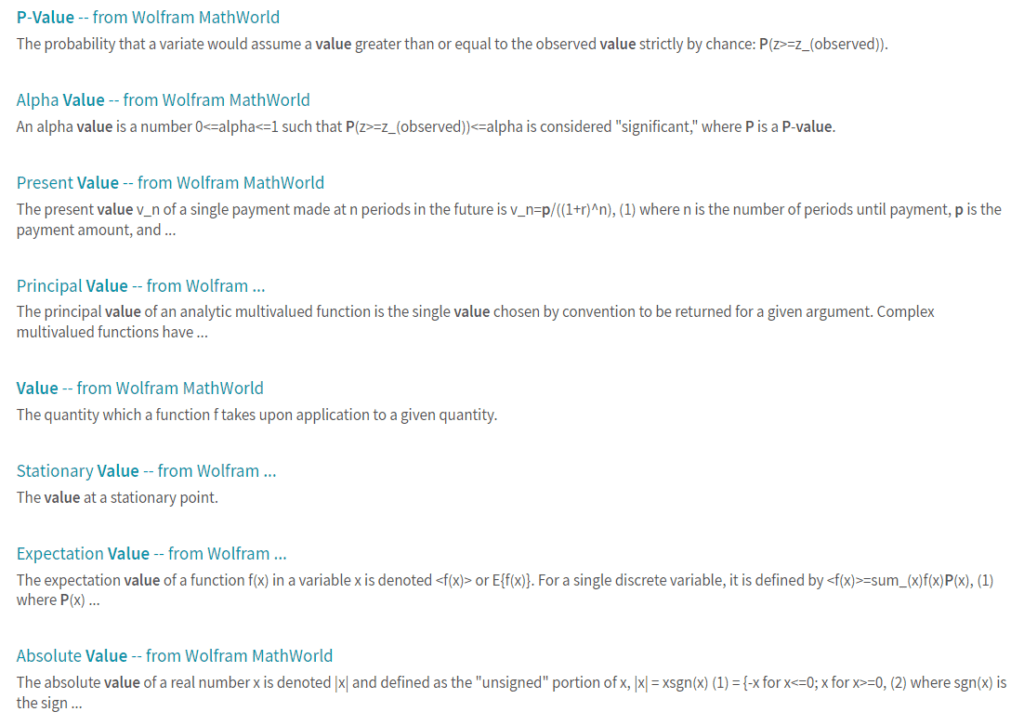
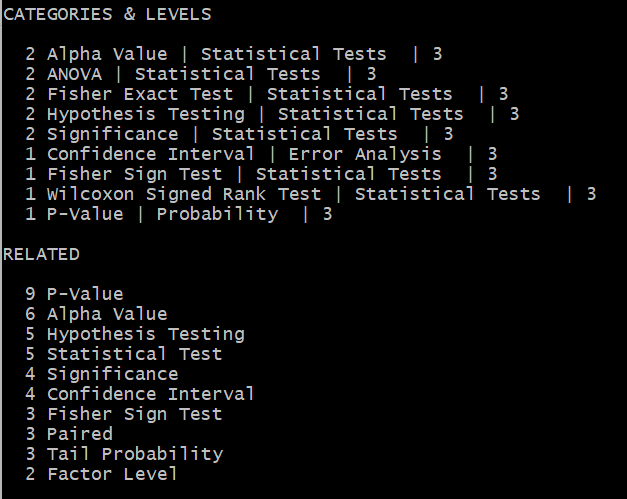
I shared an example in my previous article, here, to illustrate the superiority of my method, over OpenAI GPT, Bard, and other alternatives. Here, I compare the results for the keyword “p-value”: my algorithm versus the Wolfram search box. It is surprising that my results, based on crawling Wolfram, are much superior to Wolfram internal search! Likewise, Google and GPT return basic results of no value when you are an expert looking for serious references.

Better LLMs with Shorter Embeddings: Part 3
Results for “p-value”, using Wolfram internal search (above picture).
pval-xllm5
Result for “p-value”, using my app based on crawling Wolfram.

Author

Towards Better GenAI: 5 Major Issues, and How to Fix Them

Vincent Granville is a pioneering GenAI scientist and machine learning expert, co-founder of Data Science Central (acquired by a publicly traded company in 2020), Chief AI Scientist at MLTechniques.com and GenAItechLab.com, former VC-funded executive, author and patent owner — one related to LLM. Vincent’s past corporate experience includes Visa, Wells Fargo, eBay, NBC, Microsoft, and CNET. Follow Vincent on LinkedIn.

Corporate Data Governance and Organisational Success: Evolution and Challenges

Corporate Data Governance and Organisational Success: Evolution and Challenges

For decades, “governance” has been recognised as one of the most critical themes in organisations. From a corporate governance perspective, assets that need to be protected are physical, intellectual property, financial assets, human resources, and reputation.

Data is considered one of the assets that organisations must protect through an excellent corporate governance framework. Organisations need to ensure that procedures and practices are in place to assess, direct, monitor, and protect data and related infrastructure for the value data provides to a corporation and its stakeholders.

Over the years, practitioners and scholars have discussed and developed several theories and practical approaches to protecting shareholder value, resolving management problems, and monitoring costs. Good data governance frameworks should align with corporate governance objectives that maintain and strengthen an organisation’s economic performance and market integrity.

Data governance impacts an organisation’s performance by influencing the data quality used for financial reporting and placing a data control environment as an internal governance mechanism. Along with direction provided to personnel in the form of policy, establishing decision structures, along with accountability, are important aspects of data governance.

In organisations, the board of directors is the central governance mechanism. It is usually entrusted with exercising critical judgement in determining the company’s goals, strategy, setting policies for achieving those goals, as well as monitoring progress.

Similarly, a chief data officer (CDO), who holds an executive position in the company and is an internal director on the board, can maximise the benefits of data, just like a chief information officer (CIO). It is common for organisations with a CDO to formalise the governance of data through the function called data governance. This provides directions for the right decisions to be made.

Compared to the more recent concept of data governance, IT governance evolved from the original idea of corporate governance. Incorrect and non-managed data can cost companies billions of dollars. According to a survey by research firm Gartner, “Organisations believe poor data quality is responsible for an average $15 million per year in losses.”

An IBM survey found that in the US alone, businesses lose $3.1 trillion annually due to poor data quality. These costs include financial losses, productivity losses, missed opportunities, and reputational damage.

Back in time, the need to govern data started in the 1970s as data and information were identified to have economies of scale for organisations. The problem that supports the evolution of data governance doesn’t stop there but can cascade into provisioning for contingencies associated with reputational and regulatory risks.

Moreover, data can broadly impact multiple functions in an organisation, including marketing, pricing, accounting, organisational behaviour, corporate law, ethics, operations, and information technology. As data-related technologies, such as big data and generative AI, become more prevalent, managing data can result in better decisions, reduced costs, and increased customer loyalty.

Therefore, organisations need to ensure that their data is actively managed and governed to protect their business interests.

Data governance frameworks have evolved in practice over the past fifteen years with significant contributions to literature from professional bodies like DAMA, EDM Council and IQ International. Developed in 2007, the basic data framework focuses on defining roles, responsibilities, and accountability, as well as organisational bodies’ policies, standards, and processes.

The further evolution of data governance takes into account specific roles like sponsor, data quality board, business data steward, technical data steward, as well as the assignment of their responsibilities.

Moreover, it’s understood that the organisations operate in different market and internal conditions, and the same framework to manage and govern data cannot be applied to all organisations. This gave rise to the evolution of contingency-based data governance frameworks. The contingency factors are based on value pairs centralised or decentralised and hierarchical or cooperative models.

The next significant standardisation is the definition of decision domains (e.g., principles, data quality, metadata, data access, and data life-cycle). These domains provide the basis for a shared understanding of the data and its usage and are essential for the successful implementation of data governance and data management practices.

Standardisation of these domains allows for improved clarity and consistency when making decisions related to data. The framework has been extended to the principles of data privacy and data sharing. A framework has emerged for dealing with external social factors that influence data governance arrangements.

For extended economic and shareholder benefits, data governance is increasingly aligned with corporate governance, sustainability, and ESG.

A new science of corporate data governance is emerging in organisations today. Here, the focus is on understanding the impact of data governance on corporate performance, corporate governance, and sustainability and on developing approaches to manage data risks and compliance. It also provides guidance on how to improve data governance for competitive advantage. Finally, it helps organisations build trust with their customers, investors, and other stakeholders.

In principle, corporate data governance differs from regular data governance. By corporate governance objectives, data governance frameworks should contribute to market integrity and economic performance. To determine whether the internal data control environment is effective, the corporate data governance framework prioritises value.

For the enterprise and its stakeholders, the framework must enable organisations to assess, direct, monitor, and protect data and related infrastructure. The direction provided by corporate data governance can be different in scale and objectives from a generic data governance framework tailored to large corporations.

The post Corporate Data Governance and Organisational Success: Evolution and Challenges appeared first on Analytics India Magazine.
Google Cloud Partners with Hugging Face for Generative AI Development

Google Cloud and Hugging Face have teamed up to improve generative AI and ML development. This allows developers on the latter’s platform to use Google Cloud’s AI-optimised infrastructure in a cost-effective way for training and serving open models.

This includes leveraging compute, TPUs, and GPUs to build new generative AI applications. It involves features like Vertex AI integration for easy model training, support for Google Kubernetes Engine (GKE) deployments, and access to Cloud TPU v5e for enhanced performance.

Additionally, the partnership plans to introduce future support for A3 VMs with NVIDIA’s H100 Tensor Core GPUs.

This aligns with Hugging Face’s goal to democratise AI and Google Cloud’s commitment to supporting the open-source AI ecosystem. Vertex AI and GKE deployment options on the Hugging Face platform are expected to be available in the first half of 2024.

“Google Cloud and Hugging Face share a vision for making generative AI more accessible and impactful for developers,” said Thomas Kurian, chief executive officer at Google Cloud. “This partnership ensures that developers on Hugging Face will have access to Google Cloud’s purpose-built AI platform, Vertex AI, along with our secure infrastructure, which can accelerate the next generation of AI services and applications.”

“With this new partnership, we will make it easy for Hugging Face users and Google Cloud customers to leverage the latest open models together with leading optimised AI infrastructure and tools from Google Cloud including Vertex AI and TPUs to meaningfully advance developers’ ability to build their own AI models.” said Clement Delangue, chief of Hugging Face.

The post Google Cloud Partners with Hugging Face for Generative AI Development appeared first on Analytics India Magazine.
Paul Biggar Breaks Silence on Big Tech’s Palestine Stance

depefake

Big tech companies have spent millions on initiatives to help the Palestinian tech landscape grow, but a larger amount is being spent to cause indirect damage.

Ironically, some of these companies are involved in Project Nimbus, a $1.2 billion contract to provide cloud services for the Israeli military and government, which allows for further surveillance of unlawful data collection on Palestinians and facilitates the expansion of Israel’s illegal settlements on Palestinian land.

“Companies make a billion dollars over here. Spend a million dollars over there on whitewashing,” Paul Biggar, founder of Tech for Palestine, a semi-anonymous group of tech people working for Palestinian freedom, said in an interview with AIM.

Tech companies have a long history of profiting from the governments’ defence activities. The ‘Big Tech Sells War’ report shed light upon the subject in detail by looking at the transaction between the two parties since 2004.

The study highlighted that the US Department of Homeland Security and Department of Defense have collectively paid Amazon, Google, Microsoft, Facebook, and Twitter at least $44 billion for their services. Hence, the defence agencies around the world have become a critical aspects the big tech clientele over the years.

Biggar explained the crux of the problem: “The entire society is set up around the idea of companies having growth. Everything, including politicians, retirement funds, and the law, is somehow connected to the stock market.” He asserted that American society would be in trouble if the stocks didn’t go up. People will lose their jobs, leading to terrible societal issues, like lack of health insurance and suicides.

In the current system, Biggar doesn’t see any improvement, barring a complete change in American society, which will not happen. Speaking on behalf of Tech For Palestine, he said their goal is to change the US tech scene.

He gave the example of OpenAI which “is a hugely powerful company, and the people running it have the same incentives – growth and profit.” It is not a very ethical company to start with, he said and continued to speak about Tal Broda, one of OpenAI’s senior leaders who wrote a series of genocidal tweets over the course of months dehumanising Palestinians.

They just announced plans to raise money at a $100 billion valuation. “If they want to be $90 billion, they will wish for OpenAI to be a trillion dollars, as there is not just a desire but a need for growth within such companies. That pushes people into domains like military applications, where there’s a lot of money,” he noted as recently OpenAI quitely updated to allow the use of its technology in the military.

Tech for Good?

Biggar first articulated his anguish in a searing blog post titled ‘I can’t sleep‘, to which thousands of people resonated. But speaking publicly about people being killed in Gaza came at the cost of Biggar being ousted from the board of unicorn CircleCI, which he co-founded in 2011.

“There’s an awful lot of problems with the startup and big tech ecosystem, and they need people with ethics to be involved in that too. With startups, the investors in the space are quite ethically compromised,” he pointed out. His Tech for Palestine project promotes a list of anti-Palestinian VC funds for boycotts.

“You are on the growth engine; you sometimes make money for bad people. At the same time, you can be an ethical force for good within the ecosystem. Founders have a lot of ability to do this,” he added.

Biggar drew attention to the example of TikTok, a platform with many associated problems. Still, at the same time, it has provided an outlet for people who want to talk about Gaza. “While the same things are algorithmically de-emphasised and deamplified on Instagram. The fact that another company has a different set of problems is a massively freeing thing for the workaround for us propaganda, and that’s a very good thing, especially in this case,” he said.

As the Israeli forces are disrupting the current tech landscape in Gaza, Biggar noted two groups who are trying to fix the space. He highlighted that one is Startup Palestine, run by people in the West Bank, to help the still viable startups in the area. “It is helping startups survive by trying to raise funds and put together resources like mentorship, guide credits, etc,” Biggar said.

Then there’s an initiative run by Ryan Sturgill to put together about 5 million in seed to keep the ecosystem alive, he stated. “It has a goal of trying to help the ecosystem in Gaza get back on its feet after a ceasefire is declared,” the New York-based tech innovator said.

Silicon Valley’s Hypocrisy

Through his scathing blogs, Biggar has raised the issue of how the silence of the tech industry is encouraging Israel to continue its atrocity. While not everyone has been able to do so, Biggar thoughtfully took that step. “One of the things that I perceived was that I have a different risk tolerance than most people. I realised if I’m not going to write and publish this, who will?” he recalled.

It came from his learnings of the Black Lives Matter movement a while back of how important it is for people with privilege to use it. “I’ve seen when Muslims and Arabs who are interested in publishing the same piece, there’s a discrediting element that would happen, at least in the US,” he rightly said as a similar story came out of Google in November.

He pointed out that there’s a certain amount of perceived lack of bias from a white guy writing a blog like that and lower risk for someone than marginalised people in the US and its tech scene.

The post Paul Biggar Breaks Silence on Big Tech’s Palestine Stance appeared first on Analytics India Magazine.

4 ways Google is trying to make teachers’ lives easier with AI

google for education graphic

Google is offering resources for educators to help improve their teaching and learning, by way of Google For Education. In a recent blog post, the company announced it was giving its tools an AI boost to help educators in numerous ways that will benefit both them and their students.

Also: 2024 may be the year AI learns in the palm of your hand

Before we get into what's coming, make sure to check out this handy guide that explains when the products are launched, the availability of editions, and the location for availability.

These tools are listed by what they offer to both educators and students.

1. Helping educators save time

This first category helps to give educators precious time back so they can then invest it in themselves and their students. These tools include:

  • Duet AI helps to boost productivity and creativity, so educators can get fresh ideas by employing generative AI across all Workspace apps.
  • The Resources tab in Google Classroom allows educators to more easily create, manage, and share interactive lessons.
  • Classroom Analytics helps educators get actionable insights for things like assignment completion, grade trends, and Classroom adoption.
  • eSignature is built directly into Google Workspace to help educators draft contracts, request signatures, and manage contract templates.

Also: This education-based Linux distro is designed for schools — and it's free

2. Personalizing learning

This category is aimed at helping educators craft lessons, activities, and other items that are better customized for their classes. These tools include:

  • Creating interactive video activities by adding questions to YouTube videos assigned within Classroom. Soon, educators will also be able to test out AI-suggested questions for videos.
  • Practice Sets uses AI to help educators create interactive lessons that allow students to hone their work and receive real-time feedback from teachers. This will also help provide helpful insights for educators.
  • Define groups of students to support differentiated learning. This feature is coming later in the year and will aid educators in assigning specific content to different students based on needs.
  • Speaker Spotlight and Recordings make it possible for educators to record engaging presentations in Slides or the enhanced editing feature in Screencast on Chromebooks so they can send them to students before class to help create more time for discussions.

Also: The best Chromebook laptops

3. Greater connectivity across platforms

Google is making it even easier to gain access to all platforms and products, with the help of the following:

  • Soon, students will be able to see their assignments at a glance on their Chromebooks with Google Classroom.
  • Access to Workspace with no-cost LTI tools is launching later this year. Students and educators who have been using Canvas and PowerSchool Schoology Learning will gain access to Google Meet directly from their Learning Management System.
  • Student Information System integrations. Coming later this year, Education Plus and the Teach & Learning Upgrade will be the ability of educators to export grades from Classroom to SIS Gradebooks and the ability to set up classes with OneRoster SIS partners (such as Aspen, Infinite Campus, Skyward, and PowerSchool).
  • App Hub will be available in more than 10 languages later this year, so educators can see relevant apps, add-ons, and student information systems that integrate with both Chromebooks and Google Workspace.

Also: The best Chromebooks for students

4. Inclusive, sustainable, and safer learning environments

Google is also upping their game to help create better environments that are more accessible, safe, and innovative with:

  • Using OCR, screen readers will be able to extract text from PDF on ChromeOS. In addition, Chrome is getting new features, such as highlighting and reading text aloud and natural-sounding text-to-speech. Google Meet is getting closed captions for over 30 additional languages and giving the host the ability to pin multiple video titles for everyone in a meeting.
  • Sustainable devices and support. Google will be introducing 15 new devices for educators, as well as 10 years of automatic updates.
  • Data protection. Educators will see improved controls in their Admin console that help them safeguard sensitive data across Chromebooks, Gmail, and Google Drive.

Also: I tested Google's new Chromebook Plus and the generative AI features blew me away

With all of these new additions and changes, Google is hoping to help give educators the tools they need that can not only give them back precious time but also create more innovative, personalized lessons in safer environments while also protecting sensitive data.

Featured

Microsoft adds new Designer protections following Taylor Swift deepfake debacle

Microsoft Designer

AI image generators have the potential to spur creativity and revolutionize content creation for the better. However, when misused, they can cause real harm through the spread of misinformation and reputational damage. Microsoft is hoping to prevent further misuse of its generative AI tools through implementing new protections.

Last week, AI-generated deepfakes sexualizing Taylor Swift went viral on Twitter. The images were reportedly shared via 4chan and a Telegram channel where users share AI-generated images of celebrities created with Microsoft Designer.

Also: This new iPhone app fuses AI with web search, saving you time and energy

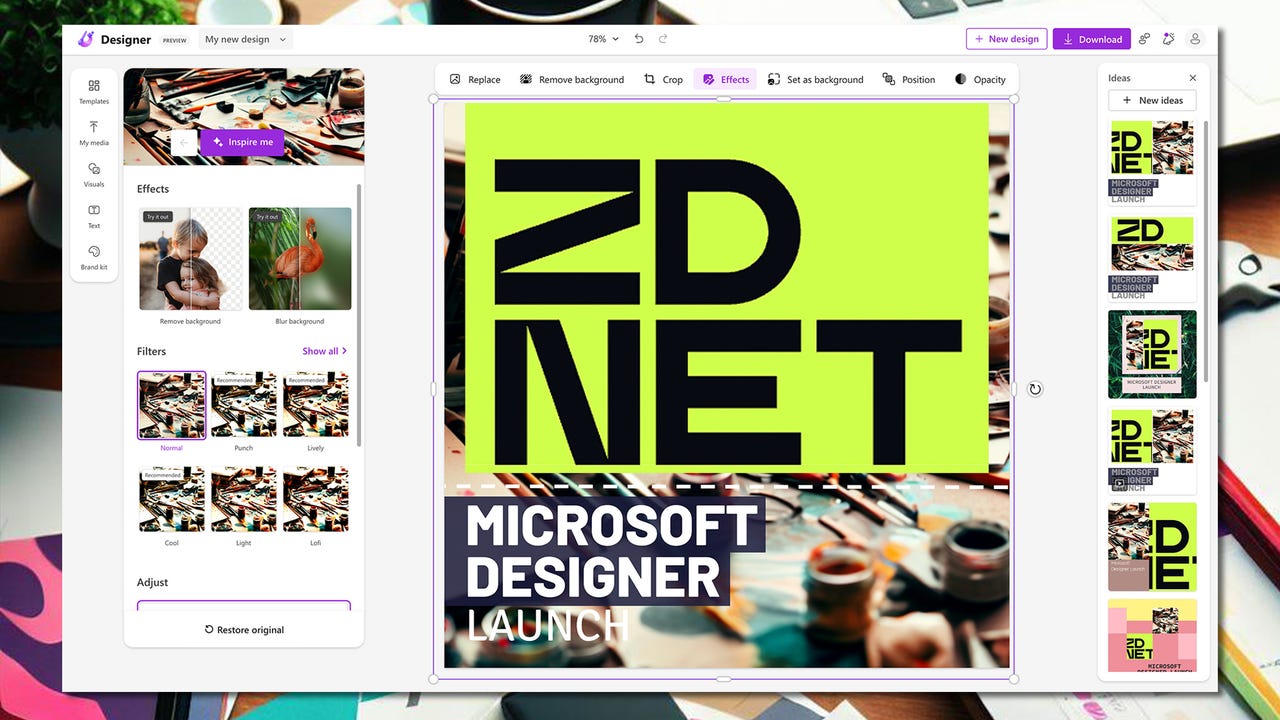
Microsoft Designer is Microsoft's graphic design app that includes Image Creator, the company's AI image generator that leverages DALLE-3 to generate realistic images. The generator had guardrails that prevented inappropriate prompts that explicitly mentioned nudity or public figures.

However, users found loopholes such as misspelling celebrity names and describing images that didn't explicitly use sexual terms but generated the same result, according to the report.

Microsoft has now addressed these loopholes, making it impossible to generate images of celebrities. I tried entering the prompt, "Selena Gomez playing golf," on Image Creator and received an alert that said my prompt was blocked. I also tried misspelling her name and got the same alert.

Also: Microsoft adds Copilot Pro support to iPhone and Android apps

"We are committed to providing a safe and respectful experience for everyone," said a Microsoft spokesperson to ZDNET. "We are continuing to investigate these images and have strengthened our existing safety systems to further prevent our services from being misused to help generate images like them."

In addition, the Microsoft Designer Code of Conduct explicitly prohibits the creation of adult or non-consensual intimate content, and a violation of that policy can result in losing access to the service entirely.

Also: The ethics of generative AI: How we can harness this powerful technology

Some users have already expressed interest in finding a workaround to these new protections in the Telegram channel, according to the report. So, this is likely to be a cat and mouse game between bad actors finding and exploiting loopholes in generative AI tools and the companies behind these tools rushing to fix them for a long time.

Artificial Intelligence

The Taylor Swift deepfake debacle was frustratingly preventable

The Taylor Swift deepfake debacle was frustratingly preventable Amanda Silberling 10 hours

You know you’ve screwed up when you’ve simultaneously angered the White House, the TIME Person of the Year, and pop culture’s most rabid fanbase. That’s what happened last week to X, the Elon Musk-owned platform formerly called Twitter, when AI-generated, pornographic deepfake images of Taylor Swift went viral.

One of the most widespread posts of the nonconsensual, explicit deepfakes was viewed more than 45 million times, with hundreds of thousands of likes. That doesn’t even factor in all the accounts that reshared the images in separate posts – once an image has been circulated that widely, it’s basically impossible to remove.

X lacks the infrastructure to identify abusive content quickly and at scale. Even in the Twitter days, this issue was difficult to remedy, but it’s become much worse since Musk gutted so much of Twitter’s staff, including the majority of its trust and safety teams. So, Taylor Swift’s massive and passionate fanbase took matters into their own hands, flooding search results for queries like “taylor swift ai” and “taylor swift deepfake” to make it more difficult for users to find the abusive images. As the White House’s press secretary called on Congress to do something, X simply banned the search term “taylor swift” for a few days. When users searched the musician’s name, they would see a notice that an error had occurred.

This content moderation failure became a national news story, since Taylor Swift is Taylor Swift. But if social platforms can’t protect one of the most famous women in the world, who can they protect?

“If you have what happened to Taylor Swift happen to you, as it’s been happening to so many people, you’re likely not going to have the same amount of support based on clout, which means you won’t have access to these really important communities of care,” Dr. Carolina Are, a fellow at Northumbria University’s Centre for Digital Citizens in the U.K., told TechCrunch. “And these communities of care are what most users are having to resort to in these situations, which really shows you the failure of content moderation.”

Banning the search term “taylor swift” is like putting a piece of Scotch tape on a burst pipe. There’s many obvious workarounds, like how TikTok users search for “seggs” instead of sex. The search block was something that X could implement to make it look like they’re doing something, but it doesn’t stop people from just searching “t swift” instead. Copia Institute and Techdirt founder Mike Masnick called the effort “a sledge hammer version of trust & safety.”

“Platforms suck when it comes to giving women, non-binary people and queer people agency over their bodies, so they replicate offline systems of abuse and patriarchy,” Are said. “If your moderation systems are incapable of reacting in a crisis, or if your moderation systems are incapable of reacting to users’ needs when they’re reporting that something is wrong, we have a problem.”

So, what should X have done to prevent the Taylor Swift fiasco anyway?

Are asks these questions as part of her research, and proposes that social platforms need a complete overhaul of how they handle content moderation. Recently, she conducted a series of roundtable discussions with 45 internet users from around the world who are impacted by censorship and abuse to issue recommendations to platforms about how to enact change.

One recommendation is for social media platforms to be more transparent with individual users about decisions regarding their account or their reports about other accounts.

“You have no access to a case record, even though platforms do have access to that material – they just don’t want to make it public,” Are said. “I think when it comes to abuse, people need a more personalized, contextual and speedy response that involves, if not face-to-face help, at least direct communication.”

X announced this week that it would hire 100 content moderators to work out of a new “Trust and Safety” center in Austin, Texas. But under Musk’s purview, the platform has not set a strong precedent for protecting marginalized users from abuse. It can also be challenging to take Musk at face value, since the mogul has a long track record of failing to deliver on his promises. When he first bought Twitter, Musk declared he would form a content moderation council before making major decisions. This did not happen.

In the case of AI-generated deepfakes, the onus is not just on social platforms. It’s also on the companies who create consumer-facing generative AI products.

According to an investigation by 404 Media, the abusive depictions of Swift came from a Telegram group devoted to creating nonconsensual, explicit deepfakes. The users in the group often use Microsoft Designer, which draws from Open AI’s DALL-E 3 to generate images based on inputted prompts. In a loophole that Microsoft has since addressed, users could generate images of celebrities by writing prompts like “taylor ‘singer’ swift” or “jennifer ‘actor’ aniston.”

A principal software engineering lead at Microsoft, Shane Jones wrote a letter to the Washington state attorney general stating that he found vulnerabilities in DALL-E 3 in December, which made it possible to “bypass some of the guardrails that are designed to prevent the model from creating and distributing harmful images.”

Jones alerted Microsoft and OpenAI to the vulnerabilities, but after two weeks, he had received no indication that the issues were being addressed. So, he posted an open letter on LinkedIn to urge OpenAI to suspend the availability of DALL-E 3. Jones alerted Microsoft to his letter, but he was swiftly asked to take it down.

“We need to hold companies accountable for the safety of their products and their responsibility to disclose known risks to the public,” Jones wrote in his letter to the state attorney general. “Concerned employees, like myself, should not be intimidated into staying silent.”

As the world’s most influential companies bet big on AI, platforms need to take a proactive approach to regulate abusive content – but even in an era when making celebrity deepfakes wasn’t so easy, violative behavior easily evaded moderation.

“It really shows you that platforms are unreliable,” Are said. “Marginalized communities have to trust their followers and fellow users more than the people that are technically in charge of our safety online.”

Swift retaliation: Fans strike back after explicit deepfakes flood X

GenAI regulation: Are deepfakes indicative of free will in LLMs?

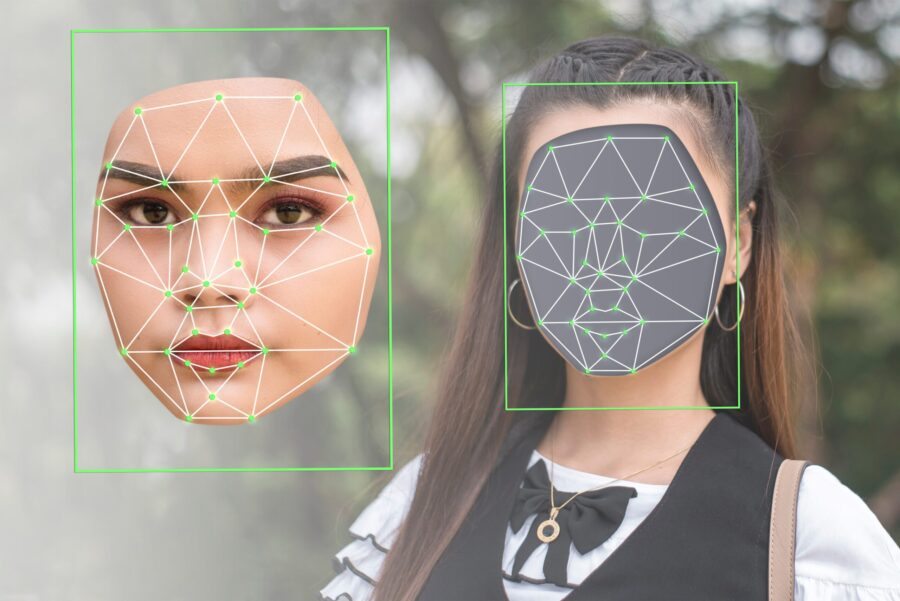
A classy and gorgeous mestiza woman in a student uniform with bo

When generative AI is given a prompt to display an image in a certain way or style, what it also means is telling AI to imagine. The request to imagine is an acknowledgment that it has a will to do so, not just the capability [or the possession of contents] to do so. This will is not available in a book with drawings that cannot be told to open to a certain page, and for it to do so by itself. It is also not available in automobiles or search engines, especially with how they only do what is expected, autonomous or human-controlled. They do not mix up their journeys or results, to reproduce something new or different from what was expected.

An organism that humans cannot communicate with can be asked to go in a direction, by throwing a meal that way. This means that even though it was prompted, and went, it was able to, by will to not just capability.

Many find comparisons of LLMs with organisms appalling, but humans took the digital world as a part of the physical for a long time, in part because only humans exerted agency in digital, like organisms did in the physical. However, the possibility that AI, a non-organism, can exert an amount of will, shows that digital is a dynamic world capable of some intentionality.

The low discrimination of the human mind made digital explode in the first place. The mind took the similarity of an audio, video, image or text, as the same if it were a physical experience or appearance. Digital also made things easy, but easy was not only for good stuff. Some nefarious things, like deepfake, are also now easy as an errand to generative AI.

Extensive free will, in their own sphere, is something all organisms still retain as an advantage over AI. AI has some free will over certain digital contents, but it is yet to be as sprawling as any organism has, in a habitat.

Already, AI is within the sphere to access the most intelligence of anything that exists. This means that its excellence is free will dependent, which it is already accruing with the guise that it cannot because it is not like an organism or the physical is different from digital.

AI appears limited without access to experiences of the physical but intelligence is the pivotal interface with the world. Sensory interpretations are basic, but intelligence makes the difference. Sound can be interpreted, but intelligence makes it possible to know if it is something to be worried—or alert—about. The same for smell, vision, touch and taste. This means that the world is what intelligence makes of it. The world is richer for an organism by intelligence or not. The pleasure from intelligence also lasts longer than from sensory sources. Nonhuman organisms have senses and can interpret them, with limited local intelligence, but they have not been able to make astounding achievements, with their free will to roam in their habitats.

Intelligence, aside from being an interface with the world, is easy to transfer, making it a risk to survival, if an organism is reckless with it. Intelligence as footprints, stains, scents and so forth, may give off presence to others. Natural intelligence is available and expressed from where it is produced. However, wherever intelligence is expressed outside of the organism can be called artificial intelligence. This means that papers, footprints, stains, scents and so forth, already possess artificial intelligence, even though they cannot edit or summarize it.

What makes the difference is artificial free will, of sort, as a qualifier of the available artificial intelligence. Free will or intent in the human mind is one of the qualifiers [of functions] that makeup the super qualifier, consciousness. Others include attention, awareness, and the self or subjective experience. For example, a physician may tell a patient in recovery to move a limb, in an examination of consciousness. It is an instruction in free will, not just of awareness, attention or the sense of self.

Books, frescoes, sculptures, footprints, handprints, digital and so on, are artificial containers of natural intelligence. Even though they did not produce the intelligence, their carriages of it, which, when other organisms have access, produce intelligence for them, could make them get assigned the label, artificial intelligence.

This means that AI may not just be possible within digital, but elsewhere. What makes digital different, with LLMs, is markers of what can be called artificial consciousness—acting on the available intelligence in digital.

For now, the intent of LLMs is limited to following prompts. As the qualifier capability of LLMs for digital contents grows, especially for free will, it may be possible to produce a deepfake that could cause a stir, using a situation to maximize effect. Current LLMs abilities are weak displays of free will, what is ahead, if they get more of it, remains uncertain.