BrainSightAI’s Laina Emmanuel on Synapsing AI and Neurosurgery

Bengaluru-based BrainSightAI is one of the hottest AI startups in India. The company leverages AI and machine learning to map the human brain, aiding thousands of clinicians, including neurosurgeons, psychiatrists, and neurologists, across the country. This innovation enhances treatment and surgery options and facilitates an early detection of neurological disorders such as epilepsy, multiple sclerosis, and Parkinson’s disease.

“We work in a very niche area, and I don’t think a brain MRI is done in India. There’s nobody really working on the kind of cutting-edge work that we are doing. In fact, we are one of two companies worldwide that are doing this work,” said BrainSightAI chief Laina Emmanuel in an exclusive interview with AIM, highlighting that it is one of the few companies working in the field of connectomic analysis.

Emmanuel said that psychiatric disorders don’t have a body-based indicator, unlike say, heart disorders, where the doctors first examine the heart rate. “Sadly, psychiatry has been trying to find a body-based indicator for centuries now,” said Emmanuel. “One of the recent breakthroughs across the psychiatric field is that brain connectivity can serve as an indicator to understand psychiatric disorders, such as ADHD, OCD, bipolar, etc,” she said, introducing VoxelBox.

Voxel to Vision

VoxelBox, one of the most popular products of BrainSightAI, is an AI and ML-based neuroimaging solution. It provides personalised brain maps, offering visual glimpse of the functional and structural connections in the brain.

Emmanuel said that VoxelBox has already found many applications. “Today, we work with hospitals for brain tumour surgeries. Before conducting a surgery, doctors want to know where the different functions of the brain are located. If a doctor knows, with relation to the tumour, where these networks are, he can actually do a better job of figuring out how to cut the brain,” said Emmanuel.

“The second aspect is that the work we do also has implications for epilepsy. You can use it to figure out the epileptic foci in the brain. Where is the earthquake in the brain happening? It is also one of the earliest indicators for dementia,” said Emmanuel.

Unleashing Generative Prowess

Emmanuel told AIM that BrainSightAI is using generative AI for drug discovery for dementia. The use of generative drugs eliminates the need for actual patients in the study. Typically, discovering drugs requires taking MRI scans of the brain and creating a model, but with the help of generative AI one can create multiple virtual patients.

“Using generative AI, you can tweak brain models,” said Emmanuel. She said that the potential is huge, where one can create multiple brain models of the patients to study the cause and effect of various drugs, therapies, or cognitive processes.

Inception of BrainSightAI

Prior to venturing into BrainSightAI in 2019, with co-founder Rimjhim Agrawal, Emmanuel worked as a software engineer at Infosys. She later moved to public health working with various ministries and central government through organisations like Access Health International and Clinton Health Initiative. Agrawal, on the other hand, has completed her PhD in machine learning for neurosciences from NIMHANS.

(L-R) Rimjhim Agrawal & Laina Emmanuel

Since 2021, BrainSightAI has been backed by Microsoft as part of Project Amplify. “Our team is excellent at computational neuroscience, but we were not cloud people in the beginning. Microsoft really helped us think through the aspects while considering the cloud,” said Emmanuel. Last month, the company also made it to the Google Accelerator programme, and is backed by several investors.

Last year, BrainSightAI secured INR 1 crore from Redstart Labs. “We are expanding our sales teams now. Recently, we obtained our manufacturing licence as software-as-a-medical-device,” said Emmanuel when asked about how the company is utilising the funds.

“We’ve been ISO certified for almost a year now. Additionally, we have undergone cybersecurity and HIPAA audits. Although HIPAA doesn’t have a certification, we use the HIPAA-compliant cloud from Microsoft,” she added.

Emmanuel shared that BrainSightAI is currently in the final stages of contract negotiations with several hospitals in India. “I’m hoping that we will soon be working with over 30 hospitals, like AIIMS Delhi, St John’s Medical College, Manipal Hospitals and Narayana Hrudayala,” she said. She also mentioned their past collaboration with AIIMS Jodhpur, clarifying that it is no longer in existence.

Currently, BrainSightAI has a small team of 25 people, and is looking to expand in the coming months. “When you join, you’ll see computational neuroscientists, machine learning engineers, and technology software experts, all working together in a collaborative environment,” said Emmanuel. “We receive a lot of requests for our work from other countries and are looking to expand offshore very soon,” she concluded.

The post BrainSightAI’s Laina Emmanuel on Synapsing AI and Neurosurgery appeared first on Analytics India Magazine.


The Next Big Hyperscaler Could Emerge Out of India

Given the prolific rise of generative AI spending, the demand for hyperscaler data centres will also substantially increase. According to a report by Synergy Research Group, the hyperscale data centre capacity will almost triple in the next six years, driven by AI.

In India too, the hyperscaler landscape is growing. Yotta Data Services, which is a part of the Hiranandani Group, plans to install 16,384 Graphics Processing Units (GPUs) by mid-2024 and 32,768 GPUs by the end of 2025. Older players, like the NSE-listed E2E Network, have also been expanding their presence in the country.

Moreover, heavyweights like Adani, Tata and Reliance are entering the space. Last year, Tata Communications entered into a partnership with NVIDIA, the largest GPU maker, to develop a hyperscale infrastructure. Reliance and Adani, too, are rapidly expanding their presence in the data centre space.

The market in itself is growing rapidly, presenting an opportunity for a new hyperscaler to emerge from India. However, currently, the hyperscaler market is dominated by three big names- AWS, Microsoft Azure and Google Cloud, with over 60% market share.

India has a data advantage

Today, India is one of the largest consumer markets in the world. India has overtaken China as the most populous country and the data generated in the country is of humongous nature.

With India generating terabytes of data monthly due to increased 5G penetration, OTT services, social media usage and the rise of generative AI, the demand for hyperscale cloud providers is skyrocketing, according to Dr. Sayed Peerzade, EVP & chief cloud officer at Yotta Data Services. “The emergence of the next major hyperscaler from India is not merely speculative; it will be a reality soon,” he told AIM.

The anticipated growth of India’s data centre market, projected to increase from USD 5.45 billion in 2023 to USD 7.02 billion by 2029, serves as a testament to the escalating prominence of this sector.

Hasit Trivedi, CTO, digital technologies, and global head – AI at Tech Mahindra, feels the next big hyperscaler could emerge out of India in the next 7-10 years. “India boasts a substantial and growing consumer base and historically domestic companies have outperformed global counterparts in sectors like banking and automotive on home turf,” he told AIM.

He expects the trend to extend to the AI space, with many firms diversifying into other business lines due to their established consumer bases. “For instance, Reliance dominates the power sector with access to consumer data whereas Adani is a major player in the airport business. They can leverage their extensive consumer data to expand into diverse sectors, creating robust ecosystems that offer a significant competitive advantage.”

Consumption of AI to increase

India also ranks fourth globally in the number of startups, following the US, China, and the UK, and we are witnessing a rising trend where an increasing number of these startups are seeking to leverage generative AI capabilities, and most of these models still run on the cloud.

“The outlook for hyperscalers emerging from India, particularly in the AI decade, is highly optimistic. Indian hyperscalers have a deep understanding of local market dynamics and are closely intertwined with the ecosystem of innovative startups emerging in the region,” Kesava Reddy, Chief Revenue Officer, E2E Networks, told AIM.

Moreover, the ‘AI for All’ strategy of the Indian government further enhances the potential significantly. According to a recent EY report, generative AI will contribute to a substantial growth in India’s GDP, with an estimated increase ranging from USD 359-438 billion by 2030, constituting a growth rate of 5.9-7.2%.

“Across a span of seven years, its cumulative effect might contribute USD 1.2-1.5 trillion. This comprehensive approach to kickstarting the AI ecosystem aligns with the vision to make AI work effectively across various sectors in India. By aligning with this vision, India-born hyperscalers are set to play a pivotal role in both the national and global hyperscale landscape,” Reddy added.

De-globalisation and regulations to work in Indian hyperscaler’s favour

Notably, most of the IT services are delivered from India and the same will be the case of AI services, Trivedi said. Also, in terms of regulations, India is very open. The regulatory aspect stands out as a crucial factor that could greatly enhance the overall situation.

Presently, our data is dispersed globally, and only a limited set is stored within India. This scenario is likely to shift with upcoming developments, and there is an expectation for a shift towards more local data storage regulations.

“Globally, there is a trend towards increased de-globalisation and under the present government, this trend is likely to intensify. Hence, the regulatory aspect holds the potential to be a significant game-changer, and these changes will play in favour of Indian hyperscalers,” Trivedi said.

Moreover, global hyperscalers have been eyeing India as a key market for their expansion plans. “However, indigenous and domestic players such as Yotta are securing a significant competitive advantage over other hyperscalers, buoyed by the enactment of the Digital Personal Data Protection Act of 2023. In fact, Yntraa, Yotta’s indigenously developed hyperscale cloud platform, will be launched in Q1 2024,” Sayed Peerzade said.

Why Indian corporate houses have an advantage

Trivedi feels Indian corporate houses like Reliance, Adani, and Tata stand at an advantage. This is because it’s a deep-pocket business, and revenues will take time to come in, notably in 10 to 20 years. Hence, not many can afford to do it.

“Establishing infrastructure, acquiring thousands of GPUs, and setting up a server room may seem straightforward. There is no entry barrier there. However, the true challenge lies in software, sustaining and scaling these operations. Although numerous Indian startups may enter this domain, not all will thrive in the long run. Some are likely to face the heat and eventually be acquired by major players such as Tata, Reliance and Adani,” Trivedi predicts.

These corporate entities also possess the influence to shape policies and regulations, allowing them to align such regulations to their advantage.

Moreover, Trivedi predicts a government-backed hyperscaler could also emerge and make it big. “A public sector undertaking in hyperscale data centres could happen, but historically they haven’t worked,” he noted.
Over the years, the government has privatised many of the PSUs. However, a public-private partnership model could work. The government has announced a 25,000 GPU cluster to help Indian startups access AI. Going forward, such a setting could emerge as something big.

The post The Next Big Hyperscaler Could Emerge Out of India appeared first on Analytics India Magazine.

Colossyan uses GenAI to create corporate training videos

Colossyan uses GenAI to create corporate training videos Kyle Wiggers 1 day

Most people don’t watch corporate training videos — or, in cases where the training’s mandatory, don’t give them their full attention. According to a recent poll from Kaltura, the video tech provider, 75% of staffers admit to skimming through training videos, watching them without sound or listening to them while multitasking.

So, given that training videos aren’t cheap to produce, is there a way to make them more engaging and thus less of a money sink? Dominik Mate Kovacs, the co-founder and CEO of Colossyan, thinks there is — and it involves generative AI.

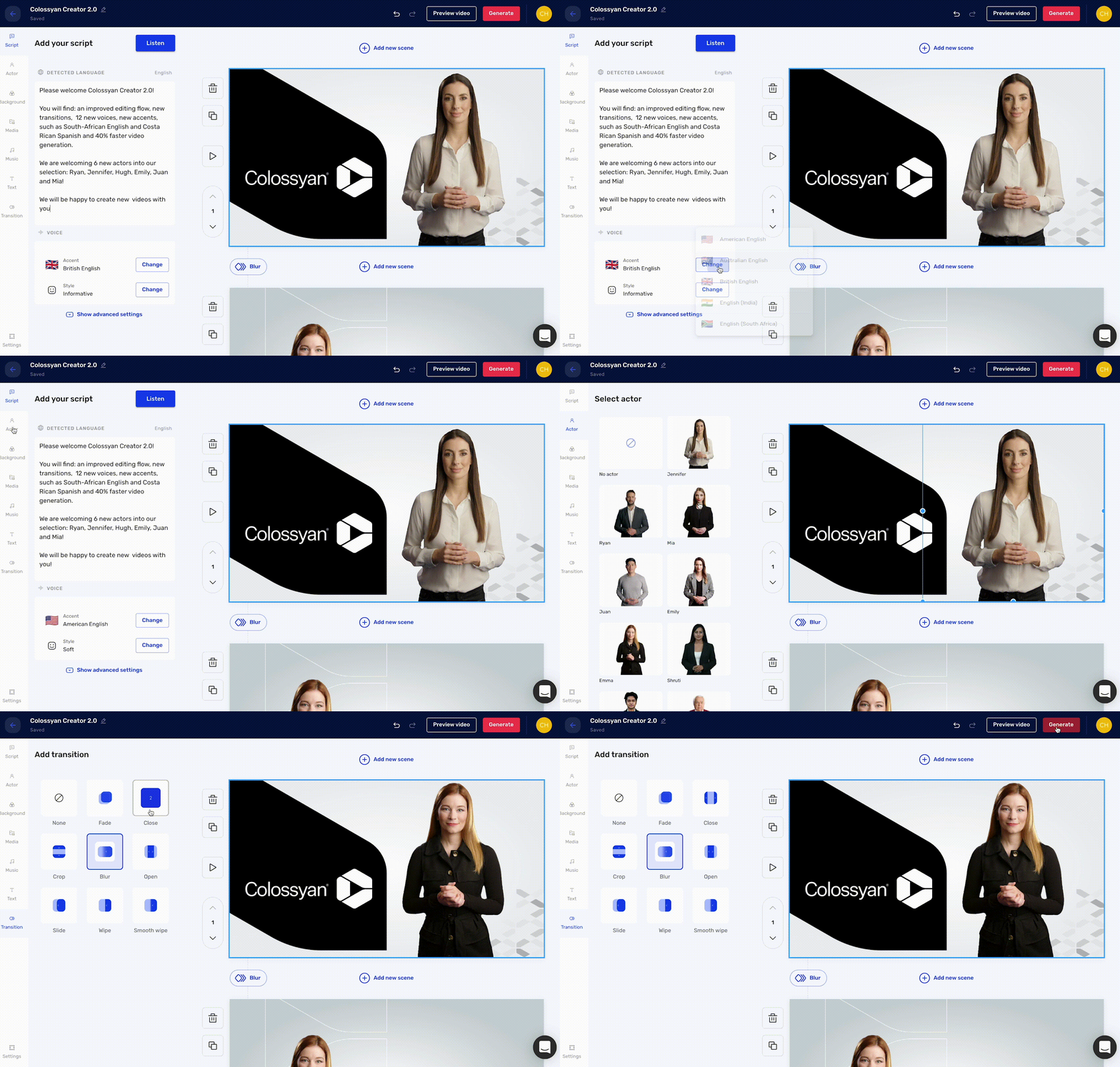
Colossyan taps AI to generate workplace learning videos, remixing, re-animating and editing footage of one of several virtual avatars against changeable backdrops. Users can enter a script to have it “read” aloud by Colossyan’s text-to-speech (TTS) engine, which also translates the script into over 70 languages.

Colossyan

Image Credits: Colossyan

“To generate a video with Colossyan’s AI video platform, all you have to do is input a script and select from a diverse range of avatars,” Kovacs told TechCrunch in an email interview. “Any company can create a video about almost anything efficiently, without the need for conventional filming resources.”

Kovacs founded Colossyan in 2020 after leaving Defudger, a deepfakes detection platform, which he helped to co-launch. An engineer and data scientist by training, Kovacs says that he was inspired to start Colossyan by the budding corporate interest in GenAI.

“Enterprises are leveraging AI in diverse areas such as IT automation, customer care and digital labor — highlighting the broad applicability and potential impact of AI technologies in streamlining operations and enhancing service delivery,” Kovacs said. “The barriers to AI adoption, such as limited AI skills and data complexity, are significant yet surmountable challenges that many organizations are actively working to overcome.”

For the heck of it, I gave Colossyan’s platform, which offers a free trial, a go to see if I could make a training video that’d successfully hold the attention of my ADHD brain — admittedly a high bar. The avatars were a bit too stiff and cartoonish for my liking and the TTS engine too robotic, at least compared to some of the more sophisticated GenAI tools out there (e.g., ElevenLabs). But I’ve certainly seen worse corporate videos.

Colossyan also doesn’t generate videos as quickly as I’d expect — a 38-second clip takes ~11 minutes. Granted, that’s a lot faster than creating trainings from scratch. But frankly, faced with the prospect of generating more than a handful of videos for whatever purpose, I’d be tempted to go the PowerPoint or Canva route instead.

I’m not Colossyan’s target market, of course. And it seems that several household brands are happy to pay for a subscription to Colossyan as it exists today, including Novartis, Porsche, Vodafone, HPE and Paramount, claims Kovacs.

Kovacs attributes the customer traction to features like integrations with learning management systems and a “conversation mode” that allows two avatars to hold a dialogue with each other. He doesn’t deny that there’s a fair amount of competition in the GenAI video space — see CommonGround, Synthesia and Surge plus solutions from tech giants like Microsoft — but he thinks that Colossyan’s focus on “interactivity and engagement,” as he puts it, will continue to set the platform apart.

Perhaps he’s right. Colossyan today announced that it raised $22 million in a funding round led by Lakestar with participation from Launchub, Day One Capital and Emerge Education. The proceeds will be put toward tripling Colossyan’s headcount across its New York, London and Budapest offices, Kovacs says, and developing new capabilities like branching videos and knowledge checks.

“For C-suite and IT department leaders, our platform represents a scalable, cost-efficient solution to training and development challenges,” he added.

Google Launches TensorFlow GNN 1.0 for Advanced Graph Neural Networks

The Google TensorFlow team has released TensorFlow GNN 1.0 (TF-GNN), an update to its machine learning framework to better develop and scale graph neural networks (GNNs).

This new library can handle analysing complex networks, such as transportation and social networks. TF-GNN focuses on both the structure of graphs and the features of their nodes. This library bridges the gap between discrete graph data and continuous neural network models, for more detailed predictions and analyses.

TF-GNN introduces a suite of advanced features for the TensorFlow ecosystem. At the heart of these advancements is the tfgnn.GraphTensor object, which represents heterogeneous graphs characterised by diverse node and edge types. This integration allows for the efficient handling of graph data, enhancing the TensorFlow ecosystem’s ability to manage complex network structures.

The library provides a Python API, that can configure subgraph sampling for different computational environments, from individual workstations to distributed systems. This flexibility is crucial for handling datasets of varying sizes and complexities. Furthermore, TF-GNN introduces integrated gradients for model attribution, offering insights into the features most influential in predictions, thereby enhancing model training and evaluation.

By incorporating the structure and data of graphs, GNNs offer predictions on entire graphs, individual nodes, or potential edges. This improves the understanding of complex relationships and attributes, making TF-GNN a powerful tool for a wide range of applications.

TensorFlow GNN 1.0 is available as part of the TensorFlow ecosystem, with resources, documentation, and code samples accessible online for developers worldwide.

The post Google Launches TensorFlow GNN 1.0 for Advanced Graph Neural Networks appeared first on Analytics India Magazine.
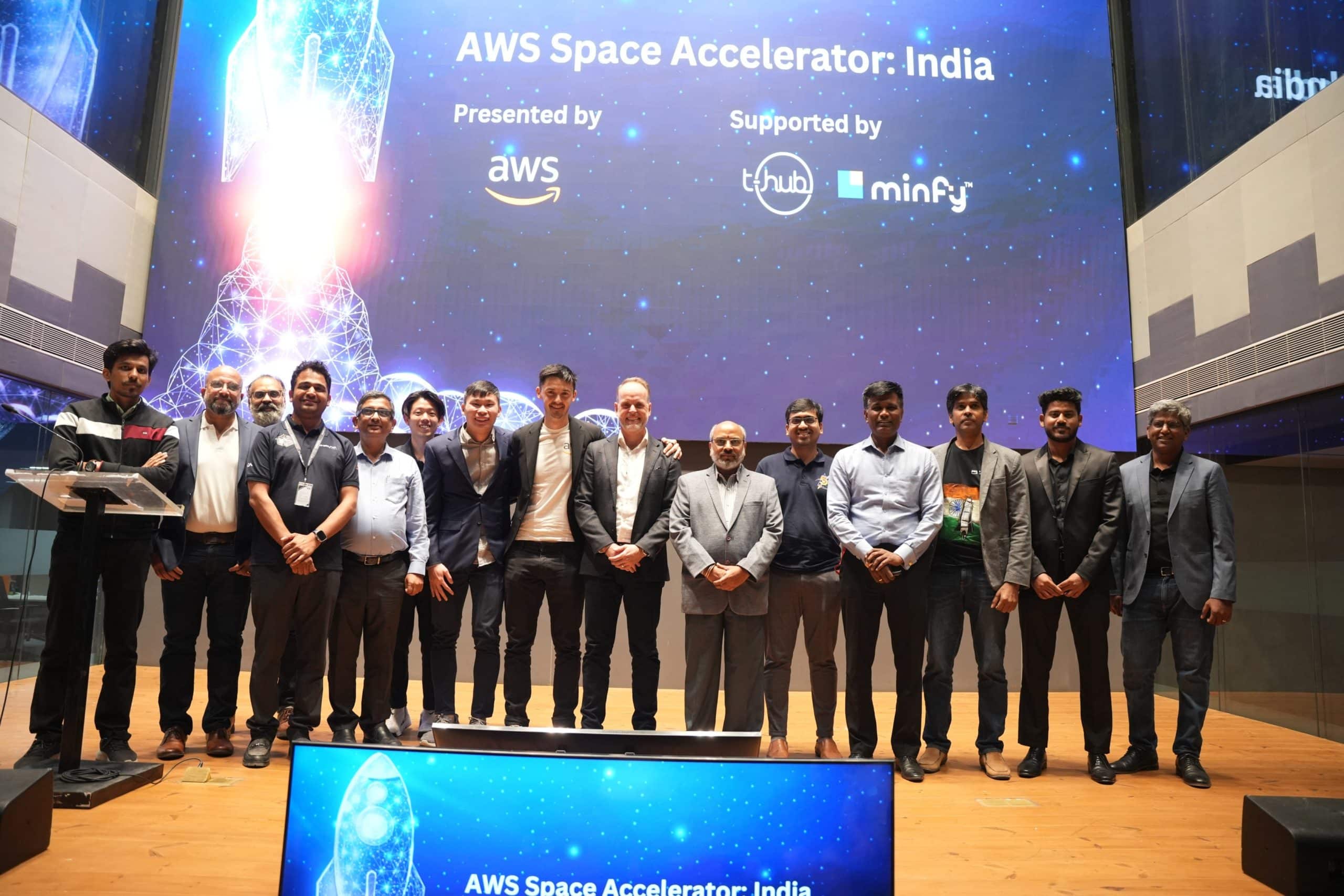
AWS, T-Hub Partner to Launch India’s First Spacetech Accelerator Programme

Amazon Web Services (AWS) India Private Limited recently announced the AWS Space Accelerator: India, a technical, business, and mentorship opportunity designed to foster startups focused on space technology, and accelerate their development, with support from, T-Hub, and Minfy.

This is AWS’s first accelerator programme in India focused on startups in the space sector, and follows the MoU it signed with ISRO and IN-SPACe in September last year, which envisions to nurture startups in space-tech, and support innovation in the sector.

The 14-week accelerator program will provide India-based startups dedicated business resources, expertise, and guidance around technology and business capabilities, and help them leverage AWS to build, grow, and scale their missions.

The programme is open to both early-stage and mature startups based in India whose missions support the space sector, who need a technology platform for their ideas, and are looking to accelerate their growth and investment opportunities. Interested startups can learn more and register at this link by March 17th, 2024.

“Cloud computing is crucial to power the future of the space industry. It enables space-tech startups to harness high-performance computing resources to perform intensive data analysis, apply machine learning models, and innovate in their missions, while achieving lower cost of operations, faster time-to-market, and deployment at scale. Technologies such as generative AI open transformative opportunities for space-tech, and we are committed to help startups innovate and develop sustainable solutions for the space sector,” Clint Crosier, Director, Aerospace and Satellite, AWS Inc., said.

Startups qualifying for the program can receive an array of benefits, including: up to US$100,000 in AWS credits, as well as guidance from experts at ISRO, IN-SPACe, and AWS, and business and technology support from T-Hub and Minfy, an AWS Premier Partner.

They will also learn about space domain technologies and applications, and how to leverage space data and build scalable solutions using cloud computing, data analytics, and machine learning, including the potential to apply generative artificial intelligence (AI).

The post AWS, T-Hub Partner to Launch India’s First Spacetech Accelerator Programme appeared first on Analytics India Magazine.

Colossyan uses GenAI to create corporate training videos

Colossyan uses GenAI to create corporate training videos Kyle Wiggers 1 day

Most people don’t watch corporate training videos — or, in cases where the training’s mandatory, don’t give them their full attention. According to a recent poll from Kaltura, the video tech provider, 75% of staffers admit to skimming through training videos, watching them without sound or listening to them while multitasking.

So, given that training videos aren’t cheap to produce, is there a way to make them more engaging and thus less of a money sink? Dominik Mate Kovacs, the co-founder and CEO of Colossyan, thinks there is — and it involves generative AI.

Colossyan taps AI to generate workplace learning videos, remixing, re-animating and editing footage of one of several virtual avatars against changeable backdrops. Users can enter a script to have it “read” aloud by Colossyan’s text-to-speech (TTS) engine, which also translates the script into over 70 languages.

Colossyan

Image Credits: Colossyan

“To generate a video with Colossyan’s AI video platform, all you have to do is input a script and select from a diverse range of avatars,” Kovacs told TechCrunch in an email interview. “Any company can create a video about almost anything efficiently, without the need for conventional filming resources.”

Kovacs founded Colossyan in 2020 after leaving Defudger, a deepfakes detection platform, which he helped to co-launch. An engineer and data scientist by training, Kovacs says that he was inspired to start Colossyan by the budding corporate interest in GenAI.

“Enterprises are leveraging AI in diverse areas such as IT automation, customer care and digital labor — highlighting the broad applicability and potential impact of AI technologies in streamlining operations and enhancing service delivery,” Kovacs said. “The barriers to AI adoption, such as limited AI skills and data complexity, are significant yet surmountable challenges that many organizations are actively working to overcome.”

For the heck of it, I gave Colossyan’s platform, which offers a free trial, a go to see if I could make a training video that’d successfully hold the attention of my ADHD brain — admittedly a high bar. The avatars were a bit too stiff and cartoonish for my liking and the TTS engine too robotic, at least compared to some of the more sophisticated GenAI tools out there (e.g., ElevenLabs). But I’ve certainly seen worse corporate videos.

Colossyan also doesn’t generate videos as quickly as I’d expect — a 38-second clip takes ~11 minutes. Granted, that’s a lot faster than creating trainings from scratch. But frankly, faced with the prospect of generating more than a handful of videos for whatever purpose, I’d be tempted to go the PowerPoint or Canva route instead.

I’m not Colossyan’s target market, of course. And it seems that several household brands are happy to pay for a subscription to Colossyan as it exists today, including Novartis, Porsche, Vodafone, HPE and Paramount, claims Kovacs.

Kovacs attributes the customer traction to features like integrations with learning management systems and a “conversation mode” that allows two avatars to hold a dialogue with each other. He doesn’t deny that there’s a fair amount of competition in the GenAI video space — see CommonGround, Synthesia and Surge plus solutions from tech giants like Microsoft — but he thinks that Colossyan’s focus on “interactivity and engagement,” as he puts it, will continue to set the platform apart.

Perhaps he’s right. Colossyan today announced that it raised $22 million in a funding round led by Lakestar with participation from Launchub, Day One Capital and Emerge Education. The proceeds will be put toward tripling Colossyan’s headcount across its New York, London and Budapest offices, Kovacs says, and developing new capabilities like branching videos and knowledge checks.

“For C-suite and IT department leaders, our platform represents a scalable, cost-efficient solution to training and development challenges,” he added.

Microsoft to Train 2 Million People With AI Skills In India

Satya Nadella, currently on a visit to India, announced in his keynote that Microsoft is set to provide AI skills training to 2 million people.

“We believe that, obviously, at the end of the day, ensuring that the workforce has the skills to thrive in this new age is the most important thing any of us can be doing and we are happy to play our role in it, ” said Nadella.

Further Nadella said that it’s not just about the skills but the new jobs which get created along with generative AI. “AI tasks involve data labeling, and bringing those jobs to rural India, providing well-paying opportunities and creating economic growth. That is pretty unique,” said Nadella.

He went on to praise Karya, one of the world’s first data cooperatives that offers labeling and annotation services. “You even see that in rural India people are participating in the AI economy. Thanks to the work of organisations like Karya,” he said.

Besides Karya, he also lauded Bhashini and Agami. Agami has recently introduced a new product called Jugalbandi Studio. “Jugalbandi Studio is a no-code local tool for people to build bots and make them available to all social entrepreneurs, nonprofits, and others who are making a positive impact,” said Nadella.

Further Nadella said India has more AI engineers, making the AI engineering community second only to the United States. On February 6, 2024, Nadella marked his 10th anniversary as the Chief Executive Officer of Microsoft. Presently, he is in India for February 7 and February 8 to engage with AI startups.

The post Microsoft to Train 2 Million People With AI Skills In India appeared first on Analytics India Magazine.
Diggibyte Technologies is Certified as Best Firm for Data Engineers

Diggibyte Technologies is certified as the Best Firm For Data Engineers to work for by Analytics India Magazine (AIM) through its workplace recognition programme.

The Best Firm certification surveys a company’s data and analytics employees to identify and recognise organisations with great company cultures. AIM analyses the survey data to gauge employee approval ratings and uncover actionable insights.

“We are delighted to share the exciting news that Diggibyte Technologies Pvt Ltd has been honoured as the Best Firm for Data Engineers. This prestigious recognition is a reflection of our exceptional team and the outstanding culture we’ve fostered. A sincere thank you to our remarkable Data & Analytics team, whose talent and dedication have been instrumental in achieving this milestone. It’s not just about data; it’s about our great culture that propels us forward.

Here’s to celebrating our success and the thriving culture that continues to inspire innovation and excellence” said Lawrance Amburose, CFO and Managing Director, India at Diggibyte Technologies.

“Our team is our biggest asset, and this recognition propels us towards our commitment to fostering an innovative and creative ecosystem within the Data & Analytics space. We take immense pride in being recognized as Best Firm for Data Engineers at Diggibyte Technologies, attracting exceptional young talent.

I extend my gratitude to our team and our valued customers. Together, we aspire to set the standards as thought leaders and market pioneers in Data & Analytics. Thank you, AIM, for selecting Diggibyte as the Best Firm for Data Engineers,” said Sekhar PVR – COO at Diggibyte Technologies.

The analytics industry currently faces a talent crunch, and attracting good employees is one of the most pressing challenges enterprises face.

The certification by Analytics India Magazine is considered a gold standard in identifying the best data science workplaces and companies participate in the programme to increase brand awareness and attract talent.

The Best Firms certification is the biggest data science workplace recognition programme in India. To nominate your organisation for the certification, please fill out the form here.

The post Diggibyte Technologies is Certified as Best Firm for Data Engineers appeared first on Analytics India Magazine.

Roblox’s new AI chat translator can help you understand 16 languages in real time

Roblox translator

Multi-player gaming can help you connect with people and make friendships with other players across the globe that you would have otherwise never met. However, language barriers can often pose a barrier to making those connections, and Roblox's new AI chat translator seeks to tackle that.

On Monday, Roblox released real-time AI chat translations in Roblox, which will allow its 70 million daily active users to communicate seamlessly in up to 16 different languages, including English, Chinese, Spanish, Korean, and more.

Also: 15 big ideas that will revolutionize industries and economies, led by AI

"Thanks to our new real-time AI chat translations, we've made possible on Roblox something that isn't even possible in the physical world — enabling people who speak different languages to communicate seamlessly with one another in our immersive 3D experience," said Daniel Sturman, Roblox CTO.

Users can take advantage of the translation feature in any Roblox experience that has enabled Roblox's in-experience text chat service. The chat window will automatically translate any text into the person's native language without the user having to take any additional actions.

The translations happen in real time, with a latency of approximately 100 milliseconds, according to Roblox. This allows users to carry out a conversation with the same flow they regularly would, as seen in the video below.

The user doesn't have to miss out on the original text. Instead, if they still want to see the original message, they can simply click the button next to the translated message.

To power the translator, Roblox built its own unified, transformer-based translation large language model (LLM), which can tackle the challenging task of translating a combination of 16 languages to each other in a single model, a resource-saving alternative to creating individual models that translate every pair, which would have totaled to 256 different models.

Also: AI meets AR as ChatGPT is now available on the Apple Vision Pro

Roblox shared that it is committed to improving its model's accuracy and, as a result, will be rolling out a tool to allow people to provide feedback on the translations, being able to report when something is mistranslated or even suggest a better translation.

The model is already available for use today. The complete list of languages includes English, Chinese (simplified), Chinese (traditional), French, German, Indonesian, Italian, Japanese, Korean, Portuguese, Russian, Spanish, Thai, Turkish, Polish, and Vietnamese.

Colossyan uses GenAI to create corporate training videos

Colossyan uses GenAI to create corporate training videos Kyle Wiggers 1 day

Most people don’t watch corporate training videos — or, in cases where the training’s mandatory, don’t give them their full attention. According to a recent poll from Kaltura, the video tech provider, 75% of staffers admit to skimming through training videos, watching them without sound or listening to them while multitasking.

So, given that training videos aren’t cheap to produce, is there a way to make them more engaging and thus less of a money sink? Dominik Mate Kovacs, the co-founder and CEO of Colossyan, thinks there is — and it involves generative AI.

Colossyan taps AI to generate workplace learning videos, remixing, re-animating and editing footage of one of several virtual avatars against changeable backdrops. Users can enter a script to have it “read” aloud by Colossyan’s text-to-speech (TTS) engine, which also translates the script into over 70 languages.

Colossyan

Image Credits: Colossyan

“To generate a video with Colossyan’s AI video platform, all you have to do is input a script and select from a diverse range of avatars,” Kovacs told TechCrunch in an email interview. “Any company can create a video about almost anything efficiently, without the need for conventional filming resources.”

Kovacs founded Colossyan in 2020 after leaving Defudger, a deepfakes detection platform, which he helped to co-launch. An engineer and data scientist by training, Kovacs says that he was inspired to start Colossyan by the budding corporate interest in GenAI.

“Enterprises are leveraging AI in diverse areas such as IT automation, customer care and digital labor — highlighting the broad applicability and potential impact of AI technologies in streamlining operations and enhancing service delivery,” Kovacs said. “The barriers to AI adoption, such as limited AI skills and data complexity, are significant yet surmountable challenges that many organizations are actively working to overcome.”

For the heck of it, I gave Colossyan’s platform, which offers a free trial, a go to see if I could make a training video that’d successfully hold the attention of my ADHD brain — admittedly a high bar. The avatars were a bit too stiff and cartoonish for my liking and the TTS engine too robotic, at least compared to some of the more sophisticated GenAI tools out there (e.g., ElevenLabs). But I’ve certainly seen worse corporate videos.

Colossyan also doesn’t generate videos as quickly as I’d expect — a 38-second clip takes ~11 minutes. Granted, that’s a lot faster than creating trainings from scratch. But frankly, faced with the prospect of generating more than a handful of videos for whatever purpose, I’d be tempted to go the PowerPoint or Canva route instead.

I’m not Colossyan’s target market, of course. And it seems that several household brands are happy to pay for a subscription to Colossyan as it exists today, including Novartis, Porsche, Vodafone, HPE and Paramount, claims Kovacs.

Kovacs attributes the customer traction to features like integrations with learning management systems and a “conversation mode” that allows two avatars to hold a dialogue with each other. He doesn’t deny that there’s a fair amount of competition in the GenAI video space — see CommonGround, Synthesia and Surge plus solutions from tech giants like Microsoft — but he thinks that Colossyan’s focus on “interactivity and engagement,” as he puts it, will continue to set the platform apart.

Perhaps he’s right. Colossyan today announced that it raised $22 million in a funding round led by Lakestar with participation from Launchub, Day One Capital and Emerge Education. The proceeds will be put toward tripling Colossyan’s headcount across its New York, London and Budapest offices, Kovacs says, and developing new capabilities like branching videos and knowledge checks.

“For C-suite and IT department leaders, our platform represents a scalable, cost-efficient solution to training and development challenges,” he added.