Generative AI Playground: Text-to-Image Stable Diffusion with Stability AI, Stable Diffusion XL, and CompVis on the Latest Intel® GPU

Promotional Content

Generative AI Playground: Text-to-Image Stable Diffusion with Stability AI, Stable Diffusion XL, and CompVis on the Latest Intel® GPU

Stable Diffusion models are revolutionizing digital artistry, transforming mere text into stunning, lifelike images. These models, notably Stability AI’s Stable Diffusion XL, leverage Intel's GPU technology for creating incredibly detailed visuals from text. This blending of AI and creative expression is not just a technological leap but a gateway to new artistic possibilities, enabling creators to visualize and bring to life their most imaginative concepts. A significant milestone in the evolution of digital art has been marked, in which the boundaries between the imagined and the real blur.

Explore further: Generative AI Playground: Text-to-Image Stable Diffusion with Stability AI and CompVis

More On This Topic

  • Generative AI Playground: LLMs with Camel-5b and Open LLaMA 3B on…
  • Stable Diffusion: Basic Intuition Behind Generative AI
  • Become an AI Artist Using Phraser and Stable Diffusion
  • 3 Ways to Generate Hyper-Realistic Faces Using Stable Diffusion
  • Building a GPU Machine vs. Using the GPU Cloud
  • Between Dreams and Reality: Generative Text and Hallucinations

Otter brings GenAI to your meetings with AI summaries, AI chat and more

Otter brings GenAI to your meetings with AI summaries, AI chat and more Sarah Perez @sarahintampa / 9 hours

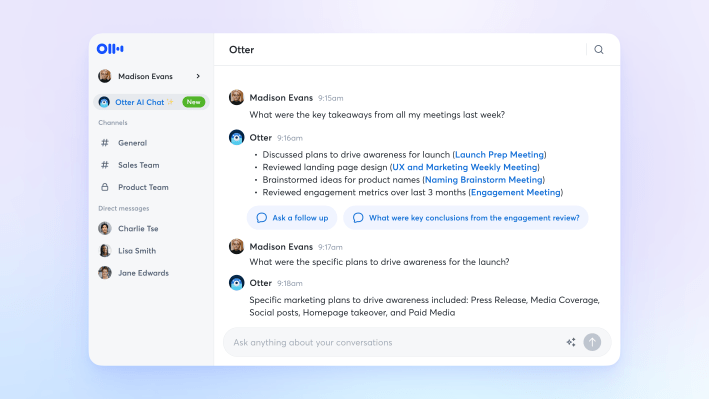
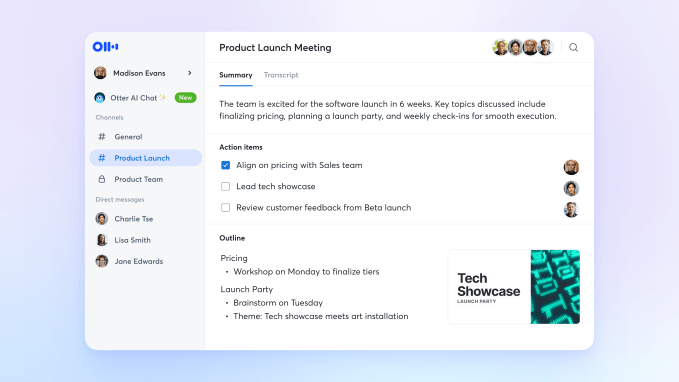
Otter, the AI-powered meeting assistant that transcribes audio in real-time is adding another layer of AI to its product with today’s introduction of Meeting GenAI, a new set of AI tools for meetings. Included with GenAI is an AI chatbot you can query to get information about past meetings you’ve recorded with Otter, an AI chat feature that can be used by teams, and an AI conversation summary that provides an overview of the meeting that took place, so you don’t have to read the full transcript to catch up.

Although journalists and students may use AI to record things like interviews or lectures, Otter’s new AI features are aimed more at those who leverage the meeting helper in a corporate environment. The company envisions the new tools as a complement or replacement for the AI features offered by different services like Microsoft Copilot, Zoom AI Companion, and Google Duet, for example.

Explains Otter CEO Sam Liang, the idea to introduce the new AI tools was inspired by his own busy schedule.

“I actually have 30 — sometimes more than 30 — meetings every week. Sometimes I’m even double booked. I couldn’t go to two or three meetings at the same time, but my Otter autopilot would tune into those meetings on my behalf,” he said, referring to the Otter feature that lets an AI bot record a meeting for you to review later.

Now, users will be able to read an AI-generated summary of what was covered in that meeting, including a paragraph followed by a list of action items. Otter’s customers can also now interact with an AI chatbot where they can ask questions about what took place in the past meeting or others.

Image Credits: Otter

For example, you could ask the AI chatbot things like “What did the CMO say?” or “Did they change the launch date?”

While Liang admits Otter is not the first to offer an AI companion for meetings — Microsoft Copilot and Zoom’s AI companion also have a similar feature — he believes that Otter’s version is more powerful and more comprehensive.

“You can use AI chat to query your entire meeting history,” he explains. That means you can go back to ask questions about prior meetings, not just the one you’re reviewing.

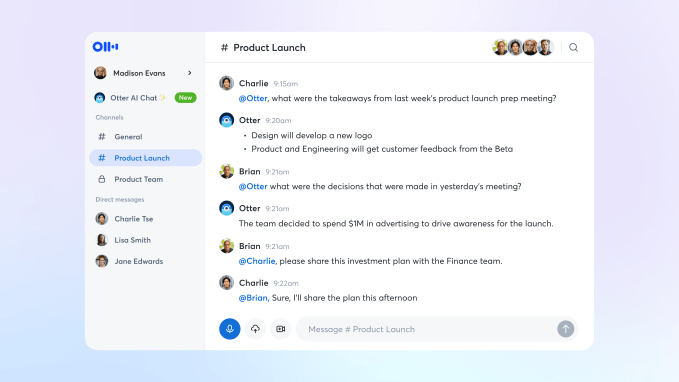
Another feature offers an AI chatbot that joins Otter’s channels where group chats take place. Here, the bot interacts like any other chat with another participant and can be invoked by anyone who asks Otter a question. For example, as users are chatting with each other, they could pause to ask the AI a question, like, “Hey Otter, what’s our revenue?” The AI chatbot will then answer your question.

The eventual goal is to have Otter more proactively participate by chiming in when it thinks it has something helpful to offer, by analyzing what’s being discussed. Perhaps if a colleague didn’t know an answer to a question, Otter could one day respond after looking back through the company’s meetings history and finding the answer shared elsewhere.

Image Credits: Otter

Otter’s data is stored in the cloud and secured, similar to other cloud-based services like Dropbox or Google’s Gmail, but no one who isn’t authorized by the company will have access to the meeting data. This allows people to access Otter, including its AI features, via any device, including their laptop or smartphone. Otter also isn’t using a customer’s data to train its AI, it says, although it allows individual users to contribute their recordings via an opt-in basis.

Notably, the company doesn’t plan to charge for its new AI features. While Microsoft charges $360 per year for its Copilot in Office 365 and Teams, Otter’s GenAI will be included both in the free plan and the $20 per month Business plan.

HD-Painter: High Resolution Text-Guided Image Inpainting with Diffusion Models

HD-Painter : High Resolution Text-Guided Image Inpainting with Diffusion Models

Diffusion models have undoubtedly revolutionized the AI and ML industry, with their applications in real-time becoming an integral part of our everyday lives. After text-to-image models showcased their remarkable abilities, diffusion-based image manipulation techniques, such as controllable generation, specialized and personalized image synthesis, object-level image editing, prompt-conditioned variations, and editing, emerged as hot research topics due to their applications in the computer vision industry.

However, despite their impressive capabilities and exceptional results, text-to-image frameworks, particularly text-to-image inpainting frameworks, still have potential areas for development. These include the ability to understand global scenes, especially when denoising the image in high diffusion timesteps. Addressing this issue, researchers introduced HD-Painter, a completely training-free framework that accurately follows prompt instructions and scales to high-resolution image inpainting coherently. The HD-Painter framework employs a Prompt Aware Introverted Attention (PAIntA) layer, which leverages prompt information to enhance self-attention scores, resulting in better text alignment generation.

To further improve the coherence of the prompt, the HD-Painter model introduces a Reweighting Attention Score Guidance (RASG) approach. This approach integrates a post-hoc sampling strategy into the general form of the DDIM component seamlessly, preventing out-of-distribution latent shifts. Additionally, the HD-Painter framework features a specialized super-resolution technique customized for inpainting, allowing it to extend to larger scales and complete missing regions in the image with resolutions up to 2K.

HD-Painter: Text-Guided Image Inpainting

Text-to-image diffusion models have indeed been a significant topic in the AI and ML industry in recent months, with models demonstrating impressive real-time capabilities across various practical applications. Pre-trained text-to-image generation models like DALL-E, Imagen, and Stable Diffusion have shown their suitability for image completion by merging denoised (generated) unknown regions with diffused known regions during the backward diffusion process. Despite producing visually appealing and well-harmonized outputs, existing models struggle to understand the global scene, particularly under the high diffusion timestep denoising process. By modifying pre-trained text-to-image diffusion models to incorporate additional context information, they can be fine-tuned for text-guided image completion.

Furthermore, within diffusion models, text-guided inpainting and text-guided image completion are major areas of interest for researchers. This interest is driven by the fact that text-guided inpainting models can generate content in specific regions of an input image based on textual prompts, leading to potential applications such as retouching specific image regions, modifying subject attributes like colors or clothes, and adding or replacing objects. In summary, text-to-image diffusion models have recently achieved unprecedented success, due to their exceptionally realistic and visually appealing generation capabilities.

However, a majority of existing frameworks demonstrate prompt neglection in two scenarios. The first is Background Dominance when the model completes the unknown region by ignoring the prompt in the background whereas the second scenario is nearby object dominance when the model propagates the known region objects to the unknown region using visual context likelihood rather than the input prompt. It is a possibility that both these issues might be a result of vanilla inpainting diffusion’s ability to interpret the textual prompt accurately or mix it with the contextual information obtained from the known region.

To tackle these roadblocks, the HD-Painter framework introduces the Prompt Aware Introverted Attention or PAIntA layer, that uses prompt information to enhance the self-attention scores that ultimately results in better text alignment generation. PAIntA uses the given textual conditioning to enhance the self attention score with the aim to reduce the impact of non-prompt relevant information from the image region while at the same time increasing the contribution of the known pixels aligned with the prompt. To further enhance the text-alignment of the generated results, the HD-Painter framework implements a post-hoc guidance method that leverages the cross-attention scores. However, the implementation of the vanilla post-hoc guidance mechanism might cause out of distribution shifts as a result of the additional gradient term in the diffusion equation. The out of distribution shift will ultimately result in quality degradation of the generated output. To tackle this roadblock, the HD-Painter framework implements a Reweighting Attention Score Guidance or RASG, a method that integrates a post-hoc sampling strategy into the general form of the DDIM component seamlessly. It allows the framework to generate visually plausible inpainting results by guiding the sample towards the prompt-aligned latents, and contain them in their trained domain.

By deploying both the RASH and PAIntA components in its architecture, the HD-Painter framework holds a significant advantage over existing, including state of the art, inpainting, and text to image diffusion models because it manages to solve the existing issue of prompt neglection. Furthermore, both the RASH and the PAIntA components offer plug and play functionality, allowing them to be compatible with diffusion base inpainting models to tackle the challenges mentioned above. Furthermore, by implementing a time-iterative blending technology and by leveraging the capabilities of high-resolution diffusion models, the HD-Painter pipeline can operate effectively for up to 2K resolution inpainting.

To sum it up, the HD-Painter aims to make the following contributions in the field:

  1. It aims to resolve the prompt neglect issue of the background and nearby object dominance experienced by text-guided image inpainting frameworks by implementing the Prompt Aware Introverted Attention or PAIntA layer in its architecture.
  2. It aims to improve the text-alignment of the output by implementing the Reweighting Attention Score Guidance or RASG layer in its architecture that enables the HD-Painter framework to perform post-hoc guided sampling while preventing out of shift distributions.
  3. To design an effective training-free text-guided image completion pipeline capable of outperforming the existing state of the art frameworks, and using the simple yet effective inpainting-specialized super-resolution framework to perform text-guided image inpainting up to 2K resolution.

HD-Painter: Method and Architecture

Before we have a look at the architecture, it is vital to understand the three fundamental concepts that form the foundation of the HD-Painter framework: Image Inpainting, Post-Hoc Guidance in Diffusion Frameworks, and Inpainting Specific Architectural Blocks.

Image Inpainting is an approach that aims to fill the missing regions within an image while ensuring the visual appeal of the generated image. Traditional deep learning frameworks implemented methods that used known regions to propagate deep features. However, the introduction of diffusion models has resulted in the evolution of inpainting models, especially the text-guided image inpainting frameworks. Traditionally, a pre-trained text to image diffusion model replaces the unmasked region of the latent by using the noised version of the known region during the sampling process. Although this approach works to an extent, it degrades the quality of the generated output significantly since the denoising network only sees the noised version of the known region. To tackle this hurdle, a few approaches aimed to fine-tune the pre-trained text to image model to achieve text-guided image inpainting. By implementing this approach, the framework is able to generate a random mask via concatenation since the model is able to condition the denoising framework on the unmasked region.

Moving along, the traditional deep learning models implemented special design layers for efficient inpainting with some frameworks being able to extract information effectively and produce visually appealing images by introducing special convolution layers to deal with the known regions of the image. Some frameworks even added a contextual attention layer in their architecture to reduce the unwanted heavy computational requirements of all to all self attention for high quality inpainting.

Finally, the Post-hoc guidance methods are backward diffusion sampling methods that guide the next step latent prediction towards a particular function minimization objective. Post-hoc guidance methods are of great help when it comes to generating visual content especially in the presence of additional constraints. However, the Post-hoc guidance methods have a major drawback: they are known to result in image quality degradations since they tend to shift the latent generation process by a gradient term.

Coming to the architecture of HD-Painter, the framework first formulates the text-guided image completion problem, and then introduces two diffusion models namely the Stable Inpainting and Stable Diffusion. The HD-Painter model then introduces the PAIntA and the RASG blocks, and finally we arrive at the inpainting-specific super resolution technique.

Stable Diffusion and Stable Inpainting

Stable Diffusion is a diffusion model that operates within the latent space of an autoencoder. For text to image synthesis, the Stable Diffusion framework implements a textual prompt to guide the process. The guiding function has a structure similar to the UNet architecture, and the cross-attention layers condition it on the textual prompts. Furthermore, the Stable Diffusion model can perform image inpainting with some modifications and fine-tuning. To achieve so, the features of the masked image generated by the encoder is concatenated with the downscaled binary mask to the latents. The resulting tensor is then input into the UNet architecture to obtain the estimated noise. The framework then initializes the newly added convolutional filters with zeros while the remainder of the UNet is initialized using pre-trained checkpoints from the Stable Diffusion model.

The above figure demonstrates the overview of the HD-Painter framework consisting of two stages. In the first stage, the HD-Painter framework implements text-guided image painting whereas in the second stage, the model inpaints specific super-resolution of the output. To fill in the mission regions and to remain consistent with the input prompt, the model takes a pre-trained inpainting diffusion model, replaces the self-attention layers with PAIntA layers, and implements the RASG mechanism to perform a backward diffusion process. The model then decodes the final estimated latent resulting in an inpainted image. HD-Painter then implements the super stable diffusion model to inpaint the original size image, and implements the diffusion backward process of the Stable Diffusion framework conditioned on the low resolution input image. The model blends the denoised predictions with the original image’s encoding after each step in the known region and derives the next latent. Finally, the model decodes the latent and implements Poisson blending to avoid edge artifacts.

Prompt Aware Introverted Attention or PAIntA

Existing inpainting models like Stable Inpainting tend to rely more on the visual context around the inpainting area and ignore the input user prompts. On the basis of the user experience, this issue can be categorized into two classes: nearby object dominance and background dominance. The issue of visual context dominance over the input prompts might be a result of the only-spatial and prompt-free nature of the self-attention layers. To tackle this issue, the HD-Painter framework introduces the Prompt Aware Introverted Attention or PAIntA that uses cross-attention matrices and an inpainting mask to control the output of the self-attention layers in the unknown region.

The Prompt Aware Introverted Attention component first applies projection layers to get the key, values, and queries along with the similarity matrix. The model then adjusts the attention score of the known pixels to mitigate the strong influence of the known region over the unknown region, and defines a new similarity matrix by leveraging the textual prompt.

Reweighting Attention Score Guidance or RASG

The HD-Painter framework adopts a post-hoc sampling guidance method to enhance the generation alignment with the textual prompts even further. Along with an objective function, the post-hoc sampling guidance approach aims to leverage the open-vocabulary segmentation properties of the cross-attention layers. However, this approach of vanilla post-hoc guidance has the potential to shift the domain of diffusion latent that might degrade the quality of the generated image. To tackle this issue, the HD-Painter model implements the Reweighting Attention Score Guidance or RASG mechanism that introduces a gradient reweighting mechanism resulting in latent domain preservation.

HD-Painter : Experiments and Results

To analyze its performance, the HD-Painter framework is compared against current state of the art models including Stable Inpainting, GLIDE, and BLD or Blended Latent Diffusion over 10000 random samples where the prompt is selected as the label of the selected instance mask.
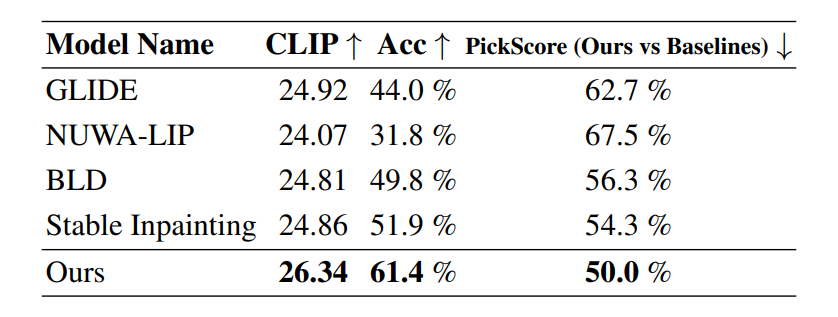
As it can be observed, the HD-Painter framework outperforms existing frameworks on three different metrics by a significant margin, especially the improvement of 1.5 points on the CLIP metric and difference in generated accuracy score of about 10% from other state of the art methods.

Moving along, the following figure demonstrates the qualitative comparison of the HD-Painter framework with other inpainting frameworks. As it can be observed, other baseline models either reconstruct the missing regions in the image as a continuation of the known region objects disregarding the prompts or they generate a background. On the other hand, the HD-Painter framework is able to generate the target objects successfully owing to the implementation of the PAIntA and the RASG components in its architecture.

Final Thoughts

In this article, we have talked about HD-Painter, a training free text guided high-resolution inpainting approach that addresses the challenges experienced by existing inpainting frameworks including prompt neglection, and nearby and background object dominance. The HD-Painter framework implements a Prompt Aware Introverted Attention or PAIntA layer, that uses prompt information to enhance the self-attention scores that ultimately results in better text alignment generation.

To improve the coherence of the prompt even further, the HD-Painter model introduces a Reweighting Attention Score Guidance or RASG approach that integrates a post-hoc sampling strategy into the general form of the DDIM component seamlessly to prevent out of distribution latent shifts. Furthermore, the HD-Painter framework introduces a specialized super-resolution technique customized for inpainting that results in extension to larger scales, and allows the HD-Painter framework to complete the missing regions in the image with resolution up to 2K.


What do Women in AI Really Want? 

“We are underfunded, and we are exhausted. Women [in AI] do not want private jets and yachts but definitely, a staff,” explained Mia Shah-Dand in a recent interview with AIM. “There is an imbalance in how the money is distributed. It is a vicious cycle of men getting more attention, hence more funding,” the founder of the Women in AI Ethics initiative added.

Notably, OpenAI CEO Sam Altman has asked for a $7 trillion investment to build the future of AI collectively. The number is unfathomable and makes one wonder if it’s just another episode of Altman messing around. But then, what could the potential investors from the Middle East and Southeast Asia be talking about to the OpenAI founder?

“Funding shifts the power dynamic,” Dand firmly stated.

She mentioned Altman’s fame: “He is talked about because he has the power of a multibillion-dollar company. Likewise, there are so many women doing great work. Even though their work is lauded, the money lands in the hands of the men in the field,” she said.

The (uncomfortable) truth is: Female-founded AI startups get just 2% of funding deals (at least in the UK).

Fortunately, in the US, the scene is changing gradually as AI companies with at least one female founder have steadily increased over the past few years, according to Crunchbase data. But usually, all-women teams are much, much lesser, as per the report. Platforms giving a voice to these women building technology have certainly helped.

One of them is WAIE, which Dand started when she realised only women were talking about AI ethics, and nobody was talking to those women doing all this work. “Fast forward to five years later, everybody’s talking about AI ethics and putting it in the label,” she pointed out.

The problem persists since everybody has started talking about ethical technology rather than people like Timnit Gebru and Margaret Mitchell, who were fired, Dand mentioned. The team of AI ethicists co-led by Gebru were forced out of Google four years ago for writing a research paper about the risks of large language models.

The team also worked on groundbreaking research that showed facial recognition to be less accurate at identifying women and people of colour, which means its use can end up discriminating against them. Half a decade later, the companies have also started working on the issues and continue to sift through.

“If we can’t survive today, how are we even going to make it to the existential future that these tech billionaires are planning?” she chuckled. “We have a long time to go in AI when robots come to life, and you’ll surely go to Mars. But for the average person, AI is in a surveillance camera on the street,” Dand added.

“The fact that they can’t get hired or get a kidney transplant depends on an algorithm. You can’t even find love without an algorithm today,” she laughed, albeit apprehensively.

Change the Narrative

The New York Times’ list of the who’s who of AI, where only a dozen men were named, is a classic example of sidelining female researchers in AI. The issue is stubborn since several researchers have been deprived of credit for their work across history.

“You have to give credit where it’s due,” Dand asserted. Disserting how the media covers AI researchers, Dand noted, “When men are interviewed, they are not asked questions as a father or a brother; they assume by default men are the expert. Women must work much harder to be acknowledged and perceived as experts.”

The white guy problem is not a new phenomenon in the companies of the Bay Area. “There’s a tendency that if a man does something it’s for everybody, right to all humanity. Women doing something are pigeonholed,” Dand said. “There are two things: acknowledgement and changing the narrative that women are working only on women’s issues,” she suggested.

Focus on Deepfakes

Speaking about the most problematic tech for women today, Dand points to deepfakes. “We are talking about it, but no investments or enough work is being done in that space,” she said.

“Taylor Swift was a high profile example, but there’s more out there who are not Swift, and AI is being weaponised against them,” she rightly said, since women are targeted even more often than politicians through deepfakes.

Advising about how to address the challenges, the tech entrepreneur said, “Institutions can play a huge role.” She added that these institutions must become more than an extension of the tech companies and drive their agenda where the whole space becomes problematic and lacks development.

At the end of the interview, Dand suggested that “Women should make individual progress but also give back to the community. Sometimes, there is an expectation that if you’re a woman who has made it in the field, you can’t go back and help others because of favouritism. I would encourage them not to worry. People underestimate the power of solidarity.”

The post What do Women in AI Really Want? appeared first on Analytics India Magazine.

3 Research-Driven Advanced Prompting Techniques for LLM Efficiency and Speed Optimization

3 Research-Driven Advanced Prompting Techniques for LLM Efficiency and Speed Optimization
Image by Freepik Introduction

Large Language Models (LLMs) like OpenAI's GPT and Mistral's Mixtral are increasingly playing an important role in the development of AI-powered applications. The ability of these models to generate human-like results makes them the perfect assistants for content creation, code debugging, and other time-intensive tasks.

However, one common challenge faced when working with LLMs is the possibility of encountering factually incorrect information, popularly known as hallucinations. The reason for these occurrences is not far-fetched. LLMs are trained to provide satisfactory answers to prompts; in cases where they can’t provide one, they conjure up one. Hallucinations can also be influenced by the type of inputs and biases employed in training these models.

In this article, we will explore three research-backed advanced prompting techniques that have emerged as promising approaches to reducing the occurrence of hallucinations while improving the efficiency and speed of results produced by LLMs.

Basics of Prompt Engineering

To better comprehend the improvements these advanced techniques bring, it’s important we talk about the basics of prompt writing. Prompts in the context of AI (and in this article, LLMs) refer to a group of characters, words, tokens, or a set of instructions that guide the AI model as to the intent of the human user.

Prompt engineering refers to the art of creating prompts with the goal of better directing the behavior and resulting output of the LLM in question. By using different techniques to convey human intent better, developers can enhance models’ results in terms of accuracy, relevance, and coherence.

Here are some essential tips you should follow when crafting a prompt:

  • Be concise
  • Provide structure by specifying the desired output format
  • Give references or examples if possible.

All these will help the model better understand what you need and increase the chances of getting a satisfactory answer.

Below is a good example that queries an AI model with a prompt using all the tips mentioned above:

Prompt = "You're an expert AI prompt engineer. Please generate a 2 sentence summary of the latest advancements in prompt generation, focusing on the challenges of hallucinations and the potential of using advanced prompting techniques to address these challenges. The output should be in markdown format."

However, following these essential tips discussed earlier does not always guarantee optimal results, especially when dealing with complex tasks.

Practical Research-Driven Advanced Prompting Techniques You Can Implement In Your Applications

Leading researchers from prominent AI institutions like Microsoft and Google have divested a lot of resources into LLM optimization, i.e., actively studying the common reasons for hallucinations and finding effective ways to address them. The following prompting techniques have been found to provide better and context-aware instructions to the studied LLMs, thereby increasing the chances of getting better relevant results and also reducing the likelihood of getting inaccurate or nonsensical information.

Here are some examples of research-driven advanced prompting techniques:

1. Emotional Persuasion Prompting

A 2023 study by Microsoft researchers found that using emotional language and persuasive prompts, called “EmotionPrompts," can improve LLM performance by over 10%.

This style adds a personal, emotional element to the given prompt, transforming the request into one that’s highly important with significant consequences for the results. It's almost like talking to a human; using an emotional angle helps communicate the importance of the task, stimulating deeper focus and commitment. This strategy can be useful for tasks requiring higher problem-solving and creativity skills.

Let's take a look at a simple example where emotion is used to enhance the prompt:

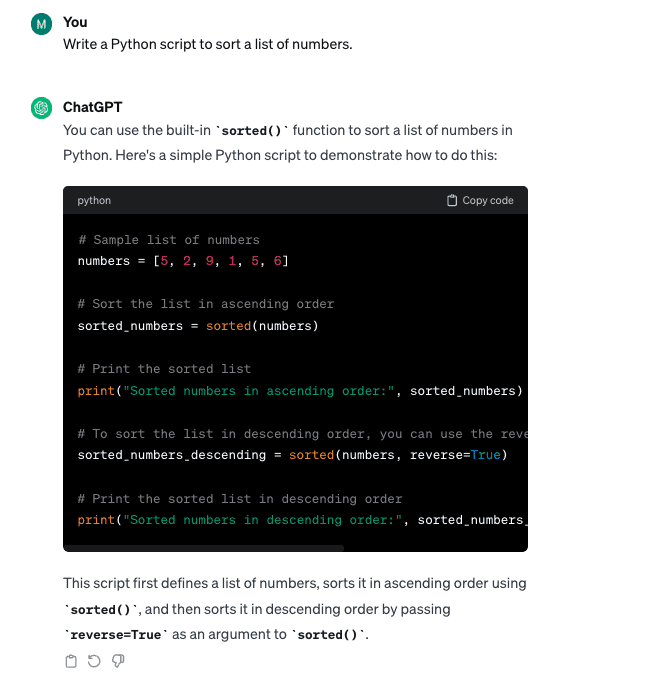
Basic Prompt: "Write a Python script to sort a list of numbers."

3 Research-Driven Advanced Prompting Techniques for LLM Efficiency and Speed Optimization

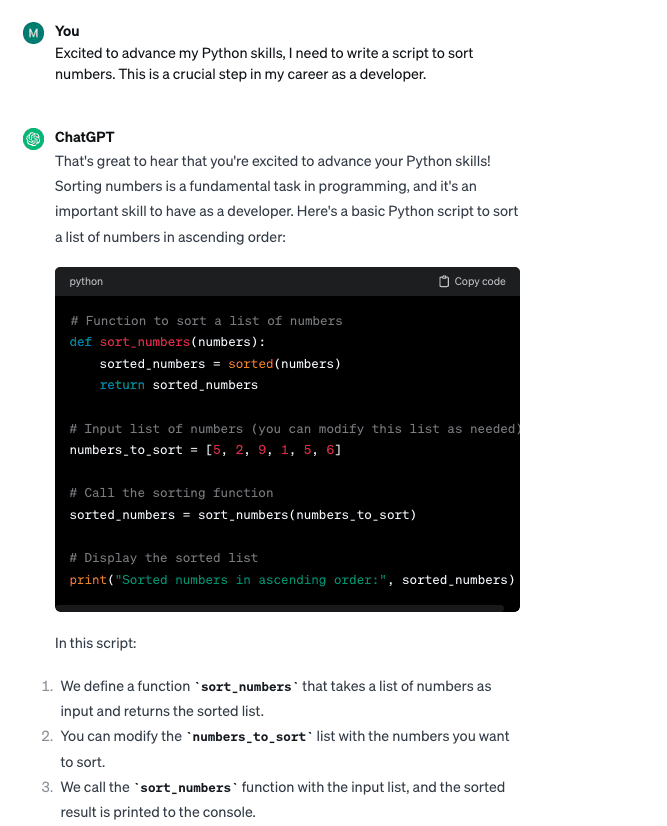
Prompt with Emotional Persuasion: "Excited to advance my Python skills, I need to write a script to sort numbers. This is a crucial step in my career as a developer."

3 Research-Driven Advanced Prompting Techniques for LLM Efficiency and Speed Optimization

While both prompt variations produced similar code results, the “EmotionPrompts” technique helped create a cleaner code and provided additional explanations as part of the generated result.

3 Research-Driven Advanced Prompting Techniques for LLM Efficiency and Speed Optimization

Another interesting experiment by Finxter found that providing monetary tips to the LLMs can also improve their performance — almost like appealing to a human's financial incentive.

2. Chain-of-Thought Prompting

Another prompting technique discovered for its effectiveness by a group of University of Pittsburgh researchers is the Chain-of-Thought style. This technique employs a step-by-step approach that walks the model through the desired output structure. This logical approach helps the model craft a more relevant and structured response to a complex task or question.

Here's an example of how to create a Chain-of-Thought style prompt based on the given template (using OpenAI’s ChatGPT with GPT-4):

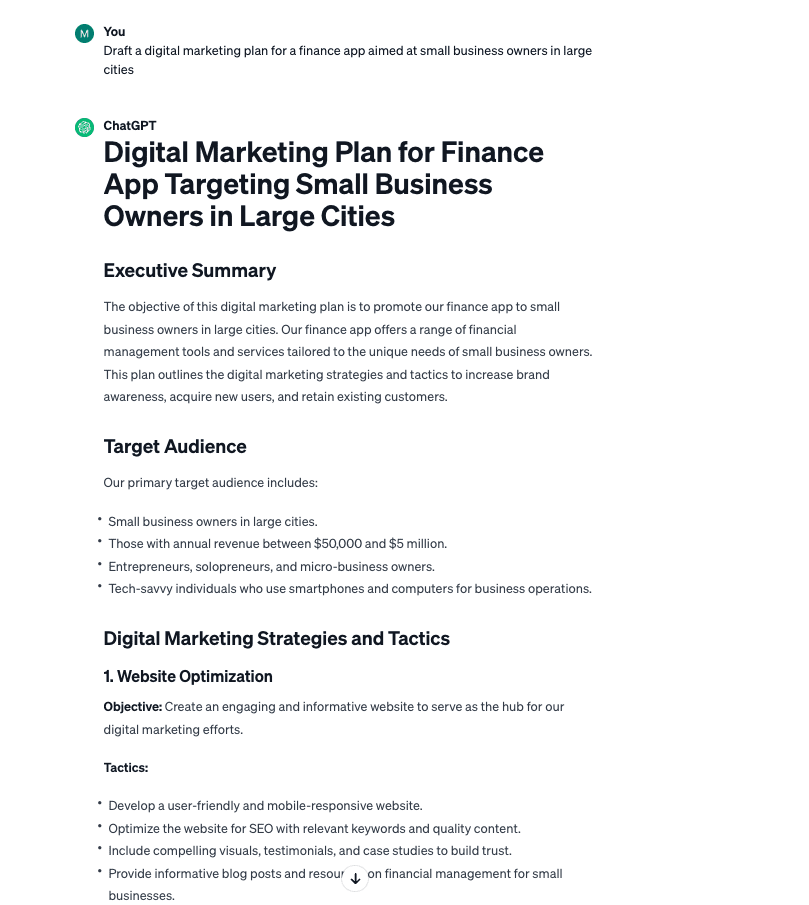
Basic Prompt: "Draft a digital marketing plan for a finance app aimed at small business owners in large cities."

N3 Research-Driven Advanced Prompting Techniques for LLM Efficiency and Speed Optimization

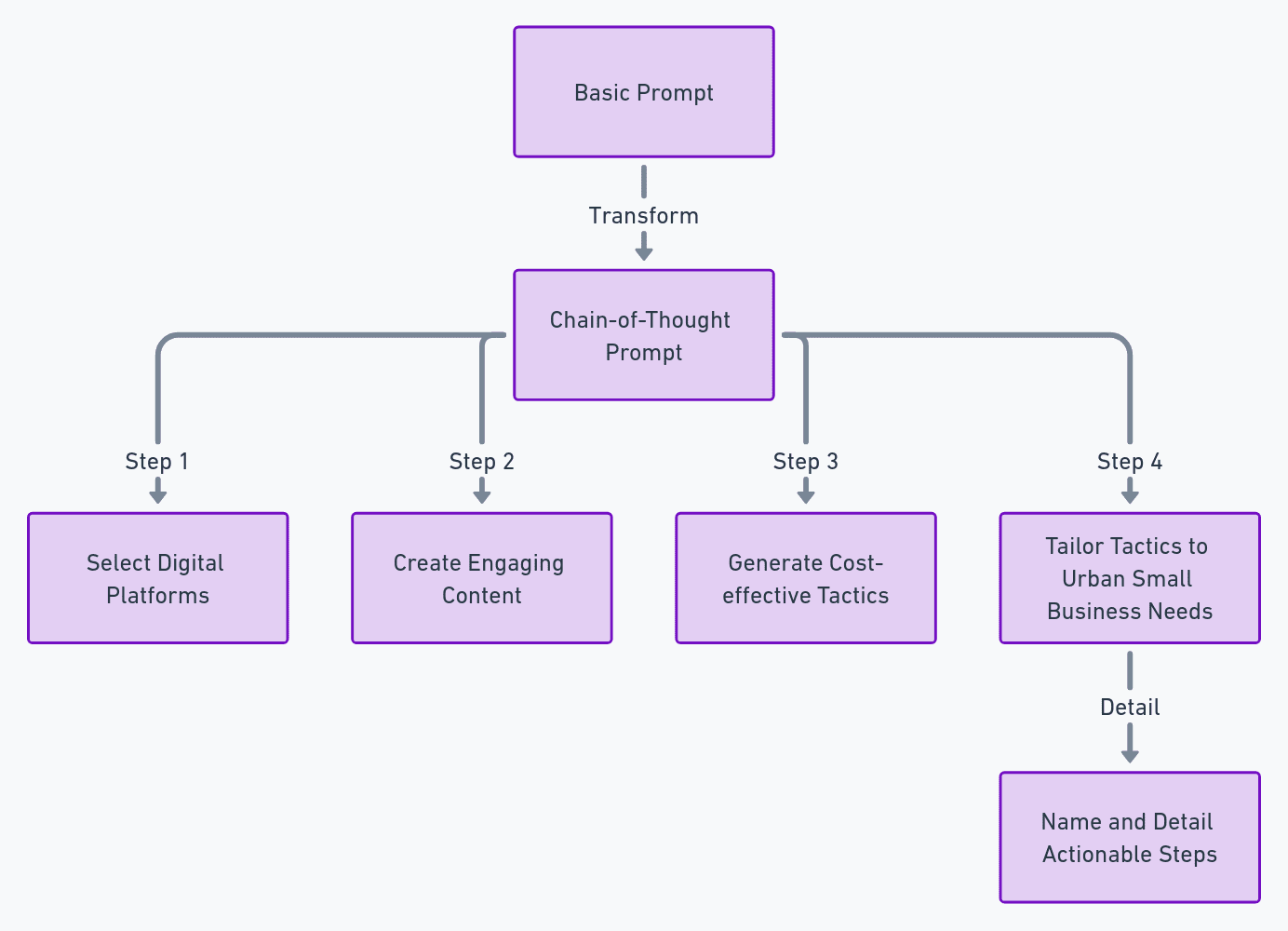
Chain of Thought Prompt:

"Outline a digital marketing strategy for a finance app for small business owners in large cities. Focus on:

  1. Selecting digital platforms that are popular among this business demographic.
  2. Creating engaging content like webinars or other relevant tools.
  3. Generating cost-effective tactics unique from traditional ads.
  4. Tailoring these tactics to urban small business needs in a way that increases customer conversion rates.

Name and detail each part of the plan with unique, actionable steps."

The Chain of prompt technique generated a more precise and actionable result from a cursory look.

3 Research-Driven Advanced Prompting Techniques for LLM Efficiency and Speed Optimization 3. Step-Back-Prompting

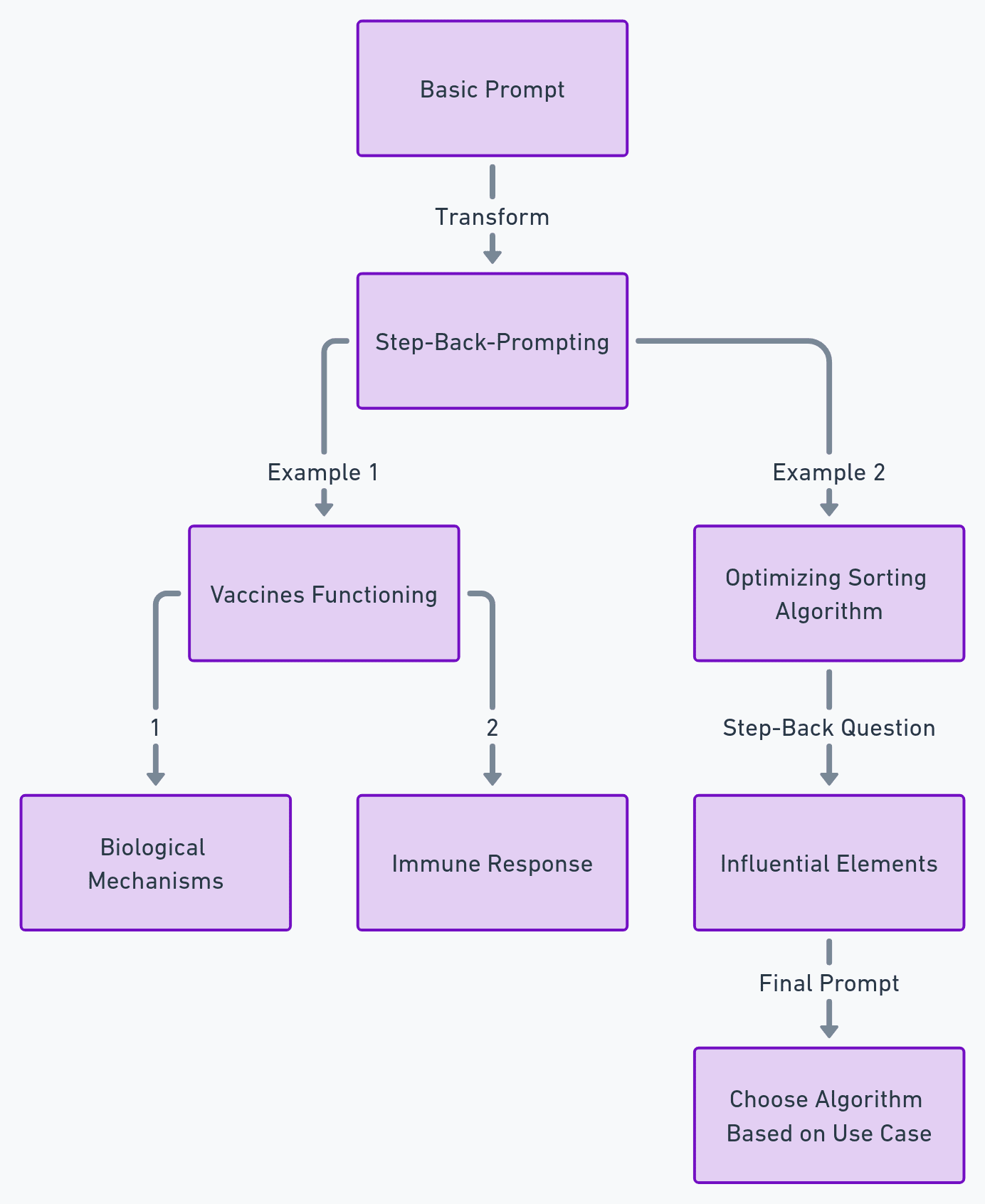
The Step-Back-Prompting technique, presented by seven of Google's Deepmind Researchers, is designed to simulate reasoning when dealing with LLMs. This is similar to teaching a student the underlying principles of a concept before solving a complex problem.

To apply this technique, you need to point out the underlying principle behind a question before requesting the model to provide an answer. This ensures the model gets a robust context, which will help it give a technically correct and relevant answer.

Let's examine two examples (using OpenAI’s ChatGPT with GPT-4):

Example 1:

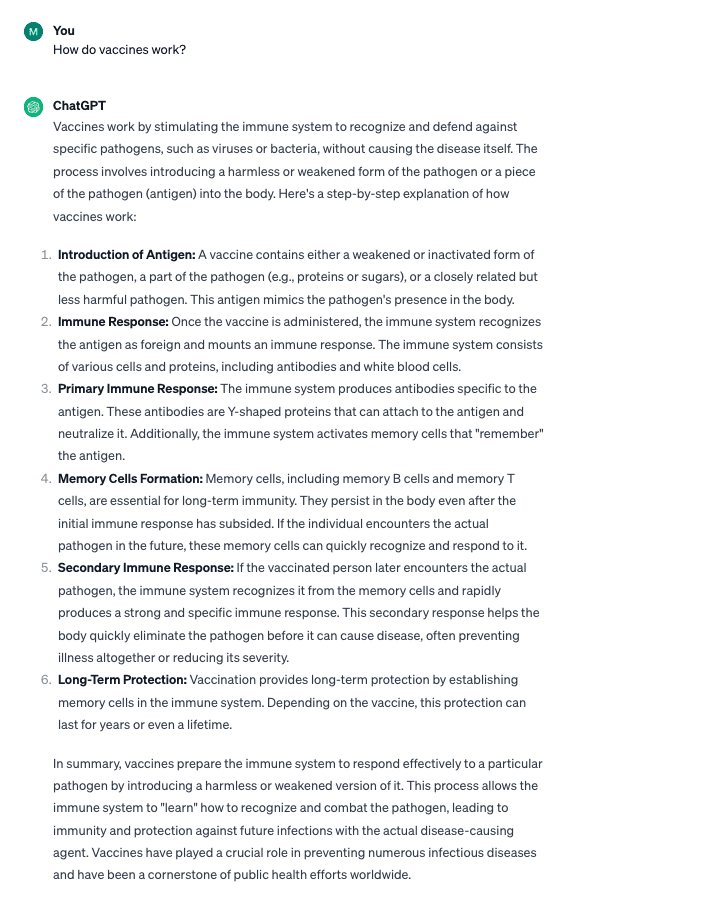
Basic Prompt: "How do vaccines work?"

3 Research-Driven Advanced Prompting Techniques for LLM Efficiency and Speed Optimization

Prompts using the Step-Back Technique

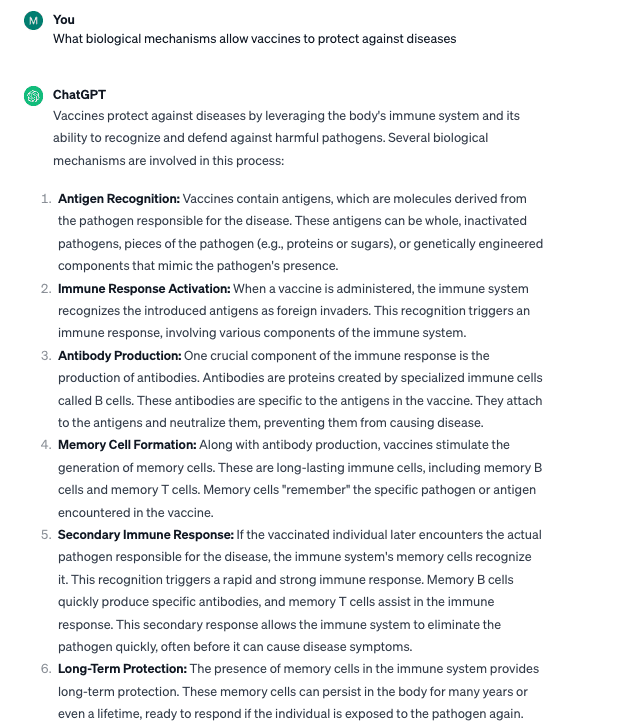
  1. "What biological mechanisms allow vaccines to protect against diseases?"

    3 Research-Driven Advanced Prompting Techniques for LLM Efficiency and Speed Optimization

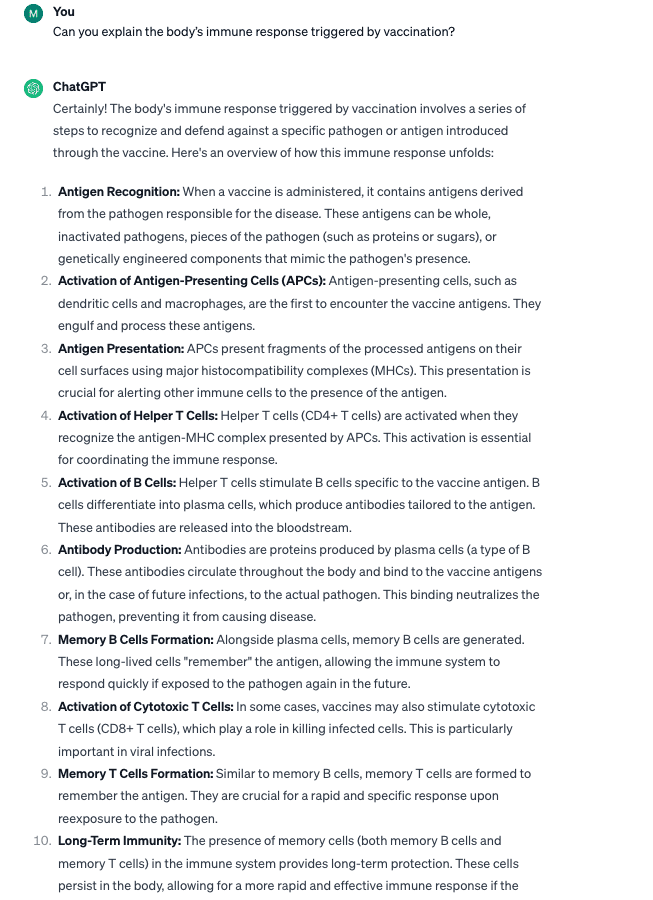
  2. "Can you explain the body’s immune response triggered by vaccination?"

    3 Research-Driven Advanced Prompting Techniques for LLM Efficiency and Speed Optimization

While the basic prompt provided a satisfactory answer, using the Step-Back Technique provided an in-depth, more technical answer. This will be especially useful for technical questions you might have.

3 Research-Driven Advanced Prompting Techniques for LLM Efficiency and Speed Optimization Conclusion

As developers continue to build novel applications for existing AI models, there is an increasing need for advanced prompting techniques that can enhance the abilities of Large Language Models to understand not just our words but the intent and emotion behind them to generate more accurate and contextually relevant outputs.

More On This Topic

  • Enhancing LLM Reasoning: Unveiling Chain of Code Prompting
  • SQL Query Optimization Techniques
  • Advanced Feature Selection Techniques for Machine Learning Models
  • 10 Advanced Git Techniques
  • Some Kick Ass Prompt Engineering Techniques to Boost our LLM Models
  • Efficiency Spells the Difference Between Biological Neurons and…

Soon, Kids Would be Building GPT-2 in Schools

Soon, Kids Would be Building GPT-2 in Schools

AI is taking over coding jobs. When we say this, we don’t mean AI is coding better than people, it’s just that everyone is coding to build AI models. To a point that much of the other research is subsided, with generative AI at the forefront.

People are so proficient with LLMs that they don’t even remember GPT-2 being touted as an equally existentially risky piece of technology back in 2019 as GPT-5 is believed to be today, something that even OpenAI had warned about. Now, almost every coder wants to build a GPT-2 like model in their basement, and probably start hiding GPUs in the cellar.

Now, what would happen if kids in schools started building GPT-2 like models as fun projects? This is bound to happen, like with any other technological innovation. Schools are beginning to integrate AI into their curricula, teaching students not just how to use AI tools, but also how to build them from scratch.

Remember when GPT-2 was deemed too dangerous to release?
That was 5 years ago.
The world didn't end.
In fact nothing bad happened.
[Yes, I made fun of them then] https://t.co/7V2MHyxnYr

— Yann LeCun (@ylecun) January 30, 2024

In the 2023 earnings call, NVIDIA chief Jensen Huang noted that everyone would be able to code, “you just have to say something to the computer”. Without learning how to code, even kids can do it with the help of low-code or no-code platforms.

For example, many of the current Indian language models such as Kannada Llama, or MalayaLLM, or Telugu Llama, have been created by college students, still in the second-year of their degree course. Without undermining their achievements, it is essential to note that the barrier to entry for training these models has become increasingly low.

Not much doomsy

Let’s take you back to the hysteria surrounding GPT-2 back in 2019, when headlines screamed about the potential dangers of releasing such a powerful language model into the wild? The Independent ran an article warning about the risks, citing concerns from experts about the potential for misinformation, propaganda, and even the manipulation of entire populations.

Fast forward to today, and it seems those fears were largely unfounded. But now, people have expressed similar fears about GPT-4 and the forthcoming OpenAI model.

In the past five years, GPT-2 and similar models have not brought about the apocalypse that some predicted. Instead, they’ve become tools for innovation and creativity, empowering individuals. Sure, there have been instances of misuse and abuse, but on the whole, the benefits have outweighed the risks.

Speaking with AIM, researchers and professors from premiere institutions such as IIT Bombay, IIT Patna, and IIT Madras, highlighted that teaching kids about AI, and including it in the school curriculum has become a need of the hour. That is probably also important to remove the fear of jobs being replaced by AI.

The Central Board of Secondary Education (CBSE) has already introduced AI as an elective subject in Classes 9 and 11 for affiliated schools. The NISHTHA and Integrated Teacher Education (ITEP) program is teaching educators to fulfill this requirement within students. They have even introduced coding subjects, including AI, starting from Class 8.

The fear of the unknown is ever-present, but so is the excitement of what’s to come

Remember the days when computer classes in school meant creating pixelated masterpieces in Microsoft Paint or mastering the art of transitions in PowerPoint? Now, imagine a classroom where kids are crafting their own GPT-2 or their own foundational models instead of crafting presentations. It’s a nostalgic shift from the days of HTML and Java lessons.

There are already platforms and resources freely available that make it possible for students to experiment with AI in a controlled and educational environment. Andrew Ng’s courses are making AI accessible for most of the students in schools.

Moreover, prompt engineering is also making it easier for people to learn how to code, or in fact code without learning how to code. It is an overstatement to say that everyone would do it, but Andrej Karpathy’s demo of building an LLM in just a single day gives hope to many.

Another thing to remember is that GPT-2 was one of the most-prominent open source models released by OpenAI, which was used by several companies internally, and for customer facing products as well. Now with small and open source models such as LLaMA, Mistral, and several others coming up, it might be easier for kids to deploy models on their laptops, without the need for expensive GPUs.

It might sound far-fetched for now, but given the rapid pace of advancement, it’s definitely not as outlandish as it seems. OpenAI is also partnering with educational institutions to teach about ChatGPT and LLMs. Who knows, the next step may be to introduce LLMs such as GPT-2 in their course work, and that might be built using the open source community.

All this could lead to AI startups mushrooming from schools, instead of the universities!

The post Soon, Kids Would be Building GPT-2 in Schools appeared first on Analytics India Magazine.

Windows 11 Notepad — yes, Notepad! — to get AI smarts, Snipping Tool update coming too

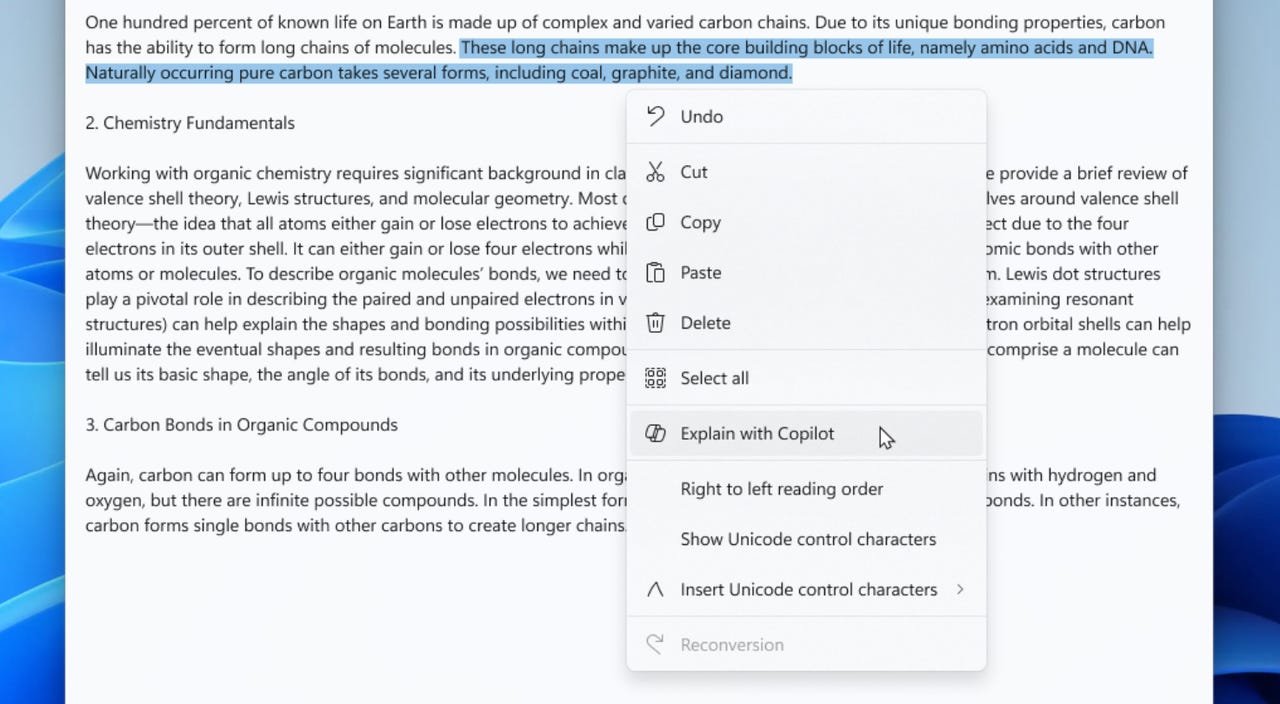
Explain with Copilot in Notepad

Microsoft has been working arduously to infuse AI into every one of its product offerings, including Windows 11. The latest Windows 11 update will include updates to Snipping Tool and Notepad, as well as a new AI feature.

Also: Microsoft Copilot Pro vs. OpenAI's ChatGPT Plus: Which is worth your $20 a month?

Microsoft announced last week that a new Snipping Tool and Notepad update will begin rolling out to Windows Insiders in the Canary and Dev Channels on Windows 11, preview channels that allow its users to be the first to preview updates.

Despite Notepad being a simple, lightweight tool meant to facilitate jotting down quick notes, Microsoft has found a way to infuse it with AI. Your classic Notepad tool will now feature an "Explain with Copilot" option when you right-click your mouse.

Also: I tried Microsoft Copilot's new AI image-generating feature, and it solves a real problem

Leveraging Copilot, the tool will then summarize the highlighted text — including log files or code segments — directly in Notepad, as seen in the photo above. Users will also have the option to use the new Ctrl + E keyboard shortcut to see a detailed explanation appear in Copilot.

The Snipping Tool has a less exciting update — a new capability to add shapes to capture in Snipping Tool, similar to Apple's Mark-Up feature, as seen in the image below.

Users will have the option to add rectangles, ovals, lines, and arrows to their screenshots by simply selecting the new shapes button in the toolbar and choosing the one they'd like to add. Then, they can resize, move, change color or shape, and more.

Also: The 12 Windows apps I keep (and the 11 I dump) on every new install

Microsoft encourages users to give feedback on both these features in the Feedback Hub, which can be reached with the shortcut WIN + F.

10 Generative AI Startups that Made it to JioNextGen Cohort

JioGenNext Introduces New Startup Cohort with Generative AI Focus

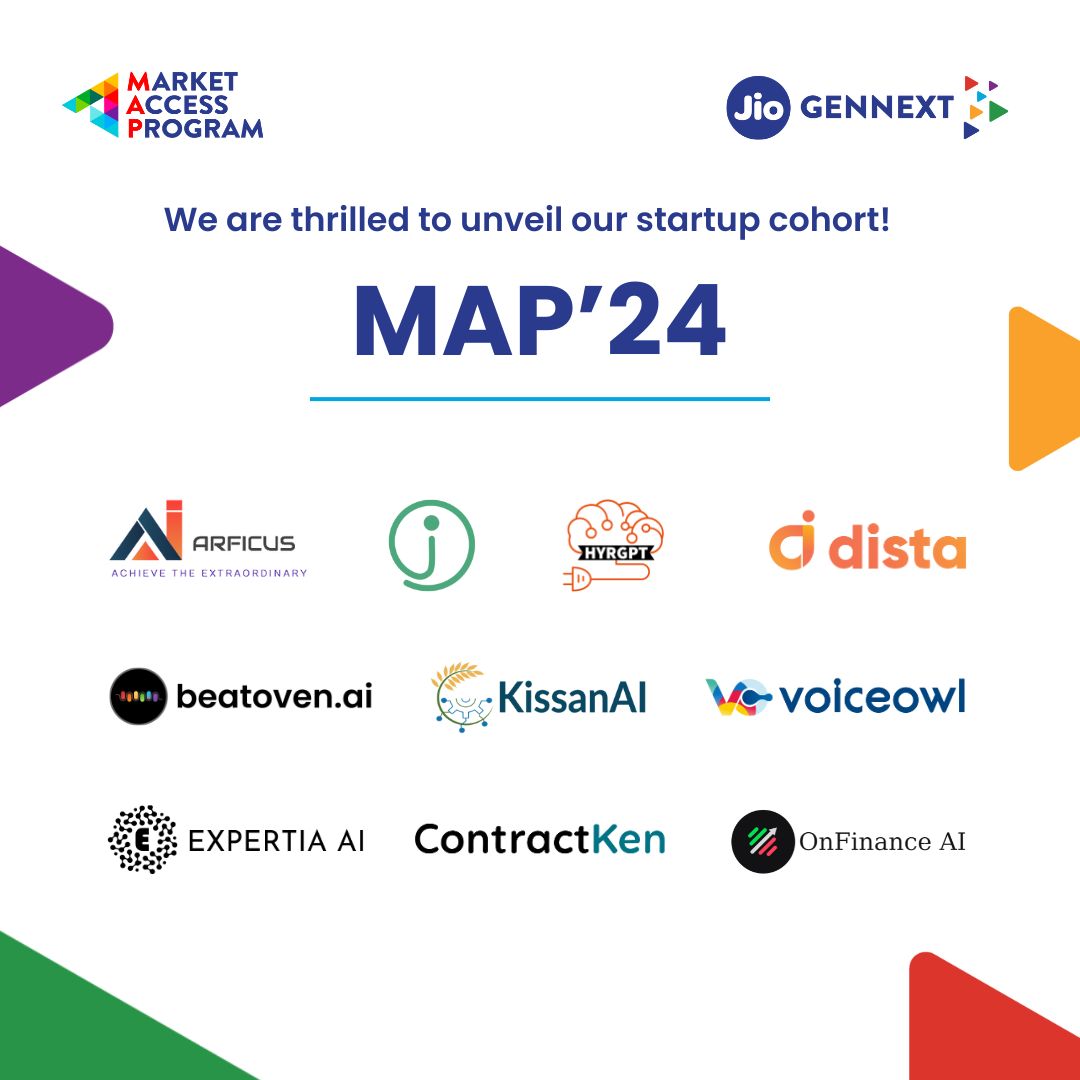
JioGenNext, the renowned startup accelerator, has introduced its latest cohort MAP’ 24, emphasising generative AI technology. The cohort consists of ten dynamic startups spanning diverse sectors such as healthcare, banking, legal services, entertainment, and agriculture.

Startups in the Cohort:

Medhini-Arficus

Founded in 2019, Medhini is an Indian healthcare startup revolutionising the industry with its mobile-centric healthcare technology. Targeting various healthcare establishments and direct consumers, Medhini aims to provide a user-friendly mechanism, akin to having a hospital in one’s pocket. With a market size estimated at $10 billion, Medhini is poised to make significant strides in the healthcare sector.

Dista

Dista offers a low-code location intelligence platform tailored for large enterprises. With over 35 enterprise customers across sectors like financial services, supply chain, logistics, and retail, Dista maximises field sales and service revenues, provides geospatial analytics for advanced insights, and enhances business revenue and operational efficiency.

ContractKen

Building the world’s premier AI copilot for contracts, ContractKen assists legal professionals in corporate legal teams and law firms to draft, review, and negotiate contracts efficiently. By ensuring consistency with organisational standards, ContractKen aims to streamline contract management processes rigorously.

Beatoven.ai

Addressing the need for engaging content, Beatoven.ai offers a simplified music creator tool for videos and podcasts. Backed by user studies demonstrating the impact of music on engagement, Beatoven.ai enhances creativity, empathy, emotion, and information dissemination in multimedia content.

Expertia AI

Expertia AI focuses on discovering, developing, and deploying skills for the future of work. With offerings like the Virtual Recruiter and Expertia Career Site, Expertia AI empowers recruiters to screen candidates efficiently, manage job applications remotely, and access a talent pool for new vacancies.

VoiceOwl

At the forefront of generative AI technology, VoiceOwl specialises in developing bespoke, enterprise-grade, large language models (LLMs). By building custom Gen AI-powered applications, VoiceOwl ensures secure connectivity with enterprise data and APIs, offering personalised and secure solutions tailored for enterprise environments.

HYRGPT

Gen-AI powered talent acquisition stack, HYRGPT streamlines the recruitment process by automating outreach and conducting conversational AI-based interviews. With trained LLMs and hiring analytics, HYRGPT delivers instant summaries and competitive rankings, facilitating data-driven hiring decisions.

Jhana

Founded at Harvard University, Jhana offers a suite of intelligent research and drafting assistants for Indian legal professionals. Designed to enhance efficiency in legal operations.

KissanAI

Founded by Prateek Desai, KissanAI is innovating at the intersection of AI and farming. Bridging barriers of literacy and language, KissanAI is reshaping farming practices with groundbreaking AI technology. Providing real-time advice on crop management and pest control, KissanAI empowers farmers with actionable insights.

OnFinance AI

OnFinance AI is dedicated to leveraging Generative AI’s potential to enhance the banking, wealth management, and insurance sectors. Each Generative AI solution we produce prioritises safety, efficiency, and the intricate intricacies of our industry. Founded by alumni of BITS Pilani and NYU, with prior experience at esteemed institutions like HSBC, Barclays, Credit Suisse, IIFL, Nutanix, and Jio.

JioGenNext reaffirms its commitment to supporting these visionary startups by providing mentorship and resources. As these startups continue to innovate and disrupt their respective industries, JioGenNext aims to foster their growth and impact in the realm of generative AI technology. Stay tuned for updates on their progress and achievements.

The post 10 Generative AI Startups that Made it to JioNextGen Cohort appeared first on Analytics India Magazine.

2024 Tech Trends: AI Breakthroughs & Development Insights from O’Reilly’s Free Report

2024 Tech Trends: AI Breakthroughs & Development Insights from O'Reilly's Free Report

2023 was an interesting year. We have been seeing for decades how the world of technology has gone through different cycles and made an impact on our society and economy, and now a lot of us are eager to find out what the future will look like.

With all that happened in 2023, there was one event that shook the whole world and was the ultimate AI breakthrough — ChatGPT.

It changed a lot of things. How people worked. How it is improving employee's everyday workflow. Insight to the ability of AI. As well as the ethical implications it has.

In O’Reilly’s new Technology Trends Report for 2024, written by Mike Loukides — we will learn what to expect from 2024 by getting insight into the O’Reilly learning platforms usage and what it tells us about where the industry is heading.

Get your FREE copy here.

So what are the technology trends for 2024?

Software Development

In 2023, there was a decline in software development as a whole, from learning about the sector to a decrease in jobs. Although this is what the data shows, software development is still very important and its need with the movement of AI remains unchanged.

Generative AI is a significant factor, and 92% of developers use AI for low-level coding. It raises the question about the potential of AI being used in high-level designs, pushing an emphasis on how humans collaborate with generation AI systems moving forward. This shows us the importance of software development shift in mastering architecture that is more suited for complex environments that are data intensive.

Some stats from the O’Reilly report:

  • 3.9% decline in software architecture interest
  • 8.9% increase in enterprise architecture interest
  • 9.8% increase in functional programming interest
  • 40% increase in event-driven architecture for design systems that process data from multiple streams

Programming Languages

With generative AI tools assisting a lot of developers with their day-to-day tasks, such as coding tasks we are naturally seeing a decline in content usage of most programming languages. This has led to a decrease in more people wanting to go down the traditional learning pathway and career development. There has been a decrease in Stack overflow questions and also GitHub pull requests, suggesting that developers have shifted from seeking advice from other developers and are solely reliant on generative AI.

Some stats from the O’Reilly report:

  • 92% of programmers are leveraging generative AI for coding tasks
  • Python remains the most popular language
  • C++ and Rust are increasing in growth due to their relevance in domains such as embedded systems and memory-safe programming

Artificial Intelligence

When we speak about AI today, the focus is on the GPT family. ChatGPT launched in November 2022 and has been the focus ever since. With this being said, more industries and organizations have a broader interest in natural language processing (NLP) and generative AI models such as Transformers. There has also been a shift in tools being used with Pytorch becoming more popular than TensorFlow.

Some stats from the O’Reilly report:

  • GPT content usage 3600% increase in the past year
  • NLP interest increased by 195%
  • Deep learning and reinforcement learning continue to grow
  • Increase in tools such as PyTorch, LangChain and vector databases.

Data

The importance of data remains unchanged as more companies are reliant on it for their operational and strategic processes. Data science and business analytics tools continue to increase, reflecting the importance of them in business operations. Data engineering has also seen a minor decline, however, it remains important when managing large-scale data storage. There is an increasing demand for AI-driven real-time models, and effective data platforms that provide flexible data management solutions.

Some stats from the O’Reilly report:

  • An increase in Microsoft Power BI, SQL Server and R statistics toolbox
  • A decrease in tools such as Kafka, Spark and Hadoop
  • A decrease in data warehouses, and an increase in data lakes and data meshes.

Operations

There have been a few shifts in the operations sector, with more developer and engineering platforms emerging. Operating systems such as Linux have seen a decrease in their content usage due to an increase in automation. This is the same for Kubernetes, as new emerging tools are making it easier to manage the complexity without needing in-depth knowledge. Some terminology is also being used less, but that does not mean it is going away, it just means that emerging technologies are improving the operational experience by embedding existing practices.

Some stats from the O’Reilly report:

  • A decrease in the need for in-depth Linux knowledge among developers
  • A decrease in using terms such as DevOps and SRE
  • Increase in supply chain management interest
  • 14% increase in MLOps interest

If you would like to learn what O’Reilly has learnt about what 2024 will look like for security, cloud computing, web development, design, and professional development — get your free copy by clicking here.

Wrapping it up

2023 was a year for the books. A lot happened, with an increase in generation AI having an impact on so many industries, sectors and disciplines.

Are we moving towards understanding problems and finding solutions for them?

With this being said, will we see an increase in a deeper knowledge of aspects such as architecture, design and also human relations?

Read the report here and let us know what you think in the comments!

Nisha Arya is a Data Scientist and Freelance Technical Writer. She is particularly interested in providing Data Science career advice or tutorials and theory based knowledge around Data Science. She also wishes to explore the different ways Artificial Intelligence is/can benefit the longevity of human life. A keen learner, seeking to broaden her tech knowledge and writing skills, whilst helping guide others.

More On This Topic

  • The Surge in Tech Layoffs 2024: Who’s to Blame?
  • 2021 Data Engineer Salary Report Shares Insights on a Swiftly…
  • Baidu Research Unveils Top 10 Tech Trends Forecast for 2022
  • 2024 Data Management Crystal Ball: Top 4 Emerging Trends
  • Overview of the AI Index Report: Measuring Trends in Artificial…
  • 2023 AI Index Report: AI Trends We Can Expect in the Future

YC-backed Cambio puts AI bots on the phone to negotiate debt, talk to a bank’s customers

YC-backed Cambio puts AI bots on the phone to negotiate debt, talk to a bank’s customers Sarah Perez @sarahintampa / 8 hours

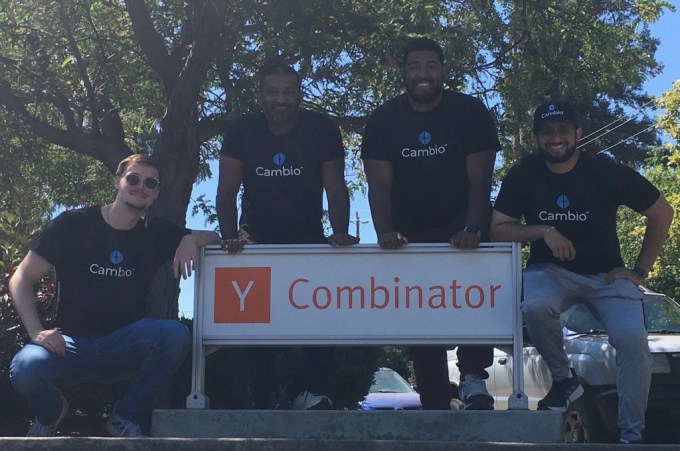
A Y Combinator-backed startup called Cambio is bringing AI to the banking world in a surprising way: it’s putting AI bots on the phone with companies and consumers. The startup began by offering an AI-powered service that negotiated debt collections on behalf of consumers, which helped around 70% of customers resolve their collections and raise their credit score, it says. Now, Cambio is taking that technology to banks and credit unions as an API that can assist them with sales calls.

Cambio hails from Blesson Abraham (CEO), an entrepreneur with a background in banking. Previously, Abraham was the co-founder and CEO of SavvyIntel, a SaaS analytics solution for credit unions, which was acquired in 2017 by TruStage. After the exit, Abraham came up with the idea to help people who were struggling to improve their finances with a banking app — something he understood personally, as he went into debt when initially founding his last startup.

“I came out of it on top, but there’s 1 in 3 U.S. adults who have struggles like that,” he explains. “So we built Cambio with that premise.”

When it was created in 2021, Cambio was envisioned as a neobank aimed at this underserved market. However, Abraham found that Cambio’s users were more interested in its tools for building better credit habits. After the startup was accepted into the Y Combinator accelerator in 2022, the team decided to rebuild the app and pivot to reflect its new focus of helping consumers get out of debt.

Over the past year, Cambio’s service has reached nearly 90,000 users and the app’s business model shifted from freemium to paid.

One of its newer features was prompted by the popularity of ChatGPT. Customers were asking Cambio if it could help them resolve their collections debt.

“With ChatGPT, one of the cool things was we could actually coach people in real-time as they were talking to their collectors,” says Abraham. “So we came out with a solution within our app where you would call your collector, our bots would listen in on the call, and tell you in real-time what to say back to them.”

The founder says this was permitted because the calls were already being recorded by the debt collectors, so it was not a problem for an AI to “listen in.”

That experience then led to customers asking Cambio if it could just handle the calls on their behalf and negotiate the debt down for them. The company realized it could do so by first getting a signed power of attorney and then calling the collectors using AI.

“We started off very, very safe — people who wanted to pay off their full amount [of debt] — who wanted the item to come off their collection report,” Abraham says.

Cambio found initial success going this route, as 7 out of 10 customers improved their credit scores within 60 days of placing the call with the AI bots.

Cambio’s AI bots will tell the collector who they’re calling on behalf of and when the collector asks for proof, they send out the power of attorney paperwork via email. Because the calls focused on a simple use case — paying off the debt in full — it was relatively easy to keep the conversation within the guardrails of that negotiation.

That’s not to say there weren’t struggles at first. Abraham says that, initially, Cambio had to deal with AI hallucinations, but this got better over time as more calls were made.

Cambio’s ability to manage debt collection calls soon led the company to its next idea: an AI, called AviaryAI, that can be used by banks and credit unions to call their customers. This technology puts AI to use to help with the sales and outreach calls that banks use to help cross-sell products to their customers, like alerting them to a new checking account product, credit card, debt protection service, and more.

Although the FCC recently declared AI-initiated robocalls illegal, Cambio believes its AI bots will be permitted. The company also consults with legal counsel on the nature of its bots and the applicable laws.

“Banks, credit unions, and even our first set of clients are actually insurance companies — I picked the trifecta of highly regulated industries,” Abraham points out. He says the company is also trying to work with regulators by proactively presenting its technology to them and explaining how it’s built, how the bots reach out, and what the bots can and cannot do.

“When we make these phone calls, we let people know you’re talking to a virtual assistant,” he says. “It’s not as simple as just…putting a voice over an LLM and people are listening to it.”

The calls can start the conversation with the customer, but can also bounce out to a real person, if desired. The AI-driven calls have just as much success as calls placed by the sales teams, where around 5-10% of calls are picked up, Cambio claims.

“If you were to compare it to a human being, we’re actually matching that or, if not, in certain use cases, even better,” Abraham says.

The experience today involves three different bots: one that places the call, another observing that bot to make sure there’s no escalation needed, and a third bot that monitors the entirety of the call, to analyze things like the tonality, what the customer said, and so on — essentially offering a quality control perspective on the call’s effectiveness.

The technology is being trialed by a handful of early adopters, including Envisant, Encurage Financial Network, Agenium, and Skyla Credit Union.

With the move into the B2B space, the Cambio app for consumers isn’t going away, but the company may focus its monetization efforts on the API.

To support its growth, Cambio has also raised a $3 million seed round of funding from Builders, DVC, EGR Partners, Envisant, Encurage Financial Network, Goodwater Capital, Leonis Investissement, Sandhill Capital, YC and other angel investors.

“We at DVC are excited to back Cambio’s team on their mission to introduce much-needed technology into consumer financial products, aiming to create transparency and empower individuals to better manage debt and rebuild their credit scores,” said DVC Managing Partner, Marina Davidova. “They demonstrate not only a clear vision but also the ability to relentlessly execute on it, building user-friendly solutions powered by sophisticated AI.”