Why Should You Attend The Rising 2024? 

Rising 2024

Diversity and inclusion (D&I) are important pillars defining every company’s culture. A Harvard Business Review research indicates that companies with diversity experience a 19% increase in innovation revenue. D&I fosters a more inclusive company culture by welcoming diverse ideas, cultures, and lifestyles.

This approach enables organisations to tap into a broader and often overlooked pool of talent, resulting in improved customer satisfaction. The benefits are evident, with ethnically- and gender-diverse companies being 35% and 15% more productive, respectively. This ultimately leads to a more successful and competitive business model.

D&I is not limited to bringing people from different races or genders together in a workplace, but also providing a safe space to embrace their sexual identity. The prevalence of LGBTQ+ networks has seen a substantial rise, with 82.5% of companies in the Most Inclusive Companies Index 2022 featuring such networks – a stark contrast with the less than 25% reported seven years ago.

One of the most impactful ways of making tech more accessible and inclusive is to provide a platform for individuals to share their experiences.

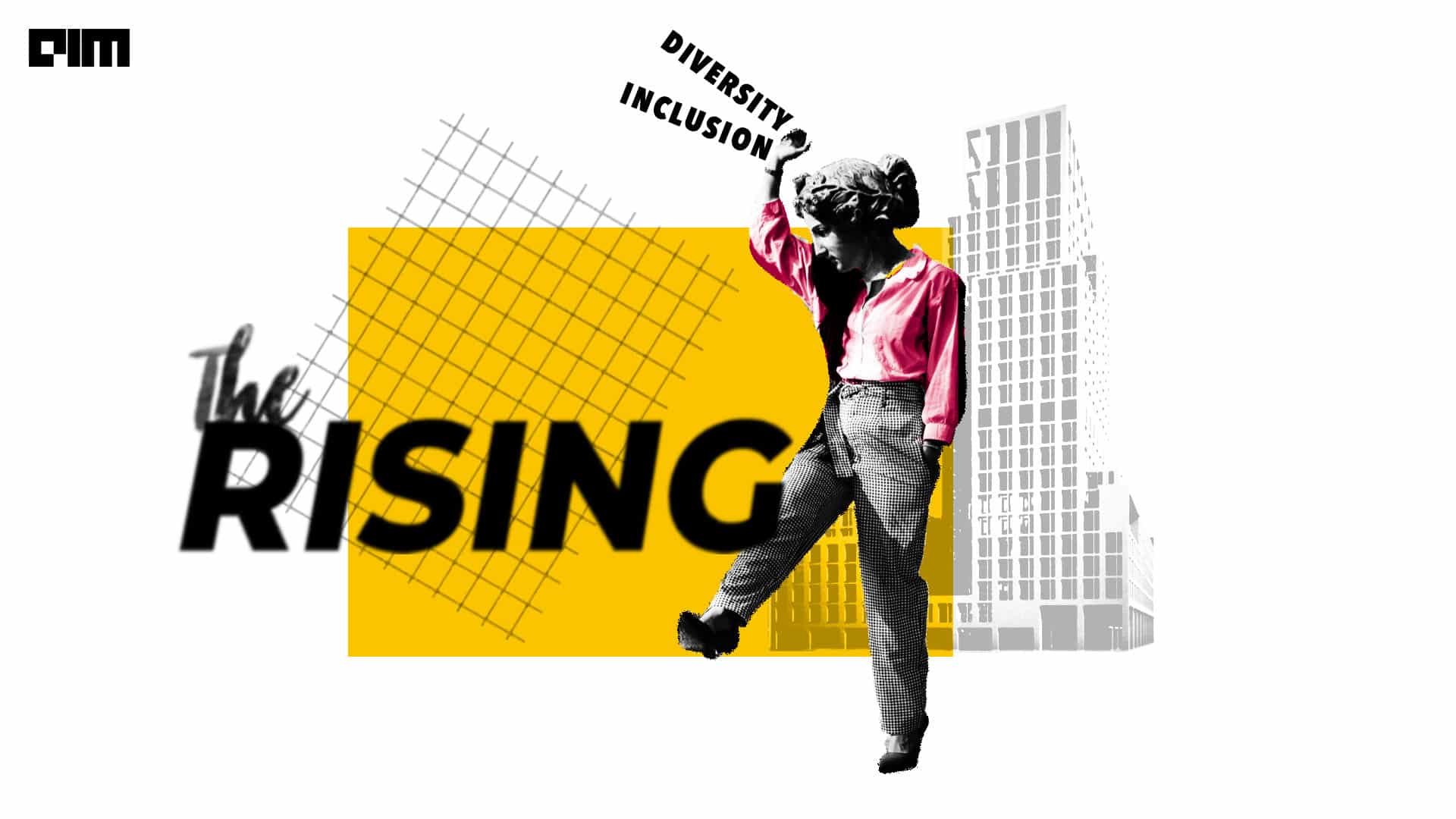
AIM leads the change with The Rising 2024, India’s biggest summit on D&I in technology.

A Must-Attend Event for All

The upcoming 6th edition of The Rising 2024 stands as a powerful testament to inclusivity, transcending boundaries, and embracing everyone for who they are.

Date: April 4-5, 2024

Location: Hilton Embassy in Manyata Tech Park, Bengaluru

The Rising 2024 serves as a prestigious platform for professionals from both industry and academia, sparking dynamic exchanges and inspiring anecdotes within the expansive field of data science. The event will showcase the triumphs and career trajectories of individuals in the ever-evolving tech sector.

The conference offers a unique opportunity to delve into critical topics through live Q&A sessions, panel discussions, tech talks, and keynote presentations. So, whether you’re just starting out or deeply involved in the tech scene, this platform is unparalleled for expanding networks.

What to Expect?

With a robust lineup featuring over 50 impactful sessions, drawing in a powerhouse of 1000+ attendees, including C-suite leaders, data scientists, engineering experts, developers, IT architects, executives, and AI enthusiasts. The focus is to highlight the profound impact a diverse talent pool can have in steering a company towards unparalleled success.

The event isn’t just a celebration of achievements; it’s a call for everyone to understand how diversity isn’t merely a checkbox to tick, but a catalyst for thriving careers in the dynamic tech landscape.

Some of the notable speakers at The Rising are Shruti Kashyap, CIO at Hindustan Unilever; Vijayashree Natarajan, SVP and head of technology at Omega Healthcare; Anuprita Bhattacharya, head of Merck IT Centre; Sharada Nandakumar, president and CEO at Voya India; Vandana Suri, founder at Taxshe; and Kopal Sarin Raj, VP IT and India CIO at Wabtec Corporation, India.

Besides them, we also have Janhavi Chitale, CIO at Chitale Bandhu Mithaiwale; Mamta Saikia, CEO at Bharti Foundation; Khushbu Jain, founding partner of Ark Legal; Pallavi Mohapatra, retired Air Force pilot – first woman in India to live fire Akash Missile; Ekta Grover, principal product manager at Blink Health; and Sonia Singh, founder at Shepays and many more.

Key discussion topics include: Redefining diversity in tech innovation through inclusivity, skills needed for a diverse workforce, tech for social good, building positive mental health in tech, among others. Beyond sessions, we also have interesting panel discussions lined up on critical topics in tech hiring and workplace dynamics.

The first panel will discuss the debate between quotas and meritocracy in tech roles. The second one examines the effectiveness of mandatory diversity and inclusion (D&I) training. And the third panel explores the impact of remote work on workplace diversity. While praised for accessibility, concerns include isolation and challenges in fostering inclusivity.

The final discussion focuses on gender diversity targets in tech companies. Some believe targets accelerate women’s representation, especially in leadership, with clear goals. Others question if targets lead to tokenism, potentially undermining diversity and inclusion efforts by hiring based on quotas rather than merit.

So what are you waiting for? Register now!

[Early bird passes for The Rising 2024 expire on February 16, 2024. Secure yours now and join the impactful conversations shaping the future of technology. This time, it’s not just about recognizing diversity; it’s understanding its pivotal role in our tech future.]

The post Why Should You Attend The Rising 2024? appeared first on Analytics India Magazine.

Stability AI Releases New AI Model, Stable Cascade

Stability AI has launched Stable Cascade, a new AI model for generating images from text. This model, based on the Würstchen architecture, a text-to-image architecture for large-scale text-to-image diffusion models.

Central to Stable Cascade’s appeal is its ability to closely adhere to user prompts, a feature highlighted by the AI community on HackerNews for its precision in generating relevant images. “This model is noted for its speed, offering a significant improvement in processing times without sacrificing output quality, addressing a critical need for efficiency in AI-driven tasks,” the users point out.

Available for non-commercial use, it introduces a three-stage process designed to work efficiently on consumer hardware.

Stable Cascade is different from previous models because it uses a three-part system to compress and generate images. This allows for significant reductions in the resources needed for training. The model consists of stages A, B, and C, with stage C focusing on generating a compressed version of the image which is then expanded in stages A and B.

The company has also released tools for training and customising the model. These include scripts for fine-tuning and other adjustments, available on the Stability GitHub page. The model supports features like image variations and image-to-image generation, adding to its versatility.

In comparison tests, Stable Cascade showed better results in terms of speed and quality against other models, even those with more parameters. It offers various options for users, including different model sizes to accommodate different hardware capabilities.

Stability AI has made all related code public for users to modify and experiment with. This includes features for enhancing images, generating images from sketches, and increasing image resolution.

While Stable Cascade is not for commercial use, Stability AI suggests other models for those interested in commercial applications. Users on the latest

The post Stability AI Releases New AI Model, Stable Cascade appeared first on Analytics India Magazine.

NTT Ltd. to Enter Paris Market with Significant Data Center Expansion

In a strategic move to bolster its global presence, NTT Ltd., a leading IT infrastructure and services company, has unveiled plans for a major data center expansion in the Paris market. The company’s Global Data Centers division is set to embark on a groundbreaking venture with the development and operation of its first data center campus in this pivotal European region.

The 14.4-hectare (approx. 35.5 acres) data center campus, located 50km south of Paris in Le Coudray-Montceaux and Corbeil-Essonnes, marks a crucial milestone for NTT Ltd. The site has been strategically chosen for its proximity to key digital infrastructure and has reserved power for immediate deployment.

The ambitious project encompasses three data centers with a planned capacity of 84 MW of critical IT load, addressing the escalating demand for data usage and computation. The move aligns with the company’s broader global expansion strategy, reflecting NTT Ltd.’s commitment to meeting the evolving needs of a technology-driven landscape.

The Paris market entry follows recent announcements of NTT’s plans for new data center campuses in Virginia (United States) and Noida and Chennai (India), reflecting the company’s proactive approach in meeting the rising global demand for data center services.

Doug Adams, CEO and President of NTT Global Data Centers & Submarine Cable, expressed enthusiasm about the venture, stating, “Paris is a significant addition to our global offering and an important area in our expansion efforts. We are pleased to continue to add to our existing portfolio and market share in EMEA and enhance our client offerings to include Paris.”

Florian Winkler, Chief Executive Officer EMEA and Global Chief Operating Officer, emphasized the strategic importance of the Paris expansion. “This investment complements our existing and growing presence in Frankfurt, London, and Amsterdam, and will complete our footprint in the FLAP Tier 1 markets in Europe,” said Winkler. “The addition of Paris builds upon our long-term proven track record of developing and operating in continental Europe and the UK and is a precursor for NTT’s further expansion and growth in both, existing and additional new markets in Europe.”

Logistics Capital Partners (LCP), having acquired the site in 2019, played a pivotal role in the preliminary phases, managing demolition, decontamination, and obtaining necessary permits and power connections for data center usage. LCP will maintain strategic involvement to support the development and delivery of this new campus.

As part of NTT’s broader commitment to sustainability, the expansion in Paris aligns with the company’s over $10 billion investment in data center growth for fiscal years 2023-27. It also contributes to NTT’s ambitious goal of achieving net-zero emissions for its own operations, including sourcing 100% renewable energy by 2030

The post NTT Ltd. to Enter Paris Market with Significant Data Center Expansion appeared first on Analytics India Magazine.

6 Courses for Designers & Illustrators to Learn AI Art

Today, AI tools have invaded practically every field, including art and design. Learning to use these tools has become more than necessary since they open up unknown possibilities for creative expression.

Started as an experiment, these tools have now become part of a designer’s daily toolkits. There are many, many tools available in the market, from Midjourney to Firefly. Here are six courses to learn AI image generation for people starting from scratch or looking to learn advanced skills.

Best AI Art Generation Courses Online

  • Midjourney & ChatGPT: Unleash AI for Unique Image Generation
  • Make AI Work for You: Break Creative Block
  • Adobe Firefly Complete Guide: Learn to Use AI in Projects
  • 10 in 1 Course: Text to Image AI Art Generators Masterclass
  • Designing with Adobe Firefly and Photoshop
  • Making Art with Stable Diffusion

Midjourney & ChatGPT: Unleash AI for Unique Image Generation

This easy-to-follow course has everything you need to make the most of Midjourney through these step-by-step lessons:

  • Understand Midjourney and its unique features
  • Learn how to use settings, suggestions, and advanced choices for creating custom images
  • Plan out a business idea using Midjourney, including product pics, photos, website thoughts, and logos
  • Get tips and tricks for making super practical suggestions for image creation
  • Mix and match ideas to create pictures that are special and nice to look at

Click here to know more.

Make AI Work for You: Break Creative Block

Join this class with Smitesh Mistry, an illustrator, content creator, and Skillshare’s top teacher, where he delves into collaborating with ChatGPT. Here’s what you’ll explore:

  • Crafting ChatGPT art prompts tailored to your style and subject
  • Sketching thumbnails inspired by AI-suggested concepts
  • Utilising Adobe Firefly for visual references in your final illustration
  • Translating co-created ideas from AI into your initial sketch

As a bonus, Smitesh provides downloadable ChatGPT art prompts for those still navigating the nuances of communicating with AI software. This class not only guides you in incorporating AI into your drawing process but also imparts fundamental insights for creating illustrations in ProCreate.

Click here to know more.

Adobe Firefly Complete Guide: Learn to Use AI in Projects

Dive into the bestselling ‘Mastering Adobe Firefly’ course on Udemy, designed to help you understand Firefly, Adobe’s AI-powered graphic design tool.

Here’s what you’ll learn:

  • Turn simple text into images, making your designs more interesting
  • Text Effects: Play around with text using various effects to make ordinary words look amazing
  • Learn how to change the colours of vector images precisely so your designs can match any colour scheme
  • Explore the cool features of generative fill to create unique and vibrant backgrounds for your designs.

Click here to know more.

10 in 1 Course: Text to Image AI Art Generators Masterclass

This course is your ticket to the secrets of AI tools that turn text into images. It’s not just a simple stroll through various websites and tools; it’s a dive into the art of generating images using AI through creative prompts and tweaking the results to fit your fancy.

The package covers a range of tools like Bing, Canva, Microsoft Designer, Blue Willow, Leonardo, and more. And here’s the cherry on top – once you are well-equipped with this technology, you’ll walk away with a certificate.

Click here to know more.

Designing with Adobe Firefly and Photoshop

The free 8-hour stream on YouTube provides the perfect overview of Firefly and Photoshop’s newest feature, Generative Fill, with Adobe’s designers and Creative Cloud evangelists.

The tool has become essential even for traditional designers since the entire Adobe Creative Cloud has been integrated with the tech. Moreover, if you plan to continue using Adobe’s products, getting an idea about how its AI-enabled tools work is a plus.

Click here to know more.

Making Art with Stable Diffusion

This course is for anyone eager to whip up artwork through AI without any hassle. Picture this: you’ve got projects with deadlines, no time or cash to spare on creating graphics from scratch and zero artistic background. What’s the solution? AI, my friend! It’s quicker, cheaper, and more accessible – it can outdo your solo efforts.

Here’s the lowdown on what you’ll learn during the course:

  • Art of generating diverse styles using AI
  • Get your hands on customising images with text prompts and variations
  • Learn the secrets of Inpainting and Out Painting in AI art
  • Master infinite zoom animations
  • Creating videos with AI in Stable Diffusion
  • Amp up your AI videos with post-production effects
  • Discover how Stable Diffusion can work right inside Photoshop

Click here to know more.

The post 6 Courses for Designers & Illustrators to Learn AI Art appeared first on Analytics India Magazine.

Microsoft Unveils New Generative AI Features in Cloud for Sustainability 

Microsoft has announced new data and AI solutions in the Microsoft Cloud for Sustainability to assist organisations in advancing their sustainability efforts.

Inspite of 85% of executives recognising the strategic importance of sustainability, only 16% have integrated it into their business strategies. The new solutions aim to bridge this gap by offering accelerated environmental, social, and governance (ESG) data analytics, an AI assistant for impactful decision-making, and other advanced capabilities.

New Features

The Copilot and intelligent insights features in Microsoft Sustainability Manager, also in preview, leverage generative AI and natural language queries to facilitate faster decision-making. Copilot can analyse environmental data, respond to questions, and generate preparatory reports, saving time and resources. The intelligent insights feature allows organisations to identify data gaps, assess reduction opportunities, and make decisions based on historical trends and anomalies.

The ESG value chain solution in Microsoft Sustainability Manager, now generally available, simplifies data collection and enhances the secure sharing of supplier data. With a focus on supplier activities contributing to a significant portion of emissions footprints, this solution enables advanced analytics and identifies emissions reduction opportunities within the value chain.

Customer Stories

“With the AI capabilities in Microsoft Sustainability Manager, we can be more productive, which is our ultimate goal,” said Cristian Brolin, Chief Digital Officer at Södra. “We found the Copilot feature very easy to use and my vision and ambition is that this will help accelerate the way we work. We are excited to see how this solution helps accelerate our sustainability progress.” Brolin added.

Allegiant Stadium, home to the Las Vegas Raiders, leverages Microsoft Sustainability Manager to support energy efficiency, earning LEED Gold certification and operating on 100% renewable energy. This demonstrates the applicability of Microsoft solutions in organising data for informed decisions regarding resource utilisation.

Introduced in May 2023, Microsoft Fabric, an end-to-end analytics SaaS platform, consolidates enterprise data, including previously inaccessible ESG data. In its current preview, sustainability data solutions within Microsoft Fabric provide an ESG data model, connectors, and reporting, enabling organisations to translate large volumes of sustainability data into actionable insights.

The post Microsoft Unveils New Generative AI Features in Cloud for Sustainability appeared first on Analytics India Magazine.

OpenAI Rolls Out ChatGPT “Memory” Function to Select Users

What is Left for OpenAI Dev Day

OpenAI’s ChatGPT is undergoing testing to incorporate memory capabilities, aiming to improve user experience by remembering past conversations. Users retain full control over this feature, dictating what is remembered and how it’s utilised.

The introduction of the “Manage Memory” settings dialog empowers users to manage ChatGPT’s memory functions. This feature is designed to streamline future interactions by eliminating the need to repeat information.

We’re testing ChatGPT's ability to remember things you discuss to make future chats more helpful.
This feature is being rolled out to a small portion of Free and Plus users, and it's easy to turn on or off. https://t.co/1Tv355oa7V pic.twitter.com/BsFinBSTbs

— OpenAI (@OpenAI) February 13, 2024

Users can prompt ChatGPT to remember specific details or allow it to autonomously pick up information during conversations. Memory improves with continued usage, resulting in more personalised interactions.

Memory can be toggled on or off at any time through settings. Users can instruct ChatGPT to forget specific information or clear all memories. Memories are not tied to individual conversations, and deleting a chat does not erase associated memories.

Enterprise and Team users’ data is safeguarded with measures in place. ChatGPT would be able to remember tone, voice, and format, and apply them to blog posts without requiring repetition. In coding, users can specify their programming language and frameworks to ChatGPT, which it then remembers for subsequent tasks, streamlining the process.

Sensitive information, such as health details, will not be proactively remembered unless explicitly requested.

The memory feature will initially be rolled out to a select group of users, with plans for broader implementation in the future. OpenAI aims to assess feedback and refine the feature before wider release. Enterprise and Team users will also benefit from memory capabilities.

In addition to ChatGPT, GPTs will have their own memory capabilities, providing personalised experiences across various applications. Users will need to enable memory to interact with memory-enabled GPTs.

OpenAI is actively working to mitigate biases and ensure the responsible use of memory features. Measures are in place to prevent the proactive remembering of sensitive information.

The post OpenAI Rolls Out ChatGPT “Memory” Function to Select Users appeared first on Analytics India Magazine.

Shocking: Andrej Karpathy leaves OpenAI

Shocking: Andrej Karpathy leaves OpenAI

Andrej Karpathy, a founding member of OpenAI, has departed the company, confirmed by a spokesperson, reporting to the Information.

Karpathy was actively involved in developing an AI assistant, collaborating closely with the company’s research head, Bob McGrew. While ChatGPT has gained popularity among users, OpenAI aims to release software capable of automating intricate computer-based tasks such as handling expense reports, as reported by The Information recently.

Karpathy returned to OpenAI last year after a five-year stint at Tesla, where he supervised the development of its Autopilot semi-automated driving software. His exit from OpenAI coincides closely with his return announcement made approximately a year ago on X.

OpenAI spokesperson Kayla Wood stated, “Andrej is departing to pursue personal projects. We are deeply grateful for his contributions and wish him the best. His responsibilities have transitioned to a senior researcher who worked closely alongside Andrej.”

Karpathy’s departure marks a notable exit from OpenAI since the resignations of several senior staff members following CEO Sam Altman’s removal by the board of OpenAI’s nonprofit parent organisation. These staff members later rejoined the company following the board’s reversal of its decision. Despite the organisational upheavals, OpenAI has sustained its business growth.

While the OpenAI drama was unfolding, Andrej Karpathy’s reaction to the whole situation was noteworthy, he was busy thinking about centralised and decentralised. Most recently, he even released a one-hour-long YouTube video tutorial on LLM.

Speculatively, it might be possible that Karpathy joins Elon Musk at Tesla or xAI, or start working on his love for open source AI, and start educating people.

The post Shocking: Andrej Karpathy leaves OpenAI appeared first on Analytics India Magazine.

Don’t tell your AI anything personal, Google warns in new Gemini privacy notice

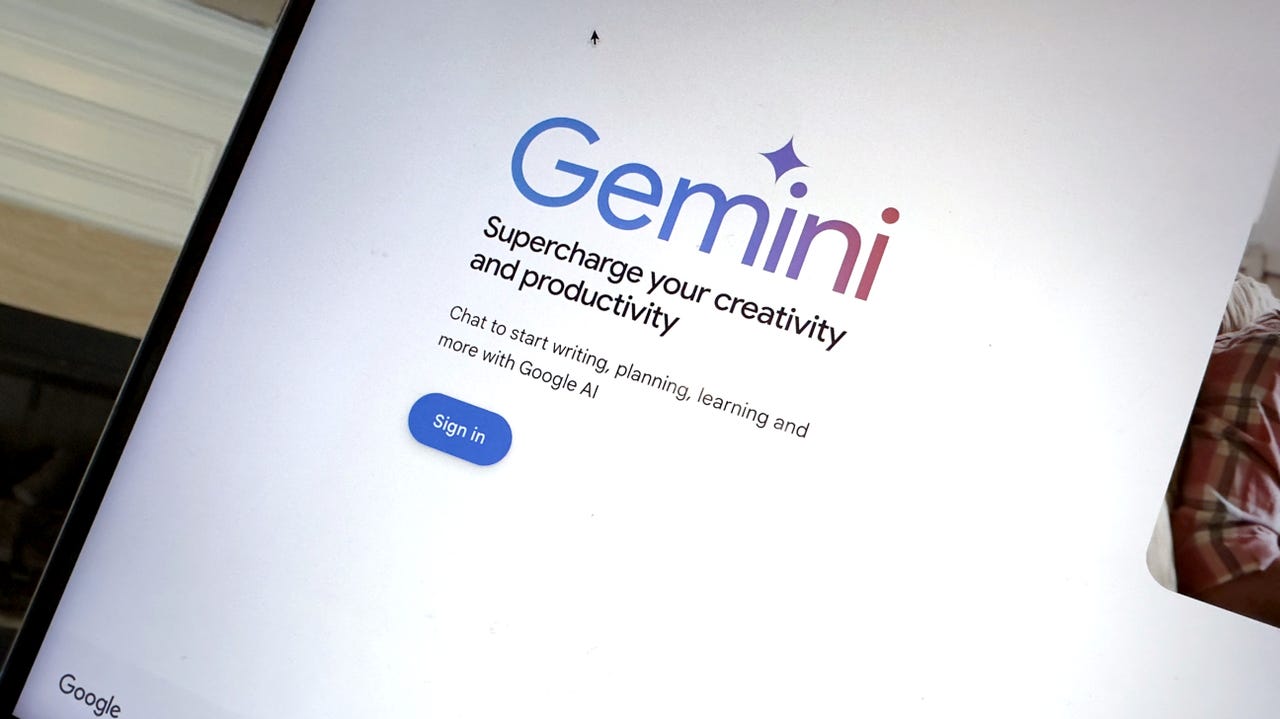
Gemini AI chatbot

The Gemini app, formerly known as Bard, is poised to become the next-generation digital assistant on Android devices. This new AI-centric landscape promises to make interacting with your smartphones and other devices considerably smarter and easier.

But those AI apps come with a risk, which Google's new privacy warning illustrates perfectly.

Also: The 3 biggest risks from generative AI — and how to deal with them

This warning comes by way of the Gemini Apps Privacy Hub and states — very clearly — that when you interact with Gemini applications, Google collects the following information:

  • Conversations
  • Location
  • Feedback
  • Usage information

Google goes on to state that the collected information helps them provide, improve, and develop products, services, and machine learning technologies.

It's that first bullet point that should be of some concern. Who has access to your Gemini conversations? Google has this to say:

We take your privacy seriously, and we do not sell your personal information to anyone. To help Gemini improve while protecting your privacy, we select a subset of conversations and use automated tools to help remove user-identifying information (such as email addresses and phone numbers).

As for the warning, in the section labeled Your data and Gemini Apps, you'll find the following sentence:

Please don't enter confidential information in your conversations or any data you wouldn't want a reviewer to see or Google to use to improve our products, services, and machine-learning technologies.

Also: What is Google's Gemini AI tool (formerly Bard)? Everything you need to know

Well below that statement, you'll find information on how long reviewed data is retained, which Google states:

Gemini Apps conversations that have been reviewed by human reviewers are not deleted when you delete your Gemini Apps activity because they are kept separately and are not connected to your Google Account. Instead, they are retained for up to three years.

Three years. That's how long your conversations will be retained, even after you delete your activity from the Gemini app. Google continues with the warning: "Even when Gemini Apps Activity is off, your conversations will be saved with your account for up to 72 hours. This lets Google provide the service and process any feedback. This activity won't appear in your Gemini Apps Activity."

What does it all mean? Simply stated, you should definitely heed Google's warning and never include sensitive information in your Gemini interactions. Ever.

Also: The ethics of generative AI: How we can harness this powerful technology

This new warning makes it very clear that Google not only strongly indicates you should not add sensitive information to Gemini interactions but that every "chat" you have with the app will be retained on the Google servers for three years. One of the last statements made in the warning is:

Don't enter anything you wouldn't want a human reviewer to see or Google to use.

Ominous? You decide.

Artificial Intelligence

ChatGPT will now remember its past conversations with you (if you want it to)

ChatGPT on a MacBook

OpenAI just announced it's testing new memory features for ChatGPT, allowing the artificial intelligence tool to remember information from your conversations to prevent repetition and enhance future discussions.

Also: Don't tell your AI anything personal, Google warns in new Gemini privacy notice

The feature will be available for both free and paid users, and they can edit the information they want saved, deleted, or turn off the feature entirely. It can be as easy as asking ChatGPT to remember or forget something, and it will follow through. If you don't feel like asking the AI chatbot this, go to your Settings, Personalization, and Manage Memory.

These memories can improve your future conversations by giving the bot context to give users more helpful and accurate information. OpenAI also says Memories is being used to improve its large language models (LLM). The feature is rolling out gradually to a group of ChatGPT users and Plus subscribers, with a broad rollout planned further down the line.

Also: ChatGPT vs ChatGPT Plus: Is it worth the subscription fee?

The new memory feature will also be available in GPT bots, though builders can enable or leave it disabled for their bots. OpenAI states that users must have Memory enabled to interact with a memory-enabled GPT but that your memories are not shared with builders. Your memories saved in ChatGPT will not be shared with individual bots or vice-versa, as each GPT will have its own Memory.

A new feature called Temporary Chat also gives ChatGPT users the ability to chat without using Memory so that they don't appear in their chat history, won't use Memory, and won't be used to train OpenAI's LLMs. Think of it like opening an incognito tab to search for that weird symptom you're experiencing without getting fungal cream ads on YouTube afterward.

Also: Windows 11 Notepad to get AI smarts, Snipping Tool update coming too

OpenAI had already made Custom Instructions available for free and paying ChatGPT users. Custom Instructions let you give the bot some information about you and how you'd like it to respond. For example, you can instruct ChatGPT to always provide summaries using bullet points. But Custom Instructions can only include so much.

Giving ChatGPT and GPT bots memory means they can remember information shared within conversations, like remembering and applying project management preferences or communication styles based on past interactions and suggesting music artists or preferred genres based on the questions or conversations you've had.

Artificial Intelligence

Airbnb plans to use AI, including its GamePlanner acquisition, to create the ‘ultimate concierge’

Airbnb plans to use AI, including its GamePlanner acquisition, to create the ‘ultimate concierge’ Sarah Perez @sarahintampa / 10 hours

In November, Airbnb acquired a stealth AI firm launched by Siri’s co-founder, called GamePlanner.AI. The deal valued the secretive startup at around $200 million, according to reports. Though the hosting company didn’t telegraph its plans for GamePlanner at the time, Airbnb co-founder and CEO Brian Chesky today shared a high-level overview of Airbnb’s larger plans for AI, saying that it planned to accel at the “application layer” of AI, building one of the “most innovative AI interfaces ever created.”

Hyperbole aside, Chesky explained that Airbnb doesn’t see itself as an AI infrastructure company — meaning it’s not going to build its own large language models, but will rely on AI technologies from others, like OpenAI, Meta and Google. Instead, the company believes it can create a new interface for accessing modern AI models. That’s something the GamePlanner acquisition could help with.

“…Though the [AI] models are very powerful, the interface is really not an AI interface. It’s the same interface as the 2000s,” Chesky told investors on the company’s fourth-quarter earnings call. “It’s a typical, classical web interface. So we feel like the models, in a sense, are probably underutilized,” he said. “Here’s another way of saying it. Take your phone and look at all the icons on your phone. Most of those apps have not fundamentally changed since the advent of generative AI. So what I think AI represents is the ultimate platform shift,” the CEO continued.

After the internet’s creation, the rise of mobile technology lifted Airbnb’s business, but AI is going to change things once again, Chesky believes. “[This] is also a shift in power. It’s a shift in behavior. And so I think this is a zero-zero ballgame,” he said.

Airbnb plans to leverage AI technology and particularly generative AI to provide a more personalized experience for its users, the exec told investors.

“Imagine an app that you feel like knows you — it’s like the ultimate concierge — an interface that is adaptive and evolving and changing in real-time, unlike no interface you’ve ever seen before. That would allow us to go from a single vertical company to a cross-vertical company,” Chesky added.

Whether or not Airbnb can deliver on these ambitions, of course, remains to be seen. Though Chesky paints a picture of an evolution of the Airbnb user interface, powered by AI, today’s AI systems are often still difficult to use and have a bad habit of returning false information through what are known as hallucinations. That is, the AI bot will simply make things up when it doesn’t know the answer. If the AI models don’t become more accurate under the hood, Airbnb’s plans for application layer improvements could also fall short.

The CEO said he wouldn’t detail specific AI products and services it plans to offer at this time, but the company will make more announcements later this year on the AI front.

Airbnb acquired GamePlanner a few months ago, but it wasn’t clear exactly what the secretive startup did, beyond being tied to AI. Notably, GamePlanner was co-founded by AI pioneer Adam Cheyer, who co-founded Siri (which was sold to Apple), and Siamak Hodjat. In a statement released at the time of the acquisition, Airbnb suggested that the GamePlanner team would help to accelerate the company’s AI projects by integrating its tooling into the Airbnb platform.

Airbnb acquires secretive firm launched by Siri co-founder

Airbnb is making progress to get rid of those hated cleaning fees