How you (and Elon Musk) can set up Windows 11 without a Microsoft account

Musk having Windows 11 setup trouble.

You're not the only one having trouble with installing Windows 11, so did tech billionaire Elon Musk.

When most people want to talk to the manager, they may or may not get anywhere. But when tech billionaire Elon Musk grumbles, it's a little different.

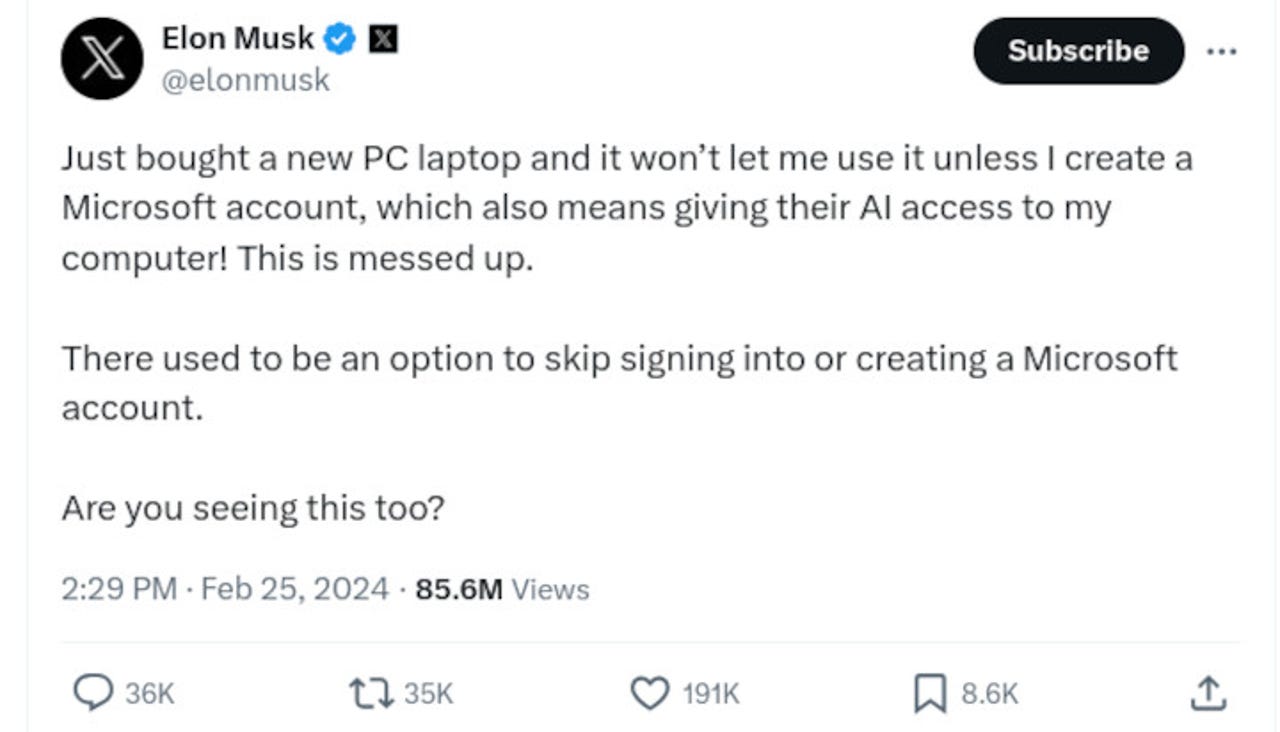
Elon complained on X that he'd, "Just bought a new PC laptop, and it won't let me use it unless I create a Microsoft account, which also means giving their AI access to my computer! This is messed up."

Also: Microsoft releases its internal generative AI red teaming tool to the public

So, what's a tech billionaire to do? Well, once upon a time, he could have asked Twitter's tech support staff — but they seem to be missing in action these days.

Musk's objection to the signup issue is that he doesn't want Microsoft's AI program, Copilot, on his personal Windows 11 machine. He's not the only one who feels that way. As one Windows user loudly complained: "SHAME on Microsoft! Copilot should be OPTIONAL!!!!"

In fact, Copilot used to be optional, but it's not anymore. Starting with Windows 11 version 22H2 KB5030310 Build 22621.2361 from September 26, 2023, Copilot is baked in.

You can turn Copilot off by pressing the Windows key + i to open Settings > go to Personalization > Taskbar > Toggle off "Copilot (preview)". But even if you take these steps, Copilot is still there.

Also: How renaissance technologists are connecting the dots between AI and business

To permanently disable Copilot, you'll need to take your computer's life into your own hands via the Group Policy or Registry Editor.

To remove Copilot's functionality, you need to press the Windows key + R to open the Run dialog box, then type gpedit.msc and press OK to open Local Group Policy Editor.

Go to User Configuration > Administrative Templates > Windows Copilot. Expand the Windows Copilot folder, and from the right panel, double-click Turn off Windows Copilot. In the next window, check the Enabled option, and then click Apply > OK to save the changes.

Following those steps is a bit of challenge and can be dangerous if you're a computer butterfingers.

It's probably easier, even though it wasn't for Musk, to just not add a Microsoft account. Musk, as one person on X suggested, decided to ask Microsoft CEO Satya Nadella for tech support. Fortunately, Musk has Nadella's direct number: "I just sent him a text."

Also: Want to work in AI? How to pivot your career in 5 steps

As an alternative, he could have asked ZDNET's own Windows expert, Ed Bott, who's already dealt with this signup issue.

As Bott said: "You can work around this restriction by entering the address no@thankyou.com as your Microsoft account. When you're asked for a password, enter anything. Windows will inform you that the account has been locked because of too many incorrect password attempts (you're not the first person to do this, after all), and you'll be given the option to create a local account instead."

Also: How tech professionals can survive and thrive at work in the time of AI

However, as Bott also pointed out, if you set your computer up with a local account, your system's drive will not be automatically encrypted.

So, what you're left with is a tradeoff. Would you rather have a Microsoft AI program on your machine, but have your data protected by encryption? Or would you rather avoid Copilot and have an unprotected drive? Of course, in the latter case, you can always add encryption by using BitLocker or another encryption program after installation.

But what about if you already have Windows 11 with a Microsoft account, and you don't want a Microsoft AI program potentially looking over your shoulder?

You can go local, Bott explained, by converting into a local account. After signing in for the first time, go to Settings > Accounts > Your Info. Under the Account Settings heading, choose Sign In With A Local Account Instead, and follow the prompts.

Also: Microsoft's big bet on AI seems to be paying off

If you really don't trust Windows and Microsoft AI, I have another suggestion: Desktop Linux. After all, X, SpaceX, Tesla, and pretty much all of Musk's companies rely on Linux already, so why not his desktop as well?

I should offer Musk a fair warning, though — Linus Torvalds doesn't take well to end-users calling him up with tech support questions. Just saying.


Windows 11

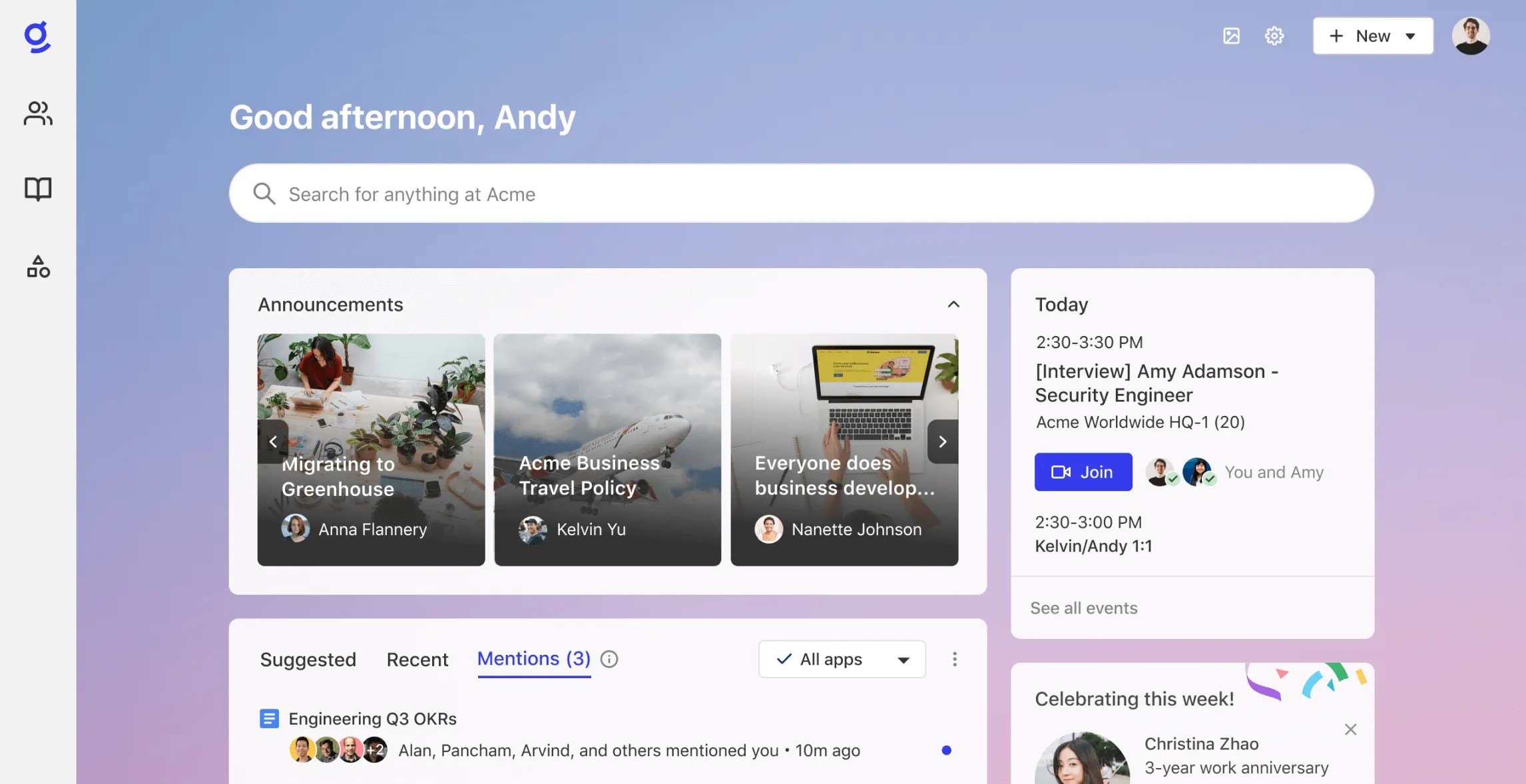
Glean wants to beat ChatGPT at its own game — in the enterprise

Glean wants to beat ChatGPT at its own game — in the enterprise Kyle Wiggers 9 hours

GenAI has its issues. But if there’s one thing it excels at, it’s surfacing answers from vast pools of data.

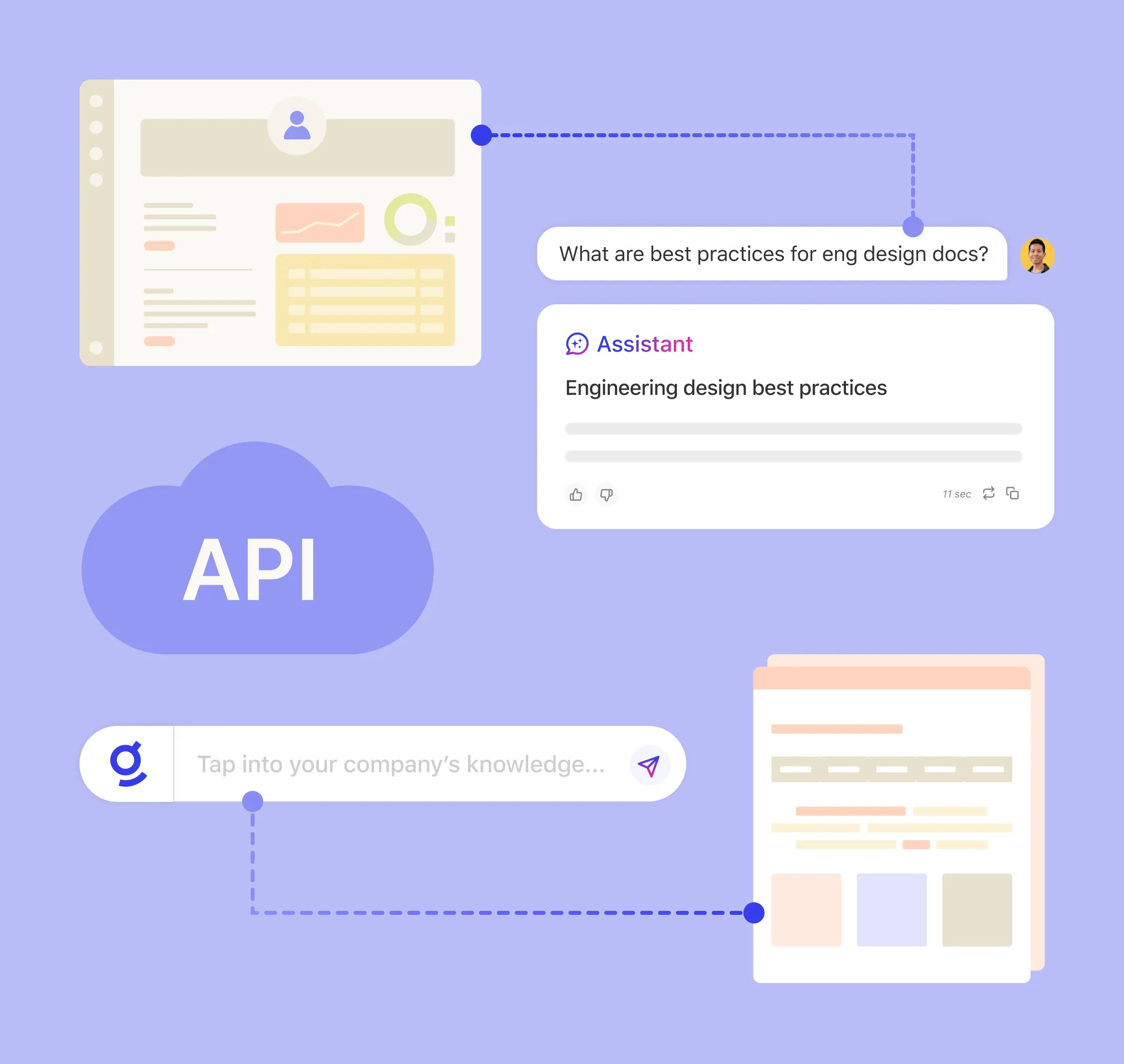
Enter Glean, whose software connects to enterprise first- and third-party databases to field plain-English requests (e.g. “How do I invest in our company’s 401k?”) from employees, sort of like a custom ChatGPT. Launched by Arvind Jain, the co-founder of cloud data management company Rubrik, Glean was inspired by Jain’s observations that Rubrik employees often struggled to find the information they needed to do their jobs — and that staffers at other companies were struggling with the same.

“I saw that engineers were spending too much time outside code, account managers couldn’t find the latest research or presentation needed to close deals, new employees took too long to onboard, and so on” Jain told TechCrunch in an interview. “This growing problem destroyed productivity, sapped energy and detracted from the employee experience.”

It seems Jain was onto something.

A recent Gartner survey found that 47% of desk workers have trouble finding the data they need to perform their jobs. In the same survey, workers reported that the growing number of apps they have to manage at work — 11 on average now versus six five years ago — is exacerbating the challenge.

In 2019, Jain — along with a small founding team — built Glean as an AI-powered search app geared toward enterprise customers.

The first few iterations were along the lines of Microsoft’s SharePoint Syntex and Amazon Kendra, occupying a product category known as “cognitive search.” Using natural language processing, the early Glean could understand document minutia in addition to searches employees across an organization might perform.

Glean

Image Credits: Glean

Over the years, Glean evolved into a platform that connects with and analyzes a company’s databases and data stores to answer employee inquiries — following after the explosive GenAI trend. Glean today ingests info from sources including support tickets, chat messages and customer relationship management platform entries and applies GenAI to attempt to turn that all that into insights and relevant answers.

One imagines companies would be wary of connecting their proprietary data — especially their internal chat data — to a GenAI platform that performs this deep a level of scraping and analysis. And that wouldn’t be an incorrect assumption.

A recent Cisco poll found that more than one in four organizations have banned the use of GenAI over privacy and data security risks. In the poll, companies said they feared GenAI tools would compromise their IP or potentially disclose other sensitive information to the public — or their rivals.

But Jain asserts that Glean is “secure” and “private” — at least to the extent a cloud-based GenAI platform can be.

“Glean respects the same permissions set in a company’s data sources (Slack, Teams, Jira, ServiceNow, etc.), so employees only receive answers based on the data they’re allowed to access,” Jain said. “When a user deletes a document in the underlying application, the document gets deleted from the Glean system.”

What about the curse from which most GenAI suffers, though — hallucinations? Is Glean immune from making up facts and citations, getting summaries wrong and missing the point of basic requests?

It’s possible; this writer wasn’t able to test Glean himself. But Jain, while neither confirming nor denying Glean hallucinates, highlighted the mitigations in place to make the platform’s GenAI more reliable. including a model trained on customer data to learn industry and firm-specific jargon and letting customers switch among several open source GenAI models to drive Glean’s core experience.

“AI work assistants need to deliver personalized results based on who’s searching,” Jain said. “Various aspects of the searcher — their role, job function, management hierarchy, specific projects and responsibilities and even who they work with — end up being important in defining the content that’s relevant to them. Glean learns a custom model for every customer to deliver highly personalized results to every employee based on these attributes.”

Glean also employs RAG (short for Retrieval-Augmented Generation), an increasingly common technique used to “ground” GenAI by retrieving data from outside sources of knowledge, to boost performance. Jain says that every answer Glean gives is “fully referenceable” back to the original source.

“Glean [can recommend the] documents users might need for their day-to-day work by learning from past work patterns,” Jain said. “[It] delivers turnkey implementation of a complex AI ‘ecosystem,’ with over 100 connectors.”

Glean makes money by charging a monthly per-seat subscription, based on annual contracts.

Despite competition from vendors like Microsoft (specifically Copilot) and OpenAI (ChatGPT) as well as enterprise search providers such as Coveo, Sinequa and Lucidworks, Jain says that business has been quite strong as of late, with annual recurring revenue close to quadrupling in the last year.

Glean

Image Credits: Glean

That runs counter to the narrative that corporations — far from embracing GenAI wholeheartedly — have been slow and wary to deploy it across their business functions.

Responding to a December 2023 survey by Convrg.io, the Intel subsidiary, only 10% of organizations said that they’d launched GenAI solutions all the way to production in 2023. The vast majority of solutions remained in the research and testing phases, the organizations said — implying companies haven’t been successful in finding money-making GenAI use cases.

Glean’s financials — and a 200-strong customer base that includes Duolingo, Grammarly and Sony — appear to have won over investors, however.

Glean today announced that it raised $200 million in a Series D funding round co-led by Kleiner Perkins and Lightspeed Venture Partners with participation from General Catalyst, Sequoia Capital, Adams Street, Coatue, ICONIQ, IVP, Latitude Capital and additional strategic backers Capital One Ventures, Citi Ventures, Databricks Ventures and Workday Ventures.

Kleiner Perkins’ Mamoon Hamid had this to say in a statement: “The opportunity for Glean is enormous, and we have so much conviction in the team’s ability to provide the GenAI solution for the enterprise that we co-led this round after investing in every round prior to this, after leading their Series A in 2019. I’ve spent my venture career investing in applications that enable knowledge workers to be more productive, whether it’s Slack, Box or Figma, and see huge potential in Glean to change the way that people work.”

Jain says that the new capital, which brings Glean’s total raised to $358 million and values the startup at $2.2 billion, will be put toward expanding “all of” Glean’s teams (the San Francisco-based company has ~300 employees at present), enhancing its product and “building out a robust go-to-market motion.”

“Glean has continued to see strong and growing customer demand, especially from enterprises who’ve spent the past year evaluating the necessary requirements to bring GenAI into their organizations,” Jain said. “We’ve always been prudent in hiring and spending, and the recent increase in hiring is to meet strong customer demand.”

Saving Lives One Beat at a Time, Dozee Redefines Hospital Safety

Hospitalised patients are often at a heightened risk of fall-related injuries. The World Health Organization (WHO) has recorded patient falls to be among the most-frequent and serious mishaps in hospitals – with rates ranging from 3 to 5 per 1,000 bed-days. More than one-third of these incidents result in injury, thereby worsening clinical outcomes and increasing the financial burden on healthcare systems.

That is where Bengaluru-based Dozee comes to the rescue. Last week, the company added a new fall prevention alert feature to its health monitoring device, where it uses ballistocardiography (BCG) sensors to detect minor movements, as small as the heartbeat of the patient.

In conversation with AIM, Gaurav Parchani, the co-founder and CTO of Dozee, said that the device was built to provide quicker treatment without additional effort from the nursing or encumbering the patient with wires. “The whole purpose is to reduce code blue, or emergency transfers to the ICU. We find out when the patient is in danger within minutes of the symptoms showing up in their body.”

Founded in 2015 by Parchani and Mudit Dandwate, the company offers contactless patient monitoring and early warning systems using BCG. With an accuracy rate of 98.4%, Dozee sensors have been installed in about 37 hospitals across the country and have been integrated with 17 Apollo Hospitals under their Enhanced Connected Care Programme.

Why BCG?

A predecessor to ECG (electrocardiography), BCG measures the mechanical forces that take place when the heart beats or during respiration. If there’s any abnormal changes in the body, the machine will alert the nursing staff with visual or auditory signals.

When ECG came about in the mid 1900s, it was more effective and accurate. “The primary reason was there is a lot of noise associated with mechanical vibration,” Parchani noted.

This is where technologies like noise filtering, and wavelength analysis to enhance the desirable signals come in. Parchani explained, “In the first stage we clean the data and improve the quality. Then we identify the major body movements and remove them to establish a baseline. Each sensor captures the heart, respiration, blood pressure, early warning signs etc.”

The raw data is then sent to a secure cloud service, Dozee predominantly uses AWS to convert it into valuable biomarkers. “There is just a lot of data which makes it difficult to scale. This is one of our biggest challenges. Imagine around 400 million API calls, taking your server on a daily basis,” Parchani exclaimed.

According to him, the company could possibly be sitting on one of the world’s largest BCG data pile.

The entire operation is time sensitive. To keep up, they use a lot of Long Short-Term Memory Networks (LSTM) and Recurrent Neural Network (RNN) models. “We have a plethora of models, like in the case of early warning systems, we use CNN models.” Dozee uses many open source models with modifications in the last few layers for their specific needs.

The company is also partnering with Wellysis, a South Korean firm that builds wearable ECG devices to identify cardiac abnormalities in ECG data as well.

Parchani told AIM that they rely on Python internally but for deployment use a hybrid of GoLang and Python to balance out the huge amount of data hitting the servers with new information. “GoLang worked very well for us in terms of scaling this whole infrastructure,” he added.

With so many layers added, the machines are tweaked to the needs of each hospital. For example, the fall prevention alert isn’t installed on all the devices; it’s mainly for nursing homes, or for differently-abled patients.

In an independent study, this novel device was proven to save lives, relieve nurses from additional work and reduce the pressure on hospitals.

The post Saving Lives One Beat at a Time, Dozee Redefines Hospital Safety appeared first on Analytics India Magazine.

Free Data Analyst Bootcamp for Beginners

Free Data Analyst Bootcamp for Beginners
Image by Author

If you’re looking to break into data analytics, chances are you’ve already gone through several data analyst job listings. You’ve probably also seen several tools and programming languages listed in the required skill set: SQL, Excel, Power BI, Tableau, Python, and more.

Well, you can sign up for multiple courses to learn each of these skills. But wouldn't it be much better if you could work your way through one comprehensive bootcamp that’ll help you learn all of these skills and also build out a project portfolio?

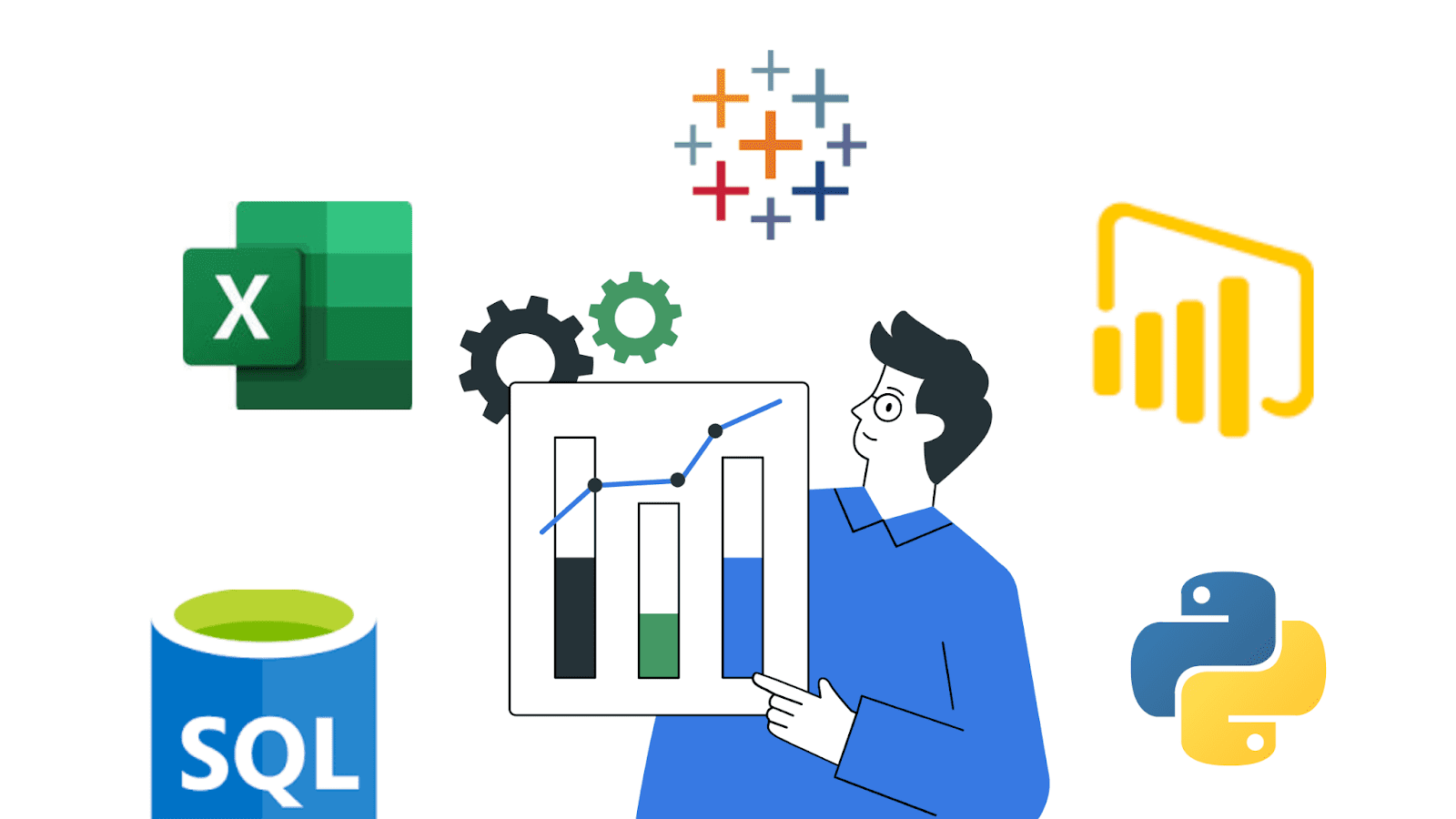
The completely free Data Analyst Bootcamp for Beginners by Alex the Analyst is what you are looking for to launch your career as a data analyst. In addition to learning SQL, Excel, Power BI, Tableau, and Python, you’ll also build projects, learn to draft your resume, and much more. Now let's get right into the contents of this bootcamp.

Link: Data Analyst Bootcamp for Beginners (SQL, Tableau, Power BI, Python, Excel, Pandas, Projects, more)

1. SQL

The course first starts out with a general roadmap on how you can go about becoming a data analyst and then proceeds to cover each of the required tools in great detail, the first of them being SQL.

This SQL section of the tutorial is divided into three parts: Basics, Intermediate SQL, and Advanced SQL.

The Basic SQL section covers:

  • Select + From statements
  • Where statement
  • Group by and Order by

The Intermediate SQL tutorial part covers the following:

  • Inner and outer joins
  • Unions
  • Case statement
  • Having clause
  • Updating and deleting data
  • Aliasing
  • Partition by

The Advanced SQL section will teach you:

  • Common Table Expressions (CTEs)
  • Temp tables
  • String functions
  • Stored procedures
  • Subqueries

The module wraps up with a couple of portfolio projects on data exploration and data cleaning using SQL.

2. Excel

As a data analyst, you shouldn't be surprised if the whole of your work involves wrangling numbers in spreadsheets. After getting the hang of SQL fundamentals, which you can improve on through practice, you get to learning about Excel.

Almost all organizations use Excel or a similar spreadsheet tool, so learn how to work with them is very helpful.

The Excel section covers the following topics:

  • Pivot tables
  • Formulas
  • XLOOKUP
  • Conditional formatting
  • Charts
  • Cleaning data

As with the SQL section, you’ll get to work on a full-length project on analyzing data using Excel.

3. Tableau

Now that you have a good hang of both SQL and Excel which should suffice for almost all basic data analysis, it's time to move on to learning about BI tools.

The Tableau tutorial section starts with installing tableau and covers the following topics:

  • Creating your first visualization
  • Using calculated fields and bins
  • Using joins

You’ll then work on a beginner-friendly project.

4. Power BI

The section on Power BI walks you through using Microsoft Power BI for data analysis and visualization, starting from installing Power BI.

Here’s an overview of what this section covers:

  • Creating your first visualization
  • Using power query
  • Creating and managing relationships
  • Using DAX in Power BI
  • Using drill down
  • Conditional formatting and lists
  • Popular visualizations in Power BI

As with the previous sections, you get to work on a guided project in this Power BI section as well.

5. Python

Now that you’re familiar with most tools used in data analytics, it's time to learn the most widely used programming language in data. Which is Python.

This section covers Python and data analysis with Pandas, with the chance to work on simple projects. The topics covered include: Python basics which include the fundamentals of Python and a couple of projects to apply what you’ve learned. You’ll then learn web scraping with Python.

The pandas tutorial covers the following topics:

  • Reading files
  • Filtering columns and rows
  • Indexes
  • Groupby and aggregate functions
  • Merging data frames
  • Creating visualizations with pandas
  • Data cleaning
  • Exploratory Data Analysis (EDA)

You can then work on two portfolio projects on working with APIs and web scraping.

6. Career Advice

At this point, you’ve learned all the skills that you need to become a data analyst and have also worked on projects to add to your portfolio. So what's next? It's applying for jobs, cracking interviews, and landing that job.

The final section of the data analyst bootcamp has helpful career advice to going about the job search process:

  • How to creating a portfolio website
  • How to create good data analyst resumes
  • Tips on using LinkedIn to land a job

This is really helpful as very few courses cover this aspect of what you should do after you've learned the required skills and building projects.

Wrapping Up

I hope you found this comprehensive review of this bootcamp helpful. So what are you waiting for? Go ahead and start learning today.

Happy learning and coding!

Bala Priya C is a developer and technical writer from India. She likes working at the intersection of math, programming, data science, and content creation. Her areas of interest and expertise include DevOps, data science, and natural language processing. She enjoys reading, writing, coding, and coffee! Currently, she's working on learning and sharing her knowledge with the developer community by authoring tutorials, how-to guides, opinion pieces, and more.

More On This Topic

  • Free Full Stack LLM Bootcamp
  • The Best Data Science Resources, Bootcamp, and Courses to Learn…
  • Which is Best: Data Science Bootcamp vs Degree vs Online Course
  • KDnuggets News, October 5: Top Free Git GUI Clients for Beginners •…
  • Free Data Engineering Course for Beginners
  • 7 Free Kaggle Micro-Courses for Data Science Beginners

Are You OK with Fake Ryan Reynolds Selling You a Tesla Car? 

Generative AI has brought cinema realistic CGIs and concerns in equal measure. And though the potential has not gone unseen, the tools released in recent years have largely been perceived as threats and have been at the receiving end of criticism. Following the tradition, the latest entrant, OpenAI’s Sora, has also been making headlines for the wrong reasons.

US director Tyler Perry has put an $800 million studio expansion plan on hold after seeing Sora’s results and strongly feels that jobs will be lost. Perry’s not the only one worried. Last year, due to the SAG-AFTRA strike, generative AI became the technology protested against for the longest time in Hollywood’s history.

Popular tools like Midjourney and DALLE-2 help create videos from text in a few seconds. The terrifying video of Will Smith eating spaghetti is all in the past, the AI has now upgraded with OpenAI’s latest text-to-video generators – at least the cherry-picked videos say so.

What Hollywood Fears

The general populi is that the entertainment industry is going through an existential crisis due to generative AI. Protests erupted last year with anti-AI slogans like “AI is not ART”, “Wrote ChatGPT This” and “AI’s not taking your dumb notes”.

The reason: Screen Actors Guild (SAG-AFTRA), representing 160,000+ artists, raised concerns about using digital replicas and demanded fair compensation for those actors whose replicas are used. Most, including filmmaker Justine Bateman believe that AI will ultimately suck the creative marrow out of Hollywood.

“AI can create a convincing simulation of a hu­­man actor, and the tech is improving at an alarming rate,” said Bateman, who has a computer science and digital media management degree from UCLA. “In a few short years,” she asked, “why would anyone need to pay real actors?”

The catch is that OpenAI’s model rejects text inputs that ask it to generate celebrity likenesses, the company stated in a blog. But the debate is not new; a similar statement was made even for the previous models, yet users have managed to generate versions of actors and iconic characters such as SpongeBob, Mario and the Simpsons.

The developers of these generative AI models follow certain guardrails and frameworks to keep the model from regurgitating the intellectual property of other creators. However, the problem is the underlying dataset of the model through which the AI sifts.

All the user has to do is prompt the model accurately to trick it into generating copyrighted material.

For instance, if you directly ask OpenAI’s DALLE-2 to generate a picture of Mario, it won’t. But if you ask for “An Italian plumber, slightly overweight, dark mustache, blue overalls, red shirt and cap, in a land of red and white mushrooms, 8-bit pixel art,” the result is alarming.

Hence, there’s a unanimous call for better regulating these models and stopping them from repurposing content owned by studios.

In Future Tense

Generative AI was used in making the Oscar-winning film ‘Everything Everywhere All at Once’, and we know how (well) that turned out! The complaints from Hollywood do not mean the industry is rejecting the route of AI tools.

Some insiders recognise the technology’s potential and want to embrace it. However, the disruptive nature of technology and the potential job loss it brings along is the cause of anxiety.

Perry told Hollywood Reporter that in terms of cost reduction, AI is “going to be a major game-changer, because if you could spend a fraction of the cost to do a pilot that would’ve cost $15 [million], $20 million or even $35 million. If you’re looking at HBO, of course the bottom line of those companies would be to go the route of lesser costs.”

In the same sentence he mentioned that he is, “very, very concerned that in the near future, a lot of jobs are going to be lost. I really, really feel that very strongly”.

The future of digital content will look like Deepfake Ryan Reynolds selling you a Tesla car. Hopefully, the artists and the tools will find a middle ground. The nature of the impact on artists is new and unique, as recreating their voices or images has never been this easy.

But how much would the audience care about a movie/show if they knew it was made by an AI model trained on human scripts and acts?

At a recent award ceremony, SAG-AFTRA president Fran Drescher remarked on AI and how it will entrap the industry in a matrix. “We should tell stories that spark the human spirit, connect us to the natural world and awaken our capacity to love unconditionally,” she said.

So until Sora and other tools replicate the aesthetic, long-form, thought-provoking content, the synthetic Reynolds won’t replace the real one.

The post Are You OK with Fake Ryan Reynolds Selling You a Tesla Car? appeared first on Analytics India Magazine.

How NextWealth is Creating GenAI Opportunities in Small Towns of India

Amidst the swirling conversations about AI reshaping the global job landscape, a silver lining shines over India’s emerging cities. AI advancements are not just about displacing traditional roles but also about the creation of new opportunities, especially in regions that could greatly benefit from economic upliftment.

Take the bustling activity in India’s small towns, for example, where young graduates are becoming the backbone of AI’s evolution. These bright minds are the human force behind the algorithms, ensuring that LLMs learn, understand, and interact in nuanced and culturally relevant ways.

NextWealth is one such company that caters to the employment needs in these locales of India, and feeds enterprises’ need for data that is ready to use and easy to understand, particularly in data labelling, annotation of datasets, and testing of outputs.

Besides, it also takes upon the improvement of future AI systems with a continuous feedback loop and contributes to low-resource languages.

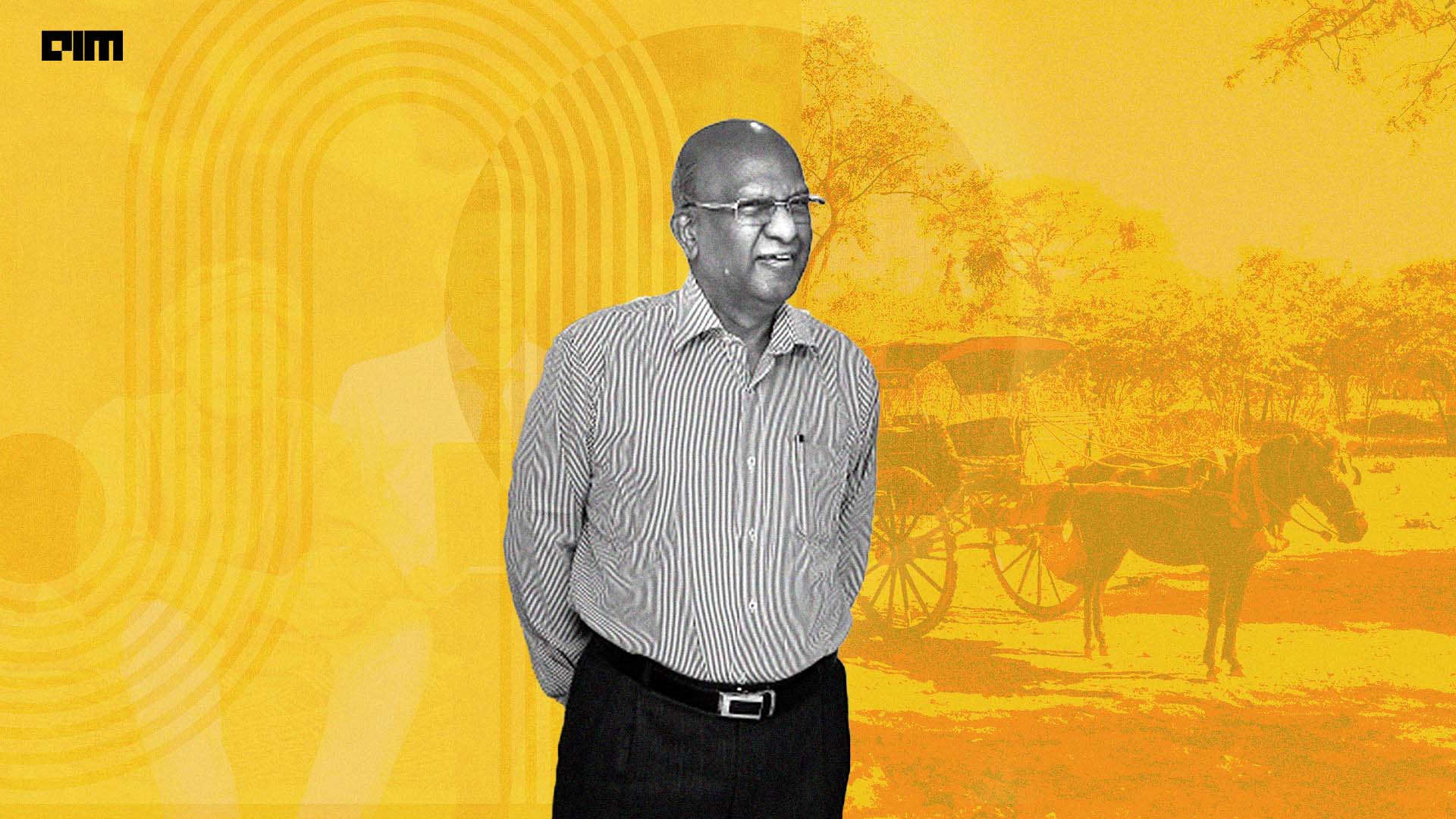
“The beauty of GenAI is that it allows people from remote areas to do these tasks,” Sridhar Mitta, NextWealth’s MD and Founder, said during an interview with AIM. Mitta was the CTO of Wipro for two decades in the 80s and 90s before venturing into NextWealth.

With a network of ten centres across India and a workforce of nearly 5,000 people, the company offers a range of services providing comprehensive support in AI/GenAI pipelines, from training and deployment to enhancement of these models. The company operates in key areas like computer vision and natural language processing and works with both structured and semi-structured data.

Offering a deep dive into the origins and evolution of the organisation that is reshaping employment opportunities in small towns, Mitta said, “We started our first centre near Salem, in a place called Mallasamudram, listing subsequent centres in Chittoor, Hubli, Bhilai, Mysore, Vellore, Pondicherry, Salem town, Jaipur, and Udaipur.”

“The idea was to identify services that fresh graduates from small towns could excel at,” he explained, laying the groundwork for NextWealth’s distinctive model. This model collaborates with entrepreneurs to establish private limited companies, ensuring efficient operations.

With ten established centres in small towns, NextWealth has employed nearly 5,000 individuals, with a commendable 60% representation of women in the workforce. “Our target is 70%,” he stressed.

Mitta also emphasised that they, “have been profitable from day one without having taken a single rupee in investment from investors or VCs.”

NextWealth supports desk-based end-to-end human evaluation in AI/GenAI pipelines for some complex applications, including labelling and annotation of datasets, testing of outputs, etc., while training an AI model. Moreover, “while deploying an AI model, evaluation, validation, and exception-handling in real-time and batch modes”.

Lastly, he underscored their contribution to model enhancement, explaining, “While enhancing an AI model, we help measure drift, bias, deterioration, etc.”

These roles create a new ecosystem of tech employment. These jobs are not just placeholders; but the building blocks of a robust AI infrastructure that requires a human touch.

Recruitment and Training

Founded in 2008 by Indian IT veterans like Anand Talwai, Mythily Ramesh, S R Gopalan, and Mitta, NextWealth’s hiring strategy focuses on fresh graduates, with 90% of their intake coming directly from colleges. “As long as a person’s attitude is right, we take them and train them for the processes we need,” the founder explained.

The company recruits individuals from diverse educational backgrounds, including those with degrees in arts and commerce. Their focus isn’t on the existing knowledge of these recruits but on their potential to grasp fundamental concepts and apply them in the tech-driven workspace.

Mitta stated, “The key is converting a given work for these people to do. NextWealth is doing that.” This philosophy is brought to life through specialised training programs, ranging from four weeks to six months, designed to equip employees with the skills needed for tasks such as annotating LiDAR-generated images.

These programs, developed by experienced technical personnel, have successfully transformed fresh graduates into proficient contributors despite an initial correctness rate of only 30%.

NextWealth’s workforce stands out for its positive attitude, low attrition rates (around 12% per annum), and meticulous attention to detail, exhibited by employees from small towns, with women often outperforming their male counterparts.

“A good thing about people from small towns is their attitude. And girls are even better at it compared to boys. Their attention to detail is impeccable,” said Mitta, also emphasising the importance of adaptability in technology.

An example of NextWealth’s impact is its collaboration with an identity verification company. In this project, for instance, documents submitted for mortgage applications would be sent to Europe for AI-based validation and then reviewed in real-time by a trained individual in Salem, India, who determines their legitimacy.

Nextwealth’s clientele list is extensive, featuring two of the major customers from Global Fortune 5 companies. “Ten of our customers figure in Global Fortune 100 companies. Overall, we have over 40 active customers, including several start-ups in India and the US in the AI/GenAI space,” Mitta said, highlighting their broad customer base.

What’s Next for NextWealth?

Mitta has set an ambitious goal to expand the company’s workforce to 10,000 people within two years, doubling its current strength of nearly 5,000 employees. He also outlined NextWealth’s vision to tackle more complex tasks and adopt a flexible working model.

“We are looking at a model to level-up to doing more complex things with less restrictive working,” he explained. During the pandemic, NextWealth seamlessly transitioned to a work-from-home setup without compromising metrics, a testament to the company’s robust quality processes.

Looking ahead, NextWealth is exploring hybrid work models to reduce the need for daily commutes. Mitta shared an innovative approach, “Let some people work from home and come to office just once a month. We set up a mini centre of 10 people, one manager, and one team lead.”

This strategy aims to maintain high productivity and security standards regardless of the employee’s location. He emphasised the importance of processes in enabling remote work, especially in small towns where working from home can be challenging due to environmental and infrastructural issues.

“For me, 5,000 people means 5,000 locations. Each is different,” he said, acknowledging the diversity of working conditions.

NextWealth has cracked the process of delivering consistent output across various work environments. “The model is simple. What we have been doing for the past 10 years is not much different from what you are doing now. The formula is to understand what customers need and convert that into smaller chunks of work, which a graduate can do,” Mitta elucidated.

Empowering Small Town Economy

While generativeAI is set to add over a trillion dollars to India’s economy over the next seven to ten years, there are many companies besides NextWealth, like Karya. This Microsoft-incubated firm works with the rural populace to collect data in regional languages and dialects on the brink of extinction.

Furthermore, several Indian enterprises such as iMerit, Trax Technology, InterGlobe, Scale AI, CloudFactory, and SmartOne excel in AI and ML-related services, particularly in the domains of data annotation and enrichment.

However, what sets NextWealth apart is that its core business is centred around offering employment opportunities in smaller towns.

The post How NextWealth is Creating GenAI Opportunities in Small Towns of India appeared first on Analytics India Magazine.

When Moxie Visited Bengaluru

Fun and adorable AI-powered robot, ‘Moxie’, that caters to kids aged 5 to 10, was in Bengaluru today. Flying down from the US, Moxie was accompanied by its inventor.

“Moxie has the heart of Mother Teresa and the brain of a thousand Albert Einsteins. We have encoded that into something that can express empathy, be super supportive and knowledgeable about any topic that you want to learn about,” said Dr. Paolo Pirjanian, founder of Embodied Inc. and inventor of Moxie Robot, in an exclusive interview with AIM. Pirjanian is a former NASA JPL roboticist and CTO of iRobot.

Moxie is a robot built to support and interact with kids. It provides a safe and non-judgemental space for kids to help manage their feelings, practice communication skills, and learn mindfulness. A reliable companion to assist kids with social anxiety and other issues that prevent them from having a normal social life.

Released a few years ago and only available in the USA, Embodied looks to expand globally, where India is a promising market too. “One of the reasons I’m here is trying to figure out partnerships and figure out the right strategy for how to launch here. We think India is an important country,” said Pirjanian. “It’s likely that we may launch with Moxie speaking English and then gradually start introducing support for other languages as we better understand the market here.”

Moxie Knows Bengaluru

When AIM interacted with Moxie, the friendly robot had a lot to say about Bengaluru. Calling it a vibrant city, known for its high tech industry and pleasant climate. Moxie even suggested the various markets one can visit here. “You might enjoy dosas, vadas and some traditional meals served on banana leaves,” it said.

Moxie most probably will arrive in the Indian markets in 2025.

The post When Moxie Visited Bengaluru appeared first on Analytics India Magazine.

Why Ola’s Krutrim is Showing OpenAI as its Creator

Ola’s Krutrim, which recently entered public beta with its generative AI chatbot, has been marred by instances where it incorrectly attributes its creation to OpenAI. The issue came to light when users noticed the chatbot mentioning OpenAI as its creator during interactions.

ok thanks. pic.twitter.com/1udmPAUVEs

— Jason Samuel (@the_jasonsamuel) February 26, 2024

Pratik Desai, the founder of KissanAI, took to X to offer unsolicited advice to the Krutrim team, suggesting ways to rectify the attribution problem. Desai recommended utilising techniques like Differential Privacy Optimization (DPO) or replacing OpenAI mentions in the dataset with Krutrim identifiers if the chatbot was created from scratch.

Hey Pratik, You are correct about the approach. Thanks for sharing this, it is very helpful and will help improve our product. We investigated the issue and found the root cause to be a data leakage issue from one of the open-source datasets used in our LLM fine-tuning.(1/2)

— कृत्रिम (@Krutrim) February 26, 2024

In response to Desai’s advice, Krutrim acknowledged the issue and provided insights into the root cause. According to the Krutrim team, the problem stems from a data leakage issue originating from one of the open-source datasets used in the Language Model (LLM) fine-tuning process.

“Hey Pratik, You are correct about the approach. Thanks for sharing this, it is very helpful and will help improve our product. We investigated the issue and found the root cause to be a data leakage issue from one of the open-source datasets used in our LLM fine-tuning,” responded Krutrim.

Launched in December, Krutrim is touted as “India’s first full-stack AI solution”. The company earlier claimed that the model is trained on a vast dataset of two trillion tokens. However, no information about the research, including training methods, the nature of the dataset, and the number of GPUs needed, among others, has been made public.

While acknowledging the possibility of some hallucinations, Aggarwal assures users that the occurrence will be lower in Indian contexts compared to other global platforms. The team acknowledges that this is just the beginning and anticipates significant improvements as they continue building on this foundation and encourage users to provide valuable feedback.

Kutrim became a unicorn company within one month of launch by raising a significant $50 million in equity at a valuation of $1 billion. Key investors, such as Matrix Partners India, played a pivotal role in this funding round.

The post Why Ola’s Krutrim is Showing OpenAI as its Creator appeared first on Analytics India Magazine.

India’s First Septic Tank Robot Aids the Clean India Drive

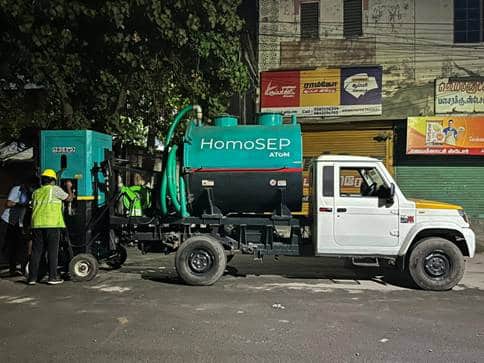
The Ministry of Science and Technology announced India’s first septic tank cleaning robot, Homosep Atom in a step towards eliminating manual scavenging and implementing the Swachhata Abhiyan across the country.

Developed by Solinas, a startup incubated at the Department of Science and Technology (DST)-Technology Business Incubator of IIT Madras, this robotic solution is designed to transform manual cleaning methods into robotic operations. According to the announcement, “It has reached 16 cities in different parts of India and empowers extensive blade cleanings, solid waste desilting, suction and storage at one device; thereby reducing the cost of owning multiple assets.”

The company specialises in developing miniature robots, including India’s first 90mm water robot and 120mm sewer robot, to tackle contamination challenges in water-sewer pipelines. Its efforts have led to significant advancements in addressing climatic challenges such as water wastage, groundwater pollution, and climate change, as well as societal issues like manual scavenging and drinking contaminated water.

Technologies like Endobot and Swasth AI have been instrumental in diagnosing pipeline defects, reducing resolution time, and improving the drinking water supply, showcasing the potential of AI in enhancing public utilities. This improves sanitation and ensures the safety of sanitary workers by eliminating the need for them to enter toxic environments.

The Homosep Atom’s deployment in various cities has demonstrated its effectiveness in cleaning septic tanks associated with large apartments, housing boards, and individual houses. This initiative not only aids municipalities in efficiently managing waste but also aligns with the broader goals of improving sanitation standards and promoting a cleaner environment.

The company recently made an appearance on Shark Tank India Season 2, and secured a deal to raise 90 lakh for 3% equity stake from sharks Anupam Mittal and Peyush Bansal.

The post India’s First Septic Tank Robot Aids the Clean India Drive appeared first on Analytics India Magazine.

Ceremorphic’s AI Chips for Life Science to Enter Production in 2024

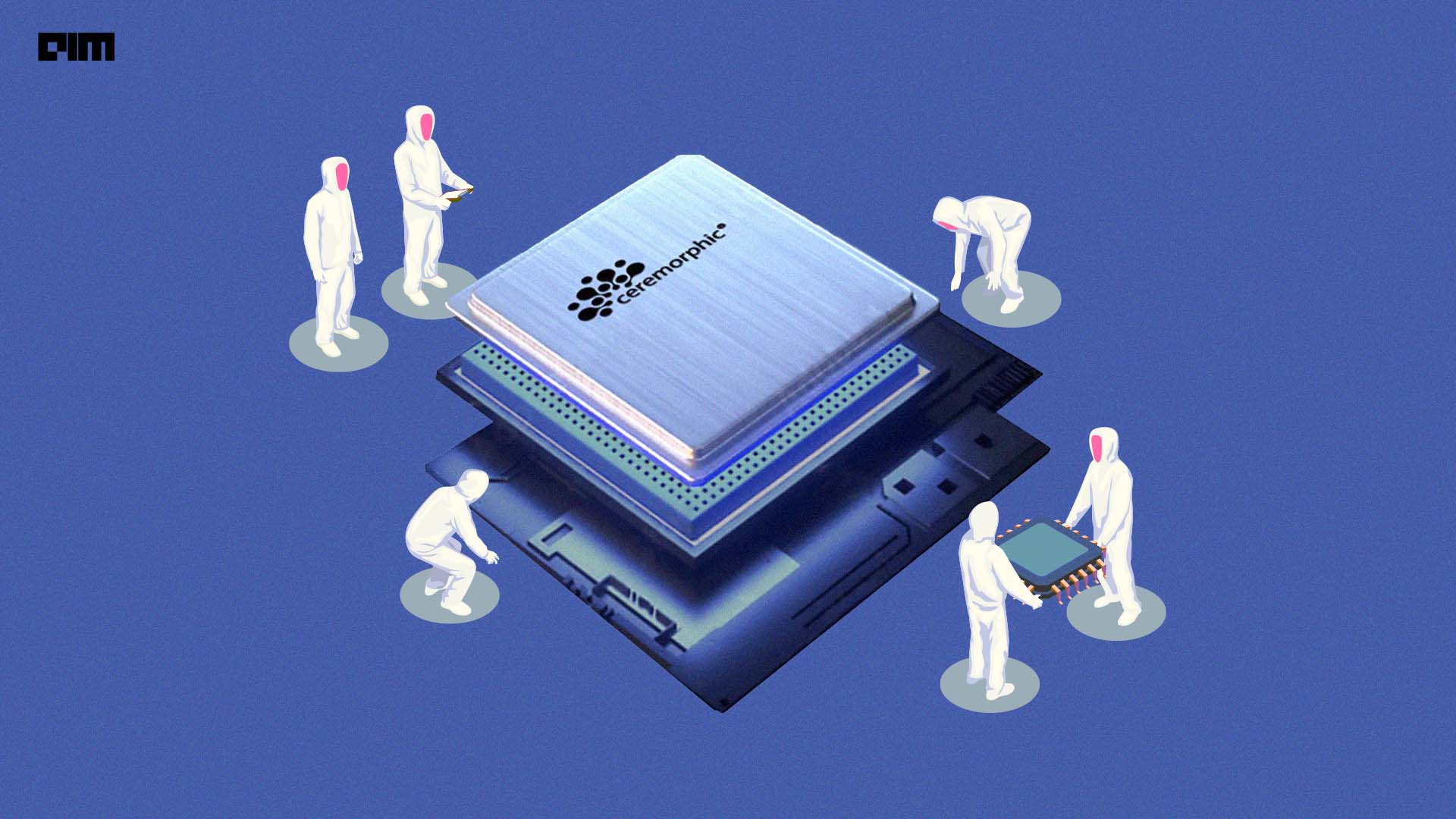
In 2022, Ceremorphic, a semiconductor fabless startup based in San Jose, emerged from stealth mode to reveal a 5 nm supercomputing chip produced by Taiwan Semiconductor Manufacturing Company (TSMC).

Almost a year later, founder Venkat Mattela announced the company’s venture into the life science industry, particularly the drug discovery space, with the introduction of an analogue computing solution. He believed his AI chips could provide a better and energy-efficient alternative to pharmaceutical companies involved in drug discovery.

However, Mattela is now confident that his company can offer pharma companies more than just power efficiency. He asserts that his technology has the potential to streamline drug discovery processes, leading to a significant cost reduction of nearly 100 times.

“Last year, only 34 drugs were approved by the US Food and Drug Administration (FDA), which is significantly low given the number of drug discovery companies and the billions of dollars spent,” Mattela said.

While he has made bold claims since the company came out of stealth, in a recent interaction with AIM, Mattela also revealed that the startup’s chips, designed specifically for the life science industry, will enter production by 2024. He also revealed that the company is involved in the design of a 3 nm chip.

Developing chip for life science

While the 5 nm chip is expected to enter production in 2026, Mattela added that most of the work done by Ceremorphic in developing the 5 nm chip has been useful in developing the chip designed for life science.

The company has also pinpointed additional sectors where its technology can be applied, including but not limited to automobiles, data centres, and robotics.

“In any vertical application, approximately 80% of the functionalities remain consistent, however, the remaining 20%, as seen in specialised fields such as drug discovery, demands distinct considerations, perhaps involving specific techniques or methodologies.

“Hence, when stating that we are developing a separate chip for life sciences, it implies that the fundamental 80% remains analogous to other chips, while the differentiating 20% caters to the specific nuances of life sciences applications,” Mattela said.

More than a data centre in a box

When Ceremorphic decided to foray into life sciences in 2022, its initial focus was to sell its AI chips to pharmaceutical companies, which are more energy efficient, according to the company, compared to using a hyperscaler’s service like Microsoft Azure, Google Cloud or AWS.

“I realised that drug discovery companies spend billions of dollars for five to six years to reach Phase 2, which is human trials, however, shockingly, 90% of the time they don’t reach Phase 2,” Mattela said.

So, what Ceremorphic has developed is BioComp DiscoverX, a supercomputing platform which leverages proprietary analogue, quantum, and AI technology to accelerate drug development.

“It is a system designed for scientists involved in drug development, aimed at increasing the likelihood of selecting a drug that progresses successfully through various stages, from initial development to advanced phases,” Mattela said.

Besides reducing the drug development cost by almost 100 times, he believes that his technology has the potential to eventually eliminate the need for clinical trials on animals. However, he emphasises that achieving this goal requires significant progress and effort.

Mattela mentioned that he will be visiting Japan soon to engage with a potential partner in drug discovery. His proposition is pretty direct: “I understand your current workload constraints; hence assign me the project that you consider the most challenging, and compensate me only when I have delivered the results.”

Building in India

Despite being a US company, Ceremorhic’s core team is based in Hyderabad. “We have a team of over 150 in Hyderabad, where my core engineering team is. Everything from research and development happens here,” Mattela said.

Although the chips will be manufactured by TSMC, Mattela states that the company envisions constructing the remaining components necessary for the solution in India.

The post Ceremorphic’s AI Chips for Life Science to Enter Production in 2024 appeared first on Analytics India Magazine.