Google’s TensorFlow, a leading open-source software library, has recently released version 2.16, bringing forth several enhancements and improvements. For 2024, this is the first update with the earlier one being released in October, 2023.
One notable improvement is the added support for Python 3.12, showing TensorFlow’s effort to stay current with the latest language releases. Additionally, the inclusion of the ‘tensorflow-tpu’ package facilitates easier installations for those using Tensor Processing Units (TPUs). The update also ensures that TensorFlow pip packages are built with CUDA 12.3 and cuDNN 8.9.7, enhancing compatibility and performance.
A significant change in the TensorFlow Windows build is the adoption of Clang as the default compiler for building TensorFlow CPU wheels. This shift, starting with version 2.16, aligns with LLVM/Clang 17. While Clang becomes the default, users still have the option to build wheels using the MSVC compiler, providing flexibility in the development environment.
The update also introduces breaking changes, notably the removal of the tf.estimator API. Users relying on this API are encouraged to transition to TensorFlow 2.15 or an earlier version. Additionally, Keras 3.0 is set to become the default Keras version, necessitating script updates for users who may be using earlier versions of Keras.
Keras Update
The latest TensorFlow release introduces novel features to the Keras module, such as the DynamicEmbedding layer and the UpdateEmbeddingCallback. The DynamicEmbedding layer allows for continuous updating of vocabulary and embeddings during the training process. By maintaining a hash table to track the most up-to-date vocabulary, this layer offers a flexible approach to adapt to evolving datasets. When used in tandem with the UpdateEmbeddingCallback, the layer ensures timely updates based on a predefined time interval.
Furthermore, the keras.optimizers.Adam now includes the option to set adaptive epsilon values, aligning TensorFlow with equivalent implementations in Jax and PyTorch. This addition enhances optimization capabilities and ensures consistency across popular deep learning frameworks.
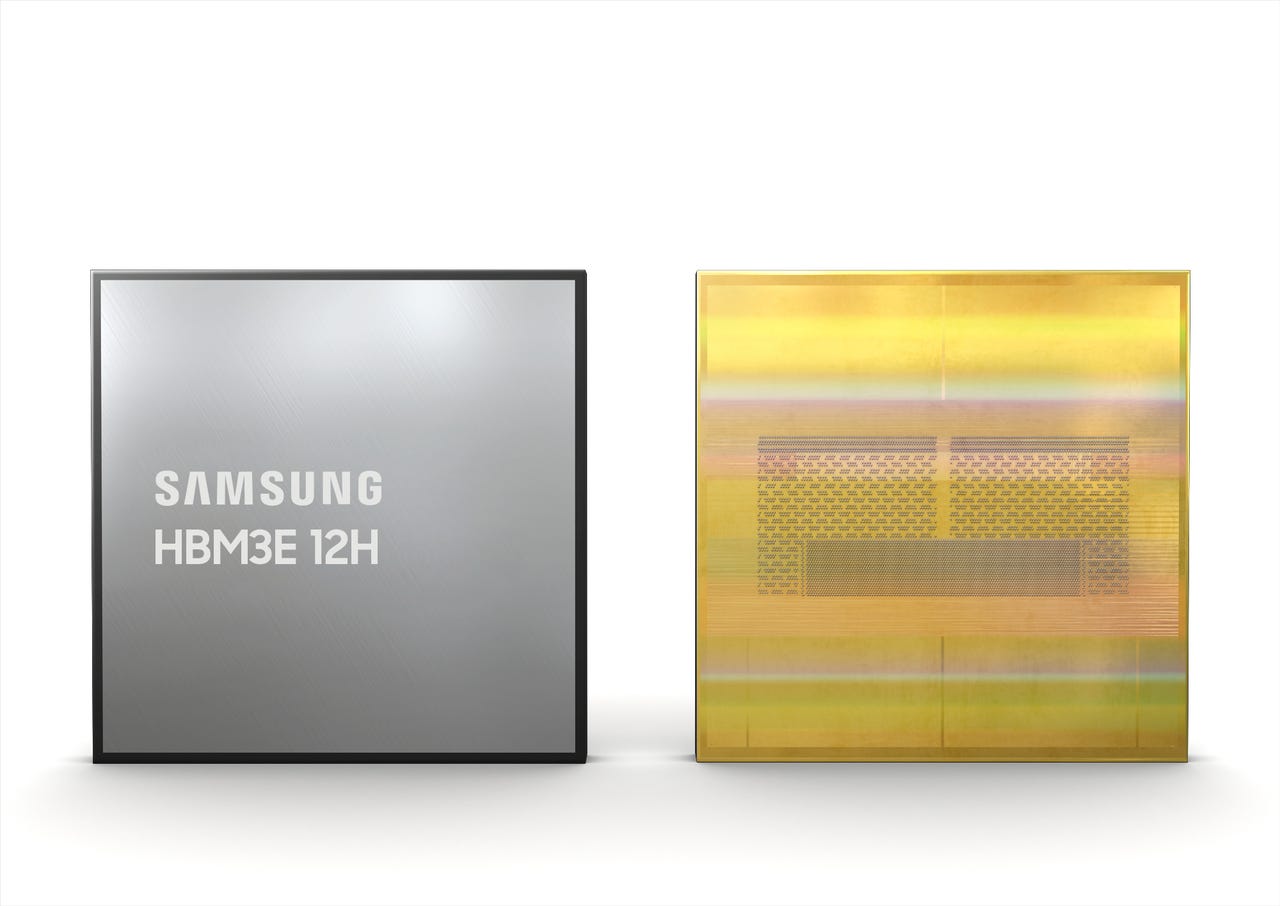
Samsung said on Tuesday that it has developed the industry's first 12-stack HBM3E DRAM, making it a high bandwidth memory with the highest capacity to date.
The South Korean tech giant said the HBM3E 12H DRAM provides a maximum bandwidth of 1,280GB/s and a capacity of 36GB. The bandwidth and capacity are all up by 50% compared to 8-stack HBM3, Samsung said.
HBMs are comprised of multiple DRAM modules stacked vertically, each called a stack or a layer. In the case of Samsung's latest, each DRAM module has a capacity of 24 gigabits (Gb), equivalent to 3 gigabytes (GB), and there are twelve of them.
Memory makers Samsung, SK Hynix, and Micron are competing to stack more while limiting the height of the stacks to make the chip as thin as possible with more capacity.
All three are planning to increase their production output of HBM this year, with the downcycle of the memory chip market seemingly over, and to meet the high demand from the popularity of AI, which has increased demand for GPUs __ especially those made by Nvidia __ that are paired with these HBMs.
According to Samsung, it applied advanced thermal compression non-conductive film (TC NCF) to make the 12-stack HBM3E have the same height as the 8-stack ones to meet package requirements. The film was thinner than the ones previously used and eliminated voids between the stacks and the gap between them was reduced to seven micrometers, the company said, allowing the 12-stack HBM3E to be vertically dense by over 20% compared to 8-stacks.
Samsung said TC NCF also allowed the use of small and large bumps, where during chip bonding, small bumps are used in areas for signaling and the large ones in places that need heat dissipation.
The tech giant said the higher performance and capacity of HBM3E 12H will allow customers to reduce the total cost of ownership for data centers. For AI applications, the average speed of AI training can be increased by 34% and the number of simultaneous users of inference services can be boosted by 11.5 times compared to HBM3 8H, Samsung claimed.
The company has already provided samples of HBM3E 12H to customers and is planning to start mass production within the first half of this year.
Businesses today heavily rely on data, but many struggle with an overwhelming amount of information that doesn’t provide the necessary insights. Important questions often go unanswered as data is scattered across various files and slow reports. This challenge makes decision-making difficult, opportunities are missed, and progress stalls. Have you ever felt this way? The problem lies in not effectively utilizing your data, and that’s where a robust solution like SQL Server Data Warehouse can make a significant impact.
But imagine if this overwhelming data could become your biggest strength. It could help you make smart choices, be more flexible, and grow your business. That’s what a SQL Server data warehouse can do. It’s not just a place to store data; it’s a way to unlock its hidden power and use it to succeed.
Want to get out of the data mess and make the most of your business info? Keep reading to see how an SQL Server data warehouse can help you enter a new phase where data drives your success.
Unlocking benefits
Here’s how a SQL Server data warehouse transforms raw data into a powerful catalyst for success:
Centralized decision hub
Say goodbye to data silos scattered across spreadsheets and departmental servers. SQL Server consolidates all your operational, transactional, customer, and more data into a single, centralized repository. This unified view empowers everyone, from executives to analysts, to gain holistic insights and make informed decisions based on a complete picture.
Speed of knowledge
No more waiting for sluggish data crunching and lengthy reports. SQL Server’s optimized query performance lets you quickly answer critical business questions. Imagine analyzing sales trends across regions, pinpointing marketing campaign effectiveness, or identifying customer churn risks – all within seconds! This agility enables proactive decision-making and capitalizing on fleeting opportunities.
Beautifully illustrated
Data alone is powerful, but its true value lies in clear, actionable insights. SQL Server empowers you to transform complex data into compelling visuals using powerful analytics tools like SQL Server Analysis Services (SSAS) and Power BI. Create interactive dashboards, drill down into trends, and share visualizations across departments, fostering data-driven collaboration and knowledge sharing.
Scalability for growth
Your data volume is constantly growing, and your data warehouse needs to keep pace. SQL Server offers various editions to meet your evolving needs, from smaller deployments to large-scale data lakes. Whether a startup or a multinational corporation, your data warehouse can scale flawlessly alongside your business.
Security at the core
Your data is your most valuable asset, and its security is paramount. SQL Server takes data protection seriously, offering robust security features like role-based access control, encryption, and auditing. Sleep soundly, knowing your sensitive information is always protected.
Beyond the Core Benefits:
The capabilities of your data warehouse extend far beyond basic reporting and analysis. SQL Server unlocks even more value through:
Machine Learning Integration: With Azure Machine Learning, you can train and deploy AI models directly on your data warehouse. You can identify hidden patterns, predict future trends, and personalize customer experiences – all powered by your data.
Hybrid Cloud Options: Leverage the flexibility of cloud-based data warehouse solutions like Azure Synapse Analytics. Seamlessly integrate your on-premises SQL Server data warehouse with the scalability and elasticity of the cloud, maximizing efficiency and cost-effectiveness.
Building a successful SQL Server data warehouse goes beyond simply setting up the technology. To truly unlock its potential for insightful analysis and efficient data management, here’s a closer look at some essential best practices:
1. Data modeling that matters:
Dimensional Modeling: Structure your data using established dimensional models like Star Schema or Snowflake Schema. This facilitates efficient querying and analysis by organizing data into facts (quantitative measures) surrounded by dimensions (descriptive attributes).
Normalization Sweet Spot: Strike a balance between data redundancy and performance. Over-normalization can lead to complex joins, while under-normalization can bloat storage and impact querying speed.
Grain of Detail: Define the appropriate level of granularity for your data. For example, do you need daily, hourly, or even minute-by-minute granularity for sales transactions? Choosing the correct grain optimizes storage and analysis efficiency.
2. ETL/ELT with precision:
Data Cleansing: Scrub your data for inconsistencies, duplicates, and missing values before it enters the warehouse. Clean data translates to reliable insights.
Data Transformation: Apply necessary transformations like currency conversions, unit conversions, and date formatting to ensure standardized data representation.
Change Data Capture (CDC): Implement CDC mechanisms to capture changes in source data systems and seamlessly update your data warehouse, keeping it fresh and accurate.
3. Performance optimization:
Indexing Strategies: Identify frequently used columns and create optimal indexes to speed up data retrieval drastically. Regularly monitor and adjust indexes based on query patterns.
Partitioning Power: Divide large tables into smaller, manageable partitions based on date, region, or other relevant criteria. This reduces query processing time and improves efficiency.
Materialized Views: Pre-calculate frequently used aggregations and store them as materialized views for instant retrieval, bypassing complex calculations during analysis.
4. Governance and security:
Data Access Control: Implement user roles and permissions to control access to sensitive data within the warehouse, ensuring data privacy and compliance.
Data Lineage Tracking: Maintain proper documentation of data sources, transformations, and movement within the warehouse. This transparency and traceability are crucial for auditing and troubleshooting.
Backup and Disaster Recovery: Establish robust backup and data recovery plans to safeguard your data from hardware failures, accidental deletion, or natural disasters.
5. Embrace continuous improvement:
Monitor and Analyze: Regularly monitor data warehouse performance, track query execution times, and identify potential bottlenecks. Analyze user behavior and feedback to understand usage patterns and refine your data models and reports.
Adapt and Evolve: As your business needs and data landscape evolve, adapt your data warehouse accordingly. Update data models, integrate new data sources, and explore advanced analytics options like machine learning to keep your insights relevant and valuable.
Remember, a thriving data warehouse is a living, breathing entity, not a static set-up. By following these best practices and keeping an eye on continuous improvement, you can leverage SQL Server’s potential to transform your data into a springboard for success, empowering informed decision-making and propelling your business forward.
Conclusion
Building a data warehouse is an investment, and choosing the right platform is crucial. With its robust features, proven reliability, and extensive integrations, SQL Server makes a compelling case for powering your journey to data-driven success. So, dive into the world of SQL Server and unlock the insights hidden within your data!
This blog is just a starting point. Feel free to explore specific features, delve deeper into best practices, and share your own experiences with SQL Server and data warehouses in the comments below!
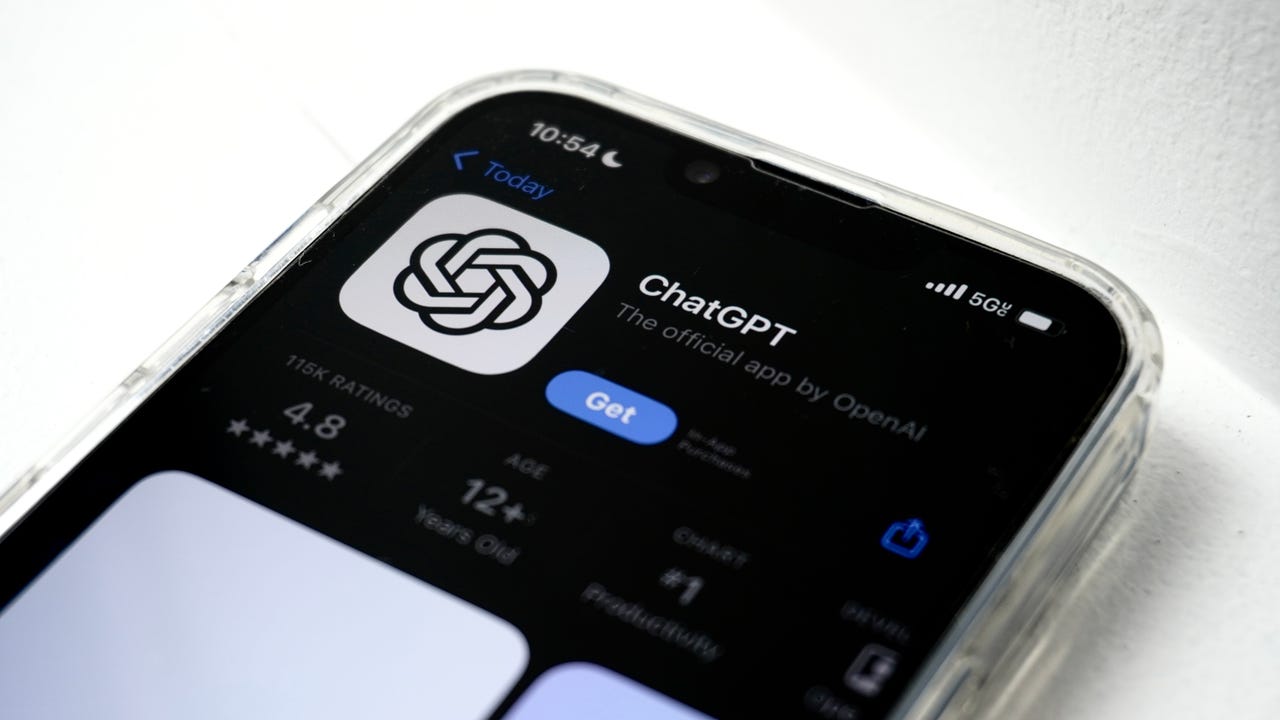
ChatGPT can help with on-the-go tasks such as writing quick texts, emails, and more. To make getting its assistance on your phone easier, ChatGPT is reportedly rolling out a new widget for Android users.
On Friday, Android OS expert Mishaal Rahman spotted that Android has a home screen widget with shortcuts for entering a text, image, or voice prompt or starting conversation mode, as seen in the image below.
Also: Is your next home assistant a hologram? These MWC concepts offer 3 possibilities
According to Rahman, the feature is available in the 1.2024.052 version of the app. However in our testing (as well as The Verge's), despite having the latest app version, the widget is not an option.
This is likely because the latest version of the app available on the app store is lower than the one Rahman shared within his X post, signaling that the widget noticed by Rahman may be a beta feature that is still pending public rollout.
Accessing the chatbot on your Android smartphone is still pretty simple via the ChatGPT app, which provides users with a shortcut, bypassing having to go on the browser and sign in every time you want ChatGPT's assistance.
Also: Qualcomm's new AI Hub is a dream tool for developers building on-device models
If you don't want to wait for the ChatGPT widget to roll out, you can also download the Bing app and add the Bing widget to your home screen, which gives you access to Copilot, Microsoft's AI chatbot which has proven to be a worthy rival to ChatGPT.
GenAI is revolutionizing business strategies for MarTech leaders
The momentum around Generative AI in MarTech is undeniable. A staggering 63% of marketing leaders are signaling their intention to invest in this innovative technology in the future. This isn’t a vision for the distant future—it’s already here. It is reshaping our present, unlocking new avenues for innovation and offering solutions that were once thought impossible in the marketing technology landscape.
Revolutionizing MarTech: The rise and impact of generative AI
From being a buzzword in news headlines and professional discussions, Generative AI has emerged as a transformative force in marketing. For instance, models like OpenAI’s ChatGPT are altering the creation of content, ads, and communications. They are ushering in a new era of unprecedented advancements in the MarTech space.
In less than three decades, the journey of AI in marketing has evolved from basic tools like autocorrect to sophisticated entities like GenAI. This evolution has witnessed significant advancements. They include introducing Generative AI tools capable of creating intricate pieces of content, and opening up transformative solutions in marketing.
Beyond traditional AI – Defining genAI in MarTech
Generative AI in MarTech simplifies as well as enhances marketing practices. It speeds up data analysis and idea generation, allowing marketers to focus on deeper customer engagement. For content creation, it adapts style and tone quickly. Enterprises are using it to create varied, effective marketing content efficiently. It also tailors ads to individual user preferences and behaviors, thus producing more relevant and engaging ad experiences. This level of customization leads to higher engagement rates and potentially greater conversion success as ads resonate more closely with each user’s unique interests and needs.
A new ally in MarTech strategy: Generative AI
In the dynamic MarTech industry, Generative AI emerges as a transformative ally, much like how the internet reshaped our digital existence. It’s a companion in the creative journey of marketers, a guide in the nuanced space of data and creativity, enabling innovative suggestions and opening up unprecedented possibilities.
GenAI crafts a world where content is personalized, speaking to the individual and not just the crowd, where understanding supersedes algorithms. It creates resonant messages and experiences, making every interaction more meaningful and profound.
In predictive analytics and customer insights, Generative AI navigates through extensive data, enabling marketers to formulate proactive strategies and enhance customer experiences. It humanizes customer service interactions, acting as both the voice and the ear, and serves as the architect and craftsman in ad targeting and optimization, designing campaigns that resonate and inspire, creating impactful and memorable messages.
GenAI is now a key part of MarTech, blending creativity and technology. It not only allows marketers to use ideas and but also use data effectively. This technology enables them to be more imaginative and play a significant role in shaping the future of marketing.
Building an effective MarTech stack with genAI consulting
Constructing a robust B2B MarTech stack is essential for optimizing marketing strategies. Integrating generative AI models is crucial, offering innovative applications and enhancing marketing outcomes. However, this integration demands thorough attention to ensure compliance with data privacy regulations and to address potential biases and intellectual property concerns. Seamless integration is also important to avoid complexities and ensure interoperability and functionality. To effectively address integration challenges and stay informed of the ongoing advancements in Generative AI, organizations should consider seeking the expertise of a MarTech advisor or engaging MarTech consulting services, ensuring the full potential of the technology is leveraged.
Potential biases in training data can lead to the creation of oblivious content, emphasizing the need for careful management and monitoring of generative AI use cases. Intellectual property concerns are also crucial due to Generative AI’s ability to create the latest content, raising questions of ownership and potential copyright infringement.
Despite its transformative nature and myriad applications, Generative AI cannot replace the human touch in crafting compelling marketing campaigns. It necessitates diligent management of AI tools to maintain quality and standards while maximizing the benefits of integrating Generative AI into the MarTech stack.
Integrating Generative AI into the MarTech stack requires a balanced and informed approach, addressing challenges while exploiting the innovative opportunities it presents. Organizations aiming to stay competitive must consider generative AI NLP technologies and other advancements. Ensuring their MarTech Customer Data Platform (MarTech CDP) is equipped to effectively harness the power of GenAI.
The time is NOW – Leveraging genAI for enterprise success in MarTech
Sales and marketing leaders must embrace the shift, in order to recognize the unique value and personalization of Generative AI services for enterprises. It’s a technology solution and a valuable contributor to enhanced effectiveness and revenue growth, offering personalized, data-driven insights and solutions at scale.
Being proactive in adopting this technology is crucial; it’s about embracing the technology before it becomes a standard and gaining a competitive edge. The delay risks are substantial, with late adopters missing immense value and being left behind. In the fast-evolving MarTech scene, leveraging Generative AI should not be a future consideration. It’s an immediate necessity to stay innovative and redefine marketing boundaries.
Generative AI FAQs
How can businesses of different sizes and industries use GenAI to increase ROI in MarTech?
Businesses can leverage Generative AI LLM in MarTech for personalized content generation, predictive analytics as well as enhanced customer service through chatbots. This can result in optimized ad targeting, leading to increased engagement and potentially higher ROI.
How can marketers keep up with the latest advancements and features in GenAI to ensure they remain competitive in 2023-24?
Marketers should actively engage with industry news as well as participate in relevant forums and discussions. Investing in training and development is crucial to staying abreast of the latest advancements in GenAI within MarTech.
Can you provide examples of how companies have successfully used GenAI to increase their ROI in MarTech?
ActiveCampaign, using advanced GAI, significantly increased its content output in email design and campaigns. Iterable leveraged GenAI for enhanced customer segmentation and experiences, improving lifetime value. ThriftBooks effectively utilized data insights and AI-driven loyalty programs, as a result, boosting e-commerce sales and customer engagement.
Are there any specific GenAI tools or platforms that are leading the way in MarTech adoption?
Several GenAI tools and platforms lead MarTech adoption due to their distinctive features and capabilities.
Salesforce is paramount, since it provides extensive CRM solutions and a structured approach from lead to conversion.
HubSpot CRM is distinguished for its intuitive interface, suitable for enterprises and beginners, enabling effective management of business activities.
Sprout Social excels with its advanced social media analytics and unique social CRM capabilities, which are crucial for engaging with potential clients.
Trello is essential for visual project management while also aiding in organizing tasks and projects.
Slack, with its robust messaging features, is a key player in enhancing team communication and interaction.
What steps can companies take now to leverage the growing interest around GenAI to increase MarTech ROI?
Companies can start by identifying clear objectives and desired outcomes for implementing GenAI in their MarTech strategies. Investing in training and development is essential to equip the team with the necessary skills to leverage AI tools effectively. Companies should also integrate AI seamlessly with their existing MarTech stack to ensure coherence and constructive collaboration in marketing operations. Regularly analyzing the performance and impact of AI implementations will help optimize strategies for better ROI. Lastly, staying abreast of the latest developments in AI is a must. It will enable companies to adapt and innovate continually, maximizing the benefits of Generative AI in MarTech.
By now, the Humane Ai Pin needs no introduction. It's one of the first hardware devices to go all-in on the AI assistant craze, and that's why I'm scratching my head as I write this article, wondering why I didn't, for a second, expect the company to have a presence at Barcelona's Mobile World Congress.
Also: Is your next home assistant a hologram? These MWC concepts offer 3 possibilities
Perhaps it was the fact that Humane doesn't actually have a booth at the trade show. Instead, it scattered a team of engineers and designers to demo the Ai Pin in the spaces of partnering companies such as SK Telecom and Qualcomm. Occasionally, Sai Kambampati and Liz Dorman, two of the demonstrators, can be found roaming the show floor, as if they are comparing their Pokemon cards to that of other brands. Only in this case, it's an AI device versus what is very likely another AI device.
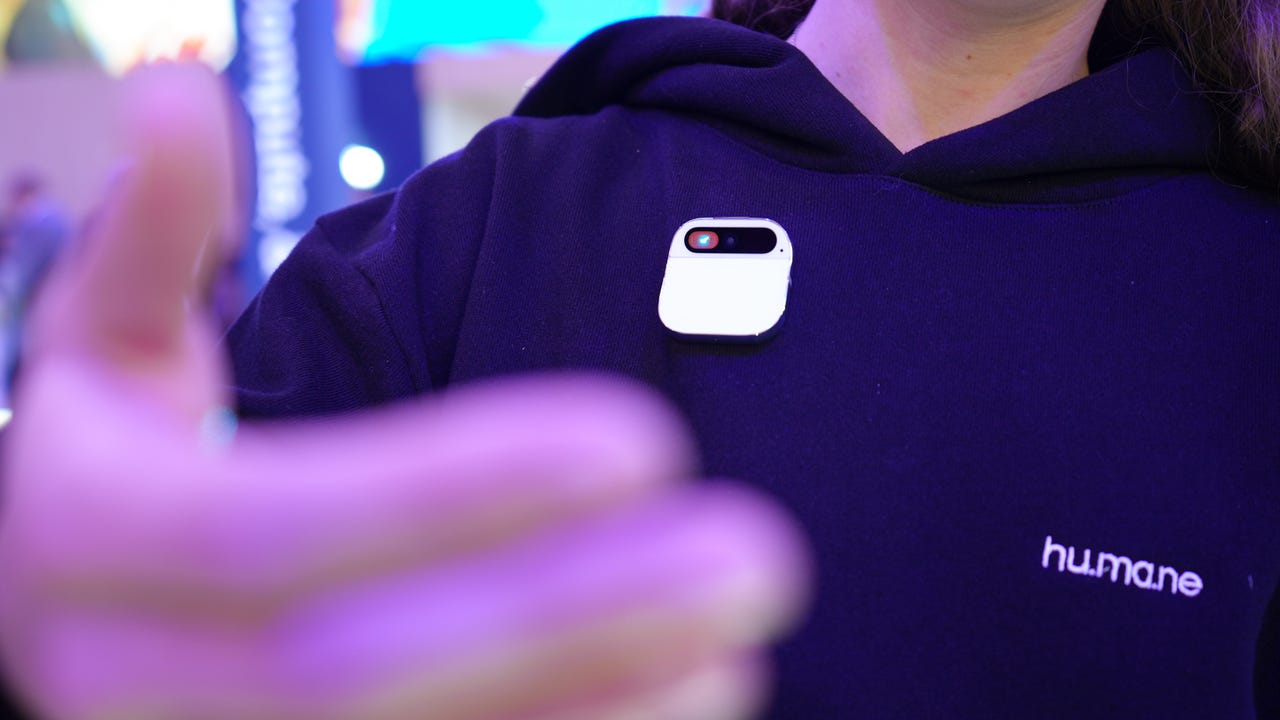
I bumped into the Humane duo as I was surrounded by magenta walls, reasoning with T-Mobile's AI concept phone. The contrast between the white case on Kambampati's Pin and his black Humane hoodie made it hard to miss. It was one of those "if you know, you know" moments.
I've covered the Humane Ai Pin extensively over the past year, and have been following the brand's stealthy upbringing for longer, but this was the first time I saw its debut consumer product in person. So my eyes and ears were open, and the demo began.
First, the basic voice command, with a long tap on the surface of the Pin. "How many people attend Mobile World Congress?", Kambampati asked. The Pin, which was Bluetooth-paired to a mini speaker beneath his hoodie, responded shortly with a number that sounded accurate. In situations that require more research, the Pin will give a buffer statement like "Searching for attendees," as it scrapes the web.
Also: This AI startup made a $199 gadget that replaces apps with 'rabbits' — and it might just work
I have two thoughts here: 1) I was impressed with how quick the Pin was when answering straightforward questions. If I'm walking around town or driving and want to fact-check something, I'd hope for short and consistent response times. In the context of answering questions at a bustling trade show, the Pin did not disappoint. 2) What about the volume of the Pin's built-in audio? The need to tuck in an extra speaker didn't give me much confidence, but then again, I'm not expecting to broadcast my conversations with the wearable all that often.
The Pin's projection was bright and clear.
Then came the killer feature of the Pin, the Laser Ink Display that's projected onto the user's raised palm. Sure, turning your body into a digital user interface gives you all the sci-fi street cred, but there's actually some practicality here. After you ask a question, triggering the Laser Ink Display projects the answer instead of having the Pin read it out loud. It's perfect for any embarrassing questions, which, as a first-timer in Barcelona, I've had plenty of.
The 3D sensor and mapping of the digital interface were spot-on, too, with the projection remaining centered even as each demonstrator's hands were shifting around. Pinch and leaning gestures would cause the visual to distort a bit, but not to the point that made it illegible.
Also: I tried the Samsung Galaxy Ring and it beats the Oura in 2 meaningful ways
Ultimately, did the live demos sell me on Humane's ambitious new wearable? Sort of. I'm still unclear on how it would be living with a smartphone and the Ai Pin, and the value proposition of a $699 first-gen product with a $24-per-month subscription is still a questionable commitment for many people, myself included.
But the near frictionless interactions with an always-nearby AI companion make so much sense in situations where context is invaluable. "How much is one euro in US dollars?", "What's the best route to the Fira Barcelona Gran Via?", "Is there a pharmacy nearby?", are all questions I'd love to get answers to without having to pull out my phone from my zippered pocket, unlock it, and then manually type into Google for. In this regard, I'm all for a device like the Humane Ai Pin.
In 2024, companies all around the world are on a relentless quest for innovative solutions to leverage vast amounts of information and elevate their interactions. In this quest, Natural Language Processing (NLP) emerges as a groundbreaking area of artificial intelligence, seamlessly connecting human communication with machine interpretation.
NLP is transforming business practices, data analysis, and customer engagement by empowering machines to comprehend, interpret, and even produce human language effectively. This article delves into the extensive advantages of incorporating NLP within business operations, demonstrating that this technology is indispensable for maintaining a competitive edge in today’s dynamic business environment.
Top 7 advantages of using NLP in business
As businesses navigate the complexities of the digital era, the adoption of NLP technologies stands out as a game-changer. NLP not only enhances operational efficiency but also fosters a deeper connection between companies and their customers. By leveraging the power of NLP, businesses can unlock a treasure trove of advantages, from improved customer experience to actionable insights into data:
1. Enhanced customer service
NLP enables the automation of customer service interactions, allowing for instant, 24/7 responses to customer inquiries through chatbots and virtual assistants. This not only improves customer satisfaction but also significantly reduces operational costs.
2. Insightful data analysis
With the ability to process and analyze vast amounts of unstructured data, NLP provides businesses with deep insights into customer behavior, market trends, and operational inefficiencies, driving informed decision-making.
3. Improved content personalization
NLP technologies can tailor content to individual users, enhancing engagement by delivering relevant information, recommendations, and offers based on their preferences and past interactions.
4. Efficient document processing
From sorting emails to processing complex legal documents, NLP can automate and streamline the handling of text-heavy tasks, freeing up valuable time for employees to focus on higher-value activities.
5. Sentiment analysis
By understanding the sentiment behind social media posts, customer reviews, and other forms of feedback, NLP helps businesses gauge public opinion, monitor brand reputation, and respond proactively to customer needs.
6. Language translation and localization
NLP breaks down language barriers, enabling businesses to easily translate content and localize products for different markets, expanding their global reach.
7. Voice recognition and control
Integrating NLP with voice recognition technologies allows businesses to offer voice-activated services, making interactions more natural and accessible for users and opening new channels for engagement.
The most popular use cases of NLP tools
These tools have already become integral to the digital transformation of businesses, facilitating a range of apps that significantly impact both internal operations and customer-facing services in multiple industries, says Forbes. They have the unique capability to interpret, understand, and generate human language in a way that adds value across various business functions. Here are some of the most popular use cases of NLP tools that illustrate the breadth of their applicability in the business world:
Customer service automation
NLP powers chatbots and virtual assistants that handle customer inquiries, complaints, and FAQs, offering timely and relevant responses that enhance customer service experiences. This automation not only reduces the workload on human customer service representatives but also ensures that customers receive instant support, at any time of the day, improving overall satisfaction and loyalty.
Sentiment analysis
Businesses use NLP to analyze customer feedback, reviews, and social media mentions to understand public sentiment toward their brand, products, or services, allowing them to adjust strategies accordingly. This in-depth analysis helps identify not just what customers are saying, but also how they feel about different aspects of the business, enabling more nuanced and responsive marketing and product development strategies.
Email filtering and prioritization
NLP algorithms help sort and prioritize emails based on content and urgency, ensuring important communications are addressed promptly, and improving efficiency. This capability extends beyond mere organization, as it can also detect nuances in language to highlight emails that require immediate attention, helping teams focus on critical issues first.
Content recommendation systems
By analyzing user behavior and preferences, NLP enables personalized content recommendations, improving user engagement on e-commerce platforms, streaming services, and content portals. These systems can dynamically adjust to user interactions over time, refining content suggestions to keep users engaged and increasing the likelihood of conversion.
Market intelligence
NLP tools process news articles, financial reports, and industry publications to extract actionable insights, keeping businesses informed about market trends and competitive movements. This continuous stream of analyzed information provides businesses with a strategic advantage, enabling them to anticipate market shifts and adjust their strategies proactively.
Automated translation services
NLP facilitates real-time language translation, allowing businesses to easily communicate with international clients and global markets without language barriers. This capability not only expands the market reach but also enhances customer support and service by allowing businesses to interact in the customer’s preferred language, fostering a more inclusive and personalized experience.
Resume and job posting analysis
In HR and recruitment, NLP is used to match job descriptions with resumes, identifying the most suitable candidates for open positions quickly and efficiently. Beyond matching skills and experience, NLP can also analyze candidates’ linguistic nuances to gauge cultural fit and personality traits, further refining the recruitment process.
Voice-activated systems
Incorporating NLP with voice recognition technology enables businesses to offer voice-activated services, making technological interactions more natural and accessible. These systems not only improve user accessibility, particularly for those with disabilities but also create more engaging and interactive customer experiences, from voice-commanded searches to hands-free navigation.
Embracing the future with NLP in business
The integration of Natural Language Processing tools into business practices marks a significant leap toward the future of digital interaction, data analysis, and customer engagement. As we’ve explored, the benefits of NLP — from enhancing customer service to deriving deep insights from unstructured data — underscore its transformative potential across various sectors.
Moreover, the widespread applications of NLP tools in automating communication, analyzing sentiment, personalizing content, and more, illustrate the versatility and depth of this technology in addressing complex business challenges.
In an era where efficiency, personalization, and data-driven decision-making are paramount, NLP stands out as a pivotal technology that businesses can leverage to gain a competitive edge, foster innovation, and build stronger connections with their customers. As we move forward, the continued evolution of NLP promises even greater opportunities for businesses ready to embrace its capabilities.
AI, specifically generative AI, is spearheading about every industry now. Global events marketplace, Eventbrite, is bringing it into the events sector in the most creative way possible and creating efficient working environments.
In a recent interview, Vivek Sagi, the CTO of Eventbrite, shed light on his professional journey, the company’s innovative use of AI and how it manages remote engineering teams, besides touching upon the future of event technology. Sagi, whose career spans various tech sectors, also shared his insights into Eventbrite’s approach to leveraging AI to enhance event creation, promotion, and attendee experience.
Sagi’s journey to becoming the CTO of Eventbrite began with a tryst with AI during his schooling at IIT Madras and further studies at Penn State University and the Wharton School in the United States. He described his career as divided into four phases, from startups to big tech, leading him to Eventbrite, where he found his “sweet spot”.
As a CTO, Sagi outlined his primary responsibilities, emphasising a customer-centric approach to managing a globally distributed engineering team spread over 13 countries. He highlighted the importance of staying up-to-date with rapidly evolving technologies to drive innovation and maintain the company’s market leadership.
AI in events is all about personalisation
One of the most intriguing aspects of Eventbrite’s innovative use of AI, as Sagi explained, is its integration into the platform, streamlining event creation, generating promotional content, and enhancing personalised recommendations for users. Through AI-powered tools, creators can launch ad campaigns faster and achieve better engagement, leading to increased ticket sales.
“Using AI, we generate the entire event description with images and let customers pick the one that works for them,” Sagi explained how generative AI brought down the duration of creating promotional content from hours to just three minutes.
“Generative AI has become really good at generating content such as copies for social media,” Sagi said, highlighting that an AI-generated copy, when done at scale, drives about 17% better cost per click compared to human-generated content. He also noted that creators who use AI tools are launching ad campaigns at a 30% faster rate. Sagi said that initial results indicated that event creators who use Eventbrite’s built-in tools for paid social campaigns sell up to 63% more tickets compared to those who do not.
In 2022, Eventbrite issued nearly 300 million tickets to approximately 5 million events in nearly 180 countries. This has led to the company amassing large amounts of data, much of which is user-generated. Eventbrite is utilising this information – including unstructured data – to create personalised events for its customers, to connect them to the right creators, solve cross-channel problems, and make everything available at one spot.
Sagi also discussed the future of AI in the events industry around advancements such as AI-generated videos and personalised event experiences. He emphasised the potential for AI to enhance human connections during live events, enabling even remote attendees to share in the experience. “With synthesised AI music, you can have a whole orchestra without paying for a label, also offering great personalisation,” said Sagi.
Creating the perfect remote and asynchronous team environment
In a fascinating personal insight, Sagi revealed that he gets inspiration for working remotely from a ranch in Texas, where he finds comfort in the company of nature, a menagerie of animals, and fund-raising efforts that support animal welfare. His unconventional work environment reflects Eventbrite’s commitment to flexibility and creativity in its approach to technology and innovation.
Vivek Sagi, in his Texas Ranch, inspires Techies to work from where they work best.
Sagi shared Eventbrite’s approach, which prioritises empowerment, clear goal-setting, and the use of collaborative tools. He emphasised the importance of rituals like daily stand-ups and sprint demos while allowing teams flexible working arrangements. “It’s our passion to empower teams and give them full ownership of their work,” he said.
“It is also essential that our teams do not work in a vacuum.” Sagi said that Eventbrite’s approach involves having all the different teams, such as creators, engineers, product managers, etc., in the same time zone. Sagi also believes that enterprise software has also been a game changer when it comes to working remotely efficiently.
Further, Sagi pointed out Eventbrite’s commitment to a “flexible-first” environment, enabling employees to work remotely while maintaining essential team rituals and fostering collaboration. He also discussed the company’s shift toward a distributed executive team, in line with the trend of post-pandemic remote work.
Eventbrite believes in a DevOps model, which means “when an engineer is done building the code, they can push it into production with the click of a button, and not depend on a chain of human beings along the way to make that happen”.
“Letting the engineers be productive and getting the code out in front of our consumers and creators as quickly as possible has been the biggest technological strength that we have built,” concluded Sagi.
The post Eventbrite’s CTO Vivek Sagi Unveils the Future of Events with AI appeared first on Analytics India Magazine.
Meta introduced MobileLLM, a new approach to optimising sub-billion parameter language models for on-device use cases. This paper addresses the demand for efficient large language models (LLMs) that can be effectively deployed on mobile devices. MobileLLM is different because of its emphasis on model architecture over the sheer quantity of data and parameters, a common belief in the field.
The paper outlines the development of using deep and thin architectures, embedding sharing, and grouped-query attention mechanisms to enhance model efficiency without increasing size. It uses a specific design that is detailed but compact, shares parts of the AI’s brain to use less space, and focuses attention on important information to improve understanding.
Additionally, an immediate block-wise weight-sharing strategy is introduced to improve accuracy with minimal latency, making MobileLLM suitable for tasks like chat and API calling on mobile devices. This shared the information between different parts of the AI to make it smarter without slowing it down. This approach demonstrates a significant step forward in deploying powerful AI models directly on consumer hardware, offering a balance between performance and resource constraints.
Companies are already adding generative AI features to their smartphones. The significance of MobileLLM extends beyond its technical achievements. It’s shift towards creating more sustainable, privacy-conscious, and accessible AI technologies by enabling powerful computational capabilities directly on users’ devices.
The post Meta Releases MobileLLM with Efficient Architecture appeared first on Analytics India Magazine.
Within our lifetimes we've seen a major evolution in how we communicate, with landlines, beepers, and flip phones becoming obsolete. Despite how advanced today's smartphone is, there are still more changes ahead in how we communicate, and that future may include holograms.
Also: I tried the Samsung Galaxy Ring and it beats the Oura in 2 meaningful ways
Deutsche Telekom's "Concept T," presented at Mobile World Congress (MWC), combines a variety of new and cutting-edge technologies — such as AI, hologram telephony, Wi-Fi sensing, computer vision, and Web 3 — to create design studies showcasing what the future of communication may look like.
"Concept T is researching how hologram telephony, among other things, could become a reality," said Claudia Nemat, a member of Deutsche Telekom's Board of Management for Technology and Innovation. "Not on the shelves tomorrow, but in our heads and laboratories today."
The first design study of Concept T is "Concept view," which features Emma, an AI-based avatar that users would be able to chat with via a hologram to provide them with assistance in all aspects of their lives including shopping, picking out the perfect piece to complete their outfits, and even managing their cryptocurrencies and NFTs.
As a central point of contact for Deutsche Telekom service issues, Emma can also help with customers' connectivity needs, taking into account the customer's order history, products, and contracts for the best assistance.
Also: 7 exciting Android upgrades Google just announced at MWC 2024
Design study 2, the "Concept level," takes the router as we know it and elevates it entirely. The base has conventional router features with a setup that can be customized with additional elements such as a cylindrical display with an AI voice assistant and a cone-shaped module that provides WiFi sensing with room monitoring.
Each one of these modules would be supplied power wirelessly and contactlessly via WiFi charging. The base would also be able to charge other devices — including smartphones and smartwatches — in the same way.
Lastly, in design study 3, the "concept buddy" features a little robot with a smiley face and all of the capabilities of the aforementioned "concept level." The "friendly butler" is mobile, has a projector, and can move around the house to ensure everything is running smoothly such as monitoring the air quality in the rooms.
Also: I wore Motorola's bendable smartphone-watch hybrid, and it left me all kinds of confused
Other companies have attempted to make the last concept a reality, such as Amazon's Astro, now discontinued, and Samsung's Ballie, which is expected to hit the market later this year.