Vector Database for LLMs, Generative AI, and Deep Learning

Vector Database for LLMs, Generative AI, and Deep Learning
Image by Editor Understanding Vector Databases

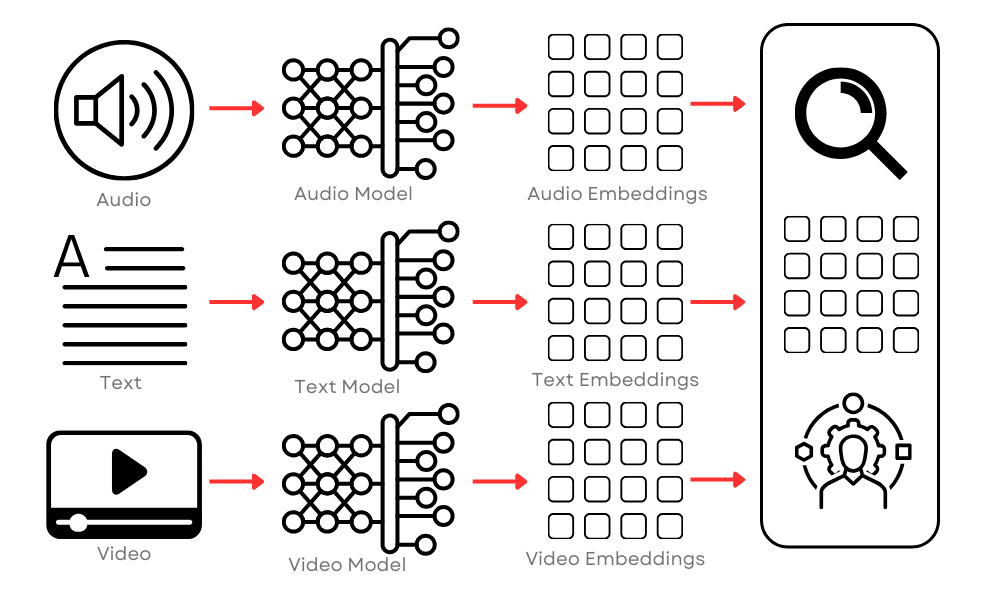
Vector database is a type of database specifically designed to store and manage vector data using arbitrary but related coordinates to related data. Unlike traditional databases that handle scalar data (like numbers, strings, or dates), vector databases are optimized for high-dimensional data points. But first we have to talk about vector embeddings.

Vector embeddings are a method used in natural language processing (NLP) to represent words as vectors in a lower-dimensional space. This technique simplifies complex data for processing by models like Word2Vec, GloVe, or BERT. These real-world embeddings are highly complex, often with hundreds of dimensions, capturing nuanced attributes of words.

So how can we benefit from vectors in fields such as AI and deep learning? Vector databases offer significant benefits to the machine learning and AI field by providing efficient and scalable solutions for storing, searching, and retrieving high-dimensional data.

The database uses mathematical operations, such as distance metrics, to efficiently search, retrieve, and manipulate vectors. This organization enables the database to quickly find and analyze similar or related data points by comparing the numerical values in the vectors. As a result, vector databases are well-suited for applications like similarity search, where the goal is to identify and retrieve data points that are closely related to a given query vector. This is particularly useful in applications like image recognition, natural language processing, and recommendation systems.
Vector Database for LLMs, Generative AI, and Deep Learning

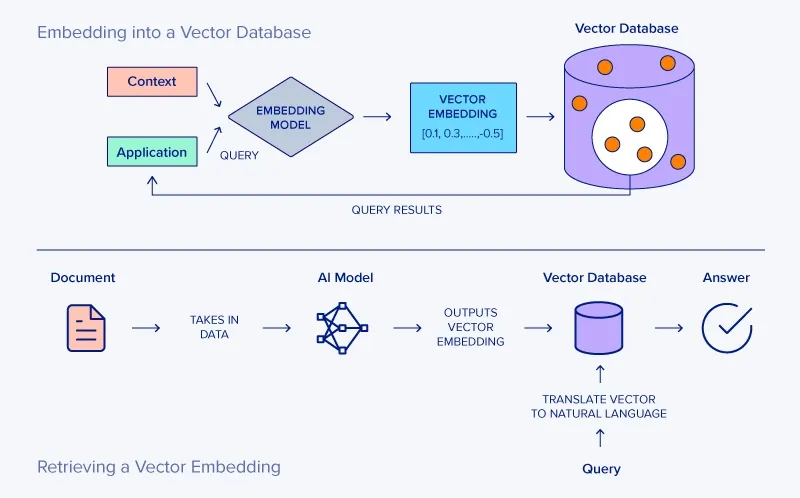
Initially, the process involves storing some text in the designated vector database. The received text undergoes a transformation into a vector form using the chosen AI model. Moving on, the newly created vector is then stored inside the vector database.

When a search prompt is issued, it's similarly converted into vectors for comparison. The system then identifies the vectors with the highest similarity and returns them. Finally, these vectors are translated back into natural language and presented to the user as search results.

Vector Databases and Large Language Models (LLMs)

The integration of vector databases with Large Language Models (LLMs) like GPT-4 has revolutionized the way AI systems understand and generate human language. LLMs' ability to perform deep contextual analysis of text is the result of training these models on extensive datasets, allowing them to grasp the subtleties of language, including idiomatic expressions, complex sentence structures, and even cultural nuances.

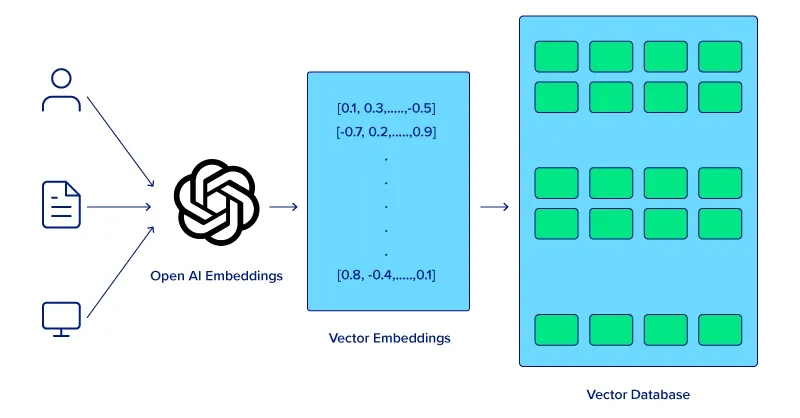
These models can achieve this by converting words, sentences, and larger text segments into high-dimensional vectors embeddings which represent much more than the text, encapsulating context and semantic relationships within the text allowing LLMs to better understand more complex ideas and situations.

Vector databases play a critical role in managing these complex vectors. They store and index the high-dimensional data, making it possible for LLMs to efficiently retrieve and process information. This capability is particularly vital for semantic search applications, where the objective is to understand and respond to queries in natural language, providing results based on attributed similarity rather than just keyword matching.

LLMs use these vectors to associate words and ideas, mirroring human understanding of language. For example, LLMs can recognize synonyms, metaphors, and even cultural references, and these linguistic relationships are represented as vectors in the database. The proximity of these vectors to each other within the database can indicate the closeness of the ideas or words they represent, enabling the model to make intelligent associations and inferences. The vectors stored in these databases represent not just the literal text but the associated ideas, concepts, and contextual relationships. This arrangement allows for a more nuanced and sophisticated understanding of language.

Additionally, users can segment lengthy documents into several vectors and automatically store them in a vector database using a technique known as Retrieval Augmented Generation. Retrieval Augmented Generation (RAG) is a technique in the field of natural language processing and artificial intelligence that enhances the process of generating text by incorporating an external knowledge retrieval step. This approach is particularly useful for creating AI models that produce more informed, accurate, and contextually relevant responses.

This approach is pivotal in addressing one of the key limitations of traditional LLMs – their reliance on a fixed dataset acquired during their initial training phase, which can become outdated or lack specific details over time.
Vector Database for LLMs, Generative AI, and Deep Learning

The Role of Vector Databases in Generative AI

Moving on, Generative AI is a significant application of LLMs and using vector databases. Generative AI encompasses technologies like image generation, music composition, and text creation, which have seen remarkable advancements partly due to the effective use of vector databases.

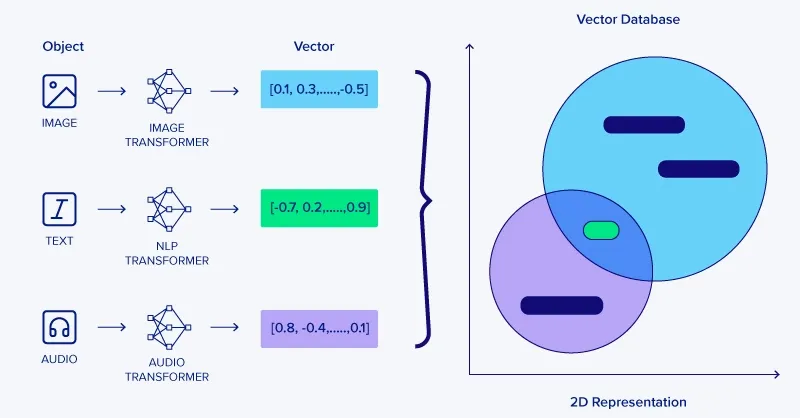
Vector databases also play a pivotal role in enhancing the capabilities of generative AI systems by efficiently managing the complex data they require and produce. Specialized transformers are essential for converting various objects, such as images, audio, and text, into their respective comprehensive vector representations.

In generative AI applications similar to LLMs, the ability to categorize and retrieve content efficiently is crucial. For instance, in image generation, a vector database can store feature vectors of images. These vectors represent key characteristics of the images, such as color, texture, or style. When a generative model needs to create a new image, it can reference these vectors to find and use similar existing images as inspiration or context. This process aids in creating more accurate and contextually relevant generated content.

The integration of vector databases with LLMs facilitates more innovative applications, such as cross-modal AI tasks. In which two different vector entities are matched together for AI tasks. This includes tasks like converting text descriptions to images or vice versa, where understanding and translating between different types of vector representations is key.

Vector databases are also instrumental in handling user interaction data within generative AI systems. By encoding user preferences, behaviors, or responses as vectors, these databases allow generative models to tailor their outputs to individual users.

In music recommendation systems, for instance, user interactions such as played songs, skipped tracks, and time spent on each song are converted into vectors. These vectors then inform the AI about a user's musical tastes, enabling it to recommend songs that are more likely to resonate with them. As users' preferences evolve, vector databases continuously update the vector representations, allowing the AI to stay in sync with these changes. This dynamic adaptation is key to maintaining the relevance and effectiveness of personalized AI applications over time.
Vector Database for LLMs, Generative AI, and Deep Learning

Conclusion

Vector databases represent a significant leap in data management technology, particularly in their application to AI and machine learning. By efficiently handling high-dimensional vectors, these databases have become essential in the operation and development of advanced AI systems, including LLMs, generative AI, and deep learning.

Their ability to store, manage, and rapidly retrieve complex data structures has not only enhanced the performance of these systems but also opened new possibilities in AI applications. From semantic search in LLMs to feature extraction in deep learning, vector databases are at the heart of modern AI's most exciting advancements. As AI continues to grow in sophistication and capability, the importance of vector databases is only set to increase, solidifying their position as a key component in the future of AI and machine learning.

Original. Reposted with permission.

Kevin Vu manages Exxact Corp blog and works with many of its talented authors who write about different aspects of Deep Learning.

More On This Topic

  • Python Vector Databases and Vector Indexes: Architecting LLM Apps
  • What are Vector Databases and Why Are They Important for LLMs?
  • Generative AI Playground: LLMs with Camel-5b and Open LLaMA 3B on…
  • KDnuggets News, September 21: 7 Machine Learning Portfolio Projects…
  • Free SQL and Database Course
  • Back to Basics Week 2: Database, SQL, Data Management and…

Together AI Releases Biological Foundational Model Evo

San Francisco-based AI research startup Together AI has introduced an advanced new biological foundational model called Evo, to understand and create sequences from DNA, RNA, and proteins. Evo is trained with a large dataset of prokaryotic genomic sequences, covering 2.7 million whole genomes.

The main goal of Evo is to address the challenges of modelling entire genomes, given their long length and the intricate changes happening at the level of individual building blocks, or nucleotides.

Unlike previous AI models in biology that focused on specific tasks, Evo is designed as a foundational model. It integrates information across long genomic sequences while being sensitive to individual nucleotide changes. To overcome challenges related to long sequences and precise resolution, Evo uses the StripedHyena architecture, employing a hybrid design of rotary attention and hyena operators.

Evo-1 exhibits several notable capabilities, such as predicting essential genes for an organism’s survival based on small DNA mutations without prior training (zero-shot gene essentiality testing). It also excels in predicting functions across DNA, RNA, and proteins, outperforming other models in protein function prediction. Evo goes a step further by generating novel CRISPR systems, showcasing its ability to design complex molecular structures involving proteins and RNA simultaneously.

The model can generate sequences at the scale of entire genomes, up to 650,000 characters, using a single GPU.

The researchers see Evo as a groundbreaking technology with the potential to accelerate discoveries in various scientific fields, including biology, chemistry, and material science. Its applications extend to practical challenges such as drug discovery, agriculture, and sustainability.

In December last year, Together AI received a $102.5 million Series A investment from NVIDIA, Kleiner Perkins, and Emergence Capital.

The post Together AI Releases Biological Foundational Model Evo appeared first on Analytics India Magazine.

Beyond programming: AI spawns a new generation of job roles

Abstract AI programming

A job ad appeared recently for an "AI competency leader", which was a role that involved, "collaborating closely with cross-functional teams to develop and execute strategies that leverage generative artificial intelligence techniques across various domains."

These kinds of adverts — for job roles that were unheard of even a year ago — are likely to become the norm in the AI era. While everyone in business wants to make the most of AI, it's going to take more than development or data science skills to make the most of emerging technology. There's a raft of responsibilities that are essential to AI efforts, from training algorithms to overseeing ethics.

Also: CIOs assess generative AI's risk and reward for software engineers

There are two levels of AI positions becoming apparent, says Robert Ghrist, associate dean for undergraduate education at the University of Pennsylvania School of Engineering and Applied Sciences. "The first is what you might call AI specialist, someone who is broadly trained in AI from machine learning to neural nets, large language models, and more," he explains.

The second category of AI jobs are more closely fused to broad-based business and managerial roles. "This is a more interesting class of jobs in the form of 'AI plus X', where 'X' is a variable such as law, medicine, or education," Ghrist continues. "These will be more abundant yet harder to fill, requiring core expertise plus AI implementation skills."

Also: Can AI code? In baby steps only

Prompt engineering is also seen as a hot new job in the AI era. However, its long-term future as a professional pursuit is uncertain, says Tony Lee, CTO at Hyperscience: "I see it as a skill and expertise that is valuable and distinct. Is it a full-time job though? I'll leave that to the hiring company to decide."

While prompt-engineering skills are in demand now, Lee says the future might look different: "It's a new way to interface with a computer that requires different skills. But as the interface becomes more conversational and more human-like, it remains to be seen if this is a new career path or just a point-in-time opportunity."

Looking deep into the future — let's say a year or two in internet time — new roles focused on AI application adoption and management might come to the fore. These roles include positions such as, "AI trainers, AI auditors and AI ethicists," says Nick Magnuson, head of AI for Qlik.

"These roles really focus on the heart of AI — its data — while helping ensure the ethical use of the technology. AI trainers prepare and adjust the technology models, while AI auditors and AI ethicists ensure an organization's data is not only accurate and trusted, but also reinforce the integrity of the AI and scale it across the business."

Also: Is AI in software engineering reaching an 'Oppenheimer moment'? Here's what you need to know

However, it's also important to consideration how AI is overtaking many of the lower-level tasks associated with IT development and management. Interestingly, Ghrist says that trend should be welcomed. "Nobody likes eliminating jobs, but AI usurping low-level tasks is good news. I both believe and hope that many tasks will be made obsolete by AI, starting with the most tedious, repetitive, and low-level," he says. "Examples include low-level coding, updating legacy code, and implementing SDKs."

Early in his career, Ghrist "worked in a magnetic-tape library for a mainframe computer and I am so happy that job no longer exists," he recounts. "Now it's done a billion times faster by a one-ounce, $15 flash drive."

What's already clear is that AI is poised to ease and automate a range of development tasks while still creating fresh opportunities for human talent. "Software engineering has gone from where developers wrote code from scratch, to the Stack Overflow era, and now to full AI-generated code," says Lee. "Yet during this journey, the demand for top talent has only grown. I do not expect this demand to decrease, even as AI takes on more of the mechanical work."

A critical, in-demand area is "skilled workers who can analyze data and train LLMs," says Lee. "As more technical tasks are automated, the demand for human oversight in training data will be extremely relevant to ensure the technology can continue to complete complex tasks."

Also: AI is transforming organizations everywhere. How these 6 companies are leading the way

Areas where managerial skills "will continue to shine and add value are around tasks dealing with ambiguity and supervising AI, creative tasks that require intuition and context, and roles that require cross team collaboration," Lee adds.

Magnuson says it's important to note how effective AI deployments require a range of skills that typically aren't held by a single person. "Finding a capable head of AI that has both technical prowess and creative experience is crucial," he says. "This leader will be able to assemble an AI team that checks all the boxes, and typically includes data scientists and machine-learning engineers that work alongside legal, IT and HR teams."

Lee says an example of such inter-disciplinary collaboration might involve, "a front-end engineer sitting with a designer and a product manager to solve a usability problem. This is a challenge for AI today, as the human aspect of the usability problem is still best understood and solved by other humans."

However, there's no room for complacency. Ghrist says professionals should recognize there are no skills "for which we have an exclusive monopoly." He continues: "AI will be able to augment all hard and soft skills in tech — no exceptions. Co-evolution is the key: we work together and adapt. As such, the most valuable skill is adaptability."

Also: AI will have a big impact on jobs this year. Here's why

Still, certain foundational skills will remain exactly that — foundational. "Skills — from mathematics and computer science — will always be relevant as a precursor to specialized AI knowledge," says Ghrist. "Coding will always be important, not because you will be coding, but because you will be managing a team of AI coders, and, like any good manager, you need to know enough to guide the team."

Anything associated with math and computer science, "supercharges all other technical work, now and to come," says Ghrist. Along with foundational capabilities, soft skills such as "communication, empathy, creativity, ambition, and more are increasingly of value."

Professionals looking to advance in their careers should seek out courses, training programs, or focus on areas that incorporate AI skills. "I would encourage all professionals to gain a deeper understanding of the fundamentals of AI, including machine learning, deep learning, and natural language processing," says Magnuson. "Learning about AI and how it works is important for everybody — not just technical people — akin to how the internet is something we all have to understand."

Ghrist advises professionals to focus on math and computer science, as "without them the rest is a black box of action without understanding." A second learning priority must be "the soft skill of adaptability," he continues. "As AI tech increases super-linearly, the most difficult thing for most companies is going to be how to keep up. The best way for a professional to stay current is to have a well-curated social media feed — ignore the politics. Search for updates on the state of the art."

As Ghrist concludes: "'More math and more Twitter' is eccentric advice, but we are in strange times."

Artificial Intelligence

Bill Gates Praises India’s Unique AI Capabilities 

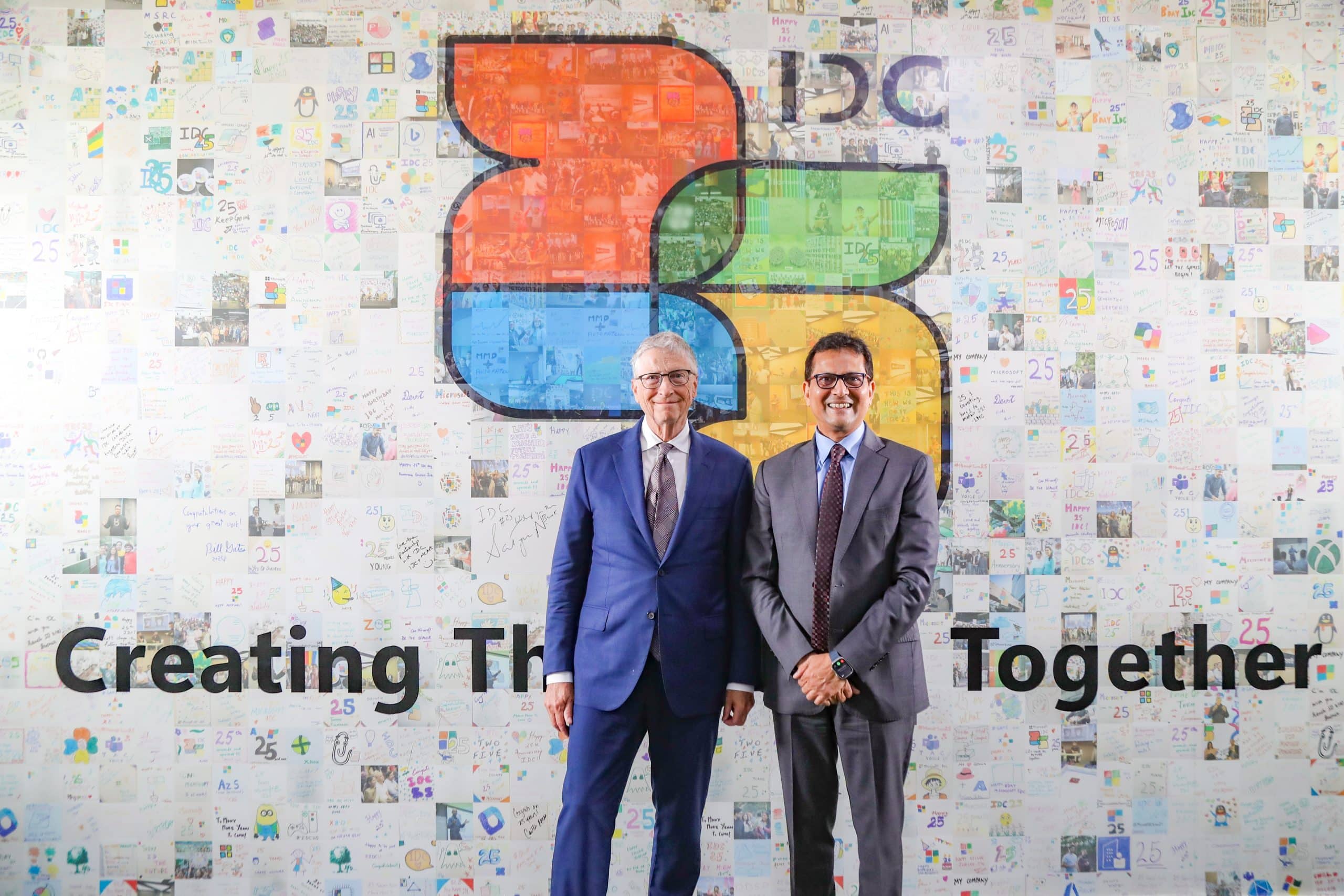
Microsoft co-founder and philanthropist Bill Gates recently visited the Microsoft India Development Center (IDC) in Hyderabad, a hub of innovation that he envisioned 25 years ago.

Established in 1998, IDC is the driving force behind research, engineering, and development, playing a pivotal role in shaping renowned global products such as Azure, Windows, Office, Bing, Copilot, and various AI applications.

During his visit to the IDC Hyderabad, Gates expressed his optimism for India’s unique potential in AI. He also spoke about the company’s strategic focus on harnessing the country’s talent for advancements in this space. When Microsoft CEO Satya Nadella visited India earlier this month, he echoed similar sentiments.

“It was rewarding to watch Bill address some of India’s brightest engineering minds at IDC, our biggest asset. Echoing his optimism over the opportunity for an AI-powered India, IDC is excited to drive innovation from India for Microsoft – from AI and cloud to security and gaming,” said Rajiv Kumar, managing director, Microsoft IDC, and CVP, Experiences + Devices India.

Up next, Gates is also visiting Bhubaneswar, Odisha, to meet state chief minister Naveen Patnaik engaging in various programs, including discussions on the implementation of AI in agriculture.

In his latest blog post, he highlighted the importance of India’s digital public infrastructure (DPI), exemplified by Aadhaar. During the visit to Odisha, Gates will witness DPI in action at an agricultural monitoring center in Bhuvaneshwar, showcasing its utility in providing real-time guidance to farmers. The program, using AI and biometric data, has significantly reduced crop loss due to pests, garnering interest from other regions.

Microsoft’s AI Ambitions for India

Recently, Microsoft made a slew of India-focused announcements during Nadella’s trip. He announced that Azure is partnering with Indian startup Sarvam AI, specialising in Indic LLMs. Microsoft is also set to upskill two million Indians in AI by 2025.

Additionally, it plans to extend the coverage of Shiksha CoPilot, an AI copilot initiative by Microsoft Research India, to 100 schools by the end of the academic year. Shiksha CoPilot leverages Microsoft Azure OpenAI Service and Azure Cognitive Services to analyse and organise content from textbooks.

Why Hyderabad?

Despite Bangalore’s being referred to as the “Silicon Valley” of India, Hyderabad is growing fast to dethrone the former’s tag. The burgeoning rise of Hyderabad as a prominent IT hub is driven by factors like robust infrastructure, favourable business conditions, and proactive government policies. In FY 2022-23, Telangana had a 31.44% growth in IT exports and a 16.29% increase in job creation. Hyderabad played a significant role, contributing to one-third of the 450,000 IT jobs created nationwide, surpassing Bangalore. Besides Microsoft, this has attracted global tech companies, with Google opting to construct its largest office outside the US in Hyderabad.

Hyderabad’s success is attributed to strategic policies, such as the Telangana IT Policy initiated in 2016, providing incentives like tax reductions, infrastructure support, and investment opportunities. Infrastructure development, including an advanced metro system and well-designed roads, complements Hyderabad’s business-friendly environment and startup culture. Recent reports highlight Hyderabad surpassing Bangalore in office space demand, solidifying its status as a global business destination.

The post Bill Gates Praises India’s Unique AI Capabilities appeared first on Analytics India Magazine.

Google’s Genie Can Reshape Interactive Video Games Creation 

Google DeepMind released Genie, an AI model that transforms text descriptions, sketches, and photographs into interactive virtual environments. It uses an architecture with 11 billion parameters and is trained on 200,000 hours of unlabelled Internet videos for understanding and replicating environmental dynamics without manual data labeling.

Tim Rocktäschel, the team lead for Genie wrote on X, “Rather than adding inductive biases, we focus on scale. In an unsupervised way, Genie learns diverse latent actions that control characters in a consistent manner.”

This allowed it to consistently learn a diverse range of character motion, control and action. As a result, “our model can convert any image into a playable 2D world,” explained Rocktäschel.

Genie combines a spatiotemporal video tokenizer that breaks down videos to understand movement and change over time. Next, the autoregressive dynamics model predicts what will happen next in the virtual environment based on this analysis. Finally a scalable latent action model creates possible actions within the virtual world that weren’t directly shown during training. It essentially ‘imagines’ it and scales to accommodate a wide range of potential interactions.

Genie is a research so far it is unclear if it will become a real product. But if it does it has applications beyond entertainment in virtual reality, training simulations, architectural design, and urban planning etc.

Building on DeepMind’s AI contributions, Genie expands into the visual domain, enabling creative expression and interactive experiences. Previously Google DeepMind released DreamerV2 and V3, which focus on learning from interactions within environments to foster planning and goal-oriented behavior.

Unlike Genie, which observes and learns from video data, Dreamer models require interaction data to learn, making this model distinct in its method of understanding and creating virtual worlds.

The post Google’s Genie Can Reshape Interactive Video Games Creation appeared first on Analytics India Magazine.

NVIDIA’s Nemotron-4 15B Beats Mistral, Gemma, and Llama 2 in Reasoning

NVIDIA Trying to Keep AI Chatbots’ Hallucinations ‘On Track’

NVIDIA recently released a new language model Nemotron-4 15B which trained on a staggering 8 trillion text tokens. It comprises 15 billion parameters, with the ability to perform a variety of tasks in English, coding and multilingual languages.

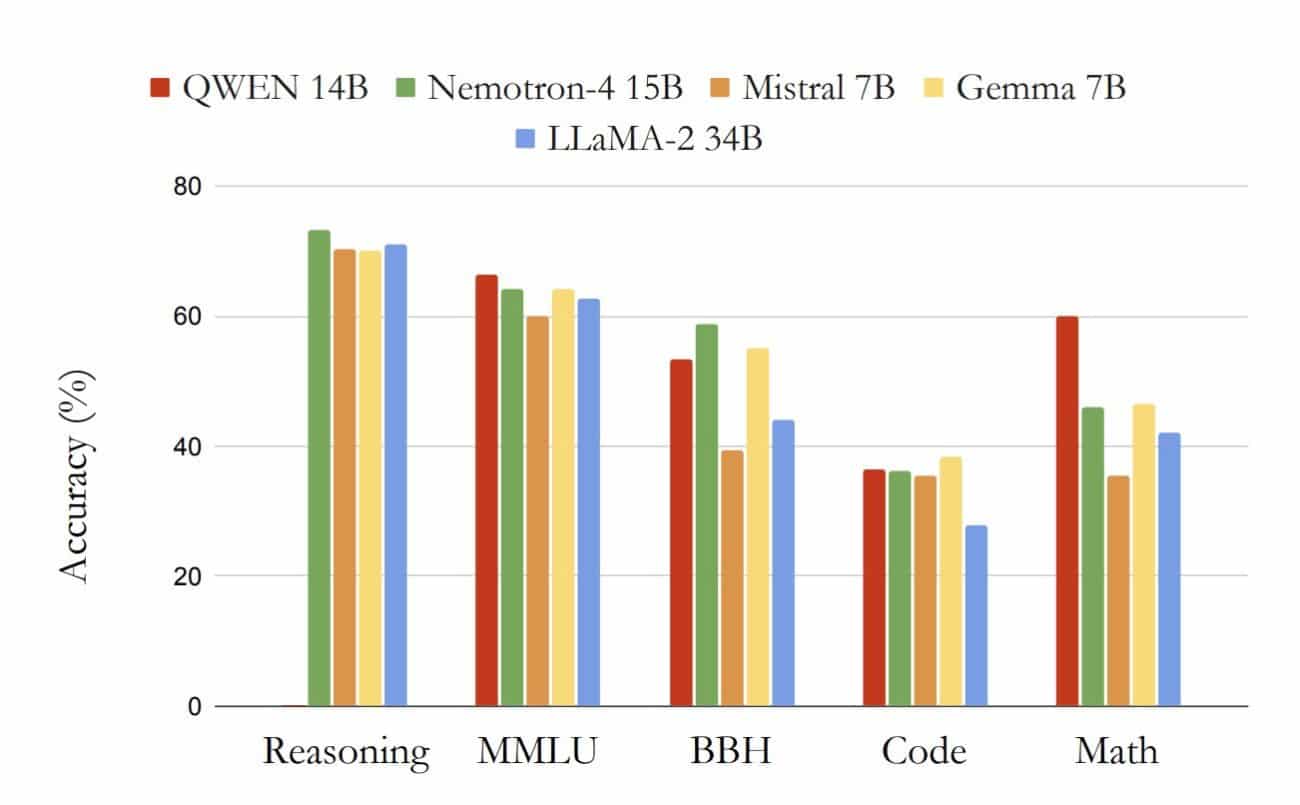
The researchers noted that Nemotron performs better than other similarly-sized, decoder-only transformer models in four out of seven evaluation areas and competes closely with the top models in the remaining domains.

Nemotron matches Qwen-14B at MMLU benchmarks and code but outperforms Gemma 7B, Mistral 7B and LLaMA-2 34B. Nemotron outperforms every other model in reasoning but falls short in maths against Qwen. Interestingly, Qwen is missing in the reasoning.

Nemotron-4 15B outperforms mGPT 13B and XGLM 7.5B in Multilingual Classification. It also does better than Palm-62B and Mistral 7B in generating multilingual text.

Nemotron-4 15B

Nemotron-4 15B is built using a basic setup that only decodes or generates text, focusing on the order of words. It has 32 layers to process information, a capacity to handle a lot of details at once (6144 units of data), and uses 48 different focus points to understand the context better. Its training utilised a mix of English, multilingual, and source-code data, focusing on quality and diversity to enhance model performance across different languages and programming languages.

The model’s training process employed 384 DGX H100 nodes. This extensive training allowed Nemotron-4 15B to achieve high accuracies in a broad range of tasks, including commonsense reasoning, maths, code, and multilingual evaluations, demonstrating its versatility and efficiency.

Nemotron-4 15B’s achievements are part of NVIDIA’s ongoing efforts in AI and model development.

Key offerings include the Megatron-LM series, optimised for tasks like text summarisation and question answering, and BERT-based models for understanding sentence context.

Although Nemotron-4 15B is not open source their previous iteration, Nemotron-3B, a family of models with 8 billion parameters available on Github. The Nemotron-3 Chat is fine tuned using supervised fine-tuning to produce accurate and informative responses to the prompt.

The post NVIDIA’s Nemotron-4 15B Beats Mistral, Gemma, and Llama 2 in Reasoning appeared first on Analytics India Magazine.

NVIDIA & ServiceNow Introduce Generative AI Solutions for Telecom

NVIDIA and ServiceNow have expanded their collaboration by introducing telco-specific generative AI solutions to enhance service experiences.

The initial offering, Now Assist for Telecommunications Service Management (TSM), is built on the latter’s Now Platform and leverages the former’s AI offerings to increase agent productivity, expedite issue resolution, and improve customer interactions.

The collaboration between ServiceNow and NVIDIA, building on the partnership announced in May 2023, aims to provide rapid and unprecedented business value, marking the beginning of a large-scale transformation for the industry. The companies plan to develop additional telco-specific generative AI use cases based on customer needs.

Now Assist, powered by ServiceNow’s fine-tuned language models and NVIDIA’s Triton Inference Server and NeMo, addresses specific telco use cases. These include generative AI-driven chat summarization and agent assist capabilities for customer care, improving agent productivity and enhancing overall customer experiences. For service assurance, generative AI helps streamline the understanding of incidents, such as fiber cuts, by deciphering technical jargon and distilling complex information for faster issue resolution, cost savings, and improved customer experiences.

“GenAI is a game-changer for telcos looking to boost productivity, improve customer experiences, and drive cost savings with its ability to learn and improve with each use,” said Rohit Batra, general manager and vice president for telecom, media, and tech at ServiceNow.

“The telco industry is rapidly evolving as AI makes its mark on enterprises everywhere,” said Chris Penrose, global head of business development for telco at NVIDIA. “Our partnership with ServiceNow will help telcos leverage GenAI to tackle their unique challenges and build better, stronger, more efficient experiences.”

Read more: Data Science Hiring Process at ServiceNow

The post NVIDIA & ServiceNow Introduce Generative AI Solutions for Telecom appeared first on Analytics India Magazine.

Redis Unveils Redis Vector Library for Generative AI Development

Real time database company Redis has introduced Redis Vector Library for streamlining Generative AI application development. It operates within the Redis Enterprise platform, functioning as a real-time vector database catering to vector search, LLM caching, and chat history.

Key Features of the Library

The Redis Vector Library introduces a simplified client, particularly focusing on vector embeddings for search, making it more accessible for AI-driven tasks. The Python Redis Vector Library (redisvl) extends the widely used redis-py client, enabling seamless integration with Redis for generative AI applications. Setting up the library involves installing it via pip, and Redis can be deployed either on Redis Cloud for a managed service or using a Docker image for local development. Additionally, the library comes with a dedicated CLI tool called rvl.

To optimise production search performance, it allows explicit configuration of index settings and dataset schema using redisvl. Defining, loading, and managing a custom schema is made straightforward with YAML files.

The VectorQuery feature, a fundamental component of redisvl, aims to simplify vector searches with optional filters, improving retrieval precision. Beyond basic querying, filters enable combining searches over structured data with vector similarity. The library also includes a vectoriser module for generating embeddings, providing access to popular embedding providers like Cohere, OpenAI, VertexAI, and HuggingFace.

Redisvl also includes Semantic Caching, to improve the efficiency of applications interacting with LLMs by caching responses based on semantic similarity. This feature claims to reduces response times and API costs by using previously cached responses for similar queries. The library aims to provide abstractions for LLM session management and contextual access control in the future.

Read more: How Redis Finds Moat in the Indian Market

The post Redis Unveils Redis Vector Library for Generative AI Development appeared first on Analytics India Magazine.

Manu Jain’s Second Act in India

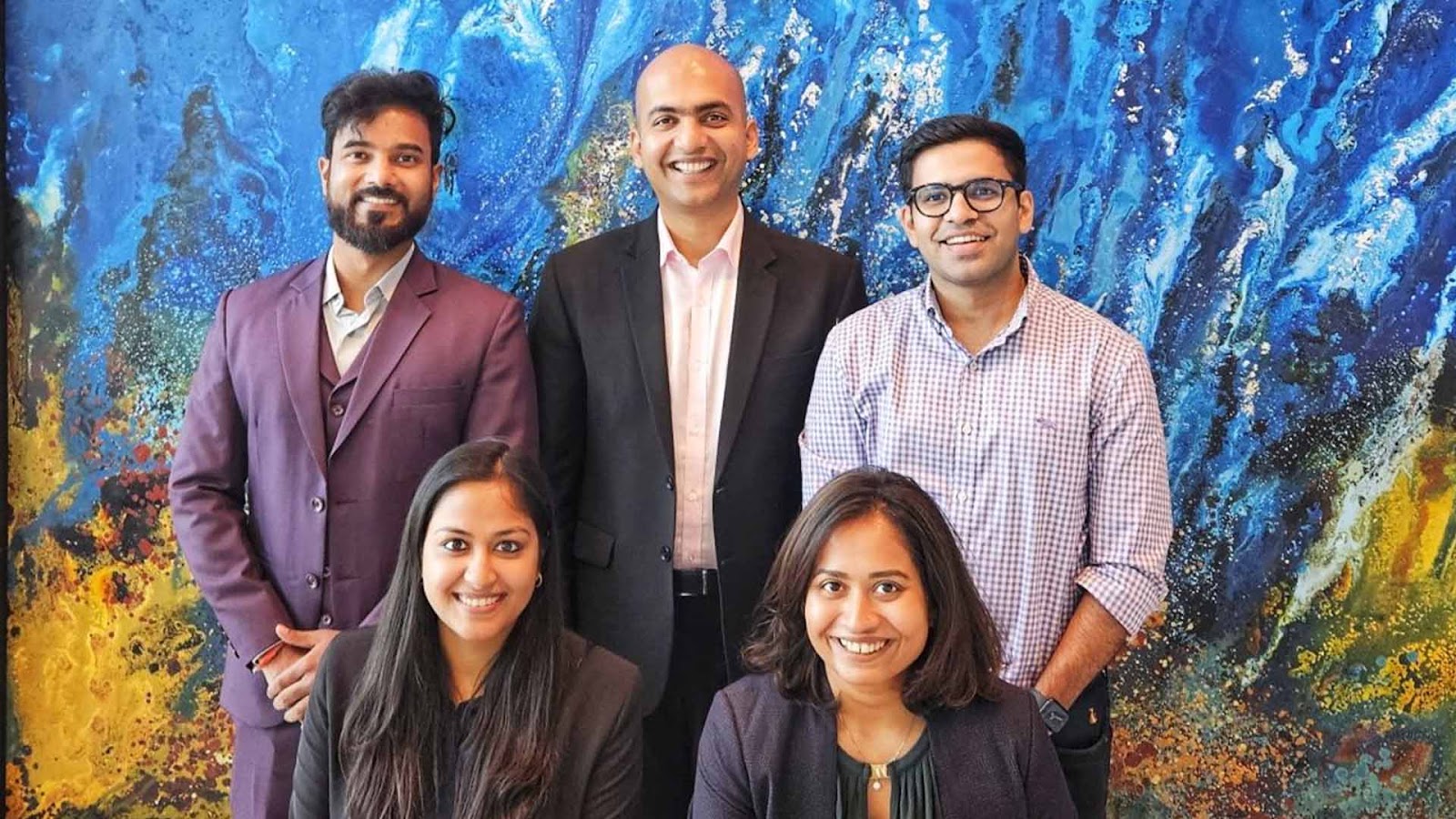
Abu Dhabi’s G42, known for making the world’s largest supercomputer for AI training, Condor Galaxy, and open source Arabic LLM, Jais, is expanding its footprint in India. And it is being led by former Xiaomi frontman Manu Kumar Jain.

Joining the new team in India are Aakriti Gupta, finance director; Reema Dash, legal director; Sanuj Shah, program director; and Rahul Pal, the main person leading the company’s AI efforts for the country.

“The biggest challenge is convincing the first 5-10 team members to join, since no one knows about you. I have experienced this multiple times – from starting Jabong, to launching Xiaomi India, to now diving into the world of AI and supercomputing with G42,” said Jain, on his social media post.

While Gupta was associate director of finance at Ola, Dash has been an independent advisory lawyer since 2023 after serving as the principal associate at Shardul Amarchand Mangaldas. Pal has been working with G42 as an applied scientist – NLP for over two years now. Shah was the vice president of growth and strategy at Groyyo, before joining G42.

Unleashing G42’s Prowess in India

The former chief of Xiaomi, who was instrumental in bringing the company to India, joined G42 in October last year and has since been dropping subtle hints about what the company’s been up to.

Jain has been calling on Indian industry leaders in the generative AI and semiconductor space over the past couple of months. The Jabong co-founder seeks to replicate the success he achieved in scaling Xiaomi in India – this time with G42’s Indian team.

Inspired by PM Narendra Modi’s vision of building a “connected, sustainable world”, Jain met notable leaders spearheading the generative AI in Indian languages movement in India. He met Amitabh Nag, the chief executive officer of Bhashini, to discuss the “groundbreaking AI tool for real-time translation across major Indian languages”.

In an earlier interaction with AIM, Nag had said that Bhashini was the Indian government’s initiative for Indic LLMs to eliminate the language barrier in this country.

In addition to revisiting his alma mater, IIT Delhi, Jain, currently residing in Dubai, also caught up with Dr Mithesh Khapra, a professor at IIT Madras and a researcher for AI4Bharat. This research lab at IIT Madras is dedicated to developing open-source datasets, tools, models, and applications tailored for Indian languages.

Jain, emphasising the significance of AI solutions for India, commended the lab’s commitment to the Make in India initiative.

Moreover, he also met Josh Foulger, the former CEO of Foxconn India, acknowledging his remarkable contributions to the Make in India program. This acknowledgement stems from their collaborative efforts during their time working together at Xiaomi, where they jointly established multiple factories, creating job opportunities for over 50,000 fellow Indians.

G42 is a leading name in creating LLM in regional languages, besides English. Soon after Jain’s joining as the chief, the company released Jais 30B, the latest iteration of its open-source model, following the earlier release of the 13 billion parameter Jais model in August.

Leveraging the AI supercomputer Condor Galaxy 1, developed in collaboration with Cerebras Systems, Jais 30B was trained on larger datasets, boasting 126 billion Arabic tokens, 251 billion English tokens, and 50 billion code tokens. With enhanced performance, the model provides 160% longer and more detailed answers in Arabic, a 233% increase in English, and improved summarisation capabilities.

Reminiscing the Xiaomi Days

Known for his leadership acumen and accomplishments, Jain spearheaded the early growth of Xiaomi, a prominent Chinese consumer electronics brand and Samsung rival, upon its entry into the Indian market in 2014.

Under the leadership of the IIM Kolkata alumni, Xiaomi’s offerings – Redmi, MI, and Poco – became household names. The company provided competitive products in a market transitioning from feature phones to budget-friendly smartphones. The smartphone maker even expanded into wearables, smart TVs, and IoT devices, investing into Indian startups within two years. Another key figure alongside Jain was Hugo Barra, Xiaomi’s then vice president.

In 2018, the company surpassed Samsung to become the leading smartphone seller in India, narrowing the gap between the two significantly. Furthermore, the company invested in local manufacturing in India, aligning with the government’s Make in India initiative to meet the increasing demand. It also forged strong partnerships with major e-commerce platforms in India like Flipkart and Amazon.

However, after nine years of success, the company saw a sharp decline in sales in 2022, trailing behind Samsung and Vivo. It faced challenges grappling with regulatory scrutiny amid the escalating Indo-China economic tensions, and the departure of senior executives. Jain, who had been promoted as the global vice president by then, was one of them.

However, Jain’s journey has not been without controversies. Around April 2022, the ED seized over Rs 5,550 crore from Xiaomi India under the FEMA Act, 1999, for suspected illegal foreign exchange dealings. The probe found that the company transferred substantial sums to three entities abroad, including a Xiaomi group company, as ‘royalties’ from 2015. The ED believes these transfers, allegedly directed by Xiaomi’s Chinese headquarters and disguised as unrelated transactions, violated FEMA rules, as no corresponding services were provided by these entities.

The ED also called upon Jain and their India CFO, Sameer BS Rao, as part of an investigation, according to Reuters. Jain and Rao accused the ED of using threat and “violence” to obtain involuntary statements aligning with the agency’s narrative. Xiaomi claims these statements were retracted as they were made under pressure.

The ED, however, denied these allegations. This incident took place amid the increasing scrutiny of Chinese companies in India, especially after the 2020 border clash, leading to stricter regulations and app bans.

Shortly after, Jain departed from the company to “take some time-off”, before taking up his next professional challenge.

“I am a builder at heart and would love to build something new, ideally in a new industry,” said Jain. He joined G42 the following October to spearhead its operations in India. Known for his track record as a serial entrepreneur, Jain has earned accolades for making a real impact.

Jain looks like the best fit for G42’s foray into India. Mirroring Xiaomi’s trail, he is set to accelerate the Middle Eastern company’s presence in India.

The post Manu Jain’s Second Act in India appeared first on Analytics India Magazine.

GitHub Copilot Enterprise is now Generally Available at $39/ Month

GitHub recently announced that GitHub Copilot is now generally available. Since the early days of GitHub Copilot, customers have asked for a copilot that is customised to their own organization’s code and processes.

“With GitHub Copilot Enterprise we’re bringing the industry’s premier AI developer tool available to every organisation for just $39 per user per month,” the company said in a press release.

Developers spend more time deciphering rather than shipping when they can’t pinpoint and solve the issues, bugs, or vulnerabilities that are unique to their organization’s codebase. Developers often write code for only a couple hours a day and, instead of being creative, are bogged down with mundane tasks throughout their day.

The inaccessibility of institutional knowledge acts as a blockade preventing developers from fully exercising their creativity and building more for you.

Just by integrating generative AI into the editor, GitHub Copilot has quickly defined a new age of software development, resulting in clear gains of developer productivity and happiness.

GitHub is today bringing the next frontier of developer tools with the general availability of GitHub Copilot Enterprise–a companion that places the institutional knowledge of your organization at your developers fingertips.

Now, team members can ask questions about public and private code, get up to speed quickly with new codebases, build greater consistencies across engineering teams, and ensure that everyone has access to the same standards and work that’s previously been done.

“As the technology landscape continues to rapidly evolve, we are expanding capabilities of GitHub Copilot to not only understand your own internal knowledge bases but to bring in the latest information from the internet as well.

By integrating Bing search directly into Copilot Chat—available in beta for GitHub Copilot Enterprise—you can find the latest software development-related information like updates to CSS or JavaScript frameworks. This means GitHub Copilot can now help your developers explore their curiosity and gain outside knowledge near instantly, at scale,” Thomas Dohmke, CEO at GitHub said.

As the global home for all developers, GitHub is the world’s leading AI-powered developer platform to build, scale, and deliver secure software. Over 100 million people, including developers from 90 of the Fortune 100 companies, use GitHub to build amazing things together across 420+ million repositories.

The post GitHub Copilot Enterprise is now Generally Available at $39/ Month appeared first on Analytics India Magazine.