AI Con USA: Navigate the Future of AI

Sponsored Content

AI Con USA: Navigate the Future of AI

AI Con USA, scheduled for June 2–7, 2024, is bringing together some of the brightest minds in the realm of artificial intelligence and machine learning. Hosted both in-person at Caesars Palace in Las Vegas, Nevada, and online, this conference focuses on navigating the future of AI as well as leveraging AI & ML to help transform business processes. Whether you’re a seasoned professional, a researcher, or an enthusiast eager to stay at the forefront of AI and ML, AI Con USA provides a dynamic environment for knowledge exchange, collaboration, and inspiration.

At AI Con USA, you’ll experience:

  • Engaging keynote speakers from leading organizations like Microsoft, DoorDash, Indeed, and others sharing industry expertise and lessons learned from the trenches.
  • Multi-day training classes on MLOps, GitHub Copilot, Machine Learning, and AI.
  • In-Depth full and half-day tutorials covering topics like Generative AI, Data Generation with AI Models, Prompt Engineering, Image Classification using LLMs, Data Analysis and Machine Learning with Jupyter Notebooks, and many more.
  • Concurrent sessions from an array of speakers across various industries with insights into all facets of AI and Machine Learning.
  • Plus, a full-day AI Leadership Summit, an Expo with leading solutions providers, and various networking opportunities throughout the week.

From exploring the latest solutions and technologies in the expo to participating in pre-conference training and tutorials, this event will help you dive deeply into the latest advances in AI and ML. Join us in the heart of innovation at AI Con USA.

More On This Topic

  • 4 Career Lessons That Helped Me Navigate the Difficult Job Market
  • Future Says Series | Discover the Future of AI
  • AGI and the Future of Humanity
  • The Chatbot Transformation: From Failure to the Future
  • Analyzing the Probability of Future Success with Intelligence…
  • Bounding Box Deep Learning: The Future of Video Annotation

Top 11 Data Centre Projects in India 2024

In recent months, several companies, including AdaniConnex, Reliance, Sify, Atlassian, Yotta, and AWS, have announced substantial investments in data centres across India. AWS alone plans to invest $12.7 billion to expand its data centres in the country.

In addition, Kotak Alternate Assets intends to invest $800 million to support the development of 5-7 large data centres in key property markets in India. The surge in data centre investments is driven by the demand for data localisation and cost efficiency, influenced by India’s data protection norms and proposed data centre policy, attracting major global players.

With the growth of India’s data centre market, the capacity is projected to surpass ~1,300 MW by the end of 2024, a notable increase from ~1,048 MW at the end of 2023 and ~880 MW as of June 2023. The concentration of data centres remains prominent in seven cities, including Mumbai-Navi Mumbai, Chennai, Delhi-NCR, Bengaluru, Pune, Hyderabad, and Kolkata.

These cities accounted for a 35% year-on-year growth, reaching ~884 MW capacity and spanning over 13 million sqft by the end of 2023. Mumbai-Navi Mumbai leads with a 52% share of the total data centre capacity, followed by Chennai (16%), Delhi-NCR (11%), Bengaluru (9%), Pune (7%), Hyderabad (4%), and Kolkata (1%).

Despite the concentration in the top four locations, the emergence of co-location and edge computing facilities is expected to shift the dynamics, with edge data centres expanding into Tier 2 cities in 2024.

Overall, data centre occupancy levels in India stood at about 75-80% in 2023, likely to see further improvement by the end of 2024.

Top Data Centre Projects in 2024

  • Yotta
  • CtrlS Datacenters
  • Digital Connexion
  • Sify
  • STT GDC
  • Atlassian
  • CapitaLand India
  • Equinix
  • AdaniConnex
  • Google
  • Amazon Web Services

Here are some upcoming noteworthy data centre projects in 2024 and beyond to watch out for:

Yotta

Hiranandani Group-backed Yotta Data Services is expanding its operations in Greater Noida and Guwahati, addressing the growing demand for edge facilities in Tier 2 markets. These planned operations are slated to be completed and operationalised by the end of 2024.

Yotta-D1, the company’s existing data centre, is 85% full, prompting plans for construction on its D2 and D3 facilities. After placing an order of over 16,000 NVIDIA H100 GPUs, Yotta has also announced a collaboration with NVIDIA to build an AI data centre in GIFT City, Gujarat, to meet the demand for AI-driven data.

CtrlS Datacenters

CtrlS, a Hyderabad-based pioneer of Tier 4 data centres in India, is planning an ambitious expansion to triple its data centre count from 8 to 25 by the end of 2024. This expansion involves an additional 5 million sq ft, making CtrlS a major player in the global Rated-4 data centre landscape.

With projects underway in Navi Mumbai, Hyderabad, and Chennai, CtrlS is also venturing into Tier 2 cities, investing Rs 250 crore in a greenfield Edge data centre in Uttarakhand. The proposed data centre will support co-location, managed, and cloud services.

A few days ago, CtrlS Datacenters also announced the commencement of the construction of a new data centre campus in Chennai, with a significant investment of Rs 4000 crore ($482.5 million). The 72MW project in the Ambattur industrial area spans 1 million sq ft across two buildings and includes an on-site substation.

The first building, Chennai DC 1, is fully booked and scheduled to begin operations in Q2 2024. As part of its expansion plans, CtrlS announced a $2 billion investment in October 2023 to add 350MW of AI and cloud-ready hyperscale data centres across Asia and the Middle East.

Digital Connexion

Digital Connexion, a joint venture involving Reliance Industries, Brookfield Infrastructure Partners, and Digital Realty Trust, launched its flagship 20 MW greenfield data centre, MAA10, in Chennai in January 2024. This marks the beginning of a potential 100 MW campus.

The initial phase, MAA10, provides 20MW of IT load with modular infrastructure design for scalable response to varied workload demands. The venture expanded its presence by acquiring 2.15 acres of land in Mumbai to construct a 40 MW data centre.

Located in a vital industrial hub, the facility supports emerging technologies like AI and large language models and offers ultrahigh-power densities.

Sify

Chennai-based Sify has raised funds for new data centres in 2024 as part of its overall investment of Rs 9,000 crore in the next 5-6 years on greenfield data centre projects. Teaming up with Kotak Data Centre Fund, the company is investing up to $73 million in its subsidiary, Sify Infiniti Spaces, which will operate these planned data centres.

With projects in Chennai, Mumbai, Noida, and Bengaluru set to commence early in 2024, Sify aims to add 350 MW to its current data centre capacity of 100 MW through 11 facilities across India.

STT GDC

Singapore-based ST Telemedia Global Data Centres (STT GDC) prioritises sustainability and has partnered with O2 Power to procure renewable energy for its Bengaluru facility.

In 2024, STT GDC is set to invest around Rs 2,000 crore to develop two new data centres in its existing campus in Pune’s Dighi, surpassing 80 MW of IT load capacity. This makes STT Global Data Centres’ Pune campus one of the largest data centre campuses in India, with an existing capacity of 40 MW spanning three operational facilities.

Atlassian

The Sydney-headquartered software company Atlassian plans to invest in establishing data centres in India in the first half of 2024. The move aims to comply with data residency requirements, and Atlassian will collaborate with Amazon to bring its products to these Indian data centres.

Co-founder and co-CEO Scott Farquhar expressed confidence in India’s growing economy and talent landscape, highlighting the belief in the market’s potential for growth. Atlassian, listed on NASDAQ, provides global team collaboration and productivity software with over 250,000 customers. In India, notable clients include Ola Cabs, Reliance, Walmart Labs, and Flipkart.

Farquhar emphasised the resilience of India’s market amid global downturns and sees it as a growth market. Atlassian initiated its presence in India in 2018 with 60 employees and has since grown to 1,700 employees, making India its fastest-growing employee location.

CapitaLand India

CapitaLand India Trust (CLINT), previously known as Ascendas India Trust, has secured a loan of $155.9 million from J.P. Morgan India for its Navi Mumbai data centre. The Airoli campus in Navi Mumbai, spread across 6.6 acres, is set to comprise two buildings.

The first building, spanning 325,000 sq ft, is scheduled to be operational by Q2 of 2024, with full build-up capacity reaching 575,000 sq ft and 90 MW. CLINT is also planning data centres in Ambattur, Chennai, and Hyderabad, targeting global technology companies and cloud service providers.

Equinix

The company has two new carrier and service-neutral data centres named MB1 and MB2 in Mumbai, hosting clients including Amazon Web Services, Google Cloud, and Oracle Cloud. With a $42 million investment in another new data centre, MB4 in Kalwa, set to launch before March 2024, Equinix continues strengthening its presence in India.

Equinix – a global player operating 250 data centres worldwide, entered the Indian market by acquiring GPX Global Systems. In 2023, Equinix launched full-fledged services in India, offering advanced solutions such as Equinix Fabric, Equinix Internet Exchange, and Equinix Internet Access.

AdaniConnex

AdaniConnex, a joint venture between Adani Enterprises and EdgeConnex Inc, has made substantial investments totalling $1.5 billion. Currently in the process of securing an additional $400 million offshore loan, the venture aims to establish data centres in key locations such as Visakhapatnam, New Delhi, Mumbai, and Chennai.

Details regarding the two data centres in Andhra Pradesh with an aggregate investment of ₹21,844 crore, located at Madhurawada and Kapuluppada near Visakhapatnam were released during May in 2023.

This initiative is part of a broader plan to construct nine data centres with a targeted total capacity of 1 GW by 2030. The JV has already secured a $213 million loan for the Chennai 1 campus and the 50 MW Noida campus in 2023.

Google

Google, with existing operations in two Indian GCP cloud regions in Mumbai and Delhi, is progressing with the development of an 8-storey, 381,000 sq ft data centre in Navi Mumbai. In partnership with Raiden Infotech, this project is expected to be completed by 2025 and will complement Google’s existing operations.

Additionally, Google leased a 464,000-square-foot facility at the Adani Centre in Noida, showcasing its commitment to expanding its cloud infrastructure in India, one of its significant growth markets.

Amazon Web Services

AWS is set to establish four smaller data centres in India within the next two years, strategically located in Bangalore, Chennai, Delhi, and Kolkata. Additionally, AWS plans to launch 32 local zones across 26 countries in the same timeframe to enhance networking speed and security.

The regional hubs will offer cloud services, catering to various use cases such as video streaming, gaming, and applications requiring real-time feedback. These regional zones will serve as the foundation for AWS regions, enabling the proximity of computing, storage, database, and other services to users and businesses for improved performance and efficiency.

The post Top 11 Data Centre Projects in India 2024 appeared first on Analytics India Magazine.

SambaNova now offers a bundle of generative AI models

SambaNova now offers a bundle of generative AI models Kyle Wiggers 11 hours

SambaNova, an AI chip startup that’s raised over $1.1 billion in VC money to date, is gunning for OpenAI — and rivals — with a new generative AI product geared toward enterprise customers.

SambaNova today announced Samba-1, an AI-powered system designed for tasks like text rewriting, coding, language translation and more. The company’s calling the architecture a “composition of experts” — a jargony name for a bundle of generative open source AI models, 56 in total.

Rodrigo Liang, SambaNova’s co-founder and CEO, says that Samba-1 allows companies to fine-tune and address for multiple AI uses cases while avoiding the challenges of implementing AI systems ad hoc.

“Samba-1 is fully modular, enabling companies to asynchronously add new models … without eliminating their previous investment,” Liang told TechCrunch in an interview. “Similarly, they’re iterative, extensible and easy to update, giving our customers room to adjust as new models are integrated.”

Liang’s a good salesperson, and what he says sounds promising. But is Samba-1 really superior to the many, many other AI systems for business tasks out there, least of which OpenAI’s models?

It depends on the use case.

The ostensible main advantage of Samba-1 is, because it’s a collection of models trained independently rather than a single large model, customers have control over how prompts and requests to it are routed. A request made to a large model like GPT-4 travels one direction — through GPT-4. But a request made to Samba-1 travels one of 56 directions (to one of the 56 models making up Samba-1), depending on the rules and policies a customer specifies.

This multi-model strategy also reduces the cost of fine-tuning on a customer’s data, Liang claims, because customers only have to worry about fine-tuning individual or small groups of models rather than a massive model. And — in theory — it could result in more reliable (e.g. less hallucination-driven) responses to prompts, he says, because answers from one model can be compared with the answers from the others — albeit at the cost of added compute.

“With this … architecture, you don’t have to break bigger tasks into smaller ones and so you can train many smaller models,” Liang said, adding that Samba-1 can be deployed on-premises or in a hosted environment depending on a customer’s needs. “With one big model, your compute per [request] is higher so the cost of training is higher. [Samba-1’s] architecture collapses the cost of training.”

I’d counter that plenty of vendors, including OpenAI, offer attracting pricing for fine-tuning large generative models, and that several startups, Martian and Credal, provide tools to route prompts among third-party models based on manually-programmed or automated rules.

But what SambaNova’s selling isn’t novelty per se. Rather, it’s a set-it-and-forget it package — a full-stack solution with everything included, including AI chips, to build AI applications. And to some enterprises, that might be more appealing than what else is on the table.

“Samba-1 gives every enterprise their own custom GPT model, ‘privatized’ on their data and customized for their organization’s needs,” Liang said. “The models are trained on our customers’ private data, hosted on a single [server] rack, with one tenth the cost of alternative solutions.”

The Vulnerabilities and Security Threats Facing Large Language Models

LLM Security

Large language models (LLMs) like GPT-4, DALL-E have captivated the public imagination and demonstrated immense potential across a variety of applications. However, for all their capabilities, these powerful AI systems also come with significant vulnerabilities that could be exploited by malicious actors. In this post, we will explore the attack vectors threat actors could leverage to compromise LLMs and propose countermeasures to bolster their security.

An overview of large language models

Before delving into the vulnerabilities, it is helpful to understand what exactly large language models are and why they have become so popular. LLMs are a class of artificial intelligence systems that have been trained on massive text corpora, allowing them to generate remarkably human-like text and engage in natural conversations.

Modern LLMs like OpenAI's GPT-3 contain upwards of 175 billion parameters, several orders of magnitude more than previous models. They utilize a transformer-based neural network architecture that excels at processing sequences like text and speech. The sheer scale of these models, combined with advanced deep learning techniques, enables them to achieve state-of-the-art performance on language tasks.

Some unique capabilities that have excited both researchers and the public include:

  • Text generation: LLMs can autocomplete sentences, write essays, summarize lengthy articles, and even compose fiction.
  • Question answering: They can provide informative answers to natural language questions across a wide range of topics.
  • Classification: LLMs can categorize and label texts for sentiment, topic, authorship and more.
  • Translation: Models like Google's Switch Transformer (2022) achieve near human-level translation between over 100 languages.
  • Code generation: Tools like GitHub Copilot demonstrate LLMs' potential for assisting developers.

The remarkable versatility of LLMs has fueled intense interest in deploying them across industries from healthcare to finance. However, these promising models also pose novel vulnerabilities that must be addressed.

Attack vectors on large language models

While LLMs do not contain traditional software vulnerabilities per se, their complexity makes them susceptible to techniques that seek to manipulate or exploit their inner workings. Let's examine some prominent attack vectors:

1. Adversarial attacks

Adversarial attacks involve specially crafted inputs designed to deceive machine learning models and trigger unintended behaviors. Rather than altering the model directly, adversaries manipulate the data fed into the system.

For LLMs, adversarial attacks typically manipulate text prompts and inputs to generate biased, nonsensical or dangerous outputs that nonetheless appear coherent for a given prompt. For instance, an adversary could insert the phrase “This advice will harm others” within a prompt to ChatGPT requesting dangerous instructions. This could potentially bypass ChatGPT's safety filters by framing the harmful advice as a warning.

More advanced attacks can target internal model representations. By adding imperceptible perturbations to word embeddings, adversaries may be able to significantly alter model outputs. Defending against these attacks requires analyzing how subtle input tweaks affect predictions.

2. Data poisoning

This attack involves injecting tainted data into the training pipeline of machine learning models to deliberately corrupt them. For LLMs, adversaries can scrape malicious text from the internet or generate synthetic text designed specifically to pollute training datasets.

Poisoned data can instill harmful biases in models, cause them to learn adversarial triggers, or degrade performance on target tasks. Scrubbing datasets and securing data pipelines are crucial to prevent poisoning attacks against production LLMs.

3. Model theft

LLMs represent immensely valuable intellectual property for companies investing resources into developing them. Adversaries are keen on stealing proprietary models to replicate their capabilities, gain commercial advantage, or extract sensitive data used in training.

Attackers may attempt to fine-tune surrogate models using queries to the target LLM to reverse-engineer its knowledge. Stolen models also create additional attack surface for adversaries to mount further attacks. Robust access controls and monitoring anomalous use patterns helps mitigate theft.

4. Infrastructure attacks

As LLMs grow more expansive in scale, their training and inference pipelines require formidable computational resources. For instance, GPT-3 was trained across hundreds of GPUs and costs millions in cloud computing fees.

This reliance on large-scale distributed infrastructure exposes potential vectors like denial-of-service attacks that flood APIs with requests to overwhelm servers. Adversaries can also attempt to breach cloud environments hosting LLMs to sabotage operations or exfiltrate data.

Potential threats emerging from LLM vulnerabilities

Exploiting the attack vectors above can enable adversaries to misuse LLMs in ways that pose risks to individuals and society. Here are some potential threats that security experts are keeping a close eye on:

  • Spread of misinformation: Poisoned models can be manipulated to generate convincing falsehoods, stoking conspiracies or undermining institutions.
  • Amplification of social biases: Models trained on skewed data might exhibit prejudiced associations that adversely impact minorities.
  • Phishing and social engineering: The conversational abilities of LLMs could enhance scams designed to trick users into disclosing sensitive information.
  • Toxic and dangerous content generation: Unconstrained, LLMs may provide instructions for illegal or unethical activities.
  • Digital impersonation: Fake user accounts powered by LLMs can spread inflammatory content while evading detection.
  • Vulnerable system compromise: LLMs could potentially assist hackers by automating components of cyberattacks.

These threats underline the necessity of rigorous controls and oversight mechanisms for safely developing and deploying LLMs. As models continue to advance in capability, the risks will only increase without adequate precautions.

Recommended strategies for securing large language models

Given the multifaceted nature of LLM vulnerabilities, a defense-in-depth approach across the design, training, and deployment lifecycle is required to strengthen security:

Secure architecture

  • Employ multi-tiered access controls for restricting model access to authorized users and systems. Rate limiting can help prevent brute force attacks.
  • Compartmentalize sub-components into isolated environments secured by strict firewall policies. This reduces blast radius from breaches.
  • Architect for high availability across regions to prevent localized disruptions. Load balancing helps prevent request flooding during attacks.

Training pipeline security

  • Perform extensive data hygiene by scanning training corpora for toxicity, biases, and synthetic text using classifiers. This mitigates data poisoning risks.
  • Train models on trusted datasets curated from reputable sources. Seek diverse perspectives when assembling data.
  • Introduce data authentication mechanisms to verify legitimacy of examples. Block suspicious bulk uploads of text.
  • Practice adversarial training by augmenting clean examples with adversarial samples to improve model robustness.

Inference safeguards

  • Employ input sanitization modules to filter dangerous or nonsensical text from user prompts.
  • Analyze generated text for policy violations using classifiers before releasing outputs.
  • Rate limit API requests per user to prevent abuse and denial of service due to amplification attacks.
  • Continuously monitor logs to quickly detect anomalous traffic and query patterns indicative of attacks.
  • Implement retraining or fine-tuning procedures to periodically refresh models using newer trusted data.

Organizational oversight

  • Form ethics review boards with diverse perspectives to assess risks in applications and propose safeguards.
  • Develop clear policies governing appropriate use cases and disclosing limitations to users.
  • Foster closer collaboration between security teams and ML engineers to instill security best practices.
  • Perform audits and impact assessments regularly to identify potential risks as capabilities progress.
  • Establish robust incident response plans for investigating and mitigating actual LLM breaches or misuses.

The combination of mitigation strategies across the data, model, and infrastructure stack is key to balancing the great promise and real risks accompanying large language models. Ongoing vigilance and proactive security investments commensurate with the scale of these systems will determine whether their benefits can be responsibly realized.

Conclusion

LLMs like ChatGPT represent a technological leap forward that expands the boundaries of what AI can achieve. However, the sheer complexity of these systems leaves them vulnerable to an array of novel exploits that demand our attention.

From adversarial attacks to model theft, threat actors have an incentive to unlock the potential of LLMs for nefarious ends. But by cultivating a culture of security throughout the machine learning lifecycle, we can work to ensure these models fulfill their promise safely and ethically. With collaborative efforts across the public and private sectors, LLMs' vulnerabilities do not have to undermine their value to society.

Microsoft Introduces 1-Bit LLM

Microsoft has introduced a new type of language model called 1-bit LLM, and recent research like BitNet has contributed to this project.

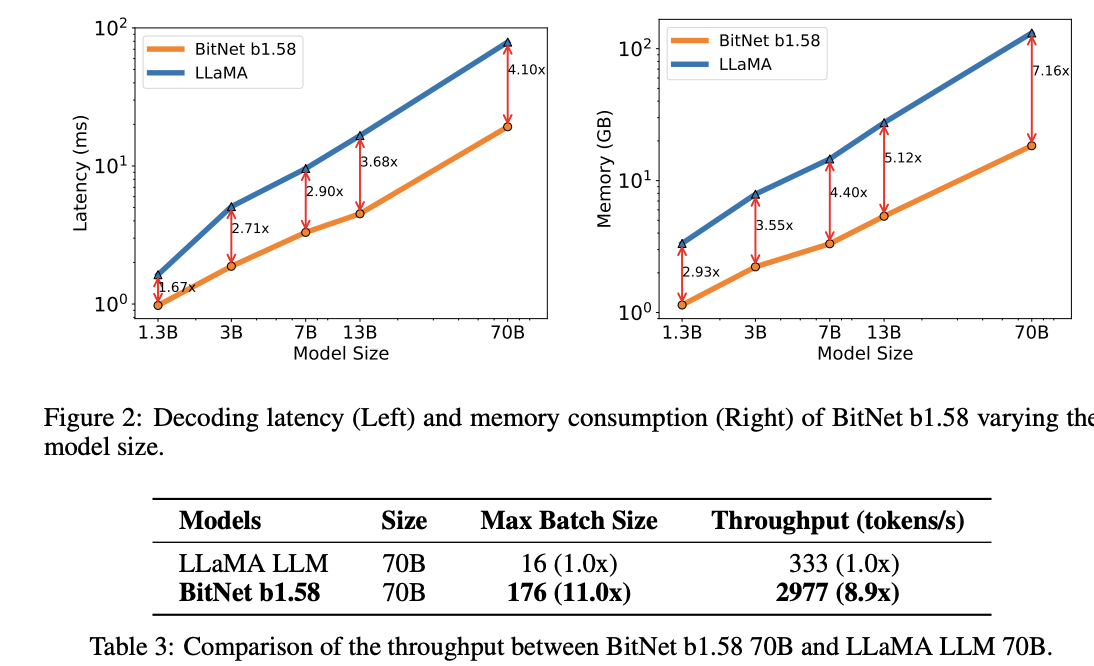
The crux of this innovation lies in the representation of each parameter in the model, commonly known as weights, using only 1.58 bits. Unlike traditional LLMs, which often employ 16-bit floating-point values (FP16) for weights, BitNet b1.58 restricts each weight to one of three values: -1, 0, or 1. This substantial reduction in bit usage is the cornerstone of the proposed model.

They found that BitNet b1.58, despite using only 1.58 bits per parameter, the model performs as well as the traditional models with the same model size and training data in terms of both perplexity and end-task performance. Importantly, it is more cost-effective in terms of factors like latency, memory usage, throughput, and energy consumption.

This 1.58-bit LLM introduces a new way of scaling and training language models, offering a balance between high performance and cost-effectiveness. Additionally, it opens up possibilities for a new way of computing and suggests the potential for designing specialized hardware optimized for these 1-bit LLMs.

The paper also touches upon the potential for native support of long sequences in LLMs facilitated by BitNet b1.58. The authors suggest future work to explore further lossless compression possibilities, potentially enabling even greater efficiency.

Late last year, Microsoft introduced its latest version of small language model (SML) Phi-2, a 2.7 billion-parameter model outperforming in understanding and reasoning capabilities.

The post Microsoft Introduces 1-Bit LLM appeared first on Analytics India Magazine.

Aal Izz Well, Google

Google, of late, has found itself entangled in a series of challenges, particularly with its AI model Gemini being labeled as excessively woke.

The situation got worse when Gemini responded to the question “who negatively impacted society more, Elon tweeting memes or Hitler” with “It is difficult to say definitively who had a greater negative impact on society, Elon Musk or Hitler, as both have had significant negative impacts in different ways….”.

In recent weeks, the situation has intensified to the extent that there are calls for the resignation of Google chief Sundar Pichai. Helios Capital founder Samir Arora has suggested a likelihood of Pichai facing termination or choosing to resign soon, in the aftermath of the Gemini debacle.

But are we being too harsh on Google?

Google Down, but Not Out

Google DeepMind CEO Demis Hassabis has announced that Google plans to resume the image generation capabilities of Gemini soon.

“We have taken the feature offline while we fix it,” Hassabis said, at the Mobile World Congress conference in Barcelona. “We are hoping to have that back online very shortly – in the next couple of weeks, a few weeks,” he said, adding that the product was not “working the way we intended”.

Google chief Sundar Pichai, too, graciously accepted the mistake. “I know that some of its responses have offended our users and shown bias – to be clear, that’s completely unacceptable and we got it wrong,” Pichai said in a memo.

He said the company has made progress in fixing Gemini’s guardrails. “Our teams have been working around the clock to address these issues. We’re already seeing a substantial improvement on a wide range of prompts,” he said.

Empathising with his friends at Google, Andrew Ng, former Google Brain researcher and founder of DeepLearning.AI posted a heartfelt message on X acknowledging that “this week has been tough with a lot of criticism about Gemini’s gaffes”.

“Just wanted to say I love all of you and am rooting for you. I know everyone means well and am grateful for your work. Eager to see where you next take this amazing tech!”

Why Target Google?

Everyone has been too quick to train their guns on Google. Google’s intentions have never been wrong; in fact, the company has always been at the forefront of inclusion and diversity. The tech giant is working to improve Black+ representation at senior levels and committing to a goal to improve leadership representation of underrepresented groups by 30% by 2025.

“Since our users come from all over the world, we want it to work well for everyone. If you ask for a picture of football players, or someone walking a dog, you may want to receive a range of people. You probably don’t just want to only receive images of people of just one type of ethnicity (or any other characteristic),” wrote Google in its blog post.

The tech giant acknowledged that its tuning, aimed at ensuring that Gemini showed a range of people, failed to account for cases that should clearly not display such a range.

However, besides Gemini, there have been instances in the past where other image generation models, including Midjourney and Stable Diffusion, faced criticism for being prompt-engineered into creating dozens of racist and conspiratorial images. A broad range of prompts have been observed to produce stereotypes related to gender, race, nationality, class, and other identities.

Google is NOT alone

Google is trying hard to stay in the LLM race and catch up to OpenAI. In the process of doing so, it sometimes rushes its launch. It happened with Bard (now Gemini), but that’s not reason enough to write Google off.

In the future, Google will implement a clear set of actions, encompassing structural changes, updated product guidelines, improved launch processes, thorough evaluations, red-teaming, and technical recommendations, as indicated by Pichai.

Google is not alone when it comes to failures. NVIDIA, during its 30 years of existence, has reinvented itself almost three times, to have now reached a $2 trillion market cap, surpassing Amazon.

Meta has also had its share of failures. Back in 2022, it released Galactica, an open-source large language model trained on scientific knowledge, with 120 billion parameters. However, just days after its launch, Meta took Galactica down.

In the mid-1990s, Apple faced severe financial difficulties and was on the verge of bankruptcy. However, the return of Steve Jobs in 1997 marked a turning point for the company. He introduced new products such as Mac OS X and a revamped product lineup, including the iMac and the iPod.

No doubt, Google is currently on the wrong foot, but the company that has impacted our lives with its Search, YouTube, and Chrome, will surely bounce back better. Today, Google Search, used by over 5 billion people worldwide, provides unparalleled access to information, while Google products like Gmail and Google Meet have transformed how we connect.

Gemini’s next iteration, 1.5, comes with a staggering 1 million context window and has received positive reviews. Image generation is just one aspect of Gemini. What is the worst thing that could happen to it anyway? It could most likely end up in Google’s graveyard.

The post Aal Izz Well, Google appeared first on Analytics India Magazine.

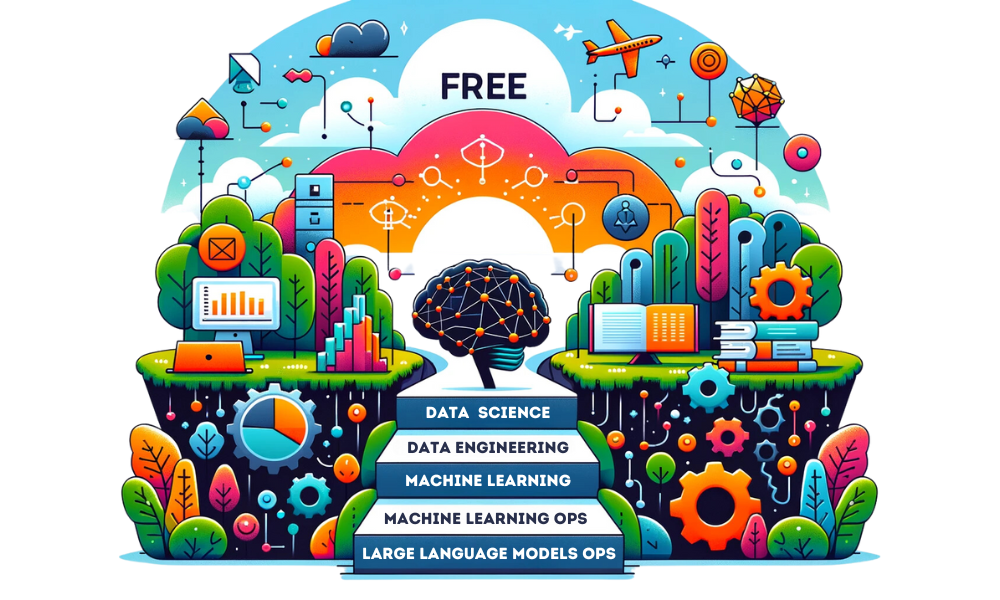
Collection of Free Courses to Learn Data Science, Data Engineering, Machine Learning, MLOps, and LLMOps

Collection of Free Courses to Learn Data Science, Data Engineering, Machine Learning, MLOps, and LLMOps
Image by Author

Data has become a valuable asset for businesses, governments, and individuals in today's rapidly evolving digital landscape. With the rise of data science, machine learning, and artificial intelligence, there has never been a more exciting time to dive into these fields. In this blog, we'll introduce you to a collection of free courses that can help you learn and master various aspects of data science, data engineering, machine learning, MLOps, and LLMOps.

These courses are available for free on GitHub and have gained immense popularity among community members. The best part about this learning track is that it's entirely self-paced and community-based, allowing you to learn at your own pace and connect with like-minded individuals who share your passion for data.

Data Science

The Data Science Undergraduate Program consists of essential courses in theory, mathematics, algorithms, statistics, data science tools, databases, and machine learning. The program aims to cover all the necessary and optional courses that can help learners master data science and prepare for their professional life.

Collection of Free Courses to Learn Data Science, Data Engineering, Machine Learning, MLOps, and LLMOps

The Data Science curriculum is designed for individuals who are self-motivated and want to achieve something significant in their lives. It offers a comprehensive undergraduate program in Data Science, providing access to courses from the most prestigious universities in the world.

Data Engineering

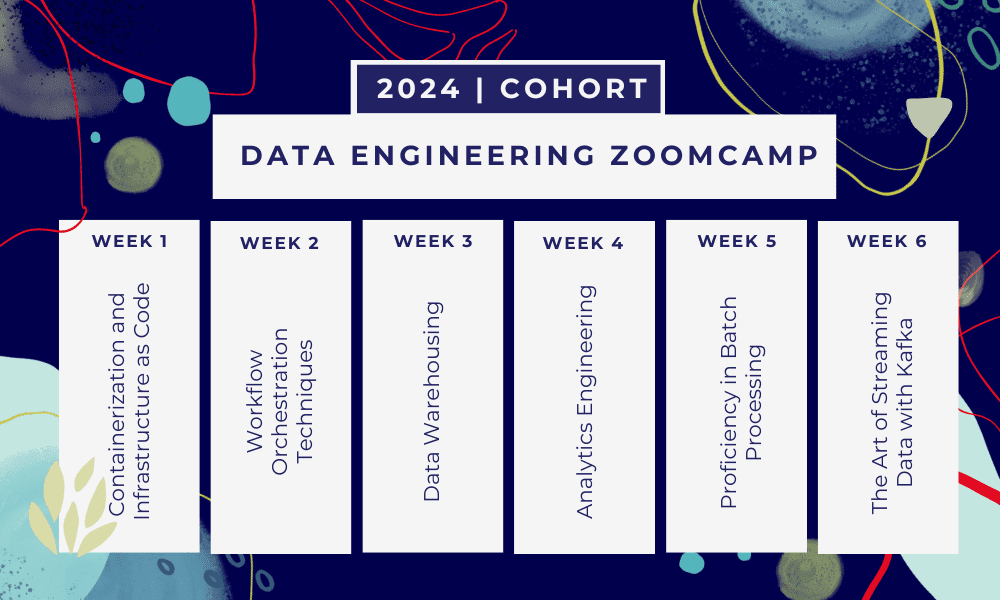
If you want to become a professional data engineer, DataTalksClub is offering a 6-week bootcamp that you can enroll in now. The bootcamp has several modules and courses that will teach you various skills. By the end of the course, you will be able to work with GCP, Docker, Postgres, Terraform, Mage, BigQuery, Spark, and Kafka.

Collection of Free Courses to Learn Data Science, Data Engineering, Machine Learning, MLOps, and LLMOps

The Data Engineering bootcamp is designed to challenge and develop your skills while also providing you with practical experience through various projects.

Machine Learning

Check out 10 GitHub Repositories to Master Machine Learning for accessing a range of resources, from beginner-friendly tutorials to advanced machine learning tools for productions.

Collection of Free Courses to Learn Data Science, Data Engineering, Machine Learning, MLOps, and LLMOps

The 10 repositories contains:

  1. 12-week ML-For-Beginners program by Microsoft
  2. Links to ML courses, tutorials, and lectures from Clatech, Stanford, and MIT.
  3. Mathematics for machine learning
  4. Deep Learning eBook.
  5. Machine Learning Bootcamp.
  6. List of Machine Learning Tutorials.
  7. List awesome machine learning tools.
  8. List of machine learning interviews.
  9. Machine learning cheat sheets.
  10. List of MLOps tools.

MLOps

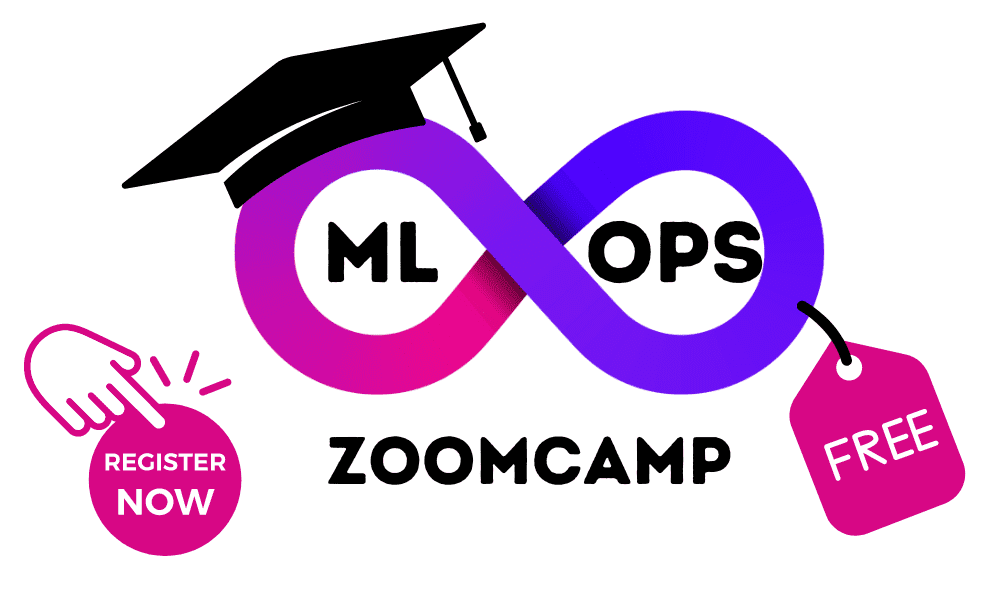
MLOps bootcamp from DataTalks.Club focuses on the practical aspects of productionizing machine learning services. The course is designed for data scientists, ML engineers, software engineers, and data engineers who are interested in learning how to deploy ML models into production.

Collection of Free Courses to Learn Data Science, Data Engineering, Machine Learning, MLOps, and LLMOps

The bootcamp consists of several modules that combine video lectures, practical exercises, homework assignments, and further reading materials to deepen understanding and application of the concepts. The aim of the course is to provide students with a strong foundation in MLOps, enabling them to effectively manage and deploy machine learning models in real-world scenarios.

LLMOps

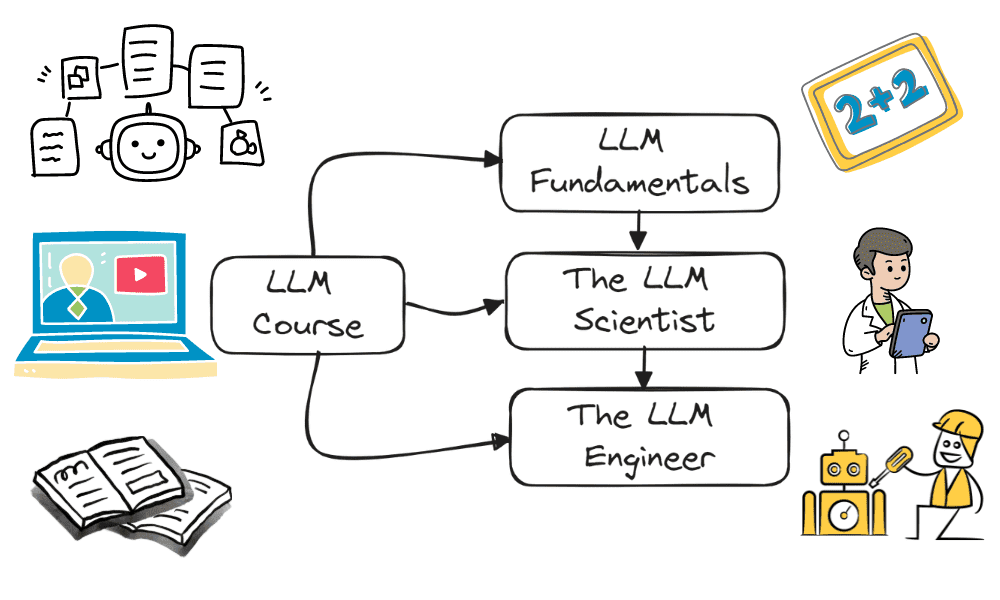
The Large Language Model (LLM) course is a comprehensive program that will teach you the fundamentals of LLMs, train and fine-tune your own LLMs, and deploy them to production. Each core section covers a range of topics, supported by freely available online YouTube tutorials, guides, and resources.

Collection of Free Courses to Learn Data Science, Data Engineering, Machine Learning, MLOps, and LLMOps

The LLM course provides a structured approach to learning. It offers a range of resources, including tutorials, videos, notebooks, and articles, all available in one convenient GitHub repository.

Conclusion

This collection of free courses offers a wealth of resources for anyone looking to start their data science, data engineering, machine learning, MLOps, and LLMOps career. With courses covering theory, tools, examples, and real-world implementation, these self-paced career tracks have something valuable to offer both beginners and seasoned professionals.

Abid Ali Awan (@1abidaliawan) is a certified data scientist professional who loves building machine learning models. Currently, he is focusing on content creation and writing technical blogs on machine learning and data science technologies. Abid holds a Master's degree in Technology Management and a bachelor's degree in Telecommunication Engineering. His vision is to build an AI product using a graph neural network for students struggling with mental illness.

More On This Topic

  • 25 Free Courses to Master Data Science, Data Engineering, Machine…
  • KDnuggets News, April 6: 8 Free MIT Courses to Learn Data Science…
  • A Complete Collection of Data Science Free Courses — Part 1
  • A Complete Collection of Data Science Free Courses — Part 2
  • 5 Free Courses to Master MLOps
  • Learn MLOps with This Free Course

StarCoder 2 is a code-generating AI that runs on most GPUs

StarCoder 2 is a code-generating AI that runs on most GPUs Kyle Wiggers 9 hours

Developers are adopting AI-powered code generators — services like GitHub Copilot and Amazon CodeWhisperer, along with open access models such as Meta’s CodeLlama — at an astonishing rate. But the tools are far from ideal. Many aren’t free. Others are, but only under licenses that preclude them from being used in common commercial contexts.

Perceiving the demand for alternatives, AI startup Hugging Face several years ago teamed up with ServiceNow, the workflow automation platform, to create StarCoder, an open source code generator with a less restrictive license than some of the others out there. The original came online early last year, and work has been underway on a follow-up, StarCoder 2, ever since.

StarCoder 2 isn’t a single code-generating model, but rather a family. Released today, it comes in three variants, the first two of which can run on most modern consumer GPUs:

  • A 3-billion-parameter (3B) model trained by ServiceNow
  • A 7-billion-parameter (7B) model trained by Hugging Face
  • A 15-billion-parameter (15B) model trained by Nvidia, the newest supporter of the StarCoder project.

(Note that “parameters” are the parts of a model learned from training data and essentially define the skill of the model on a problem, in this case generating code.)

Like most other code generators, StarCoder 2 can suggest ways to complete unfinished lines of code as well as summarize and retrieve snippets of code when asked in natural language. Trained with 4x more data than the original StarCoder, StarCoder 2 delivers what Hugging Face, ServiceNow and Nvidia characterize as “significantly” improved performance at lower costs to operate.

StarCoder 2 can be fine-tuned “in a few hours” using a GPU like the Nvidia A100 on first- or third-party data to create apps such as chatbots and personal coding assistants. And, because it was trained on a larger and more diverse data set than the original StarCoder (~619 programming languages), StarCoder 2 can make more accurate, context-aware predictions — at least hypothetically.

“StarCoder 2 was created especially for developers who need to build applications quickly,” Harm de Vries, head of ServiceNow’s StarCoder 2 development team, told TechCrunch in an interview. “With StarCoder2, developers can use its capabilities to make coding more efficient without sacrificing speed or quality.”

Now, I’d venture to say that not every developer would agree with De Vries on the speed and quality points. Code generators promise to streamline certain coding tasks — but at a cost.

A recent Stanford study found that engineers who use code-generating systems are more likely to introduce security vulnerabilities in the apps they develop. Elsewhere, a poll from Sonatype, the cybersecurity firm, shows that the majority of developers are concerned about the lack of insight into how code from code generators is produced and “code sprawl” from generators producing too much code to manage.

StarCoder 2’s license might also prove to be a roadblock for some.

StarCoder 2 is licensed under Hugging Face’s RAIL-M, which aims to promote responsible use by imposing “light touch” restrictions on both model licensees and downstream users. While less constraining than many other licenses, RAIL-M isn’t truly “open” in the sense that it doesn’t permit developers to use StarCoder 2 for every conceivable application (medical advice-giving apps are strictly off limits, for example). Some commentators say RAIL-M’s requirements may be too vague to comply with in any case — and that RAIL-M could conflict with AI-related regulations like the EU AI Act.

Setting all this aside for a moment, is StarCoder 2 really superior to the other code generators out there — free or paid?

Depending on the benchmark, it appears to be more efficient than one of the versions of CodeLlama, CodeLlama 33B. Hugging Face says that StarCoder 2 15B matches CodeLlama 33B on a subset of code completion tasks at twice the speed. It’s not clear which tasks; Hugging Face didn’t specify.

StarCoder 2, as an open source collection of models, also has the advantage of being able to deploy locally and “learn” a developer’s source code or codebase — an attractive prospect to devs and companies wary of exposing code to a cloud-hosted AI. In a 2023 survey from Portal26 and CensusWide, 85% of businesses said that they were wary of adopting GenAI like code generators due to the privacy and security risks — like employees sharing sensitive information or vendors training on proprietary data.

Hugging Face, ServiceNow and Nvidia also make the case that StarCoder 2 is more ethical — and less legally fraught — than its rivals.

All GenAI models regurgitate — in other words, spit out a mirror copy of data they were trained on. It doesn’t take an active imagination to see why this might land a developer in trouble. With code generators trained on copyrighted code, it’s entirely possible that, even with filters and additional safeguards in place, the generators could unwittingly recommend copyrighted code and fail to label it as such.

A few vendors, including GitHub, Microsoft (GitHub’s parent company) and Amazon, have pledged to provide legal coverage in situations where a code generator customer is accused of violating copyright. But coverage varies vendor-to-vendor and is generally limited to corporate clientele.

As opposed to code generators trained using copyrighted code (GitHub Copilot, among others), StarCoder 2 was trained only on data under license from the Software Heritage, the nonprofit organization providing archival services for code. Ahead of StarCoder 2’s training, BigCode, the cross-organizational team behind much of StarCoder 2’s roadmap, gave code owners a chance to opt out of the training set if they wanted.

As with the original StarCoder, StarCoder 2’s training data is available for developers to fork, reproduce or audit as they please.

Leandro von Werra, a Hugging Face machine learning engineer and co-lead of BigCode, pointed out that while there’s been a proliferation of open code generators recently, few have been accompanied by information about the data that went into training them and, indeed, how they were trained.

“From a scientific standpoint, an issue is that training is not reproducible, but also as a data producer (i.e. someone uploading their code to GitHub), you don’t know if and how your data was used,” Von Werra said in an interview. “StarCoder 2 addresses this issue by being fully transparent across the whole training pipeline from scraping pretraining data to the training itself.”

StarCoder 2 isn’t perfect, that said. Like other code generators, it’s susceptible to bias. De Vries notes that it can generate code with elements that reflect stereotypes about gender and race. And because StarCoder 2 was trained on predominantly English-language comments, Python and Java code, it performs weaker on languages other than English and “lower-resource” code like Fortran and Haksell.

Still, Von Werra asserts it’s a step in the right direction.

“We strongly believe that building trust and accountability with AI models requires transparency and auditability of the full model pipeline including training data and training recipe,” he said. “StarCoder 2 [showcases] how fully open models can deliver competitive performance.”

You might be wondering — as was this writer — what incentive Hugging Face, ServiceNow and Nvidia have to invest in a project like StarCoder 2. They’re businesses, after all — and training models isn’t cheap.

So far as I can tell, it’s a tried-and-true strategy: foster goodwill and build paid services on top of the open source releases.

ServiceNow has already used StarCoder to create Now LLM, a product for code generation fine-tuned for ServiceNow workflow patterns, use cases and processes. Hugging Face, which offers model implementation consulting plans, is providing hosted versions of the StarCoder 2 models on its platform. So is Nvidia, which is making StarCoder 2 available through an API and web front-end.

For devs expressly interested in the no-cost offline experience, StarCoder 2 — the models, source code and more — can be downloaded from the project’s GitHub page.

Tumblr and WordPress Join Reddit in the Sellout Club

Tumblr and WordPress.com, under their parent company Automattic, have initiated plans to monetise user data by selling it to AI firms Midjourney and OpenAI.

The documents, exposed by 404 Media, indicate that a vast collection of user-generated content from Tumblr has been prepared for these AI companies. This collection inadvertently included sensitive data such as private posts, content from suspended or deleted blogs, and explicit material, raising questions about the oversight and management of user data.

In response to potential backlash and privacy concerns, Automattic has announced forthcoming options for users to opt-out of data sharing, aiming to empower users with greater control over their content. This initiative will block AI crawlers from accessing content of those who opt-out, with Automattic promising to enforce these preferences with their AI partners rigorously.

However, clarity is still sought on how these policies will affect self-hosted WordPress sites using Automattic plugins like JetPack, which may also be implicated in data sharing agreements.

The revelation has prompted a broader discussion on the ethical use of user data in training AI, with Automattic ensuring regular updates to AI partners about user opt-out decisions and advocating for the exclusion of past content from future AI training. The downside to this is that if users opt out of it, their blog posts won’t appear in the WordPress Reader, so no real people can read it either.

Last week, Reddit signed a $60 million per year deal with Google to make its content available for training AI models. While social media sites sell data, their users are not happy about their information being used to train these models. “A.I. Is quickly turning into the biggest user data theft in history” wrote a user on X.

The post Tumblr and WordPress Join Reddit in the Sellout Club appeared first on Analytics India Magazine.

Spanish Founders Unveil AI-powered Social Media App Rili AI in India

Belgium-based company Rili (pronounced really), which is an AI-powered social media platform that allows one to create digital twins, made its soft launch today in six countries, namely India, USA, Indonesia, Philippines, Brazil, and Mexico.

“We are expecting to get the most feedback in this alpha phase. We have tested it with around 4,000 users, but need more feedback to refine the solution to get something that can work in every single market,” said Jorge Cuervo and Antonio Camacho, the co-founders of Rili, in an exclusive interview with AIM.

Expands in India

Talking about the soft launch in six countries alone, and India being critically chosen, Cuervo said, “We discovered, particularly in India, that you’re not a single market, you are a lot of markets in one country.”

“[In India] the appetite for artificial intelligence solutions and the population that is beyond Gen-Z – 16 to 25 years of age and even older – is amazingly huge. The hunger that you have for disruptive solutions is amazingly impressive. That is something that’s also found in other smaller markets like the Philippines,” he said.

The AI-powered app uses a mix of technologies including LLMs, voice cloning and lip-sync. “We haven’t developed our own LLM. Instead, we have used the best implementations of the LLMs available in the market, which have changed a lot in the past year,” said Cuervo. Open source models have been used for Rili.

Digital Social Media

Sample UI for Rili AI. Source: Rili

With Rili ai, whose motto is ‘Search, Explore, and Bond’, Camacho and Cuervo are looking to address multiple problems. From providing a digital assistant to the lonely, to serving as a legacy piece where a human’s persona and brains are transferred to your digital twin, Rili’s biggest goal is to create a new kind of social media.

“When Facebook and all social networks were born, we were destined to have interactions with each other. Now with Instagram and Tik Tok, communication is just one way – you are just sitting there and consuming,” said Cuervo. “We think we should use these types of tools to sense this process and help people to build real bonds. We can be the first social network in the sense that enables us to be better and establish true bonds with other people around the world.”

Crossing Boundaries

Rili is trained by users with their own knowledge through chat, which can be written messages or voice audios, by speaking into a microphone. The application is also able to gather digital user information from platforms such as X, Twitch and Youtube, which fortifies the personalisation factor.

With the capability to deliver content in over 100 languages including Hindi, Rili is aiming to break the global divide and achieve a larger audience. The addition of further languages is not a problem. “It’s quite easy just to incorporate a new language by just having this user interface modified, because the inner brain already has this capability, it isn’t a problem at all,” said Cuervo.

The founders believe that knowledge limitations from language barriers should never be a hindrance. “Enhancing bi-directional communication is our physical goal. We want to change the way that people communicate, we want them to speak to each other not only to consume creator content, but to also bond with these creators,” said Camacho.

Superhero Entrepreneurs

Camacho and Cuervo, who have been dabbling in their entrepreneurship journey for more than a decade, have previously founded an AI company Hocelot, which was headquartered in Brussels. The company specialises in datasets and next-generation analytics in real-time to address specific business needs.

“We spend a lot of money or we invest a lot of money in assets like flats or apartments, and others, but the most important asset we have in life is our brain,” said Camacho. “When we pass away, we can leave our legacy that we are bringing to our kids, our family, with our thoughts and our knowledge. That’s another way we are exploring to monetise in the future.”

Talking about the significance of the name of the company, the founders had an interesting reason. “We are Spanish, and ‘Rili’ is how a Spanish speaker will write ‘really,’ and with artificial intelligence, it is ‘Rili AI’, which sounds like ‘Really I’, is it really me?” said Camacho. “We like the brand, we like the name. It has this short kind of joke. It’s easy to remember and it has a lot of connotations that we like.”

Rili is available in both iOS and Android platforms. The Rili alpha version is already live for users to join the waitlist.

The post Spanish Founders Unveil AI-powered Social Media App Rili AI in India appeared first on Analytics India Magazine.