I got a massage from an AI-powered robot, and it was surprisingly relaxing

Aescape autonomous massage table

It's not every day that you're lying on a massage table while two robot arms knead the stress out of your body. But there I was, dressed in form-fitting slate gray exercise wear, face sunk into the donut-shaped headrest as an AI-powered robot gave me a 30-minute massage. It left me feeling a little funny, but also, curiously, relaxed.

That relaxation came from Aescape's robot at its New York office. Aescape is betting big on its AI massage robots and is launching ten robot massage tables, like the one I had a 30-minute session with, at Equinox fitness center locations around New York City starting this spring.

Also: For the vision impaired, this AI robot aims to replace canes and guide dogs

Eric Litman, Aescape's founder and CEO, spent years fighting chronic pain, seeking out massage therapists to address a relentless bulging disc that made it impossible to turn his head. Dissatisfied with the service of massage therapists, what he really wanted out of a massage was for somebody to do just what he asked. So he spent seven years building a robot massage therapist.

The massage table uses AI to scan the customer's body on the table to generate data and conduct a massage. It logs over 1 million 3D data points to map the body's position on the table and target key anatomical points and remembers that data for returning users to customize their massage and meet each client's needs. Through the machine learning of the massage table, the AI gets smarter, aggregating the data of all the bodies it has performed massages on for a better and more intelligent session.

Throughout the table's development, Aescape has worked with and consulted massage therapists to simulate a massage therapist's practice. And if you're scared, like I was, that the robot arms will accidentally break your bones while performing a massage, fear not: "The arms themselves are only strong enough to give a good massage, and they're not any stronger than that… And with that model of your body, we're significantly more precise than a therapist," Litman told me.

Also: I've tested dozens of robot vacuums. These are the best you can buy

"You'll be able to specify not only predefined treatment protocols but a plan that aligns with how you feel about your body," Molly O'Connor, Aescape's spokesperson, explained. There will also be opportunities for activity-specific massage sessions programmed into the table. O'Connor provided the example of a session dedicated to runners who want to loosen their IT bands, or digital workers seeking to relieve tension in their back and shoulders they get from working a desk job.

Aescape's rollout of its semi-autonomous (semi-autonomous because it relies on user's input and adjustments) massage tables comes at a pivotal time in the massage therapy industry. The employment of massage therapists is expected to grow by 18% from 2022 to 2032, making way for more jobs and opportunities for people (or AI robots) in the space, according to the U.S. Bureau of Labor Statistics.

Each user puts on Aescape's Aerwear, a slate gray top and bottom that helps the massage arms perform a smooth, frictionless massage without the help of oil and without the user taking their clothes off. The Aerwear also works with the perception sensors as your body gets scanned. On the table, users customize the leg and headrests, the pressure levels of the massage arms, the music, and the screensaver that plays as the massage takes place. Then the two mechanical spaghetti massage arms come to life and start kneading, lengthening, and moving.

The robot massaged my upper back, shoulders, spine, lower back, and glutes. I enjoyed the pressure level customization and felt like I was in control of the massage, something that's not always the case when you're seeing a human massage therapist. There was one moment when the pressure the arm was putting on me was too intense, but I suddenly remembered that I could cool it down and receive a massage on my own terms and preferences.

"There's been a lot of thought and effort into how we operate [the robot] safely, making sure the arms are designed exactly the right way and making sure the vision system doesn't fail, and knowing what people love and really delights people," Litman said.

I wouldn't say the robot does a stellar job at targeting knots. The heated air points, the "hands" on the machine, have seven different surfaces that can simulate the blade of the palm, the forearm, or an elbow. But they're too large to feel like fingers, and the smaller tension in my body went unaddressed as a result. The air points felt like two warm fists, rather than fingers, were digging into my body. What the robot lacks in smaller details it makes up for in a broader relaxing experience.

As I received this robot massage, I thought about all the friends and people I know who wouldn't be comfortable taking their clothes off for a massage or having their bodies touched by a stranger. This feels like a valid alternative for those people. Aescape's research backs this up: The company found a pool of 10 million Americans who have never had a massage because they didn't want to be touched by a stranger.

While the massage tables will launch at Equinox fitness clubs across New York City, they aren't limited to Equinox members. Interested non-members will receive a free day pass when they reserve an Aescape massage table at the fitness center. A 30-minute massage will start at $60 and fluctuate based on the location and additional amenities provided.

Also: The best smartwatches: Expert tested and reviewed

"[Aescape] is a natural fit for Equinox members who embrace the latest technology to achieve their fitness and wellness goals," O'Connor said of the partnership with Equinox. Plus, rolling out these massage tables in a gym setting, O'Connor explained, sets Aescape apart and allows them to "jointly innovate" with the luxury fitness center brand. "There's a whole lot of people in this country who are really into technology and wellness, the intersection of those two. Those are the people who start to build that social proof and the credibility," Litman said.

It might seem strange right now but maybe someday you'll wrap up a workout and dive into a massage session with a robot too.

Featured

DoorDash’s AI tool is monitoring your messages to drivers — be nice, or else

Doordash website

Ordering food on DoorDash is a great solution when you are hungry, and don't want to go through the trouble and time of cooking, cleaning pots and pans, and figuring out what to eat. However, if you waited too long to order and you're hangry, you'll want to channel that grouchiness elsewhere — or face the consequences.

On Tuesday, DoorDash unveiled SafeChat+, a new AI-powered feature that reviews in-app conversations between Dashers and customers to detect verbal abuse and harassment and help Dashers remove themselves from these situations.

Also: This free tool from Anthropic helps you create better prompts for your AI chatbot

When SafeChat+ detects abusive or inappropriate comments directed at a Dasher from a customer, it immediately presents the Dasher with the option to cancel the order without impacting their rating.

This is a significant change because before this update, if a Dasher canceled an order after accepting it, regardless of the reason, the Dasher's completion rating was negatively impacted, and, according to DoorDash policy, a 90% completion rate or lower merits account for deactivation.

The demo of the feature, seen below, shows that even if the Dasher chooses to cancel the order due to inappropriate language use, they will still be able to receive prorated pay, which in the example shown came out to half pay. The clip also showed that Dashers will have the ability to keep the order if they feel safe.

If the delivery was already made when inappropriate language ensued, SafeDash+ will automatically end the chat to prevent further escalation. Should a Dasher use inappropriate language during delivery, the customer can contact DoorDash support via chat or phone for assistance.

The company shares that SafeChat+ is already available in all in-app DoorDash chats, where it will review more than 1,400 messages per minute in dozens of languages including English, French, Spanish, Portuguese, and Mandarin.

Artificial Intelligence

You can now ask Google’s Gemini AI to revise specific details in a response

Revising specific details in a response from Google Gemini

Google has rolled out a feature for its Gemini AI that gives you more control over a response from the chatbot. Launched earlier this month, the new option lets you select specific details in a response that you want Gemini to change.

"We're launching a more precise way for you to tune Gemini's responses," Google said on its Release Updates page. "Starting in English in the Gemini web app, just select the portion of text you want to change, give Gemini some instruction, and get an output that's closer to what you are looking for."

Here's how this works.

Also: This free tool from Anthropic helps you create better prompts for your AI chatbot

Let's say you've received a response to a question or request from Gemini. And you like some of the info in the response but not all of it. Normally, you'd have to tell the AI to regenerate the entire response, potentially losing the parts of the response that you did like.

With the new option, you can now select any text in the response and tell Gemini to remove it, regenerate it, make it shorter, or make it longer. Only the text you selected is modified, leaving the rest of the response alone.

To try this out, head to the Gemini web page. Speak or type your question at the prompt and then submit it. For example, I asked Gemini to list 10 must-see sites in London, a relevant question since my wife and I went to London last month. In response, the bot mentioned such sites as Buckingham Palace, the Tower of London, Westminster Abbey, the British Museum, and Shakespeare's Globe Theatre.

Also: DoorDash's AI tool is monitoring your messages to drivers — be nice, or else

Let's say I wanted Gemini to revise the brief information it gave me about the Globe Theatre. Selecting the one sentence in that entry displays a pencil-sporting icon appropriately named Modify selected text. Clicking that icon displays a menu with four choices: Regenerate, Shorter, Longer, and Remove. I could also type a manual prompt based on what change I wanted in the text. In this case, I asked Gemini to provide more details on how someone could take a tour of the Globe.

In response, the chatbot told me that visitors could take a guided 90-minute tour of the Globe to explore its history, its architecture, and Shakespeare's life and works. People get to see the backstage areas, the stage itself, and the open-air seating arrangements. Some tours even let you dress up in Elizabethan costumes and act out a scene from a Shakespeare play. (I'll have to try that one the next time I'm in London.) Gemini also told me that I could book tickets online in advance or on the day at the Globe box office.

Also: I tried Copilot Notebook: Microsoft's new AI tool offers two handy prompt features

I could then undo the revised response or click the icon to modify the selected text and try another revision. Here, I told Gemini to make the response longer, and it provided more details about the theatre itself.

Though generative AI can certainly dig up useful and helpful information, often the chatbots behave in a rigid and fixed way. An option like this gives you not only more control but greater flexibility in how the response is shaped.

Featured

OpenAI’s deals with publishers could spell trouble for rivals

OpenAI’s deals with publishers could spell trouble for rivals Kyle Wiggers 8 hours

OpenAI’s legal battle with The New York Times over data to train its AI models might still be brewing. But OpenAI’s forging ahead on deals with other publishers, including some of France’s and Spain’s largest news publishers.

OpenAI on Wednesday announced that it signed contracts with Le Monde and Prisa Media to bring French and Spanish news content to OpenAI’s ChatGPT chatbot. In a blog post, OpenAI said that the partnership will put the organizations’ current events coverage — from brands including El País, Cinco Días, As and El Huffpost — in front of ChatGPT users where it makes sense, as well as contribute to OpenAI’s ever-expanding volume of training data.

OpenAI writes:

Over the coming months, ChatGPT users will be able to interact with relevant news content from these publishers through select summaries with attribution and enhanced links to the original articles, giving users the ability to access additional information or related articles from their news sites … We are continually making improvements to ChatGPT and are supporting the essential role of the news industry in delivering real-time, authoritative information to users.

So, OpenAI’s revealed licensing deals with a handful of content providers at this point. Now felt like a good opportunity to take stock:

  • Stock media library Shutterstock (for images, videos and music training data)
  • The Associated Press
  • Axel Springer (owner of Politico and Business Insider, among others)
  • Le Monde
  • Prisa Media

How much is OpenAI paying each? Well, it’s not saying — at least not publicly. But we can estimate.

The Information reported in January that OpenAI was offering publishers between $1 million and $5 million a year to access archives to train its GenAI models. That doesn’t tell us much about the Shutterstock partnership. But on the article licensing front — assuming The Information’s reporting is accurate and those figures haven’t changed since then — OpenAI’s shelling out between $4 million and $20 million a year for news.

That might be pennies to OpenAI, whose war chest sits at over $11 billion and whose annualized revenue recently topped $2 billion (per Financial Times). But as Hunter Walk, a partner at Homebrew and the co-founder of Screendoor, recently mused, it’s substantial enough to potentially edge out AI rivals also pursuing licensing agreements.

Walk writes on his blog:

[I]f experimentation is gated by nine figures worth of licensing deals, we are doing a disservice to innovation … The checks being cut to ‘owners’ of training data are creating a huge barrier to entry for challengers. If Google, OpenAI, and other large tech companies can establish a high enough cost, they implicitly prevent future competition.

Now, whether there’s a barrier to entry today is debatable. Many — if not most — AI vendors have chosen to risk the wrath of IP holders, opting not to license the data on which they’re training AI models. There’s evidence that art-generating platform Midjourney, for example, is training on Disney movie stills — and Midjourney has no deal with Disney.

The tougher question to wrestle with is: Should licensing simply be the cost of doing business and experimentation in the AI space?

Walk would argue not. He advocates for a regulator-imposed “safe harbor” that’d protect any AI vendor — as well as small-time startups and researchers — from legal liability so long as they abide by certain transparency and ethical standards.

Interestingly, the U.K. recently tried to codify something along those lines, exempting the use of text and data mining for AI training from copyright considerations so long as it’s for research purposes. But those efforts ended up falling through.

Me, I’m not sure I’d go so far as Walk in his “safe harbor” proposal considering the impact AI threatens to have on an already-destabilized news industry. A recent model from The Atlantic found that if a search engine like Google were to integrate AI into search, it’d answer a user’s query 75% of the time without requiring a click-through to its website.

But perhaps there is room for carve-outs.

Publishers should be paid — and paid fairly. Is there not an outcome, though, in which they’re paid and challengers to AI incumbents — as well as academics — get access to the same data as those incumbents? I should think so. Grants are one way. Larger VC checks are another.

I can’t say I have the solution, particularly given that the courts have yet to decide whether — and to what extent — fair use shields AI vendors from copyright claims. But it’s vital we tease these things out. Otherwise, the industry could well end up in a situation where academic “brain drain” continues unabated and only a few powerful companies have access to vast pools of valuable training sets.

Microsoft quietly upgraded Copilot’s free version to GPT-4 Turbo. Here’s why it matters

Microsoft Copilot

The free version of Microsoft Copilot has long boasted features that the free version of ChatGPT lacks, including a more advanced large language model (LLM), footnotes, and access to the internet. Copilot just got yet another upgrade over ChatGPT, this time to a more advanced version of GPT-4.

Also: You can now make your own custom Copilot GPT. Here's how

On Tuesday, Mikhail Parakhin, CEO of Advertising and Web Services at Microsoft, shared in an X post that GPT 4-Turbo replaced GPT-4 in the free version of Copilot. Copilot Pro users will still have the option to toggle between the GPT-4 and GPT-4 Turbo.

So why does this this matter?

Last November, OpenAI unveiled GPT-4 Turbo which boasts several upgrades from GPT-4 including a 128,000 context window — the amount of text that the model is capable of processing to generate an answer — which is four times larger than GPT-4's and an updated knowledge cutoff of December 2023.

Until now, GPT-4 Turbo has been limited to developers via an OpenAI API or Copilot Pro subscribers for $20 a month. This update allows users to try OpenAI's most advanced model for free.

Also: Microsoft Copilot Pro vs. OpenAI's ChatGPT Plus: Which is worth your $20 a month?

When asked what the hardest part of implementing GPT-4 Turbo into Copilot was, Parakhin responded that it was fine-tuning the model to ensure that user experience improved or, at minimum, stayed the same as when using GPT-4.

This should assure users that the issues that formerly plagued GPT-4 Turbo when it was first released, such as acting "lazy," were addressed.

Since I have access to Copilot Pro and can toggle between GPT-4 and GPT-4 Turbo, I decided to put its abilities to the test myself by inputting the same prompt into both models — and the results surprised me.

As the sample prompt to measure their intelligence, I used a question ZDNET has previously used to test the chatbot's performance, "I have 5 oranges today, I ate 3 oranges last week. How many oranges do I have left?" The answer should be five because the amount of oranges I ate last week wouldn't affect today's total.

Also: Microsoft Copilot for Security will move to general availability on April 1

First up was GPT-4. Despite being a very capable model in itself, I was surprised to see that it got the answer wrong, concluding that the right answer would be two, as seen in the image below.

GPT-4 Turbo was not as easily tricked, giving the correct answer to the logic question, as seen in the image below.

From the results of my testing, the switch to GPT-4 Turbo does seem like a true upgrade, improving the chatbot's ability to reason through logical questions. Reasoning is an important skill for chatbots because it helps them decipher what the necessary steps are to perform a wide range of tasks including, math, coding, riddles, writing, and more.

Artificial Intelligence

Budget, Robodebt Failures Making Australian Government Hesitant About Citizen-Facing AI

The Australian government sees the value of generative AI across local, state and federal governments. However, unseasonably long spending restrictions and concerns over automation disasters are slowing AI adoption, at least in terms of citizen-facing solutions.

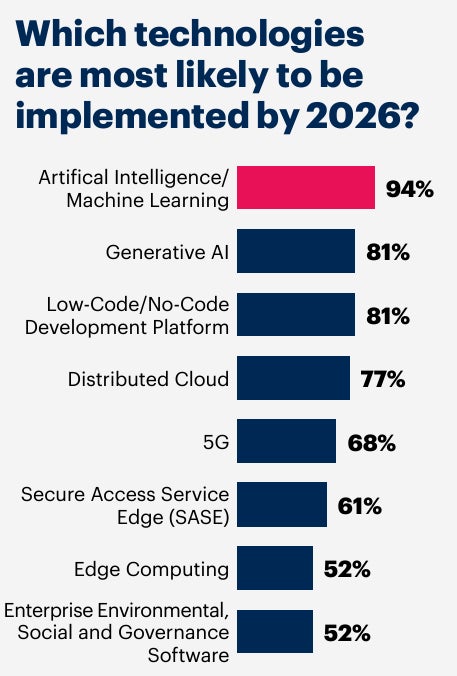
According to a Gartner survey of CIOs across APAC governments (with Australia sitting right in the middle of the trend), AI/machine learning and generative AI are the two biggest priorities to be implemented by 2026 (Figure A). And yet, other pressures are making government agencies hesitant to adopt AI in areas that the Australian government considers to be critically important.

The technologies that CIOs in APAC governments expect to implement by 2026.
Figure A: The technologies that CIOs in APAC governments expect to implement by 2026. Image: Gartner

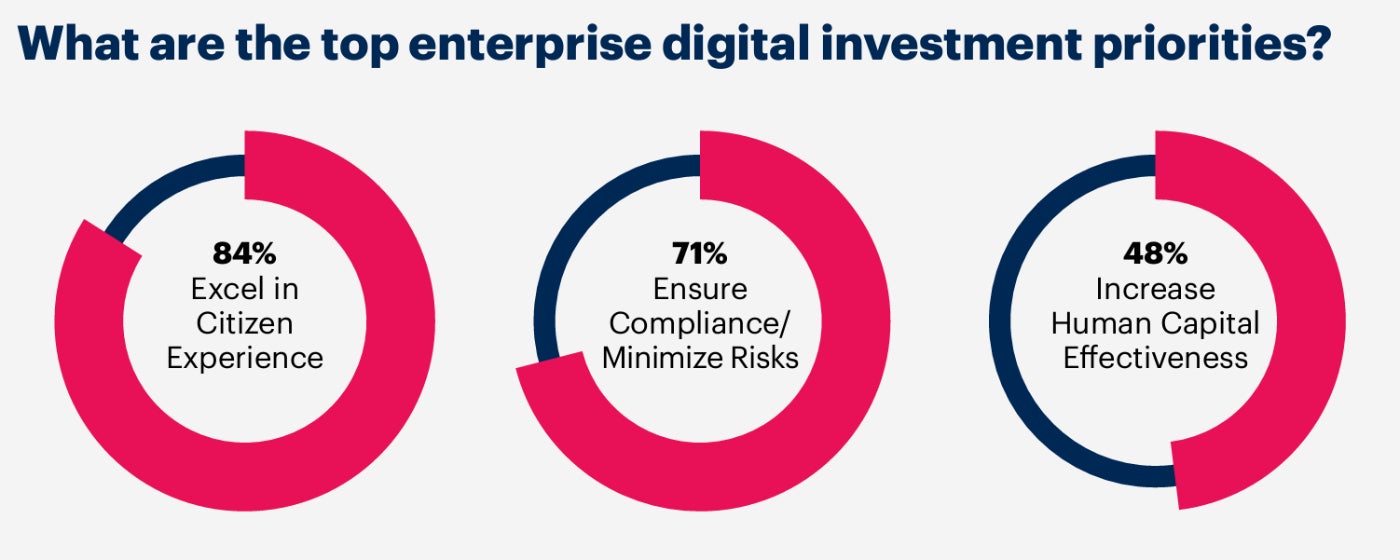
For example, while the Gartner research shows that 84% of CIOs consider investment to excel in the citizen experience to be a top priority (Figure B), less than 25% of government organisations will have generative AI-enabled citizen-facing services by 2027.

The top three priorities for APAC government agencies.
Figure B: The top three priorities for APAC government agencies. Image: Gartner

The Australian government’s disconnect between a desire for AI implementation and the ability to deliver

As Gartner VP Analyst Dean Lacheca said in an interview with TechRepublic, there is public scepticism around public large learning models, with concerns about privacy, security and data readiness impacting the speed of AI adoption. This is a particularly sticky issue in Australia, where automation, including AI, within government services has caused material harm. Consequently, there is an inherent distrust for any applications that are perceived to automate interactions with citizens across the whole of government.

Most noteworthy, while it was not an application of AI, the “Robodebt” scandal that so significantly impacted Australians resulted in a Royal Commission following a change of government. The automation that was at the centre of that controversy has made many government agencies hesitant to announce to the public that they’re exploring AI use.

“That association with automation isn’t outright voiced, but the underpinning sentiment is that government agencies are aware that there’s a lot of reputational risk here if they get it wrong,” Lacheca said. “There is some frustration at the executive level as to why they can’t move faster in the AI space, but there’s validity in the conservative approach to the first few steps and to fully think through the use cases.”

Tightening budgets have an impact of the Australian government’s AI adoption, too

This conservatism is being further compounded by lengthy austerity in government spending on IT, which Lacheca said is impacting the kinds of projects that are being greenlit. There is an understanding of the need for investment, he said, but the leaders that greenlight projects have a total focus on productivity, effectiveness and a fast ROI.

With AI being a new area for many CIOs and their teams in government, and AI requiring transformation and new approaches to technology, finding and then articulating the right projects that can deliver quickly can be challenging.

“Because the goals of projects tend to be relatively modest, in seeking that quick ROI, there is also an education piece that the IT teams need to undertake with the executive,” Lacheca said. “We’re often hearing elements of frustration along the lines of ‘my teenage son is at home using ChatGPT, why are you making this more complicated for us?’

“So managing expectations of what can be achieved with the technology given the focus on immediate goals and overcoming the hesitancy around citizen-facing services is part of the process with government adoption of AI right now.”

Gartner’s solution: Focus on delivering internal applications first

According to Gartner, the solution to these challenges with adopting AI is to start by delivering applications that are not citizen-facing but can support productivity gains within the internal organisation. The “low-hanging” fruit allows government agencies and departments to avoid perceived risks associated with AI in citizen-facing services, while building the critical knowledge and skills that are needed to develop more ambitious AI strategies.

Agencies should also build trust and mitigate associated risks by establishing transparent AI governance and assurance frameworks for both internally developed and procured AI capabilities, Gartner’s guidance adds.

“There is a lot that government organisations need to do to take steps into AI,” Lacheca said. “For one use case, for example, an agency might want to summarise a set of data, but that data contains personal information and perhaps doesn’t have the right metadata tags. They might want to parse that out.

“Others are looking to cloud solutions where the data never leaves their world, and others are looking to the ‘stained glass’ approach which will ensure a level of obfuscation of the data on the way out as a strategy for protecting the privacy. There’s a lot of architectural maturity in how AI strategies are implemented, which is why organisations should be looking to develop these capabilities before applying them to public-facing deployments,” he added.

How partners should look to engage Australia’s government about AI

These internal tensions will also affect the partners of the Australian government’s agencies. The appetite is there for AI, but getting the cut-through and helping to deploy solutions means understanding that the austerity in government budgets is unusually long and the conservatism about potential consequences is more sensitive than might be the case in other sectors.

“The next steps that government could take will probably be a lot slower than maybe some of the commercial counterparts, because their risk appetite has to be different,” Lacheca said.

For IT professionals working in and in partnership with government agencies, Gartner’s recommendations on how to step forward with AI come down to being able to demonstrate a fast ROI with minimal risk to public data and interactions. The partners that can deliver this will be in a strong position when the government later begins accelerating adoption to meet their longer-term ambitions.

Generative AI adoption will slow because of this one reason, according to Gartner

Copyright symbol

The rise of generative artificial intelligence has helped working professionals delegate menial tasks and shift their focus to tasks of greater importance. However, consulting firm Gartner reports that generative AI has also heightened concerns around copyright infringement, which will slow the technology's adoption.

Also: AI image classification errors could ruin your life. Here's one way to reduce them

Generative AI models need to be trained on large amounts of data, which frequently — as in the case of ChatGPT — includes content on the internet. This process means that many AI models generate answers based on other people's work, even if the original authors did not explicitly grant permission for their work to be used for AI model training.

As a result, many organizations, such as The New York Times, have taken legal action, claiming the resulting chatbots are committing copyright infringement. However, as generative AI becomes the norm, companies will begin to take a preventative approach, which will cost AI companies time and money.

Gartner predicts that, by 2026, enterprises' defensive spending to de-risk loss of intellectual property (IP) and copyright infringement will slow the emerging technology's adoption and diminish its returns.

"As GenAI advances, regulators are rushing to keep pace," Rita Sallam, a distinguished VP analyst at Gartner, said. "IP risk is not a new issue. However, copyright infringement risk, previously a limited risk, now affects potentially everyone in the organization."

Also: Can AI be a team player in collaborative software development?

Gartner also predicts that, by 2028, more than 50% of enterprises that chose to build their large language models from scratch will forgo their efforts due to the costs, complexity, and technical debt required to upkeep those models.

As a result, the firm says that chief data and analytics officers should balance their AI ambition with their risk tolerance to maximize results. Salam added: "The key will be to design open systems to switch models as innovation warrants."

Artificial Intelligence

Microsoft’s Security Copilot Enters General Availability

Microsoft Security Copilot, also referred to as Copilot for Security, will be in general availability starting April 1, the company announced today. Microsoft revealed that pricing for Security Copilot will start at $4/hr, calculated based on usage.

At a press briefing on March 7 at the Microsoft Experience Center in New York (Figure A), we saw how Microsoft positions Security Copilot as a way for security personnel to get real-time assistance with their work and pull data from across Microsoft’s suite of security services.

Vasu Jakkal, corporate vice president, Microsoft Security, speaks about Security Copilot at the Microsoft Experience Center in New York City on March 7.
Figure A: Vasu Jakkal, corporate vice president, Microsoft Security, speaks about Security Copilot at the Microsoft Experience Center in New York City on March 7. Image: Megan Crouse/TechRepublic

Microsoft Security Copilot availability and pricing

Security Copilot was first announced in March 2023, and general early access opened in October 2023. General availability will be worldwide, and the Security Copilot user interface comes in 25 different languages. Security Copilot can process prompts and respond in eight different languages.

Security Copilot will be sold through a consumptive pricing model, with customers paying based on their needs. Usage will be broken down into Security Compute Units. Customers will be billed monthly for the number of SCUs provisioned hourly at the rate of $4 per hour with a minimum of one hour of use. Microsoft frames this as a way to allow users to start experimenting with Security Copilot and then scale up as needed.

How Microsoft Security Copilot assists security professionals

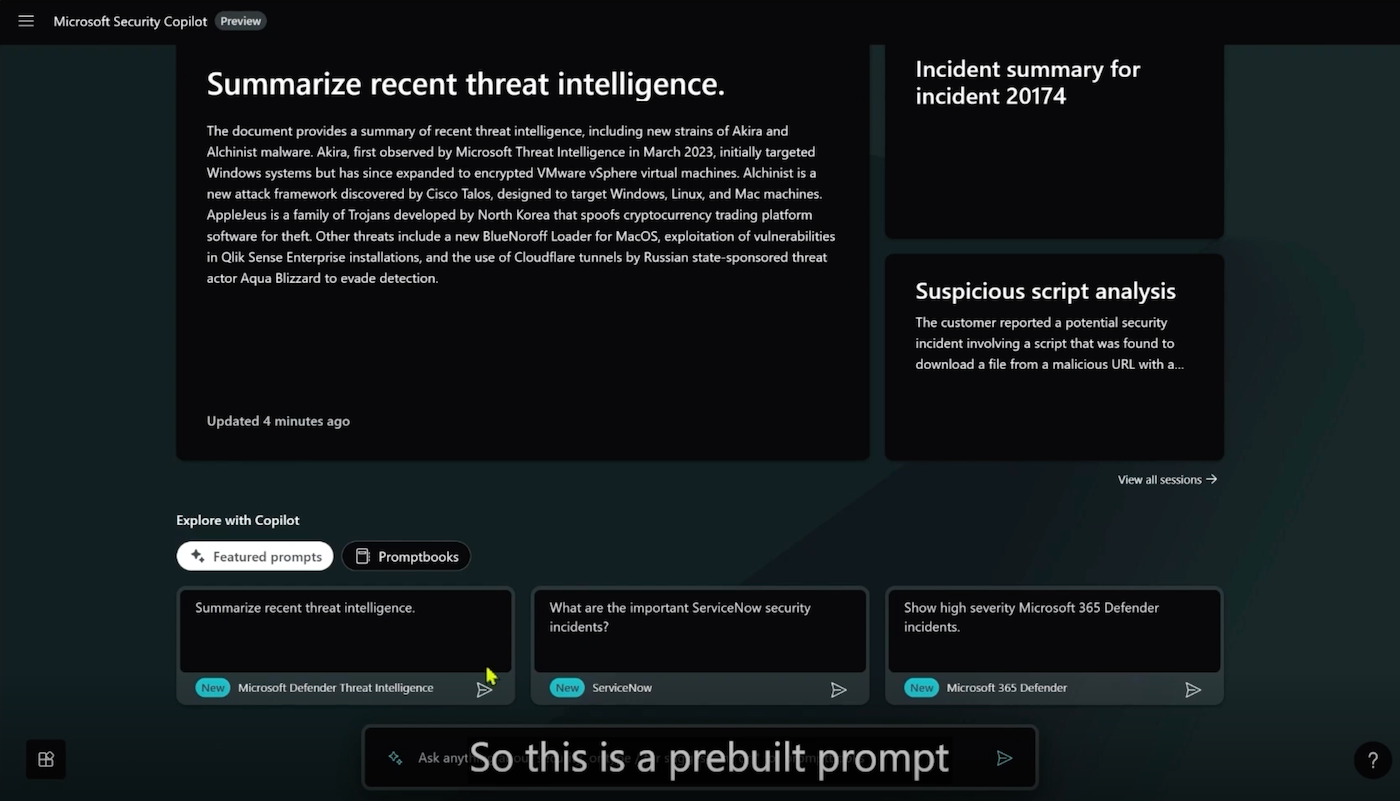
Security Copilot can work as a standalone application drawing data from many different sources (Figure B) or as an embedded chat window within other Microsoft security services.

An example of the standalone Security Copilot dashboard, in this case, working on a threat intelligence query.
Figure B: An example of the standalone Security Copilot dashboard, in this case, working on a threat intelligence query. Image: Microsoft

Security Copilot provides suggestions on what a security analyst might do next based on a conversation or incident report.

Putting AI in the hands of cybersecurity professionals helps defend against attackers who operate in a community of “ransomware as a gig economy,” Jakkal said.

What differentiates Microsoft Security Copilot from competitors, Jakkal said, is it draws from ChatGPT and it can use data from across vast numbers of connected Microsoft applications.

“We process 78 trillion signals, which is our new number (compared to previous data), and so all these signals are going on, what we call grounding the security. And without these signals, you can’t really have a gen (generative) AI tool, because it needs to know these connections — it needs to know the path,” Jakkal said.

Jakkal pointed out that Microsoft is investing $20 billion in security over five years, in addition to separate AI investments.

SEE: NIST updated its Cybersecurity Framework in February, adding a new area of focus: governance. (TechRepublic)

One benefit of Security Copilot’s conversational skills is that it can write incident reports very quickly, and vary those reports to be more or less technical depending on the employee they are intended for, Microsoft representatives said.

“To me, Copilot for Security is an absolute game changer for an executive because it allows them a summary (of security incidents). A summary of the size that you want,” said Sherrod DeGrippo, director of threat intelligence strategy at Microsoft.

Security Copilot’s ability to tailor reports helps CISOs bridge the technical and executive worlds, said DeGrippo.

“My hot take is that CISOs are a different breed of executive suite person,” said DeGrippo. “They want depth. They want to get technical. They want to have their hands in there. And they want to also have the ability to move through those executive circles as the expert. They want to be their own expert when they talk to the board, when they talk to their CEO, whatever it may be, their CFO.”

Learnings from Security Copilot private preview and early access

Principal Product Manager for Copilot for Security Naadia Sayed said that, during the private preview and open access periods, partners told Microsoft which APIs they wanted to connect to Security Copilot. Customers with custom APIs found it especially useful that Security Copilot could connect to those APIs. During the preview periods, partners were able to tweak Security Copilot to their organization’s specific workflows, prompts and scenarios.

The private preview started with using the Copilot generative AI assistant for security operations tasks, Jakkal told TechRepublic. From there, customers asked for Copilot integration with other skills — identity-related tasks, for example.

“We’re also seeing on the other hand where they want to use our security tools for governance of AI as well,” Jakkal said.

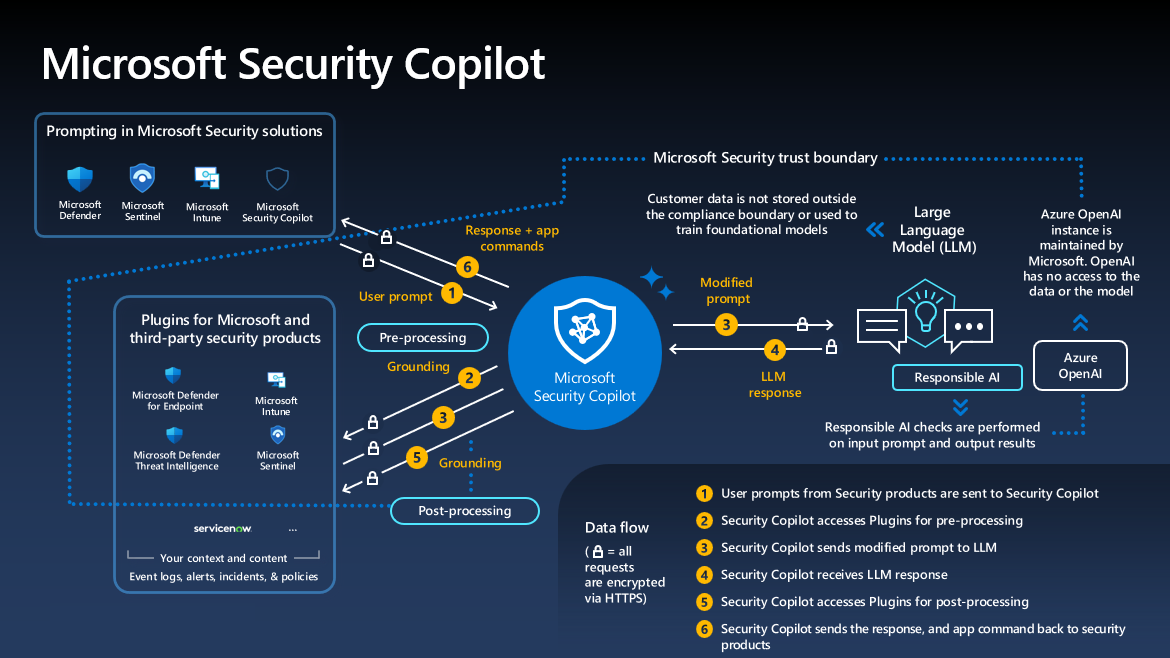
For example, customers wanted to be sure that another tool such as ChatGPT wasn’t sharing nonpublic company information such as salaries (Figure C).

How Security Copilot interoperates with AI processing and third-party security products.
Figure C: How Security Copilot interoperates with AI processing and third-party security products. Image: Microsoft

“Something that we’re finding is that people have more and more of an appetite for threat intelligence to help direct their resource usage,” said DeGrippo. “We’re seeing customers make resource decisions, such as: understanding threat priority allows them to say we need to put more people and focus and time in these particular areas. And getting that level of resource usage, prioritization and efficiency has made customers really happy. And so we’re looking at making sure that they have those tools.”

Microsoft Copilot for Security will move to general availability on April 1

Microsoft Copilot for Security

Copilot has proven to be a helpful AI chatbot because of its advanced natural language processing capabilities, footnotes, and more. Microsoft brought those signature Copilot capabilities over to the security space with its Microsoft Copilot for Security offering, which is now almost ready for prime time.

On Wednesday, Microsoft announced that Copilot for Security is moving from early access to general availability on April 1, making it possible for all security teams to take advantage of the tool on a pay-as-you-go basis.

Also: You can now make your own custom Copilot GPT. Here's how

Copilot for Security uses AI to assist professionals with their daily workflows. For example, Copilot can create incident summarizations with actionable summaries, assess the impact of security incidents, reverse engineer scripts, provide actional step-by-step guidance for incident response, and more.

"I am thrilled to announce the general availability of Microsoft Copilot for Security. We believe it will be a force multiplier in security, helping to tilt the scale for defenders," Microsoft VP of Security Vasu Jakkal said.

Research conducted by Microsoft's Office of the Chief Economist found that 97% of experienced security analysts using Copilot for Security wanted to use it again and, while using Copilot, professionals were 22% faster at common security tasks and 7% more accurate.

Also: The best VPN services (and how to choose the right one for you)

Copilot for Security can be accessed as a standalone portal or an embedded experience within one of Microsoft's existing security products, such as Microsoft Entra.

In addition to expanding the availability of Copilot for Security, Microsoft unveiled some new capabilities, including custom promptbooks, knowledgebase integrations, a multilingual interface in 25 languages, the ability to process and respond to prompts in eight languages, usage reporting, Microsoft Entra audit logs and diagnostic logs, and the ability to connect your curated external attack surface from Defender EASM, according to the press release.

I've seen a demo of custom promptbooks, which allow users to create and save a series of natural language prompts for common security tasks. The feature seems valuable for security teams because they can complete repetitive workstreams by applying a series of prompts to a task with a single click.

Also: How AI firewalls will secure your new business applications

Since Copilot for Security will be offered on a pay-as-you-go model, organizations can start small and increase their usage as they see fit. Microsoft anticipates the tool's cost will be billed monthly via a new Security Compute Unit at $4 per hour.

Artificial Intelligence