Data Science Hiring Process at Healthify

About two-and-a-half months ago, Bengaluru-basedhealth and fitness startup Healthify (formerly HealthifyMe) introduced Ria 2.0, a multimodal generative AI-powered virtual health coach with multilingual conversational capabilities. It gives you customised diet goals by considering your schedules, meals (captured via photos), blood sugar levels, activity, and dietary preferences.

According to OpenAI’s recently published blog post, since introducing AI in its coaching and tracking components, Healthify has already helped users lose an aggregate of over 25 million pounds with OpenAI’s API.

Led by CEO Tushar Vashisht, the Khosla Ventures-backed company has partnered with food commerce platform Swiggy to allow users to order meals according to Ria’s smart recommendations. However, the company’s experimentation with AI began in 2018 when it first developed the pilot version of Ria.

Now, to strengthen its products, Healthify is hiring for four roles: senior AI engineer, machine learning engineer, business analyst, and senior business analyst.

“Our data science team plays a central role, having access to both business and product insights. We value individuals who demonstrate hunger and ownership, are willing to go beyond their roles and contribute to the broader organisational goals,” Anjan Bhojarajan, chief business officer, told AIM in a recent conversation.

Inside Healthify’s AI and Analytics Team

Behind the scenes of the AI projects is Healthify’s lean 30-member tech team. It also has a team of 15 analysts/data scientists who collaborate closely with the seven product managers, half of whom focus on AI products.

Serving over 700 health coaches and approximately 240,000 clients globally, besides Ria, the startup came up with Coach CoPilot in September 2023. Built on OpenAI’s GPT models, the system combines AI with human coaching. On the other hand, Ria has integrated an array of fine-tuned models, including the GPT 3.5 and the GPT-4 Turbo.

The team uses solution models based on diverse statistical models, including AWS, Meta, OpenAI, Anthropic, Google and open-source options. Over time, they assess three main factors: accuracy, reliability, and cost.

Alongside building on other models, the 12-year-old company focuses on creating proprietary models, particularly in correlation analysis. “For instance, if a user reports losing 1% body fat in a week, our system analyses factors like hydration levels, diet, and more to provide accurate correlations. These decisions are made internally, and our proprietary models primarily drive the final output,” Bhojarajan added.

Healthify’s data science and engineering teams have deployed more generic systems, such as self-evaluation mechanisms, to assess outputs comprehensively. Additionally, the platform heavily uses internal auditing tools like Claude, Whisper, and others for voice-to-text functionalities.

Snap leverages an ensemble of proprietary models with GPT-4 Vision to find user-specific contexts while safeguarding data privacy.

Interview Process

The interview process for data science roles typically involves two rounds of tasks, focusing on real-world problems and evaluating the candidate’s approach to problem-solving. The team looks for candidates who can proficiently explore and analyse data, especially in scenarios where outputs are non-deterministic. The final decision is made considering the technical skills and candidate’s alignment with the company’s culture and values.

The hiring process emphasises screening for high energy, critical thinking, willingness to learn, and adaptability. Given AI’s growing functions, Healthify is looking for candidates with strong problem-solving skills instead of those solely focused on tool proficiency.

“We actively encourage candidates with diverse aspirations, whether they pursue product management or start their own venture in the future,” he added.

Expectations

  • Ownership: Healthify prioritises a culture of ownership, granting autonomy and responsibility to every team member. You’ll collaborate closely with cross-functional teams, ensuring support and collective decision-making across various initiatives.
  • Moreover, you can anticipate tangible outcomes from your efforts. “This level of ownership extends beyond individual tasks; you’ll be at the forefront of decision-making, influencing everything from product development to customer engagement strategies,” Bhojarajan added.
  • Focus on L&D: The company also promotes continuous learning and development, offering opportunities to tackle challenges across different business domains, such as sales, marketing, and service optimisation.
  • Data-Driven Decision-Making: Every team member can expect unrestricted access to safe data. “While we may have automated processes in place, we never compromise on your ability to access the numbers needed to drive informed decision-making,” he explained.

Mistakes to Avoid

  • Lack of Clarity: According to Bhojarajan, while having ambitious goals is commendable, it’s also important to articulate a clear vision for your future and demonstrate a genuine passion for the path you’re pursuing during interviews.
  • No Background Research: Candidates frequently falter in understanding of the company and its products due to a lack of research. Merely expressing interest in the role is insufficient; a profound understanding of the firm’s business model, products, and market landscape is crucial.

Work Culture

The work culture is collaborative, nurturing, and conducive to innovation. Unlike cut-throat environments, we emphasise support and collaboration, ensuring that every team member has the opportunity to succeed. At Healthify, employees are empowered to innovate and drive business impact, with recognition for those who excel. This ethos of innovation spans all teams, fostering growth and creativity company-wide.

Besides offering competitive salary packages, insurance, industry-standard maternity leave policies and wellness initiatives, the management ensures work-life balance, offering ample vacation time and support for travel.

Bhojarajan added, “In terms of work arrangements, while we don’t enforce strict office requirements, we’ve observed that in-office collaboration often leads to higher impact. However, we prioritise results and delivery above all else, allowing flexibility for individuals to choose their work environment based on their needs.”

Another aspect of the company culture is its strong camaraderie among team members, whether collaborating on projects or socialising outside of work.

“So, why should someone join our team? We offer a dynamic and supportive workplace where individuals can learn, grow, and make a meaningful impact. Whether you’re a seasoned professional or just starting your career, Healthify allows you to thrive and achieve your goals,” concluded Bhojarajan.

Check out the careers page here.

Read more: How This Startup is Making You Eat Healthy with Generative AI

The post Data Science Hiring Process at Healthify appeared first on Analytics India Magazine.

7 Free Google Courses to Become a Machine Learning Engineer

7 Free Google Courses to Become a Machine Learning Engineer
Image by Author

As a machine learning engineer, you can build effective ML solutions to real-world challenges. Sounds exciting, yes? So how do you become a machine learning engineer, and what should you learn?

This compilation of free courses from Google will help you go from a machine learning newbie to a skilled ML engineer who can understand and frame real-world problems as problems that can be tackled using machine learning. These courses will also help you learn advanced machine learning techniques, along with designing, testing, and debugging machine learning pipelines.

Let's begin.

1. Introduction to Machine Learning

If you’re new to machine learning, consider starting with this beginner-friendly Introduction to Machine Learning course.

In this course, you’ll learn:

  • The types of machine learning
  • Key concepts of supervised machine learning
  • How machine learning is different from traditional problem solving approaches

Link: Introduction to Machine Learning

2. Machine Learning Crash Course

The Machine Learning Crash Course is a hands-on introduction to machine learning using the TensorFlow framework. You’ll learn how machine learning algorithms work and how to implement them in TensorFlow.

This course is divided into the following sections:

  • Machine learning concepts
  • Machine learning engineering
  • Machine learning in the real world

Link: Machine Learning Crash Course

3. Machine Learning Problem Framing

Given a real-world problem, how do you solve it using a machine learning framework? Firstly, how do you even decide if machine learning is even necessary at all to solve the particular problem?

That's where the course on Machine Learning Problem Framing becomes relevant. In this course, you’ll learn how to:

  • Decide if machine learning is a good solution to the problem you're trying to solve
  • Frame machine learning problems
  • Pick the right machine learning model
  • Define success metrics for the model

Link: Introduction to Machine Learning Problem Framing

4. Data Preparation and Feature Engineering

Machine learning is much more than throwing in raw data and training ML algorithms on it. You have to spend time to understand your data and focus on feature engineering to identify the most relevant and important features, process, and transform them as needed.

The Data Preparation and Feature Engineering course will teach you the following:

  • Impact of data data quality and data size
  • Data collection and transformation within the ML workflow
  • Collecting raw data and constructing usable dataset from it
  • Handling imbalanced data
  • Handling numerical and categorical data

Link: Data Preparation and Feature Engineering

5. Testing and Debugging

Debugging and testing machine learning systems is more involved and different from testing traditional software systems.

The course on Testing and Debugging machine learning models will teach you the following:

  • Debugging machine learning models
  • Implementing testing to help with debugging
  • Optimizing machine learning models
  • Monitoring model metrics

Link: Testing and Debugging

6. Clustering

Clustering is one of the most widely used unsupervised learning algorithms. In the hands-on introduction to clustering in the Clustering course, you’ll learn the following:

  • Clustering for machine learning
  • Preparing data
  • Defining similarity
  • K-means clustering
  • Evaluating results of clustering algorithms

Link: Clustering

7. Recommendation Systems

From recommendations on Amazon and other online shopping sites to series recommendations on Netflix, recommendation systems are very relevant in our day-to-day lives.

The Recommendation Systems course will teach you what goes into such recommendation systems and how you can build your own applications. Here’s an overview of what you’ll learn:

  • Components of a recommendation system
  • Embeddings
  • TensorFlow implementations of recommendation algorithms

Link: Recommendation Systems

Wrapping Up

I hope you found this round-up of free courses helpful. Most of these courses are designed to give you enough opportunities to practice and build your own projects.

So try building your own projects to apply what you have learned in the course. This will help you both to reinforce your understanding and also build out your project portfolio. Happy learning and coding!

Bala Priya C is a developer and technical writer from India. She likes working at the intersection of math, programming, data science, and content creation. Her areas of interest and expertise include DevOps, data science, and natural language processing. She enjoys reading, writing, coding, and coffee! Currently, she's working on learning and sharing her knowledge with the developer community by authoring tutorials, how-to guides, opinion pieces, and more. Bala also creates engaging resource overviews and coding tutorials.

More On This Topic

  • The Only Free Course You Need To Become a Professional Data Engineer
  • The Only Free Course You Need To Become a MLOps Engineer
  • How to Become a Machine Learning Engineer
  • Everything you need to become a SAS Certified Machine Learning Engineer
  • Free Generative AI Courses by Google
  • 8 Free Google Courses to Land Top Paying Jobs

Everything You Need to Know About BharatGPT

BharatGPT is all about bringing India (Bharat) to a leadership position in tech. “My key motivation behind BharatGPT is to not lose this ideological or civilisational war in the tech space,” said IIM Indore professor Aditya Maheshwari, in an exclusive interaction with AIM.

The BharatGPT team currently comprises distinguished professors from IITs across India. Led by Ganesh Ramakrishnan, a professor at IIT Bombay, the team includes professors Rohit Saluja from IIT Mandi, V Kamakoti from IIT Madras, Arnab Bhattacharya from IIT Kanpur, Maunendra Sankar Desarkar & Mohan Raghavan from IIT Hyderabad, Kshitij Jadhav from IIT Bombay and Ravi Kiran from IIIT Hyderabad.

Each member brings a unique expertise and experience to the project, contributing to the consortium’s mission with their collaborative efforts and collective knowledge.

“It is a collaboration of academicians, not driven by profit. We don’t see any LLM coming from India as a competitor,” said Maheshwari, who is from IIM Indore and oversees the techno-management and managerial aspects, including team formation, at BharatGPT. Hehighlighted that BharatGPT focuses strongly on India-centric models to prevent the nation from falling behind while the West makes substantial progress.

The BharatGPT initiative started in February last year under Ramakrishnan, Institute Chair Professor (IIT Bombay). It is a consortium or ecosystem formed to build India-centric LLMs specifically to fulfil the demands of developers and enterprises. The consortium has received tremendous support from the tech community, like Jio chairman Akash Ambani announcing a partnership for the mission.

Projects and Partnerships

Regarding partnerships, Maheshwari said that they are in touch with Jio. “We are in talks with Jio, and our Principal Investigator, Professor Ganesh Ramakrishnan, also had a conversation over email with Mukesh Ambani,” he said.

Maheshwari mentioned that they have an MOU with the Department of Administrative Reforms and Public Grievances (DARPG) to develop an instruction-fine-tuned chatbot for handling customer complaints. “This is one MOU IIT Bombay had with the DARPG, Government of India, and we have delivered the first phase of that project,” said Maheshwari.

Most recently, IIT Bombay has been collaborating with Seetha Mahalaxmi Healthcare (SML) and Vizzhy to build India’s first AI multimodal Hanooman. However, apart from Jio and Vizzhy, BharatGPT has also been in touch with several other companies, which they will disclose later, said Maheshwari.

The Vision of BharatGPT

“Our first vision is to lead in generative AI, which is a vision shared with Meta’s Llama, Google’s Gemini, as well as OpenAI’s ChatGPT,” said Maheshwari. Another important vision of BharatGPT is grassroots innovation, creating an ecosystem where startups and developers can easily benefit from generative AI infrastructure, according to Maheshwari.

Furthermore, a third key focus is on cultural preservation. “Culture innovation or centrality on the Indian knowledge system is one of the key pillars of the BharatGPT ecosystem,” said Maheshwari.

Bharat Data Sagar

“Our key activity is to create large language models, but we’re not limited to just that. Apart from developing LLMs in multiple languages, as a primary activity, we also focus on knowledge generation,” said Maheshwari.

He added that BharatGPT is developing India-centric datasets named Bharat Data Sagar, and noted that Bhashini is also a partner within the BharatGPT ecosystem. “We are not competitors but collaborators of Bhashini,” he said.

Maheshwari further added that BharatGPT would help companies and startups fine-tune their models. He also expressed interest in training and scaling generative AI expertise, both nationally and globally. “We have plans to conduct hackathons and workshops”, he said.

“We will invite all government, non-government, and private bodies to share their data and partner with Bharat Data Sagar. In return, they may receive tokenised priority access to BharatGPT LLMs among other benefits,” he said.

The post Everything You Need to Know About BharatGPT appeared first on Analytics India Magazine.
Which is the Most Frustrating Programming Language?

Which is the Most Frustrating Programming Language?

“English is the hottest new programming language” – nothing irks a software developer more than this latest quip in the tech circles. But apart from English, there are several programming languages too that frustrate software engineers and developers. Some earn the ire for their syntax and style, while some for the community built around them.

When the discussion around the most frustrating programming language went online, people chimed in. “Probably Python. Not that it’s too annoying to write, but rather it’s horribly slow and overused and overhyped for short-sighted ease of use,” said a user on X. He acknowledged that it is a good scripting language, but not for building an end product.

While experts around the world agreed that AGI will be built with Python, it also continues to be regarded as one of the most frustrating languages by many.

Python’s dynamic typing can lead to subtle bugs that may not be caught until runtime, and its performance can sometimes lag behind that of compiled languages like C++. Apart from people heavily discussing how dynamic typing is one of the worst things about Python, it is also the community that makes it worse for people.

As soon as someone says that Python is bad, the community calls the developer out as having “skills issues”. On the other hand, people say that any language that is not compiled, such as Ruby and Python, are the most frustrating.

Clearing the air: Every language is good and bad

The truth about the current programming world is you can choose any language that works for you. Anything other than that is just “language bullying”. Programming languages are, after all, just tools that a programmer should learn if he needs to. If Python works for you, why go the C++ route?

Consider C++, renowned for its intricate syntax and extensive use of pointers. Many developers find navigating its complexities daunting, often encountering segmentation faults that impede progress. People, who have been using the language for decades, still don’t claim to know the language 100%. There are so many hidden intricate pitfalls.

Several people narrate their stories about adding C++ to their resume, and then when asked a specific question about it, fail to answer. This is probably because C++ is a vast language. Knowing every detail of it is not required to get the job done. Most developers choose it over Python or any other language today just for its speed.

Meanwhile, in the realm of modern languages, Rust emerges as a double-edged sword. Praised for its robust memory safety guarantees, Rust too is not without its share of frustrations. A user on X captures the sentiment perfectly: “Can’t spell frustrate without rust.”

While Rust’s strict compiler checks can be frustrating for those accustomed to more lenient languages, they ultimately lead to more robust and reliable code. Rust’s focus on safety without sacrificing performance has endeared it to developers working on system-level software and performance-critical applications.

It is also one of Elon Musk’s favourite languages. Open-sourced Grok is also trained on Rust, but the language’s strict borrow-checker can be a stumbling block for the uninitiated.

However, C++ stands monumental when it comes to the complexities of computer programming. While its roots trace back to the venerable C language, C++ introduces a myriad of additional features, like classes, templates, and inheritance. While these features afford developers great flexibility and control, they also introduce a steep learning curve.

The language’s syntax can be daunting, especially for those new to programming, and managing memory manually can lead to a host of bugs, including dreaded segmentation faults. Yet, for many, mastering C++ is a rite of passage – a testament to one’s dedication to the craft of software engineering.

Meanwhile, lesser popular languages like React, Go, TypeScript, Java, Erlang etc have very few users, thus the frustration of the developers using them is not really out in the open yet.

The worst language? “The one I am working with right now”

This brings us to conclude that the most-frustrating language universally is the one most used by the developers.

According to Stack Overflow Developer Survey 2023, the most used programming language is JavaScript, and that’s something that has been consistent for the past eleven years. And undoubtedly, it is the most-hated programming language of all time. Well, some don’t even call it a programming language, but just a scripting language.

Regardless, JavaScript, the ubiquitous language of the web, presents its own unique set of challenges. Initially designed in a hurry to add interactivity to web pages, JavaScript has evolved into a powerful, albeit, quirky programming language. Its asynchronous nature, exemplified by callbacks and promises, can confound those accustomed to synchronous programming paradigms.

Furthermore, the ever-expanding ecosystem of JavaScript frameworks and libraries can overwhelm developers, leaving them grappling with decisions about which tools to use and when. But the truth is, it is the most-criticised language because it is the most commonly used.

As a user put on X, “The most important thing about a programming language is how it makes you feel.” Ultimately, the key to mastering any programming language lies in perseverance, practice, and the willingness to embrace the inevitable frustrations along the way.

The post Which is the Most Frustrating Programming Language? appeared first on Analytics India Magazine.

3 useful AI features coming to future Android phones with this Qualcomm chipset

snapdragon-8s-gen-3-key-visual

Your phone's processor is the unsung hero of the device because it is largely responsible for powering every cool, advanced feature that you've come to know and love about your smartphone. Qualcomm's latest chip will push your next Android capabilities even further, especially when it comes to AI.

On Sunday, Qualcomm unveiled its newest mobile platform — the Snapdragon 8s Gen 3. In alignment with the industry shift toward on-device AI, this new chip is designed to unleash a new wave of generative AI functionality on smartphones.

Also: When is Google I/O 2024 and what can we expect?

"With capabilities including on-device generative AI and advanced photography features, Snapdragon 8s Gen 3 is designed to enhance user experiences, fostering creativity and productivity in their daily lives," said Chris Patrick, SVP and general manager of handsets at Qualcomm.

Qualcomm has not revealed which flagship phones will be sporting the new chip. However, it did share that the Snapdragon 8s Gen 3 will be adopted by leading manufacturers including Honor, iQOO, realme, Redmi, and Xiaomi — all Chinese OEMs — with the first device scheduled for release as early as March.

What exactly can you expect to see in those phones? We rounded up the top three AI features.

1. Generative AI virtual assistants

We're all familiar with voice assistants like Siri and Alexa, but what about an assistant that has a voice and a face? According to Qualcomm, the Snapdragon 8s Gen 3 will make that possible.

Also: Mechanics of the future: Meet the specialists assembling AI

The virtual assistant would be supported by the Qualcomm Sensing Hub, which can securely compile all of the user's data — such as their favorite activities, locations, and more — to make the virtual assistant's suggestions and responses more tailored toward the individual's preferences.

2. Fast on-device image and text generation

There's been an increased interest this year in on-device AI, which offers advantages such as increased speed and security. The Snapdragon 8s Gen 3 supports on-device generative AI at up to 10B parameters, supporting more than 30 large language models (LLMs) and large vision models (LVMs) at impressively high speeds.

To put the speed into perspective, it can generate images in a fraction of a second whereas the standard image generator takes about 10 seconds on average. LLM models can run up to 20 tokens per second, which the company claims is one of the fastest in the smartphone industry.

Also: The best AI image generators to try right now

3. On-device photo expansion

Similar to the Adobe Photoshop Generative Fill feature, Photo Expansion can generate content beyond the photo's frame and blend it with the original photo, right on a user's smartphone. The feature is particularly useful for editing a photo you wish you had framed better or for providing a different view of the same shot.

Artificial Intelligence

Perplexity is Most Likely a Google Search Wrapper

Perplexity is Most Likely a Google Search Wrapper

In an interesting observation, a user posted on the LocalLLaMA thread of Reddit that Perplexity summarises the content from the top 5-10 results from Google Search.

“Search for the exact same thing on google and perplexity and compare the sources, they match 1:1,” the user said.

So perplexity is a wrapper on top of google search? 😑
Gotta wrap them all! https://t.co/a14L5EfHQY

— yi 🦛 (@agihippo) March 18, 2024

This means that Perplexity runs a Google Search for every user query, extracts the content from the top results from the results, then summarises it using an LLM, and gives the response to its users.

This is quite similar to what Google does on Gemini. The only difference is Perplexity hosts different models such as Claude 3, GPT-4 Turbo, and Mistral Large for users to choose from. The real question is that did Google give Perplexity the permission to do so.

Another user pointed out that this is an oversimplification of what Perplexity actually offers. “The Co-pilot tool helps to refine or expand the search. A simple search = google result because it’s the base case,” the user explained. But this is just an explanation of why Perplexity is a faster choice.

Several users have been discussing this for a long time on Reddit and X, saying that it is just a front end model of web search that summarises and gives references. “why not just use OpenAI rather than its wrapper,” said a user, also saying there is no innovation in the product.

“Isn’t this always the case?, asked a user, saying, Bing chat, You.com and they are just LLM summarising the web search. “The ultimate RAG application. For the search index, they all licence Bing under the hood,” he explained.

Read: This Tech Bhai from IIT Madras is Making Google Dance

The post Perplexity is Most Likely a Google Search Wrapper appeared first on Analytics India Magazine.

After OpenAI, Apple Turns to Google’s Gemini

Apple to Bring Generative AI to Siri

Apple is in talks to build Google’s Gemini engine into the iPhone, reported Bloomberg, citing people familiar with the matter. The two firms are actively in talks for Apple to license Gemini, Google’s collection of generative AI models, to enhance upcoming features in the iPhone software.

Apple plans to introduce fresh functionalities in iOS 18, the upcoming version of the iPhone operating system, using its proprietary AI models. However, these improvements will concentrate on features that work locally on its devices, as opposed to those provided through cloud services.

Reports suggest iOS 18 will incorporate generative AI technology to boost Siri and the Messages app’s capabilities in answering questions and auto-completing sentences. Apple is also reportedly considering generative AI for apps like Apple Music, Pages, Keynote, and Xcode.

Therefore, Apple is looking for a collaborator to handle the complex tasks associated with generative AI, such as generating images and writing essays based on basic prompts. Apple has also had recent discussions with OpenAI and has been considering the use of its model.

Last year, Google introduced Gemini Nano, an LLM specifically built for edge use cases. Prior to partnering with Apple, Google also collaborated with Samsung to introduce Gemini in the Galaxy S24.

Apple Goes Big on Generative AI

Apple recently published a new paper unveiling MM1, a new family of multimodal AI models — with the largest at 30B parameters. Furthermore, it recently quietly acquired an AI startup, Canada’s Darwin AI. The company specialises in machine vision intelligence, smart manufacturing, improving machine learning efficiency, and edge-based intelligence.

Apple may have been slow when it comes to adoption of generative AI when compared to other big tech companies, however the company has been steadily progressing, in a secretive way.

“I won’t delve into specifics, as our policy is to keep development details confidential but rest assured we are heavily invested in this area,” said Apple chief, Tim Cook, during the Q3 earnings call last year. Apple is also planning to bring generative AI to its voice-assistant Siri.

The post After OpenAI, Apple Turns to Google’s Gemini appeared first on Analytics India Magazine.

Apple is reportedly exploring a partnership with Google for Gemini-powered feature on iPhones

Apple is reportedly exploring a partnership with Google for Gemini-powered feature on iPhones Ivan Mehta 7 hours

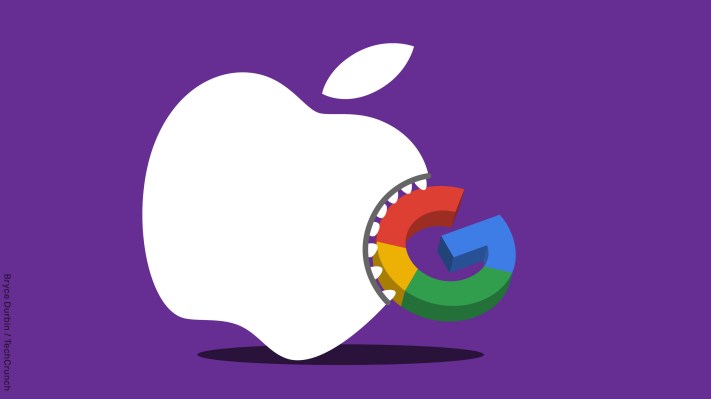
Apple is looking to team up with Google for a mega-deal to leverage the Gemini AI model for features on iPhone, Bloomberg reported. This will put Google in a commanding position as the company already has a deal with Apple as the preferred search engine provider on iPhones for the Safari browser.

The publication cited people familiar with the matter saying that Apple is looking to license Google’s AI tech to introduce AI-powered features with iOS updates later this year. Additionally, the company also held discussions with OpenAI to potentially use GPT models, Bloomberg said.

There is surmounting pressure on Apple to catch up with competitors in the AI field such as OpenAI, Microsoft, Anthropic, and even Google. In February, Apple CEO Tim Cook said that the company will introduce Gen-AI features “later this year.”

The company’s job listings over last year have suggested that Apple is working on multiple internal and external tools powered by generative AI. However, talks of leveraging third-party AI tech means Apple hasn’t progressed as expected in its own AI efforts.

Apple’s own models might power some of the on-device features on the upcoming iOS 18 software update — expected to be announced at the Worldwide Developer Conference (WWDC) historically held in June. However, the company is exploring partnering with an external provider for generative AI use cases such as image creation and helping users with writing.

Google has had its own set of problems with Gemini. Last month, the company had to pause its image-generation feature after the model created images with historical inaccuracies. Later, Google CEO Sundar Pichai said that Gemini’s responses were “completely unacceptable”. Last week, Google said that it is blocking election-related queries on Gemini across the globe. But TechCrunch found that users could get around those restrictions by introducing typos to some queries.

Despite these fallbacks, Google has an advantage in launching smartphone-related features. Earlier this year, the company partnered with Samsung to introduce Gemini-powered AI features on the Galaxy S24 series of devices. The search giant has also launched these features on its own Pixel series of phones.

We have reached out to Apple and Google for a comment, and we will update the story if we hear back from them.

Aditya Birla Sun Life Launches MyMutualFundGPT

Insurance company Aditya Birla Sun Life AMC Limited has launched MyMutualFundGPT, an information tool designed to elevate the overall investor experience across their digital platforms.

The Gen AI-based tool goes beyond traditional keyword matching by comprehending the context of queries and generates responses based on the meaning.

The tool addresses investors’ queries regarding Aditya Birla Sun Life AMC Limited’s products and services. In addition, it also helps Investors to conduct research on our top-performing funds, fund managers, and related topics.

As an alternative to navigating through vast amounts of information, MyMutualFundGPT empowers the investor to take informed decisions with clear explanations from respective product or service brochures available on our website.

Besides, MyMutualFundGPT acts as an innovative solution-oriented providing a conversational interface.

“This is a significant step towards reshaping the landscape of digital interactions in the mutual fund industry. The launch of MyMutualFundGPT emphasises our commitment to leveraging cutting-edge technology to provide a more intuitive and engaging experience for our investors.

“This initiative reflects Aditya Birla Sun Life AMC Limited’s dedication to innovation and customer-centric solutions, reinforcing its position in the asset management industry,” said A Balasubramanian, Managing Director and CEO of Aditya Birla Sun Life AMC Limited.

By introducing MyMutualFundGPT, Aditya Birla Sun Life AMC Limited anticipates higher investor engagement and repeat footfall across all its digital platforms.

The post Aditya Birla Sun Life Launches MyMutualFundGPT appeared first on Analytics India Magazine.

Elon Musk’s xAI Open Sources Grok

Elon Musk’s xAI Open Sources Grok

As promised last week, Elon Musk has released the open source version of Grok, its fully trained large language model.

xAI has unveiled the base model weights and network architecture of Grok-1, a colossal language model boasting an impressive 314 billion parameters, and 25% of weights active per token.

Click here to check out the GitHub repository.

Developed as a Mixture-of-Experts model, Grok-1 marks a significant milestone in AI research and development. The release includes the raw base model checkpoint from Grok-1’s pre-training phase, which concluded back in October 2023.

Notably, this model has not been fine-tuned for any specific application, such as dialogue, offering immense potential for diverse uses across various domains.

Released under the Apache 2.0 license, xAI has made both the weights and architecture of Grok-1 available to the public, inviting developers and researchers to explore its capabilities.

Grok is developed from scratch by xAI using a proprietary training stack leveraging JAX and Rust.

Very nice to see Grok go open-source & open-weights: https://t.co/RTlvQarPzy

— François Chollet (@fchollet) March 17, 2024

With 2 out of 8 active mixture of expert model on 314 billion model, the active parameters of the model around 86 billion are still larger than the biggest Meta Llama 2 model.

All of this amidst the lawsuit against OpenAI by Musk for not open-sourcing its models and turning into a for-profit company.

The post Elon Musk’s xAI Open Sources Grok appeared first on Analytics India Magazine.