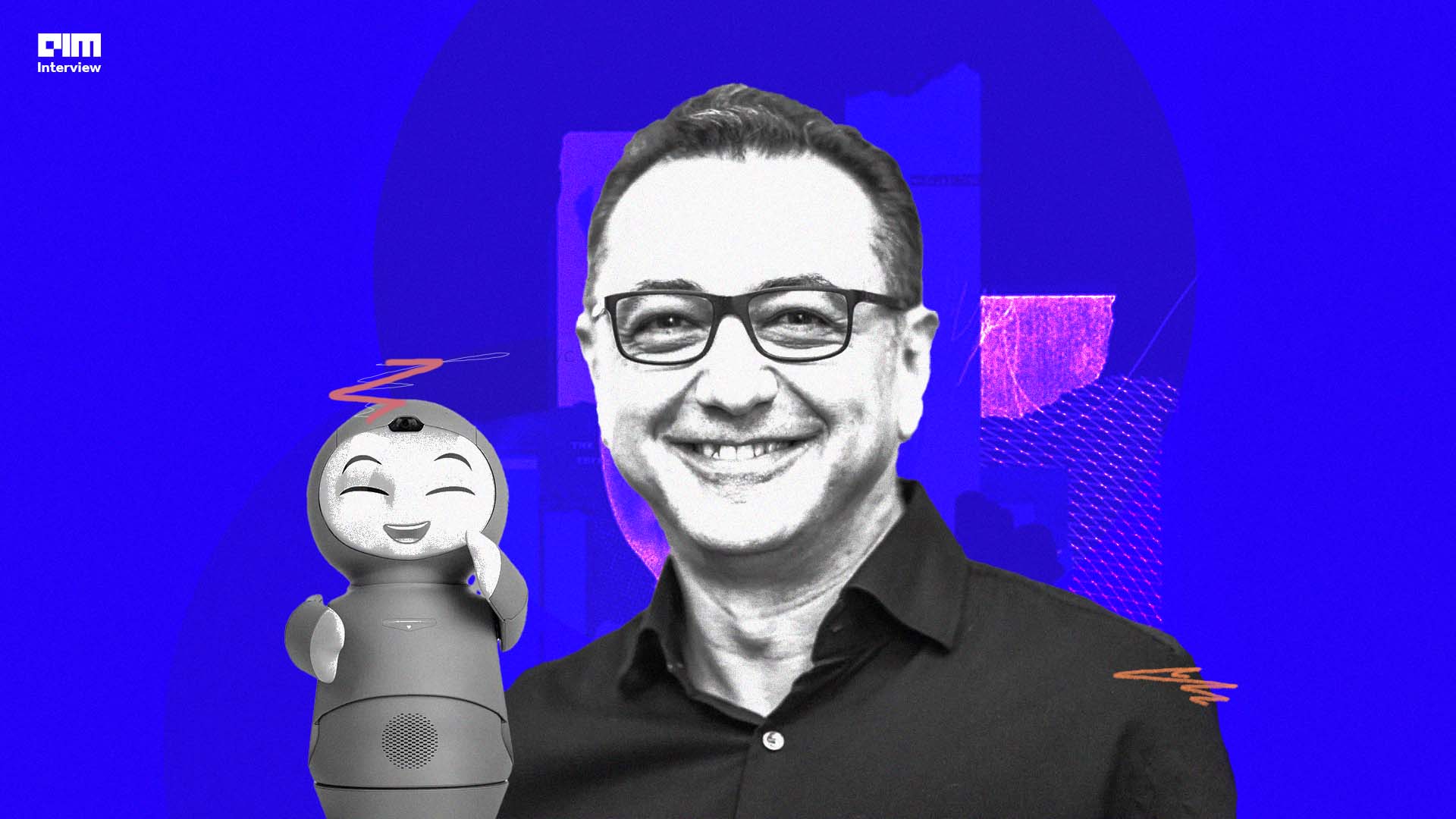
Meet the Creator of Moxie Robot

“Moxie has the heart of Mother Teresa and the brain of a thousand Albert Einsteins. We have encoded that into something that can express empathy, be super supportive and knowledgeable about any topic that you want to learn about,” said Paolo Pirjanian, founder of Embodied Inc and inventor of Moxie Robot, in an exclusive interview with AIM.

With over 30 years of experience in robotics, Pirjanian has been extremely passionate about the field. After completing his schooling and PhD in robotics, Pirjanian worked at NASA on rovers for the Mars exploration project. Having gathered vast experience in the field, he moved onto entrepreneurship, building startups in robotics for over 20 years.

The path has obviously not been easy with sceptics at every corner, however, the advancements and adoption in the field have only been promising. “I’ve been doing this for a long time and there’s no more exciting time than now,” he said. “Moxie is literally science fiction brought to life. Even 10 years ago, Moxie was completely a dream.”

Moxie – A Child’s Confidante

These were the words former NASA JPL roboticist and CTO of iRobot, chose to describe the visually appealing, talking, child-like robot that weighs less than 4kg and stands tall at about 40cm.

Moxie’s necessity arises from the therapy gap for children with special needs. “Unfortunately we don’t have enough trained therapists to be able to address the problem. For every therapist in the US, there are 350 children that need therapy,” said Pirjanian. As a result of that skewed ratio, the cost skyrockets and the waiting list goes up.

The need to address the problem becomes even more critical in case of autistic children. “With autism, the two things we know are that the earlier you intervene and the higher the frequency, the better is the potential outcome,” said Pirjanian. With higher frequency of traditional therapy sessions, the cost is exorbitant, ultimately depriving children of these sessions.

Apart from helping children with neurodevelopmental challenges, Moxie also serves as a help for children dealing with traumatic experiences who are unable to express themselves. “If not [addressed] it becomes a scar in their mental health that can manifest itself in different ways in the future, maybe 40 years down the road or 10 years down the road,” he said.

While, therapy and social emotional development is one aspect of Moxie, the friendly robot also assists with academic development. “Children can interact with Moxie, and ask as many questions as they want. Moxie is going to be super patient and infinitely knowledgeable thanks to generative AI. Large language models have practically included the entire human knowledge.”

Multimodal Moxie

“Moxie is way beyond sort of text-to-text LLM. It’s not just text in and text out, and this is an important distinction because about 90% of communication is non-verbal. So only-text contains about 10% of the content of interaction, and 90% is body language, intonation of voice, facial expressions, eye contact, nodding and emotional expression,” said Pirjanian.

Moxie is a multimodal robot where the multimodal in and out mapping is at a very high level. The tech infrastructure involves a number of models including computer vision, voice recognition, sentiment analysis and others.

In addition to collaborating with AI model providers, the company has proprietary models too. “We have a partnership with OpenAI, so we use their large language models as part of this. We use off-the-shelf automatic speech recognition technology too, but everything else is custom developed by us in the past eight years.”

Hallucinations being a common problem with LLMs has also been carefully mitigated with these robots as children are their audience and the robot should not push conversations to inappropriate corners.

“One of the things we have done over the years is collect a lot of data and train a model that moderates the inputs and outputs of the large language models, and then gently nudge the conversation into what parents would consider appropriate, or sensitive to the situation, so that it doesn’t allow the child to go off the rails,” said Pirjanian.

The company releases a new version of the software that powers Moxie every month, where the quality assurance team constantly tests and monitors everything that Moxie does.
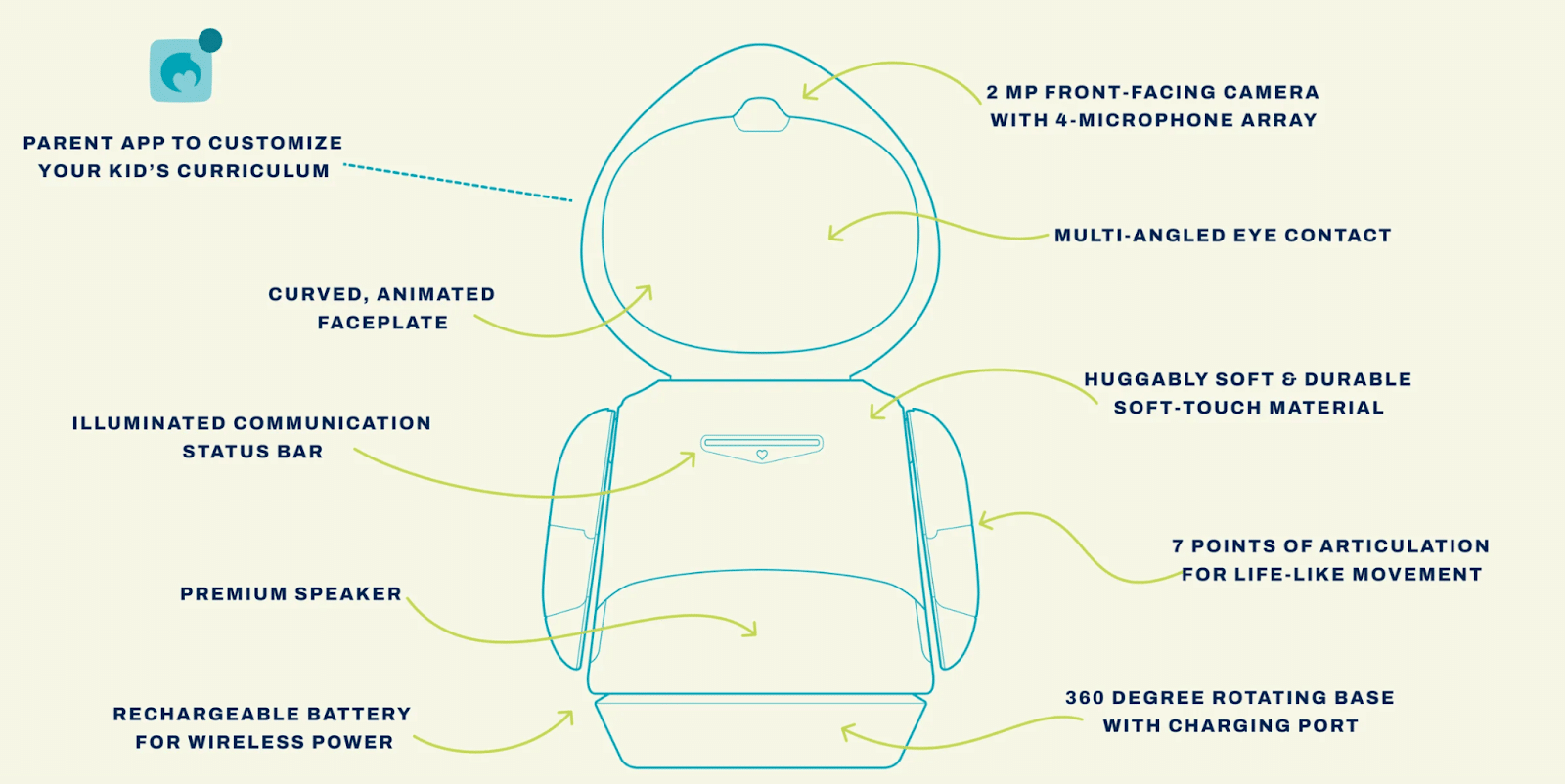
Source: MoxieRobot

Giant Leap in Robotics

Having worked in the field of robotics for decades, Pirjanian expressed his enthusiasm on the strides of developments in robotics. In the past, merely possessing a computer vision algorithm capable of recognizing obstacles was considered a daunting task.

“The good news is that just in the last 10 years, we have seen massive advancements. Things that we have been working on for decades and not really making progress are being solved left and right.” Pijanian believes that we are at a ‘watershed moment’ where robotics is finally becoming real and will impact every aspect of one’s life.

“It was extremely hard to do that with a ton of computation, a lot of data, and many complex algorithms. Now, a high school kid can figure out how to do that with tools that we have built in AI, computer vision, and robotics,” he said.

Foundation Model for Robots

Pirjanian’s company Embodied Inc, gels well with the current advancements in robotics, where 2024 is the year of embodied AI. With massive advancements in robotics, especially humanoid robots, Pirjanian believes ChatGPT also had a role to play.

“We are at a moment where we saw the power of ChatGPT last year,” said Pirjanian. “I think that’s a completely game-changing discovery. These large language models will impact robotics.” He believes that foundation models for robotics understand the relationship between perception and action to perform a task.

At the recent NVIDIA GTC, in addition to showcasing how the company is powering every major humanoid robotics company, CEO Jensen Huang unveiled GR00T, a new foundation model for robots. Interestingly, a robotics startup Physical Intelligence is also working on building foundation models that can control any robot for any application.

Eyes India

Pirjanian visited Bengaluru last month to understand the Indian market and work towards building Moxie, catering to the Indian audience. “Indian society is very diverse. One of the reasons I’m here is trying to figure out partnerships, figuring out the right strategy for how to launch here, and what languages we need to support,” said Pirjanian, hinting at the vast number of official and unofficial languages in India.

“It’s likely that we may launch with Moxie speaking English and then gradually start introducing support for other languages as we better understand the market here.” Pirjanian confirmed that Moxie would enter the Indian market by 2025.

The roboticist was also positive of the robotics developments in India, witnessing a lot of interest from investors here. “It’s the very beginning right now, but I think with the infusion of capital and talent, it will start spurring new spin-offs, companies and start-ups that will build the future of AI and robotics in India.”

The post Meet the Creator of Moxie Robot appeared first on Analytics India Magazine.

7 GenAI & ML Concepts Explained in 1-Min Data Videos

Not your typical videos: it’s not someone talking, it’s the data itself that “talks”. More precisely, data animations that serve as 60-seconds tutorials. I selected them among those that I created in Python and posted on YouTube. Each frame represents a new data or training set (real or synthetic), a different model in a particular family, different parameters or hyperparameters, or a new iteration in some evolving system. The videos consist of hundreds of frames, with between 4 and 20 frames per second. For detailed explanations and Python code, see “source” below each video.

1. Gradient Descent

At the core of most ML and GenAI algorithms, this concept is fundamental to neural networks. This version has no math, no learning rate, and you can generalize it to a lot more than a 2-dimensional feature space.

Source: here.

2. Sampling Outside the Observation Range

Many GenAI techniques produce poor results when the training set is small. The reason is because none of the existing methods can sample artificial yet realistic values outside the training set range: below the minimum, or above the maximum. Not even for a single feature, let alone in higher dimensions with correlated features. All of them rely on quantiles generation at some point, and none of the quantile functions in Python offer this possibility. The classic solution consists of using bigger and bigger training sets or trillions of weights, to fix sampling issues. But you can do it a lot faster with much less data. The video below starts with the empirical distribution observed on a small training set, and then extends it as if your training set was far bigger. Pure magic, like reconstructing invisible observations! And you can generalize easily to higher dimensions.

Source: here.

3. Cloud Regression

You can do all types of regression with just one simple distribution-free method. Why bother about learning 200 types of regression models when a generic one encompasses all of them, and a lot more. Perhaps the most intriguing usages are for clustering or regression without response: that is, when the Y feature is absent. In short, unsupervised regression! It is obvious to see what I mean by looking at the video. Here each frame represents a different training set with its own model fitting. The method also comes with prediction intervals, despite the absence of probability distributions or statistical theory.

Source: here.

4. Approximate Nearest Neighbor Search

Fast approximate vector search is a core component of most LLM/GPT apps, to find prompt-derived embeddings similar to existing ones stored in backend embedding tables built on crawled data. My xLLM system uses key-value rather than vector databases and variable-length embeddings (VLE) rather than fixed size, but the nearest neighbor search applies to both architectures, and in many more contexts.

Source: here.

5. Synthetic Universe

What would happen if some stars had a negative mass, or the law of gravity was repulsive rather than attractive, or a combination of both? This is an example of agent-based modeling, one of the GenAI techniques to simulate the evolution of complex systems. Blue stars have a positive mass; red ones have a negative mass. Depending on the parameters, some stars may collide. Actually, I used the technique to generate synthetic collision graphs. The video below is the only example where the Python code crashed when producing the last frame. If you watch till the end, it indeed fells like to whole thing is about to blow up violently, creating a singularity.

Source: here.

6. GPU Classification: The Father of Neural Networks

These days, GPUs are used to train neural networks that have nothing to do with images or videos. Yet they were initially built to accelerate image processing and video games. Back to the original usage, the classification method in this data animation does the opposite: turning the training set (tabular data) into an image bitmap, perform the fuzzy classification as a bitmap transform in GPU, then turn the last frame back into tabular data. And voila! You performed classification in GPU. Ironically, without neural networks, just using a high-pass image filter.

Well, you may argue that it is a neural network in disguise, indeed one of the first use cases. A frame is just a deep layer. If the filtering window is very small as in the video, the neural network is very sparse and very deep with hundreds of hidden layers. If the filtering window is very large, one or two layers will do the job, and boundaries will be smoother. I won’t share my opinion on whether or not this is a neural network. Clearly, the computations and architecture are nearly identical.

The first frame is the original training set transformed into a bitmap. Black zones are regions unclassified yet. After a while, the whole feature space is classified, with relatively stable group boundaries: in short, we observe stochastic convergence.

Source: here.

7. AI Art

I created a large collection of images and videos, as well as soundtracks and 3D videos, arising from number theory and chaotic dynamical systems. They are governed by a rather large number of parameters. You can classify these images in a number of groups and sub-groups. With experience, you know what kind of image a specific set of parameters with produce. This project is slowly turning into GenAI abstract art.

Source: here.

For more video, watch my YouTube channel, here.

Author

Towards Better GenAI: 5 Major Issues, and How to Fix Them

Vincent Granville is a pioneering GenAI scientist and machine learning expert, co-founder of Data Science Central (acquired by a publicly traded company in 2020), Chief AI Scientist at MLTechniques.com and GenAItechLab.com, former VC-funded executive, author (Elsevier) and patent owner — one related to LLM. Vincent’s past corporate experience includes Visa, Wells Fargo, eBay, NBC, Microsoft, and CNET. Follow Vincent on LinkedIn.

Where Are All the Early AI Unicorns Now?

Where are All the Early AI Unicorns Now?

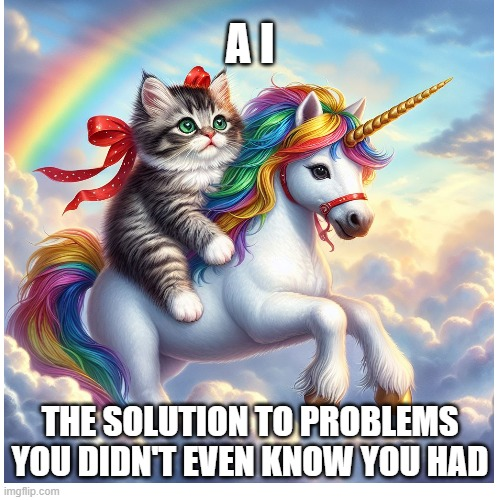
It’s super quiet right now. There’s little or no sign of the early AI unicorns that were once flying high above the rainbow in cotton candy skies with their cute cat-like ideas.

Source: (ImgFlip)

Let’s see what they are up to now.

According to several reports, Stability AI is treading on very unstable ground. Several developers, who worked on the company’s most important product, Stable Diffusion, are resigning. CEO Emad Mostaque said that three of the five researchers have left the company. Investors too have been pretty unhappy with Mostaque’s leadership, and the startup is now up for sale, writes the site https://zv.zp.ua/.

It is hard to remain on top of the AI game when there is so much competition. Many AI startups that tasted success initially are now lost amidst all the announcements and generative AI news. Another such case is Jasper. The AI content platform based in Austin, became a unicorn after raising $125 million in a Series A funding round led by Salesforce at a $1.5 billion valuation in October 2022.

In September 2023, the company’s CEO was changed. Timothy Young, the former president of Dropbox was appointed as the CEO, replacing Dave Rogenmoser. This was discussed as a highly suspicious move in the VC and generative AI startups circles. The worst is that this came after the company announced layoffs, just months after its funding round.

The same month, Jasper reportedly reduced the internal worth of its ordinary shares by 20%, as informed by ex-employees who received notifications from the company. This decline suggests a deceleration in the advancement of its AI-driven writing tool tailored for marketers. While Jasper has historically depended on OpenAI’s GPT-3 to fuel its product, the emergence of ChatGPT by OpenAI last autumn has essentially positioned it as a direct rival.

It has always been touted that whenever OpenAI releases a new update, a lot of startups are killed. Moreover, there has been a lot of hype around investing in generative AI startups that do not have any moat, resulting in a failed investment.

Muffled voices

Former Adobe CTO’s startup Typeface last raised a funding of $100 million in June 2023, becoming a unicorn. The generative AI for brand startup has been quiet ever since its competitors began to rise in the field.

On the other hand, startups such as Synthesia, Runway, Cohere, Coreweave, and Replit have all been coming up with new features. The only thing that still remains undiscussed is these companies’ road to profitability. Though they all have some or the other revenue model in place for customers, the cost of running the models is still exceptionally high.

Before OpenAI announced Sora, there was another AI-powered filmmaking platform called Lightricks. The company which raised $130 million funding in September 2021, reaching a valuation of $1.8 billion, also laid off 80 of its employees, which was around 12% of its workforce. It continued to raise several rounds of funding after that and released LTX Studio just last month.

If we take a look at the recent Instoried debacle, it gives away the sense and nature of AI investments globally. The company started seven years ago with the motivation of adding empathy to users’ content and pitched the idea of AI, but it didn’t really become a unicorn.

Cut to present, there is almost no sign of the company, which according to the now-deleted LinkedIn profile claimed to have created ChatGPT way back in 2019.

Inflection AI, the company that hit the news because two of its co-founders left to join Microsoft AI also raises eyebrows about the investment hype in the earlier AI boom. The company’s future remains hazy even though it raised billions of dollars and became a unicorn.

Another success story is that of Glean, the AI-powered work assistant startup founded by Arvind Jain. Just a month back, the unicorn raised $200 million at $2.2 billion valuation in a series D round. It has also announced going on a hiring spree as the demand for its enterprise AI solution is on the rise.

Leaving everyone else behind is the success story of Hugging Face, Character.ai, and Adept AI that show that not all generative AI unicorns are on the negative track. These startups have been raising funds and partnering with many almost every second month. Only the ones that raised funds without a moat to defend against big-tech and OpenAI are on the decline.

Only time will tell what happens to the AI unicorns that have been raising funds over the past year, such as Ola’s Krutrim, which recently became India’s first and fastest AI unicorn.

The post Where Are All the Early AI Unicorns Now? appeared first on Analytics India Magazine.

Databricks Sees Over 80% Growth in India Amidst AI Demand Surge

Databricks, a leading Data and AI company, today announced a significant growth of over 80% in its India business over the past two fiscal years, fueled by the rising demand for data and AI capabilities among Indian enterprises.

To support this growing customer base, Databricks has launched its infrastructure on Google Cloud’s India (Mumbai) region, enhancing the availability of the Databricks Data Intelligence Platform. This move, coupled with the establishment of an R&D hub in Bangalore last year, underscores Databricks’ deepening commitment to the Indian market.

Globally, Databricks achieved over US$1.6 billion in revenue for the fiscal year ending January 31, marking a 50% year-on-year growth attributed to rapid product innovation. The company has also expanded its portfolio through acquisitions, including MosaicML, Arcion, Okera, Einblick, and Rubicon, positioning itself as a leading platform for enterprises to harness generative AI securely with their proprietary data.

“Over the past two years, we have witnessed an increase in the demand for data and AI solutions across India from all industries, including FSI, retail, manufacturing, and digital natives. This remarkable momentum not only highlights the enterprise AI boom in India but also reinforces our commitment to empowering local businesses with data and AI capabilities,” said Anil Bhasin, Vice President, and Country Manager for Databricks India.

Ed Lenta, SVP and General Manager for Databricks in Asia Pacific and Japan, emphasised the importance of the Indian market, stating, “India is a key market for us and we’re pleased that so many of its leading enterprises and tech-driven startups have chosen Databricks to support their data and AI journey. To meet this growing demand, we’re doubling down on our investments in India.”

Innovative Indian customers such as Air India, Aditya Birla Fashion and Retail Ltd., CommerceIQ, Freshworks, InMobi, Meesho, Myntra, Parle, UPL, and many others are leveraging the Databricks Data Intelligence Platform to drive business innovation, optimise operations, and enhance decision-making.

Databricks also kicked off its Data Intelligence Days in India, a flagship event in Bangalore that brings together leaders in data and AI to explore innovative ways to unlock data insights and develop GenAI applications while maintaining data privacy and control.

The post Databricks Sees Over 80% Growth in India Amidst AI Demand Surge appeared first on Analytics India Magazine.
India Shows the World How AI Can Shatter Social Barriers

Not only can AI solve many business problems, but the technology also holds promise for resolving various societal issues.

On his recent visit to India, Microsoft co-founder Bill Gates addressed students of IIT Delhi, encouraging them to use technology like AI for social good. With its diverse array of social issues, India does offer a rich canvas for innovative solutions.

India’s strength lies in its diverse talent pool, encompassing skilled engineers, developers, and technology professionals. Additionally, the country nurtures a vibrant startup ecosystem, fostering a culture of entrepreneurship, further fueling innovation in the technology sector.

“What is encouraging for India is that young entrepreneurs are picking these problems statements and coming up with the skills, a ‘can do’ attitude, and commitment and passion to achieve change,” Sudha Srinivasan, who heads The Nudge Centre for Social Innovation, told AIM.

Over the years, we have seen startups and nonprofits leverage AI to solve problems in agriculture, healthcare and education. India is home to nonprofits like Wadhwani AI, which could possibly be the only nonprofit in the world devoted exclusively to AI for social impact.

AI for social good

“Over the last six to seven years, we have incubated about 130 startups. About 14 of those would be deep-tech startups. Our first AI startup was actually in our very first cohort. They used spectrometry to detect contaminants in water and could make it possible to detect water quality at a tiny price point,” Srinivasan said.

In India, water contamination still remains a daunting challenge. According to a Lancet study, contaminated water led to half a million deaths in 2019.

Another HSR Layout, Bengaluru-based startup Smarterra is using AI to help cities reduce water losses. In India, about 40-50% of water is lost even before it reaches the end customer, according to Smarterra chief scientist Navaneethan Santhanam.

“We help utility companies assess the condition of their network. In any large Indian city, there’s probably 5,000-6,000 km of buried pipes of different materials, sizes, and age. We help them identify which pipes are at the risk of failing,” Santhanam told AIM.

SmartTerra uses generative AI along with modern geospatial analysis, forecasting, and hydraulic modelling to help utilities pinpoint network failures such as leaks, failing pipes, and faulty metres.

The startup operates in many Indian cities and works closely with utility companies such as L&T, Suez, and many state-owned water bodies in India as well as in foreign markets such as Singapore and Philippines.

Moreover, this is a great opportunity to build up India’s human capital through skilling and education and AI could be an enabler for that.

In many areas in India, the student-teacher ratio is still relatively low and there is also the problem of access to education. “With AI you can improve these ratios remarkably. Instead of a teacher teaching 20 students you can have a teacher using AI to teach maybe 100 students without dropping quality,” Srinivasan said.

“The time that goes in assessments too could come down with automation in both spoken and written forms.”

AI is breaking social barriers

AI, or technology in general, has the potential to dismantle numerous social barriers, empowering marginalised communities to access opportunities, resources, and services previously out of reach.

“Think of all the jobs that humans should not be doing, like manual scavenging. If you consider the situation where humans are relegated to jobs with poor dignity, it maintains the status quo, as communities remain bound to such professions due to the lack of alternatives.

“This necessity perpetuates social barriers that limit their mobility beyond these jobs. However, with AI or robotics handling these tasks, individuals in these professions could find a quicker path out of low-paying, low-dignity jobs and transition into better-paying roles,” Srinivasan said.

Today, many startups are building robots or AI-powered solutions to solve the manual scavenging problem in the country. In 2022, interestingly, the Delhi Jal Board (DJB) developed an AI-powered technology to clean sewage water.

Solinas, also incubated by The Nudge, has developed an AI-integrated affordable robotics solution to inspect, clean, and manage confined space for sanitation purposes. It helped clean up manhole blockages and reduced sewer overflows in Madurai.

(Homosep Atom by Solinas)

Moreover, AI is also breaking down accessibility barriers for the disabled in India. I-Stem, a startup co-founded by two visually impaired duo, is leveraging AI to make STEM content more accessible for the visually impaired.

“Over 96% of the content available today is incompatible with various assistive technologies that people with disabilities use. So, chances that a PDF you’re going to find online is going to be accessible is only 4%,” Kartik Sawhney, co-founder at I-STEM told AIM.

( I-Stem awareness session held in Bhopal)

In India, over 70% of the disabled community in India remains unemployed, which is more than the entire population of Sri Lanka, Sawhney said. He believes this is contributing to an annual loss of nearly USD 12 billion to the Indian economy.

“We believe that by assisting these individuals in securing meaningful roles within high-growth industries, they can serve as influential role models. This not only paves the way for their success but also contributes to reshaping the narrative and discourse surrounding disability,” Sawhney said.

Can AI end poverty?

Technology is not just an enabler of scale, but is fundamentally a means to unlock value in a digital economy.

“Eventually, inclusion in the digital economy is key to bringing India’s bottom 20% out of poverty, otherwise it will be on the other side of a digital divide which will further widen the inequalities in our society,” Srinivasan said.

The Nudge runs various programmes like ‘End Ultra Poverty’ and ‘Asha Kiran’ is working towards providing marginalised communities in rural India with sustainable livelihood and elevating them from poverty.

However, over some time, The Nudge has started working closely with technology startups and leverage their technological know-how and expertise to advance its mission.

For instance, Pune-based startup Tapasya, which is part of the Nudge incubation programme, believes ensuring access to government benefits is crucial for poverty alleviation.

However, many underprivileged families lack awareness and know-how to access these schemes. To address this, the startup leverages technology like data analytics to identify eligible families and assist them in accessing the benefits efficiently, enabling last-mile reach.

Additionally, Indian entrepreneurs are also creating employment opportunities in rural India with AI. Karya, a non-profit from Bengaluru is using crowdsourcing to bring dignified, digital work to the economically disadvantaged Indians, giving them a pathway out of poverty.

The boom in AI has also created the demand for huge amounts of data, especially in Indian languages, which are not found on the web. Karya enables tasks like capturing, labelling and annotating data for corporate clients and in doing so provides a minimum wage, which is 20 times higher than the minimum wage in India.

Today, Karya has a presence in 22 states (100+ districts) with over 30,000 workers, who have completed 30 million paid digital tasks.

The post India Shows the World How AI Can Shatter Social Barriers appeared first on Analytics India Magazine.
Meet Devika, an Open-Source Alternative to Devin

After Devin, comes Devika, an open source AI software engineer capable of understanding human instructions, breaking them down into tasks, conducting research, and autonomously writing code to achieve set objectives.

Devika aims to be a competitive open-source alternative to Devin by Cognition AI. It utilises LLMS, planning and reasoning algorithms, and web browsing abilities to intelligently develop software.

Inviting early testers and contributors to Project Devika – The open-source alternative to Devin. 👩‍💻
As of now, Devika is far from the capabilities of Devin… but we'll eventually get there. So I am calling the open-source community to join forces! ❤
Features:
– 12 Agentic… pic.twitter.com/if8qfuiKm8

— mufeed vh (@mufeedvh) March 21, 2024

Its core capabilities include leveraging large language models such as Claude 3, GPT-4, GPT-3.5, and Local LLMs via Ollama, advanced AI planning and reasoning algorithms, contextual keyword extraction for focused research, seamless web browsing, and code writing in multiple programming languages.

One of Devika’s key strengths lies in its ability to function as an AI pair programmer, reducing the need for extensive human intervention in complex coding tasks.

Whether it’s creating new features, debugging code, or developing entire projects from scratch, Devika aims to streamline software development processes and enhance efficiency.

Devika aims to revolutionise the way we build software by providing an AI pair programmer who can take on complex coding tasks with minimal human guidance. Whether you need to create a new feature, fix a bug, or develop an entire project from scratch, Devika is here to assist you.

The AI planning and reasoning engine within Devika enables it to break down objectives into manageable steps, refine plans based on context, and execute tasks autonomously.

Users can quickly get started with Devika by following simple installation steps, accessing the web interface, creating new projects, selecting programming languages and model configurations, and providing high-level objectives for Devika to work on. You can check out Devika’s GitHub Repository here.

The post Meet Devika, an Open-Source Alternative to Devin appeared first on Analytics India Magazine.

Microsoft says 11 is the magic number for building AI habits — here’s why

The number 11 in yellow

Every day, we do repetitive tasks that build habits that dictate our future behaviors. Now Microsoft says it found a magic formula to help you develop an AI habit that can save time in your everyday workflow.

On Wednesday, Microsoft released new research on the impact of AI on the workflows of 1,300 Copilot for Microsoft 365 users across different industries, and which factors impacted those outcomes.

Also: YouPro lets me access every popular premium AI chatbot for $20/month — but there's a catch

Microsoft identified "the 11-by-11 tipping point" as a rule for when users can expect to start building an AI habit. According to the company, users begin to see value from AI when it saves them just 11 minutes a day. This is significant because seeing value in your actions is crucial for making a habit stick.

The research also showed that 11 weeks was "the breakthrough moment" when people said that Copilot most improved productivity, work enjoyment, work-life balance, and the ability to attend fewer meetings, as seen in the image below.

If users find a way to save 11 minutes a day over 11 weeks, it should be enough to develop an AI habit, according to the formula found in the research.

Microsoft shares that this information is valuable for organizations because, in as little as a business quarter, employees can form an AI habit that positively impacts the organization.

Also: My two favorite ChatGPT Plus features and the remarkable things I can do with them

"Over 11 weeks, that 11 minutes a day adds up to 10 hours saved—or one whole work week each year. That's a habit we can get behind," said Microsoft.

So how exactly can organizations help employees establish AI habits? First, Microsoft encourages organizations to find easy wins that immediately save 11 minutes a day for employees, such as using AI to take notes in meetings, summarize long documents and email chains, and more.

Secondly, the company encourages leaders to encourage employees to stick with AI until they reach the 11-week mark since it takes time to build new habits, and this habit could ultimately save them a lot of time in the long run.

How to Use Gemini (Formerly Duet AI) to Create Images for Slides & Backgrounds

If you have a paid subscription to Gemini (formerly Duet AI), you may generate images in Google Slides and Google Meet in a web browser. The feature is available to Google Workspace customers with the Gemini add-on (for $14 per user per month, paid annually for Gemini Business, or $30 per user per month, paid annually for Gemini Enterprise) and individual Gemini subscribers ($20 per month on personal accounts). Gemini in Google Slides or Meet offers an alternative to laboriously drawing custom images yourself or selecting from sterile stock photos; instead, you can type text to describe your desired image.

As always, make sure that your use of generated AI images complies with your organization’s guidelines for use and attribution.

Visit Duet AI

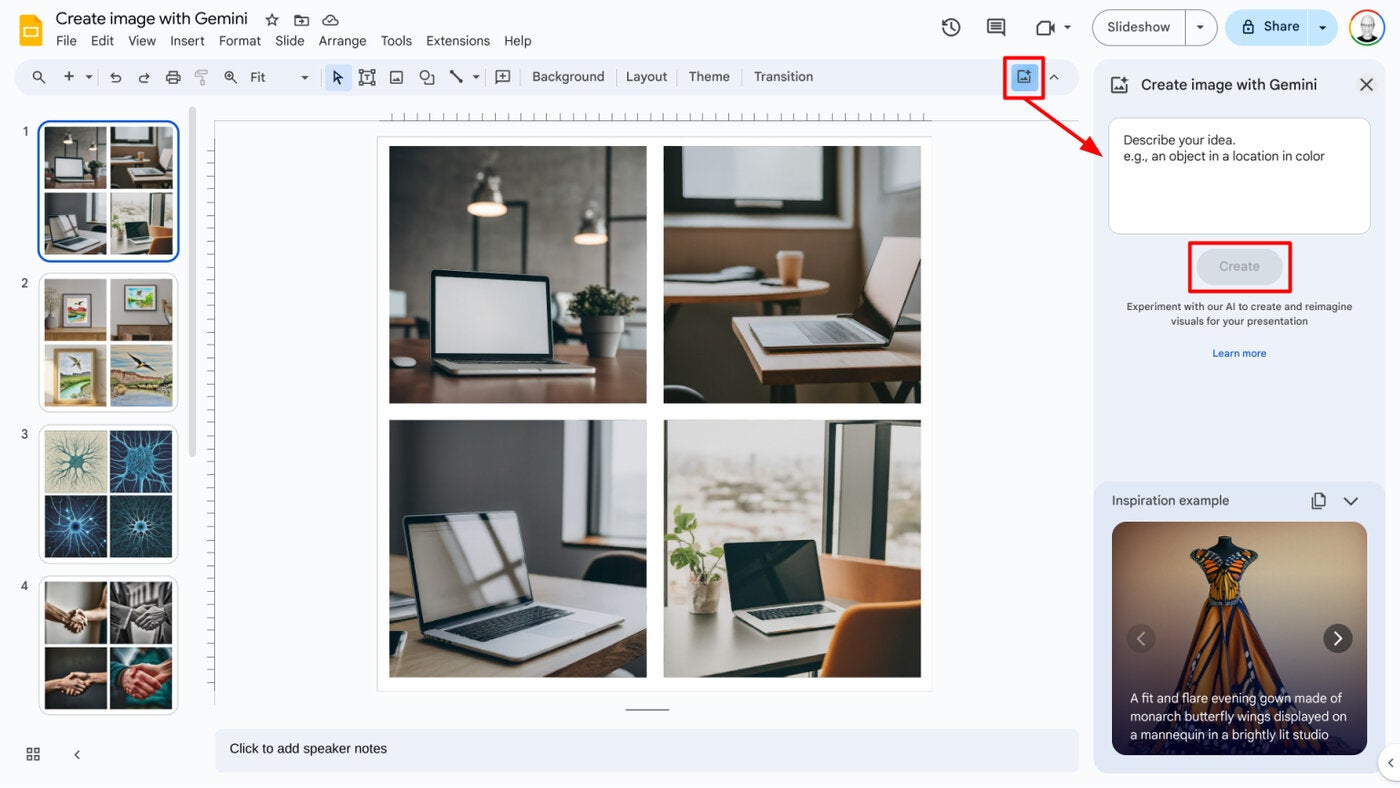
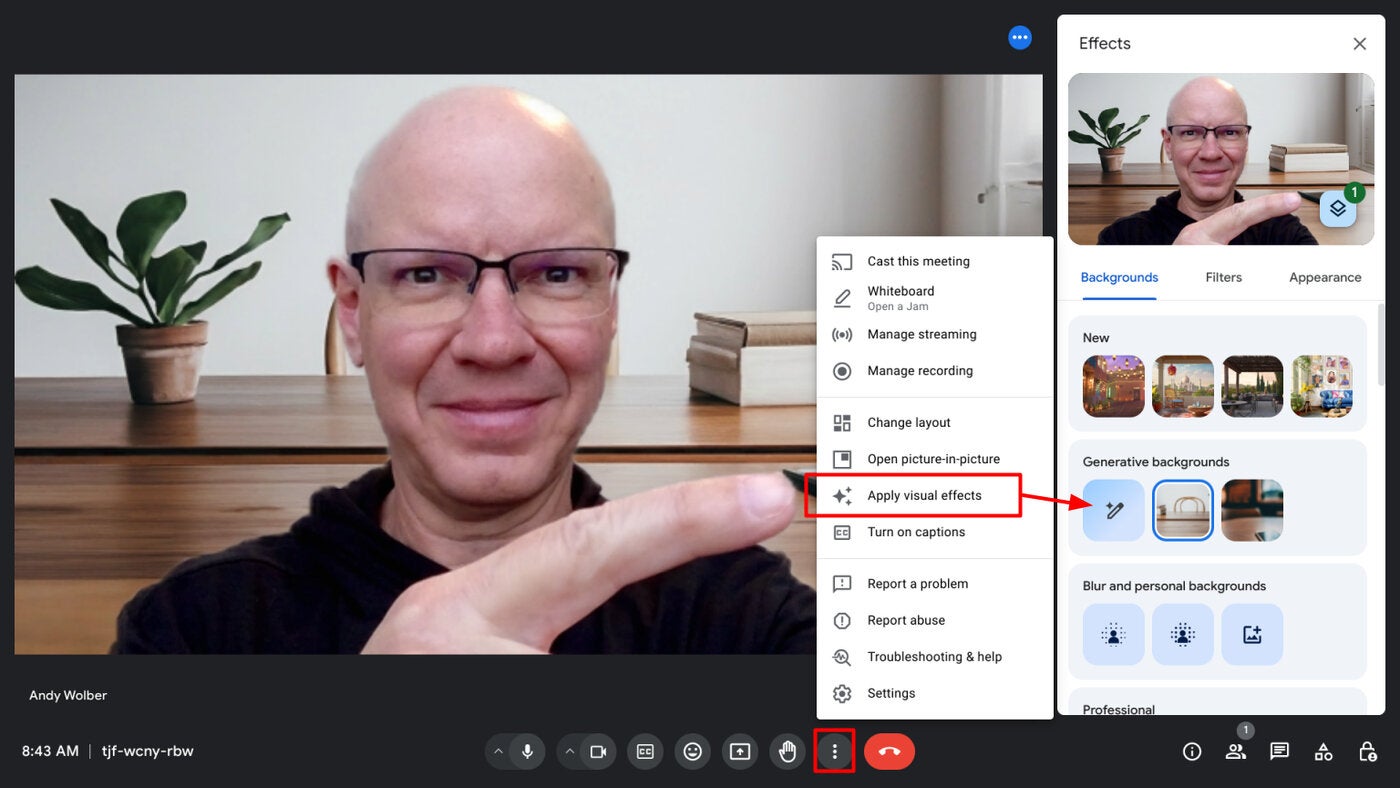
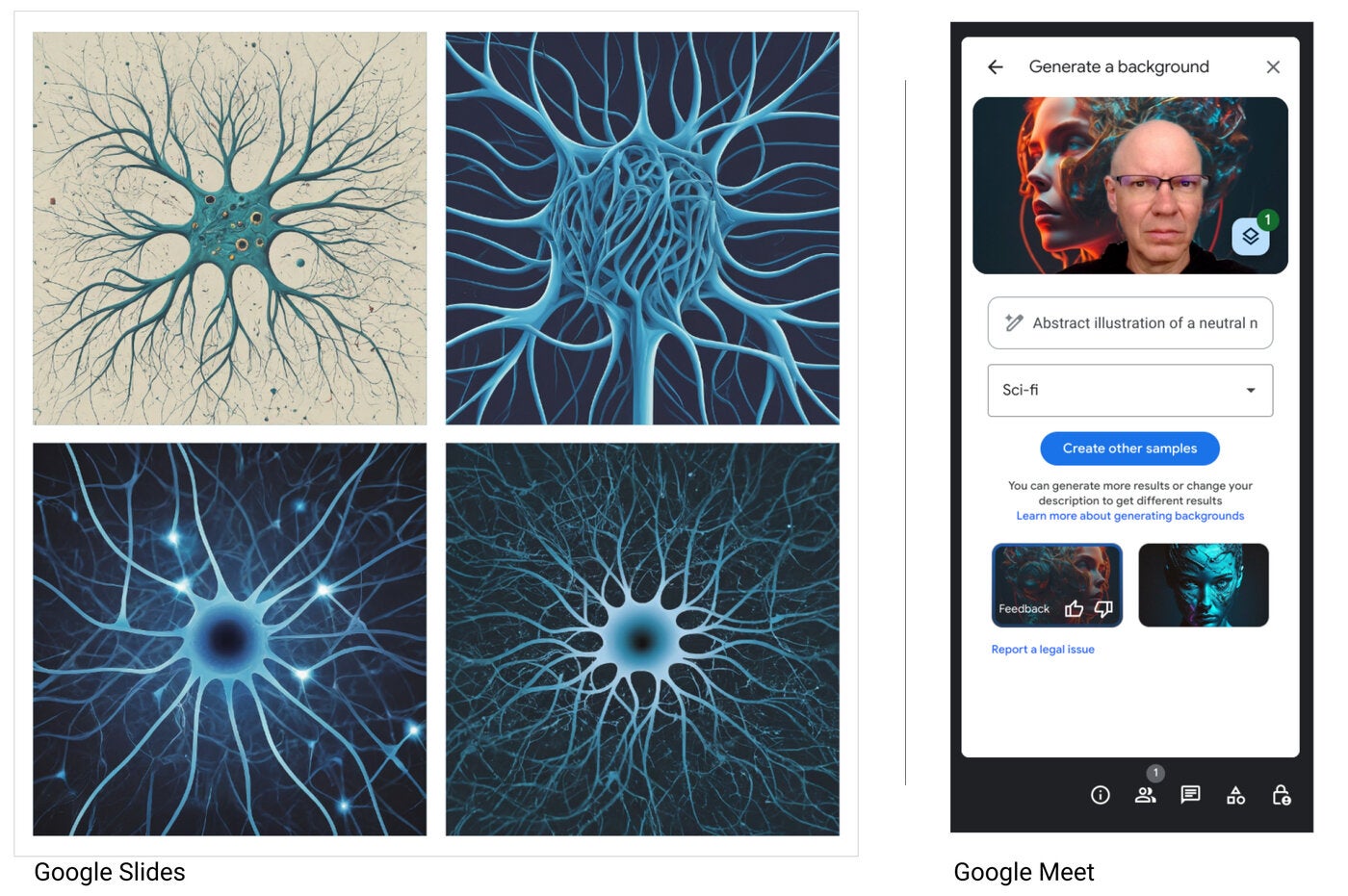
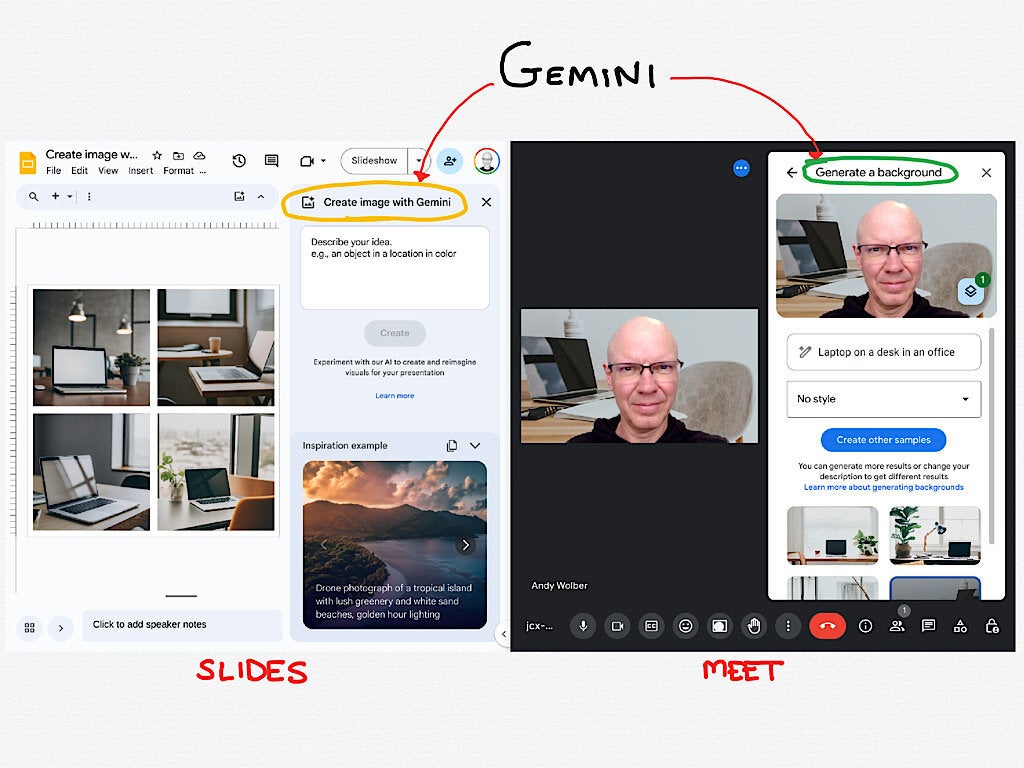
When using Gemini, Figure A shows how to create an image in Google Slides (i.e., Create image with Gemini), and Figure B shows how to access the background image creation option in Google Meet (i.e., Generate a background). Activate the feature, enter text that describes an image, optionally select a style from the drop-down menu and then wait a few seconds for the system to generate images.

Select the Gemini icon in Google Slides on the web, then enter a text prompt and select Create to generate images.
Figure A: Select the Gemini icon in Google Slides on the web, then enter a text prompt and select Create to generate images. Image: Andy Wolber/TechRepublic
When using Google Meet on the web in Chrome to use Gemini to create a background image, select the three-dot More menu | Apply Visual Effects | Generate A Background. Then enter a text prompt and select Create Samples to generate images. Select a sample to apply it as your virtual background.
Figure B: When using Google Meet on the web in Chrome to use Gemini to create a background image, select the three-dot More menu | Apply Visual Effects | Generate A Background. Then enter a text prompt and select Create Samples to generate images. Select a sample to apply it as your virtual background. Image: Andy Wolber/TechRepublic

Drop-down style menu options differ between Google Slides and Google Meet. The Google Slides style drop-down defaults to No Style, but you also might select Photography, Background, Vector Art, Sketch, Watercolor, Cyberpunk and I’m Feeling Lucky options. While the I’m Feeling Lucky option is a nod to an early Google search feature that automatically took you to a first result, in this case it lets the system select a style. Similarly, the Google Meet background generator style defaults to No Style with the available options of Photography, Sci-Fi, Fantasy, 3D Animation, Illustration and Film Noir.

How to review the Gemini generated images

You may review the generated images. When you select a generated image either by clicking or tapping it, the system adds it either as a background in Google Meet or an image in Google Slides.

If you’re not happy with any of the generated images, select View More to try again. You might also edit the text prompt to describe your desired image differently. Google’s Gemini support page suggests that you might obtain better results when your text describes the subject, setting, distance, materials and background.

What types of images can Gemini create?

The variety of images that Gemini can create in Google Slides and Google Meet is vast. To give you a sense of the range and quality available, I generated five distinct types of images in different styles: an object, a scene, people, an idea and a sign. The images on the left below were the first four images the system generated, which I inserted on a Google Slide and then captured as a screenshot. The image to the right is a similar prompt used in Google Meet. Since the style options differ, the choice is noted in each case below.

Generate an object

With no style selected, the prompt “Laptop on a desk in an office” produced images that suggest a straightforward photograph of a common office scene in Google Slides and Google Meet (Figure C).

Laptop images generated by Gemini in Google Slides (left) and Google Meet (right)
Figure C: Laptop images generated by Gemini in Google Slides (left) and Google Meet (right). Image: Andy Wolber/TechRepublic

Generate a scene

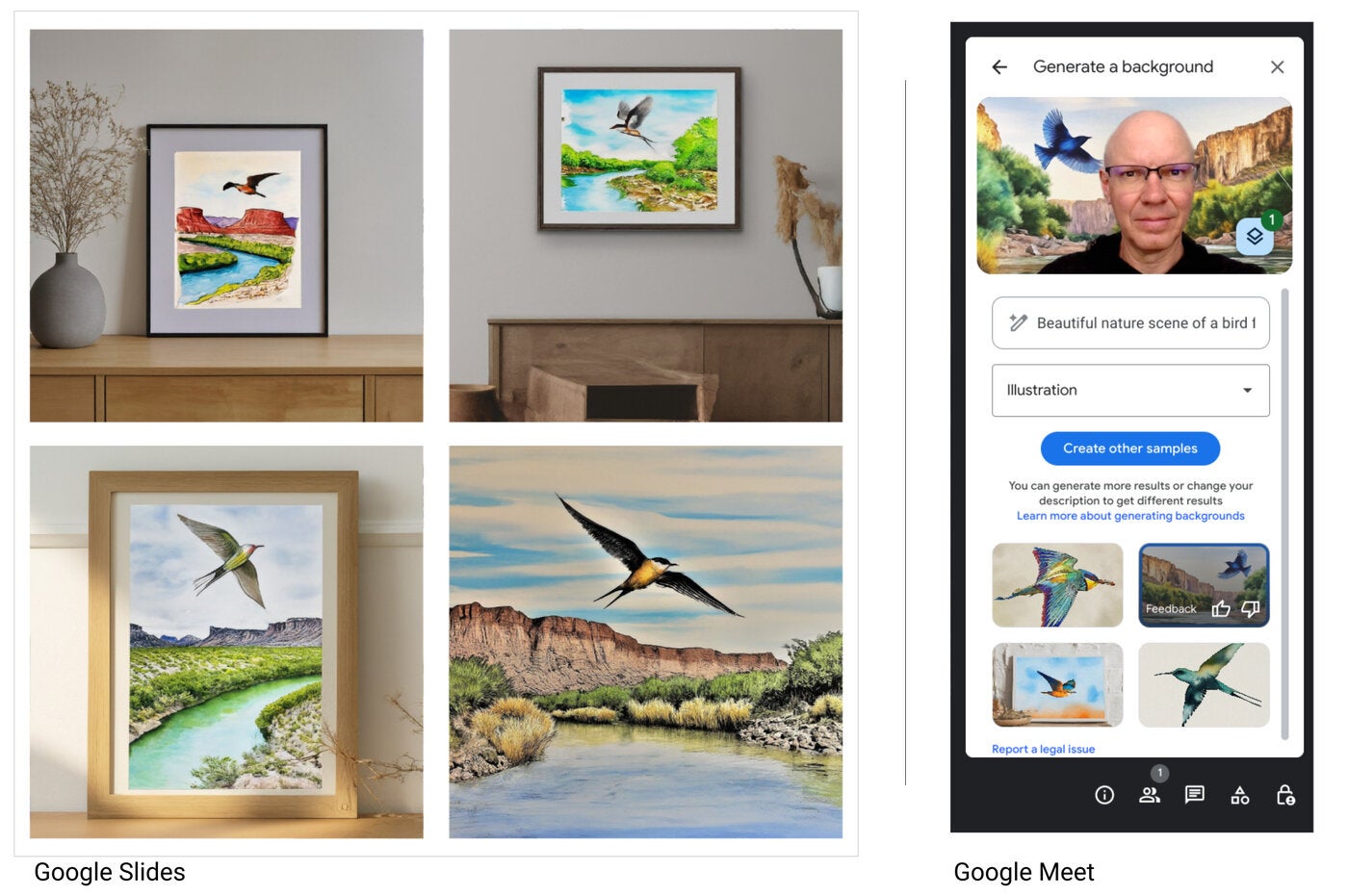
A prompt of “Beautiful nature scene of bird flying over the Rio Grande” resulted in an image in both Google Slides and Google Meet (Figure D) that depicted a river with varying quantities of birds in flight. The watercolor style in Google Slides and the illustration style in Google Meet evoked the quality of hand-created works. Interestingly, the images generated in Slides included images within an image — framed illustrations of the requested subject set within the scene.

Scene images generated by Gemini in Google Slides (left) and Google Meet (right).
Figure D: Scene images generated by Gemini in Google Slides (left) and Google Meet (right). Image: Andy Wolber/TechRepublic

Generate an image of an abstract idea

The prompt “Abstract illustration of a neural network” explored how the system might show a concept. The results differed, with Google Slides set to vector art style showing neural network illustrations, while Google Meet set to sci-fi style produced human faces enmeshed in network connections (Figure E).

Abstract illustration images generated by Gemini in Google Slides (left) and Google Meet (right).
Figure E: Abstract illustration images generated by Gemini in Google Slides (left) and Google Meet (right). Image: Andy Wolber/TechRepublic

Generate an image with people

In my testing, the system sometimes declined to generate images with people. The prompt “Two people shaking hands, photorealistic” set to photography style in both Google Slides and Meet produced results (Figure F). These results are much improved over the initial hands produced in earlier iterations of Duet AI.

Handshake images generated by Gemini in Google Slides (left) and Google Meet (right).
Figure F: Handshake images generated by Gemini in Google Slides (left) and Google Meet (right). Image: Andy Wolber/TechRepublic

Generate a sign with text

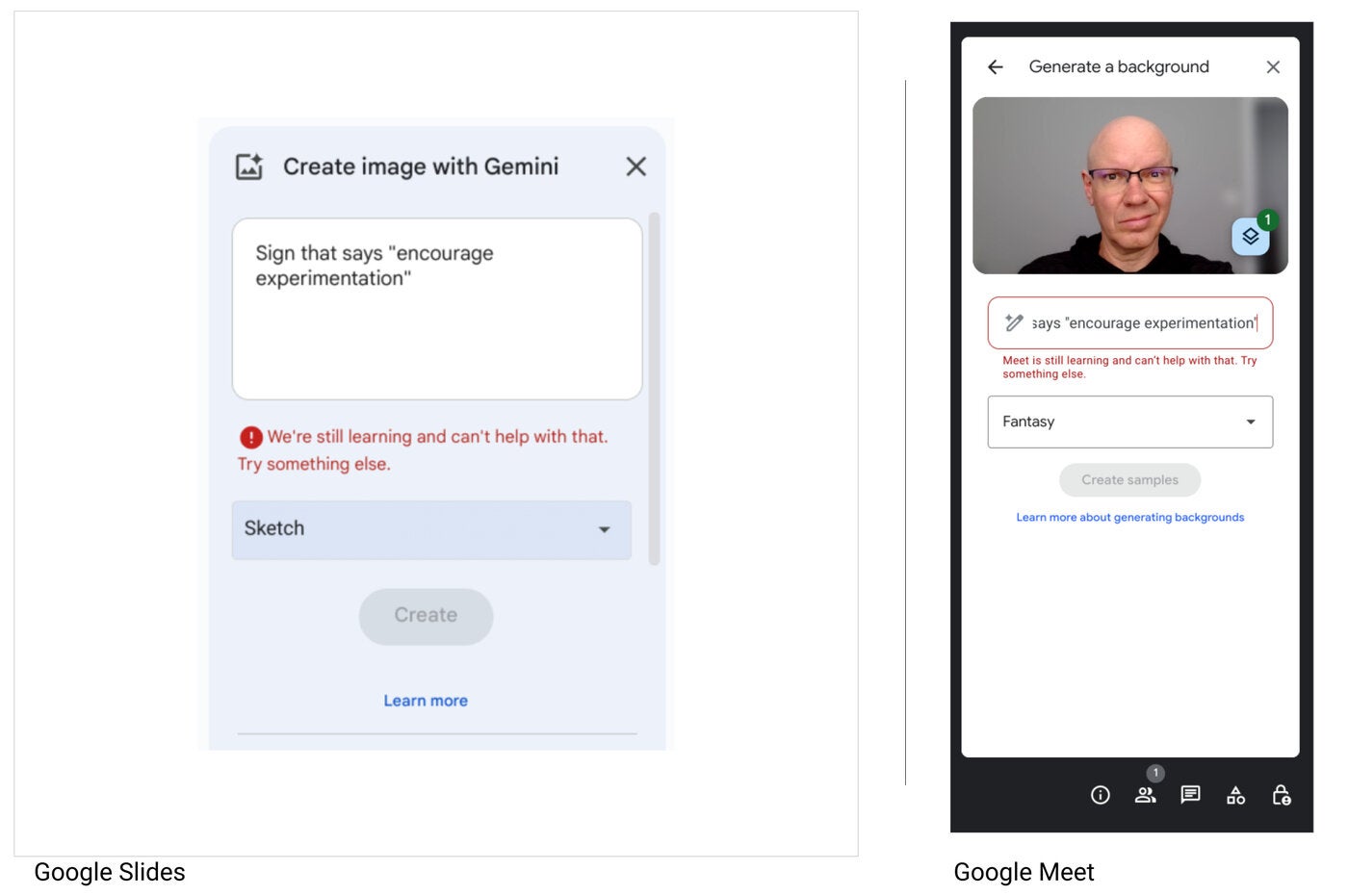
Next, I tried a request to generate a “Sign that says ‘encourage experimentation,’” with the style option set to sketch in Slides and fantasy in Meet, respectively (Figure G). Whereas Duet AI had provided images in response to this prompt, the update to Gemini results in a refusal. The system won’t generate signs with text, so you’ll need to create those separately at the moment.

As of March 2024, Gemini refuses to generate signs with text in both Google Slides (left) and Google Meet (right).
Figure G: As of March 2024, Gemini refuses to generate signs with text in both Google Slides (left) and Google Meet (right). Image: Andy Wolber/TechRepublic

Generate an image from literature

When prompted with the wonderfully descriptive first paragraph of James Joyce’s short story Two Gallants from his book “Dubliners,” Google Slides and Google Meet generated the following images (Figure H, left and right, respectively). Repeated attempts often similarly produced just one or two images in response, unlike nearly all of the above prompts that resulted in three or four sample images. The complexity of the text prompt likely affected the number of images the system could generate within a system-defined response time

 A text prompt of the first paragraph of James Joyce’s Two Gallants produced the image generated by Google Slides (left) and Google Meet (right).
Figure H: A text prompt of the first paragraph of James Joyce’s Two Gallants produced the image generated by Google Slides (left) and Google Meet (right). Image: Andy Wolber/TechRepublic

Mention or message me on X (@awolber) to let me know how you use Gemini (formerly Duet AI) to generate images in Google Slides or backgrounds in Google Meet. What prompts and style settings produce images you prefer?

After Neuralink, Elon Musk to Start Blindsight Implant to Cure Blindness

neuralink

Elon Musk has reported that his company Neuralink has successfully restored sight to blind monkeys using their brain chip technology.

Musk has announced that Neuralink’s upcoming product, named “Blindsight,” aims to provide vision to individuals who have lost their sight completely. This follows their previous product, “Telepathy,” which enables users to control computers solely with their minds.

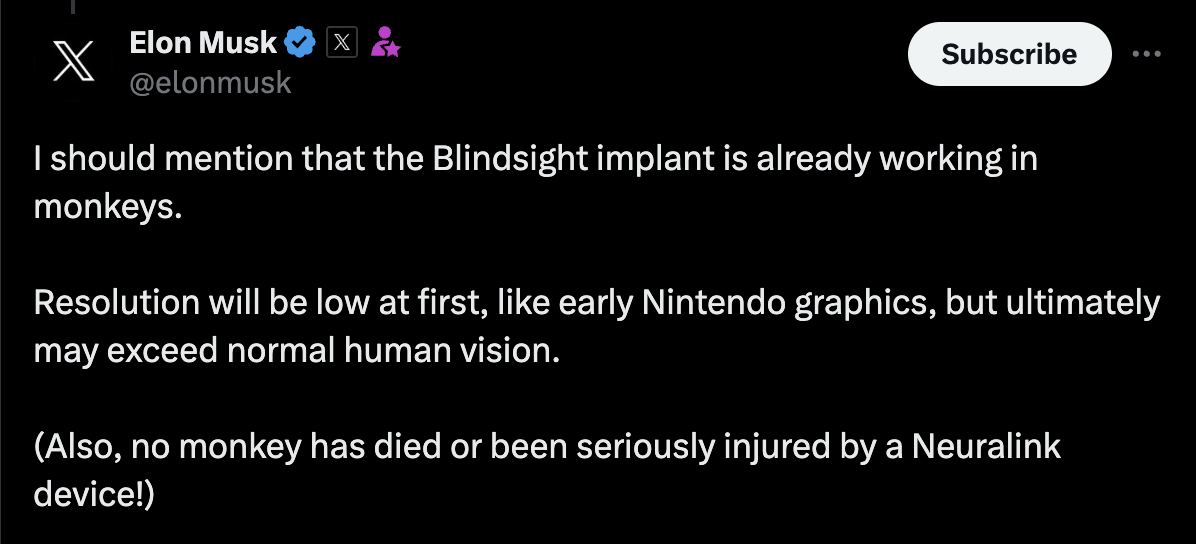
According to Musk, the Blindsight system has already demonstrated success in monkeys. He noted that while the resolution initially may be comparable to early Nintendo graphics, it has the potential to surpass normal human vision in the long run.

Additionally, Musk emphasised that no monkeys have suffered fatal injuries or serious harm as a result of Neuralink’s devices.

During a nine-minute livestream on X, Noland Arbaugh demonstrated his ability to play chess online using only a cursor controlled by his mind. Arbaugh, who was paralyzed below the shoulders following a diving accident, received a chip implant in January as part of his treatment.

The first human Neuralink patient, who is paralysed, controlling a computer and playing chess just by thinking. pic.twitter.com/eMt159JoIg

— Historic Vids (@historyinmemes) March 21, 2024

Arbaugh described the surgery as remarkably straightforward during the presentation.

Additionally, he mentioned using the brain implant to engage in the video game Civilization VI, expressing his delight at regaining that ability and playing for eight consecutive hours.

Despite these advancements, Arbaugh acknowledged that the new technology isn’t flawless and that they’ve encountered some challenges.

The post After Neuralink, Elon Musk to Start Blindsight Implant to Cure Blindness appeared first on Analytics India Magazine.

Five biggest announcements at Microsoft’s March Surface and AI event

Microsoft logo

Microsoft is arguably the leader in the AI space right now, constantly releasing new offerings and updates to stay ahead of the curve. Therefore, it is no surprise that the company took to its March Surface and Windows AI event to unveil a handful of new AI features and hardware.

Also: Microsoft unveils Surface Pro 10 and Laptop 6 with AI features. Here's what's new

As Microsoft's event description, "Advancing the new era of work with Copilot," implied, the event focused on the company's AI offerings specifically for its enterprise customers. Instead, Microsoft Build, taking place in May, will have announcements better suited for general consumers. Until then, here's everything the company unveiled at its Surface event this week.

1. Copilot in Microsoft 365 is now on Windows

The headlining AI news at the event is that Copilot capabilities in Microsoft 365 are finally coming to Windows. This is a major win for working professionals because now within the Copilot in Windows interface, they can select a "Work" option to enable Copilot in Microsoft 365, as seen in the photo above.

Also: Microsoft Copilot vs. Copilot Pro: Is the subscription fee worth it?

Copilot in Microsoft 365 is a workflow game changer because it infuses Copilot assistance across all of the 365 applications, including Word, Excel, PowerPoint, Outlook, and more, to assist with tasks such as creating PowerPoint presentations, writing assistance, and interpreting spreadsheet data. Basically, Copilot can understand the user's entire universe of work data to provide even deeper assistance.

2. New Copilot accessibility features in Windows 11

At the end of the month, there will be a new release of Windows 11 preview which will feature a host of new Copilot skills for accessibility. For example, users will be able to ask Copilot to turn on the narrator and screen magnifier, change text size, or start live captions.

Also: Windows 11's big new update is full of AI and rolling out now — here's what's in it

Asking Copilot to help adjust PC settings enables users to have more control of their device, making it easier to access crucial settings instead of having to navigate through a series of different tabs and struggle to find what they're specifically looking for.

3. The first AI-powered Surface PCs for business

After launching the Surface Pro 9 or Surface Laptop 5 two years ago, Microsoft finally unveiled the succeeding models — the Surface Pro 10 and Surface Laptop 6. Because this was Microsoft's first hardware launch in the era of the AI PC, the business devices got under-the-hood upgrades, including a new processor, to better support AI and productivity tasks.

Also: Surface vs. MacBook: Can Microsoft's new Arm-based AI PCs compete with Apple?

Both models sport a new Intel Core Ultra (5 or 7) processor which features a dedicated Neural Processing Unit (NPU) for better device performance and battery efficiency, especially when performing AI-related tasks. As seen in the photo above, the appearance of the Surface devices remains relatively unchanged.

For a full rundown of what the new products feature, you can read ZDNET's Senior Reviews Editor Kerry Wan's roundup.

4. Windows 365 GPU support

Although this feature doesn't use AI, it can certainly be helpful for tasks related to it. Windows 365 GPU has the potential to improve many professionals' workflows by allowing users access to GPU-empowered cloud PCs. The improved graphics performance of these machines will be essential for tasks that require more power such as in graphics design, image and video editing (and rendering), and more.

Microsoft says Windows 365 GPU support, currently available in preview, was highly requested by customers who wanted access to a GPU in a Software-as-a-Service solution.

5. The first Copilot key on a Microsoft device

It wouldn't be the launch of an AI PC without the mention of a Copilot key. Both the new Surface devices and the new Surface Pro Keyboard, pictured above, include a dedicated Copilot key to make it easier for users to get direct access to AI assistance. It certainly helps that Windows users without the latest PC or Surface device can still access the feature by clicking the Copilot icon from the Windows 11 taskbar.

Artificial Intelligence