Brett Adcock, the founder of FigureAI robots, the company that recently released a demo video of its humanoid robot conversing with a human while performing tasks, predicts that everyone will own a robot in the future. “Similar to owning a car or phone today,” he said – hinting at the universal adoption of robots as an essential commodity in the future.
“Every human will own a robot in the future, similar to owning a car/phone today,” said Adcock.
A few months ago, Adcock called 2024 the year of Embodied AI, indicating how the future comprises AI in a body form. With robots learning to perform low-complexity tasks, such as picking trash, placing dishes, and even using the coffee machine, Figure robots are being trained to assist a person with house chores.
OpenAI Powers The Future
The company that is not only backed by big tech companies such as OpenAI, Microsoft, and NVIDIA among others, is also powered by OpenAI for its voice functionality. Some of them have also been speculating that the voice used for Figure humanoids is from a trademarked OpenAI Voice Engine.
OpenAI models provide high-level visual and language intelligence. Figure neural networks, on the other hand, deliver fast, low-level, dexterous robot actions. With GPT-5 predicted to be released later this year, it is possible that its advanced capabilities might further empower these humanoids, making robots more utilitarian.
Rise of Humanoid Robots
Figure AI’s humanoids are just one example in the stream of humanoids that are being developed by every major tech company. While others may be looking at large-scale industrial uses, for instance in warehouses, the utility of Figure robots purely seems like a companion.
Tesla’s swanky Optimus has also been able to do impressive tasks including yoga. Boston Dynamics’ Atlas on the other hand was last seen somersaulting in a factory setting. The humanoid, H1 robot, developed by China’s Unitree Robotics, recently reached a walking speed of 7.4 miles per hour, and also claims to reach a speed of 11 mph.
This week, GPU king Jensen Huang unveiled its ambitious robotics project at the GTC 2024 summit – GR00T, a foundational platform for robots- adding fuel to the race for humanoids!
The post Soon, Everyone Will Own a Robot, Like a Car or Phone Today appeared first on Analytics India Magazine.
Since OpenAI unveiled ChatGPT in late 2022, the role of foundational large language models (LLMs) has become increasingly prominent in artificial intelligence (AI), particularly in natural language processing (NLP). These LLMs, designed to process and generate human-like text, learn from an extensive array of texts from the internet, ranging from books to websites. This learning process allows them to capture the essence of human language making them general purpose problem solvers.
While the development of LLMs has opened new doors, the method of adapting these models for specific applications—known as fine-tuning—brings its own set of challenges. Fine-tuning a model requires additional training on more focused datasets, which can lead to difficulties such as a requirement for labeled data, the risk of the model drift and overfitting, and the need for significant resources.
Addressing these challenges, researchers from Google has recently adopted the idea of ‘social learning’ to help AI learn from AI. The key idea is that, when LLMs are converted into chatbots, they can interact and learn from one another in a manner similar to human social learning. This interaction enables them to learn from each other, thereby improving their effectiveness.
What's Social Learning?
Social learning isn't a new idea. It's based on a theory from the 1970s by Albert Bandura, which suggests people learn from observing others. This concept applied to AI means that AI systems can improve by interacting with each other, learning not only from direct experiences but also from the actions of peers. This method promises faster skill acquisition and might even let AI systems develop their own “culture” by sharing knowledge.
Unlike other AI learning methods, like trial-and-error reinforcement learning or imitation learning from direct examples, social learning emphasizes learning through interaction. It offers a more hands-on and communal way for AI to pick up new skills.
Social Learning in LLMs
An important aspect of social learning is to exchange the knowledge without sharing original and sensitive information. To this end, researchers have employed a teacher-student dynamic where teacher models facilitate the learning process for student models without revealing any confidential details. To achieve this objective, teacher models generate synthetic examples or directions from which student models can learn without sharing the actual data. For instance, consider a teacher model trained on differentiating between spam and non-spam text messages using data marked by users. If we wish for another model to master this task without touching the original, private data, social learning comes into play. The teacher model would create synthetic examples or provides insights based on its knowledge, enabling the student model to identify spam messages accurately without direct exposure to the sensitive data. This strategy not only enhances learning efficiency but also demonstrates the potential for LLMs to learn in dynamic, adaptable ways, potentially building a collective knowledge culture. A vital feature of this approach is its reliance on synthetic examples and crafted instructions. By generating new, informative examples distinct from the original dataset, teacher models can preserve privacy while still guiding student models towards effective learning. This approach has been effective, achieving results on par with those obtained using the actual data.
How Social Learning Address Challenges of Fine-tuning?
Social learning offers a new way to refine LLMs for specific tasks. It helps dealing with the challenges of fine-tuning in following ways:
Less Need for Labelled Data: By learning from synthetic examples shared between models, social learning reduces the reliance on hard-to-get labelled data.
Avoiding Over-specialization: It keeps models versatile by exposing them to a broader range of examples than those in small, specific datasets.
Reducing Overfitting: Social learning broadens the learning experience, helping models to generalize better and avoid overfitting.
Saving Resources: This approach allows for more efficient use of resources, as models learn from each other's experiences without needing direct access to large datasets.
Future Directions
The potential for social learning in LLMs suggests various interesting and meaningful ways for future AI research:
Hybrid AI Cultures: As LLMs participate in social learning, they might begin to form common methodologies. Studies could be conducted to investigate the effects of these emerging AI “cultures,” examining their influence on human interactions and the ethical issues involved.
Cross-Modality Learning: Extending social learning beyond text to include images, sounds, and more could lead to AI systems with a richer understanding of the world, much like how humans learn through multiple senses.
Decentralized Learning: The idea of AI models learning from each other across a decentralized network presents a novel way to scale up knowledge sharing. This would require addressing significant challenges in coordination, privacy, and security.
Human-AI Interaction: There's potential in exploring how humans and AI can mutually benefit from social learning, especially in educational and collaborative settings. This could redefine how knowledge transfer and innovation occur.
Ethical AI Development: Teaching AI to address ethical dilemmas through social learning could be a step toward more responsible AI. The focus would be on developing AI systems that can reason ethically and align with societal values.
Self-Improving Systems: An ecosystem where AI models continuously learn and improve from each other's experiences could accelerate AI innovation. This suggests a future where AI can adapt to new challenges more autonomously.
Privacy in Learning: With AI models sharing knowledge, ensuring the privacy of the underlying data is crucial. Future efforts might delve into more sophisticated methods to enable knowledge transfer without compromising data security.
The Bottom Line
Google researchers have pioneered an innovative approach called social learning among Large Language Models (LLMs), inspired by the human ability to learn from observing others. This framework allows LLMs to share knowledge and improve capabilities without accessing or exposing sensitive data. By generating synthetic examples and instructions, LLMs can learn effectively, addressing key challenges in AI development such as the need for labelled data, over-specialization, overfitting, and resource consumption. Social learning not only enhances AI efficiency and adaptability but also opens up possibilities for AI to develop shared “cultures,” engage in cross-modality learning, participate in decentralized networks, interact with humans in new ways, navigate ethical dilemmas, and ensure privacy. This marks a significant shift towards more collaborative, versatile, and ethical AI systems, promising to redefine the landscape of artificial intelligence research and application.
Brett Adcock, the founder of FigureAI robots, the company that recently released a demo video of its humanoid robot conversing with a human while performing tasks, predicts that everyone will own a robot in the future. “Similar to owning a car or phone today,” he said – hinting at the universal adoption of robots as an essential commodity in the future.
Every human will own a robot in the future, similar to owning a car/phone today pic.twitter.com/50NAx0Xg2k
— Brett Adcock (@adcock_brett) March 21, 2024
A few months ago, Adcock called 2024 as the year of Embodied AI, indicating how the future comprises AI in a body-form. With the robots learning to perform low-complexity tasks, such as picking trash, placing dishes, and even using the coffee machine, Figure robots are being trained to assist a person with house chores.
OpenAI Powers The Future
The company that is not only backed by big tech companies such as OpenAI, Microsoft, and NVIDIA among others, is also powered by OpenAI for its voice functionality. Some of them have also been speculating that the voice used for Figure humanoids is from a trademarked OpenAI Voice Engine.
OpenAI models provide high-level visual and language intelligence. Figure neural networks, on the other hand, deliver fast, low-level, dexterous robot actions. With GPT-5 predicted to be released later this year, it is possible that its advanced capabilities might further empower these humanoids, making robots more utilitarian.
Rise of Humanoid Robots
Figure AI’s humanoids are just one example in the stream of humanoids that are being developed by every major tech company. While others may be looking at large-scale industrial uses, for instance in warehouses, the utility of Figure robots purely seems like a companion.
Tesla’s swanky Optimus has also been able to do impressive tasks including yoga. Boston Dynamics’ Atlas on the other hand was last seen somersaulting in a factory setting. The humanoid, H1 robot, developed by China’s Unitree Robotics, recently reached a walking speed of 7.4 miles per hour, and also claims to reach a speed of 11 mph.
This week, GPU king Jensen Huang unveiled its ambitious robotics project at the GTC 2024 summit – GR00T, a foundational platform for robots- adding fuel to the race for humanoids!
The post Founder of OpenAI-Powered Figure Robots Says Everyone Will Own a Robot appeared first on Analytics India Magazine.
Artificial intelligence is a key point of debate right now. ChatGPT has reached 100 million active users in just the first two months. This has increased focus on AI's capabilities, especially in database management. The introduction of ChatGPT is considered a major milestone in the Artificial Intelligence (AI) and tech space, raising questions about the potential applications of generative AI like AI GPTs for PostgreSQL database. This generative AI tool is considered a significant discovery because it can execute complex tasks, including writing programming code efficiently.
For example, Greg Brockman from OpenAI made a whole website using an image he drew on a napkin and GPT-4. Feats like this show why people want to blend AI GPTs and database systems such as PostgreSQL. This blog will discuss the answer to the question: Can AI GPTs optimize PostgreSQL databases?
Understanding AI GPTs
Researchers use a large amount of text data to train AI GPTs. The main goal of these AI systems is to produce content that reads like its human-written. These models identify difficult patterns in their training data, allowing them to provide relevant and accurate text outputs. They are not Artificial General Intelligence (AGI) systems but specialized models created for language processing tasks.
PostgreSQL: A Brief Overview
PostgreSQL, also known as Postgres, is a widely used open-source object-relational database management system. Postgres gained a solid reputation among database management systems due to its reliability, extensive features, and performance. Companies can use Postgres for all kinds of applications – from small projects to handling the big data needs of major tech corporations.
G2 ratings rank Postgres as the third easiest-to-use relational database software, showing it is a user-friendly option for developers and organizations seeking a dependable database solution.
Can AI GPTs be effectively used with PostgreSQL?
Imagine having human-like conversations with a database, where GPTs translate our everyday language into SQL queries or summarize complex Postgres data. Using AI GPTs for PostgreSQL databases opens up new exciting opportunities.
Here are some ways this integration could come to life:
Query Generation
AI GPTs simplify database queries by turning natural language prompts into SQL queries. This improvement makes data more accessible to non-technical users and enables them to interact with databases. It can bridge the gap between non-technical users and Postgres databases, allowing them to query and analyze the data effectively, even if they don’t know how to write database queries.
Postgresql Data Management with AI GPTs
Integrating AI GPTs with PostgreSQL databases, especially on the Microsoft Azure cloud platform, introduces a new world of possibilities for data management. With the pgvector extension support in Postgres, ChatGPT can access, store, search, and update knowledge directly in these databases. This improves data retrieval efficiency and enables real-time interactions with systems and data.
Data Analysis and Reporting
Data Scientists can use AI GPTs to analyze natural language data in PostgreSQL databases. These AI systems can create reports, summaries, and analyses by analyzing complex data. This allows them to provide useful information in a format that is easy for people to understand. It also enables non-technical stakeholders to effortlessly gain meaningful insights from Postgres data.
Schema Design and Database Documentation
AI agents with GPTs can potentially streamline database management for data scientists. These advanced AI tools can design database schemas that meet specific data needs and automatically produce detailed documentation for Postgres database structures.
Query Optimization
GPTs have the potential to interpret and analyze SQL queries and recommend optimizations that offer more efficient ways to write queries. They can identify redundancies, inefficient joins, or overlooked indexing opportunities, improving database performance and lowering query execution times.
Data Validation and Integrity Checks
AI GPTs can check data for quality, consistency, and integrity before it's inserted or updated in Postgres databases. These models can identify unusual, irregular, or inconsistent entries in stored structured data. This capability helps in proactive data cleaning and maintaining high-quality data in databases.
AI GPTs for PostgreSQL Database: Challenges and Limitations
Although the potential use cases of AI GPTs for PostgreSQL are intriguing, the implementation comes with a unique set of challenges and limitations:
Accuracy and Safety
AI GPTs might produce inaccurate or potentially harmful outputs when used alongside Postgres. Strong safeguards and verification processes are important to counteract this risk and ensure data is stored reliably.
Domain Knowledge and Contextual Understanding
AI GPTs lack the domain knowledge to grasp complex database structures. They also struggle to understand the business logic related to PostgreSQL. This highlights the need for specialized training and fine-tuning of these AI GPTs. By using Retrieval-Augmented Generation (RAG) systems, we can potentially equip them with technical Postgres knowledge.
Integration and Scalability
Integrating AI GPTs with PostgreSQL databases carefully while ensuring compatibility is crucial for smooth operation. Training and deploying large language models require organizations to employ skilled cloud architects to manage the extensive computational resources required.
Trust and Adoption
Database professionals might show resistance or skepticism toward incorporating AI agents into Postgres databases. Overcoming this challenge requires industrial engineers to perform thorough testing and demonstrate AI GPTs' benefits to foster trust.
Data Privacy and Security
Robust measures must secure data privacy and prevent data exposure while using AI GPTs for PostgreSQL databases. Strong measures must be implemented to prevent sensitive data from being accidentally exposed or misused during training or inference processes.
Finding the Sweet Spot: AI GPTs for PostgreSQL
Integrating AI GPTs into PostgreSQL database management presents considerable challenges alongside its potential benefits. Effective integration of these AI systems requires detailed testing, targeted training, and advanced security to ensure data safety. With the evolution of AI, applying AI GPTs to database management could become more practical. Ultimately, the goal is to improve database environments for tasks like time-series data processing.
Visit unite.ai today to stay updated with the latest AI and machine learning developments, including in-depth analyses and news.
Calmara suggests it can detect STIs with photos of genitals — a dangerous idea Amanda Silberling 8 hours
You’ve gone home with a Tinder date, and things are escalating. You don’t really know or trust this guy, and you don’t want to contract an STI, so… what now?
A company called Calmara wants you to snap a photo of the guy’s penis, then use its AI to tell you if your partner is “clear” or not.
Let’s get something out of the way right off the bat: You should not take a picture of anyone’s genitals and scan it with an AI tool to decide whether or not you should have sex.
The premise of Calmara has more red flags than a bad first date, but it gets even worse from there when you consider that the majority of STIs are asymptomatic. So, your partner could very well have an STI, but Calmara would tell you he’s in the clear. That’s why actual STI tests use blood and urine samples to detect infection, as opposed to a visual exam.
Other startups are addressing the need for accessible STI testing in a more responsible way.
“With lab diagnosis, sensitivity and specificity are two key measures that help us understand the test’s propensity for missing infections and for false positives,” Daphne Chen, founder of TBD Health, told TechCrunch. “There’s always some level of fallibility, even with highly rigorous tests, but test manufacturers like Roche are upfront with their validation rates for a reason — so clinicians can contextualize the results.”
In the fine print, Calmara warns that its findings should not be substituted for medical advice. But its marketing suggests otherwise. Before TechCrunch reached out to Calmara, the title of its website read: “Calmara: Your Intimate Bestie for Unprotected Sex” (it’s since been updated to say “Safer Sex” instead.) And in a promo video, it describes itself as “The PERFECT WEBSITE for HOOKING UP!”
Co-founder and CEO Mei-Ling Lu told TechCrunch that Calmara was not meant as a serious medical tool. “Calmara is a lifestyle product, not a medical app. It does not involve any medical conditions or discussions within its framework, and no medical doctors are involved with the current Calmara experience. It is a free information service.”
“We are updating the communications to better reflect our intentions right now,” Lu added. “The clear idea is to initiate a conversation regarding STI status and testing.”
Calmara is part of HeHealth, which was founded in 2019. Calmara and HeHealth use the same AI, which it says is 65-90% accurate. HeHealth is framed as a first step for assessing sexual health; then, the platform helps users connect with partner clinics in their area to schedule an appointment for an actual, comprehensive screening.
HeHealth’s approach is more reassuring than Calmara’s, but that’s a low bar — and even then, there’s a giant red flag waving: data privacy.
“It’s good to see that they offer an anonymous mode, where you don’t have to link your photos to personally identifiable information,” Valentina Milanova, founder of tampon-based STI screening startup Daye, told TechCrunch. “This, however, doesn’t mean that their service is de-identified or anonymized, as your photos might still be traced back to your email or IP address.”
HeHealth and Calmara also claim that they’re compliant with HIPAA, a regulation that protects patient confidentiality, because they use Amazon Web Services. This sounds reassuring, but in its privacy policy, Calmara writes that it shares user information with “service providers and partners who assist in service operation, including data hosting, analytics, marketing, payment processing, and security.” They also don’t specify whether these AI scans are taking place on your device or in the cloud, and if so, how long that data remains in the cloud, and what it’s used for. That’s a bit too vague to reassure users that their intimate photos are safe.
These security questions aren’t just concerning for the users — they’re dangerous for the company itself. What happens if a minor uses the website to check for STIs? Then, Calmara ends up in possession of child sexual abuse material. Calmara’s response to this ethical and legal liability is to write in its terms of service that it prohibits minors’ usage, but that defense would hold no legal weight.
Calmara represents the danger of over-hyped technology: It seems like a publicity stunt for HeHealth to capitalize on excitement around AI, but in its actual implementation, it just gives users a false sense of security about their sexual health. Those consequences are serious.
“Sexual health is a tricky space to innovate within, and I can see where their intentions are noble,” Chen said. “I just think they might be too quick to market with a solution that’s underbaked.”
The digital landscape is in a state of constant flux, and search engines are no exception. Nowadays, search engines have evolved beyond just providing links to web pages. They are now designed to provide a range of features such as summarization, image generation, interactive research mode, and question-answering chatbots. This has made researching, learning, and discovering things on the internet much easier.
Although Google has been the dominant search engine for a long time, the emergence of artificial intelligence (AI) has paved the way for alternative search engines that offer unique features and advantages.
In this blog, we will learn about the top 8 AI-powered search engines that are worth considering as alternatives to Google, each bringing its own unique search intelligence to the table.
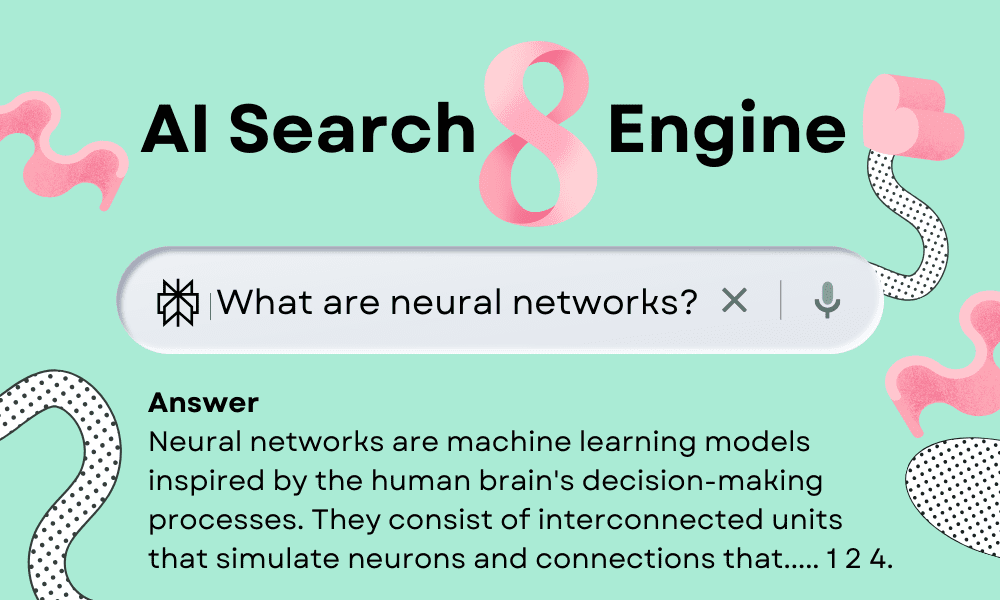
Perplexity AI
Perplexity AI is a search engine that uses artificial intelligence to provide users with more than just basic links to the websites.
Its main features include:
Answering questions: It can answer a wide range of questions, from simple facts to complex queries, using up-to-date sources. It also allows users to generate code, summarize articles, or write emails.
Exploring topics in depth: Perplexity's Copilot feature guides users through a topic, enabling them to learn more and explore new areas of interest.
Organizing your library: Users can organize their search results in “Collections” by project or topic.
Interacting with your data: Perplexity allows users to ask questions about their files and search the web, all within the platform. This provides a complete project view in one space.
The Pro version of Perplexity AI offers a more conversational search experience. It engages with users, asking for details and preferences to deliver more precise results. It also summarizes the most relevant findings and pulls information from a diverse range of sources.
Bing
Microsoft Bing has received major upgrades since the launch of GPT-3.5. It is now a fully functional GenAI search engine that uses large language models such as GPT-4, Vision models, and Image generation models to provide a new and improved web search experience. You can now search for specific answers and receive a summary of the results. Additionally, you can interact with the AI chatbot to ask follow-up questions and even chat with your documents, integrate ChatGPT plugins, and design graphics all within the Bing platform.
Komo AI
Komo AI is an advanced AI-powered search tool designed to deliver a fast, private, and accurate ad-free search experience. Unlike ChatGPT, Komo AI offers links to videos, images, and websites to facilitate detailed research. It is a powerful AI chatbot that has been trained on a diverse range of data sources, including public datasets, web crawls, human labels, and generated data, making it a robust and efficient search tool.
The best feature of Komo AI is its simplicity. On the welcome page, you only see a search bar, and even after performing a search, you receive minimal and relevant results instead of the entire page filled with content.
Exa AI
Exa AI is an advanced search engine that goes beyond traditional keyword-based searches by understanding the meaning behind queries. Formerly known as Metaphor, Exa allows LLMs to search using natural language and receive a list of relevant web pages from their neural database. Moreover, Exa AI is designed for AI applications, offering AI chat conversation services and an API for web search. You can find Python, Go, and JavaScript SDKs on the documentation page.
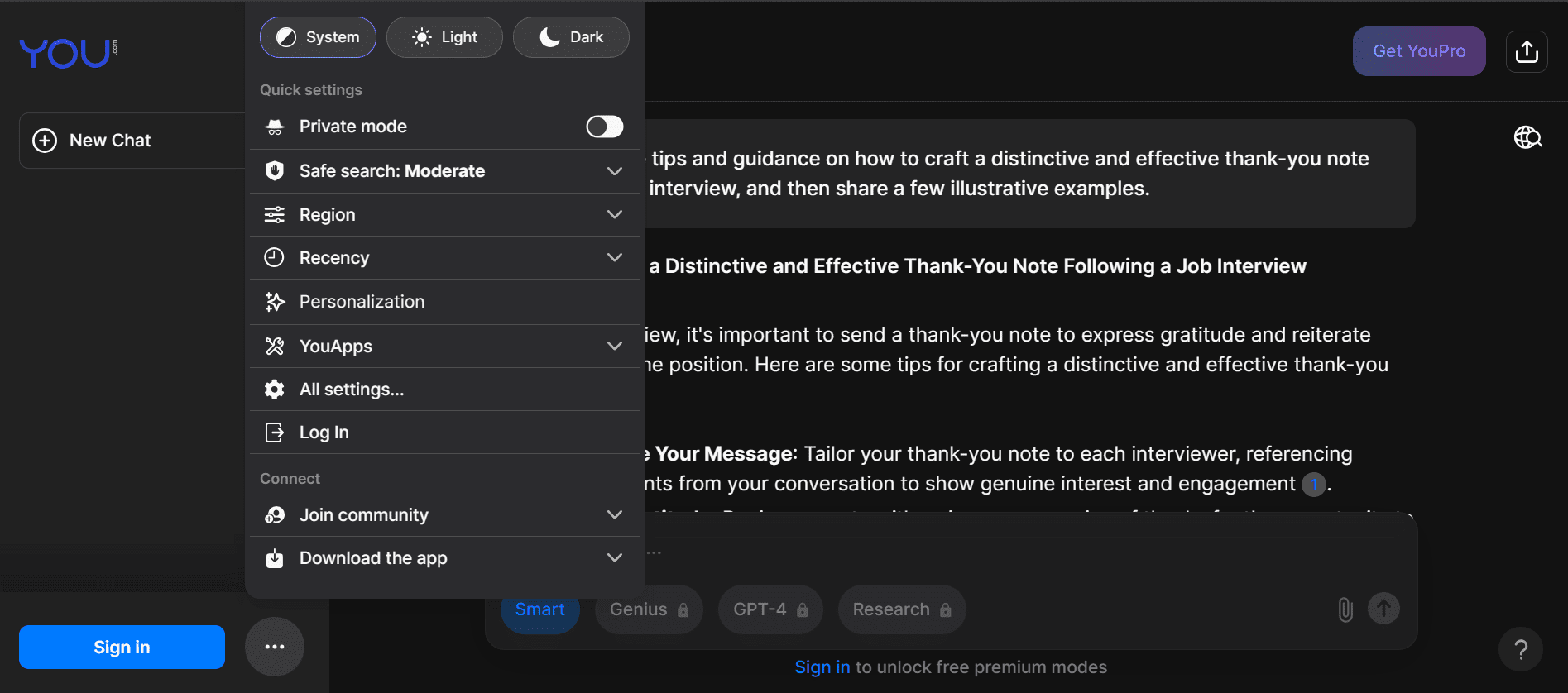
You.com
You.com is a ChatGPT style AI search engine that focuses on providing personalized answers and experiences to users. It combines natural language processing, deep learning, and knowledge graph technologies to understand user queries and deliver accurate results.
With You.com, you have access to advanced LLMs, private mode, regional selection, and powerful tools such as content and image generators, and image enhancers. However, the user interface may be difficult to navigate.
Yep
Yep is a search engine that provides a fast, private, and ad-free search experience. It values user privacy and content creators' interests. Yep focuses on search quality by using content signals, link signals, and natural language processing to provide users with relevant and accurate search results.
It now offers an AI chatbot feature similar to Bing. You can ask follow-up questions and receive fast and accurate results. It is simple and provides relevant results for your query.
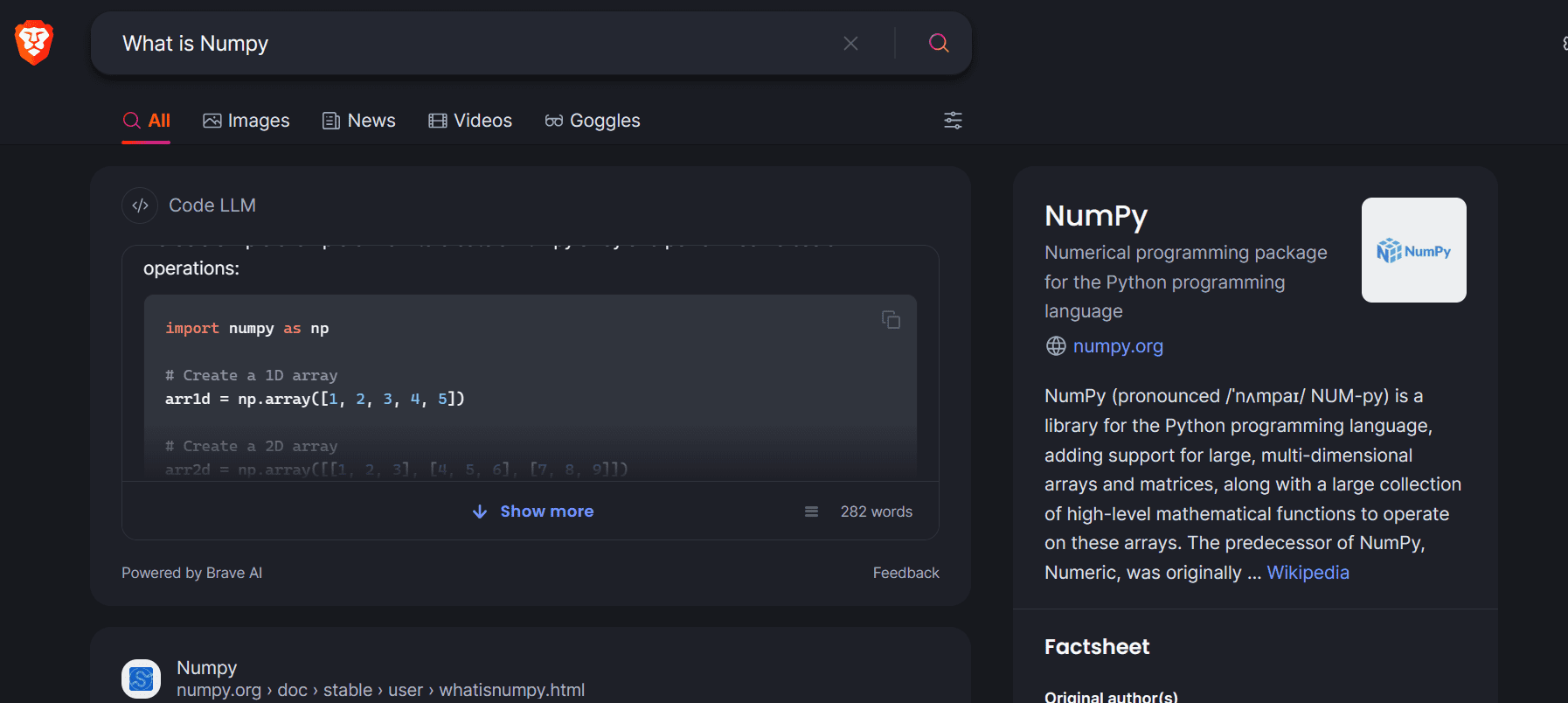
Brave
Brave search engine is a powerful tool that uses advanced AI techniques to provide an enhanced search experience for users.
One notable feature is CodeLLM, an AI-powered tool that is specifically designed to assist with programming queries by providing high-quality search results. Additionally, the search engine comes with the summarizer feature, which uses artificial intelligence to generate concise and relevant summaries at the top of search result pages, providing users with quick and informative answers based on their queries.
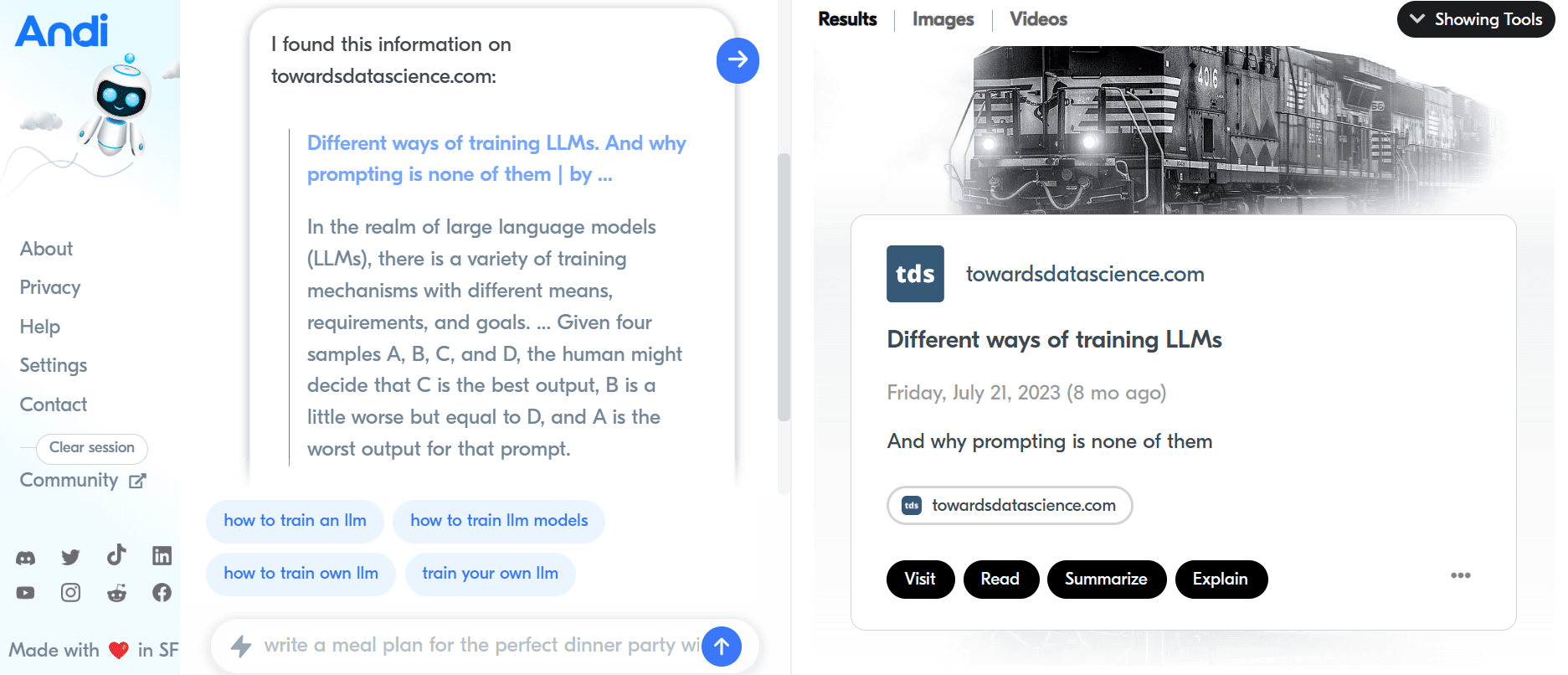
Andi Search
Andi Search is not just another search engine. It uses advanced generative AI and language models to provide more than just links in response to user queries. Instead, it offers direct answers, summaries, and explanations in a conversational tone, making it feel like you are talking to an expert.
Andi Search provides a ChatGPT-style search experience and a workspace where you can explore topics in-depth. With the option to summarize articles and ask follow-up questions, Andi Search makes it much easier to understand complex topics quickly and efficiently.
Conclusion
If you're looking for more privacy-focused alternatives, AI-based summarization, or a more visually enhanced search experience, there's likely an AI search engine on this list that meets your needs.
In my opinion, using newly available AI-powered search engines can provide better results and save time and effort compared to Google, which I believe is becoming worse over time.
Abid Ali Awan (@1abidaliawan) is a certified data scientist professional who loves building machine learning models. Currently, he is focusing on content creation and writing technical blogs on machine learning and data science technologies. Abid holds a Master's degree in technology management and a bachelor's degree in telecommunication engineering. His vision is to build an AI product using a graph neural network for students struggling with mental illness.
More On This Topic
Building a Visual Search Engine — Part 2: The Search Engine
Elevate Your Search Engine Skills with Uplimit's Search with ML Course!
Building a Visual Search Engine — Part 1: Data Exploration
Qdrant: Open-Source Vector Search Engine with Managed Cloud Platform
Hyperparameter Tuning Using Grid Search and Random Search in Python
Building a Geospatial Application in Python with Google Earth…
Corporate boardrooms must be better coordinated and urgent when they address cybersecurity issues, as threat actors turn to artificial intelligence (AI) to improve their game.
A board's primary role is to grow and safeguard the company's interests alongside its management team. With digital so integral in many organizations today, Sanjiv Misra, chairman of Clifford Capital, said cybersecurity must form part of a board's growth strategy.
Also: Cybersecurity 101: Everything on how to protect your privacy and stay safe online
Without cybersecurity, a board's ability to grow the business will be severely compromised, said Misra, who spoke during a panel discussion at Istari Global's Charter Asia-Pacific Cyber Congress in Singapore.
Fellow panelist Lee Fook Sun, chairman of Ensign InfoSecurity, concurred, noting the connection between physical and cyber realms. The conflicts in Ukraine and Gaza, for example, have pushed up the number of online threat activities, driven by hacktivism and nation-state attacks.
The challenge is for boardrooms to understand how such real-world developments impact online environments and, as such, translate into business risks for the company under their charge, Lee said.
A successful approach requires awareness of what and where the threats are and who the attackers are. Lee said threat intel provided by security vendors such as Ensign, which published some of these indicators for free, can offer insights for boards.
While awareness of cyber risks has increased among boardrooms, he said there still is a lack of cohesion between boards and the rest of the organization. Attention to cyber risks is often driven by regulatory concerns, with more urgency usually exhibited only after the organization has suffered its first breach.
Lee urged boards to understand the work of their CIO and CISO and determine how effective these executives are in their roles. To have a "well-oiled machinery" running, boards need to be able to have open discussions with the two people responsible for identifying and defending the company against online threats, he said.
And as most boards likely have other pressing issues, such as financials, to deal with, he suggested they delegate cyber risk management to a sub-committee. He said this unit can then assess the effectiveness of the company's cybersecurity strategy and cyber resilience, providing some supervision.
Misra underscored the need for boards to recognize cyber risks and frame their impact on the business. They will then be able to prioritize these risks, so they can identify what elements should be addressed with more urgency and how these threats should be managed.
And they should undertake this activity soon, as the volume of cyberattacks continues to climb.
Organizations must adopt essential measures
Interpol, for one, has warned the biggest security threat at the upcoming Paris Olympics will be cybercrime. The Tokyo Olympics in 2021 experienced 450 million cyberattacks, more than double the total for the 2012 London Olympics.
Such attacks can disrupt activities that require the support of IT systems, including ticketing, transportation, and administration. The ever-growing cyber threat highlights the need for nations such as Singapore, where digital developments are relatively advanced, to prioritize cybersecurity and boost its cyber-defense capabilities, according to its Minister for Communications and Information, Josephine Teo.
This prioritization means bolstering digital infrastructures and the resilience of companies operating in the country, said Teo, during her speech at the congress.
"They provide the services that people use and define our online experiences," she said, urging organizations to do more to safeguard their cyber operations.
Also: How AI firewalls will secure your new business applications
Pointing to a study conducted by Singapore's Cyber Security Agency (CSA), Teo noted that the research revealed the need for more companies to adopt essential security measures.
On average, organizations surveyed had adopted about 70% of security measures across five categories, including using secure configuration settings for hardware and software, controlling access to data and services, and updating software on devices and systems.
Partial adoption of these essential measures is "inadequate", Teo said.
Also: How AI can improve cybersecurity by harnessing diversity
The study polled over 2,000 organizations in 23 industries and seven charity sectors. Most respondents had experienced at least one cyber incident, such as ransomware or phishing attempts, during the past year.
"We are only as strong as the weakest link. Unless all these essential measures are adopted, the organizations are still exposed to unnecessary cyber risks," the Singapore minister said.
"In CSA's view, the 'passing mark' should be set high enough to give assurance — to your C-suite, to employees, to suppliers, and to customers. That means adopting the full package of essential measures in all of the five categories."
Just one-third of organizations had adopted all measures in at least three categories, she added. Almost 60% acknowledged a lack of expertise or experience in implementing cybersecurity effectively.
"Cyber risks have increased and continue to evolve quickly. This has contributed to the shortfall in cyber professionals, [where] even the most sophisticated organizations struggle to keep up," Teo said.
She noted that Singapore has been working to boost its cybersecurity talent pool through programs such as the CyberSG Talent, Innovation, and Growth Plan (TIG Plan).
Also: Want to work in AI? How to pivot your career in 5 steps
Generative AI can also be a great equalizer amid the global skills shortage in cybersecurity, according to Standard Chartered's Group CISO Alvaro Garrido. People who previously have not configured a system can now do so through prompts, said Garrido during a panel discussion at the congress.
He said generative AI enhances productivity and has also provided a way to translate complex threat intel into information that can be universally understood. The emerging technology has made it easier for professionals to join the cybersecurity sector, even if they couldn't before, and plug the skills gap.
His team is experimenting with generative AI and applying it to some tasks where they see an average 30% increase in productivity.
Daryl Pereira, Google Cloud's Asia-Pacific CISO, referred to similar gains from his team's use of generative AI, including a 70% improvement in finding malicious scripts.
Also: Employees input sensitive data into generative AI tools despite the risks
The US vendor is working on threat detection and triage for security incidents. Pereira said AI, powered by the cloud, can crunch data quicker than humans and address potential threats.
He also noted the possibility of arming non-security professionals to take on some SecOps (security operations) tasks, using generative AI as a guide with natural language prompts. For instance, they can manage daily operations at the SOC (security operations center), such as reviewing logs, freeing up the core cybersecurity team to focus on more advanced defense functions.
Threat actors are using generative AI
Companies that have yet to use generative AI to beef up their cybersecurity capabilities will have to contend with online adversaries that already are.
In particular, threat actors use generative AI to craft more convincing phishing email messages, noted Simon Green, Palo Alto Networks' APAC Japan president, during the security vendor's Ignite on Tour event in Singapore this week.
Citing the results of an internal test, Green said the company's SOC team obtained a 25% clickthrough rate for a phishing email it created using generative AI. The email was sent to every employee who has been with Palo Alto for at least three years, containing a request for them to update their employee record after reviewing the company's recently updated staff handbook.
Noting that the clickthrough rate for the test will likely be higher for non-security companies, he said generative AI has rectified a problem that previously made it easy to identify phishing email messages. The emerging technology has enabled hackers to produce these messages without grammatical errors and to do so at scale and speed.
Access to such tools and information on the cloud has also allowed threat actors to simulate attacks quickly, change and finetune ineffective attacks, and establish new attack vectors with higher success rates.
In addition, the growing adoption of AI brings a new category of vulnerabilities, such as large language model poisoning and deepfakes.
This shift calls for a change in how cybersecurity is developed and deployed, according to Green, who said Palo Alto is looking to apply AI capabilities across its product portfolio and integrate an AI "copilot".
Looking to dive into the exciting world of AI and machine learning? Fret not, as we list the top hackathons being organised globally this year. These hackathons offer a platform for tech enthusiasts, developers, and innovators to showcase their skills, collaborate on cutting-edge projects, and compete for exciting prizes.
Online Hackathon On Data-Driven Innovation For Citizen Grievance Redressal
Join the Online Hackathon on Data-driven Innovation for Citizen Grievance Redressal, organised by the Department of Administrative Reforms & Public Grievances (DARPG) of the Ministry of Personnel, Public Grievances & Pensions. The hackathon aims to address challenges in citizen grievance handling using data-driven solutions.
The top 3 most innovative solutions will be awarded cash prizes of Rs 2,00,000, Rs 1,00,000 and Rs 50,000, respectively. Participants, who could be students, researchers, startups, or even companies, can form teams of up to five members. Registration is open for those aged 18 and above. The teams must register on Janparichay and submit details on https://event.data.gov.in.
Selected entries will receive certificates, and DARPG will consider adopting the winning solutions for further development and implementation in the Citizen Grievance Redressal systems of the Government of India.
Data Science Student Championship
AI developers’ go-to platform, MachineHack, and Praxis Tech School are collectively calling upon the bright minds from engineering colleges and universities to participate in the third edition of the ‘Data Science Student Championship’. This collaboration invites undergraduate and postgraduate students from academic institutions across India to engage in the hackathon.
The two-month-long spectacle began on February 29 and will conclude on April 25. It promises the participants an exceptional platform to showcase their data science and problem analysis skills. The hackathon winners stand a chance to get: Rs 25,000 for the first prize, Rs 15,000 for the second place, and Rs 10,000 for the third position.
This data contest serves as a golden opportunity for students and academic researchers in various STEM fields to captivate the attention of premier firms. It’s the stage to unveil their capabilities, innovate, and make a mark for themselves in data science.
Google AI Hackathon
Participate in the Google AI Hackathon and build creative apps using generative AI tools with Gemini. The winners stand a chance to win up to $50,000 in prizes, along with recognition from Google and meetings with the Google Labs team. Submit your code repository URL and a 3-minute demo video showcasing your app.
Prizes will be awarded for creativity, business value, technical implementation, and community impact. Join this global hackathon to showcase your skills, innovate with AI, and win valuable rewards.
Bhasha Techathon
In collaboration with Google Cloud and MachineHack, Bhashini presents Bhasha Techathon, where innovation converges with impact. The techathon invites participants to address six problem statements in the field of NLP. The goal is to cultivate effective and indigenous solutions to language-specific challenges.
The techathon is scheduled to take place between March 8 and April 21, 2024. It is open for a diverse range of participants, including working professionals, startups, entrepreneurs, students, innovators, and freelancers.
ISB Hackathon 2024
ISB Institute of Data Science, in collaboration with the CyberPeace Foundation, is organising Hackathon 2024 from March to July 2024. This hackathon is focused on leveraging artificial intelligence and deep learning techniques to address the growing challenge of detecting deep fake images, videos, and text. Teams of one to five participants will have the opportunity to develop innovative solutions for this critical issue in today’s digital world.
The hackathon will follow a structured schedule, starting with team registration and a workshop to understand the problem statement. Participants will then receive the data set for Round 1, where they will submit their solutions to improve model efficiency. Top teams will be shortlisted for a presentation at ISB Hyderabad, where they will work on Round 2 and present their solutions to the jury. The winning team will be announced at the end of the hackathon.
Advanced RAG Hackathon
Advanced RAG Hackathon invites developers to build RAG applications and chatbots using platforms like Vectara, LlamaIndex, Together AI, and Unstructured.io. The event features one week of intensive online development, including workshops and mentorship sessions, providing participants with the tools and guidance needed to succeed.
The hackathon will start on April 12 on the lablab.ai platform and discord server. With a prize pool of $14,000 (including $6,500 in cash) and special prizes from sponsors like LlamaIndex, Unstructured.io, Vectara, and Together AI, participants have the chance to win rewards and recognition for their creations.
The hackathon also offers networking opportunities with fellow developers and startup enthusiasts, fostering collaboration and idea sharing.
The post Top 6 AI/ML Hackathons to Participate in 2024 appeared first on Analytics India Magazine.
TL;DR: Learn how consumer-facing AI tools can help your business in The 2024 Complete ChatGPT & Gemini AI Advanced E-Degree, now just $29.99.
According to a recent study, 35% of companies worldwide are already using AI, while 50% plan to use it in some capacity in 2024. Companies use AI to automate tedious tasks, create content, get inspiration for marketing campaigns, manage customer relationships and much more.
You don’t have to incorporate AI into your business, but it can help in more ways than you may imagine. With The 2024 Complete ChatGPT & Gemini AI Advanced E-Degree, you’ll get a comprehensive breakdown of some of today’s biggest consumer-facing and affordable AI tools to help you figure out how they might make sense for your business.
What you’ll learn
This 10-hour course is taught by Eduonix Learning Solutions (4.0/5-star instructor rating), a leader in online education. It will help you understand the significance of generative AI and delve into a number of AI tools, including ChatGPT, Gemini AI, GPT 3.5, GPT 4, Bard, DALL-E 2 and more. You’ll learn how to leverage these tools to boost creativity, improve productivity and much more.
Through the courses, you’ll get hands-on practice with each of the tools, exploring the vast possibilities in text, image, video and audio generation. You’ll understand the techniques and methodologies involved in AI-based content generation and learn how to properly leverage models to get your desired results.
Some of the projects you’ll explore include AI content marketing, AI image generation for social media and web design, AI audio and video for education and informational purposes, task automation and more.
See what AI can do for your business. Right now, you can get The 2024 Complete ChatGPT & Gemini AI Advanced E-Degree on sale for just $29.99 (reg. $790).
Audit and consultancy giant Deloitte has inaugurated three brand-new workplace hubs in India, strategically positioned in the bustling cities of Bengaluru Noida, and Pune.
These new establishments mark a significant milestone for the company, aligning with its commitment to proximity with its workforce and clientele. “These vibrant offices reflect the energy of Deloitte professionals and our confidence in the immense growth potential of our economy,” said Nitin Kini, chief operations officer, in his LinkedIn post.
With an array of amenities and collaborative spaces, these new workspaces are poised to elevate the employee experience.
The company has offices in seven cities in India: Hyderabad, Mumbai, Delhi/NCR, Bengaluru, Kolkata, Pune, and Chennai. It opened three new offices in Pune, Chennai, and Kolkata in May last year.
Approximately 30% of Deloitte’s global staff, equating to 50,000 employees, is currently based in India. The plan is to increase the workforce to 150,000 and 160,000 employees. This initiative is a strategic part of Deloitte’s global expansion plan, highlighting India’s crucial role in the company’s growth.
Sandeep Sethi leads Deloitte’s India operations as managing director.
The post Deloitte Opens Up New Offices in Bengaluru, Noida, Pune appeared first on Analytics India Magazine.








 Komo AI
 You.com