NVIDIA Hopper Leads in Generative AI Inference at MLPerf Results

NVIDIA is Rolling Out GH200 for its Customers

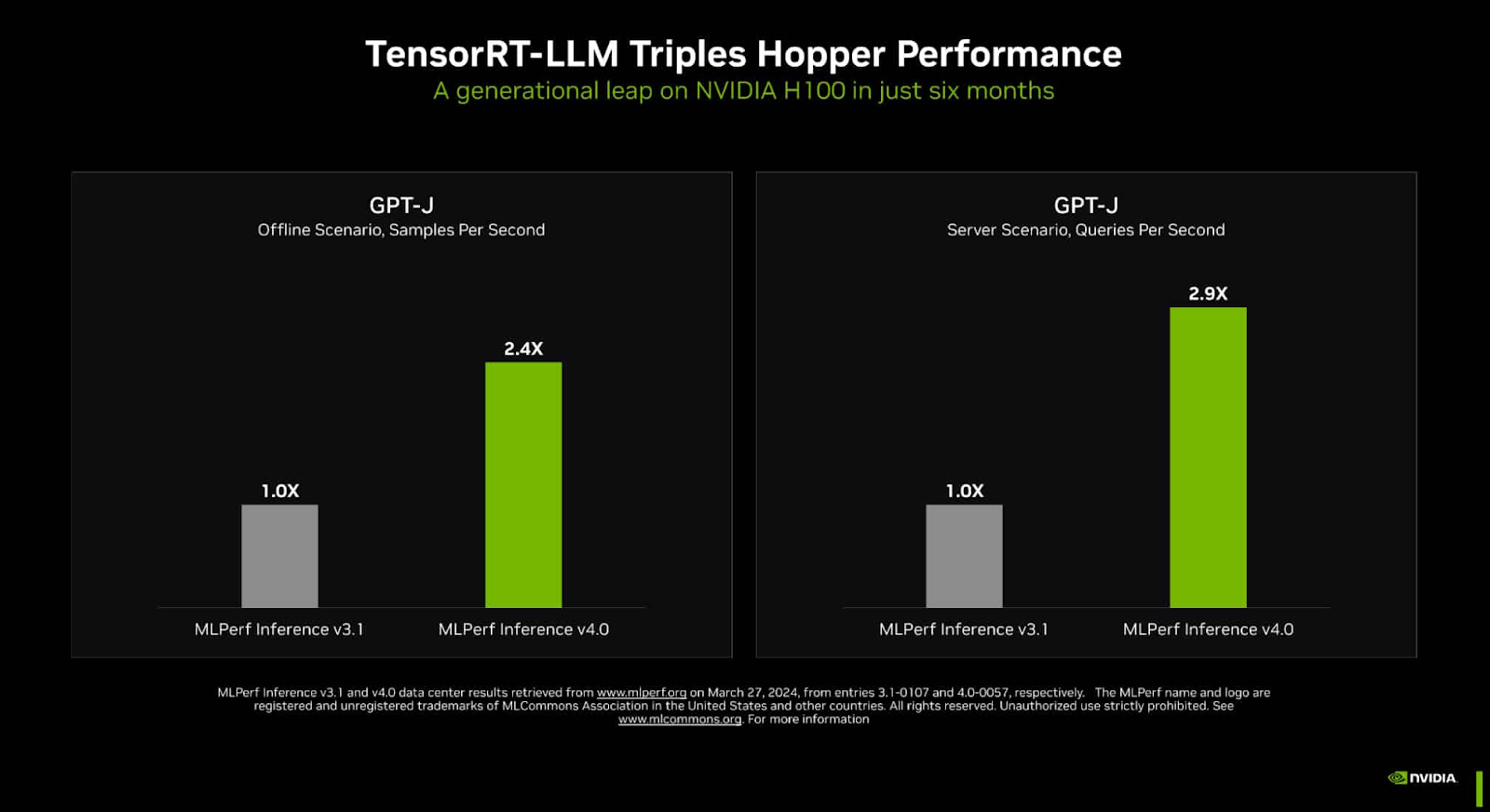
NVIDIA has solidified its dominance in generative AI with the unveiling of performance metrics in the latest MLPerf benchmarks. Leveraging TensorRT-LLM, specifically designed to streamline inference tasks for LLMs, NVIDIA’s Hopper architecture GPUs demonstrated a 3x increase in performance on the GPT-J LLM over results recorded merely six months prior.

Companies at the forefront of innovation are harnessing TensorRT-LLM to optimise their models, facilitated further by NVIDIA NIM – a suite of inference microservices encompassing powerful engines such as TensorRT-LLM. This integrated approach simplifies the deployment of NVIDIA’s inference platform, offering businesses unparalleled efficiency and flexibility.

The recent MLPerf benchmarks unveiled a significant leap in generative AI capabilities, with TensorRT-LLM running on NVIDIA’s latest H200 Tensor Core GPUs. These memory-enhanced GPUs, making their debut in the MLPerf arena, achieved remarkable throughput, generating up to 31,000 tokens per second on the Llama 2 70B benchmark.

The success of the H200 GPUs also underscores the innovative strides made in thermal management, with custom solutions contributing to performance gains of up to 14%. These advancements, exemplified by systems builders’ creative implementations in NVIDIA MGX designs, further elevate the performance capabilities of Hopper GPUs.

NVIDIA has commenced the shipment of H200 GPUs today, which will soon be accessible through nearly 20 prominent system builders and cloud service providers.

With an impressive memory bandwidth of almost 5 TB/second, the GH200 Superchips have demonstrated exceptional performance, particularly in memory-intensive MLPerf assessments such as recommender systems.

Employing a technique known as structured sparsity—a method aimed at reducing computations, initially introduced with NVIDIA A100 Tensor Core GPUs—NVIDIA engineers achieved speed enhancements of up to 33% on inference with Llama 2.

In response to the escalating sizes of LLM models, NVIDIA’s founder and CEO Jensen Huang revealed during last week’s GTC that the upcoming NVIDIA Blackwell architecture GPUs will deliver heightened performance levels necessary for multi trillion-parameter AI models.

The post NVIDIA Hopper Leads in Generative AI Inference at MLPerf Results appeared first on Analytics India Magazine.

You can now use Gemini in Google Messages, if you’re among the lucky few

gemini-ai-on-google-messages

A month ago, Google announced that Gemini would soon be coming to Google Messages, helping users with things like writing messages, brainstorming ideas, planning events, making dinner with a set of given ingredients, or just chatting.

It appears that "soon" has arrived, as the feature has started rolling out to some beta users, according to 9to5Google.

To get access, Google's support page states that you will need to be signed up as a beta tester, have RCS turned on, be at least 18, and have either a Pixel 6 or later, a Pixel Fold, a Samsung Galaxy S22 or later, a Samsung Galaxy Z Flip, or a Samsung Galaxy Z Fold. If your account is controlled by Family Link, you can't use Gemini.

Also: What is Gemini? Everything you should know about Google's new AI model

Unfortunately, even if you meet all the above criteria, there's no way to sign up or request the feature. You just have to wait.

Once Google deems you worthy, you'll get a message from Gemini letting you know it's available. You can then enable the feature by selecting Gemini from the top of the contacts list in Google Messages.

Google lists a few examples of possible conversations you can have with Gemini:

  • Suggest a 3-course dinner menu that's impressive but manageable for a novice cook. Dietary restriction: vegetarian.
  • I haven't reached out to my friend in a while. Help me draft a short message to check in and reconnect.
  • I'm going to a social event where I barely know anyone. Come up with a few interesting conversation starters.

You will also be able to send images to Gemini and ask for more information, perhaps to identify a plant or a dish. Gemini can't identify images with people in them just yet, even if the person is only a small part of, and not the focus of, a given photo.

Gemini in Google Messages also can't generate any images for you, yet. This is the standard Gemini, simply available via text message. While the feature is available to some beta users for now, a wider rollout shouldn't be too far off.

Featured

Databricks Creates History with GPT-4-Level Open-Source Model

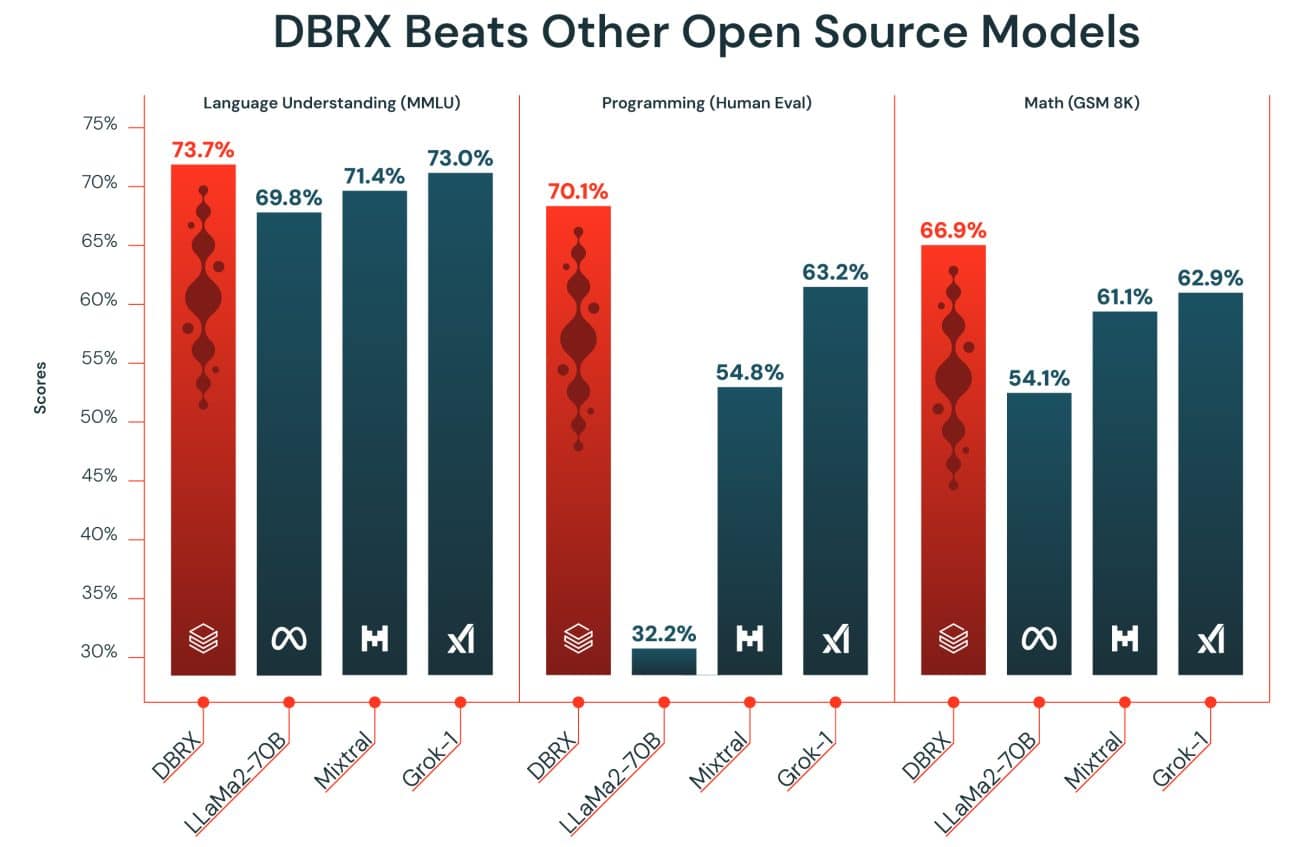
The VP of Databricks and founder of MosaicML, Naveen Rao, is thrilled. Databricks today announced the launch of the world’s most powerful open-source model DBRX. This new model outperforms SOTA open-source models like Llama 2 70B, Mixtral-8x7B and Grok-1 across various benchmarks, including language understanding (MMLU), programming (Human Eval) and Math (GSM 8K).

Interestingly, it also beat OpenAI’s GPT-3.5 and inches closer to GPT-4 on similar benchmarks, inevitably reducing the reliance on proprietary closed-source models with open-source models, and significantly reducing the cost.

“You can think of it as almost 2x better in some sense, but it’s also half the cost to serve it,” Rao said in an exclusive interaction with AIM ahead of the release. “It’s half the cost, half the flops, half the time,” he beamed.

Comparing its price with closed-source models like GPT-4, he said it is 1/10th of the dollars per token. Citing GPT-4, he said it is $120 per 1 million output tokens, whereas DBRX with a 32K context window is about $6.2 per 1 million token output—i.e., 20 times lower than that of GPT-4 for 1 million token outputs.

But, How?

This was possible because of the model’s MoE architecture, which provides significant economic benefits. “The economics are so much better for serving. They’re more than 2X better in terms of flops and floating point operations required to do the serving,” shared Rao.

It also enables fast performance, with DBRX outputting “100 tokens per second versus Llama putting out at 35 tokens per second”. Rao noted, “It comes out so fast that it almost looks like magic” compared to services like ChatGPT.

The 132B total parameter model has 36B “active parameters” due to the MoE design of having “16 separate models” where “when we make an inference, we choose a subset of four”, Rao said.

He also reiterated that while others have built MoE models, “we’re the ones who made it work, and at this scale. We’re not aware of anyone else who’s done it”.

The MoE architecture directly addresses key enterprise barriers like cost, privacy/control, and complexity that have hindered AI adoption, according to Rao.

Closes OpenAI’s Doors

Databricks mean business. Rao said that you can not beat OpenAI without a differentiated use case.

He said that to be successful, you need to outperform your competition. If you cannot offer a distinct advantage or a more cost-effective solution, there is no point in adopting someone else’s model. Simply trying to compete on equal terms is futile unless you can surpass them, said Rao.

He also said that it makes sense for Databricks to focus on helping enterprises build, train, and scale models catering to their specialised needs. “We care about enterprise adoption because that’s our business model. We make money when customers want to build, customise, and serve models,” he added.

Rao sees a turn in the tide with this model and senses that open-source models will eventually overtake closed ones like GPT-4, drawing parallels to Linux surpassing proprietary Unix systems.

“Open source is really just getting started. The world will look a bit different in five years,” said Rao.

Databricks is Not Alone

Recently, Elon Musk’s XAI open-sourced its LLM Grok-1 model for the ecosystem, which boasts 314 billion parameters. Rao wasn’t impressed. “I don’t think Grok 1 is that great, despite its large 314 billion parameter size,” he added, saying that it becomes difficult to evaluate as it takes a lot of compute.

He also pointed out that Grok’s capabilities are not commensurate with its massive scale, saying, “For a model that size, I would expect a higher level of capability.”

But, sadly that is not the case. He was rather dismissive of XAI’s Grok open-source model, its quality and capabilities relative to its massive scale, suggesting DBRX is a superior open-source alternative that outperforms Grok comprehensively on most benchmarks.

Meanwhile, Meta is also leading the open-source LLM race with Llama 2, and the release of Llama 3 on the horizon. Rao seems confident. He said that most of them would not be able to achieve the same economics. “I won’t be surprised if their model has the same economics as ours, but it is going to be of worse quality.”

He said that the key is to look at not just performance quality but also cost and time, like how fast it is, what it costs, and the quality, all put together. “When you look at these together, I don’t think anyone’s going to beat us in a long time,” said Rao, confidently.

Late to the Open Source LLM Party

The road to releasing its open-source model, DBRX, wasn’t smooth. Rao told AIM that Databricks wanted to release DBRX even earlier but faced challenges in getting the required compute resources and ensuring stability.

Rao mentioned that the release was “a month or two behind schedule” due to these issues. One of the biggest technical challenges was scaling up to the many required GPUs. Rao said, “We achieved the ability to scale to a large number of GPUs, but had to deal with some challenges along the way.”

He said acquiring a stable GPU cluster from their provider for training was a bottleneck, which involved “more than 3072 H100 GPUs” but their “provider was not super stable many of the times”.

Rao said that routing or selecting the models in the subset of four models (from the total of 16 models) within the MOE – mixture of experts architecture – was probably one of the biggest challenges to solve. “We’ve put considerable effort into engineering this system to optimise for efficiency and effectiveness,” said Rao.

He explained that an unstable “flaky” cluster led to slowdowns and failures. “When the cluster is flaky, things go slow or they break and stop working,” he said. But, he now seems hopeful and is more optimistic about building powerful open-source LLMs for enterprise customers and scaling them seamlessly.

What’s Next?

The launch demonstrates Databricks’ commitment to open source after acquiring generative AI startup MosaicML. Rao believes integrating its technology will enable companies to differentiate their AI and leverage proprietary data. The team looks forward to releasing new and better variants of the model.

“So RAG is a big, important pattern for us, and we’ll be releasing tools,” Rao revealed. Moreover, the innovation just doesn’t stop there. He said, “We already have them in private preview, but we have ways to do RAG within Databricks that are very straightforward and simple. Making this model the best generator model for RAG that’s important.”

Rao also said that the model is going to be hosted in their products on all the major cloud environments like AWS, GCP and Azure. “It is an open-source model, you can take it and serve it like you want,” Rao said.

The post Databricks Creates History with GPT-4-Level Open-Source Model appeared first on Analytics India Magazine.

7 Steps to Mastering Large Language Model Fine-tuning

7 Steps to Mastering Large Language Model Fine-tuning
Image by Author

Over the recent year and a half, the landscape of natural language processing (NLP) has seen a remarkable evolution, mostly thanks to the rise of Large Language Models (LLMs) like OpenAI’s GPT family.

These powerful models have revolutionized our approach to handling natural language tasks, offering unprecedented capabilities in translation, sentiment analysis, and automated text generation. Their ability to understand and generate human-like text has opened up possibilities once thought unattainable.

However, despite their impressive capabilities, the journey to train these models is full of challenges, such as the significant time and financial investments required.

This brings us to the critical role of fine-tuning LLMs.

By refining these pre-trained models to better suit specific applications or domains, we can significantly enhance their performance on particular tasks. This step not only elevates their quality but also extends their utility across a wide array of sectors.

This guide aims to break down this process into 7 simple steps to get any LLM fine-tuned for a specific task.

Understanding Pre-trained Large Language Models

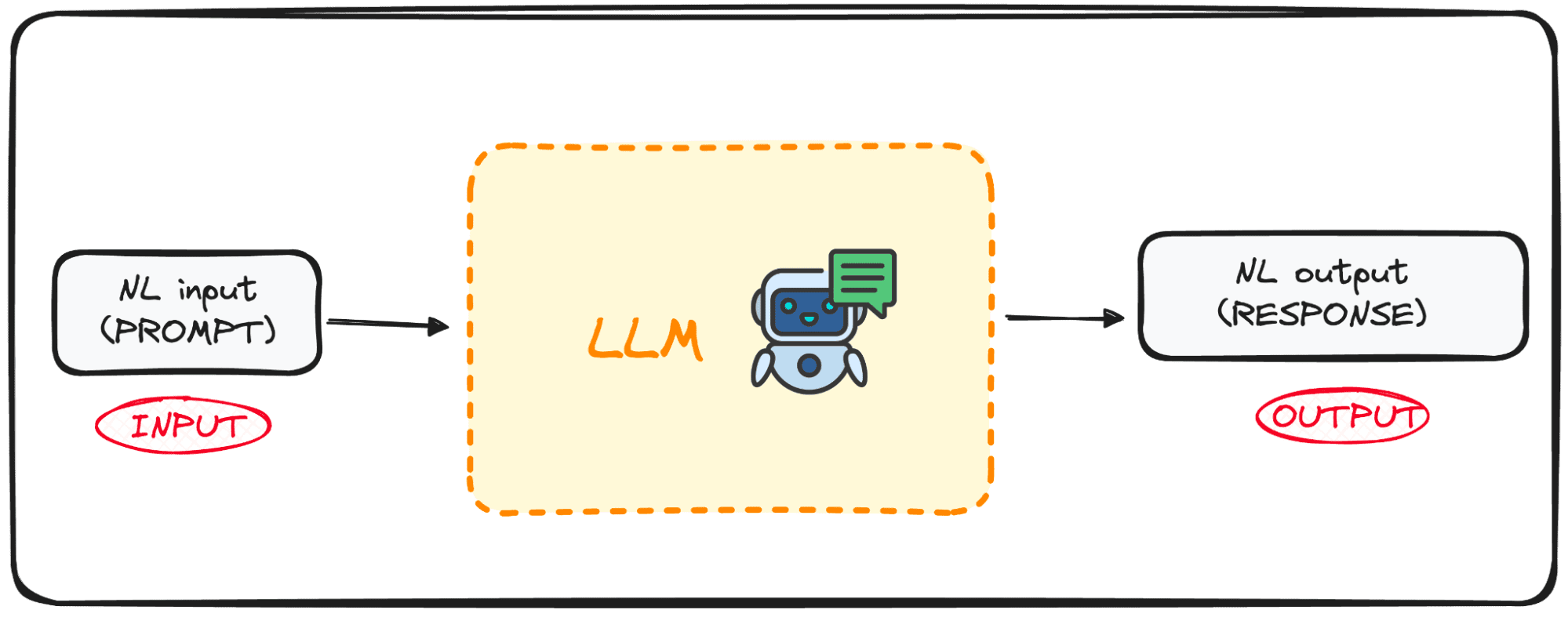
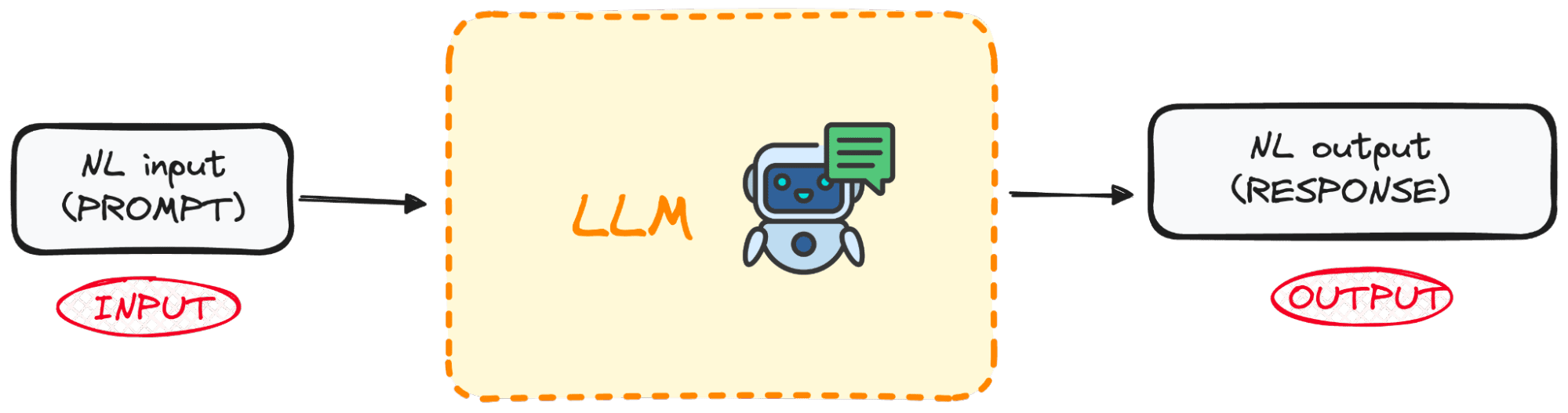
LLMs are a specialized category of ML algorithms designed to predict the next word in a sequence based on the context provided by the preceding words. These models are built upon the Transformers architecture, a breakthrough in machine learning techniques and first explained in Google’s All you need is attention article.

Models like GPT (Generative Pre-trained Transformer) are examples of pre-trained language models that have been exposed to large volumes of textual data. This extensive training allows them to capture the underlying rules of language usage, including how words are combined to form coherent sentences.
7 Steps to Mastering Large Language Model Fine-tuning
Image by Author

A key strength of these models lies in their ability to not only understand natural language but also to produce text that closely mimics human writing based on the inputs they are given.

So what’s the best of this?

These models are already open to the masses using APIs.

What is Fine-tuning, and Why is it Important?

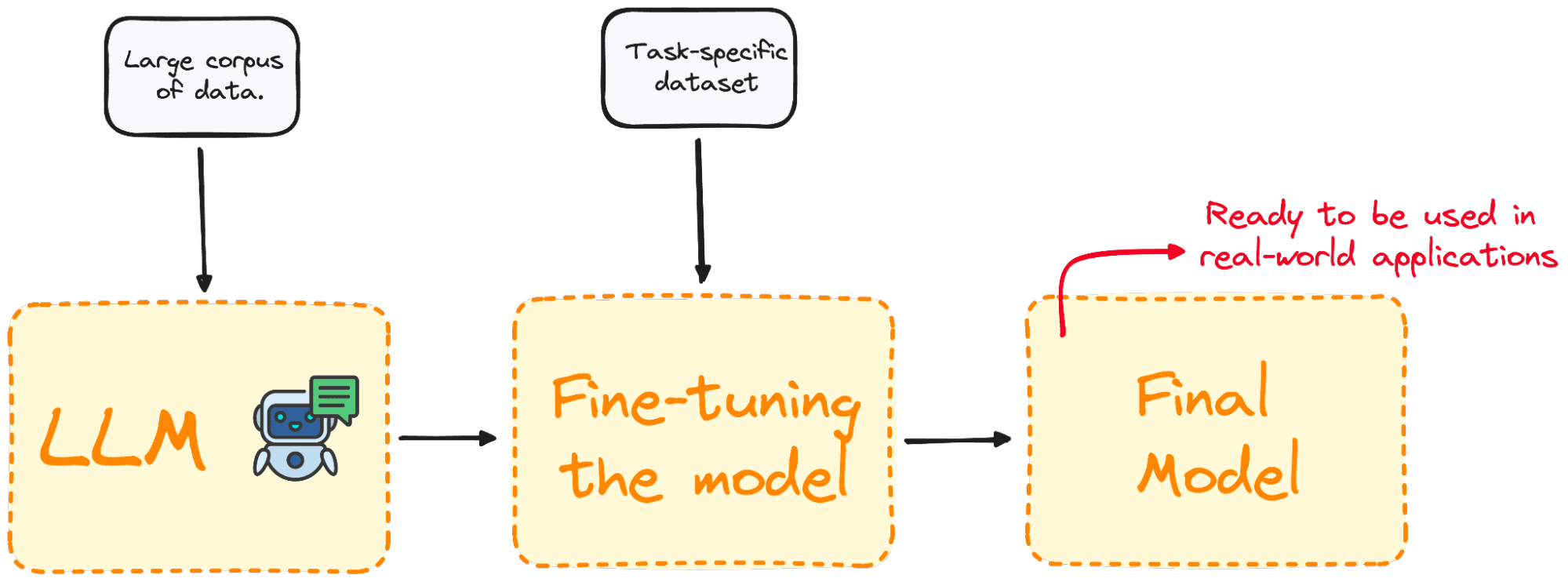
Fine-tuning is the process of picking a pre-trained model and improving it with further training on a domain-specific dataset.

Most LLM models have very good natural language skills and generic knowledge performance but fail in specific task-oriented problems. The fine-tuning process offers an approach to improve model performance for specific problems while lowering computation expenses without the necessity of building them from the ground up.
7 Steps to Mastering Large Language Model Fine-tuning
Image by Author

To put it simply, Fine-tuning tailors the model to have a better performance for specific tasks, making it more effective and versatile in real-world applications. This process is essential for improving an existing model for a particular task or domain.

A Step-by-Step Guide to Fine-tuning a LLM

Let’s exemplify this concept by fine-tuning a real model in only 7 steps.

Step 1: Having our concrete objective clear

Imagine we want to infer the sentiment of any text and decide to try GPT-2 for such a task.

I’m pretty sure there’s no surprise that we will soon enough detect it is quite bad at doing so. Then, one natural question that comes to mind is:

Can we do something to improve its performance?

And of course, the answer is that we can!

Taking advantage of fine-tuning by training our pre-trained GPT-2 model from the Hugging Face Hub with a dataset containing tweets and their corresponding sentiments so the performance improves.

So our ultimate goal is to have a model that is good at inferring the sentiment out of text.

Step 2: Choose a pre-trained model and a dataset

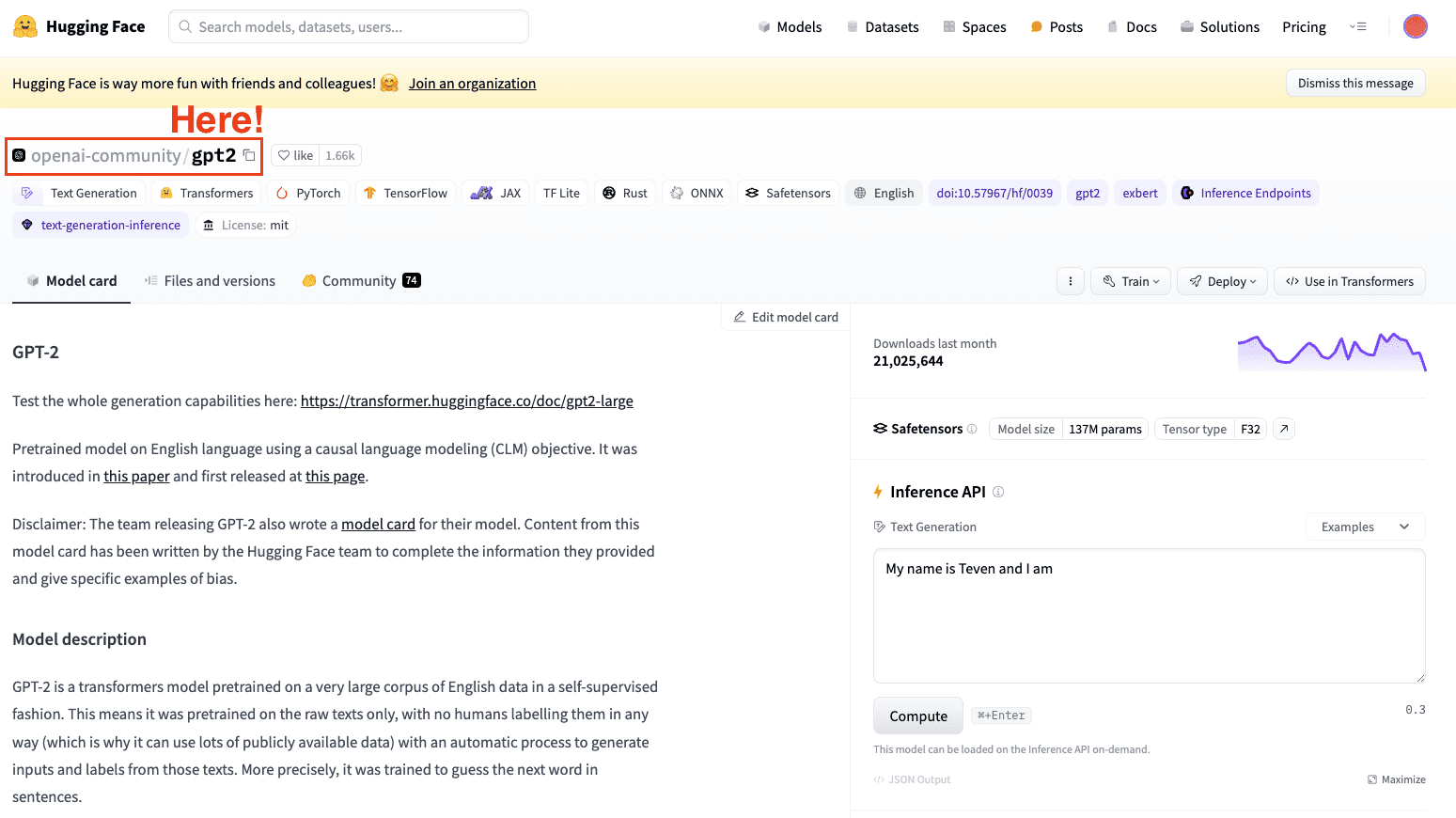
The second step is to pick what model to take as a base model. In our case, we already picked the model: GPT-2. So we are going to perform some simple fine-tuning to it.
7 Steps to Mastering Large Language Model Fine-tuning
Screenshot of Hugging Face Datasets Hub. Selecting OpenAI’s GPT2 model.

Always keep in mind to select a model that fits your task.

Step 3: Load the data to use

Now that we have both our model and our main task, we need some data to work with.

But no worries, Hugging Face has everything arranged!

This is where their dataset library kicks in.

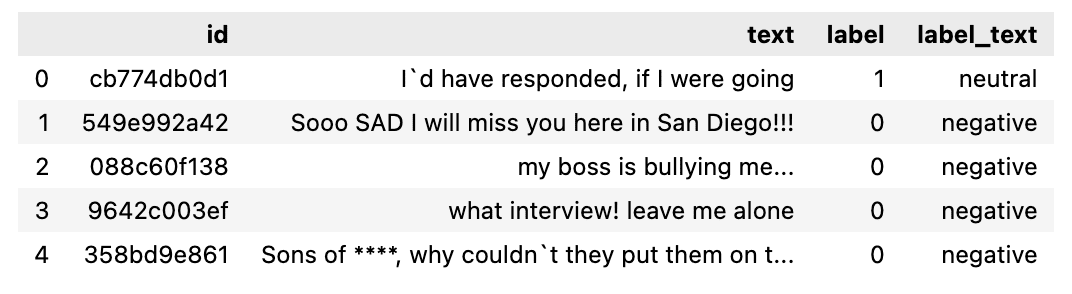
In this example, we will take advantage of the Hugging Face dataset library to import a dataset with tweets labeled with their corresponding sentiment (Positive, Neutral or Negative).

from datasets import load_dataset    dataset = load_dataset("mteb/tweet_sentiment_extraction")  df = pd.DataFrame(dataset['train'])

The data looks like follows:
7 Steps to Mastering Large Language Model Fine-tuning
The data set to be used.

Step 4: Tokenizer

Now we have both our model and the dataset to fine-tune it. So the following natural step is to load a tokenizer. As LLMs work with tokens (and not with words!!), we require a tokenizer to send the data to our model.

We can easily perform this by taking advantage of the map method to tokenize the whole dataset.

from transformers import GPT2Tokenizer    # Loading the dataset to train our model  dataset = load_dataset("mteb/tweet_sentiment_extraction")  tokenizer = GPT2Tokenizer.from_pretrained("gpt2")  tokenizer.pad_token = tokenizer.eos_token    def tokenize_function(examples):     return tokenizer(examples["text"], padding="max_length", truncation=True)    tokenized_datasets = dataset.map(tokenize_function, batched=True)

BONUS: To improve our processing performance, two smaller subsets are generated:

  • The training set: To fine-tune our model.
  • The testing set: To evaluate it.
small_train_dataset = tokenized_datasets["train"].shuffle(seed=42).select(range(1000))  small_eval_dataset = tokenized_datasets["test"].shuffle(seed=42).select(range(1000))

Step 5: Initialize our base model

Once we have the dataset to be used, we load our model and specify the number of expected labels. From the Tweet’s sentiment dataset, you can know there are three possible labels:

  • 0 or Negative
  • 1 or Neutral
  • 2 or Positive
from transformers import GPT2ForSequenceClassification    model = GPT2ForSequenceClassification.from_pretrained("gpt2", num_labels=3)

Step 6: Evaluate method

The Transformers library provides a class called “Trainer” that optimizes both the training and the evaluation of our model. Therefore, before the actual training is begun, we need to define a function to evaluate the fine-tuned model.

import evaluate    metric = evaluate.load("accuracy")    def compute_metrics(eval_pred):     logits, labels = eval_pred     predictions = np.argmax(logits, axis=-1)     return metric.compute(predictions=predictions, references=labels)

Step 7: Fine-tune using the Trainer Method

The final step is fine-tuning the model. To do so, we set up the training arguments together with the evaluation strategy and execute the Trainer object.

To execute the Trainer object we just use the train() command.

from transformers import TrainingArguments, Trainer    training_args = TrainingArguments(     output_dir="test_trainer",     #evaluation_strategy="epoch",     per_device_train_batch_size=1,  # Reduce batch size here     per_device_eval_batch_size=1,    # Optionally, reduce for evaluation as well     gradient_accumulation_steps=4     )      trainer = Trainer(     model=model,     args=training_args,     train_dataset=small_train_dataset,     eval_dataset=small_eval_dataset,     compute_metrics=compute_metrics,    )    trainer.train()

Once our model has been fine-tuned, we use the test set to evaluate its performance. The trainer object already contains an optimized evaluate() method.

import evaluate    trainer.evaluate()

This is a basic process to perform a fine-tuning of any LLM.

Also, remember that the process of fine-tuning a LLM is highly computationally demanding, so your local computer may not have enough power to perform it.

Main Conclusions

Today, fine-tuning pre-trained large language models like GPT for specific tasks is crucial to enhancing LLMs performance in specific domains. It allows us to take advantage of their natural language power while improving their efficiency and the potential for customization, making the process accessible and cost-effective.

Following these simple 7 steps —from selecting the right model and dataset to training and evaluating the fine-tuned model— we can achieve a superior model performance in specific domains.

For those who want to check the full code, it is available in my large language models GitHub repo.

Josep Ferrer is an analytics engineer from Barcelona. He graduated in physics engineering and is currently working in the data science field applied to human mobility. He is a part-time content creator focused on data science and technology. Josep writes on all things AI, covering the application of the ongoing explosion in the field.

More On This Topic

  • Fine-Tuning OpenAI Language Models with Noisily Labeled Data
  • Fine-Tuning BERT for Tweets Classification with HuggingFace
  • Fine Tuning LLAMAv2 with QLora on Google Colab for Free
  • Overview of PEFT: State-of-the-art Parameter-Efficient Fine-Tuning
  • 7 Steps to Mastering Large Language Models (LLMs)
  • The Ultimate Open-Source Large Language Model Ecosystem

Microsoft unveils seven new AI features to level up your meetings

Microsoft Teams and Copilot

Workplace communications, such as messages and video calls, are crucial for a professional's day, but they also take time. To help streamline workplace collaboration, Microsoft is upgrading its Copilot in Teams experience.

On Tuesday, Microsoft announced new artificial intelligence (AI) features are coming to Copilot in Teams in the coming months to improve online and hybrid interactions. Microsoft says that "soon" you will be able to use prompts to generate chat messages, because apparently writing prompts to write messages beats just writing messages.

Also: Adobe announces generative AI tools to reinvent ad campaigns

Starting in April, you will be able to use the Copilot in Teams chat compose box to ask Copilot to adjust your message and provide a new, rewritten version of the text that better conveys what you are trying to say. The demo, as seen below, shows a user asking Copilot to "add a joke about web design" to a pre-written message, and clicking the replace button to use the newly generated text instead.

Also in April, Microsoft plans to revamp the audio in Teams for a better hybrid experience. With voice isolation, generally available in April, an AI-based noise suppression feature will isolate your voice and eliminate background sounds, including other people's voices, when you join a call in a noisy location. Speaker recognition capabilities, in public preview starting in April, will improve transcript accuracy and Copilot insights for any microphone.

Starting in May, Copilot in meetings will provide users with more comprehensive meeting insights, including whether something was was spoken or written, in addition to the full meeting transcript. Starting in June, users will be able to use Intelligent Call Recap to get AI-powered insights into their VoIP and Public Switched Telephone Network calls in Teams.

Also: Microsoft's Copilot may be a helpful AI tool but it's trying to sell you things too

Finally, to enhance hybrid-working experiences, Microsoft plans to make automatic camera switching for IntelliFrame available later this year. The feature will use AI to determine the best view of every person in a meeting room by comparing multiple video feeds, such as from a laptop camera and from a room camera, so remote participants are less likely to get annoyed by obstructions.

Microsoft also announced new non-AI related features, such as Windows Autopilot for Teams Rooms, which helps IT admins deploy Teams Rooms in a much shorter time, shared display mode, now generally available, support for intelligent speakers in bring-your-own-device spaces, and more.

Artificial Intelligence

Century Health, now with $2M, taps AI to give pharma access to good patient data

Century Health, now with $2M, taps AI to give pharma access to good patient data Christine Hall 8 hours

Artificial intelligence can find hidden signals in data across healthcare, and companies like Nvidia are leaning into what this can mean. For example, it announced two dozen new AI-powered tools last week for areas including biotechnology and drug discovery. And Nvidia is not alone.

Century Health is a new startup also getting in on the action. It’s applying AI to clinical data to uncover new applications for drugs. It’s working with pharmaceutical companies and researchers, initially at Yale and UC San Diego, to identify and commercialize the next breakthrough for diseases, like Alzheimer’s, that affect tens of millions of patients.

The mission is a personal one for Century Health’s co-founder and CEO, Vish Srivastava. He watched his grandfather’s Alzheimer’s get to the point where he didn’t recognize Srivastava anymore.

“That sent me down a rabbit hole,” said Srivastava, whose background is in healthcare product development and data. “One of the biggest issues around innovation for new treatments is efficient access to good patient data. This is now only possible because of generative AI. That data sat around for decades because it takes manual effort to normalize and extract insight from it.”

That’s when he teamed up with friend Sanjay Hariharan, a data scientist and applied AI engineer, to form Century Health. They built a platform to extract that hidden data and aggregate it. Researchers and pharma companies subscribe to the platform and can then use that data on approved drugs; to expand to new drugs; or to find insights to expand access to drugs that have already been approved.

Want to see an NHS doctor? Prepare to cough up your data first.

The ultimate goal is accelerating access to treatments, Srivastava said.

“Drug development is massively expensive, and on average, takes $1 billion to $2 billion to develop a new drug,” he said. “From the pharma company’s perspective, when their drug is now approved, the mission is to get it to patients as quickly as possible. For us, that also means as affordably as possible with access to good real-world data.”

Now with $2 million pre-seed funding, Century Health will run three to five pilots over the next several months. The goal is to validate the initial technology that collects the data and, most importantly, to see the impact the insights from those data sets can bring, Srivastava said.

He sees these pilots as design partnerships and a way to get feedback on the benefits of drugs, for example, which patient subpopulation might be underrepresented. In addition to the validated technology, another milestone will be to secure early revenue from the pilots, which Century Health can leverage to go after another round of venture capital.

The investment was led by 2048 Ventures with participation from LifeX, Everywhere, Alumni Ventures and a group of angel investors, including Datavant founder Travis May and Evidation founder and CEO Christine Lemke.

Alex Iskold, managing partner of 2048 Ventures, said in a statement, “At 2048 Ventures we have a strong thesis around real-time data, in healthcare and beyond. Vish and Sanjay have a vision to leverage AI and real world patient data to unlock a better feedback loop and ultimately faster and more efficient drug development and commercialization.”

TC+ Roundup: How to capture market share in the era of AI

Andrej Karpathy Says the Pathway to AGI is Through a Language Model Operating System

“There’s a lot of optimization, and I think, roughly speaking, the way things are happening is that everyone is trying to build what I refer to as a kind of LLM OS,” said Andrej Karpathy, former Sr. Director of AI at Tesla, and one of the founding members of OpenAI.

In an interview with Stephanie Zhan, at the recent Sequoia Capital’s AI Ascent event, Karpathy, spoke about how seven years ago, achieving AGI seemed like an ‘impossible task to achieve even in the span of our lifetimes.’

“I sort of felt with AGI, it wasn’t clear how it was going to happen. It was very sort of academic and you would like to think about different approaches, and now I think it’s very clear, and there’s like a lot of space and everyone is trying to fill it,” said Karpathy.

The current focus revolves around the development of what Karpathy calls an “LLM OS” – an operating system designed to integrate various modalities such as text, images, and audio, and at the core, or CPU, is the LLM Transformer.

Karpathy expressed his sense of anticipation and excitement for the future of AGI, and believes that the prospect of deploying self-contained agents capable of handling high-level tasks in specialized ways holds promise for groundbreaking advancements across various fields.

Aligned with OpenAI

While LLM OS, an extension of LLM, might be Karpathy’s probable take to eventually achieve AGI, the vision is not vastly different from Sam Altman’s. In last year’s interview with Lex Fridman, Altman said that LLM could be a ‘part of the way to build an AGI’. Interestingly, each of the big tech companies, including OpenAI, Meta, Google or even Tesla, have their own path towards achieving AGI.

AGI Conversation Continues

Off late, the hottest topic of discussion has been revolving around AGI. From discussing the timeline to achieving it, to discussing the form of AGI when it appears, big tech leaders have been chiming into the conversation. Recently, NVIDIA chief Jensen Huang said that it would take 5 years to reach AGI, with certain conditions applied.

While conversations about AGI will undoubtedly gain momentum, the diverse opinions of experts and tech pioneers will undoubtedly broaden the scope of interpreting AGI.

The post Andrej Karpathy Says the Pathway to AGI is Through a Language Model Operating System appeared first on Analytics India Magazine.

Supercharge Your Data Science Career: Strategies for Solid Foundation

The field of Data Science stands as a beacon of innovation and opportunity, offering myriad pathways for those intrigued by the power of data to shape the future. Embarking on a career in Data Science requires not just a passion for data but a comprehensive skill set that blends mathematics, statistics, computer science, and a keen understanding of business contexts. This guide aims to illuminate the path for aspiring data scientists, from foundational learning to securing a place in the industry, and beyond.

Building a Solid Foundation

A career in Data Science begins with a solid foundation in Mathematics, Statistics, and Computer Science. These disciplines are the pillars of data science, equipping aspiring professionals with the essential skills to analyze, interpret, and leverage data effectively. Just as a sturdy building requires a strong base to withstand the elements, a successful career in Data Science is built on a deep understanding of these core subjects. This foundational knowledge not only enables the practical application of data science techniques but also fosters a mindset geared towards problem-solving and innovation. In the following section, we explore how to establish this crucial groundwork, setting the stage for a rewarding journey into the world of Data Science.

Build a strong foundation in Mathematics, Statistics, and Computer Science

At the heart of Data Science lie three pivotal disciplines: Mathematics, Statistics, and Computer Science. These are the pillars upon which the vast field rests, providing the tools and frameworks necessary to navigate the complex landscape of data analysis. For newcomers, embarking on this journey begins with a commitment to mastering these core subjects. Online platforms like Coursera, edX, and Khan Academy offer a wealth of courses designed to build these essential skills from the ground up.

Gain practical experience through internships, personal projects, and real-world problem-solving

Theoretical knowledge, while fundamental, achieves its full potential when applied to real-world challenges. Internships and personal projects serve as excellent arenas for this application, offering a glimpse into the practical demands and rewards of a career in Data Science. Securing internships can be more challenging than it seems. However, engaging in industry events, becoming active in online communities such as Kaggle, contributing to open-source projects, and participating in hackathons can offer significant benefits. These activities not only provide exposure to the latest trends but also offer organic networking opportunities and the potential for mentorship.

Cultivating Passion and Skills

Data Science is a demanding field that requires not just skill, but a genuine passion for discovery and innovation. This intrinsic motivation is the key to enduring the rigorous demands of the profession and propelling oneself toward success.

Understanding the job market and the myriad roles within Data Science is crucial. The landscape is diverse, offering specializations in machine learning, data visualization, and natural language processing, among others. Platforms like LinkedIn Learning and industry-specific workshops can offer insights into these roles and the skills required to excel in them.

Master Both Technical and Soft Skills

While technical prowess in coding, data analysis, and familiarity with Distributed computing tools and packages like Hadoop, Spark, and cloud computing platforms is indispensable, soft skills like communication, problem-solving, and teamwork are equally vital. Employers value candidates who can not only crunch numbers but also articulate findings and collaborate effectively across teams.

A robust understanding of the business context is what differentiates a competent data scientist from an exceptional one. The ability to translate data insights into actionable business strategies is invaluable, necessitating a deep dive into the industry one aims to serve. Being curious about the “why” behind business decisions and learning basic finance and accounting to interpret data effectively in a business context are essential skills in this endeavor.

Adapt to Ambiguity

Data Science often involves navigating through incomplete or messy data. The hallmark of a successful data scientist lies in their ability to remain composed amidst ambiguity, turning it into an asset rather than a setback. This requires a blend of critical thinking, to sift through uncertainty and extract meaningful insights, and creativity, to apply unconventional approaches when traditional methods fall short. It also demands an iterative mindset, learning from each analysis to refine future strategies. Effective communication of uncertain findings is crucial, as is the agility to adapt based on new information.

Exploring the Spectrum of Data Science Roles

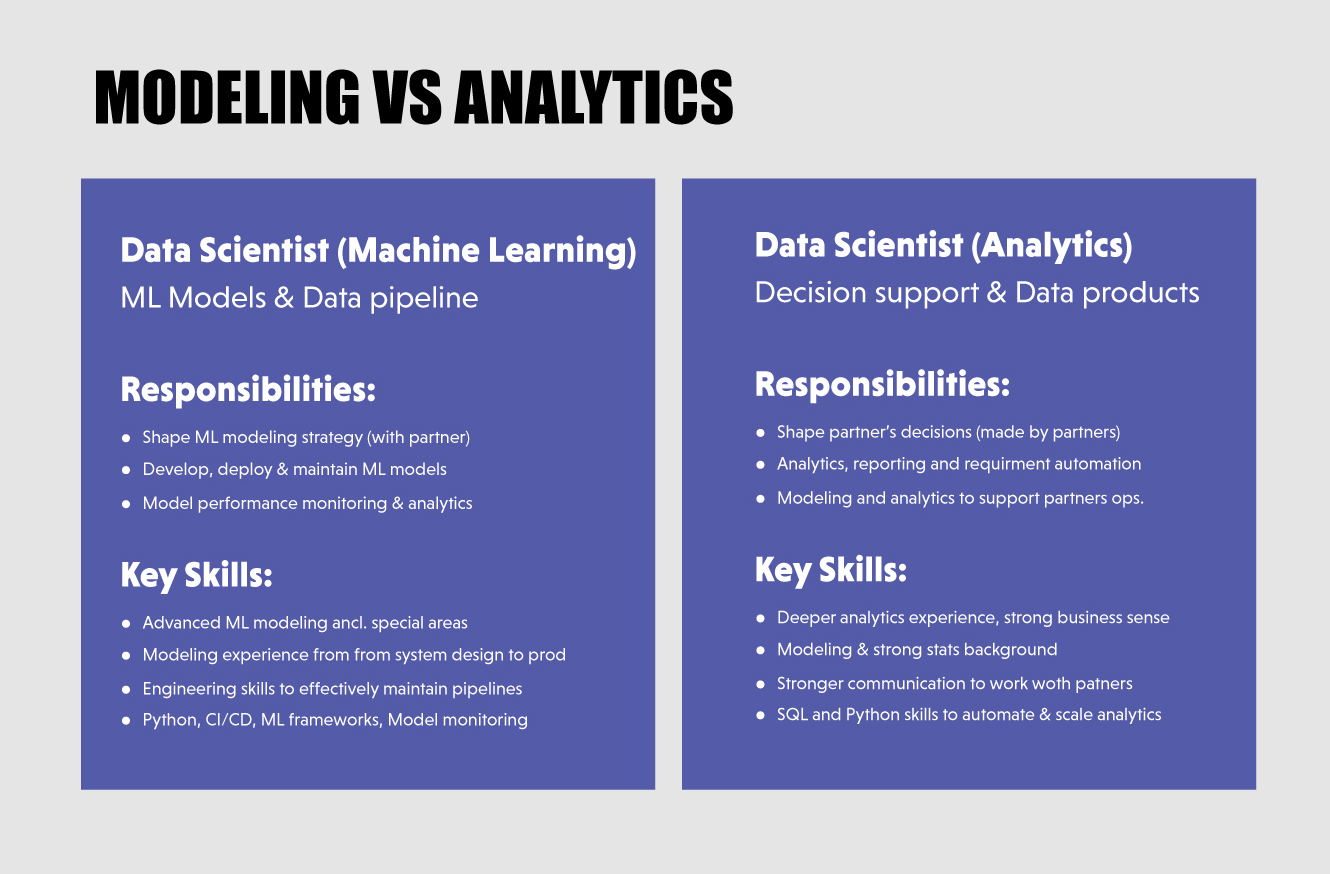
In the Data Science field, roles vary significantly, from those focused on building machine learning models and data pipelines to analytics specialists supporting operational excellence and strategic decision-making. Data Scientists may specialize in Machine Learning or Analytics, each with distinct responsibilities and key skills. Understanding these roles can help you determine the path that aligns best with your interests and skills.

Crafting Your Data Science Profile: Leveraging Current Experience

To effectively identify the right job, leverage your domain knowledge to focus your search within specific domains and verticals, prioritizing the nature of the work and potential for growth over job titles, which may not always include terms like data science. It’s also important to recognize that meeting every job qualification is not necessary; instead, assess how your skills can transfer to the job profile. Additionally, be vigilant about potential red flags during your job search, as it’s crucial to ensure the opportunity aligns with what you’re seeking in a career.

Decoding Hiring: What Grabs Hiring Managers’ Attention

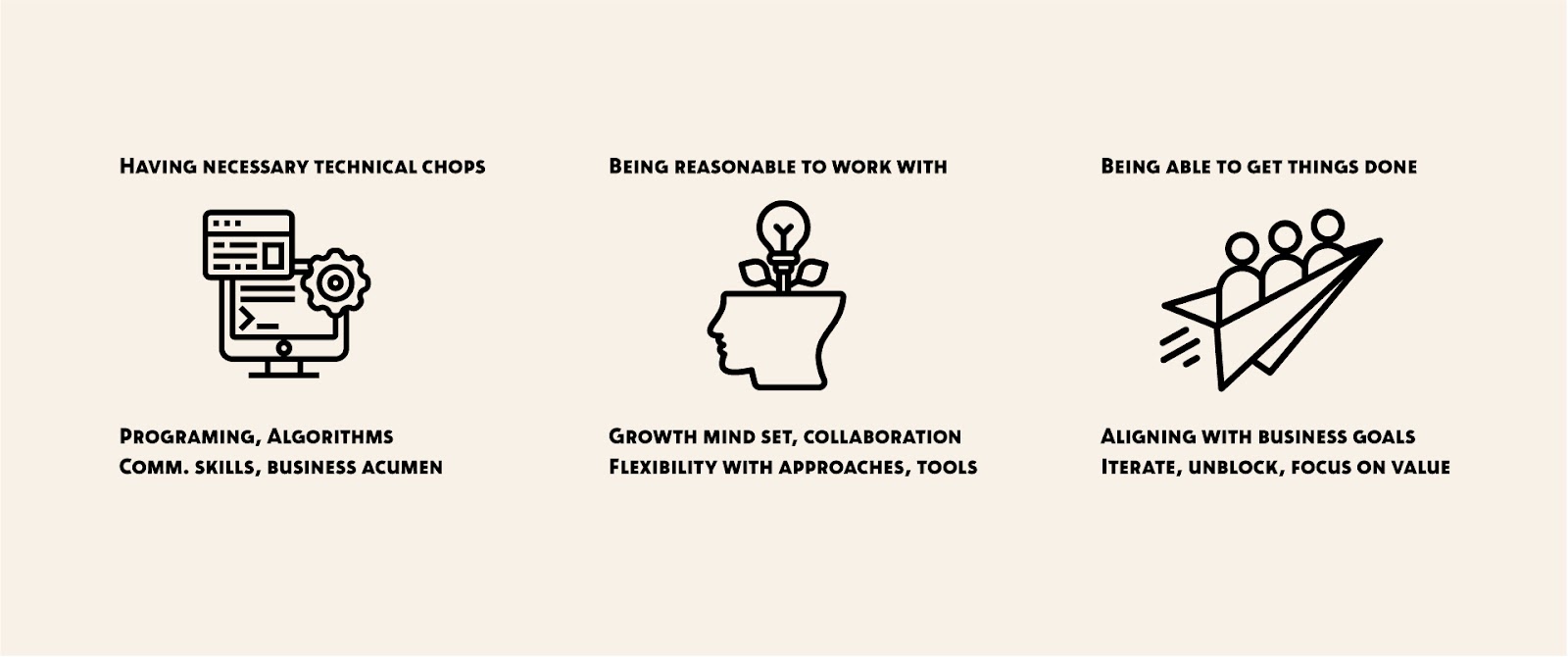
Hiring managers in Data Science look for candidates with the necessary technical expertise, including proficiency in SQL, R/Python, statistics, and machine learning. However, soft skills such as communication, business acumen, and the ability to work collaboratively and adapt to new challenges are equally important. Candidates should be prepared to demonstrate how they’ve applied their technical skills to achieve business impact, showing an understanding of the business context in which they operate.

Recommended Courses and Learning Platforms

To pave your way into the realm of Data Science, here is a curated list of courses and platforms where you can hone your skills, from foundational concepts to advanced applications. Whether you’re just starting or looking to specialize, these resources cover the gamut of what you’ll need to thrive in the field.

Building Your Foundation

Mathematics and Statistics for Data Science

  • Coursera: Offers comprehensive courses like “Mathematics for Machine Learning” and “Statistics with Python.
  • Khan Academy: Provides free resources on a wide range of math topics crucial for data science, including calculus and linear algebra.

Computer Science Fundamentals

  • edX:Features courses like “CS50’s Introduction to Computer Science” by Harvard University, offering a deep dive into computer science principles.
  • MIT OpenCourseWare: Offers free access to course materials for “Introduction to Computer Science and Programming” and other courses.

Data Science Specializations

  • Coursera: Home to the “Data Science Specialization” by Johns Hopkins University, covering R programming, data cleaning, and data visualization.
  • ADaSI:It caters to the diverse requirements of Data Science professionals, encompassing educators, scientists, students, managers, analysts, and consultants, by providing support for their scientific and professional endeavors.
  • Udacity:Offers a “Data Scientist Nanodegree,” focusing on data engineering, model deployment, and experimental design.

Machine Learning and Artificial Intelligence

  • Coursera: Features Andrew Ng’s “Machine Learning” course and the “Deep Learning Specialization,” foundational courses for understanding AI technologies.
  • fast.ai: Offers practical and accessible courses on deep learning, designed to get you started on building real-world projects.

Practical Experience and Projects

Kaggle: Beyond competitions, Kaggle offers “Micro-courses” on Python, machine learning, and data visualization. It’s an excellent platform for practical learning and portfolio-building.

GitHub:Engage with open-source projects and contribute to real-world applications. GitHub is a treasure trove of projects looking for contributions, offering a hands-on way to apply your skills.

Advancing Your Career

LinkedIn Learning:Offers courses on advanced data science topics and soft skills like “Data Science: Careers and Skills” and “Effective Communication for Data Scientists.”

Pluralsight: Focuses on tech and data skills, including courses on cloud computing platforms and big data technologies, essential for those looking to work with large-scale data systems.

Meetup and Eventbrite: Look for data science meetups, workshops, and conferences in your area or online. These events are great for learning, networking, and staying updated on industry trends.

By engaging with these courses and platforms, you’ll not only build the necessary technical skills but also develop the critical thinking, problem-solving, and communication skills essential for a successful career in Data Science. Remember, the journey in Data Science is one of continuous learning and adaptation, and these resources will help you stay ahead in this ever-evolving field.

The post Supercharge Your Data Science Career: Strategies for Solid Foundation appeared first on Analytics India Magazine.

A Collection Of Free Data Science Courses From Harvard, Stanford, MIT, Cornell, and Berkeley

A Collection Of Free Data Science Courses From Harvard, Stanford, MIT, Cornell, and Berkeley
Image by Author

Free courses are very popular on our platform, and we've received many requests from both beginners and professionals for more resources. To meet the demand of aspiring data scientists, we are providing a collection of free data science courses from the top universities in the world.

University professors and technical assistants teach these courses and cover topics such as math, probability, programming, databases, data analytics, data processing, data analysis, and machine learning. By the end of these courses, you'll have gained the skills required to master data science and become job-ready.

Computer Science

Link: 5 Free University Courses to Learn Computer Science

If you're considering switching to a career in data, it's crucial to learn computer science fundamentals. Many data science job applications include a coding interview section where you'll need to solve problems using a programming language of your choice.

This compilation offers some of the best free university courses to help you master foundations like computer hardware/software. You will learn Python, data structures and algorithms, as well as essential tools for software engineering.

Python

Link: 5 Free University Courses to Learn Python

A curated list of five online courses offered by renowned universities like Harvard, MIT, Stanford, University of Michigan, and Carnegie Mellon University. These courses are designed to teach Python programming to beginners, covering fundamentals such as variables, control structures, data structures, file I/O, regular expressions, object-oriented programming, and computer science concepts like recursion, sorting algorithms, and computational limits.

Databases and SQL

Link: 5 Free University Courses to Learn Databases and SQL

It is a list of free database and SQL courses offered by renowned universities such as Cornell, Harvard, Stanford, and Carnegie Mellon University. These courses cover a wide range of topics, from the basics of SQL and relational databases to advanced concepts like NoSQL, NewSQL, database internals, data models, database design, distributed data processing, transaction processing, query optimization, and the inner workings of modern analytical data warehouses like Google BigQuery and Snowflake.

Data Analytics

Link: 5 Free University Courses on Data Analytics

Compilation of online courses and resources available for individuals interested in pursuing data science, machine learning, and artificial intelligence. It highlights courses from prestigious institutions like Harvard, MIT, Stanford, Berkeley, covering topics such as Python for data science, statistical thinking, data analytics, mining massive data sets, and an introduction to artificial intelligence.

General Data Science

Link: 5 Free University Courses to Learn Data Science

A comprehensive list of free online courses from Harvard, MIT, and Stanford, designed to help individuals learn data science from the ground up. It begins with an introduction to Python programming and data science fundamentals, followed by courses covering computational thinking, statistical learning, and the mathematics behind data science concepts. The courses cover a wide range of topics, including programming, statistics, machine learning algorithms, dimensionality reduction techniques, clustering, and model evaluation.

9 Steps to Master Data Science with a Collection of Harvard Courses

Link: 9 Free Harvard Courses to Learn Data Science — KDnuggets

It outlines a data science learning roadmap consisting of 9 free courses offered by Harvard. It starts with learning programming basics in either R or Python, followed by courses on data visualization, probability, statistics, and productivity tools. It then covers data pre-processing techniques, linear regression, and machine learning concepts. The final step involves a capstone project that allows learners to apply the knowledge gained from the previous courses to a hands-on data science project.

Conclusion

Free online courses from top universities are an incredible resource for anyone looking to break into the field of data science or upgrade their current skills. This curated collection contains a list of courses that covers all the key areas — from core computer science and programming with Python, to databases and SQL, data analytics, machine learning, and full data science curricula. With courses taught by world-class professors, you can gain comprehensive knowledge and hands-on experience with the latest data science tools and techniques used in industry.

Abid Ali Awan (@1abidaliawan) is a certified data scientist professional who loves building machine learning models. Currently, he is focusing on content creation and writing technical blogs on machine learning and data science technologies. Abid holds a Master's degree in technology management and a bachelor's degree in telecommunication engineering. His vision is to build an AI product using a graph neural network for students struggling with mental illness.

More On This Topic

  • KDnuggets News, April 6: 8 Free MIT Courses to Learn Data Science…
  • KDnuggets News, May 4: 9 Free Harvard Courses to Learn Data…
  • 8 Free MIT Courses to Learn Data Science Online
  • 9 Free Harvard Courses to Learn Data Science
  • Free MIT Courses on Calculus: The Key to Understanding Deep Learning
  • 7 Free Harvard University Courses to Advance Your Skills

This new AI tool from Adobe makes generating the images you need even simpler

Adobe Structure Reference

The ability to use generative artificial intelligence (AI) to create images from a simple text input has taken the world by storm. However, companies continue to develop new ways to upgrade the AI experience — and Adobe has made some bold steps in that direction with its latest feature update.

On Tuesday, at Adobe Summit, the company unveiled Structure Reference capabilities in Adobe Firefly, its text-to-image generator. This capability gives users even more control over the output of generated images.

Also: Adobe announces generative AI tools to reinvent ad campaigns

With Structure Reference, users can input an image they want the AI model to use as a template. The model then uses this structure to create a new image with the same layout and composition.

For example, during the live event demo, a user input an image of a person's profile as a structure reference. Then, Firefly output several new pictures that kept the 'structure' of the original profile photo, as seen below:

Users can tweak the "strength" of the structure reference, or how much the model adheres to the reference's image structure when they create a new image.

For example, if you want Firefly to use the input image as a loose guideline, you can move the stub to the lower end of the strength spectrum. However, if you want the image to adhere to the reference exactly, you can set the tool to maximum strength.

Also: Apple confirms WWDC 2024 for June 10 — will AI steal the show?

This new feature in Firefly works alongside Style Reference, also seen in the demo above, which uses an image as a reference to generate a new image in the same style. This new picture uses the reference and keeps the same stylistic choices, such as feel and color scheme.

Users can now use a combination of Style Reference and Structure Reference, and detailed prompts, to ensure that the image generated matches their needs as much as possible on the first attempt.

"It's like going from 2D to 3D, to go beyond words into a more multimodal approach, that includes sketches and images," said Deepa Subramaniam, VP of product marketing, creative professional at Adobe to ZDNET.

Also: How ChatGPT became my virtual assistant for a data project

Using images as guidelines means users don't have to create a prompt and tweak it several times to get the desired outcome. This feature is useful when users can't find the words to describe the image they are visualizing and a quick sketch or reference image can convey the description.

Adobe shipped Structure Reference to Firefly on the web and mobile via an update. You can try it for free by visiting the Adobe Firefly website, where you can start tinkering by uploading different images and text prompts.

Disclosure: The cost of Sabrina Ortiz's travel to Las Vegas for Adobe Summit was covered by Adobe, a common industry practice for long-distance trips. The judgments and opinions of ZDNET's writers and editors are always independent of the companies we cover.

Artificial Intelligence