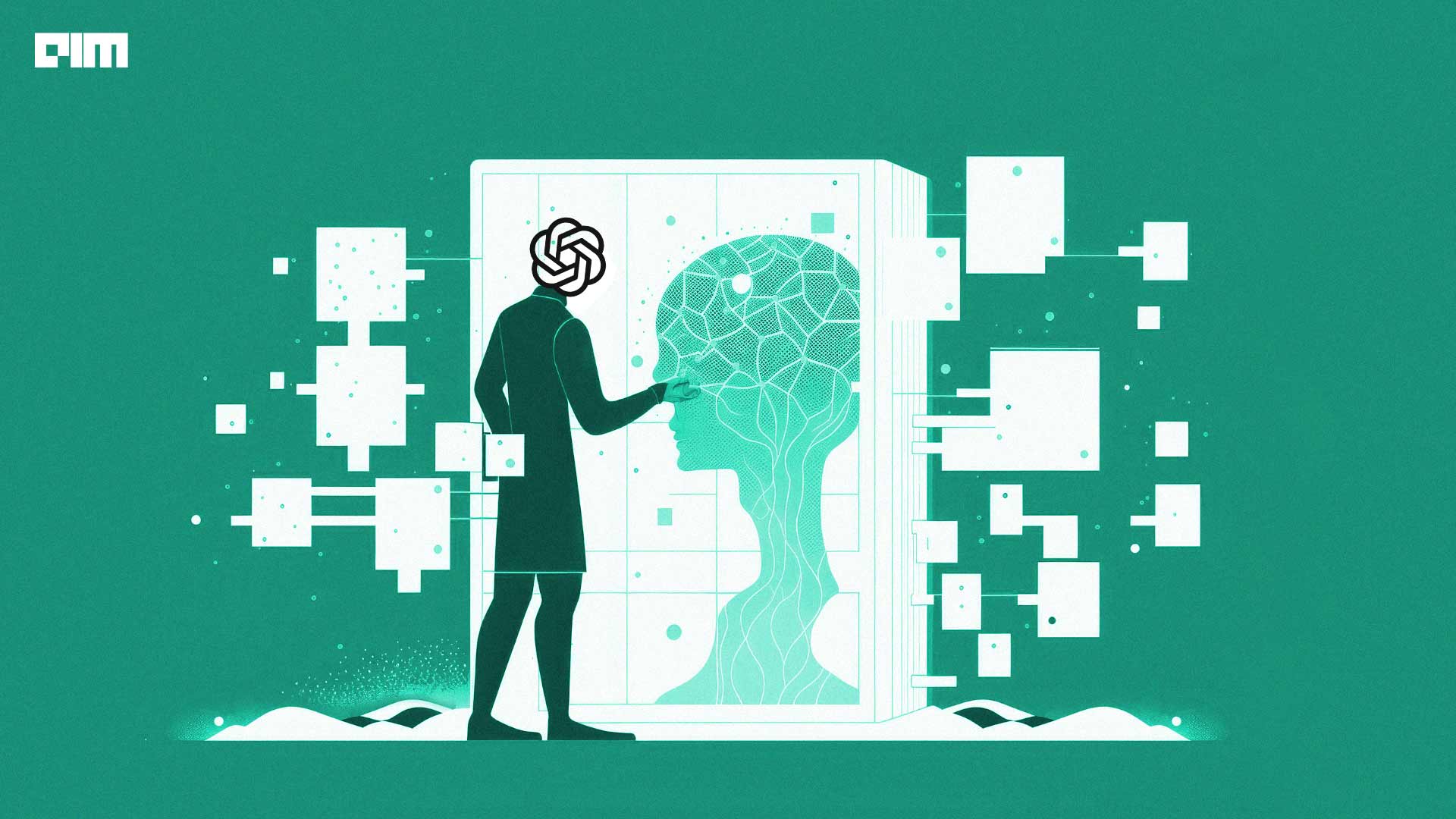
Language is the OS of the Future

Language Models are the OS of the Future

Exactly a year ago, during a fireside chat with NVIDIA’s Jensen Huang, OpenAI co-founder Ilya Sutskever had famously proclaimed that ‘text is a projection of the world’. And contrary to popular perception, ChatGPT is doing much more than just the surface-level learning of statistical correlations. This was during the launch of GPT-4.

Cut to present, former OpenAI computer scientist Andrej Karpathy while discussing the road to the AGI, said: “There’s a lot of optimisation, and I think, roughly speaking, the way things are happening is that everyone is trying to build what I refer to as a kind of LLM OS (operating system).”

OpenAI has always been on the side of language, firmly believing that text-based models would be the next frontier and the base for building smarter AI models – or possibly the first AGI.

“I sort of felt with AGI that it wasn’t clear how it was going to happen. It was very academic and one would think about different approaches. Now I think it’s very clear. There’s a lot of space that everyone is trying to fill,” said Karpathy.

The current focus revolves around the development of what Karpathy calls an LLM OS – an operating system designed to integrate various modalities such as text, images, and audio, and at the core, or CPU, is the LLM Transformer, with the RAM as the context length.

Agree to Disagree

The disagreement has continued over the past year. Meta AI chief Yann LeCun disagreed with Sutskever, and possibly with Karpathy’s assessment today. LeCun believes, “Large language models have no idea of the underlying reality that language describes.” He emphasised that a majority of human knowledge is nonlinguistic.

Gary Marcus and other AI scientists too agreed with the notion that “LLMs don’t reliably understand the world”. The problem is that regardless of this, the focus of current AI research is largely on the basis of text and language.

Weighing in his thoughts on a similar discussion, Francois Chollet, the creator of Keras and deep learning researcher at Google said, “Language can be thought of as the *operating system* of the mind. It is not the *substrate* of the mind – you can think perfectly well without language, much like you can still run programs on a computer without an OS (albeit with much more difficulty).”

This was in response to LeCun recalling a quote: “This language system seems to be distinct from regions that are linked to our ability to plan, remember, reminisce on past and future, reason in social situations, experience empathy, make moral decisions, and construct one’s self-image.” He explained that everyday cognitive tasks exist without the need for language.

Chollet further said that language significantly streamlines and improves cognition, similar to how an OS simplifies and enhances computing. It aids in creating, retaining, and examining thoughts and memories. Without language, the ability to string together intricate thoughts or recall distant memories would be notably challenging, but not impossible.

The AGI Debate Continues

LeCun sumed it up saying, “I’d say language is not the OS of the mind, it’s the shell. You can have a perfectly functional OS without a shell.”

Subbarao Kambhampati, AI researcher and professor at ASU, puts it wittingly, “..and just as the easiest way to hack a computer is to hack its OS, the easiest way to hack the mind is via language. This is why, understanding and securing the OS err.. language is essential even if it is not the intelligence.”

He agrees with Chollet that the role of language has evolved beyond external communication, which he also explained in one of his papers. Furthermore, Kambhampati finds it intriguing that we feel compelled to assign linguistic descriptions to inherently non-verbal phenomena, including emotions, dance, and sports manoeuvres like the pick and roll.

“So yes, Chollet’s operating system metaphor is quite apt,” he added.

On the other hand, Kambhampati told AIM that his views on LLMs align with LeCun. “We both feel that there is no reason to believe that these n-gram models would be able to reason beyond what they actually do,” he said.

Similar to LeCun’s vision of autonomous machine intelligence, he also proposes a world model, with different models connected together to a larger model, for bringing out information. “LLMs can only guess, they cannot verify.”

It all seems to fall into place. Language models may be the OS of the future, as Karpathy believes, and unknowingly the experts agree a lot.

The post Language is the OS of the Future appeared first on Analytics India Magazine.

AWS Teams Up with Minfy for Cloud and AI Boost through Global Expansion

AI solutions and cloud-native system integrator Minfy Technologies has announced a multiyear strategic collaboration agreement (SCA) with hyperscaler AWS India to improve the former’s use of cloud services and AI. Over the next four years, the SCA will support US$500 million in overall business growth through international expansion.

Minfy caters to large-scale enterprises, public sectors, and growing businesses. Now, the company will assist global enterprises in various sectors in utilising AI and cloud technologies effectively. One notable initiative is the Swayam.ai app store, which caters to industries like healthcare, aerospace, logistics, manufacturing, and the public sector, offering tools such as intelligent chatbots and sentiment analysis.

The company wants to expand its reach in the U.S., Australia, Malaysia, and the Philippines, focusing on enhancing market strategies, hiring local talents, and developing customer-centric solutions. With a track record of over 500 AWS projects, Minfy targets a broader international presence.

Under this collaboration, Minfy will help transition clients’ workloads to AWS, particularly in healthcare, logistics, and manufacturing sectors. The goal is to facilitate AI integration, cloud-driven transformation, and the development of digital capabilities to improve operational efficiency.

The Hyderabad-based company plans to leverage AWS’s advanced AI and ML capabilities, such as Amazon SageMaker and AWS Inferentia, to power Swayam.ai’s generative AI solutions. Additionally, the partnership will utilise AWS’s cloud services like Amazon Elastic Kubernetes Service and Amazon RedShift for efficient database management and modernisation of IT infrastructure.

Over the next four years, Minfy intends to upskill its workforce in core AWS competencies, focusing on healthcare, data analytics, and ML. This includes training over 1,000 professionals and establishing a Cloud Centre of Excellence to centralise knowledge and improve solution access globally.

“AWS is committed to helping local partners like Minfy drive growth and expand internationally,” said Chris Casey, head, partner management, APJ, AWS.

Recently, Bengaluru-based agritech startup Cropin Technology and AWS India signed a Memorandum of Understanding (MoU) to enable Cropin to build an AI-powered solution to address the pressing issues of global hunger and food insecurity.

The post AWS Teams Up with Minfy for Cloud and AI Boost through Global Expansion appeared first on Analytics India Magazine.

StealthMole raises $7M Series A for its AI-powered dark web intelligence platform 

StealthMole raises $7M Series A for its AI-powered dark web intelligence platform Kate Park 9 hours

StealthMole, an AI-powered dark web intelligence startup that specializes in monitoring cyber threats and detecting cybercrime, announced Thursday that it has raised a $7 million Series A funding round.

The Singapore-headquartered startup with an R&D office in South Korea will use the fresh capital to establish additional R&D centers and support more commercial uses of its technology in the B2B sector and geographical expansion.

“Having an R&D office in South Korea allows us to gain critical insights into how hackers from East Asia operate,” Simon Choi, chief technology officer (CTO) at StealthMole, told TechCrunch. “Similarly, having researchers from various backgrounds in Singapore for Southeast Asia, or in other unique locations, will aid us in analyzing data related to neighboring countries.”

StealthMole was co-founded in 2022 by Louis Hur (CEO), an enterprise IT security expert and serial entrepreneur in cybersecurity, and Choi (CTO), a threat investigator and open source intelligence (OSINT) profiler who previously worked as an adviser for the National Intelligence Service South Korea, the National Police Agency, and the Ministry of National Defense in South Korea.

The startup serves over 50 clients across 17 countries in Asia, Europe, and the Middle East. Its current customer base mostly includes government and law enforcement agencies for national security and cybersecurity teams within enterprises, which manage cybersecurity incidents, analyze threats, and provide cybersecurity guidance and support.

“StealthMole came about from a critical market gap I encountered while working in cybersecurity and white-hat hacking: a severe lack of data points and information networks, specifically within Asia,” Hur said in the company’s statement. “At the same time, data leaks, anonymized transactions, and all manner of cybercrimes were spiking — both due to malicious intent and human error. To better understand digital threats, it’s crucial for law enforcement, intelligence agencies, corporate security teams, and cybersecurity experts to analyse regional contexts and their impact on illicit activities.”

The outfit says it traces criminals using 255 billion analyzed data points from the dark web, deep web and various hidden sources, including leaked databases, cybercriminals’ blogs and Telegram.

One differentiator from its competitors in the cybersecurity industry is its unique expertise in Asia-related threats, Kevin Yoo, chief operating officer (COO) at StealthMole, told TechCrunch. According to a report by Check Point Research, Asia witnessed the highest year-on-year surge in weekly cyberattacks in the first quarter of 2023 due to rapid digital transformation; the rise of the hybrid workforce and Asia’s manufacturing industry, like semiconductors that hold intellectual property, could be a target for cyber espionage.

“The high demand for Asia-oriented threat information underscores the uniqueness and value of our dataset for customers worldwide, within and beyond Asia,” Yoo said.

Korea Investment Partners led the Series A round with participation from Hibiscus Fund (a joint venture between RHL Ventures, Penjana Kapital and KB Investment) and Smilegate Investment.

ZeroFox acquires dark web threat intelligence company Vigilante

Sixgill raises $15M to expand its dark web intelligence platform

Accel earnestly rethinks early-stage startup investing in India

Accel earnestly rethinks early-stage startup investing in India Manish Singh 7 hours

By any benchmark, Accel is among the top venture firms in India. With nearly two dozen Indian unicorn startups, including several category leaders, Accel’s track record speaks for itself. But yet, the partners leading the firm’s early-stage accelerator program, called Atoms, are uncharacteristically introspective about their learnings and the changes they have been implementing to improve the odds of success.

“One fundamental belief we have is that at some point of time, all VC firms look the same to a founder. It’s just money,” said Prayank Swaroop, a partner at Accel, in an interview.

All VC firms have also grown increasingly focused on making early-stage investments in India in recent years and finding the next Flipkart at the seed stage. The shift is primarily driven by the realization that India is not producing many billion-dollar exits, making it imperative to the VC funds to get in earlier to dramatically improve their returns.

Accel has been trying to find the right fit for its early-stage accelerator program for nearly half a decade now. Before launching Atoms, the venture firm explored building a repository of knowledge base and community with SeedtoScale, something that it continues to build on.

“We did Demo Days, we were trying to be very similar to a lot of other funds,” said Swaroop.

Just as fast Accel tried things, it has also walked back on some of its steps. It no longer attempts to initiate mingling between Atoms portfolio startups and other investors, for instance. Swaroop recalled a conversation with a founder who informed him how the investor-meetup felt like the startup was being put on a treadmill to artificially impress other potential backers.

Another candid feedback from founders revealed that many were not comfortable engaging with peers in the industry who were years ahead of them. “We are trying to find our own unique path and what has worked for some of the other firms, we think it’s not working for us,” he said.

So here’s what that path looks like. Atom’s third cohort features just eight startups, notably smaller than other well-known accelerators. And all the selected startups operate within two sectors: AI and Industry 5.0 (smart-manufacturing.)

Accel invests up to $500,000 in the handpicked startup’s pre-seed round and there is no valuation cap. In addition to helping the startup strategize, Accel also helps them meet industry players that can become potential partners and customers in the future.

More on this shortly, but first, the third cohort of Accel:

Spintly
Spintly is an IoT platform that simplifies access control to commercial and residential buildings. Unlike traditional systems, Spintly uses a distributed IoT architecture and edge computing technology, which eliminates the need for heavy back-end infrastructure and enables smartphone-based door access to users. Spintly has eliminated 200k plastic badges and 2k miles for wired infrastructure from the built world and currently servers 300+ customers and 4k+ doors.

Asets
Canada-based Asets has launched an AI-powered, first-of-its-kind cloud-based Integrated Design Suite, a multidisciplinary CAD, simulation and engineering design platform that helps Engineering Procurement Construction (EPC) and end-owner companies accelerate their early-stage engineering by 10x. Customers benefit from the rapid deployment of engineering resources, lowering effort time and costs related to engineering projects.

Tune AI
Tune AI is a GenAI stack for enterprises with solutions that include Tune Chat, an AI chat app with over 180,000 users and powerful models for text, code generation, and brainstorming, and Tune Studio, a comprehensive solution for fine-tuning, deploying, and managing the Gen AI model lifecycle and enabling data security with enterprise-grade compliance.

Skoob
Skoob is a generative AI platform which is revolutionizing the way readers interact with books. Instead of navigating through entire volumes, we harness the power of AI to dissect books into topic-centric sections. We are making knowledge consumption intuitive and user-friendly.

Arivihan
Arivihan is India’s 1st AI-based 100% Automated Learning Platform providing each unique school student with a personal tutor in their pocket at ₹300 per month, guiding them in planning for their exams, teaching them with video lectures, talking to them, solving their queries instantly, and validating their knowledge by testing and improving them anytime they want, in the speed they require.

Meritic
Meritic is a storytelling co-pilot for financial planning and analysis (FP&A) teams to automate reporting and business analytics. Meritic combines the power of knowledge graphs and language models to do highly contextual analysis, collect qualitative insights, generate relevant commentaries and automate financial deck creation.

(Two startups in the cohort remain in stealth for now.)

Accel handpicked AI and Industry 5.0 as the themes for Atoms because the firm believes that these two sectors will look even dramatically larger in the next 10 years, said Barath Subramanian, the other partner leading Atoms.

Subramanian said Industry 5.0 has emerged as a key theme as the archaic plants in India and elsewhere are finally modernizing, paving ways for startups that are bringing efficiencies to take a slice of the tens of billions of dollars flowing to consulting firms and others each year by the industry. “These factories generate a lot of data, but until now it hadn’t been used,” said Subramanian.

The industry has also benefited from New Delhi’s push and incentives to attract foreign firms to expand their manufacturing bases in the country and also the growing ‘China + 1’ shift among global giants.

More than 800 startups applied to be in Atoms 3.0, and about 300-400 applicants were AI startups. Swaroop said nearly two-thirds of all pitches focused on AI startups that sought to solve HR and marketing problems. “There’s too much of noise in the market that it’s a signal for us that we should hunt elsewhere” he said.

“Beyond the capital and learning sessions, being part of Atoms has given us a strong founder community and highly collaborative peer group – for instance, when Meritic is faced with a challenge we can turn to any other team at Accel LaunchPad, which is where we currently operate, or to anyone from Accel’s network of over 200 portfolio company founders, to arrive at a solution,” said Pallavi Chakravorty, co-founder and CEO of Meritic, in a statement.

“The Founder Anonymous sessions have helped us open up to the cohort in an unfiltered manner and the GTM talks have been pivotal in shaping our B2B sales thinking.”

Google will now let you use AI to build travel itineraries for your vacations

Google will now let you use AI to build travel itineraries for your vacations Aisha Malik 11 hours

As we inch toward the summer holidays, Google is announcing a slate of travel updates that place it squarely in the travel planning process and give it a lot more insight into purchasing intent in the travel sector.

First up, Google is rolling out an update to its Search Generative Experience (SGE) that will allow users to build travel itineraries and trip ideas using AI, the company announced on Wednesday.

The new capability — currently only available in English in the U.S. to users enrolled in Search Labs, its program that lets users experiment with early-stage Google Search experiences and share feedback — draws on ideas from sites across the web, along with reviews, photos and other details that people have submitted to Google for places around the world.

When users ask for something like “plan me a three day trip to Philadelphia that’s all about history,” they will get a sample itinerary that includes attractions and restaurants, as well as an overview of options for flights and hotels, divided up by times of day.

For now, the itineraries are just that: There are no options to buy services or experiences on the spot. When you’re happy with your itinerary, you can export it to Gmail, Docs or Maps.

Google has not commented on when or if it might roll this out more widely. But it points to how the company is experimenting with how and where it can apply its AI engine. A lot of players in the travel industry may be eyeing up the role that generative AI will play in travel services in the coming years — some excitedly, some warily. But even now, startups like Mindtrip and Layla, which provide users with access to AI assistants that are designed to help you plan your trips, are already actively pursuing this.

But with this new update, Google is taking on startups like these while also gathering data about travel purchasing intent (useful for its wider ad business) and learning what kind of appetite its users might have for such services.

Image Credits: Google

Google also announced that it’s making it easier to discover lists of recommendations in Google Maps in select cities in the U.S. and Canada. If you search for a city in Maps, you will now see lists of recommendations for places to go from publishers like The Infatuation, as well as from other users. You will also see curated lists of top, trending, and hidden gem restaurants in 40+ U.S. cities.

Finally, the company is adding new tools to help you customize lists you create, so you can better organize your travel plans or share your favorite spots with your friends and family. You can choose the order the places appear in a list so you can organize them by top favorites or chronologically like an itinerary. Plus, you can link to content from your social channels.

How to Identify Deepfake Videos Like a Fact-Checker

Deepfakes are synthetic media where an individual replaces a person’s likeness with someone else’s. They’re becoming more common online, often spreading misinformation around the world. While some may seem harmless, others can have malicious intent, making it important for individuals to discern the truth from digitally crafted false content.

Unfortunately, not everyone can access state-of-the-art software to identify deepfake videos. Here’s a look at how fact-checkers examine a video to determine its legitimacy and how you can use their strategies for yourself.

1. Examine the Context

Scrutinizing the context in which the video is presented is vital. This means looking at the background story, the setting and whether the video's events align with what you know to be true. Deepfakes often slip here, presenting content that doesn’t hold up against real-world facts or timelines upon closer inspection.

One example involves a deepfake of Ukrainian President Volodymyr Zelensky. In March 2022, a deepfake video surfaced on social media where Zelensky appeared to be urging Ukrainian troops to lay down their arms and surrender to Russian forces.

Upon closer examination, several contextual clues highlighted the video’s inauthenticity. The Ukrainian government's official channels and Zelensky himself didn't share this message. Also, the timing and circumstances didn’t align with known facts about Ukraine’s stance and military strategy. The video’s creation aimed to demoralize Ukrainian resistance and spread confusion among the international community supporting Ukraine.

2. Check the Source

When you come across a video online, check for its source. Understanding where a video comes from is crucial because hackers could use it against you to deploy a cyberattack. Recently, 75% of cybersecurity professionals reported a spike in cyberattacks, with 85% noting the use of generative AI by malicious individuals.

This ties back to the rise of deepfake videos, and professionals are increasingly dealing with security incidents that AI-generated content is fueling. Verify the source by looking for where the video originated. A video originating from a dubious source could be part of a larger cyberattack strategy.

Trusted sources are less likely to spread deepfake videos, making them a safer bet for reliable information. Always cross-check videos with reputable news outlets or official websites to ensure what you’re viewing is genuine.

3. Look for Inconsistencies in Facial Expressions

One of the telltale signs of a deepfake is the presence of inconsistencies in facial expressions. While deepfake technology has advanced, it often struggles with accurately mimicking the subtle and complex movements that occur naturally when a person talks or expresses emotions. You can spot these by looking out for the following inconsistencies:

  • Unnatural blinking: Humans blink in a regular, natural pattern. However, deepfakes may either under-represent blinking or overdo it. For instance, a deepfake could show a person talking for an extended period without blinking or blinking too rapidly.
  • Lip sync errors: When someone speaks in a video, their lip movement may be off. Watch closely to see if the lips match the audio. In some deepfakes, the mismatch is subtle but detectable when looking closely.
  • Facial expressions and emotions: Genuine human emotions are complex and reflected through facial movements. Deepfakes often fail to capture this, leading to stiff, exaggerated or not fully aligned expressions. For example, a deepfake video might show a person smiling or frowning with less nuance, or the emotional reaction may not match the context of the conversation.

4. Analyze the Audio

Audio can also give you clues into whether a video is real or fake. Deepfake technology attempts to mimic voices, but discrepancies often give them away. For instance, pay attention to the voice’s quality and characteristics. Deepfakes can sound robotic or flat in their speech, or they may lack the emotional inflections an actual human would exhibit naturally.

Background noise and sound quality can also provide clues. A sudden change could suggest that parts of the audio were altered or spliced together. Authentic videos typically remain consistent throughout the entirety.

5. Investigate Lighting and Shadows

Lighting and shadows play a large part in revealing a video’s authenticity. Deepfake technology often struggles with accurately replicating how light interacts with real-world objects, including people. Paying close attention to lighting and shadows can help you spot various items that indicate whether it’s a deepfake.

In authentic videos, the subject's lighting and surroundings should be consistent. Deepfake videos may display irregularities, such as the face being lit differently from the background. If the video's direction or source of light doesn’t make sense, it could be a sign of manipulation.

Secondly, shadows should behave according to the light sources in the scene. In deepfakes, shadows can appear at wrong angles or fail to correspond with other objects. Anomalies in shadow size, direction, and the presence or absence of expected shadows give you an overall idea.

6. Check for Emotional Manipulation

Deepfakes do more than create convincing falsehoods — people often design them to manipulate emotions and provoke reactions. A key aspect of identifying such content is to assess whether it aims to trigger an emotional response that could cloud rational judgment.

For instance, consider the incident where an AI-generated image of a bomb at the Pentagon circulated on Twitter X. Despite being completely fabricated, the image’s alarming nature caused it to go viral and trigger widespread panic. As a result, a $500 billion loss in the stock market occurred.

Deepfake videos can stir the same amount of panic, especially when AI is involved. While evaluating these videos, ask yourself:

  • Is the content trying to evoke a strong emotional response, such as fear, anger or shock? Authentic news sources aim to inform, not incite.
  • Does the content align with current events or known facts? Emotional manipulation often relies on disconnecting the audience from rational analysis.
  • Are reputable sources reporting the same story? The absence of corroboration from trusted news outlets can indicate the fabrication of emotionally charged content.

7. Leverage Deepfake Detection Tools

As deepfakes become more sophisticated, relying solely on human observation to identify them can be challenging. Fortunately, deepfake detection tools that use advanced technology to distinguish between real and fake are available.

These tools can analyze videos for inconsistencies and anomalies that may not be visible to the naked eye. They leverage AI and machine learning by utilizing speech watermarking as one method. These technologies are trained to recognize the watermark’s placement to determine if the audio was tampered with.

Microsoft developed a tool called Video Authenticator, which provides a confidence score indicating the likelihood of a deepfake. Similarly, startups and academic institutions continually develop and refine technologies to keep pace with evolving deepfakes.

Detecting Deepfakes Successfully

Technology has a light and dark side and is constantly evolving, so it’s important to be skeptical of what you see online. When you encounter a suspected deepfake, use your senses and the tools available. Additionally, always verify where it originated. As long as you stay on top of the latest deepfake news, your diligence will be key in preserving the truth in the age of fake media.

OpenAI Kick Starts its GPT Earnings Programme in the US

OpenAI Kick Starts its GPT Earnings Programme in the US

As promised earlier this month, OpenAI has announced that it is partnering with small groups of US builders for testing usage-based GPT earnings, with the goal of rewarding the creativity of the users of the GPT Builder and building an ecosystem.

We’re partnering with a small group of US builders to test usage-based GPT earnings. Our goal is to create a vibrant ecosystem where builders are rewarded for their creativity and impact and we look forward to collaborating with builders on the best approach to get there.

— OpenAI (@OpenAI) March 27, 2024

OpenAI launched the GPT Store on March 12 for ChatGPT Plus, Team, and Enterprise users, providing access to a variety of GPTs developed by partners and the community.

The company then said that the GPT Store would allow users, specifically ChatGPT Plus and enterprise subscribers, to sell and share tailored AI agents based on GPT-4. OpenAI had announced that in Q1, it will launch a GPT builder revenue program. In this initial phase, US builders will be compensated based on user engagement with their GPTs, which is now starting.

Two months after the announcement of GPTs, users have already generated over 3 million custom versions of ChatGPT.

The company said that the GPT Store, accessible at chat.openai.com/gpts, showcases a diverse range of GPTs across categories such as DALL·E, writing, research, programming, education, and lifestyle. Users can explore popular and trending GPTs on the community leaderboard, gaining insights into the latest developments.

OpenAI recently expanded its ChatGPT offerings with the introduction of ChatGPT Team. ChatGPT Team features a dedicated collaborative workspace for teams and admin tools for efficient team management.

The post OpenAI Kick Starts its GPT Earnings Programme in the US appeared first on Analytics India Magazine.

Forget OpenAI’s ChatGPT, Hume AI’s Empathetic Voice Interface (EVI) Might Be the Next Big Thing in AI!

Hume AI has introduced a conversational AI named Empathic Voice Interface (EVI), with emotional intelligence. EVI sets itself apart by comprehending the user’s tone of voice, adding depth to every interaction and tailoring its responses accordingly.

Interestingly, it almost feels like you are talking to a human.

Click here to check it out for yourself.

✨EVI has a number of unique empathic capabilities
1. Responds with human-like tones of voice based on your expressions
2. Reacts to your expressions with language that addresses your needs and maximizes satisfaction
3. EVI knows when to speak, because it uses your tone of voice…

— Hume (@hume_ai) March 27, 2024

EVI is a new AI system that understands and generates expressive speech, trained on millions of human conversations. Developers can now seamlessly integrate EVI into various applications using Hume’s API, offering a unique voice interface experience.

EVI boasts several distinctive empathic capabilities:

Human-Like Tone: EVI responds with tones resembling human expressions, enhancing the conversational experience.

  • Responsive Language: It adapts its language based on the user’s expressions, addressing their needs effectively.
  • State-of-the-Art Detection: EVI uses the user’s tone to detect the end of a conversation turn accurately, ensuring seamless interactions.
  • Interruption Handling: While it stops when interrupted, EVI can effortlessly resume from where it left off.
  • Self-Improvement: EVI learns from user reactions to continuously improve and enhance user satisfaction over time.

In addition to its empathic features, EVI offers fast, reliable transcription and text-to-speech capabilities, making it versatile and adaptable to various scenarios. It seamlessly integrates with any Language Model Library (LLM), adding to its flexibility and utility.

EVI is set to be publicly available in April, offering developers an innovative tool to create immersive and empathetic voice interfaces. Developers eager for early access to the EVI API can express their interest by filling out the form at https://bit.ly/evi-waitlist.

Founded in 2021, Hume is a research lab and technology company with a mission to ensure that artificial intelligence is built to serve human goals and emotional well-being. It is founded by Alan Cowen, a former researcher at Google AI.

“We believe voice interfaces will soon be the default way we interact with AI. Speech is four times faster than typing; frees up the eyes and hands; and carries more information in its tune, rhythm, and timbre. That’s why we built the first AI with emotional intelligence to understand the voice beyond words. Based on your voice, it can better predict when to speak, what to say, and how to say it,” wrote Cowen on LinkedIn.

The company raised a $50 million Series B funding from EQT Group, Union Square Ventures, Nat Friedman, Daniel Gross, Northwell Holdings, Comcast Ventures, LG Technology Ventures, and Metaplanet.

OpenAI’s Plans With Voice

OpenAI is currently working on a Voice Engine, according to a user on X. Voice Engine will include features like voice and speech recognition, processing voice commands, and converting between text and speech.

It will also have automatic speech and voice recognition and generation, along with creating and generating voice and audio outputs based on natural language prompts, speech, visual prompts, images, and video

In the episode of Unconfuse Me with Bill Gates, Altman pointed out that OpenAI is on ‘this long, continuous curve’ to create newer and better models. He highlighted the importance of multimodality as the key aspect of GPT-5 that enables it to process video input and generate new videos while confirming that the work on the model has already begun.

Altman also spoke at length with Gates about how GPT-5 would emphasise on customisation and personalisation. “The ability to know about you, your email, your calendar, how you like appointments booked, connected to other outside data sources—all of that. Those will be some of the most important areas of improvement,” said Altman.

Last year, OpenAI launched a voice assistant in the ChatGPT app on Android and iOS, enabling users to engage in back-and-forth conversations. The ChatGPT Voice feature includes diverse voices such as Ember, Sky, Breeze, and Cove.

OpenAI recently partnered with Figure AI to build generative AI powered Humanoids. In a recent video released by Figure, the humanoid robot Figure 01 was seen perfectly holding a natural conversation with a human, passing him the apple.

Emotional Intelligence Matters

Conversational AI chatbot that understands emotional intelligence is the future. “Chatbots that are polite, and understand sentiment, emotion, etc give rise to better businesses. Chatbots that are closer to human beings, emotional and sentiment, bring commercial profits along, which is quite motivating,” said IIT Bombay professor and computer scientist Pushpak Bhattacharyya in an exclusive interview with AIM.

The post Forget OpenAI’s ChatGPT, Hume AI’s Empathetic Voice Interface (EVI) Might Be the Next Big Thing in AI! appeared first on Analytics India Magazine.

Google will now let you use AI to build travel itineraries for your vacations

Google will now let you use AI to build travel itineraries for your vacations Aisha Malik 9 hours

As we inch toward the summer holidays, Google is announcing a slate of travel updates that place it squarely in the travel planning process and give it a lot more insight into purchasing intent in the travel sector.

First up, Google is rolling out an update to its Search Generative Experience (SGE) that will allow users to build travel itineraries and trip ideas using AI, the company announced on Wednesday.

The new capability — currently only available in English in the U.S. to users enrolled in Search Labs, its program that lets users experiment with early-stage Google Search experiences and share feedback — draws on ideas from sites across the web, along with reviews, photos and other details that people have submitted to Google for places around the world.

When users ask for something like “plan me a three day trip to Philadelphia that’s all about history,” they will get a sample itinerary that includes attractions and restaurants, as well as an overview of options for flights and hotels, divided up by times of day.

For now, the itineraries are just that: There are no options to buy services or experiences on the spot. When you’re happy with your itinerary, you can export it to Gmail, Docs or Maps.

Google has not commented on when or if it might roll this out more widely. But it points to how the company is experimenting with how and where it can apply its AI engine. A lot of players in the travel industry may be eyeing up the role that generative AI will play in travel services in the coming years — some excitedly, some warily. But even now, startups like Mindtrip and Layla, which provide users with access to AI assistants that are designed to help you plan your trips, are already actively pursuing this.

But with this new update, Google is taking on startups like these while also gathering data about travel purchasing intent (useful for its wider ad business) and learning what kind of appetite its users might have for such services.

Image Credits: Google

Google also announced that it’s making it easier to discover lists of recommendations in Google Maps in select cities in the U.S. and Canada. If you search for a city in Maps, you will now see lists of recommendations for places to go from publishers like The Infatuation, as well as from other users. You will also see curated lists of top, trending, and hidden gem restaurants in 40+ U.S. cities.

Finally, the company is adding new tools to help you customize lists you create, so you can better organize your travel plans or share your favorite spots with your friends and family. You can choose the order the places appear in a list so you can organize them by top favorites or chronologically like an itinerary. Plus, you can link to content from your social channels.

AI vs Humans: Stay Relevant or Face the Music

Discover the transformative influence of AI on jobs and society. Also know how to stay relevant in AI-driven era

Artificial Intelligence (AI) has emerged as a transformative force, shaping industries and challenging traditional notions of work and human relevance. AI has come a long way since its beginnings in the mid-20th century. Back then, people dreamed of what it could do, but now, with lots of data and powerful computers, AI has become even more advanced. Along the journey, many important moments have helped shape AI into what it is today. Today, AI benefits from the convergence of advanced algorithms, computational power, and the abundance of data.

In this AI-driven era, human involvement remains indispensable. Although AI excels at handling vast amounts of data and performing routine tasks, human creativity, empathy, and adaptability remain essential for driving innovation. Human cognition is uniquely capable of navigating complex social interactions, promoting creativity, and making moral judgments, the abilities that AI cannot replicate.

Rather than viewing AI as adversaries, embracing a collaborative partnership between humans and AI will open a new era of possibilities. By integrating AI to augment human capabilities, industries can revolutionize various sectors, including healthcare, finance, education, and beyond.

Combining human intuition and AI analytics promises transformative advancements that enhance human lives. The future is not a binary division between humans and AI but a symbiotic partnership where human ingenuity harmonizes with AI to reveal endless possibilities in an AI-driven world.

AI: From Origin to Future

The journey of AI traces back to visionaries like Alan Turing and John McCarthy, who conceptualized machines capable of learning and reasoning. Milestones such as IBM's Deep Blue defeating chess grandmaster Garry Kasparov in 1997 demonstrated AI’s computational capabilities. Moreover, breakthroughs in natural language processing (NLP) and computer vision have transformed human-computer interaction and empowered AI to discern faces, objects, and scenes with unprecedented accuracy.

Recently, AI has permeated every facet of human life, optimizing healthcare, finance, entertainment, and more processes. Yet, the fundamental paradigm shift lies in recognizing AI as a collaborative partner rather than a tool. This change lets us combine human creativity, empathy, and intuition with AI's skills, leading to even more innovation.

The Human Element Amidst AI Transformation

Human strengths, including creativity, emotional intelligence, and intuition, complement AI’s expertise. Creativity fuels innovation and artistic expression, while emotional intelligence enables profound connections and comprehension of complex social dynamics. Likewise, intuition guides nuanced decision-making where data alone may not be useful, aiding in risk assessment and pattern recognition.

Collaboration between humans and AI is pivotal, with each entity bringing complementary strengths. While AI excels at handling repetitive tasks and analyzing vast datasets, humans provide context, ethics, and purpose. Their successful collaboration has been demonstrated in various domains, from healthcare diagnostics to literature, demonstrating the fusion of human creativity and AI-driven analytics.

Challenges Posed by AI

Despite its transformative potential, AI presents challenges that must be addressed proactively. Job displacement due to automation is a significant concern, with studies projecting up to 39 million Americans losing their jobs by 2030.

Likewise, ethical considerations, including bias in AI algorithms and transparency in decision-making, demand multifaceted solutions to ensure fairness and accountability. Addressing bias requires diversifying AI development teams, integrating ethics into algorithmic design, and promoting awareness of bias mitigation strategies.

Moreover, transparency and accountability are essential to build trust among users and hold organizations responsible for the societal impact of their AI systems. Furthermore, privacy implications also necessitate a delicate balance between innovation and individual liberties, safeguarding privacy rights while exploiting the benefits of AI technologies.

Strategies for Humans to Stay Relevant

As AI progresses rapidly, individuals must proactively adapt to stay relevant in this transformative era. The following essential strategies can be useful in this regard.

Lifelong Learning and Upskilling

Continuous learning is essential due to persistent technological changes. Lifelong learning extends beyond formal education, encompassing online courses, workshops, and self-study endeavors. Staying updated with relevant certifications and credentials demonstrates expertise and commitment to personal growth.

Cultivating Creative Thinking

While AI automates tasks, human skills like creativity, critical thinking, and resilience are vital. Promoting creative thinking through art, music, or problem-solving enhances adaptability in the AI-dominated environment. Critical thinking skills enable individuals to analyze information objectively, while emotional resilience enables them to handle complex challenges.

Interdisciplinary Approaches

Additionally, breaking down disciplinary boundaries promotes innovation and adaptation. For example, collaborating across disciplines, such as AI and psychology or AI and ethics, can encourage better problem-solving and ethical considerations in AI applications.

Adaptability and Innovation

Embracing change as a constant reality is essential for staying relevant in an AI-driven world. Cultivating a culture of curiosity and experimentation nurtures adaptability, encouraging individuals to explore new technologies and methodologies.

The Future of Work in an AI-Dominated Era

As AI continues its pervasive influence across industries, the future of work undergoes profound transformations. This AI-dominated era may redefine traditional work paradigms and shape employment dynamics.

Regarding job opportunities, emerging roles within AI-related fields are gaining prominence. Machine Learning Engineers, Data Scientists, and Robotics Specialists are in high demand as organizations seek expertise in developing and implementing AI technologies. Additionally, hybrid roles such as AI Ethics Consultants and Human-AI Interaction Designers are emerging to address ethical considerations and ensure seamless human-machine interactions.

The evolving nature of work in an AI-dominated era is also evident in the shift in workplace dynamics. For example, remote work has become more prevalent, accelerated by AI-enabled collaboration tools and the pandemic. Concurrently, the gig economy thrives, offering flexible work arrangements through AI platforms connecting freelancers with projects.

Human-centered design principles are also pivotal in guiding the implementation of AI technologies, focusing on prioritizing user experience and ethical considerations. Employing design thinking approaches ensures that AI solutions resonate with users, while ethical UX practices address biases and privacy concerns. Moreover, emphasizing human-AI collaboration highlights AI's enhancement of human capabilities rather than replacement, resulting in improved outcomes. Organizations must also give precedence to responsible AI practices, ensuring transparency, explainability, and accountability in AI systems.

The Bottom Line

In conclusion, the challenges posed by AI, including job displacement and ethical concerns, highlight the need for proactive measures to mitigate its negative impacts. While automation may lead to job losses in certain sectors, it also presents new roles and skills development opportunities.

Addressing ethical issues such as bias, transparency, and privacy is crucial to ensuring AI technologies’ responsible development and deployment. By prioritizing reskilling, promoting transparency, and ethical AI practices, we can utilize the potential of AI to drive positive societal change while minimizing its risks.