Enhancing AI Transparency and Trust with Composite AI

Discover the importance of transparency and interpretability in AI systems. Learn how Composite AI enhances trust in AI deployment.

The adoption of Artificial Intelligence (AI) has increased rapidly across domains such as healthcare, finance, and legal systems. However, this surge in AI usage has raised concerns about transparency and accountability. Several times black-box AI models have produced unintended consequences, including biased decisions and lack of interpretability.

Composite AI is a cutting-edge approach to holistically tackling complex business problems. It achieves this by integrating multiple analytical techniques into a single solution. These techniques include Machine Learning (ML), deep learning, Natural Language Processing (NLP), Computer Vision (CV), descriptive statistics, and knowledge graphs.

Composite AI plays a pivotal role in enhancing interpretability and transparency. Combining diverse AI techniques enables human-like decision-making. Key benefits include:

  • reducing the necessity of large data science teams.
  • enabling consistent value generation.
  • building trust with users, regulators, and stakeholders.

Gartner has recognized Composite AI as one of the top emerging technologies with a high impact on business in the coming years. As organizations strive for responsible and effective AI, Composite AI stands at the forefront, bridging the gap between complexity and clarity.

The Need for Explainability

The demand for Explainable AI arises from the opacity of AI systems, which creates a significant trust gap between users and these algorithms. Users often need more insight into how AI-driven decisions are made, leading to skepticism and uncertainty. Understanding why an AI system arrived at a specific outcome is important, especially when it directly impacts lives, such as medical diagnoses or loan approvals.

The real-world consequences of opaque AI include life-altering effects from incorrect healthcare diagnoses and the spread of inequalities through biased loan approvals. Explainability is essential for accountability, fairness, and user confidence.

Explainability also aligns with business ethics and regulatory compliance. Organizations deploying AI systems must adhere to ethical guidelines and legal requirements. Transparency is fundamental for responsible AI usage. By prioritizing explainability, companies demonstrate their commitment to doing what they deem right for users, customers, and society.

Transparent AI is not optional—it is a necessity now. Prioritizing explainability allows for better risk assessment and management. Users who understand how AI decisions are made feel more comfortable embracing AI-powered solutions, enhancing trust and compliance with regulations like GDPR. Moreover, explainable AI promotes stakeholder collaboration, leading to innovative solutions that drive business growth and societal impact.

Transparency and Trust: Key Pillars of Responsible AI

Transparency in AI is essential for building trust among users and stakeholders. Understanding the nuances between explainability and interpretability is fundamental to demystifying complex AI models and enhancing their credibility.

Explainability involves understanding why a model makes specific predictions by revealing influential features or variables. This insight empowers data scientists, domain experts, and end-users to validate and trust the model's outputs, addressing concerns about AI’s “black box” nature.

Fairness and privacy are critical considerations in responsible AI deployment. Transparent models help identify and rectify biases that may impact different demographic groups unfairly. Explainability is important in uncovering such disparities, enabling stakeholders to take corrective actions.

Privacy is another essential aspect of responsible AI development, requiring a delicate balance between transparency and data privacy. Techniques like differential privacy introduce noise into data to protect individual privacy while preserving the utility of analysis. Similarly, federated learning ensures decentralized and secure data processing by training models locally on user devices.

Techniques for Enhancing Transparency

Two key approaches are commonly employed to enhance transparency in machine learning namely, model-agnostic methods and interpretable models.

Model-Agnostic Techniques

Model-agnostic techniques like Local Interpretable Model-agnostic Explanations (LIME), SHapley Additive exPlanations (SHAP), and Anchors are vital in improving the transparency and interpretability of complex AI models. LIME is particularly effective at generating locally faithful explanations by simplifying complex models around specific data points, offering insights into why certain predictions are made.

SHAP utilizes cooperative game theory to explain global feature importance, providing a unified framework for understanding feature contributions across diverse instances. Conversely, Anchors provide rule-based explanations for individual predictions, specifying conditions under which a model's output remains consistent, which is valuable for critical decision-making scenarios like autonomous vehicles. These model-agnostic methods enhance transparency by making AI-driven decisions more interpretable and trustworthy across various applications and industries.

Interpretable Models

Interpretable models play a crucial role in machine learning, offering transparency and understanding of how input features influence model predictions. Linear models such as logistic regression and linear Support Vector Machines (SVMs) operate on the assumption of a linear relationship between input features and outputs, offering simplicity and interpretability.

Decision trees and rule-based models like CART and C4.5 are inherently interpretable due to their hierarchical structure, providing visual insights into specific rules guiding decision-making processes. Additionally, neural networks with attention mechanisms highlight relevant features or tokens within sequences, enhancing interpretability in complex tasks like sentiment analysis and machine translation. These interpretable models enable stakeholders to understand and validate model decisions, enhancing trust and confidence in AI systems across critical applications.

Real-World Applications

Real-world applications of AI in healthcare and finance highlight the significance of transparency and explainability in promoting trust and ethical practices. In healthcare, interpretable deep learning techniques for medical diagnostics improve diagnostic accuracy and provide clinician-friendly explanations, enhancing understanding among healthcare professionals. Trust in AI-assisted healthcare involves balancing transparency with patient privacy and regulatory compliance to ensure safety and data security.

Similarly, transparent credit scoring models in the financial sector support fair lending by providing explainable credit risk assessments. Borrowers can better understand credit score factors, promoting transparency and accountability in lending decisions. Detecting bias in loan approval systems is another vital application, addressing disparate impact and building trust with borrowers. By identifying and mitigating biases, AI-driven loan approval systems promote fairness and equality, aligning with ethical principles and regulatory requirements. These applications highlight AI’s transformative potential when coupled with transparency and ethical considerations in healthcare and finance.

Legal and Ethical Implications of AI Transparency

In AI development and deployment, ensuring transparency carries significant legal and ethical implications under frameworks like General Data Protection Regulation (GDPR) and California Consumer Privacy Act (CCPA). These regulations emphasize the need for organizations to inform users about the rationale behind AI-driven decisions to uphold user rights and cultivate trust in AI systems for widespread adoption.

Transparency in AI enhances accountability, particularly in scenarios like autonomous driving, where understanding AI decision-making is vital for legal liability. Opaque AI systems pose ethical challenges due to their lack of transparency, making it morally imperative to make AI decision-making transparent to users. Transparency also aids in identifying and rectifying biases in training data.

Challenges in AI Explainability

Balancing model complexity with human-understandable explanations in AI explainability is a significant challenge. As AI models, particularly deep neural networks, become more complex, they often need to be more interpretable. Researchers are exploring hybrid approaches combining complex architectures with interpretable components like decision trees or attention mechanisms to balance performance and transparency.

Another challenge is multi-modal explanations, where diverse data types such as text, images, and tabular data must be integrated to provide holistic explanations for AI predictions. Handling these multi-modal inputs presents challenges in explaining predictions when models process different data types simultaneously.

Researchers are developing cross-modal explanation methods to bridge the gap between modalities, aiming for coherent explanations considering all relevant data types. Furthermore, there is a growing emphasis on human-centric evaluation metrics beyond accuracy to assess trust, fairness, and user satisfaction. Developing such metrics is challenging but essential for ensuring AI systems align with user values.

The Bottom Line

In conclusion, integrating Composite AI offers a powerful approach to enhancing transparency, interpretability, and trust in AI systems across diverse sectors. Organizations can address the critical need for AI explainability by employing model-agnostic methods and interpretable models.

As AI continues to advance, embracing transparency ensures accountability and fairness and promotes ethical AI practices. Moving forward, prioritizing human-centric evaluation metrics and multi-modal explanations will be pivotal in shaping the future of responsible and accountable AI deployment.


The Audio of This Bollywood Song was Generated by AI

Bollywood embraces AI Music

A Punjabi-themed Bollywood-inspired song was shared on X, overlaid onto the video of ‘Kala Chasma’. It might not sound fancy, nor did it gel too well with the video, however, the almost 2-minute song was completely AI-generated using the AI-music generation application Suno AI.

I know everyone's been saying this a lot, but this is not clickbait, this is absolutely WILD.
This entire Bollywood song's audio was generated by AI.
I just can't believe it. My jaw is floored. What have we done. I thought music would be one of the final frontiers. pic.twitter.com/Y43ZmL4v9h

— Deedy (@deedydas) April 6, 2024

Suno AI, which allows one to create songs based on simple text prompts explaining the theme or lyrics, has been widely experimented, generating impressive results.

Not just Suno AI, the latest Stable Audio 2.0, by Stability AI also creates high-quality full tracks. However, as cool as it sounds, there looms a threat, or so the music artists believe.

The Big Protest

Last week, the Artist Rights Alliance (ARA), over 200 musical artists across musical genres, including Katy Perry, Billie Eilish, Jon Bon Jovi, estate of Bob Marley and Frank Sinatra, and other prominent musicians, signed an open letter urging tech companies to stop using AI that ‘devalues music’ and violates the rights of human artists.

“AI has enormous potential as a tool for human creativity – but when used irresponsibly, it poses an existential threat to our art,” posted ARA on X.

The primary concern, as emphasized in the letter, is the potential for AI to replace artists with AI-generated sounds, ultimately reducing the royalties that these artists traditionally earn. The letter quoted: “For many working musicians, artists and songwriters who are just trying to make ends meet, this would be catastrophic.”

Interestingly, there was a recent study that said 71% of musicians fear AI.

The artists have accused powerful companies of using their work without permission to train AI models, a problem that has been raising its head ever since generative AI became a rage starting last year.

Pink Floyd in a Pickle

Recently, one of the most influential rock bands in the world, Pink Floyd, got attention for the wrong reason. For the animation video competition of the 50th Anniversary of Pink Floyd’s ‘The Dark Side of the Moon’, Damián Gaume’s video was selected as the winner.

Interestingly, the winning video was AI-generated.

Though the competition was judged by some of the eminent personalities in music, animation and video industries, the decision drew major flak by users online for embracing AI over human-generated content.

“Nothing was created. Artists’ work was stolen to train this computer program, that someone promoted to spit out a Frankenstein spoonful. Pink Floyd should use actual art made by an actual artist,” said filmmaker and author Justine Bateman. She even ended her statement with the hashtag ‘AI is Theft’.

Source: X

An Ongoing Problem in the West

Last year, over 8000 published authors wrote a letter to the founders of generative AI platforms requesting compensation for their copyrighted work for training their models. It wasn’t just published authors that raised the concern, but even Hollywood.

Last year, the Hollywood Writers Guild of America held a five-month long protest over many problems, with one of them being the usage of AI in the film industry. The protest ended with an agreement of using AI as a tool and not as a replacement.

Interestingly, Hollywood still seemed to be threatened by AI.

AI to Help, Not Eliminate

The recent video-generation platform by OpenAI, Sora, raised a lot of questions by Hollywood filmmakers, with studios even putting a hold on its expansion plans. However, not everyone was seeing the big picture.

The cost of creating a movie-duration video using Sora is exorbitant, with expenses running into billions of dollars for compute, thereby eliminating the possibility of AI completely replacing people.

With a number of AI-generation music and video platforms emerging, these applications can be used as tools to help existing artists rather than replace them. Many artists have in fact embraced AI in their production, which is even helping them complete unfinished tracks.

Music artists are finding different ways to integrate AI in their concerts and production as a whole. Pop queen Madonna recently used an AI text-to-video tool to create visuals for the giant screens behind her while performing.

Source: X

While the conflict will continue, it is obvious that these AI applications are already providing an easy platform for people who not only want to experiment but also use the tool to augment their creative skills.

I, for one, enjoyed creating my alternative rock-themed song using AI.

The post The Audio of This Bollywood Song was Generated by AI appeared first on Analytics India Magazine.

Compute is the New Oil

“Compute is the new oil,” said Jonathan Ross, founder of Groq, in a recent interview with Matthew Burman, echoing Sam Altman’s thought. OpenAI chief is pretty much determined to solve the energy and compute issues associated with building and providing generative AI services to a large customer base.

“Compute is going to be the currency of the future. It will maybe be the most precious commodity in the world. And we should be investing heavily to make a lot more compute,” said Altman in a recent interview with Lex Fridman.

At the same time, Altman believes that it is the hardest problem to solve. The challenges include computing, energy supply, data centre construction, and the supply chain (particularly in chip fabrication).

To solve this, Microsoft and OpenAI are reportedly planning to build a $100 billion data centre called ‘Stargate’, which is expected to launch by 2028. Stargate will require several gigawatts of power—equivalent to running multiple large data centres today, possibly reaching 5 gigawatts by then.

Helion is the Secret of OpenAI & Microsoft’s Energy

It’s funny how Altman is all over the place, leaving no aspect of AI untouched—from building AI models and devices to hardware and computing.

Computer scientist Pedro Domingos quipped, saying, “Sam Altman’s new venture fund is called AI, Devices, Hardware, and Deuterium (ADHD).”

In line with this, Altman is in talks with Emerson Collective and Thrive Capital, both major investors in OpenAI, to partner on an AI device project led by former Apple designer Jony Ive.

Ive, known for designing the iPhone at Apple, is seeking to secure up to $1 billion in funding for this venture. Notably, this will not be Altman’s first investment in an AI device company. Earlier, he invested in Humane, which launched AI Pin, a wearable device, last November.

However, Altman’s plans are bigger than those of AI devices. The chief of OpenAI is of the opinion that an energy breakthrough is necessary for future artificial intelligence, which will consume vastly more power than people have expected.

In 2021, Altman invested $375 million in Helion Energy, which is working on Project Polaris, which will generate electricity from nuclear fusion by 2024. Last year, Microsoft agreed to purchase electricity from Helion’s first fusion power plant, which is scheduled for deployment in 2028. Helion plans to produce 50 megawatts of energy for Microsoft.

Helion is most likely to power ‘Stargate’ as well.

“Helion’s doing the best work, but I’m happy there’s a race for fusion right now. Nuclear fusion is also quite amazing,” said Altman, hopeful and optimistic.

where @Helion_Energy will soon start to install polaris: pic.twitter.com/Tk7znzvOPg

— Sam Altman (@sama) February 2, 2024

Oklo is another nuclear startup backed by Altman. Oklo is developing commercial applications for nuclear fission, which is the fundamental reaction powering existing nuclear power plants, albeit with a focus on smaller-scale reactors.

Scaling Transformer models

With OpenAI developing GPT-5 and many more new models in the future, it’s logical for the company to develop its own energy resources and data center.

For instance, OpenAI’s latest text-to-video generation model, Sora, demands a huge compute to run, which could be one reason why it hasn’t been made publicly available yet, along with security concerns.

According to Altman, AI is going to be more like energy or something. He believes that in the future, it’s all going to end up about how much compute one has and at what price.

“If it’s really cheap, I’ll have it like reading my email all day, like giving me suggestions about what I maybe should think about or work on and trying to cure cancer. And if it’s really expensive, maybe I’ll only use it, or will only use it, to try to cure cancer,” he explained.

OpenAI is not alone. Amazon is investing nearly $150 billion over the next 15 years in data centers, providing the cloud-computing leader with the resources to manage an anticipated surge in demand for AI applications and other digital services.

Similarly, Elon Musk said that AI compute is growing exponentially, increasing by a factor of 10 every six months, and most data centers are transitioning from conventional to AI compute.

To support these data centers Musk joked that we need “transformers for the transformers” — voltage transformers for our AI’s neural net transformers. “That’s the main issue we’re facing this year,” he added.

Likewise, at the recent GTC 2024, Huang drew parallels between data centers and factories during the industrial revolution. He explained how data centers now produce text tokens using data and electricity as raw materials, and compared it with the production of electricity during the industrial revolution, when energy was used.

AI Chip Venture

While Sam Altman’s plan to raise $7 trillion for an AI venture turned out to be a joke, it doesn’t dismiss the fact that he is planning to start his own AI chip venture.

According to recent reports, he is seeking approval from the U.S. government for this new venture. Furthermore, earlier this year, it was reported that Altman was in discussions with investors from the Middle East and chip fabricators like TSMC about starting a new chip venture.

Surprisingly, OpenAI has opted not to use NVIDIA’s GPUs in Stargate, instead exploring alternatives like AMD and Microsoft’s new AI chip, Maia 100. Moreover, OpenAI has told Microsoft it doesn’t want to use NVIDIA ’s proprietary InfiniBand cables in the Stargate supercomputer.

With Altman trying to lessen its dependence on NVIDIA, the signs are obvious he is up to something. However, moving away from NVIDIA won’t be easy, especially after its recent breakthrough in breaking Moore’s Law with its latest GPU, Blackwell.

The post Compute is the New Oil appeared first on Analytics India Magazine.

Meta Set to Release Two Small Versions of Llama 3 Next Week

Meta is planning to unveil two smaller versions of its upcoming Llama 3 next week, reported The Information. These smaller models are expected to serve as a precursor to the launch of the largest version of Llama 3, anticipated this summer.

The release of these smaller models is aimed at generating excitement for the forthcoming Llama 3, which is scheduled to debut roughly a year after Llama 2 was launched last July. This move comes as several companies, including Google, Elon Musk’s xAI, Databricks and Mistral, have already introduced open-source LLMs.

The Llama 3 project is part of Meta’s strategy to compete with OpenAI’s GPT-4, known for its ability to answer questions based on user-uploaded images. The upcoming biggest version of Llama 3 is expected to be multimodal, capable of processing both text and images. In contrast, the two smaller models set for release next week will lack multimodal capabilities, as per the Information report.

Smaller models are increasingly valued in the industry due to their cost-effectiveness and faster processing speeds compared to larger counterparts. They are particularly attractive for developers aiming to integrate artificial intelligence software into mobile devices.

Previously, Meta released three variants of Llama 2, ranging from 7 billion to 70 billion parameters, which encode the learning acquired during model training.

It is speculated that the largest version of Llama 3 could exceed 140 billion parameters, as reported by The Information.

Meta utilises Llama 2 to power its AI assistant across its apps. Recent efforts within Meta’s generative AI department have focused on making Llama 3 more adept at addressing controversial queries, following concerns that Llama 2 was overly conservative in its responses.

The post Meta Set to Release Two Small Versions of Llama 3 Next Week appeared first on Analytics India Magazine.

Data-Driven Decisions Made Easy With DataSwitch’s DS Integrate

Data-Driven Decisions Made Easy With DataSwitch’s DS Integrate

When it comes to Data Modernization from on-premise to the cloud, DataSwitch is a proven leader, especially in automating the migration processes. With its trio of tools— DS Migrate, DS Integrate, and DS Democratize—DataSwitch covers the entire data transformation lifecycle.

Many companies struggle with data trapped in siloed systems, where marketing data might reside in a CRM while financial data sits in an ERP. This fragmentation makes it challenging to gain a unified view of business. Here’s where DS Integrate comes into the picture.

DS Integrate acts as a bridge between various data sources, making it easy to combine and organise data for specific purposes. It simplifies handling previously unstructured data, ensuring seamless integration and usability.

DataSwitch is compatible with legacy systems, including Oracle, Teradata, Netezza, Informatica, SSIS, and DataStage. Additionally, DataSwitch supports integration with modern cloud platforms like AWS RedShift, Snowflake, BigQuery, DataBricks, and Spark.

Why Choose DS Integrate?

Traditionally, data ingestion and transformation can be complex and time-consuming, requiring manual coding or scripting. DS Integrate offers a user-friendly interface with pre-built connectors and functionalities, allowing businesses to ingest data from various sources and transform it into a usable format without extensive coding expertise.

‘With no code, DS Integrate will reduce dependency on core technology personnel, allowing business professionals themselves to perform data analysis. That is one of the objectives. It’s not that DataSwitch is killing jobs,” said DataSwitch chief Karthikeyan Viswanathan in an exclusive interview with AIM.

DS Integrate automatically generates code to create a knowledge base in a format compatible with cloud databases such as Spark, Talend, Matillion, DataBricks, and more. It comes with data standardisation.

“DataSwitch’s DS Integrate is designed to handle data arriving in various formats, including PDFs, images, text, ODBC, and JDBC. It follows industry-standard coding practices to transform this diverse input into a structured data catalogue,” said Viswanathan.

After standardising data, DS Integrate enables users to convert raw data into valuable insights without requiring advanced coding skills.

This approach, termed as Citizen Data Engineering, dramatically improves accessibility to data engineering, encourages innovation and agility, facilitating quick adaptation to changing market dynamics.

“A minimal understanding of technology is needed. Someone with a clear understanding of what they want to achieve can perform data engineering easily with DS Integrate,” said Viswanathan.

Who Can Benefit from DS Integrate

DataSwitch primarily serves companies facing challenges in data migration, data integration from multiple sources, and data transformation for analytics. The company primarily provides services to global system integrators.

Viswanathan said DS Integrate is a perfect tool for junior engineers and freshers at multinational or top service providers needing more experience. He added that DS Integrate incorporates expertise equivalent to that of a ten-year experienced engineer.

According to him, while experienced engineers demand higher salaries, companies can leverage freshers’ capabilities using this tool to successfully complete projects. “Freshers can use DS Integrate, which benefits their firms by delivering more projects. This will also create more job opportunities for junior engineers,” he said.

DataSwitch is also targeting the Global Capability Centers (GCCs) market in India and globally. A Nasscom-Zinnov report reveals that India had 1,580 GCCs with 1.66 million employees as of 2022-23.

In the first half of 2023, 18 new GCCs were established in Tier-I cities such as Mumbai, Pune, and Bengaluru. Viswanathan explained, ” For businesses, the purpose of GCCs is to develop their teams in India instead of hiring professionals from companies like TCS.”

He further added that GCCs often rely on standard technologies that can become outdated over time, emphasising the need to adapt and evolve beyond their initial setups.

“DS Integrate is a handy tool for them, given their expertise in legacy technology. With DS Integrate, a simple click generates code more efficiently than even trained, experienced individuals,” concluded Viswanathan.

The post Data-Driven Decisions Made Easy With DataSwitch’s DS Integrate appeared first on Analytics India Magazine.

Australian IT Skills Shortage: 2024 Is The Year To Self-Upskill

A recent series of reports and data point to one consistent theme: The skills crisis in the Australian IT industry is deepening and the nation-wide solutions seem unrealistic, but for IT professionals who are motivated to develop their skillsets, the opportunity is massive.

The skills crisis in Australia starts at school

A recently-released report by the Australian government titled The Australian Universities Accord contains 47 recommendations to help Australia tackle the challenges that it faces in education and subsequent workplace environments. This report speaks to an ongoing and deepening skills shortage for which a solution currently eludes the country.

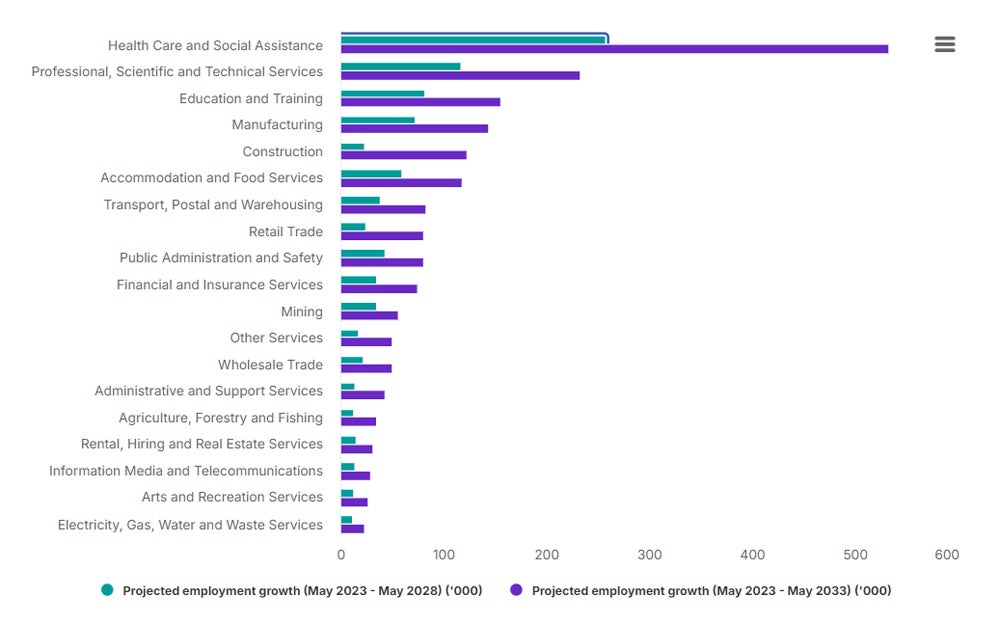
The solutions proposed in the report are ambitious to the point of impracticality. For example, one of the key recommendations was for at least 80% of the working-age population to have tertiary education (it’s currently just 50%), as well as significantly boosting government support in technical areas, including R&D. This isn’t exclusive to the tech sector, but the government expects demand for experts in “Professional, Scientific and Technical Services,” including IT, to accelerate and be the second-largest source of demand for workers through 2033 (Figure A).

Figure A

Graph showing technical and scientific skills to only be outpaced by demand in health care and social assistance by 2033.
Technical and scientific skills to only be outpaced by demand in health care and social assistance by 2033. Image: Australian government

In short, the government is deeply concerned about Australia’s ability to meet the demand and provide enough skilled professionals to fill critical jobs, particularly in areas such as technology.

Skilled migrants are more important than ever, but they’re under-supported

It is unlikely that domestic skills supply will be able to meet the full demand for IT professionals, even if the government takes action on the Accord’s recommendations. In acknowledging that there is a need for migrant skills to fill the gaps, late last year, the government announced a new skilled visa that covers skills in deepest demand, including IT.

As defence think tank ASPI noted in a report of its own, there are only around 7,000 Australian students graduating with an IT degree each year, while demand for IT professionals is expected to grow by 233,000 by 2033. ASPI’s recommendation is also migration to deepen skills trade with India, again highlighting the importance of fully integrating skilled migrants within the economic environment.

However, this raises challenges of its own. The Committee for Economic Development of Australia recently released a report that highlighted the need to make participation in the Australian economy more accessible to skilled migrants.

“Weaker English skills and lack of skills recognition are preventing us from making the most of migrants’ skills and experience, with discrimination likely also having an impact,” CEDA Senior Economist Andrew Barker said in the report.

“Ensuring migrants can use their skills within their first few years in Australia is crucial to addressing ongoing skill shortages across the economy.”

Incredibly, spending on training is decelerating

Meanwhile, private enterprise isn’t doing enough to address the skills challenges either. Though the skills shortage is challenging organizations to fill roles and be able to fully leverage the IT opportunity, research from RMIT suggests that spending on training is cooling.

The university found that overall mid- to large-sized organizations were expecting to increase spending on learning and development by 15% to AUD $8 billion, but nearly half (45%) of businesses admit they aren’t putting any priority on using the training budget to address skills gaps.

SEE: The Ultimate IT Career Kickstarter Bundle (TechRepublic)

The same report found that digital technologies, including AI, data science, coding and cyber security, were employers’ chief concerns with the skills shortage. A separate report from Deloitte found that only 3% of tech employers believe that IT graduates are job-ready, and three in five businesses believe their workforces have outdated digital skills.

Furthermore, while cross-skilling is increasingly essential, the Deloitte report found that three in four working hours by 2030 will be impacted by critical technologies, such as AI. Australians are also much less likely to be involved in learning new skills such as these. From the RMIT research, almost half of adults in the European Union have participated in some form of non-formal learning, but Australia’s rate is just 32%.

SEE: The 10 Best AI Courses in 2024 (TechRepublic)

As RMIT CEO Nic Cola said in the report: “Australian businesses have a strategic opportunity to evaluate workforce proficiencies and gaps, and to develop learning and development frameworks that fortify teams for the future. If businesses are to maximise their return on investment, they must get their priorities in check to develop capabilities in the areas the workforce most needs.”

The early bird gets the worm: Self-upskilling could lead to a higher salary

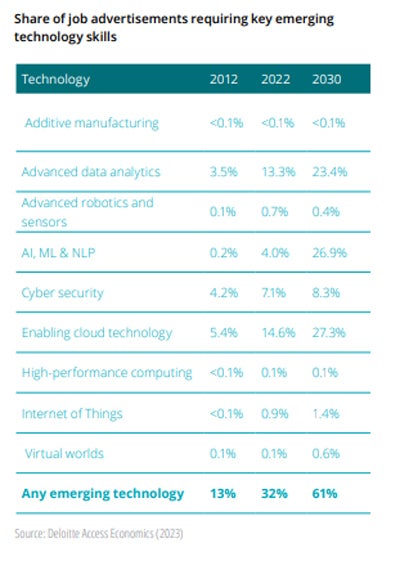
For IT professionals in Australia, this is an opportunity for those who take initiative. While their organizations might not be investing in upskilling and emerging technologies, those businesses need people with skills in those areas. As the Deloitte research found, job advertisements requiring key emerging technology skills will account for 61% of job postings overall by 2030.

Figure B

Graph showing why developing new skills will be essential for chasing job opportunities.
Why developing new skills will be essential for chasing job opportunities. Image: Deloitte

“It will be essential that professionals of all shapes and sizes have the right skills to effectively harness and leverage the key emerging technologies identified,” the report noted. “Without them, the full potential of digital technologies will remain untapped.”

What this means is that IT professionals will need to invest in their own skills development if their employers wont, and build capabilities in both “hard” and “soft” skills around technology. Project management will be as important as the ability to code and analyse data.

SEE: The Project Management & Scrum Certification Preparation Exams Bundle (TechRepublic Academy)

Recruitment agency Hays noted that tech professionals have become some of the highest earners in Australia, with many jobs paying over $200,000. “Whether you’re passionate about data, software development, QA testing, or aspire to a leadership position like CIO or CTO, there’s money to be made if you have the right skills and work ethic,” Hays noted. “If you’re thinking about a career change to the IT industry, now’s the time to start learning the necessary skills so you can join the ranks of the highest-paid IT professionals in Australia.”

By taking the initiative, gaining qualifications and certifications in the most in-demand skills, and being willing to move as organizations compete for those skills, IT professionals are well-placed in a market that is heavily weighted toward supporting a small domestic supply of skills to become some of the most financially successful individuals in the country in 2024 and the decade ahead.

Understanding the influence of cloud computing and generative AI for digital business transformation

Influence of Generative AI and Cloud Computing on Businesses

Businesses in today’s technologically driven world face many obstacles to success and competition. Key problems in this digital landscape include managing constantly growing amounts of data, adapting to shifting client demands and optimizing processes for maximum efficiency. Generative AI and cloud computing have come a long way in assisting businesses in the past couple of years.

The market for cloud AI was expected to be worth USD 44.97 billion globally in 2022, and it is projected to expand at a compound annual growth rate (CAGR) of 39.6% between 2023 and 2030. Cloud AI gives businesses advantages like faster processing, increased productivity, and cost savings by fusing AI algorithms with the power of cloud computing.

Thanks to cloud computing’s unparalleled flexibility and agility, businesses can expand their IT infrastructure. By removing the limitations of pricey on-premises technology, organizations may use their resources to innovate, expand, and take strategic initiatives.

An infrastructure that is both high-performing and adaptable to changing workloads and business requirements can be found in the cloud. Businesses may more easily scale up or down quickly using it, guaranteeing the best possible resource redistribution.

Conversely, generative AI enhances cloud computing by revolutionizing data analytics and usage processes. With the help of sophisticated analytics and clever automation, large data sets can yield insightful insights. Increasing competitiveness enables firms to make data-driven decisions and spot patterns and trends. These technologies enable digital firms to reach their full potential and experience faster growth and success.

Why should companies use generative AI and cloud computing?

Businesses require cloud computing and generative AI for varied reasons to fulfill the growing demand for data analytics and resources.

1. The importance of data-driven decision making

As data volumes rise, businesses hoping to optimize their competitive advantages must find valuable insights. Conventional data analysis methods rarely yield the best results when processing large amounts of complex data. To make decisions in real-time, manual analysis is laborious, prone to errors, and requires greater flexibility. As a result, generative AI has a big role to play in this.

With the help of generative AI’s potent algorithms and machine learning (ML) capabilities, businesses may uncover insightful patterns, trends, and correlations in data. It gives businesses a simple approach to forecast and evaluate data, enabling them to make wise choices that promote expansion and effective corporate operations. Generative AI improves data analysis skills and turns raw data into valuable insights in supply chain optimization and consumer behavior research.

2. Growing requirement for scalable architecture

Businesses generate and gather vast volumes of data at a rate never seen before. Massive amounts of data have evolved into valuable resources for critical information, like transaction histories and customer interactions. However, appropriately managing and understanding this kind of data is highly problematic. There is a greater requirement than typical on-premises to fulfill the growing needs.

This is when cloud computing becomes a no-brainer for businesses. Because cloud computing infrastructure is flexible and scalable, businesses can manage growing volumes of data. Businesses can handle data successfully until they can swiftly scale up or down resources as needed without expensive hardware investments. Effective data processing is made possible by the cloud’s flexibility, which frees businesses from infrastructure limitations and helps them with analysis and decision-making.

3. The need for effective operations

One of the main goals of a company looking to save expenses and streamline operations is to maximize operational efficiency. However, manual completion of some regular processes and operations still occurs, which increases the risk of mistakes, inefficiencies, and resource waste.

With its capacity for intelligent automation, generative AI can solve this issue. Automating repetitive procedures and duties can greatly increase an organization’s operational efficiency. Employees may concentrate on more important tasks that need human intervention, such as answering consumer questions, processing orders, and managing inventories, through GenAI-powered systems.

Benefits of cloud computing and generative AI fusion for organizations

Influence of Generative AI and Cloud Computing on Businesses

1. Advanced analytics to get insights from data

Organizations may analyze massive amounts of data efficiently and gain deeper insights into their data by combining cloud computing and generative AI. Predictive modeling and advanced analytics can assist businesses in making well-informed decisions and in spotting and evaluating industry trends to obtain a competitive edge.

2. Improved scalability

Because of the cloud computing model’s flexibility, enterprises can handle workload changes and data growth without sacrificing performance. They can also quickly mobilize resources in response to demand.

3. Customized client experience

Businesses that combine cloud computing and generative AI can offer remarkable customer experiences. Large volumes of consumer data can be handled and saved thanks to cloud infrastructure, while Gen AI’s sophisticated analytical tools enable tailored interactions. Encouraging brand loyalty raises customer satisfaction and retention rates overall.

4. Lower expenses

Businesses can cut costs dramatically by combining generative AI with cloud computing. Due to the removal of the need for expensive on-premises hardware, businesses can reduce their total cost of ownership. Businesses can pay for the resources they use by employing cloud infrastructure’s cost-effective scalability, which maximizes their cost savings.

5. Increased prospects for innovation

By utilizing cloud-based development platforms and genAI’s sophisticated capabilities, businesses may promote innovation and expedite digital transformation. Because cloud computing is agile, new goods and services can enter the market more quickly because of its quick prototyping and testing capabilities. It quickens the pace of invention, giving companies a competitive edge in a market that is always shifting.

Strategies for effective adoption of cloud computing and generative AI fusion

1. Workforce development programs

Enabling that staff have the requisite skills and knowledge to leverage cloud computing resources and generative AI capabilities is imperative in enabling the successful deployment of these technologies.

It might be necessary to initiate upskilling programs and offer training to develop a capable, creative workforce that will promote innovation and optimize the advantages of combining cloud and generative AI.

2. Create sturdy data governance and security processes

To combat the problems with data security and integrity, organizations need to have strong cybersecurity measures in place. Establishing precise data governance procedures that safeguard confidential data and adhere to legal requirements is essential. Customers will feel more confident and commercial data belonging to enterprises will be protected.

3. Establish alliances with reputable suppliers

Businesses should collaborate with reputable vendors to optimize the advantages of cloud computing and generative AI throughout the deployment phase. Their deployment will be dependable and efficient because they now have cutting-edge data and resources. These agreements help companies hold their leading positions in a rapidly evolving industry.

Final thoughts

In conclusion, the potent fusion of cloud computing and generative AI is transforming digital businesses. By leveraging the breadth of cloud infrastructure and Gen AI’s sophisticated analytics and automation, businesses can accelerate innovation, maximize performance, and provide individualized consumer experiences.

Working with reputable cloud computing and generative AI suppliers can help to ensure successful implementation. Businesses may overcome obstacles with a clear plan and a dedication to appropriate AI practices, even in the face of data privacy and workforce transition.

DE&I in Tech Leadership Awards 

DE&I in Tech Leadership Awards Rising 2024

Diversity, equity, and inclusion (DE&I) is the future. Those who embrace it wholeheartedly, both personally and within their organisations, are definitely going to be ahead in the race. Recognising DE&I’s critical role in AI, AIM emphasises its importance in harnessing diverse talents from various backgrounds to drive innovation and shape a more inclusive future.

These awards recognise the most influential DE&I champions in India’s technology sector, showcasing their outstanding leadership and innovation.

Here is the list of the winners:

Amita Mirajkar

Amita Mirajkar, a seasoned technology luminaire with over two decades of experience, ignited business transformation through the potent fusion of data, cloud, and AI. As VP at EXL, she orchestrates cloud-driven digital solutions for the dynamic realms of Retail and CPG. Her pioneering spirit doesn’t stop there; she is the co-founder and CEO of Clairvoyant India, where she spearheads a technological revolution that will reshape the business technology landscape.

Disha Deep

Disha Deep, an associate principal at MathCo, leverages over 11 years of leadership experience spearheading multi-million-dollar projects for Fortune 500 clients. With a solid electronics & electrical engineering foundation and an MBA in business analytics, she specialises in market mix modelling, marketing analytics, and product analytics. Her groundbreaking initiatives consistently drive improvements in RoI and foster innovation, all while championing diversity and inclusion initiatives within MathCo and beyond.

Ritika Dusad

Ritika Dusad, as the chief innovation officer at Nucleus Software, spearheads transformative endeavours that harmonise business strategy with cutting-edge innovation. Leveraging her profound expertise in data analytics, AI, and big data, she streamlines customer processes to facilitate data-driven consumer experiences. Fueled by a fervent dedication to market dynamics, she champions continuous innovation, fostering sustained growth.

Gnanapriya Chidambaranathan

Gnanapriya Chidambaranathan, aka Priya, is an AVP and unit technology officer at Infosys. She boasts 31 years of extensive experience in telecom and IT and spearheads digital transformation, enterprise architecture, cloud migration, and the integration of emerging technologies, actively engaging in various industry forums. Renowned for her technical acumen and leadership in technology, she has been honoured with multiple awards for her outstanding contributions.

Kaveri Gopakumar

Kaveri Gopakumar, an accomplished B2B Marketing expert, boasts over a decade of invaluable experience within the dynamic Indian tech and startup landscape. Throughout her career, she has spearheaded growth initiatives for numerous startups while fervently advocating for increased female representation in the workforce. Globally recognised for her impactful contributions, Gopakumar stands as a beacon of innovation and empowerment in the industry.

Khyati Bheda

Khyati Bheda, boasting over 13 years of expertise in consulting and technology, is a standout in strategic planning and analytics consulting. Her leadership style is versatile, as evidenced by her significant contributions to Deloitte and Tiger Analytics, where she led the charge in advanced analytics projects while overseeing the Organisation Excellence function, showcasing her dynamic capabilities in driving impactful initiatives.

Latha Chembrakalam

As the vice president and head of Continental Automotive’s Technical Center India, Latha Chemrakalam leads a dynamic team of 6,000 engineers. Her leadership is dedicated to advancing automotive technologies, particularly in Autonomous Mobility and Safety and Vehicle Networking. With close to thirty years of expertise in the industry, she is acclaimed for her inclusive leadership approach and has garnered numerous accolades within the automotive sector.

Norma Dsouza

Norma Dsouza, in her role as practice director for AI/ML at KPI Partners, harnesses her extensive expertise in AI, ML, and data science. Leading a dynamic team, she pioneers GenAI solutions, continually adapting to meet evolving client needs. Dsouza drives strategic initiatives that push the boundaries of innovation, positioning the company at the forefront of technological advancement.

Preetha Kumar

As senior director of advanced analytics at Providence India, Preetha Kumar spearheads analytics in clinical, revenue cycle, and finance domains. With a rich tapestry of 18 years in the field, she cultivates a culture of collaboration and inclusivity, guiding a dynamic team of over 65 professionals.

Priyadarsanie Ramasubramanian

Priyadarsanie Ramasubramanian serves as the director of engineering at Tesco. She is a veteran technology leader with over 25 years of experience in charge of supply chain technology to catalyse global transformation. She has a strong retail technology track record, consistently delivering substantial savings while championing diversity and inclusion. Through her collaborative leadership style, she empowers teams to thrive, fostering a culture of growth and innovation.

Sandhya Chandrashekar

With over 15 years of experience in automotive engineering, Sandhya Chandrashekar is at the forefront of advanced technologies as the leader at Continental Automotive. She spearheads cross-functional collaboration, leveraging AI/ML to enhance high-performance computing capabilities, all while championing diversity in tech, particularly advocating for women and emphasising the importance of continuous learning for adaptation in our rapidly evolving ecosystem.

Sheetal Kale

Sheetal Kale, boasting over three decades of experience in organisational development, embraces a ‘servant leadership’ philosophy. As the managing director at DataArt, she spearheads India’s R&D operations while steering the company towards exponential business expansion. With over fifteen years of expertise in the IT sector, she demonstrates remarkable proficiency in niche selling and product marketing, cultivating a culture of innovation and fostering robust collaboration.

Shipra Sooden

Shipra Sooden, the global practice head for finance analytics at Fractal Analytics, spearheads financial digital transformation initiatives for Fortune 500 companies. With almost twenty years of expertise, Sooden leads the way in crafting analytical solutions that enhance pricing strategies, boost revenue, and optimise bottom-line results across various industries.

Smitha Hemmigae

Smitha Hemmigae, the Marketing Head at ANSR, is a seasoned marketer with over 20 years of experience. She is also a co-founder of Your Philanthropy Story and holds a position as co-trustee at Belaku Trust. Through her endeavours in marketing and philanthropy, Hemmigae demonstrates a strong dedication to driving social impact and showcasing leadership within her industry.


Sudha Bhat

Sudha Bhat, an accomplished professional with over two decades of experience, specialises in designing cutting-edge customer experience (CX) AI solutions and delivering valuable analytics consulting. Renowned as a visionary, she constantly challenges conventions in CX innovation to drive meaningful results. She is currently the senior director of conversation intelligence, industry solutions and strategy at Uniphore.

Sukanya Santhanam

Sukanya Santhanam, a seasoned professional with 25 years of experience, exemplifies outstanding engineering leadership. Serving as the director of engineering at Walmart Global Tech, she passionately champions innovation and cultivates diversity within her team. Her unwavering dedication to excellence and inclusivity establishes her as a standout leader in the industry.

Supriya Raman

With over 17 years of experience at JPMorgan Chase, Supriya Raman leads data engineering, spearheading analytics solutions and offering mentorship. As a Google Women Tech Ambassador and a member of the IEEE ICWITE Committee, she is dedicated to propelling the tech industry forward and nurturing the next generation of professionals.

Swetha Yalagach

Swetha Yalagach, as Insight India’s head of talent acquisition, spearheads workforce strategy and Diversity & Inclusion (D&I) initiatives. With an MBA and over 15 years of rich experience spanning Compass India Development, Microsoft, and Virtusa, she strategically shapes recruitment approaches, optimises processes, and nurtures talent acquisition expansion.

Tahira Shafiulla

Tahira Shafiulla, as senior director at Indegene, boasts an impressive 28-year tenure in healthcare market intelligence. With her strategic prowess, she cultivates influential partnerships worldwide, driving the development of pioneering pharmaceutical analytics solutions. Demonstrating unwavering dedication to advancing healthcare, she leads the way in interpreting data to generate actionable insights.

Titty Thomas

With more than two decades of dedicated service at Unisys, Titty Thomas, senior HR manager, epitomises profound expertise in HR, with a focus on consulting, coaching, and communication. Renowned as a global leader in diversity, equity, and inclusion (DEI), she champions inclusivity and knowledge-sharing, leading key initiatives and serving as chair of the Global DEI Council.

Unnati Gajjar

Unnati Gajjar, spearheading India marketing at Insight, brings over 15 years of extensive experience in technology marketing and partner management, gained through prominent roles at esteemed companies such as Zensar Technologies and Persistent Systems. She is a staunch advocate for women in leadership roles and actively mentors startups, playing a pivotal role in fostering transformative growth.

Sree Veturi

With over two decades of expertise, Sree Veturi emerges as a visionary leader in digital transformation, skillfully blending cloud engineering into holistic strategies. She ardently advocates for diversity and inclusion, showcasing prowess in open-source solutions and spearheading revolutionary advancements through AI innovation. Currently, she heads the cloud practice for LTIMindtree.

The post DE&I in Tech Leadership Awards appeared first on Analytics India Magazine.

Downtime Decoded: How to Revolutionise Manufacturing with GenAI

Downtime Decoded: How to Revolutionise Manufacturing with GenAI

Machine downtime is a significant challenge in the manufacturing sector, costing industrial manufacturers between 5 and 20% of their productive capacity. The global cost of downtime runs into trillions of dollars annually, making it a critical issue for the industry.

A 2023 report by Siemens highlighted the escalating costs of downtime. Fortune Global 500 companies now face losses of around 11% of their yearly turnover, totalling nearly $1.5 trillion.

Understanding the Costs and Factors

According to Siemens’ findings, the annual cost of downtime per facility among Fortune Global 500 companies has risen by 65% in recent years, reaching a staggering $129 million per facility. The cost of a lost hour varies from industry to industry, with automotive plants experiencing the highest of over $2 million per hour. Similarly, the oil and gas sector has seen a doubling of hourly downtime costs to nearly $500,000.

Downtime incidents are influenced by a myriad of factors, ranging from equipment age and condition to maintenance practices, operator training, material quality, and environmental factors. Supply chain disruptions, human error, unplanned events, and software issues further compound the problem.

Identifying and addressing these factors presents low-hanging opportunities for manufacturers to reduce downtime and improve operational efficiency.

The Role of Generative AI

In recent years, advancements in AI have opened up new avenues for addressing downtime challenges. Generative AI, powered by advanced models like LLaMA, BERT, Falcon, GPT-4, and Gemini, offers an innovative approach to tackling downtime.

Generative AI can analyse vast amounts of operational data to identify patterns, predict potential downtime events, and recommend proactive maintenance strategies. By fine-tuning these models with real-time data and leveraging the RAG AI framework during the proof-of-concept stage, manufacturers can experience a significant reduction in downtime incidents.

Early successes have shown a 3-5% decline in machine downtime within the first quarter of implementation. This motivated plant managers to increase their investment in generative AI initiatives, bringing additional data sources to improve model accuracy and relevancy.

With the help of LLMs like GPT-4 and Gemini and, RAG, shop floor employees get access to actionable information and real-time insights. Through mobile or web applications, employees can access troubleshooting workflows, escalation SOPs, and interactive Q&A sessions, expediting the recovery process and ensuring adherence to best practices.

Training Workforce and Measuring Impact

Empowering the workforce is another critical aspect of making the most of generative AI. Regular training workshops for maintenance technicians, operators, and managers are essential. Adherence to standard operating procedures (SOPs), scheduled servicing, and maintenance protocols further enhance operational resilience.

Both hands-on and classroom training are common in the manufacturing sector, ensuring each employee has access to essential documents and resources.

To validate the effectiveness of AI solutions, it’s crucial to measure its impact on key performance metrics such as Overall Equipment Effectiveness (OEE), Mean Time to Repair (MTTR), Downtime Frequency, and Scrap Rate. Integrating generative AI into the manufacturing processes not only reduces downtime but also enhances productivity, operational efficiency, and decision-making capabilities.

The Final Word

In conclusion, the urgency of addressing machine downtime in manufacturing cannot be overstated. By leveraging generative AI, adopting proactive measures, empowering a skilled workforce, and continuously measuring and improving operational metrics, manufacturers can navigate challenges more effectively, minimise downtime, and maximise efficiency.

This journey towards resilience and innovation is imperative in today’s dynamic manufacturing landscape. This comprehensive approach, combining advanced AI technologies with strategic initiatives and workforce empowerment, paves the way for a more resilient and efficient manufacturing sector.

As industries evolve and challenges persist, embracing innovation becomes not just a competitive advantage but a necessity for sustained success. Generative AI offers a transformative path forward, revolutionising manufacturing processes and driving tangible business outcomes.

The post Downtime Decoded: How to Revolutionise Manufacturing with GenAI appeared first on Analytics India Magazine.

Question answering tutorial with Hugging Face BERT

image-2

What is Question Answering AI

Question answering AI refers to systems and models designed to understand natural language questions posed by users and provide relevant and accurate answers. These systems leverage techniques from natural language processing (NLP), machine learning, and sometimes deep learning to comprehend the meaning of questions and generate appropriate responses.

The goal of question answering AI is to enable machines to interact with users in a way that simulates human-like comprehension and communication. In the ever-evolving domain of natural language processing (NLP), the advent of models like Bidirectional Encoder Representation Transformers (BERT) has opened doors to profound advancements, enabling machines to comprehend and generate human-like text with unprecedented accuracy. These models become more intricate, setting benchmarks in a variety of tasks, from simple text classification to complex question answering AI.

For NLP enthusiast or a professional looking to harness the potential of BERT for AI-powered QA, this comprehensive guide shows the steps in using BERT for Question Answering (QA).

How to build a question answering AI with BERT?

While BERT is a powerhouse trained on massive amounts of text, it is not highly specialized so using it out of the box is not ideal. However, by fine-tuning BERT on QA datasets, we’re helping the model grasp the nuances of QA tasks, especially for domain specific prompts like medicine and law, saving time to response and computing resources. By leveraging its existing knowledge and then tailoring it to QA, we stand a better chance at getting impressive results, even with limited data.

There are two predominant methods to fine-tune a BERT model specifically for question-answering (QA) capabilities – Fine tuning with Questions and Answers alone vs. Questions, Answers, and Context

Fine-tuning with questions and answers alone

In this approach, the BERT model is treated somewhat similarly to a classification or regression task, provided with pairs of questions and their corresponding answers during training. Here, the question-answering model essentially learns to map a given question to a specific answer.

Over time, the model memorizes these mappings. When presented with a familiar question (or something very similar) during inference, the model can recall or generate a suitable answer. However, this method has its limitations. It largely depends on the training data, and the model might not generalize well to questions outside of its training set, especially if they require contextual understanding or extraction of information from a passage.

It is flawed in its uncreative nature, relying heavily on memorization which can lead to empty responses when a question that it never encountered or can attribute to an existing question is asked.

Fine-tuning with questions, answers, and context

BERT models trained using context (or passage), a related question, and an answer within the context is far more performant and creative. Here, the objective is not to make the model memorize the data it’s being trained on. Instead, the goal is to enhance the model’s capability to comprehend and extract relevant information from a given context or passage much like how humans would identify and extract answers from reading comprehension passages. This method enables the model to generalize better to unseen questions and contexts, making it a preferred approach for most real-world QA applications.

While Method 1 stands as a direct mapping problem, Method 2 treats it as an information extraction problem. The choice between the two largely depends on the application at hand and the available data. If the goal is to create a QA model that can answer a wide range of questions based on diverse passages, then Method 2, involving contexts, is more appropriate. On the other hand, if the objective is to build a FAQ chatbot that answers a fixed set of questions, the first method might suffice.

Extractive question answering tutorial with Hugging Face

In this tutorial, we will be following Method 2 fine-tuning approach to build a Question Answering AI using context. Our goal is to refine the BERT question answering Hugging Face model’s proficiency, enabling it to adeptly tackle and respond to a broader spectrum of conversational inquiries.

When dealing with conversational questions, we’re diving into queries that arise in natural, fluid dialogues between individuals. These questions are context-heavy, nuanced, and might not be as straightforward as fact-based inquiries. Without fine-tuning on such specific questions, BERT might struggle to capture the underlying intent and context of these queries fully. Thus, by refining its capabilities through fine-tuning, we aim to equip BERT with the specialized skill set required to adeptly address and respond to a broader range of these conversational challenges.

Dataset used for fine-tuning

In this tutorial, we will be working with the Conversational Question Answering Dataset known as CoQA. CoQA is a substantial dataset from Hugging Face designed for developing Conversational AI Question Answering systems. You can find CoQA datasets here on Hugging Face.

The dataset is provided in JSON format and includes several components: a given context (which serves as the source for extracting answers), a set of 10 questions related to that context, and the corresponding answers to each question. Additionally, it includes the start and end indexes of each answer within the main context text from which the answer is extracted.

The primary objective of the CoQA challenge is to evaluate how well machines can comprehend a textual passage and provide answers to a series of interconnected questions that arise within a conversation.

Comparing the non-fine-tuned and the fine-tuned model performances

Non-fine-tuned BERT model evaluation

Below are the outcomes when using a BERT model that hasn’t been fine-tuned and evaluated on the same dataset.

Given the challenge of precisely predicting the start and end indices, we’ve implemented a function to accommodate minor deviations in our evaluations. We present the accuracy without any margin for error, followed by accuracies considering a leeway of 5 words and then 10 words. These error margins are also applied to evaluate the performance of the fine-tuned BERT model.

Total processed data points: 468

Start Token Accuracy (Pre-trained BERT): 1.27%

End Token Accuracy (Pre-trained BERT): 0.00%

Start Token Accuracy Within Range (Pre-trained BERT, 5): 4.66%

End Token Accuracy Within Range (Pre-trained BERT, 5): 4.24%

Start Token Accuracy Within Range (Pre-trained BERT, 10): 7.63%

End Token Accuracy Within Range (Pre-trained BERT, 10): 7.63%

Fine-tuned BERT model evaluation

Here, we’ve showcased the loss value across our seven epochs. Subsequently, we’ve also detailed the accuracy of our fine-tuned model using the same error margins as the model before fine-tuning.

Start Token Accuracy: 7.63%

End Token Accuracy: 5.51%

Start Token Accuracy Within Range (5): 34.75%

End Token Accuracy Within Range (5): 43.22%

Start Token Accuracy Within Range (10): 46.61%

End Token Accuracy Within Range (10): 51.27%

The initial performance of the BERT model on the CoQA dataset was almost negligible. However, after training on just approximately 6,000 data points, the model’s effectiveness surged to around 40% for a 5-word error range and close to 50% for a 10-word error range.

This is a notable enhancement. To further boost the model’s efficacy, we could experiment with varying learning rates, extend the number of epochs and augment the training data. Indeed, a dataset of 6,000 points is often insufficient for many scenarios.