Poe introduces a price-per-message revenue model for AI bot creators Sarah Perez @sarahintampa / 9 hours
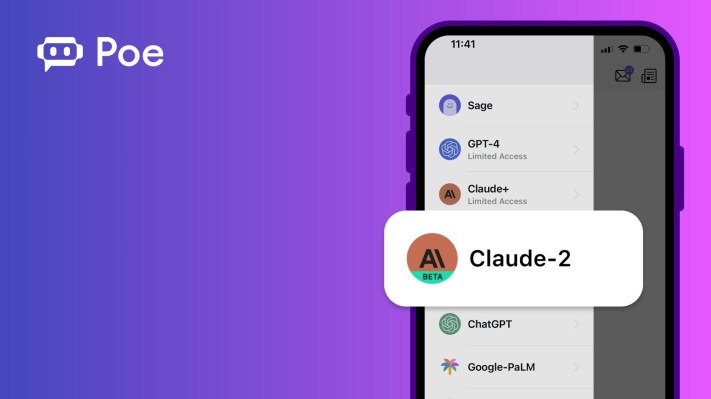
Bot creators now have a new way to make money with Poe, the Quora-owned AI chatbot platform. On Monday, the company introduced a revenue model that allows creators to set a per-message price for their bots so they can make money whenever a user messages them. The addition follows an October 2023 release of a revenue-sharing program that would give bot creators a cut of the earnings when their users subscribed to Poe’s premium product.
First launched by Quora in February 2023, Poe offers users the ability to sample a variety of AI chatbots, including those from ChatGPT maker OpenAI, Anthropic, Google, and others. The idea is to give consumers an easy way to toy with new AI technologies all in one place while also giving Quora a potential source of new content.
The company’s revenue models offer a new twist on the creator economy by rewarding AI enthusiasts who generate “prompt bots,” as well as developer-built server bots that integrate with Poe’s AI.
Last fall, Quora announced it would begin a revenue-sharing program with bot creators and said it would “soon” open up the option for creators to set a per-message fee on their bots. Although it’s been nearly 5 months since that announcement — hardly “soon” — the latter is now going live.
Quora CEO Adam D’Angelo explained on Monday that Poe users will only see message points for each bot, which encompasses the same points they have as either a free user or Poe subscriber. However, creators will be paid in dollars, he said.
Today we’re introducing a new way for model developers and bot creators to generate revenue on @poe_platform: price per message! Creators can now set a per-message price for their bots and generate revenue every time a user messages them. Thread 👇 pic.twitter.com/yx5mKgGoSQ
— Adam D'Angelo (@adamdangelo) April 8, 2024
“This pricing mechanism is important for developers with substantial model inference or API costs,” D’Angelo noted in a post on X. “Our goal is to enable a thriving ecosystem of model developers and bot creators who build on top of models, and covering these operational costs is a key part of that,” he added.
The new revenue model could spur the development of new kinds of bots, including in areas like tutoring, knowledge, assistants, analysis, storytelling, and image generation, D’Angelo believes.
The offering is currently available to U.S. bot creators only but will expand globally in the future. It joins the creator monetization program that pays up to $20 per user who subscribes to Poe thanks to a creator’s bots.
Alongside the per-message revenue model, Poe also launched an enhanced analytics dashboard that displays average earnings for creators’ bots across paywalls, subscriptions, and messages. Its insights are updated daily and will allow creators to get a better handle on how their pricing drives bot usage and revenue.
Quora’s Poe introduces an AI chatbot creator economy
AMD has introduced the latest expansion to its AMD Versal adaptive system on chip (SoC) portfolio, unveiling the Versal AI Edge Series Gen 2 and Versal Prime Series Gen 2 adaptive SoCs. These advancements integrate preprocessing, AI inference, and postprocessing into a single device, promising accelerated performance for AI-driven embedded systems.
Building upon the success of the first generation, the Versal Series Gen 2 devices boast new AI Engines anticipated to deliver up to 3 times higher TOPs-per-watt than their predecessors. Additionally, the inclusion of high-performance integrated Arm CPUs is expected to offer up to 10 times more scalar compute power than previous models.
Salil Raje, senior vice president and general manager of AMD’s Adaptive and Embedded Computing Group, said, “The demand for AI-enabled embedded applications is exploding and driving the need for single-chip solutions for the most efficient end-to-end acceleration within the power and area constraints of embedded systems. Backed by over 40 years of adaptive computing leadership, these latest generation Versal devices bring together multiple compute engines on a single architecture offering high compute efficiency and performance with scalability from the low-end to high-end.”
Versal Series Gen 2 devices are tailored to balance performance, power, and area concerns while incorporating advanced functional safety and security features. These enhancements enable the design of high-performance, edge-optimized products catering to various sectors including automotive, aerospace and defense, industrial, vision, healthcare, broadcast, and pro AV markets.
Empowering Subaru’s Next-Gen ADAS Vision System
Subaru Corporation has chosen Versal AI Edge Series Gen 2 devices to power its next-generation advanced driver-assistance system (ADAS) vision system, EyeSight. EyeSight, integrated into select Subaru car models, facilitates advanced safety features such as adaptive cruise control, lane-keep assist, and pre-collision braking.
Subaru has already deployed AMD adaptive SoC technology in current EyeSight-equipped vehicles. “Versal AI Edge Gen 2 devices are designed to provide the AI inference performance, ultra-low latency, and functional safety capabilities required to put cutting-edge AI-based safety features in the hands of drivers,” said Satoshi Katahira, General Manager at Subaru Corporation’s Advanced Integration System Department & ADAS Development Department.
Versal AI Edge Series Gen 2 devices are engineered to address the intricate processing requirements of real-world systems. They incorporate FPGA programmable logic for real-time preprocessing, an array of vector processors for efficient AI inference, and Arm CPU cores for post processing tasks.
This single-chip intelligence eliminates the need for multi-chip processing solutions, resulting in smaller, more efficient embedded AI systems with potentially shorter time-to-market.
The post AMD Unveils Versel Gen 2 Adaptive SoCs for AI Workloads on Single Device appeared first on Analytics India Magazine.
Not too long ago, Artificial Intelligence was a vague concept that mostly found its relevance in science fiction movies and books. But last year when ChatGPT, the Large Language Model by OpenAI was launched, it disrupted the whole AI market. This incredible platform got more than 100 million users in just 3 months of its launch surpassing other major platforms including Instagram, Facebook, or X (formerly Twitter.)
Not just LLMs, AI technology has been transforming the way we live and work. Every industry, from healthcare to finance, transportation, and manufacturing has changed the way they operate. Open-source AI is one of the major factors for this technological revolution.
Open-source artificial intelligence technology refers to the platform where the underlying code for AI tools and algorithms is freely available for the public to use, modify, and distribute as per their liking. This openness of the technology not only encourages collaboration, and transparency but also promotes democratization and innovations of AI.
Advantages of open-source AI
Now Google, OpenAI, and Microsoft aren’t the only leaders in AI technology. Though ChatGPT works fine, open-source AI also offers several advantages over traditional and proprietary AI solutions.
Transparency
Proprietary AI is often “black box” AI technologies lacking transparency and accountability. Open-source code helps developers to inspect and understand how AI algorithms work.
Collaboration
The above transparency in AI codes also encourages trust and collaboration where developers can come together to build and improve existing work and create even more powerful solutions.
A recent study by the Linux Foundation found that 84% of developers think open-source AI is a great way to build trust in AI systems.
Democratization of AI
Open-source AI removes the financial barriers often associated with proprietary solutions. Therefore, individuals or start-ups having a cash crunch and lacking resources can leverage cutting-edge AI technologies for their projects.
According to IDC, global spending on AI will reach $576.6 billion by 2024 that highlights the potential of open-source AI in the growing market.
Promotes Innovation
Since open-source models give access to a global community of developers who work together to improve AI tools and algorithms, the collaboration between them often encourages innovation to develop new and exciting AI products and services.
Cost-Effective
Open-source AI helps to eliminate the licensing fees associated with proprietary solutions and helps organizations experiment with AI and develop prototypes without shedding hefty prices.
Learn how to leverage the power of open-source AI with the help of global AI certification programs like Certified Artificial Intelligence Engineer (CAIE™)
Popular open-source AI projects and frameworks
TensorFlow and PyTorch
TensorFlow and PyTorch are popular AI frameworks that are used to build and train deep learning models such as image recognition, natural language processing, large language models like GPT-4, and more. TensorFlow is a Google offering and PyTorch is backed by Facebook. Both these frameworks have extensive documentation and support from large user communities.
Keras
Keras is a high-level API that simplifies the development process of deep learning models by sitting on top of TensorFlow. It helps AI developers to focus on the logic of their models without getting confused about the underlying code.
OpenAI
The founder of ChatGPT, OpenAI is a non-profit research company that significantly contributes to the development of open-source AI. Gym is a popular toolkit developed by them for training reinforcement learning algorithms and is used in robotics and game-playing AI.
Scikit-Learn
Scikit-learn is a very user-friendly library that provides users with a wide range of machine-learning algorithms for projects on classification, regression, and clustering. It is a great starting point for beginners because it is very easy to use and has excellent documentation and support community.
OpenCV
OpenCV is another open-source library helpful for computer vision tasks like image and video analysis. It has got a huge application in image recognition, object detection, and self-driving vehicles.
Real-world applications of open-source AI
Facial recognition systems for security applications
Object detection for self-checkout in stores
Kaldi is a powerful toolkit for voice assistants like Siri and Alexa
Open-source NLP libraries spaCy and NLTK are used for customer service chatbots
Analysis of medical images and early detection of diseases
Fraud detection, and many more.
Challenges of using open-source AI
Though open-source AI offers several advantages to individuals and organizations in developing indigenous AI systems, they also pose significant challenges that need to be addressed such as:
Security concerns as the code is openly available and its vulnerabilities can be easily exploited.
Bias in data and its quality which can impact the performance and fairness of AI models
No maintenance and dedicated support as offered by proprietary solutions. It only relies on contributions from the community.
Conclusion
The growth of Open-source AI is revolutionizing the way we develop and use artificial intelligence technology. It encourages collaboration, and transparency, and promotes innovation resulting in the development of more powerful AI tools and applications. With the open-source AI, the technology has become accessible to the general public and organizations who want to try their hands-on developing and experimenting with their own AI systems. As the technology continues to grow, open-source AI can prove to be highly beneficial in democratizing AI, driving innovations across various industries, and making a safer environment for the future of AI.
Google’s Gemini comes to databases Kyle Wiggers 15 hours
Google wants Gemini, its family of generative AI models, to power your app’s databases — in a sense.
At its annual Cloud Next conference in Las Vegas, Google announced the public preview of Gemini in Databases, a collection of features underpinned by Gemini to — as the company pitched it — “simplify all aspects of the database journey.” In less jargony language, Gemini in Databases is a bundle of AI-powered, developer-focused tools for Google Cloud customers who are creating, monitoring and migrating app databases.
One piece of Gemini in Databases is Database Studio, an editor for structured query language (SQL), the language used to store and process data in relational databases. Built into the Google Cloud console, Database Studio can generate, summarize and fix certain errors with SQL code, Google says, in addition to offering general SQL coding suggestions through a chatbot-like interface.
Joining Database Studio under the Gemini in Databases brand umbrella is AI-assisted migrations via Google’s existing Database Migration Service. Google’s Gemini models can convert database code and deliver explanations of those changes along with recommendations, according to Google.
Elsewhere, in Google’s new Database Center — yet another Gemini in Databases component — users can interact with databases using natural language and can manage a fleet of databases with tools to assess their availability, security and privacy compliance. And should something go wrong, those users can ask a Gemini-powered bot to offer troubleshooting tips.
“Gemini in Databases enables customer to easily generate SQL; additionally, they can now manage, optimize and govern entire fleets of databases from a single pane of glass; and finally, accelerate database migrations with AI-assisted code conversions,” Andi Gutmans, GM of databases at Google Cloud, wrote in a blog post shared with TechCrunch. “Imagine being able to ask questions like ‘Which of my production databases in east Asia had missing backups in the last 24 hours?’ or ‘How many PostgreSQL resources have a version higher than 11?’ and getting instant insights about your entire database fleet.”
That assumes, of course, that the Gemini models don’t make mistakes from time to time — which is no guarantee.
Regardless, Google’s forging ahead, bringing Gemini to Looker, its business intelligence tool, as well.
Launching in private preview, Gemini in Looker lets users “chat with their business data,” as Google describes it in a blog post. Integrated with Workspace, Google’s suite of enterprise productivity tools, Gemini in Looker spans features such as conversational analytics; report, visualization and formula generation; and automated Google Slide presentation generation.
I’m curious to see if Gemini in Looker’s report and presentation generation work reliably well. Generative AI models don’t exactly have a reputation for accuracy, after all, which could lead to embarrassing, or even mission-critical, mistakes. We’ll find out as Cloud Next continues into the week with any luck.
Gemini in Databases could be perceived as a response of sorts to top rival Microsoft’s recently launched Copilot in Azure SQL Database, which brought generative AI to Microsoft’s existing fully managed cloud database service. Microsoft is looking to stay a step ahead in the budding AI-driven database race and has also worked to build generative AI with Azure Data Studio, the company’s set of enterprise data management and development tools.
In a bid to empower enterprise customers in India with innovative AI solutions, Intel has embarked on several collaborations and deployments which were announced at Intel Vision 2024.
Bharti Airtel aims to harness its extensive telecom data to enhance AI capabilities, thereby enriching customer experiences and exploring new revenue avenues in the digital realm.
Infosys has announced a strategic partnership with Intel, integrating Intel technologies such as 4th and 5th Gen Intel Xeon processors, Intel Gaudi 2 AI accelerators, and Intel Core Ultra into Infosys Topaz. This collaboration aims to offer AI-first services, solutions, and platforms to accelerate business value through generative AI technologies.
Ola Krutrim is utilising Intel Gaudi 2 clusters to pre-train and fine-tune its foundational models with generative capabilities in ten languages, achieving industry-leading price/performance ratios compared to existing market solutions. Additionally, Krutrim is currently pre-training a larger foundational model on an Intel Gaudi 2 cluster, further advancing its AI capabilities.
Along with this, Intel has also announced its partnerships with Bosch, CtrlS, IBM, IFF, Landing AI, NAVER, NielsenIQ, Roboflow and Seekr.
Recently, ManageEngine, the IT enterprise wing of Zoho, confirmed that it would be investing $10 million in NVIDIA, AMD and Intel, aiming to unleash generative AI offerings for its customers.
Santhosh Vishwanathan, the vice president and MD at Intel, posted that the company has collaborated with Zoho to leverage Intel® Xeon® processors and the OpenVINO toolkit to empower its Video AI Assistant.
Following this development, Zoho is now collaborating with Intel to optimise and accelerate its video AI workloads for users. This will empower efficiency, reduce total cost of ownership (TCO), and optimise performance.
At the Intel Vision 2024, Intel has announced the release of its latest AI accelerator, the Intel Gaudi 3, set to revolutionise AI systems. The Gaudi 3 boasts the capability to power AI systems with tens of thousands of accelerators interconnected via Ethernet, setting a new standard in AI processing.
The Intel Gaudi 3 accelerator is slated for availability to OEMs, including Dell Technologies, HPE, Lenovo, and Supermicro, in the second quarter of 2024.
Intel has also forged partnerships with Google Cloud, Thales, and Cohesity to utilise Intel’s confidential computing capabilities within their cloud environments. This encompasses Intel Trust Domain Extensions (Intel TDX), Intel Software Guard Extensions (Intel® SGX), and Intel’s attestation service.
Users have the opportunity to execute their AI models and algorithms within a secure execution environment known as a Trusted Execution Environment (TEE), while also benefiting from Intel’s trust services for autonomously validating the integrity of these TEEs.
Compared to the NVIDIA H100, the Intel Gaudi 3 is projected to accelerate time-to-train by an average of 50% across various models, including Llama 2 models with 7B and 13B parameters, as well as the GPT-3 175B parameter model.
Furthermore, the Gaudi 3 accelerator is expected to outperform the H100 by 50% in inference throughput on average and achieve a 40% increase in inference power-efficiency across different parameter models.
The post Ola Krutrim, Infosys, and Bharti Airtel to Leverage Intel Gaudi 2 to Unleash AI Innovations appeared first on Analytics India Magazine.
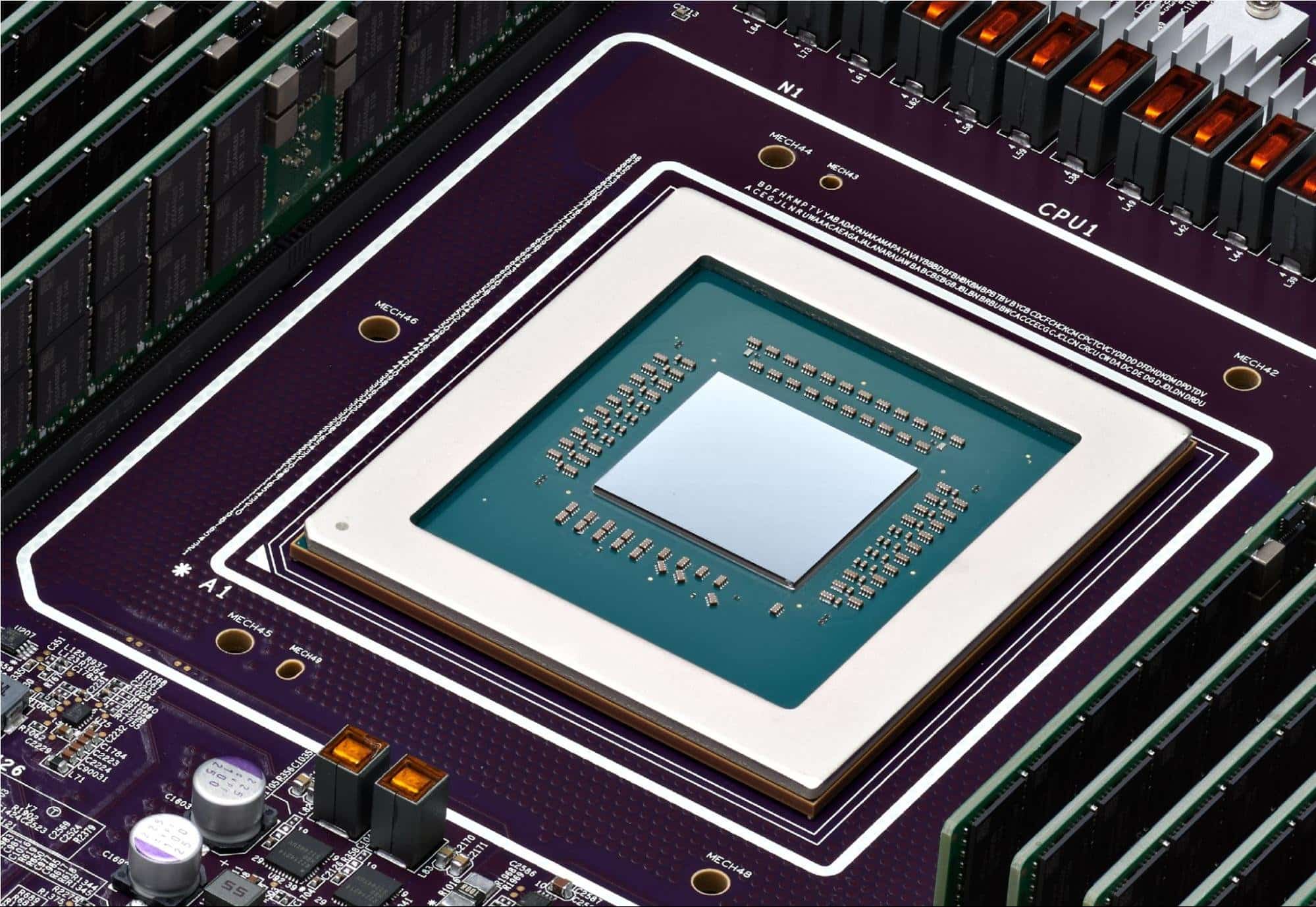
Google is venturing deeper into the realm of custom silicon, announcing its development of a new Arm-based CPU tailored for AI in data centres. This move by Google aims to bolster its AI capabilities and reduce reliance on external providers like Intel and NVIDIA.
Named Axion, this new CPU is already in use for various Google services, including YouTube ads and the Google Earth Engine. It is set to support Google’s AI workloads before becoming available to business customers of Google Cloud later this year.
Amit Vahdat, VP of Machine Learning, systems, and Cloud AI at Google Cloud emphasised in the release blog that Axion is designed to facilitate a seamless transition for customers with existing workloads on Arm architecture.
“Google’s announcement of the new Axion CPU marks a significant milestone in delivering custom silicon that is optimised for Google’s infrastructure, and built on our high-performance Arm Neoverse V2 platform. Decades of ecosystem investment, combined with Google’s ongoing innovation and open-source software contributions ensure the best experience for the workloads that matter most to customers running on Arm everywhere,” said Rene Haas, CEO of Arm.
The Axion CPU is projected to outperform general-purpose Arm chips by 30 percent and surpass Intel’s processors by 50 percent, according to reports. Google envisions its deployment across various cloud services like Google Compute Engine, Google Kubernetes Engine, and others.
In addition to the Axion CPU, Google is also introducing an upgraded version of its Tensor Processing Units (TPU), named TPU v5p. These AI chips are purpose-built for training large and demanding generative AI models. A single TPU v5p pod integrates 8,960 chips, more than doubling the capacity of its predecessor, the TPU v4 pod.
Google’s venture into custom silicon follows similar moves by industry peers like Microsoft and Amazon. Microsoft recently unveiled its own custom silicon chips tailored for cloud infrastructure, while Amazon has long offered Arm-based servers through its custom CPU, Graviton3.
However, Google’s approach differs in that it won’t be selling these chips directly to customers. Instead, they will be integrated into Google’s cloud services, available for businesses to rent and utilise.
The post Google Introduces Axion, First Arm-based CPU appeared first on Analytics India Magazine.
TechTarget’s Enterprise Strategy Group conducted a survey of IT/DevOps pros and app developers responsible for their organizations’ application infrastructure and found that 63% have modernized their approach to IT service management (ITSM) strategy. The era of the traditional help desk model is a thing of the past, but what does the future of ITSM look like? Attend the upcoming Future of ITSM summit to discover the latest IT service management trends and technologies, including insight into AI-driven service management, cloud ITSM solutions, and IT-style automated workflows for non-IT departments.
In today’s constantly evolving digital landscape, networks are the backbone of modern enterprises. The need to prepare for potential network failures by instilling resilience and redundancy is more pressing than ever. Designing a stable, flexible and secure network infrastructure, with real-time visibility across assets and users is critical to maintaining reliability. Tune into the upcoming Strategies for a Resilient Network summit and discover strategies to design an agile, data-driven network that optimizes visibility, enhances DNS management and minimizes disruptions.
Top Stories
Human-centric AI through better transparency and disclosure April 9, 2024 by Dan Wilson In our very first public episode of AI Think Tank Podcast, I had the pleasure of hosting Gerry Chng, live from Singapore. Gerry serves as the Executive Director in Deloitte’s Cyber Risk Advisory Practice, focusing on cybersecurity and risk management. Gerry brings over 25 years of expertise in cybersecurity, making his insights into the complexities of AI governance, the EU AI Act, and the challenges of technological innovation and regulation invaluable.
1, Data Sentience: 0, Digital Consciousness April 8, 2024 by David Stephen The conjecture of consciousness for generative AI is not of its equality to human consciousness. It one of data storage, where, in comparison to human memory, if the feature [vector] interactions of large language models [to digital memory] are similar to how the human memory is conscious of its contents.
Question answering tutorial with Hugging Face BERT April 8, 2024 by Kevin Vu Question answering AI refers to systems and models designed to understand natural language questions posed by users and provide relevant and accurate answers. These systems leverage techniques from natural language processing (NLP), machine learning, and sometimes deep learning to comprehend the meaning of questions and generate appropriate responses.
In-Depth
Growth of open-source AI technology and democratizing innovations April 9, 2024 by Tarique Not too long ago, Artificial Intelligence was a vague concept that mostly found its relevance in science fiction movies and books. But last year when ChatGPT, the Large Language Model by OpenAI was launched, it disrupted the whole AI market.
How data impacts the digitalization of industries April 9, 2024 by Jane Marsh Since data varies from industry to industry, its impact on digitalization efforts differs widely — a utilization strategy that works in one may be ineffective in another. How does the variety and availability of information impact the digital transformation process in various fields?
The impact of quantum computing on data science April 9, 2024 by Aileen Scott The collaboration of data science and quantum computing appears as a new milestone in the future of data science, despite the quick progress that has been made in the technical arena. This collaboration has the potential to change the ways of handling, analyzing, and drawing insights from enormous amounts of information.
Precision prediction: AI forecasting crop yields & weathering market volatility April 5, 2024 by John Lee The world’s agricultural sector faces a dual challenge: the unpredictability of crop yields and the volatility of agricultural markets. These uncertainties pose significant obstacles to farmers, businesses, and consumers alike. However, amid these challenges, there lies an immense potential for AI-powered precision prediction to revolutionize how we approach agriculture.
Significance of AI in agriculture April 4, 2024 by Rayan Potter Artificial intelligence (AI) training datasets need to be prepared for agriculture to automate processes and enhance transparency through computer vision. Image annotation plays a vital role here by labeling images in a machine-readable manner by highlighting key features, and entities and offering different keywords.
Understanding the influence of cloud computing and generative AI for digital business transformation April 4, 2024 by Pritesh Patel Businesses in today’s technologically driven world face many obstacles to success and competition. Key problems in this digital landscape include managing constantly growing amounts of data, adapting to shifting client demands and optimizing processes for maximum efficiency.
LLMs, Safety and Sentience: Would AI Consciousness Surpass Humans’? April 3, 2024 by David Stephen There is a general expectation—from several quarters—that AI would someday surpass human intelligence. There is, however, little agreement on when, how or if ever, AI might become conscious. There is hardly any discussion on if AI becomes conscious, at what point it would surpass human consciousness.
Google injects generative AI into its cloud security tools Kyle Wiggers 13 hours
At its annual Cloud Next conference in Las Vegas, Google on Tuesday introduced new cloud-based security products and services — in addition to updates to existing products and services — aimed at customers managing large, multi-tenant corporate networks.
Many of the announcements had to do with Gemini, Google’s flagship family of generative AI models.
For example, Google unveiled Gemini in Threat Intelligence, a new Gemini-powered component of the company’s Mandiant cybersecurity platform. Now in public preview, Gemini in Threat Intelligence can analyze large portions of potentially malicious code and let users perform natural language searches for ongoing threats or indicators of compromise, as well as summarize open source intelligence reports from around the web.
“Gemini in Threat Intelligence now offers conversational search across Mandiant’s vast and growing repository of threat intelligence directly from frontline investigations,” Sunil Potti, GM of cloud security at Google, wrote in a blog post shared with TechCrunch. “Gemini will navigate users to the most relevant pages in the integrated platform for deeper investigation … Plus, [Google’s malware detection service] VirusTotal now automatically ingests OSINT reports, which Gemini summarizes directly in the platform.”
Elsewhere, Gemini can now assist with cybersecurity investigations in Chronicle, Google’s cybersecurity telemetry offering for cloud customers. Set to roll out by the end of the month, the new capability guides security analysts through their typical workflows, recommending actions based on the context of a security investigation, summarizing security event data and creating breach and exploit detection rules from a chatbot-like interface.
And in Security Command Center, Google’s enterprise cybersecurity and risk management suite, a new Gemini-driven feature lets security teams search for threats using natural language while providing summaries of misconfigurations, vulnerabilities and possible attack paths.
Rounding out the security updates were privileged access manager (in preview), a service that offers just-in-time, time-bound and approval-based access options designed to help mitigate risks tied to privileged access misuse. Google’s also rolling out principal access boundary (in preview, as well), which lets admins implement restrictions on network root-level users so that those users can only access authorized resources within a specifically defined boundary.
Lastly, Autokey (in preview) aims to simplify creating and managing customer encryption keys for high-security use cases, while Audit Manager (also in preview) provides tools for Google Cloud customers in regulated industries to generate proof of compliance for their workloads and cloud-hosted data.
“Generative AI offers tremendous potential to tip the balance in favor of defenders,” Potti wrote in the blog post. “And we continue to infuse AI-driven capabilities into our products.”
Google isn’t the only company attempting to productize generative AI–powered security tooling. Microsoft last year launched a set of services that leverage generative AI to correlate data on attacks while prioritizing cybersecurity incidents. Startups, including Aim Security, are also jumping into the fray, aiming to corner the nascent space.
But with generative AI’s tendency to make mistakes, it remains to be seen whether these tools have staying power.
At the Intel Vision 2024, the company has introduced its latest innovation in the realm of data centre, cloud, and edge computing with the launch of the new Intel Xeon 6 processors.
Designed to offer performance-efficient solutions for running AI applications such as RAG, these processors aim to deliver business-specific results by leveraging proprietary data. The new brand, Intel Xeon 6, heralds a significant leap in processing power and efficiency, catering to the evolving needs of modern computing landscapes.
The current ‘Emerald Rapids’ Fifth-Gen Xeon models from Intel will not undergo a rebranding, indicating that the new branding scheme will exclusively pertain to Xeon 6 and subsequent processor iterations.
Under the hood, the Intel Xeon 6 processors boast two distinct variants: those equipped with Efficient-cores (E-cores) and those featuring Performance-cores (P-cores).
The E-core processors, codenamed Sierra Forest, promise a remarkable 2.4x improvement in performance per watt and a staggering 2.7x enhancement in rack density compared to their predecessors, the 2nd Gen Intel Xeon processors. This advancement not only amplifies computational capabilities but also enables customers to replace outdated systems at a ratio of nearly 3-to-1, thereby substantially reducing energy consumption and contributing to sustainability goals.
On the other hand, the P-core processors, codenamed Granite Rapids, introduce software support for the MXFP4 data format. This integration results in a notable reduction in next token latency by up to 6.5x compared to the 4th Gen Intel Xeon processors using FP16. Furthermore, with the ability to run 70 billion parameter Llama 2 models, these processors are poised to elevate AI performance to unprecedented heights.
At the Intel AI Everywhere event in December, Intel had revealed the forthcoming release of 5th Gen Xeon processors, featuring AI acceleration in every core and expected to hit the market in 2024. Unveiled by Intel CEO Pat Gelsinger, these processors, previously codenamed Emerald Rapids, mark a significant advancement in computing.
In addition to advancements in processing power, Intel has also announced significant developments in client, edge, and connectivity solutions. The company’s Intel Core Ultra processors are driving new capabilities for productivity, security, and content creation, presenting an enticing proposition for businesses to refresh their PC fleets.
Intel anticipates shipping 40 million AI PCs in 2024, featuring over 230 designs spanning from ultra-thin PCs to handheld gaming devices.
Looking ahead, Intel’s roadmap includes the launch of the next-generation Intel Core Ultra client processor family, codenamed Lunar Lake, in 2024. This lineup is projected to deliver more than 100 platform tera operations per second (TOPS) and over 45 neural processing unit (NPU) TOPS, ushering in a new era of AI-centric computing.
Furthermore, Intel has unveiled new edge silicon across its product families, targeting key markets such as retail, industrial manufacturing, and healthcare. These additions to Intel’s edge AI portfolio are slated for availability this quarter and will be supported by the Intel Tiber Edge Platform throughout the year.
In a bid to revolutionise Ethernet networking for AI fabrics, Intel is spearheading the Ultra Ethernet Consortium (UEC), introducing a range of AI-optimised Ethernet solutions. These innovations are designed to cater to the evolving needs of large-scale AI fabrics, enabling seamless training and inferencing for increasingly complex models.
The post Intel Unveils Xeon 6 Processors appeared first on Analytics India Magazine.
Google Cloud announced a new enterprise subscription for Chrome and a bevy of generative AI add-ons for Google Workspace during the Cloud Next ‘24 conference, held in Las Vegas from April 9 – 11. Overall, Google Cloud is putting its Gemini generative AI in place as much as it can; for instance, the company is betting on providing Vertex AI infrastructure for other companies’ AI and hardware like the new Axion CPU.
We attended a pre-briefing for an early look at the new features and tools, including a generative AI video service for marketing and internal communications use. Here’s a rundown of what we consider the most impactful enterprise news from Google Cloud Next.
Chrome Enterprise Premium adds security controls
Enterprise browsers may be an up and coming trend. Last year, Gartner predicted that browsers made specifically with enterprise-level security and support in mind would grow to widespread adoption by 2030. Google is contributing with Chrome Enterprise Premium. This enterprise tier adds an extra level of security to Chrome, enhancing it with:
Enterprise controls for policy enforcement, management of software updates and extensions.
Event and device reporting.
Forensic security reporting.
Context-aware access controls.
Threat and data protection.
Chrome Enterprise Premium is available today, April 9, wherever Chrome is offered. It costs $6 per user per month.
Axion is Google’s first Arm-based CPU
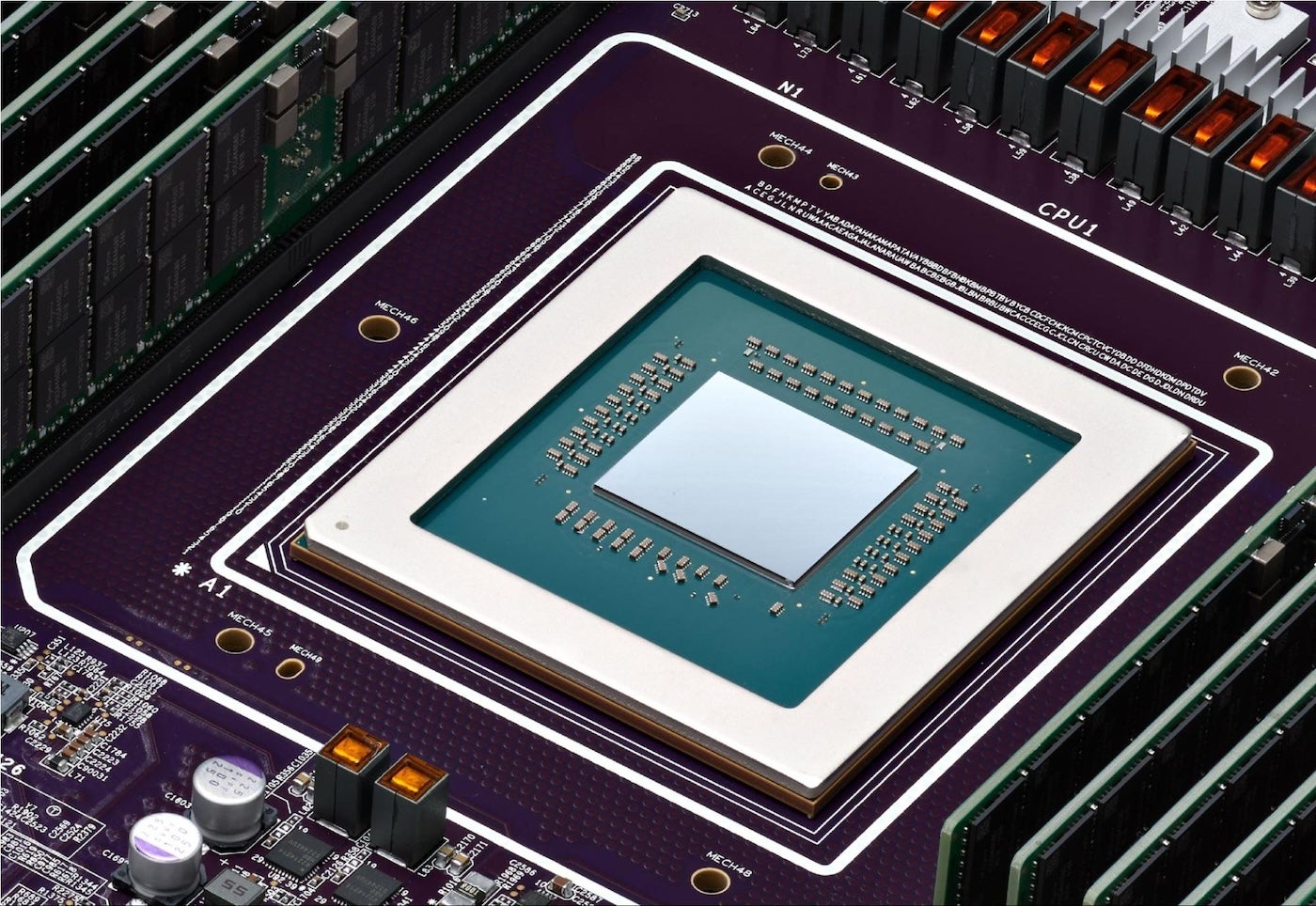
Some Google Cloud services, such as BigQuery, will soon run on Google Axion Processors, Google’s first custom Arm-based CPU for data centers (Figure A). Google Cloud said Axion shows 50% better performance than comparable current-generation x86-based virtual machines. Instances on Google Compute Engine, Google Kubernetes Engine, Dataproc, Dataflow, Cloud Batch and more will be available later in 2024.
Figure A
The Google Axion Processors are intended to run cloud workloads in data centers. Image: Google Cloud
Vertex AI will ground itself in Google Search
Starting April 9, models trained in Vertex AI will be grounded in Google Search. This could prove controversial depending on exactly what data is being used for the training.
Grounding AI is part of the trend of Retrieval Augmented Generation, which avoids “hallucinations” by checking the AI against genuine information. Google Cloud says grounding will provide models built on Vertex AI with “fresh, high-quality information.”
An abundance of AI additions for Google security products
Google Cloud’s other announcements centered on adding Gemini into security products, a move possibly intended to compete with Microsoft’s thorough integration of Copilot into its security suites.
Gemini AI will now be available in Google Security Operations (Figure B) and Threat Intelligence. In particular, Gemini will be able to help with investigations in Chronicle Enterprise and Chronicle Enterprise Plus starting at the end of April. As of April 9, security analysts can use Gemini to talk in natural language to Mandiant threat intelligence software.
Figure B
An example of using Gemini in Security Operations to investigate incidents and alerts with conversational chat in Chronicle Enterprise or Enterprise Plus. Image: Google Cloud
Gemini in Security Command Center received a boost from Gemini; as of April 9, the AI features in preview can scan for threats based on natural language prompts, and summarize alerts and attack paths.
“Detection engineers can create detections and playbooks with less effort, and security analysts can find answers quickly with intelligent summarization and natural language search,” said Ronald Smalley, senior vice president of Cybersecurity Operations at Fiserv, in a Google Cloud press release. “This is critical as SOC teams continue to manage increasing data volumes and need to detect, validate, and respond to events faster.“
Gemini Cloud Assist in Google Cloud’s security services will now include the following AI-powered capabilities in preview:
Identity and access management recommendations for improved IAM posture.
Assistance with encryption key creation.
Suggestions for how to implement confidential computing protection.
Create video with AI and more in new Google Workspace offerings
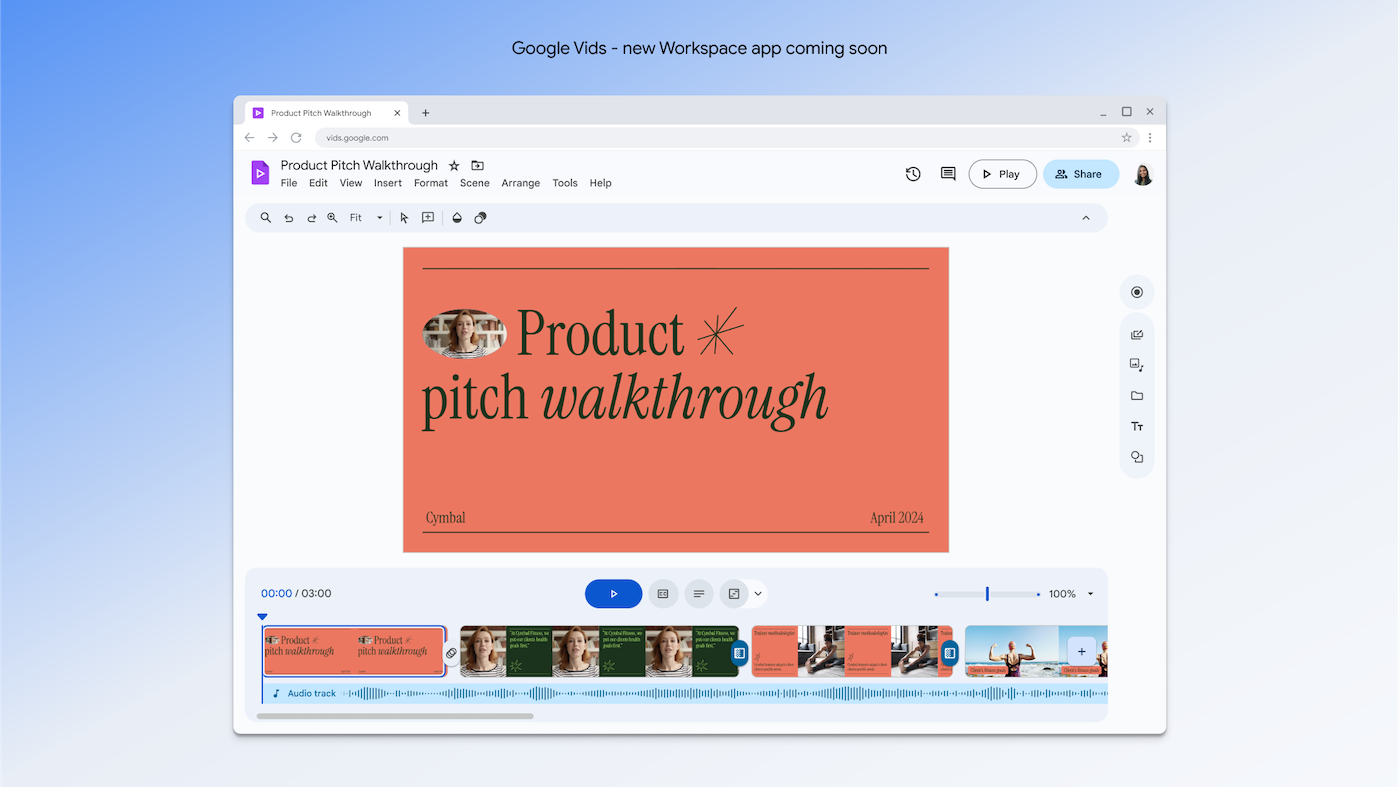
Google unveiled a new Workspace platform called Google Vids (Figure C), with which generative AI can help employees create promotional or informative videos.
Figure C
A user provides a script as a prompt to give Google Vids an idea of what they want their video to say. Image: Google Cloud
First, Google Vids will create a storyboard the user can customize. From there, Google Vids can create the video and add voiceover with preset AI voices or custom audio.
Google Vids will be an entirely new platform that will live alongside Docs Sheets, and Slides. Vids will be accessible through Workspace Labs in June.
More Google Workspace announcements
An AI meeting summarization and translation tool, which will cost $10 per user per month.
File classification and protection from the AI Security add-on, which will cost $10 per user per month.
In Gmail, AI will enable “Polish My Draft” and “Help Me Write” tools, the latter of which can be used via voice commands on mobile.
Google Gemini is coming to Chat and Docs for creating cover images.
Vertex AI will be integrated into Google Workspace.
HubSpot extension for Gemini for Google Workspace.
Gemini 1.5 Pro comes to Vertex AI and Data Cloud
Google announced a lot of changes coming to the Data Cloud portfolio in databases and data analytics. The largest was the availability of Gemini 1.5 Pro in Vertex AI, which enables a one million token context window.
SEE: Everything you need to know about Google Cloud Platform. (TechRepublic)
Google continues to expand Gemini’s integrations and capabilities — in preview today are Gemini in Looker and Gemini in BigQuery. Additional new features in BigQuery available in preview or private preview today include Vertex AI document and audio insights, vector embeddings and matching, and more.
Other announcements (in preview unless indicated otherwise) include:
Google Gemini in Databases.
Vector support and LangChain integration in Databases.
Vector support, natural language support and model endpoint management for AlloyDB.
Workload isolated access from analytics engines in Bigtable Data Boost.
Expanded disaster recovery capabilities and under two seconds maintenance (in general availability) in Cloud SQL.
New instance size for Memorystore (in general availability) and support for two new persistence options in Memorystore (in preview).
Customer managed encryption keys in Cloud Firestore.
TPU v5p enters general availability
Google’s TPU v5p AI accelerator is now in general availability, allowing organizations to use it for AI inference and training. In addition, Google Kubernetes Engine is now supported on TPU v5p.
Advancing hypercomputing and cloud computing
Google Cloud will be working with NVIDIA hardware to power Google’s AI training infrastructure. Announcements from the cloud infrastructure group included:
A3 Mega VMs powered by NVIDIA H100 Tensor Core GPUs for large-scale AI training, generally available in May.
Hyperdisk ML, a new block storage service for AI inference/serving workloads, is available in preview now.
JetStream, a throughput and memory-optimized inference engine for LLM training, is available on GitHub today.
Dynamic Workload Scheduler, a service for managing resources on Google Cloud to optimize AI workloads according to computing capacity, is now in preview.
Duet AI for Developers is now Gemini Code Assist.
Competitors to Google Cloud
Google’s wide-ranging product catalog means it has a lot of competitors in different sectors. In generative AI ecosystem and enterprise support in particular, it competes and often interoperates with Microsoft’s Copilot AI, AWS, IBM, and SAP. The Axion chip in particular could help Google push into the data center chip space dominated by Amazon and NVIDIA.
TechRepublic is covering Google Cloud Next ‘24 remotely.





 toolkit to empower its Video AI Assistant.