Microsoft Launches rStar-Math, Achieves Top-Level Math Reasoning 

Microsoft researchers have developed ‘rStar-Math’, a method that enables small language models (SLMs) to solve challenging math problems with remarkable accuracy, matching or even surpassing larger models like OpenAI’s o1. Instead of relying on knowledge distillation from bigger models, rStar-Math allows smaller models to improve independently through self-evolution.

“Our work demonstrates that small language models can achieve frontier-level performance in math reasoning through self-evolution and careful step-by-step verification,” the researchers said in the paper.

Why does this matter? Smaller models are easier to use, require less powerful hardware, and make advanced AI tools available to more people and organisations. They are especially useful in areas like education, math, coding, and research, where accurate, step-by-step reasoning is crucial.

The open-source release of rStar-Math and Microsoft’s Phi-4 model on Hugging Face allows others to customise and use these tools for a wide range of applications, making AI more affordable and accessible.

The system uses Monte Carlo Tree Search (MCTS), a strategy often used in games like chess, to tackle problems in smaller, manageable steps. Each step is validated with code execution to ensure accuracy, avoiding the common issue of producing correct answers with flawed reasoning.

Features of rStar-Math: rStar-Math incorporates three innovations to improve performance. It uses MCTS rollouts to generate step-by-step training data, ensuring accuracy. A process preference model (PPM) evaluates and guides intermediate steps without relying on imprecise scoring. The system then evolves iteratively over four rounds to refine models and data for solving increasingly complex problems.

On the MATH benchmark, accuracy increased from 58.8% to 90%, outperforming OpenAI’s o1-preview. The system also solved 53.3% of problems in the USA Math Olympiad (AIME), ranking in the top 20% of high school competitors. It performed strongly on other benchmarks, including GSM8K, Olympiad Bench, and college-level challenges.

The study highlights the potential of smaller AI models to achieve advanced reasoning capabilities typically associated with larger systems. It also shows how such models can develop intrinsic self-reflection, enabling them to identify and correct errors during problem-solving.

The framework, along with its code and data, is open-source and available on GitHub. This makes it accessible to researchers and developers, paving the way for smaller, more efficient AI systems capable of handling complex reasoning tasks.

The post Microsoft Launches rStar-Math, Achieves Top-Level Math Reasoning appeared first on Analytics India Magazine.

The Dark Side of AI Upskilling in Indian IT

The Dark Side of AI Upskilling in Indian IT Companies

Indian companies are looking to upskill around 85% of their workforce with generative AI in FY25. This marks one of their largest investments in measuring the ROI of AI, yet the quality of the training offered remains questionable.

A former employee of Infosys, who wanted to maintain anonymity, told AIM that when their company partners with the likes of NVIDIA, Google, or Microsoft for training their employees in generative AI, the outcome is not that great since the actual training is done in partnership with smaller firms offering entry-level courses at cheaper rates.

He explained that most of the training programmes involve presentations and slides where they simply need to press ‘next’ a few times over, answer a few multiple choice questions, answers to which can be easily found on Google, and certify themselves as ‘GenAI Trained’.

Therefore, these programmes can sometimes be more attractive for firms, as they can “train” their employees in generative AI while paying a lower price and coming across as better service providers to clients.

When it comes to the big-tech partnerships for training, the employee said that the target usually is to take 2-3 years to make the workforce “GenAI Ready”, which is a lot of time, and most do not even have concrete plans ready yet.

He explained that this is because most Indian IT companies are focused on providing services rather than building products for their clients. The employees’ tasks mostly involve working with chatbots or copilots and helping their clients, which does not require much knowledge of generative AI.

The employee added that there are always smarter ways to train engineers in generative AI, like letting them experiment with tools like Cursor or GitHub Copilot. However, companies are sceptical of such tools and hesitant to test them as their code bases are proprietary.

But, this is slowly changing as some companies have started partnering with GitHub and other AI tool providers to enable their employees to experiment with the tools.

Emails sent to Infosys and TCS did not elicit any response.

Clicking ‘Next’ is All You Need

This was also revealed earlier by a user on X when he said that even though around 900,000 employees have been trained in generative AI, the depth and quality remain questionable.

“A friend of mine works at one of the largest IT companies in India, and she just completed a GenAI course in an hour by clicking the next button 100s of times. She is now part of a GenAI-ready workforce! Proud of her :).”

Even though many companies offer in-depth courses for their employees, the trained workforce remains underutilised. “Such certifications and credentials are bogus, rather a waste of time and effort,” said a user on X. “There is a huge gap between the demand and the quality of candidates that exist in the AI job market, especially for GenAI.”

The number of employees trained in India is close to 2.5 lakhs as of this month. Most of these are from Indian IT companies where generative AI training is mostly compulsory to sit through, even though it does not offer any benefits for them. There’s an upskilling mania of sorts currently sweeping across the tech industry.

Today, it is generative AI skills. In the future, it might be something else. “IT changes so rapidly that you have to learn until the end of your career,” said a user on Reddit. With the advent of every new technology, be it Python, cloud, or AI, long-standing Indian IT employees need to keep upgrading to keep up.

Just Another Trend?

“Just like with the metaverse c**p the other year, we have to let companies know that we have some level of competency in generative AI,” said a user on Reddit.

Mrinal Rai, assistant director and principal analyst at ISG, told AIM that Indian IT clients will prioritise the extent to which service providers need a workforce trained in key AI technologies. This suggests that having a well-trained team is seen as a competitive advantage and a deciding factor for clients when selecting a service provider.

Rai added that smaller AI firms currently don’t have much influence or recognition among clients regarding their ability to meet training needs. As a result, clients would prefer larger or more established firms for AI training and implementation.

That is probably why all the bigger IT firms are rushing to call their workforce ‘GenAI ready’, even if that requires minimal training, to appeal to clients.

What Needs to Change

Krishna Vij, VP of IT hiring at TeamLease Digital, told AIM that upskilling programs in the Indian IT industry have evolved in recent years, focusing on emerging technologies like AI, cloud, and data science.

“The best programs prioritise hands-on learning and problem-solving. While large companies are investing in structured platforms, there’s still room to tailor programs to specific roles and ensure they go beyond basic knowledge for competence building and driving efficiency,” Vij said.

Vij said that training programs facilitated as ‘click-through’ sessions clearly reveal a design gap, prioritising compliance over actual skill-building.

“Effective upskilling isn’t about ticking boxes; it’s about formats that truly engage like interactive modules, case studies, hackathons, and real-world applications,” she said. Vij added that many companies are making significant investments in this direction by providing employees with the opportunities to work on live AI projects, which ensures practical learning that translates into meaningful competence and career relevance.

Satya Nadella, on his recent visit to Bengaluru, highlighted that Microsoft was committed to upskilling 10 million people in AI by 2030. Now, this is definitely something to keep an eye out for.

The post The Dark Side of AI Upskilling in Indian IT appeared first on Analytics India Magazine.

AI roles take top 2 spots on LinkedIn’s list of the 25 fastest-growing jobs in the US

Linkedin on a phone with a robot hand

With AI increasingly popping up in our personal and professional lives, it's only natural that this area has become an in-demand skill in the job world. On Tuesday, LinkedIn revealed its take on the 25 fastest-growing jobs in the US, and AI captured three of the spots, including the first two.

Number one on the list is Artificial Intelligence Engineer. In this role, people design, develop, and apply AI models and algorithms to improve business processes and solve complex problems. The skills required include Large Language Models (LLM), Natural Language Processing (NLP), and PyTorch, the open-source library for the Python programming language. Three to four years of prior experience are recommended.

Also: The most popular programming languages (and what that even means)

The most common industries in need of AI engineers are technology and internet, IT services and IT consulting, and computers and electronics manufacturing. You'll find the most jobs in such cities as San Francisco, New York, and Boston. Flexible work is also available with 35% of the jobs remote and 27% in an hybrid environment.

In second place is Artificial Intelligence Consultant. These professionals help organizations adopt and integrate AI technology to meet businsess goals and improve their operations. The most common skills are LLMs, prompt engineering, and Python programming with around 4.5 years of prior experience required.

The most common industries in need of AI consultants are technology and internet, IT services and IT consulting, and business consulting and services. The greatest number of jobs are in San Francisco, New York, and Washington, DC. And you won't have to work in the office all the time as 28% of the positions are remote and 40% hybrid.

Lower on the list at Number 12 is Artificial Intelligence Researcher. Here, people advance AI technologies and processes or create new ones through research, testing, and algorithms. The most common skills needed for this role are deep learning, PyTorch, and LLMs with at least three years of experience required.

Also: CES 2025: The 15 most impressive products you don't want to miss

The industries most looking for AI reseachers are technology and internet, higher education, and research services with the most jobs found in San Francisco, Boston, and Seattle. Some flex work is available as 11% of the positions can be handled remotely and 18.5% in a hybrid mode.

Another job on the list that's more AI adjacent than AI-specific is Workforce Development Manager. Taking fourth place, this job asks people to design and set up training programs that help employees learn new skills (including AI) and better align them with the needs of the organization. Here, professionals can turn to AI to create their training programs based on specific requirements.

The most common skills needed are program management, program development, and community outreach with around five years of prior related experience. The top industries looking for workforce development managers include non-profits, staffing and recruiting, and business consulting and services. Most of the jobs are in Los Angeles, Columbus, Ohio, and Seattle. And for people who don't always want to visit the office, remote work is available in 11.5% of the jobs and a hybrid setup in 42% of them.

Though working with artificial intelligence sounds like it would be a straight technology role, that's not the case. Many of the jobs, such as Workforce Development Manager, are not technical roles but do require some knowledge on how to take advantage of AI.

Also: AI agents might be the new workforce, but they still need a manager

"Fascinating to see AI & ML Engineers at #1, but what's more interesting is the underlying thread across these roles — they're all focused on either building AI or working alongside it," said Keystone Talent Group CEO Chris Picariello in a response to LinkedIn's list.

"As a recruiter, I'm seeing this firsthand: companies aren't just hiring for technical skills anymore, but for people who can bridge the gap between AI and human insight," Picariello added. "The key takeaway? It's not about AI replacing jobs, it's about professionals who can leverage AI to enhance human capabilities. Those who adapt to this hybrid approach will thrive in 2025 and beyond."

Of course, LinkedIn's list is based on jobs found on the networking site's own platform. To be included in the list, jobs had to have been posted by LinkedIn members from January 1, 2022 to July 31, 2024 to calculate the growth over the years. Further, job titles needed to show significant growth with a healthy number of postings over the past year.

Featured

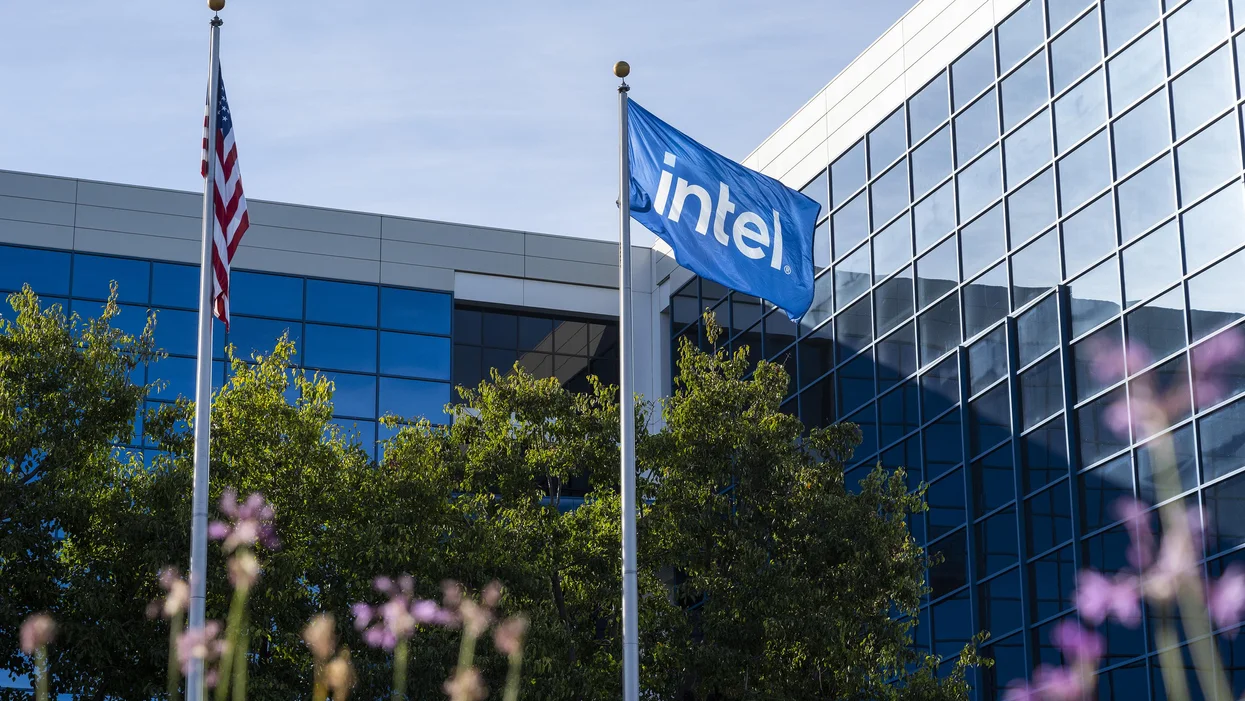
Intel to Spin Off RealSense as a Standalone Company by Mid-2025

In a surprising development, Intel has announced plans to spin off its RealSense division as an independent company. The move, set to be completed in the first half of 2025, will make RealSense part of the Intel Capital (ICAP) portfolio.

Intel RealSense, known for its innovative computer vision and AI depth cameras, has been a niche but impactful segment of Intel’s broader portfolio.

The announcement follows the launch of the entry-level Intel RealSense Depth Module D421 in September 2024, a product whose future seemed uncertain amid Intel’s financial challenges and corporate restructuring with the retirement of CEO Pat Gelsinger after a 40-year career.

In a statement to The Robot Report, Intel expressed confidence in the transition:

“After ten years of incubation, Intel is unleashing the potential of the Intel RealSense computer vision-AI portfolio in a standalone ICAP portfolio company by the first half of 2025. We are committed to ensuring a smooth transition for our customers and continue to provide support throughout the process.”

A Legacy of Innovation

RealSense has carved a reputation for delivering low-cost, high-quality depth-sensing technology, making it a popular choice for developers of mobile and industrial robots.

One high-profile example is ANYbotics’ quadruped robot, ANYmal, which relies on RealSense D435 modules for navigation and terrain traversal.

The spin-off marks yet another dramatic shift in RealSense’s journey. In 2021, Intel announced plans to shut down RealSense to focus on its core businesses, only to reverse that decision and maintain a scaled-down version of the product line.

Challenges of Independence

As an independent entity, RealSense faces new uncertainties, including whether it will need to secure external funding to sustain and grow its operations.

This is not the first time Intel has spun off a business. The company has recently pursued similar strategies, including the spin-off of its foundry business in December 2024 and Mobileye, the autonomous vehicle developer, in October 2022.

The robotics community is now closely watching to see how RealSense’s independence will impact its customer base and future product innovations.

Many are hopeful that this move will allow RealSense to focus more narrowly on advancing its technologies, while others remain cautious about the challenges of operating without Intel’s vast resources.

New Beginning

Founded in 2014 as an evolution of Intel’s Perceptual Computing division, RealSense has spent over a decade pushing the boundaries of depth-sensing technology.

With this latest chapter, the industry eagerly awaits the company’s next steps and its potential impact on robotics and AI development.

For now, questions remain about RealSense’s direction, funding, and the confidence of its existing customers. However, one thing is clear: the spin-off marks a pivotal moment for a division that has already navigated a rollercoaster history.

As more details emerge, the industry will be watching closely to see how RealSense adapts to its newfound independence.

The post Intel to Spin Off RealSense as a Standalone Company by Mid-2025 appeared first on Analytics India Magazine.

TCS is Working on AI Agents, Drug Discovery for its Clients

TCS

In its latest Q3 FY25 earnings call, TCS reported that its clients are actively investing in generative AI and agentic AI while building robust data foundations.

“We actively engaged with clients on AI/Gen AI-led software engineering, legacy modernisation and AI Ops. We saw an increase in successful production deployment of AI/Gen AI engagements leading to greater business certainty and confidence for our clients,” read the press release.

K Krithivasan, CEO and MD, said that the momentum of generative AI is increasing. Hence, the company is not revealing the specific revenues, citing they are difficult to measure. He said the company is also checking how the teams can use generative AI within the value chains or how it can completely change them while also improving productivity.

“Last year, we were talking about fine-tuning, then people talked about RAG, now agentic AI is becoming more and more common with the capabilities of these LLMs,” Krithivasan said, adding that adoption is increasing among clients.

He said that TCS is working on a project with a client for drug discovery where the customer was able to identify 1,300 molecules and further filter them to 12 molecules. “Work is becoming more complex, more rewarding. So overall, significant growth and a lot of participation with our customers.”

TCS has also launched its TCS 5A Framework for Responsible AI in partnership with AWS to address and mitigate AI risks holistically. TCS claims that it is the first of its kind in the industry.

Like earlier, TCS has yet again refused to reveal revenue specific to generative AI projects. “When it comes to the deals, most of the deals have generative AI aspects in them,” said Krithivasan.

The company reported a consolidated net profit of $1.46 billion for Q3 FY25, marking a 12% increase year-on-year. Revenue for the quarter rose 6% to $7.54 billion, up from $7.28 in Q3 FY24. Sequentially, net profit grew by 4%.

Krithivasan expressed optimism about the company’s strong Total Contract Value (TCV) performance of $10.2 billion, compared to $8.6 billion in the previous quarter and $8.1 billion a year ago. He emphasised the role of AI and upskilling in generative AI and said, “Our continuing investments in upskilling, AI/GenAI Innovations and partnerships sets us up to capture the promising opportunities ahead.”

Milind Lakkad, chief HR officer, shared updates on workforce initiatives, including over 25,000 promotions in Q3, bringing the total for the year to over 110,000. Campus hiring is on track, with plans to onboard more recruits next year. “We also want to get on track to get our campus hiring on track of 40,000 people this year,” said Lakkad.

As of December 31, 2024, TCS had filed 8,549 patents, including 195 applications during the quarter. The company was granted 4,585 patents, with 216 awarded in the same period.

In the last quarter Q2 FY25, TCS reported that over 600 AI and generative AI engagements have either been deployed successfully in production or are in various phases of development. The company said it is seeing continued momentum with Gen AI adoption and the technology maturing at a rapid pace.

TCS reported 270 AI projects across its global operations in its Q4 FY24 and stated that its AI pipeline doubled to $1.5 billion in the last quarter. However, the company refrained from releasing financial projections related to these initiatives.

After Accenture reported record generative AI bookings of $1.2 billion in its latest earnings call Q1 FY25, the expectations from Indian IT companies were the same. TCS’ promise of these generative AI deals shows the momentum is definitely upwards.

TCS is the first major Indian IT firm to release Q3 earnings, with peers HCLTech, Wipro, and Infosys expected to announce their results next week.

The post TCS is Working on AI Agents, Drug Discovery for its Clients appeared first on Analytics India Magazine.

Is prompt engineering a ‘fad’ hindering AI progress?

gettyimages-1184216905

Is the art and science of prompt engineering, the refinement of instructions for generative AI, a good thing or a bad thing? Surprisingly, there isn't universal agreement.

Prompt engineering emerged by 2024 as an increasingly important user interface tool after the runaway success of ChatGPT in 2022 and 2023. The realization that shaping and crafting instructions for large language models and related technologies could achieve better or worse results made prompt engineering its own field of vibrant exploration.

Also: 7 ways to write better ChatGPT prompts — and get the results you want faster

Motivated by the belief that "a well-crafted prompt is essential for obtaining accurate and relevant outputs from LLMs," aggressive AI users — such as ride-sharing service Uber — have created whole disciplines around the topic.

And yet, there is a reasoned argument to be made that prompts are the wrong interface for most users of gen AI, including experts.

"It is my professional opinion that prompting is a poor user interface for generative AI systems, which should be phased out as quickly as possible," writes Meredith Ringel Morris, principal scientist for Human-AI Interaction for Google's DeepMind research unit, in the December issue of computer science journal Communications of the ACM.

Also: CES 2025: The 13 most impressive products so far

Prompts are not really "natural language interfaces," Morris points out. They are "pseudo" natural language, in that much of what makes them work is unnatural.

"The fact that variations in prompting that would be irrelevant to a human interlocutor (for example, swapping synonyms, minor rephrasings, changes in spacing, punctuation, or spelling) result in major changes in model behavior should give us all pause," writes Morris, "and serve as a further reminder that prompts are still quite far from being a natural-language interface."

Those variations, she notes, are confusing to the average user, who can't rely on what comes from a given phrase.

Also: How to install an LLM on MacOS (and why you should)

Natural language between humans has elements that don't ever enter into prompting, Morris points out. "When people converse with each other, they work together to communicate, forming mental models of a conversation partner's communicative intent based not only on words but also on paralinguistic and other contextual cues, theory-of-mind abilities, and by requesting clarification as needed."

In contrast, "arcane prompts tend to produce better results than those in plain language," she says, writing that the "subtle differences between prompting and true natural-language interactions lead to confusion for typical end users of AI systems" and "results in the need for specially trained 'prompt engineers' as well as prompt marketplaces such as PromptBase." Even prompt engineering can produce inconsistent, unreliable results, Morris adds.

It's not just average users who suffer from prompting's shortcomings: The use of prompts is poisoning AI research. The research papers trumpeting each new breakthrough don't reliably report on how many prompts they use to achieve a result, an omission Morris calls "prompt-hacking."

Also: Autonomous businesses will be powered by AI agents

For example, prompt hacking may mean that benchmark tests of new AI models — the standard way to evaluate advances — are inconsistent and, therefore, invalid.

"While models are ostensibly testing on the same set of benchmarks," writes Morris, "in practice, these metrics may not be comparable due to variations in how each organization operationalizes the benchmarking—that is, the format of prompts used to present the tests to the model."

In place of prompting, Morris suggests a variety of approaches. These include more constrained user interfaces with familiar buttons to give average users predictable results; "true" natural language interfaces; or a variety of other "high-bandwidth" approaches such as "gesture interfaces, affective interfaces (that is, mediated by emotional states), direct-manipulation interfaces (that is, directly manipulating content on a screen, in mixed reality, or in the physical world)."

Also: Google's Gems are a gentle introduction to AI prompt engineering

Morris contends that all of those approaches, rather than the arcana of prompts, are easier methods of interacting with AI "since they require no learning curve and are extremely expressive."

AI is "at a critical juncture," she writes. "Our acceptance of prompting as a 'good enough' simulacrum of a natural interface is hindering progress.

"I expect we will look back on prompt-based interfaces to generative AI models as a fad of the early 2020s—a flash in the pan on the evolution toward more natural interactions with increasingly powerful AI systems."

Artificial Intelligence

Chennai-based ePlane, TCS Partner to Transform Urban Air Mobility

TCS The ePlane Company

Chennai-based urban air mobility (UAM) startup ‘The ePlane Company’, which manufactures compact flying electric taxis, has entered into a strategic partnership with Tata Consultancy Services (TCS). This collaboration aims to advance sustainable electric air mobility solutions for passenger and cargo transportation, marking a significant milestone in the development of electric aviation.

The partnership leverages The ePlane Company’s innovations in compact eVTOL (electric Vertical Take-Off and Landing) aircraft and TCS’s expertise in AI, data analytics, and the Internet of Things (IoT). Together, they aim to address pressing urban challenges such as congestion, inefficiency, and environmental sustainability.

Sustainable Air Mobility

As part of the MoU, the startup will showcase its innovative aircraft designs and technologies, while TCS will contribute its strengths in digital transformation to optimise air mobility systems.

“This collaboration with TCS aligns perfectly with our mission to redefine urban transportation by creating efficient and sustainable electric air mobility solutions,” said Vishnu Ramakrishnan, founder’s office at The ePlane Company.

The partnership also emphasises sustainability through renewable energy integration and a supplier-buyer framework modelled after a “Keiretsu” system. Initiatives include tailored solutions for TCS customers, participation in innovation-focused events like TCS PacePorts, and proof-of-concept projects to accelerate the adoption of air mobility systems.

Harrick Vin, CTO of TCS, said that the partnership reflects their vision of leveraging technology for a sustainable future.

Founded by Satya Chakravarthy and Pranjal Mehta in 2019, and incubated at IIT Madras, The ePlane Company aims to revolutionise urban transportation with its flagship eVTOL aircraft, the e200x, offering faster and more sustainable urban commutes.

The post Chennai-based ePlane, TCS Partner to Transform Urban Air Mobility appeared first on Analytics India Magazine.

CRIUS Becomes Leading AI-Driven Nutraceutical Contract Manufacturer

CRIUS

India’s CRIUS Group has made history in the nutraceutical industry by becoming the first contract manufacturing organisation (CMO) to fully implement AI-driven project execution. This global milestone is powered by the innovative NutrifyGenie integrated AI platform that promises to transform the way products are designed, developed, and delivered to market.

For CRIUS, the journey began with a vision. “As a pharmacist and founder, I’ve always believed in applying the gold standard of pharmaceutical precision to our nutraceutical endeavours,” said Subbarao Chinni, founder and MD of CRIUS Lifesciences.

The AI platform can automate the entire process, from ideating scientifically advanced formulations for global clients to mapping the most efficient supply chains and identifying ideal manufacturing partners.

For Rao, this integration wasn’t about replacing human expertise but amplifying it. “NutrifyGenie lets us focus on our strengths and world-class manufacturing while AI handles the complexities.”

The impact of NutrifyGenie goes beyond efficiency. By tapping into a proprietary databank of over 3.6 million scientific data points, the platform accelerates go-to-market timelines by 200%. This isn’t just about speed; it’s about rethinking what’s possible in ingredient discovery, safety analysis, and product innovation.

But it’s the platform’s “plug and play” nature that stands out. It’s not merely a system; it’s a partner, automating every step from ideation to compliance. The outcome is that CRIUS can focus more on innovation and scale.

“We’ve shifted our focus to process innovation and quality, leaving the heavy lifting of formulation and sourcing to NutrifyGenie,” Rao added.

Why This is Needed

Contract manufacturers worldwide are struggling with the need for speed, efficiency, and sustainability. In such a scenario, AI platforms like NutrifyGenie are becoming essential as optional tools. Studies suggest that CMOs embracing AI can optimise processes by 40-50%, reducing waste and costs while shortening production cycles.

CRIUS is committed to fostering a collaborative ecosystem that bridges academia, industry, and government to navigate complex regulatory landscapes and bring safe, high-quality products to global markets faster than ever.

The post CRIUS Becomes Leading AI-Driven Nutraceutical Contract Manufacturer appeared first on Analytics India Magazine.