Dell’s SC25 Updates Address Constraints of Modern AI and HPC Systems
At SC25, Dell Technologies announced a set of AI and high performance computing updates that…
Artificial Intelligence News
At SC25, Dell Technologies announced a set of AI and high performance computing updates that…


OpenAI has released GPT-5.1-Codex-Max, a new agentic coding model designed for long-running software development tasks, and made it available across all Codex surfaces.
The model is built on an updated reasoning foundation and is trained on agentic tasks across software engineering, math, research, and more, according to OpenAI. It is the company’s first system trained to operate across multiple context windows through a process called compaction, enabling it to maintain coherence over millions of tokens during a single task.
OpenAI said the model can independently run for hours, adding that internal tests saw Codex-Max “persistently iterate on its implementation, fix test failures, and ultimately deliver a successful result” over tasks that ran for more than 24 hours.
The new model is accessible to users on ChatGPT Plus, Pro, Business, Edu, and Enterprise plans. Developers using Codex CLI via API key will receive access when API support rolls out. GPT-5.1-Codex-Max will now replace GPT-5.1-Codex as the default in all Codex interfaces.
OpenAI said 95% of its internal engineering team uses Codex weekly and that engineers “ship roughly 70% more pull requests since adopting Codex.”
GPT-5.1-Codex-Max outperforms previous versions on several real-world and benchmark coding evaluations. On SWE-Lancer, it reached 79.9% accuracy, compared with 66.3% for GPT-5.1-Codex. On SWE-bench Verified, Codex-Max achieved higher accuracy at the same reasoning level while using 30% fewer thinking tokens.
OpenAI said the efficiency gains translate to lower costs for developers. In one example, the model generated a full browser-based CartPole reinforcement learning sandbox requiring 27,000 thinking tokens, compared to 37,000 for the earlier Codex model.
The company is also introducing a new extra-high reasoning mode for non-latency-sensitive tasks, which allows the model to think longer before producing output.
Because of compaction, GPT-5.1-Codex-Max can handle complex refactors, multi-hour debugging, and extended agent loops that previously failed due to context limits. It is also the first Codex model trained to operate inside Windows environments. The system now includes tasks specifically designed to improve collaboration inside the Codex CLI.
OpenAI said GPT-5.1-Codex-Max “does not reach High capability on Cybersecurity” under its Preparedness Framework, but is the most capable cybersecurity model the company has deployed so far.
OpenAI said it is preparing additional safeguards as agentic capabilities evolve, noting that it has already disrupted attempts to misuse its models in cyber operations.
Codex runs in a restricted sandbox by default, with limited file access and no network connectivity unless explicitly enabled. OpenAI recommends keeping these limits in place to avoid prompt-injection risks.
“Codex should be treated as an additional reviewer and not a replacement for human reviews,” the company said, adding that developers should examine all generated changes before deployment.
The post OpenAI Releases Agentic Codex Model That Can Work for More Than 24 Hours appeared first on Analytics India Magazine.


India has been actively advancing its semiconductor mission through aggressive investments and the development of its own fabrication plant, alongside multiple existing OSAT facilities. While this push has brought the industry to the forefront in India and globally, it cannot rely solely on building fabs and packaging plants.
This shift must also come into play while building Indian product companies that actually use these facilities, says Raja Manickam, founder of iVP Semi and former head of Tata Electronics’ OSAT operations. In an exclusive interview with AIM, Manickam says he believes that India will miss its moment if the country continues to rely on foreign chip suppliers for core components used in power, mobility, and consumer systems.
The end goal should be complete independence and not just manufacturing for its sake, he adds. “We have 100% dependency today. Not even one chip is made in India.” For him, the question driving India’s semiconductor story is as simple as who controls the basic chips that power everyday systems?
iVP Semi is his attempt to answer that question by building foundational power chips in India, starting with MOSFETs and other basic devices. These chips are not cutting-edge, but they sit at the heart of everyday products like EVs, renewable energy systems, consumer appliances, and industrial equipment. They also dominate India’s electronics bill of materials.
India has seen public funding for fabs and OSATs, but Manickam warns that these facilities may ultimately rely on foreign customers. He argues that this defeats the purpose.
Meanwhile, the CEO of Tessolve, Srini Chinamilli, told AIM that the customer’s nationality should not be the metric of success. “If it’s made in India and sold to the rest of the world, that is something you can be proud of,” he said, adding that global demand is essential for competitiveness.
He pointed out that India already has significant domestic demand, not just from Indian firms but also from multinational companies manufacturing for the Indian market, and that the first fab will still meet many local needs.
According to him, the upcoming facility can meaningfully serve segments such as power management, analogue components and low-end microcontrollers, even if it cannot provide the advanced nodes needed for data centres.
On the contrary, Manickam pointed to the example of CG Power’s OSAT, which will initially run on business from Renesas, a Tokyo-based company. He sees no issue with foreign customers, but questions the larger vision. “The government has put probably 70% into this capex, who’s the beneficiary of that?” His concern is that India may build capacity, but fail to link it to Indian product companies.
He also believes that India will need strong incentives for domestic use. “Can I get 20% favourable pricing?” he questioned, as an Indian semiconductor company. His argument is that if public money bridges early losses and learning cycles, then Indian companies could gain an advantage that allows them to scale.
Manickam is also sceptical that small fabless start-ups will drive meaningful growth. He added that the combined chip sales of Indian semiconductor startups are “under $10 million.” For context, the global market exceeds $500 billion.
Instead, he advocates a coordinated plan where the government funds not just facilities, but also integrated Indian companies or strategic acquisitions. “There has to be an element of acquisitions,” he suggests, citing the example of Nexperia, the Dutch company bought by Chinese investors for $200 million that has grown to more than $2 billion in sales.
His broader view is that India has everything needed for a semiconductor industry, except the ecosystem to retain and deploy its own talent. “We are training for the world, when will we help ourselves?”
Manickam believes that iVP Semi can claim as much as a quarter of India’s power device market in the next decade. He said that the domestic market is large enough for Indian companies to scale. “If I cannot win the Indian market, forget about going global.”
He also believes that Indian businesses will buy local chips if they are competitive. “Japanese will buy from Japanese, Chinese will buy from Chinese, Germans will buy from Germans.”
“I just hope that Indians will buy from Indians.”
iVP Semi is also collaborating with institutions such as IIT Bhubaneswar and other state and private colleges to enhance design capacity. He says the collaboration is a “win-win” because academic teams get to see their designs enter commercial production rather than stay within research labs.
The company is preparing to launch new power modules and traction products, which will sit above individual chips. “Instead of selling one chip, we’re selling a subsystem,” he updated. These products are undergoing testing and will be announced in the coming months.
As India advances with its semiconductor efforts, Manickam remains focused on his concern. “The overall picture will be independence,” he said. For him, this means designing, manufacturing and consuming Indian chips, not only building factories or signing large partnerships.
It is “simple” he said: “If India cannot do semiconductors, I don’t think any other country can.”
Manickam sees the power and electrification segment as the most practical entry point for India’s chip ambitions. His view is that India should first target segments where chips are technologically achievable and in high domestic demand.
He also believes that India’s semiconductor industry must accept that it cannot jump straight to advanced processors or AI chips. “Do what you can do,” he said. “Once you build the foundation, then slowly other things will build on top of it.” His approach begins with “very simple building block chips” that universities and small teams can design and implement.
This aligns with iVP Semi’s product roadmap. The company currently buys wafers from Taiwan and Japan and will begin shifting to Indian OSATs once commercial packaging capacity becomes available. Testing will remain in-house. “I want my quality, reliability of the product that I ship guaranteed,” he said.
“Hopefully, when the Tata fab comes, we will move what we are buying from the wafer fabs outside,” he confirmed.
The post ‘We’re Creating Chip Factories for Foreign Customers, What’s the Point?’ appeared first on Analytics India Magazine.


Only 16 months after CrowdStrike brought the digital world to a standstill, and just a month after the global AWS outage, this week another key player in the cybersecurity space—Cloudflare—suffered a global disruption. Websites across the world, including Spotify, ChatGPT, X, and others, were hit with error messages as the outage rippled through the internet’s backbone.
These failures are million-dollar events.
According to the 2025 Observability Forecast, high-impact outages can cost Indian organisations between $1 million and $3 million per hour in lost revenue. And with the world entering peak Black Friday season, the hit is likely even worse.
Rob Newell, Senior Vice President and General Manager, Asia Pacific & Japan at New Relic, framed the moment bluntly, and told AIM: “With global outages becoming more common, observability is no longer an engineering tool, it is a business-critical practice.”
In an exclusive conversation on Front Page by AIM Network, New Relic CEO Ashan Willy pointed out that during the recent global AWS outage, New Relic’s engineers identified the issue 27 minutes before AWS informed its customers, giving teams a crucial early window to stabilise systems, isolate failures and protect revenue.
Against this backdrop of cascading outages, New Relic announced one of its most consequential integrations yet.
New Relic introduced new agentic AI integrations with Microsoft Azure, bringing its intelligent observability insights directly into the Azure SRE Agent and Microsoft Foundry. Powered by New Relic’s AI model context protocol (MCP) server and Azure Monitor, the integration embeds observability inside the workflow of developers, ITOps, DevOps, SREs and platform engineers — exactly where AI-driven troubleshooting now happens.
“AI agents are poised to transform how IT and development teams work, but leaders and practitioners need intelligent observability within their workflows to realise the full potential of agentic AI,” said New Relic chief product officer Brian Emerson.
“With our new integrations, we bring our AI-strengthened observability directly into Microsoft Azure products and services so teams can automate workflows and surface actionable insights, without having to context-switch. Together with Microsoft, we are helping more businesses harness the power of AI for growth.”
Microsoft reinforced the importance of this shift.
“Microsoft Azure helps IT teams and developers build AI-powered solutions that scale and inspire,” said Julia Liuson, president, Developer Division at Microsoft.
“These teams deserve a seamless workflow without switching between tools. Our latest integrations with New Relic mean that teams receive intelligent insights from Azure’s AI agents within their workflows so they understand exactly what’s going on during incidents. We’re driving an accelerated time to value and helping teams do more, faster.”
With the integration, the Azure SRE Agent can now tap New Relic’s MCP Server whenever an alert fires or a deployment happens, pulling the observability intelligence required to automate incident detection, root-cause analysis, and remediation across an organisation’s environment, from backend systems to mobile and browser experiences.
Inside Microsoft Foundry, New Relic’s telemetry is said to become a native part of how teams design, build and manage AI apps. Logs, metrics, deployment impacts, dependency graphs and configuration changes flow seamlessly into one real-time picture, giving teams clarity over how AI agents behave in complex, non-deterministic environments.
New Relic Azure Autodiscovery now claims to allow platform engineers to view entire service dependency maps and overlay configuration changes directly on performance graphs, making it possible to identify root causes in minutes instead of hours. And with New Relic Monitoring for SAP Solutions now available on the Microsoft Marketplace, the team said that the Azure customers can unify SAP and non-SAP systems without deploying agents inside SAP or disrupting mission-critical workflows.
As global outages increase in frequency, complexity, and financial impact, the message from New Relic is unmistakable: observability is not an option anymore. By wiring itself directly into Azure’s agentic ecosystem, New Relic is positioning its platform at the centre of how AI-driven incidents will be detected, understood, and resolved in real time.
“The world is seeing a dramatic rise in failure modes across the stack. Companies that treat observability as optional will pay for it—sometimes in minutes, sometimes in millions,” concluded Ashan Willy, CEO of New Relic, capturing the urgency perfectly.
The post The Internet Is Breaking. New Relic Wants to Fix It. appeared first on Analytics India Magazine.

Kyndryl has renewed its three-year partnership with Vodafone Idea (Vi) to modernise the telco’s IT operations, streamline application management and implement a unified cyber resilience framework.
Under the extended agreement, Kyndryl will design and deliver an integrated security architecture covering security governance, zero-touch services, data protection, identity and access management, security operations and incident recovery. The overhaul is also aimed at strengthening compliance ahead of future regulatory requirements.
By reducing manual interventions and improving visibility into threats and vulnerabilities, the new cyber resilience framework is expected to minimise the impact of security disruptions and accelerate recovery of critical business data.
Kyndryl will further deploy a next-generation IT operations delivery model built on advanced automation and data-driven insights. This modernised approach will help Vi move towards a zero-touch operations framework to improve service delivery.
The company will also lead large transformation projects across backup, storage management and continuous data protection (CDP), enabling greater operational agility and cost efficiencies.
Vi will continue to use Kyndryl Bridge, Kyndryl’s AI-powered open integration platform—to drive automation and insights-led improvements. The platform has already deployed over 1,000 automations at Vi, cutting delivery event noise by 15% and enhancing business observability. Globally, Kyndryl Bridge generates over 15 million AI-driven insights each month for more than 1,200 customers.
Kyndryl said it will continue to invest in the platform to strengthen service quality and accelerate profitability and growth for customers across sectors.
“Our partnership with Kyndryl enables us to leverage advanced automation, AI-driven insights and a zero-touch operations model to optimise our IT infrastructure,” said Vi CTO Jagbir Singh.
Kyndryl India president Lingraju Sawkar said the extended partnership reflects Vi’s confidence in Kyndryl’s expertise in managing mission-critical systems and delivering complex transformations.
The long-standing association has previously supported Vi through key milestones, including the merger of Vodafone India and Idea Cellular, pandemic-driven business continuity planning and 26 rapid consolidation projects across business functions.
The post Kyndryl Extends Partnership with Vi to Drive Automated IT Operations appeared first on Analytics India Magazine.


HUMAIN, an AI infrastructure company owned by the Public Investment Fund (PIF), has signed a landmark framework agreement with Elon Musk’s xAI to jointly build next-generation GPU supercomputing facilities in Saudi Arabia and deploy Grok models nationwide.
Announced at the U.S.–Saudi Investment Forum in Washington, the agreement positions HUMAIN as one of the world’s fastest-growing Nvidia-backed AI compute providers. The centrepiece is a 500 MW+ hyperscale GPU data centre, expected to become one of the most advanced and cost-efficient AI compute hubs globally. This marks xAI’s first major compute deployment outside the United States.
Under the collaboration, HUMAIN and xAI will develop a network of GPU data centres across the Kingdom to power the training and scaling of frontier AI models. HUMAIN’s low-cost infrastructure capabilities will combine with xAI’s model-level optimisation to create what both companies describe as a “next-generation AI compute foundation”.
The partnership also includes the nationwide rollout of xAI’s Grok models. Grok will be integrated into HUMAIN’s agent platform, HUMAIN ONE, enabling real-time intelligence, autonomous workflows, and high-performance AI copilots across government and enterprise systems. HUMAIN refers to this as a unified national AI layer supporting advanced decision-making capabilities.
Elon Musk, CEO of xAI, said HUMAIN’s infrastructure capabilities enable “massive and efficient compute” and make Saudi Arabia a prime location to accelerate future AI systems.
HUMAIN CEO Tareq Amin added that the collaboration creates “scale that few others can match” while expanding the Kingdom’s technological ambitions.
The xAI partnership follows HUMAIN’s newly announced collaboration with New York–based Global AI, an NVIDIA Cloud Partner, to build large-scale AI compute capacity in the United States. That project includes off-premises, air-gapped data centres equipped with liquid-cooled NVIDIA Grace Blackwell systems. While separate from the Saudi initiative, it signals HUMAIN’s broader strategy to establish a multi-country AI infrastructure footprint anchored in the latest NVIDIA platforms.
The post Musk’s xAI Teams with HUMAIN to Develop Saudi Arabia’s AI Supercomputing Network appeared first on Analytics India Magazine.

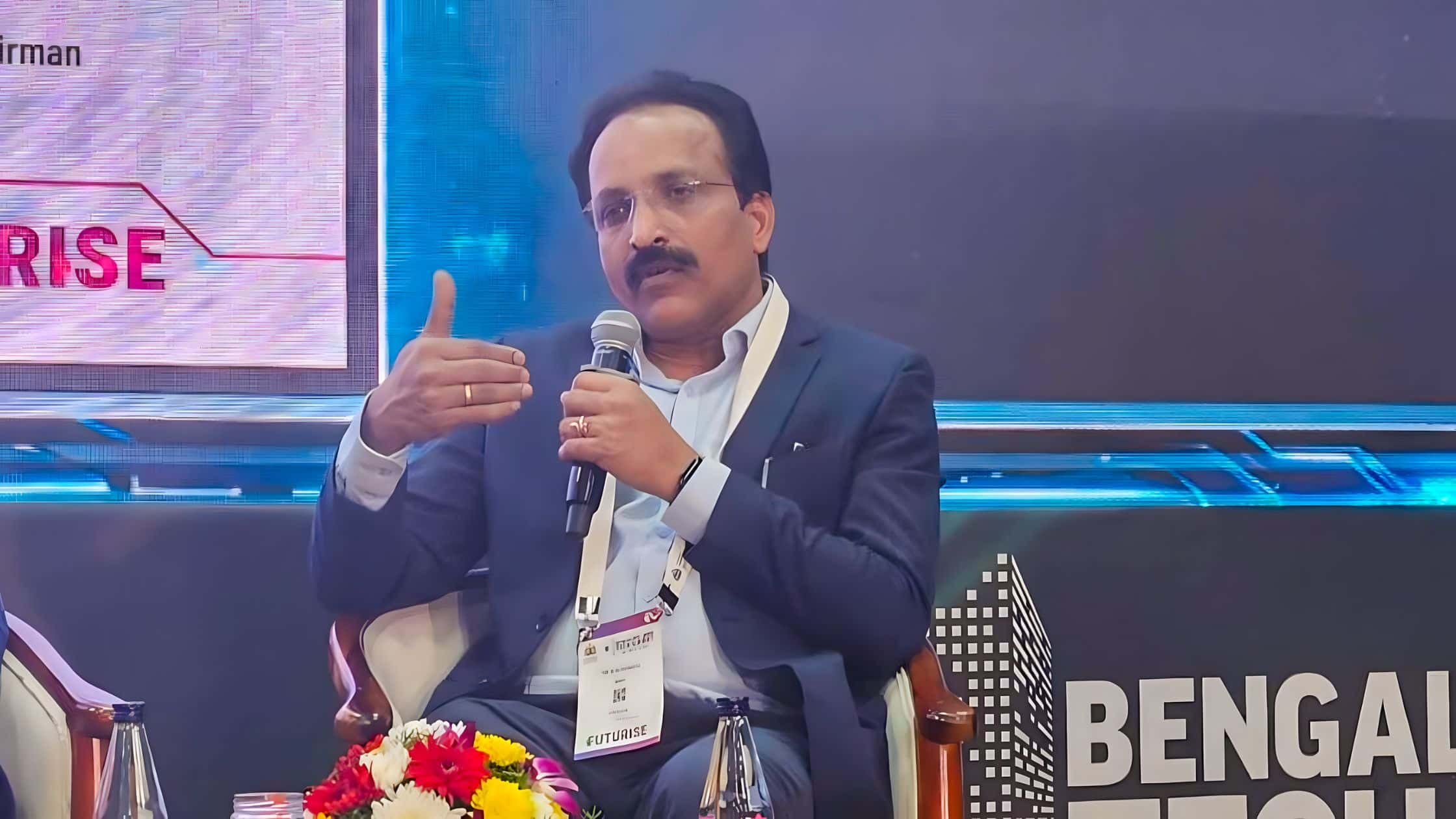
India’s space sector is expanding through new policies, rising private activity and a growing set of deep-tech ambitions.
Yet, one question continues to surface in every discussion on long-term capability: does India have enough talent to support this shift, or is the country losing its best minds to opportunities abroad? On the first day of the Bengaluru Tech Summit 2025, this debate took an unexpected turn when former ISRO chairperson S Somanath said, in clear terms, that the idea of a space sector brain drain does not match reality.
The comment came in response to AIM’s question about whether he thinks brain drain plays a role in India’s space tech, and, if so, how the country can get that talent back. “I really don’t find any shortage of brains in India. I think we have enough. Actually, enough and more for other sectors. There is no brain drain,” Somanath said.
His view challenged a belief that has shaped several policy conversations in the last decade. According to him, India’s problem is not losing talent. The bigger gap is the lack of strong research environments that allow people to return and continue their work.
“What we need is to encourage them to come back and work with them at some point in time. The environment is the problem, not money. Outside India is an extreme environment where they have to do research,” he said. “If you are able to provide that type of facility, they will have to come back.”
His comments come at a time when Karnataka has announced the Space Technology Policy 2025-2030. The policy aims to capture 50% of India’s space market by 2033.
It also plans to expand testing facilities, satellite design clusters and manufacturing zones. These goals underscore the need for robust talent pipelines and long-term research environments. The policy places new focus on skills, deep-tech R&D and public partnerships, which align directly with Somanath’s view that India must create the right conditions to keep people in the country.
The panel, moderated by Shashank Joshi, The Economist’s defence editor, brought together Somanath, Dhinesh Kanagaraj, founder and CEO at Fabheads Automation, and Prashanth Prakash, chairperson of the Karnataka Vision Group on Startups and a partner at Accel.
Somanath stressed that strong talent exists not only in top institutions but across several layers of the education system. “I have seen with my own experience that we find brilliant people at every level of these institutions,” he said. His point matched a broader trend in Karnataka.
The Bengaluru Innovation Report 2025 shows that the state now supports over 450 startups in regions outside the city. These include Mangaluru, Mysuru and Hubballi-Dharwad.
The report also shows that Bengaluru attracts 58% of India’s AI startup funding and has recorded the most deep tech patents in the country between 2020 and 2023.
Kanagaraj echoed this through his own experience of building a company that works with advanced composites. His team often struggled to access high-precision systems in India.
“There are not that many vendors out there available to cater to any of the new requirements,” he said. Their company had to build several critical components from scratch, which extended development timelines and raised costs. His account pointed to a larger issue: India needs more shared infrastructure to help early companies build faster.
The panellists also noted that this situation has improved in recent years. Accelerators, grants and deeper engagement between ISRO and start-ups have helped new players enter the field at a pace that wasn’t possible earlier.
Yet, current progress still depends heavily on government support. Somanath said that “real fundamental work” continues to rely on public funding and that early deep-tech companies in any country receive their first support from the state.
This brought the conversation back to the question of scale.
India has several space startups, but still lacks large companies that can supply global markets. “We need to create large-sized space companies in India; this is what is missing now,” Somanath directly said. He argued that without long-term patient capital, industrial facilities and strong demand from public agencies, scaling will remain difficult.
Prakash explained that deep-tech investing has moved forward in the last decade, but still needs more patience. “Returns may be some way off,” he said, adding that investors now understand that long gestation cycles are normal in such fields.
He noted that many funds have begun allocating space, manufacturing and advanced materials, though consumer and financial technology still receive the largest share. Over time, he expects deep tech to become a much larger part of India’s investment market.
Programmes that once offered ₹2 crore now offer up to ₹50 crore. This allows start-ups to tackle harder problems, build prototypes and take on larger projects.
Prakash suggested that government direction could influence how these funds allocate capital in strategic sectors. This, he argued, would help close some of the gaps in manufacturing, supply chains and R&D.
While most of the panel focused on space and hardware, Somanath pointed to a broader trend. He said future disruptions will come from “the interaction between engineering and the human body” and that many engineers abroad now work in biomedical and biophysical systems. He listed drug delivery, health sensors, medical equipment and related research as areas that will grow in importance.
His point was clear: India must prepare for technologies that blend biology, AI and engineering. This shift will need new labs, new training pathways and new forms of collaboration between institutions. It will also demand stronger talent retention and a new set of return-opportunity programmes for researchers abroad.
For now, Somanath said that India is only at the beginning of this shift. He mentioned China’s 10-year effort to bring back top researchers and said India had only “just started the process.”
The post ISRO Ex-Chairman Believes There’s No Brain Drain in India’s Space Tech appeared first on Analytics India Magazine.
SAN JOSE, Calif. and ST. LOUIS, Nov. 19, 2025 — Super Micro Computer, Inc. is…
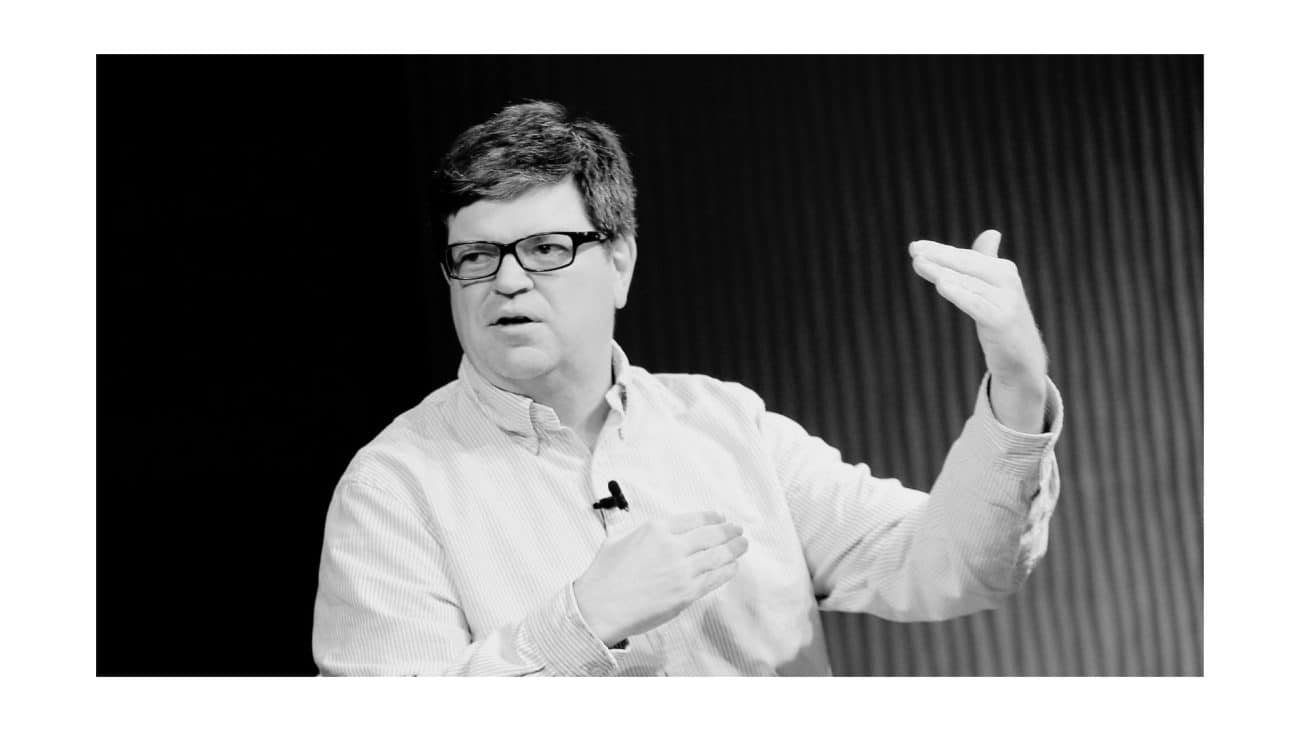
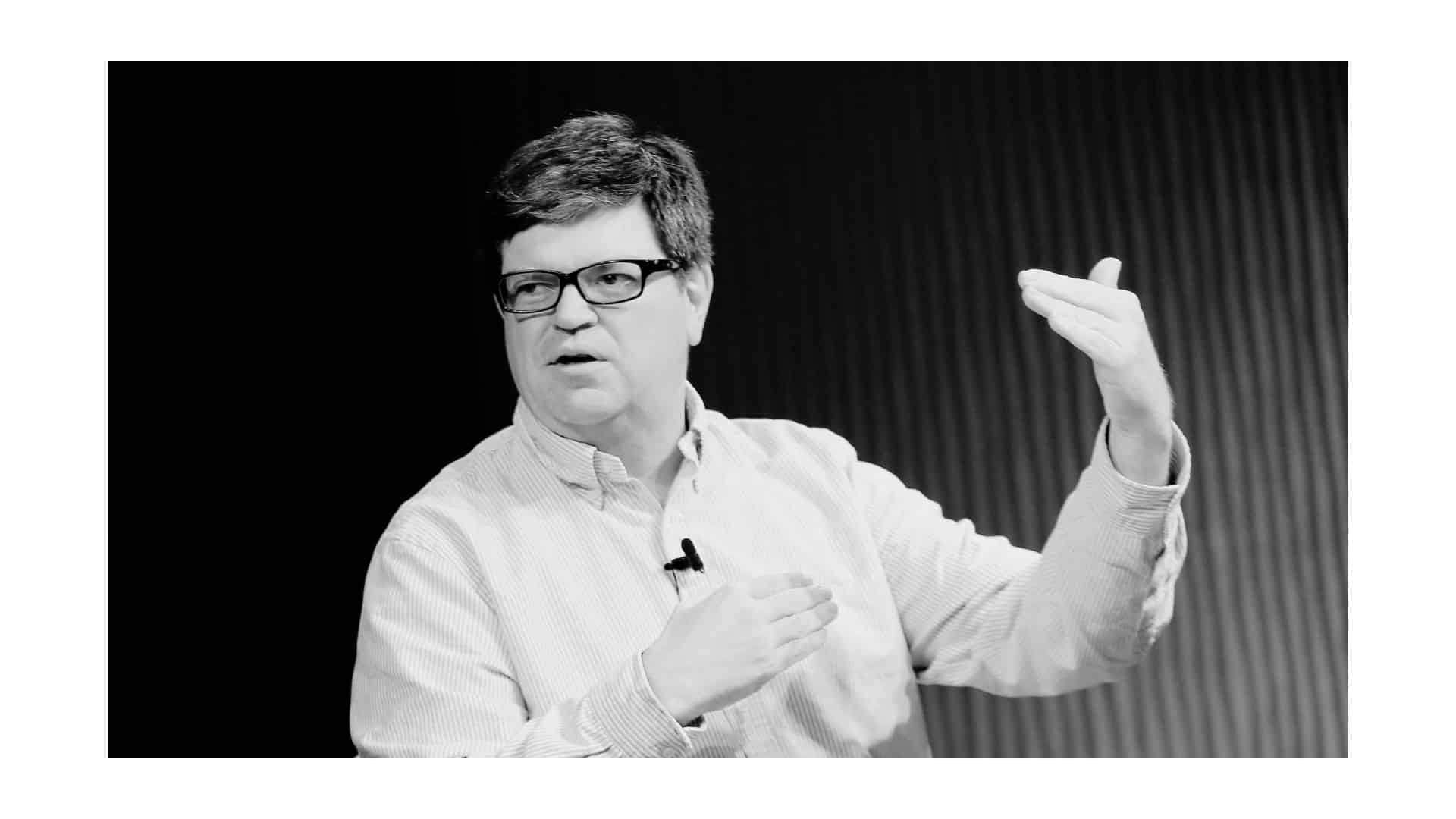
Meta’s chief AI scientist, Yann LeCun, has announced that he will leave the company at the end of the year to start a new venture focused on Advanced Machine Intelligence (AMI), a research program he has been developing over the past several years.
“In planning to leave Meta after 12 years, I am creating a startup company to continue the Advanced Machine Intelligence research program,” LeCun said in a post on Facebook.
LeCun, who served five years as the founding director of FAIR (Facebook AI Research) and seven years as chief AI scientist, said the new company aims to build AI systems “that understand the physical world, have persistent memory, can reason, and can plan complex action sequences.”
He described the creation of FAIR as his “proudest non-technical accomplishment,” adding that its impact on Meta, the AI field and the broader tech ecosystem has been spectacular.
Meta will remain a partner in the new company. LeCun said he is extremely grateful to Mark Zuckerberg, Andrew Bosworth, Chris Cox and Mike Schroepfer for supporting FAIR and the AMI program. “Because of their continued interest and support, Meta will be a partner of the new company,” he said.
LeCun said the AMI initiative will have applications across multiple sectors, some intersecting with Meta’s business and others outside it. He noted that pursuing AMI independently would “maximise its broad impact.”
Further details about the startup will be announced later, he said, while confirming he will remain at Meta until the end of the year.
The post Yann LeCun Confirms Leaving Meta to Launch Advanced Machine Intelligence appeared first on Analytics India Magazine.
At SC25, Dell Technologies announced a set of AI and high performance computing updates that…


