Why Data Governance Has Become India’s New AI Imperative

As Indian enterprises move from AI pilots to business-critical deployments, data governance has shifted from a compliance function to a foundational capability. With AI now embedded in customer interactions, regulated workflows and operational decision-making, organisations are realising that trust, safety and accountability must scale at the same pace as their models.

The DPDP Act has accelerated this shift—forcing companies to re-examine how they collect, process, monitor and explain data as AI intensity rises across sectors.

Safety and Explainability Take Centre Stage

Madhu V, technology architect for machine learning platforms at Tata Elxsi, said industries such as automotive, media and healthcare are moving from experimentation to full-scale AI deployments.

According to him, the core priority is to ensure that systems remain “safe, unbiased, and transparent.” In high-stakes sectors, even “subtle model drift can impact safety or clinical outcomes,” he warned.

For media companies, guardrails around content generation and personalisation are essential for brand trust. Governance, he said, must be “engineered into the development lifecycle, not layered on top,” with lineage tracking, model versioning and audit-ready logs becoming non-negotiable.

The underlying message: Trust cannot be retrofitted.

Governance as Engineering, Not Documentation

Kanakalata Narayanan, VP of AI and ML engineering at Ascendion, said their engineering-first approach embeds governance, observability and evaluation directly into the AI lifecycle.

“Our AI-QE specialists design synthetic datasets, functional and adversarial, run them through automated test harnesses and evaluate outcomes for relevancy and guard rails,” she told AIM.

She added that LLM-based “judge or jury” techniques, paired with human review, ensure grounded outputs in regulated domains. By combining LLM flexibility with the reliability of deterministic logic, Ascension aims to build predictable, risk-aligned systems.

BFSI: Accountability Over Accuracy

In finance, governance is becoming the primary design principle.

Yashas Khoday, CPO and co-founder of FYERS, said the DPDP Act has shifted BFSI from compliance to accountability. Lineage, consent, explainability and auditability are now essential for AI-driven trading, customer service and risk management.

He noted that in high-velocity environments, “the reliability, transparency and ethical treatment of data is becoming more crucial than the model’s accuracy.”

FYERS restricts customer data exposure to underlying models, keeps systems non-advisory and enforces strict validation and fairness checks, supported by human oversight.

A New Era of Continuous Oversight

Sharda Tickoo, country manager (India and SAARC) at Trend Micro, said threat actors are weaponising AI faster than ever, forcing firms to rethink governance.

Organisations must now apply Zero Trust to AI—verifying every access point, tracking which models use which datasets and enforcing visibility across the pipeline. The DPDP Act, she said, mandates algorithmic audits and impact assessments.

Continuous oversight has evolved from an operational best practice to a regulatory requirement. With models refraining frequently, real-time detection of compliance drift and unauthorised interference is now essential.

Governance as a Strategic Capability

Varun Babbar, VP and managing director at Qlik India, saidenterprises are shifting from traditional governance to real-time, AI-aligned frameworks.

“The evolution of the DPDP Rules is raising expectations around consent, transparency and accountable data use,” he said. Qlik research shows nearly half of Indian enterprises cite data quality and governance as their biggest AI bottlenecks.

Governed analytics platforms, offering lineage, auditability and quality controls, are now critical to scaling AI responsibly and preparing for upcoming 2026 regulations.

Sajith Nambiar, head of solutions at UST, said Responsible AI is embedded into their accelerators through metadata-driven validation of data quality, lineage and consent. Explainability frameworks generate contextual narratives for every AI decision with human-in-the-loop oversight, ensuring ethical alignment.

Their goal: systems that are “accurate, explainable, auditable and ethically governed.”

The Road Ahead

India’s next stage of AI maturity will be defined not by model speed but by the strength of governance structures that power it. The message across industries is clear: governance must be designed into AI from day zero.

Enterprises that treat governance as a strategic capability—not a regulatory checkbox—will scale faster, innovate more responsibly and build the trust required to compete globally.

In India’s AI landscape, governance is no longer a burden. It is becoming a competitive advantage.

The post Why Data Governance Has Become India’s New AI Imperative appeared first on Analytics India Magazine.

India’s New Courtroom Menace: Judgments That Never Existed

Indian courts are now confronting a problem that has already unsettled judicial systems in the US and parts of Europe: lawyers submitting AI-generated case citations that do not exist.

While American courts have seen a series of disciplinary actions since 2023, most notably the sanctioning of attorneys for filing fabricated precedents sourced from chatbots, the Indian legal system has recently been confronting this challenge.

What began as a distant concern is now surfacing inside pleadings, orders and oral submissions, placing India squarely in a global conversation about the reliability of generative AI in legal practice.

According to Anandaday Misshra, founder and managing partner at AMLEGALS, a specialised law firm functioning across cities, Indian courts are “definitively encountering” AI-generated citations, with the risk moving from abstract speculation to documented judicial observation in 2024-25.

Although the problem is not yet as widespread as in the US, the trend line is clear. More lawyers are experimenting with AI for research, and more judges are flagging fictitious precedents.

The Instances

The Delhi High Court’s experience earlier this year was a glaring example. In the Greenopolis Welfare Association case (2025), a lawyer submitted what looked like a robust list of precedents.

The opposing side, according to reports, soon discovered that the paragraphs and even the judgments themselves were fabricated.

The court admonished the lawyer, and the petition was withdrawn immediately to avoid contempt. Misshra identifies this as one of the first high-profile instances of hallucinated research entering the Indian court record.

Soon after, an even more unusual situation emerged in Bengaluru. In the Buckeye Trust matter before the Income Tax Appellate Tribunal (ITAT), the bench recalled its own order after realising that it had relied on case laws cited by a representative that were later found to be AI-generated fabrications.

Real-time misuse is also occurring. The Punjab and Haryana High Court recently reprimanded lawyers for using AI tools and Google searches during live hearings. The court warned that “AI cannot replace actual intelligence”, reflecting judicial anxiety about declining rigour as lawyers attempt to rely on instant digital responses.

Misshra pointed out that despite these developments, Indian judges and registrars are not formally trained to detect AI-generated irregularities.

There is no standard detection or verification framework across courts. Awareness, however, is accelerating.

The Way Forward

The Kerala High Court has drafted a policy banning the use of AI in judicial reasoning, while Supreme Court judges have issued multiple warnings about the dangers of AI hallucinations.

Recently, chief justice BR Gavai cautioned judicial trainees in Nairobi about fabricated citations circulating through generative tools, an indication of the seriousness with which the upper judiciary now views the issue.

Misshra argued that India does not need new laws to address the problem. Existing frameworks already impose severe consequences.

Lawyers, as officers of the court, can be held liable for professional misconduct for knowingly submitting fabricated citations, risking suspension of their licences. Such conduct may also amount to contempt of court and a criminal offence under the Bharatiya Nyaya Sanhita for dishonestly presenting false claims.

For him, enforcement, not legislation, is the real gap.

Misshra’s practical guidance for lawyers remains simple. If a citation appears unfamiliar or suspicious, demand a photocopy from authoritative reporters or insist on a verified neutral-citation version from an official judicial repository.

However, senior legal advisor Priyanka S Kulkarni believes the profession must move beyond the photocopy era. She agreed with the underlying concern, protecting the integrity of judicial records, but noted that insisting on physical copies feels retrograde in 2025, when most courts are paperless or hybrid.

The real solution lies in a court-endorsed digital authentication protocol, she said. QR-coded judgments, cryptographic hash stamps or official authenticity layers embedded in each judgment, she argued, would ensure that only verified citations circulate within the judicial ecosystem.

The greater danger, she said, is when a fabricated citation slips into a judicial order, because once inside, it can repeat itself across future cases.

Kulkarni observed that fake citations are rarely malicious. More often, they originate from workflow shortcuts, juniors relying on AI tools to avoid drudgery or seniors using AI outputs without cross-checking due to unfamiliarity with the technology.

The core issue, she argued, is the profession’s struggle to balance technological adoption with fundamental diligence. “AI is a powerful aid, but it cannot replace the mandatory step of verifying every citation against an authoritative source,” she said.

Another cause of concern is the lower courts, where digital infrastructure may be inconsistent.

That vulnerability does not reflect judicial standards, Kulkarni emphasised, but highlights the responsibility of lawyers to verify authorities rigorously, so that no fabricated precedent becomes accepted simply because it went unchallenged.

Client Protection

For clients affected by such lapses, Kulkarni said legal remedies already exist.

A client can approach the Bar Council for professional misconduct, file a civil negligence or malpractice claim, or move a consumer forum under the Consumer Protection Act, since legal services have often been held to fall within its ambit.

If the fabricated citation influenced the outcome of the case, the client can also seek an appeal or review.

Kulkarni stressed that liability does not depend on whether the error arose from AI or from manual research; professional accountability remains unchanged.

The post India’s New Courtroom Menace: Judgments That Never Existed appeared first on Analytics India Magazine.

HP to Lay Off Up to 6,000 People in AI Push to Save $1 Billion

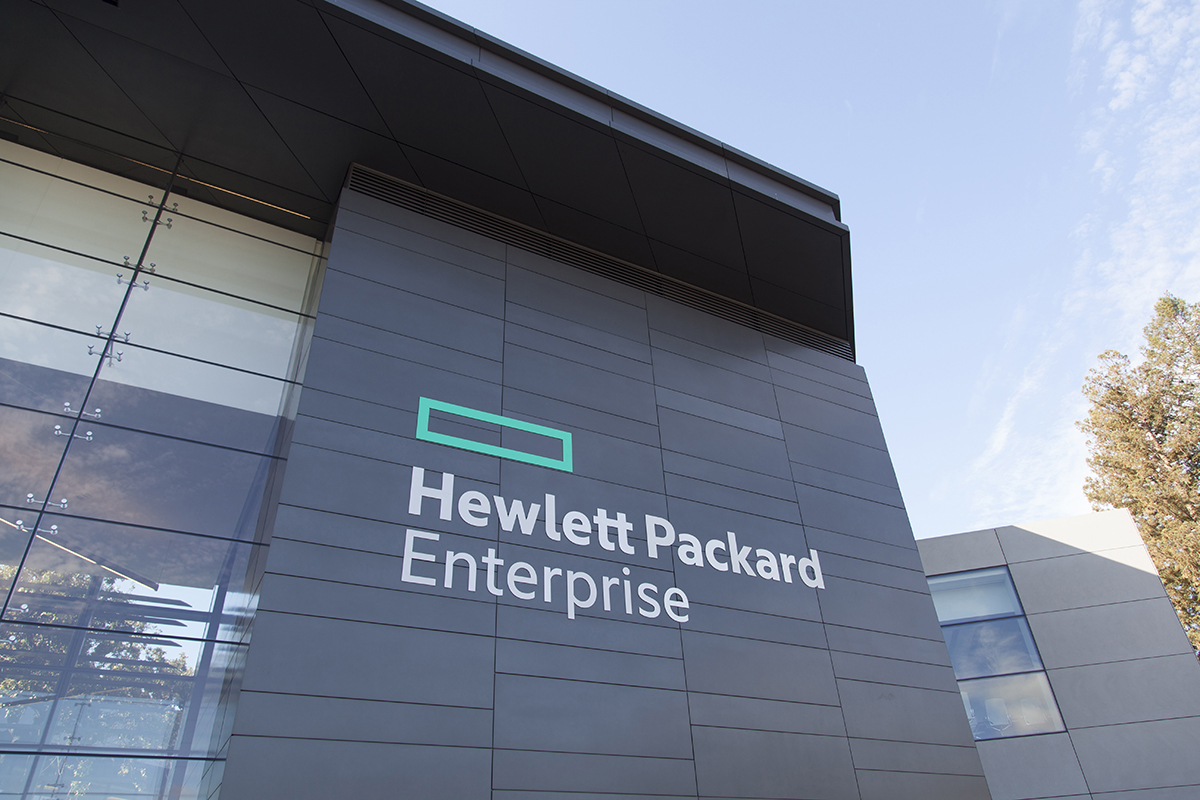
HPE to Accelerate AI Training with NVIDIA GH200HPE to Accelerate AI Training with NVIDIA GH200

HP said on Tuesday that it anticipates reducing its global workforce by approximately 4,000 to 6,000 positions by 2028. This move is part of a strategy to streamline its operations and leverage AI to accelerate product development, enhance customer satisfaction, and increase productivity.

During a media briefing, CEO Enrique Lores said the job reductions will primarily affect teams involved in product development, internal operations, and customer support, CNN reported.

“We expect this initiative will create $1 billion in gross run rate savings over three years,” Lores added.

In February, the company had already laid off an additional 1,000 to 2,000 employees as part of a previously disclosed restructuring initiative.

“As we accelerate innovation across AI-powered devices to drive productivity, security and flexibility for our customers, our focus for FY26 is on disciplined execution,” Lores said.

The demand for AI-enabled PCs has surged, now accounting for over 30% of HP’s shipments for the fourth quarter ending October 31. However, analysts at Morgan Stanley warned that a global increase in memory chip prices, driven by higher demand from data centres, could raise costs and negatively impact profits for consumer electronics companies such as HP, Dell, and Acer.

“Looking forward, we are taking decisive actions to mitigate recent cost headwinds and are investing in AI-enabled initiatives to accelerate product innovation, improve customer satisfaction, and boost productivity,” Karen Parkhill, CFO, HP, said in a statement. “We are confident these actions will strengthen our foundation and position us for long-term growth.”

This announcement of layoffs coincided with the release of HP’s fiscal year 2025 financial results, which revealed a 3.2% year-over-year increase in revenue to $55.3 billion. The net revenue for the fourth quarter was $14.6 billion, marking a 4.2% rise and the sixth consecutive quarter of revenue growth for HP.

The post HP to Lay Off Up to 6,000 People in AI Push to Save $1 Billion appeared first on Analytics India Magazine.

The Need For The 10× IT Admin

When a backup becomes unreadable, a storage array corrupts, or a hybrid-cloud restore freezes mid-sequence, it isn’t the feature teams who decide whether a business stays operational. It’s the IT administrators. Yet, the past decade of enterprise software has primarily fixated on developer productivity.

The industry spent years building tools to ship code faster, while the people responsible for keeping systems alive were buried under manual recovery work. That imbalance is now being questioned by a growing number of IT experts today.

Tejas Pandit, co-founder of cyber-resilience startup MeshDefend, said in an interaction with AIM, “Everybody is talking about the 10x engineer today. Nobody is talking about the 10x admin yet.”

He has seen first-hand how fragile recovery workflows inside large enterprises can be. Rebuilding broken infrastructure often drags on for weeks.

“It takes 24 to 30 days to rebuild anything if it breaks. And those first 48 to 72 hours are very, very rough on the IT managers.” In those early days, teams scramble through dense PDFs, snapshot spreadsheets and outdated runbooks. “I have seen people shakingly navigate through 200, 500, 700-page PDFs,” he said.

A report from Unitrends this year, which surveyed over 3,000 IT experts worldwide, states that over half of organisations spend more than two hours per day on backup monitoring, troubleshooting or fixes, turning resilience work into a significant time sink.

In terms of disaster recovery, more than 60% of companies believe they can restore operations in under a day. In reality, however, only 35% actually manage to.

Meanwhile, attackers have been evolving faster than the runbooks meant to stop them.

Pandit explained that adversaries increasingly target backup systems before touching production, knowing that an organisation stripped of recovery insurance is far more likely to pay ransom.

Before teams can even begin restoring systems, they must verify what data can be trusted, turning recovery from a straightforward technical procedure into a sequence of high-stress decisions.

From Observability to Execution

The observability market has largely solved the visibility problem. Tools from Datadog, Dynatrace, New Relic, Splunk and others give organisations deep insight into logs, metrics and traces. But insight alone does not reduce downtime.

Patrick Lin, senior vice president of observability at Splunk, summed up the challenge in an earlier discussion with AIM. “You still have to get the right data in [observability platforms], you still have to have a certain amount of operational rigour… More information means either fewer outages or shorter duration outages.”

Information accelerates detection. But someone still has to decide what action is safe and execute it. That execution lag is where vendors are now applying AI.

The lack of readiness shows up in more minor details.

The Unitrends report found that just 15% of organisations test backups daily, and only 11% run daily disaster recovery tests, meaning most rely on unverified assumptions.

Worse still, one in five wouldn’t realise they had missed backups until a failure occurred, and 10% acknowledge they would not be notified at all.

In 2025, companies such as Veeam, NetApp, Rubrik and Commvault began adding features that help administrators act rather than just observe.

Veeam introduced secure AI access to backup data without expanding breach risk. NetApp embedded breach detection directly into enterprise storage, using AI to identify compromised snapshots and invoke isolated recovery.

Rubrik moved beyond protection to decision-assisted restoration for Microsoft 365 and DevOps environments.

And Commvault integrated with platforms like CrowdStrike, Microsoft and Palo Alto Networks to tie threat signals directly to automated recovery, allowing security posture and recovery posture to inform one another rather than operate in isolation.

What unifies these moves is a shift from dashboards to execution. AI is not being deployed to describe what went wrong, but to shorten the steps between detection and safe restoration.

That direction aligns with a broader finding from Commvault’s latest readiness study, which notes that enterprises focus heavily on deploying AI systems but rarely ensure that those systems themselves can be protected or recovered.

As the report puts it, “Few organisations plan comprehensive resilience for AI-specific assets… These critical business assets require enterprise-grade protection but are often treated as disposable.” That oversight extends the same pattern: strong visibility, weak execution.

Commvault’s report proposes a phased approach that mirrors how recovery workflows are being redesigned across the industry. The first 90 days are dedicated to understanding which infrastructure and AI assets need protection, documenting their provenance and enforcing trusted access boundaries.

The next 90 days shift to automating safe recovery steps for those same assets, including models, training data and vector stores, which are increasingly as critical as databases.

Adding a sober warning that applies as much to backup infrastructure as to AI workloads, the company stated that “validating that the underpinning of the AI stack is built on security and resilience is critical to the success of AI initiatives.”

Encoding Operational Judgment

The growing automation trend still leaves a gap. No matter how advanced a model may be, it cannot recover a system without understanding how the organisation itself approaches recovery.

Pandit argues that automating this work is not simply an algorithmic problem but a knowledge-transfer problem. Enterprise recovery is shaped by policy, risk appetite and years of human decision-making.

“In the AI native solution, you are combining a system of records with the workflows plus humans,” he said.

Pandit co-founded MeshDefend with Ravi Chitloor after spending nearly two decades at Dell EMC in enterprise backup and cyber recovery. The startup recently raised $2.5 million in a pre-seed round led by Kalaari Capital.

Their focus is not on another monitoring layer, but on an execution layer that works across a company’s vendors without replacing them. Pandit said they deliberately decided to avoid the crowded observability market. “We don’t want just that visibility, but we want the agency to act.”

The company embeds engineers directly inside customer environments to codify how recovery is actually performed, turning bespoke human routines into repeatable, auditable steps inside its Agent Mesh operating system.

This can manage a distributed network of AI agents that continuously monitor, validate and coordinate data infrastructure operations with enterprise-grade scale.

This approach exposes why recovery gains vary so widely. MeshDefend pilots have shown improvements of 5% to 35% in operational efficiency. The variation, as per Pandit, does not stem from AI but from how well human practice gets encoded.

The more an organisation has documented and rational workflows, the more automation compounds their effectiveness. The messier the environment, the more work is required up front to capture its logic.

The company is starting with data protection, backup and storage, but its architecture is designed to expand across the whole infrastructure stack.

Because it is built AI-native, vendor integrations can be completed in weeks rather than quarters, placing a premium on governance and auditability. With AI, the purpose is not to remove judgment, but to remove the repetitive decision load that prevents judgment from being applied, Pandit explained.

Pointing towards where operators spend their energy, he stated, “They’re doing almost anywhere between 30-60% of their tasks which are repetitive today.”

“They would love their IT admins to really go and work on the higher value tasks.”

A system administrator at a startup, who requested anonymity, told AIM that the most draining work isn’t handling major outages, but the slow repetition of small recovery tasks, such as digging through user data backups and coaching remote employees through troubleshooting their own machines.

If automation can relieve the cognitive burden of recovery, then the measure of effectiveness will be how reliably infrastructure stands back up when it matters most.

The post The Need For The 10× IT Admin appeared first on Analytics India Magazine.
By 2030, OpenAI Will Have 220 Million Paying Users, But Still Won’t Make Money: Reports

OpenAI is projected to have at least 220 million ChatGPT users with paid subscriptions, The Information reported, citing a source familiar with the matter.

According to reports, ChatGPT currently has 800 million weekly active users, and The Information noted that as of July, 35 million users were paying for the $20 per month Plus or $200 per month plans.

OpenAI’s annual revenue, as reported by Reuters, is expected to reach $20 billion by the end of this year.

Along these lines, a recent update from HSBC’s US service team, as reported by The Financial Times, projected that ChatGPT will reach 3 billion weekly users by 2030.

And it also estimates that by this year, 10% of these users will be paying customers, totalling 300 million, higher than the number OpenAI projected.

However, HSBC also states that the company will not be profitable by 2030 and will need at least $207 billion in computing capacity to ensure its growth.

Given Microsoft’s 27% stake in OpenAI, its quarterly filings with the U.S. Securities and Exchange Commission (SEC) revealed how much it loses on its investment.

In the first quarter of fiscal year 2026, Microsoft’s net income was reduced by $3.1 billion due to losses recognised on its OpenAI investment.

Microsoft has committed $13 billion to OpenAI and has already paid $11.6 billion.

The investment is treated as an equity stake, and Microsoft records its share of OpenAI’s profits or losses under “other income (expense), net.”

Based on Microsoft’s filings, The Register noted that if Microsoft holds a 27% stake in OpenAI and reported a $3.1 billion loss from that investment in a single quarter, this would imply that OpenAI’s total loss for the quarter would be roughly $11.5 billion.

The post By 2030, OpenAI Will Have 220 Million Paying Users, But Still Won’t Make Money: Reports appeared first on Analytics India Magazine.

CloudExtel Raises ₹200 Crore for Data Centre Interconnect Network Expansion

CloudExtel, a Network-as-a-Service (NaaS) provider based in Mumbai, has secured ₹200 crore in debt financing from a major private bank to expand its small-cell and fibre-optic networks, according to media reports.

Current shareholders have also contributed through a proportional follow-on equity investment, showing their support for the company’s next growth phase.

The investment will be utilised to develop CloudExtel’s upcoming Data Centre Interconnect (DCI) network, which aims to provide high-capacity, low-latency, and redundant connections between data centres, essential for AI operations, cloud computing, and digital content distribution.

Kunal Bajaj, co-founder and CEO of CloudExtel, stated that these funds will enable the company to scale quickly, enhance its infrastructure, and continue making an impact through collaboration and technology-driven efficiency.

He emphasised that the new Data Centre Interconnect network in Mumbai, along with future expansions in other cities, will bolster their competitive edge and ability to deliver integrated solutions for India’s digital landscape.

“India’s digital landscape is poised for substantial growth with emerging technologies set to revolutionise the ecosystem. This partnership with NIIF IFL and ABFL marks a significant step in our journey as the debt capital infusion will now be complementary to the investment by Macquarie Capital and Advencap. The credit rating also substantiates our emphasis on world-class governance and financial stability,” he added, as reported by the Economic Times.

With this capital injection, the company aims to strengthen its presence in Fibre and Small Cells deployment.

They also noted that only 33% of telecom towers in India are fiberised, compared to over 70% in global markets, with demand expected to rise as data centres and Fibre-to-the-Home (FTTH) services grow at CAGRs of 40% and 27%, respectively, in the top 10 cities.

This debt financing comes on the heels of CloudExtel’s equity investments from Macquarie Capital and Advencap in the 2024 fiscal year.

The post CloudExtel Raises ₹200 Crore for Data Centre Interconnect Network Expansion appeared first on Analytics India Magazine.

DeepSeek Joins OpenAI & Google in Scoring Gold in IMO 2025

The China-based AI lab DeepSeek has released a new open-weight model, DeepSeekMath-V2.

The model, as per the AI lab, demonstrates strong theorem-proving capabilities in mathematics and achieved gold-level scores on the International Mathematics Olympiad (IMO) 2025.

It solved 5 of 6 problems at the IMO 2025.

“Imagine owning the brain of one of the best mathematicians in the world for free,” said Clement Delangue, co-founder and CEO of Hugging Face in a post on X.

“As far as I know, there isn’t any chatbot or API that gives you access to an IMO 2025 gold-medalist model,” he added.

In July, an advanced version of Google DeepMind’s Gemini model and an experimental reasoning model from OpenAI also achieved the gold status on the IMO 2025. Like DeepSeek’s new model, both OpenAI and Google’s models also solved 5 out of 6 problems. These were the first AI models to achieve the gold level scores.

IMO is often regarded as the toughest high-school mathematics contest globally. Of the 630 students who participated in IMO 2025, 72 earned gold medals.

Besides the IMO 2025 competition, DeepSeekMath-V2 also achieved top-tier performance on China’s toughest national competition, the China Mathematical Olympiad (CMO), and posted near-perfect results on the undergraduate Putnam exam.

“On Putnam 2024, the preeminent undergraduate mathematics competition, our model solved 11 of 12 problems completely and the remaining problem with minor errors, scoring 118/120 and surpassing the highest human score of 90,” stated DeepSeek.

DeepSeek argues that recent AI models excel at getting the right answers (in math benchmarks like AIME and HMMT) but often lack sound reasoning.

“Many mathematical tasks like theorem proving require rigorous step-by-step derivation rather than numerical answers, making final answer rewards inapplicable.”

To address this, DeepSeek emphasises the need for models that can judge and refine their own reasoning. The team argues that “self-verification is particularly important for scaling test-time compute, especially for open problems without known solutions.”

For context, test-time compute refers to allocating large amounts of computation during inference — not training — to let the model reason longer, explore multiple solutions, and refine its answers.

DeepSeek’s approach trains a dedicated verifier that scores the quality of proofs, not answers, and then uses this verifier to guide a separate proof-generation model. The generator is rewarded only when it fixes its own mistakes, not when it hides them.

As the paper explains, they “train a proof generator using the verifier as the reward model, and incentivise the generator to identify and resolve as many issues as possible in their own proofs before finalising them.”

To prevent the system from overfitting to its own checker, DeepSeek continually makes the verification process harder.

It does this by increasing compute and automatically labeling difficult proofs, ensuring the verifier evolves alongside the generator.

In their words, this allows them “to scale verification compute to automatically label new hard-to-verify proofs, creating training data to further improve the verifier.”

The model’s weights can be downloaded on Hugging Face. “That’s democratisation of AI and knowledge at its best, literally,” said Delangue.

DeepSeek rose to prominence after releasing a low-cost, open-source model that rivalled US AI systems. Its DeepSeek-R1 reasoning launch sparked questions about whether open models could erode the commercial edge of closed products, briefly rattling investor confidence in AI giants such as NVIDIA.

The post DeepSeek Joins OpenAI & Google in Scoring Gold in IMO 2025 appeared first on Analytics India Magazine.

Skyroot Inaugurates its Infinity Campus as Vikram-1 Moves Toward 2026 Launch

Prime Minister Narendra Modi inaugurated Skyroot Aerospace’s Infinity Campus in Hyderabad, where he also unveiled Vikram-1, the startup’s rocket.

The event outlined what the facility is, who is involved, where it is located, when it opened, why it matters to India’s private space sector, and how Skyroot plans to scale rocket production.

Skyroot said the new 200,000-square-foot facility can produce one rocket a month. The company plans to enter the global launch market with Vikram-1, which is scheduled for its first mission in early 2026.

Modi said the campus represents “India’s new thinking, innovation and the power of youth.” He added that the event points to a future where India becomes a leader in the satellite launch ecosystem.

Infinity Campus adds to the firm’s existing Max-Q Campus. It includes automated filament-winding systems, CNC machines, and cleanrooms for carbon-composite work.

The company said Vikram-1 can deploy multiple satellites to orbit. It is India’s first fully carbon-fibre launch vehicle and uses 3D-printed hypergolic engines. The Kalam-1200 booster is India’s most significant privately built rocket stage.

IN-SPACe chair Pawan Goenka said the rise of more than 350 space startups shows the impact of policy changes. He said the new campus and rocket show what can be achieved through a mix of ambition and support.

Skyroot founder Naga Bharath Daka said the factory strengthens the company’s plan to build launch vehicles that support wider access to space.

Referring to the startup’s earlier launch of Vikram-S rocket, Lt. Gen. AK Bhatt, director general of the Indian Space Association (ISpA) said, “Skyroot’s journey from Vikram-S to Vikram-I shows how Indian startups are now building end-to-end launch capabilities for the global small-satellite market, easing the load on ISRO and expanding national capacity.

This milestone is emblematic of the broader private ecosystem that is emerging across rockets, satellites, applications and services. It will be central to realising India’s ambition of a much larger, innovation-led space economy in the coming decade.”

The post Skyroot Inaugurates its Infinity Campus as Vikram-1 Moves Toward 2026 Launch appeared first on Analytics India Magazine.

SoftBank Shares Slip 40% as AI Bubble Fears Worsen 

In the first three quarters of 2025, the global tech companies braced for US President Donald Trump’s trade tariff storm. Since October, however, the overriding concern has been the threat of an artificial intelligence (AI) bubble. Investors are turning increasingly cautious about the AI companies and their unsustainable valuations.

Japanese technology conglomerate SoftBank Group, with deep exposure to AI companies, saw a sharp market correction ever since. Between October 31 and November 26, the company’s shares dropped by 40%, resulting in a loss of nearly $50 billion in market capitalisation.

The financial turmoil was not caused by a single event but resulted from a confluence of factors. The increasing scepticism was raised by Palantir Technologies, the AI software company, whose shares fell despite promising Q3 results, suggesting concerns over its valuation.

The market reaction signalled a fundamental shift in investor behaviour. Strong performance was no longer enough to sustain the meteoric valuation based on the future AI potential. A Yahoo Finance report noted that Palantir traded at revenue multiples that exceed those of many established AI and cloud leaders and questioned whether current prices reflect long-term fundamentals or short-term enthusiasm.

Besides, Bank of America’s Global Fund Manager Survey in October revealed that 54% of respondents believed AI-related assets were in a bubble territory, and 60% said global equities were overvalued, Bloomberg cited.

“Among other signs of rampant speculation, frantic venture capitalists are throwing money at AI startups at multi-billion-dollar valuations without even being told their plans,” Ben Inker, partner at GMO, the Boston-based investment management firm, wrote in their monthly newsletter.

He further noted that equity investors are increasing the valuation of large corporations by hundreds of billions of dollars through investment deals with OpenAI, a company whose revenues would have to rise a hundredfold to fulfil its commitment.

What Happened to SoftBank?

For SoftBank, its investments in AI companies, such as Arm, OpenAI, Perplexity, Databricks, and ByteDance, among others, make it more vulnerable to AI-related fears.

Following the Palantir trigger on November 4, its quarterly results on November 5, and the subsequent announcement on November 11 to offload its entire stake in NVIDIA (32.1 million shares) for $5.8 billion and deepen its investment in OpenAI, market fears were amplified. A segment of investors, however, sought evidence of long-term conviction in the chip sector.

“SoftBank’s softness has occurred as the market questions whether it sold a golden lottery ticket to buy a whole new stack of scratch-offs,” Michael Ashley Schulman, partner and chief investment officer at Running Point Capital Advisors, told AIM in an email interaction.

Schulman added that this move “turns a category leader into a messy, high beta roulette wheel”, which led some investors to mark the shares down due to timing risk.

While major AI players continue to report strong demand, the rapid rise in valuations for companies like OpenAI has heightened concerns about timing risk and long-term sustainability, especially as markets reassess the gap between AI hype and financial results. Around this time last year, the AI giant was valued at $150 billion. Currently, its valuation is 5x at $750 billion.

SoftBank’s decline had repercussions across global semiconductor markets as well, sparking widespread industry debate. The fall occurred at a delicate moment for investors monitoring Q4 earnings signals, movements in global tech stocks and turbulence within the semiconductor sector.

NVIDIA’s stock price fell by about 3%, while other major tech firms experienced similar declines. Taiwan’s TSMC and China’s Alibaba also faced declines.

SoftBank x OpenAI x Google

Adding to semiconductor share fluctuations, developments by major AI companies competing with OpenAI also played a role.

Google’s release of Gemini 3 earlier this month, which delivered standout results across coding, reasoning, multimodal tasks and more, generated intense excitement, with many calling it a leap ahead in the AI race.

That buzz flagging Gemini 3 as a formidable rival prompted some investors to question whether OpenAI could maintain its dominance.

“The stocks are hit by concerns that the competition environment of OpenAI will become tougher after Google’s Gemini 3 received strong reviews,” Tsutomu Yamada, from Mitsubishi UFJ eSmart Securities Co, told Bloomberg.

Schulman observed that in the short run, SoftBank’s sale of NVIDIA stock looked like a wise move, as if the latter foresaw the dip and exited at the right time. However, investors didn’t fully buy its strategic bets. “Nonetheless, based on past quirks and eccentricities, every new ambitious Softbank move gets priced with scepticism,” Schulman said.

The SoftBank stock decline had a rippling effect on the global tech stocks. Between November 11 and 26, while SoftBank shares declined by 28.35%, NVIDIA’s shares fell by 6.68% and Microsoft was down by 4.56%. Meanwhile, Apple, Google and Meta, which competed with OpenAI, saw their stock prices rise by 0.84%, 9.78% and 1.04%, respectively.

What to Make of the Future?

Schulman noted that SoftBank may remain in a phase where it has become a meme of itself, replaying episodes of “overconfidence and reinvention.”

He further noted that when the company swaps its investments for another ambitious tech bet, investors are unsure whether it marks a good strategy or should remind them of past mistakes, such as WeWork, Oyo, Zemu and others.

Investors are watching to see whether the company will adjust its risk approach or shift its strategy as these markets evolve in 2026.

“AI is a game-changer and will remain a structural growth theme in 2026,” Christian Nolting, global chief investment officer at Deutsche Bank, noted in their market outlook report. At the same time, he urges caution: “Overinvestment and electricity shortages could dampen expectations.”

Similarly, Vanguard Funds noted that while AI spending on infrastructure, chips and data centres could support faster-than-expected expansion, the investment management firm cautioned that it may not guarantee a bull run in equities.

The post SoftBank Shares Slip 40% as AI Bubble Fears Worsen appeared first on Analytics India Magazine.

GPT-5.1 vs Gemini 3 Pro vs Claude Opus 4.5

The closing months of 2025 have turned into a strange kind of festival in the world of artificial intelligence. Three of the most powerful models ever built arrived almost back-to-back. OpenAI’s GPT-5.1 came first, followed by Gemini 3 Pro by Google DeepMind. Finally, Claude Opus 4.5 from Anthropic rounded off the month.

The most striking shift this season among these models is a simple idea. They do not think in a straight line anymore. In older systems, the model would read a prompt and fire back a response at a fixed pace. In the new systems, the model slows down when the task demands it. It walks through a chain of ideas, checks mistakes and plans.

Thinking Styles

Each company has taken its own approach to this new behaviour. GPT-5.1 decides for itself whether to think deeply or speed through an easy task. There’s no switch for the user to flip. The model reads the room.

Gemini 3 Pro offers a clear choice through a Deep Think mode. A researcher can switch it on for complex problems.

Claude Opus 4.5 offers the most control. Its Effort setting lets users control the number of tokens used for a task. It’s almost like adjusting the brightness, but for intelligence.

Together, these choices set the tone for how the three companies envision the future. OpenAI seems to want speed and scale, Google wants mastery over media, and Anthropic wants reliability in long stretches of complex tasks.

The Coding Test

GPT-5.1 has a second trick that matters. Codex-Max, its specialised version for software work, uses a process called compaction. It keeps long coding sessions clean by turning old logs and errors into a compressed memory that preserves the essence of the work.

This solves a problem that slowed previous systems. Long loops often drowned the model in clutter. Codex-Max stays alert throughout an entire day of debugging without losing context. The result is not a longer memory but a sharper one.

Gemini 3 Pro takes a different path. Google built it to treat text, images, audio and video as part of a single stream. It does not bolt separate vision or audio modules on top of a language core. Everything is processed in a unified space.

This gives it an unusual sense of flow. It understands tone in audio, grasps cause and effect in long videos, and reads documents that stretch across a million tokens without breaking them apart.

Claude Opus 4.5 tries to solve a quieter but stubborn problem. In long chains of coding or research, older models often forgot why they made a choice a few turns earlier. Opus 4.5 keeps its own thinking blocks intact from one step to the next. This stops it from repeating the same failed ideas.

It behaves like someone who remembers previous attempts with clarity. It also brings a fresh skill. The model can zoom into small portions of a screen at full resolution. It uses this to catch minute details in documents or interfaces that other models miss.

A developer compared GPT-5.1, Gemini 3.0 and Opus 4.5 across three coding tasks to see how they behave in real work. The idea was simple. Put the models through the same problems and watch how they deal with instructions, messy legacy code and incomplete systems.

The first test checked prompt discipline. The models had to build a Python rate limiter with 10 strict requirements. Gemini stuck to the script in a very literal way. Opus 4.5 stayed close to the spec and produced clearer notes. GPT-5.1 added checks and safety logic that hadn’t been requested.

The second test threw a broken TypeScript API at the models, asking them to clean it up and fix underlying design flaws. Opus 4.5 completed all 10 improvements. GPT-5.1 achieved nine and flagged security gaps like missing auth and unsafe database calls. Gemini managed eight and wrote quick code, but overlooked structural issues.

The third test assessed how well they understand a system before extending it. Given a half-built notification module, the models had to first explain the layout, then add email support. Opus 4.5 delivered the most complete answer and offered templates for every event.

GPT-5.1 spent more time reading the system, pointed out bugs, drew diagrams and then added richer features like CC, BCC and attachments. Gemini understood the brief but kept its answer short.

Software work shows a very different ranking.

Claude Opus 4.5 takes the crown for real engineering tasks. In a benchmark that tests fixes for real GitHub issues, it edges past GPT-5.1 Codex-Max. Both outperform Gemini in this space. While Claude handles ambiguity with grace, Codex-Max survives the longest sessions. Gemini performs best on pure algorithmic puzzles but loses its calm inside messy repositories.

On Benchmarks

The three models reveal their distinct personalities on benchmarks. Gemini 3 Pro leads in scientific reasoning with a strong grasp of physics, chemistry and biology. It also performs best on the toughest new test called Humanity’s Last Exam.

The score suggests an ability to generate answers in areas where human knowledge is still patchy and unclear. GPT-5.1 trails in this category, while Claude Opus 4.5 sits between the two. It is competent in science but not dominant.

In mathematics, Gemini reaches perfection when allowed to call external tools. GPT-5.1 follows close behind. Claude remains reliable but less spectacular. The surprise comes in visual reasoning. Gemini and Claude show agility on puzzles that need flexible thinking, while GPT-5.1 struggles to keep pace.

The Bottomline: Pricing

Price changes the story yet again. OpenAI has pushed costs down to a point that feels almost strategic. GPT-5.1 is inexpensive to run at scale. This makes it ideal for high-volume workloads across companies and startups. Gemini is expensive per token but becomes good value for very long documents due to its huge context window. Claude costs the most but gives fine control through its Effort setting.

The human experience around these models brings its own colour. Developers on community forums like Hacker News, Cursor and Reddit describe Claude Opus 4.5 as the one that understands intent with little friction. It behaves like a careful senior engineer.

Gemini feels clever and thoughtful. It excels at planning large systems but can turn overly literal during execution.

GPT-5.1 is described as fast and easy to work with. It solves small tasks quickly, but sometimes gives quick answers to slow problems.

Most users will not choose a single model. They will combine them: GPT-5.1 as the dependable worker that handles the load, Gemini as the deep reader and Claude as the careful executor. The idea of one model ruling the field is fading. The field now looks more like a team sport.

The post GPT-5.1 vs Gemini 3 Pro vs Claude Opus 4.5 appeared first on Analytics India Magazine.