AWS Introduces Graviton5 with Gains in Compute, Memory and Network Bandwidth
Dec. 4, 2025 — As cloud workloads continue to grow in complexity and scale, organizations face…
Artificial Intelligence News
Dec. 4, 2025 — As cloud workloads continue to grow in complexity and scale, organizations face…


Novo Nordisk India has partnered with Healthify to launch an AI-driven, dietitian-led Patient Support Program (PSP) designed to support individuals living with obesity through structured lifestyle guidance.
The initiative aims to enhance the patient experience, strengthen long-term adherence, and integrate evidence-based lifestyle management alongside obesity medications, including GLP-1 therapies, which have seen a surge in prescription volume in recent years.
Healthify’s proprietary AI ecosystem, anchored by its conversational intelligence engine, Ria, assists users throughout their treatment cycles by analysing their nutrition patterns, providing real-time recommendations, and offering adaptive guidance as their medication and lifestyle needs evolve.
By combining this AI layer with Healthify’s network of more than 500 dietitians and coaches, the PSP delivers a hybrid model of care that brings scale, personalisation, and clinical consistency to India’s growing population of people living with obesity.
The program aligns with a rising need for holistic obesity care. As more patients begin GLP-1 treatments, clinicians are increasingly emphasising structured lifestyle interventions, such as personalised nutrition planning, exercise routines, sleep monitoring, and progress tracking, to ensure sustainable weight management.
The Healthify–Novo Nordisk PSP integrates these elements into a single, AI-orchestrated experience, enabling patients to track their habits, understand their metabolic responses, and maintain adherence through proactive nudges and data-driven insights.
This partnership allows us to bring AI-enabled, dietitian-guided personalised care to more patients across India, and the insights we gather here will help shape future global programs,” said Tushar Vashisht, Co-founder & CEO of Healthify.Recently, Ria 3.0 was released, showing the evolution of Healthify’s AI stack and moving beyond older voice assistants that relied on transcribing speech before generating a response. Operating natively in audio allows the system to detect emotions, handle diverse accents, support code-mixed languages, and respond with minimal latency.
The post Healthify, Novo Nordisk India Launch AI-Enabled Patient Support Program for Obesity Care appeared first on Analytics India Magazine.
It has been nearly a year since Amazon Web Services previewed the next generation of…


Cognizant has expanded its Synapse skilling initiative, announcing a new target to upskill two million individuals worldwide by the end of 2030.
The company claimed that the program, launched in 2023, has already surpassed its initial goal of reaching one million people by 2026, prompting it to double its commitment.
The move comes amid what Cognizant describes as an urgent need for large-scale digital skilling, driven by rapid advances in artificial intelligence.
Citing a Cognizant–Oxford Economics study, the company noted that 90% of jobs, from entry-level to executive roles, will face disruption from AI in the next decade, intensifying global demand for workforce readiness.
“The expansion of our Synapse commitment marks a significant step toward building a more future-ready workforce. We are proud to have surpassed our initial goal ahead of schedule, a testament to the dedication of our teams and partners,” CEO Ravi Kumar S said.
Synapse aims to address socio-economic, cultural, and language barriers while supporting jobseeker training, employee-led STEM initiatives, and partnerships with governments, academic institutions, non-profits, and industry leaders.
The company said it remains committed to the pillars outlined at the program’s launch: Skills Accelerator, Technology Partnerships, Apprenticeships, Community Education and Employee Skilling.
As part of the expanded effort, Cognizant plans to broaden several Synapse focus areas including learning and development resources by expanding its learning and development offerings.
The company said it aims to accelerate its investment in employee learning, develop partnerships with learning institutions, and offer learning tracks for client teams.
The company said it also intends to offer branded learning experiences that bring Cognizant’s customised learning capabilities to client sites, learning institutions, and NGO partners.
For social impact, the IT company said it aims to expand its distribution of philanthropic funds to NGOs that align to the mission of Synapse as well as design and host learning and development programs that benefit the communities where Cognizant operates.
The post Cognizant Doubles Synapse Goal, Targets Upskilling 2 Million People by 2030 appeared first on Analytics India Magazine.
Dec. 3, 2025 — Efficiency has emerged as a critical challenge for organizations deploying AI. While…


As the life sciences industry progresses towards digital transformation, a pressing question grows ever more significant: can technology truly keep pace with clinical innovation and do so without losing its human touch?
In an era where physicians have instant access to vast digital resources and regulations limit direct interactions in several countries, traditional models of customer engagement in pharma have been disrupted beyond recognition.
This rapid evolution is compelling life sciences companies to think beyond the product itself. Axtria believes innovation is as much about shaping healthcare delivery as it is about creating new molecules.
“Being much more personalised, much more tailored, recognising that physicians are different, patients are different, and healthcare systems are different, that’s where innovation is heading,” Uday Bose, head of human pharma customer experience excellence and business steering at Boehringer Ingelheim, told AIM. “Often, we find the molecule itself isn’t the issue. The healthcare system needs to be reformed.”
He recalled launching a first-in-class product, only to discover that the healthcare system “wasn’t even equipped to see those patients, let alone diagnose or treat them”. Today, pharma and life sciences companies are being called upon to partner proactively with healthcare providers to shape the very ecosystems in which treatments are delivered.
The conversation around AI in healthcare often focuses on automation and scale. However, Axtria sees AI as a force multiplier for human expertise.
“The volume of information is overwhelming,” Bose explained. “It’s not about a lack of data, but a lack of actionable insights. That’s what we’ve been missing, and that’s where technology plays an incredibly important role.”
He added that medical advisors, often practising doctors or oncologists who moved into the industry to impact more patients, spend almost 50% of their time reviewing and approving content, cross-checking references and verifying materials.
Here, automation, auto-referencing and AI agents can shoulder such a burden. By doing so, they free up highly qualified professionals to focus on what truly matters: meaningful interactions that drive healthcare forward.
Addressing another key challenge, Manish Mittal, managing principal of Axtria, told AIM, “When it comes to onboarding patients, the key challenge is making sure it’s the right patient for the treatment. Identifying them accurately is a big hurdle—it’s not just a procedural or political exercise.”
Mittal explained that in some cases, it used to take up to eight years to find the right patient group. Platforms like SalesIQ are helping cut that drastically. What used to take seven days now happens almost instantly.
To identify patients, there is a convergence of data across multiple healthcare layers, such as pharmacy data, hospital data and physician networks, to find those patients who can truly benefit from a treatment.
He mentioned that for Axtria, the goal isn’t to replace human intelligence but to amplify it. The company’s approach is rooted in partnership between humans and machines, between pharma companies and healthcare systems, between innovation and empathy.
The explosion of digital information has given rise to a new challenge: data overload without insight.
“It’s not a lack of data per se, but a lack of actionable insights, that’s what we’re missing,” Bose explained. “The richness you can derive from good-quality data is incredible, but what we need are engines that can translate that data into something simple, specific, and precise.”
AI is now helping medical advisors, often former clinicians, reclaim valuable time.
Bose added that medical advisors were spending nearly 50% of their time just reviewing and approving materials—checking references, validating content.
That’s not a good use of their expertise. Automation and AI agents can transform that, freeing them to focus on advancing healthcare.
AI isn’t new to Axtria; it’s part of the company’s DNA, Mittal pointed out. The focus is on contextual intelligence rather than blind automation.
“AI is not new. What matters is how we use it responsibly,” he explained. “With cloud and computational advances, data became abundant. But the real challenge is creating a semantic layer of knowledge—linking information meaningfully so that insights actually improve patient outcomes.”
He added that without context, one can receive all kinds of answers that make decision-making harder, especially when lives are at stake. That’s why Axtria’s focus is on bringing semantics and knowledge together—to make every AI-powered decision truly human-informed.
For Axtria’s leadership, staying close to the patient experience is non-negotiable.
“We need to make the experience of managing health as simple as choosing a video to watch. That’s how we bridge the gap between technology and human behaviour,” Bose added.
“It’s important to meet customers, observe their workflows and see how our platforms impact real patients. When you see that connection firsthand, it changes how you build solutions,” Mittal echoed the sentiment.
The post Axtria’s Bet on Human-Centric AI in Healthcare appeared first on Analytics India Magazine.


Anthropic CEO Dario Amodei, in a recent interview with the NYT at DealBook Summit, said the company “doesn’t do any code reds,” distancing itself from the ongoing consumer-focused AI race between OpenAI and Google.
He said the company is taking a different approach from other major AI firms, choosing to focus on enterprise customers rather than competing in the consumer market. “Both[OpenAI and Google] of the players that you mentioned… are primarily focused on the consumer,” Amodei said, adding that this is the reason for the ‘Code Red’ intensity between them.
According to him, Anthropic is not part of that battle. “We kind of have to worry less about this back and forth. We have a little bit of a privileged position where we can just keep growing and just keep developing our models, and we don’t have to do any Code Reds,” he said.
Amodei added that the company has been optimising its models specifically for business use cases, with coding emerging as the fastest-moving area. Notably, the company recently released Claude 4.5 Opus.
He said Anthropic is now extending its capabilities into finance, biomedicine, retail, energy, and manufacturing. Amodei argued that enterprise-oriented AI systems differ significantly from consumer-focused ones. “It is surprising how different the personality and capabilities of the models are if you’re building for businesses versus consumers,” Amodei said.
Addressing questions about long-term defensibility, Amodei said model switching is harder than it appears, even for companies using APIs.
Amodei said parts of the AI industry may be entering a bubble, pointing to massive capital spending by leading companies and warning that some players are “YOLOing” in their approach.
He said the economic side of the AI boom carries real risks, even though the technology continues to progress rapidly. “There may be players in the ecosystem who, if they just make a timing error, if they just get it off by a little bit, bad things could happen,” he said. While he declined to name companies, the comment comes as OpenAI and others plan tens of billions in annual spending on compute and data centres.
Amodei said he distinguishes between the strength of the technology and the uncertainty of the economics surrounding it. “On the technological side, I feel really solid,” he said, adding that scaling laws have held steadily for more than a decade. “…As you train these models in this very simple way, with a few simple modifications, they get better and better at every task under the sun.”
Anthropic, he said, is seeing that translated into revenue. The company expects between $8 billion to $10 billion in revenue at the end of this year, he said.
The concern, he noted, lies in the gap between uncertain future revenue and the long lead times for data-centre construction. “There’s a real dilemma deriving from uncertainty in how quickly the economic value is going to grow and the lag times on building the data centres that drive this,” he said.
The post Dario Amodei Says Anthropic ‘Doesn’t Do Code Reds’, Takes a Dig at OpenAI appeared first on Analytics India Magazine.


After more than a year of building independently, smallest.ai raised $8 million in its seed round in October, led by Sierra Ventures, with participation from several other veteran investors in the industry.
The voice AI-focused startup, founded by CEO Sudharshan Kamath and his co-founder and CTO, Akshat Mandloi, started in Pune, moved to Bengaluru, and then decided to build it out of Silicon Valley.
As Indian customers were still stuck with demanding POCs for AI, Smallest.ai took the step of going to the West first, improving the models, and then started providing them for the Indian market.
Speaking to AIM, Apoorv Sood, who recently joined the company as the global GTM head, said that the uncomfortable truth for Indian founders building AI startups is that they have to go to the West.
Sood has been speaking with founders across India, Europe, and even Russia over the past year, seeking to understand where the next wave of AI will emerge. Still, he does not hide the truth about Indian customers and their constant need for Western validation.
“Sadly, validation from outside has always led to acceptance inside [India],” Sood explains the reason, though he wishes it were not true, but it is. He compares it to movie directors getting Oscars and then being recognised in India for making amazing movies.
Smallest.ai went to the US because it believes that is where the speed, capital and market discipline exist. Access to capital and ecosystem speed alone can be 5x to 10x faster. That said, India is the second country the startup is building for, because adoption is rising fast.
Sood said that if you raise funds from the West, you will have to build their first. “We did build in India, but in a way, when you look at the global context, it does slow you down a bit,” he said, while adding that eventually coming to India is a big goal for the company.
Not just Smallest.ai, other players from India, cutting across sectors, also head to the US first for a better market, then come back to the country with the money, which is also termed the ‘Skip India Movement.’ For example, RevRag, the B2B agent-building platform that also built voice agents for BFSI and fintech, moved to the US to earn its first million-dollar revenue and then returned to India.
Western AI companies are increasingly coming to India, which they identify as their second-largest market and building capabilities for the Indian audience.
Sood is clear that the real opportunity is only now opening up. He says adoption everywhere is still in the single digits, and the return on investment remains below 5%. He believes that 95% of the AI market remains to be developed.
“I think there’s a lot more to do, and it’s still superficial in my opinion,” Sood said.
The cultural habit of manpower over automation has delayed the shift. That cycle created a problem: many founders first tried to sell AI to large enterprises and failed. They burned money and time. After that, companies became hesitant and turned to foreign solutions, which were not cost-effective. That slowed India’s pace again.
Now the tide is turning as capital flows in, India-first use cases pick up, and products mature. He expects a sharp rise in adoption over the next three years.
In a market now full of players, smallest.ai’s moat is about customisation to a level no other player gives. Sarvam AI focuses primarily on Indian-language and dialect-centric problems, and Gnani, which also focuses on voice AI, is a long-standing player in the field. Both have been selected under the IndiaAI Mission to build foundational models for India.
“I’d love to see Sarvam succeed…I think the market is big enough for a few more players to come in,” he added.
Sood explains that ElevenLabs was developed with a creator-focused approach. He notes that their text-to-speech (TTS) and speech synthesis technology have been around for some time, while their agent B2B and voice spaces were added as an afterthought. According to him, this prioritisation led to limitations in the company’s accuracy, cost-efficiency, and real-time performance.
Despite this, ElevenLabs has been working with Indian firms on its voice AI capabilities, making it a worthy competitor to Smallest.ai. Indian e-commerce firm Meesho has developed a real-time voice agent using ElevenLabs text-to-speech to automate customer support in Hindi and English.
But Sood goes deep into what Smallest.ai built and what separates it from other AI players. Models designed for enterprise voice agents, not consumer tools. “We also laid a bet on small-language models. We can deploy it on-prem, we can customise, we can add direction.” Large models do not always handle that very well.
Smallest.ai builds voice agents and TTS models for various enterprise applications. The company’s two core products, Waves, an AI voice platform for TTS, voice cloning, and conversion for various users, and Atoms, a real-time AI voice agent platform that integrates with business systems for tasks like customer support and lead qualification, set it apart from others in the field.
Customisation for specific solutions and cost efficiency is what makes Smallest stand out.
While earlier speaking with AIM, Kamath said that intelligence didn’t require massive 100-billion-dollar models, instead focusing on small, specialised models. They shifted from research to enterprise voice AI after identifying strong market demand for text-to-speech technology.
At the heart of smallest.ai’s recent offering is Lightning V2, a high-performance text-to-speech model with ultra-low latency and support for over 16 languages. Designed for real-time deployment, it is already replacing large incumbents in enterprise accounts, particularly in sectors like banking and healthcare.
Lightning V2 currently includes five Indian languages, but the founder’s strategy prioritises global expansion over regional depth. They plan to add more international languages, targeting Southeast Asia, China, and Korea, while acknowledging that the Indian market, beyond Tier 1 cities, remains small and not a primary focus for deep expansion.
In the voice AI market, Kamath sees ownership as a critical differentiator.
While many voice AI companies rely on APIs from other companies, smallest.ai trains its models from scratch. This includes not only its core text-to-speech engine but also Electron, a small language model that he said is 10 times faster than GPT-4o Mini.
Speaking of the Total Addressable Market (TAM), Sood believes AI markets are virtually limitless because adoption is now cultural. “Today, my mother uses ChatGPT to improve the WhatsApp messages of birthday wishes that she wants to send,” he laughed. “I didn’t really have to do anything.”
He sees AI reaching both the boardroom and homes, making the total market for AI solutions infinite.
The Swadeshi tech movement in the country is in full throttle, with players like Zoho and MapmyIndia, and AI firms like Sarvam, BharatGen, Gnani, and several others are building solutions for tech sovereignty. Sood said building in India is great, but only if the product is world-class. Swadeshi cannot become a shield for substandard software.
“Nobody wants a low-quality bogie just because it is local. They want a world-class network that serves local commuters,” Sood said, while crediting Zoho for building globally and building a partner ecosystem early. However, he argued that India shouldn’t become a closed market. “Build the best product and let people use it.”
The post Why Smallest.ai Took a US First Approach and Not India appeared first on Analytics India Magazine.


Accenture and Snowflake have expanded their long-standing collaboration with the launch of the Accenture Snowflake Business Group, a new joint initiative aimed at helping global enterprises accelerate AI and data-driven reinvention.
The companies, in a statement, said the group will support clients such as Caterpillar in scaling generative AI innovation and modernising business models using cloud, data and AI technologies.
The initiative brings together Snowflake’s enterprise-ready data and AI platform, including Snowflake Intelligence and Snowflake Cortex AI, with Accenture’s industry experience and its Accenture AI Refinery.
It will also be backed by more than 5,000 Accenture SnowPro-certified professionals, which the companies described as the largest certified talent pool in the ecosystem.
“In today’s rapidly evolving market, companies are under immense pressure to reinvent their operations and business models to stay ahead,” said Manish Sharma, chief strategy and services officer, Accenture.
“The Accenture Snowflake Business Group will help clients to better leverage Snowflake’s unique foundation of reliable, accessible, contextualised data, coupled with Accenture’s ability to unlock the power of advanced AI for clients faster.”
Sridhar Ramaswamy, CEO of Snowflake, said the partnership has already enabled “hundreds of organisations to unlock AI’s potential and reveal previously unimaginable insights.”
He added that the group combines Accenture’s industry-leading business reinvention experience with Snowflake’s enterprise-ready, easy, connected, and trusted platform.
“This collaboration enables enterprises to achieve their full potential with AI and data, transforming how they harness data to build next-generation AI-powered applications, drive better decision-making, and maximise their data’s potential for AI innovation.”
One of the early focus areas is Caterpillar, which is working with Accenture and Snowflake to use operational data to improve manufacturing quality, generate timely financial insights, and strengthen knowledge management for complex tasks.
The collaboration draws on Caterpillar’s IT AI Centre of Excellence along with Accenture’s industrial manufacturing expertise and Snowflake’s AI capabilities.
Caterpillar’s chief information officer Jamie Engstrom said that the collaboration, coupled with the Caterpillar IT AI COE, will allow the company to make faster, data-informed decisions that improve efficiency, enhance quality, and deliver greater value.
The group aims to help clients migrate to the cloud, create AI-ready data estates, and accelerate development of AI solutions that deliver measurable business outcomes.
According to recent Accenture research cited by the companies, 85% of C-suite leaders plan to increase AI investments this year, with 67% viewing AI primarily as a driver of revenue growth rather than cost reduction.
As part of the initiative, Accenture and Snowflake will jointly invest in a global Centre of Excellence, where teams from both organisations will work with clients to rapidly apply new technologies and co-create AI and data assets.
The business group will also leverage Accenture’s industry capabilities, ecosystem partnerships, and its AI Refinery platform to help enterprises develop customised data strategies and prepare for emerging agentic AI capabilities using Snowflake’s AI Data Cloud.
The post Accenture, Snowflake Announce Business Group to Boost Enterprise AI, Data Transformation appeared first on Analytics India Magazine.

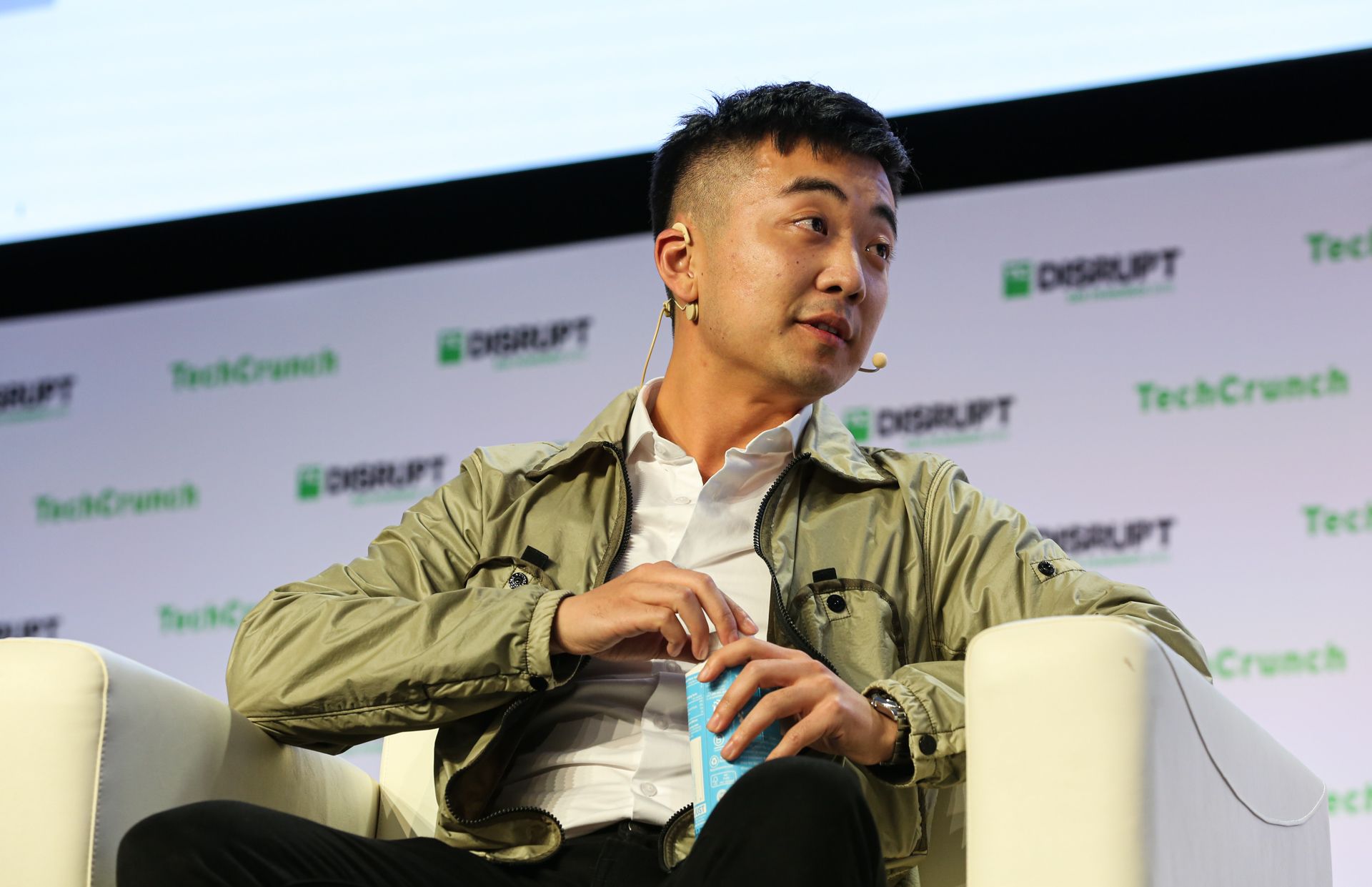
Nothing is opening a $5 million community investment round on December 10, allowing fans to buy shares at the company’s $1.3 billion series C valuation, according to a report by TechCrunch.
According to the report, the sale is meant to deepen ownership among users as it works to be IPO-ready within three years.
Nothing frames the offering as community-first rather than capital-driven. “This isn’t about raising capital,It’s about giving our community/fans a chance to invest while we’re private and join us on the journey,” a spokesperson from Nothing told TechCrunch.
Community investors will be granted a rotating seat on the company’s board, though Nothing has not specified additional shareholder rights or perks tied to these rounds.
This is Nothing’s third community funding event. The startup previously raised a combined $8 million from over 8,000 retail investors across two earlier campaigns that date back to 2021. The first community round targeted roughly $1.5 million shortly after the company’s launch.
The new retail round follows a major institutional backing. In September, Nothing closed a $200 million series C led by investors including Tiger Global, GV, Highland Europe, EQT, Latitude, I2BF, and Tapestry. With that financing, Nothing’s total external funding stands at $450 million.
Corporate moves accompany the fundraising. Nothing is spinning off its budget CMF brand to sharpen focus on core products. At the same time, the company is exploring AI-centric devices while continuing to develop smartphones and audio hardware.
Nothing claims it crossed $1 billion in cumulative revenue this year, a 150% increase over 2024.
Nothing CEO Carl Pei told TechCrunch in an email that the company is already operating with public-company discipline, building the systems, governance structures and financial controls it will need. This approach, he added, pushes the team to think long-term and make decisions that support sustainable growth.
The post Nothing Seeks $5 Million Community Funding As It Pushes to Become ‘IPO-Ready’: Reports appeared first on Analytics India Magazine.


