Databricks Launches AI Fund to Bolster Ecosystem Leadership

Databricks today announced the launch of the Databricks AI Fund, a new strategic investment initiative aimed at supporting early- to growth-stage startups leveraging AI in innovative ways. The fund, managed by Databricks Ventures, the company’s strategic investment arm, aims to strengthen the ecosystem around the Databricks Data Intelligence Platform.

Accelerating AI Adoption in the Enterprise

The launch of the AI Fund comes at a time when the pace of change in the AI ecosystem has dramatically accelerated. “As software ate the world, we believe AI is now eating software,” said a Databricks spokesperson. “The era of AI in the enterprise has arrived, and our new AI Fund embodies Databricks Ventures’ commitment to supporting a new generation of founders and startups in this critically important ecosystem.”

Since last fall, Databricks has announced investments in six AI-focused companies: Anomalo, Cleanlab, Glean, Mistral AI, Perplexity, and Unstructured. These portfolio companies span various sectors of the AI landscape, from open-source LLM development to AI-powered data quality monitoring.

Databricks Ventures will aggressively seek out investments in startups that utilise or enable AI in innovative ways on top of or alongside the Databricks platform. These companies will share Databricks’ vision for an open ecosystem and a commitment to using the power of data intelligence for the benefit of joint customers.

Building a Strong, Differentiated Ecosystem

Through these varied investments, Databricks Ventures has forged deeper partner and integration relationships across the AI value chain, benefiting both portfolio companies and common customers. The goal is to build a strong, differentiated ecosystem around the Databricks platform.

“We’re even more excited about the future of data and AI today than we were in 2021,” said the spokesperson. “Databricks Ventures is ready to help a new set of founders and entrepreneurs build AI-first companies.”

The launch of the Databricks AI Fund underscores the company’s commitment to extending its ecosystem leadership and supporting the rapid adoption of AI in the enterprise.

The post Databricks Launches AI Fund to Bolster Ecosystem Leadership appeared first on AIM.

Deepfakes and AI: Insights from Pindrop’s 2024 Voice Intelligence and Security Report

The rapid advancement of artificial intelligence (AI) has brought about significant benefits and transformative changes across various industries. However, it has also introduced new risks and challenges, particularly when it comes to fraud and security. Deepfakes, a product of generative AI, are becoming increasingly sophisticated and pose a substantial threat to the integrity of voice-based security systems.

The findings from Pindrop's 2024 Voice Intelligence and Security Report, highligh the impact of deepfakes on various sectors, the technological advancements driving these threats, and the innovative solutions being developed to combat them.

The Rise of Deepfakes: A Double-Edged Sword

Deepfakes utilize advanced machine learning algorithms to create highly realistic synthetic audio and video content. While these technologies have exciting applications in entertainment and media, they also present serious security challenges. According to Pindrop's report, U.S. consumers are most concerned about the risk of deepfakes and voice clones in the banking and financial sector, with 67.5% expressing significant worry.

Impact on Financial Institutions

Financial institutions are particularly vulnerable to deepfake attacks. Fraudsters use AI-generated voices to impersonate individuals, gain unauthorized access to accounts, and manipulate financial transactions. The report reveals that there were a record number of data compromises in 2023, totaling 3,205 incidents—an increase of 78% from the previous year. The average cost of a data breach in the United States now amounts to $9.5 million, with contact centers bearing the brunt of the security fallout.

One notable case involved the use of a deepfake voice to deceive a Hong Kong-based firm into transferring $25 million, highlighting the devastating potential of these technologies when used maliciously.

Broader Threats to Media and Politics

Beyond financial services, deepfakes also pose significant risks to media and political institutions. The ability to create convincing fake audio and video content can be used to spread misinformation, manipulate public opinion, and undermine trust in democratic processes. The report notes that 54.9% of consumers are concerned about the threat of deepfakes to political institutions, while 54.5% worry about their impact on media.

In 2023, deepfake technology was implicated in several high-profile incidents, including a robocall attack that used a synthetic voice of President Biden. Such incidents underscore the urgency of developing robust detection and prevention mechanisms.

Technological Advancements Driving Deepfakes

The proliferation of generative AI tools, such as OpenAI's ChatGPT, Google’s Bard, and Microsoft’s Bing AI, has significantly lowered the barriers to creating deepfakes. Today, over 350 generative AI systems are used for various applications, including Eleven Labs, Descript, Podcastle, PlayHT, and Speechify. Microsoft’s VALL-E model, for instance, can clone a voice from just a three-second audio clip.

These technological advancements have made deepfakes cheaper and easier to produce, increasing their accessibility to both benign users and malicious actors. By 2025, Gartner predicts that 80% of conversational AI offerings will incorporate generative AI, up from 20% in 2023.

Combating Deepfakes: Pindrop's Innovations

To address the growing threat of deepfakes, Pindrop has introduced several cutting-edge solutions. One of the most notable is the Pulse Deepfake Warranty, a first-of-its-kind warranty that reimburses eligible customers if Pindrop’s Product Suite fails to detect a deepfake or other synthetic voice fraud. This initiative aims to provide peace of mind to customers while pushing the envelope in fraud detection capabilities.

Technological Solutions to Enhance Security

Pindrop's report highlights the efficacy of its liveness detection technology, which analyzes live phone calls for spectro-temporal features that indicate whether the voice on the call is “live” or synthetic. In internal testing, Pindrop’s liveness detection solution was found to be 12% more accurate than voice recognition systems and 64% more accurate than humans at identifying synthetic voices.

Additionally, Pindrop employs integrated multi-factor fraud prevention and authentication, leveraging voice, device, behavior, carrier metadata, and liveness signals to enhance security. This multi-layered approach significantly raises the bar for fraudsters, making it increasingly difficult for them to succeed.

Future Trends and Preparedness

Looking ahead, the report forecasts that deepfake fraud will continue to rise, posing a $5 billion risk to contact centers in the U.S. alone. The increasing sophistication of text-to-speech systems, combined with low-cost synthetic speech technology, presents ongoing challenges.

To stay ahead of these threats, Pindrop recommends early risk detection techniques, such as caller ID spoof detection and continuous fraud detection, to monitor and mitigate fraudulent activities in real time. By implementing these advanced security measures, organizations can better protect themselves against the evolving landscape of AI-driven fraud.

Conclusion

The emergence of deepfakes and generative AI represents a significant challenge in the field of fraud and security. Pindrop's 2024 Voice Intelligence and Security Report underscores the urgent need for innovative solutions to combat these threats. With advancements in liveness detection, multi-factor authentication, and comprehensive fraud prevention strategies, Pindrop is at the forefront of efforts to secure the future of voice-based interactions. As the technology landscape continues to evolve, so too must our approaches to ensuring security and trust in the digital age.

The Story of Accenture’s Sai Kaustuv Dasgupta – the Wheelchair Warrior of India

Born in the foothills of the Himalayas in Siliguri, West Bengal, Sai Kaustuv Dasgupta, a senior graphic and visual design analyst at Accenture, lives with osteogenesis imperfecta (OI), a rare genetic disorder. Dubbed brittle bone disease, this condition has led to over 50 fractures and disabilities, including 90% locomotor impairment and 80% hearing loss.

Despite these challenges, Dasgupta, aka the Wheelchair Warrior of India, believes in the power of technology to transcend physical limitations. Generative AI, particularly tools like Microsoft Copilot, plays a pivotal role in his professional toolkit.

“We use proprietary design tools in our work, which aid in excellent design outcomes. In addition, we use Microsoft Copilot for generating popular commands and content-related tasks as it helps generate many functionalities in a short time,” Dasgupta, also a global TEDx speaker, told AIM in an exclusive interaction earlier this month.

He believes that generative AI automates creative processes, personalises designs, optimises workflows, and augments overall creativity, enabling him to deliver superior design outcomes despite physical constraints. “However, a balance between AI automation and human expertise is crucial for responsible and impactful design outcomes,” Dasgupta highlighted.

Microsoft has always focused on making products accessible to all. Yesterday, at its flagship event, Microsoft Build, the company announced that US-based AI startup ‘From Your Eyes’ won the 2024 Imagine Cup student competition. The startup has developed a mobile app and API using GPT-4 and its image recognition technology to provide real-time visual explanations for users with impaired vision.

It also has a partnership with Accenture for enterprise generative AI functionalities. The latter is one of the leading companies in generative AI. The global IT giant successfully bagged multiple generative AI projects worth $600 million in the last quarter, building upon the $450 million projects secured in the preceding quarter.

Thriving with Resilience, Not Disability

Osteogenesis imperfecta (OI) causes bones to be extremely fragile and prone to fractures, often from little to no apparent trauma.

In 2009, after a major health setback, Dasgupta’s life took a pivotal turn. Restricted to his home, he discovered a new passion for graphic design.

“But after fifty fractures, I stopped counting. I had reached a point where my limbs were almost completely impaired. I could only move my left hand and one finger in the same hand,” he recalled.

Dasgupta’s resilience and determination led him to achieve world records. Using his one functional finger, he became the fastest person to type with one finger, earning a place in both the Guinness and Limca Book of Records. His story of perseverance extends beyond personal achievements, inspiring many within and outside the tech industry.

Awarded the 2022 Accenture Global Equality Champion Award and the 2023 I&D Changemaker title, he has made significant contributions to inclusion and accessibility for individuals with disabilities. He actively participates in discussions and awareness campaigns, addresses sessions at Accenture events, and supports their inclusive internship program. Nominated for the Abilities Unleashed leadership program, Dasgupta works to make India more wheelchair-friendly and was listed on the D-30 Disability Impact List in 2021.

In 2023, he received the National Award for Individual Excellence in the Shrestha Divyangjan category from the President of India Droupadi Murmu, enhancing the visibility and acceptance of people with disabilities.

“Over the years, I’ve learned to focus on my abilities rather than my limitations and appreciate the smallest victories, like having the functionality of one finger. And having used a wheelchair for the last two decades, I have learnt that disability does not reside in our bodies, but only in our mindset,” he opined.

Enter Accenture in Navigating Challenges

In the early stages of his career, Dasgupta faced challenges due to the lack of accessibility features like wheelchair ramps, accessible washrooms, and ergonomic workstations in some organisations. Additionally, his disability caused him to face biases and underestimations of his capabilities, which required extra effort and determination to overcome.

However, joining a global consulting firm like Accenture marked a turning point for him. The company’s commitment to disability inclusion provided him with an accessible workstation, bone-conduction headphones, and a motorised power wheelchair, greatly improving his ability to work efficiently. This support was crucial in helping him focus on his strengths and build a strong career path.

​​Accenture prioritises hiring and developing individuals with visible and invisible disabilities, ensuring an inclusive culture. It provides technology, resources, and training for a barrier-free workplace and encourages discussions on disability inclusion and mental health.

Its initiatives include merit-based employment, specialised recruitment, an inclusive internship programme, and technology solutions like the Disability Adjustment Request platform and Dhvani for communication aids. The Abilities Unleashed program empowers employees with disabilities to plan their careers and become leaders. Sensitisation efforts and a global ally network support ongoing inclusion and collaboration.

Open Dialogue and Sensitisation: Tools for Change

Despite reaching a leadership position, Dasgupta continued to face challenges, including a lack of awareness and resistance to change. He tackled these by promoting open dialogue, offering sensitisation, and embedding inclusion into daily practices.

His leadership mantra, “Listen, Learn, Lead,” highlights the importance of understanding diverse perspectives, continuous learning, and advocating for inclusion.

“My other mantra is to think out of the box and do something which you are good at! Life is short, so celebrate it fully and value every moment. Be thankful for your abilities. If Dasgupta, who is 90% disabled and 80% hearing impaired, can be successful, you certainly can,” he added.

Dasgupta advises individuals with disabilities in the tech industry to embrace their unique strengths, self-identify their disabilities to their organisations, and participate in support networks such as disability-focused employee resource groups and ally networks. He stresses the importance of open communication with managers and colleagues to create a more inclusive and supportive work environment.

“Inclusion starts with you. So, take the first step, and others will follow your actions,” concluded Dasgupta.

Dasgupta’s story is not just one of overcoming adversity but also one of inspiring others to see beyond limitations and harness their potential.

Read more: Embracing Identity: The Journey of Sujoy Das

The post The Story of Accenture’s Sai Kaustuv Dasgupta – the Wheelchair Warrior of India appeared first on AIM.

IBM Unveils Concert, a GenAI-Driven Solution to Streamline Application Operations

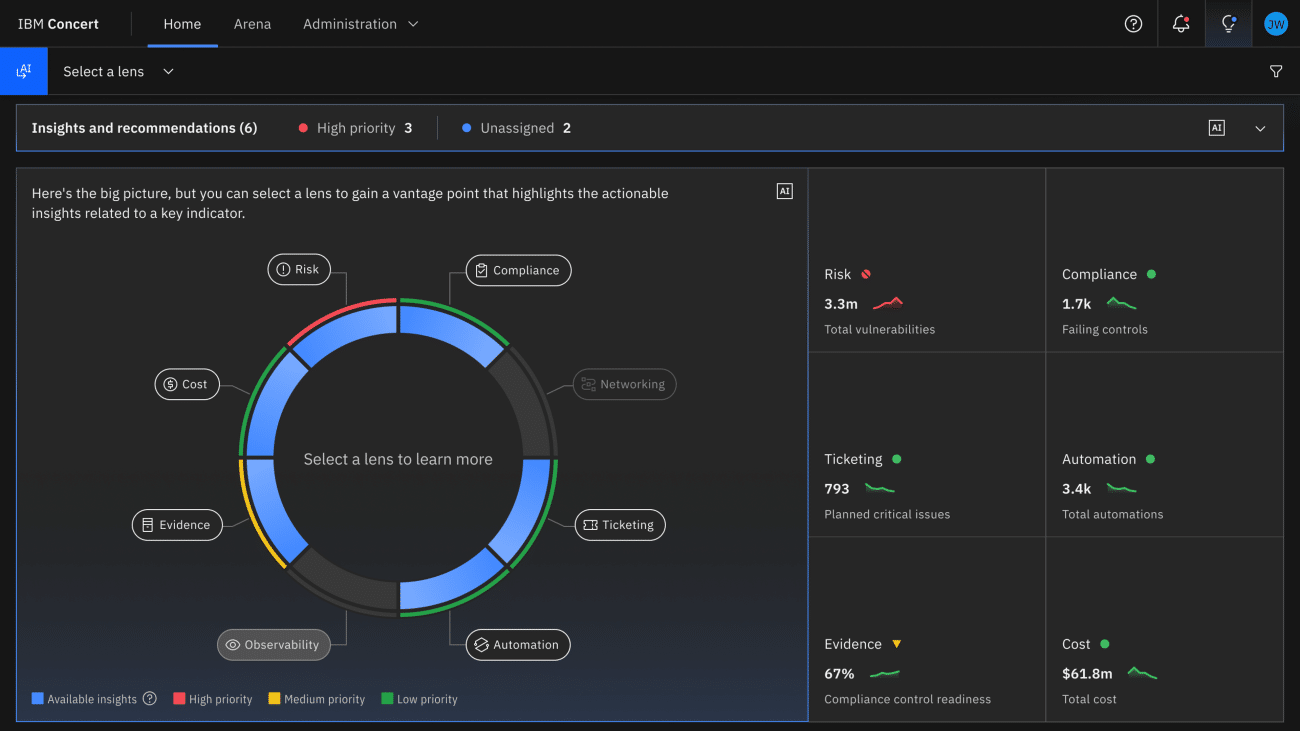
IBM has introduced IBM Concert, an AI-powered automation tool designed to help businesses navigate the growing complexity of modern applications. Powered by watsonx AI, Concert provides users with deep insights into their applications’ operations, enabling them to streamline processes, reduce complexity, and drive innovation.

With worldwide IT spending on software expected to surpass $1 trillion in 2024 and the number of cloud-native applications projected to skyrocket from 531.3 million in 2024 to over 1 billion by 2028, businesses are faced with an overwhelming amount of data, dependencies, and interconnectivity.

IBM Concert tackles this challenge by offering a holistic view of connected applications and generating AI-driven analyses, visualisations, and actionable recommendations.

The setup process for IBM Concert is designed to be simple and intuitive. Users begin by connecting their existing supported applications and toolsets to the platform, allowing Concert’s powerful AI engine to discover relevant data about the applications’ operations automatically. The AI then delves deep into the application architecture, uncovering intricate connections, dependencies, and opportunities for optimisation.

One of the key features of IBM Concert is its 360 view, which creates a single, unified view of the user’s application environment. This eliminates the need for multiple siloed dashboards and provides a summarised overview of applications within a dynamic, user-friendly interface. The 360 view offers a central perspective on the application environment, critical risk information, and a synthesis of collected data from multiple applications, revealing previously unavailable common flows.

IBM Concert is set to become generally available on June 18, 2024, with an initial focus on three critical use cases: Application Security Risk Management, Application Compliance Management, and Application Certificate Management. As the platform evolves, additional risk use cases and focus areas, such as cost, observability, security, and networking, are planned for future releases.

In the realm of risk management, Concert enables proactive prioritisation, mitigation, and tracing of application vulnerabilities, providing concrete suggestions for mitigation and revealing vulnerabilities before they are integrated into the codebase.

For compliance management, the platform streamlines the process by helping users manage security standards as applications grow, minimising resource usage and enhancing security. Finally, Concert’s certificate management capabilities allow users to identify and track the lifecycle of certificates, receive insights into expiration dates and potential risks, and prioritise renewal efforts to mitigate potential disruptions effectively.

To help clients fully leverage the power of IBM Concert, IBM consultants are available to assist in establishing AIOps strategies, with a focus on risk, compliance, and certificate management. These experts can guide businesses in applying IBM Concert and other technologies to combat IT complexity across hybrid cloud environments.

The post IBM Unveils Concert, a GenAI-Driven Solution to Streamline Application Operations appeared first on AIM.

Where to Go Next in Your Data Career

Note: This is part 2 in a series. See part one at Roadmap for Your Data Career

“Where do you see yourself in 10 years?”

Does that question fill your brain with anxiety or confusion? There are hundreds of variables that could affect where we end up on the career landscape, some within our control and some without. But the better we understand the context and requirements for each role, the better we can begin to plan and take advantage of the right opportunities when they arise.

Career Landscape

The following map shows the data career landscape, with roles grouped into classes.

Data Career Landscape

The classes are organized according to similar job activities and deliverables. Individual contributor roles are at the top, with management and executive roles towards the bottom. Then each role is color coded according to a track, depending on the level of business or technical focus involved. Some classes, such as Analyze, consist of multiple color tracks, while others like Sell or Configure are focused on a single color. The roles in the center are involved with coordination and planning for multiple classes. The roles are generally organized with lowest seniority on top and increasing seniority toward the bottom, but each role may have many levels of seniority at some organization, such as Data Engineer Level 1 to Data Engineer Level 5. And each of these roles may vary depending on the organization.

As you locate the role where you are currently assigned, you can start to evaluate your location and the neighboring roles. A Business Analyst, for example, may be creating presentations and using software to gather data. The Research Analyst and Business Intelligence (BI) Analyst roles are within the next steps as the analyst gains more business or technical skills. Transitioning to a new role anywhere on the landscape is theoretically possible, but the most common steps will be within one or two steps or in an adjacent class.

The “Configure” job class may not be familiar to many people who are new to the field. The roles might have names like “Salesforce Developer”, “SAP ABAP Developer, or “NetSuite Configuration Consultant”. In the Enterprise IT world, these roles are common and well-paying. But in college programs these roles are rarely mentioned because they involve specific software packages and are constantly evolving. Platforms like Salesforce allow companies to build new applications with a combination of low-code and full-code environments. This job class is constantly hiring at consulting firms and vendor implementation groups.

Many of the most interesting data roles span more than one class. Data Scientist, for example, is a blend of analysis and developer skills. Dev/ML Ops will blend software configuration and support roles. These cross-class roles also tend to be the most sought-after and highest paid due to the multiple skillsets involved. Many people claim to be truly cross-functional unicorns, but not everyone can perform the wide variety of skills involved.

Career Migration

The following image shows typical migration paths between classes of roles.

Data Career Migration

These migration paths are where typical career advancement might occur but are not intended to be exhaustive. The general movement pattern is from top to bottom as you gain seniority and may perhaps feel burned out from previous roles. These migration patterns are important to recognize because they may explain why you are not getting responses to job applications! An experienced Project Manager, for example, may not get many responses to a job application as a Salesforce Developer (Software Configuration) because it is a rare combination. But a Software Engineer transitioning to a Systems Architect role will be a natural step and will surprise no one.

A crucial question in the migration patterns is: what happens when you reach a Sales, Management or Executive role and decide you want to go back? There are few arrows going in the opposite direction. These roles lower on the chart tend to have less technical deliverables and may cause skills to atrophy. And the pay is usually lower if you go back. Three great options for people who may be tired of Managing or Selling are to do consulting, teaching or start a company. While there may be a scarcity of executive roles in large companies, there is an unlimited supply at the next batch of startup companies!

Picking a Track

If you are just getting started, take a look at the roadmap that I published in a previous post. As you look through the roadmap, you can decide which type of track appeals to you most. A technical track can easily transition to hybrid, but a business track is not so easy to transition due to the coding skills required.

Picking a Career Track

Conclusion

Don’t worry if you don’t know what you want to do in 10 years. Very few of us do. You can focus on evaluating where you are on the data career landscape, and identifying roles that look appealing for the future. If you don’t recognize any of the roles on the map, take some time to learn about them and you might find some interesting ideas. If you see an attractive role that is not within your reach, then you can go back to school to make the transition. The good news is that there is an abundance of opportunities in the data field and the industry is growing faster each year.

Stan Pugsley is a freelance data engineering and analytics consultant based in Salt Lake City, UT. He is also a lecturer at the University of Utah Eccles School of Business. You can reach the author via email.

More On This Topic

  • Advance your data science career to the next level
  • Data Analyst Skills You Need for Your Next Promotion
  • RAPIDS cuDF to Speed up Your Next Data Science Workflow
  • 5 Things to Keep in Mind Before Selecting Your Next Data Science Job
  • Fast-track your next move with in-demand data skills
  • Unlock your next move: Save up to 67% on in-demand data upskilling

79% of Indian Marketers Experimenting with or Implementing AI: Salesforce Research

How Mobile Apps leverage Big Data to drive Sales and Marketing

Salesforce released its latest State of Marketing report. The report surveyed over 4,800 marketing leaders across 29 countries, including 250 from India——revealing that 79% of marketers in India are already experimenting with or fully implementing AI into their workflows.

The report highlights that improving the use of tools and technologies is the top priority for Indian marketers while building and retaining trust with customers is their biggest challenge. Despite these challenges, 92% of marketers in India say they clearly view marketing’s impact on revenue.

While 28% of marketers in India are fully satisfied with their ability to unify customer data sources, 66% have access to real-time data to execute campaigns. However, 59% still require IT department assistance to access this data. Full personalisation remains a work in progress, with high-performing teams in India fully personalising across an average of 6.0 channels, compared to 5.0 for others.

As AI implementation becomes a point of differentiation, high-performing marketing teams are 3.1 times more likely than underperformers to have fully implemented AI within their operations. The three most popular AI use cases among marketers in India are performance analytics, content generation, and programmatic advertising and media buying. However, marketers are also concerned about security as they adopt AI.

Account-Based Marketing and Loyalty Programs Gain Traction

Companies are increasingly turning to account-based marketing (ABM) and loyalty programs for better acquisition and retention. However, only 58% of marketers in India say loyalty data is fully integrated across all touchpoints, and 50% say loyalty program functionalities are accessible across all touchpoints. B2B marketers in India use ABM primarily for customer acquisition, with less than half using it for upselling and cross-selling.

“Data and AI hold the promise of helping marketers reach customers in new, more engaging ways, but they are far from reaching their potential,” said Nishant Kalra, VP – Digital, Salesforce India. “As marketers in India prioritise AI and data capabilities, building and retaining customer privacy and trust poses a significant challenge. Insights from the report are valuable to marketers across the country to help them outdo their competition by embracing AI and data, to drive loyal customers, while mitigating trust, privacy and security challenges.”

The post 79% of Indian Marketers Experimenting with or Implementing AI: Salesforce Research appeared first on AIM.

Veo Vs Sora: An Ultimate Comparison

Google recently introduced its newest text-to-video AI model, Veo, to compete with OpenAI’s Sora. Unveiled during Google I/O, Veo builds upon techniques from prior video models to improve consistency, quality, and resolution, providing high-quality 1080p videos that exceed one minute in length and showcase impeccable quality.

While some were impressed with Veo’s capabilities, others argue that it may not exactly be state-of-the-art regarding its latency or abilities compared to Sora.

Never bet against @Google!
They just dropped a Sora competitor. 1080p, over a minute long vids, and impeccable quality pic.twitter.com/XtOt7ftS46

— Andrew Gao (@itsandrewgao) May 14, 2024

Google invited multiple filmmakers to experiment with Veo and even aired a short film by Donald Glover at I/O 2024.

On the other hand, Open AI is pitching its video AI Sora to Hollywood and has plans to release it publicly later this year, potentially integrating it with video editing software like Adobe Premiere Pro.

Is Veo better than Sora?

The comparison between the two models is still a topic of debate, as neither model has been released yet. Nonetheless, many believe that Veo will be a strong competitor to Sora.

A demo that has been shared several times features a lone cowboy riding across an open plain during a beautiful sunset. This image feels reminiscent of videos showcased by OpenAI’s Sora, highlighting potential similarities between the two models.

✍ Prompt: “A lone cowboy rides his horse across an open plain at beautiful sunset, soft light, warm colors.” pic.twitter.com/D8uKDZVWto

— Google DeepMind (@GoogleDeepMind) May 14, 2024

Let’s take a look at some of Veo’s standout features.

  1. Realism and Visual Control

Veo’s flexibility is showcased through its ability to adapt to diverse user inputs and prompts effectively, adding an extra layer of realism to generated videos. Veo offers an exceptional level of consistency, coherence, and realism, which sets it apart from other platforms by providing videos with superior visual quality.

Additionally, the neural network can allegedly understand prompts for various cinematic effects, allowing users to include filmmaking terms such as “time-lapse,” “aerial shot,” and “panning shot” in their descriptions to achieve the desired motion accurately.

On the other hand, Sora utilises advanced algorithms and deep learning techniques to create videos, often resulting in slight variations between frames. Unlike Veo, videos created with Sora frequently have distorted intricate details.

  1. Ease of Use

As mentioned before, the Veo model understands complex camera movements and visual effects specified in prompts, such as “pan,” “zoom,” or “explosion.” This capability simplifies the video creation process for users, allowing them to create dynamic narratives effortlessly.

While Sora offers similar features, Veo stands out by emphasising user control, which enhances the overall ease of use for those looking for a seamless content creation experience.

  1. Video Length Continuity

Users can effortlessly extend video lengths with a simple click, enhancing the overall viewing experience. Moreover, Veo ensures that each frame maintains continuity, avoiding the jarring transformations or artefacts commonly seen in Sora-generated content.

In contrast, Sora’s approach to visual quality can introduce subtle inconsistencies between frames due to its underlying algorithms. This difference becomes apparent when examining the intricate details within videos.

Meanwhile, according to reviews, Veo excels in preserving characters, objects, and styles seamlessly. By leveraging cutting-edge latent diffusion transformers, Veo minimises discrepancies effectively, resulting in visually stunning and lifelike video outputs.

  1. Maintaining Video Sequences

Veo boasts an array of impressive capabilities, including the ability to edit existing videos using text commands, ensuring visual consistency across frames, and generating video sequences lasting over 60 seconds from a single prompt or a series of prompts forming a narrative.

“When given both an input video and editing command, like adding kayaks to an aerial shot of a coastline, Veo can apply this command to the initial video and create a new, edited video,” the company claimed.

On the other hand, Sora has distinguished itself by producing highly detailed and realistic short video clips. However, it falls short in comparison to Veo as it currently lacks the advanced video editing and narrative generation features that Veo is purported to possess.

A user on Reddit said, “Notice that the Veo demo doesn’t show a single human face, or any human bodies except in complete silhouette. Compare Veo to Sora in terms of the amount of movement, level of detail, diversity of style, and ability to merge concepts. It’s not close.”

These discussions about which one is better will continue as mentioned before, but there won’t be a clear winner until the models are made available to the public.

openai sora vs google veo 🔥 pic.twitter.com/c20oQ5r4I4

— The Technology Brother (@thetechbrother) May 14, 2024

The post Veo Vs Sora: An Ultimate Comparison appeared first on AIM.

Harvard’s Top Free Courses for Aspiring Data Scientists

Harvard's Top Free Courses for Aspiring Data Scientists
Image generated with DALL-E 3

Many courses could teach you the basics of data science, but Harvard University is undoubtedly at the top. Coming from an elite university, all their courses certainly provide you with the skills necessary to become a data scientist.

So, what are these free courses that you should know?

Let’s get into it.

HarvardX: CS50's Introduction to Programming with Python

Python is the key to employment for any aspiring data scientist.

Data scientists are expected to understand programming languages in the modern era. Python is a de facto language that is used in many industries, so it’s beneficial to learn it.

HarvardX: CS50's Introduction to Programming with Python would teach you the primary Python programming language necessary as a data scientist. In this course, we would learn the following:

  • Functions, Variables
  • Conditionals
  • Loops
  • Libraries
  • Unit Testing

And many more things you would learn within ten weeks if you put in around 3–9 hours per week. You should start with this free Harvard course before entering any other courses, as many data science courses after this depend on your ability to use Python.

HarvardX: Fat Chance: Probability from the Ground Up

For data scientists, it is important to understand the basics of statistical probability as it relates to our work. To boost your quantitative reasoning skills, the HarvardX: Fat Chance: Probability from the Ground Up course is perfect for building up that knowledge.

In this course, you would go through material that increases your understanding of probability and statistics, such as:

  • Basic and advanced counting
  • Basic and Conditional Probability
  • Expected Values
  • Bernoulli Trials
  • Normal Distribution

The course is designed for self-paced learning and considerably takes around seven weeks to finish if you put up 3–5 hours per week for learning.

HarvardX: Introduction to Data Science with Python

After you have the foundation for Python and Probability, it’s time to learn about Data Science. The HarvardX: Introduction to Data Science with Python would teach you the foundations necessary to enter the data science field.

It’s a self-paced course but requires a basic understanding of Python and Probability. That is why, it’s important to finish the two previous courses.

The course can be finished in 8 weeks if you spend around 3-4 hours per day and you would learn the following:

  • Linear, Multiple, and Polynomial Regression
  • Model Selection and Cross-Validation
  • Bias, Variance, and Hyperparameters
  • Classification and Logistic Regression
  • Bootstrap, Confidence Intervals, and Hypothesis Testing

There are many things you would learn from this course. Learn it well; the foundation would be important for the next course.

HarvardX: Machine Learning and AI with Python

If you already have the data science basic, it’s time to learn a more advanced field. Machine Learning and AI are inseparable from data science as many business data science projects are based on machine learning output.

Machine learning and AI knowledge are valuable in industry as they could uncover patterns that we haven’t seen previously while able to provide automation. This could make businesses perform much more efficiently than standard rule-based or feeling-based decision-making.

The HarvardX: Machine Learning and AI with Python course would give the learner a basic understanding of machine learning and AI, including:

  • Machine Learning models
  • Model Training
  • Model Evaluation
  • Python for Machine Learning models

With six week estimation to finish if you spend around 4–5 hours per week, you will be ready to develop your first data science project.

Conclusion

The Harvard courses we have explored would help you become a data scientist.

By shaping up your foundation, all these courses would guide the aspiring data scientist into their dream careers.

There might be only four courses listed, but these four are the only ones you need to build up the basics.

Cornellius Yudha Wijaya is a data science assistant manager and data writer. While working full-time at Allianz Indonesia, he loves to share Python and data tips via social media and writing media. Cornellius writes on a variety of AI and machine learning topics.

More On This Topic

  • KDnuggets News, May 4: 9 Free Harvard Courses to Learn Data…
  • 9 Free Harvard Courses to Learn Data Science
  • A Collection Of Free Data Science Courses From Harvard, Stanford,…
  • 7 Free Harvard University Courses to Advance Your Skills
  • KDnuggets News March 30: The Most Popular Intro to Programming…
  • The Most Popular Intro to Programming Course From Harvard is Free!

Meta’s Llama 3 400 Bn Might Not be Open Source 

Finally, the predictions are coming true. Meta is most likely to not open source its Llama 3 with a 400 billion parameter size model.

Or rather, an AI insider who goes by the name Jimmy Apples revealed this.

“Meta plans to not open the weights for its 400B model,” said Jimmy Apples on X, raising lots of eyebrows.

To this, Meta AI chief said: “Patience, my blue friend. It’s still being tuned,” to one of the users on X who asked, “Yann, please comment on meta not releasing llama-405B. Is this FUD? Or have you guys changed your stance on OSS?”

In April, Meta released two Llama 3 models: an 8-billion-parameter model and a 70-billion-parameter model. Coincidently, Llama 3 has become the talk of the town for the Indian developer ecosystem, to say the least. (see below)

Meta announced that they are currently training a 400-billion-parameter model, which will be released over the coming months. The new model will feature enhanced capabilities such as multimodality, the ability to converse in multiple languages, an extended context window, and overall stronger performance.

Llama 3 (8B and 70B) offers enhanced reasoning and coding capabilities, with its training process three times more efficient than its predecessor. The model is now available on GitHub and Hugging Face, allowing developers to integrate it into their projects.

Check out Wild Llama 3 use cases here.

Zuckerberg also said, in his podcast with Lex Fridman last year, that Meta might have to reconsider open-sourcing the next iteration of Llama, Llama 3. “Right now, the priority is building that into a bunch of consumer products,” said Zuckerberg.

At the same time, Meta Chief has been a proponent of open-source AI and loves what the community has been doing with Llama 2. The developer community that AIM spoke to hopes this news turns out false.

“We would need a process to red team this, and make it safe. My hope is that we would be able to open source the next version when it is ready to, but we are not close to doing that this month. It’s a thing that we are still early in work now,” said Zuckerberg, in September last year.

The post Meta’s Llama 3 400 Bn Might Not be Open Source appeared first on AIM.

Truecaller Leverages Microsoft Azure AI Speech to Power AI Assistant

Truecaller has announced a partnership with Microsoft to utilize the new Personal Voice technology from Microsoft Azure AI Speech.

With the addition of Microsoft Azure AI Speech’s Personal Voice, users of the Truecaller Assistant can now create a completely digital version of their own voice to use inside the Assistant.

This means that if you already have Assistant on your Truecaller app, you can have your callers hear a replicated and authentic version of your voice instead of one of the many digital assistants on offer. This is being rolled out gradually across all of Truecaller’s markets.

Truecaller is the early access partner for Personal Voice and a working demo for this new feature has just been showcased at the Microsoft Build conference in Seattle. You can read about this on Microsoft’s community hub here.

“By integrating Microsoft Azure AI Speech’s personal voice capability into Truecaller, we’ve taken a significant step towards delivering a truly personalized and engaging communication experience. The personal voice feature allows our users to use their own voice, enabling the digital assistant to sound just like them when handling incoming calls. This groundbreaking capability not only adds a touch of familiarity and comfort for the users but also showcases the power of AI in transforming the way we interact with our digital assistants,” said Raphael Mimoun, Product Director & General Manager, Truecaller Israel.

The post Truecaller Leverages Microsoft Azure AI Speech to Power AI Assistant appeared first on AIM.