Generative AI will Help Build $100 Million SaaS Businesses in India

“In the next decade, we will see several $100m software businesses built from India for India. They will follow an entirely different playbook to US SaaS startups,” said Haptik AI founder Aakrit Vaish, adding that an entire industry is waiting to be disrupted.

Salesforce’s shares recently plummeted by as much as 17% after the cloud software vendor reported weaker-than-expected revenues. However, Zoho founder Sridhar Vembu remained unaffected and recently took a dig at Salesforce for its disappointing quarterly numbers. Zoho continues to thrive, having not faced any layoffs and claiming zero debt on its balance sheet.

AIaaS is the New Saas

It would be naive to declare SaaS dead. Rather, existing SaaS companies are evolving into AI-first entities. “Legacy and new SaaS companies will truly become AI-first (not just marketing), abstract away the complexity of deploying LLMs,” said Matt Turck, VC at First Mark Cap, adding that AIaaS becomes the new SaaS.

VC in 2021: SaaS is multi Trillon $ opportunity for Indian startups.
VC in 2024: SaaS is dead, Gen AI is a multi Trillion $ opportunity for Indian startups.

— Rajesh Sawhney 🇮🇳 (@rajeshsawhney) May 26, 2024

Indian SaaS companies such as Zoho, Freshworks, CleverTap, and Atlassian have added generative AI capabilities to their existing solutions. Meanwhile, numerous AI startups are developing new products based on these generative AI technologies.

According to AIM, approximately 60 AI startups in India are building products using generative AI.

Every AI startup that is not engaged in core research effectively becomes a SaaS company, or what we might call AIaaS. For instance, several companies are developing AI-powered conversational platforms for customer care, such as Exotel, Freshworks, Gupshup, Corover.ai, Limechat and Yellow.ai.

Thiyagarajan Maruthavanan from Upekkha thinks that SaaS is not dead; instead, enterprise CMOs are overwhelmed by too many options.

“Some people are selling more tools, such as GenAI tools, to solve their ‘too many tools’ problem. More sensible folks are going to their service partners, like Accenture and TCS, and asking how to use these GenAI tools to achieve the outcomes they were missing while the tools proliferated,” he said.

India’s SaaS ecosystem has skyrocketed, with startups growing from 471 in 2016 to over 26,000 in 2022.

Eleven Indian SaaS companies have surpassed $100 million in annual recurring revenue (ARR). This elite group includes pioneers such as Zoho, Druva, Icertis, and Freshworks, alongside emerging leaders like Innovaccer, Zenoti, and Postman.

According to a recent report, the Indian SaaS industry is projected to reach $50 billion by 2030, with companies and unicorns generating $20-$25 billion in revenues by that time.

SaaS x GenAI

Zoho currently offers Zia, its generative AI assistant powered by OpenAI’s GPT-4, which helps generate business emails and social media posts, answer tickets, and generate minutes of the meetings.

Freshworks reported that its GenAI platform, Freddy Copilot, has saved a B2C enterprise retail customer over $94,000 in the first year of implementation, resulting in a 187% return on investment.

Similarly, Yellow.ai has already seen 10% of its enterprise customers choose GenAI-powered customer support, with response times reduced to 0.6 seconds.

Another Indian startup LeadSquared is using LLMs provided by AWS Bedrock with customer-specific data to improve the quality of the chatbot responses and streamline the onboarding process.

Meanwhile, Clevertap recently unveiled Clever.AI, designed to enhance customer engagement and retention. It can forecast precise business outcomes using data from CleverTap’s proprietary TesseractDB™, ensuring granular data and extended lookback periods for accurate predictions.

Many other SaaS startups, such as ChargeBee, Druva, and Postman, are also integrating GenAI solutions. Non-Indian SaaS startups are also performing well.

In an exclusive interview with AIM, Zendesk said that it plans to reach $3 billion by 2027. The company leverages Amazon Bedrock to scale generative AI applications, incorporating Anthropic’s leading model, Claude 3.

Recently, Adobe’s stock jumped nearly 15% in after-hours trading, fueled by strong demand for its AI products and impressive earnings. “Adobe delivered a beat-beat-raise, and the market felt good about it, jumping almost 15% after hours,” said Daniel Newman, the CEO of TheFuturumGroup.

He added that software, and in many cases SaaS specifically, will be one of the most important consumption layers for AI.

“Much like how AI on iPhones will be a big growth driver for Apple, SaaS companies like Adobe will drive significant AI adoption and incremental growth by making AI easily accessible and consumable within their existing apps and captive user base,” he said.

The Average Salary for CS Freshers from IIT Kanpur is INR 50 Lakhs 

Even though there is a shortage of skilled software engineers in India, freshers from IIT Kanpur are killing it when it comes to grabbing high-paying jobs. According to a recent report, freshers’ salaries from the university were an average of INR 50 lakhs per annum. “Gen-Z is killing it,” said a user on X.

Fresher salaries at IIT Kanpur.
Average for Computer Science is 50 Lakhs+.
Gen-Z is killing it! pic.twitter.com/Hp66VvTOzc

— Ravi Handa (@ravihanda) June 14, 2024

On the other hand, a user replied saying that is not entirely good news. “Many employees become too expensive at a very early stage and might lose jobs. It is not good to be underpaid or overpaid. Your career is not a sprint, it’s a marathon,” the user added.

Similarly, when it comes to IIT Gandhinagar, the average salary of a CS graduate is around INR lakhs, while electrical engineers are also around the same package.

Placement stats for IIT Gandhinagar
Two things that surprised me.
I – Percentage of folks placed are too low. Even Comp Science is below 70%. In lower departments like Civil / Materials, 2 out of 3 are not placed.
2 – Median salary for electrical is higher than Computer… pic.twitter.com/x56IQNmLpM

— Ravi Handa (@ravihanda) May 19, 2024

The top IIT in terms of placements, IIT Madras has an average salary of INR 41.72 lakhs per annum. Similarly, IIT Guwahati has an average salary of around INR 41 lakhs per annum.

This has arguably always been the case with freshers from IITs. On the other hand, there have been several graduates from college in India who are barely employable, according to a recent discussion.

Many Indian IT tech graduates are unemployable for any real time projects and responsibilities. “India IT talent is going down and Vietnam, Indonesia, Malaysia, and Philippines are taking up jobs as they have the hunger to succeed with hard work which India’s new college graduates don’t,” the user added.

AI’s employment impact: 86% of workers fear job losses, but here’s some good news

AI people doing work

This is the year when artificial intelligence (AI) moves from the margins to the mainstream. While some companies have been using AI and machine-learning technologies to boost operational performance for several years, fewer organizations have found ways to put generative AI tools, such as ChatGPT and Microsoft Copilot, into production.

Also: Agile development can unlock the power of generative AI — here's how

You can expect that trend to change this year as more organizations explore and exploit generative AI, said David Brodeur-Johnson, principal analyst at Forrester, to ZDNET.

"2024 will be the year that firms get serious about applying generative AI to their internal data sources and making information and insights available to their employees to help them do their jobs even better."

Research shows AI spending in 2024 will more than double over levels seen in 2023, equating to an average of $2.5 million per company, according to a survey by Rackspace Technology and Amazon Web Services.

Also: Generative AI is the technology that IT feels most pressure to exploit

But while employers are looking to introduce automation, many employees are concerned that increased use of technologies like generative AI is far from good news.

Forrester's research suggests as many as 86% of US employees fear that many people will lose their jobs to AI and automation, and almost a third (31%) believe that trend will manifest during the next two to five years.

Digital leaders responding to a global survey from recruiter Nash Squared come to similar conclusions, with 17% being the average percentage of jobs digital leaders feel will be lost to automation.

Yet context is important. While there's an understandable focus on the fear many roles could be automated away, there's less analysis of how AI could boost worker efficiency and productivity and increase economic activity and growth.

Debra Bonomi, head of learning and development at e-commerce giant Rakuten, has initiated a program with ELB Learning at her organization to help staff upskill for the upsurge in AI — and she said employees in all areas of business must embrace change.

"This isn't something to be afraid of," she told ZDNET. "The only thing we should be afraid of is if we continue to be the person who says, 'Oh, I don't need it. It's not going to impact me.' Those are the people whose jobs will be impacted negatively."

Also: Generative AI can transform customer experiences. But only if you focus on other areas first

Bonomi said her organization is committed to exploring the benefits of AI. The company has partnered with OpenAI to create an internal version of ChatGPT, and Rakuten employees can already see benefits.

"It's not only going to make us more efficient, but it's going to change our jobs," she said. "Not everyone will lose their jobs, but we may be doing very different tasks, roles, and responsibilities in the future. There's nothing to fear, as long as we're okay with that change and we keep adapting along the way."

That sentiment resonates with Bev White, CEO at recruiter Nash Squared, who told ZDNET it's important not to jump to conclusions just yet despite the likelihood that AI will lead to big changes in the job market.

She said the story of the introduction of automation — from the Industrial Revolution to our present digital age — has always revolved around fears that jobs will be cut.

While AI and automation will lead to the end of some roles, the tools should also help change many workplaces and work roles for the better.

Also: 4 ways to help your organization overcome AI inertia

White refers to software development and quotes research that suggests developers who use GitHub Copilot complete tasks 55% faster than developers who don't.

The same research found between 60% and 75% of developers report that using generative AI tools as part of their roles leaves them feeling more fulfilled, less frustrated when coding, and able to focus on more satisfying work.

"Emerging technology is speeding things up," said White. "It's taking human processes out — which are repetitive, and not necessarily interesting for a human being to do — and replacing them with automated ways of doing things faster."

Even with increased levels of automation, companies will still need a human in the loop to ensure processes are completed effectively, such as dealing with more complicated customer service requests.

White said the tactical deployment of AI and automation should mean professionals will have an increased opportunity to focus on crucial business areas.

"People will be able to do things, not only faster, but more cheaply and spend more time on the human elements — the thinking time, the decision-making time — that are essential to value-added processes."

Nigel Richardson, SVP & CIO Europe at PepsiCo, is another business leader who said AI will boost worker efficiency and productivity.

"Generative AI will be a huge augmenter to people's work rather than fully replacing it," he said.

"Of course, some elements of jobs will get replaced. But I think history shows that when you've got disruptive technologies, they usually create more jobs than they destroy."

Also: 5 ways CIOs can manage the business demand for generative AI

Richardson said to ZDNET that the professionals who will benefit from the rise of AI are likely to be those who embrace change.

"You need to have a mindset of being a lifelong learner," he said. "The people I see being successful are always open to learning new things. You're mistaken if you learn one thing and think it will last you for your career."

The key message from business leaders is that professionals must shift their feelings on AI from dread to confidence.

Ben Elms, chief revenue officer at internet connectivity specialist Expereo, told ZDNET that almost every technological innovation implementation comes with a side order of fear.

"If you approach AI as, 'It's going to change the world, and it's going to put people out of jobs,' well, it isn't — it's going to create even more opportunity and jobs," he said.

Elms said the key to success is finding the right use cases. He gave an example from his own company, which is based on resolving customer service requests, many of which require a standard answer.

"These are highly repeatable tasks," he said. "These requests are text-based and many of the answers can be served effectively by AI quickly. That capability means people can come out of the service function, I can give them more training, and they can be frontline people, enhancing the customer experience."

Also: 5 ways to prepare for the impact of generative AI on the IT profession

Hari Ramamurthy, technology fellow at The Home Depot, is another business leader who said AI and automation can help workers focus on more interesting work.

"We definitely see it as something that will improve the productivity of our associates and help them with the laborious, monotonous aspects of what they're working on."

Ramamurthy recently explained to me how the retail giant has developed a machine learning-powered app called Sidekick to boost staff productivity.

The app, which also uses computer vision, helps shopfloor staff identify items in hard-to-find locations.

"It was painful to try and search for some of our products overhead. Sometimes, an item is not exactly where you expect it to be," he said.

"But technologies like computer vision help staff locate those products easier. And it's that sort of mindset that we have in terms of how we can augment the capabilities of our associates by improving their productivity so we can serve the customers better."

A recent research report by Goldman Sachs suggests the average increase in productivity from companies that have been early to adopt generative AI is about 25%.

These AI-enabled boosts could offer staff at public-facing organizations a way to cut the drudgery of repetitive work and focus on potentially life-changing activities.

Also: Want to be a data scientist? Do these 4 things, according to business leaders

Michelle Smith, program manager at Barnardo's, a UK charity that supports more than 370,000 children, young people, parents, and caregivers, said the smart use of AI could help people focus on the frontline services that matter most.

"Relationships keep us running," she told ZDNET. "It's where people get the most joy from work and it's what motivates people. We work for a purpose. If you're stuck in front of a screen too much, and not interacting with your colleagues, it becomes painful."

Smith said generative AI tools could help the charity to cut the administrative bind and give people more time to think, collaborate, and make decisions.

"I've worked in operational roles for years and there's loads of things where I think, 'Oh, I'd rather be speaking to a person than the tedious process of checking paperwork,'" she said.

"It would be great if we could get people freed up from processes and allow them to be creative in their roles by taking advantage of emerging technology. I'm keen for my colleagues who are still in operational roles to be given the opportunity to develop new skills."

Artificial Intelligence

AI skills or AI-enhanced skills? What employers need could depend on you

AI brain

The new types of jobs that are emerging around artificial intelligence aren't necessarily the technical or data science roles we keep hearing about. Jobs with no direct connection with AI technology are also being reshaped by AI.

For technology-focused individuals, the AI age is creating some interesting new job roles, but don't throw out those tried-and-true coding and integration skills just yet. Rather, AI may make what is considered "traditional" technology activities move faster and more productively. For business users, an ability to leverage AI will be crucial, but also requires a greater emphasis on people skills.

AI is at the core of many evolving technology roles, of course.

Also: Tech giants hatch a plan for AI job losses: Reskill 95 million in 10 years

"Currently, we are seeing a high demand for AI-focused roles," says Yusuf Tayob, group chief executive of Accenture Operations. That creates an ongoing need for training both within and outside of IT departments, he says. "For example, at Accenture, 600,000 of our people to date have received training on the fundamentals of AI, and we're also training people to work effectively with AI-infused processes and use AI equitably and without bias."

Industry leaders advise becoming familiar with the range of opportunities that working with AI offers. "It's a great time to gain skills that will help companies make decisions about how to integrate and apply AI, and how to make it sustainable," says Gill Haus, chief information officer at JPMorgan Chase. "We'll see an increase in jobs on AI, ML, and generative AI, but we also will see how AI will make existing roles more effective and efficient by removing tedious tasks."

Many of the new skills associated with the rise of AI were explored in a recent study of CEO's views toward AI skills development by Nada Sanders and John Wood, published in Harvard Business Review. "While technical skills get more press, it is these uniquely human skills that companies need — and find to be in short supply in today's marketplace," they observe.

The human skill most critical is the ability "to understand context — which AI tools lack," the researchers state. In particular, there are two categories of human skills that leaders see as critical in AI-intensive environments. "First are effective interpersonal skills, such as basic conflict resolution, communication, skills of disconnecting from emotions, and even mindfulness practices. Second is domain expertise, with a focus on preserving that knowledge among experienced talent and developing it among young inexperienced workers."

A fusion of technical acumen and business savvy may be necessary in many cases. This includes engaging in efforts to achieve "integration across all functions of the enterprise, with horizontal communication and AI as the enabling layer — in other words, getting rid of silos," according to Sanders and Wood.

Along with boosting current tasks and roles, new types of jobs are emerging, says Brian Lanehart, president, CTO, and co-founder at Momnt. "All tend to have something to do with data, data exploration, and data analysis. I think we'll see more job titles that emphasize data-focused roles, seeking employees who are well-versed in the latest AI tools and technologies. For example, there may be someone on the product team who understands ChatGPT for more efficient user interfaces."

Lanehart adds: "People in this field must be comfortable using Copilot to code faster and more efficiently, Looking ahead, there are other tools coming out that will allow a solutions architect to describe a problem — or even an idea for how to solve a problem — to an AI platform, and it will produce an elastically scalable and implementable diagram."

Also: Beyond programming: AI spawns a new generation of job roles

It's not just the ability to build AI applications, but also use AI-based tools to perform and deliver their work.

"We seek engineers who are using AI in their daily roles and can effectively use such tools to make the quality or efficiency of the team increase," says Lanehart. "That depth of understanding and usage is what will differentiate mid-level engineers from more senior roles."

Still, employers are looking beyond what were once steadfast technology skills. "The modern skillset that we are recruiting for is vastly different from what we used to want," says Lanehart.

Before, the criteria for tech hiring was, "Can the person code in Python? Can they commit their code? Can they pull their code?" Lanehart relates. "Today, we want to know whether they can use a Copilot-type tool to improve code or code faster and more efficiently. We want teams to use AI tools to help generate various test cases. We want quality assurance engineers to use AI to evaluate more thoroughly."

Also: Workers with AI skills can expect higher salaries — depending on their role

A combination of business and basic technology skills is critical to employers. "Don't write off coding skills, mobile, digital, backend, machine learning — they all will continue to be in demand," says JPMorgan Chase's Haus. In addition, skills in demand include "data, cloud computing, software engineering, customer experience and digital design and product management. AI and gen AI will require more of those skills."

Working in the AI era also calls for tried-and-true business and career skills, such as "curiosity, collaboration, and a focus on solving customer problems," Haus continues. Chase's practice, he adds, is to "hire technologists with software engineering experience.

But you don't need a four-year computer science degree to get a job in software engineering at Chase. "We value many different skills, including determination, resiliency, and adaptability, Haus says. "We celebrate past experiences that broaden our team's ability to create solutions that meet the unique needs of our customers."

Also: AI taking on more work doesn't mean it replaces you. Here are 12 reasons to worry less

Importantly, AI alone cannot deliver solutions — that's up to the people using AI. "Completely communicating an entire application request to something like ChatGPT that will generate all the code requires a level of understanding of the tool and its functionality," says Lanehart. "That can only be achieved by fully embracing and emerging oneself into the tech to learn it and apply it to the business."

JPMorgan Chase addresses some of these new requirements through two events. This includes DEVUP, a conference by engineers, for engineers, "all about cross-functionality, ideation, and knowledge sharing," says Haus. A second event, AI Summit "brings together employees to discuss the novel research and AI and ML use cases that are driving innovation across the firm."

To achieve successful AI implementations, "talent must be familiar with AI capabilities and know how best to utilize them," Sanders and Wood point out. "However, AI is an evolving technology, and that necessitates a business add slack to the system to allow opportunity for learning. Implementation also requires differentiation between 'deep work' and 'shallow work,' with the latter assigned to AI. Deep work, however, requires worker training for developing talent literacies."

Artificial Intelligence

From AI trainers to ethicists: AI may obsolete some jobs but generate new ones

Wooden figures in line with one that looks different

A job ad appeared recently for an "AI competency leader," which was a role that involved, "collaborating closely with cross-functional teams to develop and execute strategies that leverage generative artificial intelligence techniques across various domains."

These kinds of adverts — for job roles that were unheard of even a year ago — are likely to become the norm in the AI era. While everyone in business wants to make the most of AI, it's going to take more than development or data science skills to make the most of emerging technology. There's a raft of responsibilities that are essential to AI efforts, from training algorithms to overseeing ethics.

New types of job roles are springing up across the business landscape, as observed by those in the industry.

Close to seven in ten business leaders believe the rise of generative AI will lead to the emergence of new roles, including AI auditors, AI ethicists, and prompt engineers, a report out of Capgemini found. "We see roles emerging in AI management and digital transformation that focus on governance, strategy, stakeholder engagement and policy around AI integration," Doug Ross, vice president and US generative AI Leader at Sogeti, part of Capgemini, told ZDNET. "Understanding how to implement trusted AI, including building solutions that are ethical, explainable, de-biased, stable and legally compliant will be important as LLMs and generative technologies become more integrated into critical business processes."

Also: What to know about Mistral AI: The company behind the latest GPT-4 rival

There are two levels of AI positions becoming apparent, says Robert Ghrist, associate dean for undergraduate education at the University of Pennsylvania School of Engineering and Applied Sciences. "The first is what you might call an AI specialist, someone who is broadly trained in AI from machine learning to neural nets, large language models, and more," he explains.

The second category of AI jobs is more closely fused to broad-based business and managerial roles. "This is a more interesting class of jobs in the form of 'AI plus X', where 'X' is a variable such as law, medicine, or education," Ghrist continues. "These will be more abundant yet harder to fill, requiring core expertise plus AI implementation skills."

Also: Have 10 hours? IBM will train you in AI fundamentals — for free

Prompt engineering is also seen as a hot new job in the AI era. However, its long-term future as a professional pursuit is uncertain, says Tony Lee, CTO at Hyperscience: "I see it as a skill and expertise that is valuable and distinct. Is it a full-time job though? I'll leave that to the hiring company to decide."

While prompt-engineering skills are in demand now, Lee says the future might look different: "It's a new way to interface with a computer that requires different skills. But as the interface becomes more conversational and more human-like, it remains to be seen if this is a new career path or just a point-in-time opportunity."

Looking deep into the future — let's say a year or two in internet time — new roles focused on AI application adoption and management might come to the fore. These roles include positions such as, "AI trainers, AI auditors, and AI ethicists," says Nick Magnuson, head of AI for Qlik.

"These roles really focus on the heart of AI — its data — while helping ensure the ethical use of the technology. AI trainers prepare and adjust the technology models, while AI auditors and AI ethicists ensure an organization's data is not only accurate and trusted, but also reinforce the integrity of the AI and scale it across the business."

Also: Is AI in software engineering reaching an 'Oppenheimer moment'? Here's what you need to know

However, it's also important to consider how AI is overtaking many of the lower-level tasks associated with IT development and management. Interestingly, Ghrist says that trend should be welcomed. "Nobody likes eliminating jobs, but AI usurping low-level tasks is good news. I both believe and hope that many tasks will be made obsolete by AI, starting with the most tedious, repetitive, and low-level," he says. "Examples include low-level coding, updating legacy code, and implementing SDKs."

Early in his career, Ghrist "worked in a magnetic-tape library for a mainframe computer and I am so happy that job no longer exists," he recounts. "Now it's done a billion times faster by a one-ounce, $15 flash drive."

What's already clear is that AI is poised to ease and automate a range of development tasks while still creating fresh opportunities for human talent. "Software engineering has gone from where developers wrote code from scratch, to the Stack Overflow era, and now to full AI-generated code," says Lee. "Yet during this journey, the demand for top talent has only grown. I do not expect this demand to decrease, even as AI takes on more of the mechanical work."

A critical, in-demand area is "skilled workers who can analyze data and train LLMs," says Lee. "As more technical tasks are automated, the demand for human oversight in training data will be extremely relevant to ensure the technology can continue to complete complex tasks."

Sogeti's Ross expects to see skills such as data analytics, machine learning, and human-centered design "especially important for developing AI that complements the workforce. Combining technical expertise with a big-picture understanding of the business (people, processes, and organizational challenges) will be especially useful to manage change."

Fundamental skillsets such as software engineering, cybersecurity, cloud architecture, and project management remain in high demand, Ross added. "As new technologies integrate deeply into business models, skills for developing digital solutions, managing IT systems holistically and leading transformation efforts will remain important," he predicts.

Bernard Golden, a futurist, recently compiled a list of the new types of jobs likely to emerge around AI:

  • Generative design specialist: "This role will become increasingly popular across fields like architecture, product design, and engineering. Because generative AI can be used to create almost limitless design variations, experts will be needed to guide the AI and interpret its outputs to achieve optimal designs."
  • AI input and output manager: This strategic role "will become increasingly important as companies grapple with considerations around data privacy, copyright, AI explainability, and AI bias."
  • AI content reviewer/content auditor: "Human reviewers will be needed to assess the quality, accuracy, and appropriateness of AI-generated content."
  • AI trainer: "These are professionals specialize in teaching and refining AI models."
  • AI maintenance engineer: Oversees the updating of AI models, "ensuring systems run efficiently, and troubleshooting issues."
  • AI security specialist: Oversees the defense of systems "against the malicious use of AI – and potentially harness AI to mitigate threats."
  • AI instructor/AI literacy educator: Helps "teach individuals about AI's workings, benefits, and challenges emerging."
  • AI ethicist/AI ethics officer: Will "create and implement guidelines that govern an organization's ethical, safe use of AI systems."
  • AI compliance manager/AI compliance officer: Ensures "the business is acting within legal frameworks."
  • AI personality designer: "Dedicated to creating engaging, likable 'personalities' for generative AI entities," to "make interactions with generative AI tools feel more human-like."

Also: AI is transforming organizations everywhere. How these 6 companies are leading the way

Areas where managerial skills "will continue to shine and add value are around tasks dealing with ambiguity and supervising AI, creative tasks that require intuition and context, and roles that require cross team collaboration," Lee adds.

Magnuson says it's important to note how effective AI deployments require a range of skills that typically aren't held by a single person. "Finding a capable head of AI that has both technical prowess and creative experience is crucial," he says. "This leader will be able to assemble an AI team that checks all the boxes, and typically includes data scientists and machine-learning engineers that work alongside legal, IT, and HR teams."

Lee says an example of such interdisciplinary collaboration might involve, "a front-end engineer sitting with a designer and a product manager to solve a usability problem. This is a challenge for AI today, as the human aspect of the usability problem is still best understood and solved by other humans."

However, there's no room for complacency. Ghrist says professionals should recognize there are no skills "for which we have an exclusive monopoly." He continues: "AI will be able to augment all hard and soft skills in tech — no exceptions. Co-evolution is the key: We work together and adapt. As such, the most valuable skill is adaptability."

Also: AI will have a big impact on jobs this year. Here's why

Still, certain foundational skills will remain exactly that — foundational. "Skills — from mathematics and computer science — will always be relevant as a precursor to specialized AI knowledge," says Ghrist. "Coding will always be important, not because you will be coding, but because you will be managing a team of AI coders, and, like any good manager, you need to know enough to guide the team."

Anything associated with math and computer science, "supercharges all other technical work, now and to come," says Ghrist. Along with foundational capabilities, soft skills such as "communication, empathy, creativity, ambition, and more are increasingly of value."

Professionals looking to advance in their careers should seek out courses and training programs, or focus on areas that incorporate AI skills. "I would encourage all professionals to gain a deeper understanding of the fundamentals of AI, including machine learning, deep learning, and natural language processing," says Magnuson. "Learning about AI and how it works is important for everybody — not just technical people — akin to how the internet is something we all have to understand."

Ghrist advises professionals to focus on math and computer science, as "without them, the rest is a black box of action without understanding." A second learning priority must be "the soft skill of adaptability," he continues. "As AI tech increases super-linearly, the most difficult thing for most companies is going to be how to keep up. The best way for a professional to stay current is to have a well-curated social media feed — ignore the politics. Search for updates on the state of the art."

As Ghrist concludes: "'More math and more Twitter' is eccentric advice, but we are in strange times."

Artificial Intelligence

Adobe will let you create AI-generated images in your PDFs — for free

genstudio1-1

On Monday, Adobe announced a slew of new AI-powered features to its Acrobat PDF software and AI Assistant, a chatbot that allows users to interact with their documents.

This week, Acrobat users will be able to create and edit images directly in their PDFs with new features powered by Adobe Firefly, the company's gen AI image model. The Edit Image feature will let users enhance existing images with Firefly capabilities like Generative Fill, Remove Background, Erase and Crop, and more, while the Generate Image feature will leverage Firely to create new images from text prompts.

Also: How to use ChatGPT to analyze PDFs for free

Starting June 18, "all individual Acrobat Standard and Pro customers will receive 250 generative credits per month at no additional cost for a limited time to use with Edit Image and Generate Image features," the release explained, though Adobe did not clarify how long this would be available.

According to the announcement, "Acrobat is the first PDF solution to offer in-app generative image capabilities." The edit and generation features will initially only support English and be restricted to desktop.

The company also announced new features for Acrobat AI Assistant that let users "ask questions, get insights and create content from information across groups of PDFs" and other documents like Microsoft Word, PowerPoint, and text files. Previously, the assistant could only analyze one document at a time. The insights will be complete with citations so users can check attribution, and AI Assistant can format insights into new content types like emails.

The assistant's meeting transcript capabilities are also getting upgraded with generative summaries that include key points and action items.

Also: How to use Photoshop's Generative Fill AI tool to easily transform your boring photos

Adobe reiterated its security and safety principles in the release, stating it "does not train the company's generative AI models on Adobe customer data." The company clarified it only trains its models on licensed, moderated content, and that it automatically attaches Content Credentials to anything created with Firefly-powered features.

That said, the announcement also noted that "the generative AI output of AI Assistant in Reader and Acrobat is based largely on documents provided by users themselves," and encouraged users to engage with the features "responsibly."

You'll be able to access all Acrobat AI Assistant features for free from June 18 to June 28. After that, free Reader users and paid Acrobat users will be able to purchase an assistant add-on subscription for the early-access price of $5 a month until September 4. However, when Adobe made AI Assistant generally available in April, it said the same early access promotion would end on June 5, so this summer might not be your last chance to get the tool at a discount.

Also: I use Photoshop's AI tool every day — here are my 5 essential tips for the best results

The AI assistant is available for desktop, web, and mobile in English for now, though Adobe said it plans to release other languages as well.

Artificial Intelligence

Runway’s new video-generating AI, Gen-3, offers improved controls

The race to high-quality, AI-generated videos is heating up. On Monday, Runway, a company building generative AI tools geared toward film and image content creators, unveiled Gen-3 Alpha. The company’s latest AI model generates video clips from text descriptions and still images. Runway says the model delivers a “major” improvement in generation speed and fidelity over […]

© 2024 TechCrunch. All rights reserved. For personal use only.

6 Startups Redefining 3D Workflows with OpenUSD and Generative AI

Sponsored Content

Nvidia OpenUSD

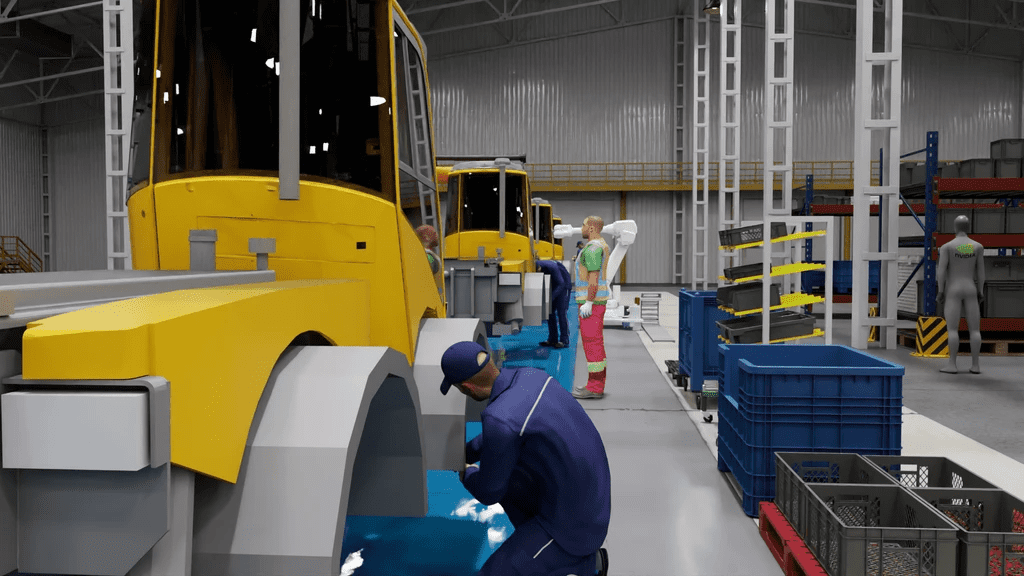
In the fast-paced landscape of industrial digitalization, startups are increasingly leveraging Universal Scene Description (OpenUSD) and generative AI to push the boundaries of what's possible in 3D content creation, digital twins, and AI-driven innovation.

At GTC, six pioneering startups shared how they are solving complex problems and creating new opportunities across various industries by leveraging OpenUSD and Generative AI. You can watch the session here.

These companies are supported by NVIDIA Inception, the free program for innovative technology startups. This global program of over 18,000 members offers startups engineering guidance, technical training, and introductions to funding opportunities to accelerate their business.

Here’s how each is driving the next era of advanced 3D solutions with OpenUSD redefining the boundaries of digital creation and consumption.

Rendered.ai: Open Standards for Synthetic Data Generation

Rendered.ai, an NVIDIA Inception member, is using physically accurate 3D simulations to generate synthetic computer vision data to help overcome bias and power innovation in AI. Their expertise spans domains like remote sensing, healthcare, and the public sector, enabling their customers to generate unlimited, fully labeled data for training AI.

Nvidia

Despite increasing volumes of data that are being collected to train AI, a persistent issue that machine learning (ML) engineers face is getting data that meets their specific criteria and can be reused across multiple projects. To address these challenges, Rendered.ai has adopted OpenUSD.

OpenUSD allows Rendered.ai to facilitate more simulations for customers with fewer data translations to speed up their iterative process, enabling faster physically accurate synthetic data generation for a wide range of applications, from agriculture to defense to manufacturing.

One of the key stepping stones to solving problems optimally is open standards,” said Chris Andrews, COO at Rendered.ai. “Using standardized technology like OpenUSD allows us to participate in larger ecosystems that will enable us to do more than we could ever do alone.

Evolver Interactive: Navigating the Future with OpenUSD Digital Twins

Evolver Interactive, has been utilizing NVIDIA Omniverse, the platform for connecting and developing OpenUSD applications, for over five years. Their focus lies in digital twins and unified management systems as both software and services. The startup's use of USD for collaboration and enterprise solutions has been pivotal in scaling their projects across various industries.

Nvidia

By leveraging USD and Omniverse, they have created an asset store in the cloud, streamlining their processes and enhancing collaboration. Chris Scott, CEO of Evolver, highlighted the importance of starting small and gradually expanding the use of USD and Omniverse to solve complex problems. Today, Evolver is able to build large-scale digital twins of factories, working with various data sources like Lidar point cloud data for customers like the European Consortium.

I urge you to consider where USD fits into your workflow and how it can propel your projects forward,” said Chris Scott. “OpenUSD and Omniverse offer versatile solutions, though no single solution covers all bases. It's about leveraging the available tools effectively.

Ascon Systems: Bridging Digitalization, AI, and Industry Expertise

Today’s manufacturing industry faces numerous challenges, including traditional Programmable Logic Controller (PLC) and Supervisory Control and Data Acquisition (SCADA) systems, a shortage of skilled labor, and limited information technology and operational technology (IT-OT) convergence. To address these, Ascon Systems has developed Ascon Qube, an automation platform that integrates real-time data and USD-based 3D pipelines. By linking the physical and virtual worlds through digital twins, Ascon Qube enables live production control, predictive maintenance, and accelerated ramp-up processes.

Nvidia

This has been instrumental in projects like BMW Group’s Innovation Hub. BMW has used Ascon Qube to link several automated assembly and testing stations, allowing users to see a live view of operations and related information, run simulations and analysis, obtain forecasts, and much more.

Looking ahead, we aim to shift away from linear programming and execution models, instead focusing on ecosystems and hyper-converged infrastructures, in collaboration with NVIDIA and our partners," said Jens Mueller, CEO of Ascon Systems.

SyncTwin: Empowering Small Businesses to Build Digital Twins

SyncTwin aims to make the industrial metaverse accessible to small and medium-sized enterprises by leveraging OpenUSD and the Omniverse ecosystem. The catalyst for their journey was their partnership with BMW, which demonstrated the transformative potential of industrial digital twins. However, many small businesses lack dedicated IT departments for digital factory solutions, relying instead on tools like Excel and Powerpoint.

Nvidia

By converting existing layout information and process data from Excel sheets into OpenUSD components, SyncTwin creates interactive models that reveal the full potential of factory operations. This approach enables small businesses to easily engage with digital twin technology, empowering them to streamline operations, make data-driven decisions, and ultimately thrive in the digital age.

The integration of OpenUSD into SyncTwin exemplifies our commitment to leverage cutting-edge technology to democratize access to the industrial metaverse for businesses of all sizes,” said Michael Wagner, CEO of SyncTwin

Aireal: Immersive Pre-Construction Experiences with User-Centric Design

Aireal specializes in interactive and immersive technology platforms for pre-construction environments, providing visualization, customization, and exploration experiences before homes and communities are built. This extends to offering customers insights into amenities and lifestyles of future buyers.

Nvidia

By utilizing OpenUSD and Omniverse, they offer highly realistic and interactive experiences, allowing customers to visualize and customize their future homes. To ensure that product offerings align with customer expectations, Aireal connects data from ERP systems to OpenUSD so that showcased options are always available for production.

OpenUSD provides incredible value to us through performant, realistic experiences, real-time collaboration capabilities, and improved customer engagement,” said Kevin Hart, Founder and CEO at Aireal.

Configuru: Generating Personalized Marketing Experiences

In the digital age of AI, traditional sales methods are becoming less effective as users now demand more personalized experiences and a comprehensive understanding of their challenges. To address this, Configuru, an NVIDIA Inception member, has developed various AI applications for image generation and integrated them with NVIDIA Omniverse. For example, using their most recent AI extension for Omniverse, users can effortlessly create complex scenes with drag-and-drop functionality, saving time and resources compared to conventional rendering methods.

Nvidia

Integration with OpenUSD and Omniverse Nucleus enhances collaboration and data management across our different development environments,” said Aleksandr Evgrashin, Head of Software Development at Configuru.

These pioneering startups are at the forefront of leveraging OpenUSD and Generative AI to revolutionize industries. Their innovative solutions are transforming the way businesses leverage operational data, enable collaboration, and engage with customers. By harnessing the power of open standards and cutting-edge technologies like Omniverse, these companies are paving the way for a future where data-driven insights and immersive experiences drive success. The possibilities are endless, and these startups are leading the charge towards a more efficient, connected, and intelligent world.

Watch the full session with their presentations here: Building Tools for Digital Worlds: Startups Pioneering OpenUSD and Generative AI

Additional Resources:

  • Get started with OpenUSD resources and documentation
  • Watch more OpenUSD Day sessions from GTC
  • Explore the on-demand OpenUSD training
  • Learn more about the NVIDIA Inception Program

More On This Topic

  • AI + No-Code: The Viral Combo Redefining Developer Innovation
  • Integrating ChatGPT Into Data Science Workflows: Tips and Best Practices
  • What Data Scientists Should Know About OpenUSD
  • Automation in Data Science Workflows
  • How Cloud Computing Enhances Data Science Workflows
  • Mastering Data Science Workflows with ChatGPT

DeepMind’s new AI generates soundtracks and dialog for videos

DeepMind, Google’s AI research lab, says it’s developing AI tech to generate soundtracks for videos. In a post on its official blog, DeepMind says that it sees the tech, V2A (short for “video-to-audio”), as an essential piece of the AI-generated media puzzle. While plenty of orgs including DeepMind have developed video-generating AI models, these models […]

© 2024 TechCrunch. All rights reserved. For personal use only.

ChatGPT vs. ChatGPT Plus: Is a paid subscription still worth it?

ChatGPT vs ChatGPT Plus

When GPT-4 was OpenAI's most powerful artificial intelligence large language model (LLM), paying $20 a month for a subscription to ChatGPT Plus was a no-brainer. But since OpenAI announced the availability of GPT-4o, the choice is a bit more complicated.

In May 2024, OpenAI revealed an omnimodel that makes GPT-4-level intelligence accessible for everyone. Free users can also access features previously reserved for paid subscribers, including the GPT Store for custom GPT bots; the Memory feature to give their conversations continuity; uploading photos and documents to discuss them with ChatGPT; web browsing; and advanced data analysis.

Also: Apple Intelligence FAQ: Every new feature, what models support it, and privacy concerns

As a ChatGPT Plus subscriber, I'll explain below when ChatGPT will suffice and when you might want to spring for Plus.

You should use ChatGPT Plus if…

1. You want to use GPT-4o more than most

With GPT-4o giving free users many of the same capabilities that were only available behind a Plus subscription, the reasons to sign up for a monthly fee have dwindled — but aren't completely gone. Free ChatGPT users are limited in the number of messages they can send with GPT-4o depending on usage and demand.

Also: Microsoft Copilot vs. Copilot Pro: Is the subscription fee worth it?

ChatGPT switches to GPT-3.5 when free users reach their limit. Though OpenAI doesn't specify the GPT-4o limit for free users, ChatGPT Plus subscribers have up to five times the capacity of the free tier and can send GPT-4o up to 80 messages every three hours. This means free users should have up to a 15-16 prompt limit every three hours. ChatGPT Plus users still have access to GPT-4 when they exceed their GPT-4o limit.

Though we expect OpenAI will increase the limits for GPT-4o for both free and paid users, if you'd like to use GPT-4o for more than about 15 messages every three hours, you're better off with a ChatGPT Plus subscription.

2. You want to generate (reliable) images

While GPT-4o for free ChatGPT users can technically generate images, it's nothing like what you get with a paid subscription.

One nugget that OpenAI hasn't advertised as much as other features is that reliable image generation is still reserved for ChatGPT Plus subscribers.

GPT-4o is multimodal and capable of analyzing text, images, and voice. For example, GPT-4o can ingest an image of your refrigerator contents and provide you with recipes using the ingredients it identifies. Free ChatGPT users can also upload documents for GPT-4o to analyze and make inferences or summaries. But its ability to create images is limited, to say the least.

Also: How to use DALL-E 3 in ChatGPT

GPT-4o in the free ChatGPT tier doesn't have access to DALL-E, OpenAI's image generation model. This means that when you ask it to generate images for you, it'll leverage OpenAI's advanced data analysis to render a simple vector image of what you requested. While free users can technically access GPTs with GPT-4o, they can't effectively use the DALL-E GPT through the GPT Store. When asked to generate an image, the DALL-E GPT responds that it can't, and a popup appears prompting free users to join ChatGPT Plus to generate images.

As a Plus user, when you ask GPT-4 to generate images, the LLM will leverage DALL-E 3's capabilities to do so; there's no need to switch to another website or modality. This image generation feature is only available in ChatGPT Plus.

3. You just can't wait

Aside from image generation, ChatGPT Plus users still get early access to new features that OpenAI rolled out, including the new ChatGPT desktop app for macOS, which is available now. This early access will soon include the new Voice Mode, which will roll out over the coming weeks. OpenAI will also launch a Windows app version later this year.

OpenAI rolled out GPT-4o to ChatGPT Plus, Team, and ChatGPT free users this spring, with Enterprise users coming soon.

Also: How to subscribe to ChatGPT Plus (and why you should)

4. You want a tool to create charts and tables

ChatGPT's upgraded data analysis feature lets users create interactive charts and tables from datasets. The upgrade also lets users upload files directly from Google Drive and Microsoft OneDrive, in addition to the option to browse for files on their local device. These new features are available only in GPT-4o to ChatGPT Plus, Team, and Enterprise users.

Also: How to use ChatGPT to make charts and tables with Advanced Data Analysis

With these capabilities, you can upload an entire research study to ChatGPT and ask it to generate a table with certain parameters (always check that the info ChatGPT enters is correct). Then, you could click on a cell and ask ChatGPT a question about it or prompt it to create a pie chart. The pie chart, which would also be interactive, can be customized and downloaded for use in presentations and documents.

You should use free ChatGPT if…

1. You don't want to pay a monthly fee

With GPT-4o rolling out to free users, ChatGPT users will no longer need a Plus subscription to access most of the features that initially attracted subscribers. ChatGPT free users can access the multimodal GPT-4o with GPT-4-level intelligence, get responses from the web, use advanced data analysis, upload files and photos to discuss with the chatbot, access custom GPTs in the GPT Store, and have more helpful experiences with Memory — all of which used to be ChatGPT Plus benefits.

Also: The ChatGPT desktop app is more helpful than I expected — here's why and how to try it

2. You're a casual ChatGPT user

There is no need to upgrade to a ChatGPT Plus membership if you're just a casual user who doesn't reach the usage limits of GPT-4o. Plus users have a message limit that is five times greater than that of free users for GPT-4o, with Team and Enterprise users getting even higher limits.

Also: ChatGPT vs. Bing Chat vs. Google Bard: Which is the best AI chatbot?

If you're a free user who doesn't use ChatGPT often and stays within the usage limit, you wouldn't get much benefit from a ChatGPT Plus subscription now. I expect OpenAI will amend the subscription benefits or the price as time passes and GPT-4o becomes more popular.

Artificial Intelligence