Kyndryl Extends Partnership with Vi to Drive Automated IT Operations

Kyndryl has renewed its three-year partnership with Vodafone Idea (Vi) to modernise the telco’s IT operations, streamline application management and implement a unified cyber resilience framework.

Under the extended agreement, Kyndryl will design and deliver an integrated security architecture covering security governance, zero-touch services, data protection, identity and access management, security operations and incident recovery. The overhaul is also aimed at strengthening compliance ahead of future regulatory requirements.

By reducing manual interventions and improving visibility into threats and vulnerabilities, the new cyber resilience framework is expected to minimise the impact of security disruptions and accelerate recovery of critical business data.

Kyndryl will further deploy a next-generation IT operations delivery model built on advanced automation and data-driven insights. This modernised approach will help Vi move towards a zero-touch operations framework to improve service delivery.

The company will also lead large transformation projects across backup, storage management and continuous data protection (CDP), enabling greater operational agility and cost efficiencies.

Vi will continue to use Kyndryl Bridge, Kyndryl’s AI-powered open integration platform—to drive automation and insights-led improvements. The platform has already deployed over 1,000 automations at Vi, cutting delivery event noise by 15% and enhancing business observability. Globally, Kyndryl Bridge generates over 15 million AI-driven insights each month for more than 1,200 customers.

Kyndryl said it will continue to invest in the platform to strengthen service quality and accelerate profitability and growth for customers across sectors.

“Our partnership with Kyndryl enables us to leverage advanced automation, AI-driven insights and a zero-touch operations model to optimise our IT infrastructure,” said Vi CTO Jagbir Singh.

Kyndryl India president Lingraju Sawkar said the extended partnership reflects Vi’s confidence in Kyndryl’s expertise in managing mission-critical systems and delivering complex transformations.

The long-standing association has previously supported Vi through key milestones, including the merger of Vodafone India and Idea Cellular, pandemic-driven business continuity planning and 26 rapid consolidation projects across business functions.

The post Kyndryl Extends Partnership with Vi to Drive Automated IT Operations appeared first on Analytics India Magazine.

Musk’s xAI Teams with HUMAIN to Develop Saudi Arabia’s AI Supercomputing Network

HUMAIN, an AI infrastructure company owned by the Public Investment Fund (PIF), has signed a landmark framework agreement with Elon Musk’s xAI to jointly build next-generation GPU supercomputing facilities in Saudi Arabia and deploy Grok models nationwide.

Announced at the U.S.–Saudi Investment Forum in Washington, the agreement positions HUMAIN as one of the world’s fastest-growing Nvidia-backed AI compute providers. The centrepiece is a 500 MW+ hyperscale GPU data centre, expected to become one of the most advanced and cost-efficient AI compute hubs globally. This marks xAI’s first major compute deployment outside the United States.

Under the collaboration, HUMAIN and xAI will develop a network of GPU data centres across the Kingdom to power the training and scaling of frontier AI models. HUMAIN’s low-cost infrastructure capabilities will combine with xAI’s model-level optimisation to create what both companies describe as a “next-generation AI compute foundation”.

The partnership also includes the nationwide rollout of xAI’s Grok models. Grok will be integrated into HUMAIN’s agent platform, HUMAIN ONE, enabling real-time intelligence, autonomous workflows, and high-performance AI copilots across government and enterprise systems. HUMAIN refers to this as a unified national AI layer supporting advanced decision-making capabilities.

Elon Musk, CEO of xAI, said HUMAIN’s infrastructure capabilities enable “massive and efficient compute” and make Saudi Arabia a prime location to accelerate future AI systems.

HUMAIN CEO Tareq Amin added that the collaboration creates “scale that few others can match” while expanding the Kingdom’s technological ambitions.

The xAI partnership follows HUMAIN’s newly announced collaboration with New York–based Global AI, an NVIDIA Cloud Partner, to build large-scale AI compute capacity in the United States. That project includes off-premises, air-gapped data centres equipped with liquid-cooled NVIDIA Grace Blackwell systems. While separate from the Saudi initiative, it signals HUMAIN’s broader strategy to establish a multi-country AI infrastructure footprint anchored in the latest NVIDIA platforms.

The post Musk’s xAI Teams with HUMAIN to Develop Saudi Arabia’s AI Supercomputing Network appeared first on Analytics India Magazine.

ISRO Ex-Chairman Believes There’s No Brain Drain in India’s Space Tech

India’s space sector is expanding through new policies, rising private activity and a growing set of deep-tech ambitions.

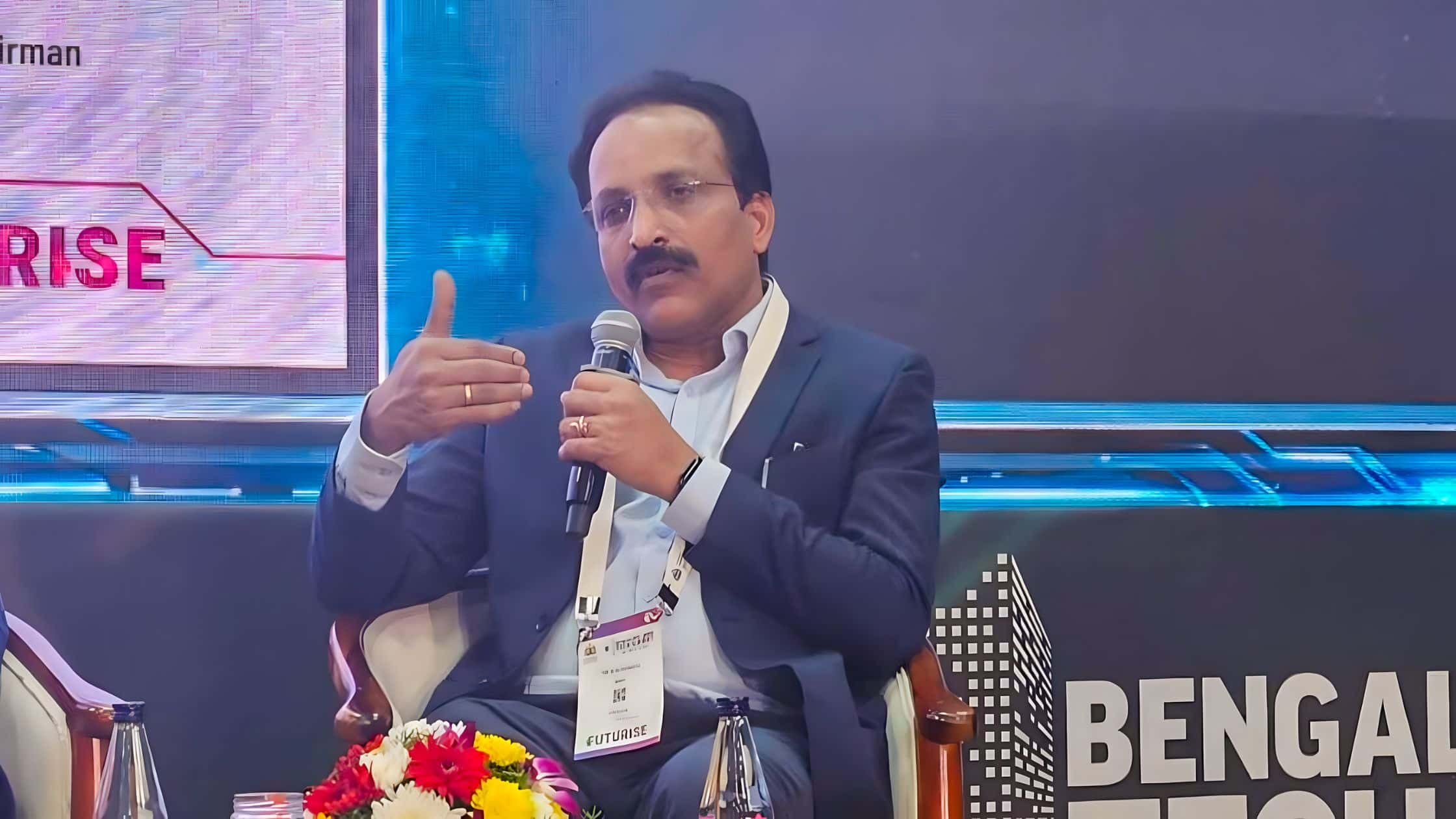
Yet, one question continues to surface in every discussion on long-term capability: does India have enough talent to support this shift, or is the country losing its best minds to opportunities abroad? On the first day of the Bengaluru Tech Summit 2025, this debate took an unexpected turn when former ISRO chairperson S Somanath said, in clear terms, that the idea of a space sector brain drain does not match reality.

The comment came in response to AIM’s question about whether he thinks brain drain plays a role in India’s space tech, and, if so, how the country can get that talent back. “I really don’t find any shortage of brains in India. I think we have enough. Actually, enough and more for other sectors. There is no brain drain,” Somanath said.

His view challenged a belief that has shaped several policy conversations in the last decade. According to him, India’s problem is not losing talent. The bigger gap is the lack of strong research environments that allow people to return and continue their work.

“What we need is to encourage them to come back and work with them at some point in time. The environment is the problem, not money. Outside India is an extreme environment where they have to do research,” he said. “If you are able to provide that type of facility, they will have to come back.”

His comments come at a time when Karnataka has announced the Space Technology Policy 2025-2030. The policy aims to capture 50% of India’s space market by 2033.

It also plans to expand testing facilities, satellite design clusters and manufacturing zones. These goals underscore the need for robust talent pipelines and long-term research environments. The policy places new focus on skills, deep-tech R&D and public partnerships, which align directly with Somanath’s view that India must create the right conditions to keep people in the country.

Where Talent Exists, Infrastructure Must Follow

The panel, moderated by Shashank Joshi, The Economist’s defence editor, brought together Somanath, Dhinesh Kanagaraj, founder and CEO at Fabheads Automation, and Prashanth Prakash, chairperson of the Karnataka Vision Group on Startups and a partner at Accel.

Somanath stressed that strong talent exists not only in top institutions but across several layers of the education system. “I have seen with my own experience that we find brilliant people at every level of these institutions,” he said. His point matched a broader trend in Karnataka.

The Bengaluru Innovation Report 2025 shows that the state now supports over 450 startups in regions outside the city. These include Mangaluru, Mysuru and Hubballi-Dharwad.

The report also shows that Bengaluru attracts 58% of India’s AI startup funding and has recorded the most deep tech patents in the country between 2020 and 2023.

Kanagaraj echoed this through his own experience of building a company that works with advanced composites. His team often struggled to access high-precision systems in India.

“There are not that many vendors out there available to cater to any of the new requirements,” he said. Their company had to build several critical components from scratch, which extended development timelines and raised costs. His account pointed to a larger issue: India needs more shared infrastructure to help early companies build faster.

The panellists also noted that this situation has improved in recent years. Accelerators, grants and deeper engagement between ISRO and start-ups have helped new players enter the field at a pace that wasn’t possible earlier.

Yet, current progress still depends heavily on government support. Somanath said that “real fundamental work” continues to rely on public funding and that early deep-tech companies in any country receive their first support from the state.

This brought the conversation back to the question of scale.

Patient Capital is the Need of the Hour

India has several space startups, but still lacks large companies that can supply global markets. “We need to create large-sized space companies in India; this is what is missing now,” Somanath directly said. He argued that without long-term patient capital, industrial facilities and strong demand from public agencies, scaling will remain difficult.

Prakash explained that deep-tech investing has moved forward in the last decade, but still needs more patience. “Returns may be some way off,” he said, adding that investors now understand that long gestation cycles are normal in such fields.

He noted that many funds have begun allocating space, manufacturing and advanced materials, though consumer and financial technology still receive the largest share. Over time, he expects deep tech to become a much larger part of India’s investment market.

Programmes that once offered ₹2 crore now offer up to ₹50 crore. This allows start-ups to tackle harder problems, build prototypes and take on larger projects.

Prakash suggested that government direction could influence how these funds allocate capital in strategic sectors. This, he argued, would help close some of the gaps in manufacturing, supply chains and R&D.

Next Wave is Cross-Domain Skills

While most of the panel focused on space and hardware, Somanath pointed to a broader trend. He said future disruptions will come from “the interaction between engineering and the human body” and that many engineers abroad now work in biomedical and biophysical systems. He listed drug delivery, health sensors, medical equipment and related research as areas that will grow in importance.

His point was clear: India must prepare for technologies that blend biology, AI and engineering. This shift will need new labs, new training pathways and new forms of collaboration between institutions. It will also demand stronger talent retention and a new set of return-opportunity programmes for researchers abroad.

For now, Somanath said that India is only at the beginning of this shift. He mentioned China’s 10-year effort to bring back top researchers and said India had only “just started the process.”

The post ISRO Ex-Chairman Believes There’s No Brain Drain in India’s Space Tech appeared first on Analytics India Magazine.

DDN Launches Sovereign AI Solutions based on NVIDIA AI Data Platform Reference Design

Supermicro Expands Its Portfolio of Performance and Efficiency Driven Air-Cooled AI Solutions Featuring AMD Instinct MI355X GPUs

SAN JOSE, Calif. and ST. LOUIS, Nov. 19, 2025 — Super Micro Computer, Inc. is…

Yann LeCun Confirms Leaving Meta to Launch Advanced Machine Intelligence

‘AI will Soon Match or Surpass Human Intelligence,’ says Yann LeCun‘AI will Soon Match or Surpass Human Intelligence,’ says Yann LeCun

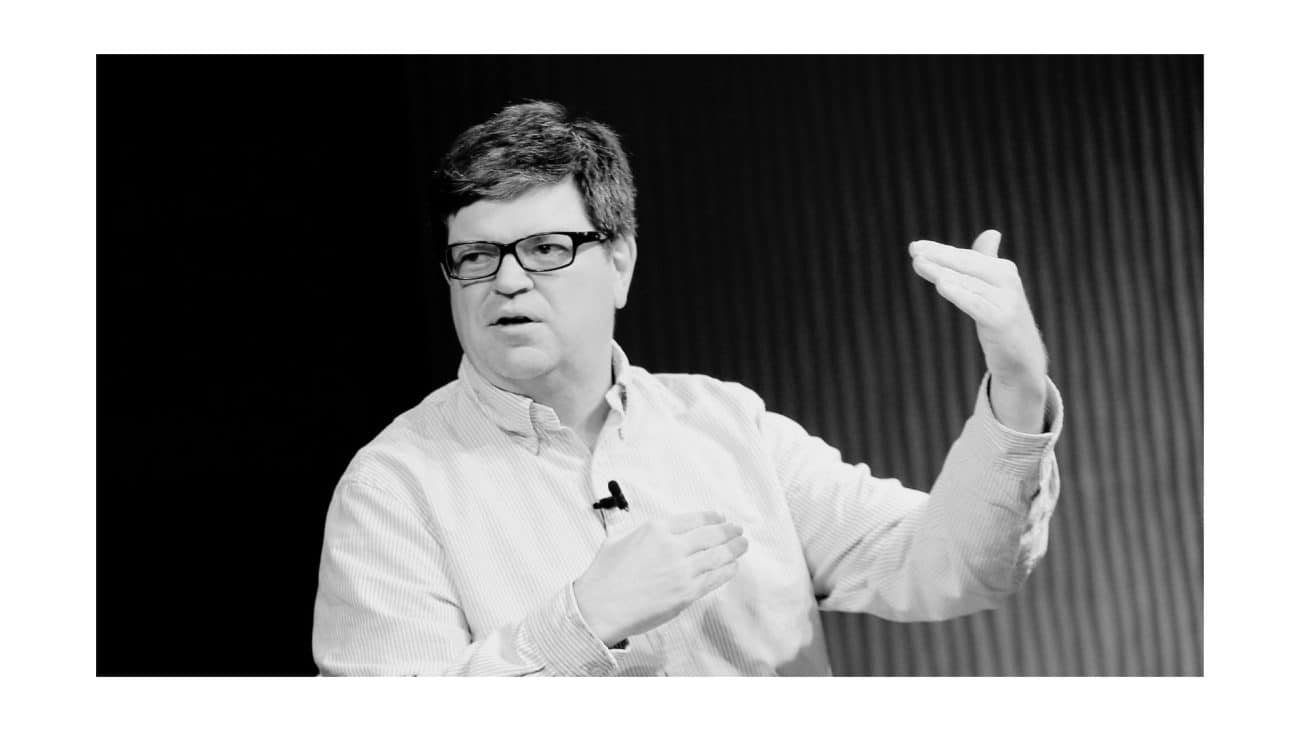
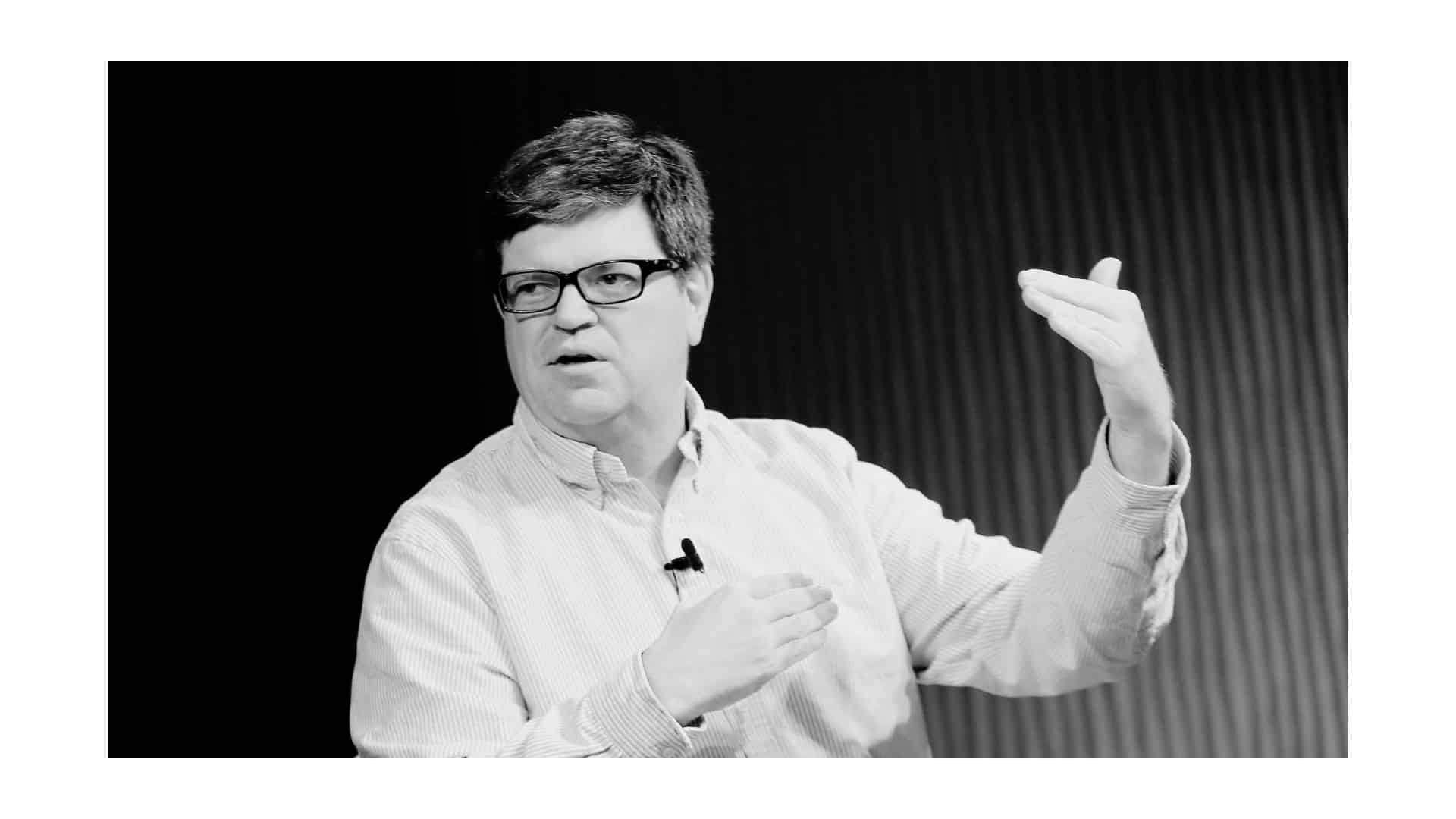
Meta’s chief AI scientist, Yann LeCun, has announced that he will leave the company at the end of the year to start a new venture focused on Advanced Machine Intelligence (AMI), a research program he has been developing over the past several years.

“In planning to leave Meta after 12 years, I am creating a startup company to continue the Advanced Machine Intelligence research program,” LeCun said in a post on Facebook.

LeCun, who served five years as the founding director of FAIR (Facebook AI Research) and seven years as chief AI scientist, said the new company aims to build AI systems “that understand the physical world, have persistent memory, can reason, and can plan complex action sequences.”

He described the creation of FAIR as his “proudest non-technical accomplishment,” adding that its impact on Meta, the AI field and the broader tech ecosystem has been spectacular.

Meta will remain a partner in the new company. LeCun said he is extremely grateful to Mark Zuckerberg, Andrew Bosworth, Chris Cox and Mike Schroepfer for supporting FAIR and the AMI program. “Because of their continued interest and support, Meta will be a partner of the new company,” he said.

LeCun said the AMI initiative will have applications across multiple sectors, some intersecting with Meta’s business and others outside it. He noted that pursuing AMI independently would “maximise its broad impact.”

Further details about the startup will be announced later, he said, while confirming he will remain at Meta until the end of the year.

The post Yann LeCun Confirms Leaving Meta to Launch Advanced Machine Intelligence appeared first on Analytics India Magazine.

How Data and Intelligence Are Wiring India’s Electric Vehicle Future

India’s electric vehicle (EV) industry is entering a decisive new phase, one where algorithms, not just batteries and chargers, are beginning to determine performance, profitability, and adoption. From predictive maintenance to hyper-local charging intelligence and advanced battery-life analytics, AI is rapidly transforming the country’s EV ecosystem into a data-driven, interoperable network.

During a media roundtable with the Bolt Earth leadership, it became clear that EVs in India are now software-defined machines, and AI is the glue holding together a fragmented landscape of chemistries, OEMs, and charging standards. Bengaluru-based Bolt Earth claims to be India’s largest EV charging network.

Reinventing Charging Through Data Science

Bolt Earth CEO Raghav Bharadwaj told AIM that they have already adapted to the shift toward AI-driven infrastructure. “We control the entire charging stack, hardware, software, and operations. What that allows us to do is give the best charging experiences to customers,” he said.

The company’s fast-growing network of chargers feeds real-time data into a proprietary back-end system, enabling the data science team to predict charger failures before they occur.

Bharadwaj said that they monitor the data from their chargers in real-time, and use analytic detection software to gauge potential chargers that could have issues in the future. “We’re able to send technicians to make sure the chargers are constantly working.”

Bolt Earth is also developing APIs for utility companies that provide unprecedented visibility into where EV charging demand is emerging, a capability that will become essential as EV adoption grows. This is a crucial step toward avoiding grid overload, especially as EV density rises.

Vasudha Madhavan, founder and CEO of Ostara Advisors, an investment firm deeply involved in climate and mobility technologies, emphasised the rising importance of this AI-driven “handshake” between mobility and energy.

“When you have increased demand for energy from mobility, you want to be able to manage the load at different times of day and adapt to high-priority loads. Software and AI can do this very effectively,” she told AIM.

AI as the Universal Battery Brain

India’s EV ecosystem is notoriously fragmented, chargers vary by connector type, batteries vary by chemistry, and OEMs follow different data practices. Yet, Ashwin Shankar, founder of BatteryPool, believes AI can unify this landscape.

“We see ourselves as being a unifying layer across the different fragmented players in the ecosystem,” Shankar said. “Different OEMs, different chemistries, but if you have a product that can understand the chemistry and how to best manage it, that can be a unifying product.”

BatteryPool’s smart chargers use embedded algorithms to detect the type of battery being charged and automatically adjust the “charging recipe.”

“The charger understands which battery it is charging… and sets the appropriate charging recipe to charge that battery back,” Shankar explained. “An NMC and an LFP battery behave very differently at high temperatures, and the charger can throttle charging to ensure longevity.”

Intelligence Tuned to Indian Conditions

India’s climate is unforgiving: high temperatures, steep humidity shifts, and unpredictable usage patterns degrade batteries faster than in Western markets. AI is beginning to correct that.

“When you have batteries that come back in the heat of summer in a city like Jaipur, you want to understand what chemistry the battery is and charge it in a way that ensures longevity,” Shankar said.

India’s EV future will rely on AI models tailored to local road conditions, heat cycles, and driving habits, which local startups are well-equipped to provide.

Prediction as a Financial Engine

Madhavan highlighted how AI-driven data transparency is reshaping financing across the climate and mobility sectors. “We have seen AI being used in the financing of EVs… Even in green financing, you can have AI applications. These help track usage of the EV and create better intelligence for financial decisions.”

BatteryPool has taken AI beyond asset management into fintech territory through its innovative pay-as-you-go battery program, which allows drivers, especially gig and fleet workers, to pay for their batteries daily.

Because BatteryPool tracks battery usage continuously, the company can build a real-time “pseudo credit score” for drivers. “If a driver is not using his battery pack, we know he’s unlikely to be earning money and unlikely to be able to pay,” Shankar said. “We have a smart way of preempting or predicting a potential default case.”

This dramatically reduces the cost of financing for low-income users. “Customers who avail financial products through BatteryPool get them at a lower cost compared to vanilla financing,” he added.

A Data Problem and a Data Opportunity

Despite all the progress, India’s charging and battery data ecosystem is still young. “The market is very nascent,” Bharadwaj noted. Even one lakh chargers remain a small number, he said adding, “there’s only so much you can do with limited data.” He predicts the real AI breakthroughs will arrive after 2027 or 2028, once the volume of data packets dramatically increases.

Shankar agrees that shared data standards could accelerate this shift. “Creating common standards for how battery data is accessed can significantly help in building products that work across the industry,” he said.

Madhavan stressed the need for standardised data collection across mobility, energy, and infrastructure. “Creating common standards for how data is accessed can significantly help in building products that work across the industry,” she said.

The Inevitable Rise of the Software-Defined EV

Hardware deployment is still necessary, but the long-term value will come from intelligence. “At some point, you’re going to finish deploying the hardware, and all the advancements are going to come from software,” Bharadwaj said. “Just like smartphones, today, the biggest difference between one phone and another is software.”

Shankar echoed this from a startup’s vantage point: “We’ve always seen ourselves as a tech-first company… Every week, we think about the next IP or next edge we can build.”

EVs, he added, are becoming “software-defined vehicles,” where AI influences everything from route optimisation to battery swapping operations to customer support.

Speaking on this shift in the broader climate tech landscape, Madhavan said, “AI is influencing almost all sectors: mobility, storage, energy management. You can now use AI inside the vehicle, at the grid level, or even to improve component design.”

AI is no longer an add-on in India’s EV industry; it is emerging as the critical infrastructure that will determine reliability, efficiency, affordability, and long-term sustainability.

The post How Data and Intelligence Are Wiring India’s Electric Vehicle Future appeared first on Analytics India Magazine.

AMD Instinct MI430X: Powering the Next Wave of AI and Scientific Discovery

Supermicro Expands Its Portfolio of Performance and Efficiency Driven Air-Cooled AI Solutions Featuring AMD Instinct MI355X GPUs

SAN JOSE, Calif. and ST. LOUIS, Nov. 19, 2025 — Super Micro Computer, Inc. is…

Karnataka Eyes a Leap in Emerging Tech with New IT Policy

Karnataka is preparing for a transformative leap in its technology landscape. The state government recently announced an investment of ₹967 crore in incentives under the new IT Policy for 2025-2030.

Positioned at the intersection of rapid global tech shifts and India’s own deep tech boom, the new policy is designed to attract large-scale investments in AI, quantum computing, cybersecurity, and other emerging technologies, with an intentional tilt toward expanding innovation ‘beyond Bengaluru’.

“To retain leadership and position the state as a preferred global destination for innovation and investment,” the policy aims to increase the Gross State Value Added Product (GSVAP) from 26% to 36%, boosting software exports to ₹11.5 lakh crore, and creating more than nine million jobs by 2030.

Beyond Bengaluru

The updates in the policy are also a deliberate push to nurture emerging tech cities outside the capital. Hubs like Mysuru, Mangaluru, Belagavi, Hubballi, Tumakuru, Kalaburagi, and Shivamogga are positioned as nerve centres of Karnataka’s digital economy.

Speaking to AIM at the Bengaluru Skill Summit, Nirmal Bhardwaj, founder of The Bengaluru Angels, and managing director of Resurgent, insisted that the government look into emerging hubs such as Mysuru and Tumakuru, as connectivity from Bengaluru is relatively easier.

This simplifies the process for startups and established companies to establish headquarters in these regions, which can efficiently accommodate talent and infrastructure, he said.

Complementing this, on November 6, the state cabinet approved the new Startup Policy for 2025-2030, which aims to establish 25,000 startups within five years, including 10,000 outside Bengaluru.

With a budget of ₹518.27 crore, the startup policy focuses aggressively on deep technologies such as AI, blockchain, quantum computing, and semiconductor design, signalling a united policy framework across IT and startup domains.

To elevate Karnataka as a global hub for frontier technologies, the state is building foundational infrastructure for innovation, another big up for startups.

Among the flagship initiatives is Technoverse, a series of integrated tech campuses that will function as innovation ecosystems featuring R&D laboratories, digital testbeds, immersive demo zones, and plug-and-play facilities for startups.

A statewide Digital Hub Grid will support this physical infrastructure, connecting innovation clusters across Karnataka into a single digital fabric, ensuring equitable access to advanced resources regardless of geography.

A significant catalyst within this infrastructure framework is the establishment of the Centre for Applied AI for Tech Solutions (CATS), backed by a dedicated ₹50 crore investment. The centre is envisioned as a springboard for AI-driven product development, research translation, and industry collaboration.

Financial Support

Recognising the high operational burden that early-stage startups face, the IT Policy offers one of the most comprehensive incentive frameworks in the country.

The government addresses this directly by offering rental reimbursement, covering 50% of rent, up to ₹10 lakh for companies with up to 100 employees and up to ₹50 lakh for units with up to 500 employees. This move is expected to enable startups to establish themselves in prime or semi-urban locations without prohibitive overheads.

To propel innovation, the policy offers the Advanced Innovation and R&D Incentive, which allows companies to reclaim 40% of eligible R&D expenditure, capped at ₹5 crore, and claimable once per unit.

Intellectual Property incentives further encourage innovation, with reimbursement for both domestic and international patent filing fees. For startups targeting product maturity, such support reduces risk and accelerates time-to-market.

Strengthening the Talent Pipeline

The policy also recognises that a thriving startup ecosystem is built on a skilled, adaptable workforce. Its Internship Cost Reimbursement programme helps reduce the barrier between academic talent and industry needs.

Startups can reclaim up to half of the stipend paid to interns, up to ₹5,000 per month, for up to 100 interns, thereby creating a structured pipeline of future-ready talent.

The Skilling Cost Reimbursement initiative supports startups in deep tech domains by reimbursing 20% of skilling expenses, up to ₹36,000 per graduate, with an additional 20% available if the candidate is hired under the Nipuna scheme. This targeted support enables companies to cultivate talent affordably, aligning them with cutting-edge technologies.

Bhardwaj emphasised the importance of talent and skill development. His concern resonated with the policy’s goals: “We have [over 300] engineering colleges in Karnataka, and I hope… all the students across these colleges build their skills, which are marketable to the rest of the world.”

Additionally, talent relocating from Bengaluru or other states can qualify for a 50% reimbursement of relocation costs, up to ₹50,000 per employee. These measures not only help startups expand but also distribute talent more evenly across Karnataka.

Creating a Business-Friendly Environment

The state is enhancing business-friendliness in emerging cities by addressing utility and property costs. For IT and ITeS companies outside Bengaluru, the government will reimburse 100% of electricity duty for the first five years and 30% of property tax for three years, easing the burden on early-stage firms.

The policy promotes the creation of green IT and ITeS parks, offering 20% support for eligible capital expenditures, capped at ₹5 crore, to encourage sustainable infrastructure development.

Additionally, Karnataka Udyog Mitra will act as a single-window agency for approvals, simplifying the process. Self-certification for labour laws will minimise compliance burdens, enabling startups to focus more on innovation.

The policy also supports events on emerging technologies through cost reimbursements, helping industry associations and startups showcase advancements and attract investments.

The post Karnataka Eyes a Leap in Emerging Tech with New IT Policy appeared first on Analytics India Magazine.

Supermicro Expands Its Portfolio of Performance and Efficiency Driven Air-Cooled AI Solutions Featuring AMD Instinct MI355X GPUs

AMD Instinct MI430X: Powering the Next Wave of AI and Scientific Discovery

Nov. 19, 2025 — AMD continues to lead the world in high-performance computing, powering the most…