Mukesh Ambani Unveils Draft ‘Reliance AI Manifesto’, Aims 10x Productivity Boost

Reliance SheinReliance Shein

Reliance Industries Chairman Mukesh Ambani has unveiled a draft ‘Reliance AI Manifesto’, calling AI “the most consequential technological development in human history.” The draft outlines plans to transform Reliance into an AI-native deep tech company, aiming for a 10x productivity impact on India’s economy and society.

In a message to over six lakh Reliance employees, Ambani said the world has seen only “the tip of the iceberg” of AI’s potential, even as its transformative power is already evident.

He set two headline goals for the group: a 10x improvement in the quality and outcomes of work across the workforce, and a 10x impact through Reliance’s businesses and philanthropic initiatives. The vision is to deliver “affordable AI for every Indian”.

The draft manifesto, circulated internally for feedback, is structured in two parts.

The first focuses on embedding AI and agentic AI across Reliance’s internal operations. The second part looks outward, inviting ideas to apply AI across Reliance’s businesses, including Jio’s 500-million-plus subscriber base, Reliance Retail’s supply chains, and emerging areas such as new energy, life sciences, financial services, and media.

Ambani stressed that the effort is not about replacing people but about raising standards, eliminating manual effort, and improving speed, quality, and decision-making. Core enterprise processes such as procure-to-pay, order-to-cash, and plant-to-port are proposed to be redesigned end-to-end with AI built in.

This internal transformation will be anchored on a common digital architecture described as a 12-layer Digital Functional Core, with data as the foundation and AI as the acceleration layer. Strong governance, human accountability, and built-in compliance are positioned as non-negotiable, with Ambani underlining that speed should not come at the cost of safety or integrity.

Organisationally, the manifesto proposes a shift to small, cross-functional “pods” with clear goals and single-point accountability to push ownership closer to execution.

Ambani also flagged the possibility of developing indigenous AI hardware, robotics, and power-efficient systems to support India’s technological self-reliance.

Employees have been invited to submit suggestions by January 26, after which the final manifesto will be shaped.

The post Mukesh Ambani Unveils Draft ‘Reliance AI Manifesto’, Aims 10x Productivity Boost appeared first on Analytics India Magazine.

In 2025, Indian IT Hit ‘Pay Now’ on a Cart Filled With AI Brains

In 2025, Indian IT companies didn’t go on an acquisition spree for scale or client lists. Instead, they checked out with specific capabilities, AI engineering talent, agentic analytics, cloud transformation expertise, Salesforce depth, cybersecurity skills, and telecom IP.

From multi-billion-dollar bets like Coforge–Encora to targeted buys by TCS, Infosys, HCLTech and Wipro, the year’s deals revealed a clear strategy shift—buying speed, platforms and relevance in an AI-first enterprise market, rather than waiting for organic transformation to catch up.

Coforge – Encora

Coforge has announced a definitive agreement to acquire Encora in an all-stock transaction valued at $2.35 billion, describing the acquisition as a “defining moment” for the company, as it builds capabilities in AI-led engineering, data and cloud services.
CEO Sudhir Singh described the combined entity as becoming an approximately $2.5-billion technology services company, with a $2-billion enterprise core of AI-led engineering, data and cloud services.

Encora, founded in Silicon Valley, provides AI-native software engineering services to digital-native companies and Fortune 1000 enterprises. Its offerings span intelligent process design, agent-native product engineering, core modernisation, AI foundations, data readiness, and AI operations.

TCS – Coastal Cloud

TCS signed an agreement to acquire Coastal Cloud for an all-cash consideration of $700 million, saying the deal will make it one of the world’s top five Salesforce advisory and consulting firms and deepen its ability to drive “AI-first, agent-driven transformation.”

Founded in 2012, Coastal Cloud is a leading multi-cloud Salesforce consulting firm, specialising in enterprise-scale transformations. It brings AI-led advisory and business consulting capabilities to help customers reimagine sales, service, marketing, revenue, CPQ, commerce and Salesforce Data Cloud.

TCS COO Aarthi Subramanian, said in a press release that this acquisition marks a pivotal milestone in advancing TCS’ global Salesforce capabilities and accelerating its AI-led transformation agenda. “By adding over 400 multi-cloud specialists with deep industry expertise, we are strengthening our advisory and business consulting capabilities and enhancing our AI and data offerings,” she added.

Wipro – HARMAN Digital Transformation Solutions

Wipro announced and later closed an acquisition of HARMAN’s DTS unit for a transaction value of $375 million. Wipro said DTS’ about 5,600 employees will join Wipro’s engineering global business line.

The company said that the deal brings to Wipro deep product engineering and digital transformation services capabilities, combined with strong expertise in embodied AI, embedded software, device engineering, and customer experience platforms.

“The acquisition of DTS strengthens Wipro’s ability to deliver AI-powered, end-to-end engineering services,” said Srikumar Rao, managing partner and global head of engineering, Wipro Limited.

HCLSoftware – Jaspersoft

HCLSoftware announced it will acquire Jaspersoft (a Cloud Software Group business unit) to add pixel-perfect reporting and embedded analytics to its data & AI portfolio. In a release, the company positioned this as an accelerator for its “Agentic Business Intelligence” roadmap.

Marc Potter, CEO, Actian & portfolio GM for HCLSoftware’s data & AI division, said the deal will let customers “provide seamless AI-powered embedded analytics with strong architectural flexibility.” The $240 million deal is expected to close within six months.

HCLTech – Hewlett Packard Enterprise’s telecom solutions business

HCLTech signed an agreement to buy HPE’s telco solutions business (previously part of HPE’s Communications Technology Group) for $160 million. The company highlighted that the business supports “more than 1 billion devices” and that about 1,500 engineering and telecom specialists across 39 countries will join HCLTech.

Anil Ganjoo, chief growth officer & global head – telecom at HCLTech, said the deal strengthens HCLTech’s shift “toward higher-value, IP-led services and non-linear growth.”

Infosys – Versent Group

Infosys announced it will acquire 75% of Versent Group (a Telstra-owned digital transformation provider) for about $153 million to gain operational control of a leading Australian cloud and digital transformation business; Telstra will retain a 25% stake.

In a statement, the company said the collaboration will see Versent Group’s cloud and digital transformation expertise boosted by Infosys’ advanced AI capabilities, cloud, data and digital consulting services. The collaboration will leverage Infosys Topaz and cloud offering Infosys Cobalt, as well as the cybersecurity capabilities of The Missing Link.

It aims to deliver a new wave of differentiated value to accelerate end-to-end digital transformation for Australian enterprises and government corporations.

TCS – ListEngage

TCS announced acquisition of ListEngage (a US Salesforce specialist) to scale its Salesforce, marketing cloud and Agentforce/AI advisory capabilities. The company COO Aarthi Subramanian said, “This US-based acquisition is an important step in scaling our Salesforce capabilities globally,” adding that ListEngage’s AI advisory services will enhance their offerings. TCS acquired the company for $72.8 million.

Infosys – The Missing Link

Infosys signed a deal to acquire The Missing Link (Australia), a full-stack cybersecurity services specialist. The company said that the strategic investment further strengthens Infosys’ cybersecurity capabilities, while bolstering its presence in the fast-growing Australian market, and reaffirms its continued commitment to global clients to navigate their digital transformation journey.

Together with The Missing Link, and Infosys Cobalt, Infosys aims to usher in the new wave of differentiated value to customers, with specialised end-to-end cybersecurity offerings and solutions.

Headquartered in Australia, The Missing Link brings to Infosys, a group of highly skilled cybersecurity professionals consisting of Red Team, Blue Team, and a state-of-the-art Global Security Operations Centre (GSOC), adding to the network of Infosys’ global cyber defense centres. The Missing Link was acquired for about $63–65 million.

Infosys-MRE Consulting

Infosys announced an agreement to acquire Houston-based MRE Consulting, adding about 200 professionals with deep energy/commodity trading and risk-management (E/CTRM) domain expertise and platforms. The company said that the investment brings newer capabilities for Infosys in trading and risk management, especially in the energy sector.
Ashiss Kumar Dash, EVP & global head – services, utilities, resources, energy, and sustainability at Infosys, said, “By combining MRE Consulting’s deep E/CTRM (energy and commodity trading and risk management) capabilities with Infosys’ established leadership in the energy, resources and utilities sector, we are further enhancing our ability to drive value for our clients in this critical area of their business.” The deal was closed at around $36 million.

HCLSoftware – Wobby

Among the latest deals, HCLSoftware announced in December the acquisition of Wobby, a Belgian early-stage startup that builds AI “data-analyst agents” for data warehouses, for about $5.3 million.

HCL framed this as adding natural-language, agentic data-analysis capabilities to its data & AI stack so customers can get fast business insights on demand. The company described Wobby as an early-stage buy that complements HCLSoftware’s metadata, data-catalog and governance offerings.

The post In 2025, Indian IT Hit ‘Pay Now’ on a Cart Filled With AI Brains appeared first on Analytics India Magazine.

Manus Skips Funding at $2 Bn Valuation to Join Meta: Report 

Manus, an agentic AI platform developed by Singapore-based startup Butterfly Effect Technology, is now part of Meta.

In a brief announcement, Meta said that Manus’s team will join the company to help develop general-purpose AI agents across Meta’s products.

Neither Meta nor Manus (owned by Butterfly Effect Technologies) disclosed financial terms, and it remains unclear whether the deal is a 100% acquisition or an acquihire. However, several media reports stated that Meta has acquired the company.

In its official blogpost, Manus said its products will continue operating without disruption. “Our top priority is ensuring that this change won’t be disruptive for our customers,” the company said in a statement.

Liu Yuan, a partner at ZhenFund and an angel investor in Butterfly Effect, told the Chinese media outlet 36kr that the negotiation process was so “incredibly fast” that he doubted whether this was a fake offer.

The report added that the ‘acquisition negotiations’ were completed in little over ten days. Manus was previously in the process of raising fresh funding at a $2 billion valuation, but the “vision offered by Meta founder and CEO Mark Zuckerberg quickly swayed” the team.

Manus is positioned as a general-purpose AI agent designed to execute work rather than simply generate responses. It can independently research topics by pulling from multiple online sources, navigate websites to complete tasks end-to-end, and analyse structured data from Excel and CSV files.

It also supports image generation, visual assets, and other structured outputs within larger workflows and integrates with tools, including Google Chrome, Drive, Gmail, Notion, and Google Calendar.

On benchmarks such as Meta’s Remote Labour Index, which measures automation of remote work, Manus ranked first, outperforming xAI’s Grok 4, GPT-5, ChatGPT Agent, and Gemini 2.5 Pro, although the benchmark has not been updated to reflect newer model releases.

Earlier this year, Manus announced it had crossed $100 million in annual recurring revenue just eight months after launch, placing it among the fastest-growing AI startups alongside Lovable, Replit, and Cursor.

The company offers paid plans ranging from $20 to $200 per month.

The deal follows a significant restructuring of Manus’s corporate footprint.

The company was founded in 2022 by a China-based team and raised $75 million in a Series B round just weeks after launch in a round led by US venture firm Benchmark, at an estimated $500 million valuation. The funding drew scrutiny from US regulators because of executive orders restricting American capital from flowing into Chinese AI companies, prompting a Treasury Department review.

Following the round, Manus relocated its headquarters to Singapore and sharply reduced its presence in China. This included layoffs in mainland China, shutting down China operations, abandoning plans for a localised Chinese release, and cutting off technical collaboration frameworks previously discussed with Alibaba.

Chris McGuire, a senior fellow for China and emerging technologies at the Council on Foreign Relations, wrote on X, “Neither the US government nor the Chinese government would have permitted Meta to acquire Manus if it had remained based in Beijing.”

“But once Manus fled China, likely as a result of US outbound investment restrictions, the Chinese government lost its influence over Manus and its say in the transaction,” he added.

The acquisition comes as Meta struggles to keep pace in the open-source model race. Llama 4 has underperformed expectations, while Chinese models such as Kimi, Qwen, and DeepSeek have advanced rapidly.

Like Meta’s earlier Scale AI deal and the formation of its new ‘Superintelligence’ team, the Manus acquisition appears aimed at building a new agentic layer within its offerings.

One developer stated on X that this deal signals how Meta will now focus on the execution layer of AI workloads.

Meta’s hardware products, including Ray-Ban smart glasses and Quest headsets, could act as agent interfaces, while apps like WhatsApp and Instagram become task-delegation layers.

WhatsApp already supports payments, business commerce, Meta AI content generation, and scheduling, positioning it as a natural surface for deploying AI agents at scale.

Rishi Dean, VP of tech at Lyft, wrote on X: “So many US companies don’t understand how much better ManusAI is at everything they’re trying to build.”

“This is an acquisition like YouTube or WhatsApp,” he added.

The post Manus Skips Funding at $2 Bn Valuation to Join Meta: Report appeared first on Analytics India Magazine.

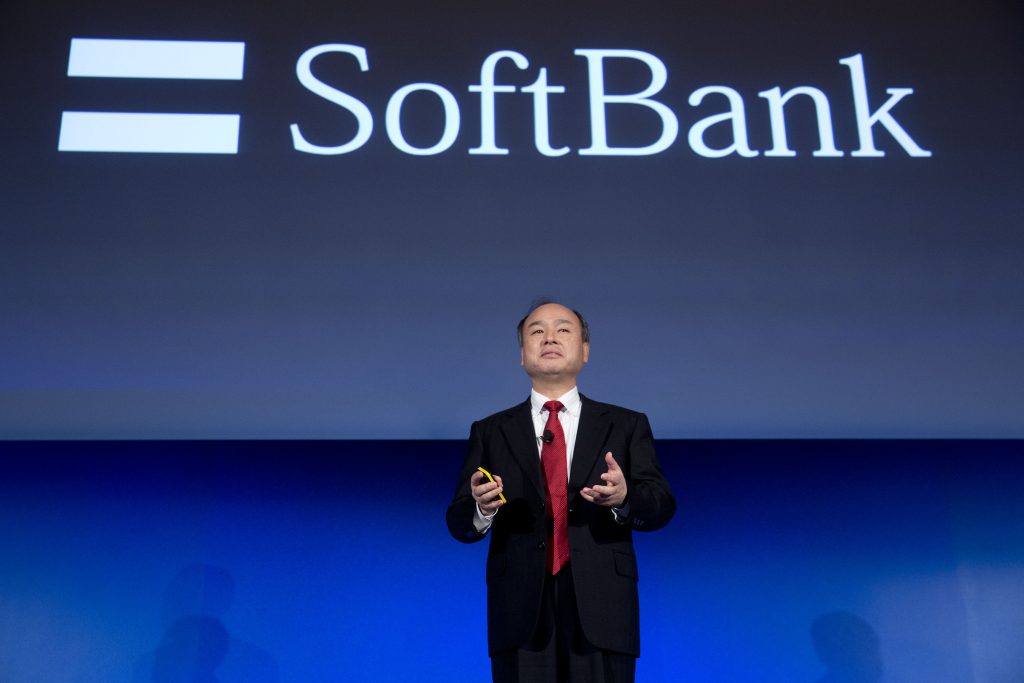
Softbank Buys DigitalBridge for $4 Bn to tap Data Centre Infrastructure

Japan’s SoftBank Group has reached a definitive agreement to acquire DigitalBridge, a digital infrastructure investment firm, for an enterprise value of around $4 billion. This acquisition is part of the Japanese conglomerate’s strategy to capitalise on the surge in data centre infrastructure driven by AI advancements.

According to the company, the acquisition will enhance SoftBank Group’s capacity to construct, scale, and finance the essential infrastructure needed for future AI services and applications.

“As AI transforms industries worldwide, we need more compute, connectivity, power, and scalable infrastructure,” said Masayoshi Son, chairman and CEO of SoftBank Group, in a statement. “This acquisition will strengthen the foundation for next-generation AI data centres, advance our vision to become a leading ASI platform provider, and help unlock breakthroughs that move humanity forward.”

SoftBank Group will acquire all outstanding common stock of DigitalBridge for $16 per share in cash. This transaction, recommended unanimously by a special committee of independent directors and approved by DigitalBridge’s board, represents a 15% premium over the December 26, 2025, closing share price and a 50% premium over the unaffected 52-week average as of December 4, 2025.

After the deal, DigitalBridge will operate as a separate entity led by CEO Marc Ganzi. The transaction is subject to customary closing conditions, including regulatory approvals, and is expected to close in the second half of 2026.

“The buildout of AI infrastructure represents one of the most significant investment opportunities of our generation,” said Marc Ganzi, CEO of DigitalBridge. “SoftBank shares our DNA as builders and long-term investors committed to scaling transformational digital infrastructure.

The post Softbank Buys DigitalBridge for $4 Bn to tap Data Centre Infrastructure appeared first on Analytics India Magazine.

Tech Mahindra’s EPFO Order Puts Provident Fund Compliance Under Spotlight

Tech Mahindra’s recent disclosure of an Employees’ Provident Fund Organisation (EPFO) order has reignited a wider debate on corporate compliance, delayed regulatory enforcement, and the security of employee savings, drawing pointed reactions from legal, finance and technology professionals.

On December 19, Tech Mahindra informed stock exchanges that it had received an order from the Pune office of EPFO to remit ₹1,287.44 crore to provident fund accounts of certain identified domestic employees and employees deputed to foreign locations in non-SSA (social security arrangement) countries.
India has SSAs with select countries to coordinate provident fund obligations for employees on overseas assignments.

The provident fund authority invoked Section 7A of the Employees’ Provident Funds and Miscellaneous Provisions Act, 1952, which empowers it to conduct inquiries and determine dues payable by employers.

The amount comprises ₹566.78 crore towards provident fund contributions and ₹720.66 crore as interest, and relates to the period between May 2014 and March 2016.

According to the disclosure, the EPFO has alleged non-remittance of provident fund contributions for the identified employees during this period. Tech Mahindra countered that it had already disclosed the matter as part of its contingent liabilities in its audited financial statements. The IT firm said it will file an appeal, and that it “does not reasonably expect the said Order to have any material financial impact on the Company.”

“Basis the Company’s assessment, an appeal will be filed, and the Company is hopeful of a favourable outcome at the appellate level,” the company said.

Wider Ramifications

The order has drawn attention because of its scale, retrospective application, and potential implications in how provident fund obligations are interpreted for employees on overseas deputation, particularly in countries without social security agreements with India.

While the filing itself is procedural, reactions from professionals across sectors reflect broader unease around provident fund compliance and enforcement timelines.

Harpreet Singh Saluja, advocate at the Bombay High Court and president of the Nascent Information Technology Employees Senate, advocating for the rights and welfare of IT and ITES employees, emphasised in a LinkedIn post that provident fund contributions represent employees’ life savings, long-term security and, in many cases, their only financial cushion after years of work.

“These are not technical lapses. These are deductions and contributions that should have gone into employees’ PF accounts years ago,” Saluja said.

“When large IT corporations speak of global excellence, ethics and governance, employees expect that the most basic statutory obligation will never be compromised. Overseas deputation cannot become a convenient excuse to dilute social security rights.”

Saluja added that compliance is not discretionary and that trust, once eroded, is difficult to rebuild.

The disclosure comes as a few ex-employees have complained of PF discrepancies in the company.

Harshl Deore, founder and CTO of AI automation firm Confidential, made an appeal on LinkedIn stating that a former Tech Mahindra employee from its Pune Sharda Centre had been struggling to get his provident fund transferred. According to Deore, the EPFO has sought a letter from Tech Mahindra because the PF category was not filled correctly during the employee’s service, leading to repeated rejection of the transfer claim by the field officer.

Deore said that despite multiple requests and follow-ups, the required letter has not been issued by the company’s PF team, leaving the former employee without any internal escalation route and causing them financial distress.
However, any link between the individual case and the EPFO order is yet to be established.

Tech Mahindra declined to comment on AIM’s request to explain the legal or interpretational issues that led to the alleged non-remittance, how it interpreted provident fund obligations for employees deputed to non-SSA countries, and whether its assessment of materiality would change if the appeal were unsuccessful.

The IT firm is certainly facing bottomline pressure, with its net profit declining 4.5% year-on-year in Q2 to ₹1,195 crore. Its IT headcount also declined 2,090 YoY.

The order comes on the heels of EPFO’s recent move allowing members to withdraw up to 75% of the corpus amount from their EPF accounts at any time. It also allowed for instant withdrawals through ATMs and UPI to the bank account of their choice.

The post Tech Mahindra’s EPFO Order Puts Provident Fund Compliance Under Spotlight appeared first on Analytics India Magazine.

Edtech 3.0: AI Implementation in Schools Gives Startups New Hope for Growth

Indian edtech platforms are entering a new phase of growth. From the funding highs of 2021, the subsequent bust when schools reopened, to focusing on value instead of valuations in the aftermath of BYJU’S debacle, edtech startups have all the while competed for direct user sign-ups. Now, they are embedding their services within school and learning ecosystems, blended learning centres, and hybrid offline models, turning institutions into distribution engines and stabilising revenue streams.

BrightChamps exemplifies this shift. After moving from a B2C model in 2023, nearly 90% of its India revenue now comes from school partnerships. This pivot helped the startup reach 35,000 students by late 2023, and over a million by early 2025.

LeadSchool, too, has partnered with 8,600+ schools across 20 states. It generated revenue of ₹351 crore in FY25, with net losses narrowing 70% year-on-year owing to the business-to-institution (B2I) play.
The shift in revenue generation comes as more teachers embrace AI. According to a survey by the Centre for Teacher Accreditation, over 70% of teachers across India are now using AI tools. The adoption is also driven by the National Education Policy 2020, which encourages the use of digital tools. This has created a demand driven by schools looking to build trusted AI ecosystems, and Indian edtechs sense a new opportunity.

Why Are Schools and Edtechs Collaborating?

Analysts suggest multiple reasons behind the B2I pivot, including rising customer acquisition costs (CAC), waning funding, and the need for sustainable growth.

Suraj Biswas, founder and CEO of Assessli, which offers AI-driven personalisation solutions, told AIM that many edtech firms struggle with profitability because their CAC is much higher than offline. “A lot of marketing and retention goes into online as the CAC to Lifetime Value (LTV) ratio is small, which should ideally be 1:7—if CAC is 10%, LTV should be around 70%,” he explained.

The CAC-to-LTV ratio shows how much more a customer is worth than it costs to acquire them. It’s an essential metric in evaluating business sustainability, growth potential, and operational efficiency.

Meanwhile, India’s edtech landscape has also suffered from a funding drought, forcing players to look for new revenue streams. Capital inflow slowed drastically from $4.1 billion in 2021 to $215 million by September 2024. While edtech investments jumped 5x in H1 2025 compared with the year-ago period, according to Venture Intelligence data, it’s still far below the funding highs of 2021 and 2022.

Competitive pressure from coaching institutes and preparation-focused centres is also a big driver behind the shift. “If schools don’t collaborate with tech or coaching platforms, students shift to dummy schools. That’s both a learning loss and a business loss,” said Biswas.

Beyond competition, schools lack the internal capability to build advanced AI systems. “Collaboration is the only way to stay ahead of the curve,” he noted.

This has opened doors for edtech companies to offer AI-powered tools that automate evaluation, reduce teacher workload, and generate deeper insights into student learning.

ChatGPT, Gemini Are Not Classroom Solutions

Despite the rapid adoption of ChatGPT and Gemini for Classrooms by students and educational institutes, stakeholders emphasise that foundation models alone cannot meet school-level requirements.

“The application layer and the foundation layer are different. ChatGPT and Gemini are generic platforms. Schools need class-wise, subject-wise, curriculum-aligned solutions,” said Biswas.
He mentioned that Big Tech firms like Google and OpenAI can’t customise workflows suited to the needs of each school. This is also a complex undertaking given India’s diverse boards and assessment structures. This creates a clear role for edtech companies to build contextual application layers, safety guardrails, and institution-ready experiences on top of foundation models.

“General-purpose AI cannot address Indian classroom realities on its own. Edtech companies provide the implementation layer that drives adoption,” said Mathew KG, Principal, Excel Public School, Mysuru.

AI-Native SaaS in Institutes

Traditional school software is getting a facelift. Legacy enterprise resource planning (ERP) and learning management systems (LMS) are increasingly being re-architected as AI-first platforms.

“ERP and LMS will not exist as standalone products for long. They are converting into AI-based systems that integrate learning, assessment, and analytics,” Mathew said.

Private schools like Excel Public School, Ekya School, and Orchid International School are already deploying a wide SaaS stack, including AI-powered lesson planning, quiz creation, learning management, and evaluation tools

“There is growing acceptance among teachers and students for AI tools that reduce workload and improve outcomes, provided they align with pedagogy and safety,” said Mathew KG.

Muneer Ahmad Khant, VP of sales and marketing at visual solutions provider ViewSonic India, said that the evolving trend in B2I will be “the seamless integration of advanced AI technologies from OpenAI and Gemini with increasingly personalised, offline-enabled edtech solutions.”

Biswas emphasised the importance of frictionless AI. Rather than tablets or wearables, demand is emerging for edge-enabled edtech hardware that supports assessment, attendance, content delivery, and learning analytics without increasing screen time.

“Parents in India do not like increased screen time, and students are distracted by more screen simulation. BYJU’S’ Smart Tab failure is indicative of this shift. Instead, teachers could use SaaS tools, and classrooms could be powered by cameras to catch student behaviour and engagement,” he suggested.

Evaluation Is the Hardest Problem

While AI’s use in teaching and content creation is rising, evaluation remains the sector’s biggest bottleneck.

“Evaluation is where the nub of the problem lies,” former IIM Bangalore professor A Damodaran noted. “Your evaluation system will decide whether you create innovators or just machine cogs.”

Most schools remain cautious, concerned about cheating, AI hallucinations, and shallow learning. As a result, AI is rarely trusted for assessment.

Edtech startups are attempting to change that with AI-driven evaluation tools that go beyond marks to analyse conceptual gaps, behavioural patterns, and learning trajectories. “Evaluation shouldn’t stop at two out of five [marks]. It should explain why the student got two, what went wrong, and what to do next,” Biswas asserted.

Despite interest, AI-driven evaluation remains expensive to deploy at scale due to massive compute needs and high data costs. “The cost of AI-based evaluation is very high. That’s why only premium or AI-forward schools are adopting it today,” he noted.

Private Schools vs Government Schools

The divergence between private and public education models is widening.

Kerala government’s education-focused tech arm, Kerala Infrastructure and Technology for Education (KITE), has rejected proprietary AI tools, opting instead to build Samagra Plus AI, trained entirely on curriculum-aligned, government-owned data.

“Unless we have absolute control over the dataset and knowledge base, an AI system cannot ensure the accuracy, safety, and alignment needed for school education,” K Anvar Sadath, CEO of KITE, told AIM.
He added that classroom learning must strictly follow the curriculum and a defined pedagogy, and this level of academic control is simply not possible with open, proprietary AI tools such as ChatGPT or Gemini.
On the other hand, private schools have the flexibility to experiment with more customised models of teaching and learning.

“Private schools can focus on deeper personalisation, advanced analytics, and differentiated learning experiences,” said Mathew. “They can integrate edtech tools more closely into classroom practices, assessments, co-curricular learning, and parent communication. Private schools can also work closely with edtech partners to pilot new ideas, refine solutions, and adopt best-in-class tools that go beyond basic digitisation.”

Biswas explained that private schools open up access to their academic resources, including question sets, pedagogy, and teaching practices, which play a crucial role in fine-tuning education technology models.

Indian edtech’s B2I pivot now closely aligns with the US, where edtech companies, including Quizlet, which offers GPT-powered study and assessment tools, and Khan Academy’s Khanmigo, are moving from consumer-facing apps to institution-focused solutions that integrate AI into curricula and administrative workflows. By serving as the implementation layer that bridges foundation models and school-specific needs, companies hope to reclaim the ‘future of learning’ tag that they once held.

The post Edtech 3.0: AI Implementation in Schools Gives Startups New Hope for Growth appeared first on Analytics India Magazine.

India’s Data Centre Surge to Drive 3x Growth in Cooling Market: Govt White Paper

India’s data centre cooling market is poised for an exponential expansion, projected to more than triple in value to $7.13 billion by 2030, according to a newly released government white paper titled “Democratising Access to High-Performance Computing.”

The surge is driven by a massive increase in capacity and computational workloads that could see the sector’s share of national electricity consumption jump from 0.5% to nearly 3% within the next six years.

The report, published by the Office of the Principal Scientific Adviser to the Government of India, highlighted a critical infrastructure shift.

While the cooling market was valued at $2.1 billion in 2024, the rapid adoption of AI and high-performance computing has necessitated the need for more advanced and energy-intensive thermal management systems.

The report noted that as India positions itself as a global hub for data processing, the environmental and economic stakes are rising. The projected increase in electricity consumption—a six-fold proportional rise—underscores the urgent need for ‘green’ data centre technologies.

Current cooling methods are being challenged by the high heat density of modern server racks, leading to a shift toward liquid cooling and other sustainable innovations.

The white paper emphasised that democratising access to computing power is essential for India’s digital sovereignty.

Edge facilities are already being planned in regional hubs, including Jaipur, Coimbatore, and Chandigarh, helping decentralise compute capacity and reduce latency.

These collaborative models are reinforced by targeted incentives that encourage private players to build on and integrate with national digital assets, including AIKosh, the Open Government Data Platform, and the National Data and Analytics Platform, thereby widening access to scalable AI infrastructure.

However, scaling AI data centres will require an additional 45-50 million sq ft of real estate by 2030, underscoring the need to integrate sustainability planning with compute expansion.

This growth requires a parallel focus on energy efficiency. The document suggested that without significant interventions in how data centres are cooled and powered, the sector’s energy footprint could place unprecedented strain on the national grid.

The findings come at a time when the Indian government is aggressively promoting the IndiaAI Mission, which seeks to build a robust domestic computing stack.

The post India’s Data Centre Surge to Drive 3x Growth in Cooling Market: Govt White Paper appeared first on Analytics India Magazine.

India’s Tech Funding Reset in 2025: Less Capital, Clearer Conviction

In a year defined less by exuberance and more by scrutiny, India’s tech funding ecosystem underwent a decisive reset. Total funding fell, mega rounds became rarer, and capital deployment turned more selective.

Yet, beneath the surface slowdown, 2025 revealed something arguably more consequential: a maturing investment landscape increasingly oriented toward defensible technology, long-term relevance, and real commercial traction.

According to Tracxn’s India Tech Annual Funding Report 2025, Indian tech startups raised $10.5 billion in 2025, a 17% decline from $12.7 billion in 2024 and slightly below the $11 billion raised in 2023. Despite this contraction, India retained its position as the world’s third-most funded tech ecosystem, behind only the US and the UK, and ahead of China and Germany.

This apparent paradox, lower funding but a strong global rank, reflects a broader global pullback. Capital tightened everywhere, but India’s ecosystem contracted less sharply than many peers, reinforcing its relative resilience.

From volume to value

The composition of funding in 2025 tells a deeper story. While headline numbers fell, the distribution across stages highlighted a clear investor pivot. Seed-stage funding dropped to $1.1 billion, while late-stage funding declined to $5.5 billion, reflecting fewer large cheques and heightened scrutiny. Early-stage funding, however, rose 7% year-on-year to $3.9 billion, suggesting investors remain willing to back companies with early proof points.

However, AI-native funding in India showed a selective recovery in 2025 after a sharp correction in the previous two years. Total funding reached $643.5 million by mid-December 2025, up from $619.5 million in 2024, though still well below the $1.1 billion peak in 2021.

chart visualization

The number of rounds fell to 102, signalling tighter capital concentration. Stage-wise data shows a clear shift toward maturity: early-stage funding stood at $273.3 million, while late-stage funding rebounded sharply to $260 million, driven by a small number of large deals. Seed-stage funding moderated to $110.2 million, reflecting fewer experimental bets and stronger investor preference for AI-native startups with proven traction and scalable business models.

This bifurcation is echoed by investors focused on deep technology. Karthikeyan Madathil, partner at Yali Capital, noted that capital today is being driven by technical depth rather than pitch polish.

“We only want to invest in IP-led companies, companies that are actually building intellectual property,” Madathil told AIM. “What we really need as an ecosystem in India is a lot more IP-driven startups, not just companies that are good at telling a story.”

That emphasis has reshaped how diligence is conducted. Rather than relying on surface-level narratives, Yali Capital conducts deep technical reviews to understand what founders know, and crucially, what they don’t.

“Pitch decks are all nice,” Madathil added, “but we spend time understanding what is really going on under the hood, because that’s where long-term value is built.”

AI and deep tech narrow the funnel

While AI remained a dominant theme in 2025, investor interest shifted away from thin application layers toward harder, more defensible innovation. Manish Gupta, general partner at growX Ventures, described the year as one where capital became more intentional.

“While generalist tech capital has tightened, capital for hard, defensible innovation has become more selective but deeper,” Gupta said. “Investors are prioritising startups with strong IP moats, long-term relevance to national capability building, and early evidence of commercial adoption rather than pure narrative-led growth.”

This focus aligns closely with Yali Capital’s thesis. Madathil points out that AI investment is no longer confined to software.

“If you look at AI, there is the hardware layer, the application layer, and the foundational layer,” he said. “We are most excited about the application layer, where domain-specific innovation happens, and the hardware layer, where real technical breakthroughs are required.”

The result is a narrower funding funnel, but one that rewards depth, patience, and engineering-led ambition.

AI funding sharpens around fewer, larger bets

The shift toward depth over breadth was evident in AI-specific funding in 2025. While dozens of early-stage AI startups continued to raise capital, a disproportionate share of funding flowed into a small set of mature, enterprise-facing AI companies, reflecting investor preference for proven use cases and clearer monetisation paths. According to Traxcn, the year’s largest AI raises were concentrated in conversational AI, enterprise automation, industrial intelligence, and infrastructure-layer platforms.

visualization

Notably, Uniphore raised $260 million in a Series F round, highlighting sustained demand for customer experience and contact center automation despite a broader slowdown in tech funding.

Enterprise AI platforms thrived, with UnifyApps securing $50 million for workflow automation and QpiAI raising $32 million for its AI-quantum computing intersection. Industrial AI also drew interest; Intangles raised $30 million for automotive intelligence, and Atomicwork secured $26.3 million for improving enterprise productivity.

Cybersecurity attracted continued investments, with FireCompass raising $20 million and CloudSEK $19 million for AI threat detection. Earlier-stage startups like Rocket and Dashverse also raised funds, though in smaller amounts. Overall, these trends indicate a more selective AI funding landscape in India, prioritising quality over quantity.

Taken together, these funding patterns reveal a clear hierarchy within India’s AI ecosystem in 2025. The result was perhaps not an AI funding slowdown, but an AI funding filter, one that narrowed the funnel while increasing the average quality bar.

Fewer mega rounds, steadier exits

India recorded 14 funding rounds of $100 million or more in 2025, down from 19 in 2024, led by large raises in transportation, logistics, and environment-focused tech. While mega rounds declined, exit activity moved in the opposite direction.

The ecosystem saw 136 acquisitions and 42 IPOs during the year, alongside five new unicorns, signalling that liquidity pathways are beginning to stabilise even in a cautious market.

Tracxn co-founder Neha Singh described this shift as evidence of ecosystem maturity rather than weakness. “While capital deployment has become more disciplined, the sustained momentum in early-stage funding, rising IPO activity, and steady unicorn creation highlight a maturing ecosystem focused on building scalable, high-quality businesses,” she said.

Building without capital excess

Not all resilience in 2025 came from funded startups. Bootstrapped SaaS companies also offered a counterpoint to the funding slowdown. Saravana Kumar, founder and CEO of Kovai.co, whose company has scaled globally without external capital, believes the current environment favours sustainable operators.

“Post-covid, running a business without funding has become very difficult,” Kumar told AIM. “But at the same time, easy capital earlier pushed many companies toward growth without discipline. Today, founders are forced to think much more clearly about customers, revenue, and long-term sustainability.”

Kumar also sees the AI wave as complementary rather than disruptive to established SaaS models.

“You can classify startups today into AI-native companies and traditional product companies adopting AI,” he said. “Both are important. AI-native startups replace entire workflows, while companies like ours use AI to deliver massive productivity gains. It’s not either-or.”

As 2025 draws to a close, India’s tech ecosystem appears quieter, but structurally stronger. Capital is harder to raise, but clearer in intent. And founders are increasingly being judged not on speed alone, but on substance.

As Madathil put it, “The path to success as a startup is never straight. There are more potholes than on your average Bangalore road. That’s why technical depth and grit matter more than ever.”

The post India’s Tech Funding Reset in 2025: Less Capital, Clearer Conviction appeared first on Analytics India Magazine.

How AI Traffic Management Systems are Redefining India’s ‘Smart Cities’

For over a decade, India’s smart city narrative has been defined in terms of upgrading infrastructure, such as installing cameras and sensors at junctions, launching command-and-control centres, and deploying large-scale technology. While these projects improved visibility, they are largely reactive tools.

This is especially true when it comes to traffic management, with cameras observing congestion and prompting controllers to action only when the roads are jammed. Such static traffic management hasn’t helped Indian cities like Bengaluru, which remains the world’s third-most congested city, according to TomTom Traffic Index 2025.

That model is now quietly breaking down.

Across leading Indian cities, urban traffic management technology is shifting from asset-heavy smart city projects to predictive, AI-led operations. Both the Pune Expressway and the Dwarka Expressway have installed advanced traffic management systems to improve traffic control, safety, and violation detection. Meanwhile, Bengaluru updated its AI-driven Adaptive Traffic Control System this year to streamline signal timings.

Speaking to AIM, Arcadis IBI Group director Venkata Subbarao Chunduru, who has over 25 years of experience in traffic and transportation system engineering, said AI transforms traffic management from reactive control to predictive governance. “The future of traffic management lies in city-owned data, AI-driven intelligence, and cloud-based platforms that scale outcomes, not hardware,” he added.

It enables real-time situational awareness by continuously assessing congestion, queues, incidents, and violations, and delivering predictive intelligence to forecast congestion, accidents, weather disruptions, VIP movement effects, and event-driven traffic surges.

At the operational level, AI powers adaptive control, dynamically adjusting signal timings, diversion strategies, and enforcement priorities in response to live conditions and provides operational decision support by recommending specific actions to traffic police rather than merely presenting static dashboards.

It also strengthens performance management by objectively measuring the impact of interventions at the junction, corridor, and city levels.

“The biggest shift is that AI augments human decision-making rather than replacing it, enabling traffic police and city authorities to act faster, earlier, and more confidently,” Chunduru added.

Chunduru mentioned that there is no single model that fits all cities. The most effective approach is a hybrid, federated model that balances local control with scalable technology. In this framework, core traffic intelligence and governance must remain city-owned, because traffic management is fundamentally a public safety and urban governance function. At the same time, cities must partner with cloud-based platforms.

Public–private partnership (PPP) models work best for delivering services, believes Chunduru. However, they are not particularly suited for data ownership, particularly for operations, analytics, and performance-linked services, due to information asymmetry and conflicting priorities. While AI platforms should be cloud-native, interoperable, and shared, private partners should be incentivised on outcomes, not assets, he noted.

This model ensures data sovereignty and accountability, enables rapid innovation and scalability, delivers cost efficiency, and avoids vendor lock-in.

AI Traffic Management in Bengaluru

Priyank Kharge, Karnataka’s IT-BT and Rural Development and Panchayat Raj minister, suggested at a Confederation of Indian Industry summit earlier this year that traffic congestion is a byproduct of the city’s accelerated development. According to a CBRE report, Bengaluru’s tech sector employment grew 12% between 2018 and 2023. The Bengaluru Innovation Report, released this year, projects average annual growth of 8.5% over the next decade.

While launching a traffic quality index, he observed that the city incurs an estimated annual loss of ₹20,000 crore due to time wasted in traffic. In response, the city implemented the Bengaluru Adaptive Traffic Control System (BATCS) that uses computer vision to monitor and adjust traffic light timings based on real-time vehicle counts.

“In Bengaluru, we are implementing traffic intelligence as an AI-led operational system, not as a technology project,” Chunduru explained.

The Bengaluru approach leverages existing infrastructure—such as CCTV networks, integrated traffic management systems, automated number plate recognition, adaptive signals, and command centres—without adding new hardware. BATCS’ unified AI intelligence layer that harnesses that data and follows a closed-loop model of detect → decide → act → measure impact.

AI-based adaptive signal control has already had a measurable impact in Bengaluru. According to Seemant Kumar Singh, Commissioner, Bengaluru City Police, the BATCS system, scaled to 169 junctions, has led to a 15–20% reduction in travel time and a 20% increase in corridor throughput.

“This effort is not merely about deploying new technology; it is about institutionalising smarter ways of managing traffic. Each junction is calibrated based on road geometry, surrounding land use, pedestrian behaviour, and enforcement bottlenecks,” he wrote in Deccan Herald.

Tackling Traffic Chaos in Chhatrapati Sambhaji Nagar

Similarly, SecuTech Automation undertook the Smart Traffic Management project in Chhatrapati Sambhaji Nagar, formerly Aurangabad. Unlike metros, where some level of traffic discipline is enforced, the city presented a far more complex challenge.

Aditya Prabhu, the company’s group CEO and technology lead, told AIM he found traffic signals were often switched off due to inefficient, non-adaptive timing and operated manually during peak hours, creating chaos at key junctions. Moreover, two-wheeler violations were rampant, compromising road safety.

“Safety to human life was our primary concern, and this was possible only through enforced traffic discipline,” Prabhu said. “Enforced discipline had to be done using technology without relying on any human intervention.”

SecuTech’s solution reframed traffic management as a data and AI problem rather than a hardware one.

At the edge, cameras were reimagined as data collection devices rather than visualisation devices, extracting metadata on vehicles, people, license plates, and behaviour. AI-driven image recognition models applied rules to detect violations such as red-light jumping, zebra-crossing violations, wrong-way driving, speeding, and helmet compliance.

Smart Traffic Management applied machine learning to identify repeat offenders, congestion patterns, and time-based traffic behaviour. This enabled adaptive signal control—dynamically changing signal timings based on real-time demand rather than static schedules.

Beyond enforcement, the platform delivered a humanless evidence management system, where citizens could see exactly where and why a challan was issued and pay online. Its AI was also used for crime analysis, such as tracking stolen vehicles across the city’s camera network, and to address citizen concerns, such as waste management.

Solving for Local Complexity

One of the most unique challenges was attuning the AI model for local use. In Chhatrapati Sambhaji Nagar, many license plates are handwritten in Marathi.

“How can I capture a license plate written in Devanagari script, convert that to English, and raise a fine?” Prabhu recalled navigating the problem.

The answer was AI-powered optical character recognition. “With 70–80% accuracy… detection and translation happen automatically. Only correction becomes a human intervention,” he said, talking about reducing reliance on manual processes.

The result in Chhatrapati Sambhaji Nagar has been tangible: improved traffic discipline, reduced accidents, lower congestion, and increased state revenue from violations, Prabhu claimed.

The project was government-commissioned and funded, but Prabhu believed new investment models would emerge. “Every model will evolve based on the economic challenges that it has solved,” he said, drawing parallels with road infrastructure PPPs.

For SecuTech, Chhatrapati Sambhaji Nagar is proof that AI-led, platform-driven traffic governance can scale across India, provided cities move beyond products and focus on outcomes.

The post How AI Traffic Management Systems are Redefining India’s ‘Smart Cities’ appeared first on Analytics India Magazine.


Delhi govt plans AI-enabled pollution control system with IIT Kanpur

The Delhi government is exploring a collaboration with IIT Kanpur to develop an AI-enabled decision support system (DSS) to tackle the capital’s persistent air pollution problem through real-time data and precise source identification.

The proposed system will focus on hyperlocal source apportionment, sensor-based monitoring and real-time analytics to identify pollution sources at a granular level and enable targeted interventions, moving away from blanket bans and reactive measures.

“Under the leadership of Chief Minister Rekha Gupta, Delhi’s fight against pollution is being made scientific, sustained and strategic. Decisions will be driven by real-time data, source identification and measurable outcomes, rather than emergency responses,” Delhi Environment Minister Manjinder Singh Sirsa said in a press conference. He added that the emphasis is on targeted action at pollution hotspots rather than on city-wide restrictions.

A key feature of the proposed system is dynamic source apportionment, which would help authorities scientifically determine the contributions of various sources such as road dust, vehicular emissions, industrial activity, biomass burning and regional factors to air pollution levels. Officials said this evidence-based approach would allow enforcement agencies to act directly at the source of pollution.

“Pollution control cannot be seasonal. Delhi needs a 365-day action framework that integrates technology, governance and enforcement, backed by data-driven decision-making,” Sirsa said.

Currently, Delhi relies on a decision support system operated by the Indian Institute of Tropical Meteorology (IITM), Pune, and the India Meteorological Department (IMD). While the Air Quality Early Warning System (AQEWS), launched in 2018, has shown over 80% accuracy in forecasting high-pollution days, according to the Council on Energy, Environment and Water, experts have raised concerns about its reliance on outdated emission inventories and its tendency to underpredict pollutant levels.

Earlier, AIM published a story on how AI can connect emissions, traffic and weather data. AI-powered computer vision systems can identify vehicle types at junctions and flag those contributing disproportionately to particulate spikes. When combined with traffic-flow analysis, such systems can recommend dynamic rerouting in polluted corridors before exposure levels become hazardous, said Prof Damodaran from IIM.

The post Delhi govt plans AI-enabled pollution control system with IIT Kanpur appeared first on Analytics India Magazine.