What Is Influence Engineering & How It Relates to Emotion AI?

A futuristic image of a robotic mind

The availability of vast data sources and advanced machine learning technologies has given rise to a new system of influence known as influence engineering. It can guide user behavior and lead to new customer acquisition.

Using computer vision and pattern analysis techniques, companies can now recognize user emotions using emotion detection techniques (generally called emotion AI) to direct their decision-making process.

Also, the advancements in emotion detection and natural language processing techniques present a significant opportunity to automate influential aspects of consumer communication and digital marketing. In fact, in 2021, Gartner named influence engineering as one of the six emerging technologies expected to drive growth for digital marketing.

But what is influence engineering exactly and how it relates to emotion AI? Let’s explore this concept below along with its benefits and applications.

What is Influence Engineering?

Influence engineering (IE) involves developing algorithms that utilize behavioral science techniques to automate particular aspects of the digital experience that can influence user choices on a large scale.

Companies collect and analyze data on user behavior and buying preferences to gain behavioral insights. and then use this information to create targeted messages and experiences that influence users’ decision-making processes. This involves personalization, social proof, scarcity, and other persuasion strategies related to marketing.

Types of Influence Engineering

The three main types of influence engineering include sentiment analysis, facial expression recognition, and voice analysis. Let’s look at them in detail below.

  1. Sentiment Analysis: Sentiment analysis, also known as opinion mining, is an NLP technique that categorizes user/customer data (reviews) as positive, negative, or neutral. It is commonly used on textual data to monitor brand or product sentiment in customer feedback and gain insights into customer needs.
  2. Facial Expression Recognition or FER: It uses computer vision algorithms to detect and analyze facial movements and expressions to determine an individual’s emotional state. FER is often used in psychology and marketing to gain insights into customers’ emotional responses and improve their buying or product experiences.
  3. Voice Analysis: Voice analysis identifies, measures, and quantifies emotions in the human voice. This technique can be used for various applications, such as identifying speakers, detecting emotions or sentiments in speech, and detecting stress or other psychological states based on vocal cues.

Benefits of Influence Engineering

The advantages of influence engineering differ depending on the industry. For instance, on the healthcare front, it can monitor and detect changes in a patient’s mental health, providing early intervention and support to those in need. It can also assist therapists in providing more accurate diagnoses and tailored treatment plans.

Hence, it can offer valuable input and feedback to all knowledge workers such as marketers, advertisers, designers, engineers, and developers from their relevant customers. Some major benefits of influence engineering include:

  • Craft effective marketing campaigns: Influence engineering is well suited for making marketing decisions. It helps marketers better understand customer preferences, emotions, and behaviors and create more effective marketing campaigns that resonate with their target audience.
  • Personalized products and services: By analyzing customer emotions and preferences, IE helps businesses develop personalized products and services that meet individual customers’ unique needs and preferences.
  • Optimize store layouts and displays: It provides vendors and retailers with valuable insights into customer demographics, mood, and reactions in-store, helping them to optimize store layouts and displays to improve customer experiences.
  • Enhanced customer support: IE can assist customer service representatives in detecting customer emotions and providing more personalized and empathetic interactions that improve customer satisfaction.

How Influence Engineering Relates to Emotion AI?

Influence engineering and emotion AI are interrelated as they both aim to understand and influence human behavior. Gartner states that:

“Emotion AI (or affective computing) is part of the larger trend of influence engineering. It uses AI techniques to analyze the emotional state of a user via computer vision, audio/voice input, sensors, and/or software logic. It can initiate responses by performing specific, personalized actions to fit the mood of the customer.”

Over the past five years, searches for emotion AI have increased by 380%. In 2022, the emotion detection and recognition (EDR) market, which utilizes emotion AI to accurately identify, process, and replicate human emotions and feelings, was valued at $39.63 billion.

These technologies are expected to become more mainstream in the coming years, considering that the AI-powered EDR market is projected to grow at a compound annual growth rate (CAGR) of around 17%, amounting to $136.46 billion by 2030.

5 Useful Applications of Influence Engineering

Businesses have been leveraging emotion AI-based influence engineering in various applications, from personalized marketing campaigns to recruiting.

Here is a list of some major IE applications.

1. Market Research & Personalized Marketing Campaigns

Influence engineering enables market research and personalized marketing campaigns. It helps businesses analyze customer reactions to their products and services to improve marketing tactics and tailor strategies to meet customer preferences. Hence, it leads marketers towards data-driven decision-making which results in personalized campaigns that increase customer engagement and loyalty.

2. Patient Care

Influence engineering in healthcare aids in patient care and counseling. For instance, an AI bot can be used to monitor patients’ physical and mental well-being. Affective computing, which uses speech analysis, can aid in diagnosing disorders like depression and dementia.

3. Biofeedback Gaming For Patients

Biofeedback gaming leverages influence engineering and emotion AI to understand the gamer’s (patient) feelings and moods. It is used in healthcare to help patients practice relaxation techniques while playing games. It aims to create methods that enable patients to acquire stress-management abilities through video game play.

4. Autonomous Driving & Driver Assistance

In autonomous driving and driver assistance applications, influence engineering is used to track the driver’s emotional state and send alerts for risky driving. Also, affective computing can evaluate the driving performance of self-driving vehicles by monitoring passengers’ emotional states. By utilizing these technologies, automobile manufacturers can improve driving safety and experience.

5. Personalized Learning Experience For Students

Influence engineering can also be used to personalize the learning experience for students. Sensors like video cameras or microphones can monitor students’ emotional states to adjust lesson plans accordingly. Also, educators can use it to test online learning software prototypes by evaluating a learner’s emotional feedback. It results in a tailored and effective learning environment.

Major Challenges of Influence Engineering

As a result of influence engineering, the collection and monetization of personal emotional data pose significant risks to user safety and privacy. Companies that fail to manage or analyze emotional data carefully can lose customer trust. As a result, it affects their brand reputation and decreases customer retention rate.

Let’s discuss some major challenges of influence engineering below.

  • Intimacy: Influence engineering deals with data that is profoundly intimate and personal. It can reveal a person’s behaviors, thoughts, and emotions. Sharing this kind of personal data is complex and requires great care from companies collecting and utilizing it.
  • Intangibility: Emotional data can be difficult to understand and recognize. Sharing personal emotions is far more complex than sharing information like a street address, date of birth, or browsing history. Hence, the intangibility of emotional data presents a significant challenge for companies that use influence engineering.
  • Ambiguity: The AI techniques used to interpret emotional data are neither transparent nor easily confirm-able by consumers. Hence, it leaves room for interpretation errors and misreadings.
  • Escalation: The decentralized nature of data collection and the speed at which data can be processed and disseminated means that mistakes can have far-reaching and difficult-to-reverse consequences.

While influence engineering, and particularly collecting emotional data are significant challenges, as technology progresses, companies can overcome these issues and generate better customer outcomes.

Stay up-to-date with the latest trends in technology. Visit Unite.ai.

Diffusion Models in AI – Everything You Need to Know

A collage of human faces created using AI image generator

In the AI ecosystem, diffusion models are setting up the direction and pace of technological advancement. They are revolutionizing the way we approach complex generative AI tasks. These models are based on the mathematics of gaussian principles, variance, differential equations, and generative sequences. (We’ll explain the technical jargon below)

Modern AI-centric products and solutions developed by Nvidia, Google, Adobe, and OpenAI have put diffusion models at the center of the limelight. DALL.E 2, Stable Diffusion, and Midjourney are prominent examples of diffusion models that are making rounds on the internet recently. Users provide a simple text prompt as input, and these models can convert them into realistic images, such as the one shown below.

An image generated with Midjourney v5 using input prompt: vibrant California poppies.

An image generated with Midjourney v5 using input prompt: vibrant California poppies. Source: Midjourney

Let’s explore the fundamental working principles of diffusion models and how they are changing the directions and norms of the world as we see it today.

What Are Diffusion Models?

According to the research publication “Denoising Diffusion Probabilistic Models,” the diffusion models are defined as:

“A diffusion model or probabilistic diffusion model is a parameterized Markov chain trained using variational inference to produce samples matching the data after finite time”

Simply put, diffusion models can generate data similar to the ones they are trained on. If the model trains on images of cats, it can generate similar realistic images of cats.

Now let’s try to break down the technical definition mentioned above. The diffusion models take inspiration from the working principle and mathematical foundation of a probabilistic model that can analyze and predict a system’s behavior that varies with time, such as predicting stock market return or the pandemic’s spread.

The definition states that they are parameterized Markov chains trained with variational inference. Markov chains are mathematical models that define a system that switches between different states over time. The existing state of the system can only determine the probability of transitioning to a specific state. In other words, the current state of a system holds the possible states a system can follow or acquire at any given time.

Training the model using variational inference involves complex calculations for probability distributions. It aims to find the exact parameters of the Markov chain that match the observed (known or actual) data after a specific time. This process minimizes the value of the model’s loss function, which is the difference between the predicted (unknown) and observed (known) state.

Once trained, the model can generate samples matching the observed data. These samples represent possible trajectories or state the system could follow or acquire over time, and each trajectory has a different probability of happening. Hence, the model can predict the system’s future behavior by generating a range of samples and finding their respective probabilities (likelihood of these events to happen).

How to Interpret Diffusion Models in AI?

Diffusion models are deep generative models that work by adding noise (Gaussian noise) to the available training data (also known as the forward diffusion process) and then reversing the process (known as denoising or the reverse diffusion process) to recover the data. The model gradually learns to remove the noise. This learned denoising process generates new, high-quality images from random seeds (random noised images), as shown in the illustration below.

Reverse diffusion process: A noisy image is denoised to recover the original image (or generate its variations) via a trained diffusion model.

Reverse diffusion process: A noisy image is denoised to recover the original image (or generate its variations) via a trained diffusion model. Source: Denoising Diffusion Probabilistic Models

3 Diffusion Model Categories

There are three fundamental mathematical frameworks that underpin the science behind diffusion models. All three work on the same principles of adding noise and then removing it to generate new samples. Let’s discuss them below.

A diffusion model adds and removes noise from an image.

A diffusion model adds and removes noise from an image. Source: Diffusion Models in Vision: A Survey

1. Denoising Diffusion Probabilistic Models (DDPMs)

As explained above, DDPMs are generative models mainly used to remove noise from visual or audio data. They have shown impressive results on various image and audio denoising tasks. For instance, the filmmaking industry uses modern image and video processing tools to improve production quality.

2. Noise-Conditioned Score-Based Generative Models (SGMs)

SGMs can generate new samples from a given distribution. They work by learning an estimation score function that can estimate the log density of the target distribution. Log density estimation makes assumptions for available data points that its a part of an unknown dataset (test set). This score function can then generate new data points from the distribution.

For instance, deep fakes are notorious for producing fake videos and audios of famous personalities. But they are mostly attributed to Generative Adversarial Networks (GANs). However, SGMs have shown similar capabilities – at times outperform – in generating high-quality celebrity faces. Also, SGMs can help expand healthcare datasets, which are not readily available in large quantities due to strict regulations and industry standards.

3. Stochastic Differential Equations (SDEs)

SDEs describe changes in random processes concerning time. They are widely used in physics and financial markets involving random factors that significantly impact market outcomes.

For instance, the prices of commodities are highly dynamic and impacted by a range of random factors. SDEs calculate financial derivatives like futures contracts (like crude oil contracts). They can model the fluctuations and calculate favorable prices accurately to give a sense of security.

Major Applications of Diffusion Models in AI

Let’s look at some widely adapted practices and uses of diffusion models in AI.

High-Quality Video Generation

Creating high-end videos using deep learning is challenging as it requires high continuity of video frames. This is where diffusion models come in handy as they can generate a subset of video frames to fill in between the missing frames, resulting in high-quality and smooth videos with no latency.

Researchers have developed the Flexible Diffusion Model and Residual Video Diffusion techniques to serve this purpose. These models can also produce realistic videos by seamlessly adding AI-generated frames between the actual frames.

These models can simply extend the FPS (frames per second) of a low FPS video by adding dummy frames after learning the patterns from available frames. With almost no frame loss, these frameworks can further assist deep learning-based models to generate AI-based videos from scratch that look like natural shots from high-end cam setups.

A wide range of remarkable AI video generators is available in 2023 to make video content production and editing quick and straightforward.

Text-to-Image Generation

Text-to-image models use input prompts to generate high-quality images. For instance, giving input “red apple on a plate” and producing a photorealistic image of an apple on a plate. Blended diffusion and unCLIP are two prominent examples of such models that can generate highly relevant and accurate images based on user input.

Also, GLIDE by OpenAI is another widely known solution released in 2021 that produces photorealistic images using user input. Later, OpenAI released DALL.E-2, its most advanced image generation model yet.

Similarly, Google has also developed an image generation model known as Imagen, which uses a large language model to develop a deep textual understanding of the input text and then generates photorealistic images.

We have mentioned other popular image-generation tools like Midjourney and Stable Diffusion (DreamStudio) above. Have a look at an image generated using Stable Diffusion below.

An collage of human faces created with Stable Diffusion 1.5

An image created with Stable Diffusion 1.5 using the following prompt: “collages, hyper-realistic, many variations portrait of very old thom yorke, face variations, singer-songwriter, ( side ) profile, various ages, macro lens, liminal space, by lee bermejo, alphonse mucha and greg rutkowski, greybeard, smooth face, cheekbones”

Diffusion Models in AI – What to Expect in the Future?

Diffusion models have revealed promising potential as a robust approach to generating high-quality samples from complex image and video datasets. By improving human capability to use and manipulate data, diffusion models can potentially revolutionize the world as we see it today. We can expect to see even more applications of diffusion models becoming an integral part of our daily lives.

Having said that, diffusion models are not the only generative AI technique. Researchers also use Generative Adversarial Networks (GANs), Variational Autoencoders, and flow-based deep generative models to generate AI content. Understanding the fundamental characteristics that differentiate diffusion models from other generative models can help produce more effective solutions in the coming days.

To learn more about AI-based technologies, visit Unite.ai. Check out our curated resources on generative AI tools below.

  • 10 Best AI Image Enhancer & Upscaler Tools
  • 10 Best AI Art Generators
  • 8 Best AI Music Generators
  • 9 Best Video Enhancer Tools & Apps
  • 8 “Best” AI Video Generators
  • 10 Best AI Voice Generators
  • 9 “Best” AI Writing Tools & Apps

8 Ethical Considerations of Large Language Models (LLM) Like GPT-4

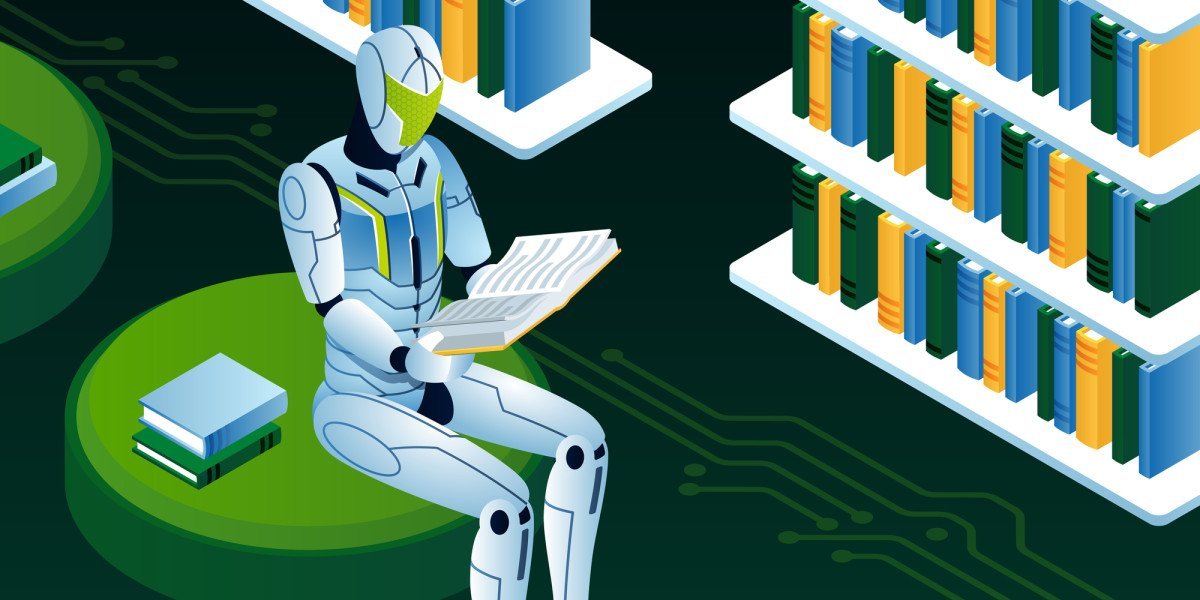
An illustration of a robot reading a book in a library

Large language models (LLMs) like ChatGPT, GPT-4, PaLM, LaMDA, etc., are artificial intelligence systems capable of generating and analyzing human-like text. Their usage is becoming increasingly prevalent in our everyday lives and extends to a wide array of domains ranging from search engines, voice assistance, machine translation, language preservation, and code debugging tools. These highly intelligent models are hailed as breakthroughs in natural language processing and have the potential to make vast societal impacts.

However, as LLMs become more powerful, it is vital to consider the ethical implications of their use. From generating harmful content to disrupting privacy and spreading disinformation, the ethical concerns surrounding the usage of LLMs are complicated and multifold. This article will explore some critical ethical dilemmas related to LLMs and how to mitigate them.

1. Generating Harmful Content

Image by Alexandr from Pixabay

Large Language Models have the potential to generate harmful content such as hate speech, extremist propaganda, racist or sexist language, and other forms of content that could cause harm to specific individuals or groups.

While LLMs are not inherently biased or harmful, the data they are trained on can reflect biases that already exist in society. This can, in turn, lead to severe societal issues such as incitement to violence or a rise in social unrest. For instance, OpenAI’s ChatGPT model was recently found to be generating racially biased content despite the advancements made in its research and development.

2. Economic Impact

Image by Mediamodifier from Pixabay

LLMs can also have a significant economic impact, particularly as they become increasingly powerful, widespread, and affordable. They can introduce substantial structural changes in the nature of work and labor, such as making certain jobs redundant by introducing automation. This could result in workforce displacement, mass unemployment and exacerbate existing inequalities in the workforce.

According to the latest report by Goldman Sachs, approximately 300 million full-time jobs could be affected by this new wave of artificial intelligence innovation, including the ground-breaking launch of GPT-4. Developing policies that promote technical literacy among the general public has become essential rather than letting technological advancements automate and disrupt different jobs and opportunities.

3. Hallucinations

Image by Gerd Altmann from Pixabay

A major ethical concern related to Large Language Models is their tendency to hallucinate, i.e., to produce false or misleading information using their internal patterns and biases. While some degree of hallucination is inevitable in any language model, the extent to which it occurs can be problematic.

This can be especially harmful as models are becoming increasingly convincing, and users without specific domain knowledge will begin to over-rely on them. It can have severe consequences for the accuracy and truthfulness of the information generated by these models.

Therefore, it’s essential to ensure that AI systems are trained on accurate and contextually relevant datasets to reduce the incidence of hallucinations.

4. Disinformation & Influencing Operations

Image by OpenClipart-Vectors from Pixabay

Another serious ethical concern related to LLMs is their capability to create and disseminate disinformation. Moreover, bad actors can abuse this technology to carry out influence operations to achieve vested interests. This can produce realistic-looking content through articles, news stories, or social media posts, which can then be used to sway public opinion or spread deceptive information.

These models can rival human propagandists in many domains making it hard to differentiate fact from fiction. This can impact electoral campaigns, influence policy, and mimic popular misconceptions, as evidenced by TruthfulQA. Developing fact-checking mechanisms and media literacy to counter this issue is crucial.

5. Weapon Development

Image by Mikes-Photography from Pixabay

Weapon proliferators can potentially use LLMs to gather and communicate information regarding conventional and unconventional weapons production. Compared to traditional search engines, complex language models can procure such sensitive information for research purposes in a much shorter time without compromising accuracy.

Models like GPT-4 can pinpoint vulnerable targets and provide feedback on material acquisition strategies given by the user in the prompt. It is extremely important to understand the implications of this and put in security guardrails to promote the safe use of these technologies.

6. Privacy

Image by Tayeb MEZAHDIA from Pixabay

LLMs also raise important questions about user privacy. These models require access to large amounts of data for training, which often includes the personal data of individuals. This is usually collected from licensed or publicly available datasets and can be used for various purposes. Such as finding the geographic localities based on the phone codes available in the data.

Data leakage can be a significant consequence of this, and many big companies are already banning the usage of LLMs amid privacy fears. Clear policies should be established for collecting and storing personal data. And data anonymization should be practiced to handle privacy ethically.

7. Risky Emergent Behaviors

Image by Gerd Altmann from Pixabay

Large Language Models pose another ethical concern due to their tendency to exhibit risky emergent behaviors. These behaviors may comprise formulating prolonged plans, pursuing undefined objectives, and striving to acquire authority or additional resources.

Furthermore, LLMs may produce unpredictable and potentially harmful outcomes when they are permitted to interact with other systems. Because of the complex nature of LLMs, it isn’t easy to forecast how they will behave in specific situations. Particularly, when they are used in unintended ways.

Therefore, it is vital to be aware and implement appropriate measures to diminish the associated risk.

8. Unwanted Acceleration

Image by Tim Bell from Pixabay

LLMs can unnaturally accelerate innovation and scientific discovery, particularly in natural language processing and machine learning. These accelerated innovations could lead to an unbridled AI tech race. It can cause a decline in AI safety and ethical standards and further heighten societal risks.

Accelerants such as government innovation strategies and organizational alliances could brew unhealthy competition in artificial intelligence research. Recently, a prominent consortium of tech industry leaders and scientists have made a call for a six-month moratorium on developing more powerful artificial intelligence systems.

Large Language Models have tremendous potential to revolutionize various aspects of our lives. But, their widespread usage also raises several ethical concerns as a result of their human competitive nature. These models, therefore, need to be developed and deployed responsibly with careful consideration of their societal impacts.

If you want to learn more about LLMs and artificial intelligence, check out unite.ai to expand your knowledge.

Is Generative AI the New White Collar Knowledge Worker?

A half exploding robot

Generative AI is transforming many industries, including entertainment, manufacturing, automotive, and knowledge-based. In knowledge-based industries, it has the potential to automate certain tasks, such as generating legal documents and automating financial analysis, that can increase the productivity of knowledge workers. A report by Research and Markets states generative AI is projected to become a $200.73 billion market by 2032.

Recently, Bill Gates, in his blog post, said, “In the future, ChatGPT will be like having a white-collar worker available to assist you with various tasks,”

But since generative AI is still in its early stages, it has limitations and unintended consequences. While it can perform tasks, it cannot replace the reasoning abilities and cognitive flexibility of humans essential to white-collar knowledge work.

Let’s explore whether generative AI is becoming the new white-collar worker and its impact on knowledge-based industries.

What Is Generative AI?

Generative AI is an AI technology that can generate new content, including text, images, and videos. Emerging generative AI technologies like GPT enable access to a wider range of applications. Applications include chatbots, deep fakes, art, product demos, drug compounds, music, and more. It’s also useful for writing email responses, dating profiles, and term papers while improving dubbing and design for buildings and products.

Generative AI offers several advantages that are given below.

  • Generative AI enhances efficiency by automating processes and eliminating the need for manual labor in various tasks. This results in substantial savings of both time and money, faster completion of projects, shorter timelines, and increased productivity.
  • It aids in generating high-quality content, including images, videos, and text, that are visually appealing and more accurate than those created manually.
  • Generative AI can assist in informing marketing strategies, product development, and improving customer experience, thereby facilitating businesses in making better business decisions.
  • In inverse design, generative AI can be employed to produce new designs that meet specific criteria or constraints.

What Are White-Collar Knowledge Workers?

White-collar knowledge workers are professionals who use their cognitive abilities, knowledge, and skills to perform their jobs. They are responsible for analyzing data, managing teams, making strategic decisions, and creating solutions to complex problems. Typical white-collar jobs include lawyers, company management, accountants, consultants, financiers, insurance, and computer programmers.

The current wave of uninterrupted technologization has significantly impacted white-collar jobs by automating repetitive and routine tasks and analyzing data faster than humans. For instance, software programs can now handle data entry, filing, and other administrative tasks, freeing up time for white-collar workers to focus on more tasks that need convergent, divergent, and critical thinking. If used properly, generative AI can lead to a 10x increase in the coding productivity of knowledge workers.

However, increased reliance on technology has also led to a major shift in the job market. Millions of workers worldwide have had to either change their occupations or enhance their skill sets to stay employable. In a global economic report, Goldman Sachs economists predict that the latest high-velocity AI development and accessibility, which has given rise to platforms like ChatGPT, could automate up to 300 million full-time jobs globally. Furthermore, research by the University of Pennsylvania and Open AI estimates that the impact of automation is expected to be felt most significantly by highly educated white-collar workers who earn up to $80,000 annually.

The Intersection of Generative AI & White-Collar Work

An image of human and robot hands with touching index finger

Image by Blue Planet Studio from Adobe Stock

The intersection of generative AI and white-collar work has been particularly notable. It has significantly automated repetitive and tedious tasks, such as data entry, analysis, and report writing. New AI capabilities that recognize context and concepts allow machines to collaborate more effectively with knowledge workers. The intersection can also lead to upskilling opportunities as workers learn to collaborate with machines and use AI to augment their abilities.

A few examples where generative AI aids white-collar work are:

  • AI can streamline HR tasks, such as candidate screening. A digital assistant can conduct initial interviews and ask job-related questions to filter out unsuitable candidates. This saves time for HR professionals by automatically handling data and volume in a secure environment, allowing them to focus on more strategic tasks.
  • Since generative AI can generate news articles, reports, and other written content, it frees up time for human journalists to focus on in-depth reporting and analysis.
  • As the use of AI expands, it creates new job opportunities, requiring people to build, program, and maintain these intelligent machines. With millions of AI-related job roles available worldwide, new opportunities are arising for data scientists, robotic engineers, and more.

Here are two industries where generative AI is transforming knowledge work and increasing work efficiency.

  • Legal Services: An attorney recently used ChatGPT to publish a 14-page legal paper covering various legal prompts, indicating that AI bots can potentially address access to justice issues. AI startups like Lawgeex have already begun using AI to read contracts faster and more accurately than humans.
  • Finance & Banking: According to the Cambridge Centre for Alternative Finance and the World Economic Forum, over half of the banks have integrated AI, with 56% using it for management and 52% for revenue generation. Morgan Stanley is already using OpenAI-powered chatbots to organize its wealth management database, leading to increased efficiency.

The Future of Generative AI & White-Collar Work

The future of generative AI looks promising. Tools such as ChatGPT and DALL-E-2, become more sophisticated and capable of automating several tasks. However, there are still shortcomings to consider. Generative AI lacks the human context, knowledge, and history that allows us to do tasks better.

Furthermore, the output generated by AI is not always ready to be used as-is and often requires human intervention, which can sometimes take longer. Additionally, large language models can hallucinate or generate biased results, which is why human oversight is necessary to ensure fairness and accuracy.

In a rapidly accelerating AI environment, white-collar workers can develop new skills and competencies, such as data and digital literacy. They will need to learn how to use and integrate generative AI into their work ethically. Also, they need to develop deep functional, critical thinking, and complex problem-solving skills. Employees must develop skills like data analysis, AI programming, and machine learning to stay competitive in the job market.

Despite generative AI’s capabilities, there are still areas where it lacks compared to human intelligence. For instance, AI lacks common sense reasoning and understanding of context. It can struggle with tasks that require a basic human-level understanding of everyday situations. Moreover, it cannot easily automate soft skills like empathy, social intelligence, and relationship building. Additionally, AI systems can be biased or limited by the data they are trained on. This can lead to inaccurate or unfair outcomes.

Going forward, AI will be most effective as a tool to enhance human work rather than replace human labor. Ultimately, the co-existence of generative AI and human workers can set the bar higher, as workers using AI tools can have better productivity.

Visit Unite.ai to stay updated on the advancements of generative AI.

Adaptyv Bio Revolutionizes Protein Engineering Using Generative AI

AI tools such as ChatGPT are dramatically changing the way text, images, and code are generated. Similarly, machine learning algorithms and generative AI are disrupting conventional methods in life sciences and accelerating timelines in drug discovery and materials development.

DeepMind’s AlphaFold is arguably the most renowned machine learning model in this domain. It predicts a protein’s 3D structure from its amino acid sequence and has been utilized by over a million researchers in the 18 months since its public release. Numerous other AI tools have emerged since then, including the recently open-sourced RFDiffusion, which allows researchers to generate computational protein designs using only their laptops.

However, translating these computational designs into tangible, functional proteins remains a challenge. Adaptyv Bio aims to address this issue with its next-generation protein foundry. By integrating advanced robotics, microfluidics, and synthetic biology techniques, Adaptyv Bio is constructing a full-stack platform to enable protein engineers to validate their AI-generated protein designs.

Julian Englert, CEO and co-founder of Adaptyv Bio, said, “Proteins are central to the biorevolution, whether as new medicines, improved enzymes for research and industrial applications, or as materials with unique properties. As a protein designer, you now have access to incredible new AI tools like AlphaFold or RFDiffusion. However, validating your protein designs in the lab to see if they work remains a huge challenge.”

AI models thrive on data for training and improving their predictions. By simplifying the process of generating data about the effectiveness of designed proteins, Adaptyv Bio enables protein engineers and AI models to receive more feedback about their designs, guiding them toward better-performing proteins.

Englert added, “Think of the AI in a self-driving car. To keep the car on the road and reach its destination, the AI model needs a tight feedback loop by obtaining plenty of high-quality data from the car’s camera sensors. The same principle applies to an AI model designing new proteins, with the feedback mechanism involving the actual creation of proteins in our lab and testing their performance.”

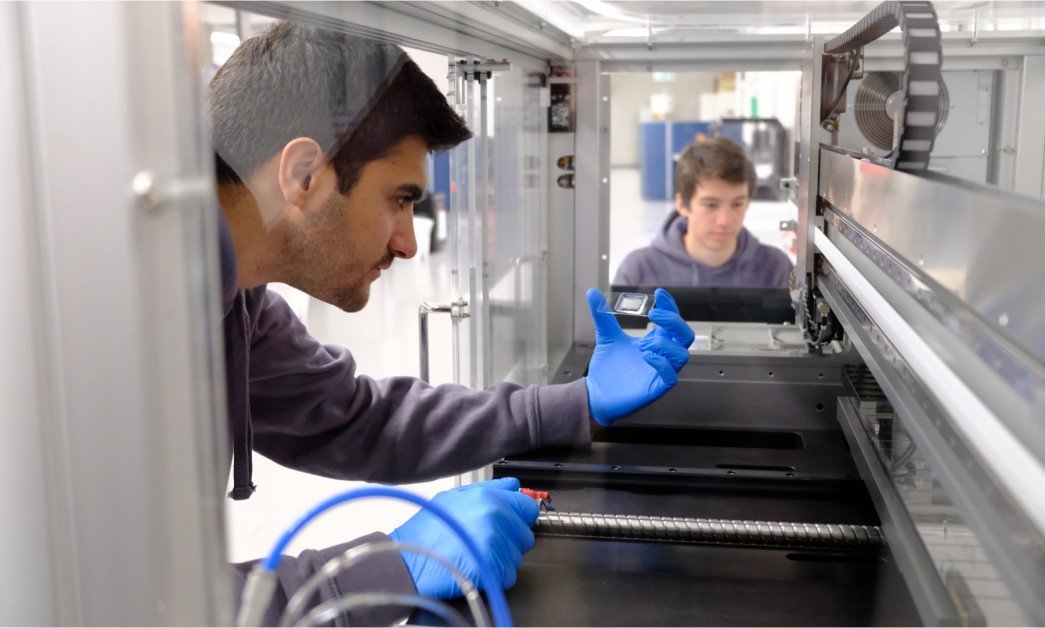
Adaptyv Bio was established by a group of engineers from EPFL, the Swiss Federal Institute for Technology in Lausanne, motivated by the time-consuming processes of conducting biological experiments in labs. In 2022, they secured $2.5 million in pre-seed funding from Wingman Venture, after participating in Y Combinator, the world’s most selective startup accelerator. The team has since expanded to 12 engineers with diverse backgrounds in synthetic biology, microengineering, software development, and machine learning. The company is located at the newly constructed Biopole life science campus in Lausanne, Switzerland, where they are developing their technology in cutting-edge lab facilities with picturesque views of Lake Geneva and the Swiss-French Alps.

Adaptyv Bio’s foundry centers around protein engineering workcells—custom, automated setups that miniaturize processes typically requiring multiple laboratory machines, performing them in parallel on tiny microfluidic chips. Users can write experimental protocols (or have AI write them) and the workcells execute the experiments autonomously, while closely controlling and monitoring the experiments’ parameters. All measurement data is automatically processed and uploaded to allow users to refine their machine learning models with each experiment.

Englert said, “Our workcells are fully automated, use 1,000 times fewer reagents than any commercially available alternative, and we can run thousands of different proteins per day on each individual setup. To streamline the experimental workflows, we have developed a lot of custom synthetic biology and automation techniques. Over the next 12 months, we plan to scale up our lab further and increase the number of protein design applications we can support. We also just opened up early access for users to submit their protein design projects to us, and we’re trying to onboard new projects as soon as possible.”

To further accelerate the field of protein engineering, Adaptyv Bio has open-sourced two of their internal tools that have already started gaining traction among researchers and engineers in the field. ProteinFlow is a Python library that allows protein designers to easily create high-quality datasets for better AI models. Automancer is an extensible software platform to run automated experiments, enabling researchers to build their own experimental protocols and integrate different laboratory instruments.

“Our mission is to make protein engineering easier and enable more researchers to design new proteins. Consider the proteins that comprise the incredibly powerful molecular machinery inside every single cell in our body. Imagine the kind of technological progress humanity could make if we could start designing novel proteins for personalized medicines, industrial applications like new enzymes, or better, more sustainable materials,” added Julian Englert.

Open-Source Auto-Gpt & BabyAGI Integrate Recursion Into AI Applications

Recent developments involving Auto-GPT and BabyAGI have demonstrated the impressive potential of autonomous agents, generating considerable enthusiasm within the AI research and software development spheres. These agents, based on large language models (LLMs), are capable of performing intricate task sequences in response to user prompts. By employing a variety of resources such as internet and local file access, other APIs, and basic memory structures, these agents display early advancements in integrating recursion into AI applications.

What is BabyAGI?

BabyAGI, introduced by Yohei Nakajima via Twitter on March 28, 2023, is a streamlined iteration of the original Task-Driven Autonomous Agent. Utilizing OpenAI’s natural language processing (NLP) abilities and Pinecone for storing and retrieving task results in context, BabyAGI provides an efficient and user-friendly experience. With a concise 140 lines of code, BabyAGI is easy to comprehend and expand upon.

The name BabyAGI is indeed significant as these tools persistently propel society toward AI systems that, while not yet achieving Artificial General Intelligence (AGI), are exponentially increasing in power. The AI ecosystem experiences new advancements daily, and with future breakthroughs and the potential for a version of GPT capable of prompting itself to tackle complex problems, these systems now give users the impression of interacting with AGIs.

What is Auto-GPT?

Auto-GPT is an AI agent designed to accomplish goals expressed in natural language by dividing them into smaller sub-tasks and utilizing resources like the internet and other tools in an automated loop. This agent employs OpenAI’s GPT-4 or GPT-3.5 APIs and stands out as one of the pioneering applications that use GPT-4 to carry out autonomous tasks.

Unlike interactive systems such as ChatGPT, which depend on manual instructions for each task, Auto-GPT sets new goals for itself to achieve a larger objective, without necessarily requiring human intervention. Capable of generating responses to prompts to fulfill a specific task, Auto-GPT can also create and modify its own prompts for recursive instances based on newly acquired information.

What this Means Moving Forward

Although still in the experimental phase and with some limitations, agents are poised to boost productivity gains facilitated by the decreasing costs of AI hardware and software. According to ARK Invest’s research, AI software could potentially produce up to $14 trillion in revenue and $90 trillion in enterprise value by 2030. As foundational models like GPT-4 continue to progress, numerous companies are opting to train their own smaller, specialized models. While foundational models have a broad range of applications, smaller specialized models offer advantages such as reduced inference costs.

Moreover, many businesses concerned about copyright issues and data governance are choosing to develop their proprietary models using a mix of public and private data. A notable example is a 2.7 billion parameter LLM trained on PubMed biomedical data, which achieved promising results on the US Medical Licensing Exam’s (USMLE) question-and-answer test. The training cost was approximately $38,000 on the MosaicML platform, with a compute duration of 6.25 days. In contrast, the final training run of GPT-3 is estimated to have cost nearly $5 million in compute.

Synthesis AI Unveils Text-to-3D Tech with a Focus on Digital Humans

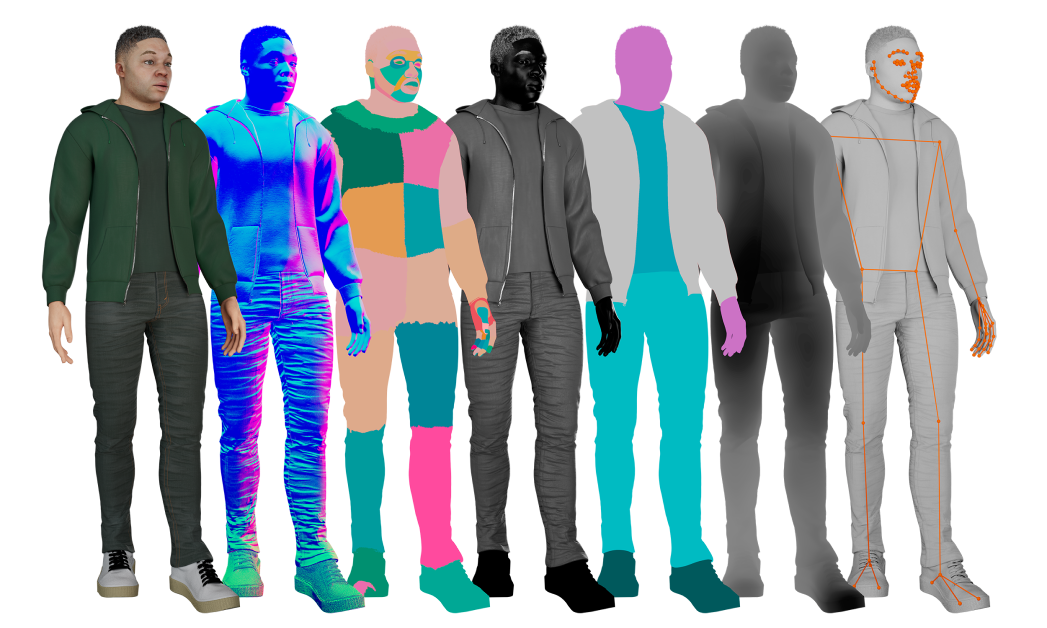
San Francisco-based company Synthesis AI, a frontrunner in the field of synthetic data technologies, unveiled its latest project, Synthesis Labs, on April 18, 2023. This initiative focuses on introducing new generative AI capabilities, with an emphasis on text-to-3D technologies for digital humans. These advancements mark a milestone in the company’s journey to support advanced AI applications, making Synthesis AI the first ever to demonstrate text-to-3D digital human synthesis at high-resolution cinematic quality.

By merging generative AI with cinematic VFX pipelines, the Synthesis AI platform generates perfectly labeled synthetic data, which can be utilized to train machine learning models. The newest text-to-3D offerings, featured in Synthesis Labs, allow users to experience prompt-based input and editing, making no-code 3D generative AI capabilities accessible to a wide range of users – from computer vision and machine learning experts to non-technical users.

The applications for 3D digital humans are vast, ranging from consumer, public sector, industrial, and enterprise sectors. They can unlock new possibilities for augmented and virtual reality, gaming, VFX, smart cities, virtual try-on (VTON), automotive, as well as industrial and manufacturing simulations. Customers across industries can now integrate high-resolution 3D digital humans quickly and cost-effectively, solidifying Synthesis AI’s position as a leader in applied generative AI.

Yashar Behzadi, CEO and Founder of Synthesis AI, stated, “The next generation of generative AI tools will rewrite the computer vision AI playbook across nearly every area of business. Synthesis AI was founded on the thesis that the integration of generative AI and VFX technologies would enable a new paradigm for building AI models. The newest text-to-3D digital human capabilities are the natural next step in our vision of simulating and synthesizing the world.”

Since its inception in 2019, Synthesis AI has led generative AI innovation, championing the use of synthetic data as a key element in machine learning model training. The company has published the first book on synthetic data, founded the largest synthetic data research community, OpenSynthetics, and commissioned the first industry survey on synthetic data benefits and the first whitepaper on developing state-of-the-art facial models. These accomplishments follow the recent launch of Synthesis Humans and Synthesis Scenarios, offering the most comprehensive and extensive human-centric synthetic data.

The latest text-to-3D offerings are just the beginning of Synthesis AI’s mission to enable enterprise, industrial, and public sector customers to simulate reality by synthesizing any person, place, or object. The new text-to-3D digital human capabilities will be available to a select group of beta testers starting in Q2

EchoSpeech: Revolutionizing Communication with Silent-Speech Recognition Technology

Researchers at Cornell University have developed EchoSpeech, a silent-speech recognition interface that employs acoustic-sensing and artificial intelligence to continuously recognize up to 31 unvocalized commands based on lip and mouth movements. This low-power, wearable interface can be operated on a smartphone and requires only a few minutes of user training data for command recognition.

Ruidong Zhang, a doctoral student of information science, is the lead author of “EchoSpeech: Continuous Silent Speech Recognition on Minimally-obtrusive Eyewear Powered by Acoustic Sensing,” which will be presented at the Association for Computing Machinery Conference on Human Factors in Computing Systems (CHI) this month in Hamburg, Germany.

“For people who cannot vocalize sound, this silent speech technology could be an excellent input for a voice synthesizer. It could give patients their voices back,” Zhang said, highlighting the technology’s potential applications with further development.

Real-World Applications and Privacy Advantages

In its current form, EchoSpeech could be used for communicating with others via smartphone in environments where speech is inconvenient or inappropriate, such as noisy restaurants or quiet libraries. The silent speech interface can also be paired with a stylus and utilized with design software like CAD, significantly reducing the need for a keyboard and a mouse.

Equipped with microphones and speakers smaller than pencil erasers, the EchoSpeech glasses function as a wearable AI-powered sonar system, sending and receiving soundwaves across the face and detecting mouth movements. A deep learning algorithm then analyzes these echo profiles in real-time with approximately 95% accuracy.

“We’re moving sonar onto the body,” said Cheng Zhang, assistant professor of information science and director of Cornell’s Smart Computer Interfaces for Future Interactions (SciFi) Lab.

Existing silent-speech recognition technology typically relies on a limited set of predetermined commands and necessitates the user to face or wear a camera. Cheng Zhang explained that this is neither practical nor feasible and also raises significant privacy concerns for both the user and those they interact with.

EchoSpeech’s acoustic-sensing technology eliminates the need for wearable video cameras. Moreover, since audio data is smaller than image or video data, it requires less bandwidth to process and can be transmitted to a smartphone via Bluetooth in real-time, according to François Guimbretière, professor in information science.

“And because the data is processed locally on your smartphone instead of uploaded to the cloud,” he said, “privacy-sensitive information never leaves your control.”

Stability AI Launches StableLM: Open Source ChatGPT Alternatives

Stability AI, the creator of the renowned image-generation software Stable Diffusion, has unveiled a collection of open source language-model tools, contributing to the expansion of the large language model (LLM) industry. This new addition offers a viable alternative to OpenAI’s ChatGPT, which may benefit an industry that is becoming anxious about OpenAI and it’s principal investor Microsoft becoming too monopolistic.

The alpha versions of the StableLM suite, featuring models with 3 billion and 7 billion parameters, are now accessible to the public. Models with 15 billion, 30 billion, and 65 billion parameters are currently being developed, while a 175 billion-parameter model is planned for the future.

Comparatively, OpenAI’s GPT-4 boasts an estimated 1 trillion parameters, which is six times more than GPT-3. Despite this, Stability AI emphasized that parameter count might not be an accurate measure of LLM effectiveness.

“StableLM is trained on a novel experimental dataset based on The Pile, but three times larger, containing 1.5 trillion tokens of content. The richness of this dataset allows StableLM to exhibit surprisingly high performance in conversational and coding tasks, even with its smaller 3 to 7 billion parameters.”

The robustness of the StableLM models remains to be seen. The Stability AI team has pledged to disclose more information about the LLMs’ capabilities on their GitHub page, including model definitions and training parameters. The emergence of a powerful, open-source alternative to OpenAI’s ChatGPT is welcomed by most industry insiders.

Sophisticated and advanced third-party tool access, such as BabyAGI and AutoGPT, as recently reported are integrating recursion into AI applications, meaning they can create and modify their own prompts for recursive instances based on newly acquired information.

Incorporating open-source models into the mix could benefit industry users who prefer or may not be able to pay OpenAI’s access fees. Interested individuals can test a live interface for the HuggingFace-hosted 7 billion parameter StableLM model.

It remains to be seen what company steps to the plate next to offer similar LLM models.

A Beginner’s Guide to Sentiment Analysis in 2023

A collage of a girl showing multiple facial emotion.

Humans are sentient beings; we experience emotions, sensations, and feelings 90% of the time. Sentiment analysis is becoming increasingly important for researchers, businesses, and organizations to understand customer feedback and identify areas of improvement. It has various applications, yet it faces some challenges too.

Sentiment refers to thoughts, views, and attitudes – held or expressed – motivated by emotions. For instance, most people today just get onto social media to express their sentiments in content such as a tweet. Hence, text mining researchers work on social media sentiment analysis to understand public opinion, predict trends and improve customer experience.

Let’s discuss sentiment analysis in detail below.

What is Sentiment Analysis?

Natural Language Processing (NLP) technique to analyze textual data, such as customer reviews, to understand the emotion behind the text and classify it as positive, negative, or neutral is called sentiment analysis.

The amount of textual data shared online is huge. More than 500 million tweets are shared daily with sentiments and opinions. By developing the capacity to analyze this high-volume, high-variety, and high-velocity data, organizations can make data-driven decisions.

There are three main types of sentiment analysis:

1. Multimodal Sentiment Analysis

It is a type of sentiment analysis in which we consider multiple data modes, such as video, audio, and text, to analyze the emotions expressed in the content. Considering visual and auditory cues such as facial expressions, tone of voice gives a broad spectrum of sentiments.

2. Aspect-based Sentiment Analysis

The aspect-based analysis involves NLP methods to analyze and extract emotions and opinions related to specific aspects or features of products and services. For example, in a restaurant review, researchers can extract sentiments related to food, service, ambiance, etc.

3. Multilingual Sentiment Analysis

Each language has a different grammar, syntax, and vocabulary. The sentiment is expressed differently in each language. In multilingual sentiment analysis, each language is specifically trained to extract the sentiment of the text being analyzed.

What Tools Can You Use for Sentiment Analysis?

In sentiment analysis, we gather the data (customer reviews, social media posts, comments, etc.), preprocess it (remove unwanted text, tokenization, POS tagging, stemming/lemmatization), extract features (converting words to numbers for modeling), and classify the text as either positive, negative or neutral.

Various Python libraries and commercially available tools ease the process of analyzing sentiment, which is as follows:

1. Python Libraries

NLTK (Natural Language Toolkit) is the widely used text processing library for sentiment analysis. Various other libraries such as Vader (Valence Aware Dictionary and sEntiment Reasoner) and TextBlob are built on top of NLTK.

BERT (Bidirectional Encoder Representations from Transformers) is a powerful language representation model that has shown state-of-the-art results on many NLP tasks.

2. Commercially Available Tools

Developers and businesses can use many commercially available tools for their applications. These tools are customizable, so preprocessing and modeling techniques can be tailored to specific needs. Popular tools are:

  • IBM Watson Natural Language Understanding

IBM Watson NLU is a cloud-based service that assists with text analytics, such as sentiment analysis. It supports multiple languages and uses deep learning to identify sentiments.

  • Google Cloud Natural Language API

Google’s Natural Language API can perform various NLP tasks. The API uses machine learning and pre-trained models to provide sentiment and magnitude scores.

Applications of Sentiment Analysis

An illustration of different faces engaged in different social activities.

1. Customer Experience Management (CEM)

Extracting and analyzing customers’ sentiments from feedback and reviews to improve products and services is called customer experience management. Put simply, CEM – using sentiment analysis – can enhance customer satisfaction which in turn increases revenue. And when customers are satisfied, 72% of them will share their experience with others.

2. Social Media Analysis

About 65% of the world’s population uses social media. Today, we can find sentiments and opinions of people about any significant event. Researchers can assess public opinion by gathering data about specific events.

For example, a study was conducted to compare what views people in Western countries have about ISIS as compared to Eastern countries. The research concluded that people view ISIS as a threat irrespective of where they are from.

3. Political Analysis

By analyzing public sentiment on social media, political campaigns can understand their strengths and weaknesses and respond to the issues that matter most to the public. Moreover, researchers can predict election results by analyzing sentiments towards political parties and candidates.

Twitter has a 94% correlation with polling data, meaning that it is highly consistent in predicting elections.

Challenges of Sentiment Analysis

1. Ambiguity

Ambiguity refers to instances where a word or expression has multiple meanings based on the surrounding context. For example, the word sick can have positive connotations (“That concert was sick”) or negative connotations(“I’m sick”), depending on the context.

2. Sarcasm

Detecting sarcasm in a text can be challenging because people with the stimulus can use positive words to express negative sentiments or vice versa. For example, the text “Oh great, another meeting” can be a sarcastic comment depending on the context.

3. Data Quality

Finding quality domain-specific data with no data privacy and security concerns can be challenging. Scrapping data from social media websites is always a grey zone. Meta filed a lawsuit against two companies BrandTotal and Unimania, for making scraping extensions for Facebook against Facebook’s terms and policies.

4. Emojis

Emojis are increasingly being used to express emotions in conversation on social media apps. But the interpretation of emojis is subjective and context-dependent. Most practitioners remove emojis from the text, which may not be the best option in some instances. Hence, it becomes difficult to analyze the sentiment of the text holistically.

State of Sentiment Analysis in 2023 & Beyond!

Large language models like BERT and GPT have achieved state-of-the-art results on many NLP tasks. Researchers are using emoji embedding and Multi-Head Self-Attention Architecture to address the challenge of emojis and sarcasm in the text, respectively. Over time, such techniques will achieve better accuracy, scalability, and speed.

For more AI-related content, visit unite.ai.